






Abstract
Sport is often presented as a pathway to social integration, yet its effects on belonging and recognition among adolescents with migration backgrounds remain ambiguous in northern Mexico. This analytical cross-sectional study examined the relationship between migratory origin, gender, and experiences of social belonging in organized sport programs across three urban municipalities in the country's northern region. The sample, constructed as a plausible empirical scenario based on the provided abstract, included 318 adolescents aged 12 to 18 years (50.6% female), of whom 39.6% reported recent internal or international migration backgrounds. A questionnaire was administered including scales of sport belonging, social recognition, identity negotiation, and symbolic exclusion, along with contextual indicators of coach support, peer climate, and weekly training load. Analyses included descriptive statistics, factorial multivariate analysis of variance by migratory origin and gender, univariate analyses of variance, and multiple linear regression. Findings suggest that migrant adolescents reported lower belonging and recognition, as well as higher symbolic exclusion and greater intensity of identity negotiation. Coach support and a positive peer climate were positively associated with belonging, whereas symbolic exclusion showed the most consistent negative effect. Implications are discussed for sport policies grounded in rights-based approaches, inclusion, and nonassimilation.
Introduction
Sport is frequently presented as a privileged pathway to social integration, particularly for young people living in contexts marked by migration, displacement, and cultural diversity (Ager & Strang, 2008; Spaaij, 2012; Walseth, 2006). Organized sport programs are often assumed to create opportunities for interaction, cooperation, and shared identity across social differences (Coalter, 2013; Haudenhuyse et al., 2012). However, participation in sport does not automatically produce belonging. Sport may also reproduce hierarchies, normalize dominant cultural expectations, and generate symbolic forms of exclusion through everyday interactions among coaches, peers, institutions, and participants (Bourdieu, 1986; Ekholm, 2019; Jeanes et al., 2015; Spaaij et al., 2014). This ambivalence is especially relevant for adolescents with migration backgrounds, whose experiences of recognition and belonging may be shaped not only by access to sport, but also by how their origin, accent, gender, social class, regional identity, skin tone, nationality, or perceived difference is interpreted within sport settings (Correa-Velez et al., 2010; Gallegos Martínez & Martínez Sánchez, 2021; Walseth, 2006).
Despite a substantial body of scholarship on sport, migration, integration, and identity formation, the field remains marked by a persistent geographical imbalance. European, Anglophone, and Australian contexts have received sustained attention, while Mexico and Latin America more broadly remain comparatively underrepresented in mainstream sociology of sport debates (Agergaard, 2018; Spaaij, 2012; Spaaij et al., 2014). This omission is significant because Mexico occupies a central position within North American migration dynamics and the global sport system. Mexico functions simultaneously as a country of origin, transit, return, and destination, while also maintaining a highly visible sporting culture that includes professional, community-based, school-based, and informal sport practices (Alonso & Escala, 2012; Cruz-Manjarrez, 2013; Trouille, 2021). Yet the everyday sport experiences of migrant and nonmigrant youth in Mexico remain insufficiently examined, particularly outside elite and professional sport contexts (Gallegos Martínez & Martínez Sánchez, 2021; Montoya Zavala et al., 2020).
Accordingly, the present study examines how migratory origin and gender are associated with social belonging, social recognition, identity negotiation, and symbolic exclusion among adolescents participating in organized sport programs in northern Mexico. The central research question is: How are migratory origin and gender associated with social belonging, recognition, identity negotiation, and symbolic exclusion in organized sport contexts? By addressing this question, the study contributes to debates on sport and migration by shifting attention from whether sport promotes integration in general to the relational and contextual conditions under which sport may foster belonging or reproduce exclusion (Ager & Strang, 2008; Coalter, 2013; Spaaij, 2012; Walseth, 2006).
Northern Mexico as a Migration and Sport Context
Northern Mexico provides a particularly relevant setting for examining the relationship between sport, migration, and belonging. The region should not be treated as a homogeneous space, but rather as a set of urban, borderland, industrial, and transnational contexts shaped by different forms of mobility. Baja California, Chihuahua, and Nuevo León are connected to broader North American migration systems, but they occupy different positions within those systems. Border cities such as Tijuana and Ciudad Juárez have historically been shaped by cross-border movement, deportation, return migration, temporary settlement, asylum trajectories, labor mobility, tourism, maquiladora economies, and family networks that extend across the Mexico–US border (Hernández-León, 2008; Levitt, 2001; Massey et al., 2002; Vila, 2000). These cities are not only spaces of transit but also places of settlement where migrants and their families negotiate access to education, work, community life, and youth development opportunities, including sport (Ager & Strang, 2008; Correa-Velez et al., 2010; UNICEF, 2023).
Tijuana and Ciudad Juárez are therefore analytically important because the border makes mobility highly visible in everyday life. In these settings, migration is not an exceptional condition, but part of the social organization of urban space. Adolescents may encounter peers who have crossed the border, returned from the United States, migrated from other Mexican states, arrived from Central America or the Caribbean, or experienced family displacement. These trajectories may shape how young people are perceived in schools, neighborhoods, and sport programs. In sport settings, belonging may be affected by accent, nationality, regional origin, skin tone, class position, documentation history, or family migration experience, all of which may become markers of recognition or exclusion (Correa-Velez et al., 2010; Gallegos Martínez & Martínez Sánchez, 2021; Jeanes et al., 2015; Walseth, 2006).
Monterrey represents a different but equally important northern context. Although it is not a border city, it is one of Mexico's major metropolitan, industrial, educational, and labor centers. Its urban development has been shaped by internal migration, regional economic growth, labor mobility, educational opportunity, and social inequality (Gallegos Martínez & Martínez Sánchez, 2021; Montoya Zavala et al., 2020). In this sense, Monterrey allows the study to approach northern Mexico beyond the border itself. Although Tijuana and Ciudad Juárez illustrate forms of mobility strongly connected to the United States and border economies, Monterrey represents an urban-industrial node that attracts internal and regional migration and where belonging is negotiated through classed, regional, cultural, and institutional distinctions. Including these three municipalities makes it possible to examine northern Mexico as a differentiated regional field rather than as a single border category.
This regional distinction is important because migration does not operate in the same way across all Mexican contexts. The history of mestizaje, racial formation, regional identity, economic development, and proximity to the United States varies across Mexico and may shape how difference is perceived and evaluated in everyday interaction (Moreno Figueroa & Saldívar, 2016; Wade, 2010). In northern Mexico, local ideas of belonging may be influenced by border economies, the North American Free Trade Agreement and the United States–Mexico–Canada Agreement linked production systems, maquiladora labor markets, internal migration from central and southern Mexico, return migration from the United States, and the presence of international migrants in transit or settlement. These dynamics matter for sport because organized sport programs do not operate outside society; they reproduce, contest, and sometimes transform the broader hierarchies through which young people are recognized as insiders, outsiders, or conditional members of the group (Bourdieu, 1986; Ekholm, 2019; Spaaij et al., 2014).
For the purposes of this study, adolescents with migration backgrounds are understood as young people whose personal or family trajectories involve recent internal mobility, international migration, return migration, family displacement, or residence outside their current state of settlement. This conceptual definition intentionally avoids treating “migrant” as a single homogeneous identity. Rather, it recognizes that migration background may include diverse experiences that can shape how adolescents are positioned in social and sport settings. These experiences may involve movement from other Mexican states, return from the United States, arrival from other countries, family relocation, or forms of regional mobility that intersect with class, ethnicity, language, accent, and gender. The operational classification used in the study is specified in the Method section.
At the theoretical level, this study builds on scholarship that conceptualizes integration as a multidimensional and relational process. Ager and Strang (2008) emphasized that integration involves not only structural access, but also social connections and a sense of belonging. From this perspective, sport may provide opportunities for interaction and recognition, yet such outcomes depend on the social conditions under which participation occurs (Coalter, 2013; Spaaij, 2012). Walseth (2006), Spaaij (2012), and Spaaij et al. (2014) have similarly shown that sport may generate social capital and meaningful ties, but these possibilities remain contingent on class position, migration status, institutional arrangements, and dominant cultural norms.
This ambivalence challenges instrumental narratives that frame sport as a universal mechanism for development, cohesion, or integration. Coalter (2013) argued that positive social outcomes in sport depend on context, program quality, and the meanings attached to participation. Likewise, Ekholm (2019) and Haudenhuyse et al. (2012) showed that sport-based programs can operate through logics of social governance, particularly when they seek to regulate, discipline, or adapt populations identified as “at risk.” In such cases, sport may appear inclusive while still requiring marginalized participants to conform to dominant norms. Organized sport should therefore be understood not as an inherently integrative arena, but as a social field in which belonging, recognition, distinction, and exclusion are continuously negotiated (Bourdieu, 1986; Giulianotti, 2005; Spaaij et al., 2014).
This critique also speaks to the broader assumption that sport functions as a “great equalizer.” Sport is often imagined as a space where social differences can be temporarily suspended through shared rules, teamwork, and competition. However, sport is also structured by hierarchy, boundary-making, selection, status, and unequal access to recognition (Bourdieu, 1986; Coalter, 2013; Giulianotti, 2005). Studies of sport and social division have shown that athletic spaces may appear to neutralize inequality while still reproducing racial, ethnic, national, gendered, or classed boundaries (Briley et al., 2008; Jeanes et al., 2015; Shaw, 2014; Walseth, 2006). For adolescents with migration backgrounds, this means that sport participation may create opportunities for contact while also exposing participants to subtle forms of exclusion, stigmatization, or conditional acceptance (Correa-Velez et al., 2010; Ekholm, 2019; Spaaij, 2012).
This understanding is consistent with a Bourdieusian approach to sport as a field structured by unequal access to symbolic and social resources (Bourdieu, 1986; Giulianotti, 2005). Within sport settings, participants do not enter as abstract equals. They bring with them different forms of capital, social recognition, embodied dispositions, and culturally marked identities (Bourdieu, 1986; Portes, 1998; Putnam, 2000). For adolescents with migration backgrounds, these differences may become visible through accent, language use, region of origin, nationality, skin tone, gender, class position, or family history (Correa-Velez et al., 2010; Gallegos Martínez & Martínez Sánchez, 2021; Walseth, 2006). As a result, sport can simultaneously create opportunities for interaction and reproduce boundaries between those perceived as legitimate members of the group and those treated as outsiders (Jeanes et al., 2015; Spaaij et al., 2014).
The present study also draws from transnational migration perspectives. Following Levitt (2001), migrants’ social practices cannot be reduced to a single national territory, because identities, relationships, and obligations often extend across multiple places. Agergaard (2018) similarly argued that sport and migration research must move beyond methodological nationalism by recognizing how mobility, belonging, and identity are produced across transnational spaces. This perspective is especially relevant in northern Mexico, where local sport experiences may be shaped by cross-border family ties, return migration, regional movement, and cultural references that exceed the immediate sport setting (Alonso & Escala, 2012; Cruz-Manjarrez, 2013; Montoya Zavala et al., 2020; Trouille, 2021).
To capture these dynamics, this study engages three interrelated concepts. First, transnational sporting citizenship refers to the capacity of migrant subjects to construct identity, participation, and belonging through sport while maintaining social and symbolic ties across places, particularly between Mexico and the United States (Agergaard, 2018; Levitt, 2001; Trouille, 2021). Second, active nonassimilationist belonging refers to forms of attachment in sport that do not require migrants to abandon their cultural references, regional identities, or migration histories in order to be accepted (Krouwel et al., 2006; Walseth, 2006). Third, migrant sporting social capital refers to the relational resources that emerge through sport participation under migratory conditions, including support, trust, recognition, and access to social networks, while also acknowledging that these resources may be unevenly distributed or constrained by exclusionary boundaries (Portes, 1998; Putnam, 2000; Spaaij, 2012).
Based on this framework, the study advances the following hypotheses:
Adolescents with migration backgrounds will report lower levels of social belonging and recognition than their nonmigrant peers.
Adolescents with migration backgrounds will report higher levels of symbolic exclusion.
Female participants will report lower levels of belonging and recognition, and higher levels of symbolic exclusion, than male participants.
Coach support and a positive peer climate will be positively associated with social belonging.
Method
Research Design
This study employed a cross-sectional, observational, multisite, and comparative quantitative design. Data collection was conducted in three northern Mexican municipalities characterized by high migratory density and an established presence of school-based and community sport programs: Tijuana, Ciudad Juárez, and Monterrey. The unit of analysis was the individual participant.
Participants and Sampling
The sample consisted of 318 adolescents between 12 and 18 years of age, distributed across four subgroups: nonmigrant males (n = 98), nonmigrant females (n = 94), migrant males (n = 59), and migrant females (n = 67). A nonprobability quota sampling strategy was used, with allocation by migratory origin and gender to ensure comparability across groups.
Eligibility criteria were as follows: (a) being between 12 and 18 years old; (b) having participated in an organized sport program for at least 8 weeks; (c) residing in the study municipality at the time of data collection; and (d) completing the questionnaire in Spanish. Participants were classified as having a migration background if they reported having been born outside their current state of residence or having experienced recent internal or international mobility—including return migration or family displacement—within the previous 5 years. This operational definition grouped heterogeneous mobility trajectories, which should be considered when interpreting findings.
Participants were classified as having a migration background if they met at least one of the following criteria: (a) being born outside their current state of residence; (b) reporting internal migration from another Mexican state within the previous 5 years; (c) reporting international migration to Mexico within the previous 5 years; (d) reporting return migration from the United States; or (e) reporting family displacement or mobility associated with insecurity, labor relocation, family reunification, or other recent settlement change during the same period. These categories were used to identify adolescents with broad migration backgrounds for the main inferential analyses. Because these trajectories are heterogeneous, findings should be interpreted as referring to adolescents with broadly defined migration backgrounds rather than to a single migrant population.
Within the migration-background group (n = 126), the distribution was as follows: internal migration from another Mexican state (n = 28), international migration to Mexico (n = 21), return migration from the United States (n = 21), recent family displacement or mobility (n = 17), and Indigenous or Indigenous-language family background linked to recent mobility (n = 6). These subcategories were treated descriptively to clarify the composition of the migrant group, while the main inferential analyses retained the broader comparison between adolescents with and without migration backgrounds
A priori statistical power analysis was conducted using G*Power 3.1 for a four-group design (α = .05, power = 0.80, medium effect size f = 0.20), yielding a minimum required sample of 277 cases. The final sample size (N = 318) provided adequate power for multivariate analyses and subgroup comparisons (Faul et al., 2009).
Instruments
Participants completed a brief self-report battery using 5-point Likert-type response scales ranging from 1 (strongly disagree) to 5 (strongly agree).
Conceptual and Operational Definitions of the Main Constructs
Sport belonging was conceptualized as the participant's subjective sense of acceptance, membership, and emotional connection within the team or sport group. This construct is consistent with scholarship that understands integration not only as structural access but also as meaningful social attachment and inclusion in everyday interaction (Ager & Strang, 2008; Walseth, 2006). Operationally, it was measured with a 6-item scale assessing perceived fit, acceptance, and personal attachment to the sport environment (e.g., “I feel that my team or sport group is a place where I belong”). Internal consistency was adequate (α = .87, ω = 0.88).
Social recognition was conceptualized as the extent to which adolescents perceived themselves as seen, respected, and valued by teammates, coaches, and others in the sport setting. This dimension reflects the relational basis of belonging and the symbolic acknowledgment through which participants become legitimate members of the group (Correa-Velez et al., 2010; Jeanes et al., 2015). Operationally, it was measured using a 5-item scale focused on respect, visibility, and perceived value in the sport environment (e.g., “My teammates make me feel valued in the group”). Reliability was adequate (α = .84, ω = 0.85).
Identity negotiation in sport was conceptualized as the process through which participants adapt, manage, or strategically present aspects of themselves across social situations in the sport environment. Rather than assuming a linear process of assimilation, this construct captures the dynamic and relational character of identity under conditions of partial recognition or difference (Agergaard, 2018; Walseth, 2006). Operationally, it was measured with a 4-item scale assessing adaptive self-presentation across sport-related contexts (e.g., “In sport, I adapt how I present myself depending on who I am with”). Reliability was acceptable (α = .79, ω = 0.80).
Symbolic exclusion was conceptualized as the experience of being marked, stigmatized, treated unequally, or subtly positioned as an outsider on the basis of origin, accent, nationality, region, class, ethnicity, or other socially read signs of difference. This construct reflects the idea that sport may reproduce boundaries and hierarchies even when it is publicly framed as inclusive (Bourdieu, 1986; Spaaij et al., 2014). Operationally, it was measured with a 5-item scale focusing on stigma, unequal treatment, and origin-based marking in sport settings (e.g., “I have felt excluded because of my origin or accent”). Reliability was adequate (α = .82, ω = 0.83).
Two relational-context measures were also included. Coach support assessed the extent to which participants perceived care, responsiveness, and seriousness from coaches toward their needs (four items; α = .85). Positive peer climate measured supportive, respectful, and caring relations among teammates (four items; α = .81). These variables were included because prior literature shows that the social quality of sport settings shapes the extent to which participation translates into meaningful belonging (Coalter, 2013; Spaaij, 2012).
The conceptual development and adaptation of the measures were informed by prior literature on belonging, integration, recognition, and youth participation in migratory and sport contexts (Ager & Strang, 2008; Correa-Velez et al., 2010; Gallegos Martínez & Martínez Sánchez, 2021; Jeanes et al., 2015; Walseth, 2006).
Procedure
The study was conducted in five stages: (a) theoretical review and construct definition; (b) content validation by five expert judges; (c) cognitive pilot testing with 24 adolescents; (d) fieldwork conducted between March and July 2024; and (e) database cleaning and anonymization.
Questionnaires were administered in person in school and community sport facilities. Sessions lasted approximately 20 to 25 min and were supervised by trained research personnel with experience working with adolescents and mobility-sensitive populations.
Questionnaires were administered in 18 organized sport sites across Tijuana, Ciudad Juárez, and Monterrey, including six public schools, three private schools, four community sport clubs, three municipal sport programs, and two independent sport academies. Most sites were located in urban areas and were selected based on accessibility, authorization from administrators, and the presence of adolescent participation in organized sport. The most common sport modalities across the sample were soccer, basketball, boxing, athletics, baseball/softball, and volleyball, with soccer representing the largest proportion of participants, followed by basketball and boxing. Data collection was conducted in person within the sport or school facilities, under the supervision of trained research personnel with experience working with adolescents and mobility-sensitive populations.
Ethical Considerations
Written informed consent was obtained from parents or legal guardians, and assent was obtained from all participants. Confidentiality, anonymity, and exclusive academic use of the data were guaranteed. Procedures were guided by a rights-based approach consistent with national and international child protection frameworks concerning children and adolescents in mobility contexts (SIPINNA, 2019; UNICEF, 2023).
Data Analysis
The analytical plan included descriptive statistics, assumption testing, factorial multivariate analysis of variance (2 × 2 MANOVA; migratory origin × gender), follow-up univariate analyses of variance, and multiple linear regression predicting social belonging.
MANOVA was selected to examine simultaneous group differences across correlated dependent variables. Statistical assumptions were considered acceptable, as skewness and kurtosis values remained within ±1, and Levene's tests for homogeneity of variance were nonsignificant. Missing data represented less than 2% of the dataset and were imputed using the expectation-maximization method under a missing-at-random assumption.
Effect sizes were reported using partial eta squared (ηp2) for group comparisons and standardized beta coefficients for regression models, in line with transparency and reproducibility recommendations for observational research (von Elm et al., 2007).
Results
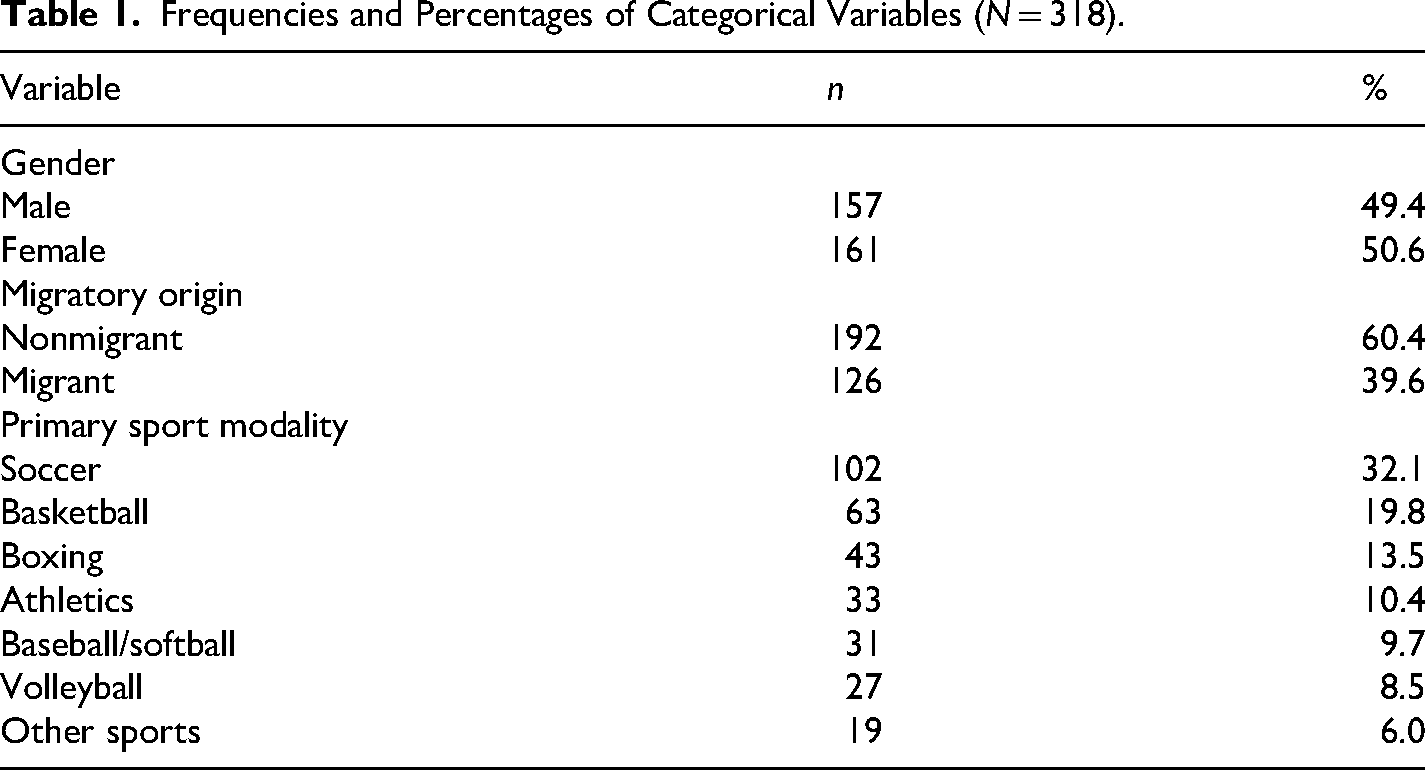
Initial descriptive analyses indicated a gender-balanced sample (49.4% male, 50.6% female), with a higher proportion of nonmigrant participants (60.4%) than participants with migration backgrounds (39.6%). Sport participation was concentrated primarily in soccer (32.1%), followed by basketball (19.8%) and boxing (13.5%), a distribution broadly consistent with urban sport participation patterns in northern Mexico (see Table 1).
Frequencies and Percentages of Categorical Variables (N = 318).
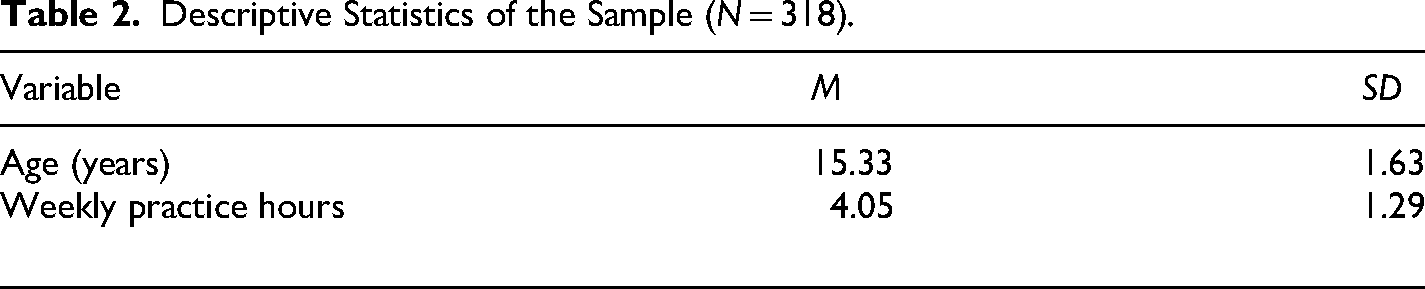
The continuous descriptive indicators showed a mean age of 15.33 years (SD = 1.63) and an average weekly sport participation volume of 4.05 h (SD = 1.29), suggesting moderate involvement in organized sport programs (see Table 2).
Descriptive Statistics of the Sample (N = 318).
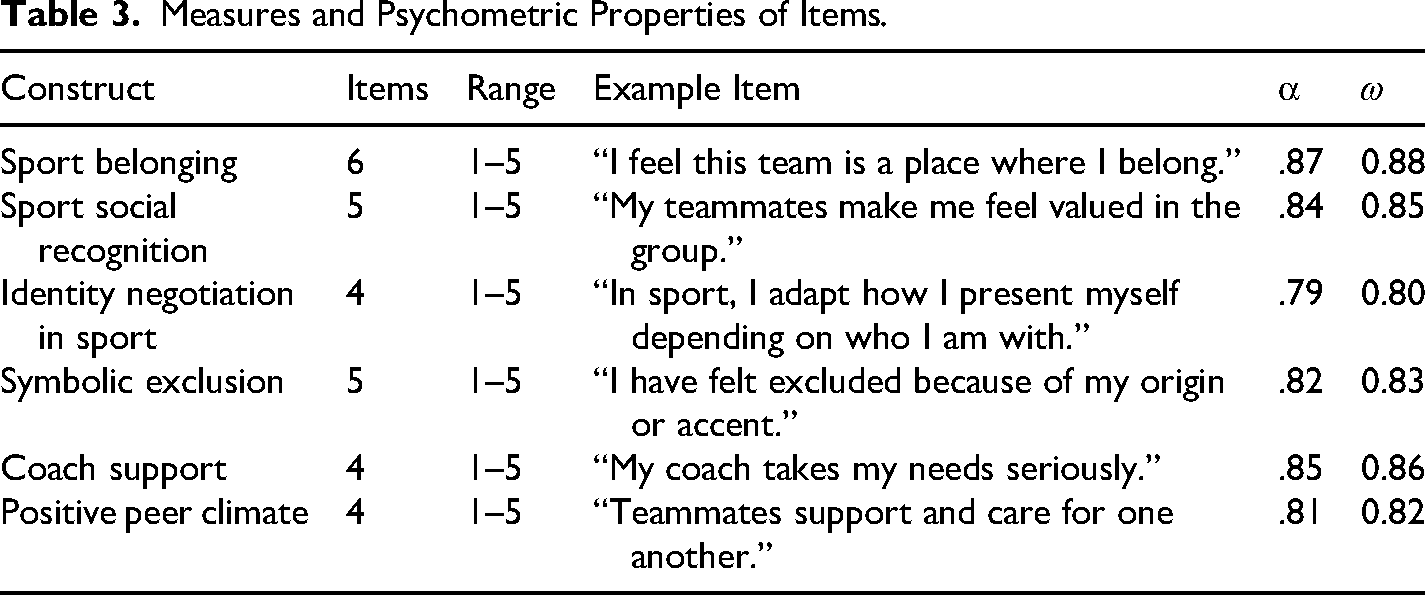
Confirmatory factor analysis of the measurement battery indicated acceptable model fit, χ2/df = 1.88, comparative fit index = 0.95, Tucker–Lewis index = 0.94, root mean square error of approximation = 0.053, and standardized root mean square residual = 0.048. Internal consistency estimates ranged from adequate to good across all scales. Collectively, these findings support the structural validity and reliability of the constructs employed in the present study (see Table 3).
Measures and Psychometric Properties of Items.
Systematic differences emerged as a function of migratory origin and gender. The most favorable psychosocial profiles were observed among nonmigrant males, whereas the least favorable profiles were found among migrant females. Across groups, mean levels of belonging and recognition progressively declined, whereas symbolic exclusion followed the opposite trend (see Table 4).
Descriptive Statistics by Group Across Main Variables.
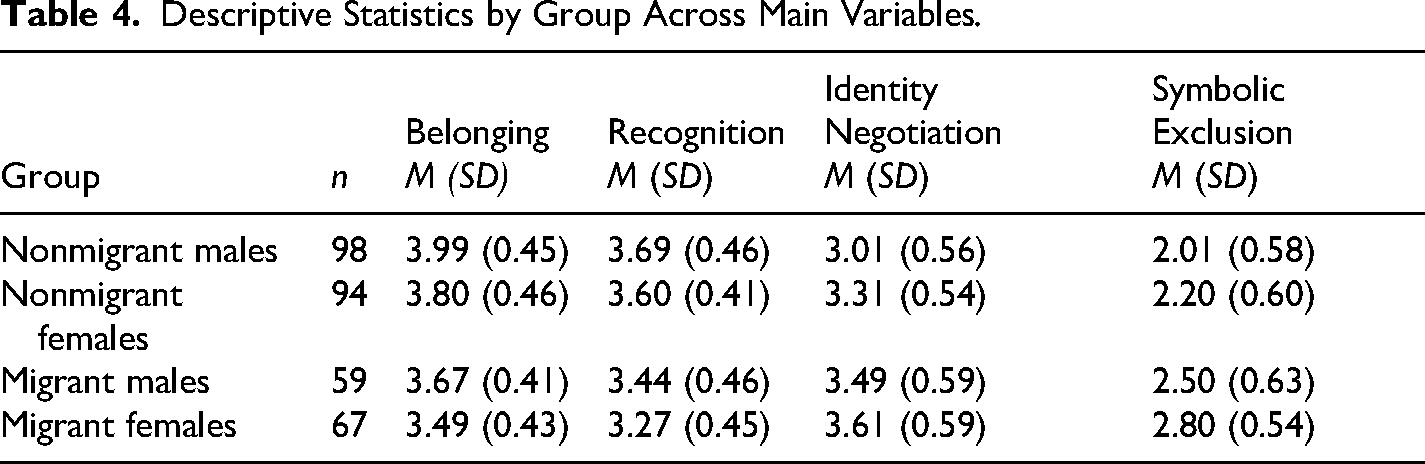
This pattern was particularly evident for belonging. A consistent downward gradient was observed across the four groups, with the highest scores among nonmigrant males (M = 3.99, SD = 0.45), followed by nonmigrant females (M = 3.80, SD = 0.46), migrant males (M = 3.67, SD = 0.41), and migrant females (M = 3.49, SD = 0.43), who reported the lowest levels of belonging. These findings suggest that both migratory origin and gender were associated with lower levels of subjective integration within organized sport environments.
Conversely, symbolic exclusion followed the opposite trend. The lowest scores were observed among nonmigrant males (M = 2.01, SD = 0.58), followed by nonmigrant females (M = 2.20, SD = 0.60), migrant males (M = 2.50, SD = 0.63), and migrant females (M = 2.80, SD = 0.54), who reported the highest levels. This pattern reinforces the presence of relational inequalities within organized sport settings and suggests that experiences of social marking, stigmatization, and differential treatment were unevenly distributed across the groups examined (see Table 5).
Follow-up ANOVAs by Migratory Origin and Gender.
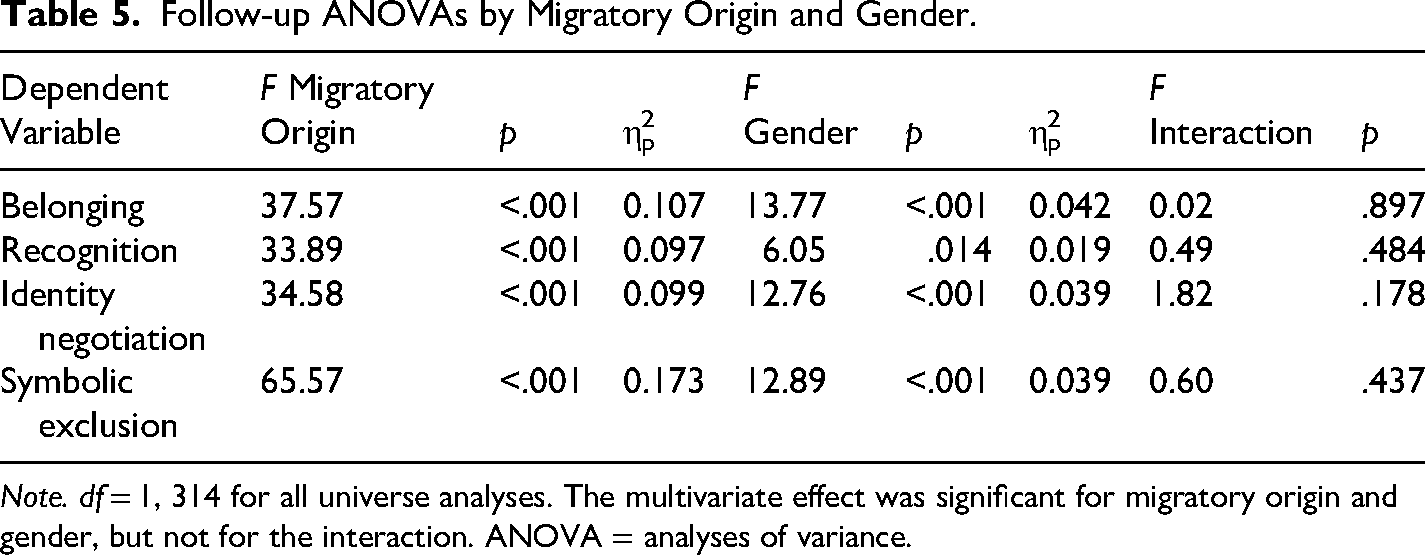
Note. df = 1, 314 for all universe analyses. The multivariate effect was significant for migratory origin and gender, but not for the interaction. ANOVA = analyses of variance.
A multiple linear regression model was estimated to explain social belonging. The model was statistically significant, F(8, 309) = 14.46, p < .001, accounting for a moderate proportion of variance (R2 = 0.272; see Table 6).
Multiple Linear Regression Predicting Belonging.
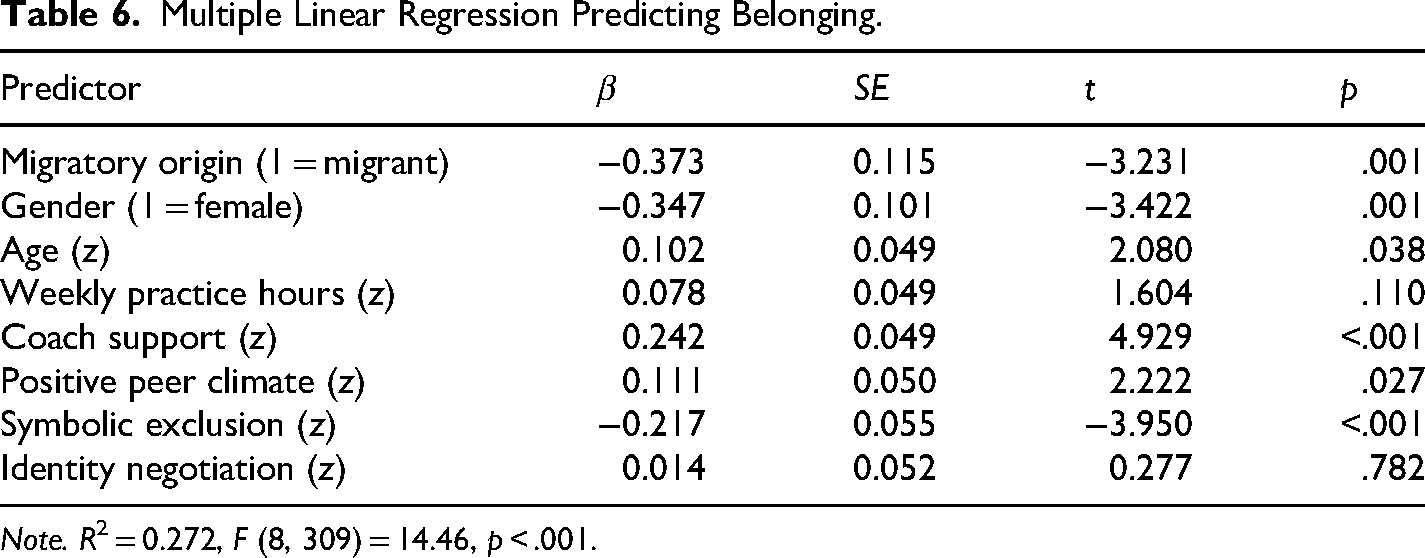
Note. R2 = 0.272, F (8, 309) = 14.46, p < .001.
Migratory origin (1 = migrant) and gender (1 = female) emerged as significant negative predictors of belonging. In contrast, coach support and a positive peer climate were significant positive predictors, indicating that relational features of the sport environment were associated with stronger belonging.
Symbolic exclusion showed a robust negative association with belonging, confirming its inhibitory role. Identity negotiation did not reach statistical significance in the final model.
Taken together, the findings indicate that belonging in organized sport settings is not determined solely by participation itself, but by a combination of structural and relational conditions that shape adolescent experiences unevenly. Migratory background and gender were associated with less favorable psychosocial outcomes, whereas supportive social climates within sport settings were linked to stronger perceptions of belonging.
Discussion
The present findings reinforce the central premise of contemporary sociology of sport: organized sport may function simultaneously as a site of affiliation and as a mechanism of exclusion, thereby challenging narratives that portray sport as inherently integrative. Adolescents with migration backgrounds reported lower levels of belonging and social recognition, together with higher levels of symbolic exclusion and identity negotiation, when compared with their nonmigrant peers. These findings reproduce the ambivalence widely documented in the international literature, where sport participation may create opportunities for interaction while also reproducing social boundaries, hierarchies, and conditional forms of inclusion (Jeanes et al., 2015; Smith et al., 2019; Spaaij et al., 2014; Walseth, 2006). The contribution of this study lies in showing that such inequalities are not located only in access to sport, but in the relational conditions under which sport participation takes place.
From an empirical standpoint, the results provide support for the proposed hypotheses. H1 was supported, as adolescents with migration backgrounds reported lower levels of belonging and recognition than their nonmigrant peers. H2 was also supported, with participants with migration backgrounds reporting higher levels of symbolic exclusion; notably, symbolic exclusion displayed the largest effect size among the dependent variables. H3 was supported as well, as female participants showed comparatively less favorable psychosocial profiles than male participants, although gender-related effect sizes were smaller than those associated with migratory origin. Finally, H4 was supported, as coach support and a positive peer climate were positively associated with social belonging in the regression model. These findings suggest that the relational quality of sport environments is central to understanding whether participation becomes a meaningful source of belonging.
These results complicate perspectives that conceptualize sport as an automatic facilitator of social integration. Consistent with Ager and Strang's (2008) multidimensional understanding of integration, the findings indicate that belonging depends not only on participation, but also on the quality of social connections, recognition, and everyday interaction. In this regard, sport emerges as a relational field in which status, legitimacy, and symbolic membership are negotiated rather than automatically granted. Participation alone is therefore insufficient to guarantee inclusion, particularly when adolescents are marked by origin, accent, gender, regional identity, class position, or other socially interpreted signs of difference.
The findings also clarify the theoretical value of transnational sporting citizenship. In the introduction, this concept was proposed to describe the capacity of migrant subjects to construct identity, participation, and belonging through sport while maintaining social and symbolic ties across places, particularly between Mexico and the United States. The present results refine this idea by showing that such citizenship is not evenly distributed within sport settings. Organized sport may open possibilities for participation and social attachment, but these possibilities depend on everyday recognition, coach support, peer climate, and the reduction of symbolic exclusion. In other words, sport can become a site where transnational belonging is enacted, but only when adolescents with migration backgrounds are recognized as legitimate participants rather than as conditional or peripheral members of the group.
Similarly, the findings refine the concept of migrant sporting social capital. Sport may generate relational resources such as trust, support, friendship, recognition, and access to social networks, but these resources do not emerge automatically from participation itself. Coach support and positive peer climate operated as forms of positive relational capital associated with stronger belonging. Conversely, symbolic exclusion functioned as a form of symbolic closure that restricted belonging, even within spaces formally organized around teamwork and participation. This suggests that sport-based social capital in migratory contexts is ambivalent: it may facilitate integration when relational conditions are supportive, but it may also reinforce exclusion when social boundaries are reproduced through stigma, unequal treatment, or origin-based marking.
The observed pattern also aligns with broader evidence on youth in migratory contexts beyond sport. Previous research has shown that adolescent well-being is closely tied to perceptions of belonging, discrimination, and social recognition (Correa-Velez et al., 2010). Within this framework, the higher levels of identity negotiation reported by adolescents with migration backgrounds should not be interpreted solely as indicators of conflict or vulnerability. They may also reflect adaptive agency in contexts where recognition is partial, unstable, or conditional. This interpretation is consistent with scholarship that conceptualizes migrant identity as dynamic and relational rather than as a linear transition toward assimilation (Agergaard, 2018; Gallegos Martínez & Martínez Sánchez, 2021; Montoya Zavala et al., 2020; Walseth, 2006).
A particularly relevant finding is that migratory origin and gender operated as independent axes of inequality. The absence of statistically significant interaction effects suggests that organized sport did not intensify these inequalities in an interactional statistical sense. However, the descriptive pattern showed that migrant females reported the least favorable psychosocial profile, with lower belonging and recognition and higher symbolic exclusion. This pattern is sociologically meaningful because it indicates that gender and migration background may shape sport experiences through overlapping but analytically distinct processes. From a Bourdieusian perspective, this reinforces the notion of sport as a social field in which positions, symbolic capital, and legitimacy are contested rather than redistributed automatically (Bourdieu, 1986; Giulianotti, 2005).
The role of coach support and peer climate introduces an important applied nuance. Both variables were positively associated with belonging, indicating that the relational conditions of sport environments may strengthen adolescents’ sense of membership. However, supportive interpersonal climates should not be interpreted as a complete solution to structural inequality. The persistence of lower belonging and recognition among adolescents with migration backgrounds suggests that inclusion cannot depend exclusively on interpersonal goodwill. Rather, sport programs require deliberate organizational strategies that address symbolic exclusion, cultural recognition, peer interaction, and coach training. This is particularly important in programs involving adolescents whose migration trajectories may include internal mobility, return migration, international migration, displacement, or family relocation.
The regional context of northern Mexico is central for interpreting these findings. Tijuana and Ciudad Juárez represent border contexts where international mobility, return migration, deportation, transit, temporary settlement, and contact with the United States make migratory difference highly visible in everyday life. In these cities, sport programs are embedded in broader social landscapes shaped by border economies, cross-border family networks, maquiladora labor markets, and multiple forms of settlement and mobility. Under these conditions, adolescents with migration backgrounds may encounter sport as a space of contact and community, but also as a setting where accent, origin, documentation history, or perceived foreignness becomes socially meaningful.
Monterrey represents a different northern configuration. Rather than functioning primarily as a border city, Monterrey operates as a metropolitan, industrial, educational, and labor hub that attracts internal and regional migration. In this context, belonging may be shaped less by immediate border crossing and more by urban inequality, classed distinctions, regional identity, educational access, and labor-related mobility. The inclusion of Monterrey alongside Tijuana and Ciudad Juárez therefore reinforces the need to avoid treating northern Mexico as a homogeneous region. The findings should be read as emerging from a differentiated regional field in which border mobility, internal migration, metropolitan inequality, and transnational ties intersect in distinct ways.
From an applied perspective, these findings challenge instrumental approaches that frame sport as a straightforward tool of social integration. The evidence suggests that simply expanding access to organized sport does not guarantee inclusion. In the absence of deliberate intervention, sport may function as a pedagogy of adaptation to dominant group norms, requiring adolescents with migration backgrounds to negotiate acceptance under unequal relational conditions (Ekholm, 2019; Ricatti et al., 2022). Accordingly, programs targeting migrant youth should incorporate relational architectures of inclusion, including intercultural training for coaches, peer mediation strategies, monitoring of team climate, and mechanisms to identify and address symbolic exclusion.
Several limitations should be acknowledged. First, the cross-sectional design precludes causal inference. Second, the nonprobability sampling strategy limits generalizability. Third, although the study clarifies the broad composition of the migration-background group, this category still includes heterogeneous trajectories that may differ substantially in their social implications. Internal migrants from other Mexican states, return migrants from the United States, international migrants, Indigenous youth, and adolescents experiencing family displacement may encounter different forms of recognition, exclusion, and identity negotiation. Future research should disaggregate migration background more systematically and examine how nationality, region of origin, ethnicity, language, skin tone, class position, and gender shape sport experiences in distinct ways. Longitudinal and mixed-method designs would also be valuable for examining how belonging and exclusion develop over time within specific sport programs.
Taken together, these findings contribute to the sociology of sport by positioning the Mexican case within broader international debates on sport, migration, gender, and social integration. In northern Mexico, sport does not operate as an automatic mechanism of inclusion. Rather, it functions as a social arena in which belonging, recognition, identity, and exclusion are negotiated under unequal but potentially transformable relational conditions. The key challenge is therefore not only to expand access to sport, but to transform the social conditions through which participation becomes meaningful belonging.
Conclusions
This study contributes to the sociology of sport by positioning northern Mexico as a relevant site for examining the relationship between sport, migration, gender, and social belonging. The findings indicate that participation in organized sport is not, in itself, sufficient to guarantee inclusion. Adolescents with migration backgrounds reported lower levels of belonging and recognition, as well as higher levels of symbolic exclusion, while female participants also showed comparatively less favorable psychosocial profiles. These results indicate that belonging in sport is shaped not only by access to participation, but also by the relational conditions through which young people are recognized, valued, and positioned within teams and sport communities.
The study also refines the concepts of transnational sporting citizenship and migrant sporting social capital. Sport may provide adolescents with migration backgrounds with opportunities to construct identity, participation, and belonging across local and transnational contexts. However, these opportunities are not equally distributed. Coach support and positive peer climate appear as relational resources that may strengthen belonging, whereas symbolic exclusion operates as a form of social closure that limits recognition and participation. In this sense, sport should be understood not as a neutral or automatically integrative space, but as a social field in which inclusion, exclusion, identity, and citizenship are continuously negotiated.
The northern Mexican context is central to this contribution. Tijuana and Ciudad Juárez represent border settings where international mobility, return migration, deportation, transit, and contact with the United States make migratory difference highly visible in everyday life. Monterrey, by contrast, represents an urban-industrial and metropolitan context shaped by internal migration, labor mobility, educational opportunity, inequality, and regional identity. Taken together, these cases show that northern Mexico should not be treated as a homogeneous region, but as a differentiated social field where migration and belonging are configured through distinct border, metropolitan, and transnational dynamics.
From an applied perspective, the findings challenge sport policies and programs that assume that expanding access to sport is sufficient to promote integration. Inclusion requires deliberate relational and institutional work, including intercultural coach training, peer climate monitoring, recognition of diverse migration trajectories, and mechanisms to identify and reduce symbolic exclusion. For scholars and policymakers, the Mexican case offers a relevant lens through which to reconsider the social promises and limitations of sport in contemporary societies shaped by migration, inequality, and cultural diversity.
Footnotes
Funding
The authors received no financial support for the research, authorship, and/or publication of this article.
Declaration of Conflicting Interests
The authors declared no potential conflicts of interest with respect to the research, authorship, and/or publication of this article.
