







Abstract
Background
Corruption affects businesses in various ways. Anti-corruption, on the other hand, can improve the institutions of the country as well as business operations. Vietnam, as a socialist-oriented country with an ongoing high-profile anti-corruption campaign, provides us a unique setting to evaluate the impacts of anti-corruption on corporate performance.
Objectives
We address two questions: (1) what is the effect of anti-corruption on the performance of private-owned firms in Vietnam? and (2) how does anti-corruption influence the performance of firms with state ownership (FSOs) in Vietnam?
Research design
To investigate the impact of anti-corruption on performance of firms with different ownership settings, we use the establishment of the Central Anti-Corruption Steering Committee of Vietnam as a quasi-natural experiment for difference-in-differences analysis. We generate treatment effects of private holding and the state block ownership. To validate the findings, we construct a novel news-based anti-corruption index from Vietnamese online newspapers and use it in a robustness test to evaluate anti-corruption’s impacts on firm performance.
Results and Conclusions
We find a positive impact of the anti-corruption campaign on private firms’ performance, supporting the social norm perspective of how corruption affects businesses. The empirical results indicate a negative impact of the campaign on FSOs’ performance. The findings suggest that anti-corruption benefits private firms via improving the institutional quality of the country while improving the financial transparency of FSOs. Our study provides a method for measuring anti-corruption which is virtually unobservable and absent in the literature. The findings have implications for policymaking in contemporary Vietnam.
Introduction
“Once the furnace blazes, even greenwood is burnt.” Nguyen Phu Trong, General Secretary of the Communist Party of Vietnam.
Corruption is a prevalent issue in societies around the world, especially in developing countries. Despite being one of the fastest-growing economies worldwide, Vietnam has a high degree of perceived corruption as indicated by Transparency International, 1 World Bank (2010), and academics worldwide (Bai et al., 2019; Nguyen, 2021). In 2013, Dot Lo (Furnace Firing), a high-profile anti-corruption campaign was launched, marking a new era of fighting corruption, intensive investigation, and punishment of corrupt authorities in Vietnam. The Central Anti-Corruption Steering Committee (CACSC) established in early 2013, chaired by General Secretary of Communist Party of Vietnam Nguyen Phu Trong, stands in the middle of this large-scale corruption fight. During the period 2013–2020, the committee has directed investigations and prosecutions of more than 800 corruption cases as well as cases of opportunistic behaviours in the misallocation of state assets. 2 Vietnamese local and central procuracy agencies have prosecuted 14,300 violation cases, with approximately 24,410 defendants in which defendants who violated regulations in state asset management are 22,600. 3 Nevertheless, there have been 31 concurrent and former members of the Party Central Committee investigated, disciplined, or prosecuted during the campaign. 4 A remarkable event in the 2017–2018 period is that Dinh La Thang, a concurrent Politburo member at the time, was convicted and sentenced to 31 years in jail for deliberate violation of state regulation on economic management at PetroVietnam 5 that resulted in a US$ 35 million loss of state assets. These developments set new records of the numbers of party members and senior government officials being brought to court due to corruption charges in the country. Such an anti-corruption campaign is unprecedented ever since the establishment of the Vietnamese government in 1945, thus attracting enormous attention from its citizens and the international community.
In general, previous studies show that public corruption has significant economic impacts on businesses operations and performance (Cai et al., 2011; Malesky et al., 2020; Nguyen & Dijk, 2012) and so does anti-corruption (Kong et al., 2017). Arguments on the impacts of corruption on corporate operations and performance can be classified into two opposite strands of literature. The first strand supports the notion that corruption plays a certain role in motivating the performance of the private sector while the other suggests that corruption hurts the economic growths of the private sectors. Specifically, private firms actively engage in bribery to gain competitive advantages and abnormal profits (Ades & Di Tella, 1999; Jiang & Nie, 2014; Lui, 1985; Shleifer & Vishny, 1993). This feature is described as the “greasing-the-wheel” or the “helping hand” effect of corruption. On the other hand, private-owned firms may passively react to local corruption by accepting the corruption norms and paying rents as informal business costs (Cai et al., 2011; Malesky et al., 2020; Persson et al., 2013; Zhou & Peng, 2012). In this approach, corruption plays a role as an “involuntary tax” that slows down the wheel of growth and hinders the performance of private firms (Mauro, 1995; Meschi, 2009), which is referred to as the “grabbing hand” feature of corruption. The contradiction in the literature might be attributable to institutional variation and the context of anti-corruption across countries (Zhou & Peng, 2012). From both perspectives, the impact of anti-corruption on the performance of firms might be economically significant, depending on how strong the anti-corruption commitment is.
To a certain extent, the context of the current anti-corruption campaign in Vietnam is similar to that of the recent one in China. As the two countries share similar political and economic systems, their anti-corruption campaigns somehow resemble each other. Both are led by the General Secretary of the country’s communist party and begin at almost the same time, involving crackdown on corruption at all levels of government and economic sectors. However, there is no guarantee that their impacts on firm performance would be the same. While Chinese firms’ growth seems to be explained more by corruption than by the financial development of the country (Wang & You, 2012), the case of Vietnamese firms might differ as there is evidence of corruption hinders growth in the private sector of the country (Malesky et al., 2020; Nguyen & Dijk, 2012). Based on this understanding, we suspect that the impacts of the anti-corruption campaign of Vietnam are likely different from those documented during the anti-corruption fight in China.
This paper investigates the impact of the current anti-corruption campaign on the financial performance of private-owned firms and firms with state ownership in Vietnam during the 2006–2019 period. The National Strategy on Anti-Corruption to 2020 of the Vietnamese government constitutes a major step forward in the corruption fight and represents the determination of the nation in improving the institutions of the country. Unlike the intensively studied anti-corruption campaign in China (see, for example, Gan and Xu (2019), Kong et al. (2017), Xu and Yano (2017), Zhang (2018), Zhou et al. (2020)), the anti-corruption campaign in Vietnam, surprisingly, does not attract attention from researchers and evidence of its impacts on the performance of Vietnam firms remains virtually absent in the literature. As the anti-corruption campaign of Vietnamese authorities shows no sign of slowing down, this study aims to provide an evaluation of how the performance of Vietnamese firms changed during the study period. We expect our findings to contribute to policymaking and objectively illustrate the achievements of such unprecedented efforts to improve the institutional quality of Vietnam.
Inspired by the recent literature of news-based indexes and textual analysis studies in economics (Baker et al., 2016; Hassan et al., 2019), we propose a novel news-based anti-corruption index using data from major online newspapers in Vietnam from 2006 to 2019. We use the frequency of word combinations in online news articles representing the anti-corruption efforts and actions as the proxy for the commitment of the Vietnam government in their corruption fight. The counted articles must deliver news on the investigation or prosecutions of bribed cases and corrupt officials, investigations on violations of regulations in state asset management in firms with state investments, or anti-corruption news in general. We use several Python libraries to crawl and process the data from major Vietnamese online newspapers, resulting in an aggregated index of anti-corruption in Vietnam during the study period. This is the first attempt to measure the level of anti-corruption of a country, as previous studies mostly use dummy variables and some other instruments to proxy anti-corruption. Our index well demonstrates the developments in the Vietnamese anti-corruption campaign, including the revision of the Anti-Corruption Law and the prosecution of the Project Management Unit 18 (PMU18) corruption scandal in 2007, the establishment of the CACSC in 2013, and the increasing number of revealed cases of corrupt officials during the 2013–2019 period. 6 Our approach provides a fresh approach to measuring the levels of anti-corruption that can benefit future studies in the field.
Using a sample of firms listed on the Hanoi Stock Exchange (HNX) and Ho Chi Minh Stock Exchange (HOSE) from 2006 to 2019, our study offers two important findings. First, we find that on average, the anti-corruption campaign improves private firms’ performance by 3.72% after the establishment of CACSC, implying that the private sector benefits from the anti-corruption efforts of the Vietnamese government. This finding suggests the “grabbing hand” feature of corruption in Vietnam that imposes on firms from the private sector. Therefore, the anti-corruption campaign plays a crucial role in improving the performance of the private sector via alleviating the “grabbing hand” and enhancing the institutions of the country. Second, we also document a negative impact of the campaign on firms with state ownership (FSOs). The finding implies that FSOs are affected by the campaign as most of the revealed corruption cases are related to FSOs. Once misallocated and depleted state assets caused by corruption are revealed, FSOs must adjust their balance sheets and income statements to reflect the realized decreases in their assets, thus resulting in lower financial performance of these firms. Those adjustments are not purely bad news because they help improve financial transparency in the economy. Further analyses provide additional pieces of evidence that confirm our arguments.
This study’s contribution to the literature is 3-folds. First, the study sheds new light on the literature on corruption, especially the anti-corruption policy of Vietnam. As this is the first study providing a comprehensive evaluation of how anti-corruption influences firm performance in Vietnam, it serves as an important reference for policymaking and public understanding of the government’s anti-corruption efforts. Second, the study indicates the outcomes of the anti-corruption campaign in Vietnam. The finding of the asymmetric impact of the campaign on firm performance of private-owned firms and FSOs is of importance and implies the effectiveness of anti-corruption efforts in the country across different categories of Vietnamese firms. Our findings suggest the social norm perspective of corruption as the explanation for the impact of anti-corruption on firm performance in Vietnam. Third, we propose a novel news-based index to measure the anti-corruption commitment of the government, which should be useful in economics, business management, public policy, and other social science studies related to the economic-socio impacts of corruption.
The rest of the paper is organized as follows: The section Related Literature and Hypotheses Development reviews literature and develops research hypotheses. The section Variable Measurements discusses the analytical methodology. The section Empirical Results and Discussion reports the empirical results and discusses findings. The section Conclusion concludes our study.
Related Literature and Hypotheses Development
There is an enormous body of academic literature studying the economic impacts of corruption. However, there exist theoretical contradictions of how corruption would be beneficial or detrimental to firm value and firm performance (Kong et al., 2017; Malesky et al., 2020). From the rent-seeking perspective, Lui (1985) argues that corruption may enhance market efficiency and promote performance under the presence of extremely ineffective institutions. This point is in line with those of Gomez and Jomo (1997), Jiang and Nie (2014), and Pan and Tian (2020) that firms outside of the public sector use bribe to buy political patronage, gain competition advantages, and circumvent government regulations. Other studies in this strand of literature show that firms with political proximity might gain preferential access to bank loans from state-owned banks (Yeh et al., 2013), have more government bailouts (Faccio et al., 2005), pay lower costs of bank loans (Houston et al., 2014), and have better performance relative to their counterparts (Li et al., 2008). As using bribes is a common way for private firms to obtain political proximity and gain government contracts (Charoensukmongkol, 2016), anti-corruption might stop private firms from gaining competitive advantages and thus exerting a negative impact on the performance of private firms.
However, studies on public corruption in Vietnam tell a different story. Nguyen and Dijk (2012) indicate that public corruption hampers the growth of the private sector in Vietnam. From the market competition approach, Malesky et al. (2020)’s survey shows that, on average, Vietnamese firms’ informal costs related to bribery account for about 2.99% of their revenues. Malesky et al. (2020) indicate that depending on the business environment, the firm’s bribes may be coercive or collusive. If bribes are coercive, public corruption is likely detrimental to firm performance, while it may be incremental to the firm’s competition. Therefore, the direction of the impact might be different if the firms are passively affected by the corruption norms and pay bribes to fit in the business environment rather than having the incentive to benefit themselves (Uhlenbruck et al., 2006; Malesky et al., 2020). This behaviour is well explained under the social norm theories (Fisman & Miguel, 2007; Persson et al., 2013) suggesting that if there is a corruption norm in the business environment, firms tend to pay bribes to fit in because they expect other firms also engage in bribery. Similarly, Rand and Tarp (2012) find that Vietnamese firms appear to consider bribe payments as part of the cost of doing business. Such collective action induces bribery reflecting in the firms’ increasing informal operating costs and payments (Nguyen & Dijk, 2012; Nguyen et al., 2016). Under this perspective, corruption lowers firm performance and the growth of firms in the private sector (Fisman & Svensson, 2007; Nguyen & Dijk, 2012). Similarly, Vu et al. (2018) find that corruption has a strong negative impact on firms’ financial performance of private small and medium firms in the Vietnamese manufacturing industries. Hence, strong commitments on corruption reforms may reduce “informal cost” and enhance private firms’ performance in Vietnam. This understanding leads to our first hypothesis as follows:
Unlike private firms who use bribes to gain political proximity, FSO, by their nature, are politically connected to the government via state ownership (Hoang et al., 2021; Nguyen et al., 2021). Therefore, they have less incentive to pay rent relative to private firms. From this perspective, the impact of corruption and anti-corruption on FSO’s performance may be different. During the 2013–2020 period, the major reveal corruption cases and violations in state asset management are mostly related to firms with state ownership.
7
The violations result in loss of state investments, opportunistic valuation of fixed capital contribution, and illegal transfer of state assets. Upon being exposed to the public eye, those losses need to be reflected in the financial reports of the firms in the forms of provisions of potential lost assets or receivables, losses due to re-evaluation of fixed assets, and other income adjustments to make up for bubble assets created by previous corrupt deeds. Therefore, anti-corruption might have a negative impact on the reported performance of FSO.
Analytical Methodology
Variable Measurements
Firm Financial Performance
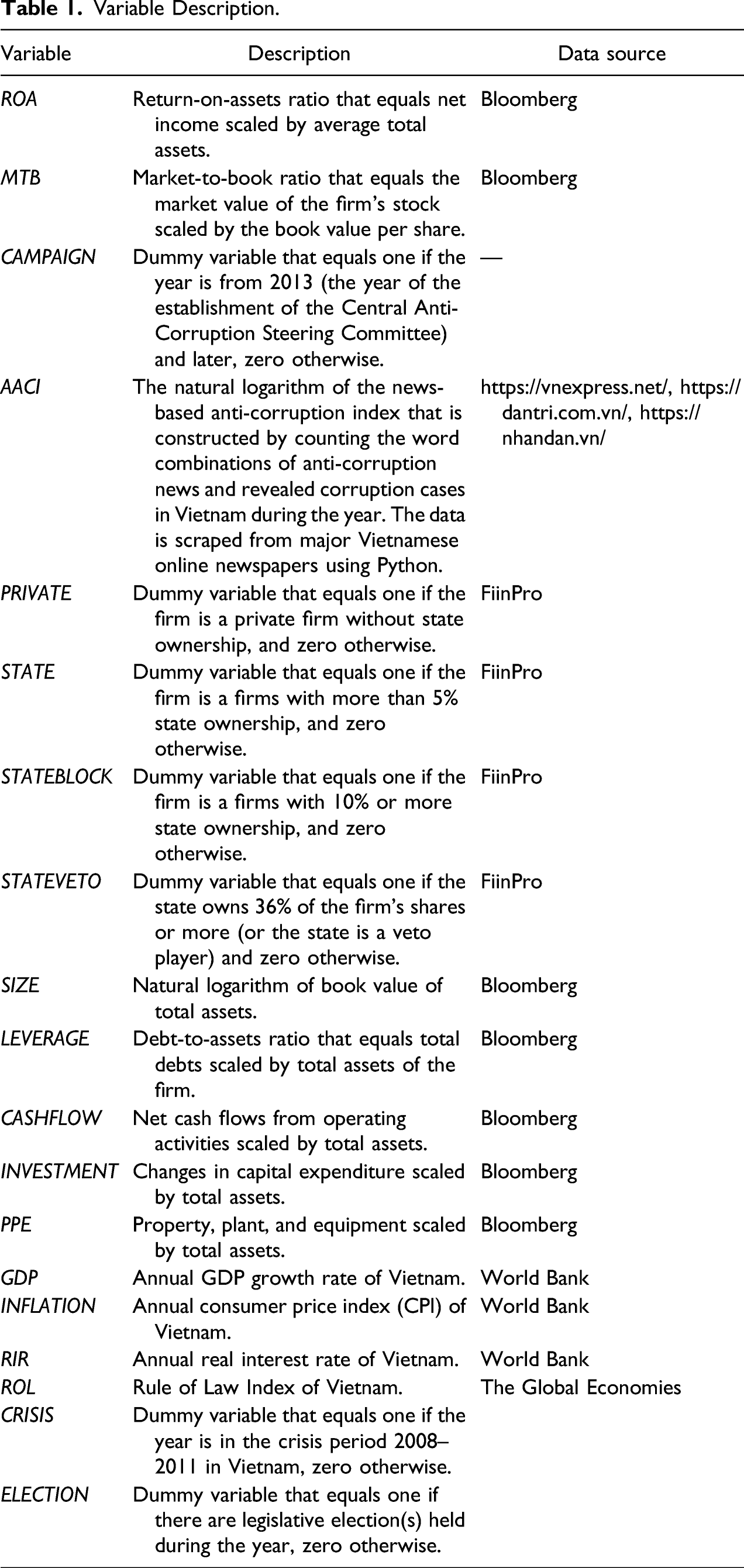
We follow the common practice in the literature to use the return-on-assets ratio (ROA) to measure firm financial performance. Return-on-assets ratio is computed by scaling the firm’s reported net income by its average total assets during a fiscal year. 8 To reflect the market financial performance of the firm, we use the market-to-book ratio (MTB) of the firm to determine the market performance. In our study, we calculate MTB as the ratio between the average market value of the firm scaled by the average book value of common equity of the firm during the same period. Market-to-book ratio is used as the alternative measure of corporate financial performance in our sensitivity test to confirm the findings from the primary analysis.
Anti-Corruption Campaign
We use the establishment of the CACSC in 2013 as the event that marks the beginning of the anti-corruption campaign in Vietnam. CACSC is the agency in charge of planning and execution of anti-corruption in Vietnam, and works with relevant government agencies in dealing with serious corruption cases. CACSC is under the direct administration of the Vietnamese Politburo and chaired by General Secretary Nguyen Phu Trong. The campaign serves as an exogenous shock to the firm performance of Vietnamese firms; therefore, it fits well in the difference-in-differences analysis setting. We generate a dummy variable (CAMPAIGN) that equals one if the observation is from 2013 onwards and zero otherwise.
Ownership Variables
To investigate the impact of the anti-corruption campaign on the firm performance of private firms, we generate a dummy variable that equals one if the firm is a private firm with no state ownership (PRIVATE). On the other hand, we create another dummy variable (STATE) that equals one if the state owns 5% of the firm shares (with voting right) or more and zero otherwise. We set the state ownership threshold at 5% following the definition of block holder in Securities Law of Vietnam 2014 (revised in 2019).
For robustness check, instead of the 5% state ownership threshold where the state is recognized as a block holder of the firm, we use an alternative threshold of 10% where the state can nominate two directors for the board of directors following Corporate Law 2014. We create another dummy variable (STATEBLOCK) that equals one if the state or state agencies hold 10% or more shares of the firm and zero otherwise. Similarly, we use another ownership threshold for the veto right of the state (STATEVETO). Following Corporate Law 2014, if the state owns 36% or more of a firm’s shares, the state has the veto right and can reject any proposal of other shareholders of the firm. We generate STATEVETO as the dummy variable that equal one if the state or state agencies hold 36% or more shares of the firm, and zero otherwise. Using STATEVETO as the proxy for state ownership helps us to examine the impact of the anti-corruption campaign on FSOs’ performance at firms with stronger state control.
Control Variables
Variable Description.
Baseline Models for Difference-In-Differences Analysis
We employ a difference-in-differences analysis to examine the difference in the firm performance of private firms and firms with state ownership in the sample before and after the anti-corruption campaign starting in 2013. As there is no clear pattern in anti-corruption activities of the Vietnamese government during 2006–2012, there is no other anti-corruption campaign launched in this study period and recent years.
9
CACSC establishment is the evidence of the commitment and real actions of the higher-ups in the Communist Party of Vietnam to anti-corruption, which is the most important factor that drives the anti-corruption campaign. Such an event marks a structural change in the fight against corruption in Vietnam and can be considered as an external shock to firm performance. The empirical models to investigate the impact of the anti-corruption campaign on the financial performance of private-owned firms and firms with state ownership are as follows

In Models (1) and (2), we adopt two slightly different setting treatment effects. Specifically, in Model (1), the private firm group is the treatment group, while other firms belong to the control group. In Model (2), the group of firms having the state as a block shareholder is defined as the treatment group and other firms belong to the control group. In other words, in Model (1), we use 100% private ownership as the treatment effect, while in Model (2), we use the state’s block ownership as the treatment effect. The two treatment effect settings are not reversely identical but remain different in the grey area where the state owns a portion of shares of the firm but is lower than the ownership threshold of 5%.
The coefficients of the interaction terms, PRIVATE
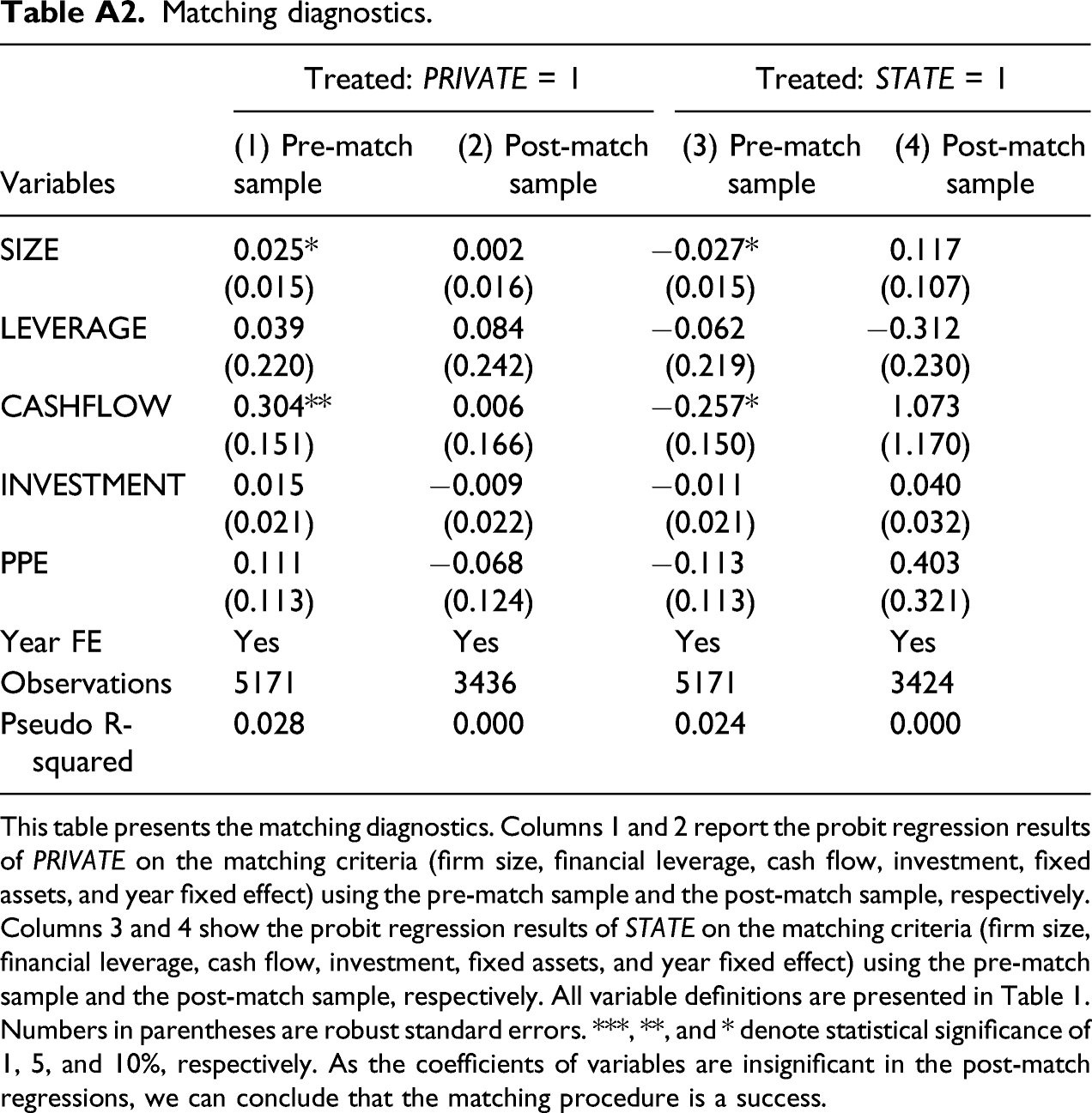
There is a potential issue in interpreting the empirical results from the regression of Models (1) and (2) that there might be unobservable firm traits affecting the control and treatment groups. To alleviate this concern, we construct two matched samples of private firms and FSOs from the full sample via the nearest neighbour matching without replacement method. The matching firm characteristics include the control variables in Models (1) and (2): firm size, financial leverage, cash flow, investment, and the degree of fixed assets, and in the two matching observations from the control groups must be in the same year. We then re-estimate Models (1) and (2) using the PRIVATE-matched and STATE-matched samples, respectively, as sensitivity tests.
A News-Based Approach to Measure Anti-Corruption
Because CAMPAIGN is a time dummy, it is invariant in the cross-sections, and there is a possibility that it also captures other known and unknown exogenous factors that may confound the findings from empirical analysis. This may be a potential source of endogeneity in our model. Moreover, the dummy variable CAMPAIGN can only indicate the presence of the anti-corruption campaign but not its intensity.
As a dummy variable may not very well represent the anti-corruption campaign of the Vietnamese government during the study period, we use an alternative approach to measure the anti-corruption commitment of the government. Inspired by a rising trend of using news-based indicators and textual analysis to measure policy uncertainty in economic literature (Baker et al., 2016; Hassan et al., 2019), we construct a news-based anti-corruption index of Vietnam using the frequency of word combinations representing the anti-corruption efforts, prosecutions of bribed cases, and investigations on violations of state asset management regulations in Vietnamese online newspapers. Since public media serves as an effective monitoring mechanism to public corruption and corporate misconduct (Camaj, 2013; Dyck et al., 2008), it reflects the intensity of anti-corruption by revealing corrupt acts of government officials, bribery from firms to politicians, and violations in state assets management in the public sectors. A typical example of this role of media is the event that the Wall Street Journal reported the corruption scandal of nearly 700 million USD of former Malaysian Minister Najib Razak in July 2015. In the context of Vietnam, public media usually reports a large investigation of Vietnamese authorities on corruption allegations and prosecutions of corruption cases. There are cases of corruption in Vietnam revealed by public media before the authorities announce an official investigation, for example, the corruption case of PMU18 in 2006, violations of regulation in financial management and investment at Vinashin corporation in 2010, and the case of Trinh Xuan Thanh (PVC-PetroVietnam) in 2016, and more. Being a country with a high degree of perceived corruption, the public in Vietnam pays close attention to corruption cases, and so does the media. Therefore, using the data from news articles in Vietnam to construct an anti-corruption index is a valid approach. The procedure to construct the index is as follows.
First, we scan major Vietnamese online newspapers and screen for newspapers with article text data available on their databases from 2006–2019. The process results in three major online newspapers: Dantri (dantri.com.vn) which is owned by a Vietnamese government agency, Nhandan (Nhandan.vn) which is owned by the Communist Party of Vietnam, and the largest Vietnamese private-owned online newspaper VnExpress (vnexpress.net). Second, we identify the word combinations of anti-corruption news by intensively reviewing related articles in those newspapers. The word combinations are presented in Table A1. Third, we use the Python library BeautifulSoup to scrap raw web data from those websites. Next, we proceed with the data processing to extract the time of articles and group the articles by month, quarter, and year. The last step is to tokenize and count the frequencies of the word combinations in all three newspapers using the Python libraries VnCoreNLP, Pandas, Matplotlib, and Wordcloud.
10
We illustrate the procedure in Figure 2 as follows: The process of data collecting and processing to construct the anti-corruption index.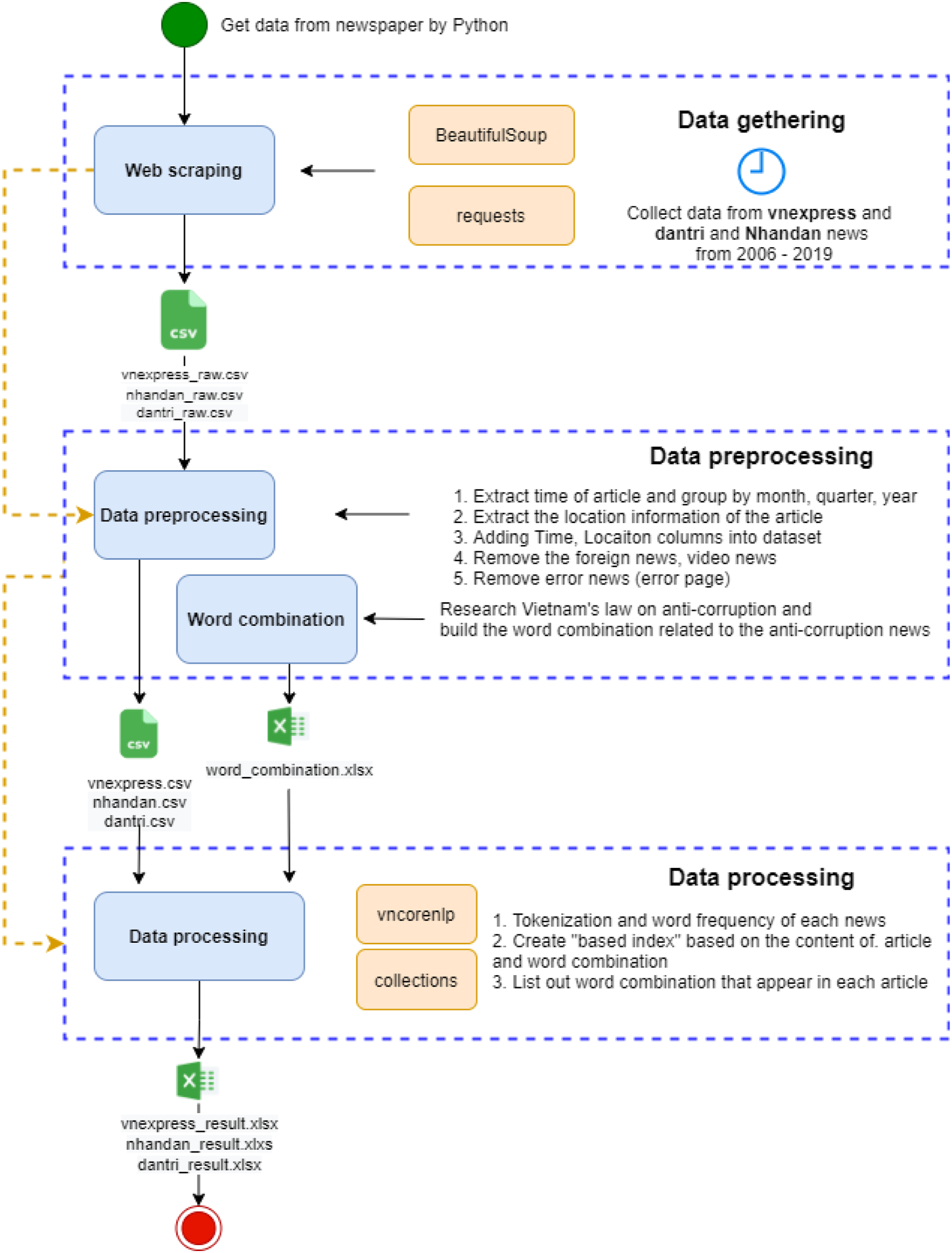
We sum the frequencies of word combinations in the newspapers and generate the aggregated anti-corruption index (AACI). Since AACI is a news-based index, it reflects the anti-corruption campaign of the Vietnamese government and is exogenous to firm financial performance. Thus, AACI serves well as an alternative measure of anti-corruption. The higher the value of AACI, the more intensive the anti-corruption campaign is. This is the first study that uses a news-based index and media data to measure the degree of anti-corruption, thus providing a fresh and promising approach for future anti-corruption studies.
Data and Sample
The data used in this study consists of financial data of Vietnamese non-financial firms listed on the HNX and HOSE and macroeconomic data of Vietnam from 2006 to 2019. The study period starts in 2006 because we can only access Vietnamese online newspapers’ databases from 2006 onwards. We do not consider post-2019 data to exclude the complicated impact of the COVID-19 pandemic on firm performance in Vietnam. Firm-level financial data are from the Bloomberg database. Ownership data is retrieved from the FiinPro database. Macroeconomic data such as inflation and growth in Gross Domestic Product are from the World Bank open database. The Rule of Law index data is from the Global Economies’ website. Our initial sample consists of 681 non-financial firms listed on HNX and HOSE over the period 2006–2019. A total of 3662 firm-year observations with missing financial or ownership data are excluded from the sample. The end sample consists of 5190 firm-year observations of 633 Vietnamese listed firms during the 2006–2019 period. To alleviate the impact of outliers on the outcomes of data analysis, we winsorize the continuous variables at the first and the 99th percentiles.
Empirical Results and Discussion
Descriptive Statistics
Descriptive statistics and correlation matrix.
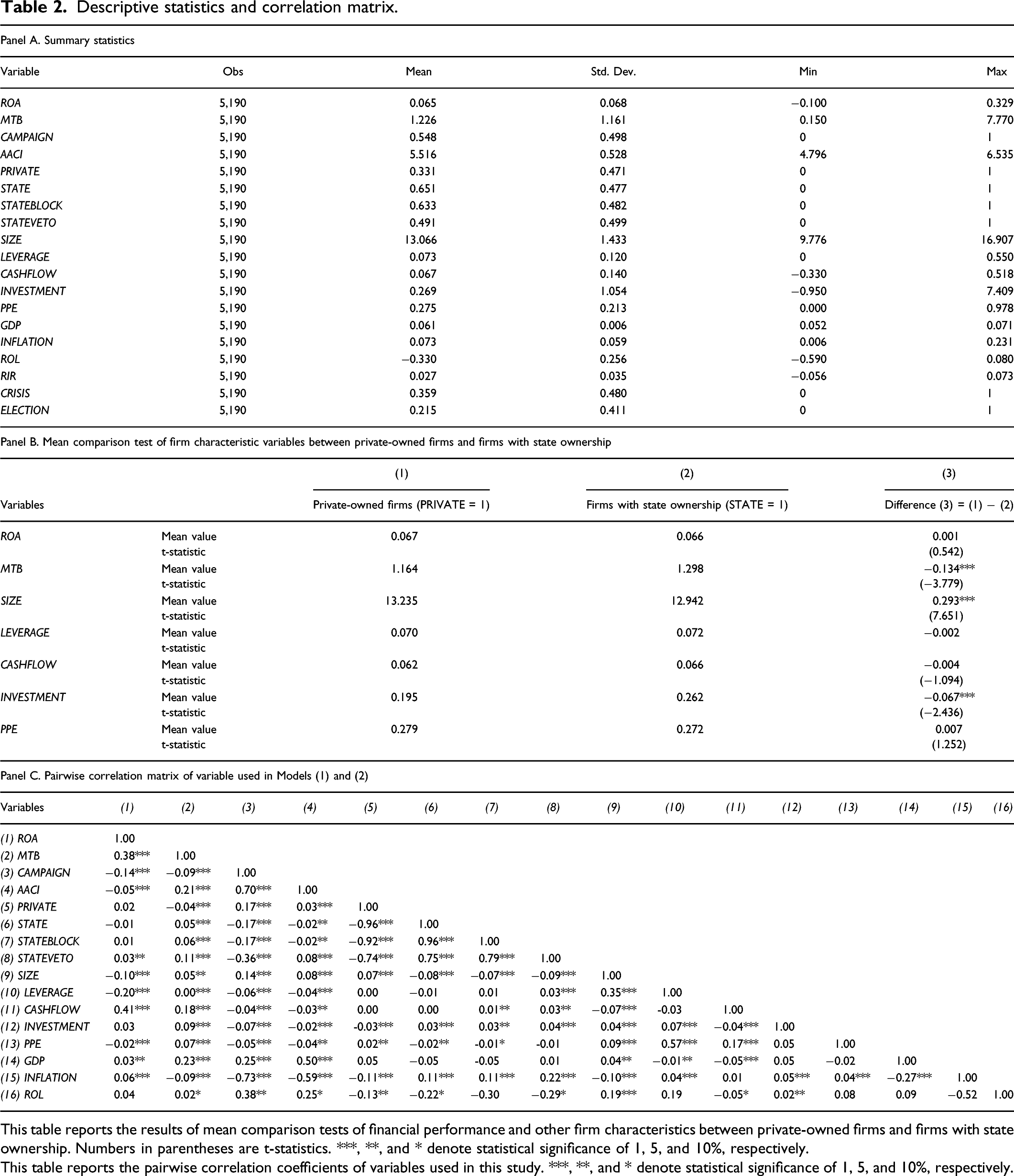
This table reports the results of mean comparison tests of financial performance and other firm characteristics between private-owned firms and firms with state ownership. Numbers in parentheses are t-statistics. ***, **, and * denote statistical significance of 1, 5, and 10%, respectively.
This table reports the pairwise correlation coefficients of variables used in this study. ***, **, and * denote statistical significance of 1, 5, and 10%, respectively.
Panel B, Table 2, shows the mean comparison test results of firm performance and other firm characteristics between the two groups: private-owned firms (PRIVATE = 1) and FSOs (STATE = 1), the two groups that together account for approximately 98.2% of our sample. We find that while the book value performance measure (ROA) does not vary significantly between the two groups, on average, the market performance of FSOs seems higher compared to that of private-owned firms (the difference is 0.134 that is significant at 1% level). Interestingly, the average size of private-owned firms seems to be higher compared to FSO’s (the difference is 0.294 that is significant at 1% level); however, the investment growth of FSOs appears to be higher than that of the private-owned firms on average (the difference is 0.067 that is significant at 1% level). These features suggest an issue of investment efficiency in FSOs in Vietnam.
Frequencies of anti-corruption keyword combinations in three major Vietnamese online newspapers from 2006 to 2019.
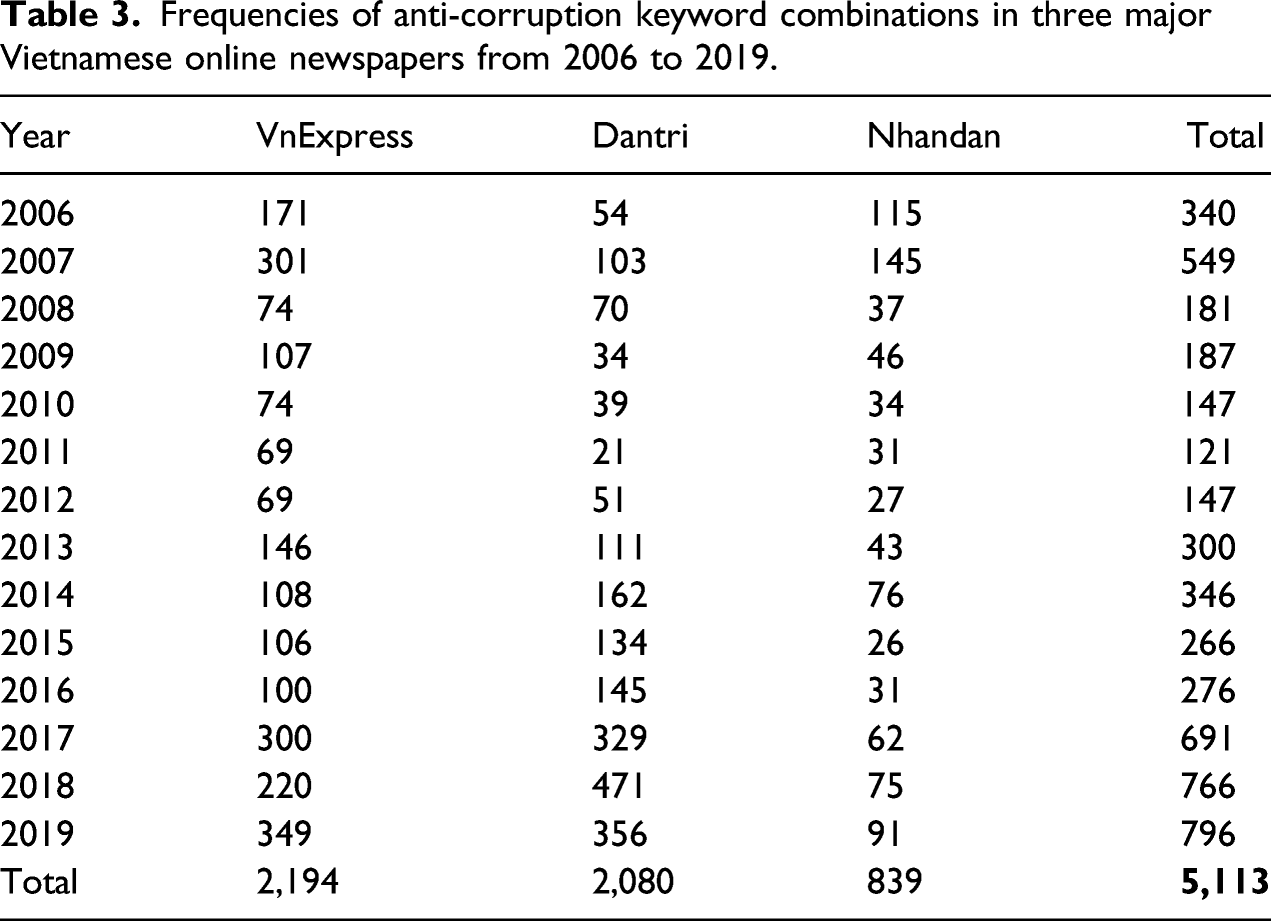
Figure 1 illustrates the news-based anti-corruption index constructed using data from major Vietnamese online newspapers. In 2007, the National Assembly of Vietnam announced the revision of the Anti-Corruption Law and there are also prosecutions of the PMU18 corruption scandal, resulting in a high number of news articles reporting the events. In 2012, another revision of the Anti-Corruption Law was made, followed by the establishment of the Central Anti-Corruption Steering Committee in 2013 as the beginning of the anti-corruption campaign in Vietnam. Those events are recorded in the ups of AACI in Figure 1. Moreover, the anti-corruption campaign has been quickly developing in the following period, including the prosecution of Dinh La Thang, a concurrent Politburo member of the Vietnamese Communist Party, and his related parties. Other cases were documented on news media, including several higher-ups in the police force and military being jailed due to taking bribery, opportunistic allocation of state assets, and other corrupt deeds. The news-based anti-corruption campaign well captures those developments as shown in Figure 1. Changes in the anti-corruption news-based indices. Notes: VNE_ACI stands for the news-based index with data collected from VnExpress; DT_ACI is the news-based index with data collected from Dantri; ND_ACI is the news-based index with data collected from Nhandan; Aggregated_ACI is the AACI index which is the combination of the three aforementioned indices. CACSC stands for the Central Anti-Corruption Steering Committee, the agency in charge of anti-corruption in Vietnam.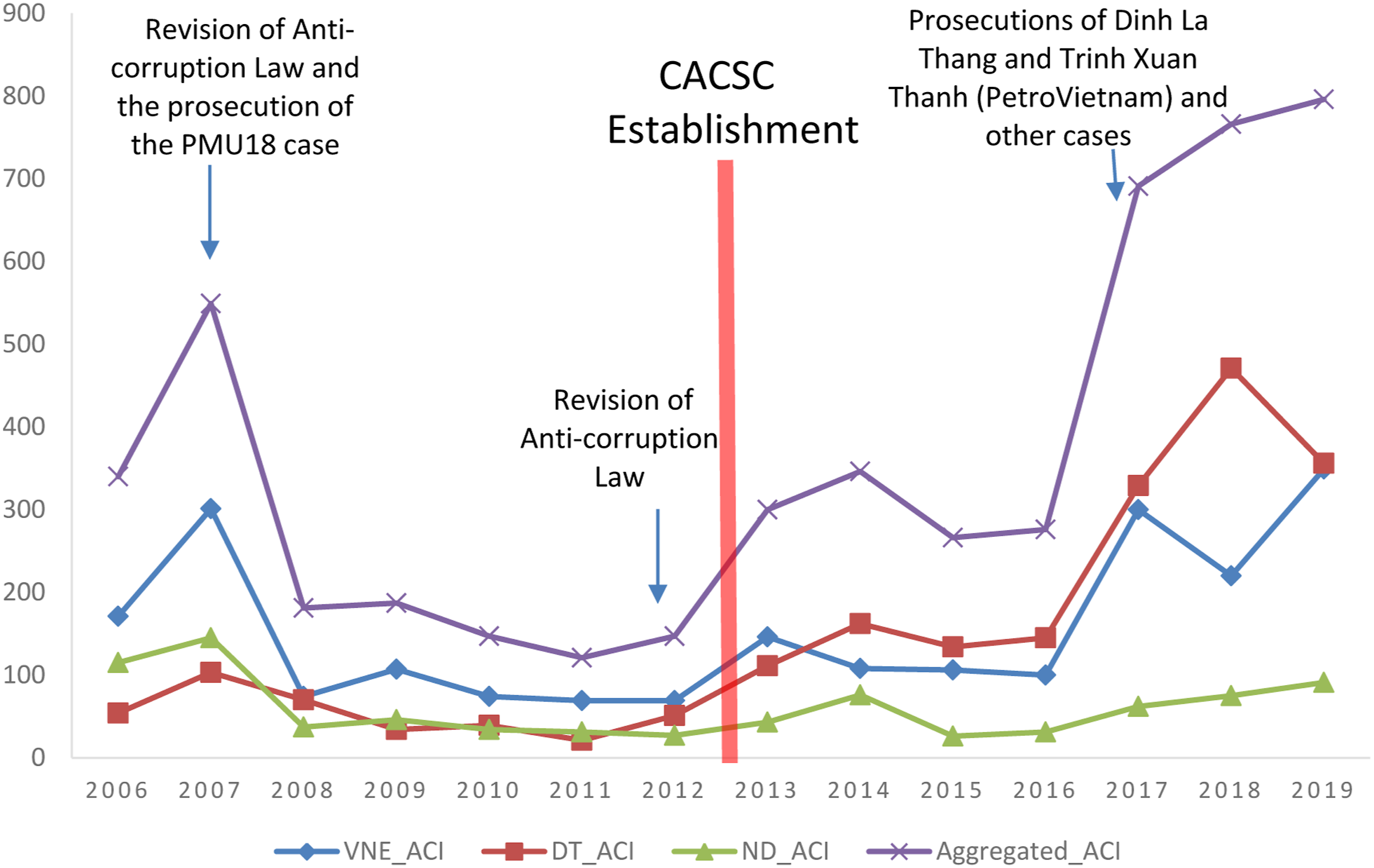
Difference-In-Differences Analysis
Difference-in-differences analysis.
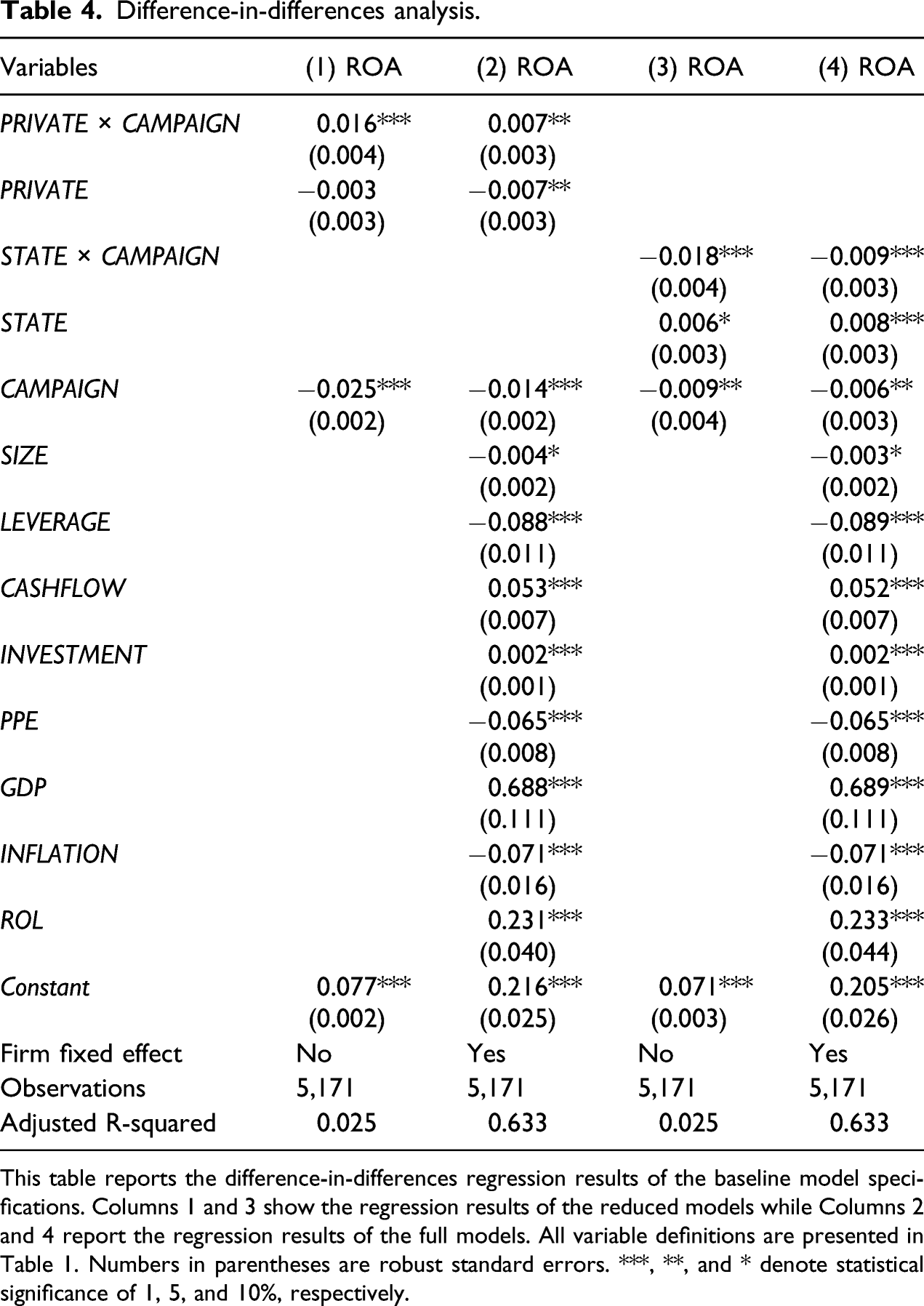
This table reports the difference-in-differences regression results of the baseline model specifications. Columns 1 and 3 show the regression results of the reduced models while Columns 2 and 4 report the regression results of the full models. All variable definitions are presented in Table 1. Numbers in parentheses are robust standard errors. ***, **, and * denote statistical significance of 1, 5, and 10%, respectively.
The coefficient of the interaction term PRIVATE × CAMPAIGN remains positive and statistically significant in Columns 1 and 2 at 5% and 1% significance levels, respectively. The results imply a positive impact of the anti-corruption campaign on the financial performance of private-owned firms. Evaluating the economic magnitude of the effect by standardizing the coefficient of the interaction term PRIVATE × CAMPAIGN, we find that on average, ROA of private firms increases by 3.72% during the anti-corruption campaign of the Vietnamese government. On the other hand, the coefficient of the interaction term STATE × CAMPAIGN remains negative and significant in Columns 3 and 4 at 1% significance level, implying a negative impact of the anti-corruption campaign on the financial performance of firms with state block ownership. The standardization of the coefficient of STATE × CAMPAIGN shows that on average, ROA of firms with the state as a block holder decreases by 5.36% during the anti-corruption campaign.
The empirics are consistent with the findings of previous literature (de Jong et al., 2012; Nguyen & Dijk, 2012; Ying & Liu, 2018) that corruption hampers the growth of the private sectors in Vietnam because it favours firms from public sector at the expense of private firms. The finding supports the social norm perspective that private firms are passive players in the bribery game under the corruption norms prevailing in the business environment. Therefore, anti-corruption might help improve the performance of private firms while causing certain shocks to performance of firms with state ownership. This indicates the “helping hand” feature of corruption for firms with state ownership and the “grabbing hand” of corruption that hampers the growth of private firms. Another feasible explanation for decreasing profitability in firms with state ownership during the anti-corruption campaign is that those firms set up more provisions or adjust their income to make up for the asset gap caused by previous corrupt deeds and thus lowering their performance.
Our findings are contrary to those of Kong et al. (2017) who study the underlying relationship in the context of China’s anti-corruption campaign. As Kong et al. (2017) find a negative impact of anti-corruption on private firms’ performance, their finding supports the rent-seeking perspective that firms actively engage in bribery to gain preferential treatments and abnormal benefits over their peers. The differences between our findings and Kong et al. (2017)’s findings imply the difference between China and Vietnam in terms of how public corruption affects businesses. We suggest that despite the two countries having many characteristics in common and undergoing anti-corruption campaigns during the same period, the findings of anti-corruption campaign affecting corporate outcomes in China may not be well applied to the context of Vietnam. 11 As our evidence supports the social norm perspective of corruption, it yields a different story about how private businesses in Vietnam perceive corruption and reacts to it. While Chinese firms tend to take advantage of political proximity and gain competitive advantages via bribery (Kong et al., 2017), Vietnamese firms are more likely to view corruption and bribery as social norms. Such an “everyone does it, thus so do I” attitude induces more bribes as informal costs of doing business for Vietnamese firms. Because anti-corruption can reduce corruption, it also reduces such informal costs and helps improve financial performance of Vietnamese private firms.
Sensitivity test.
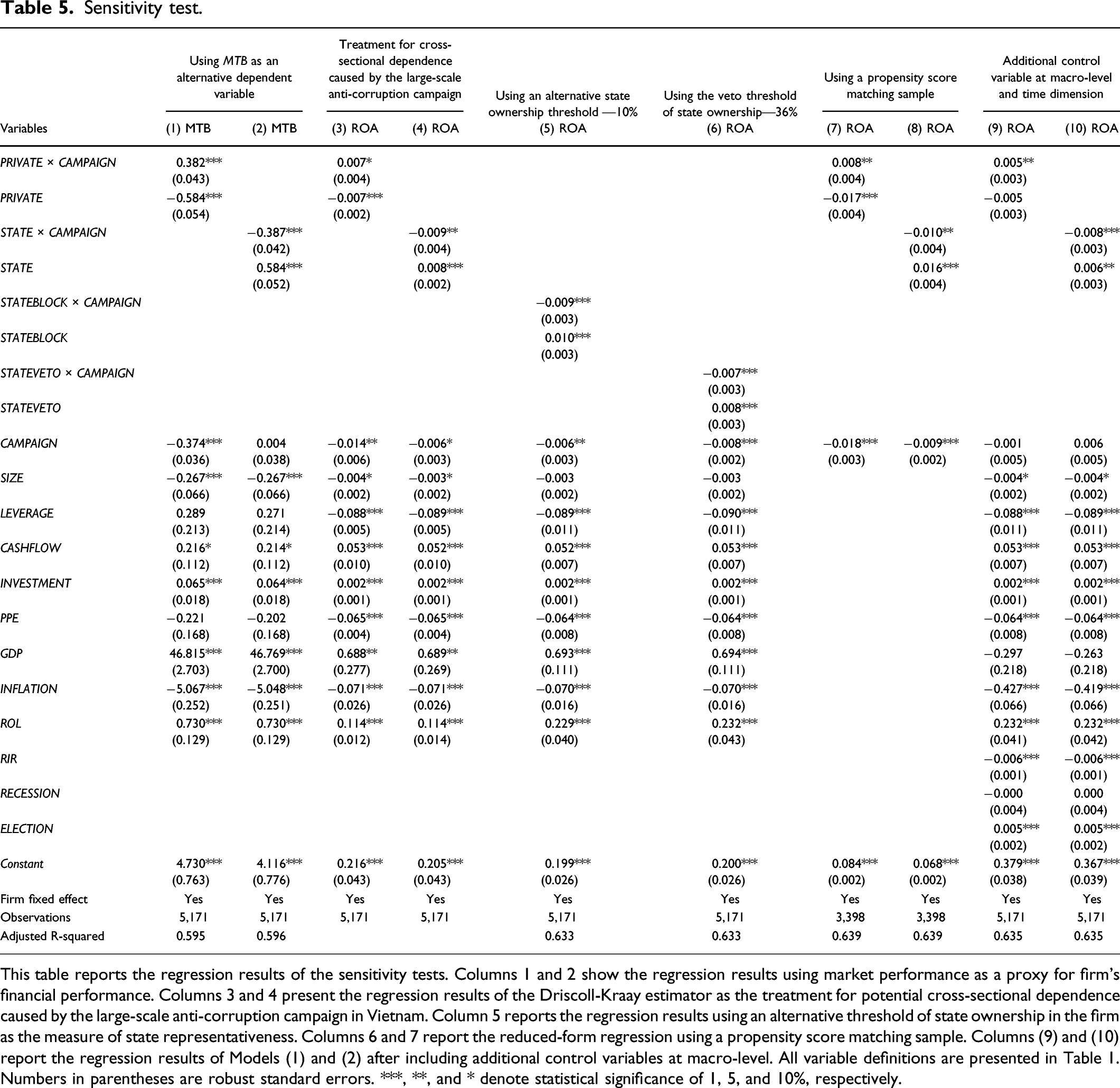
This table reports the regression results of the sensitivity tests. Columns 1 and 2 show the regression results using market performance as a proxy for firm’s financial performance. Columns 3 and 4 present the regression results of the Driscoll-Kraay estimator as the treatment for potential cross-sectional dependence caused by the large-scale anti-corruption campaign in Vietnam. Column 5 reports the regression results using an alternative threshold of state ownership in the firm as the measure of state representativeness. Columns 6 and 7 report the reduced-form regression using a propensity score matching sample. Columns (9) and (10) report the regression results of Models (1) and (2) after including additional control variables at macro-level. All variable definitions are presented in Table 1. Numbers in parentheses are robust standard errors. ***, **, and * denote statistical significance of 1, 5, and 10%, respectively.
Consistent with our expectation, the coefficient of the interaction term PRIVATE × CAMPAIGN in Table 5 remains positive and significant in all sensitivity tests. Similarly, the primary finding is qualitatively unchanged in the case of the interaction term STATE × CAMPAIGN even when we use different state ownership thresholds to construct the FSO proxies, thus bolstering our confidence in our findings. 13 The regression results of the reduced Models (1) and (2) in Columns 7 and 8 (Table 5) indicate that our findings well hold under the ceteris paribus assumption. Furthermore, the results in Columns 9 and 10 show that our baseline findings hold well after controlling for additional macroeconomic factors and some potential confounding factors in the time dimension.
To summarize, the empirical results support Hypotheses 1 and 2 that the anti-corruption campaign carried out by the Vietnamese government exerts a positive impact on the financial performance of firms in the private sectors and also affects the performance of FSOs.
Evaluation from the News-Based Approach
Regression using the news-based anti-corruption index.
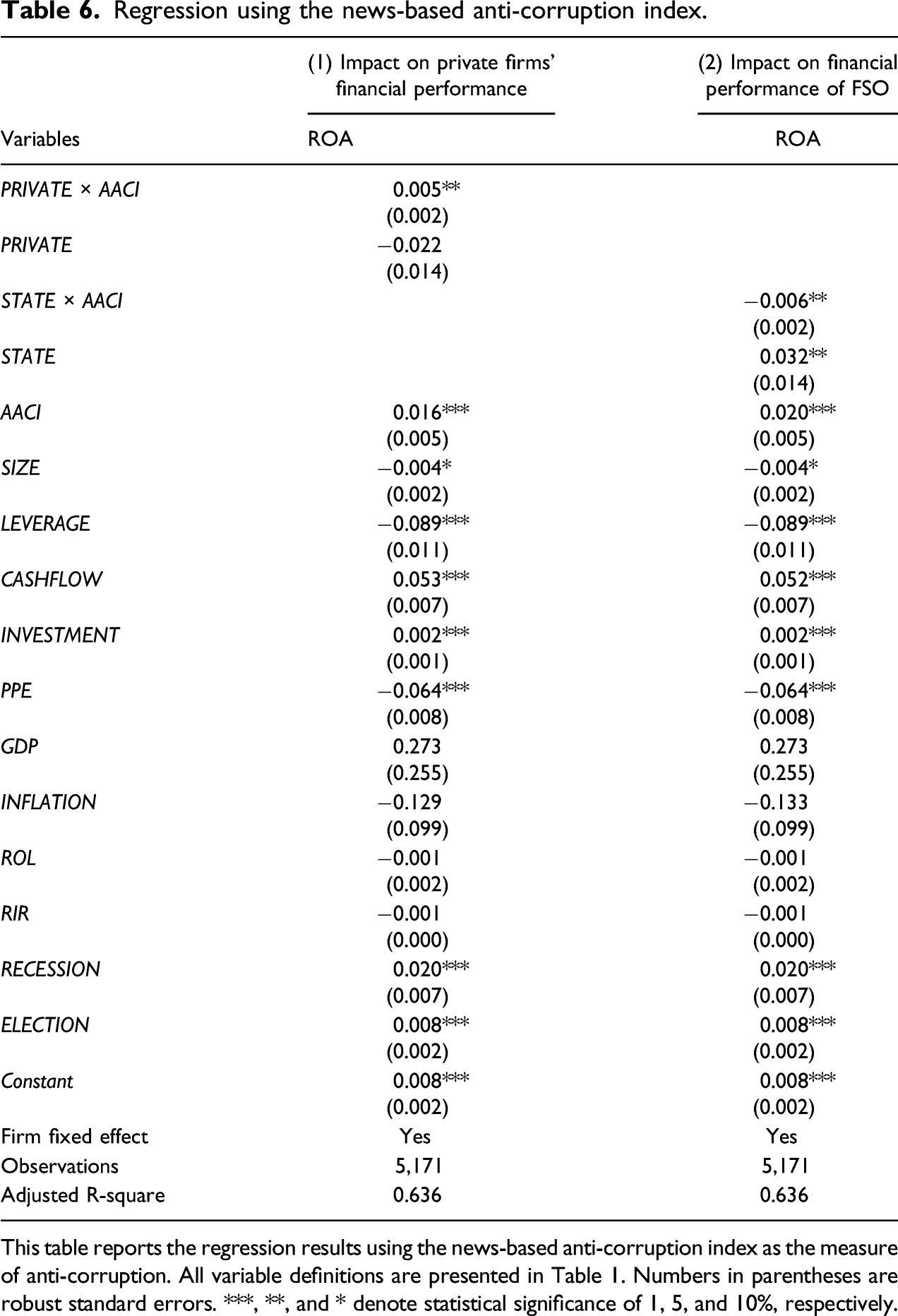
This table reports the regression results using the news-based anti-corruption index as the measure of anti-corruption. All variable definitions are presented in Table 1. Numbers in parentheses are robust standard errors. ***, **, and * denote statistical significance of 1, 5, and 10%, respectively.
In Column 1, Table 6, the coefficient of the PRIVATE × CAMPAIGN is positive and significant at 1% significance level, thus confirming our primary finding from the difference-in-differences analysis on the positive impact of the anti-corruption campaign on private firms’ financial performance. Similarly, our difference-in-differences analysis results still hold for the case of firms with state ownership as the coefficient of the interaction term STATE × CAMPAIGN is negative and significant at 1% level in Column 2, Table 6. The empirics elaborate our conjectures that the anti-corruption campaign helps to improve institutional quality in Vietnam and plays an important role in enhancing the business environment that nurtures the growth of the private sector.
Further Analysis
In this section, we provide further analysis to back up our interpretation of the results from the regression of models (1) and (2) in previous sections. From the results in Table 4, we argue that the anti-corruption campaign enhances private-owned firms’ performance via reducing the informal cost of doing business. To validate this interpretation, we take one step further to examine the changes in informal costs of private firms after the event of CACSC establishment in 2013. As informal costs are generally disguised in operating expenses and other discretionary expenses (Cai et al., 2011), it is unobservable, and thus, we cannot directly measure them. Therefore, we use the overall discretionary expenses to test this explanation. The intuition is that holding all else constant, if the informal costs of doing business decrease, then the total discretionary expenses of private firms also decrease. Following Roychowdhury (2006), discretionary expenses include advertising expenses, sales, general and administrative (SG&A) expenses, and research and development (R&D) expenses. In the context of Vietnamese accounting standards and practices, most firms do not report R&D expenses and advertising expenses, so we exclude these accounting items and add the “other expenses” item to calculate discretionary expenses. We scale the discretionary expenses to total revenues and use it as the dependent variable in Model (1) instead of ROA to examine its pattern following the anti-corruption campaign.
Further analysis.
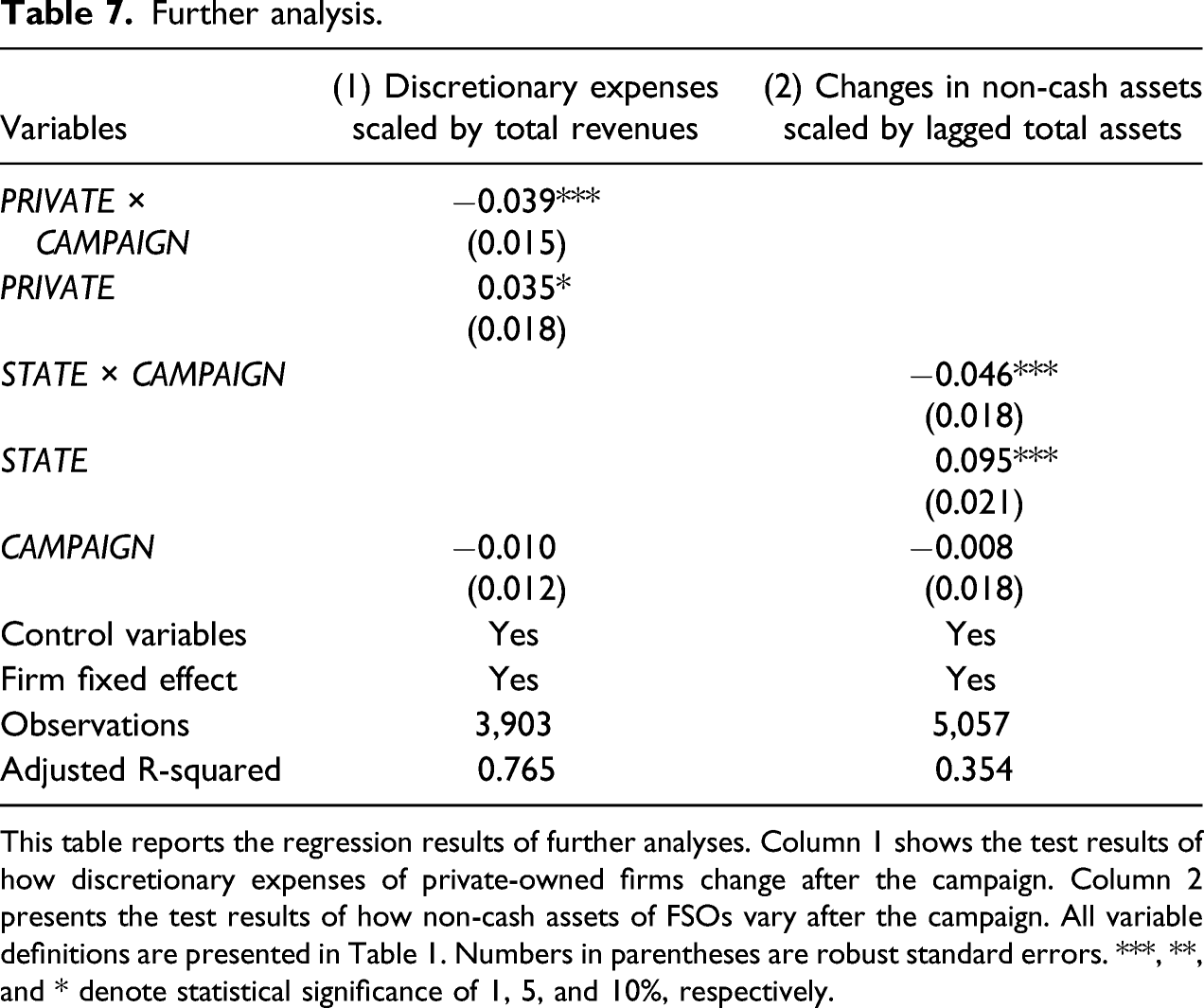
This table reports the regression results of further analyses. Column 1 shows the test results of how discretionary expenses of private-owned firms change after the campaign. Column 2 presents the test results of how non-cash assets of FSOs vary after the campaign. All variable definitions are presented in Table 1. Numbers in parentheses are robust standard errors. ***, **, and * denote statistical significance of 1, 5, and 10%, respectively.
The coefficient of PRIVATE × CAMPAIGN in Column 1 is negative and significant, implying that Vietnamese private-owned firms’ discretionary expenses decrease during the anti-corruption campaign. Similarly, the coefficient of STATE × CAMPAIGN is negative and significant in Column 2, Table 7, suggesting that non-cash assets of Vietnamese FSOs reduce during the campaign. Overall, the empirical results in Table 7 support our explanations.
Conclusion
Using a sample of firms listed on Vietnamese stock exchanges, our empirical evidence shows that the campaign exerts a positive impact on the performance of private-owned firms and a negative impact on firms with state ownership. Our findings still hold after controlling for firm characteristics and macroeconomic factors, different variable measurements, and a difference-in-differences analysis using matched samples. Furthermore, we propose a novel anti-corruption index that bases on media news indicating the anti-corruption actions of the authority.
Our study has two important implications for policymaking in Vietnam and countries with similar contexts. First, fighting corruption is essential in promoting growth in the private sectors via lowering rent-seeking behaviours from corrupt government officials and thus greasing the wheel of growth for private-owned firms. Second, the significant reduction in performance of firms with state ownership (after intensive control for observable and unobservable confounding factors) implies the losses of state assets caused by the revealed corruption cases. The finding suggests the importance of anti-corruption in improving the financial transparency of Vietnamese FSOs.
Our novel anti-corruption index adds significantly to the literature and future studies in this field. As this is the first attempt to quantify the unobservable anti-corruption campaign, it provides a tool for further studies in the fields of political economics, market structure and institutions, business management, and social science to evaluate the impacts of anti-corruption on different aspects of the Vietnamese economy and society. Given that the anti-corruption campaign in Vietnam shows no sign of slowing down in recent years, studying the impacts of this unprecedented event would be promising.
Despite the empirical results being solid, our study may suffer from two limitations. The first limitation comes from the limited access to corruption data in Vietnam. Therefore, we cannot investigate deeper into corruption at the firm-level, especially in state-owned enterprises. A similar issue is that political proximity data is not available; thus, we cannot evaluate the impact of the anti-corruption campaign on the performance of firms with political connections. The second limitation emerges during the construction of the news-based index where we cannot cover all Vietnamese online newspapers due to the limited access to article databases of those newspapers. We believe that future studies can overcome our limitations when those data become publicly available in Vietnam.
Footnotes
Acknowledgements
We are grateful to the Editor, three anonymous reviewers, Tam Nguyen, Vu Trinh, Linh Xuan Diep Nguyen, Kiet Tuan Duong, Oanh Ha, Hai Trinh, Thanh Nga, and participants at AVSE-Finance and Bank Network Internal Research Seminars and E-PhD Seminars at National Economics University for their constructive comments and suggestions. We also thank several other friends, colleagues, and respondents who helped verifying the validity of our anti-corruption index and do not wish to disclose their identities in our acknowledgement.
Declaration of Conflicting Interests
The author(s) declared no potential conflicts of interest with respect to the research, authorship, and/or publication of this article.
Funding
The author(s) disclosed receipt of the following financial support for the research, authorship, and/or publication of this article: This research is funded by National Economics University, Hanoi, Vietnam under grant number 16/HD-CBQT2.2021.16.

Notes
Appendix
Word combinations for constructing the news-based anti-corruption index Matching diagnostics. This table presents the matching diagnostics. Columns 1 and 2 report the probit regression results of PRIVATE on the matching criteria (firm size, financial leverage, cash flow, investment, fixed assets, and year fixed effect) using the pre-match sample and the post-match sample, respectively. Columns 3 and 4 show the probit regression results of STATE on the matching criteria (firm size, financial leverage, cash flow, investment, fixed assets, and year fixed effect) using the pre-match sample and the post-match sample, respectively. All variable definitions are presented in Table 1. Numbers in parentheses are robust standard errors. ***, **, and * denote statistical significance of 1, 5, and 10%, respectively. As the coefficients of variables are insignificant in the post-match regressions, we can conclude that the matching procedure is a success.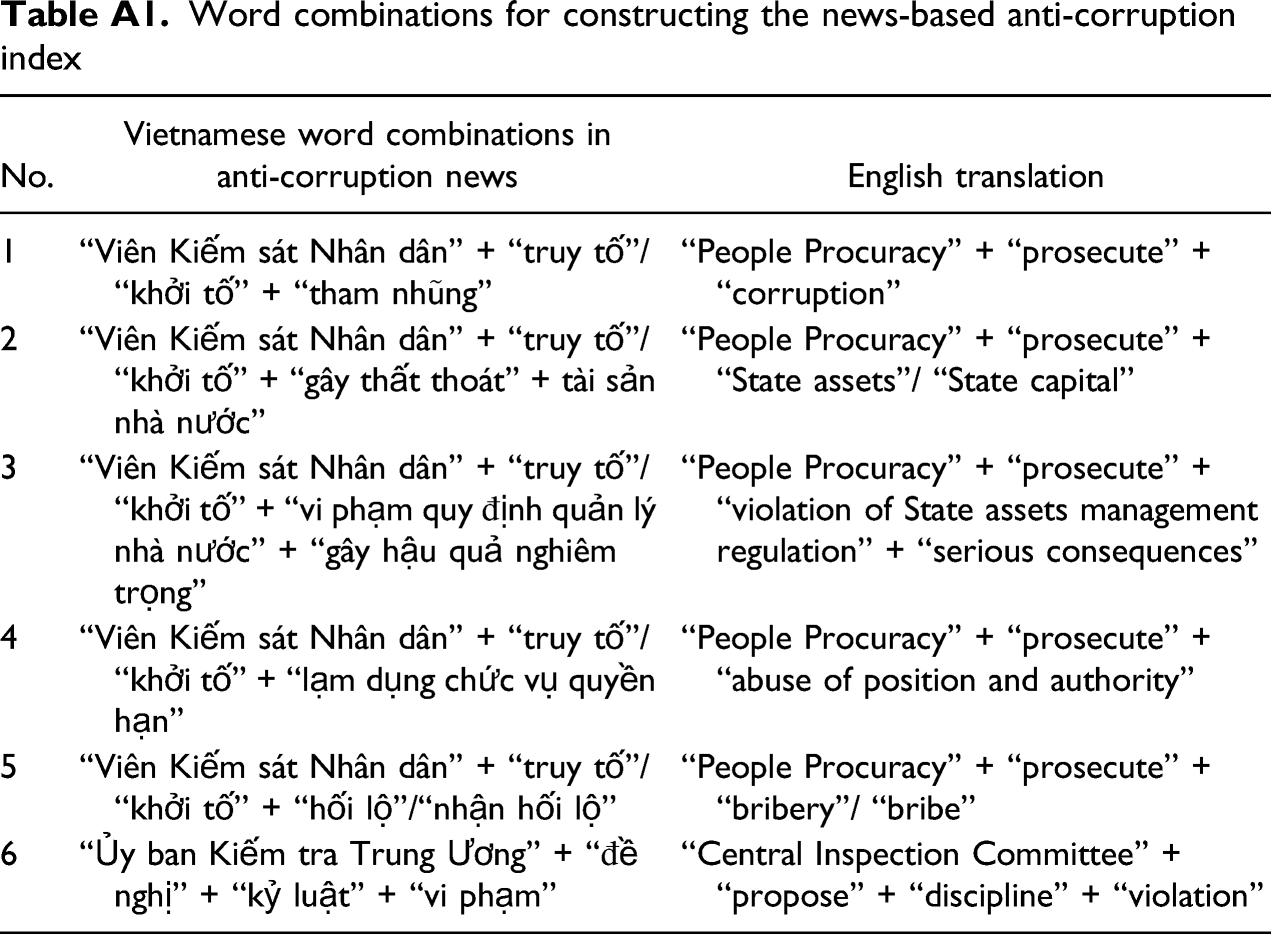
No.
Vietnamese word combinations in anti-corruption news
English translation
1
‘‘Viên Kiếm sát Nhân dân’’ + ‘‘truy tố’’/ ‘‘khởi tố’’ + ‘‘tham nhũng’’
‘‘People Procuracy’’ + ‘‘prosecute’’ + ‘‘corruption’’
2
‘‘Viên Kiếm sát Nhân dân’’ + ‘‘truy tố’’/ ‘‘khởi tố’’ + ‘‘gây thất thoát’’ + tài sản nhà nước’’
‘‘People Procuracy’’ + ‘‘prosecute’’ + ‘‘State assets’’/ ‘‘State capital’’
3
‘‘Viên Kiếm sát Nhân dân’’ + ‘‘truy tố’’/ ‘‘khởi tố’’ + ‘‘vi phạm quy định quản lý nhà nước’’ + ‘‘gây hậu quả nghiêm trọng’’
‘‘People Procuracy’’ + ‘‘prosecute’’ + ‘‘violation of State assets management regulation’’ + ‘‘serious consequences’’
4
‘‘Viên Kiếm sát Nhân dân’’ + ‘‘truy tố’’/ ‘‘khởi tố’’ + ‘‘lạm dụng chức vụ quyền hạn’’
‘‘People Procuracy’’ + ‘‘prosecute’’ + ‘‘abuse of position and authority’’
5
‘‘Viên Kiếm sát Nhân dân’’ + ‘‘truy tố’’/ ‘‘khởi tố’’ + ‘‘hối lộ’’/‘‘nhận hối lộ’’
‘‘People Procuracy’’ + ‘‘prosecute’’ + ‘‘bribery’’/ ‘‘bribe’’
6
‘‘Ủy ban Kiếm tra Trung Ương’’ + ‘‘đề nghị’’ + ‘‘kỷ luật’’ + ‘‘vi phạm’’
‘‘Central Inspection Committee’’ + ‘‘propose’’ + ‘‘discipline’’ + ‘‘violation’’
Variables
Treated: PRIVATE = 1
Treated: STATE = 1
(1) Pre-match sample
(2) Post-match sample
(3) Pre-match sample
(4) Post-match sample
SIZE
0.025*
0.002
−0.027*
0.117
(0.015)
(0.016)
(0.015)
(0.107)
LEVERAGE
0.039
0.084
−0.062
−0.312
(0.220)
(0.242)
(0.219)
(0.230)
CASHFLOW
0.304**
0.006
−0.257*
1.073
(0.151)
(0.166)
(0.150)
(1.170)
INVESTMENT
0.015
−0.009
−0.011
0.040
(0.021)
(0.022)
(0.021)
(0.032)
PPE
0.111
−0.068
−0.113
0.403
(0.113)
(0.124)
(0.113)
(0.321)
Year FE
Yes
Yes
Yes
Yes
Observations
5171
3436
5171
3424
Pseudo R-squared
0.028
0.000
0.024
0.000