







Abstract
Establishing effective climate control and reducing the ecological footprint (EF) are necessary for pursuing Sustainable Development Goals (SDGs), in particular Goal 13. In this context, it is required to enhance the understanding of various factors that can either decrease or enhance the EF. In the literature to date, limited studies on external conflicts (EX) have reported diverse results, and also the impacts of government stability (GS) on EF are less explored. This study explores the roles of external conflicts, economic growth, and government stability on EF in the context of SDG-13. The study also contributes to the literature by examining the environmental effects of government stability and external conflicts for the first time in Pakistan. This research uses time-series methodologies on data from Pakistan from 1984 to 2018 for exploring the long-run relations and causal dynamics. The results unfolded that external conflicts stimulate and Granger cause EF and therefore expand environmental deterioration. Thus, limiting conflicts is in the favor of Pakistan to achieve SDG-13. Surprisingly, government stability also poses harmful impacts on environmental quality by enhancing the EF, indicating that stable governments focus on improving economic conditions rather than environmental quality. Moreover, the study proves the validity of the environmental Kuznets curve. Policy suggestions are made to move forward in achieving SDG-13 and to evaluate the effectiveness of government environmental policies.
Introduction
Environmental sustainability has become a critical requirement for human welfare and sustainable development, as environmental degradation is rapidly disrupting the natural environment. The intensity and severity of climate change and related disasters are increasing, and floods, droughts, storms, and extreme temperatures are evident across the globe. According to the World Meteorological Organization (WMO), an extreme weather disaster took place each day over the last five decades, causing $202 million in economic damage and killing 115 persons. Notably, from 1971 to 2019, approximately 11,000 climate-related disasters were reported, causing economic loss of $3.64 trillion and more than two million deaths (WMO, 2021).
To reduce the threats of climate change, Sustainable Development Goal (SDG) 13 demands climate actions related to reducing global warming for avoiding the worst climate-related adversaries (UNDP, 2015). The main purpose of SDG-13 is to combat environmental degradation through climate change measures and planning (Albitar et al., 2023). Previous empirical studies have shown that SDG-13 poses one of the greatest challenges to policymaking in both developed and developing countries (Sinha et al., 2020). Public understanding of climate change is the key to achieving SDG-13, which requires a societal effort (Junsheng et al., 2019). To do so, it becomes essential to understand the predictor of environmental deterioration for designing climate control measures. In addition, strategies to control climate change must be integrated into national-level policies along with taking effective adaptive measures. To limit global warming, controlling and changing human consumption habits will be critical to limit human-induced emissions as climate deterioration is connected to economic growth (Can & Ahmed, 2022). In this regard, the environmental Kuznets curve (EKC) concept proposes that economic expansion brings environmental pollution because the scale effect escalates production by increasing fossil fuel usage at early levels of growth (Sinha & Bhattacharya, 2017). Generally, societies at this stage opt for economic prosperity rather than a clean environment, which can lead to weak environmental laws. However, along with development, the composition effect associated with structural change and the technique effect tend to overcome the negative externalities of development (Ahmed et al., 2022). Thus, reaching a certain threshold level of growth can decrease pollution levels because several factors including high environmental preference, efficient and clean technologies, increased research and development, strong environmental laws, and innovation reduce pollution (Ali et al., 2022). Over the years, the EKC has become a vital framework to identify the causes of environmental deterioration and check the direction of growth in different regions and nations. Thus, this research explores the effects of government stability and external conflicts on the EF by utilizing a model based on the concept of the EKC.
External conflicts (XC) can have a significant influence on the environment through a variety of channels. XC is a risk rating based on wars, foreign pressure, and cross-border conflicts (ICRG, 2021). It is evident that conflicts in various countries and regions trigger militarization to ensure strong defense. Notably, extensive transport and residential infrastructure of armed forces and military weapons consume pollutant fossil fuels which adversely influence the environment (Qayyum et al., 2021). Military endeavors induced by conflicts extinguish natural life, deplete resources, and discharge toxins and radioactive elements leading to the soil, air, and water pollution (Ahmed et al., 2020). Military conflicts can damage the productive land and restrict the optimum productive allocation and usage of scarce resources (Bradford & Stoner, 2014). In contrast, XC can stimulate economic instability by diverting important resources to the military sector from other productive sectors and expanding defense spending, which in turn may reduce economic activities and thereby, decrease the use of energy and related environmental deterioration (Ahmed et al., 2022).
Besides, the success of environmental policies is dependent on the stability of government in a nation. Policymaking to discontinue fossil fuel energy requires a strong will of political institutions. According to Tang et al. (2022), unstable regimes intend to secure short-term economic benefits and neglect the need for long-term strategic environmental planning. On the other hand, stable governments prefer to formulate and implement policies for sustainable growth (Rizk & Slimane, 2018). Generally, nations with weaker institutions and unstable governments have severe environmental problems and weak environmental regulations (Danish & Ulucak, 2020). In this context, Pakistan is among the countries with unstable governments and significant environmental problems. Pakistan’s EF has been below biocapacity for many years. Pakistan’s EF per capita was 0.61 gha in 1984, while its biocapacity per capita is 0.41 gha. In 2018, EF increased by 25% compared to 1984, while biocapacity decreased by 19.7%. This situation, shown in Figure 1, indicates that environmental conditions in Pakistan have deteriorated over the years and measures need to be taken to address this problem. Change in the ecological situation of Pakistan in 35 years.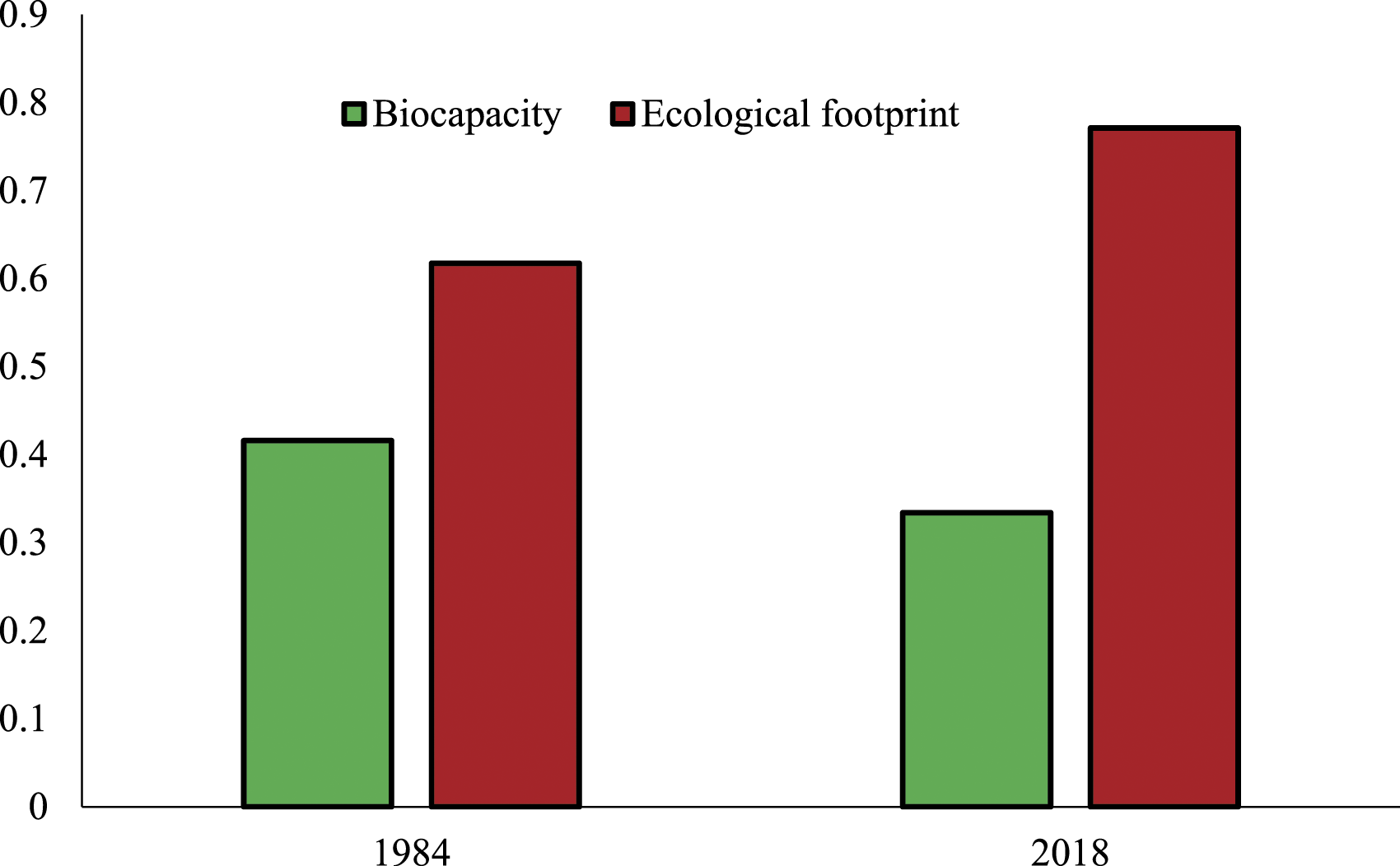
It is vital to inspect the roles of government stability and external conflicts in the EF of Pakistan due to numerous reasons. Pakistan has been continuously facing the atrocities of climate change over the past few decades. The country suffered around 143 extreme weather disasters, including floods, droughts, earthquakes, and heatwaves, with a massive economic loss of around 3.93 billion (US $) from 1995 to 2014, and therefore, it was categorized among the top 10 most affected nations by climate change over the period 1995–2014 (Kreft et al., 2016). Although international institutions had warned about the high climate-related risk in Pakistan, the authorities had ignored such calls and necessary climate actions were not taken. Consequently, a devastating flood engulfed one-third of Pakistan in 2022 affecting more than 33 million people and destroying homes, roads, and crops. This incident is not unique as Pakistan is expected to frequently face devastating floods along with extreme drought and heat. Thus, climate change poses an endemic challenge to Pakistani political institutes (TWP, 2022).
In terms of conflicts, Pakistan has troubled relations with its neighbors like India, Afghanistan, and Iran. The country has fought three wars with India, mainly over the Kashmir conflict. The Cold War and the war on terror in Afghanistan have severely affected the security and economy of Pakistan. On account of these conflicts, Pakistan is forced to allocate an enormous budget to its defense sector despite frequent economic crises (Yildirim & Öcal, 2006). Adding fuel to the fire, Pakistan has a history of unstable weak governments, inter-provincial disputes, and frequent military dictatorships. Pakistan’s inability to choose between democracy and military dictatorships and deep-rooted external conflicts has prevented the country from gaining stability over the last 60 years (ASIA Society, 2022). Additionally, Pakistan is the fifth largest country by population accommodating more than 235 million people. The population growth rate (1.91%) of Pakistan is higher than the population growth rates of the top four populous nations, including India (0.68%), China (−0.00%), the US (0.38%), and Indonesia (0.64%) (WPR, 2022). Apart from this, Pakistan suffers frequent economic crises and it narrowly escaped a default with the help of a much-needed IMF financial assistance deal in 2022. A large portion of Pakistan’s budget goes toward defense and debt repayment.
Against this background, it becomes necessary to analyze the drivers of the EF in Pakistan by considering the roles of external conflicts and government stability for effective environmental policies. Hence, this study contributes to the literature by exploring the impacts of government stability and external conflicts on the EF in Pakistan. The literature on the topics of government stability, external conflicts, and the EF is limited, and most of the studies have overlooked Pakistan, which is suffering from serious environmental, economic, and political problems. This study also examines the EKC in the context of government stability and external conflicts. Methodologically, the study uses the spectral causality test, which addresses seasonal fluctuations in small datasets. Unlike other tests, this method can trace causal relationships at high, medium, and low frequencies. Apart from this, Dynamic Ordinary Least Squares (DOLS) and Fully Modified Ordinary Least Squares (FMOLS) are used to acquire long-run findings. These methods are also reliable in detecting long-run relationships accounting for autocorrelation and endogeneity in time-series data.
The remainder of this research is structured as follows. The second section discusses the relevant literature. The third section presents the data and methodology and the fourth section provides the empirical results. The final section concludes the study and provides recommendations.
Literature Review
Although studies continue to focus on CO2 emissions (Jahanger & Usman, 2022; Liu et al., 2022, Suki et al., 2022; Zheng et al., 2022), recent literature has found EF to be a more comprehensive indicator for simultaneously assessing air, water, and soil pollution (Sharif et al., 2021, Pata & Hizarci, 2022). EF tracks the ecological assets needed to produce the natural resources consumed by humanity and sequester the waste. Many recent investigations have linked EF with the economic growth in the EKC framework incorporating different variables (Pata, 2021, Numan et al., 2022). A brief review of some related studies is provided below:
Charfeddine (2017) revealed that EF is increased by trade, electricity consumption, and financial development (FD) in Qatar, while economic growth (Y) and EF have exhibited a U-shaped relationship instead of the EKC. He further highlighted the significance of using the correct proxy for environmental deterioration since noticeable differences in the effects of the variables were observed when CO2 emissions were incorporated as a dependent variable. However, Al-Mulali, Weng-Wai, et al. (2015) found that the EKC is valid for upper-middle as well as high-income nations. Notably, in the low and middle groups of nations, the EKC is not found. They also observed positive impacts of trade, FD, and energy use on EF. The study by Katircioglu et al. (2018) established the EKC in top traveler places. It also found EF reduction induced by the enhancement in tourism. In the same vein, the work of Hassan et al. (2019) established the EKC and expansion in EF due to natural resource usage in Pakistan. However, Dogan et al. (2020) could not unfold the EKC in BRICS nations. Similarly, Mrabet et al. (2017) found that the EKC is invalid in Qatar. They also established that trade and oil prices boost EF. An earlier work by Wang et al. (2013) failed to validate the EKC using data from 150 countries.
Similar variations in the EKC findings exist in some other studies. For instance, in the empirical investigation of MENA nations, Charfeddine and Mrabet (2017) noticed the EKC in the overall panel as well as oil exporting nations. However, in the non-oil exporting group this relationship turned out to be a U-shaped pattern. Ahmed and Wang (2019) confirmed the concept of the EKC and revealed the negative impacts of human capital using the Indian data. In contrast, Rudolph and Figge (2017) provided that the EKC is invalid while globalization has no effect on EF for 146 nations. Dai et al. (2023) also concluded that the EKC is unverified in the United States. In contrast, Kihombo et al. (2021) revealed that financial globalization can control EF in WAME nations and the relationship between Y and EF is similar to the EKC.
Regarding external conflicts, there are few studies with different opinions. For example, Ahmed et al. (2022) established that external conflicts limit EF in India because conflicts discourage economic activities leading to a reduction in consumption. Similarly, Usman et al. (2021) revealed that external conflicts decrease EF by using the data from the MENA region. The study by Qayyum et al. (2021) suggested that conflicts expand EF in South Asia by disregarding that a higher index of conflicts implies low conflicts and proper rescaling of data is necessary to interpret this relationship. Keeping in view this issue, it can be interpreted that even in their panel study, external conflicts mitigate EF in South Asia. However, empirical works on the relationship between external conflict and EF is insufficient and further research is essential to capture the impact of conflicts on EF.
Besides, government stability is critical for making environmental policy and its effective implementation. According to Tang et al. (2022), government stability and energy transition have helped to reduce EF in BRICS nations. However, they did not employ the EKC-based model to know about the role of government stability in the EKC. Apart from that, empirical investigations on the role of government stability in EF are not available. Nevertheless, government stability is a vital institutional factor, and some scholars have linked EF with institutional variables without focusing on government stability. For example, Abid (2016) revealed for Africa that institutional variables stimulate environmental problems. Likewise, Hassan et al. (2020) revealed that institutional variables boost environmental degradation in Pakistan. Pellegrini and Gerlagh (2006) established that institutions expand development by degrading the environment in developing countries. In contrast, Sarkodie and Adams (2018) revealed that institutions are critical in reducing the environmental pollution in South Asia. Likewise, Ntow-Gyamfi et al. (2020) revealed that institutional quality curbs environmental degradation in Africa. Likewise, Khan et al. (2021) established that institutional quality is conducive to environmental quality in the OECD. In the same vein, Solarin et al. (2018) revealed the eco-friendly benefits of institutional quality in developing nations. Pata et al. (2022) also concluded that political stability helps reduce EF in South Asia.
Summing up, literature is abundant on the drivers of EF; however, studies on the roles of government stability and conflicts in EF are scarce. Thus, it is vital to examine how EF is influenced by external conflicts and government stability. Moreover, it is important to investigate the presence of the EKC in the context of these variables for suitable growth and environmental policies.
Model Construction, Data and Methodology
In this section, the first part discusses the conceptual framework of the study, the model, and the datasets. The second part provides the methodology of the study.
Model Construction
The conceptual framework of the study is based on the concept of the EKC which emerged from the innovative research of Grossman and Krueger (1995). This concept hypothesizes that environmental externalities of economic growth arise during the early stages of economic progress where scale effect accompanied by environmental insensitivity and weak ecological laws upsurges environmental pollution. However, soon after realizing a threshold level of growth, the turning point arises and pollution levels decline because of composition and technique effects. The EKC implies that countries can overcome their environmental problems through improvements in economic and social well-being. The validity of the EKC shows that economic expansion is a factor that improves environmental factors. As the economic structure changes, high income leads to an increase in environmental awareness and willingness to consume clean goods. The structural change in economies and the adoption of modern technology along with rigorous ecological laws and increased preference to safeguard the environment reduce environmental pollution (Ahmed et al., 2022; Usman et al., 2022). Even though the findings for EKC remained inconclusive, this hypothesis provided the base for many environmental studies.
Government stability can be an important factor to influence environmental quality because effective and sustained environmental policies are more likely to be introduced by stable governments, whereas weak governments may overlook the need and importance of strategic environmental plans (Tang et al., 2022). Thus, government stability can affect the EF and also influence the existence of the EKC. The influencing research of (Hooks & Smith, 2005) introduced the theory of Treadmills of destruction (TMD) which provides the foundation for analyzing the impacts of external conflicts on the environment. This theory emphasized the environmental destructions caused by militaries and indeed, external conflicts are among the triggering forces behind increased militarism. External conflicts cannot only upsurge the spending of the defense sector, which can intensify EF through the use of fossil fuel but also reduce the funds available to other sectors, which can affect the funding of environmental projects (Ahmed et al., 2022). Finally, population density may harm the environment unless managed effectively (Tang et al., 2022). Urban areas with high population density play a major role in EF levels (Ahmed et al., 2022). The research work of Jaforullah and King (2017) pointed out that using energy consumption in the models can generate biased results because energy and environmental deterioration often have the same determinants and energy also exhibits a high correlation with other important variables like economic growth. They further suggest that the inclusion of energy in models that are constituted on the EKC framework can change the turning points of EKC. Thus, this paper responds to their call and excludes energy use from the model. The model for the study is given below:

Data and Method
Concerning the duration of the study, the datasets of XC and GS are available from 1984, while the datasets on EF are unavailable beyond 2018. This led us to collect the yearly data from 1984 to 2018. GFN (2021) provided data on EF of consumption in global (gha) hectares per person, while the dataset on per capita GDP (2015 US $ constant) is used to measure economic growth following the majority of previous studies. WDI (2021) provided yearly data on GDP and population density (individuals per sq. km of land). External conflicts are measured by using the external conflict index available at ICRG (2020). This index ranges between 0 and 12 and its values near 12 indicate lower conflicts and vice versa. Thus, it was rescaled to simplify the interpretation of results following the study of Usman et al. (2021). Government stability is measured by using the index of government stability provided by ICRG (2020). This index, which ranges between 0 and 12, evaluates the government’s ability to stay in power and fulfill its specified programs. It uses three dimensions to measure government stability including government unity, legislative strength, and popular support. The higher values of this index imply more stability and lower risk.
In this study, the pretests included some unit root methods, for instance, ADF (Dickey & Fuller, 1981) and PP (Phillips & Perron, 1988). However, the use of these tests sometimes leads to biased results because these tests are not able to distinguish between structural breaks and unit roots. Therefore, the analysis is aided by using the ZA test, which can successfully identify unit roots and breaks (Zivot & Andrews, 1992).
The analysis revealed the integration level of I (1), which motivated us to use the famous cointegration method of Bayer and Hanck (2013), which is a unique method that combines different cointegration tests for producing Fisher statistics (FST) to make consistent decisions pertaining the occurrence of long-run association. Thus, the indecisiveness in selecting the most appropriate tests for cointegration analysis can be overcome by using the Bayer and Hanck (BH) test. The equation for the BH test is as follows:


After this, the DOLS technique is applied to ascertain the long-run effects of government stability, external conflicts, and other variables on EF. This method is popular for handling potential endogeneity concerns, serial correlation, and small sample bias. Although the dataset is stationary at 1 (0); however, the DOLS also allows using some regressors integrated at 1 (0) in the model (Ahmed & Wang, 2019). The long-run impacts of government stability and external conflicts on EF are also verified by using the FMOLS test, which is equally good to resolve serial correlation and endogeneity concerns.
Lastly, the spectral causality method is applied to understand the causal dynamics at different frequencies. This test developed by Breitung and Candelon (2006) is a reliable frequency domain method, which captures causalities at short, medium, and long-range frequencies while accounting for seasonal variations. This method tests the null hypothesis denoting the absence of causality. The rejection of this hypothesis at 5% and 10% significance describes a causal association from the regressor to the dependent variable.
Results’ Interpretation and Discussion
Descriptive Statistics.
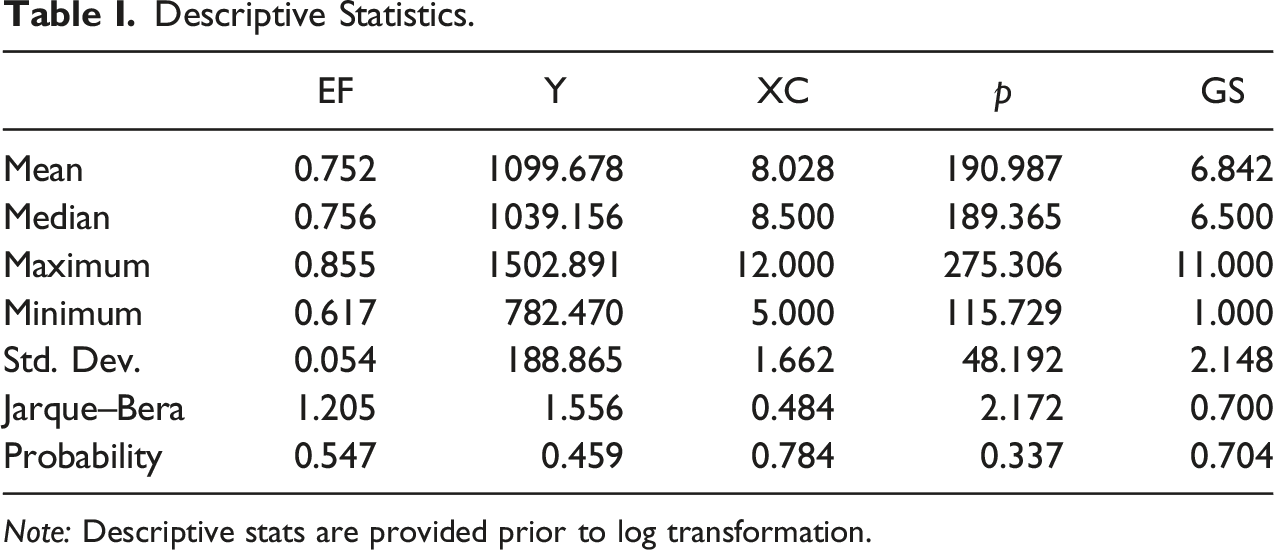
Note: Descriptive stats are provided prior to log transformation.
The trend of the EF in Figure 2 represents certain fluctuations; however, Pakistan faced a high ecological deficit in 2018 as its EF was 0.77 per person while the available biocapacity was only 0.33 per person (GFN, 2021). External conflicts had a minimum value of five and the index reached the value of 12 in some years. Considering that this index ranges from 0 to 12, the standard deviation of 1.662 indicates significant variations in the index value owing to regional and international issues. Notably, the minimum value of this index shows high conflicts, so the inverse of this index is used in the subsequent analysis to simplify interpretation. The standard deviation of government stability is even higher, depicting significant political uncertainty over the analysis period. Evolution of environmental pressure in Pakistan in global hectares during 1984–2018.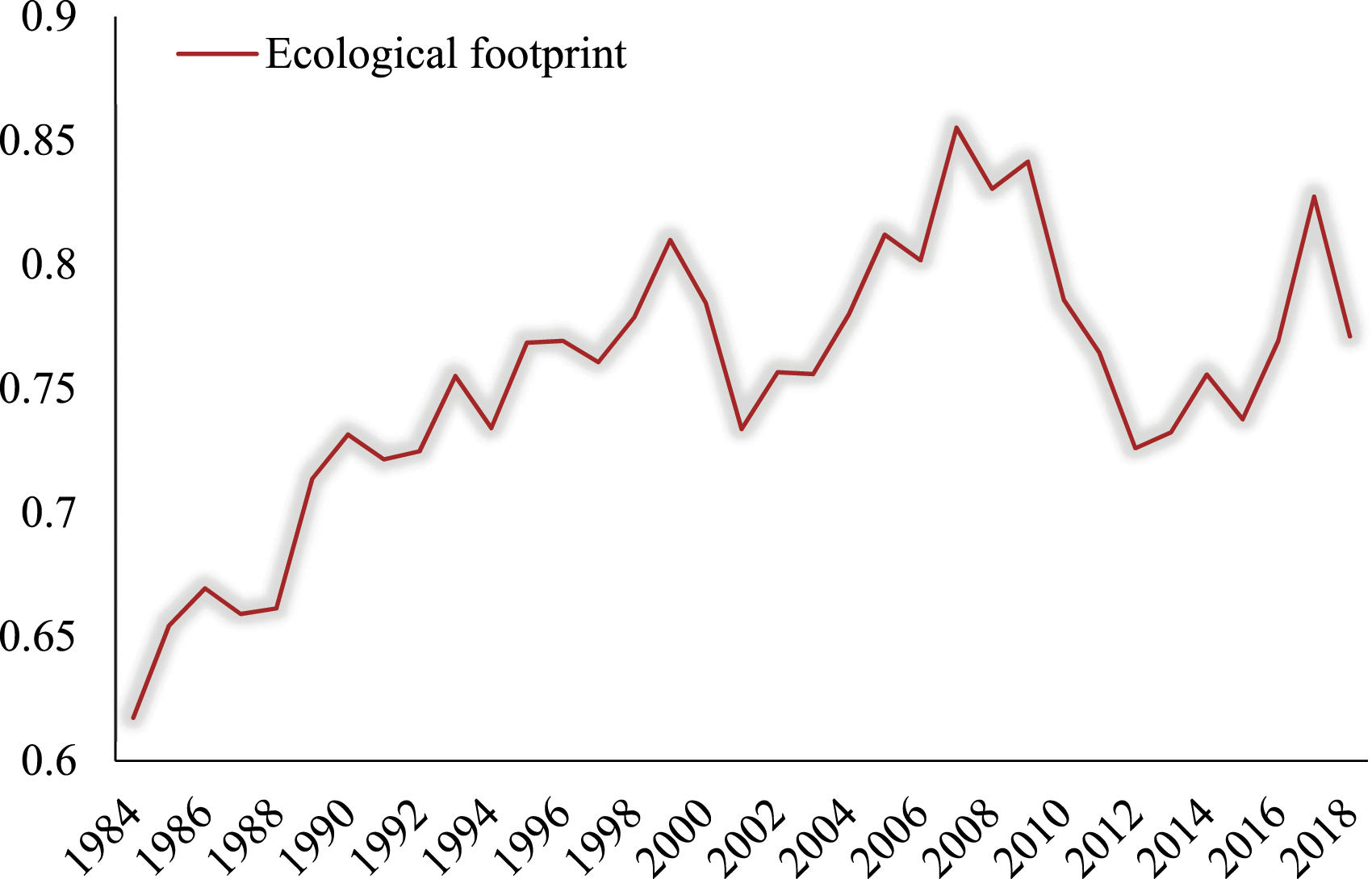
ADF and PP Tests Results.
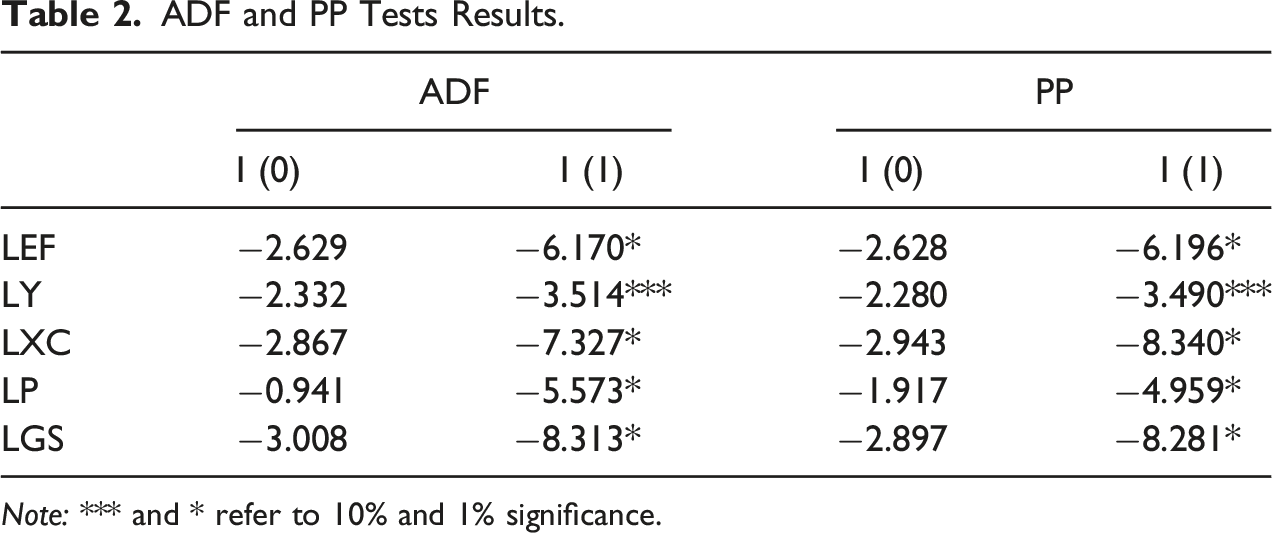
Note: *** and * refer to 10% and 1% significance.
ZA Test Results.
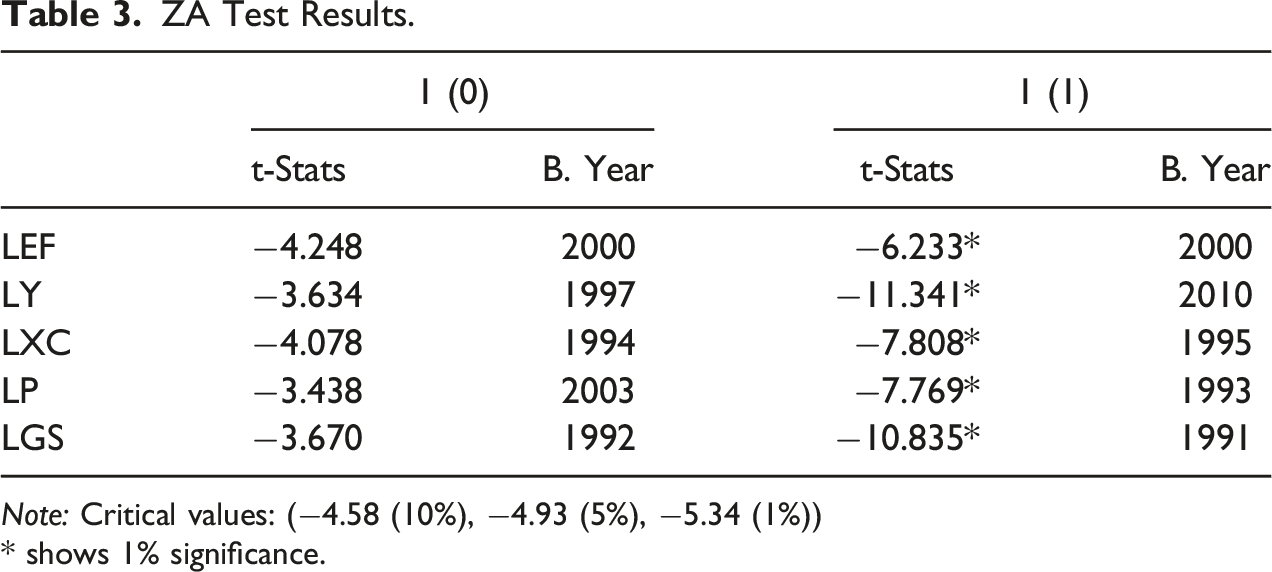
Note: Critical values: (−4.58 (10%), −4.93 (5%), −5.34 (1%))
* shows 1% significance.
BH test for Cointegration.
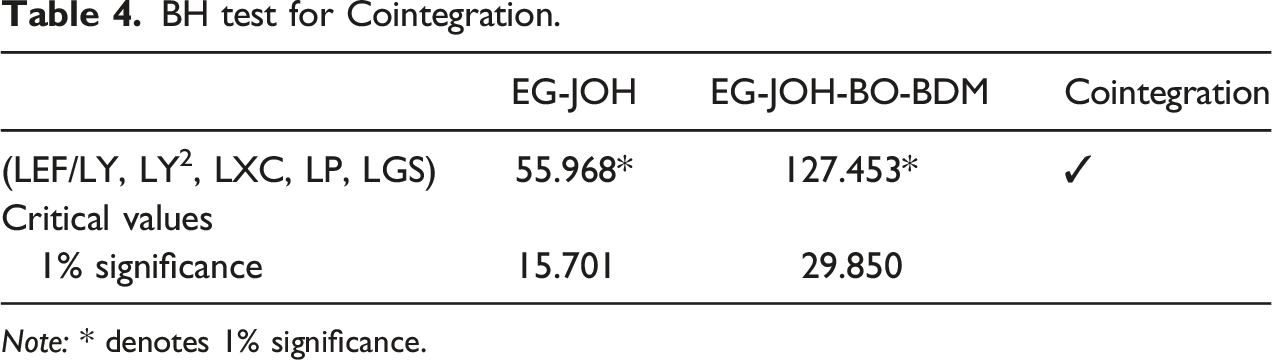
Note: * denotes 1% significance.
Long-Run Findings (DOLS).
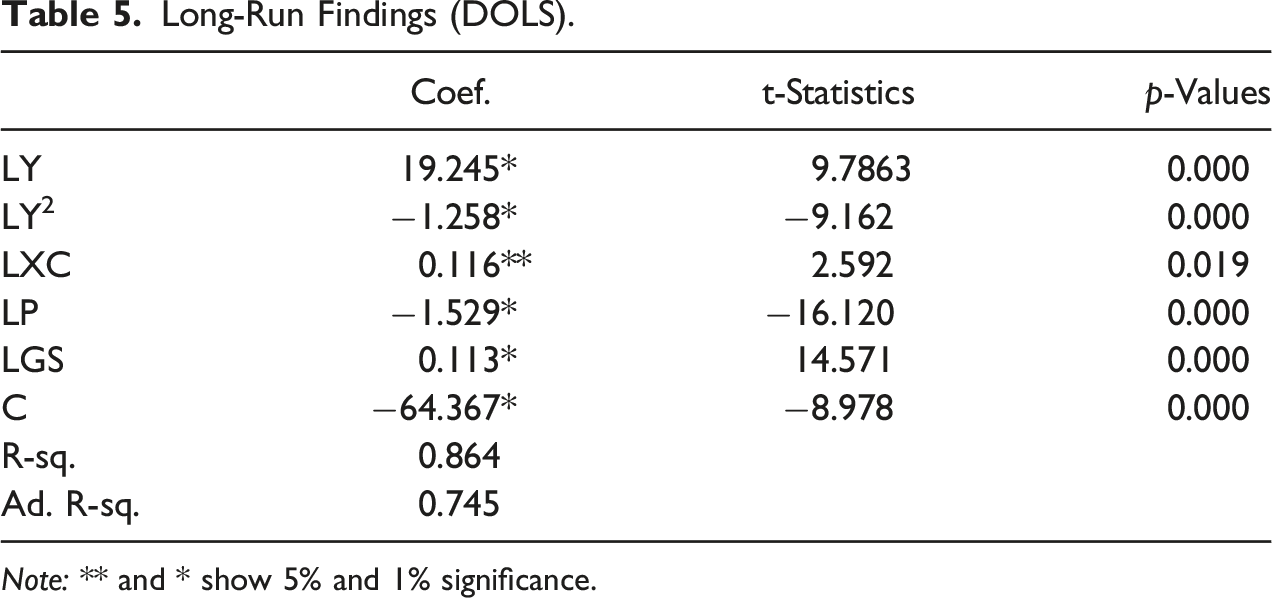
Note: ** and * show 5% and 1% significance.
XC enhances EF in the context of Pakistan. EF expands by 0.1160% on account of a 1% increase in external conflicts. This implies that external conflicts are expanding environmental deterioration in Pakistan. This does not conform to the outcomes of Ahmed et al. (2022) for India and Usman et al. (2021) for the MENA region, which indicate that external conflicts curb environmental deterioration by decreasing economic activities. However, in the case of Pakistan, this finding is justifiable since external conflicts have forced Pakistan to keep a high defense budget even though, the country frequently faces economic crises. Pakistan’s military comprises 617,000 military personnel and 500,000 reservists, indicating a large number of troops for a weaker economy (Auguilar et al., 2011). Pakistan also has advanced conventional and unconventional weapons (nuclear weapons). Thus, the huge influx of resources into the defense sector has weakened the country’s ability to allocate significant investments to environmental projects. Moreover, as Qayyum et al. (2021) suggest, military transportation and residential infrastructure, as well as military weapons, consume an enormous amount of fossil fuels, which adversely impacts the environmental quality. Thus, external conflicts enhance the EF by expanding militarization in Pakistan. This positive effect of EX on EF follows the concept of the treadmill of destruction suggested by Hooks and Smith (2005).
GS has a positive connection with the EF, revealing that government stability in Pakistan enhances environmental degradation. This evidence does not conform to the result of Tang et al. (2022) for BRICS who suggest that GS lessens EF. This output also contradicts the claims of previous studies indicating a reduction in environmental deterioration due to better institutional quality, for instance, Khan et al. (2021) for some OECD nations, Le and Ozturk (2020) for developing groups of countries, and Ntow-Gyamfi et al. (2020) for Africa. However, studies that indicated an expansion in environmental problems due to improved institutional quality support this result to some extent. For instance, Abid (2016), Pellegrini and Gerlagh (2006), and Hassan et al. (2020) indicated that better political institutions expand environmental degradation in Africa, developing countries, and Pakistan, respectively. In justification of the positive impact of GS on EF, it can be argued that the government of a developing country like Pakistan tends to enhance the economic performance of the country by disregarding environmental concerns. In this context, stable governments improve the economic performance of the country, and the production and consumption of resources expand, which further increases the EF compared to weak regimes which struggle to continue their economic plans. Thus, environmental policymaking should be included as an integral component of the strategic planning of the country.
FMOLS Results (Robustness Check).
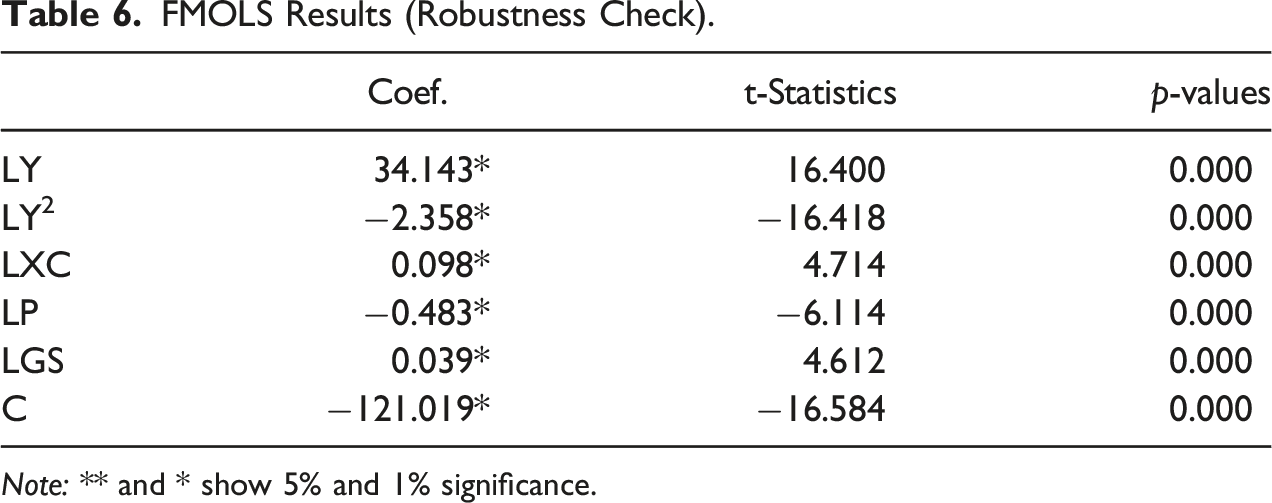
Note: ** and * show 5% and 1% significance.
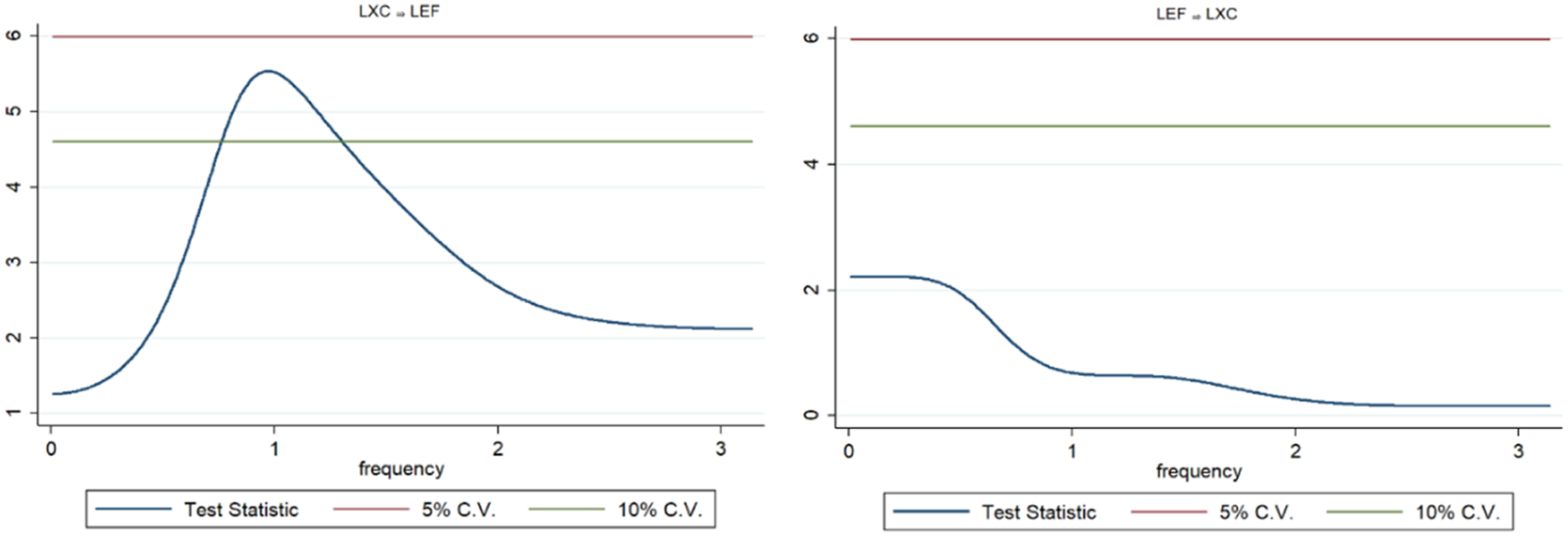
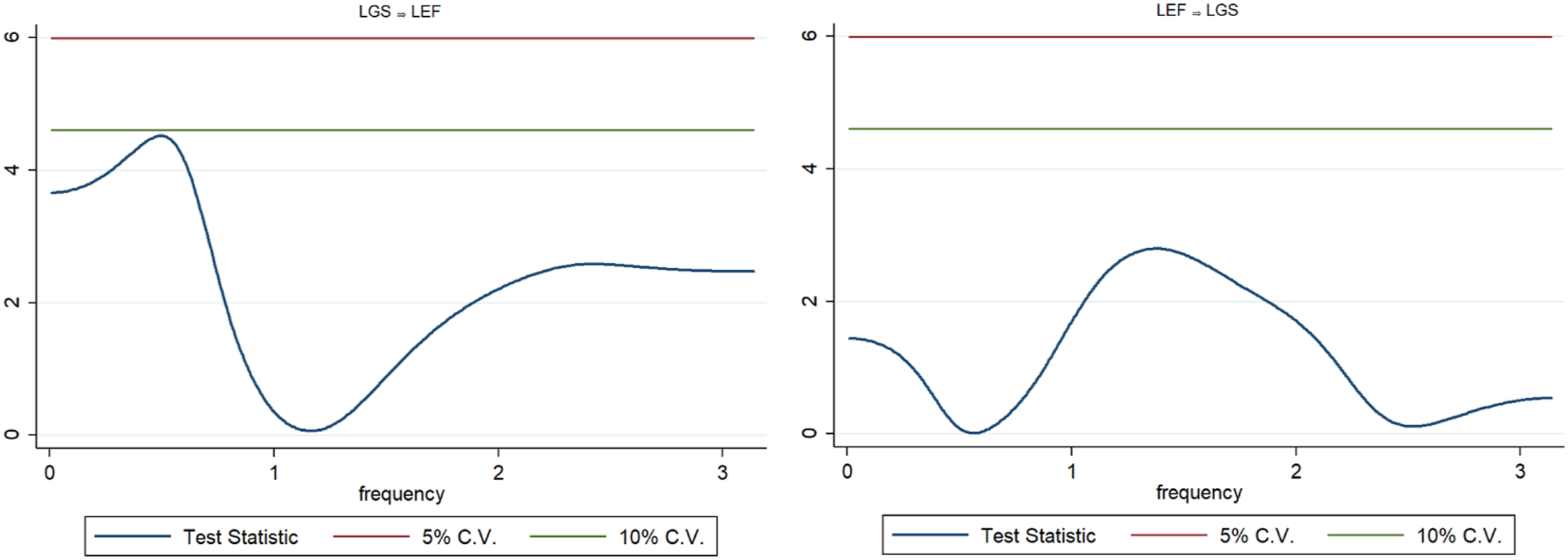
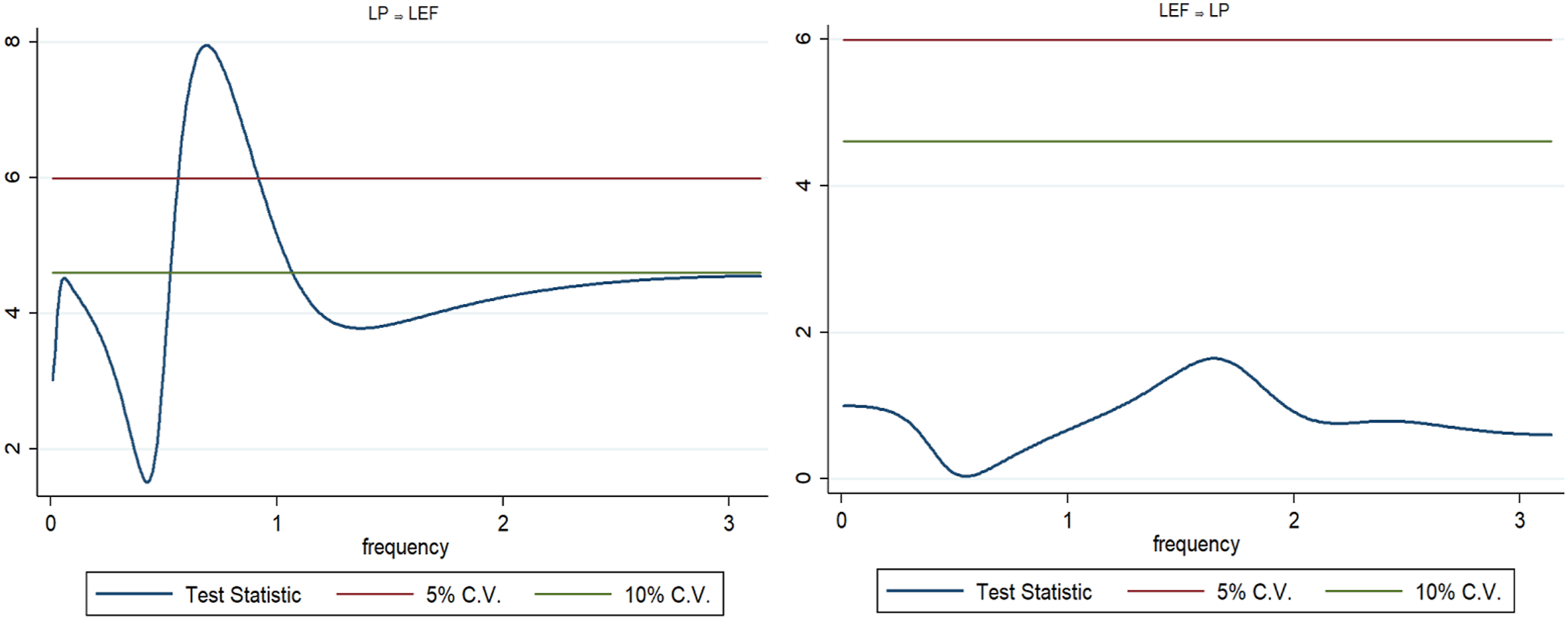
The spectral causality outcomes are provided in Figure 3 through Figure 8. Figure 3 depicts long-run causality from Y to the EF, but no causality from the EF to Y. The causality from external conflicts to EF exists in both the long and medium range without any feedback (Figure 4). However, there is no causality between GS and the EF, as indicated in Figure 5. There is a one-way causality from population density to EF in Figure 6. Causality between LY and LEF. Causality between LXC and LEF. Causality between LGS to LEF. Causality between LP and LEF.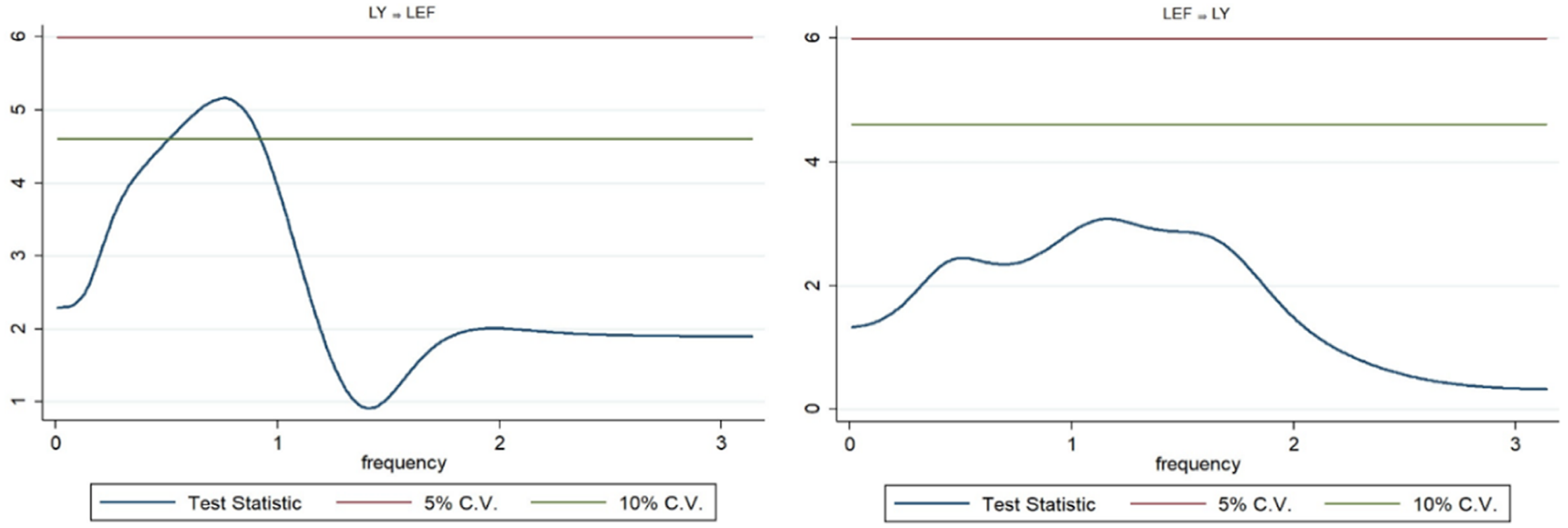
Moreover, the causality in Figure 7 runs from external conflicts to Y. This suggests that conflicts have a long-run impact on economic growth. This is logical since conflicts can weaken economies. Causality between LXC and LY.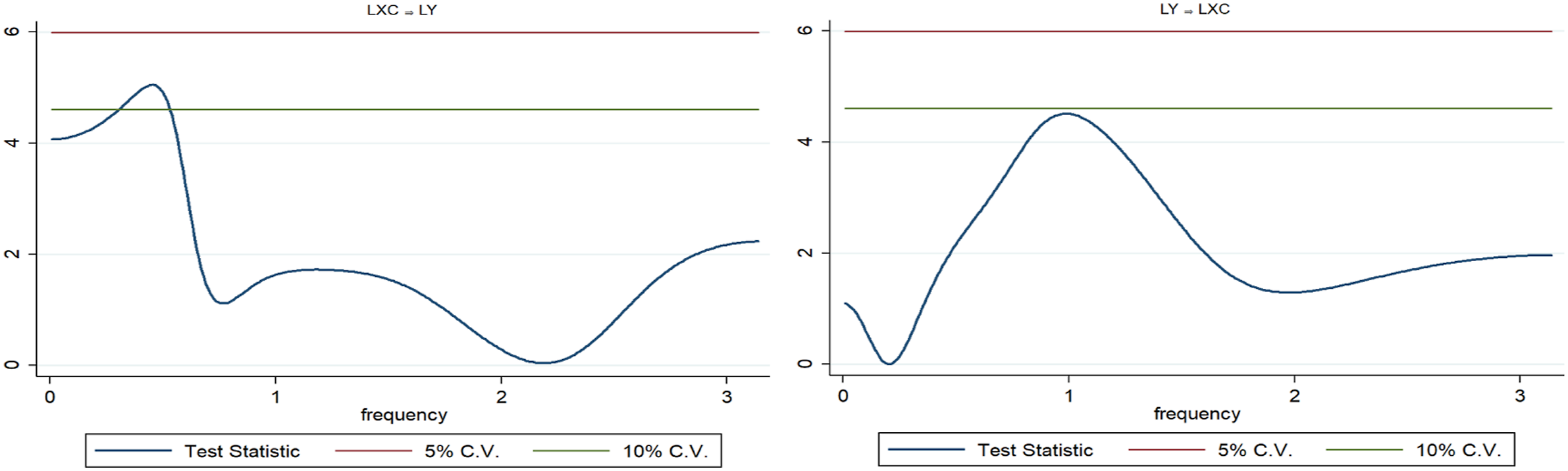
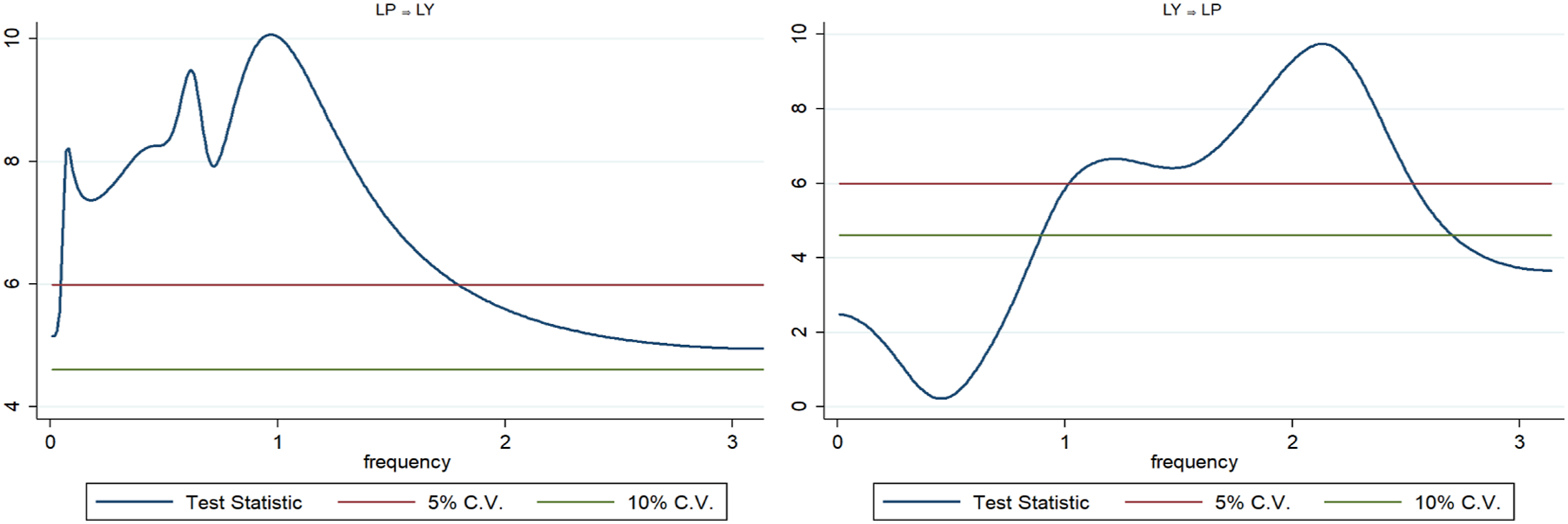
The causality between GS and Y is bidirectional in the short- and medium-run (Figure 8). It can be concluded that government stability affects the level of growth while a higher level of growth also affects government stability resulting in a feedback effect. Figure 9 also shows a bidirectional causal connection between population density and Y, which infers that economic growth motivates people to reside in urban areas and that population density supports the economic growth of a country. Causality between LGS and LY. Causality between LP and LY.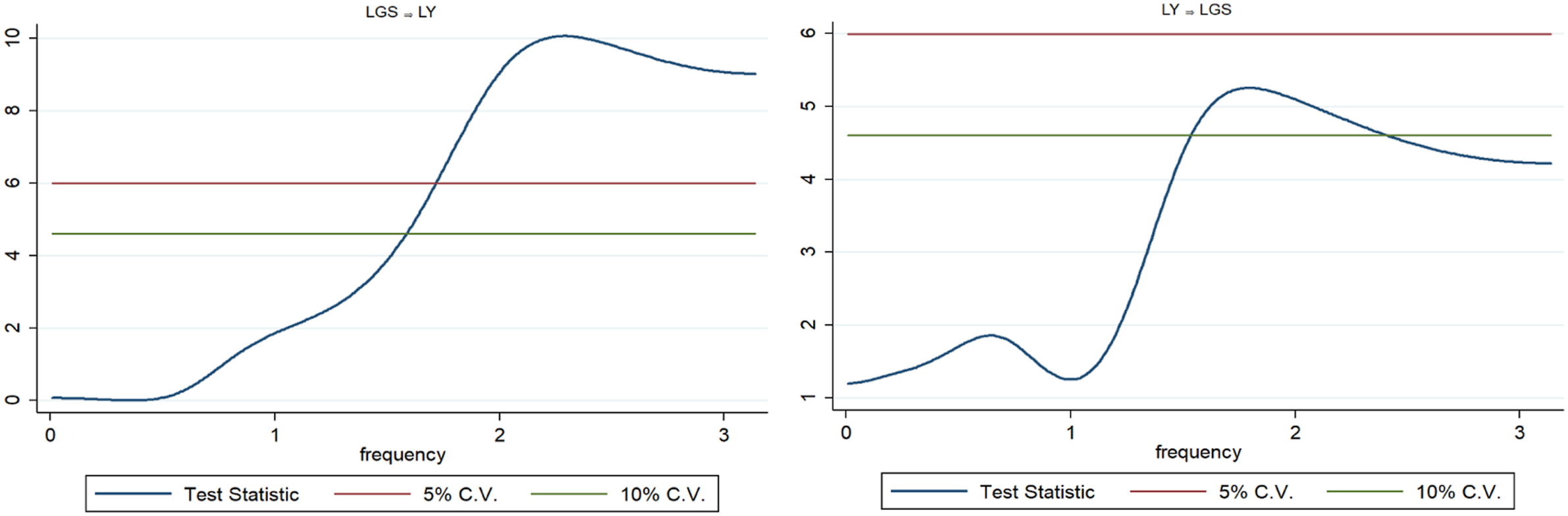
Conclusion and Policies
In recent times, conflicts among nations have increased substantially, which can increase military spending and endeavors leading to certain environmental repercussions. In addition, government instability can also influence climate actions. In the light of this, the study examined the impacts of government stability and external conflicts on environmental deterioration using annual data from Pakistan for the period 1984 to 2018. The spectral causality test and Bayer-Hanck cointegration test are applied along with DOLS and FMOLS to unfold the associations among government stability, external conflicts, and environmental deterioration.
The empirical results validated the EKC and the positive impacts of both external conflicts and government stability on EF. Moreover, causality runs from external conflicts to economic growth and EF. A bidirectional causal connection between government stability and the EF was also found. Moreover, population density offers certain ecological benefits due to its negative connection with the EF. These results can be used to design comprehensive environmental policies in Pakistan.
First, it is imperative to initiate bilateral dialogues with India and other nations to resolve regional conflicts, because conflicts not only trigger the EF but also influence economic growth, and Pakistan narrowly escaped economic collapse in 2022 with the help of IMF funding. Given the unstable economy and enormous loss caused by climate change, it is in the strategic interest of the country to resolve all conflicts with regional nations to curb the EF and stimulate economic progress. Evidently, if Pakistan could stimulate economic progress, it will ultimately lessen the EF.
Second, the outcomes indicate that the stability of the government in Pakistan does not help to reduce the EF. This could be due to the focus on the economic side rather than environmental interests, as it becomes difficult to focus on environmental problems when the economy is very weak. However, focusing on the environmental aspects of economic activities is also very important for a developing country like Pakistan as climate change has caused enormous economic loss to the country. Therefore, without securing against the destructions caused by climate change, even economic motives cannot be achieved. Thus, strategies should be formed to develop and implement climate control measures. Research and development can be encouraged to upgrade technology to conserve energy and other resources. Research in the agricultural sector can be stimulated to promote agricultural productivity for increasing biocapacity. Solar energy, biomass, and other alternative energy options can be utilized to reduce the adverse impacts of economic activities. Lastly, better population management could help Pakistan to further reduce the EF. In this context, modern public transportation plans like the Metro and Orange Line, which achieved certain success in some cities, could be expanded to other cities. These plans can help manage population density in cities and reduce the number of private vehicles in the country. In addition, the government should formulate strategies to promote non-motorized transport (e.g., bicycles), which has become very unpopular in Pakistan. Infrastructure can be updated, and bicycle lanes could be established in large urban areas with high population densities to achieve environmental benefits.
These policy suggestions can help Pakistan curb EF, improve economic performance, and make progress toward SDG-13. These findings are equally important for other developing countries to reduce environmental degradation. Besides the benefits of this research, it faces some limitations. Due to the short duration of annual data available for the study, only a few variables were used to test the EKC in this study. Future works could include more variables in the models and replicate this study in other economies. Moreover, the study is far from providing a broad perspective on SDG-13 as it focuses only on Pakistan. Another limitation is that the study focuses on time-domain methods. In this context, developing countries with higher EF values and more environmental problems can be analyzed using time and frequency domain methods. Such analysis could provide both better use of information in the series and broader policy implications for SDG-13.
Footnotes
Declaration of Conflicting Interests
The author(s) declared no potential conflicts of interest with respect to the research, authorship, and/or publication of this article.
Funding
The author(s) received no financial support for the research, authorship, and/or publication of this article.
