






Abstract
The evidence base for parent support groups in child welfare systems is limited but growing. Evaluation of such programs requires flexible and context-specific designs that capture both outcomes and mechanisms of change. This exploratory mixed-methods evaluation examined a peer-led support group program for parents who experienced child removal in a large Florida county to better understand how these programs operate and benefit parents working toward reunification. A total of 22 parents participated in weekly sessions facilitated by peer specialists with prior child welfare involvement. Quantitative assessments measured changes in psychosocial functioning and engagement in child welfare services, while semi-structured interviews (n = 8) explored participant perceptions of group processes and benefits. Significant decreases were observed in depression, trauma, and loneliness, alongside increases in perceived emotional support. Thematic analysis identified four interrelated themes that informed an empirically grounded conceptual framework describing the functions and benefits of support groups.
Introduction
Although family reunification is the preferred goal after child removal, the process can be fraught with mistrust, fear, and emotional distress for parents and children. Child removal itself is a traumatic event, and research highlights the importance of sustained family support to increase the likelihood of reunification (Bunting et al., 2019; Lietz et al., 2011; Trivedi, 2019). Parents commonly experience complex emotional responses that may hinder participation in required services (Lalayants & Saitadze, 2025), and many hesitate to seek help from caseworkers due to fear of punitive consequences, such as new abuse reports (Buckley et al., 2011; Stephens et al., 2015; Wong, 2016). Families also face stressors after reunification that increase the risk of system re-entry or termination of parental rights (Lalayants, 2020). In response, child welfare agencies in the United States have introduced parent-centered approaches, such as peer mentorship and support groups to strengthen caregiver engagement and sustain positive outcomes (Luu et al., 2022; Maltais et al., 2019). Despite growing interest in parent-centered approaches, limited evaluation research has explored how peer-led models function in practice or the mechanisms through which they may support family engagement and recovery.
Support Groups for Child Welfare-Involved Parents
The evidence base for parent support groups in child welfare systems is limited but growing (See Frame, Conley, & Berrick, 2006; Frame et al., 2006; Lalayants et al., 2015). Research with parents at risk for child removal suggests that support groups help parents cope with case requirements and contribute to improvements in parenting practices (Bolen, McWhey, & Schlee, 2008; Bolen et al., 2008). In addition, exploratory research with Latino immigrant parents found that support group participation enhanced social support networks and increased their receptivity to practical advice for meeting child welfare case requirements (Ayón, 2011). Support groups may be led by child welfare professionals or by parents with current or former system involvement. For example, the Circle of Parents program, co-facilitated by trained child welfare-involved parents and professionals, has demonstrated increases in support networks, parent self-confidence, and knowledge of positive coping strategies (Gay, 2005).
Peer support programs employing trained parents with prior system involvement have expanded across child welfare systems in the United States, offering navigation assistance, linkage to services, and affective support with promising results (Berrick et al., 2011; Chambers et al., 2019; Rockhill et al., 2015). Peer support has been conceptualized as a “mutually beneficial” model whereby peer workers provide and receive emotional and social benefits (Lalayants et al., 2015; Lietz et al., 2011). Although these programs typically provide one-on-one support, peer workers also provide mentorship in group-based settings (See Lalayants et al., 2015; Berrick et al., 2011). Support groups led by parents with prior child welfare experience trained to provide support, or peer specialists, can provide system-involved parents a safe space for discussing challenges in meeting dependency requirements (see Howard, Clark, & Piltch, 2020; Howard et al., 2020). Beyond their immediate benefits for parents, peer-led and other mutual support programs have also been described as catalysts for broader system transformation (Andrews, 2013). The expansion of these programs highlight the need for evaluation research examining how group-based peer support programs operate and contribute to individual improvements and potential systemic change in child welfare services.
Social Support in Child Welfare Interventions
Given the central role of social support as an intended outcome and a mechanism of change in support group programs, explicit consideration of how social support is conceptualized and measured is warranted in evaluations of support groups for child welfare-involved parents. Social support has been defined as “social relationships that provide (or can potentially provide) material and interpersonal resources that are of value to the recipient” (Thompson, 1995). As a construct, it encompasses multiple dimensions, including emotional, instrumental (or tangible material support), linkage to needed resources, and companionship among others (Shakespeare-Finch & Obst, 2011). Limited social support and social isolation have been associated with child maltreatment and reduced parental self-efficacy, which can hinder parents’ ability to meet child welfare requirements (Corwin et al., 2020). Parents who experience child removal report feelings of isolation and loneliness, often receiving little to no support from family, friends, or neighbors (Lalayants et al., 2015). Such isolation has been linked with an increased risk of system re-entry after reunification (Thoburn, 2009).
Social support represents an intervention target, as well as a mechanism of change through which family-centered programs can influence engagement, coping, and long-term stability (Thoits, 2011). Systematic reviews of programs designed to increase social support for child welfare-involved parents indicate that such interventions can promote stable reunification, prevent system re-entry, and provide parents with emotional and social benefits (Acri et al., 2021; Pérez-Hernando & Fuentes-Peláez, 2020). Evaluating social support within child welfare settings presents methodological challenges, including small sample sizes, confidentiality concerns, and the dynamic nature of parent–system relationships. Mixed-methods approaches that integrate quantitative and qualitative results can clarify mechanisms of change and outcomes. Accordingly, this evaluation addresses a methodological gap in measuring social support in child welfare services by pairing standardized outcomes with participant interviews (See Creswell & Plano Clark, 2018, p. 12-18).
Methods
Evaluation Overview
This paper reports an exploratory mixed-methods evaluation of a peer-led support group program implemented in Miami-Dade County, Florida for parents that have experienced child removal. The evaluation was part of a larger study testing the effectiveness of one-to-one peer support to parents in reunification following a child maltreatment investigation (Callejas, Abella, & Ismajli, 2020). The purpose of this intervention was to provide parents with support from trusted professionals with lived experience in child welfare services to improve service engagement and reunification outcomes. The current study examines support groups facilitated by Parent Partners (peer specialists with prior system involvement), and was guided by three evaluation questions: (1) What measurable benefits in emotional health, perceived social support, and engagement in child welfare services are observed for parents participating in peer-led support groups? (2) What are parents’ perspectives on the benefits of their participation in peer-led support groups? (3) How do outcomes from structured assessments and parent perspectives from interviews complement each other or diverge?
By addressing these questions, we aimed to provide the local child welfare lead agency with preliminary evidence to inform decision-making associated with program sustainability.
A convergent mixed-methods design with an interpretive inquiry approach was used to assess psychosocial outcomes and participant perspectives on program functioning and perceived benefits (Moseholm & Fetters, 2017). Quantitative assessments measured change in psychosocial indicators targeted by the intervention (emotional health, perceived social support, and service engagement), while qualitative interviews examined how parents’ experiences of peer-led support groups and the meanings they assigned to group participation and its perceived benefits. This design was selected given the multidimensionality of the social support construct. Quantitative and qualitative data were analyzed independently and then integrated during interpretation by examining convergence and complementarity across findings, including areas where qualitative themes provided contextual insights into observed outcome patterns. The university institutional review board determined this evaluation to be exempt from review. All procedures complied with relevant ethical standards.
Program Description
The support group program was introduced by the county’s lead agency in November 2020, as part of a broader federally funded Parent Partner initiative. Program administrators collaborated with the lead evaluator (first author), Parent Partners, and training consultants to co-design the program format, establish facilitation guidelines, and plan for evaluation. Support groups were structured as open, drop-in sessions with minimal requirements to reduce participation barriers. Due to pandemic restrictions, 90-minute sessions were held virtually once a week. Parent Partners served as primary facilitators but encouraged participants to co-facilitate and to select weekly discussion topics.
Participation was open to all parents with experience of child removal, including those working toward reunification, those who had been reunified, and those whose parental rights had been terminated. Recruitment was supported by presentations given by program administrators to parent defense attorneys, case managers, and dependency judges, who informed eligible parents about the program. Data collectors and Parent Partners also introduced the program to parents who had received one-to-one peer support in the larger project after they completed required activities. Parents were asked to contact the lead Parent Partner facilitator to receive program information, discuss scheduling preferences, and learn about evaluation participation. Written informed consent was obtained from all study participants prior to data collection with consenters emphasizing privacy and confidentiality protections. Recruitment for interviews continued for 2 years to obtain a sample size sufficient to reach thematic saturation. Because support groups were open and drop-in, participants attended a varying number of sessions over a 2 year evaluation period.
Quantitative Measures
Parents completed a series of assessments before attending their first support group session (T1) and again 16 weeks later (T2) regardless of the number of sessions they attended. Measures captured indicators associated with emotional health, perceived social support, and engagement in child welfare services. All instruments have established reliability and validity and are described below.
Center for Epidemiologic Studies Depression Scale (CESD-R)
The CESD-R is 20-item scale measuring DSM-V symptoms of major depressive episode (Eaton et al., 2004; Radloff, 1977). It uses a 4-point response scale from rarely or none of the time (less than 1 day) = 0, some or a little of the time (1–2 days) = 1; occasionally or a moderate amount of time (3–4 days) = 2; and most or all of the time (5–7 days) = 3.
Trauma Symptom Checklist-40 (TSC-40)
This is a 40 item self-report measure assessing symptomatic distress in adults arising from childhood or adult traumatic experiences, as well as other symptoms found in some traumatized individuals, including posttraumatic stress (Elliot & Briere, 1992). It contains six subscales, including Anxiety, Depression, Dissociation, Sexual Abuse Trauma Index, Sexual Problems, and Sleep Disturbances. The checklist contains a 4-point response scale from never = 0 to often = 3.
Emotional Well-Being Assessments
Four assessments were used from the Emotion Battery of the NIH Toolbox, a multidimensional set of brief valid, and reliable neurobehavioral assessments for clinicians and researchers applicable across the lifespan (Kallen et al., 2012).
Client Engagement in Child Protective Services (CES)
The CES is a 19-item measure with four subscales, including Buy-in, Receptivity, Working Relationship, and Mistrust to determine parent or other caregivers’ engagement in child welfare services (Yatchmenoff, 2005). The instrument contains a 5-point response scale where 1 = strongly disagree, 2 = disagree, 3 = not sure, 4 = agree, and 5 = strongly agree.
Participant Interviews
Semi-structured interviews were conducted with eight participants who consented to further discussion of their perspectives on the perceived benefits of support groups with evaluators. Interview participation was voluntary, and recruitment continued over the 2-year study period as parents engaged in support groups at different points in time. Interviews were conducted until thematic saturation was reached among consenting participants. Interviews started with general questions about the dependency case that resulted in child removal, as well as their experiences with court proceedings and reunification requirements. Most questions focused on support group participation, including how parents learned of the program, how often they attended, what they gained from participating, and suggestions for program improvement. The questionnaire was developed by the lead author with input from implementation leads and Parent Partners. Interviews were conducted by remote platform or phone between July 2021 and June 2023, lasted from 45 minutes to 90 minutes in length, and were audio recorded with participant consent. Audio recordings were professionally transcribed, and respondents were offered copies of their transcripts. Participants who completed interviews received a $50 gift card in appreciation of their time.
Analytic Approach
To examine changes over time in targeted outcomes, the non-parametric Wilcoxon signed rank test was conducted. This method was used as a nonparametric alternative to the paired t-test due to the small sample size .
Interview transcripts were analyzed using thematic analysis informed by grounded theory to examine participants’ experiences, interpretations, and group dynamics related to peer-led support group participation (see O’Callaghan, Dwyer, & Schofeld, 2024O’Callaghan et al., 2024). Two evaluation team members independently conducted open coding of the same interview transcript using Atlas.ti 24.2.1 and then met to develop a preliminary codebook. The draft codebook was applied to a second transcript to assess intercoder agreement, while analytic memos were used to document emerging connections, and researchers’ interpretations of parents’ accounts, and links to existing research. Percent agreement was calculated to enhance coding consistency, according to qualitative analytic standards emphasizing interpretive rigor (O’Connor & Joffe, 2020). An audit trail was maintained to document codebook revisions.
Initial coding yielded a 69% of agreement. Discrepancies were discussed and code definitions were reviewed by both coders before reapplying the revised codebook to the two transcripts originally coded, resulting in 71% agreement. Following further clarification of inclusion and exclusion criteria, the final codebook was applied to three additional transcripts as recruitment of interview respondents continued.
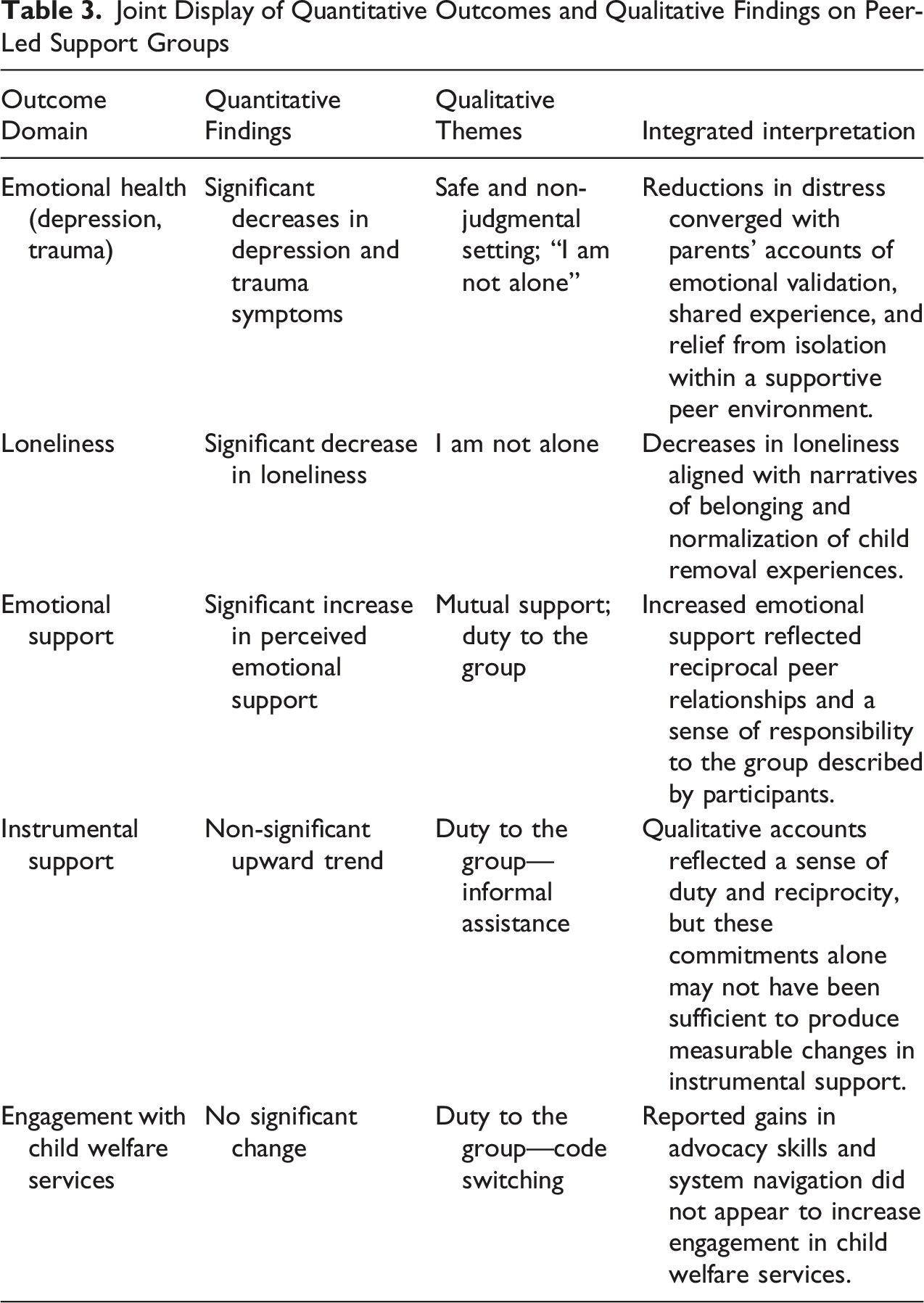
After all interviews were completed, the final codebook was applied to all remaining transcripts by coder 2. Axial coding (a second phase of coding) was conducted to develop broader code categories and clarify relationships across coded segments, incorporating insights from memos. Coded segments were then sorted by group in a final selective coding process that further refined relationships across segments to generate themes. Constant comparison of support group properties was used to assess thematic saturation (See Charmaz, 2006). Finally, identified themes were mapped to corresponding quantitative measures to facilitate integrated interpretation of participants’ experiences alongside statistical results.
Results
Participant Characteristics
Characteristics of Study Participants
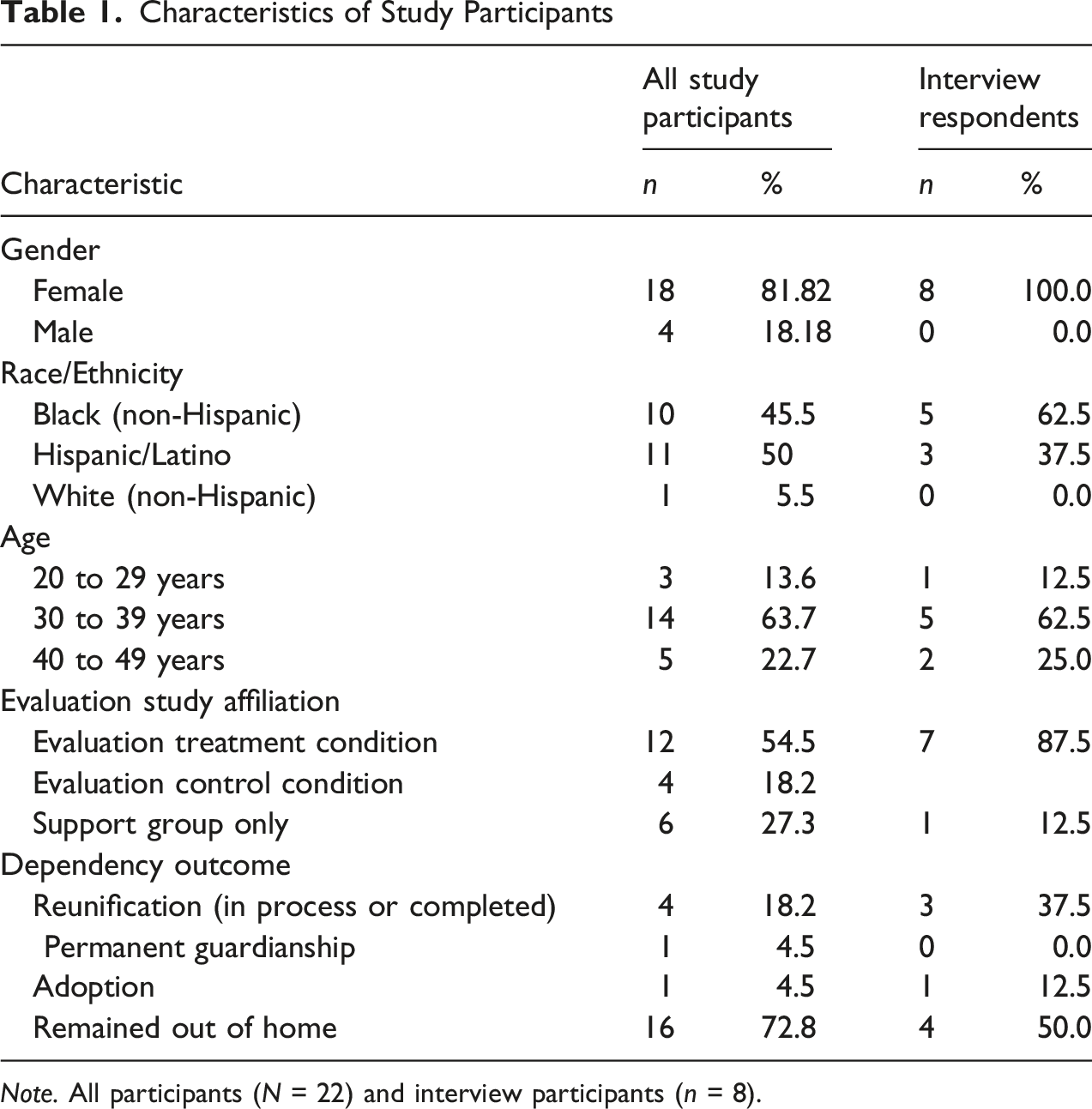
Note. All participants (N = 22) and interview participants (n = 8).
Wilcoxon Signed Rank Test Results for the Support Group Outcomes
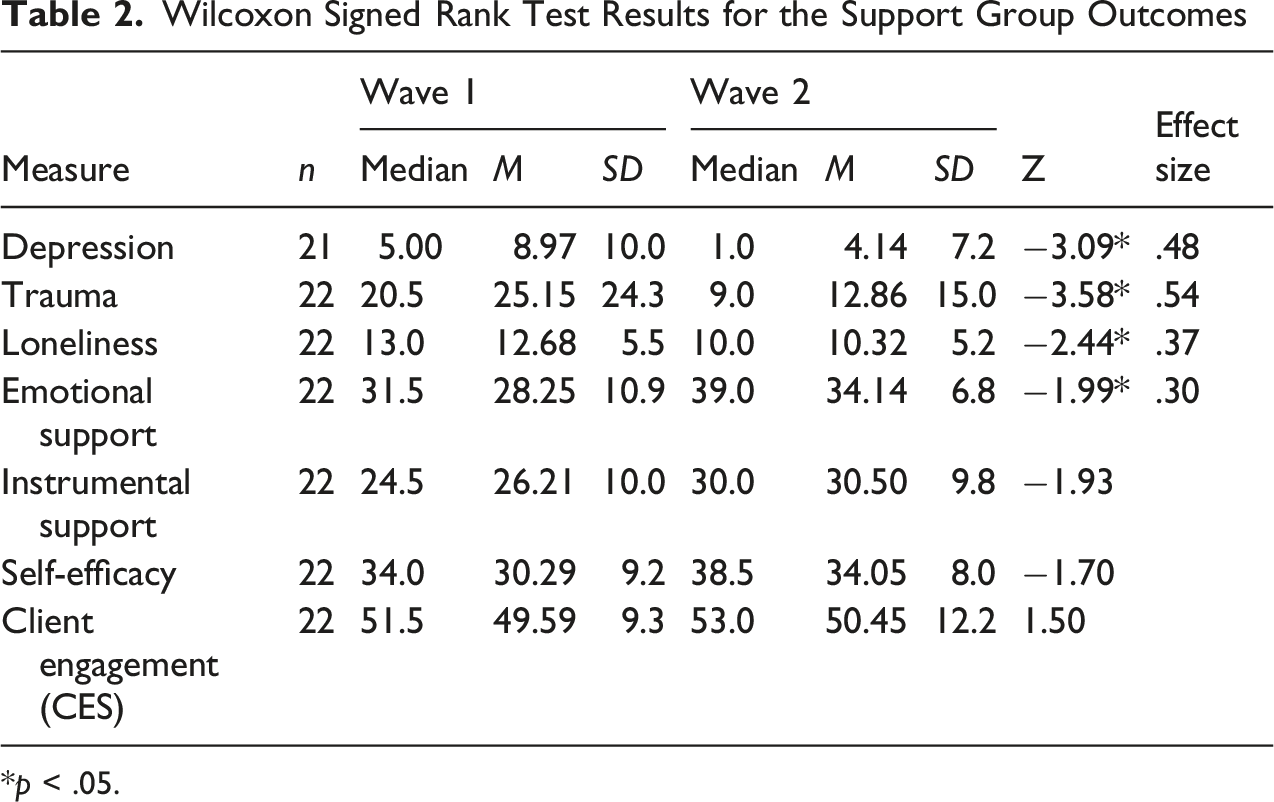
*p < .05.
Assessment Outcomes
Results of our pre-post analysis of assessment outcomes are summarized in Table 2. Findings are reported by outcome domains below.
Qualitative Results
Our analysis found that support group attendance promoted a shared connection among participants who had experienced child removal in a space that was characterized as welcoming, accepting, and safe. Supportive connections established in support groups, in turn, engendered a feeling of commitment to other participants. This sense of duty prompted participants to prioritize attendance, share their own experiences in service to others, and help parents working toward reunification review to assess their interactions with system as they worked to meet their case plan goals. A conceptual model illustrating the inter-related functions and benefits of peer-led support groups is presented in Figure 1. The themes “I am not alone,” Safe and Non-judgmental setting, Duty to the group, and Developing leadership, which comprise this framework, are presented below. Conceptual model of functions and benefits of peer-led support groups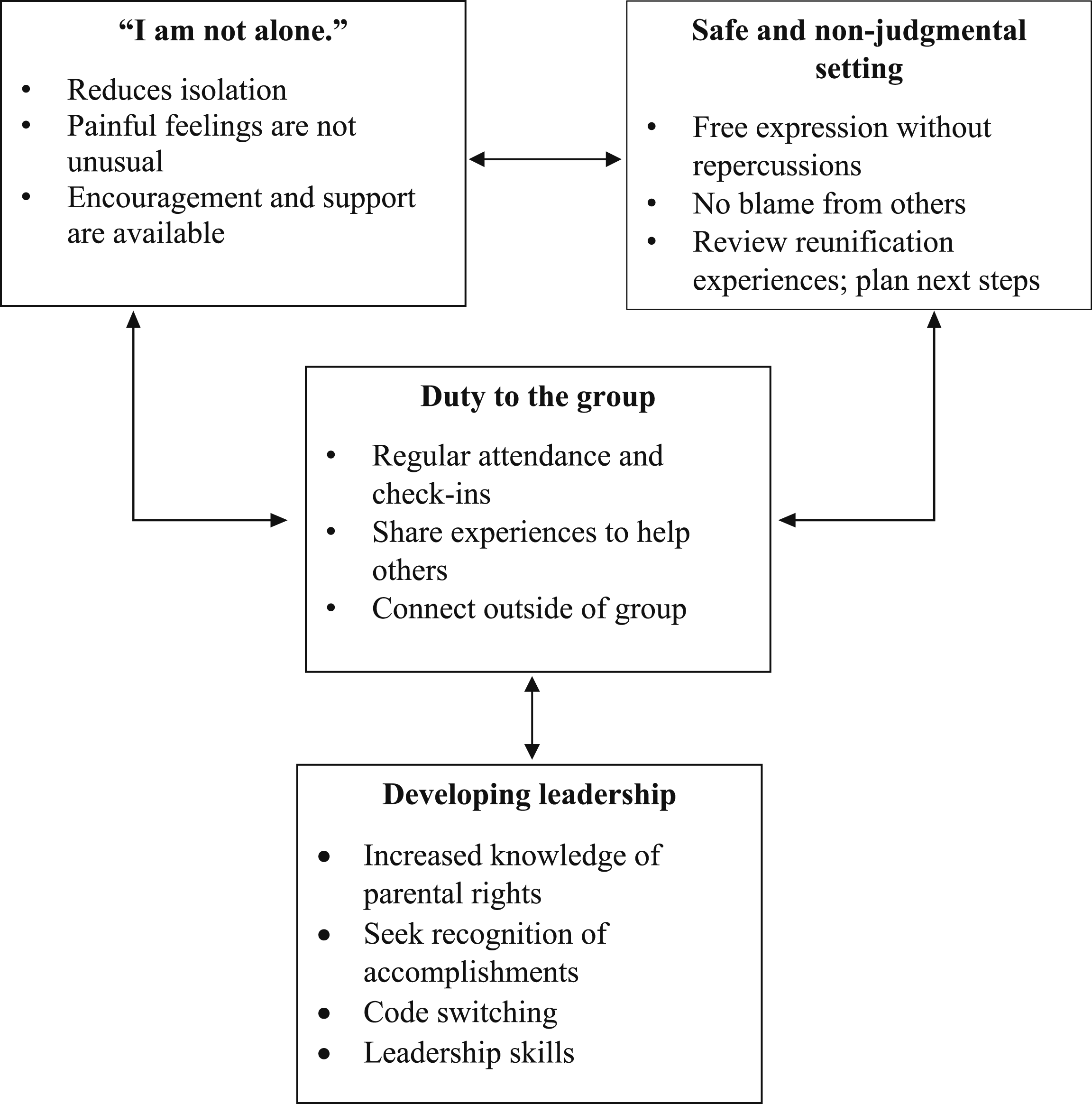
…I found that to be helpful because, you know, at one point in time, I thought I was the only one…that even though I went to the courthouse, I’ve seen other people fight for their kids. Um, ironically enough, I thought I was kind of the only one going through what I was going through, how I was going through it. And the support group helped me understand and realize that…other people shared the same feelings as me: frustration, anger, hurt, pain. (C.D., age 30, reunified with children)
Similarly, another mother whose child was in foster care with a relative caregiver said that the support group helped her feel less isolated and ashamed about her situation. “I wasn't the only one going through this at the time. Like it was just, it was something to also know that okay…here's a couple of other women that are going through a similar situation” (J.R., age 41).
Most parents discussed feeling unfairly judged, isolated, and alienated following child removal and dependency court proceedings. Respondents who reported intimate partner violence as the main reason for child removal discussed the difficulties they encountered without a support system to help them cope with the distress they ascribed to child removal following an experience of violence. Respondents generally said they appreciated the program for introducing them to other parents who accepted them and could provide encouragement, advice, or information during meetings. Two mothers credited their program involvement with encouraging them to successfully complete reunification requirements.
Various respondents also expressed appreciation for information shared by Parent Partners about community resources, especially given pandemic restrictions when personal contact in public spaces was limited. Two respondents noted that information shared in group sessions about access to free food and other necessities helped them when they were struggling to make ends meet while also working to satisfy case plan requirements.
For nearly all women interviewed, the support group provided a space where they could freely express their thoughts about system involvement and ask questions about reunification requirements without fear of negative repercussions (e.g., being labeled as non-compliant or receiving another abuse report). Every respondent shared extensive discussion about feeling unfairly judged during court proceedings (whether in person or virtually) and in appointments with case managers and other professionals. One mother explained that “When you go in that courthouse for the first time, everybody [is] looking you up and down. They [are] looking at you like they’re disgusted with you. You already can tell they [are] judging you. You already can tell they got a label on you” (E.I., age 32, children in foster care).
Parents contrasted these feelings with the supportive environment that the group meetings provided on a weekly basis. One mother also noted that the support group allowed her to share her successes in meeting case requirements, in addition to challenges, which she said encouraged her to continue working to meet case plan goals: Because my case worker only wants to talk about my case. Let’s be real. They really don't want to hear about the improvement. And if they did, it's like, “Okay, let's talk about what [else] you need to do.” So, it helped me to kind of have a place…to release all of these things, good and bad, um, verbally to a group who was supporting me. So, when I went back to court, I was revived. I just knew that right after that, I can go in, “Hey guys, look what happened in court today”…Let me tell you the support…means a lot. (C.D., age 30, reunified with children)
Overall, respondents said that support group meetings provided them with a caring virtual space that allowed them to miss sessions without penalty. Nearly all respondents contrasted this attendance policy with their typical experiences in other services associated with their dependency cases, which they said required “compliance” without acknowledging access barriers and other challenges to attendance. A few parents also noted that if they were not ready to share, they could decline to speak during meetings and simply listen. All respondents expressed their appreciation for the sense of autonomy and respect the program provided them.
I [attend] every week… Every Wednesday. [I’ve] only missed one day. And I swear everybody in the group almost had a heart attack. So, it’s like, ‘No! Why?’ You know, ‘What's wrong? Is everything okay?’ But other than that, I've been attending, always been attending. (S.S., age 31, children in foster care)
Parents who attended support group meetings regularly noted that they did so because they enjoyed getting together with others to discuss important issues in their lives and connected them to other adults who accepted their experiences without assuming the worst about them. As one woman noted, “We make it a priority…we basically show up every Wednesday and we put it on our agenda because it's something that we want to do.” At least one respondent noted that she continued to participate even after being reunified with her child because the group continued to welcome her and encouraged her to share her experience with parents who felt discouraged or faced barriers during the reunification process.
A few participants characterized the support group as “sisters,” close friends, or a community to whom they could turn outside of group sessions if they had needed help or advice. Several said that they kept in touch regularly with other participants, “just to talk.” While several respondents noted that their friendships with other group members was limited to one or two other parents, they also said that their connection to the broader group of participants remained important because of their shared experiences with child removal. For one respondent with strained relationships with her immediate family, the support group offered her genuine concern and care, which she said she needed given several barriers and setbacks she experienced during reunification. “It's funny and crazy how the water is thicker than your blood. It's crazy how my real siblings don't reach out to me the way me and the mothers do right now” (E.I., age 32, children in foster care).
Upon joining the support group, members were invited to join a mobile phone group chat established to send reminders about the session schedule and upcoming discussion topics. All respondents reported using the chat regularly to stay connected with other participants and Parent Partners between meetings. Chat group discussions might involve reaching out for encouragement related to their cases or other life events or sharing concerns about their progress. Several women shared that the group chat helped them to build connections to other parents between meetings and encouraged them to reach out for support or to offer support to other parents.
The women [e.g., other support group participants] let me know if we don't participate in these services, or if you don't fight for yourself and advocate for yourself, you can just get run over and forgotten…I found a lot of really great information from those that have been going through similar, for much longer than I have. (J.R., age 41, child in foster care with relative caregiver)
Another parent recounted an instance where her case manager was not recording completion of required services adequately, placing her at risk of seeming “non-compliant.” She said: I’m glad the judge kind of like saw through that… And I think that was because I spoke up to my attorney… Then he spoke up for me in court and then that's when… she looked down into that paperwork…. And she was like, wait a minute, what's going on with this… this doesn't look right. I feel like this person should have [been reunified] by now. (J.U., age 23, reunified with children)
An interesting point of discussion that several respondents shared was that attendance at support group meetings helped parents learn how to “act” or carry themselves in court and when interacting with system professionals, including case managers, foster parents, and attorneys, whose decisions might affect their ability to reunify with their children. Nearly all parents noted that their participation in required services was viewed by judges and case managers as a reflection of their dedication to their children or their desire to have their children home. Various parents said that their emotional reactions, and even silences, were often interpreted by workers as evidence of their lack of commitment to meeting case plan goals. Several respondents noted that learning about “code switching” and how to present themselves to dependency professionals was important knowledge that supported their ability to navigate system processes and highlighted the vastly different perspectives on reunification between parents and professionals. In extended discussion on “communication styles” and body language, two respondents said that they viewed this information as an important skill that could help them achieve reunification more quickly. All participants said they appreciated having the opportunity to learn practical advice from other parents who had advocated for themselves successfully.
All interview respondents identified the opportunity to share the knowledge they had gained through their system involvement as one of the most important attributes of support groups. While several parents said that some professionals encouraged and supported them through the reunification process, the act of connecting with other parents to discuss how to overcome barriers and challenges was particularly valuable for them. Three parents said that their active participation in group sessions prompted them to think of themselves as leaders with the potential to become parent advocates or peers in the future. At least two parents contrasted this perception of themselves—as knowledgeable and competent adults with preferences and unique needs—with the negative way that parents are often characterized by dependency professionals.
Integration of Findings
Joint Display of Quantitative Outcomes and Qualitative Findings on Peer-Led Support Groups
Discussion
This exploratory mixed-methods evaluation provides encouraging evidence of the potential benefits of peer-led support groups for parents who have experienced child removal. Our analyses revealed significant improvements in psychosocial functioning that are noteworthy given the small sample size and short evaluation period. Qualitative findings also contextualized identified patterns regarding parental trauma and depression symptoms. Nearly all parents described experiences of intimate partner violence, evictions, mental health crises, or abrupt child removals that they experienced as punitive. Their accounts reflect how system involvement can intensify existing parent vulnerabilities and compound emotional distress. Within this context, support group sessions, described consistently by participants as safe, accepting, and affirming, appeared to counter discouraging interactions with system professionals, as reflected in themes, “I am not alone” and “Safe and non-judgmental setting.”
Qualitative themes also illuminated mechanisms relevant to program implementation and evaluation. Parents described a strong “Duty to the group,” suggesting that mutual accountability and reciprocity may be core drivers of engagement in peer-led programs. This theme aligned with the upward, though non-significant, trend in instrumental support. Likewise, the theme “Developing leadership” may offer insight into why increases in self-efficacy were not significant. Although participants discussed how groups helped them to develop advocacy and other skills, such as navigating court appearances, managing communication with case managers, and “code-switching,” the effects of such skill development may not fully register in standardized measures within 16 weeks.
Parent narratives emphasized the important role of Parent Partners as facilitators whose ability to draw on their lived experience of child removal and successful system navigation contributed to the safe and supportive atmosphere of group sessions. Parents consistently said that Parent Partners “understood” them in ways that system professionals often did not, while providing trustworthy information and useful system navigation strategies. The support group program therefore appeared to extend the relational benefits of one-to-one peer support into a group based format. These findings raise important questions for evaluators and implementers regarding the formalization of peer facilitators through the implementation of prescriptive training or fidelity standards. It is not clear whether such efforts might dilute the very qualities that distinguish support groups from traditional services. Future evaluations should consider how to support implementation integrity while preserving the relational and experiential elements that appear central to peer support practice.
Mutual support also emerged as a defining feature of the program experience. Parents described how much they appreciated having the opportunity to help others learn from their own experiences. This aligns with prior research showing that parents benefit as much from sharing their knowledge and experiences with others as from the information and support they receive (see Cameron & Birnie-Lefcovitch, 2000; Pérez-Hernando & Fuentes-Peláez, 2020). Reflecting the importance of reciprocal learning and support, nearly all parents credited their participation in the program for helping them to better understand how to advocate for their parental rights. Such information is valuable for implementers and evaluators working to support family engagement approaches in reunification services and programs.
Implications
The conceptual framework developed from our analysis of parent experiences (Figure 1) provides valuable insights for child welfare agencies and evaluators seeking to better support successful reunification and permanency. As reflected in Florida’s practice model emphasizing family engagement (see Florida Department of Children & Families, 2025), our findings suggest that peer-led support groups can help mitigate some of the most challenging aspects of child removal and reunification. Evaluators assessing parent-centered interventions may therefore need to supplement standardized measures with qualitative methods to capture emotional aspects of parent experiences that may not be reflected in assessment outcomes. To support the sense of group safety ascribed to the program by parents, evaluators should build trust with participants before gathering data, particularly when data must be recorded as is typically the case for interviews.
Support groups may serve as important venues for disseminating practical information about navigating case processes, interacting with case managers, and demonstrating progress toward case plan goals. Participants repeatedly described the value of receiving this information from parents who have successfully reunified. Given our findings, we recommend that evaluators of similar programs consider the interpersonal conditions that support program engagement as much as program content, and document the mechanisms of exchange, such as mutual learning, reciprocity, and peer modeling that we found to be central to support group functions. Sustained informal contacts between sessions may also enhance program participation.
Limitations
Some limitations should be noted. The small sample size limited statistical power to detect effects across outcome domains. Replication with larger samples is needed. In addition, participation in support group meetings varied considerably, raising concerns about program dosage and the degree to which significant benefits can be solely attributed to program participation. Parents may have received benefits from prior one-to-one peer support and possibly from participation in additional mandated or voluntary programs that were not captured in the evaluation. Although most parents were actively pursuing reunification during the study period, there were differences in case trajectories that may have contributed to variations in outcomes. Further, the intervention period may not have been long enough to produce measurable improvements in self-efficacy and instrumental support, particularly given these differences in parents’ case trajectories.
Although increased engagement with child welfare services was a goal of the intervention, no significant change was observed based on the Yatchmenoff (2005) engagement measure. It is possible that despite encouragement to participate in required services, ongoing mistrust or fear of the system limited changes in engagement. Engagement in child welfare services is also shaped by the complexity and intensity of parents’ needs. Co-occurring challenges such as poverty, comorbidity, and multiple service demands may constrain observable improvements in engagement, even when peer support enhances coping. Future studies should more explicitly account for variation in participants’ needs when assessing engagement outcomes.
Although this evaluation focused on parental psychosocial outcomes, prior research shows that these domains are associated with effective parenting, family functioning, and service engagement (See Charest-Belzile, Drapeau, & Ivers, 2020; Gaspar et al., 2022). Improvements in emotional well-being and perceived support may represent important preconditions for child safety and well-being, even when such measures are not directly measured. Beyond individual-level benefits, peer-led support groups may also have broader implications for child welfare practice by strengthening parent engagement, trust, and informal support networks within the reunification process. Longitudinal evaluations are needed to determine whether psychosocial gains among parents are sustained over time and linked to improved child well-being, family stability, and reduced child welfare.
Finally, recruiting parents for interviews proved challenging, as some expressed concerns about how recorded interviews might affect their dependency cases. Although evaluators and Parent Partners emphasized privacy and confidentiality protections throughout the data collection phase of the study, these concerns may have influenced who agreed to participate. The small sample size and the fact that all parents interviewed were women limit our understanding of the program’s potential effectiveness more broadly and may reflect sampling bias.
Conclusions
Despite limitations, this evaluation presents compelling evidence that flexible, peer-led support groups can produce measurable benefits for parents working toward reunification, often under challenging circumstances. Our results are consistent with qualitative accounts of connection, safety, and mutual understanding developed within support groups. Evaluation findings also provide rich insights illustrating how lived experience, relational trust, and reciprocity function as important mechanisms of peer support. Although these features may be difficult to replicate through more formalized service structures, they warrant careful consideration in the design and evaluation of parent-centered interventions. Given the exploratory nature of this study, more rigorous evaluation of support groups is needed to assess longer-term outcomes, understand the effects of variation in implementation, and examine whether support group participation improves reunification stability and reduces system re-entry. Nevertheless, evaluation findings support the continued implementation and assessment of peer-led support groups as a valuable complement to child welfare practice.
Footnotes
Acknowledgments
The authors gratefully acknowledge their partners at the lead child welfare agency, who supported the evaluation activities that are presented in this manuscript. We would also like to thank Isabella Barham, research assistant, for her work on this study, as well as Dr. Kathleen Moore, who provided feedback on methods and findings. Finally, we could not have done this work without the parents who shared their stories with us. We are extremely grateful for their participation.

Ethical Considerations
The University of South Florida Institutional Review Board reviewed the evaluation study and waived the requirement for approval, IRB#: Pro00039669
Funding
The authors disclosed receipt of the following financial support for the research, authorship, and/or publication of this article: This study was supported by the Children’s Bureau, Administration for Children and Families, U.S. Department of Health and Human Services (award #90CU0106). The funder played no role in study design, analysis, and interpretation of data, or the writing and submission of this manuscript.
Declaration of Conflicting Interests
The authors declared no potential conflicts of interest with respect to the research, authorship, and/or publication of this article.
Data Availability Statement
Findings presented in this paper were generated as part of program evaluation data. Please contact the corresponding author for questions about access to data.