






Abstract
Brokers serve as key connectors linking academic researchers who might otherwise remain unconnected, to co-authorship networks. This study examines whether more complex interdisciplinary co-authorships yield greater scholarly impact than ties with authors from the same discipline, which are facilitated by cognitive similarity. It also tests the extent to which such collaborations influence the academic performance of female researchers. The study analyzed 594 authors and 271 papers in the field of social learning. Despite their complexity, regression analyses confirm the benefits of novel sources and combinations of interdisciplinary knowledge. The higher coordination and communication costs of interdisciplinary collaboration are offset by the potential of the new knowledge generated. Interdisciplinary collaboration is associated with higher performance among female scholars, contributing to increased recognition and reputation. This pattern suggests that collaboration strategies and institutional support should reduce coordination barriers in interdisciplinary co-authorship and facilitate women’s access to high-impact brokerage opportunities.
Keywords
Introduction
Impactful research is no longer defined solely by the prestige of the journal in which it appears, but increasingly by the individual contributions and influence of the researchers involved. Previous studies have examined this question through the lens of team composition, recognizing that factors such as diversity and the roles individuals play within the team that significantly shape each member’s research impact (Lee et al., 2015; Wagner et al., 2019). Central to this line of inquiry is the understanding that both team composition and internal dynamics determine the nature of the knowledge exchanged and collectively created—an essential ingredient in producing innovative research (Badar et al., 2013).
Notwithstanding the recognized value and challenges of interdisciplinarity for researchers’ academic performance, this study seeks to deepen understanding of how a researcher’s privileged position in the academic network and the knowledge diversity of the research team influence scholarly impact. The study focuses on the brokerage role: researchers who connect otherwise disconnected individuals within the same co-authorship network. This brokerage role can be developed among researchers of a single discipline, where brokerage may foster a paper’s contribution by bridging conceptual or methodological divides within the same discipline. It can also take place among researchers from different academic fields, leading to exchanges of different theoretical frameworks or methods (Ho & Liu, 2013; Singh, 2005).
This study examines the effect of brokers’ network structure using social network analysis (SNA; Kwon et al., 2020). Depending on this in-between position and co-authors’ profiles, researchers may access different knowledge repositories, which shape the characteristics of knowledge accrued and shared with their academic partners (Ho & Liu, 2013). To do so, we distinguish between brokers that link researchers within the same discipline and those that span across different disciplines. Furthermore, by adopting a whole-network approach, we evaluate not only the direct but also indirect effects of access to brokerage positions, considering the broader structure of the co-authorship network beyond immediate connections (Collet et al., 2014).
Despite previous research on brokerage highlighting its importance for performance at the micro level (Rank & Strenge, 2018), its specific effects on academic performance remain unclear. Owing to the relevance of interdisciplinarity in academia (see Porter & Chubin, 1985; Porter & Rafols, 2009; Rafols & Meyer, 2010, among others), we expect that the advantages of brokerage positions in terms of knowledge creation and academic performance to depend on the disciplines to which co-authors belong. Although interdisciplinarity often brings novelty, it can also introduce significant challenges, such as paradigm conflicts and communication barriers arising from discipline-specific terminology, that can weaken research scope (Garforth & Kerr, 2011).
This study also examines the role of gender in shaping the relationship between interdisciplinarity and academic performance. As Kim and others (2022) highlighted, gender-based differences in research contributions are well documented, with men and women often focusing on different subjects and employing distinct methodologies, factors that can influence how interdisciplinarity affects scholarly impact.
Prior research shows that women tend to engage more frequently in applied, interdisciplinary, and socially oriented research, while being underrepresented in some core theoretical areas (Bayer & Rouse, 2016). In fields such as economics and mathematics, women remain underrepresented in several core theoretical and finance-oriented areas, while being relatively more involved in applied and interdisciplinary domains, including research related to development, health, education, and quantitative methods (Rhoten & Pfirman, 2007; Woolley et al., 2015). Both bibliometric and network approaches have often been used across multiple scientific disciplines to evaluate the effects of brokerage and gender dynamics (see Bacci et al., 2023; Badar et al., 2013; Ho & Liu, 2013, among others). In addition, gender has been shown to shape networking behavior within academic communities. Male scholars tend to benefit more from cumulative advantage and preferential attachment processes, while gender-based homophily influences collaboration patterns, potentially affecting access to brokerage positions and their associated performance returns (Baker, 2016).
This study examines academic performance in interdisciplinary co-authorship networks through a study of policy-related social learning publications. To construct an interdisciplinary corpus of academic collaborations, a bibliometric search strategy is employed based on the intersection of “policy” and “social learning,” which has been shown to capture research spanning multiple disciplinary domains characterized by heterogeneous, conceptual, and methodological approaches (Gemignani & Madeira, 2022; Hagemeier-Klose et al., 2014). Building on this corpus, this study seeks to deepen understanding of how a researcher’s position within the co-authorship network and the disciplinary composition of research teams influence scholarly performance. Specifically, it examines brokerage positions that connect otherwise disconnected authors, distinguishing between brokerage within the same academic discipline and brokerage across disciplinary boundaries, and assesses how these positions interact with gender. The questions we aim to answer through our hypotheses are as follows. First, is it advantageous to engage in research that connects scholars from different disciplines? Second, does this relationship differ systematically by gender?
The remainder of this paper is organized as follows: literature review and the development of the hypotheses are presented in the next section. The third section describes the research design, data collection method, and the models employed. The fourth section presents the empirical findings, and the final section concludes by highlighting how the type of brokerage and author gender can influence author performance.
Literature and Hypotheses Development
Brokerage Positions and Impactful Research
This study is based on the premise that the academic performance of individual researchers is inherently linked to their profile and position within the scientific collaboration network (Ho & Liu, 2013; Zhao & Zhao, 2016). Researchers who are part of the network can avail themselves of the accumulated social capital and knowledge resulting from their associations with other colleagues (Badar et al., 2013; Liao, 2011). Brokerage positions within scientific collaboration networks, a role where a researcher connects otherwise disconnected researchers, have garnered increasing attention in recent research (Huang & Su, 2019; Lissoni, 2010; Mersico et al., 2023; Molina-Morales et al., 2016; Reich & Lahav, 2021; Yu et al., 2025). Prior research suggests that brokerage positions are associated with several mechanisms linking network structure to innovation and research impact, including access to non-redundant knowledge, cognitive recombination, and timing advantages (Burt, 2004; Kwon et al., 2020).
In a co-authorship network, brokerage advantages have been positively associated with greater rates of career advancement (Brass, 1985; McEvily et al., 2012). Connection between otherwise disconnected researchers enable the exchange of diverse knowledge and the integration of disparate or incompatible perspectives, generating innovative ideas, and evaluating their strengths (Burt, 2004; Mizruchi & Fein, 1999). While relationships with authors who share similar perspectives and knowledge bases provide redundant and self-reinforcing insights, brokerage positions help authors create novel and impactful research (Balachandran & Hernandez, 2018). Furthermore, authors in brokerage positions are not only more likely to be early recipients of information from diverse groups, but also occupy a privileged position to assess the relevance of new information (Burt, 2007). In the context of impactful research, the timing at which novel knowledge enters the public domain determines its visibility and potential contribution to the literature.
Brokerage: Across or Within Disciplines?
As explained in the previous sub-section, researchers in brokerage positions positively influence research impact due to their access to novel and timely knowledge. Nevertheless, this impact can vary depending on the degree of diversity and consequently, the nature of the knowledge that unconnected authors bring to the broker. In their seminal paper, Gould and Fernandez (1989) addressed this nuance by formulating a general and rigorous conceptualization of brokerage roles. Their classification of brokerage roles remains widely used in several studies (Halevy et al., 2019; Kwon et al., 2020). The literature has often focused on extreme cases to better illustrate the effects of knowledge retrieval across varying degrees of diversity, thereby relegating hybrid brokerage positions (Molina-Morales et al., 2016). Brokers who connect researchers within the same discipline are commonly referred to as coordinators, whereas those who connect researchers from different disciplines are known as liaisons.
Publishing in a research team where all members belong to the same discipline, through a coordinator broker, tends to be easier due to shared goals, interests, and potential cognitive overlap among the authors involved (Autant-Bernard & LeSage, 2011; Cantwell & Piscitello, 2005). Moreover, sharing a scientific discipline implies that the researcher has already been exposed to the other researcher’s area of specialization, making it easier to identify complementarities and contribute new insights to existing research (Kwon et al., 2020). At the same time, this cognitive overlap may result in more redundant knowledge exchanges, potentially limiting research novelty and academic performance (Balachandran & Hernandez, 2018).
The assimilation of knowledge from different disciplines becomes more complex, but research novelty and performance may be higher (Antonelli & Fassio, 2016). The integration of different knowledge perspectives in research can generate synergies that lead to more relevant academic contributions (Garforth & Kerr, 2011). Liaisons, or brokers who access knowledge from other academic disciplines, increase their chances of obtaining knowledge that is more distant from their cognitive base. This type of interdisciplinary collaboration implies the convergence of different perspectives and experiences in addressing complex problems in ways that transcend the traditional boundaries of a single discipline. Although it is not exempt from absorptive risks (Llopis & D’Este, 2022; Paruchuri, 2010), the liaison role represents the paradigmatic case in the acquisition of more diverse knowledge, as each partner belongs to a different area of expertise.
Conceptual framework linking brokerage type and academic performance
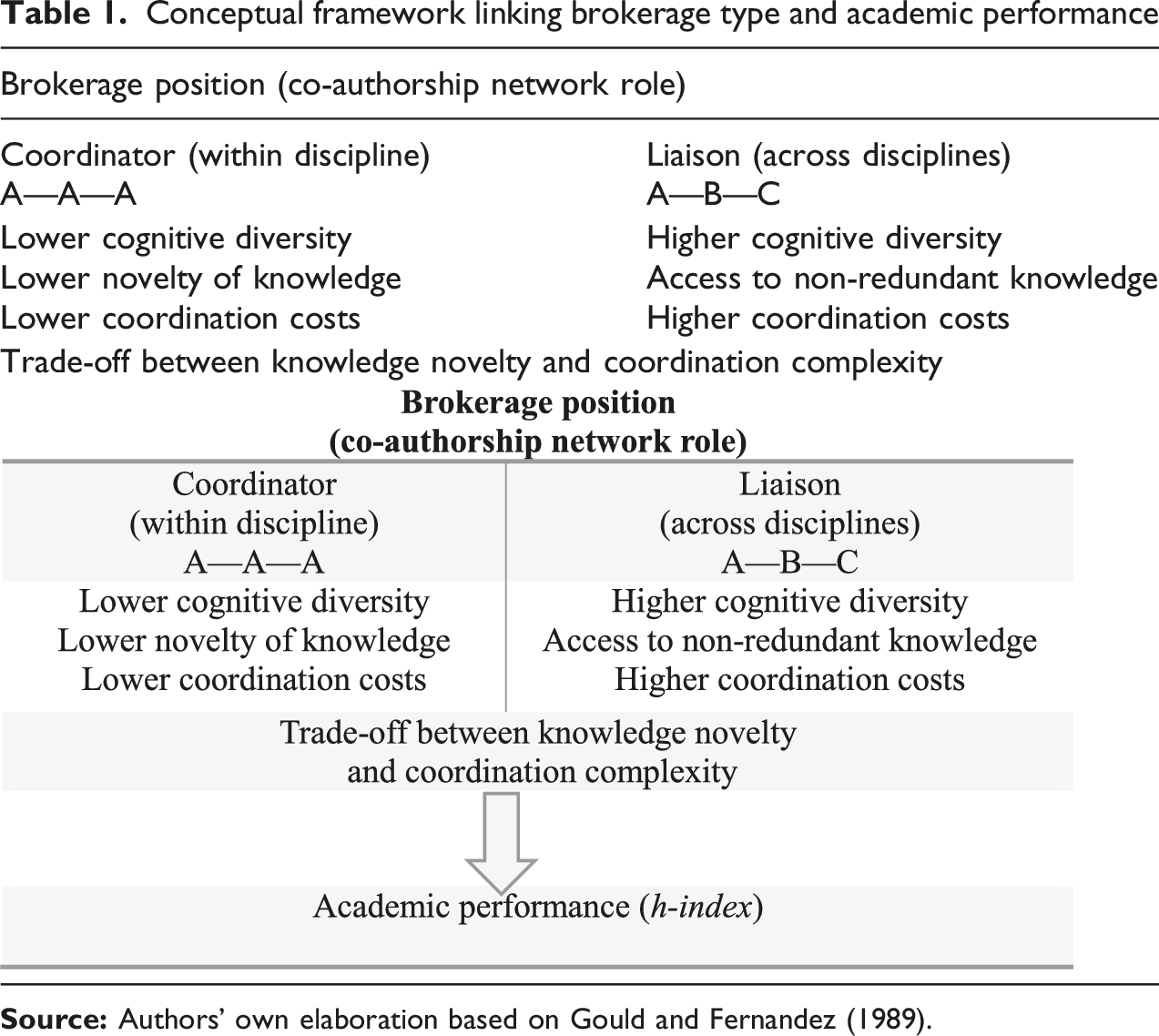
Brokers connecting authors from different academic disciplines (liaison) present higher academic performance than brokers connecting authors from the same academic discipline (coordinator).
Role of Gender in the Impact of Brokerage
Academia is not exempt from gender bias, manifesting across multiple and interconnected aspects of academic life. The social perception that knowledge creation is associated with masculine qualities persists, reinforcing stereotypes that link men with scientific activities and executive positions (Chang & Milkman, 2020). Salary differences between men and women in universities also persist (Blevins et al., 2019). In various academic disciplines, including political science, women are also less likely to be published as lead authors, are underrepresented in senior positions, and overrepresented in junior and tenure-track roles and among the least prolific authors (Dion et al., 2018; Fagan & Teasdale, 2020; Mitchell & Hesli, 2013; Rajkó et al., 2023; Samuels & Teele, 2021, among others). Representation of women in senior academia presents a gender disparity that widens as one moves up the academic hierarchy (Filandri & Pasqua, 2021).
In this context, collaboration and network positioning may play a particularly important role in shaping women’s academic performance. Brokerage positions can increase visibility, facilitate access to diverse intellectual resources, and reduce reliance on closed or homogeneous networks that often reproduce existing power asymmetries. Collaboration has been shown to foster the acquisition of new knowledge and to be associated with higher research output and citation impact (Bidault & Hildebrand, 2014; Ductor, 2015). Existing evidence indicates that women tend to collaborate more and show a greater predisposition to engage in interdisciplinary and applied research, which may help them circumvent structural and cultural barriers embedded in mainstream academic trajectories (Badar et al., 2013; Bozeman & Gaughan, 2011; Fox, 2001; Rhoten & Pfirman, 2007). Particularly, interdisciplinary collaboration can expose women to novel knowledge, broader audiences, and alternative evaluation contexts, mitigating cumulative disadvantages linked to gender bias. Based on these premises, we formulate the following hypothesis:
The relationship between brokerage positions and academic performance will be moderated negatively by man-gender bias.
Data and Methodology
Sample Selection
To ensure the accurate selection of literature for the study, we first selected a bibliographic database from which the study sample would be extracted. We opted for the Social Science Citation Index (SSCI) of the Web of Science (WoS). To preserve conceptual alignment, we refined the search to SSCI categories consistent with the study’s scope: Management, Urbanism, Regional and Urban Planning, Economics, Political Science, Public Administration, and Business. Once the database and categories were selected, we identified the appropriate keywords to capture a heterogeneous corpus of publications at the intersection of policy-related research and social learning.
The search terms “policy” and “social learning” were chosen. To avoid overlooking any relevant articles, we included variations such as “polit*” and “polic*.” Accordingly, our search strategy in WoS was structured as follows: the combination of the keywords (“polit*” OR “polic*”) AND (“social learning”), limited to English-language articles, which is widely recognized as the “universal” language of scientific communication (European Commission, 2003; López-Navarro et al., 2015). This search yielded 301 articles indexed in SSCI journals retrieved from the WoS on July 12, 2022.
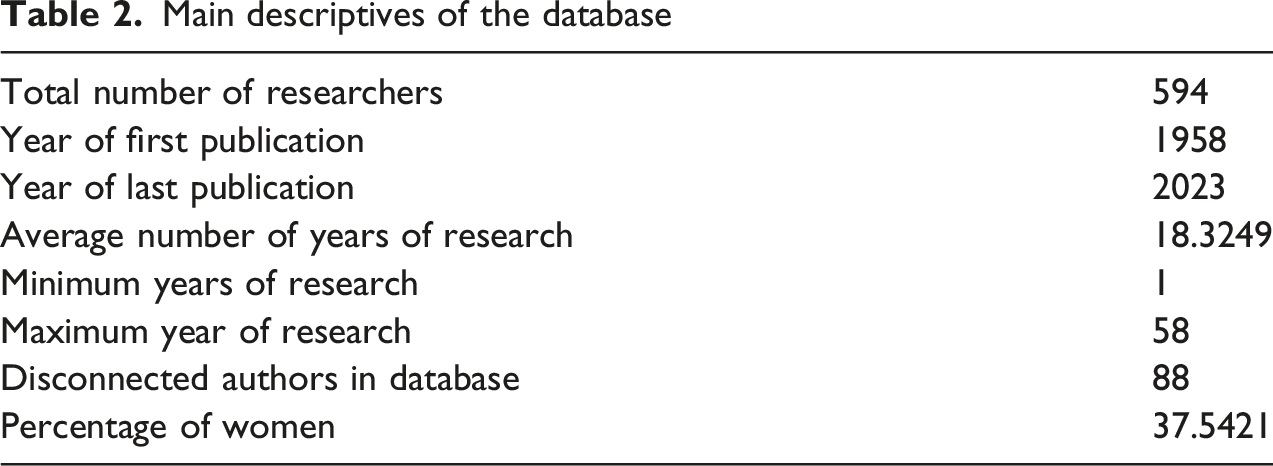
Due to the presence of irrelevant or spurious records (e.g., duplicate entries, non-peer-reviewed materials, or documents with minimal thematic alignment), some papers obtained in the initial search were outside this study’s scope. We conducted a detailed examination of all papers in two rounds of peer review. In each round, we created two lists, labeling each paper as “related” if it was relevant to the area of interest, or “not related” otherwise. Subsequently, 22 articles marked as “not related” in both lists were excluded, while 253 articles labeled as “related” in both lists were retained. The remaining 26 articles were then examined by this study’s co-authors, leading to the exclusion of 8 articles. The final database comprised 271 articles written by 594 researchers. As authors can also be referenced in multiple ways, we checked the database for the standardization of capitalization and verified authors’ initials. Once this process was completed, the final database was thoroughly reviewed. Most authors’ specific characteristics were also obtained from the WoS, although certain details, such as location or gender, had to be retrieved from authors’ institutional webpages. 1 The operationalization of author-level variables is detailed in Section 3.3.
Main descriptives of the database
Assignment of Disciplines
Disciplines classification
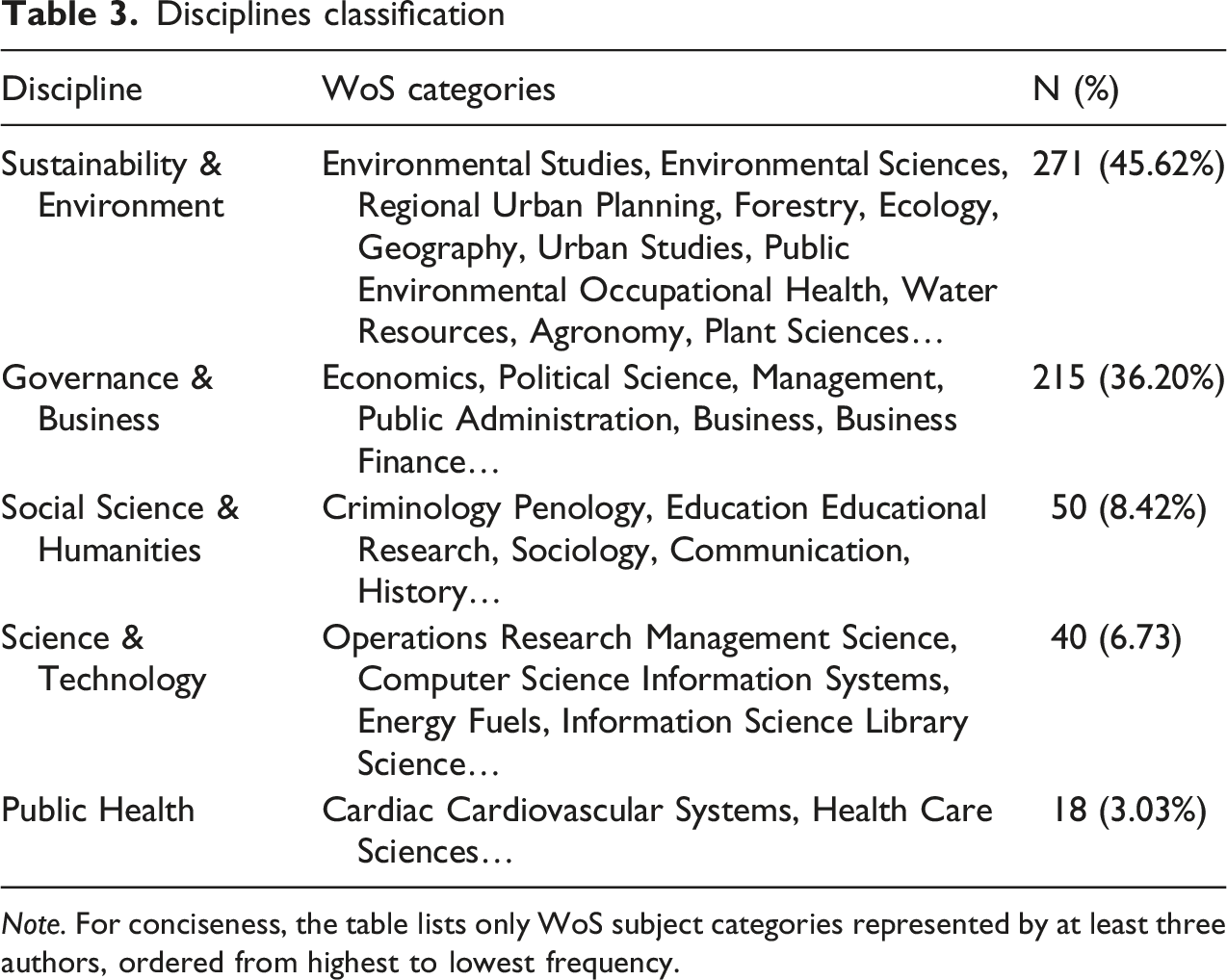
Note. For conciseness, the table lists only WoS subject categories represented by at least three authors, ordered from highest to lowest frequency.
Variables
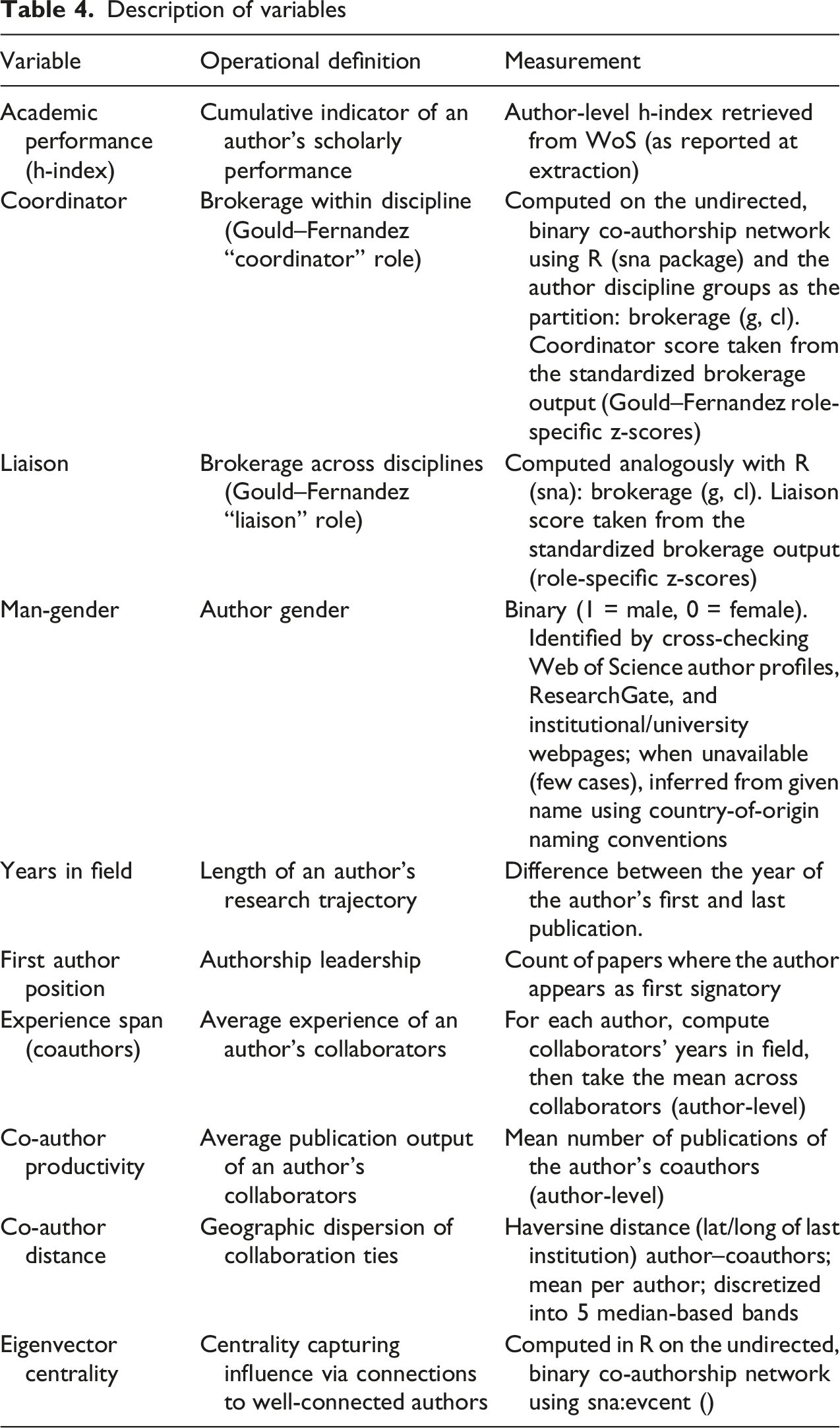
Description of variables
Dependent Variable: Researchers’ Academic Performance
The h-index evaluates the influence of a researcher on the progress of their scientific field. The h-index is defined as the number, “h,” of articles that have at least “h” citations (Poirrier et al., 2021). The main advantages of this index are its ease of calculation, objectivity, and quantitative nature. Furthermore, it is a cumulative measure that rewards long-term excellence. Previous studies have used the h-index to analyze the scientific quality of researchers (Baruch et al., 2020; Selek & Saleh, 2014, among others). Thus, this study used the h-index as the dependent variable to assess authors’ academic performance.
Independent Variables
Our independent variables are coordinator, liaison, and man-gender. The operationalization and computation of these variables are presented in Table 4. Computing the coordinator and liaison scores required constructing the co-authorship network.
We constructed the SNA variables based on a co-authorship network, where each node represents an author, and a line between two nodes indicates co-authorship. Relational data collected from the WoS were organized in a matrix composed of 594 rows and 594 columns, corresponding to the number of authors analyzed. The cells in the matrix take the value 1 if there’s a tie between actor 2 i in the row and actor j in the column, and 0 otherwise. In other words, a connection is established between two authors only if both are listed as co-authors on the same paper. The matrix is symmetrical, given that the transfer of knowledge from actor i to actor j is bidirectional.
Control Variables
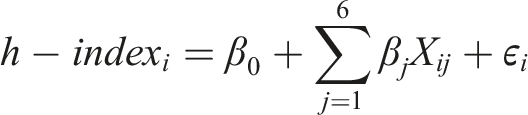
To ensure the validity of the results, isolate the effect of the independent variables, and improve model precision, we included the following control variables: years in field, first author position, experience span, co-author productivity, co-author distance, and eigenvector centrality. The operationalization and computation of all control variables are reported in Table 4.
We considered the variable years in field as a measure of the time that each author has spent researching in the field, as a representative indicator of their academic trajectory; it was calculated as the difference between the publication year of their first and last article (Forthmann et al., 2024).
To assess the quality of researchers’ trajectories, the variable first author position was considered, which assesses the number of articles for which each author is the first signatory. We assumed that authorship leadership primarily falls on the first signatory of an article, as only 23.53% of the articles list author names in alphabetical order, and alphabetical ordering does not necessarily imply the absence of substantive leadership by the first author.
The quality of research conducted by an author can be influenced by the experience and tacit knowledge of their co-authors. We defined three variables to capture this influence: experience span refers to the average length of experience of collaborating authors; co-author productivity represents the average number of articles published by the authors; and co-author distance measures the geographical distance between co-authors.
Centrality measures reflect the impact on performance by detecting structural features of networks. In the case of co-authorship networks, these measures reveal specific aspects of cooperation among authors (Zhao & Zhao, 2016). We considered the eigenvector variable as our network centrality variable. Unlike other centrality measures that focus solely on the number of connections, eigenvector also considers that an author may have few but highly influential connections, which implies access to a wider audience and influences performance (Wu et al., 2024).
Statistical Analysis and Results
The Co-Authorship Network
The co-authorship matrix was used to illustrate the interaction between researchers. Figure 1 displays the researchers’ interactions and the area of knowledge to which each author belongs. As previously mentioned, the authors were classified into five major disciplines: 45.62% in Sustainability & Environment, 36.20% in Governance & Business, 8.42% in Social Science & Humanities, 6.73% in Science & Technology, and 3.03% in Public Health. In this study, we found that 32.35% of the articles in our database resulted from collaborations among authors from different disciplines. Visualization of the co-authorship network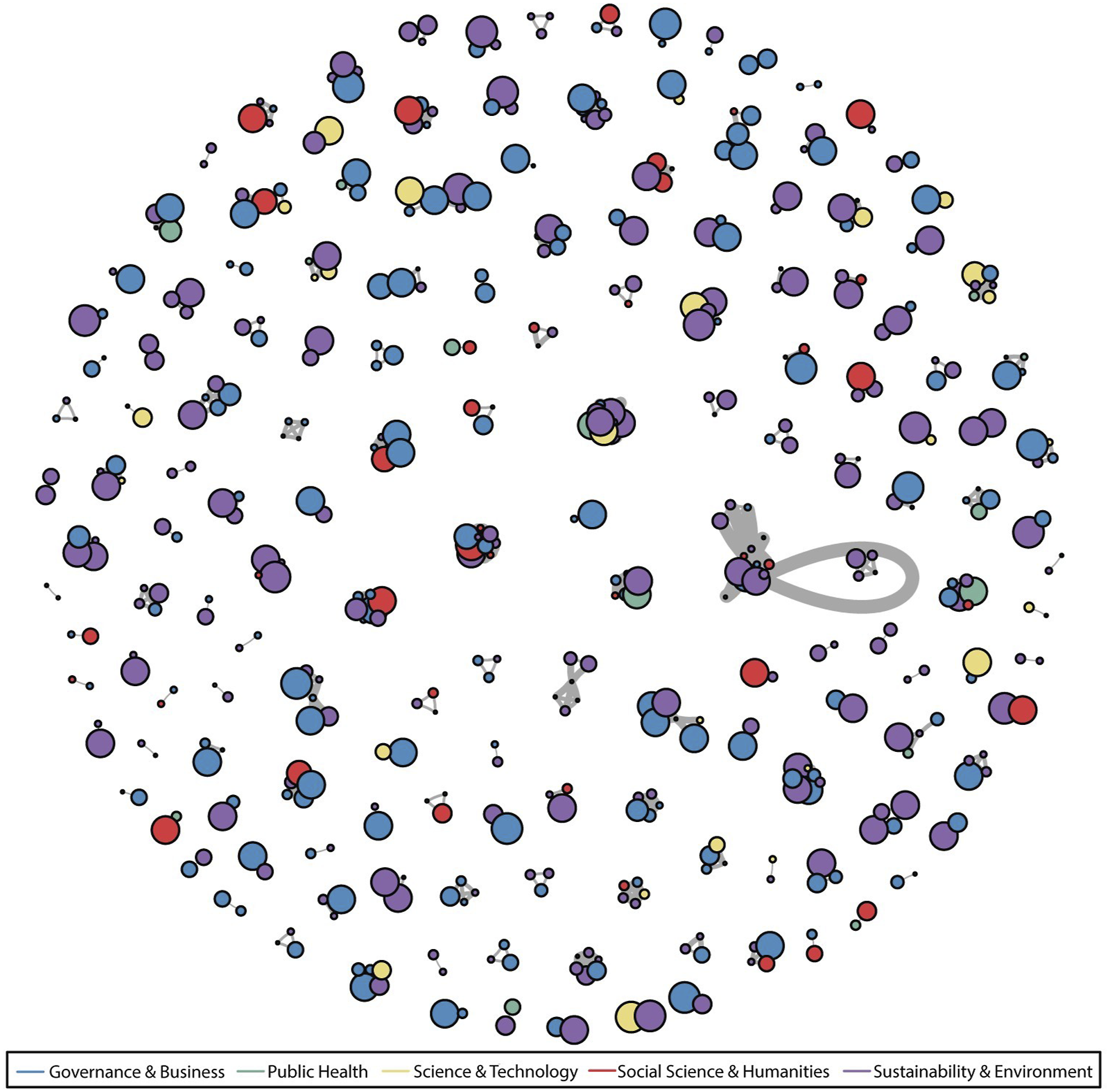
The co-authorship matrix shows several unconnected dyads and triads, indicating a lack of connection between authors or groups. This disconnection among academics may lead to excessive research effort due to limited collaboration and knowledge diffusion, resulting in institutional isolation and constrained scientific expansion. However, clusters of more than three authors belonging to different categories were observed. In this regard, interdisciplinary collaboration not only drives the generation of innovative knowledge but also fosters novel proposals and a deeper understanding of significant research issues.
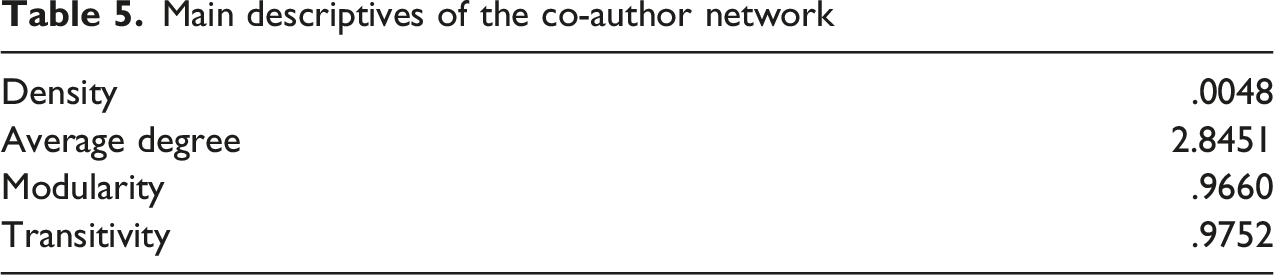
Main descriptives of the co-author network
We used Loglet Lab software (Ho & Liu, 2013; Yung et al., 1999) to examine the overall growth trend in the number of publications concerning social learning in public policy design. Loglet Lab analyzes the cumulative growth curve of articles published between 1958 and 2022. The lower amount of data for 2022 is because the database was created in July 2022. Figure 2 illustrates the literature produced over the past few years as well as future perspectives in this area of knowledge. Growth curve of literature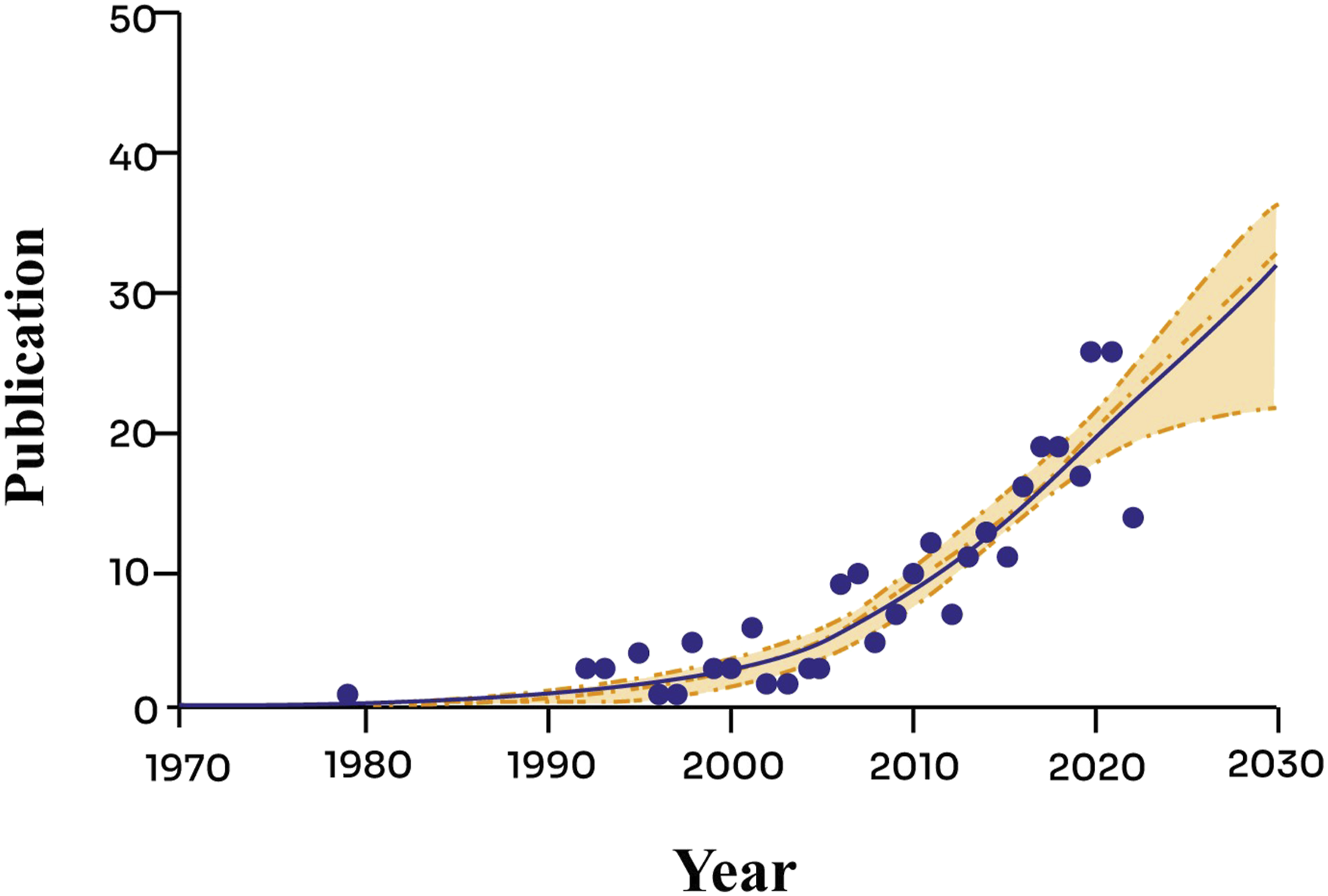
Statistical Results
Together with SNA, moderated regression was applied to examine brokerage roles in co-authorship networks. SNA quantifies network positions as defined by Gould and Fernandez (1989), while regression controls for confounding factors (e.g., career length, co-author productivity) and tests interactions between brokerage positions and gender. This dual approach, validated by prior research (e.g., Zhao & Zhao, 2016), ensures reliable testing of hypotheses regarding the effects of interdisciplinary collaboration and gender on academic performance.
Correlation matrix and descriptive statistics
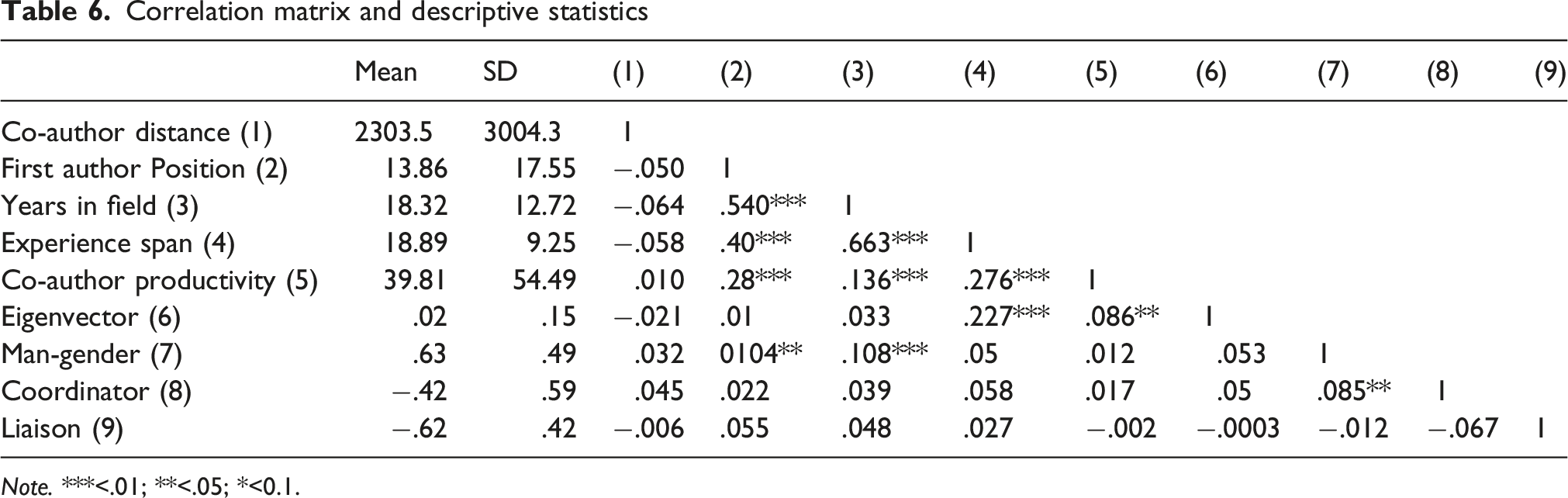
Note. ***<.01; **<.05; *<0.1.




Regression models results on academic performance (h-index)
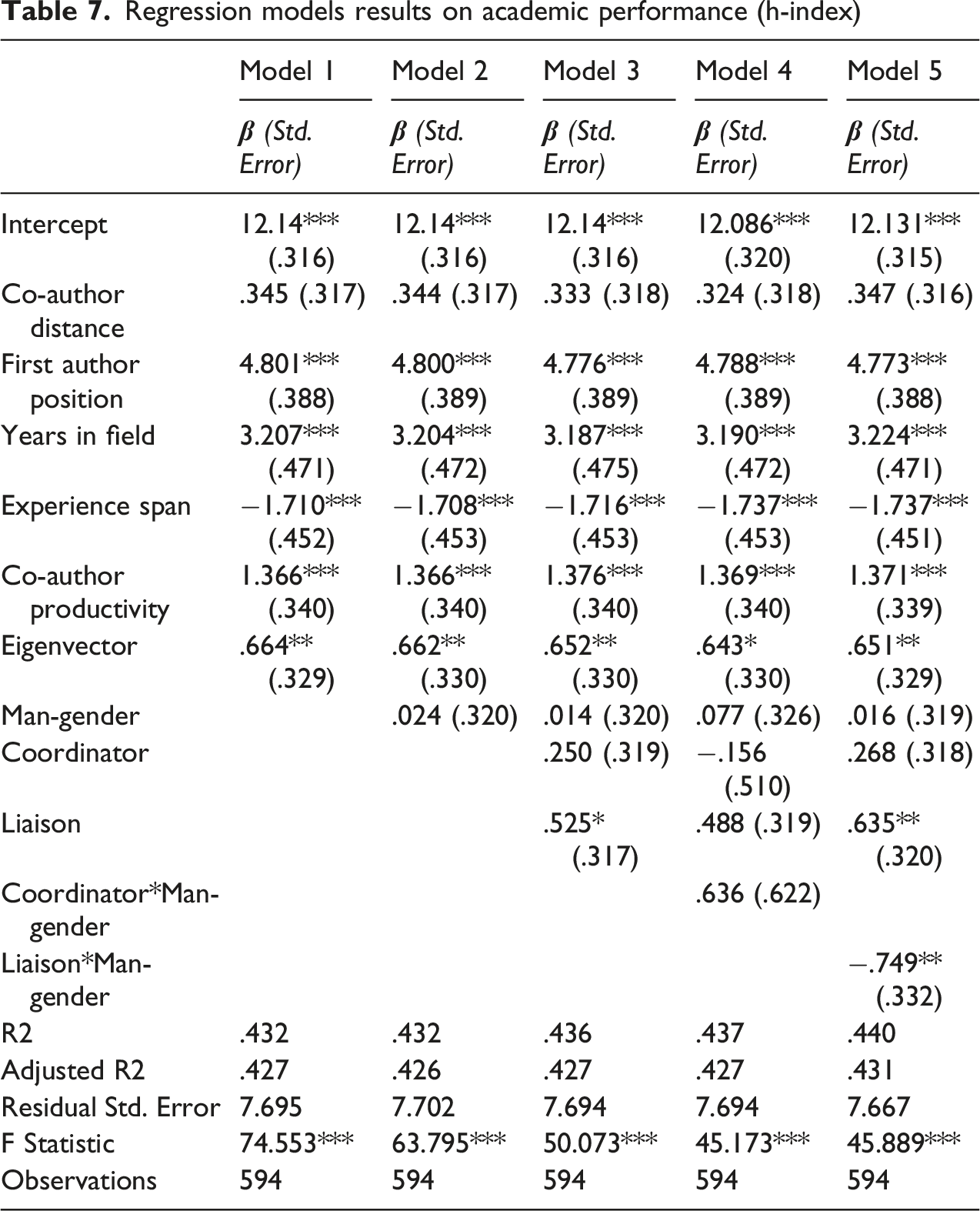
The reference model (Model 1) reflects the impact of several factors on academic performance. Specifically, the percentage of first author publications (β2 = 4.801, p-value <.01), having a long academic career (β3 = 3.207, p-value <.01), collaborating with other authors who have many publications (β5 = 1.366, p-value <.01), and a high eigenvector (β6 = .664, p-value <.05) are positively associated with and contribute significantly to academic performance in their field. In contrast, the experience span variable has a negative and significant coefficient (β4 = −1.710, p-value <.01). This unexpected negative association may reflect diminishing marginal returns to accumulated collaboration experience. Over time, collaboration patterns may become more routinized and specialized, consistent with increasing thematic specialization and potential cognitive rigidity, which can limit exposure to diverse knowledge inputs. 4 The potential moderating effects of co-author characteristics on social capital configuration warrant further consideration. However, the coefficient for the distance between actors is positive and insignificant. Model 2 incorporates the influence of gender. Results show no evidence of gender bias.
Model 3 includes the influence of both the coordinator and liaison brokerage roles. In contrast to the coordinator brokerage role, the liaison role has a positive and significant coefficient (β9 = .525, p-value <.10), partially supporting H1. This suggests that collaboration among authors from different areas of knowledge contributes to academic performance. As expected, interdisciplinarity enhances knowledge diversity, which in turn boosts novelty and impact.
Models 4 and 5 indicate that the interaction between gender and brokerage roles is significant only in the case of liaison, partially supporting H2. The main effect of liaison represents the association between liaison brokerage and h-index for the reference category (man-gender), whereas the interaction term captures how this association differs for men relative to the reference category. The negative coefficient for man-gender*liaison (β11 = −.749, p-value <.05) implies that the performance return to liaison brokerage is lower for men. Accordingly, women appear to benefit more from occupying liaison positions that connect otherwise distant disciplinary communities, consistent with the idea that access to diverse knowledge sources enhances impact. Figure 3 illustrates the two-way interaction based on the predicted marginal effect. The slope for female authors clearly shows that higher levels of liaison are associated with a larger increase in predicted h-index for women. Predicted values of Performance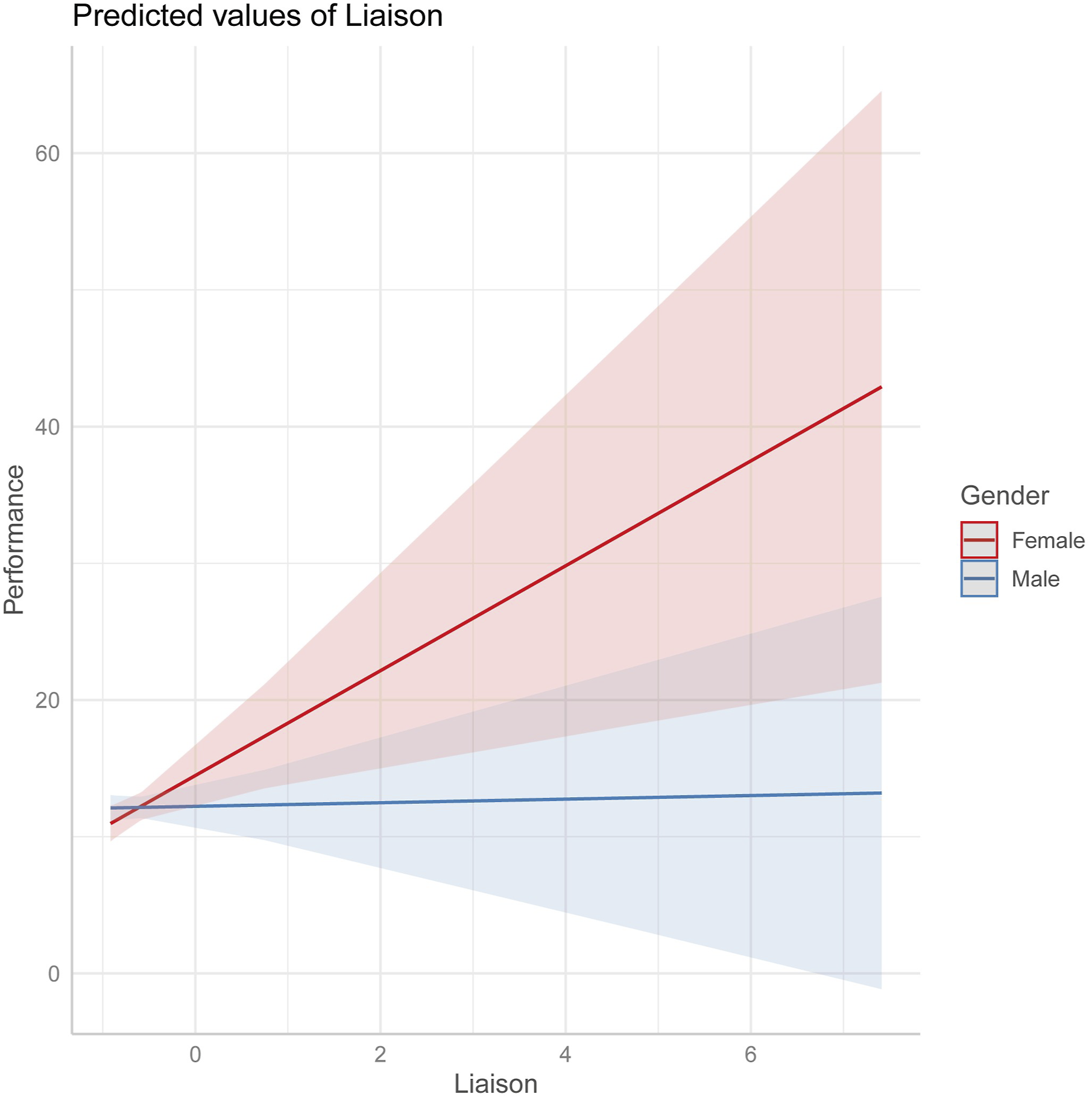
We conducted complementary quantile regression analysis on our most comprehensive model (Model 5) to assess the robustness of our primary findings. This methodological approach provides insights into potential heterogeneity across the distribution. Overall, our robustness checks strengthen rather than challenge the original findings. This consistency between methods reinforces the reliability of the results and supports their interpretation across different levels of researcher productivity. The relevance of liaison is well supported, with only minor variations across the distribution. The positive effect remains significant in the lower quantiles (q = 25%: β = .872, p < .01; q = 50%: β = .504, p < .1), while marginally losing significance in the higher quantiles (q = 75%: β = .848, p < .1). For the man-gender*liaison interaction, the robustness check further confirms the significant negative effect in lower quantiles (q = 25%: β = −.786, p < .01; q = 50%: β = −.796, p < .1). There are no significant negative effects in the upper quantile (q = 75%: β = −.135, p = .85), providing an interesting complementary nuance: a null effect for top performers, where the gender gap disappears among high-productivity researchers.
To ensure that our conclusions are not driven by the linear specification, given the discrete, non-negative nature of the h-index, we estimated Poisson and Negative Binomial models as additional robustness checks (Martorell-Cunil et al., 2023; Zi-Lin, 2009, among others). The estimated effects for the key variables (coordinator, liaison, man-gender, and the interaction terms) remain consistent in sign and statistical significance, supporting the robustness of our findings to alternative functional forms. On one hand, the Poisson models yield the following focal estimates. In Model 4: man-gender β7 = .014, coordinator β8 = −.016, liaison β9 = .024 (p-value <.01), and man-gender*coordinator β10 = .056 (p-value <.05). In Model 5: β7 = .010, β8 = .023 (p-value <.05), β9 = .034 (p-value <.01), and man-gender*liaison β11 = −.039 (p-value <.01). On the other hand, the corresponding Negative Binomial estimates are closely aligned. In Model 4: β7 = .001, β8 = −.009, β9 = .039, and β10 = .054; and in Model 5: β7 = −.004, β8 = .027, β9 = .037, and β11 = −.042 (p-value <.10).
Discussion
Derived from publications mentioning social learning in public policy, the findings confirm the positive impact of brokerage roles within the co-authorship network on academic performance (Ho & Liu, 2013). By linking with unconnected researchers, authors gain access to knowledge that reinforces the novelty and impact of their scientific contributions. However, in line with Theeke and others (2018), not all brokerage positions offer equal benefits. H1 is supported: liaison brokerage (across disciplines) is positively associated with academic performance, whereas coordinator brokerage (within disciplines) is not. H2 is partially supported: the relationship between brokerage and performance is moderated by gender only for liaisons, with men exhibiting lower returns to liaison brokerage than women.
We observed that the coordinator broker role does not significantly increase authors’ academic performance. This pattern is consistent with brokerage arguments emphasizing that when ties connect cognitively similar actors, the broker mainly accesses redundant knowledge, limiting cognitive recombination and novelty (Balachandran & Hernandez, 2018; Burt, 2004). In contrast, liaison broker roles imply access to valuable knowledge that significantly boosts academic performance. This supports previous evidence that interdisciplinarity can provide a distinct advantage in contexts that require the convergence of multiple perspectives (Antonelli & Fassio, 2016). According to Hagemeier-Klose and others (2014), the results support interdisciplinary collaboration in this field. Multidisciplinary teams promote novel studies by connecting knowledge from different fields, leading to higher knowledge novelty and performance. By differentiating coordinator and liaison roles, the results clarify that the performance premium is concentrated in the liaison role: the brokerage configuration that maximizes cognitive diversity despite also facing higher coordination costs (Garforth & Kerr, 2011; Kwon et al., 2020). Extending prior studies on brokerage and impact (e.g., Burt, 2004; Ho & Liu, 2013), the findings indicate that the performance payoff varies by brokerage role, with gender differences emerging primarily for liaison brokerage.
From a gender perspective, the results provide evidence of gender differences in networking behavior (Charness & Rustichini, 2011) and academic performance (Bidault & Hildebrand, 2014; Ductor, 2015). As Badar and others (2013) highlight, gender has intrinsic attributes that influence how individuals benefit from their social networks. Specifically, we show that gender differences are concentrated in interdisciplinary brokerage: the return to liaison brokerage is stronger for women than for men. This finding is consistent with broader mechanisms discussed in the literature. Liaison positions may increase visibility and access to diverse audiences and evaluation contexts, potentially mitigating cumulative disadvantages associated with gender bias. Moreover, because access to social capital is gendered, bridging across disciplines may expand women’s access to non-redundant knowledge and collaborators beyond homophilous or closed networks (Badar et al., 2013; Bozeman & Gaughan, 2011; Fox, 2001; Rhoten & Pfirman, 2007). From a role congruity perspective, interdisciplinary boundary spanning may also reshape how contributions are perceived and credited, offering alternative pathways to recognition and impact.
Interestingly, the quantile-specific results suggest that gender-based network advantages may be more pronounced in the early- and mid-career stages. Seemingly, the gender gap does not represent a major issue in this field. In the upper end of productivity, the gender difference in liaison return attenuates, suggesting that the gap narrows among top performers. This finding aligns with recent research indicating a gradual narrowing of the gender gap in academia productivity (Abramo et al., 2022) and impact (Uribe-Bohorquez et al., 2023) using different performance measures (Buchmann & DiPrete, 2006). This is particularly true in social sciences, such as gender studies (González-Salmón et al., 2025), and humanities and health sciences (Choji et al., 2024). However, representation remains limited in other disciplines, such as STEM (Prakash et al., 2024).
The lack of relevance of geographical distance between co-authors supports the idea that international relationships should not be considered a quality “per se.” Owing to the specificity of certain fields, national linkages can provide sufficient diversity of knowledge for the advancement of science. This may be particularly true in politics, where physical distance correlates with cultural and institutional differences (Ho & Liu, 2013). As expected, accumulated publishing experience and collaboration, as well as having connections with many and relevant partners, positively influence academic performance.
Conclusions, Implications, and Limitations
We formulated two research questions. First, we asked whether it is valuable to conduct research that connects different disciplines. The findings confirm that researchers who collaborate across disciplines and take on a brokerage role as liaisons have more impact than brokers who act as coordinators within the same discipline. Despite the higher coordination and communication costs, brokers who connect across disciplines gain access to novel sources of knowledge and innovative research, which likely contributes to their increased academic performance.
Second, we asked how connecting researchers from different disciplines affects researchers’ impact. While the general effect is positive, caution is advised because women benefit more significantly than men. Women have the opportunity to become more relevant through liaison brokerage positions; they can create new opportunities to gain greater social legitimacy among their peers (Berger et al., 2015).
In summary, we evaluated how brokerage positions and gender relate to academic performance in an interdisciplinary co-authorship network. We distinguished between brokerage positions within the same academic discipline and interdisciplinary ones. Two main conclusions are drawn. First, interdisciplinary brokerage (liaison) is associated with higher academic performance than within-discipline brokerage (coordinator), suggesting that knowledge diversity accrued by bridging across disciplinary boundaries yields greater impact. Second, these returns are gendered: women benefit more from liaison brokerage than men, indicating that gender moderates the performance payoff of interdisciplinary brokerage.
This study used publications on policy and social learning to assemble a heterogeneous collaboration corpus and examine brokerage mechanisms in the resulting co-authorship network. It moved beyond traditional case-based approaches and structural network analyses that treat articles as isolated nodes (Collet et al., 2014), by incorporating author-level attributes, like disciplinary membership and gender, as critical dimensions shaping knowledge diffusion. While previous research has examined either network topology or individual characteristics in isolation (Bacci et al., 2023; Badar et al., 2013; Ho & Liu, 2013, among others), we integrated these perspectives to demonstrate how the interplay between structural position and author attributes influences knowledge flow. This approach provides a more nuanced understanding of how brokerage and interdisciplinarity relate to academic performance within this publication corpus.
While the literature has acknowledged the role of brokers in connecting diverse knowledge domains (Ho & Liu, 2013; Singh, 2005), their analyses were constrained by disciplinary or geographic limitations (Bacci et al., 2023). By examining five major disciplines across global co-authorship networks, we provided a more comprehensive framework for understanding how interdisciplinary brokerage influences knowledge production. Our large-scale, cross-disciplinary analysis revealed patterns that cannot be detected in single-discipline or nationally bounded studies, offering new insights into how knowledge integration varies across research fields. Importantly, we showed that not all brokerage positions confer equal advantages—the value of connecting disparate disciplines depends on both the broker’s background and the epistemic distance between fields.
Furthermore, this study challenges conventional assumptions about collaboration dynamics by quantifying gender-differentiated outcomes in interdisciplinary research. Earlier studies analyzed gender disparities in national academic networks (Badar et al., 2013) but did not assess how women strategically leverage interdisciplinary ties to overcome systemic barriers. This study’s longitudinal approach revealed novel empirical patterns, demonstrating that interdisciplinary collaboration does not uniformly benefit all researchers, a finding that refines theories of brokerage and cumulative advantage in academic careers (Berger et al., 2015; Huang & Su, 2019). Specifically, we found that while women are more likely to engage in interdisciplinary work, the career benefits of such collaborations are moderated by field-specific norms and evaluation criteria.
By integrating brokerage theory with author-level heterogeneity, this study bridges gaps between macro-level network analyses (Zhao & Zhao, 2016) and micro-level behavioral studies (Lissoni, 2010). The results offer policymakers and institutions actionable insights into how disciplinary diversity and gender equity interact to shape innovation trajectories. Our findings suggest that policies aimed at fostering interdisciplinary collaboration should account for the unequal distribution of its benefits across demographic groups and research fields.
Academic Implications
This study provides evidence-based strategies for fostering interdisciplinary collaboration and addressing gender disparities, enhancing research impact in co-authorship networks based on publications on policy and social learning. From a researcher’s perspective, the relevance of multidisciplinary cooperation in performance requires additional efforts in networking outside an author’s original academic discipline. By broadening their research to new scientific fields, researchers can develop new explanations, theories, or approaches (paradigms). As this involves high communication and coordination costs related to mutual understanding, efforts should be devoted to implementing strategies to connect with other research disciplines. A practical implication is to intentionally cultivate cognitive diversity by building collaboration ties that transcend disciplinary boundaries, that is, developing liaison connections, rather than relying on within-discipline collaborations. Attending different seminars or conferences represents a strategic approach to building cross-disciplinary ties that may bring about non-redundant knowledge and new combinations of ideas. Despite the more readily absorbable nature of the knowledge provided, persistent cooperation with academics from the same field engenders information redundancies that limit potential creativity and impact. These strategies hold particular significance for emerging and mid-career researchers whose scholarly impact remains at the developmental stage.
We also acknowledge the role of journal editors in shaping impactful research. To stimulate the broadening of fields by incorporating new paradigms, methodologies, and approaches, journals should promote this diversity internally. Inviting reviewers from other disciplines connected to the topic of the study, or including special issues from an interdisciplinary perspective, can improve the impact of published papers. More broadly, journals can support cognitive diversity by encouraging cross-disciplinary author teams, signaling openness to interdisciplinary methods, and designing review processes that fairly evaluate works spanning multiple fields.
Policy Implications
Based on the finding that cross-disciplinary (liaison) brokerage predicts higher impact, especially for women, we propose three targeted policy areas: interdisciplinary incentives, women-led team support, and mentoring programs.
Institutional incentives for interdisciplinary collaboration include developing incentive programs that reward high-impact interdisciplinary publications in top-tier journals; supporting structured interdisciplinary spaces, such as multidisciplinary forums targeting specific policy challenges (e.g., climate governance or health equity frameworks); and creating structured spaces for co-creation between researchers and policymakers.
Gender equality programs that support women-led teams could comprise implementing gender-sensitive funding schemes that support women-led interdisciplinary teams and addressing the observed productivity gap can be ways to build on women’s demonstrated capacity to benefit from cross-disciplinary collaboration. Our findings suggest that policy measures should leverage the “novelty premium” that women gain from interdisciplinary work, where their contributions achieve higher citation impact when bridging disciplinary silos.
Research mentoring and mobility programs could comprise mentorship initiatives pairing early-career and established researchers and targeted mobility programs can help translate interdisciplinary collaboration into sustained impact. Furthermore, institutional partnerships could amplify prestige spillovers by strategically connecting female researchers with recognized experts across gender lines through targeted visiting scholar programs or co-writing retreats focused on Sustainable Development Goals (SDG)-related policy challenges.
Limitations and Future Research
Although this study offers valuable insights into the role of brokerage positions and interdisciplinary collaboration in academic performance, it has several limitations.
Regarding methodological limitations, there are several issues. The reliance on the h-index as a measure of academic performance, while widely accepted, does not capture qualitative dimensions of research influence, such as policy implementation or societal engagement. Future studies could benefit from incorporating alternative metrics such as altmetrics or policy citations to provide a more comprehensive assessment of scholarly impact. The cross-sectional nature of this study also precludes an examination of how the benefits of brokerage evolve over researchers’ careers, particularly for women navigating interdisciplinary spaces. Future research should adopt longitudinal approaches to track the dynamic evolution of co-authorship networks and their long-term effects on academic trajectories.
With respect to conceptual limitations, a few key points should be highlighted. Although we argue that interdisciplinary research tends to have a greater impact by reaching a wider audience, it should be noted that in certain subfields, due to the nature of their topics and methods, opportunities to develop interdisciplinary research are limited, as is the case in emerging fields or social development. Furthermore, interdisciplinarity can entail risks, as incorporating innovative ideas that diverge from established norms may result in certain contributions being undervalued and receiving fewer citations. Exploring when interdisciplinarity may become an opportunity within a highly specialized subfield, or what factors may constrain the benefits of inter-field cooperation, is a valuable path for future inquiry. Qualitative methods, such as in-depth interviews with researchers in brokerage positions, could yield rich insights into the strategies employed to overcome interdisciplinary collaboration barriers.
Regarding external validity, several constraints deserve closer inspection. The findings are primarily confined to the field of social learning and public policy research, which may limit their generalizability to other disciplines, particularly those with more pronounced gender disparities or different collaborative norms, such as STEM fields. Moreover, the English-language focus and SSCI-indexed sample may underrepresent contributions from non-Anglophone regions, potentially affecting the external validity of the results in diverse geographical contexts.
Despite the gradual reduction of the gender gap in many disciplines, the barriers that maintain imbalances in fields where interdisciplinary collaboration might serve as an equalizing mechanism should be analyzed. The intersection of social sciences with emerging technologies presents another promising avenue in understanding how brokers facilitate knowledge integration across disparate fields such as AI ethics and public policy. From an institutional perspective, investigating the effectiveness of targeted mentorship programs designed to support women in brokerage roles could inform policies aimed at reducing gender gaps in research impact. Such programs should be evaluated not only by traditional productivity metrics but also by their ability to foster leadership in interdisciplinary research consortia. The role of digital platforms in enabling brokerage across geographical and disciplinary boundaries warrants further exploration, particularly for researchers in underrepresented regions. Machine learning techniques could be employed to analyze large-scale collaboration patterns, offering real-time insights into the formation and impact of interdisciplinary networks.
Finally, this study highlights the transformative potential of interdisciplinary brokerage in reshaping academic networks and advancing gender equity in research. By addressing these limitations and pursuing the outlined research directions, scholars can contribute to more inclusive and impactful scientific ecosystems. The study’s findings underscore the importance of institutional support and policy interventions in harnessing the full potential of interdisciplinary collaboration, not only as an academic endeavor but also as a catalyst for broader societal change.
Footnotes
Acknowledgments
We are deeply grateful to Professor Isabel Díez Vial of the International University of La Rioja (Spain) for his valuable guidance and support. The research leading to these results received funding from the Regional Ministry of Economy, Finance and Public Administration of the Generalitat Valenciana [UNIECPU/2021/01 PT1]. We would like to thank Editage ( ) for English language editing.
Author Contributions
All authors contributed to the study conception and design. Material preparation, data collection and analysis were performed by Elisa Espín Gallardo, José Antonio Belso Martínez, and María José López Sánchez. To be more specific:
Conceptualization: José Antonio Belso Martínez and María José López Sánchez; Methodology: Elisa Espín Gallardo and José Antonio Belso Martínez; Formal analysis and investigation: Elisa Espín Gallardo and María José López Sánchez; Writing—original draft preparation: Elisa Espín Gallardo; Writing—review and editing: María José López and José Antonio Belso Martínez; Funding acquisition: José Antonio Belso Martínez and María José López Sánchez.
All authors read and approved the final manuscript.
Funding
The authors disclosed receipt of the following financial support for the research, authorship, and/or publication of this article: This word was supported by Regional Ministry of Economy, Finance and Public Administration of the Generalitat Valenciana [UNIECPU/2021/01 PT1].
Declaration of Conflicting Interests
The authors declared no potential conflicts of interest with respect to the research, authorship, and/or publication of this article.
Data Availability Statement
All data supporting research findings available on Web of Science.