







Abstract
The study aims to explore the effect of positive psychological intervention (fun activities combined with positive mental health education) on the well-being, 2-week illness prevalence, and salivary immunoglobulin A of empty nesters. Ninety-two empty nesters were divided into intervention (n = 49) and control (n = 43) groups. The empty nesters in the intervention group performed the intervention in addition to routine community activities. The intervention group scored significantly higher on well-being (p< .05) compared with the control group after intervention. A week after intervention, salivary immunoglobulin A of the intervention group (p< .05) was higher than that before intervention. Meanwhile, the difference in salivary immunoglobulin A in the control group before and after intervention was not statistically significant. 2-week illness prevalence in both groups did not exhibit a significant difference (p> .05). Results indicate that positive psychological intervention can effectively increase the well-being and salivary immunoglobulin A of empty nesters and improve their physical and mental health.
Empty nesters are the old men who do not live with their children together or have no child (Yang & Zhao, 2004). Empty nesters as a special group are more likely to have mental health problems than others (Arslantas, Adana, Abacigil Ergin, Kayar, & Acar, 2015; Liang & Wu, 2014; Xie et al., 2014). Exploring suitable methods to solve them is an urgent need for health professionals. Studies have confirmed that inspiring empty nesters’ positive emotions and guiding them with a positive and optimistic attitude exert a protective effect on their mental health. Bruin, Schoene, Pichierri, and Smith (2010) implemented a dance pad exercise combined with simulation computer game intervention for the elderly in a virtual indoor environment to increase the enthusiasm for and fun of indoor sports and to alleviate negative emotions. The group play therapy conducted by Deng (2013) on single teenagers caused the teenagers to express their affection spontaneously in the game as well as reduced negative emotions and improved identity. Dale, Brassington, and King (2014) reviewed studies about the effect of health behavior interventions (exercise, diet) on mental health and found that physical activities can effectively increase happiness and improve mental health. Wang, Zhang, Li, and Wang (2011) implemented a nostalgic treatment for 8 weeks among 82 empty nesters, set a special theme, and encouraged them to narrate and recall their experiences. The nostalgic treatment evidently relieved depression and improved happiness. The above mentioned interventions can improve emotions and the quality of life.
Fun activities can make a person feel cheerful, cultivate attractive individual characteristics, and bring about a pleasant experience. They mainly include physical exercise, games, entertainment, and other activities. Fun activities can stimulate individual interest, entertain the body and mind, and enhance physical fitness (The Chinese Academy of Social Sciences Institute of Language Dictionary Newsroom, 2005; Zhang, 2005). In addition to positive mental health education, the positive methods and means of health education can stimulate the positive emotions of empty nesters (Meng, 2008), help them adopt a positive view of the world, and allow them to respond positively. A previous study found that fun activities combined with positive mental health education can provide empty nesters a positive emotion, and this positive affect is associated with reduced risky behaviors, increased physical activity, and reduced risk of illness. It can also effectively reduce vulnerability to infectious illnesses and promote the elderly’s health, ultimately reducing the 2-week illness prevalence and increasing happiness (Hoyt, Lindsay, McDade, & Adam, 2012). In addition, studies have shown that music intervention, relaxation therapy, and others inspire positive emotions, increase the production of salivary immunoglobulin A (SIgA) to some extent, and improve the immune function of the individual (Sheng, 2013; Stone, Marco, Cruise, Cox, & Neale, 1996).
Whether fun activities or health behavior interventions, these interventions have a certain effect on alleviating negative emotions and improving happiness. But so far, research on fun activities combined with positive mental health education in the elderly is scarce. Thus, whether fun activities combined with positive mental health education is relatively more effective for emotion and health improvement. Positive psychological intervention in the study specifically refers to fun activities combined with positive mental health education.
Our research questions are as follows:
Method
Participants and Setting
According to the matching principle in terms of the geographical distance (over 40 min walk) and comparable economic level, the study was conducted in two villages in Wenzhou city via cluster sampling method from November 2014 to June 2015. The inclusion criteria were as follows: (a) empty nesters aged 60 or above residing in one of the two villages, (b) the frequency of visitation by children was once a week or less, (c) understood the purpose of the study and were willing to sign an informed consent form to participate in this study, and (d) were able to communicate and had no hearing loss. Participants were excluded if they (a) had a mental illness or cognitive impairment and (b) had severe physical health problems or extreme weakness or had been bedridden for a longtime.
Based on a two-tailed analysis, α = .05, 1 −β = .9, a sample size of 35 was estimated based on the sample size formulas for comparing means between the two groups and the results of preliminary intervention. Allowing for an anticipated 20% dropout rate, and for ensuring the final effective sample size, 42 empty nesters were required in each group for completing the study.
Prior to the study, the ethics protocol was approved by the Ethics Committee of Wenzhou Medical University in accordance with the Declaration of Helsinki. Coin flipping or tossing was conducted to divide the empty nesters into two groups, namely, intervention and control. The two villages had a total of 177 empty nesters, among which 130 met the eligibility criteria and were willing to participate. The intervention group included 68 participants, and the control had 62 participants. A total of 38 participants were excluded from the two groups during the intervention (Figure 1). Finally, a total of 92 participants (49 in the intervention and 43 in the control group) were included in the study. The mean age of participants was 70.37 (SD = 7.56) and 67.21 (SD = 7.15) years, respectively. No statistically significant difference was observed between participants in the intervention and control groups in terms of social demographics and chronic disease situation (Table 1).
Sample Characteristics (N = 92).
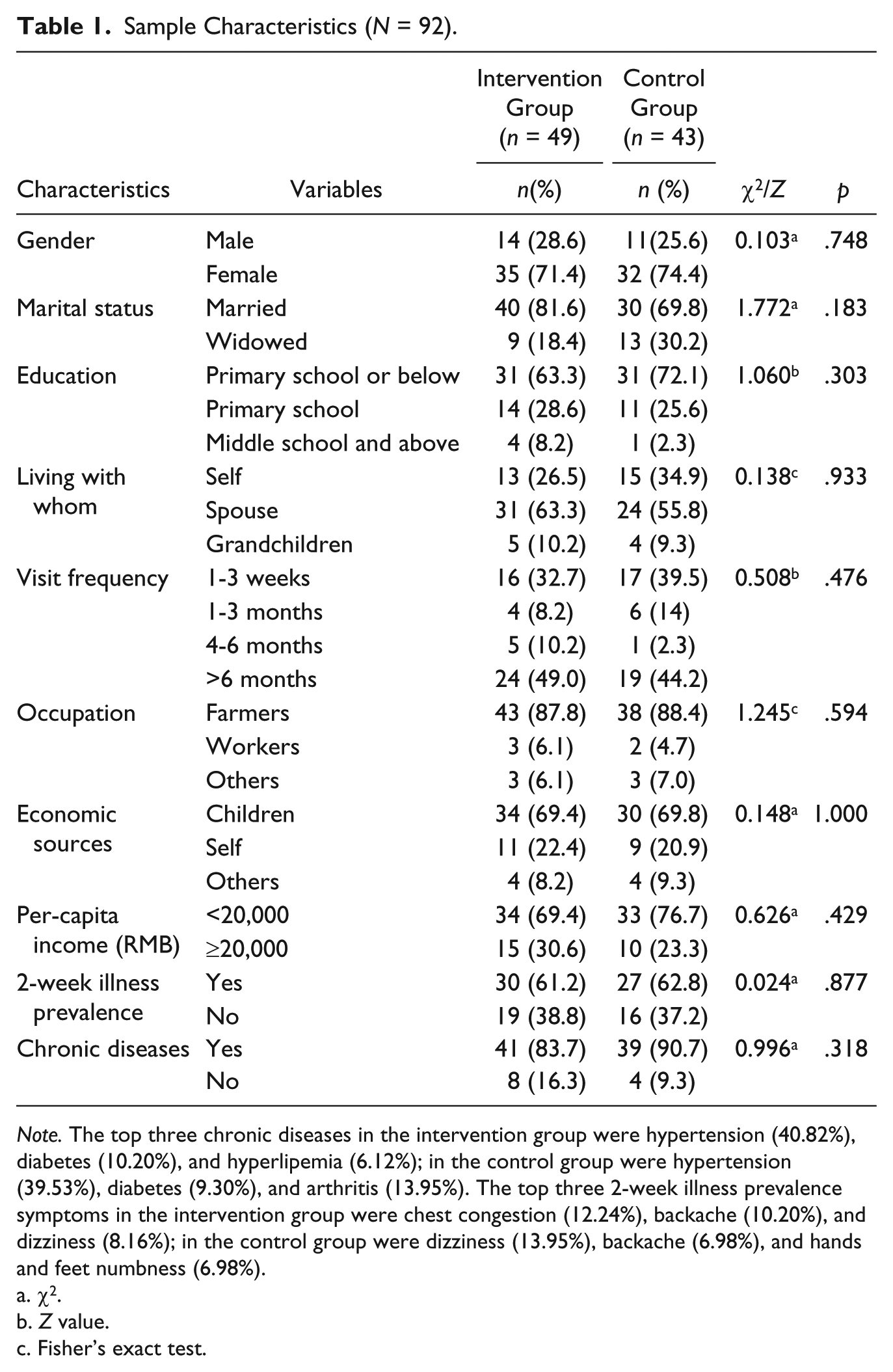
Note. The top three chronic diseases in the intervention group were hypertension (40.82%), diabetes (10.20%), and hyperlipemia (6.12%); in the control group were hypertension (39.53%), diabetes (9.30%), and arthritis (13.95%). The top three 2-week illness prevalence symptoms in the intervention group were chest congestion (12.24%), backache (10.20%), and dizziness (8.16%); in the control group were dizziness (13.95%), backache (6.98%), and hands and feet numbness (6.98%).
χ2.
Z value.
Fisher’s exact test.
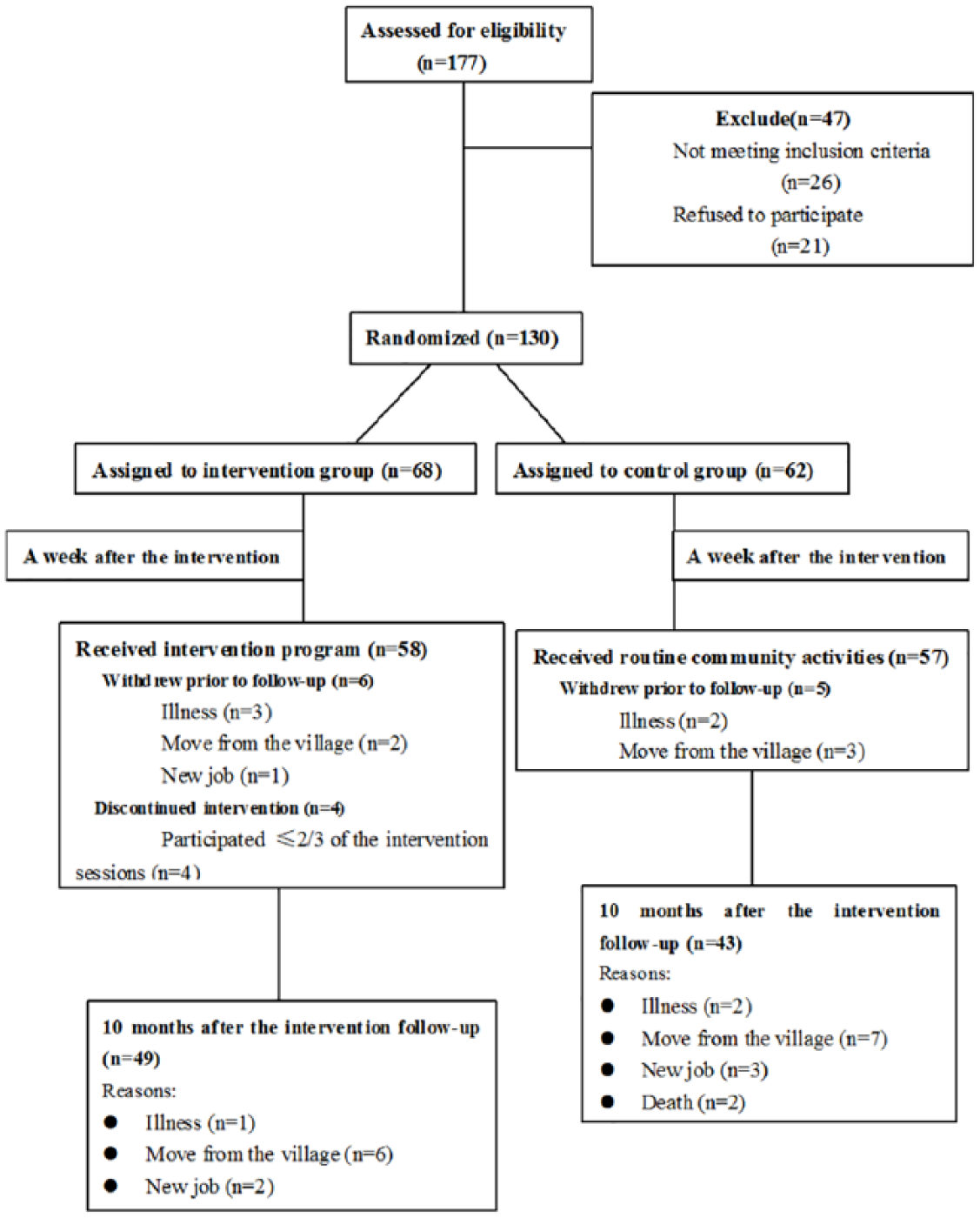
Sample flow chart.
Intervention
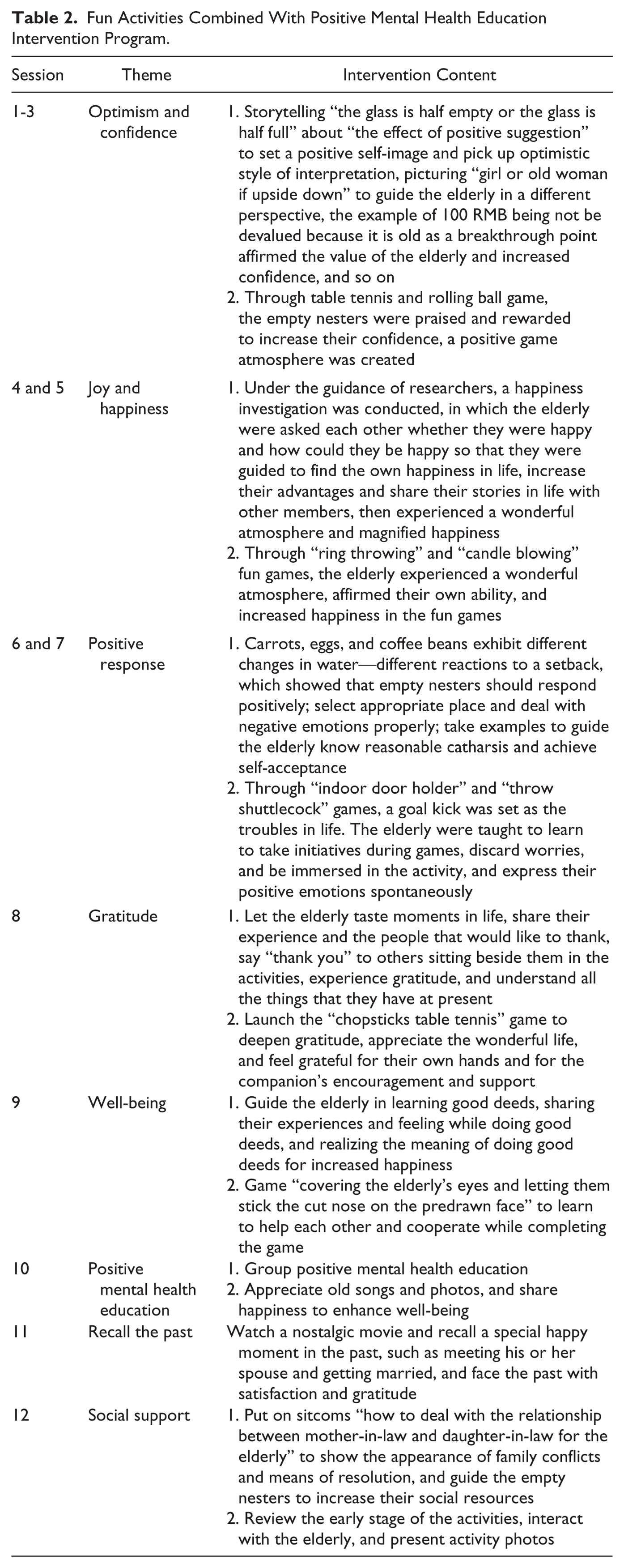
A preliminary positive psychological intervention program was formulated according to literature, expert consultation, and group discussion. This program was preintervened among 15 empty nesters of the intervention group for 2 months. The advantages and disadvantages of the program were discussed with empty nesters and improved during intervention. Afterward, the final program was formulated. A formal positive psychological intervention was then implemented. The empty nesters in the control group attended routine community activities, and those in the intervention group received the intervention program in addition to routine community activities. Intervention was carried out by two psychological domain experts and four trained graduate students under the guidance of the intervention program. The empty nesters who acted as group leaders voluntarily assisted in the implementation of the intervention program. The intervention program is shown in Table 2. Before the intervention and during its implementation, the intervention team and group leaders discussed and adjusted the intervention schemes to ensure the good quality and effect of the intervention. The intervention was themed “optimism and confidence, joy and happiness” and implemented several times (Chen et al., 2016). For example, in the intervention with the theme “optimism and confidence,” a positive atmosphere was created through a table tennis game. The empty nesters were praised and rewarded to increase their confidence. At the same time, storytelling about “the effect of positive suggestion” was conducted to set a positive self-image. For instance, carrots, eggs, and coffee beans exhibit different changes in water; the same analogy applies to empty nesters and shows that empty nesters should respond positively. At the end of the intervention, gifts were presented to the empty nesters as a reward to further stimulate their enthusiasm to participate. To avoid the Hawthorne effect, the empty nesters did not know which group they belonged to during the intervention. Intervention notice and measures were conducted within the intervention group, so as to prevent the control group from receiving intervention measures. The two villages were with a distance of over 40 min walk. Due to the low ownership of communication tools and the inconvenience in transportation among elderly, we effectively avoid contamination between the two groups. As it was necessary for the intervention researcher to know the grouping and intervention measures before intervention, we did not perform allocation concealment. The intervention was conducted for 7 months in a total of 12 sessions, which were provided as one or two sessions per month. Each session lasted for 30 to 45 min.
Fun Activities Combined With Positive Mental Health Education Intervention Program.
Outcome Measures
The outcome measures included well-being, 2-week illness prevalence, and SIgA.
Well-being
The Memorial University of Newfoundland’s Scale of Happiness (MUNSH) was used for the measurement of well-being before and after the intervention (Kozma & Stones, 1980). MUNSH has 24 items, including positive and negative affection with five items each and positive and negative experience with seven items each. Scores change between 0 and 48. Empty nesters whose scores were higher than 24 points have dominant positive feelings, those with scores equal to 24 points show emotional equilibrium, and those with less than 24 points have dominant negative emotions. The Cronbach’s α was .764.
2-week illness prevalence
According to this definition by the Fourth National Community Health Service Investigation in China, a 2-week illness was defined if the respondents had any of the following three circumstances in the prior 2 weeks when interviewed: (a) pay visits to a doctor, (b) receive medical treatment for the illness or injury (such as taking medicines or using auxiliary therapy, therapeutic massage, and hot compress, among others), or (c) being bedridden or being off work due to illness (including obvious abnormal depression and loss of appetite in elderly people). In addition, 2-week illness prevalence, which was defined as “number of respondents who had 2-week illness divided by total number of respondents × 100 %” (Center for Statistics Information Ministry of Health, 2009). 2-week illness prevalence is an important health indicator. Before completing the questionnaire, the empty nesters communicated with the researchers effectively and signed informed consent forms. They were told to fill out the methods and notes on the questionnaire. For those with a low educational degree and could not understand the questions, the researchers obtained their consent to fill out the questionnaires on their behalf. All the questionnaires were distributed and returned to the researchers on the spot and carefully checked. Additional time was provided when items were incorrectly addressed. The researchers assured the participants that all data regarding the elderly would remain confidential and would only be used for the purpose of the research.
SIgA
Saliva was collected voluntarily before and after the intervention. Saliva samples were obtained from both groups between 1:00 p.m. and 4:00 p.m. (Papacosta & Nassis, 2011). Before collecting the samples, empty nesters who had microinjuries or abrasions in the oral cavity, undertook any dental surgery 48 hr prior to sampling, had current upper respiratory tract infection or 7 days before the sampling, or took any steroid medicines were not considered. Eligible empty nesters were asked to rinse their mouth with water after lunch. Food or drink intake, smoking, chewing gum, and teeth brushing had to be avoided at least 2 hr prior to sampling. During collection, the empty nesters were told to sit, completely relax their body, droop their head slightly, minimize orofacial movements, and let saliva naturally accumulate on the floor of the mouth. A saliva collection tube was used to collect 3 to 4 ml of unstimulated saliva within 5 min. After collection, the samples were transported to our laboratory in crushed ice for refrigeration and centrifuged at 3,000 rpm and 4 °C for 15 min. The supernatant fluid was obtained and placed in a 1.5 ml eppendorf tube, which was sealed and frozen at −80 °C for subsequent analysis (Navazesh, 1993). To minimize errors, all experiments were performed by the same experimenter. Enzyme-linked immunosorbent assay was used for the determination of SIgA concentration in saliva. The saliva SIgA kits were provided by Shanghai Qipu Industrial Co., Ltd. The samples were sent to Shanghai Boyun Biological Technology Co., Ltd., in dry ice. The 3-time duplicate detection average was the final result.
Data Analysis
Analysis was performed with SAS version 9.4 program. We used frequency, composition ratio, mean, and standard deviation for statistical description. T, chi-square, and Wilcoxon rank tests were performed for the comparison of control variables among empty nesters in the control and intervention groups. We also used independent-sample t test, paired-sample t test, multivariable generalized estimating equation (GEE), chi-square test, and multivariate logistic regression to evaluate the effect of the intervention on the well-being, 2-week illness prevalence, and SIgA amount of the intervention and control groups.
Results
Sample Characteristics
Sample characteristics are shown in Table 1.
Comparison of Well-Being in the Two Groups Before and After the Intervention
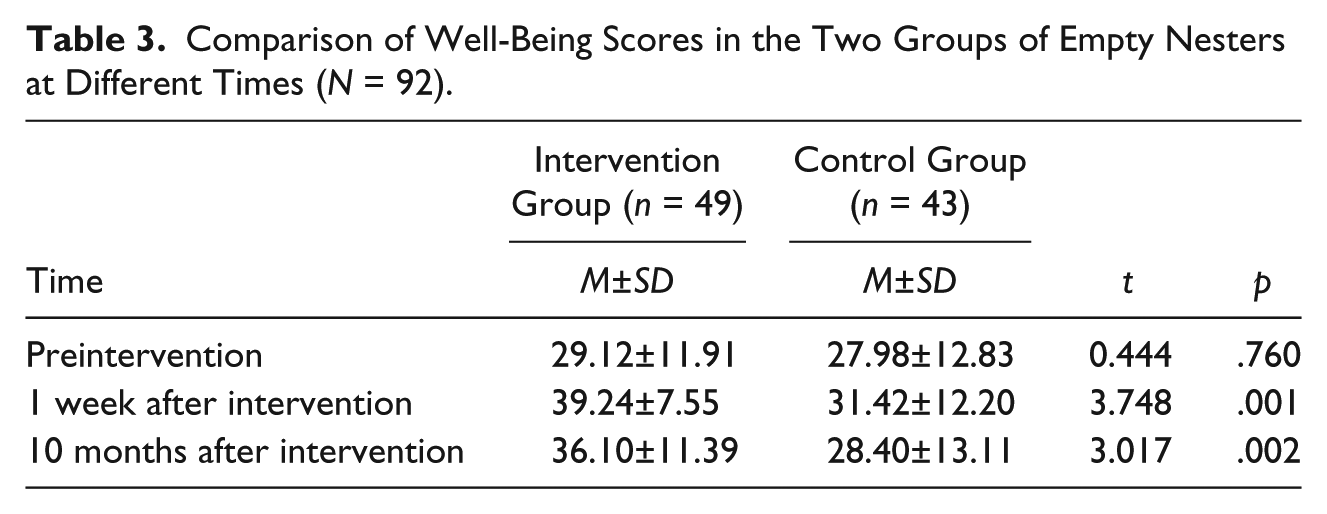
Before intervention, the well-being scores were not statistically different between the intervention and control groups (t = 0.444, p = .760). The scores were higher in both, than those before the intervention in the two groups, 1 week (t = 3.748, p = .001), and 10 months after the intervention (t = 3.017, p = .002). However, the control group showed a smaller increase than the intervention group. A statistically significant difference was observed between the two groups (Table 3).
Comparison of Well-Being Scores in the Two Groups of Empty Nesters at Different Times (N = 92).
After adjusting social demographics, chronic disease situation, and duration of the intervention, the GEE model was applied for multiple factor analysis. The final model parameter estimation results are shown in Table 4. The well-being scores showed a more significant increase in the intervention group than in the control group after adjusting the above mentioned factors (p = .005). The result indicated the effect of the intervention on well-being may last for 10 months.
Analysis of Well-Being Scores in the Two Groups of Empty Nesters Before and After the Intervention Via the Multivariate Generalized Estimating Equation Model.
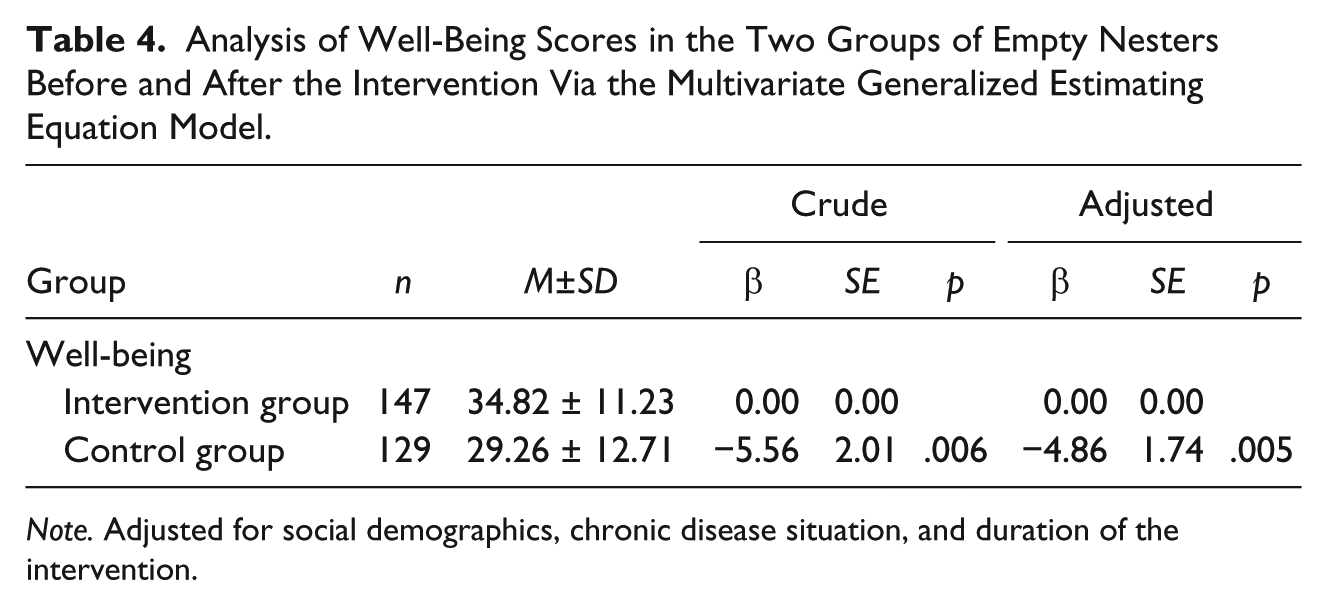
Note. Adjusted for social demographics, chronic disease situation, and duration of the intervention.
Comparison of 2-Week Illness Prevalence in the Two Groups Before and After the Intervention
Before intervention (p = .877), 1 week after the intervention (p = .763), and 10 months after the intervention (p = .475), 2-week illness prevalence did not exhibit a statistically significant difference between the intervention and control groups. The 2-week illness prevalence in the intervention group was less than that in the control group 1 week and 10 months after the intervention (Table 5).
Comparison of 2-Week Illness Prevalence in the Two Groups of Empty Nesters at Different Times (N = 92).
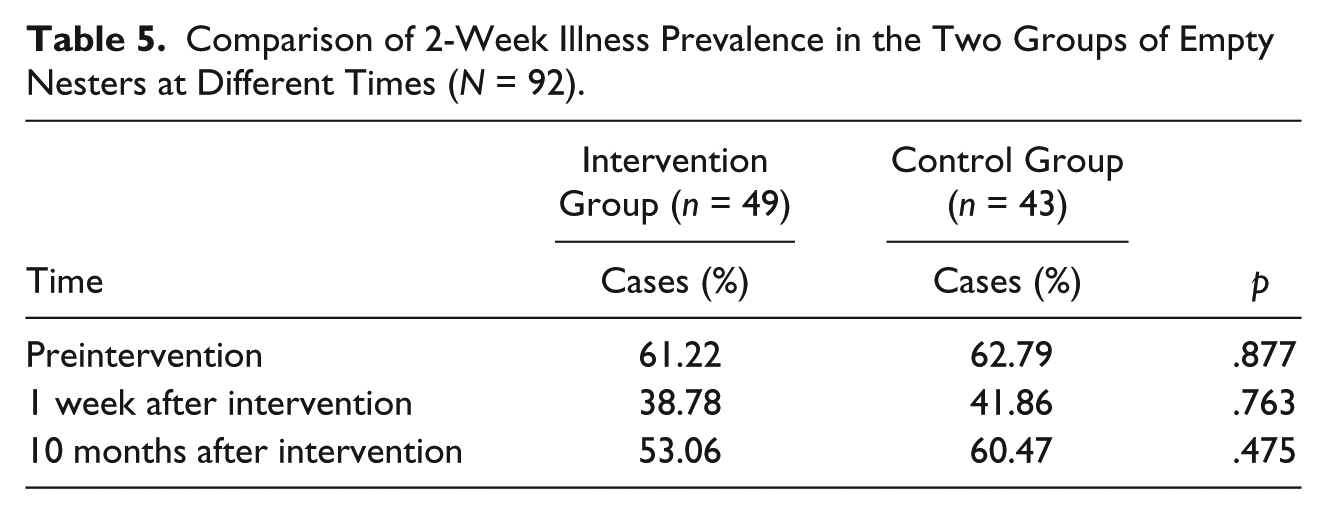
After adjusting social demographics, chronic disease situation, and duration of the intervention, the multivariate logistic regression model was applied for analysis. The intervention and control groups did not exhibit a statistically significant difference in 2-week illness prevalence 10 months after the intervention (p> .05).
Comparison of Saliva SIgA in the Two Groups Before and After the Intervention
A total of 63 saliva samples, including 35 from the intervention group and 28 from the control group, were obtained. No statistically significant difference was observed between the participants in the intervention and control groups in terms of social demographics, chronic disease situation, and 2-week illness prevalence (p> .05).
Before intervention, SIgA in the intervention group was obviously lower than that in the control group (t = −2.453, p = .017). A week after the intervention, SIgA in the intervention group was significantly higher than that before intervention; however, SIgA in the control group did not change significantly. A week after the intervention, no statistically significant difference (t = 1.820, p = .074) was observed between the intervention and control groups (Tables 6 and 7). Saliva samples were not collected 10 months after the intervention for different reasons, such as time and funds.
Comparison of Saliva SIgA in the Two Groups of Empty Nesters Before and After the Intervention (n = 63).
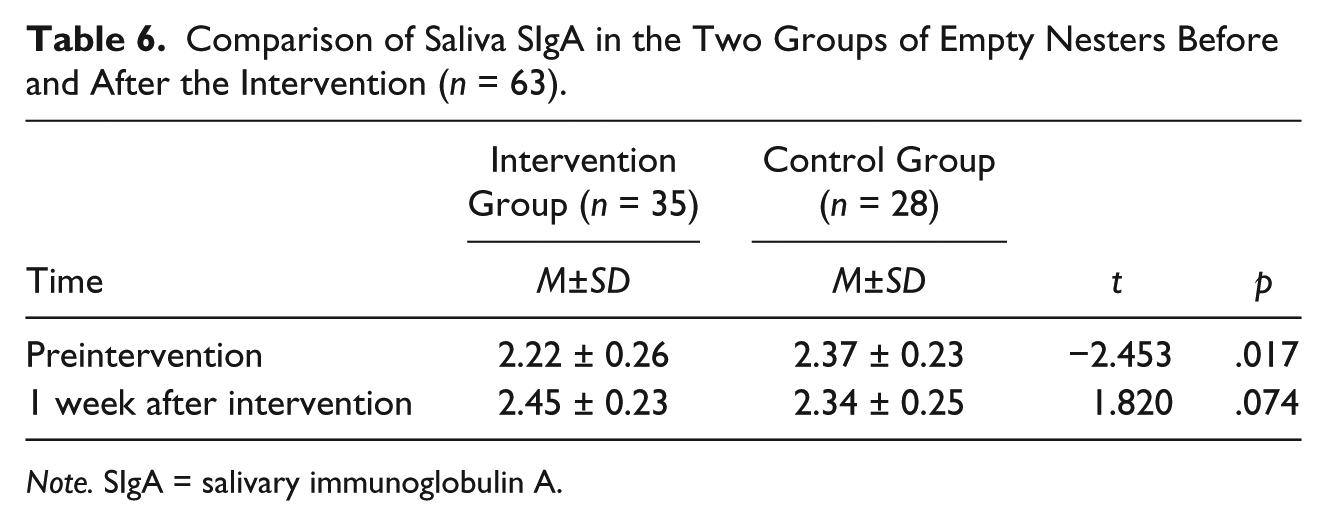
Note. SIgA = salivary immunoglobulin A.
Comparison of Saliva SIgA in the Two Groups of Empty Nesters Before and After the Intervention (n = 63).
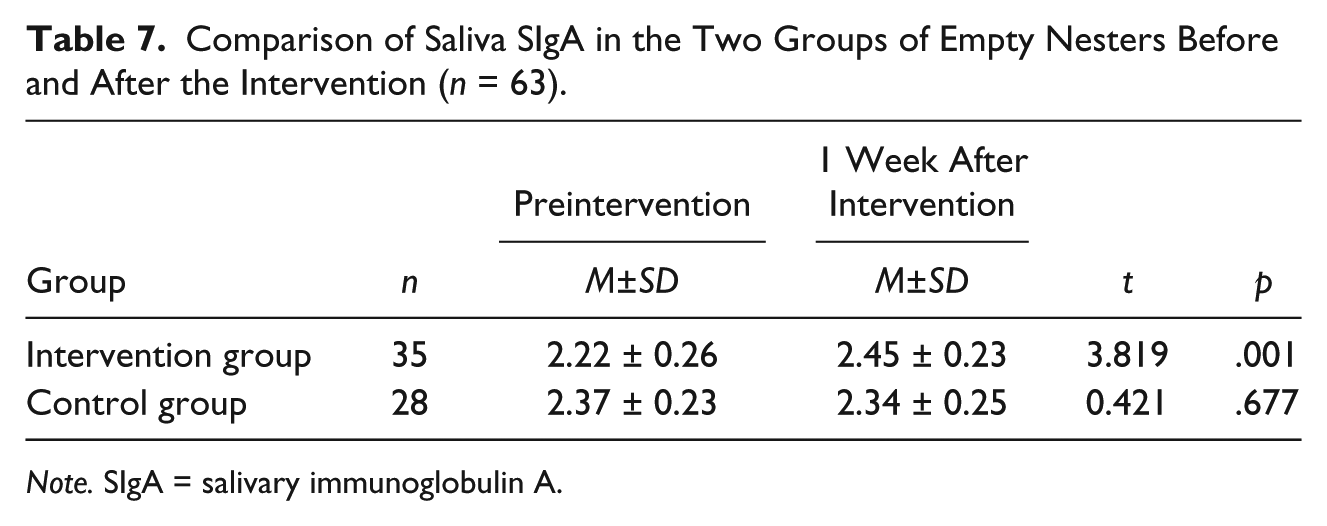
Note. SIgA = salivary immunoglobulin A.
Intention-To-Treat (ITT) Analysis Results
In the ITT analysis, the last measured well-being scores and 2-week illness prevalence of the empty nesters who were lost to follow-up in the research were considered an assumption of the finished intervention effect. Then, independent-sample t test was conducted. The results before and after the ITT analysis are consistent.
Discussion
From the perspective of positive psychology, fun activities combined with positive mental health education give full play to the subjective initiative of empty nesters and allow them to express and improve themselves. They guide empty nesters to think toward a positive angle, broaden their positive aspects, and provide them emotional support, consequently inspiring their positive emotions.
Well-being is the overall evaluation of the quality of life of the elderly and is a comprehensive psychological index to measure the quality of life (Duan, 1996). It can fully reflect actual feelings. Previous studies have confirmed that physical recreational activities are positively correlated to well-being and contribute to the maintenance of physical functions and independent living in older individuals (Lampinen, Heikkinen, Kauppinen, & Heikkinen, 2006). Guided by these positive psychological ideas, fun games and activities were conducted in this study to encourage the elderly to move their body, feel the warmth of the group, and experience positive emotions in the activities. Fun games and activities combined with positive mental health education allow the elderly to relive important moments of their life, talk about their experiences and the people that they would like to thank, experience gratitude, and understand all the things they possess at present. The results showed that the well-being of the intervention group increased significantly after the intervention, and a statistically significant difference was observed when compared with the control group (p< .05). This result suggests that intervention can effectively improve the well-being of empty nesters. This result is consistent with that of the study conducted by Lei, Jiang, Yin, Ding, and Pan (2014) and Bolier et al. (2013). Ten months after the intervention, the well-being of the intervention group decreased but was still higher than that of the control group. This result shows that the effect of intervention can last for a year but should be strengthened at this time. The positive emotions of empty nesters need to be inspired, and they should receive positive mental health education constantly.
The effect of mental health on physical health has been recognized. Research has shown that if no interventions are imposed on persons who present depression symptoms, increased cardiovascular mortality (Heok & Ho, 2008), cognitive decline (Rosenberg, Mielke, & Xue, 2010), and other adverse outcomes could be obtained. Thus, improvement of mental health can reduce 2-week illness prevalence. Studies have shown that positive emotion is linked to fewer stresses and disease symptoms, and less pain and less vulnerability to cold and other diseases (Cohen, Doyle, Turner, Alper, & Skoner, 2003; Cohen & Pressman, 2006). The results of this study indicate that the 2-week illness prevalence in the intervention and control groups declined after intervention. However, the variation was small, so no statistically significant difference was observed (p> .05). This finding may be related to the measurement time. Data were collected from November to December (in winter) before intervention and in June (in summer) after the intervention. The elderly are likely to have various somatic diseases in cold season, but these somatic symptoms improve to a certain extent in summer. 2-week illness prevalence in the intervention group obviously decreased compared with that in the control group. That showed the intervention may have an effect on reducing the 2-week illness prevalence. 2-week illness prevalence did not exhibit a statistically significant difference between the intervention and control groups. This result may be explained by the fact that intervention causes psychological changes initially and then physical changes afterward. This condition may be associated with the short intervention time. Based on the theory of positive psychology, fun games and activities were conducted in this study to let the elderly experience a positive atmosphere and relax themselves. For example, 100 RMB will not be devalued because it has become old. The breakthrough point affirms the value of the elderly, positively guides the elderly to view problems from a positive angle, facilitates positive thinking, and is expected to improve the physical condition of the elderly before finally reducing 2-week illness prevalence gradually.
SIgA is an important indicator of human mucous immune status and is believed to represent the strength of the mucosal immune function. Mucosal immunity is a local immunity and constitutes an effective defense barrier between the human body and the external environment (Xu, Ye, Hu, Li, & Cao, 2015). This study determined SIgA concentration before the intervention and a week after the intervention. The results showed that the SIgA concentration in the intervention group was obviously lower than that in the control group before the intervention. This result may be related to the physical condition, daily stress situation, different degrees of cultivator, and laborious movement of the elderly in the two groups. Evidence shows that SIgA is related to individual differences, psychological stress, and exercise intensity (Harrison et al., 2000; Li & Tang, 2012; Ma & Li, 2005; Stone, 1994). After the intervention, SIgA in the intervention group increased significantly compared with that before intervention; however, SIgA in the control group did not change significantly. This result indicates that fun activities based on positive psychology theory motivate the elderly to generate positive affect. In addition, positive mental health education helps empty nesters focus on their positive affect in everyday life, helps intensify positive emotions, and exerts a positive influence on the immune function. Therefore, SIgA increased significantly after the intervention. Previous studies have shown that after relaxation through desirable events, film viewing, social support, or an interesting lecture, the elderly produce positive emotions and provoke increases in SIgA (Harrison et al., 2000; Jemmott & Magloire, 1988; Tsujita & Morimoto, 2002). Given that SIgA can represent the local immune status, an increase in SIgA concentration may help prevent the invasion of pathogens to some extent. Thus, maintaining a positive emotional state is beneficial to improve immunity, helps increase disease prevention and resistance, and exerts great influence on the improvement and maintenance of an individual’s physical and mental health.
This study confirmed that fun activities combined with positive mental health education can effectively increase the well-being and SIgA of empty nesters and can improve their physical and mental health. Given the limited time and funds, the sample size was small and follow-up instances were few. Future research should involve large-scale validation and in-depth study and continue to examine the long-term effects of such an intervention.
Footnotes
Acknowledgements
The authors acknowledge the contributions of all coordinators from Wenzhou Medical University, for their support on the field work.
Declaration of Conflicting Interests
The author(s) declared no potential conflicts of interest with respect to the research, authorship, and/or publication of this article.
Funding
The author(s) disclosed receipt of the following financial support for the research, authorship, and/or publication of this article: The project was funded by a grant from the Natural Science Project of Zhejiang province (LY14G030025).