







Abstract
Background:
Dementia is a rapidly growing global health challenge, affecting an estimated 57 million people worldwide and placing escalating demands on individuals living with the condition and those who care for them. As needs rise, many turn to digital platforms like ALZConnected, a moderated online forum offering space for sharing, support, and connection. While its use in research is expanding, to our knowledge, no scoping review has yet examined how ALZConnected has been leveraged as a data source in dementia-related studies.
Objective:
This scoping review aimed to identify and describe published studies that used the ALZConnected forum data to explore caregiver and persons living with dementia experiences, research approaches applied, and areas of focus.
Method:
A systematic search of peer-reviewed journal articles, dissertations, and preprints published between 2011 and 2025 was conducted following Preferred Reporting Items for Systematic Reviews and Meta-Analyses Extension for Scoping Reviews reporting guidelines. Eligible studies analyzed ALZConnected content, centered on dementia caregivers or persons living with dementia, and reported original research. A total of 163 records were screened, with 28 studies included.
Results:
Studies applied qualitative and computational methods to explore caregiver emotional well-being, information-seeking, systemic challenges, peer support dynamics, and technological applications. ALZConnected was also used to model sentiment, develop algorithms, and analyze caregiver communication. A smaller number of studies examined posts authored by people living with dementia.
Conclusions:
ALZConnected provides a rich, naturalistic data source for exploring dementia care discussions. Findings highlight its value for nursing research, intervention development, and care planning, particularly in under-resourced settings.
Introduction
Dementia is a clinical syndrome affecting an estimated 57 million people globally, projected to rise to 153 million by 2050. 1 Alzheimer’s disease and related dementias encompass Alzheimer’s disease, vascular dementia, Lewy body dementia, and other neurocognitive conditions. 2 People living with dementia and their caregivers face profound emotional, relational, and practical challenges – from memory loss and behavioral changes to caregiver stress, social isolation, and anticipatory grief.2,3 These challenges are highly relevant to nursing across roles and care settings. In many underserved areas, formal support is limited, prompting individuals to seek help in digital forums. 4 One such space is ALZConnected (https://alzconnected.org/), a free, moderated forum hosted by the Alzheimer’s Association that fosters peer-to-peer communication. 5
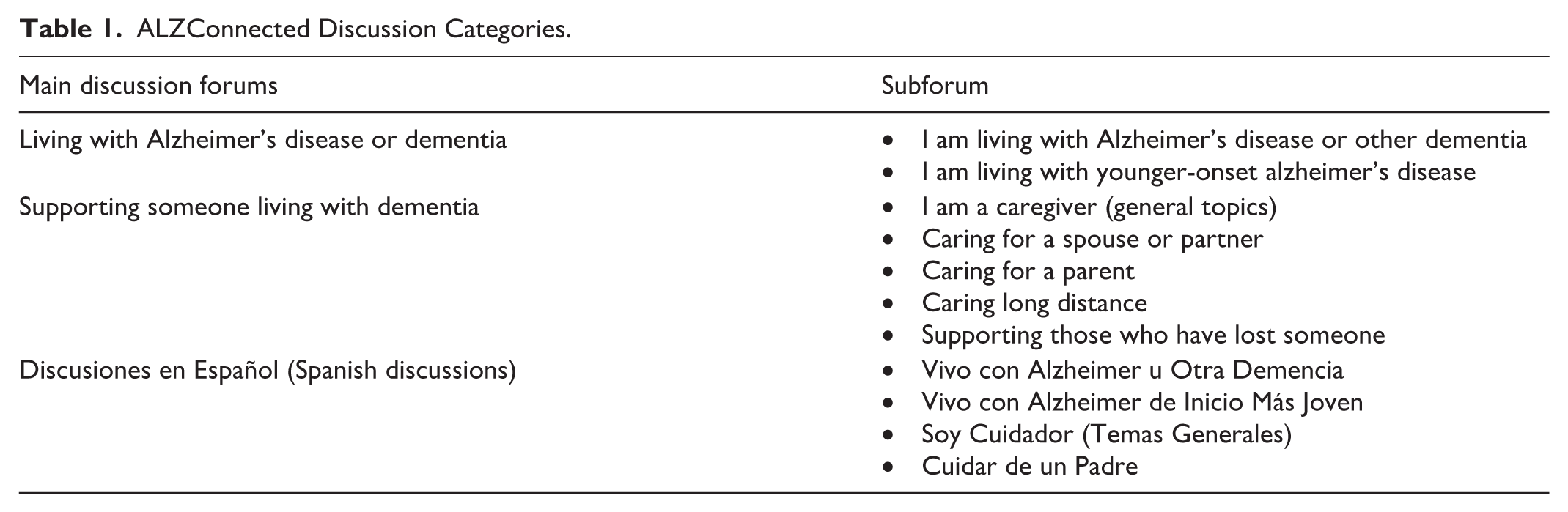
Since 2011, ALZConnected has offered users a space to ask questions, share stories, and provide support rooted in lived experience. 6 It includes 3 main categories and 11 subforums for persons living with dementia, caregivers in varied relational roles (eg, spouse, adult child, long distance), and Spanish-speaking users (Table 1). ALZConnected presents a unique opportunity to study naturally occurring discussions – unsolicited, real-world narratives that reflect the evolving needs, emotional states, and coping strategies of its users. Recent studies have begun using forum data to explore dementia caregiving through methods like thematic analysis, sentiment tracking, and machine learning (ML; eg, data-driven learning algorithms 7 ).8-10
ALZConnected Discussion Categories.
Participation patterns vary across online platforms, and forum-based studies provide insight into these dynamics. For example, Saha et al 11 analyzed ALZConnected data using 70 threads (defined as original posts followed by a series of replies) and over 10 000 posts collected between December 2020 and November 2023 and found that a small number of highly active users generated most of the content. While exact user counts for ALZConnected are not publicly reported, 5 Alzheimer’s Association data indicate steady growth and sustained engagement in recent years.12-14 Other caregiver forums, including on Facebook 15 and Reddit, 16 also host large communities offering advice and emotional support.17-20 While account creation is required to post, all content in ALZConnected is publicly viewable, unlike most Facebook groups. ALZConnected is also distinguished by its dementia-specific structure, peer-led moderation, and alignment with the Alzheimer’s Association’s educational and support goals, providing a uniquely safe and accessible environment for caregivers and persons living with dementia.21,22
Despite increasing use of ALZConnected data in research, to our knowledge, there has been no synthesis of how this platform has been studied, what populations and questions have been prioritized, or how findings have informed dementia care practice. A scoping review is well suited to this task because it enables structured mapping of diverse methodologies and study purposes within a rapidly evolving digital landscape. Unlike broader social media forums, ALZConnected provides a dementia-specific environment grounded in peer support and moderated by a trusted health organization. Examining how researchers have utilized this disease-focused community can illuminate current trends, gaps, and opportunities for leveraging naturally occurring online discourse to advance nursing and dementia care science. As platforms like ALZConnected become increasingly integrated into the care landscape, understanding how these real-world narratives are examined in research is essential for guiding future practice, policy, and support strategies.
Purpose
This scoping review examined peer-reviewed journal articles, dissertations, and preprints that used ALZConnected data to explore the experiences, challenges, and support needs of dementia caregivers and individuals living with dementia. Our aim was to identify how researchers have engaged this online forum as a source of naturally occurring narrative data, the topics and research designs applied, and how this growing body of work contributes to dementia care knowledge. By mapping this emerging literature, 23 we sought to consider ALZConnected’s potential as a tool for nursing research, offering real-time insight into caregiver and patient experiences. These findings may inform evidence-based practice, support intervention development, and guide future digital health efforts grounded in lived experience. Ultimately, this work will contribute to nursing science by illustrating how online forums can complement traditional models of dementia care, especially in underserved communities. To guide this inquiry, 2 research questions were developed:
How has ALZConnected been used as a data source in dementia research, and what research designs were applied?
What themes and insights have emerged regarding the experiences of caregivers and persons living with dementia?
Methods
This scoping review included peer-reviewed journal articles, dissertations, and preprints that used ALZConnected as a primary data source. Magazine articles, news reports, and other non-research gray literature were excluded. The review was conducted following Arksey and O’Malley’s methodological framework, 24 which outlines 5 key stages: identifying the research question; identifying relevant studies; selecting studies; charting the data; and collating, summarizing, and reporting the results. Reporting adhered to the Preferred Reporting Items for Systematic Reviews and Meta-Analyses Extension for Scoping Reviews (PRISMA-ScR) guidelines. 25 Studies were eligible if they analyzed ALZConnected content (eg, forum posts or threads), focused on the experiences or support needs of informal caregivers and/or persons living with dementia, were published in English, and had full-text availability. Reference lists of eligible studies were hand-searched for additional sources. The keyword “ALZConnected” was used as the single search term across all selected databases: CINAHL, Google Scholar, PsycINFO, PubMed, and Scopus. Because ALZConnected is a unique, proprietary platform name, additional operators or synonyms were unnecessary. No lower date limit was applied to capture all studies using the ALZConnected.org forum as a data source since its inception in 2011. The final database search was completed on October 19, 2025, covering all available years up to and including that date.
All titles, abstracts, and full texts were screened by a single reviewer (M.G.O.) according to the predefined inclusion and exclusion criteria. Screening occurred in 2 stages: (1) titles and abstracts were reviewed for relevance and (2) full texts of potentially eligible articles were assessed for inclusion. To enhance consistency and minimize bias, uncertain cases were revisited following data charting. Because the aim of this scoping review was to map the literature rather than to appraise study quality, independent dual screening was not conducted, consistent with scoping review methodology.24,25
Data from each included study were charted manually in a structured notebook using predefined categories. These included author(s), year, publication type, study purpose, participant focus, research design, analytic approach, and key findings. Manual charting allowed for iterative note-taking, comparison, and refinement of categories throughout the review process while maintaining an organized audit trail of extracted information.
Consistent with the purpose of scoping reviews, no formal methodological quality appraisal or risk-of-bias assessment was performed.24,25 Extracted data were summarized descriptively to map study characteristics and identify overarching patterns in how ALZConnected has been used as a data source. Inductive pattern recognition was applied to group studies by research focus (eg, caregiver experience, emotional expression, technology design, peer support dynamics) and methodological approach (qualitative, computational, or mixed methods). This approach was guided by careful review and memoing of charted notes rather than by a predefined analytic framework. Data were synthesized manually to identify relationships and trends across studies. The review protocol was not registered in an open repository, something not required per PRISMA-ScR, but for which disclosure is recommended.
Results
A total of 163 records were identified through database searches. After removing 46 duplicates, 117 records were screened and assessed for eligibility. Following full-text review, 89 articles were excluded based on predefined inclusion and exclusion criteria, resulting in 28 studies included in the final review. Screening of reference lists from all included studies yielded no additional sources. The full selection process is shown in Figure 1.
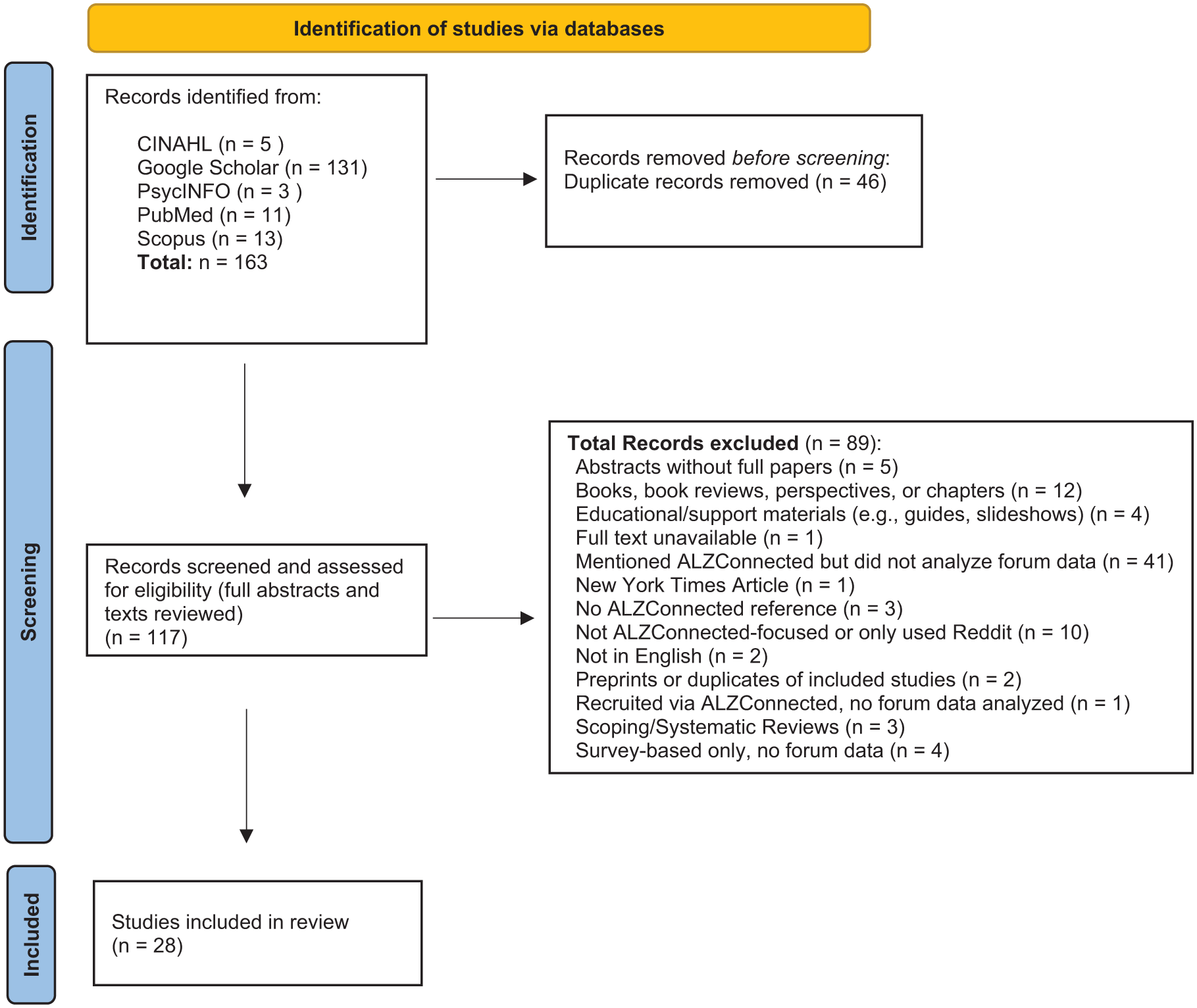
PRISMA-ScR flow diagram showing the selection of studies for inclusion in the ALZConnected scoping review.
Table 2 summarizes the 28 included studies that used ALZConnected forum data to explore dementia caregiving and the experiences of persons living with dementia. To enhance clarity and accessibility, the table highlights each study’s purpose, design, and key findings, offering a concise synthesis of contributions. When available, ALZConnected forums, subforums, and post-date ranges are listed to show how community spaces and time frames were represented. This approach balances depth with readability for a broad scholarly audience.
Summary of Included Studies Using ALZConnected Forum Data.
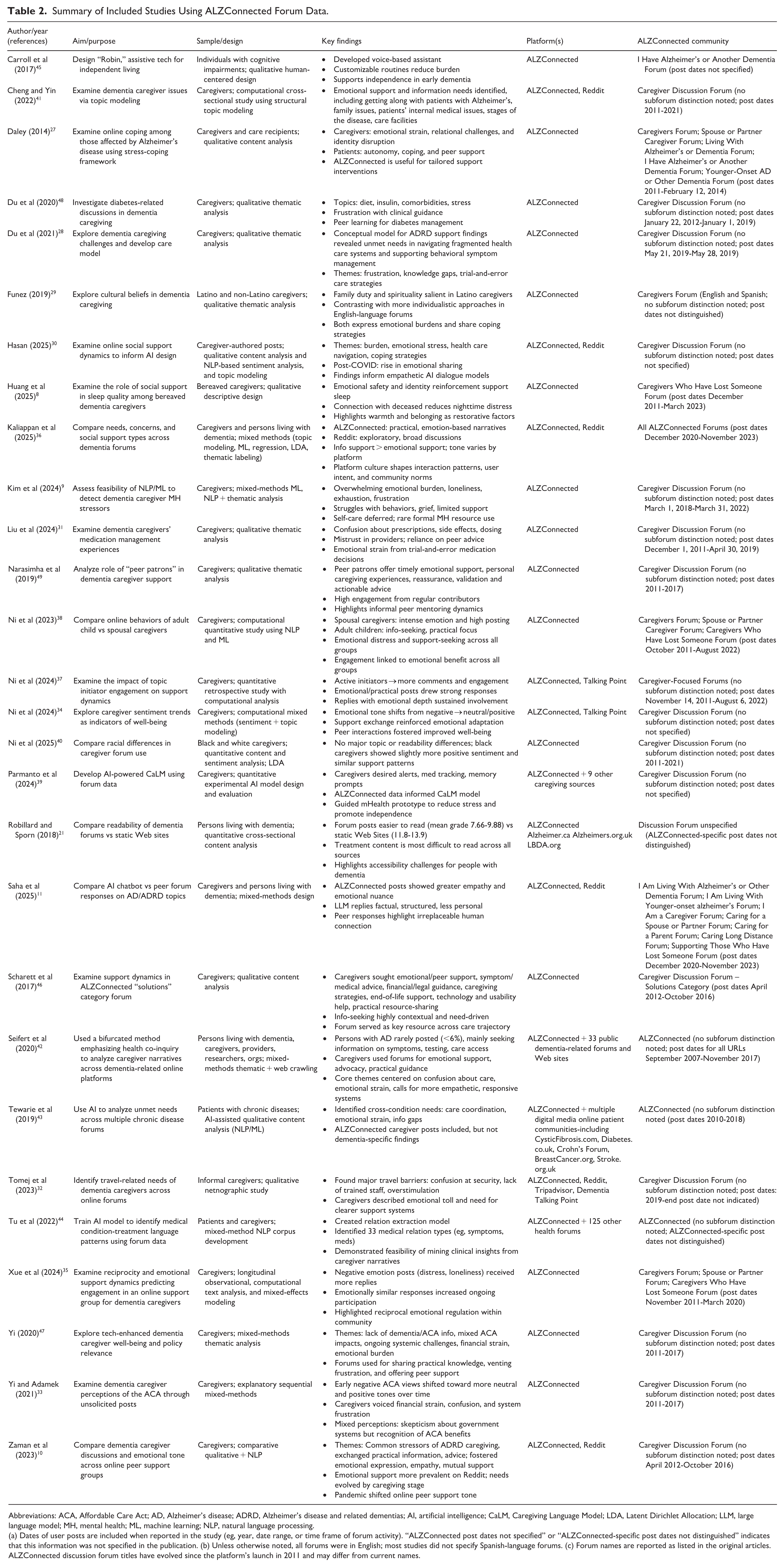
Abbreviations: ACA, Affordable Care Act; AD, Alzheimer’s disease; ADRD, Alzheimer’s disease and related dementias; AI, artificial intelligence; CaLM, Caregiving Language Model; LDA, Latent Dirichlet Allocation; LLM, large language model; MH, mental health; ML, machine learning; NLP, natural language processing.
(a) Dates of user posts are included when reported in the study (eg, year, date range, or time frame of forum activity). “ALZConnected post dates not specified” or “ALZConnected-specific post dates not distinguished” indicates that this information was not specified in the publication. (b) Unless otherwise noted, all forums were in English; most studies did not specify Spanish-language forums. (c) Forum names are reported as listed in the original articles. ALZConnected discussion forum titles have evolved since the platform’s launch in 2011 and may differ from current names.
Research Question 1: How Has ALZConnected Been Used as a Data Source in Dementia Research, and What Research Designs Were Applied?
Design and Focus
Most studies analyzed ALZConnected forum posts as a source of narrative data, using qualitative methods such as thematic or content analysis to examine caregiving stressors or needs, emotional expression, health-related concerns, cultural dimensions of caregiving, and, in some cases, bereavement-related outcomes such as sleep quality among former caregivers.8,27-33 Several studies focused on emotional dynamics and peer support within the forums, employing sentiment analysis,10,30,34 emotional support tracking tools, 11 predictive models of support-seeking behaviors, 35 or large-scale regression modeling of emotional and informational support across topic categories. 36 In addition to qualitative and computational approaches, a small number of studies used quantitative designs to examine forum engagement patterns and system development outcomes. These included statistical analysis to identify key topic initiators, 37 application of structural topic modeling, sentiment analysis tools (VADER and LIWC), 34 ML classifiers to distinguish caregiver types and track temporal trends, 38 and evaluation of a large language model’s (LLM) reliability using quantitative performance metrics. 39 Most recently, Ni et al 40 analyzed ALZConnected posts through a quantitative design to examine racial group differences in caregiving discussions, extending the use of large-scale forum data for social and demographic analysis.
Multi-Platform Data Sources
A similar number of studies focused exclusively on ALZConnected (n = 15) or ALZConnected plus additional digital platforms (n = 13). The latter enabled cross-platform comparisons, broadening the analytical scope. Reddit, a widely used supplemental platform online discussion forum organized by topic-based communities (https://www.reddit.com), was the most commonly used platform in studies (n = 6) examining platform design, caregiver interaction, and tone of discussion including thematic comparison, 41 mixed methods with topic modeling, 36 artificial intelligence (AI) versus human support, 11 caregiver topics, emotions and patterns of support during the COVID-19 pandemic, 10 comparative content, sentiment, and emotion analysis, including differences in support-seeking behavior before and after the COVID-19 pandemic, 30 and travel-related caregiving concerns for persons with dementia. 32 Kalliapan et al 36 offered a direct comparison between ALZConnected and Reddit, revealing that informational support dominated both platforms, though its tone and context differed. Reddit posts were broader and exploratory, while ALZConnected content was more condition-specific and emotionally grounded. These contrasts reflected distinct platform cultures and support-seeking behaviors.
TalkingPoint, a UK-based dementia support forum hosted by the Alzheimer’s Society (https://forum.alzheimers.org.uk), was used in 2 comparative studies to assess sentiment trends and interaction patterns between UK and US caregivers34,37 TalkingPoint was also used to identify travel-related needs of dementia caregivers across online forums. 32 Other studies drew narratives from multiple forums (n = 6), including ALZConnected, to examine broader aspects of dementia care, such as caregiver information needs and interested parties narratives, 42 unmet emotional and medical needs (using AI), 43 dementia-related travel concerns, 32 medical concept extraction, 44 the development of accessible caregiving support tools using LLMs, 39 and the readability of static versus interactive dementia-related Web sites. 21
Digital Methods and Technology Applications
ALZConnected was also used as a training source or input for technology development projects, including the creation of assistive tools 45 and voice-enabled platforms. 39 Several studies applied computational methods such as Latent Dirichlet Allocation (LDA),36,40 structural topic modeling,36,37,41 natural language processing (NLP),9,10,34,44 and ML9,30,36 to analyze large volumes of forum content. Hasan 30 further contributed to this body of work by employing Bidirectional Encoder Representations from Transformers, based sentiment and emotion detection models to examine online caregiver discourse, offering a fine-grained analysis of emotional dynamics and support-seeking behaviors over time. Forum content also informed evaluations of accessibility and readability of online resources. 21
Threads of Experience
Additionally, some studies used ALZConnected to examine how dementia caregivers seek information online,42,46 how narratives unfold across interested parties, 42 what unmet needs exist in chronic disease management, 43 and what broader policy concerns are expressed in online spaces. 47 Hasan 30 examined patterns of emotional expression and support-seeking, with attention to changes in engagement during the COVID-19 pandemic.
First-Person Dementia Narratives
While most studies (71%) focused on forum posts authored by dementia caregivers, 8 studies (29%) also included content posted by persons living with dementia or analyzed posts related to persons living with dementia. These studies drew from mixed-user forums or explored diverse user perspectives, offering insight into first-person accounts of cognitive decline, disease management, and care and support needs.21,27,36,42-45 Saha et al 11 included comparisons of peer-generated support to AI chatbot responses in dementia care contexts.
Research Question 2: What Themes and Insights Have Emerged Regarding the Experiences of Caregivers and Persons Living With Dementia?
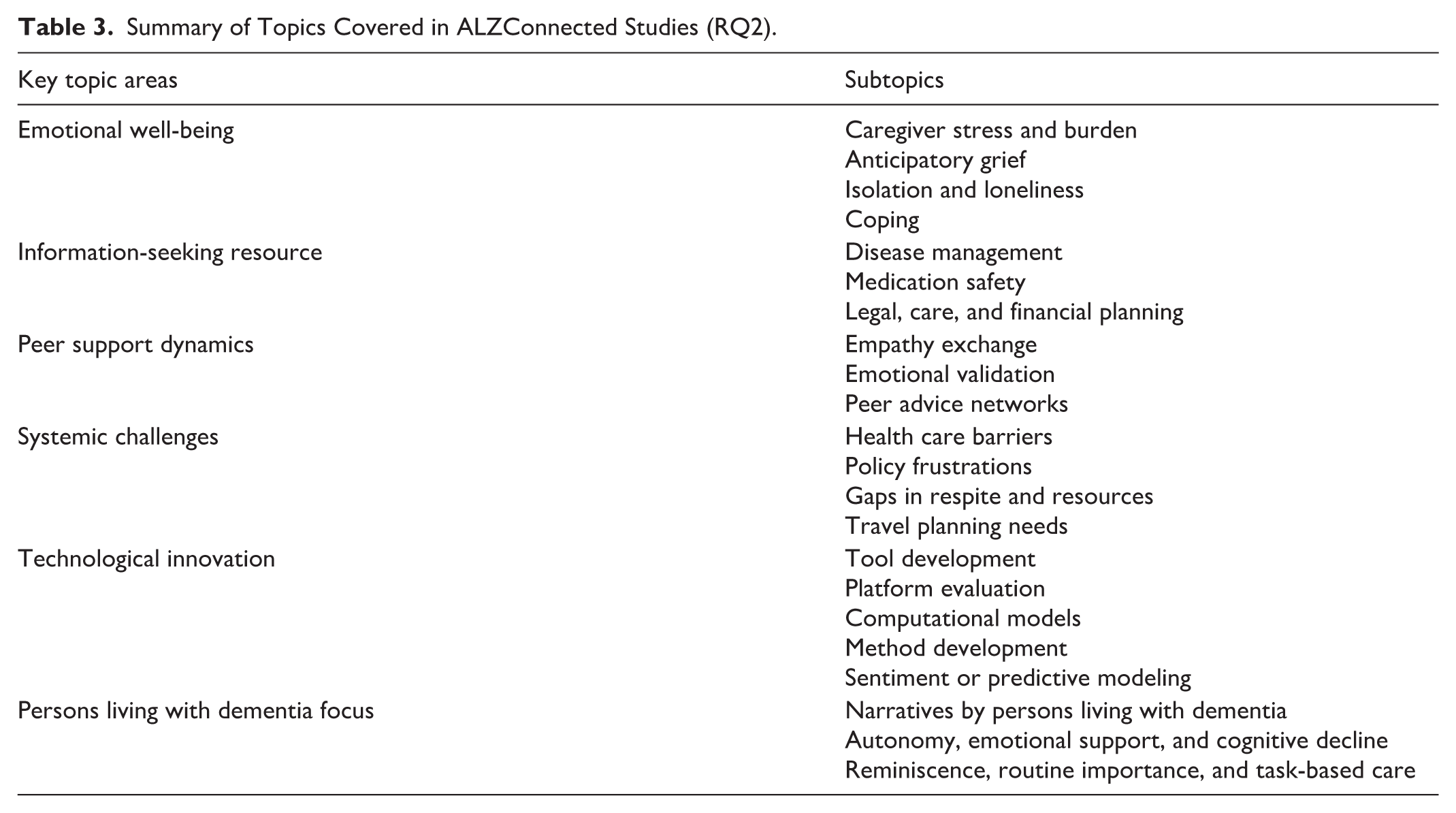
Across the 28 studies, 6 key topics were identified: emotional well-being, information-seeking, systemic barriers, peer support, technological innovation, and inclusion of persons living with dementia (Table 3). These were derived from the stated aims and findings of each study and reflect recurring challenges and patterns in ALZConnected forum discussions.
Summary of Topics Covered in ALZConnected Studies (RQ2).
Emotional Well-Being
Emotional well-being was a central concern for dementia caregivers posting on ALZConnected. Caregiver stress and burden were widely expressed through narratives including emotional exhaustion, uncertainty, and physical fatigue.9-11,28-33,35-38,42,46-49 One study that highlighted the unique experiences of bereaved dementia caregivers showed that multifaceted social support systems are essential for promoting emotional recovery and sleep health in bereaved dementia caregivers. 8 Anticipatory grief was specifically discussed in the work of Daley 27 and Cheng and Yin, 41 where dementia caregivers grappled with mourning prior to the death of their care recipients. Feelings of isolation and loneliness were also prominent, with users expressing a sense of emotional disconnection from friends and family due to the consuming nature of caregiving.9,10,34,36 Coping strategies ranged from emotion-focused approaches like prayer, music, or storytelling, to avoidance and task-focused efforts such as reorganizing routines or hiding stressors from the persons living with dementia.29,38,49 Kaliappan et al 36 noted that bereaved caregivers found comfort in memories, spiritual connection, and appreciation for lessons learned.
Information-seeking Resource
Information seeking emerged as a dominant topic area, with caregivers using ALZConnected to gain knowledge and clarity amid caregiving uncertainty. Disease management was a particularly active area of inquiry, including questions related to memory 40 and diagnosis,40,42,48 treatment expectations,28,29,38 travel planning, 32 and care routines.10,11,40 Medication safety concerns emerged in detail in Liu et al, 31 where dementia caregivers described confusion around dosage, side effects, and resistance from care recipients. Many users also sought legal and care planning guidance, especially around topics like power of attorney, facility placement, and Medicaid eligibility.33,36,38,46,47,49 In the post-COVID period, caregivers on ALZConnected increasingly sought symptom clarification and immediate solutions, while interest in general information declined. 30
Peer Support Dynamics
ALZConnected offered more than information – it was a relational space for empathy, validation, and practical advice among caregivers. Empathy exchange was a prominent subtheme across studies, with caregivers offering one another heartfelt support, encouragement, and affirmations that helped reduce feelings of isolation.11,46,49 Emotional validation also surfaced frequently, as caregivers posted about their struggles and received responses that normalized their experiences, especially when dealing with guilt, anticipatory grief, or difficult care decisions.10,11,28,29,34-36,41,46,48 Early evidence of this dynamic showed caregiver-spouses turning to ALZConnected for emotion-focused coping, sharing personal reflections, and receiving empathetic responses that offered comfort and reassurance. 27 Bereaved dementia caregivers described support on the platform as comforting and identity-affirming, with emotional validation helping restore a sense of safety and connection, particularly around bedtime, contributing to improved sleep and psychological relief. 8 The platform’s peer support function was evident in the post-COVID period, when emotionally supportive posts increased and caregivers turned to one another to manage distress, navigate interpersonal challenges, and adapt to changing care demands. 30 Sentiment analysis was used to compare emotional tone across racial groups, showing that expressions of support and shared caregiving experiences were consistently positive among black and white users. 40 Across several studies, peer advice networks emerged as organically formed spaces where caregivers exchanged actionable suggestions for everyday challenges. These included tips related to medical care,10,11,28,31,42 legal navigation,9,27,46,47 facility transitions,32,36,41,42 and emotional coping strategies.27,34,42,49 Common discussion topics also reflected feelings, support, hope, and gratitude, illustrating how caregivers used the forum to express encouragement and sustain emotional resilience. 40
Systemic Challenges
Caregivers often used ALZConnected to voice frustration with systemic barriers, revealing deep disenfranchisement in accessing timely, reliable dementia care. Caregivers described difficulties such as securing appointments with specialists,10,29,31 coordinating care transitions,38,46,49 and receiving accurate or consistent information from providers.33,36 ALZConnected discussions frequently reflected concerns over interpersonal conflict, legal barriers, and difficulties navigating the medical system, including family disagreements, provider tensions, strained relationships, guilt, resentment, and uncertainty about doing the right thing. 30
Policy-related frustrations were particularly evident in discussions about the Affordable Care Act, Medicare, and Medicaid, with users expressing confusion over eligibility, fear of losing coverage, and skepticism about government support structures.33,47 Some caregivers also voiced concerns about the lack of available respite care, in-home support, or dementia-informed professionals, highlighting persistent gaps in community-level resources.32,36 The unique burden of planning travel, whether for relocation, caregiving logistics, or respite, surfaced as another underrecognized stressor, with caregivers searching for dementia-friendly accommodations and moral validation around travel decisions. 32
Technological Innovation
Several studies leveraged ALZConnected not only as a source of narrative content but also as a foundation for developing and evaluating technological tools to support caregiving. Development efforts focused on targeted platforms, including caregiving-specific chatbots and AI models trained on caregiver discussions.39,45 Multiple studies evaluated the platform itself and found that while users were generally engaged and responsive, participation varied by topic, tone, and timing.10,21,49 Analyses of readability and emotional tone showed that posts were typically accessible and emotionally open, fostering community interaction and peer validation.9,36,49
Researchers also used ALZConnected data to explore caregiver needs and online support dynamics through computational and linguistic innovations. Two teams34,35 applied sentiment analysis and engagement modeling to examine how emotional tone and caregiver role influenced interaction, finding that emotionally expressive posts received more supportive replies. Algorithmic tracking assessed longitudinal shifts in caregiver distress, revealing patterns of escalating emotional strain that may inform proactive support strategies. 11 A bifurcated approach combining qualitative coding with web crawling showed that online forums can serve as participatory platforms for generating community-driven insights in dementia care. 42 Using NLP, Tu et al 44 developed a relation extraction model to identify condition-treatment pairs in caregiver narratives, supporting structured retrieval of clinically relevant information. Supervised ML was also applied to categorize posts by theme – emotional support, caregiving strategies, and bereavement – enabling automated detection of unmet needs across the caregiving continuum. 36
Persons Living With Dementia Focus
Although most studies in this review focused on caregivers, several included posts directly authored by persons living with dementia or analyzed narratives that reflected their voices and experiences. These analyses captured firsthand concerns about memory loss, cognitive decline, diagnosis, and emotional adjustment to life with dementia.11,27,42,44 These narratives offered key insight into persons living with dementia’s self-expression and information-seeking behavior, particularly during early disease stages.11,21,36,42-45 Forum narratives frequently offered rich contextual detail about how persons living with dementia functioned day-to-day. Several publications highlighted care strategies designed to preserve connection, such as reminiscence therapy or routines structured around task performance.27,45
Discussion
This scoping review examined how researchers have used ALZConnected to capture the lived experiences of persons living with dementia and their caregivers. This review revealed ALZConnected as more than a digital platform; it is a dynamic space where emotional, informational, and systemic challenges intersect. Dementia caregivers shared narratives that include anticipatory grief, loneliness, and burnout, and sought advice on topics including disease management, medication, and navigating fragmented health care systems. Increasingly, forum data were also used for technological innovation, including AI development. While most studies focused on caregivers, a subset incorporated posts from persons living with dementia. These studies reflect growing recognition of the need to elevate the voices of persons living with dementia in research.50-52 ALZConnected offers nursing professionals a window into the real-world needs of caregivers and persons living with dementia alike, insights that can enrich clinical care, education, and intervention design.
Primary Research Approaches to ALZConnected Data
ALZConnected forum data were most commonly analyzed using qualitative methods (n = 13), particularly thematic and content analysis, to explore the emotional and informational aspects of caregiving. This reflects a broader methodological pattern seen in online community research, where qualitative inquiry allows for the rich capture of contextually grounded experiences53,54 Mixed methods were used in several studies (n = 9), aligning with emerging best practices for studying large-scale social media data, which benefit from both narrative depth and analytical breadth.55,56
More recently, researchers have begun incorporating computational techniques such as NLP, LDA, topic modeling, and ML to analyze forum data. These approaches offer scalable ways to detect emotional tone, extract relational patterns, and surface evolving caregiver concerns. In maternal health research, NLP has been applied to online communities to monitor mental well-being and identify support needs in real time, demonstrating cost-effective, transferable strategies for analyzing naturally occurring data. 57 Evidence from mental health research shows that NLP and AI techniques can strengthen peer-to-peer empathy and tailor support delivery in text-based interventions, offering a model that could inform the design of future tools built around ALZConnected data. 58 Rule-based NLP applications have also shown effectiveness in identifying caregiver presence and availability in unstructured clinical notes, highlighting the broader potential of these approaches for studying caregiver dynamics across data environments. 59 Together, these examples show how combining qualitative, mixed methods, and computational approaches can strengthen research using ALZConnected and support digital health innovation in dementia care.
Gaps and Opportunities in ALZConnected Research
Identifying the specific components of online peer support platforms is beneficial for understanding the nuanced experiences shared within them. A small number of studies (n = 6) delineated the specific ALZConnected subforums analyzed (eg, Spouse or Partner Caregivers, I Have Alzheimer’s), reinforcing transparency and contextual relevance (Table 2). Continuing this practice aligns with research demonstrating how subgroup identification in online support forums uncovers distinct communication patterns and user needs across groups.60-62
While most ALZConnected studies centered on caregiver perspectives, a subset incorporated perspectives on bereaved dementia caregivers (n = 5), reflecting growing recognition of the emotional complexity that persists after caregiving ends.8,11,35,36,38 ALZConnected forum data offer rich opportunities for future bereaved dementia caregiver research to explore identity shifts, 63 sense-making, 64 and health changes,65-67 expressed in post-death narratives and grief trajectories, an emerging focus in bereavement literature involving dementia caregiving.68-70
Although caregiver voices are well represented in ALZConnected research, the perspectives of persons living with dementia remain comparatively underexplored. This mirrors broader trends in dementia studies, where individuals with dementia are often excluded from research due to ethical and methodological challenges.71,72 Halonen et al 73 emphasized that such exclusion can contribute to epistemic injustice, discounting the lived expertise of people with dementia. Studies that included their posts, particularly in ALZConnected forums like “I Have Alzheimer’s or Another Dementia,” represent an important step toward inclusion. Further research could build on these efforts to better understand how individuals with dementia express identity, agency, and emotional resilience in digital spaces, an emerging focus in recent studies exploring blog narratives, 74 resilience frameworks, 75 and social media platforms for leveraging identity support. 76
While community-engaged research (CEnR)77,78 approaches were not reported in the reviewed ALZConnected studies, this represents an exciting avenue for future research. Although direct engagement with forum users may not be feasible, incorporating participatory methods such as involving caregivers and persons living with dementia from the broader community in analysis, interpretation, and application of findings could enhance the relevance, rigor, and translational impact of forum-based research. Digital dementia studies have already demonstrated the value of such engagement: Messina et al 79 co-developed an adaptation of the World Health Organization’s iSupport intervention with caregivers in Switzerland. Similarly, the “Alight” music app was developed through participatory design with home-dwelling persons with dementia and their caregivers, supporting personalized, meaningful engagement at home. 80 To foster inclusion and equity in research participation, the Community Engaged Digital Alzheimer’s Research study introduced digital tools tailored for black American communities within the Brain Health Registry. 81 These examples illustrate how CEnR approaches can enhance the interpretation and real-world impact of research by centering lived experience, an approach well-suited for future studies drawing from ALZConnected forum data.
Implications for Nursing Policy and Practice
For nursing practice, this review offers real-world, narrative data that can inform policy by illuminating the lived experiences of dementia caregivers and highlighting systemic gaps that demand greater public health investment and caregiver support. 82 Clinicians can draw from these findings to anticipate caregiver needs that often remain unspoken in clinical visits, such as emotional fatigue, legal confusion, or travel dilemmas. 83 ALZConnected offers a critical adjunct to care, especially in rural or underserved communities.84-86 Primary care providers, often first-line providers for dementia care, can recommend ALZConnected as a supplemental peer resource.83,84,87-90 In telehealth or outreach models, reviewing ALZConnected forum content can help clinicians stay attuned to caregivers’ concerns and tailor referrals or education.91,92 These insights can strengthen person-centered care and enhance the relational dimensions of practice. 93
Strengths and Limitations of Forum-Based Data
ALZConnected provides an accessible, moderated space for caregiver support. 5 Forum content offers unfiltered expressions of distress and insight, valuable to both clinicians and researchers. Still, as studies of online peer support groups have shown, misinformation can occur, even in moderated spaces, so critically appraising content quality remains vital. 94 Furthermore, analyses of safety and trust in moderated forums emphasize the importance of active moderation in maintaining a psychologically safe environment and enhancing user engagement. 95
Limitations
This scoping review included peer-reviewed journal articles, dissertations, and preprints to capture the breadth of research using ALZConnected, consistent with scoping review methodology.24,25 While dissertations and preprints may vary in rigor, all included sources reported original research and analyzed ALZConnected content. Findings from non-peer-reviewed studies should be interpreted cautiously. The review was limited to English-language publications, potentially excluding relevant studies in other languages. For example, the absence of studies incorporating ALZConnected’s Spanish-language forum may reflect this language restriction. Forum users also represent a self-selecting, digitally connected population, which may limit generalizability. The review focused solely on publicly accessible posts, omitting insights from private or restricted communities such as closed Facebook groups. ALZConnected was intentionally selected for its dementia-specific design and structured environment, aligning with this review’s aim to explore caregiver and care recipient experiences within a condition-focused platform. Although some included studies compared ALZConnected with platforms like Reddit, this review concentrated on ALZConnected-derived data to provide a focused understanding of this unique caregiver forum. Future research could examine how support needs and communication patterns vary across different online communities and moderation styles.
Conclusions
This scoping review highlights how researchers have used ALZConnected to examine the emotional, practical, and systemic challenges faced by dementia caregivers and persons living with dementia. Studies explored themes of emotional well-being, information-seeking, systemic barriers, peer support, technological innovation, and the perspectives of persons living with dementia, underscoring the forum’s value as a repository of lived experience. These findings offer meaningful insights for researchers and for nurses seeking to inform practice and policy. By capturing the authentic voices of caregivers and persons living with dementia, ALZConnected provides a valuable tool for nursing and dementia research, supporting the development of holistic, inclusive, and culturally responsive dementia care interventions.
Footnotes
Acknowledgements
The authors wish to thank the many researchers whose work contributed to this scoping review, as well as the persons living with dementia, caregivers, family members, and friends who generously shared their experiences on the ALZConnected forum. Their voices offer invaluable insights into the complexities of dementia care and support.

Ethical Considerations
This study did not require ethics approval because it is a scoping review of publicly available, previously published peer-reviewed research. No new data were collected or analyzed involving human participants, and no interaction with individuals occurred. As such, the study meets criteria for exemption from ethical review under institutional and international guidelines for secondary analysis of published literature.
Author Contributions
Mary Gemma O’Donnell: conceptualization (lead); methodology (lead); writing – original draft (lead); formal analysis (lead); validation (equal); writing – review and editing (equal). Yingyan Huang: writing – original draft (supporting); formal analysis (supporting); validation (equal); writing – review and editing (equal), resources (supporting). Terry Smith: writing – original draft (supporting); writing – review and editing (equal). Zachary G. Baker: funding acquisition (lead); conceptualization (supporting); resources (supporting); supervision (lead); validation (equal); writing – original draft (supporting); writing – review and editing (equal).
Funding
The authors disclosed receipt of the following financial support for the research, authorship, and/or publication of this article: The author(s) disclosed receipt of the following financial support for the research, authorship, and/or publication of this article: Research reported in this publication was supported by the National Institute on Aging of the National Institutes of Health under Award Numbers (R00AG073463 to Z.G.B.). The content is solely the responsibility of the authors and does not necessarily represent the official views of the National Institute of Health.
Declaration of Conflicting Interests
The authors declared no potential conflicts of interest with respect to the research, authorship, and/or publication of this article.