






Abstract
Objective
To describe the Trach Safe Initiative and assess its impact on unanticipated tracheostomy-related mortality in outpatient tracheostomy-dependent children (TDC).
Methods
An interdisciplinary team including parents and providers designed the initiative with quality improvement methods. Three practice changes were prioritized: (1) surveillance airway endoscopy prior to hospital discharge from tracheostomy placement, (2) education for community-based nurses on TDC-focused emergency airway management, and (3) routine assessment of airway events for TDC in clinic. The primary outcome was annual unanticipated mortality after hospital discharge from tracheostomy placement before and after the initiative.
Results
In the 5 years before and after the initiative, 131 children and 155 children underwent tracheostomy placement, respectively. At the end of the study period, the institution sustained Trach Safe practices: (1) surveillance bronchoscopies increased from 104 to 429 bronchoscopies, (2) the course trained 209 community-based nurses, and (3) the survey was used in 488 home ventilator clinic visits to identify near-miss airway events. Prior to the initiative, 9 deaths were unanticipated. After Trach Safe implementation, 1 death was unanticipated. Control chart analysis demonstrates significant special-cause variation in reduced unanticipated mortality.
Discussion
We describe a system shift in reduced unanticipated mortality for TDC through 3 major practice changes of the Trach Safe Initiative.
Implication for Practice
Death in a child with a tracheostomy tube at home may represent modifiable tracheostomy-related airway events. Using Trach Safe practices, we address multiple facets to improve safety of TDC out of the hospital.
Keywords
Over 4500 children undergo tracheostomy placement per year in the United States. 1 All-cause mortality in tracheostomy tube-dependent children (TDC) is estimated to be as high as 42%, with tracheostomy-associated mortality reported in 1% to 8% of patients.2-5 Increased tracheostomy-related risks are disproportionately found in children under 2 years old.6,7 Interventions to address the safety of TDC represent a major improvement opportunity to mitigate risks for this population. 8
In 2013, the Seattle Children’s Hospital (SCH) home ventilator program experienced an alarming increase in deaths. Four deaths occurred in TDC outside the hospital. These deaths were known or suspected to be tracheostomy related and not attributed to progression of the child’s underlying disease. We designed and implemented a quality improvement (QI) initiative to address unanticipated deaths that may represent modifiable tracheostomy-related airway events. With our local TDC community, we founded the SCH Trach Safe Initiative with a mission to improve the safety of every child with a tracheostomy. To achieve this mission, we focused on 3 facets: (1) surveillance airway endoscopy prior to hospital discharge from tracheostomy placement, (2) education for community-based nurses on emergency airway management for TDC, and (3) routine assessment of possible adverse airway or near-miss events for TDC in clinic.
The aims of this study are to describe the facets of the SCH Trach Safe Initiative and compare unanticipated mortality in TDC before and after implementation of this initiative. Our secondary objective was to identify risk factors for mortality in TDC.
Methods
The methods are reported in adherence to the Standards for Quality Improvement Reporting Excellence (SQUIRE 2.0) guidelines. 9
Context
SCH is a tertiary care pediatric hospital that performs approximately 30 new tracheostomies per year and manages 180 TDC in the community. Prior to hospital discharge from tracheostomy placement, respiratory therapist educators train home caregivers in aspects of routine and emergency tracheostomy and ventilator care. Nurse case managers facilitate skilled nursing care for home, aid in the development of the outpatient plan of care, and secure home equipment and supplies. After discharge, TDC are followed by our otolaryngology, pulmonary home ventilator, and/or craniofacial clinics. Prior to the Trach Safe Initiative, posttracheostomy airway endoscopy was not routinely performed unless patients exhibited symptoms concerning for airway pathology. No emergency airway management curriculum was available for community-based nurses. There was no standard assessment in clinic for safety events or equipment issues for TDC occurring out of the hospital.
Interventions
Interdisciplinary team
A nurse (L.E.) and a respiratory therapist educator (L.H.) cofounded the SCH Trach Safe Initiative. They assembled a Continuous Performance Improvement (CPI) team to identify and implement strategies to improve the safety of TDC in the community. The team consisted of hospital and community-based partners. Hospital partners came from a breadth of disciplines, including physicians from pulmonary, otolaryngology, and craniofacial medicine; nurses from pulmonary and otolaryngology; hospital-based nurse educators; and respiratory therapist educators. Community team members included 2 parents of TDC, nurse managers from home nursing agencies and group homes, and a respiratory therapist from a durable medical equipment company. In early 2014, a CPI coach from the hospital organized a 3-day design event that reported to an advisory committee, including hospital administration.
Intervention design
Prior to the CPI design event, the cofounders performed a retrospective review of all reported deaths in TDC from 2003 to 2013. Deaths were classified as unanticipated if they were not related to progression of known disease or withdrawal of care. Suspected causes, setting of events prior to death, and clinical characteristics were summarized for the unanticipated deaths. These data were reviewed by the improvement team to identify common themes, inform key drivers, and prioritize interventions ( Figure 1 ). The CPI team was organized into 3 subcommittees to develop and refine practice changes: (a) surveillance endoscopy prior to discharge home after tracheostomy placement, (b) outreach education for emergency airway management, and (c) identification of airway events or safety concerns that could lead to harm (ie, near-miss events occurring for TDC as outpatients).
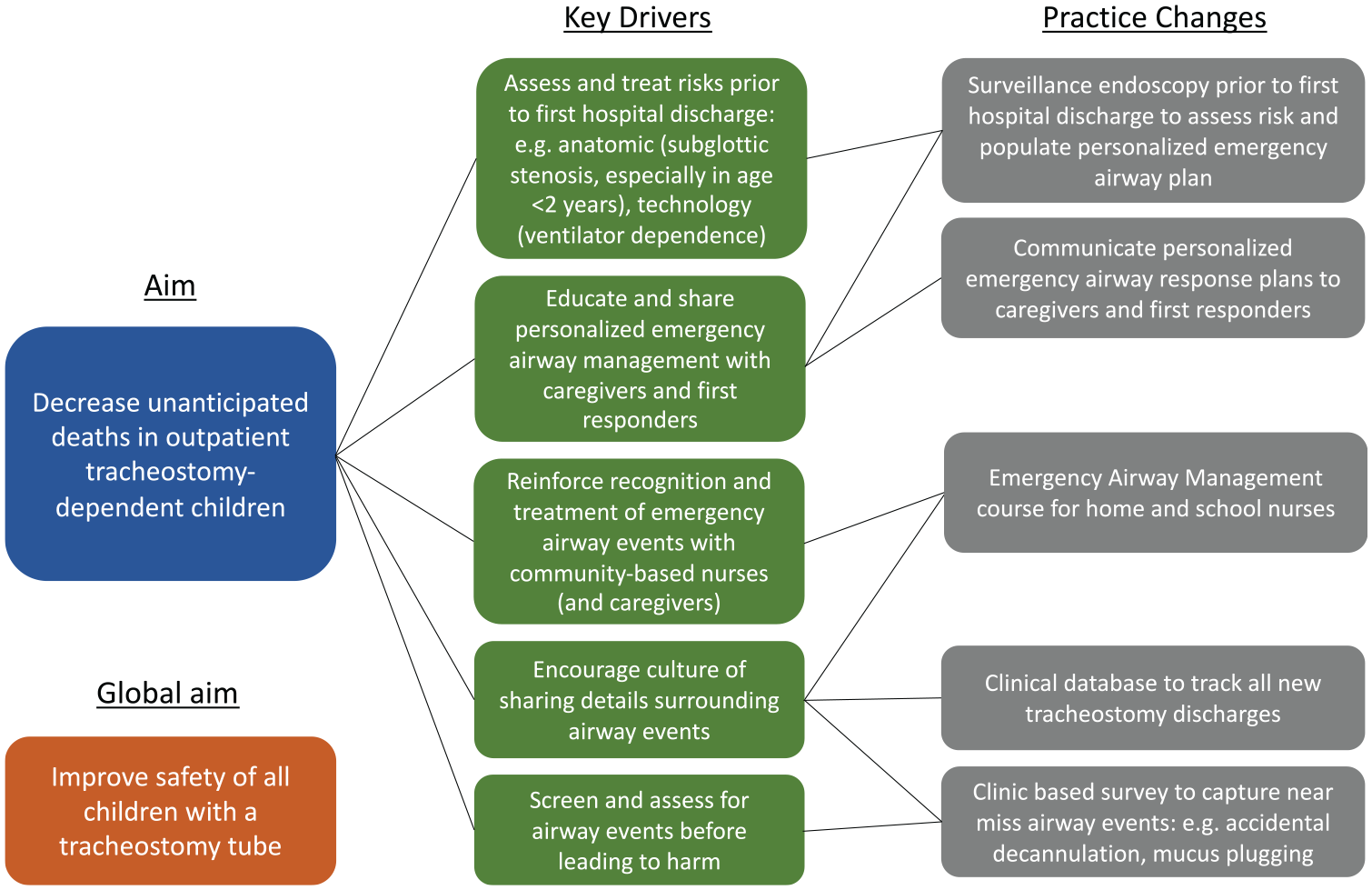
Driver diagram organizing change practices based on key drivers of the aim.
Change of practice 1: Surveillance airway endoscopy following tracheostomy placement and communication of emergency airway plan
We initiated routine surveillance laryngoscopy and bronchoscopy for all children approximately 1 to 3 months after tracheostomy placement prior to discharge home. The endoscopy examines the airway for adverse changes from prior to tracheostomy placement, treats airway pathology as needed to improve patency, and assesses and documents an individualized emergency airway plan (ie, ability to bag-mask ventilate and feasibility of oral intubation). The timing of subsequent endoscopies is determined based on the status of the airway at initial endoscopy as well as the patient’s clinical trajectory. Findings are documented on the Trach Safe Airway Diagram ( Figure 2 ), scanned into the electronic medical record, and provided as copies to the caregivers and local first responders. The diagram guides caregivers, home nurses, and first responders on patient-specific emergency airway plans.
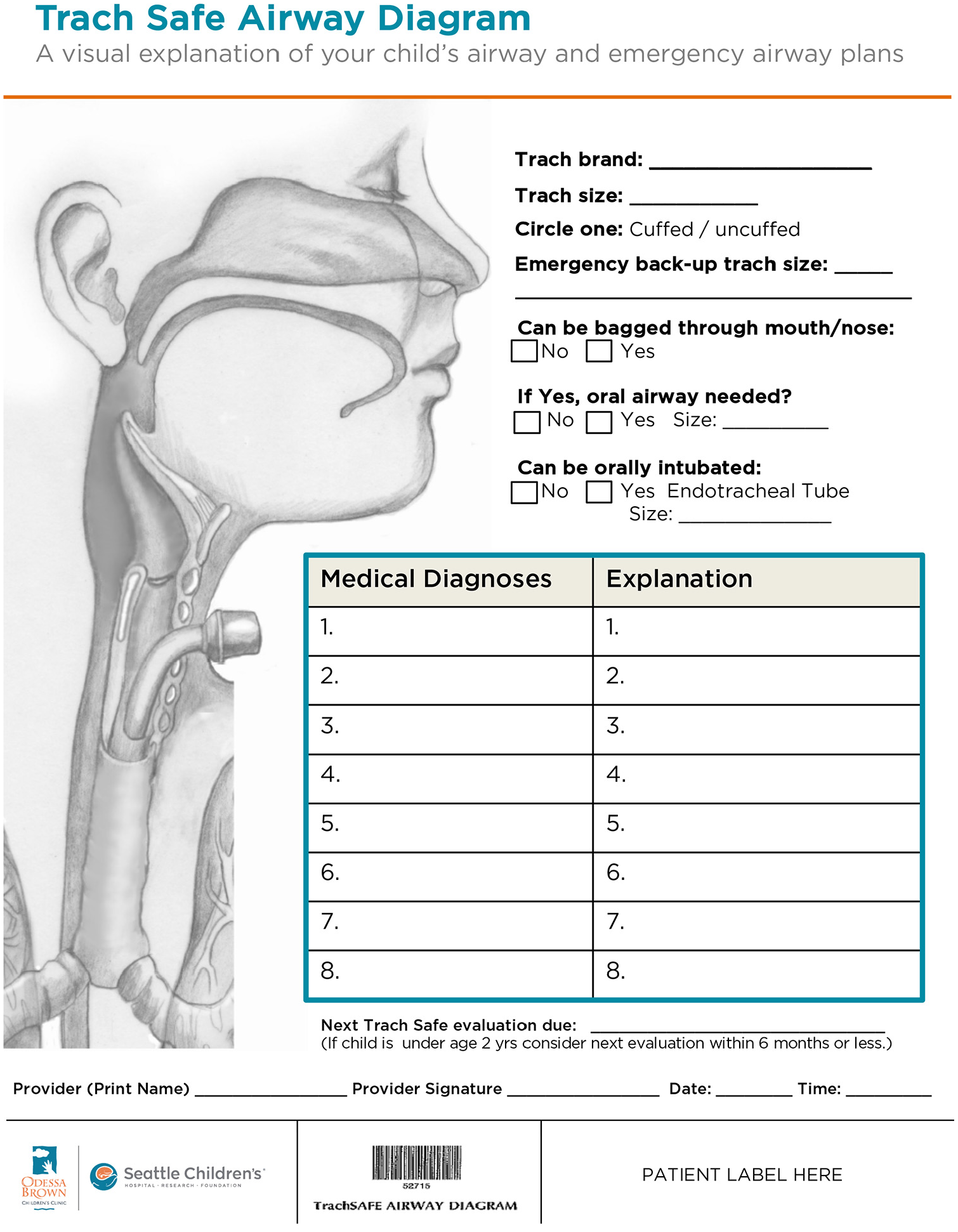
Trach Safe airway diagram completed after surveillance bronchoscopy. This figure, copyrighted by Seattle Children’s Hospital, has been used with permission.
Change of practice 2: Curriculum for community-based nursing
The Trach Safe Emergency Airway Management course reviews nursing skills for tracheostomy care and emphasizes recognition and management of emergency airway scenarios. The curriculum contains a didactic component that discusses airway anatomy, indications for tracheostomy, signs of respiratory distress specific to TDC, and emergency airway management principles. It also familiarizes course attendees to tracheostomy tube suctioning, replacement, and ventilation techniques. The curriculum includes high-fidelity simulation, whereby multiple emergency airway scenarios are simulated followed by debriefing. The SCH outreach education program manages course tuition, logistics, and attendance. Knowledge, confidence, and satisfaction surveys are administered to each participant before and after every course.
Change of practice 3: Systematic assessment of near-miss events in outpatients
We partnered with the Respiratory Care Department to maintain a clinical database and track all new tracheostomy discharges. For outpatients, we developed a clinic-based survey to screen and assess for near-miss events (ie, airway events prior to leading to harm). Trach Safe Check is a 1-page survey, administered on paper in English or Spanish during routine home ventilator clinic visits, that asks families to recall safety events since last clinic visit, including accidental decannulation or mucus plugging, equipment failures, and home nursing shift availability and missed nursing shifts ( Figure 3 ). A standard emergency airway algorithm is distributed with every survey. The physician, respiratory therapist, and nurse review the survey with the family during the clinic visit and determine strategies to improve safety. The surveys also allow for assessment of trends and opportunities for improving airway safety out of the hospital.
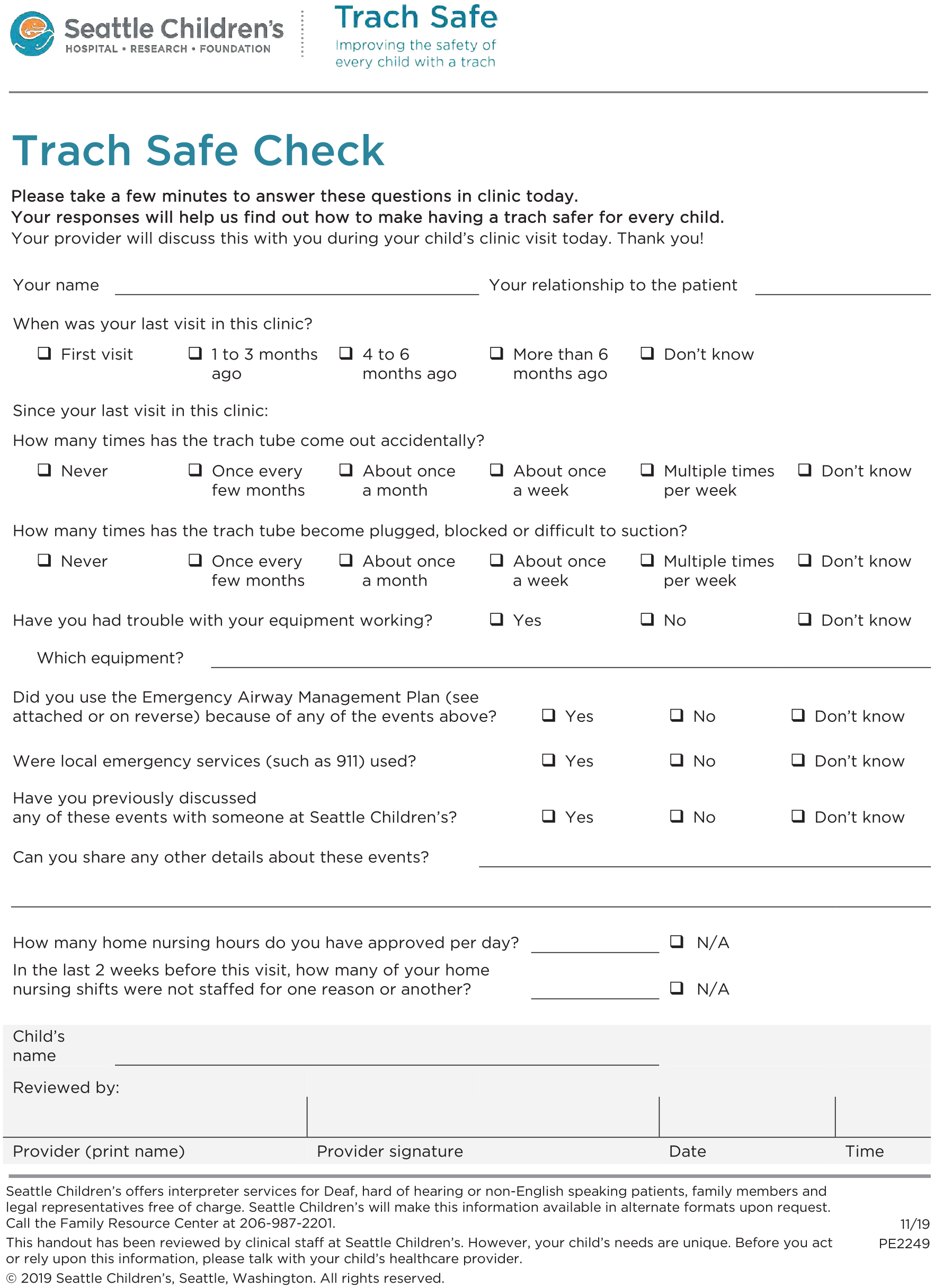
Trach Safe Check survey reviewed with families at clinic visits. This figure, copyrighted by Seattle Children’s Hospital, has been used with permission.
Study of Interventions
The current system at SCH results from a collection of multiple practices implemented since the CPI event in January 2014. To test the impact of these practices comprising the Trach Safe Initiative on mortality and learn about the possible interaction with patient-specific trends over time, we assessed mortality on both patient and system levels.
Patient-level assessment
We performed a historical cohort comparison of children 0 to 21 years of age who underwent tracheostomy placement at Seattle Children’s Hospital over the pre–Trach Safe Initiative implementation period (January 1, 2009, to January 31, 2014) and the postimplementation period (February 1, 2014, to December 31, 2018). Data collected included demographic information, tracheostomy date and indication, history of pretracheostomy intubation and failed extubation trials, comorbid conditions, ventilator dependence, and surveillance endoscopy data. Patient-specific mortality data were collected from January 1, 2013, to December 31, 2018, including the date of death and whether it was unanticipated.
System-level assessment
Surveillance endoscopy prior to hospital discharge was the first practice change to be initiated following the CPI design event with subsequent practices developed and implemented over 2 years. We chose to test mortality before and after provider adoption of the first practice change in February 2014 a priori given continuous improvement work since this date. As unanticipated mortality is a rare event in TDC, we assessed all available annualized mortality data from 2003 to 2018 for system analysis, including the sentinel year in 2013 that started the Trach Safe CPI event.
Measures
We defined the primary outcome measure as unanticipated mortality in TDC following discharge. Unanticipated mortality was defined as death not due to progression of the underlying disease or withdrawal of care. All deaths were reviewed and unanticipated classification was adjudicated by the coauthors (C.C.L., L.E., L.H., A.M.S., T.O., and K.E.J.) with 100% consensus.
Process measures were assessed for adoption of the Trach Safe Initiative change of practices. We collected the number of tracheostomies and number of surveillance endoscopies performed per year. Trach Safe Emergency Airway Management course attendance was used to assess engagement and interest of community-based nurses caring for TDC. The number of collected Trach Safe Check surveys in the home ventilator program was used to capture provider use of the tool per year.
Analysis
Descriptive statistics were used to report cohort characteristics, Trach Safe airway course attendance, and Trach Safe check survey response rates. Using Wilcoxon-Mann-Whitney tests, we compared characteristics of patients with tracheostomy placement before and after implementation. Pearson χ2 tests were used to evaluate the association between patient variables and mortality.
To assess mortality risk at the individual patient level for the cohort over the study period, the time from discharge to death was compared for patients with tracheostomy placement before and after implementation of the Trach Safe Initiative using a Cox proportional hazards (PH) model. For patients who are alive, survival was censored on the date of last clinical encounter. Kaplan-Meier survival curves provide a visual comparison of survival among children with tracheostomy placement prior to and following implementation.
To assess the impact of the Trach Safe Initiative on unanticipated mortality at the system level, annual mortality was reviewed using statistical process control charts. Specifically, a count chart (C-chart) was used to plot the number of unanticipated deaths against the year of hospital discharge. 10 C-chart is a common control chart used to evaluate system-level performance of practices by assessing for trends in the total number of nonconformers over time with the goal of distinguishing between observations resulting from common cause (expected) or special-cause (unexpected) variation. We counted a nonconformer in the system as an unanticipated death from hospital discharge year at initial tracheostomy placement. Discharge year reflects patients in the system who had the opportunity to see multiple facets of the initiative. The central line is generated from the average number of unanticipated deaths per discharge year prior to 2013. Control limits reflect approximate standard deviations, based on the average number of unanticipated deaths over the same time period. Presence of a single data point outside of 3 standard deviations, 2 of 3 successive points beyond 2 standard deviations, or 4 of 5 successive points outside of 1 standard deviation11-13 were selected to define special-cause variation.
Data analysis was performed using Stata version 12 (StataCorp, College Station, Texas) and SAS version 9.4 (SAS Institute, Cary, North Carolina).
Ethical Considerations
The retrospective chart review for assessing the impact of the Trach Safe Initiative was approved by the Seattle Children’s Hospital’s Institutional Review Board.
Results
Patient Characteristics
From 2009 to 2018 in the pre- and postimplementation periods, 131 and 155 children underwent tracheostomy placement, respectively, with a yearly mean (SD) of 29 (6.5). The majority of these TDC (163/286, 57%) remained ventilator dependent ( Figure 4 ). The number of tracheostomies performed annually and the number of tracheostomies performed in children who are ventilator dependent have been consistent ( Figure 4 ). The median age at the time of tracheostomy placement for both the pre- and postimplementation periods was 5.9 months (interquartile range [IQR], 3.1-40.6) ( Table 1 ). There were no significant differences in demographic or clinical characteristics between the pre- and postimplementation cohorts (P > .05 for all characteristics).
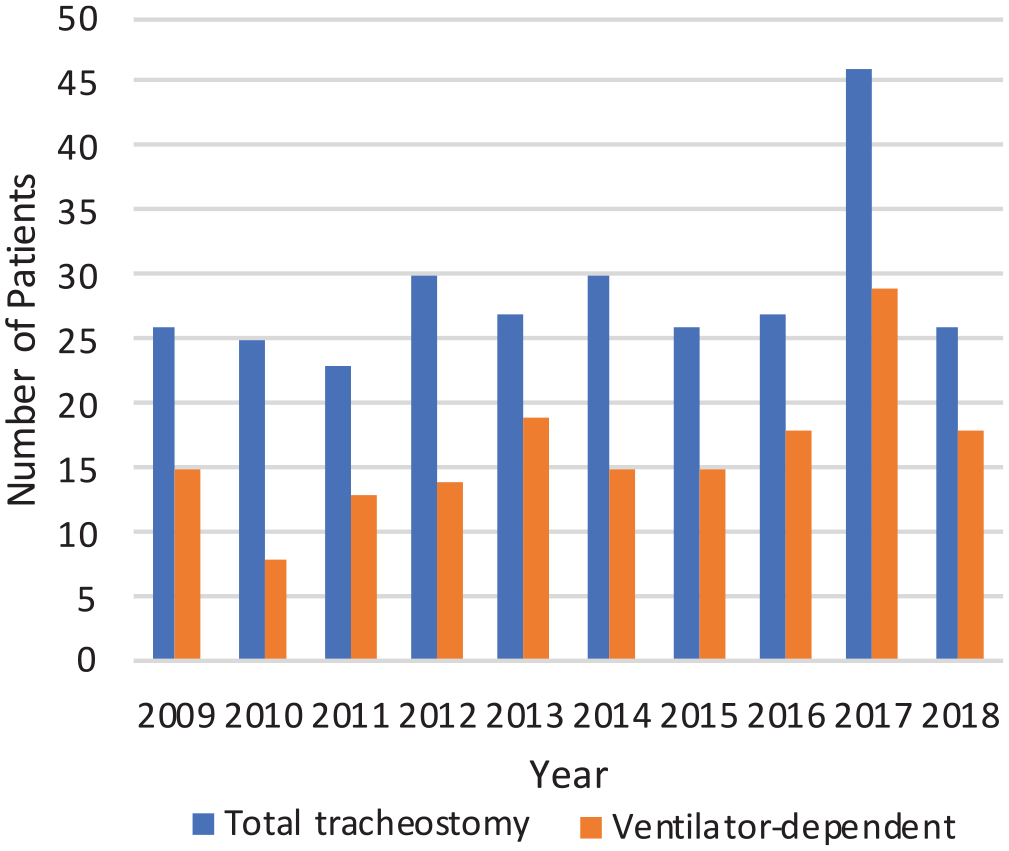
Annual number of tracheostomy procedures in all children and in children who are ventilator dependent.
Cohort Characteristics in the Preimplementation and Postimplementation Periods. a

Abbreviation: IQR, interquartile range.
There were no significant differences between the pre- and postimplementation cohorts for all characteristics (P > .05). Values are presented as number (%) unless otherwise indicated.
Acquired upper airway obstruction defined as acquired laryngeal obstruction, most commonly due to traumatic or prolonged intubation (eg, glottic edema, subglottic stenosis).
Pulmonary comorbidities include bronchopulmonary dysplasia, asthma, and restrictive lung disease.
Missing data for 4 children.
Identification of Trach Safe Practice Changes
Prior to the design of the initiative, a preliminary retrospective review was performed of deaths in TDC. From 2003 to 2013, a total of 45 deaths were identified, including 17 deaths classified as unanticipated. Of the 17 TDC with unanticipated deaths, 6 deaths (35%) did not have charted information regarding events surrounding the death to ascertain possible cause. Of the remaining, unanticipated death was attributed to accidental decannulation (4 of 11), caregiver sleeping or missed alarms (4 of 11), or disconnection from the home ventilator (3 of 11). Where recorded, patients were most often at home without a nurse during the immediate period prior to death (8 of 15). TDC were residing under nurse care in a group home in 6 of 15 events. The CPI team identified 5 predominant characteristics to focus practice changes: (a) age under 2 years old (median age, 23 months; range, 9-216 months), (b) known history of upper airway obstruction (12 of 17), (c) ventilator dependence (13 of 17), (d) within the first year from initial hospital discharge (9 of 17), and (e) insufficient charting to learn from unanticipated or near-miss events.
We collaboratively refined 3 practice changes to improve home safety in TDC derived from key drivers ( Figure 1 ). First, given risk for young children with a history of upper airway obstruction and those within the first year of discharge, the team implemented routine airway evaluation prior to hospital discharge from tracheostomy placement. Parent stakeholders expressed concern that upper airway pathology and reasons for tracheostomy tube were not clearly communicated at discharge. To increase communication of critical airway assessments and individualized emergency airway plans, endoscopy findings are documented on the Trach Safe Airway diagram in both medical and lay terms ( Figure 2 ). Second, the team implemented a community-based nursing education program (Trach Safe Emergency Airway Management course) for the routine and emergency management of TDC. The course was initially intended for home nurses; however, based on feedback from home nursing agencies, the program expanded to include school nurses who have little access to specialized training but who care for TDC in school settings. Last, to assess for near-miss events occurring out of the hospital, we initiated a clinic-based survey tool (Trach Safe Check) ( Figure 3 ). Question content, survey length, and acknowledgment that caregivers may wish to remain anonymous were issues refined iteratively with the team. We implemented Trach Safe Check in the home ventilator clinic to capture this higher risk group. Pulmonary providers were surveyed for current practice and openness to integrate standard questions in home ventilator clinic prior to implementation. The survey was not made anonymous to incorporate physician preference for intention to address events in real time with families.
Process Measures
Utilization of surveillance endoscopy and main findings
A total of 533 surveillance endoscopies were performed, with 104 and 429 performed in the pre- and postimplementation periods, respectively ( Figure 5 ). Since implementation in February 2014, the number of surveillance endoscopies performed annually steadily increased ( Figure 5 ).
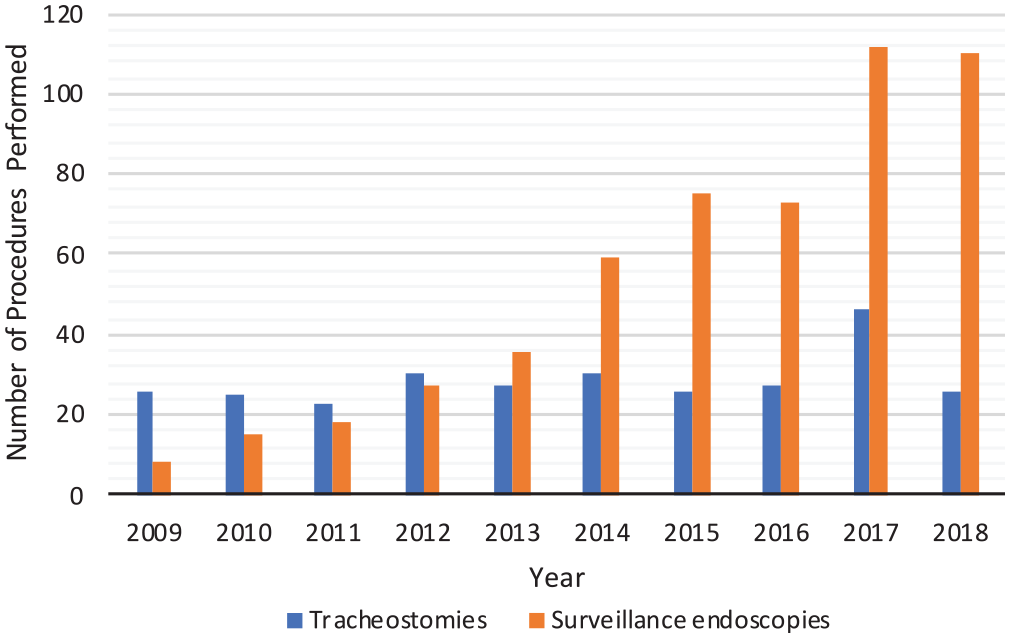
Annual number of tracheostomy and surveillance endoscopy procedures performed.
The goals of surveillance endoscopy are to identify and treat airway abnormalities that may compromise airway patency and safety and establish an emergency airway plan in the setting of tracheostomy tube occlusion or accidental decannulation. To assess goals of this facet, we reviewed 127 children who underwent tracheostomy placement and surveillance endoscopy as part of the Trach Safe Initiative until January 2019. 14 We found 110 children (87%) had at least 1 abnormal airway finding on initial endoscopy. 14 Specifically, the most common abnormal findings observed were subglottic stenosis (57%), glottic edema (37%), and suprastomal granulation tissue (32%). Thirty-six children (33%) with abnormal findings underwent an airway intervention as clinically determined by the otolaryngologist at the time of surveillance endoscopy to improve airway patency or safety. The most common interventions were suprastomal granuloma excision (44%), steroid injection (22%), and dilation of the glottis or subglottis (19%). No endoscopy-associated complications were identified in this cohort. 14
Trach Safe course attendance and reporting of home near-miss events
The first Trach Safe Emergency Airway Management course was held in July 2014. At first, classes were offered biannually but increased to 3 times per year in 2018 and 4 times per year in 2019 to meet community demand. Registration has consistently been at capacity with a range of 14 to 19 community nurses in attendance per class. Routinely, there is a waitlist for future classes. To date, a total of 209 nurses have been trained through this course.
Trach Safe Check was initiated for all patients in the home ventilator clinic in January 2016. By December 2018, the survey had been administered at least once in 177 patients. Survey return has been consistent, with 148 to 170 surveys per year for a total of 488 clinic visits. Contrary to initial concerns to provide anonymity to share near-miss events, caregivers actively provide details for discussion with providers.
Impact of the Trach Safe Initiative on unanticipated mortality
There were 9 unanticipated deaths in the preimplementation period. One unanticipated death occurred in a child who underwent tracheostomy placement in the postimplementation period. The number of deaths related to progression of underlying disease and not related to an airway event (ie, disease-related mortality) was stable over the preimplementation (n = 14) and postimplementation (n = 10) periods (P = .29).
To assess if patient-level trends of mortality were different, we compared the time from discharge from tracheostomy placement to unanticipated death before and after implementation ( Figure 6 ). The median length of follow-up for children who underwent tracheostomy placement in the pre- and postimplementation periods was 5.6 years (IQR, 3.8-6.9) and 1.5 years (IQR, 0.7-2.8), respectively. The median interval from discharge to unanticipated death was 1.1 years (IQR, 0.6-2.5) in the preimplementation period. The unanticipated death that occurred postimplementation occurred 1.6 years following discharge. Time from individual patient discharge to unanticipated death did not differ significantly in the postimplementation period compared with preimplementation (Cox PH hazard ratio, 0.4; 95% confidence interval, 0.04-4.4; P = .46).
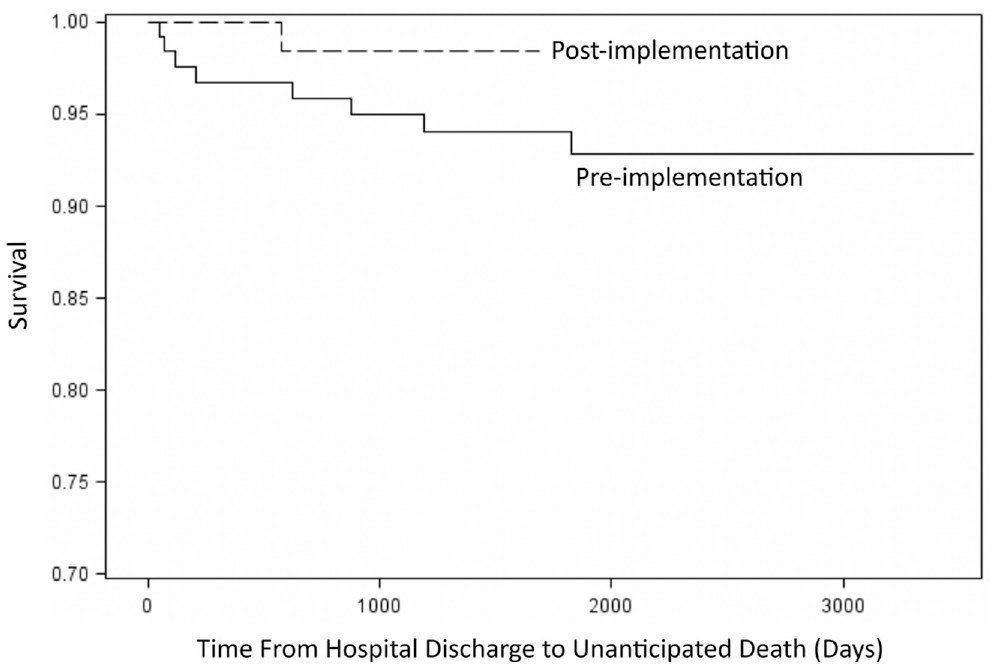
Kaplan-Meier product-limit estimates of patient survival pre- and postimplementation of the Trach Safe Initiative.
To perform a system-level assessment of the Trach Safe Initiative, we used a time-series assessment of the count of unanticipated deaths over the year of hospital discharge ( Figure 7 ). A spike of unanticipated deaths is seen from the discharge year of 2013 prior to the initiative. Over the 5 years since the start of the initiative, the count of deaths has remained at zero and below 1 standard deviation for 4 of 5 discharge years, consistent with a rule of special-cause variation in the system. Based on unanticipated mortality counts prior to program implementation, the probability of having only 1 death over 5 years is 0.03%.
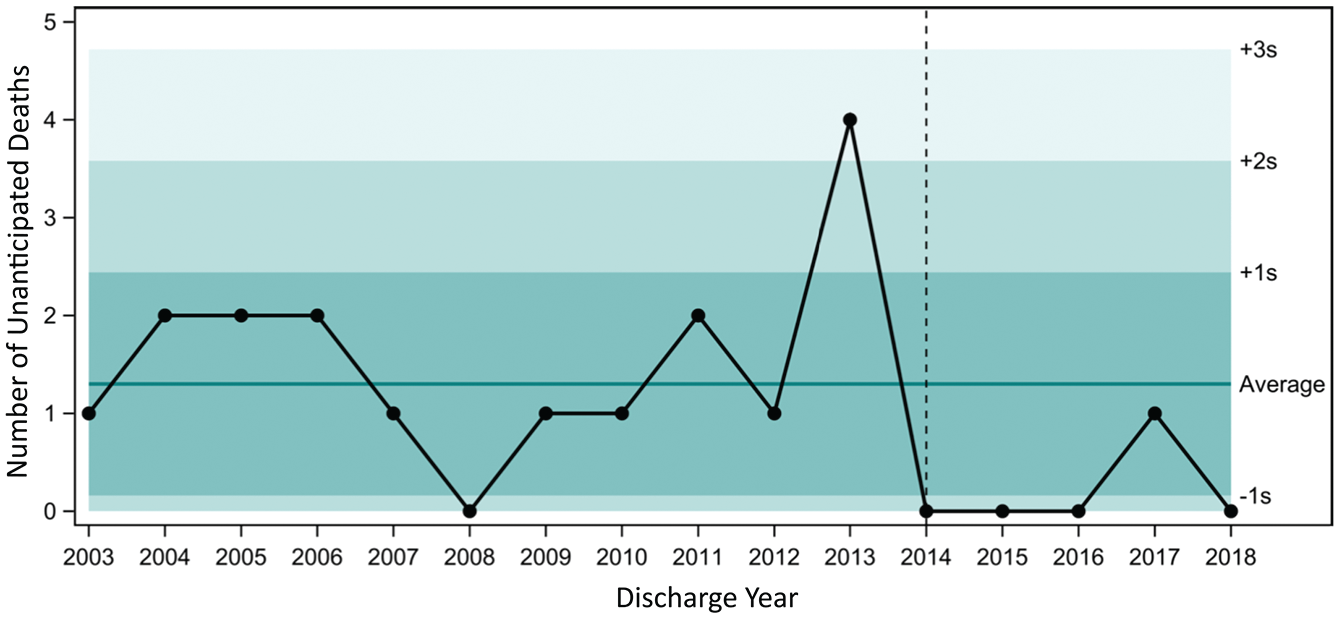
C-chart of count of unanticipated deaths per discharge year. Data points beyond the dotted line represent hospital discharges after Trach Safe implementation.
Risk factors for unanticipated mortality
In the preimplementation period, the median age at the time of tracheostomy in those with unanticipated deaths was 4 months (IQR, 3.2-7.0). The remainder of the characteristics of these children are summarized in Table 2 . Rates of prematurity and a history of failed extubation were similar in those with unanticipated mortality and those who died of disease progression (P = .09 and 0.2, respectively). Compared to the disease-related mortality group, there was a higher proportion of children with ventilator dependence in the unanticipated mortality group (P = .006). Compared to all patients (disease-related mortality and survivors), all unanticipated mortalities occurred in children under 2 years of age (P = .03).
Clinical Characteristics of Children Who Had Unanticipated Deaths in the Preimplementation Period (n = 9).

Craniofacial microsomia with left unilateral micrognathia.
In patients with a history of intubation prior to tracheostomy placement.
Discussion
Mortality in a child with a tracheostomy is an uncommon but significant event. Deaths not related to the progression of a child’s underlying illness are particularly alarming as these events are unanticipated and may be preventable. We report on 3 major practice changes that we have sustained in our approach over the past 5 years to improve the safety of children with a tracheostomy tube. Since the inception of the Seattle Children’s Trach Safe Initiative, only 1 unanticipated death has been reported among children discharged home with new tracheostomy tubes, demonstrating significant reduced unanticipated mortality in our system-level analysis.
Trach Safe Airway Diagrams: Cross-Discipline Engagement to Institute Routine Surveillance Endoscopy
The key drivers of our initiative were based on a review of common themes over a decade of our institution’s unanticipated deaths. Recognizing risk in children under 2 years of age, routine surveillance endoscopy assesses for critical airway anatomy prior to first hospital discharge. All-cause mortality risk in children under 2 years of age with a tracheostomy is well described.6,7 Our institution, in line with other tertiary care centers, is likely to perform tracheostomies in young children with multiple comorbidities and subglottic stenosis. 15 According to current consensus, the decision of the practice and timing of surveillance endoscopy is based on the consultant’s decision, providing room for variation across institutions. 16 Surveillance endoscopy findings at our institution are consistent with surveillance endoscopy results at other pediatric hospitals, determining increased incidence of upper airway lesions after tracheostomy placement.17,18 In addition, a third of children with abnormal airway findings underwent an unplanned airway intervention, similar to reported rates in other case series. 18 Narrow-diameter tracheostomy tubes required at this young age, compounded by upper airway resistance from subglottic stenosis or granulation tissue, for example, made physiologic sense for tube plugging or other airway events to increase unanticipated mortality risk. Identification and potential intervention to mitigate upper airway complications were felt to be justified within our cross-discipline improvement team to institute and maintain surveillance endoscopy as a practice within our institution. Communication of endoscopy findings, specifically in a personalized emergency airway plan for hospital and first-line responders, is also a critical piece of this practice. Standard practice guidelines for children dependent on chronic invasive home ventilation recommend formal safety plans as standard discharge criteria. 19
Trach Safe Emergency Airway Management Course: Simulation Training for Community-Based Nurses
An awake and trained caregiver is recommended to be present at all times in the home of a TDC requiring home ventilation. 19 Our institution along with others has a standardized and thorough education plan prior to discharge for caregivers.20,21 A recent report identified airway event simulation training for caregivers as well received and associated with a trend in decreased hospital readmissions. 22 The Trach Safe Emergency Airway Management course focuses on improving understanding, confidence, and competence in effective emergency tracheostomy management for community-based nurses. Rapid enrollment and waitlists, despite expansion in the number of courses offered yearly, are testament to the importance of addressing this ongoing need in the TDC community.
Trach Safe Check: Caregiver Reporting of Near-Miss Airway Events
Standardized monitoring and reporting of tracheostomy-related airway complications are challenging within hospital systems 23 and even more limited in outpatient settings. A multicenter observational study of TDC in Spain found 50% of patients with a tracheostomy-related death died at home from severe obstruction of the cannula and failure of resuscitation measures. 24 A strength of our initiative was our attempt to develop a reporting system for near-miss airway events and tracheostomy complications occurring at home. A majority of unanticipated deaths of TDC in our initial review of mortality had unknown context and causes of death. We identified these missing data as an improvement opportunity to better understand information about unanticipated airway events, use of emergency airway plans, and equipment issues from caregivers attending our home ventilator clinic. A single-page Trach Safe Check form was rapidly integrated across approximately 5 physicians, nurses, and respiratory therapists who staff the clinic to standardize communication with families. Contrary to our initial concerns, caregivers are willing to share details of near-miss events. Physicians use these data to provide real-time feedback to address issues such as optimal cannula sizing or timing of airway endoscopy. This tool is also used to identify families with inadequate home nursing needs, as identified in 17% of TDC in a recent survey study. 25
Limitations
Our study has some important limitations. Similar to other continuous improvement initiatives, each practice change was iteratively refined and expanded over time, limiting definition of a single implementation date. We define the start of our postimplementation period at initiation of adoption of the first change of practice to capture this period in its entirety. Also using multiple criteria to define special-cause variation by control charts increases the sensitivity of analysis but may increase the likelihood of false-positive results.
Another limitation is that the outcome of unanticipated death is rare, which renders our analysis of patient-level mortality underpowered. Specifically, 1 patient had an unanticipated death since implementation of the Trach Safe program in 2014. While median follow-up in the postimplementation period (1.5 years) exceeds median time from discharge to unanticipated death in the preimplementation period (1.1 years), the limited duration of follow-up during the postimplementation period and observation of a single event in the postimplementation period reduced statistical power to detect differences in patient-level survival. Continued follow-up is critical to confirm a significant risk reduction at the individual patient level.
Also, mortality data are inherently incomplete. We relied on documented records to distinguish unanticipated deaths. It is possible for misclassification of some deaths that were not documented in sufficient detail to accurately ascertain the case history; however, all available data were reviewed by the team for consistency of outcomes.
Finally, surveillance endoscopy is not universally recommended based on the current evidence. Other institutions may have protocols regarding indications to evaluate the airways in children with established tracheostomies. Future studies should compare the effectiveness of best strategies.
Implications for Practice
Death in a child with a tracheostomy tube at home may represent modifiable tracheostomy-related airway events. Trach Safe practices attempt to mitigate these risks through a multifaceted approach. We identify patient-specific airway risks prior to hospital discharge through surveillance endoscopy and communicate personalized emergency airway response plans. Out of the hospital, we monitor for near-miss airway events with a clinic-based survey. We educate community nurses through our emergency airway management course and support families through conversations prompted by our clinic-based near-miss survey.
The Trach Safe practices emerged from the collaboration of both hospital and community-based partners to be a model of safety, support, and education for the community surrounding TDC. Going forward, we will approach opportunities to provide refresher education to parents and to scale current Trach Safe practices to more community members.
In conclusion, we report a comprehensive summary of 3 sustained practice changes of the Trach Safe Initiative within our institution. Implementation of Trach Safe produced a systemwide decrease of unanticipated mortality in children with a tracheostomy tube without a change in volume or complexity of cases. Our greatest strength is the passion we share to improve safety at home of all children with a tracheostomy tube, and we remain committed to this mission.
Footnotes
Acknowledgements
We thank 2 of our most valuable Trach Safe team members, Delynn Adair and Abigail Diaz-Aguilar, parents of children with a tracheostomy. From the inception of this initiative, they shared their wisdom, experiences, time, and commitment to codesign the Trach Safe program. They and all the families we care for continue to inspire this cause.
These findings were presented at the 2019 American Society of Pediatric Otolaryngology; May 3, 2019; Austin, Texas.