






Abstract
Objective
To evaluate risk factors for pediatric posttonsillectomy hemorrhage (PTH) and the need for transfusion using a national database.
Study Design
Retrospective cohort study.
Setting
The study was conducted using the Pediatric Health Information System (PHIS) database.
Methods
Children ≤18 years who underwent tonsillectomy with or without adenoidectomy (T±A) between 2004 and 2015 were included. We evaluated the risk of PTH requiring cauterization according to patient demographics, comorbidities, indication for surgery, medications, year of surgery, and geographic region.
Results
Of the 551,137 PHIS patients who underwent T±A, 8735 patients (1.58%) experienced a PTH. The risk of PTH increased from 1.33% (95% confidence interval [CI]: 1.15%, 1.53%) in 2010 to 1.91% (95% CI: 1.64%, 2.24%) in 2015 (P < .001). Older age (≥12 vs <5 years old: adjusted odds ratio [aOR] 3.17; 95% CI: 2.86, 3.52), male sex (aOR 1.11; 95% CI: 1.05, 1.17), medical comorbidities (aOR 1.18; 95% CI: 1.08, 1.29), recurrent tonsillitis (aOR 1.15; 95% CI: 1.07, 1.24), and intensive care unit admission (aOR 1.74; 95% CI: 1.55, 1.95) were significantly associated with an increased risk of PTH. Use of ibuprofen (aOR 1.36; 95% CI: 1.22, 1.52), ketorolac (aOR 1.39; 95% CI: 1.14, 1.69), anticonvulsant (aOR 1.23; 95% CI: 1.03, 1.76), and antidepressants (aOR 1.35; 95% CI: 1.03, 1.76) were also associated with an increased risk of PTH. The need for blood transfusion was 2.1% (181/8735).
Conclusion
The incidence of PTH increased significantly between 2011 and 2015, and ibuprofen appears to be one contributing factor. Given the benefits of ibuprofen, it is unclear whether this increased risk warrants a change in practice.
Keywords
Tonsillectomy with or without adenoidectomy (T±A) is one of the most commonly performed operations in children,1,2 with more than 530,000 outpatient tonsillectomies performed annually in the United States. 3 It is a generally safe operation with a relatively low complication rate in the healthy pediatric population. 4 Revisits for complications occur in 5% to 15% of cases, with most common reasons related to posttonsillectomy hemorrhage (PTH), fever, nausea and/or vomiting, dehydration, and pain. 5 PTH is a particularly important complication because it is frightening for families, may require an emergency department (ED) visit and surgical intervention, and can be fatal in rare instances.6-9 The overall rate of PTH is reported to be approximately 4.5% (range, 0%-20%), 10 with 0.2% to 2.2% of cases occurring within 24 hours after surgery and 0.1% to 3.5% occurring more than 24 hours after surgery.8,11-16
In 2011, the American Academy of Otolaryngology–Head and Neck Surgery (AAO-HNS) released clinical practice guidelines for tonsil surgery in an effort to standardize perioperative management. 17 The guidelines recommend the use of a single dose of intraoperative intravenous dexamethasone to reduce postoperative nausea and vomiting, discourage the use of perioperative antibiotics, and recommend the use of ibuprofen, acetaminophen, or both for posttonsillectomy pain management. Although multiple studies have failed to demonstrate an association between nonsteroidal anti-inflammatory drugs (NSAIDs) and PTH,18-20 others have shown a statistically significant increase in PTH among patients taking ibuprofen during the extended postoperative period.21,22 Some studies have demonstrated a small increase in PTH since guideline implementation.23,24
Given the low rate of PTH, it is difficult to interpret the impact of ibuprofen and other risk factors based on single-institution studies. Therefore, we designed a retrospective study using the Pediatric Health Information System (PHIS), which includes data from 45 children’s hospitals across 26 states. The PHIS database compiles clinical and resource utilization data for inpatient, ambulatory surgery, and ED patient encounters. PHIS supports a wide range of quality improvement, resource utilization, and clinical guideline development endeavors aimed at improving care in pediatrics. The objective of the present study is to review a national database of pediatric tonsillectomy procedures to identify risk factors for PTH, specifically including the risk associated with ibuprofen.
Methods
We conducted a retrospective cohort study of children ≤18 years who underwent T±A between January 1, 2004, and August 31, 2015, using the PHIS database. The cohort was identified using International Classification of Diseases, Ninth Revision, Clinical Modification (ICD-9-CM) procedure codes for tonsillectomy (28.2) or tonsillectomy with adenoidectomy (28.3). The Children’s Hospital Association and the participating hospitals ensured data quality and reliability. This study was approved by the Boston Children’s Hospital Institutional Review Board.
The primary outcome measure was PTH requiring cauterization at the same hospital as the primary procedure within 14 days of surgery. PTH was identified using ICD-9 procedure code 28.7, which denotes control of hemorrhage under general anesthesia following tonsillectomy and adenoidectomy (PHIS does not capture patients who are seen at a different hospital). PTH was categorized as either occurring on the same day as surgery or on a subsequent postoperative day. As a secondary outcome measure, the need for blood transfusion was examined.
Variables for analysis included patient characteristics, indications, perioperative management, and location and year of surgery. Patient characteristics included general demographics and comorbidities as defined by the complex chronic condition (CCC) classification system. This system includes cardiovascular, gastrointestinal, hematologic or immunologic, malignancy, metabolic, neuromuscular, congenital or genetic, renal, and respiratory conditions. Indications for surgery including airway obstruction and/or throat infection were determined based on the ICD-9 diagnosis codes (listed in the supplementary material). Type of hospital encounter (ambulatory versus inpatient admission), intensive care unit (ICU) admission following the primary surgery, and use of noninvasive positive-pressure ventilation were also collected. Medication usage was analyzed using pharmacy prescription data (listed in the supplemental material).
Statistical Analysis
We used a logistic regression model and estimated odds ratios (ORs) with 95% confidence intervals (CIs). The generalized estimating equations approach was used to account for within-hospital correlation. We then built a final multivariable logistic regression model using a backward selection procedure, with P < .05 as the retention criterion. Potential risk factors suggested in prior studies were also retained in the multivariable model.
Interrupted time series analysis was conducted to assess temporal trends of PTH. We specifically examined the change in the rate of PTH after the publication of the clinical practice guideline regarding tonsillectomy. This was done by entering an interaction term between calendar years before and after guideline publication (ie, years up to 2010 vs 2011 and beyond). All analyses were conducted using SAS version 9.4 (SAS Institute, Cary, North Carolina) and R statistical software.
Results
Baseline Characteristics
During the 11-year study period, 551,137 patients underwent T±A. The median age at the time of surgery was 5.6 years (interquartile range: 3.7-8.3 years). A slight majority were male (52.2%), and 7.5% had a CCC ( Table 1 ).
Baseline Characteristics (N = 551,137).
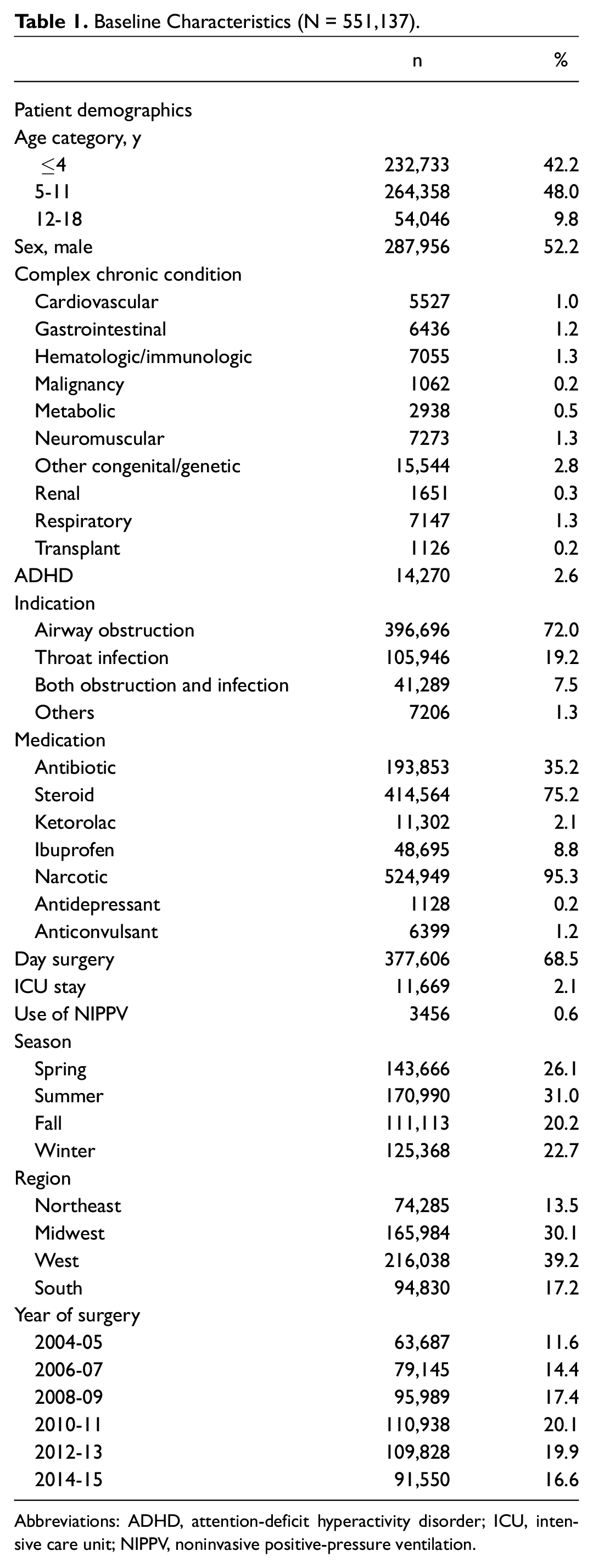
Abbreviations: ADHD, attention-deficit hyperactivity disorder; ICU, intensive care unit; NIPPV, noninvasive positive-pressure ventilation.
Following publication of the clinical practice guideline, use of antibiotics decreased from 42% in 2010 to 16% in 2015 ( Figure 1 ), whereas steroid use increased from 71% in 2010 to 82% in 2015. The administration of ibuprofen increased from 2% in 2010 to 30% in 2015. The incidence of ibuprofen use varied across hospitals, ranging from 0% to 94% in 2015. On average, ibuprofen usage ranged from 19% in the Western United States to 24% in Southern states, 28% in the Northeast, and 47% in the Midwest in 2015.
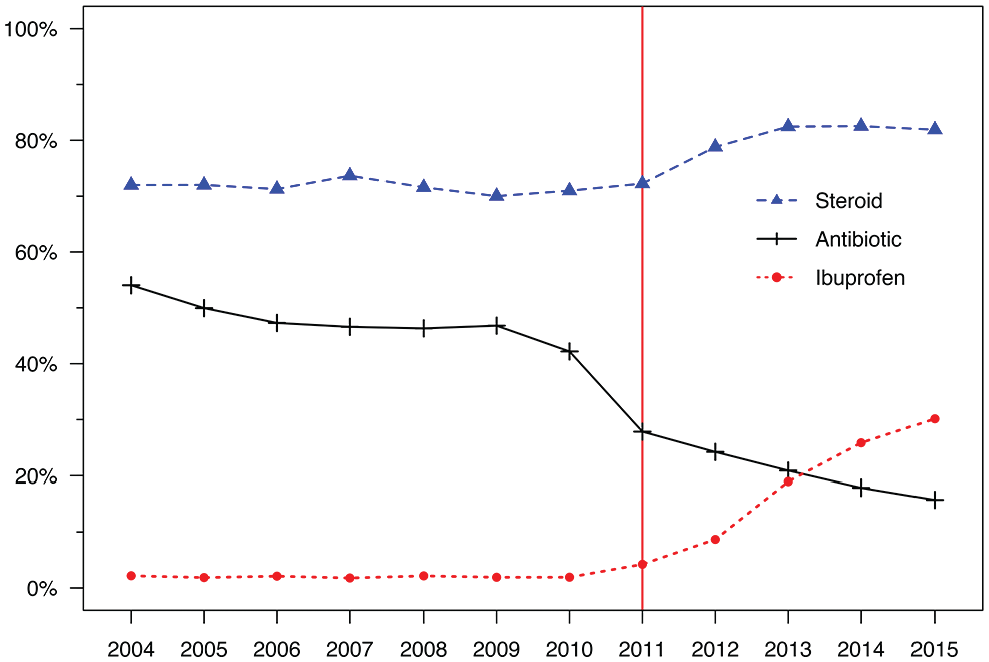
Trends in ibuprofen, antibiotic, and steroid administration during the study period. Red line at 2011 represents the introduction of the clinical practice guideline regarding the management of pediatric tonsillectomy patients.
Risk of PTH
Among the 551,137 patients who underwent T±A, 8735 (1.58%) developed a PTH ( Table 2 ). Of these, 1362 (15.6%) bled on the day of surgery. The risk of PTH ranged from 1.20% in the South to 2.34% in the Northeast region. PTH risk significantly increased from 1.33% (95% CI: 1.15, 1.53%) in 2010 to 1.91% (95% CI: 1.64, 2.24%) in 2015 ( Figure 2 ). According to interrupted time series analysis, there was a significant change in the bleed rate before and after 2011 (P < .001). This change was observed across all geographic regions.
Univariate Analysis of Risk Factors for Posttonsillectomy Hemorrhage. a

Abbreviations: ADHD, attention-deficit hyperactivity disorder; CI, confidence interval; ICU, intensive care unit; NIPPV, noninvasive positive-pressure ventilation; OR, odds ratio.
Defined as risk of posttonsillectomy hemorrhage requiring cauterization within 14 days of surgery. Crude odds ratio (OR) and 95% confidence interval (CI) were based on the logistic regression model accounting for within-hospital correlation using the generalized estimating equations approach.

Risk of posttonsillectomy hemorrhage from 2004 to 2015. Red line at 2011 represents the introduction of the clinical practice guideline regarding management of pediatric tonsillectomy patients.
Risk Factors for PTH
Patients receiving ibuprofen were more likely to experience PTH (adjusted OR [aOR] 1.36; 95% CI: 1.22, 1.52; Tables 2 and 3 ). Increased risk was also observed among patients receiving ketorolac (aOR 1.39; 95% CI: 1.14, 1.69), anticonvulsants (aOR 1.23; 95% CI: 1.03, 1.76), and antidepressants (aOR 1.35; 95% CI: 1.03, 1.76). It was difficult to assess the additive effects of using multiple NSAIDs because patients who received both ketorolac and ibuprofen were limited (n = 41). Based on these limited data, there was no statistically significant interaction between ketorolac and ibuprofen (P = .55).
Multivariable Analysis of Risk Factors for Posttonsillectomy Hemorrhage. a
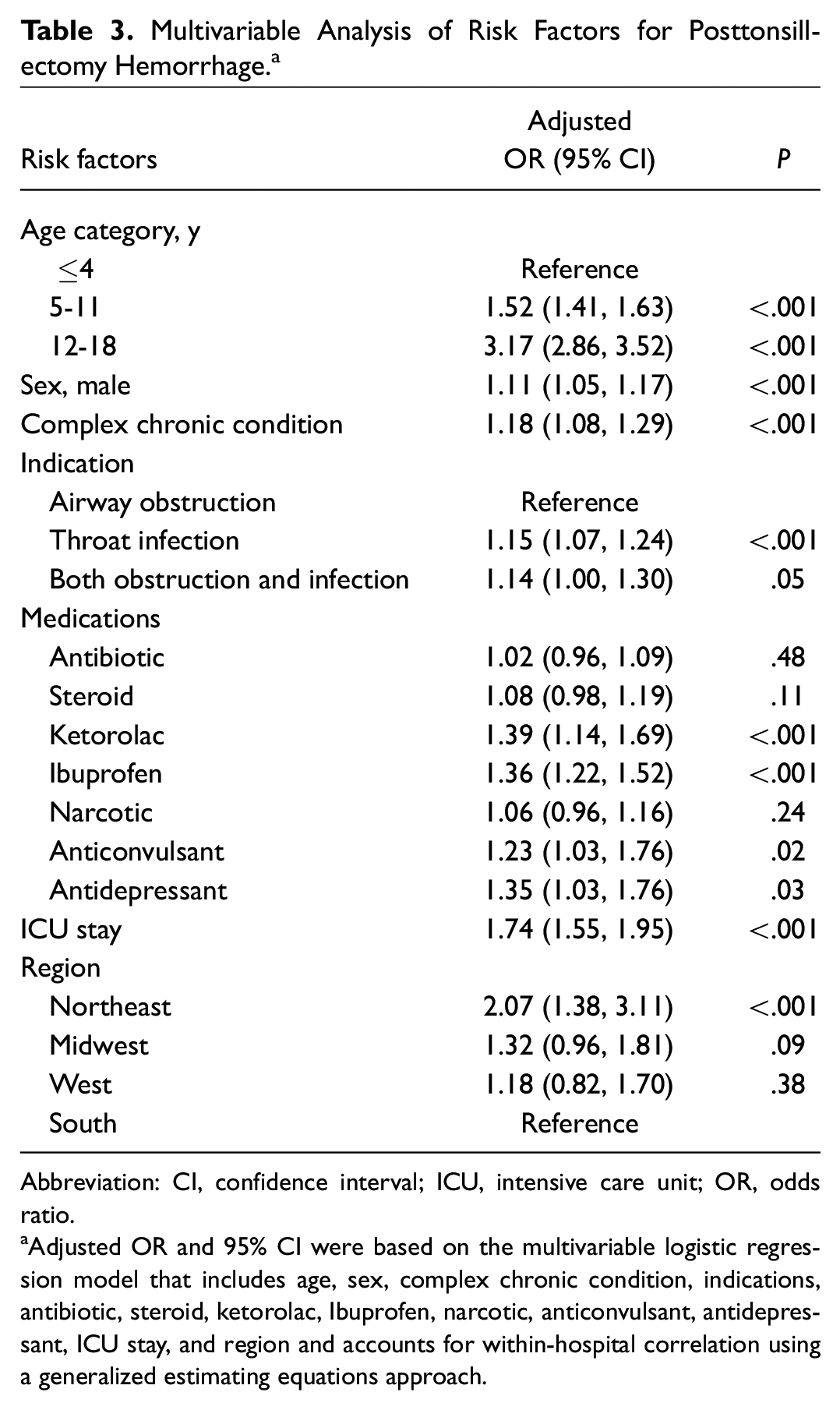
Abbreviation: CI, confidence interval; ICU, intensive care unit; OR, odds ratio.
Adjusted OR and 95% CI were based on the multivariable logistic regression model that includes age, sex, complex chronic condition, indications, antibiotic, steroid, ketorolac, Ibuprofen, narcotic, anticonvulsant, antidepressant, ICU stay, and region and accounts for within-hospital correlation using a generalized estimating equations approach.
Antibiotics and steroids were not statistically significantly associated with increased risk (aOR 1.02; 95% CI: 0.96, 1.09). The rate of PTH increased every year from 2011 to 2015 (aOR 1.056; 95% CI: 1.037, 1.075; P < .001), although the magnitude of the increase was attenuated in the multivariable regression model.
Older age (≥12 vs <5 years old: aOR 3.17; 95% CI: 2.86, 3.52), male sex (aOR 1.11; 95% CI: 1.05, 1.17), CCC (aOR 1.18; 95% CI: 1.08, 1.29), and ICU admission (aOR 1.74; 95% CI: 1.55, 1.95) were also associated with an increased risk of PTH. Children with recurrent or chronic tonsillitis were more likely to experience PTH than patients with airway obstruction (aOR 1.15; 95% CI: 1.07, 1.24). There was no clinically significant seasonal variation.
We examined risk factors for bleeding separately for same-day bleeding and subsequent-day bleeding. The only difference from the risk factors for all bleeds was that surgical indication was not a risk factor for same-day bleeding (
Blood Transfusion
As a secondary outcome, we assessed risk factors for blood transfusion. Of the 8735 patients who experienced PTH, 181 required a blood transfusion; this constituted 2.1% of all patients with a PTH and 0.03% of all patients who underwent T±A ( Table 4 ). Ibuprofen was not associated with an increased risk of blood transfusion ( Tables 4 and 5 ). Patients admitted to the ICU and those with a CCC were more likely to require a blood transfusion (aOR 5.01; 95% CI: 3.24, 7.74 and aOR 3.87; 95% CI 2.45, 6.13, respectively). Older children were also more likely to require a blood transfusion (P for trend = .046). There was no change in transfusion risk by year of surgery.
Univariate Analysis of Risk Factors Requiring Blood Transfusion. a
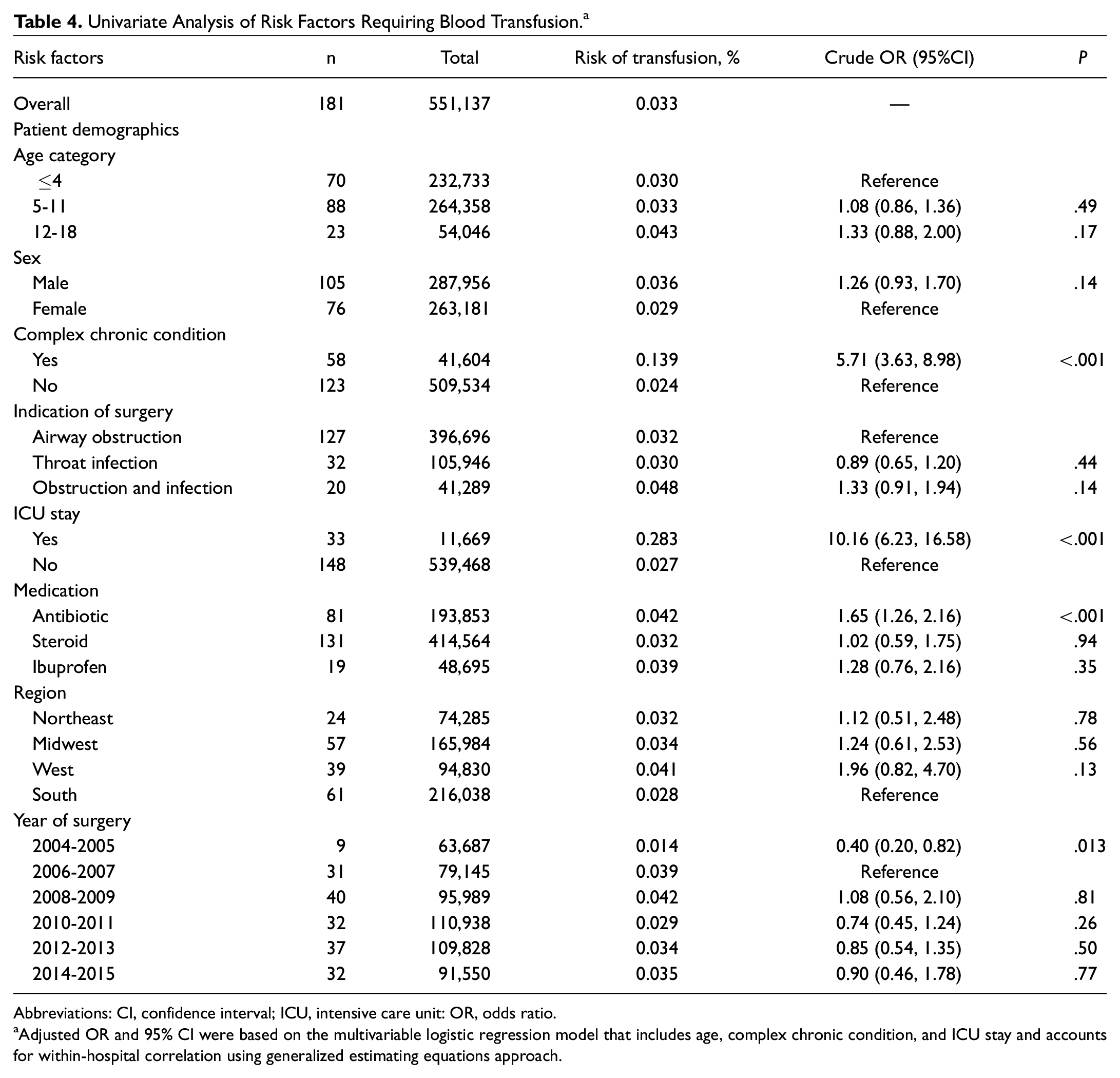
Abbreviations: CI, confidence interval; ICU, intensive care unit: OR, odds ratio.
Adjusted OR and 95% CI were based on the multivariable logistic regression model that includes age, complex chronic condition, and ICU stay and accounts for within-hospital correlation using generalized estimating equations approach.
Multivariable Analysis of Risk Factors Requiring Blood Transfusion.
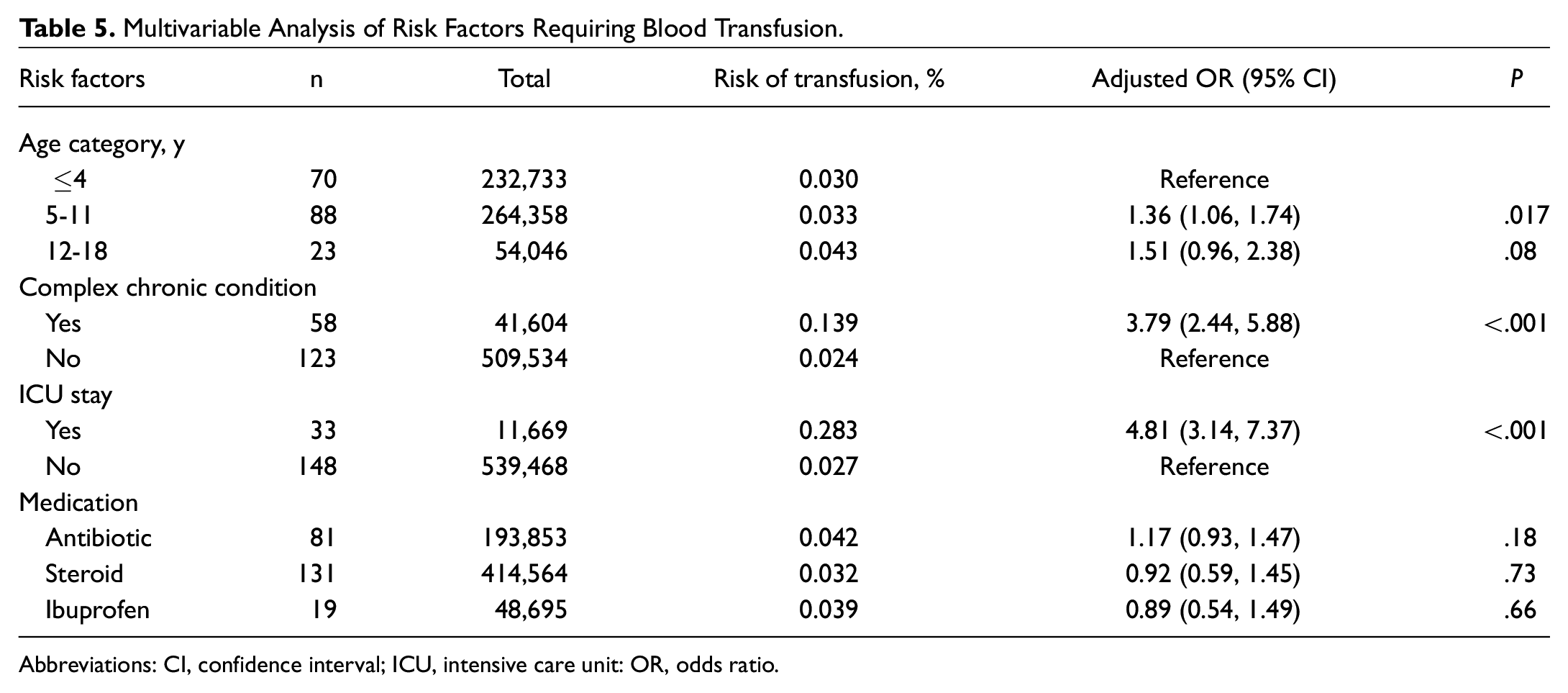
Abbreviations: CI, confidence interval; ICU, intensive care unit: OR, odds ratio.
Discussion
This study evaluated the risk factors associated with pediatric PTH, using data from a half a million tonsillectomy patients at children’s hospitals across the United States. Our data demonstrate that the risk of PTH increased from 1.3% in 2010 to 1.9% in 2015, following a change in clinical practice guidelines. NSAIDs increased the risk of PTH, whereas antibiotics and steroids did not. Other established risk factors, including older age, male sex, and tonsillitis, were also associated with increased risk. PTH requiring blood transfusion was rare and not associated with ibuprofen use or year of surgery. Although ibuprofen administration may have contributed to the growing risk of PTH in recent years, it is unclear whether this increased risk warrants a change in practice.
Effect of AAO-HNS Clinical Practice Guideline
The AAO-HNS guidelines had a significant impact on practice patterns.17-19 Following publication, perioperative antibiotic use dropped by 86.5% within one large pediatric health care network containing both hospital-based and ambulatory surgical facilities. 18 A retrospective cohort study using data from PHIS found dexamethasone use and rate of change in use increased between January 2009 and January 2013; antibiotic use and rate of change in use similarly decreased. 19 Our analysis found a similar trend, with the average rate of perioperative antibiotic prescribed for tonsillectomy decreasing by 26% between the years 2010 and 2015, whereas steroid administration increased by 11%. The administration of ibuprofen increased by 28%, from 2% receiving the drug in 2010 to 30% in 2015 ( Figure 1 ). Adherence to these clinical practice guidelines was greater than that observed in other surgical specialties.25,26
Ibuprofen and Its Effect on PTH
Given their effect on clotting factors, the safety of NSAID use in posttonsillectomy patients has been extensively evaluated.20,23,24,27-29 In a systematic review of 15 randomized trials involving 1101 children, the investigators concluded that there is insufficient evidence to exclude an increased risk of bleeding requiring surgical intervention when NSAIDs are used (pooled OR 1.69; 95% CI: 0.71, 4.01). 20 Several subsequent observational studies of ibuprofen have reported conflicting findings.23,27,28 In a recent randomized, noninferiority clinical trial that included 741 children, the rate of bleeding requiring surgical intervention was 1.2% in the acetaminophen group and 2.9% in the ibuprofen group. 30 The investigators could not rule out a higher rate of bleeding in children receiving ibuprofen after tonsillectomy.
Because PTH remains relatively rare, it has been difficult to perform adequately powered studies. Conflicting results may also be attributed to differences in ibuprofen dosing. In a recent meta-analysis, the study authors overcame these limitations by pooling data from available cohort studies and randomized control trials, focusing on ibuprofen use during the extended postoperative period. Consistent with our current study, the authors were able to detect a statistically significant increase in PTH, with a similar OR of 1.38. 24
Our data extend the literature not only by providing evidence from a large cohort of pediatric patients demonstrating that ibuprofen is an independent risk factor for PTH but also by providing more detailed information regarding demographics, risk factors, and severity of hemorrhage. Furthermore, we found that administration of ibuprofen increased following the introduction of the clinical practice guideline, which coincided with the increase in the posttonsillectomy bleed rate. As such, the increased use of ibuprofen may have contributed to the rise in PTH rates over the last 5 years of the study period. Of note, ibuprofen and ketorolac use were the only preventable risk factors identified.
There are several important factors to consider before recommending the discontinuation of ibuprofen use in this patient population. First, although a very large data set, our study must be weighed against other concordant and discordant findings. The use of administrative data allows very large numbers of patients to be included but does not provide the accuracy of chart review. Second, our methodology did not allow us to examine ibuprofen dose. This could conceivably have altered our findings, although this seems unlikely given that the dosage of ibuprofen is relatively consistent. Further research is required to determine whether a lower dosage of ibuprofen might provide adequate pain relief without increasing bleed risk. 29 Third, the overall magnitude of the effect was small. The aOR for ibuprofen was 1.36 (95% CI: 1.22, 1.52), which translates to a bleed risk of 2.09% among patients who used ibuprofen versus 1.54% among those who did not. Thus, ibuprofen would have to be withheld from 182 children to prevent 1 bleed. Although statistically significant, the risk of bleeding associated with ibuprofen may not be clinically significant. Furthermore, ibuprofen was not associated with an increased risk of blood transfusion. Lastly, a balanced consideration of benefits and risks is required. Ibuprofen has substantial clinical benefits in children: it reduces pain, reduces the need for narcotics (which are not risk free), and may reduce the risk of dehydration, and thus may avoid some readmissions. 29 Given these considerations, it is unclear whether the increased risk of PTH described in this study warrants a change in practice. In our own practice, we have decreased the dosage of ibuprofen from 10 mg/kg to 5 mg/kg, and data collection regarding tonsil bleed rates following this change is ongoing.
Other Risk Factors for PTH
Older age, male sex, and tonsillitis are known potential risk factors for PTH. Many publications have highlighted an increased rate of hemorrhage in adult patients,12,31-35 and several have identified significant differences in bleed rates between older and younger children.36-38 These findings are consistent with the current study, in which patients older than 4 years had a significantly higher risk of PTH ( Table 2 ). Although the adult literature indicates that male patients may experience an increased risk for bleeding,35,39,40 studies of pediatric patients have not historically identified an association between PTH and gender.36-38 Our study extends these findings. Finally, there is known risk associated with infectious indication for tonsillectomy, with chronic tonsillitis patients 2 to 4 times more likely to bleed than patients with airway obstruction.36,37,41 As age, sex, and history of tonsillitis are irreversible risk factors, it is important to counsel such patients regarding their postoperative risk of hemorrhage.
ICU admission and CCC were identified as independent risk factors for PTH. The CCC category is a heterogeneous subgroup that includes patients with cardiovascular, hematologic, and neurologic issues; their increased risk could be due to intrinsic coagulopathy, anticoagulation therapy, as well as other factors. An analysis of each variable identified within these subgroups was beyond the scope of this study but may be a consideration for future studies.
Our results also indicate that antidepressants and anticonvulsants were associated with PTH risk, confirming preliminary evidence reported in the literature. In terms of antidepressants, one large case-control study identified a relationship between serotonin reuptake inhibition and risk of abnormal bleeding. 42 Potential mechanisms include serotonin’s role in promoting platelet aggregation. 43 Various coagulopathies and hematologic abnormalities are associated with anticonvulsants44-49; however, the clinical relevance as it pertains to pediatric surgery has not been well described. Further evidence is required to determine potential mechanisms and clinical significance associated with increased risk of PTH. Finally, consistent with most prior studies, antibiotic and steroid use was not associated with risk of PTH.50-52
Risk of Blood Transfusion
One recent study reported a 3 times increased risk of requiring transfusion with the use of ibuprofen, upon adjusting for age and tonsillitis diagnosis. 27 Although the current study reports a similar overall risk of requiring a blood transfusion from PTH, we did not find that ibuprofen was associated with an increased risk of blood transfusion. In the cohort described by Mudd et al, 27 only 15 patients received a blood transfusion. The present study offers a larger cohort of 181 patients and possibly more precise estimation of the relationship between ibuprofen and blood transfusion. In addition, our results suggest that patients with CCC were more likely to receive a blood transfusion. Given that the prior study took place at one tertiary academic children’s hospital, it is possible that the 15 patients had more severe baseline medical comorbidities necessitating blood transfusion as compared with children across multiple centers. Blood transfusions were exceptionally rare in both cohorts; thus, both studies may remain underpowered to demonstrate an association between ibuprofen use and severe PTH.
Limitations
There are several important limitations to this study. As with any database study, data extraction relies on appropriate coding from the affiliated hospitals. Miscoding may be inherent in any database study and can skew results. Medication usage was based on prescription information and thus may not reflect actual intake. Furthermore, because some caregivers may have obtained ibuprofen over the counter rather than with a prescription, our findings may have been affected by misclassification of ibuprofen usage. In addition, the dosage of medications could not be evaluated. Specific to this study, surgical technique may play a role in the risk of PTH; specifically, intracapsular tonsillectomy has a lower bleeding risk of traditional tonsillectomy.53,54 We attempted to identify administrative variables that would allow us to identify surgical technique, but it proved impossible to do so. One potential confounding effect would be if surgeons who are more likely to use newer surgical techniques with a lower bleeding risk were also less likely to prescribe ibuprofen. This might artificially inflate the apparent risk of ibuprofen. A priori, this seems unlikely, although the possibility cannot be absolutely excluded. Finally, only PTH presenting to the index hospital was captured, thereby possibly underestimating the rate of hemorrhage.
Conclusions
In a pediatric cohort of half a million patients, we demonstrated a remarkable degree of clinical practice change in response to the AAO-HNS clinical practice guidelines for tonsillectomy. The overall risk of PTH was 1.58%. Ibuprofen conferred an increased risk of PTH (from 1.54% to 2.09%). In addition, ketorolac administration, older age, infectious indication for surgery, male sex, and complex medical comorbidities were risk factors for PTH. Given the many benefits of ibuprofen, it is not clear whether these findings should prompt a change in clinical practice.
Supplemental Material
Supplemental_table_1_3 – Supplemental material for Does Ibuprofen Increase Bleed Risk for Pediatric Tonsillectomy?
Supplemental material, Supplemental_table_1_3 for Does Ibuprofen Increase Bleed Risk for Pediatric Tonsillectomy? by Peggy Leung, Elliana Kirsh DeVore, Kosuke Kawai, Sonia Yuen, Margaret Kenna, Alexandria L. Irace, David Roberson and Eelam Adil in Otolaryngology–Head and Neck Surgery
Footnotes
Author Contributions
Disclosures
Supplemental Material
Additional supporting information is available in the online version of the article.
References
Supplementary Material
Please find the following supplemental material available below.
For Open Access articles published under a Creative Commons License, all supplemental material carries the same license as the article it is associated with.
For non-Open Access articles published, all supplemental material carries a non-exclusive license, and permission requests for re-use of supplemental material or any part of supplemental material shall be sent directly to the copyright owner as specified in the copyright notice associated with the article.
