







Abstract
In this article, we examine variation in the corrugation styles of ceramics from the Virgin Branch Puebloan culture. These ceramics were recovered from two regions: the Moapa Valley of southern Nevada and the Mt. Dellenbaugh area of northwestern Arizona. Three wares—Shivwits, Moapa, and Tusayan—are examined, each of which was produced in different locations. Similarities and differences in corrugation styles between these wares are used to investigate ceramic learning frameworks and the nature of the pottery production and distribution system.
Introduction
In this article, we examine variation in the corrugation styles of ceramics from the Virgin Branch Puebloan (VBP) culture. These ceramics were recovered from two regions: the Moapa Valley of southern Nevada and the Mt. Dellenbaugh area of northwestern Arizona (Figure 1). Three wares—Shivwits, Moapa, and Tusayan—are examined, each of which was produced in different locations (see Harry et al., 2013; Lyneis, 1992; Sakai, 2014, for discussions of the sourcing of these wares). Similarities and differences in corrugation styles between these wares are used to investigate ceramic learning frameworks and the nature of the pottery production and distribution system.
Virgin Branch Puebloan culture area, with locations of geographical features discussed in text shown.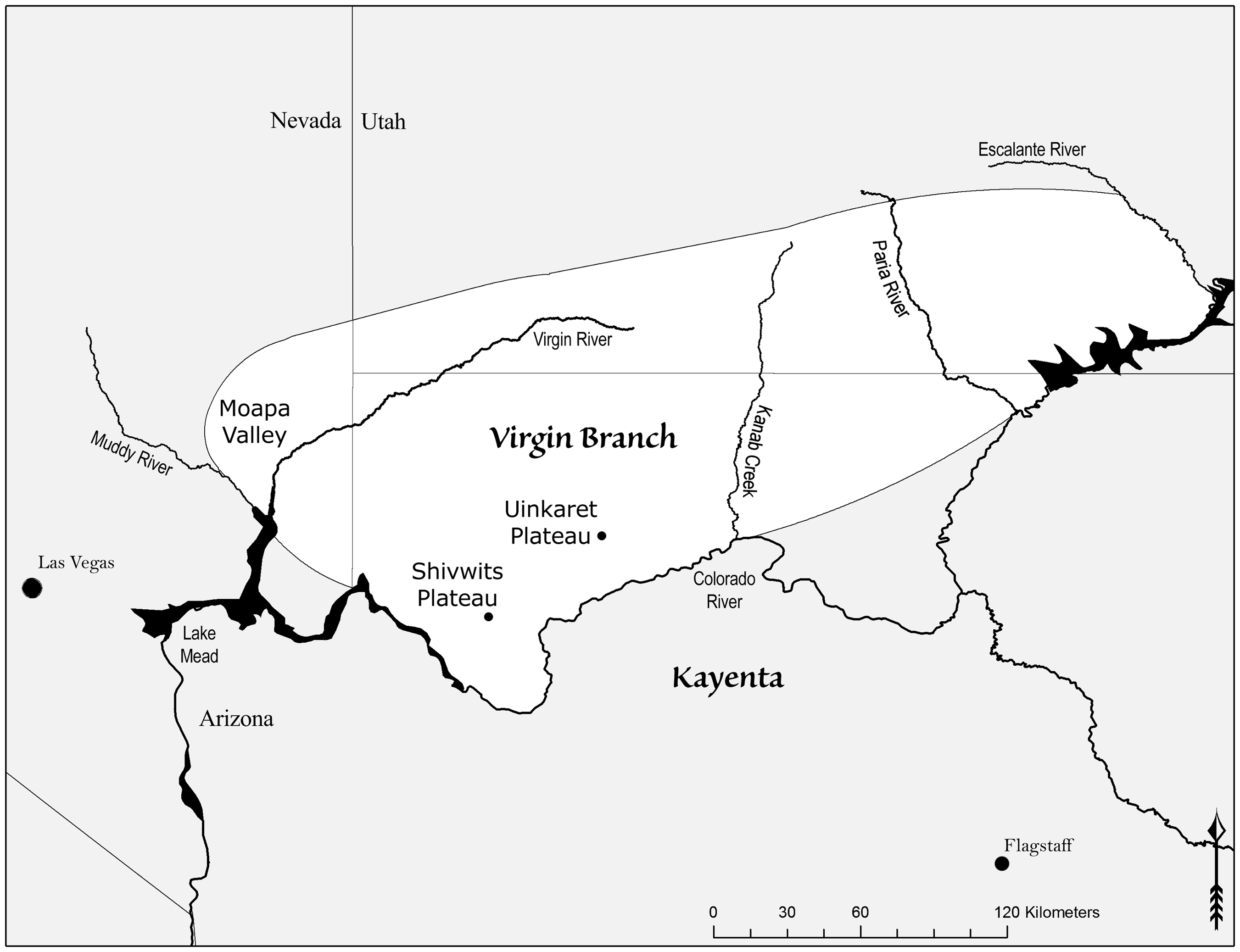
Stylistic studies have had a long, and often contentious, history in archaeology (see Dobres and Hoffman, 1994; Hegmon, 1992 for a review of this topic). Although numerous frameworks exist for studying style, most researchers acknowledge the existence of two general stylistic categories. On one hand, style can reflect an intentional signaling of identity. Referred to as active (Wobst, 1977) or communicative (Carr, 1995) style, this category includes traits designed to transmit information about the identity of the item’s producer or user. In general, the greater the visibility of the attribute, the greater its potential for signaling identity. Thus, active stylistic attributes should be highly visible and should occur on items intended to be viewed by a relatively large number of people. Attributes that are not easily noticed or that occur on objects used in private settings are poor candidates for active style (Carr, 1995).
In contrast, passive (Sackett, 1982, 1986, 1990) or technological (Lemonnier, 1986, 1992) style does not intentionally signal identity but can nonetheless inform on the maker’s cultural or social background. Variations in technological style are unintentional and, often, unconscious. They occur simply because different people have different ways of doing things, and they transmit these ways to others in their learning network. Because technological style is learned through close interaction and is not consciously manipulated to convey any particular information, such styles are not easily copied (Hegmon, 1998). Attributes reflecting technological style are expected to have low visibility.
When applied to ceramics, we might expect active style to be reflected in conspicuous decorations found on vessels intended for use in social gatherings. Thus, painted designs on serving vessels are reasonably interpreted as examples of active style. In contrast, technological styles will be reflected in low visibility attributes of the manufacturing process. Thickness of the pottery coils and how they are joined together are considered examples of technological style.
In the prehistoric North American Southwest, most ceramic stylistic studies have focused on painted pottery designs and, by extension, on the active or communicative role of style. In recent years, however, increasing attention has been paid to the stylistic variation of unpainted pots—in particular, to that of corrugated ceramics (for example, see Dobscheutz, 1999; Hegmon et al., 2000; McCollum, 1992; Neuzil, 2001; Romero, 2014; Ure, 2013). Compared with the highly visible designs seen on painted pottery, variations in corrugation methods are less conspicuous. Because of this, archaeologists have tended to assume that corrugation variations reflect passive, unconscious motor habits rather than any intentional desire to signal identity.
Background
The VBP culture is the westernmost branch of the Ancestral Puebloan culture of the North American Southwest. Like other Ancestral Puebloan groups, the VBP people were sedentary or semi-sedentary farmers whose material culture included pottery used primarily for cooking, storing and serving activities. Their territory encompassed an upland area situated on the westernmost edge of the Colorado Plateau (i.e., in the vicinity of Mt. Dellenbaugh and Mt. Trumbull, see Figure 1) and a lowland area concentrated along the Virgin River and in the Moapa Valley. Artifact collections of VBP sites are dominated by three kinds of pottery: Shivwits Wares, Moapa Wares, and Tusayan Wares. 1 Evidence suggests that these three ceramic kinds were produced in different areas of the VBP region, but that all three were distributed widely within the area.
Shivwits Ware is a sherd-tempered, dark-firing pottery made from iron-rich clays derived from weathering basalt. Compositional and distributional data suggest that it was produced on the southern end of the Shivwits Plateau, in the vicinity of Mt. Dellenbaugh (Harry et al., 2013; Lyneis, 1992). The overwhelming majority of corrugated Shivwits Ware vessels are in the form of large, wide-mouthed jars. Moapa Wares, containing both gray and white varieties, are light-firing ceramics produced with iron-poor clays and tempered with crushed olivine-rich xenoliths. The composition of the xenolith tempers (Allison, 2000: 33–34; Lyneis, 1992, 2008) and the ceramic pastes (Sakai, 2014) suggests that they were produced near Mt. Trumbull on the Uinkaret Plateau. Tusayan Wares are sand-tempered, light-firing ceramics likely produced at several locations in the lowland region (Lyneis, 1992). Chemical analyses suggest that at least some of these ceramics were produced in the Moapa Valley (Ferguson, 2016), though other production locales are likely. Moapa and Tusayan Wares corrugated vessels occur in a variety of forms, including large wide-mouthed jars, smaller jars with narrower orifices, and a small proportion of bowls.
Shivwits Wares were produced in both plain and corrugated styles, while Moapa and Tusayan Wares could be plain, decorated, or corrugated. In the VBP region, corrugated ceramics first appear in the middle Pueblo II period, or at about AD 1050, when the distribution network between the upland region and the Moapa Valley was at its peak. However, unlike in other Ancestral Puebloan areas where corrugation first appears as neck banding, in the VBP region, the earliest occurrences are as full-body corrugation. Although corrugated ceramics initially comprise only a small proportion of pottery assemblages, their frequencies steadily increase over time. Thus, in the VBP region, the proportion of corrugated ceramics can be used to temporally order sites. Sites having no corrugated pottery are dated to the early Pueblo II period or earlier; those having between 1% and 10% are dated to the middle Pueblo II period; those with between 11% and 39% are dated to the late Pueblo II period; and those having more than 40% are assigned to the early Pueblo III period, the latest period of the VBP sequence.
Compared with other regions of the North American Southwest, relatively little archaeological research has been conducted in the VBP area. Of that which has occurred, the majority has been in the Moapa Valley region of southern Nevada. Analyses of archaeological collections recovered from that area demonstrate that a thriving distribution network connected the upland and lowland VBP regions from at least the Basketmaker III or early Pueblo I periods (i.e., from AD 500 to 700) until the late Pueblo II period (i.e., until about AD 1100). This distribution network reached its peak at about AD 1050, when as many as half of the ceramics discarded in the Moapa Valley were either Moapa Ware or Shivwits Ware vessels from the upland region. Shortly afterwards, the number of imported vessels drastically declined, so that by about AD 1125 few or no upland-produced ceramics were entering the region (Allison, 2000; Harry et al., 2013; Lyneis, 1992).
Ceramic distribution patterns are not as well understood for VBP regions outside the Moapa Valley. Jim Allison’s (2000) dissertation research, however, indicates that the highest proportions of Shivwits and Moapa Ware ceramics flowed into the Moapa Valley, with proportionally fewer amounts entering other lowland regions. In the upland areas, unpublished research suggests that Shivwits Ware and Moapa Ware ceramics were regularly distributed between residents of the Mt. Dellenbaugh and Mt. Trumbull regions, and that residents of both areas also obtained Tusayan Ware vessels from the lowlands. Unlike in the Moapa Valley, where the flow of external ceramics ended abruptly in the late Pueblo II period, in the upland regions nonlocal ceramics continued to enter the region throughout the occupational sequence (i.e., through the early Pueblo III period).
In summary, the evidence suggests that Moapa Ware and Shivwits Ware vessels, both produced in the uplands, flowed into the Moapa Valley during the middle Pueblo II period but declined shortly thereafter. In the upland region, Tusayan Wares (produced either in the Moapa Valley or elsewhere in the lowlands) were obtained from at least the middle Pueblo II to the early Pueblo III periods. At the same time, upland residents distributed their ceramics with one another, so that Shivwits Ware vessels (produced near Mt. Dellenbaugh) and Moapa Ware vessels (produced near the Mt. Trumbull) are found at most or all habitation sites in the upland region.
Methods and data
Ceramics analyzed, by provenience, ware and time period.
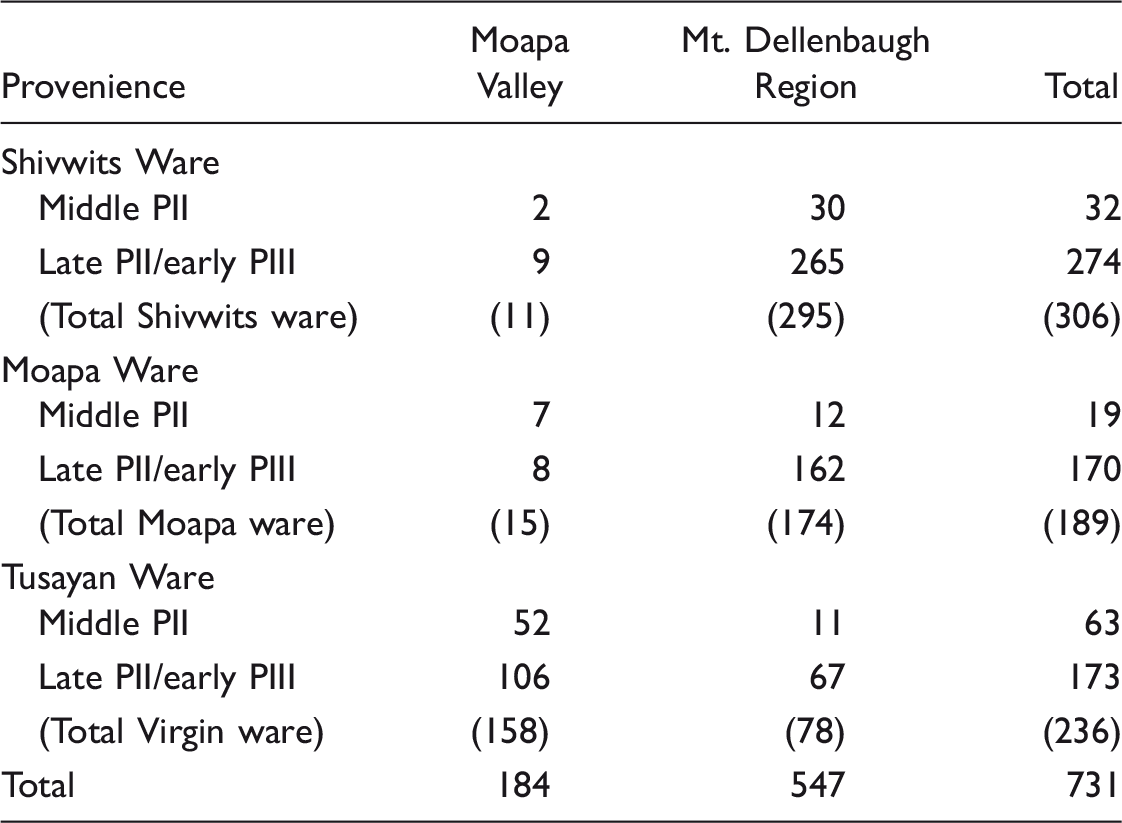
Ceramics included in the analyses derive from 7 sites in the Mt. Dellenbaugh region and 28 sites in the Moapa Valley, and include Shivwits, Moapa, and Tusayan Wares. To avoid inter-observer bias, all analyses were conducted by the first author. Whenever possible, ceramics were selected from different proveniences to ensure that no two sherds came from the same vessel. In instances when ceramics were selected from the same or from nearby proveniences, their pastes and other attributes were compared to confirm that they represented different vessels.
Of the 731 sherds analyzed, only 12 were identified as coming from bowls. The remainder of the sherds were either identified as jar sherds or unidentified body sherds that most likely came from jars. 4 Four attributes related to corrugation style were recorded for each sherd: (a) coil height, (b) coil width, (c) indentation width, and (d) corrugation style.
Coil height, coil width, and indentation width were measured to the nearest 1/10th of a millimeter with the aid of a pair of digital calipers (Figure 2). Coil height refers to the distance between two coil junctures and was recorded by taking the average height of three typical coils. Coil width refers to the thickness of the coil remaining after finishing the surface; this measurement is equivalent to vessel wall thickness. As with coil height, the coil width measurement represents the average of three measurements taken of the wall thickness. Indentation width was recorded only for corrugated indented styles and was measured along the widest part of the indentation.
Illustration showing methods used to measure of indentation width (top left), coil height (top right), and coil width (bottom).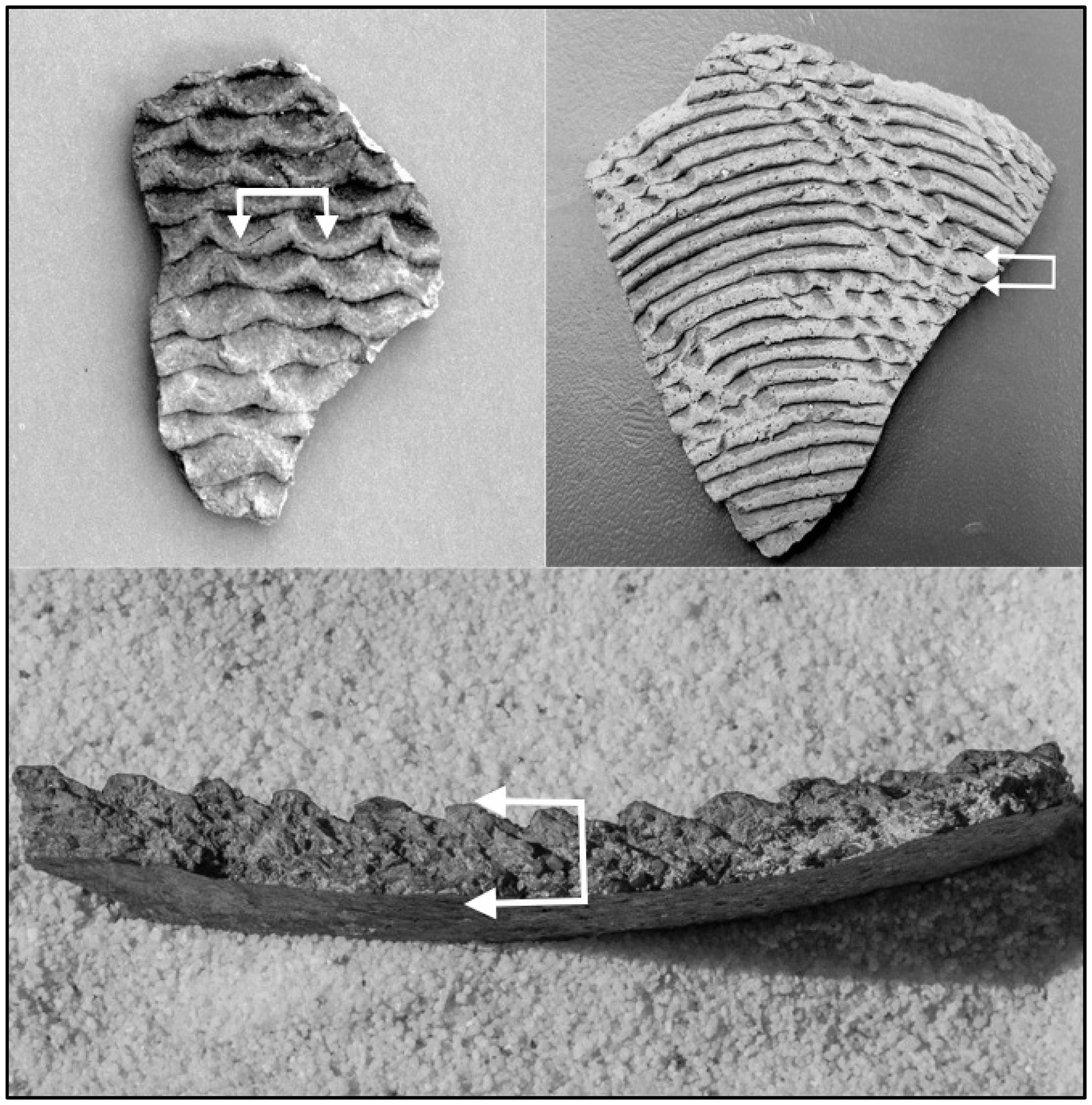
Corrugation style categories were adapted from Hays-Gilpin (1998: 122–124). Initially, all sherds were assigned to 1 of 13 corrugation styles. These included (a) clapboard corrugation (unindented), characterized by flattened overlapping coils; (b) obliterated corrugation (unindented), in which the coils have been smoothed over almost to the point of their eradication; (c) smeared corrugation (unindented), in which the coils have been lightly smoothed over; and (d) fillet or plain corrugation (unindented), which consist of flat or rounded coils that do not overlap. These styles were sometimes indented after being formed, in which case the indentations were offset from one coil to the next. The indented variations form the next eight styles, which are (e) clapboard indented, (f) obliterated indented, (g) smeared indented, and (h) fillet/plain indented. Examples of these styles are shown in Figure 3.
Corrugation styles. Top row, from left to right: fillet, fillet indented, clapboard, and clapboard indented. Bottom row, from left to right: obliterated, obliterated indented, smeared, and smeared indented.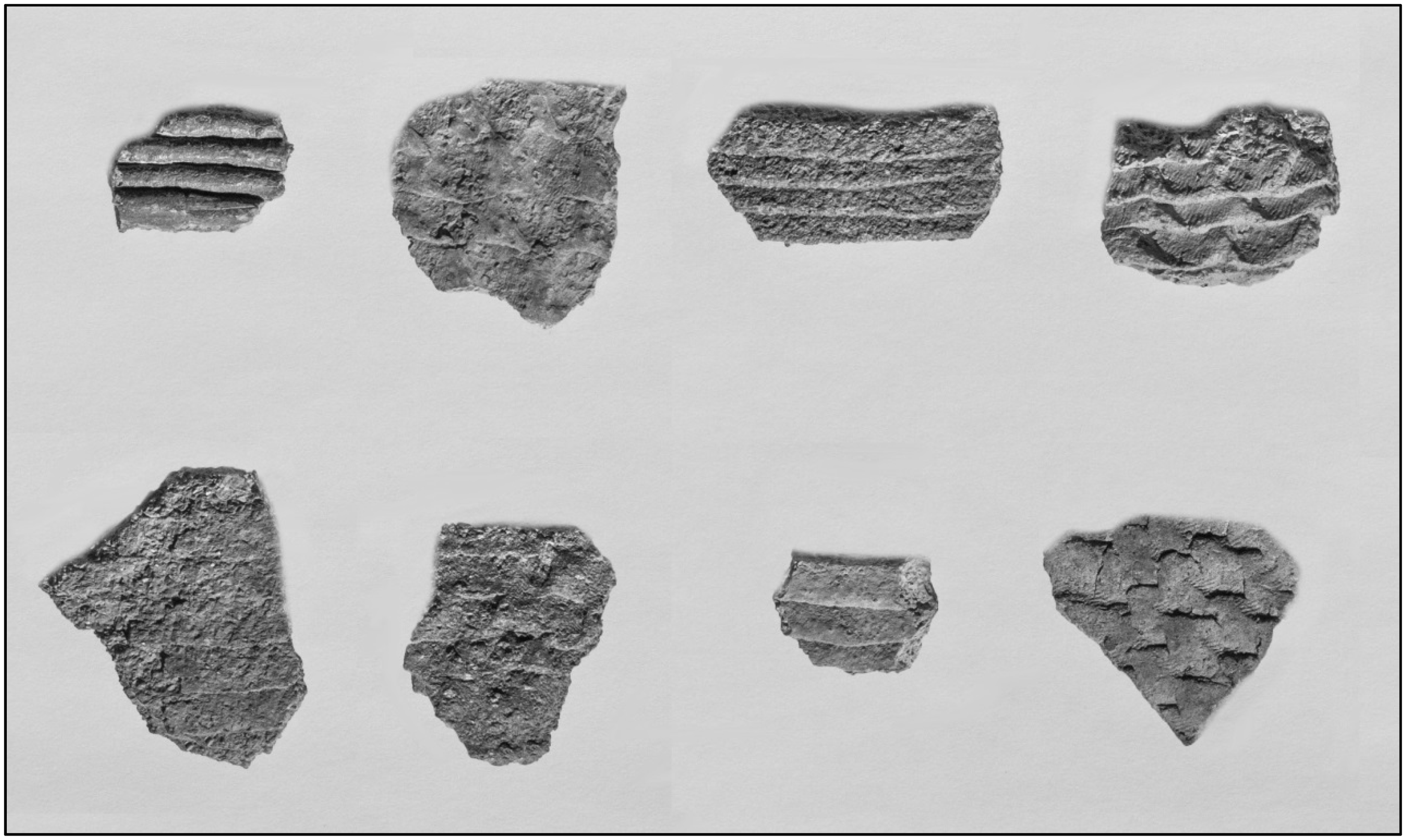
The final five styles were (i) zonal or patterned corrugated, in which the coils consist of differing corrugation styles to create a banded or alternating pattern; (j) exuberant, in which very deep and well defined indentations are present; (k) festoon, in which indentations are present that are aligned rather than offset, to create an undulating effect; (l) tooled, in which a stick or other item is used to draw patterns into the wet clay; and (m) punctate, in which a fingernail, stick or tool is used to punch shapes (such as dots or crescents) into the wet clay. Examples of these styles are shown in Figure 4.
Corrugation styles, from left to right: zonal/patterned, exuberant, festoon, punctate, and tooled.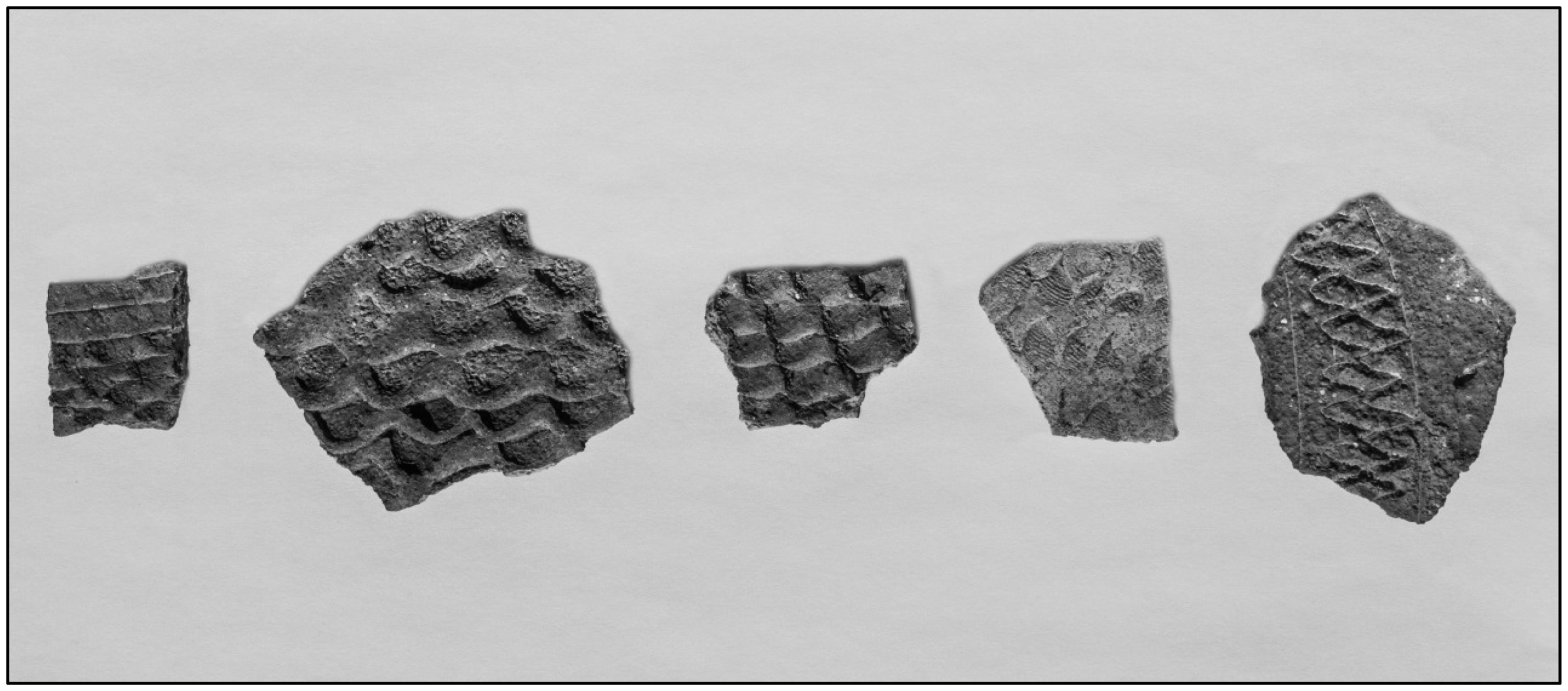
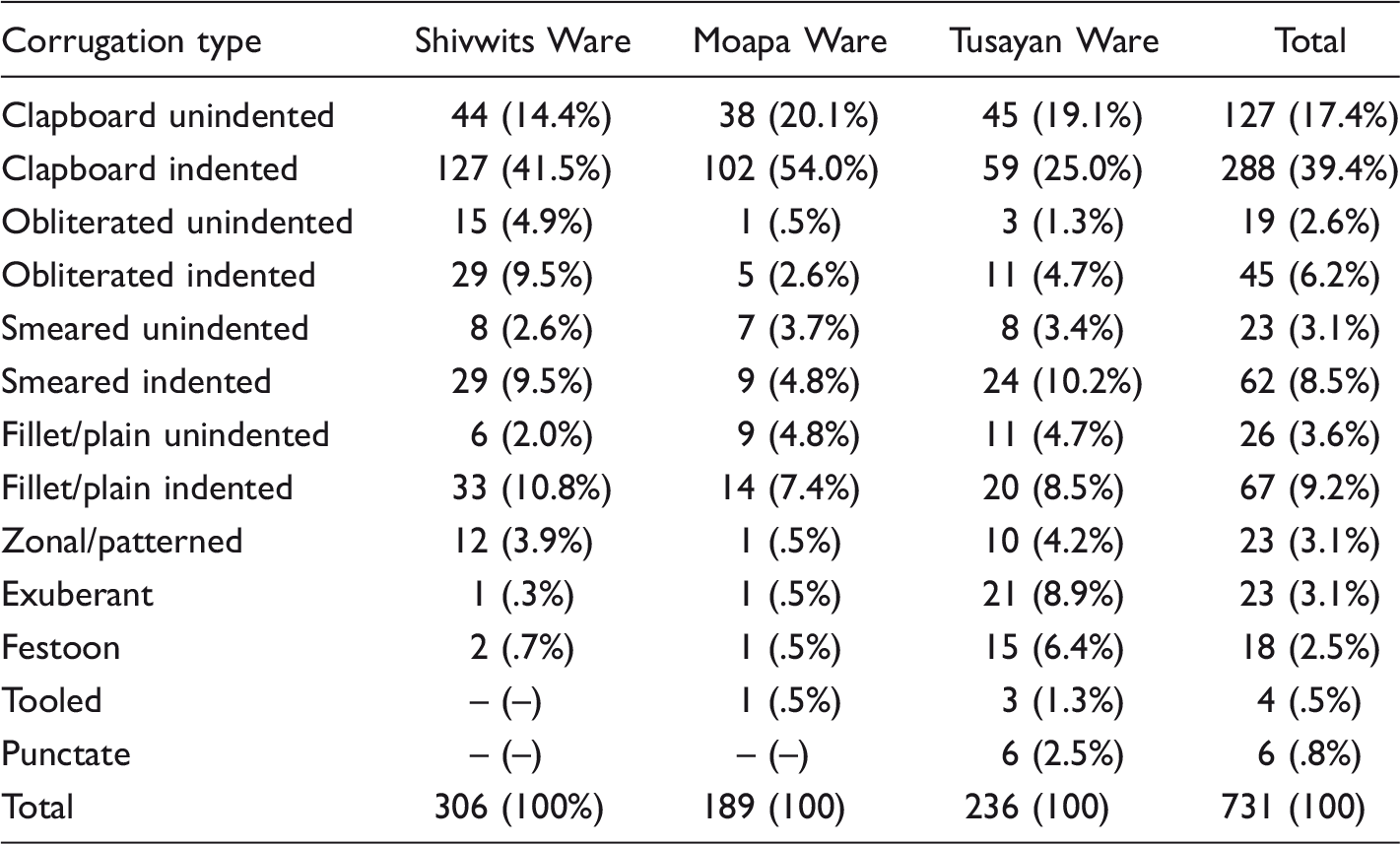
All corrugation types by ware.
Wares recovered in both the Moapa Valley Mt. Dellenbaugh region by corrugation style and time period.

Of our recorded corrugation attributes, coil height, coil width, and indentation width likely reflect technological styles. That is, these attributes are unlikely to have been intentionally selected by the potters to convey information about their social and individual identities. The corrugation styles, in contrast, may have actively signaled identity, though it is probable that they would have imparted information more about the potter’s individual artistic preferences than about their group membership. The zonal/patterned styles and the tooled and incised ones, however, are more conspicuous than the other corrugation styles and may therefore have been exceptions to this conclusion.
Variability between ceramic wares
Data comparing the results of the quantitative analyses (i.e., the measurements of coil height, coil width, and indentation width) are presented in Table 4 and graphically illustrated in Figure 5. The data indicate that there exist no statistically significant differences between the three wares in terms of their coil widths (i.e., vessel wall thicknesses). However, differences do exist in the other two attributes. The Shivwits Ware ceramics exhibit greater coil heights than do the Moapa and Tusayan Wares, indicating that they were made from thicker coils. In terms of indentation width, it is the Tusayan Ware ceramics that differ.
Error bars showing 99% confidence intervals for the average coil height, coil width, and indentation width for all Shivwits ware, Moapa ware, and Tusayan Ware ceramics. Ware by coil height, coil width, and indentation width.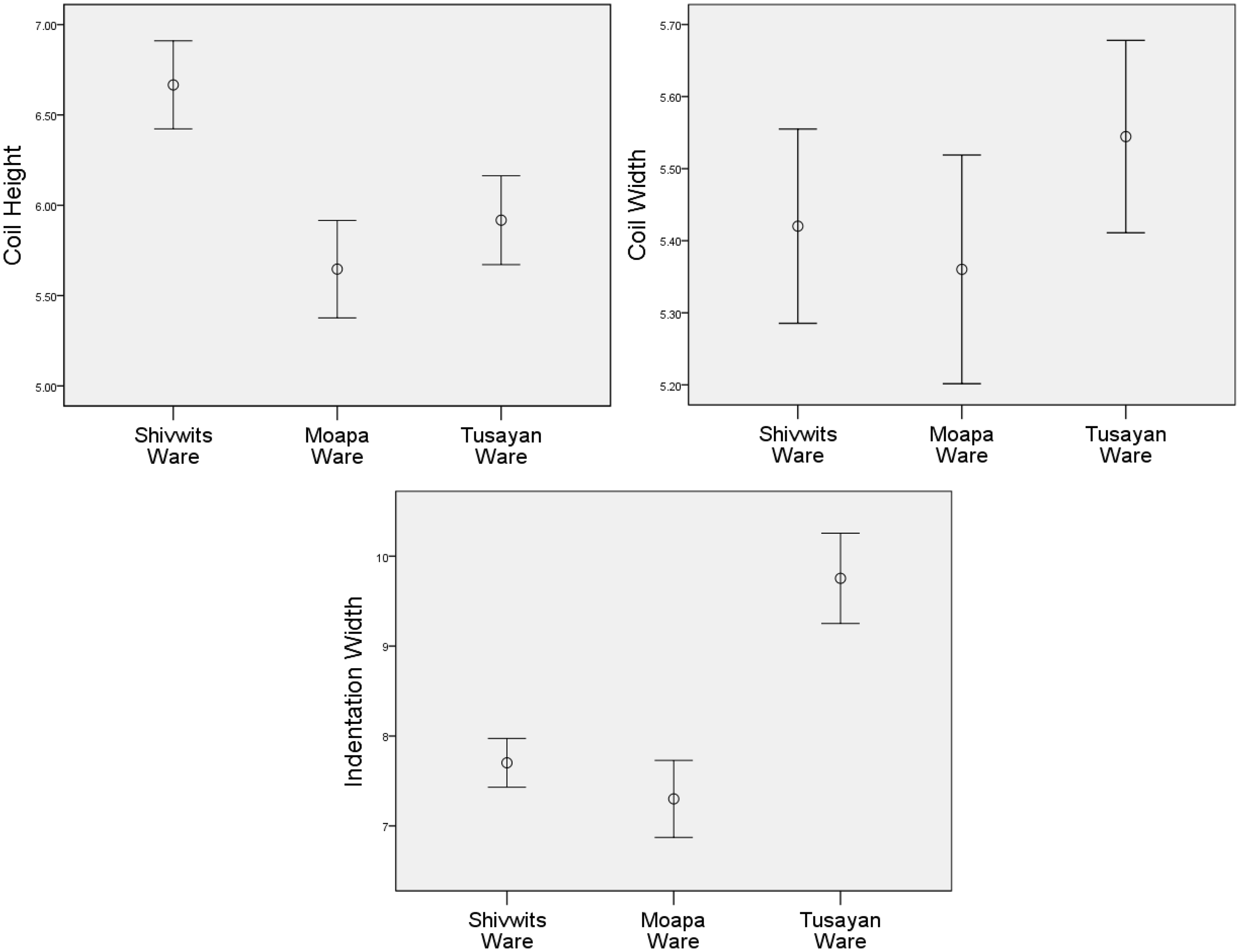
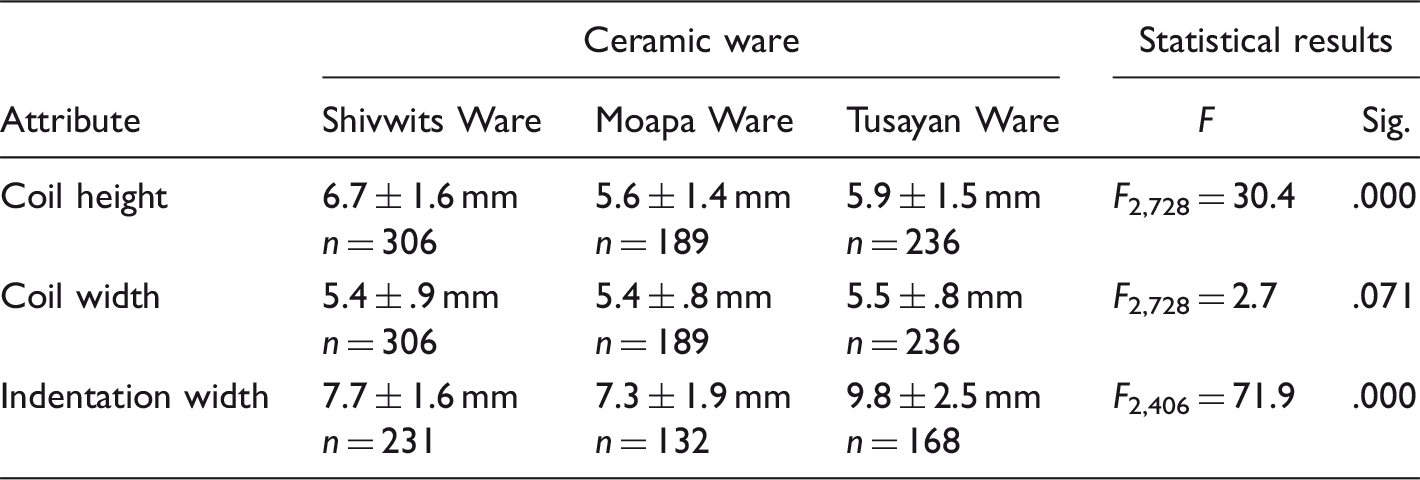
Figure 6 (derived from data presented in Table 2) illustrates the proportion of corrugation styles represented in each ware. This graph illustrates that clapboard, obliterated, smeared, and fillet/plain compose more than 95% of the Shivwits and Moapa ware collections. They also compose the majority of the Tusayan Wares, but this ware is represented as well by significant proportions of zonal/patterned, exuberant/festoon, and tooled/punctate styles; styles that occur only rarely in the other two wares. In particular, the Tusayan Wares are represented by significant proportions of exuberant/festoon (16.3%) and tooled/punctate (3.8%) styles, which occur in less than 1% of the ceramics analyzed from the other two wares.
Corrugation type for Shivwits, Moapa, and Tusayan Ware ceramics.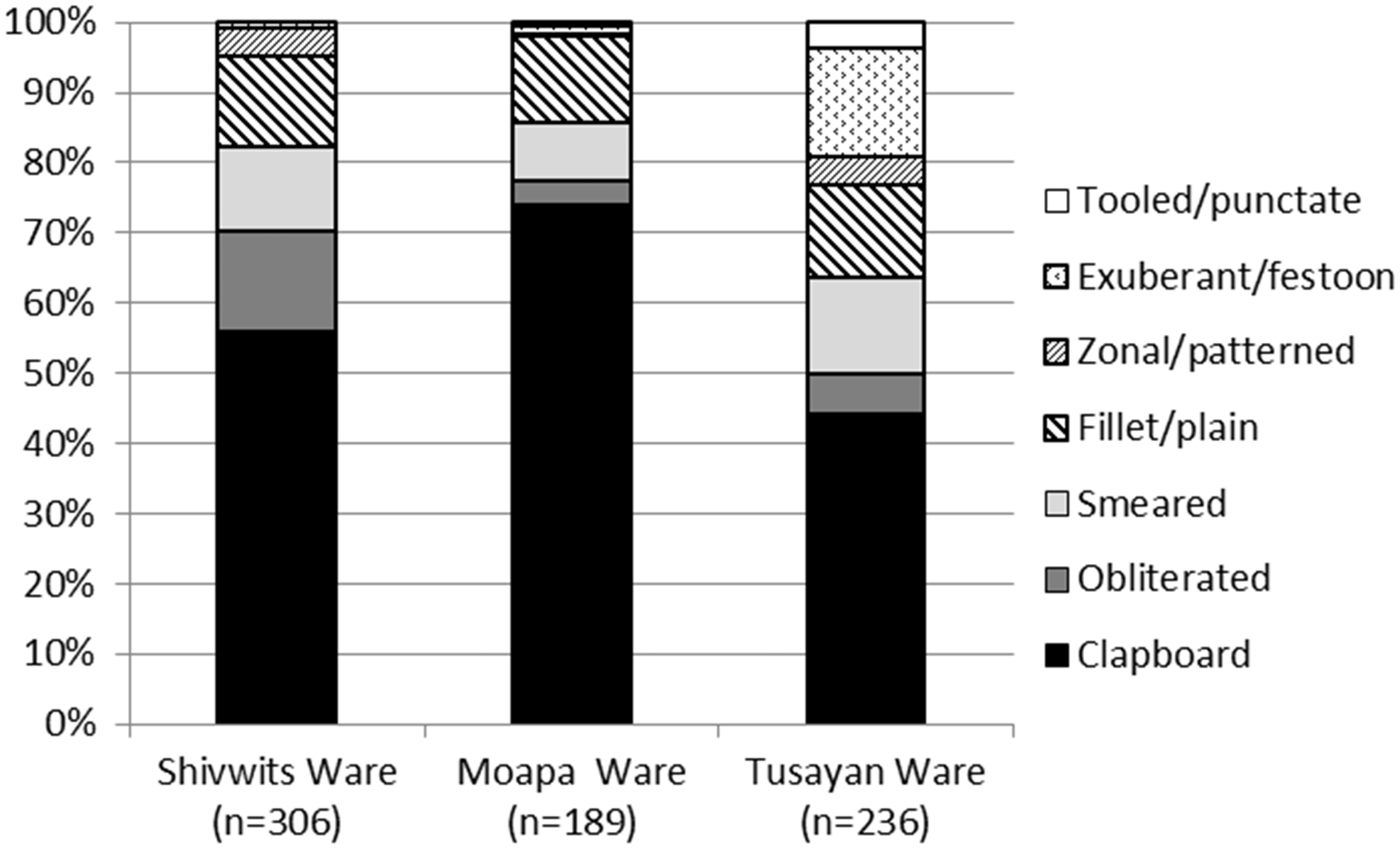
How are we to interpret these patterns? We suggest that the relatively substantial differences in indentation width and corrugation styles seen between the Tusayan Wares and the other two wares indicates that the lowland potters participated in a different community of practice than did the upland potters. That is, it appears that the potters residing on the Uinkaret and Shivwits plateaus interacted on a more regular basis with one another than they did with the lowland potters, resulting in a greater sharing of ideas about how to make and form the vessels. The Shivwits Ware potters, however, did elect to use thicker coils when making their containers compared with the other potters. Although this may reflect different learning frameworks, we believe it more likely reflects the fact that the Shivwits Ware vessels were disproportionately large compared with those of the other wares. In this instance, the use of larger coils may reflect an attempt to reduce the time spent on the construction of these vessels.
Regional patterns
Not surprisingly, given the differences in corrugation styles observed between the three wares, patterned differences are apparent between the two regions examined in this study (Figure 7). In the collections recovered from the Mt. Dellenbaugh area, 88% of the sherds exhibited either clapboard, obliterated, smeared, or fillet/plain styles, with the remainder being zonal/patterned (Table 6). No exuberant/festoon or tooled/punctate ceramics were identified from the collections of that area. In contrast, in the Moapa Valley exuberant/festoon is the second most common corrugation style, representing 22% of the analyzed ceramics from that area. Tooled/punctate ceramics compose more than 5% of the collection.
Corrugation type by region (all wares combined).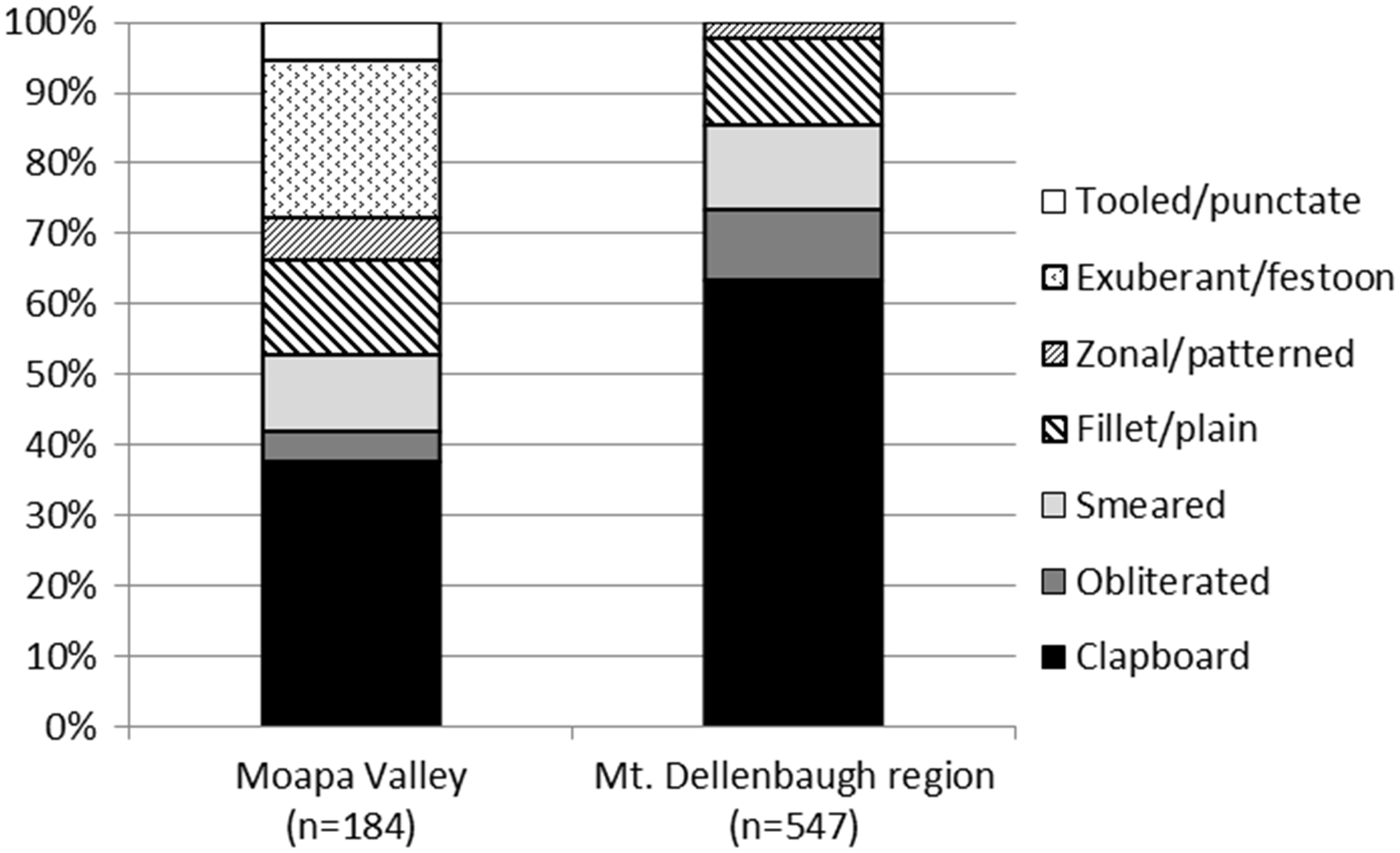
These differences become even more intriguing when broken down by ceramic ware. For example, while Tusayan Wares are produced in both exuberant/festoon and tooled/punctate styles, none were distributed to the Mt. Dellenbaugh region (Figure 8). Even more interesting is what happens with the Shivwits and Moapa Wares (Figures 9 and 10). Only three of the analyzed Shivwits Wares were exuberant/festoon; however, all three were recovered from the Moapa Valley. Further, these three sherds represent more than a quarter of the small number (n = 11) of Shivwits Ware sherds analyzed from that area. Despite the much larger sample (n = 295) of Shivwits Wares analyzed from the Mt. Dellenbaugh region, none of those were exuberant or festoon. A similar pattern characterizes the Moapa Wares, for which all of the small number of exuberant/festoon (n = 2) and tooled/punctuate (n = 1) sherds came from the Moapa Valley.
Corrugation type of Tusayan Ware, by region. Corrugation type of Shivwits Ware ceramics, by region. Corrugation type of Moapa Ware ceramics, by region.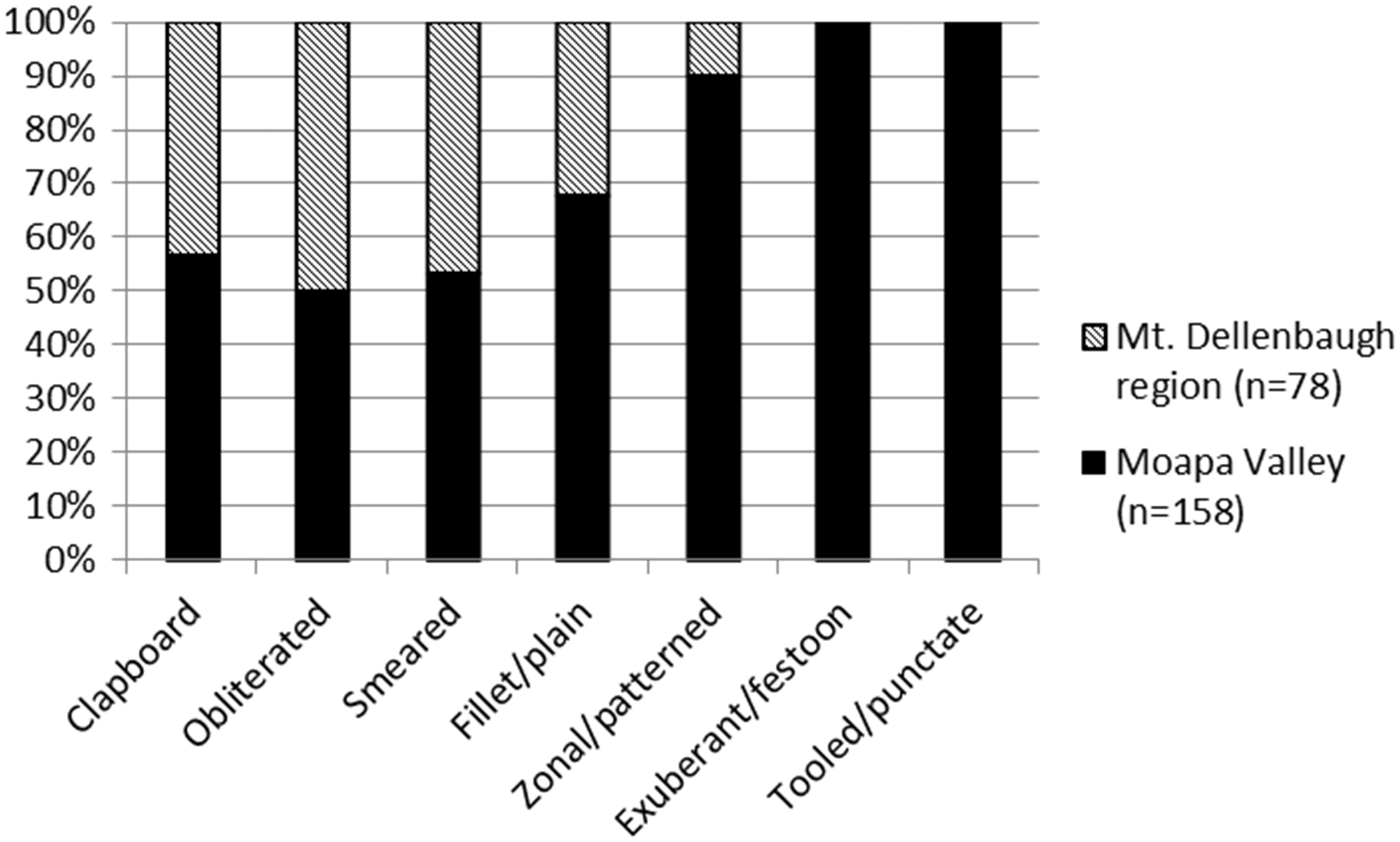
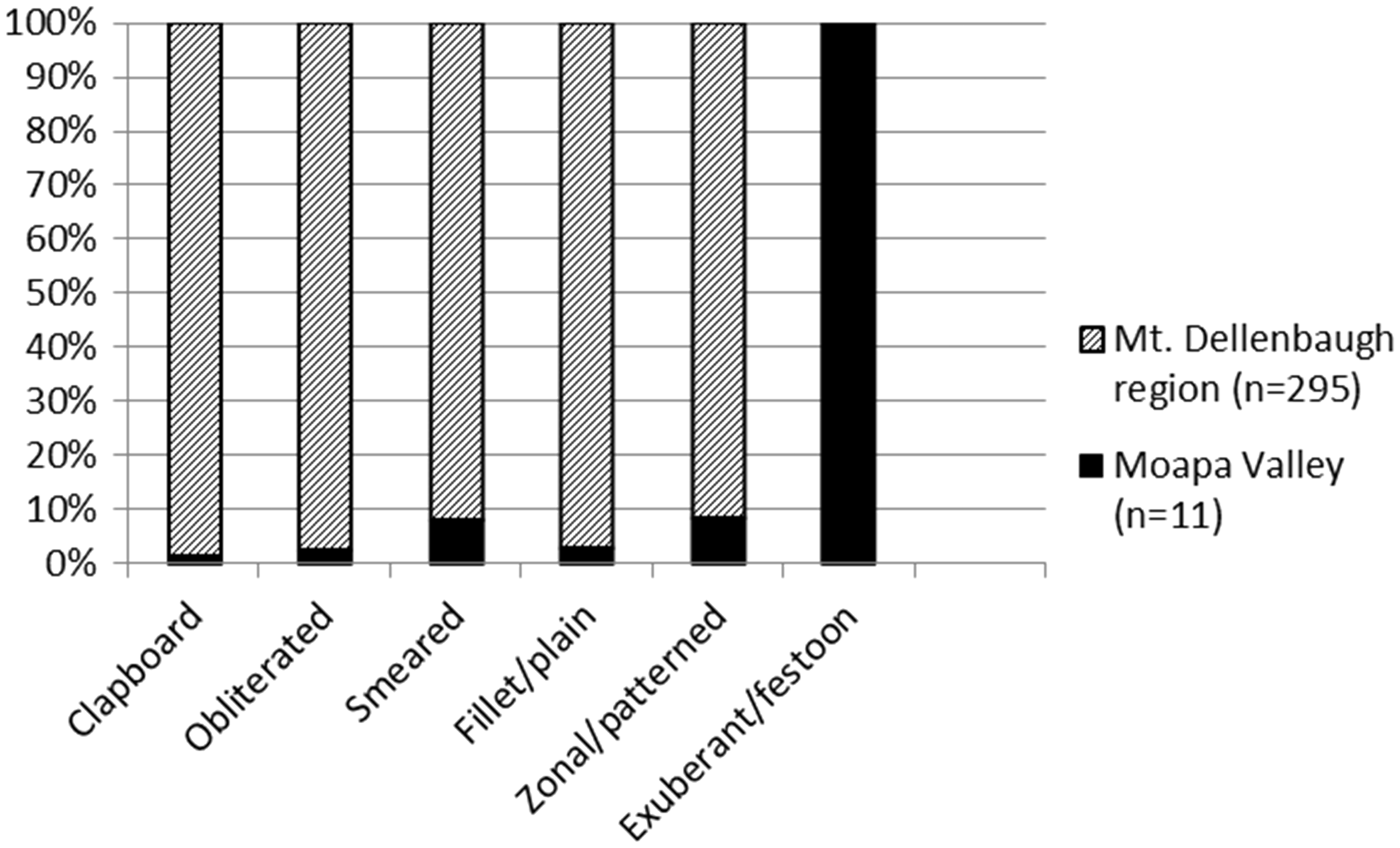
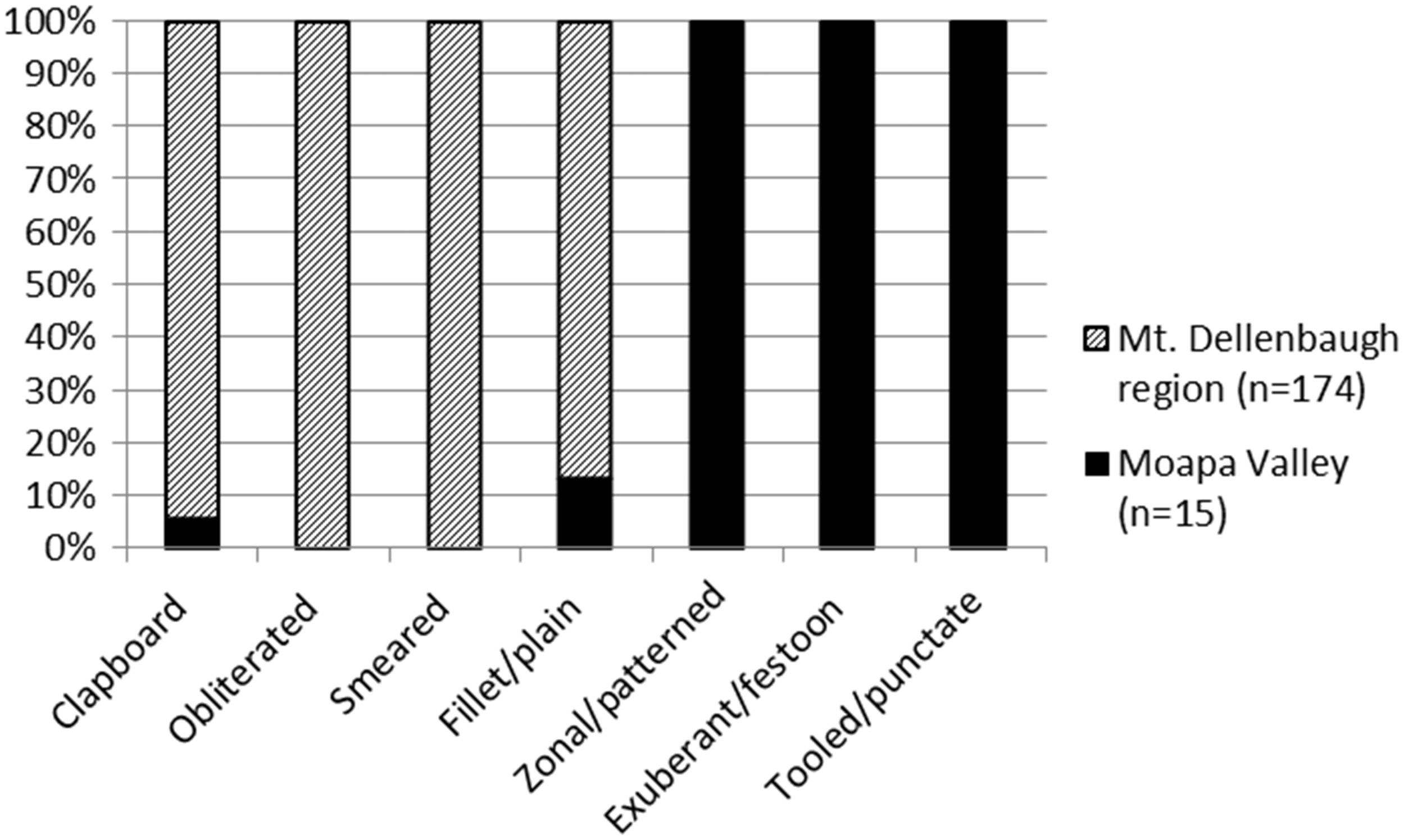
Table 5 presents information about coil height, coil width, and indentation width for the three wares by region. Because of the small sample of Shivwits and Moapa Wares analyzed from the Moapa Valley, we are unable to evaluate whether regional patterns observed for these wares are statistically significant. However, the data indicate that regional differences do exist in the coil and indentation widths of the Tusayan Wares (Figure 11). Specifically, the Tusayan Wares analyzed in the Mt. Dellenbaugh region are thicker than those analyzed in the Moapa Valley, and their indentation widths are thinner.
Error bars showing 99% confidence intervals for the average coil height, coil width, and indentation width for Tusayan Ware ceramics, by region. (Note: Shivwits and Moapa Ware sherds omitted due to small samples sizes.). Ware by coil height, coil width, and indentation width for each region. Ware by corrugation style, for each region.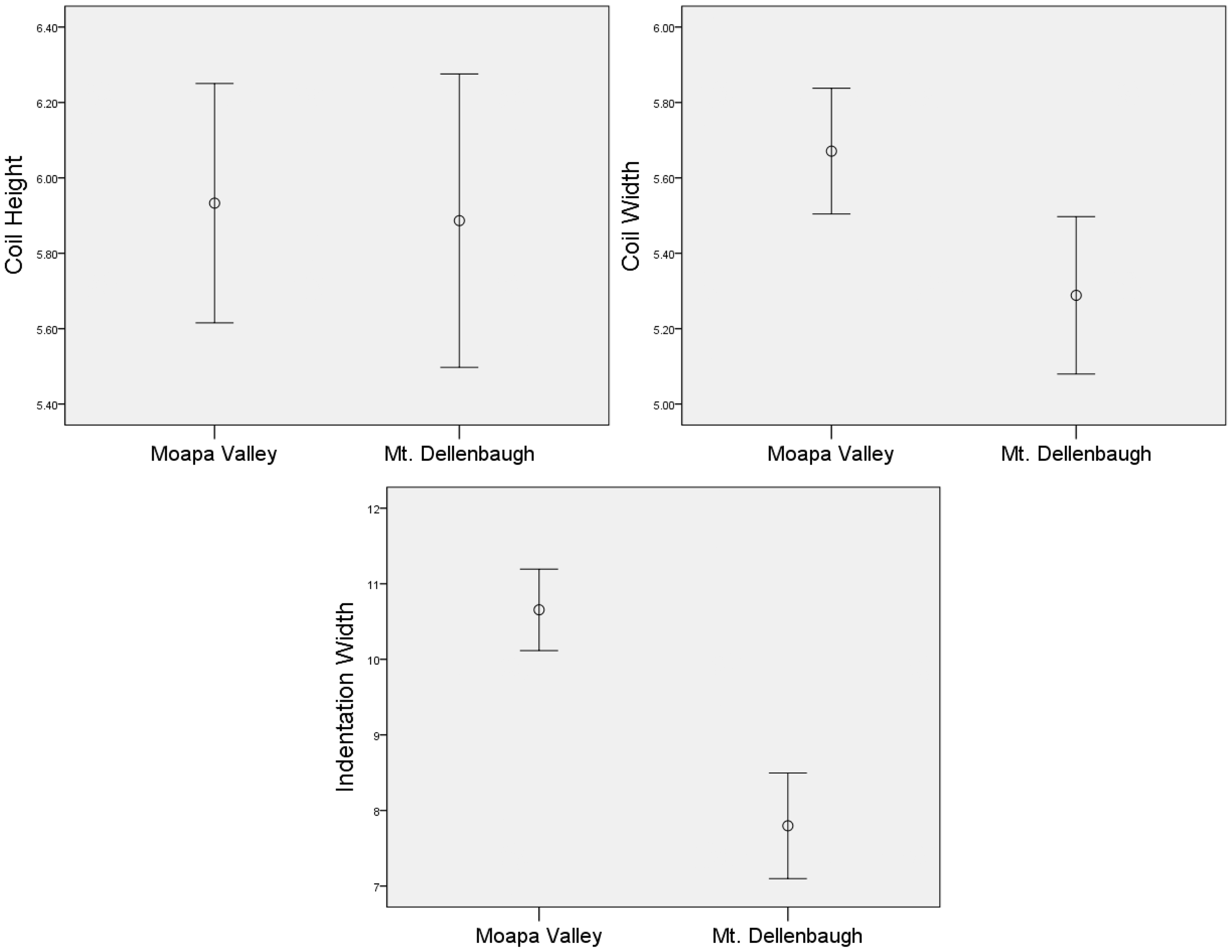
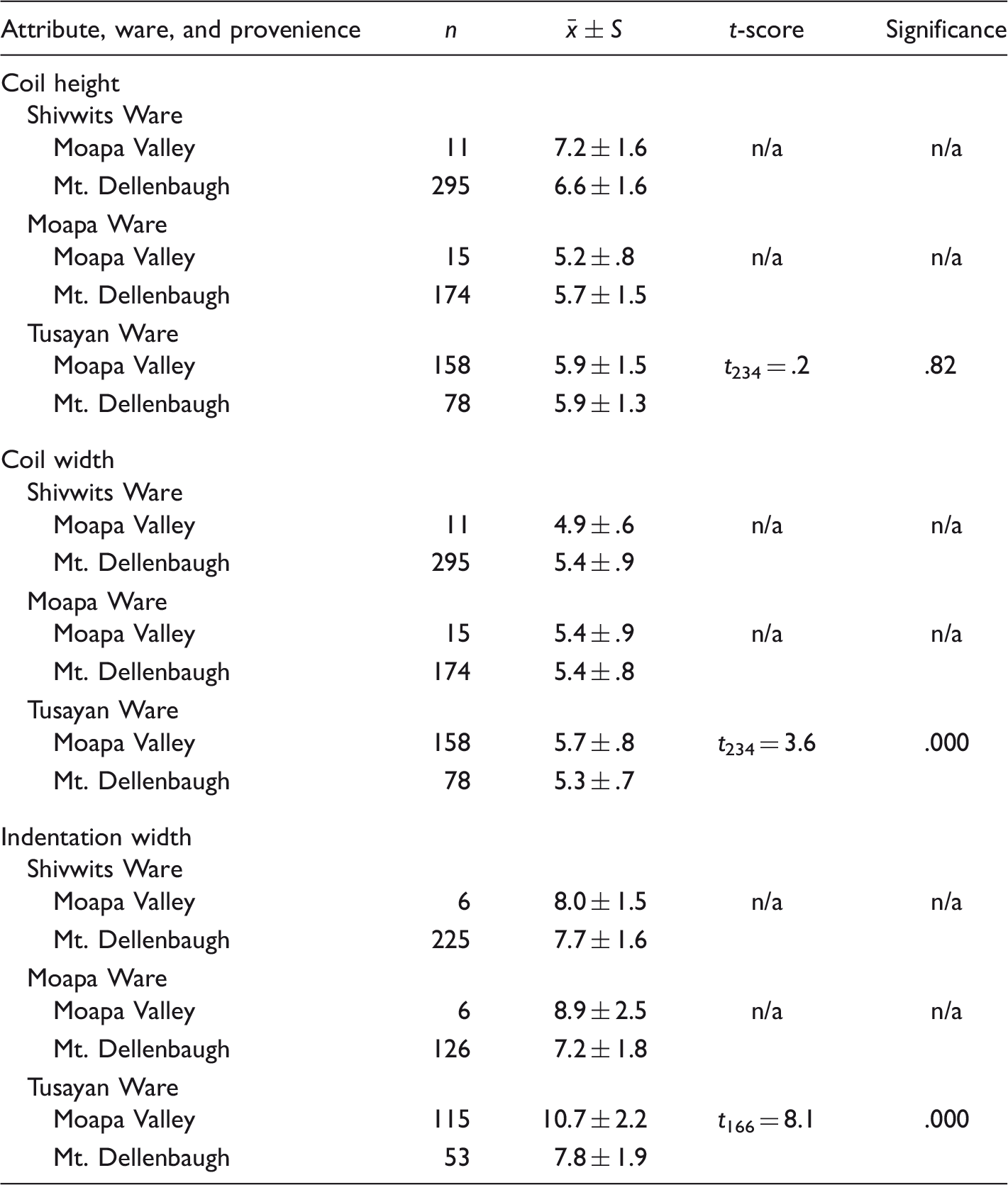
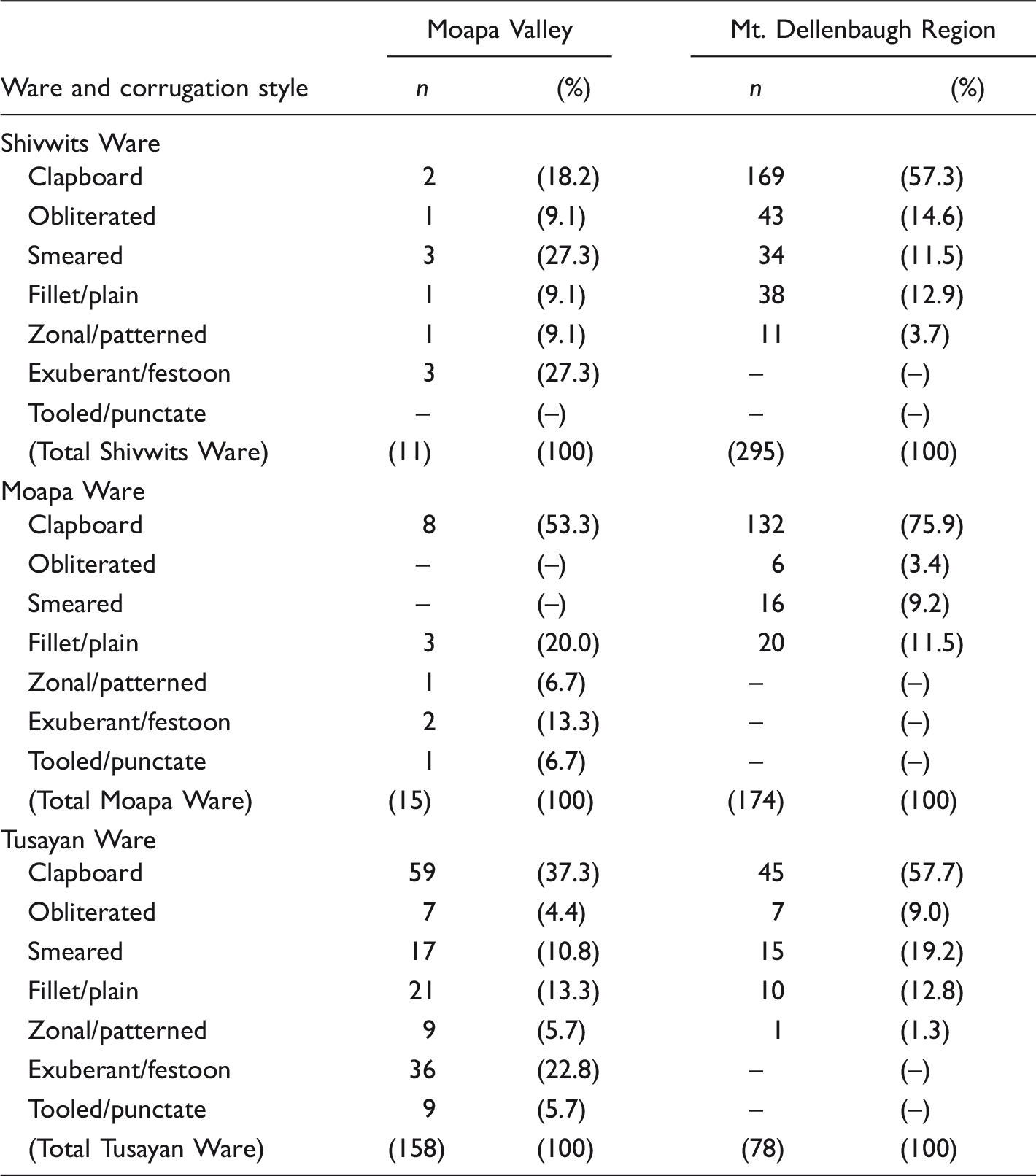
Several implications are suggested by these data. First, the differing indentation widths of the Tusayan Wares raises the possibility that the Moapa Valley was not the source of the Tusayan Wares recovered from the Mt. Dellenbaugh region, an interpretation supported by the fact that Tusayan Wares recovered from the Mt. Dellenbaugh area were thinner than those recovered from the Moapa Valley. (Alternatively, the thinner pots in the uplands might indicate that pots produced for nonlocal distribution were intentionally made thinner, perhaps either to reduce their transport weight or because consumers preferred thinner vessels.) Second, regional variations observed in corrugation styles suggest that the Moapa Valley residents exhibited a greater preference for zonal/patterned, exuberant/festoon, and tooled/punctate styles than did the residents of the Mt. Dellenbaugh area. This preference is reflected in the higher proportion of Tusayan Wares made in those styles. However, it is also reflected in the Shivwits and Moapa Wares made in these styles that were recovered in the Moapa Valley. The regional patterning suggests that potters may have chosen their corrugation styles with their consumers in mind. Thus, although Tusayan Ware potters regularly made vessels in exuberant/festoon and tooled/punctate styles, they do not appear to have distributed those styles to the Mt. Dellenbaugh region. Similarly, although the producers of the Moapa Ware and Shivwits Ware vessels appear to have only rarely used the exuberant/festoon and tooled/punctate styles, when they did make vessels in these styles they appear to have done so with the intention of trading them to lowland residents, where those styles were in greater demand.
Conclusions
Most ceramic stylistic studies have focused on painted pottery and active stylistic signaling. The data presented in this article, however, suggest that the study of corrugation styles and techniques can yield important insights into the learning communities of prehistoric potters and into the nature of their ceramic production systems. Although it is commonly assumed that corrugated vessels are not widely distributed, in the VBP region these wares did regularly move between different settlements. Furthermore, the patterning of corrugation styles between the regions suggests that potters may have had their consumers in mind when choosing what corrugation style to use on a vessel. Rather than merely reflecting their learning background, such styles appear to have at least sometimes been intentionally selected to match the stylistic preferences of the consumer.
Footnotes
Declaration of Conflicting Interests
The author(s) declared no potential conflicts of interest with respect to the research, authorship, and/or publication of this article.
Funding
The author(s) received no financial support for the research, authorship, and/or publication of this article.