







Abstract

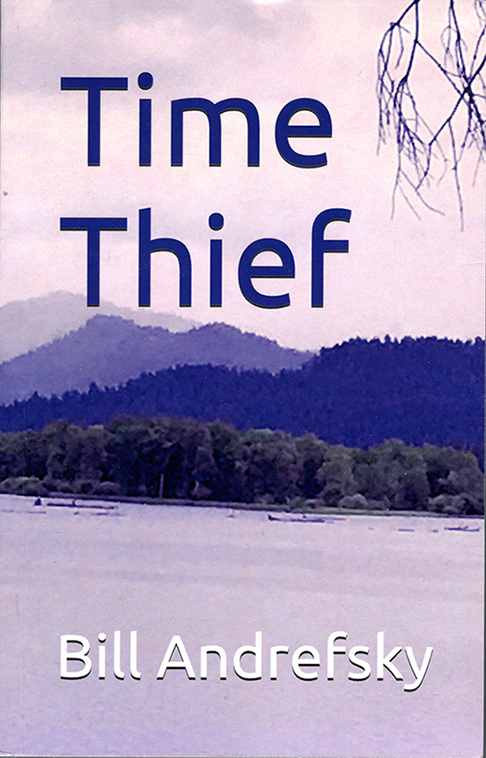 This book comes at a very good time. The archaeological interests generated by the Indiana Jones movie franchise have waned. I have not read the breathless media accounts of major excavations in the New World for many years. Koster and Meadowcroft are old news. Something needed to be written in a non-technical, interesting account of a serious archaeological excavation, analysis, and interpretation with relevance to the modern human condition. Andrefsky has done this.
How many times have you watched a news broadcast on a topic that you know very well, but obviously the on-air personality doesn't? The technical terms are wrong. The narration does not follow the action. When I talk to students in any discipline, I refer to their training as the “duck test.” To join the profession, you need to talk like a duck, walk like a duck, eat like a duck, swim like a duck, and think like a duck. Substitute your job title for “duck.” Once you can do this, you will fit in and be one of the group. Within the first five minutes of reading this book, one will realize that Andrefsky has lived the archaeological life he is discussing. Selecting the paradigm of a novel rather than an academic one allows him to build suspense and create an atmosphere of good vs. evil. The allegorical significance of the characters’ roles and interactions may well be missed by non-archaeologists.
Dr. Samantha Riley is the archaeologist who coordinated the original excavation and analysis of human remains. Included with the artifacts was a complete, Pleistocene era, male skeleton who was apparently 138-years old at death. When word of this find and its analysis spreads, the network of intrigue begins. Andrefsky artfully mixes Russian oligarchs, modern Soviet-era style gangsters, international pharmaceutical companies, US government agencies, kidnapping, Native American tribes, academic archaeologists, geology, taphonomy, military veterans, DNA, isotopic analysis, osteons, Bryozoans, a possible cancer cure, wild food enthusiasts, and flyfishing. Everyone wants to get involved in the process to advance their own personal and professional agendas. I am not going to spoil the carefully crafted web of intrigue, death, and personal interactions by revealing specific events. Instead, I will focus on the message being sent to various individuals. All books have an audience, and this one has several.
The first audience are the fans of John Grisham and Tom Clancy. They want a highly detailed account of professionals facing life and death situations; the intricacies of courtroom drama and criminal investigations; and military and intelligence solutions to prevent world wars. The specific pertinent issues regarding the finds are resolved by the end of the book, but the existential threats remain for another day and with the next significant finds.
The second audience is the lay person interested in the field of archaeology, but who lacks the formal training. Some of these people assume that all archaeologists are digging up dinosaurs or want to work in the Egyptian pyramids. Once they learn that archaeology exists everywhere, their experience might develop into walking fields looking for arrowheads or a fascination with museum exhibits. This book illustrates some of processes archaeologists use in their interpretations. This is not meant to be an exhaustive listing of possible ways specialists in other fields can contribute to the science. The lay person has no idea how the detailed knowledge they have of their own field might contribute to a particular archaeological project or research question. This point is not made stridently and could be missed easily.
The third audience is the academic archaeological student who wants to make this a career. The careful reader will realize that even a doctorate in anthropology does not guarantee detailed knowledge of everything. Even if one only thinks of a career in excavation, they have to realize that you cannot always select where to dig and cannot control what you will find. This does not relieve one of recording and studying all finds and their contexts. The student needs to work with a variety of experienced individuals to even know what is likely to be learned from what is found. They need to know what to do when they encounter the unknown. No one is expected to know how to conduct all possible analyses, but they must use their network to locate someone who can.
Andrefsky repeatedly makes the point of having a very diverse background and a highly developed network of associates in a variety of professions. The concept of six degrees of separation is the ideal model. This model states that an individual can be socially connected to another anywhere in the world through only five others. People who know people who know people. If you express your concern to someone, they are very likely to know someone who can help or at least advance the research.
Reading between the lines, I see the significance of a strong background in anthropology. The book's prologue details the life of humans during the Pleistocene. While archaeologists could have found evidence of the floral and fauna of the region, the social interactions come from ethnographic analogy of modern, nomadic hunters and gatherers. This helps to narrow the range of behaviors and suggests future analyses to add specificity. One goal of all research is being able to ask better questions. As a profession we have moved beyond collecting artifacts and wanting to know how old they are.
The political aspects of archaeology are not overlooked. With human remains, the archaeologist has to follow NAGPRA regulations. Native American interests include competing claims for jurisdiction from several different, recognized tribes in this book. In other places there may be only a single tribe. It is typical to have no destructive testing of human remains. This might be expanded to include any associated artifacts and ecofacts based on the logic that these are mortuary offerings. Federal law to placate Native American religious beliefs is at the expense of advancing scientific knowledge.
Government regulatory agencies play a role in the archaeological processes. State and federal agencies control professional archaeology in so many ways. Aside from the regulatory reasons to require research before any federal funded or licensed ground disturbance, the agencies can demand investigations for a variety of reasons. A major reason is an immediate threat to any federally protected entity of resource. Despite all of the rules and regulations, they can be ignored for exigent reasons. In my own experience an exigent reason was that we already have enough small, prehistoric sites.
Good luck getting federal, state, or local law enforcement interested in pursuing a case based on a civilian's intuition that something is wrong. This occurs in the book, but a networking solution is not presented. Networking is effective in all situations. A civilian known to law enforcement is far more credible than an anonymous 911 call. Crime scenes are just very recent archaeological sites with a greater forensic potential. The same skills for excavating (carefully recording and mapping), identifying (items that belong in the original setting vs items brought in vs items evidencing criminal behavior), analyzing (actual identification of recovered items), and interpreting (the relationships among the various items found) are applied. This reciprocal relationship yields many benefits.
Counting osteons (structural units of compact bone) in the femur is the scientifically valid technique that Dr. Riley used to determine age at death (138-years old). A caveat to the reader who wants to apply the technique as described is to do the research first. A quick Google search produced many forensic articles citing studies which discussed the counting and possible reasons for inaccuracies. Counts from different bones of a person of a known age at death produced different, but not hugely different, results. Studies of individuals of the same age from different locales yielded different ages. Non-invasive studies of a single individual at intervals over his lifespan showed counts did not increase in a linear fashion. Unless there is a series of samples from different individuals of the same assumed age from the same locale, the accuracy of age determination is unknown. This is a classic literary device to add authenticity and intrigue justifying worldwide attention. If only all archaeological projects had this appeal.
One point typically missing in archaeological accounts is how criminals and big business might find benefits for their interests. Andrefsky deftly ties in Russian oligarchs’ and big pharma's interest in human longevity and willingness to enlist all manner of criminal activity. Centenarians are always fodder for media feature stories. “How do you account for your long life” is usually answered by something in one's diet (e.g., red wine, olive oil), moderate exercise, not smoking (a notable exception is George Burns and his cigars), and good genes. The best answer is “Not dying!”
In the book, bryozoans are cited as producing bryostatins, an antibiotic that attacks bad bacteria, and keeps a person healthy. Bryozoans were not consumed directly, but the creatures (snails and some fish) who ate them are. While they are prevalent today and can be subjects of study, bones from a 138-year-old human are not. They represent the genetic side of the longevity equation. While the technology exists for sequencing an individual's entire genome, identifying a “longevity” gene is an existential issue. Assuming there is/was such a thing, how did it work? There are so many ways to die, how can a gene or a cluster of genes prevent all of them? This story arc shows how a person's/business’ desires can be pursued by any means possible regardless of the likelihood of success. If they can find this gene or food, then it can synthesized, packaged, and sold.
Andrefsky has provided a huge menu of food for thought for all readers. The interconnections among archaeology and all other disciplines are limited only by one's imagination and the size of their network. Following this logic, the most successful archaeologists are the ones with the largest inventory of experiences, connections, and expertise.
Footnotes

Author biography
I spent nearly 15 months in an Army artillery unit in Vietnam in Military Intelligence after getting a BA in anthropology. I applied anthropology while operating throughout the northern section of South Vietnam. After the Army, I got a PhD in anthropology specializing in northeastern US prehistory. I have been involved in all aspects of archaeology including excavation, analysis, interpretation, presentations, teaching high school to graduate level courses, being an officer in several local, state, and regional archaeological groups, publishing, and editing nine different journals for a total of nearly 700 issues. I did 428 hours of ride-alongs with an officer on patrol in Bridgeport, Connecticut responding to any call in our sector. When he learned of my background, he encouraged me to apply anthropology and archaeology to solving crimes. I have consulted successfully with several agencies on bombing, grave robbing, kidnapping, antiquity smuggling, and human trafficking cases.