







Abstract
Taking an origin-destination linked approach, we compare remittance behaviors of Fuzhou-US and Mingxi-Europe migrants. We find that different mechanisms predict propensity to remit and the amount of remittances. Altruistic remittance is more consistent with the remitting propensities of migrants from the poorer Mingxi region but is also reflected in the remittance amount of migrants from Fuzhou, where there is higher economic disparity and where people who fail to consume lavishly are socially sanctioned. When emigration is risky, circuitous, and expensive, we find, migration cost drives the remittance amount. In Fuzhou, where cultural practice is developed to confer honor on public project donors, more households are motivated to contribute to public infrastructure. These results provide economic, political, and cultural contexts for remittance theories, identify contexts that promote community development, and help reconcile debates derived from single case studies in various settings.
Introduction
With the rapid growth of emigration from China since the economic reform of the late 1970s, the volume of remittances from Chinese migrants has ballooned. In 2012, in fact, the World Bank put China in the top three remittance-receiving countries since 2003. Of the diverse remitting pathways to China, the US-China and Europe-China pathways are among the largest. In 2010, migrants sent $11.4 billion from the United States to China (World Bank 2017) and 1.8 billion euro from Italy to China, the latter being the largest remittance-sending country among EU countries (Eurostat 2012). By comparatively investigating remittance behaviors of Chinese migrants in the United States and in Europe, this article examines how migration origins link with destinations to jointly create contexts that shape remittance behaviors.
We examine our main research question by investigating a wide range of economic, political, and cultural contexts. First, we assess how household economic status in China affects the propensity to remit and the amount of remittances across regions with different levels of economic development and disparity. Second, taking an origin-destination linked approach, we explain whether and how emigration costs, shaped by migration processes and the macro political contexts in both origin and destination countries, play a role in remittance amounts. Third, at the meso level, we examine how local cultural and political contexts in the origin communities shape the spending of remittances. Of particular interest are remittances used for public projects and educational institutions, a category of what Goldring (2002) calls “collective remittances” used to benefit a group or community. Although research in a number of social contexts shows that recipients of remittances often use the lion’s share of them for conspicuous consumption (Durand et al. 1996; Zhou and Li 2016b), Durand et al. (1996) call for research on the conditions in origin communities that encourage productive use of remittances for collective welfare. We seek to answer this call by looking at the regional contexts that could promote collective remittances in China and, thus, contribute to community development.
A Comparative Approach in Remittance Studies
Studies on remittance behaviors usually focus on a single stream of migrants and investigate how micro-level factors such as migrants’ demographic characteristics (e.g., age, gender, marital status) and socioeconomic characteristics (e.g., education, working skills, income, language proficiency) determine remittance behaviors (Zhou and Li 2016a). Yet remittance behaviors are also social processes, with underpinning social and cultural contexts (Levitt and Lamba-Nieves 2011). While different contexts differently impact remittance behaviors at the micro level (VanWey 2004; Johnson and Stoll 2008), these documented variations may reflect a lack of attention to the larger contexts within which migrants make remittance decisions. We argue that the roles of these higher-level contexts may emerge within a comparative framework, through which one can identify the context-specific conditions under which migrants make remittance decisions (Portes 1999; Donato et al. 2010).
A few comparative studies in remittance behaviors have led to fruitful results (Menjivar et al. 1998; Goza and Ryabov 2012; Fokkema, Cela, and Ambrosetti 2013). For example, Menjivar et al. (1998) compared remittance behaviors of Filipino and Salvadoran immigrants in Los Angeles and found that for Salvadoran immigrants, but not for Filipino immigrants, the amount remitted was not impacted by migrants’ income, suggesting a strong and persistent sense of obligation to families left behind. The limitation of these studies, however, is their focus on individual or macro determinants in migrant destination contexts. This focus misses the fact that remitting migrants are embedded in a close-knit social and political network and that a number of factors in the origin contexts may also influence their behaviors. These factors, as important as they are, are mostly suggested and rarely explicitly examined.
From the perspective of migrant origins, examinations of the larger contexts that promote remitting or productive remittance spending have concentrated on the state level and identified factors such as sending-country policies and bilateral relations between sending and receiving states as shaping remitting practices (Goldring 2002; Iskander 2010). However, such research has not adequately studied how meso-level factors such as local governments, nonpolitical institutions, or local hometown culture facilitate, promote, or reward remittance behaviors, despite calls for such exploration (see Zhou and Li 2016a). Zhou and Li’s qualitative study (2016a) in Guangdong, China, revealed that the local government, local societies, and transnational media all acted to provide social status rewards to emigrants who donated remittances to public projects in their hometown, increasing remittances that contributed to local projects. Further research that takes a quantitative approach to determining how meso-level structure in migrant hometowns shapes remittance usage patterns, especially vis-à-vis investment in collective projects, is clearly needed.
A major barrier to an origin-destination linked approach in a comparative framework is a lack of comparable data collected from two or more origins that send different streams of emigrants and have disparate socioeconomic and cultural-political characteristics. Comparing results across studies may encounter a series of problems, including differences in survey design, sampling procedure, and date of data collection, leading to potential systematic bias in comparing research results. This study, by contrast, capitalizes on a comparable dataset that was collected in two emigration origins and surveys two disparate migration streams: the Fuzhou-US migration and the Mingxi-Europe migration. Data were collected from Fuzhou and Mingxi over the same time period, and the samples from the two regions share the same questionnaire design, sampling strategies, and interviewing and fieldwork strategies. Thus, our dataset allows us to conduct a rigorous comparative study by adopting an origin-destination linked approach.
Contexts of Chinese Migration to the United States and Europe
Chinese migration to the United States can be traced to the California Gold Rush in the 19th century (Alexander 1973; Poston and Luo 2007). The Chinese Exclusion Act of 1882, however, largely stopped Chinese immigration to the United States until 1943. Shortly thereafter, in 1949, the Revolution in China prohibited emigration from China, a prohibition in place until the Open Door Policy of the late 1970s. Similarly, Chinese migration to the Europe remained parochial throughout the 1950s, 1960s, and 1970s, and massive migration to the Europe started only in the early 1980s (Pieke et al. 2004).
Located along China’s southeastern coast, since the 1980s, Fujian Province quickly became a top emigrant-sending province, with the United States and Europe being two of its major destinations. By the 2000s, in fact, 28 percent of China’s emigrants originated from Fujian, shown in Figure 1 (Liang 2001). Figure 2 shows the two regions under study here: Fuzhou Area (Fuzhou shixiaqu) and the Mingxi Region (Mingxi xian).
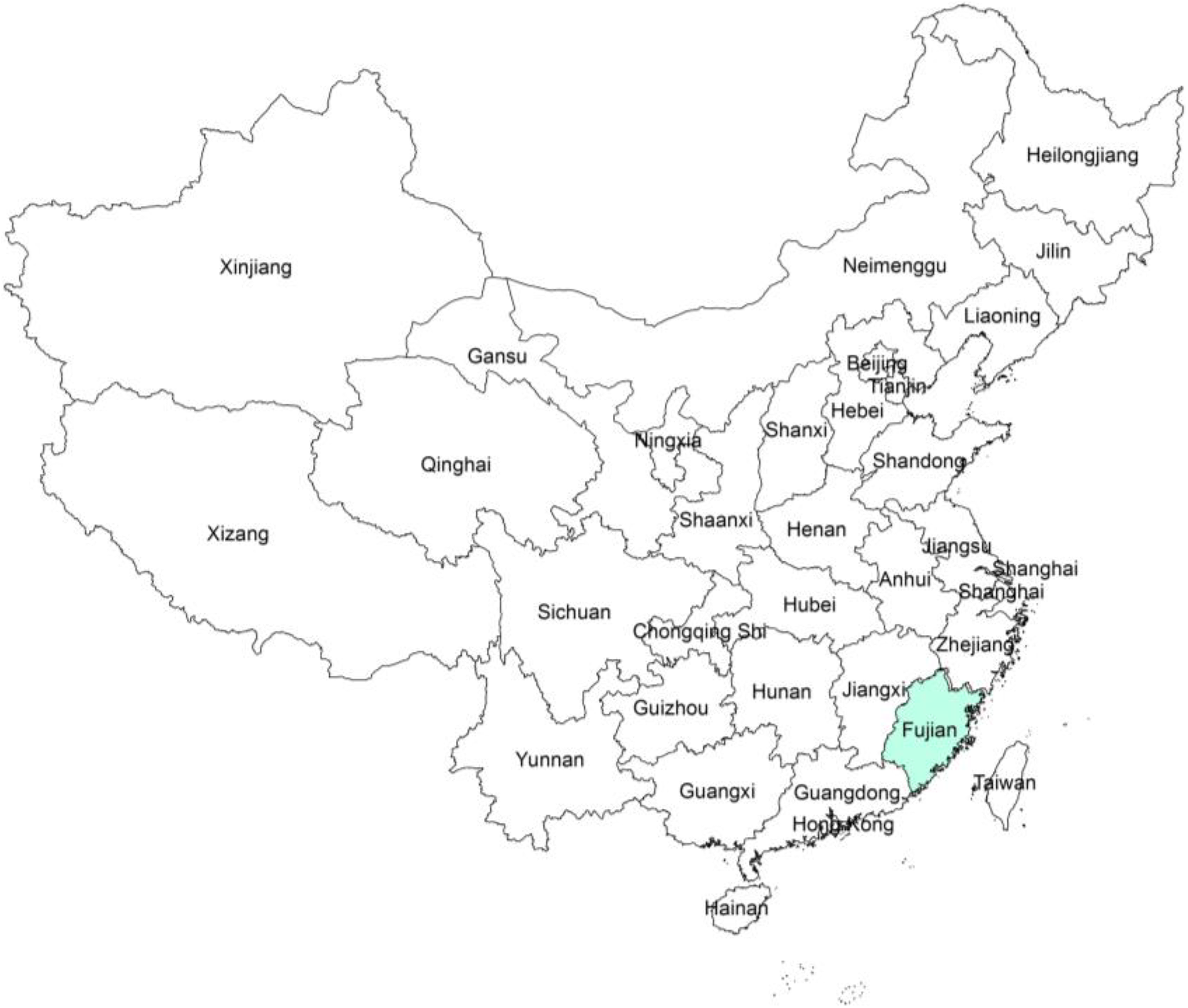
Location of Fujian in China.
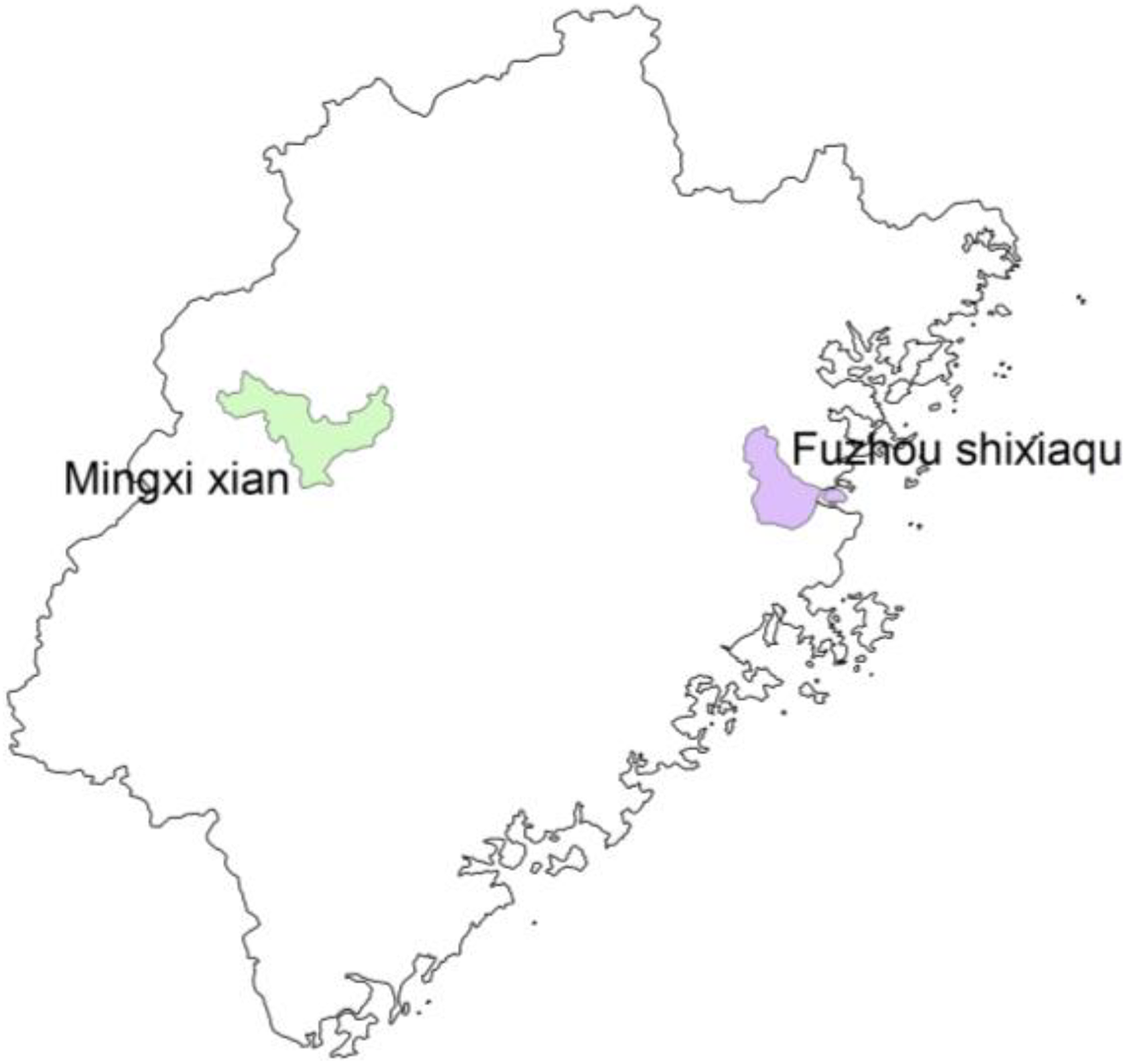
Locations of Fuzhou and Mingxi in Fujian.
Fuzhou-US Migration
Fujianese emigrants are a diverse group in terms of areas of origins and destinations. The largest and best-known group is the Fuzhou-US migrants (Lu, Liang, and Chunyu 2013). Located on the east coast of Fujian Province, the Fuzhou region is one of the most developed regions in the province. By the early 2000s, many rural residents in Fuzhou had already left the traditional fishing and farming industries and were engaging in small business away from home, such as Internet cafés and construction-related enterprises (Liang et al. 2008). The 2003 per capita incomes for the areas whose emigrants this study addresses — Fuzhou City, Changle (a county-level city), and Lianjiang County — were 5,394 yuan, 5,090 yuan, and 4,048 yuan, respectively 1 (Fujian Bureau of Statistics 2004).
The Fuzhou area’s history of emigration dates back hundreds of years, and Fuzhou itself is regarded as a traditional qiaoxiang (hometown of emigrants). After the long break in emigration from China in the 1950s, 1960s, and 1970s, Fuzhou’s emigrants were among the first to venture to other parts of the world. Since the mid-1980s, however, clandestine migration and prohibitive smuggling debts have characterized the Fuzhou-US migration (Liang et al. 2008). The Chinese government sees undocumented emigration (especially from Fuzhou) as damaging to its global image and, beginning in the mid-1990s, tightened its regulations toward this new wave of clandestine emigration (Kwong 1997). 2 The United States, too, worked to stop illicit migration across its borders. From the late 1970s to the early 2000s, the only time undocumented immigrants could obtain legal status was the one-time amnesty enacted in 1986 as part of the Immigration Reform and Control Act (IRCA). 3 Because other legalization options remain limited, only a small proportion of undocumented Chinese migrants have been able to regularize their status in the United States (Tienda and Singer 1995; Li 2005b).
With the increased risk of being apprehended, a massive human smuggling industry for Fujian-US migration has developed, with smuggling costs growing over the years. During the 1990s, the standard smuggling fees rose from $18,000 to over $35,000, reaching as high as $70,000 in the twenty-first century (Keefe 2009). These fees usually cover circuitous flight routes with multiple stops, forged documents, and even vocational training in the United States (Chin 1999). Relying on professional human-smuggling services puts migrants and their families in enormous debts, and migrants usually send remittances for loan repayment until the debts are paid off (Carling 2008; Liang et al. 2008).
Despite these political and economic barriers, emigrants from Fuzhou continue to flow to the United States. Approximately 200,000 undocumented immigrants from Fujian had arrived in the United States by the mid-1990s, with an additional 30,000 to 50,000 arriving each year through the 2000s (Blatt 2007). The size of remittances from these migrants is significant. Figures released in Chinanews suggest that remittances from New York City alone to Fuzhhou were $525 million in 2002, accounting for 70 percent of all remittances from New York City that year (Chinanews 2002). Zhou and Li (2016b) attribute part of this momentum to migrants’ conspicuous consumption in Fuzhou. As Fuzhou-US migrants usually face economic and social marginality in the United States, they send remittances home to build luxurious houses and pay for extravagant weddings and funeral rituals for relatives and friends, in order to “perform” their social status in their hometowns without being physically present. Such remittances artificially inflate prices of land, housing, goods, and services and raise community expectations that all rituals will be extravagant. When poorer households are not able to keep up, they are socially sanctioned and pushed out of the social circle. This in turn spurs more pressure for continual emigration (Zhou and Li 2016b).
Fuzhou also has more static demonstrations of emigrants’ social status. During 2002 and 2003 fieldwork in a well-known migrant-sending village, Houyu, in Fuzhou, for example, we observed a newly built theater, with a stone statue nearby with all donors’ names inscribed. Other migrant villages we visited in Fuzhou had similar displays. Local public schools, roads, dams, Buddhist temples, Christian churches, village entrance archways, and recreational centers for older residents bear the names of contributors, as other researchers have described in migrant hometowns across China (Chen 2000; Hsu 2000). Such displays confer honor on donating migrants and, thereby, their families (Zhou and Li 2016b). This practice represents part of Fuzhou’s “culture of remittances,” as developed by Liang and Song (2018), in which social expectations help channel remittances to public projects and education.
Amidst this culture, local elites, especially local government officials (cadres), play an important role in connecting with emigrants and promoting remittances for public consumption and construction (Zhou and Li 2006b). Prior ethnographic work in this region showed that these cadres are usually gatekeepers and authorities who approve developmental projects by granting licenses and permits (Zhou and Li 2006b). Sometimes, they are also project initiators who engage local campaigns and political slogans to solicit contributors to public infrastructure projects (Liang and Song 2018). Therefore, local political elites in Fuzhou play an active role in facilitating collective remittances.
Mingxi-Europe Migration
Located in mountainous western Fujian, Mingxi is less economically developed than Fuzhou. Its per capita income was 3,413 yuan in 2003, much lower than that of Fuzhou (Fujian Bureau of Statistics 2003; National Bureau of Statistics of China 2003). Mingxi also has a much lower level of economic inequality than migrant hometowns in Fuzhou, where emigration has been long entrenched and conspicuous consumption from families of migrants has worsened economic and social inequality. The standard deviation of household income for emigrant-sending households in Mingxi, for example, is much lower than that in Fuzhou households in our sample ($2,855 vs. $18,000).
Geographically separated, Fuzhou and Mingxi also have disparate cultural and political contexts. During fieldwork in Mingxi, we did not observe Fuzhou’s practice of elevating contributors’ social status through name inscription in public constructions. Probably because of the lower living standards among their residents, both our fieldwork and Li’s (2005a) ethnographic work found that local governments and cadres in Mingxi focused on pressing economic development tasks such as stimulating business investment from overseas to enrich the local economy. Unlike their counterparts in Fuzhou, local cadres in Mingxi did not make the construction of public projects a priority.
Emigration from Mingxi started in the late 1980s and has gained momentum since. By the early 2000s, approximately 10 percent of the Mingxi population had emigrated to another country (Li 2005a). Mingxi emigrants have settled in at least 23 European countries, with the majority in Italy, Hungary, and Russia (Lu, Liang, and Chunyu 2013). Their annual remittances exceeded $10 million in 2002 (Pieke et al. 2004). Unlike Fuzhou emigrants, Mingxi migrants generally entered their receiving countries through legal means, and local governments in Mingxi have encouraged, and supported, emigration as a strategy for local economic development (Li 2005a). Some Mingxi-Europe migrants entered by means of labor expat programs initiated by immigrant-owned businesses, 4 while others entered by means of family visitation. Mingxi has service centers to help peasants apply for visas, purchase air tickets, and learn more about jobs and has helped simplify administrative procedures and improve work efficiency (Li 2005a). Assistance from the local government, combined with shorter distance to Europe, makes the cost of emigration to Europe as low as a few hundred US dollars. After migrants reached their destinations, most overstay their visas and become undocumented. However, and in contrast to the United States, various European countries have granted frequent amnesty for these migrants. 5
Aside from these differences, there are also commonalities across emigrant communities in Fuzhou and Mingxi (Lu, Liang, and Chunyu 2013). Emigration itself has been ingrained in the social and economic life of individuals and households in both regions and as a strategy to improve living standards and household status (Pieke et al. 2004; Liang et al. 2008). A high proportion of emigrants from both areas also send remittances each year, and these remittances are used mostly to support families or raise living standards in both regions (as shown in Table 2, below). Hence, while our comparisons mostly focus on differences in contexts, we also pay attention to similarities in results across contexts.
Hypotheses
Fuzhou and Mingxi offer rich contexts that allow us to derive innovative hypotheses in a comparative perspective. This section explains the research questions and our hypothesis that determinants of remittance behaviors vary in our two contexts. First, we ask: given disparate levels of economic development in the two regions, do economic conditions in the left-behind family have the same level of impact on migrants’ remittance decisions? Research has generally presumed that household economic needs reflect remittance motivations (Lucas and Stark 1985; Stark 1999). The altruistic model of remittances assumes that migrants send remittances to improve the income and consumption of household members left behind and, thus, that remittance propensities positively respond to the economic needs of other household members (Lucas and Stark 1985; Stark 1999; Agarwal and Horowitz 2002). By contrast, the contractual model argues that remittances are the outcome of an implicit contract, or coinsurance, between migrants and their origin households. Hence, migrants from wealthy households are more likely to remit in order to secure inheritance in the future (Lucas and Stark 1985; de la Briere et al. 2002; Regmi and Tisdell 2002).
Various contexts have provided evidence of both models, but a review of the literature suggests that in some of the least-developed places, such as Ghana and Nigeria, emigrants take an altruistic approach; whereas in wealthier contexts, such as among wealthy households in rural Thailand, emigrants send contractual remittances, in order to secure a larger inheritance in the future (VanWey 2004; Ecer and Tompkins 2013). Based on our comparative economic contexts in Mingxi and Fuzhou, we hypothesize that migrants from the less wealthy Mingxi Region are likely to take an altruistic approach and that migrants from the more prosperous Fuzhou Region are more in line with the contractual approach. Therefore, we predict the following: H1.1: The probability of remitting is positively associated with the economic needs of the left-behind household (low household income, high household dependency ratio) for Mingxi-Europe migrants and negatively associated with the economic needs of the left-behind household for Fuzhou-US migrants.
While previous discussions have centered on linking the origin household economic status with remittance propensities (e.g., Lucas and Stark 1985; de la Briere et al. 2002; VanWey 2004), with a few exceptions (e.g., Massey and Basem 1992; Vargas-Silva 2009), little attention has been paid to how origin household economic status affects remittance amount. Case studies in rural Mexico and Colombia show that when households in the origin country have greater economic needs, remittance amount decreases, which is consistent with a contractual model (Massey and Basem 1992; Vargas-Silva 2009). We still, however, have little knowledge about how remittance amount reflects altruistic or contractual models in other contexts. Do remittance propensity and remittance amount follow the same mechanisms in reflecting remittance motivations across comparative contexts? Based on our knowledge of the economic disparity and cultures of the two contexts under study here, we provide divergent hypotheses for the two regions. In Fuzhou, which has large economic inequality, a long history of emigration, and a norm of conspicuous consumption, we hypothesize that out of fear that their families will be left out of the “consumption race” or socially excluded, Fuzhou-US migrants will send larger remittances to their households with low economic status (i.e., be more “altruistic” in their remittance amount). By contrast, in Mingxi, where there is much lower income level and income disparity and where conspicuous consumption culture is largely absent, we expect that any remittance from Europe will significantly help left-behind families and, thus, not be sensitive to the left-behind family’s economic status. H1.2: Remittance amount is positively associated with the economic needs of the left-behind household (low household income, high household dependency ratio) for Fuzhou-US migrants, but Mingxi-Europe migrants do not show this association.
Second, previous studies have found that migrants who receive funding for migration expenses from their origin households remit larger sums (Brown 1997; Gubert 2002). But is the amount of remittances similarly associated with emigration costs in our two contexts? We hypothesize that the high emigration costs incurred during Fuzhou-US migration drive remittance amounts. When migration is legal, distance to destination is shorter, and emigration costs are smaller, as in the case of Mingxi-Europe migration, remittance amount would not reflect how much emigrants pay for migration. Therefore, we expect the following: H2: Remittance amount rises with increased emigration costs for Fuzhou-US migrants, but not for Mingxi-Europe migrants.
Third, enlightened by our fieldwork observations in Fuzhou about its cultural practices and about local government’s effort to attract investment in public constructions from abroad, we ask: do meso-level differences between Funzhou and Mingxi play a role in attracting remittances for public use? A handful of ethnographic studies have illustrated how local government and cadres, or even sports clubs or religious associations, set the stage and provide social status rewards to incentivize remittances spending for public infrastructure (Juárez Galindo 2002; Zhou and Li 2016a, 2016b; Liang and Song 2018). However, there is a lack of research that evaluates the effect of these meso-level factors from a quantitative perspective. This is best done by a comparative approach. Therefore, we hypothesize the following: H3.1: Migrant households in Fuzhou are more likely to spend remittances on public projects than their Mingxi counterparts.
Finally, in these two contexts, we zoom in and comparatively evaluate the remittance spending of local cadres. In Fuzhou, where public donations with remittances are glorified, do migrant-sending households with local cadres more actively respond to cultural practices than those without local cadres? We expect that in Fuzhou, while contributing remittances to public construction confers honor and reputation to both migrants and their households, local elites from migrant-sending households may be under more pressure to do so in order to enhance their elite status. Considering that they are usually project initiators or gatekeepers of development, local elites in Fuzhou are also usually better informed about various donation opportunities. This gives them an advantage in soliciting remittances from their overseas families to invest in public projects. By contrast, in Mingxi, where opportunities for public demonstrations of social status through remittances are scarce, local elites from migrant-sending households may not see the need to do so. H3.2: Migrant-sending households with cadres in Fuzhou are more likely to contribute remittances to local public projects than are other migrant-sending households in the region, but the association does not hold for cadres in Mingxi.
Data and Methods
The data used in this study were collected in the rural areas of Fuzhou Prefecture and Mingxi County in Fujian Province in 2002 and 2003. The survey design followed the ethnosurvey approach used in the Mexican Migration Project (MMP), with adaptions appropriate for the Chinese context (Massey 1987; Liang et al. 2008). Data collection was identical across the two settings in terms of probability sampling and standard questionnaires used in the field. The same team members conducted the fieldwork and data entry. The survey team received systematic training in project objectives, questionnaire explanations, quality control procedures, and human subject issues.
The survey in the Fuzhou region was conducted between October 2002 and March 2003 in one urban district, as well as in selected nearby townships in the county-level city Changle and in Lianjiang County. Using a stratified random sample strategy, we targeted a sample of 200 households for each town/township. Within each chosen town/township, using a systematic sampling scheme, four villages were selected, and 50 households within each village were then sampled. Depending on the communities surveyed, the nonresponse rate was between 5 and 15 percent. The interviews of households in Mingxi County in northwestern Fujian followed the same sampling strategies in early 2003. Within Mingxi County, three townships were chosen, and two villages in each township were selected, using probability sampling. In each selected village, 50 interviews were targeted. In each household sampled, one member was interviewed. In each region, a small number of households with missing information on important variables were excluded from the final sample. Ultimately, the analysis yielded 1,170 households in Fuzhou and 235 households in Mingxi. These samples are considered representative of emigration communities in both regions.
We organized the data set into three files: the personal file, the migrant file, and the household file. The individual questionnaire asked about the basic sociodemographic characteristics of each individual in the sampled household, including those who stayed in the place of origin, internal migrants, and international migrants. In the migrant file, the migration history of each international and internal migrant in the household was collected, including the dates of the first and last migration trips, the costs and destinations of the trips, and the type of departure documents used. The household file consisted of the cumulative amount of remittances received, the amount received the year before, and basic household economic conditions. To determine household remittance spending patterns, respondents were asked, “What are the overseas remittances mainly used for?” This question referred to remittance usage over the years. The interviewers provided multiple choices, one of which was “other.”
The study population included all households with international migrants: Fuzhou households that had sent emigrants to the United States and Mingxi households that had sent emigrants to Europe. The amount of remittances was measured as the total remittances received the year prior to our survey, 2001 or 2002 (2001, thereafter) for each household. Remittance use patterns were reported as the main ways household members used remittances, and each household could check more than one option. The data do not include emigrants’ individual characteristics, however, because these remittance variables were measured at household level. Thus, we calculate a mean variable to account for each emigrant’s characteristics in the same household. Dichotomous variables are measured as percent male emigrants in the household and percent having children overseas. Household economic status was measured by the household dependency ratio and household income in 2001. Other household characteristics included number of emigrants in the household and whether any household member was a local cadre.
In the main analysis, for Fuzhou-US and Mingxi-Europe migration, respectively, we first employ logit regressions to assess the propensity of emigrants from the household to repatriate financially. Next, we use Tobit models (Tobin 1958) with a lower limit of 0 (see Sana 2005) to evaluate the amount of remittances households had received in the past year (hereafter, 2001). The advantage of Tobit models is that they use all observations, including the values at the limit and those above it, for estimation. In the third step, we use logit models to predict remittances spent on public projects for all migrant households in the sample and for the two streams of migrants, respectively. In particular, to account for the association between remittance spending patterns and remittance amounts, the models also control the logged form of remittance amount over the past year, in the third step.
Results
Figures 3 and 4 show the number and percent of emigrants in the Fuzhou and Mingxi samples in our dataset, respectively, by migration years since 1980. The general pattern is that given the larger population base in the Fuzhou area, the absolute number of US-bound emigrants in Fuzhou surpassed the number of Europe-bound emigrants in Mingxi. However, percentage wise, although it started late, the emigration rate in Mingxi nearly reached parity with that in Fuzhou in the 2000s.
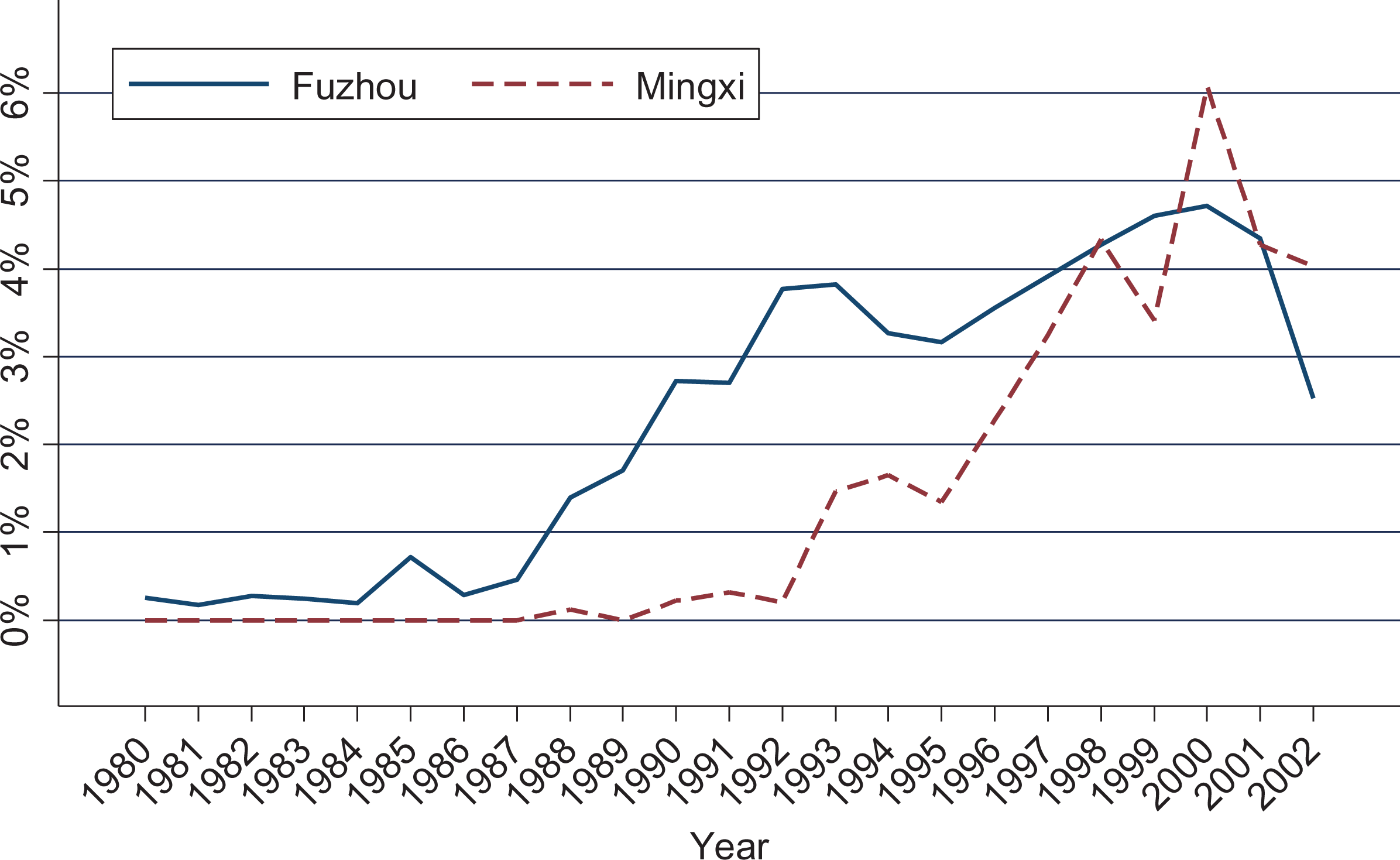
Rate of emigration from Fuzhou and Mingxi by year.
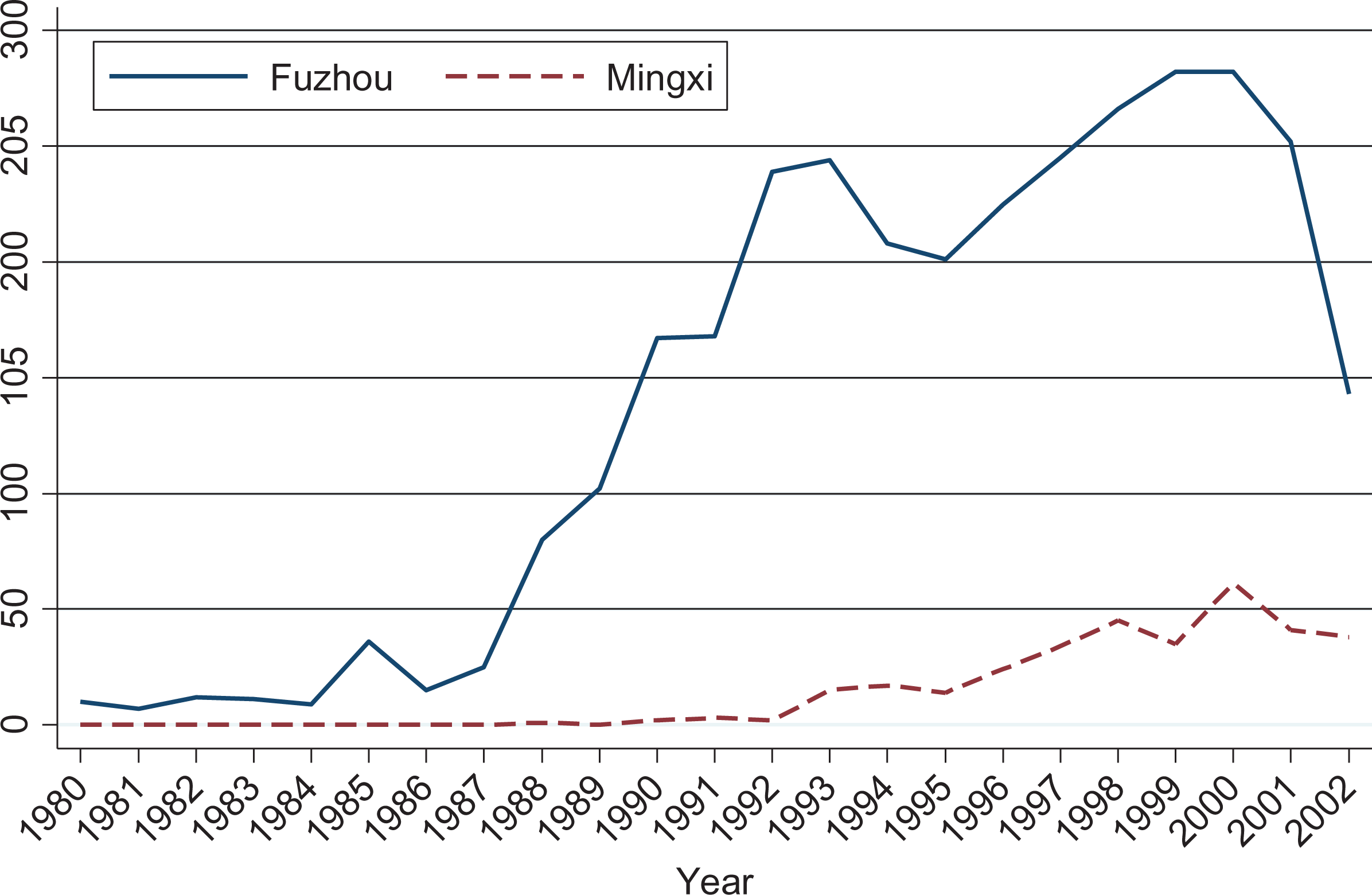
Number of emigrants from Fuzhou and Mingxi by year.
Table 1 compares the two streams of international migration from Fujian by remitting status (remitted vs. not remitted) in 2001. Test statistics were performed between remitters and nonremitters for each stream of emigrants. In both cases, the number of remitters surpassed that of nonremitters (1,194 vs. 66 for Fuzhou-US migrants and 226 vs. 28 for Mingxi-Europe migrants). For Fuzhou-US migrants, older emigrants were more likely to remit. Only among Mingxi-Europe migrants, remitters were from households with heavier dependency ratios, foreshadowing that Mingxi-Europe migrants’ remittance decisions were more sensitive to household dependency than were those of their Fuzhou-US counterparts. Moreover, the sum of emigration fees in Fuzhou-US migration exceeded the other group’s fees by a factor of over tenfold. Not surprisingly, Fuzhou remitters sent a larger sum of remittances than did their Mingxi counterparts on average.
Descriptive Statistics by Origins and Remittance Decisions in 2001.
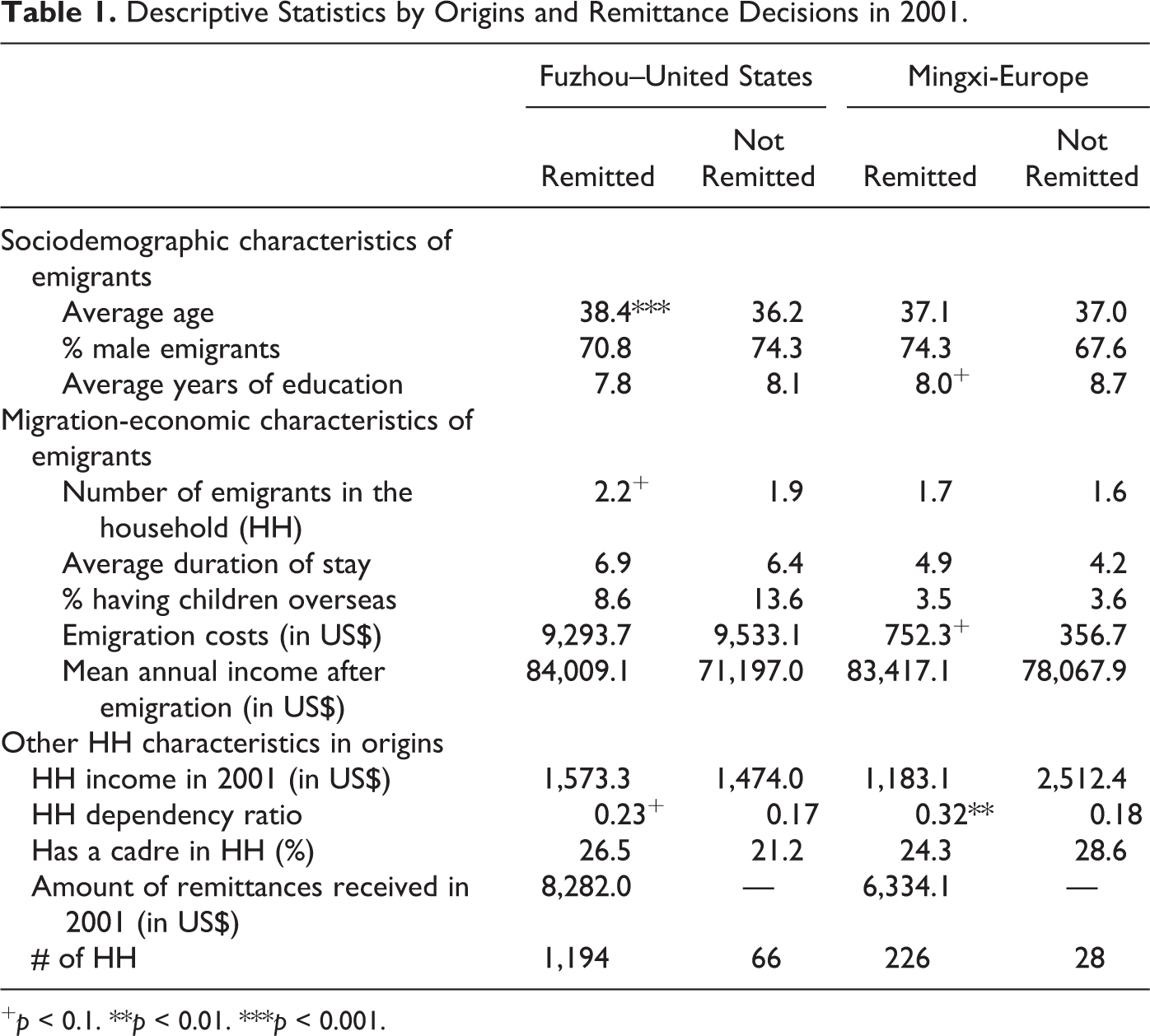
+p < 0.1. **p < 0.01. ***p < 0.001.
Figure 5 further depicts the two streams of international migrants regarding their probability of remitting, by duration of stay overseas. For both groups, on average, their propensity to remit increased as emigrants’ duration of stay was extended. Due to a shorter history of international migration in Mingxi, only three cases fell into the 9+ years category, with one of them remitting the year prior. Therefore, these three cases were removed from the model and from Figure 5.
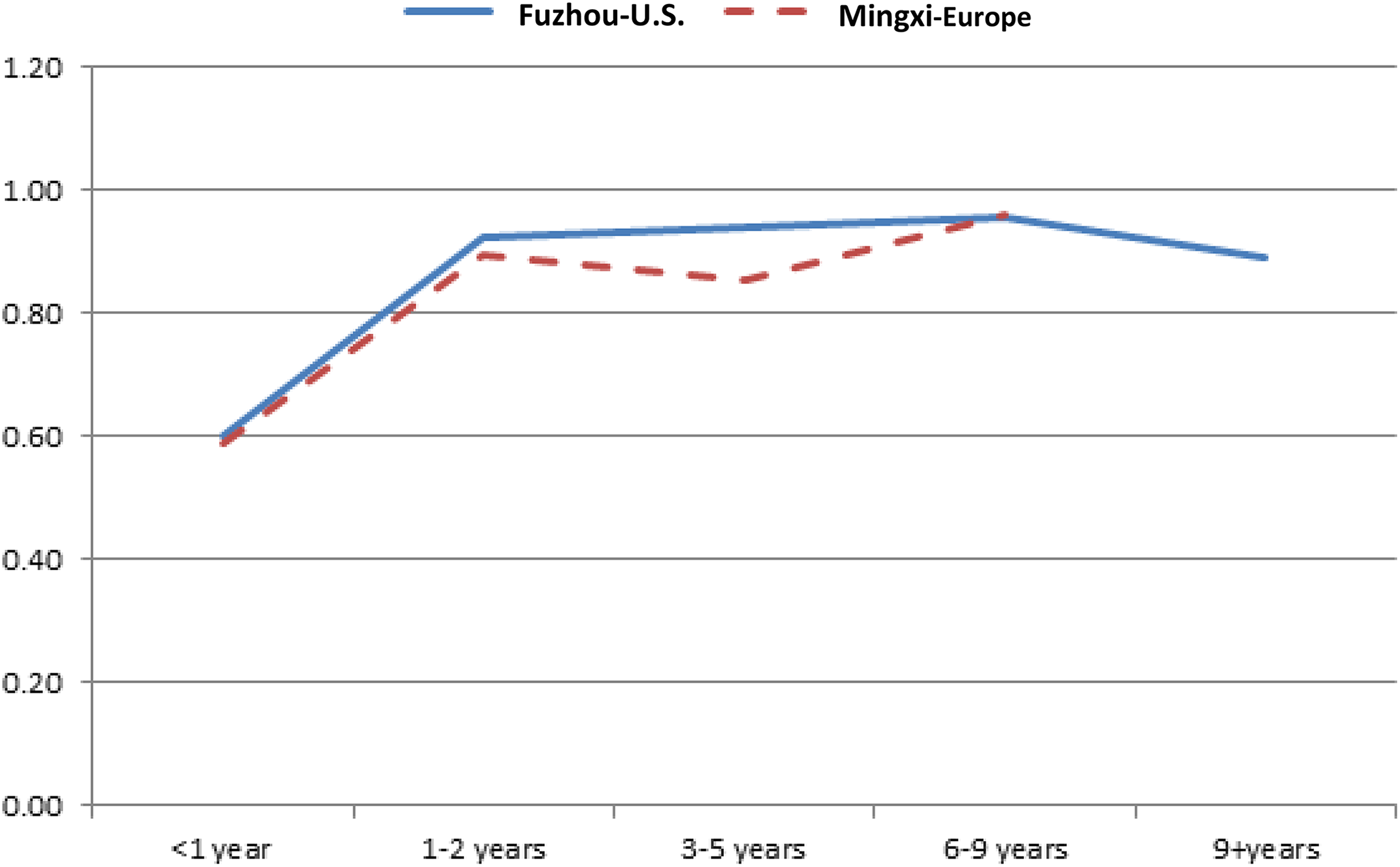
Probability of remitting by duration of stay overseas.
Similarly, Figure 6 depicts the amount of remittances by duration of stay overseas among the two streams of international migrants. For Mingxi-Europe migrants, over the 10-year period, those who had stayed longer tended to send more remittances than those who stayed shorter periods of time. In contrast, for Fuzhou-US migrants, the amount of remittances peaked at around two to three years in the United States and, as migrants stayed longer, decreased. This decrease is probably due to the substantial emigration debts that US-bound migrants had to pay off during their first few years of migration.
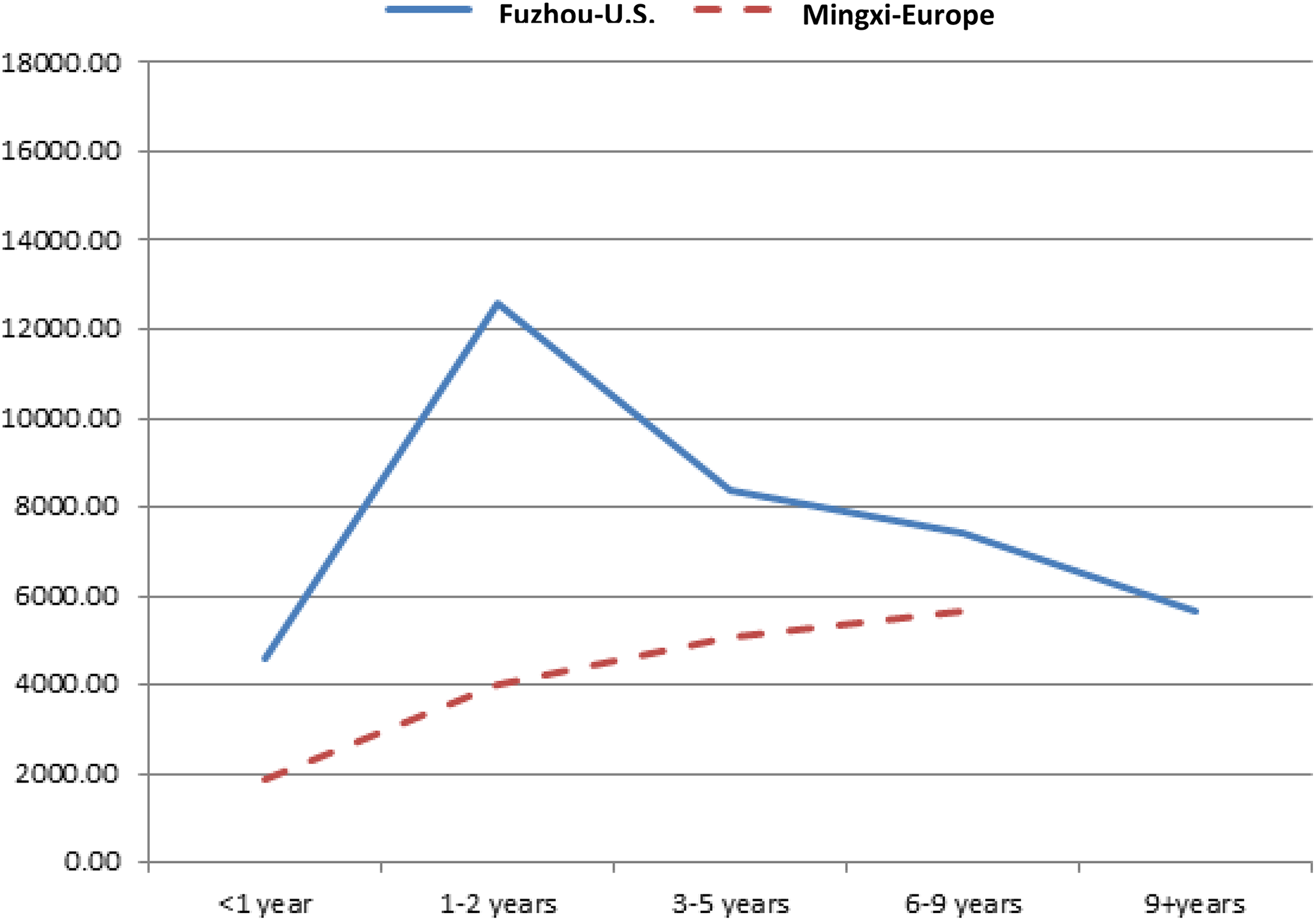
Amount of remittances by duration of stay overseas (in US dollars).
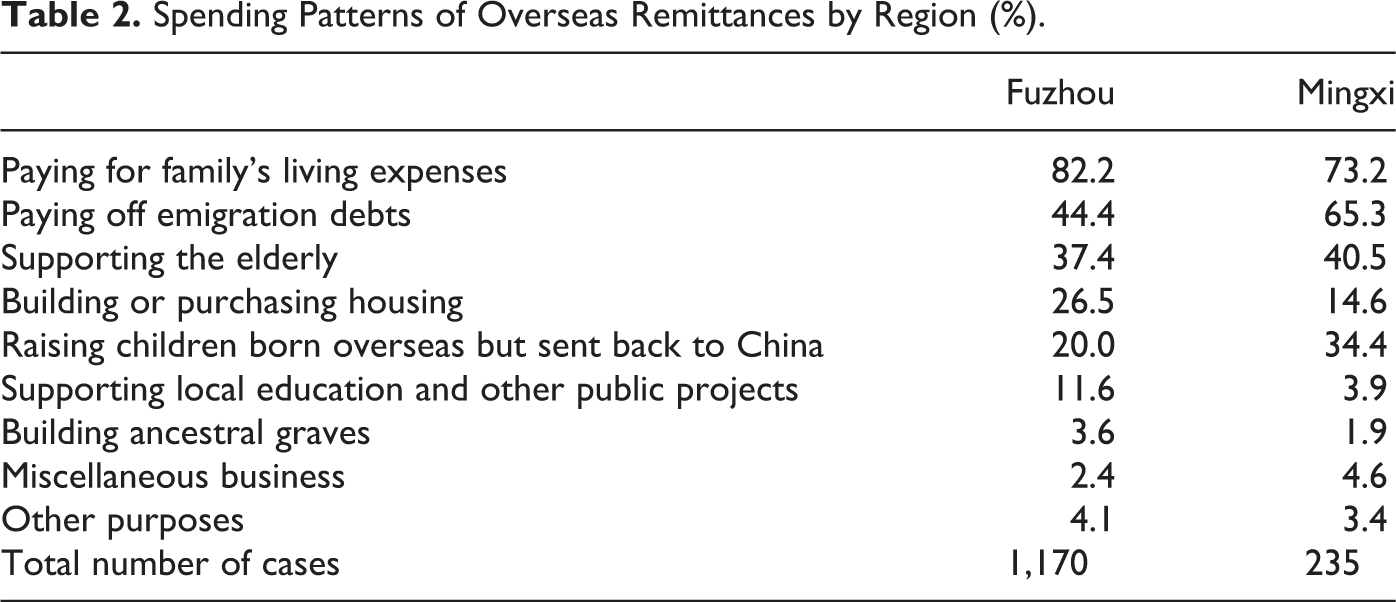
Table 2 tabulates the spending patterns of remittances for the Fuzhou and Mingxi samples. Respondents were allowed to check more than one item in the questionnaire. Several basic patterns emerge. First, family’s living expenses, migration debts, and other types of consumption constituted the majority of spending in both regions. Second, while 11.6 percent of Fuzhou households reported that they had contributed to local education or public projects, only 3.9 percent of their Mingxi counterparts reported this usage of remittances. Third, a larger proportion of Mingxi emigrants used remittances to pay off emigration debts. This is probably because Fuzhou-US migrants’ longer stay overseas allowed more migrants to pay off their debts than did the Mingxi-Europe migrants (see Table 1).
Spending Patterns of Overseas Remittances by Region (%).
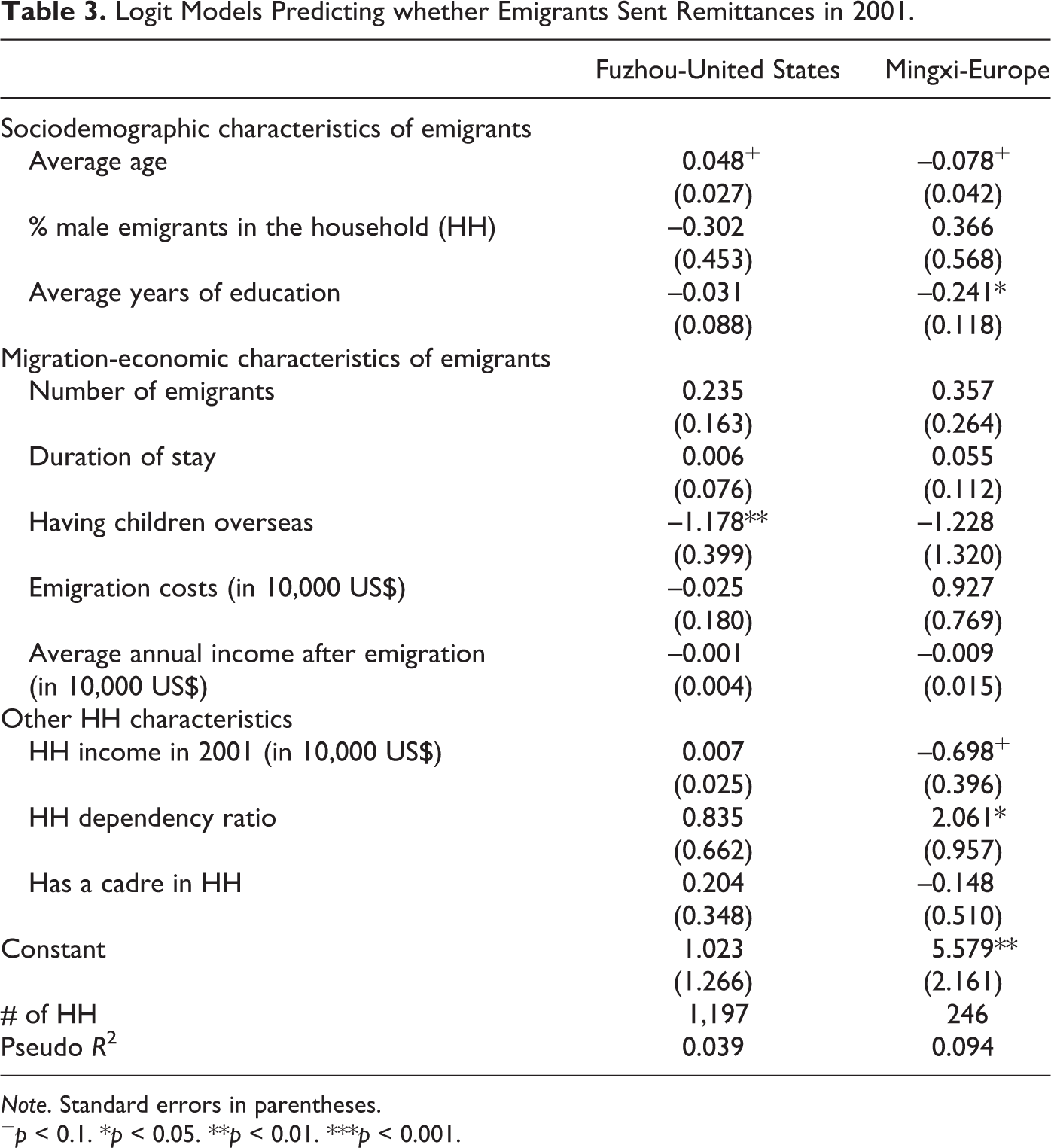
We estimated logit models to predict the propensity to remit for Fuzhou-US migrants and Mingxi-Europe migrants, as shown in Table 3. Notably, for Mingxi-Europe migrants, remitting propensity is positively associated with dependency ratio and negatively associated with household income in the previous year. In contrast, this sensitivity to the origin household economic status does not exist for Fuzhou-US migrants’ remitting decisions. These results partially support H1.1.
Logit Models Predicting whether Emigrants Sent Remittances in 2001.
Note. Standard errors in parentheses.
+p < 0.1. *p < 0.05. **p < 0.01. ***p < 0.001.
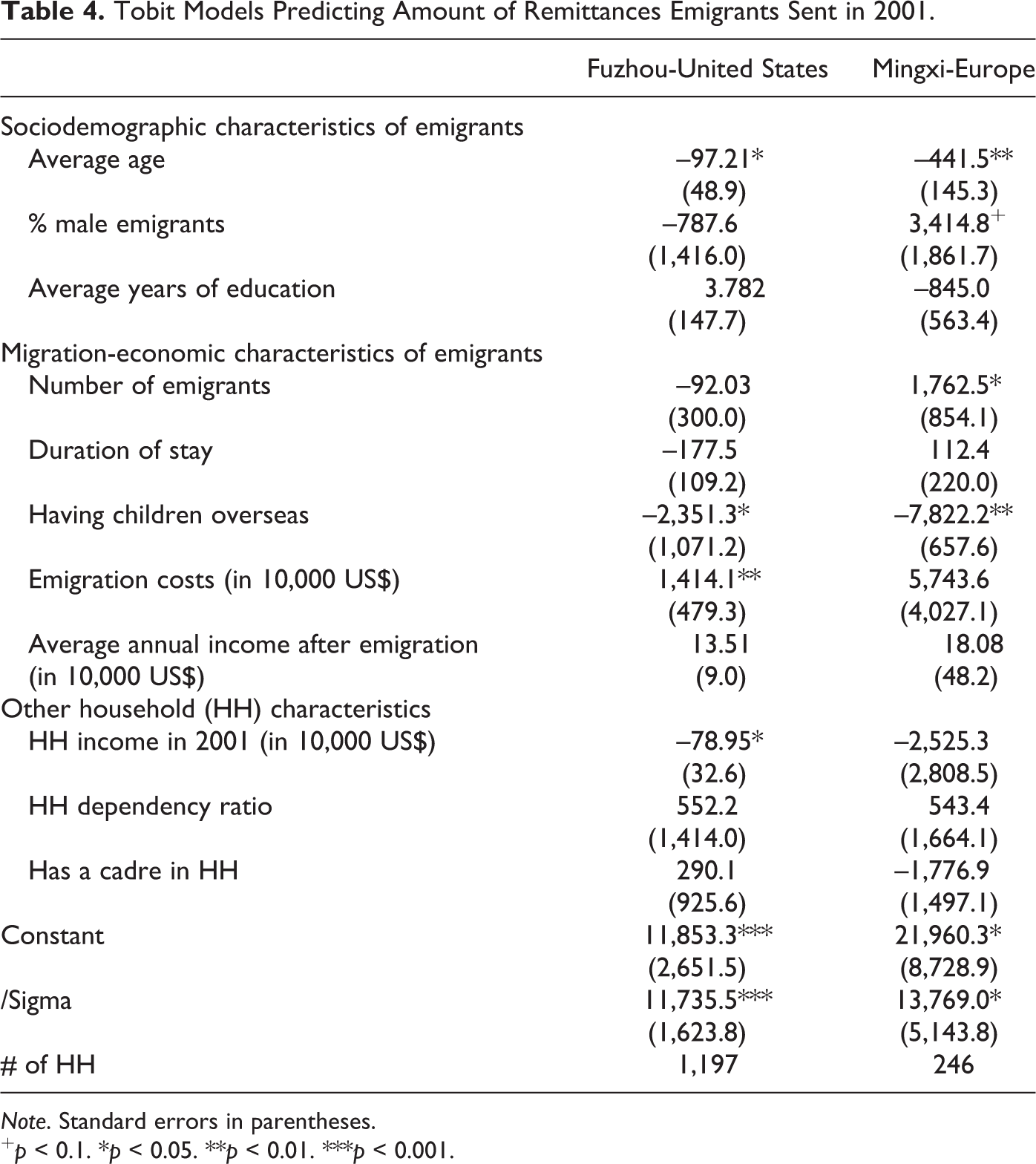
Table 4 predicts the amount of remittances for both Fuzhou and Mingxi emigrants. We observe that in Mingxi, remittance amount is responsive to neither the dependency ratio nor household income of the previous year. In Fuzhou, however, lower household income is associated with higher remittance amount. This is consistent with what we expect in H1.2. Consistent with H2, emigration costs are associated with higher levels of remittances to Fuzhou households, but not for Mingxi-Europe migrants. In Table 4, we also observe consistencies across the two streams of migrants: for both groups, having children overseas is associated with reduced amount of remittances, suggesting the powerful role of family ties in the destinations in determining remittance amount for both migrant groups.
Tobit Models Predicting Amount of Remittances Emigrants Sent in 2001.
Note. Standard errors in parentheses.
+p < 0.1. *p < 0.05. **p < 0.01. ***p < 0.001.
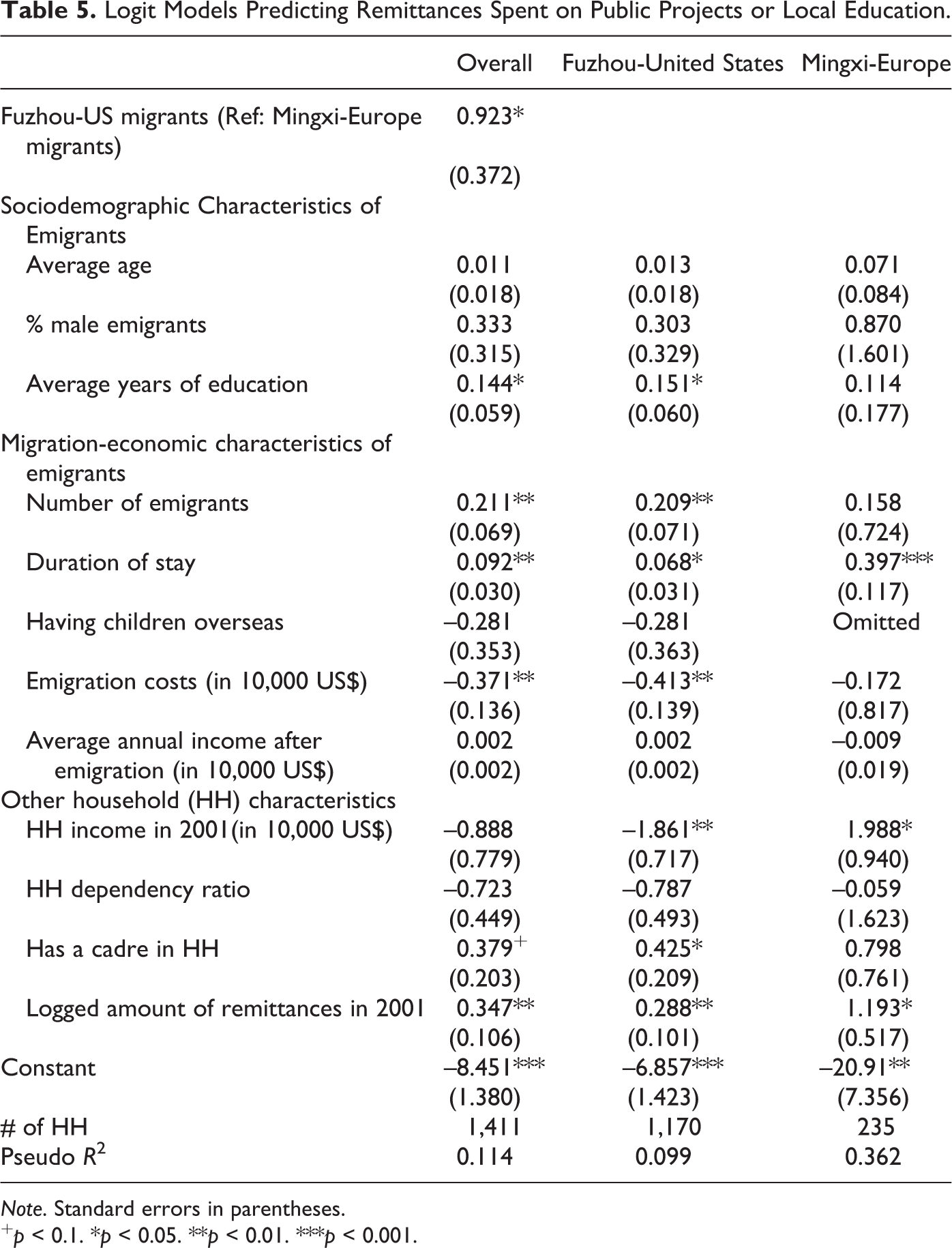
Finally, Table 5 displays models that predict investment in local education or public projects. The first column shows that the propensity to contribute remittances to public projects for Fuzhou migrant households is about 2.51 times that of the propensity for their Mingxi counterparts. H3.1 is therefore supported. With regard to the role of local cadres, Fuzhou migrant households with cadres have a 53 percent higher likelihood of investing in local welfare than do other migrant households. Their Mingxi counterparts do not show such an association, providing support for H3.2. Another finding in Table 5 lies in the positive association between migrants’ duration of stay and their tendency to contribute to local public projects in both regions. This finding suggests a similarity between the two regions: emigrants maintain tight connections with their hometowns in both Fuzhou and Mingxi, even after they have been gone an extended period of time.
Logit Models Predicting Remittances Spent on Public Projects or Local Education.
Note. Standard errors in parentheses.
+p < 0.1. *p < 0.05. **p < 0.01. ***p < 0.001.
Conclusion and Discussion
In recent decades, scholars have recognized that a comparative perspective has much to offer for the study of migration (Portes 1999; Foner 2005; Donato et al. 2010; Lu, Liang, and Chunyu 2013; Zhou and Li 2016b). Comparative studies in remittance behaviors can help test innovative hypotheses and identify how contexts shape the theories we develop (Portes 1999; Donato et al. 2010). Nevertheless, previous comparative research in remittance behaviors usually utilized data collected from migration destinations only (e.g., Menjivar et al. 1998; Goza and Ryabov 2012; Fokkema, Cela, and Ambrosetti 2013), neglecting the roles of origin contexts in shaping remittance behaviors. Of the few studies that look at origins, they usually focus on macro-level factors, such as the state’s role (Goldring 2002; Iskander 2010).
Here, we capitalize on data that allow us to consider both the origin and destination contexts and examine underexplored meso-level contexts, especially local governments and local culture, in migrant hometowns that serve as primary facilitators and promoters of remittances. In this way, our study expands knowledge of the macro- and meso-level contexts in origins and destinations that shape remittance behaviors and highlights an array of historically rooted economic, social, and political structures and institutions in migrant hometowns that affect remittance behaviors. Our comparative analysis also provides insight into reconciling theoretical debates in migration studies, five of which reach beyond emigrants from China.
First, we find that where general living standards were low (in the Mingxi region), household financial needs increased emigrants’ remitting propensities, supporting the altruistic model. In the economically developed region (the Fuzhou region), the altruistic model was not supported. This result helps establish the boundaries of where altruistic remittances may apply when it comes to remittance propensities: altruistic remittance may be more applicable to less-developed origin regions. This finding underscores the role of economic development in migration origins in determining remittance behaviors.
Second, our comparative approach allows us to ask whether and how decisions to remit and to remit greater amounts follow the same mechanisms in different contexts. Past research has generally assumed that remittance motivations similarly influence remitting propensity and amount (e.g., Lucas and Stark 1985; de la Briere et al. 2002; VanWey 2004). However, our results suggest quite the opposite — namely, that remitting propensity and amount may follow different mechanisms. Due to Fuzhou’s conspicuous consumption culture, combined with rising economic disparity and higher cost of living (Zhou and Li 2016b), Fuzhou-US migrants from households with low economic status may be under more pressure to remit larger amounts to allow their family members to maintain certain living standards and stay in the “consumption race” and their social circle. With Mingxi’s absence of a conspicuous consumption culture, lower living costs, and less economic disparity, some remittances from Europe may go a long way in helping left-behind families, and household income may not shape remittance amount so powerfully. This is in stark contrast with the case in remitting propensities: household economic needs shaped the remitting propensities of Mingxi-Europe migrants, but not of Fuzhou-US migrants. This study, thus, calls attention to the roles of economic disparities and conspicuous consumption culture in shaping remittance behaviors. This insight is especially important for emigrant communities where migration has been long entrenched and income inequality has deepened, such as migrant communities in rural Mexico, as conspicuous consumption culture is more likely to emerge in these contexts (Garip 2012).
Third, we are able to see that with rigid migration policies in origins and destinations, combined with a circuitous migration route (as in Fuzhou-US migration), high migration costs drive up the amount remitted. However, when authorization and facilitation by the local government lowered the costs of migration (as in Mingxi-Europe migration), remittance amount is not sensitive to such costs. In terms of how migration hardships can promote remittance amount, this comparative finding echoes what Zhou and Li (2016a) found in their ethnographic work. Our results suggest that in investigating situations where migration trips are becoming increasingly difficult, scholars should pay more attention to migration costs in shaping remittance behaviors.
Fourth, in the long-standing debate over migration and community development, while a strand of literature argues that remittances can produce a cycle of dependence that leads to little community development (e.g., Massey et al. 1993; Rahman 2000), our article suggests a community can do a lot to encourage collective remittances. In particular, our comparative study highlights the role of migrant hometowns’ cultural context in encouraging donations to public welfare. Remittances that are culturally and socially channeled to improve public services and basic infrastructure are not unique to migrant hometowns in Fuzhou, China, and are found across rural Mexico and Guangzhou, China, for example (Adida and Girod 2011; Zhou and Li 2016a; Liang and Song 2018). By developing community-based norms of remitting to improve public welfare in the community, migrant hometowns may provide an important model for promoting community development more broadly (Liang and Song 2018).
Finally, while local elites usually have more resources and are better positioned to contribute to community development, it is important for scholars and policy-makers to identify the ways in which local elites can be encouraged to do so. Our comparative study shows that when compatriots are incorporated into the moral and social system of hometowns, local elites, such as local cadres, are particularly motivated to contribute to public projects. Earlier research has painted a self-interest-motivated local cadre in China’s emigration process: local cadres mobilize political resources to facilitate their family members to emigrate, utilize public resources for personal favors from smugglers, and manage to reduce smuggling fees (Liang et al. 2008; Lu, Liang, and Chunyu 2013). In this study, however, we found a more positive image of cadre-related migrant households: when the local culture made contributing to local welfare desirable, local cadres were more active in engaging in public interests than others.
Despite the differences in contexts across the two streams of migration, the results underscore several consistencies across settings as well. One is the importance of social ties in mediating the amount of remittances. Having children in migration destinations tightens emigrants’ ties with their destination countries, leading to a reduced amount of remittances to both Fuzhou and Mingxi. Additionally, for emigrants from both regions, longer duration of stay in the destination country is associated with increased propensity to invest in public projects in the origin community. This remittance pattern is different from that documented among Mexican migrants in the United States (Durand et al. 1996). This finding highlights the ongoing connection between Chinese emigrants and their hometowns and their willingness to contribute to their natal community even after many years in the destination countries.
Limitations and Directions of Future Research
We also identify several limitations of the study. First, the dataset is cross-sectional, which identifies associations, rather than causal relationships, and limits us to cross-context comparisons. Second, we use information collected from left-behind families in China and are missing those who have moved their entire households to the United States or Europe. Additionally, as our dependent variables — remittance amount and usages — are measured at the household level, attributes of migrants from the same household must be averaged at the household level. This is a less precise measure as each emigrant household had an average of roughly two emigrants. Furthermore, there may be differentiated mechanisms for the common associations uncovered in these contexts. For instance, it is not clear why higher remittance amount is associated with higher propensity to contribute to local welfare. It could be that higher amounts of remittances gave households the surplus money to contribute to the community or that emigrants sent more money back to contribute to local infrastructure. The two contexts may have different mechanisms or internal dynamics that affect this association. The survey also did not incorporate information on how much of remittances are used in certain ways. Future research can contribute to this field by collecting further remittance data on how migrants intend to have their remittances spent and the proportion of remittances spent in certain ways.
Finally, the data analyzed here were collected over a decade ago; and research has shown that in the recent decade, Fuzhou emigrants have begun to adopt less risky ways to emigrate and that migratory waves have started to decelerate (Lin and Bax 2012). We argue, however, that our survey data capture China’s international migration process at a critical moment in international migration history when China began to open the door to the outside world and individuals were finding their ways to international destinations. In this regard, it advances our understanding of how international migration patterns form in a country undergoing a major transformation from a central planned economy to a market-oriented economy. Moreover, our data are the only currently available data that collect identical information in two locations that send migrants to two destinations from China, making our data and research design more valuable.
Looking ahead, the importance of and need for comparative research on remittance behaviors will increase as migration pathways continue to diversify and the degree of transnationalism increases (e.g., Kritz and Gurak 2015). While some developed countries are witnessing the inflow of migrants from new countries (e.g., refugees from Middle Eastern Countries to Germany, migrants from Africa to Italy), some developing countries are switching from migrant-sending countries to migrant destinations themselves (e.g., China). Remittance corridors are also diversifying. Amongst hundreds of possible remittance corridors from the European Union to other countries, the top three are Italy to China, Spain to Colombia, and Spain to Ecuador (Eurostat 2012). With the development of long-distance transportation and telecommunications, this increasingly globalized and transnational world will give researchers more open opportunities to conduct comparative studies and to identify new dynamics and processes accompanying international migration and remittance behaviors.
Footnotes
Acknowledgment
We thank Dudley Poston for his comments on an earlier version of the article.
Declaration of Conflicting Interests
The author(s) declared no potential conflicts of interest with respect to the research, authorship, and/or publication of this article.
Funding
The author(s) disclosed receipt of the following financial support for the research, authorship, and/or publication of this article: Data collection for this project is supported by grants from the National Institute of Child Health and Human Development under Grant 1 R01 HD39720-01; the National Science Foundation under Grant SES-0138016; and the Ford Foundation under Grant 1025-1056. We also acknowledge funding support from NIH 5T32AG000244 and from Center for Social and Demographic Analysis with funding from Eunice Kennedy Shriver National Institute of Child Health under Grant R24 HD044943.