







Abstract
There is growing interest from both policy and academic communities in understanding why people do not migrate. This article offers the first global analysis of the aspiration to stay, defined here as the preference to stay in one's country of residence. We make use of the unique Gallup World Polls which provide information on aspirations to stay (as opposed to migrating abroad) as well as on individual characteristics and opinions for 130 countries worldwide between 2010 and 2016. We find staying aspirations are far more common than migration aspirations across the globe and uncover important “retain factors” often overlooked in research on migration drivers — related to social ties, local amenities, trust in community institutions, and life satisfaction. Overall, those who aspire to stay tend to be more content, socially supported and live in communities with stronger institutions and better local amenities. We further explore differences in the relative importance of retain factors for countries at different levels of urbanization, and for different population groups, based on gender, education, rural/urban location, migration history, religiosity, and perceived thriving. Our findings contribute to a more holistic understanding of migration decision-making, illuminating the personal, social, economic, and institutional retain factors countering those that push and pull.
Introduction
Pondering the determinants of migration in the mid-twentieth century, the sociologist William Petersen wrote, “the basic problem” before migration researchers “is not why people migrate but rather why they do not” (Petersen 1958, 258). Well over six decades later, migration researchers continue to contemplate this same basic problem. Rates of international migration have not meaningfully increased since the 1960s, fluctuating around 3 percent of the global population (de Haas, Castles, and Miller 2020). Considering new heights of global connectivity alongside widening disparities in wealth, well-being, and security around the world, far fewer people are migrating than our migration theories would predict (Hammar et al. 1997; Massey et al. 1999; Zickgraf 2018; Schewel 2020).
We now know one important explanation for widespread immobility in our global age concerns the legal, financial, and social constraints on migration that deprive people of the ability to move. Far more people may desire to migrate than actually do, a reality that Jørgen Carling highlighted when he first introduced the term “involuntary immobility” (Carling 2002). Globalization has introduced new “regimes of mobility” that facilitate the movement of the privileged while introducing new restrictions to the already disadvantaged (Glick Schiller and Salazar 2013; Shamir 2005).
Yet, migration constraints are insufficient to explain widespread immobility because most people do not have international migration aspirations. According to the Gallup World Polls, 85 percent of the world population says they would not migrate even if they were given the resources and opportunity to do so (Gallup 2022). The aspiration to stay is far more common than the aspiration to migrate, yet we know comparatively little about the causes and consequences of more voluntary forms of immobility.
To contribute to an emerging research agenda focused on immobility, this article presents the first global study of staying preferences using Gallup World Poll (GWP) data. A “staying preference” here refers to the preference to remain in one's country of residence. We use the term staying preference interchangeably with the “aspiration to stay,” putting our findings in conversation with the aspiration-ability model (Carling 2002; Schewel and Fransen 2022) and the aspirations-capability framework in migration studies (de Haas 2021; Schewel 2020). Staying preferences are usually not analyzed in a cross-country setting due to the difficulty of obtaining comparable databases across countries. Even for migration aspirations, global analyses are limited (exceptions include Docquier, Peri, and Ruyssen 2014; Migali and Scipioni 2019). We use individual-level information from the GWP that is comparable across 130 countries to map the prevalence of staying preferences by country, to explore important “retain factors” that predict this preference, and to better understand heterogeneity in how retain factors exert influence across and within countries.
Some readers may have reservations about whether a study of staying preferences matters. Because of the sometimes tenuous links between stated preferences and actual behavior, the social sciences tend to focus more on “what people do, not what they say” (Bernard and Taffesse 2014). Yet, if we only look at behavior — in this case, actual immobility outcomes — it becomes difficult to differentiate between voluntary and involuntary immobility, or between those who stay because they prefer to do so, and those who stay because they lack the ability to leave (Carling 2002; Carling and Schewel 2018). To explain widespread immobility in today's world, more attention needs to be given to why so many people do not want to migrate.
A focus on why people do not want to migrate helps expand the type of factors considered relevant in migration decision-making models. Common rational-choice models frame migration decision-making in terms of an individual cost-benefit analysis. When costs and benefits are framed in primarily economic terms (e.g., income maximization), rational-choice models often fail to predict real-world trends; people often do not migrate when it would be economically beneficial for them to do so (Uhlenberg 1973; Hammar et al. 1997; Cai et al. 2014). Under such circumstances, immobility may be partly explained by bounded rationality — limitations in information or the “computational capacity” of the decision-maker (Simon 1955; see also Czaika and Reinprecht 2022). Yet, there are also important social, cultural, and personal factors that can motivate a preference to stay (see Schewel 2020; Gruber 2021 for reviews). Relative to economic determinants, these non-economic factors remain comparatively understudied. In a comprehensive review of the determinants of migration aspirations (Aslany et al. 2021), it is striking how infrequently quantitative studies include variables related to personal dispositions, local social networks, place attachment, civic engagement, or culture. Yet, qualitative inquiries into staying behavior suggest these dimensions are crucial to explain the desire to stay put (see Hjalm 2014; Preece 2018; Blondin 2021; Robins 2022; Vezzoli 2022).
This article sheds new light on the extent of staying preferences globally and the personal, social, and structural retain factors that encourage a preference to stay across national contexts and social groups. To some degree, our results mirror the findings of other studies exploring the determinants of migration aspirations. For example, we find that women are more likely than men to prefer to stay, and that staying aspirations consistently increase with age. The likelihood of aspiring to stay is larger for those in a partnership or marriage, those with less than tertiary education, those who are satisfied with their standard of living, and among rural residents. However, because our aim is to explain staying aspirations, we find evidence for a range of retain factors that remain largely ignored in quantitative studies of migration aspirations — factors related to community dynamics, opportunities for friendship, local amenities, feelings of safety, trust in police, approval of the country's leadership, religiosity, among others. When examining the relative importance of different categories of retain factors, we find variables related to individual characteristics, followed by community institutions, are more likely to predict an aspiration to stay than respondents’ economic situation, social ties, or health factors.
To better understand variation in staying preferences across contexts, our analyses are twofold. First, we distinguish countries by levels of urbanization (the percentage of the national population living in urban areas). Urbanization and income classifications based on GNI or GDP per capita are closely linked, in the sense that no high-income country has remained primarily rural (Ritchie and Roser 2018). Yet we choose urbanization levels to capture a range of social transformations beyond the economic, not least being a profound shift away from rural livelihoods and cultures toward urban social systems. As a growing share of the national population in “developing countries” leave agriculture and rural ways of life, most become internal migrants, but some inevitably migrate internationally (Massey 1988). In this context, we explore which retain factors are the most important in explaining staying preferences for countries at different stages of the urban transition. Second, we analyze various population subsamples defined on the basis of specific characteristics, including gender, education level, urban/rural location, degree of thriving, religiosity, and migration history.
Some retain factors have a surprisingly consistent relationship with staying preferences across country contexts and population subsamples. For example, staying preferences are consistently associated with higher levels of personal health, satisfaction with one's standard of living, satisfaction with local amenities, those who have relatives to count on and more opportunities to make friends, higher feelings of safety, greater trust in the police, and higher levels of approval of country leadership. Other variables — like educational attainment, civic engagement, or exercising voice — show greater variation; their relationship with staying aspirations changes depending on the country context or population subsample.
Overall, our findings contribute new insight into the extent of staying aspirations around the world and highlight important retain factors associated with it. Our findings counter a tendency in migration studies to focus on the negative dimensions of staying put, particularly those associated with involuntary immobility or so-called “trapped” populations (see Zickgraf 2018). Here, we uncover the more positive features associated with place attachment: those who aspire to stay tend to be more content, socially supported, and express higher levels of trust and satisfaction with community institutions.
The remainder of the article is structured as follows. Section 2 provides an overview of related literature. Section 3 introduces and describes the data used in the empirical analysis extracted from the Gallup World Polls. Section 4 describes the empirical specification that we bring to the data and presents the benchmark estimates, as well as heterogeneous effects depending on household and country characteristics. Finally, Section 5 draws the main conclusions.
Related Literature on Aspirations to Stay
Migration research tends to focus on the causes and consequences of migration. This mobility bias (Schewel 2020) in existing research is typified in the push-pull model of migration, a basic framework for studying migration that examines the forces that compel people to leave their homes (push factors) and those that attract them to another location (pull factors). The push-pull model has been extensively critiqued for being too simplistic, deterministic, and neglecting migrant agency (Skeldon 1990; de Haas 2011), and even updated into a more sophisticated “push-pull plus” (Van Hear, Bakewell, and Long 2017). But these critiques and modifications do not address a fundamental flaw of the push-pull framework, namely that it fails to recognize a range of countervailing forces acting against those that push and pull. As Arango (2000) noted in his review of migration theories: the usefulness of theories that try to explain why people move is in our days dimmed by their inability to explain why so few people move. Clearly, theories of migration should not only look to mobility but also to immobility, not only to centrifugal forces but also to centripetal ones. The classic pair “push” and “pull” should at least be complemented with “retain” and “repel”. The existence of centripetal forces that lead to staying has been generally ignored by theories… (Arango 2000, 293).
The same critique applies to other more sophisticated migration theories, such as neoclassical economics, dual-labor market theory, historical-structural and world systems theories, social capital, or cumulative causation theories (see Massey et al. 1999 for a review). These established theories still primarily focus on explaining the initiation and perpetuation of migration flows, implicitly treating immobility as the neutral backdrop to migration processes (Schewel 2020).
To contribute to an emerging research agenda that approaches immobility as a dynamic and differentiated process worthy of direct research focus, this article uncovers important “retain factors,” which we define here as the structural, social, and personal conditions that encourage a preference to stay in place. What constitutes “in place” could, in theory, be one's national community, a region, a city, or a village; here, we focus on immobility relative to international migration, or the preference to remain in one's home country.
Different disciplines address voluntary forms of immobility, though using different terminologies, methodologies, and emphases. Within environmental psychology, for example, Lewicka (2011) reviews research on “place attachment” and finds some of the most important positive predictors of place attachment include residence length, home ownership, community involvement, and family ties. Psychological perspectives also highlight how particular places can become part of a person's identity (see Lalli 1992). Within population geography, Gruber (2021) reviews staying and immobility across the life course in the context of internal migration, and Stockdale, Theunissen, and Haartsen (2018) examine motivations for staying from the perspective of rural places. Recurring themes, Stockdale et al. note, include the physical and social characteristics of a place as well as the role of family, friends, and community in shaping a sense of home, belonging, and rootedness. Economic literature tends to highlight the “home bias” that influences how people invest, trade, or consume and also appears to shape how people think about migration (Djajić and Milbourne 1988; Batista and McKenzie 2021).
Emerging insights into voluntary immobility most often come from small-scale qualitative research of “stayers,” particularly in contexts where one would assume people should want to migrate. Preece (2018), for example, examines residential immobility in declining urban neighborhoods in England. She shows why, in contexts of low-paid and insecure work, place-based mechanisms of social, emotional, and financial support take on heightened importance. Farbotko and McMichael (2019) examine voluntary immobility among Pacific Islanders facing sea level rise and coastal degradation. Despite these threats to their lives and livelihoods, many Indigenous populations prefer to remain on their ancestral homelands for cultural and spiritual reasons, including a deep connection to land and place-based identity, knowledge, and culture. Vezzoli (2022) examines staying preferences in a small Brazilian town experiencing economic decline and stagnation. There, she finds a good life is often described in terms of proximity to family, the natural environment, and the tranquility and peacefulness of life in that place. Complementing the concept of “relative deprivation” as a motivation for migration (cf Stark and Taylor 1989), she introduces the idea of “relative endowment” as a motivation for staying. She further highlights the important role of hope for the town's future development in supporting a desire to stay.
Though far from exhaustive, the following list highlights examples of structural, social, and personal characteristics that have been shown to be associated with higher staying aspirations (or to put it another way, reduced migration aspirations) in different settings:
Demographic characteristics: Aspirations to stay increase with age (particularly from the 40s onwards), and tend to be higher among women, married adults, and those with lower levels of educational attainment (see Aslany et al. 2021). Personality traits: Aspirations to stay have been found to be higher among adults with higher levels of risk aversion and trust (Jokela 2014; Klöble 2021). Cognitive constraints: Aspirations to stay may be affected by the inability to “think beyond the border” (Van Houtum and Van der Velde 2004), “satisficing” behavior (Simon 1955; see Czaika and Reinprecht 2022), or a “home bias” in economic reasoning (Batista and McKenzie 2021). Life satisfaction: Aspirations to stay tend to be higher among those with higher levels of happiness (Brzozowski and Coniglio 2021) and life satisfaction (Aslany et al. 2021). Location-specific characteristics: Aspirations to stay tend to be higher in rural areas (Aslany et al. 2021), generally increase with residence length (Fischer and Malmberg 2001; Lewicka 2011), and can be higher for populations with place-based identities, knowledge, and cultures (Farbotko and McMichael 2019). Economic ties: Aspirations to stay tend to be higher among those with location-specific assets (i.e., home ownership) and insider advantages specific to a particular firm (i.e., career benefits) (Straubhaar 1988; Fischer, Martin and Straubhaar 1997). Social embeddedness: Aspirations to stay tend to be higher for those with stronger local networks of support (Uhlenberg 1973; Fischer and Malmberg 2001). Commitment to place: Aspirations to stay can be motivated by a commitment to place despite local decline — for example, by choosing to exercise “voice” over “exit” (Hirschman 1970; Schewel 2015; Beine, Noy, and Parsons 2021) — or hope that conditions will improve (Vezzoli 2022). Community institutions: Aspirations to stay have been found to be higher among those with greater involvement in a religious community (Myers 2000), in places with more community-oriented institutions, including local businesses, gathering places, and churches (Irwin et al. 2004), and for those who are more satisfied with public amenities (Dustmann and Okatenko 2014) Country context: Aspirations to stay are highest in higher-income countries, followed by middle- and then low-income countries (Migali and Scipioni 2019).
Some of the characteristics and factors highlighted above are based on research in particular national or local contexts, and thus not generalizable globally. Other factors show more variation in their relationship to staying or migration aspirations, and there is not an immediately clear trend in how they relate to staying aspirations, suggesting their influence is particularly context-dependent (e.g., employment, governance; see Aslany et al. 2021).
To better understand how retain factors operate, more research is needed to understand under what conditions retain factors have their greatest effects and for whom. Our analyses explore the social patterning of staying preferences, giving attention to differences by gender, educational attainment, rural/urban location, thriving, religiosity, and migration history. We also explore which retain factors are the most strongly associated with aspirations to stay in countries at different stages of the urban transition. Clearly, not all of the potential retain factors identified in this review section are possible to evaluate using the Gallup World Poll data, but this existing research inspired the wide selection of variables we include in our final analyses. Our findings provide a first broad brush overview of global trends in staying preferences that we hope will be further refined through continued mixed-methods research at various scales.
The Gallup World Polls and Descriptives
Our analysis uses individual-level data from 130 countries where at least one Gallup World Poll has been conducted between 2010 and 2016. The surveys conducted by Gallup typically have a sample of around 1,000 randomly selected respondents per country, including rural areas. 1 Sampling is probability-based and nationally representative of the resident population aged 15 and older. The data are collected through face-to-face interviews or phone calls in countries where at least 80% of the population has a telephone landline. Our sample contains 297,654 observations for which information was available on all variables chosen for the analysis.
Staying Preferences
We define staying preferences on the basis of the following question (Q1): “Ideally, if you had the opportunity, would you like to move permanently to another country, or would you prefer to continue living in this country?” Respondents are considered to have a preference to stay in their country of current residence as opposed to migrating permanently abroad if they answer negatively to Q1. 2
The way in which the migration aspiration questions are interpreted might vary across countries, as observed by Clemens (2016) who underlines the risk of using contingent value surveys. Respondents may interpret “opportunity” in light of the possibilities currently available to them (e.g., legal migration, irregular life-threatening trip, with or without funding, etc.), which vary across countries and social groups. For this reason, we only exploit within-country variation in our empirical analysis by using country-fixed effects which control for differences between countries that can be considered constant during our sample period. In this way, the GWP provides individual-level information on staying preferences that is adequate for our analysis and comparable across countries.
We acknowledge two important limitations to the GWP dataset. First, the Gallup World Poll data does not provide information about whether respondents have a realistic opportunity to migrate internationally, and thus how lacking the ability to migrate might contribute to adaptive preferences (Carling and Schewel 2018) or different kinds of “voluntary” or “acquiescent” immobility (see Schewel and Fransen 2022). We also acknowledge a potential bias in the GWP dataset associated with methodological nationalism — the assumption that the nation-state is the most relevant unit of social analysis in the modern world (see Wimmer and Glick Schiller 2002). Our analyses provide both country-level differences in the aspiration to stay (see Figure 1) and explore variation in staying preferences both within and across countries.
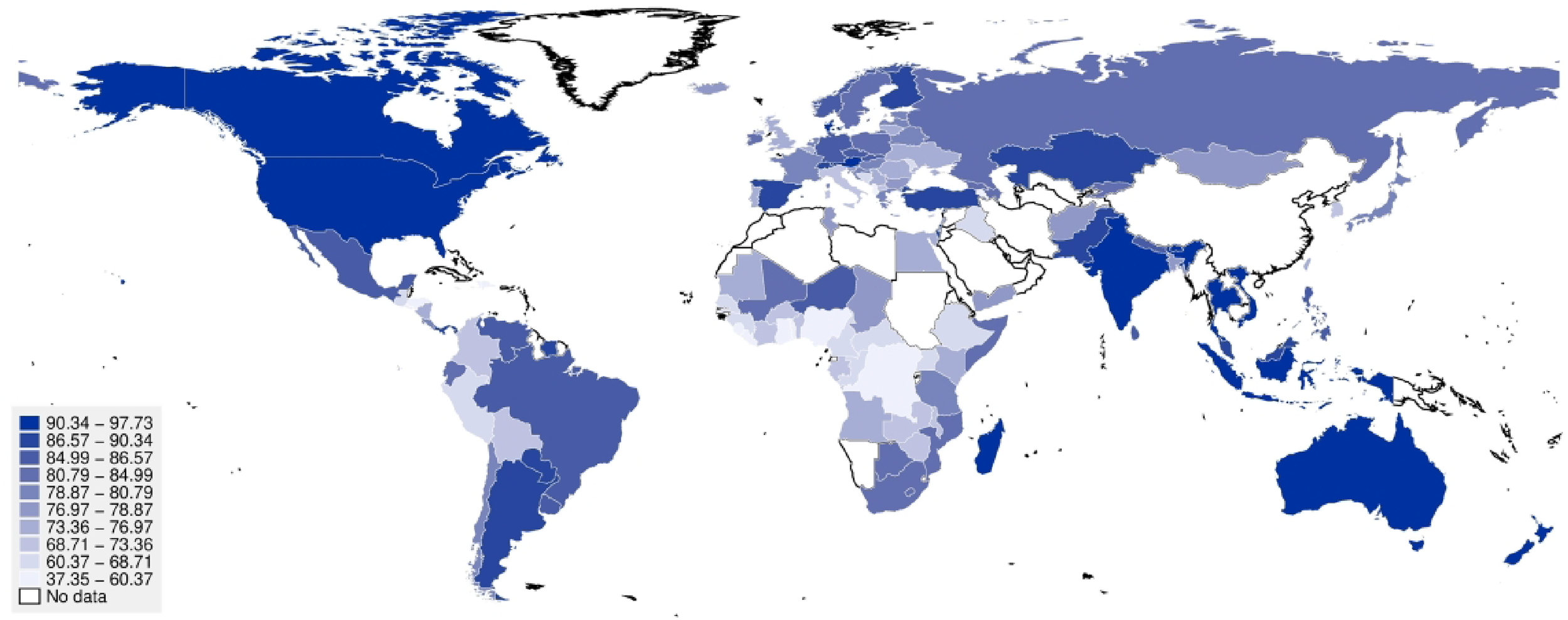
Staying preferences per country.
Figure 1 plots for each country in our sample the average percentage of Gallup World Poll respondents who expressed a preference to stay in their current country of residence (as opposed to migrating permanently abroad) during the period 2010–2016. 3 In almost all countries of the world, the majority of respondents prefer to stay in their country. The four exceptions include the Dominican Republic, Haiti, Liberia and Sierra Leone, where more than half of the population aspires to emigrate. Staying preferences appear to be particularly high in many Asia-Pacific countries and North America, while lower shares are reported in many African and to some extent Latin American countries. A complete list of countries used in our empirical analysis is presented in Appendix Table A2.
Interestingly, the percentage of the population who aspires to stay increases with countries’ urbanization level: the average share of aspiring stayers stands at 73.2 percent in primarily rural societies (i.e., countries with less than 50% of urban population), and reaches, respectively, 76.7 and 81.6 percent in middle/transitioning countries (50–70% of urban population) and highly urbanized societies (more than 70% of urban population). 4 Appendix Table A3 provides an overview of the countries in each category along with their percentage of urban population and aspiring stayers. The percentage of urban population by country is also displayed in Figure 2.
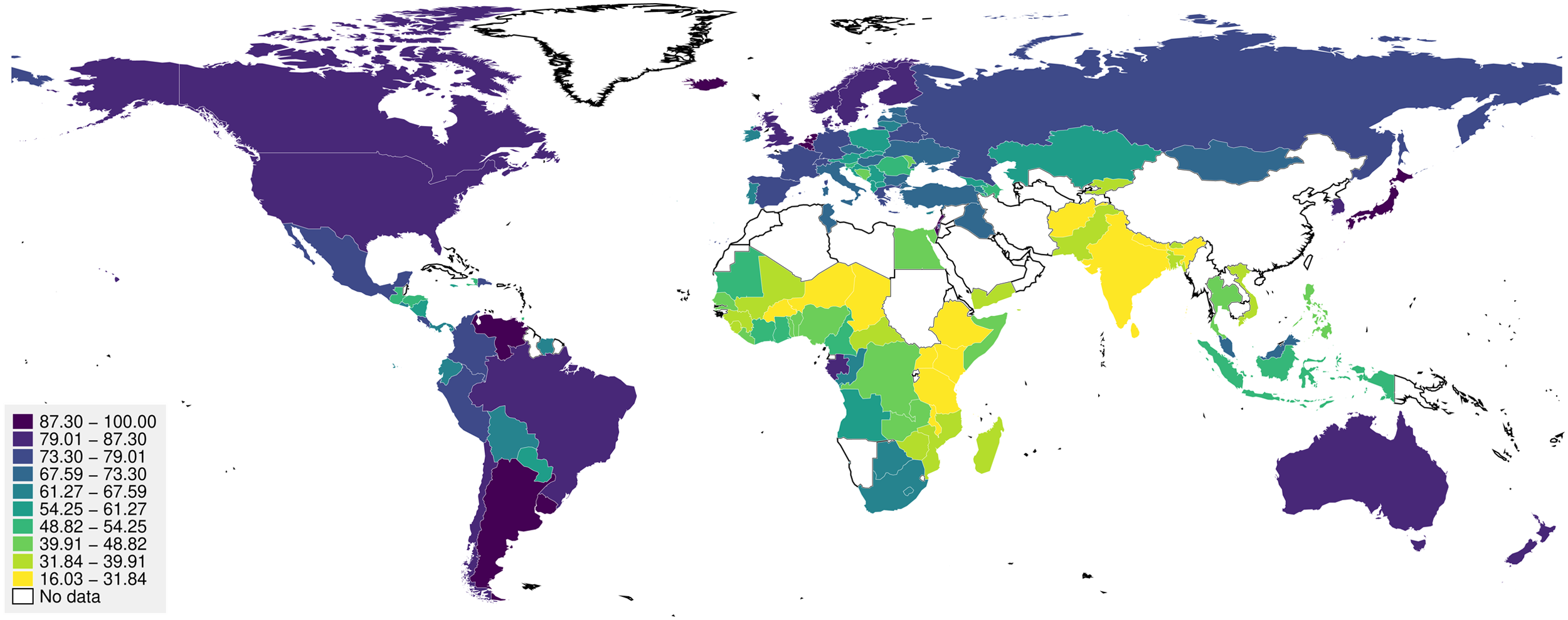
Urban population per country.
The selection of variables considered in the empirical analysis is directly informed by the literature review presented in Section 2. Specifically, our empirical analysis covers standard individual and household characteristics, including respondents’ age and gender (female or male), education level (i.e., whether or not they completed four years of education beyond high school and/or received a 4-year college degree), residential area (i.e., whether or not they live in a rural area or on a farm, in a small town or village as opposed to a large city or a suburb of a large city), the number of children under 15 and the number of adults (aged 15 and above) in the household. We consider respondents’ relationship status (whether they are married or in any form of partnership) as well as their country of birth (which allows to distinguish between natives and foreign-born). We also include a variable capturing the stated importance of religion as part of their daily lives (going beyond one's affiliation to a religion upon which one may not necessarily act).
Beyond these individual and household characteristics, our analyses incorporate additional factors related to an individual's health, economic situation, social life, and community context. 5 Some variables are commonly used in migration research (e.g., employment, network proxies, etc.) while others remain comparatively understudied (e.g., religion or civic engagement).
Concerning health factors, health issues, and poor healthcare services are mentioned as a potential reasons why people want or need to migrate (Bekaert forthcoming; Castelli 2018; Van Hear, Bakewell, and Long 2017), but health-related issues could also motivate a wish to stay — for example, if someone has a specific health issue and would be reluctant to leave their trusted physician or care environment. To explore health factors, we include the GWP's Personal Health Index, which provides information on individuals’ self-stated health combining measures on perceptions of one's own health and incidence of pain, sadness, and worry. We also include the Thriving Index as a proxy for mental health. Individuals were asked where they stand on a ladder with steps numbered from 0 (the worst possible life) to 10 (the best possible life). Individuals are “thriving” if they say they presently stand on step 7 or higher of the ladder and expect to stand on step 8 or higher five years from now.
To control for respondents’ economic situation, we include their employment status (i.e., a dummy for working full- or part-time for an employer or self-employed) as well as stated satisfaction with their standard of living.
To capture social ties, we consider whether respondents have relatives or friends whom they can count on, and whether they are satisfied with the opportunities to meet people and make friends in the city or area where they live. These variables help capture local social networks, which we expect to act as retain factors, enhancing the social costs of migrating abroad (see also Munshi and Rosenzweig 2016). We also include international networks, proxied by respondents’ “distance-one connections” abroad (i.e., whether they have relatives or friends abroad whom they can count on when needed). Such international networks have been systematically shown to exert a key influence on migration decisions (Bertoli and Ruyssen 2018): connections with individuals who have already moved contribute to improve job prospects at destination (Munshi 2003; Patel and Vella 2013) and they can reduce the multifaceted costs of crossing a border (Carrington, Detragiache, and Vishwanath 1996).
The last category captures factors related to the quality of local institutions, trust in them, and political and civic engagement, which we broadly refer to in terms of “community institutions.” 6 We include proxies for whether people are satisfied with local amenities, relating to the quality of institutions, including public transport, roads, air, water, and healthcare quality, availability of housing, and the educational system. We account for approval of the job performance of their country's leadership, as well as a reflection on discontent and “action-orientedness” in making the effort to talk to local officials — similar to how Hirschman theorized the “voice” (i.e., expressing discontent with the hope of changing things within a company or state) instead of “exit” (i.e., leaving; Hirschman 1970). We also add the civic engagement index, which addresses the inclination to volunteer one's time and assistance to others. Finally, we include variables relating to perceived safety and security (e.g., feeling safe walking alone at night in the city or area where one lives, having confidence in the local police force, and whether one has been assaulted or mugged, or had money or property stolen in the last 12 months). Appendix Table A1 includes the GWP questions for each of the above variables.
Table 2 shows descriptive statistics for the factors considered in the empirical analysis either for the entire sample (left panel), for the subsample of aspiring stayers (middle panel), or for aspiring migrants (right panel). 77.8 percent of the respondents in our sample state a preference to stay in their country. The majority of the respondents are in partnerships or married, most of them are native (4.5 percent is foreign-born), and 52 percent are women. The average household in our sample has one to two children and three adults at home. 62 percent of the respondents live in a rural area. For 75 percent, religion is an important part of their daily life. A typical respondent of the sample is native from the area and has a higher education level (either secondary or tertiary). 72 percent find themselves in good health, but only one in four respondents indicates to be thriving. Slightly over half are employed and satisfied with their standard of living. Around 80 percent have a local social network to rely on and find it easy to make friends, while 38 percent have an international network to rely on. The majority of the respondents in our sample feel safe walking alone at night and have trust in the police, while only a minority (less than 20 percent) were victims of a crime in the past year. One in three is civically engaged and around one in five has voiced their opinion to a public official in the past month.
Distinguishing between aspiring stayers and aspiring migrants, Table 1 reveals gaps of different sizes for different variables. At first sight, there are no major differences between aspiring stayers and migrants in terms of household size, education level, migration history, religiosity, health, or employment status. However, women are overrepresented among aspiring stayers, while aspiring migrants are predominantly male. Aspiring stayers are typically older, more likely to be in partnership or marriage, and more likely to live in rural areas than aspiring migrants. It is also interesting to note that those who aspire to stay are generally more satisfied with their life than those who aspire to migrate: those who wish to stay in their home country are more likely to thrive; they are more satisfied with their standard of living, opportunities to make friends and basic amenities in the community; and they appear to feel safer and more trusting in the police and country's leadership.
Descriptive Statistics for Aspiring Stayers and Aspiring Migrants.
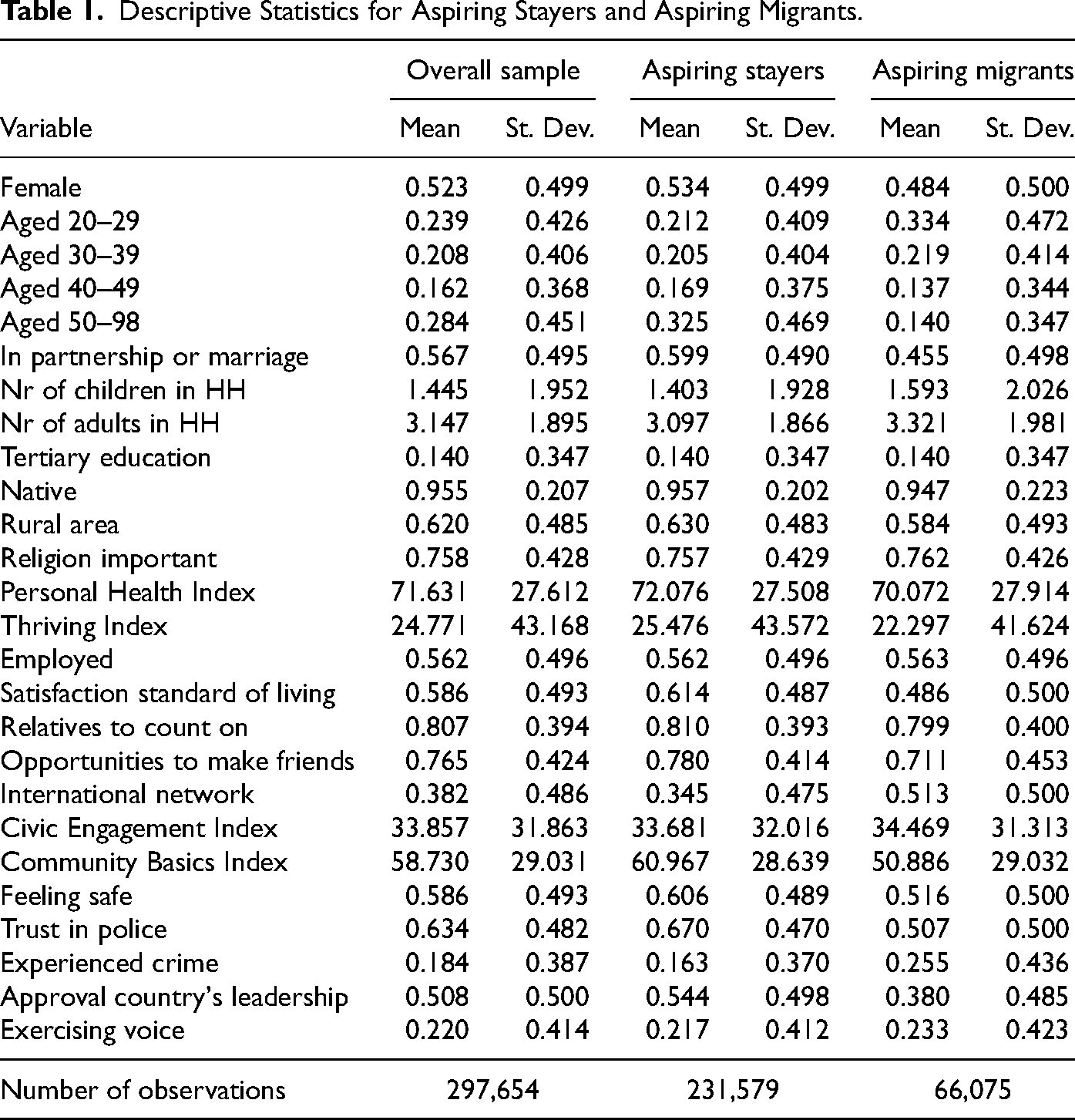
Descriptive Statistics for Aspiring Stayers and Aspiring Migrants.
Pairwise correlations for all variables in our empirical analysis can be found in Appendix Table A4. Reassuringly, none of these is noticeably high (i.e., above |0.8|), which mitigates concerns about potential multicollinearity. The highest correlation value that we observe stands at 0.37 between the variables Trust in police and Feeling safe. 7
This section outlines a stylized model of the determinants of individuals’ aspiration to stay in their country of residence. Our framework draws from theoretical models of international migration (aspirations) which typically assume individuals to be rational agents choosing the location that maximizes their (expected) utility. As argued in Section 1, existing literature has mostly focused on understanding aspirations to migrate and the role therein of push and pull factors, while retain and repel factors have been mostly overlooked, even if they may be of great value to explain prevalent staying preferences. By exploring both economic and non-economic retain factors, we aim to broaden analyses of “utility maximization” to meaningfully incorporate social, physical, and cultural factors that contribute to satisfaction, well-being, and overall “utility” and thus play an important role in migration decision-making (see De Jong and Fawcett 1981).
Specifically, we estimate the following empirical specification to analyze the determinants of staying preferences using a logit fixed effects estimator:
The inclusion of country and year fixed effects,
The tables displaying our estimation results present exponentiated coefficients, which can be interpreted as relative risk ratios. The latter indicates how much the probability of aspiring to stay varies relative to aspiring to migrate abroad, following a unit change in a right-hand side variable, holding all else constant. Values greater than one indicate an increase in the likelihood of expressing staying aspirations, while coefficients smaller than one indicate an increase in the likelihood of migration aspirations.
Table 2 presents the results for several specifications considering different individual, health, economic, social, and community institution-related factors before coming to the general model accounting for all categories together. Focusing on individual and household characteristics first (column 2), the effects confirm many findings of previous studies of migration aspirations (see Aslany et al. 2021, for a review). We find that women are more likely to prefer to stay than men: holding constant the other variables, the probability of aspiring to stay over migrating abroad is 22.6 percent higher for women than for men. Moreover, staying preferences consistently increase with age. The likelihood to aspire to stay relative to moving out is larger among people in a partnership or marriage (26.1% higher), among natives (37.8% higher), the religious (13.9% higher), and those without tertiary education. Staying aspirations are also higher in smaller households and in rural areas.
Benchmark Logit Estimates on the Whole Sample of Respondents.
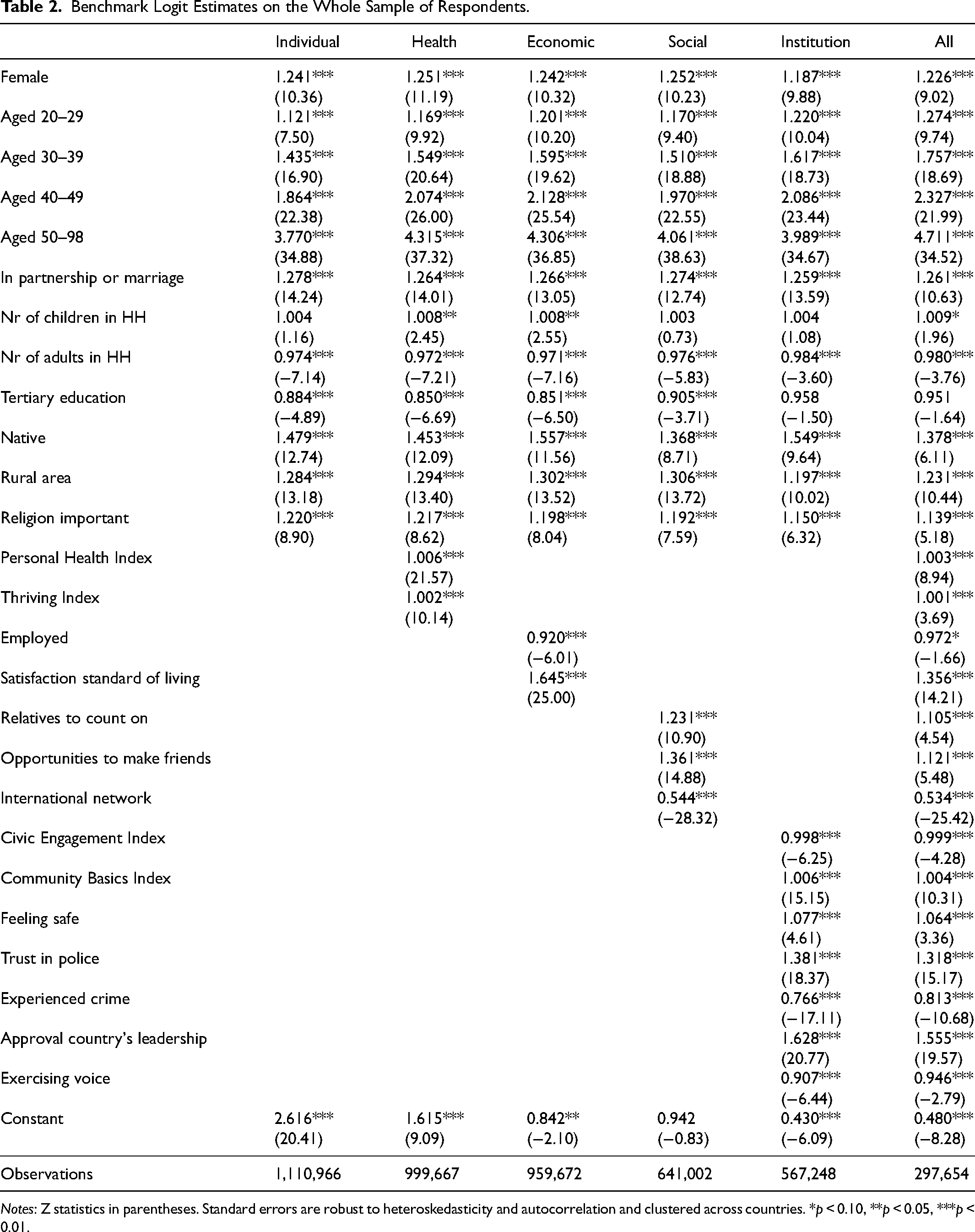
Benchmark Logit Estimates on the Whole Sample of Respondents.
Notes: Z statistics in parentheses. Standard errors are robust to heteroskedasticity and autocorrelation and clustered across countries. *p < 0.10, **p < 0.05, ***p < 0.01.
Importantly, most of these estimated effects are qualitatively robust to the inclusion of additional variables (the only exceptions being the number of children in the household and having tertiary education, which consistently appear with the same sign, though their significance varies across specifications). Note also that adding categories of potential drivers of staying preferences reduces the sample size as some of the variables of interest have missing values for certain countries and/or years.
Adding health factors to the specification (as reported in column 3), we find that respondents are more likely to aspire to stay in their country when they are in good health and thriving.
Regarding economic factors, people who are employed seem more likely to express aspirations to move abroad. The negative significant effect of being employed (i.e., reducing staying preferences) might come across as counterintuitive but is not new (see also Migali and Scipioni 2019; Mintchev et al. 2004; Schewel and Fransen 2022) and might signal that being employed gives access to information, networks, and know-how to imagine and pursue migration. The significant effect, however, disappears when all factors are accounted for (column 6), suggesting other factors are more important. Notably, this variable only provides an indication of employment status, not compensation or job satisfaction. As one might expect, we find that aspirations to move away are smaller among those who are satisfied with their standard of living, which survives the inclusion of other factors.
Regarding social factors, those with relatives that they can count on and those who have opportunities to make friends are more likely to aspire to stay. Those with international networks, however, are much more likely to aspire to migrate.
Finally, as far as community institutions and other local factors are concerned, our results indicate that staying preferences are larger for those who feel safe, trust the police, and have not experienced crime. Those who approve of their country's leadership and are more satisfied with local amenities are also more likely to aspire to stay. We also ran regressions breaking down the Community Basics Index in its underlying dimensions (public transport, roads, air, water and healthcare quality, availability of housing, and educational system). Each variable of the index (except for satisfaction with water quality) is significantly and positively associated with the aspiration to stay (results available upon request). 8
Interestingly, we find the exercise of “voice” is negatively correlated with staying aspirations, suggesting this indicator may reflect discontent with one's local situation more than a commitment to it. “Voice” and “exit” (i.e., migration) do not appear as two alternative actions as Hirschman's (1970) framework suggests but seem to act as complements for the discontented (see also Hoffmann 2010). Perhaps more puzzling is a similar trend for civic engagement. One would assume civic engagement reflects a degree of social embeddedness in a community, which tends to be associated with greater staying aspirations. However, those who volunteer their time to assist others are slightly less likely to aspire to stay.
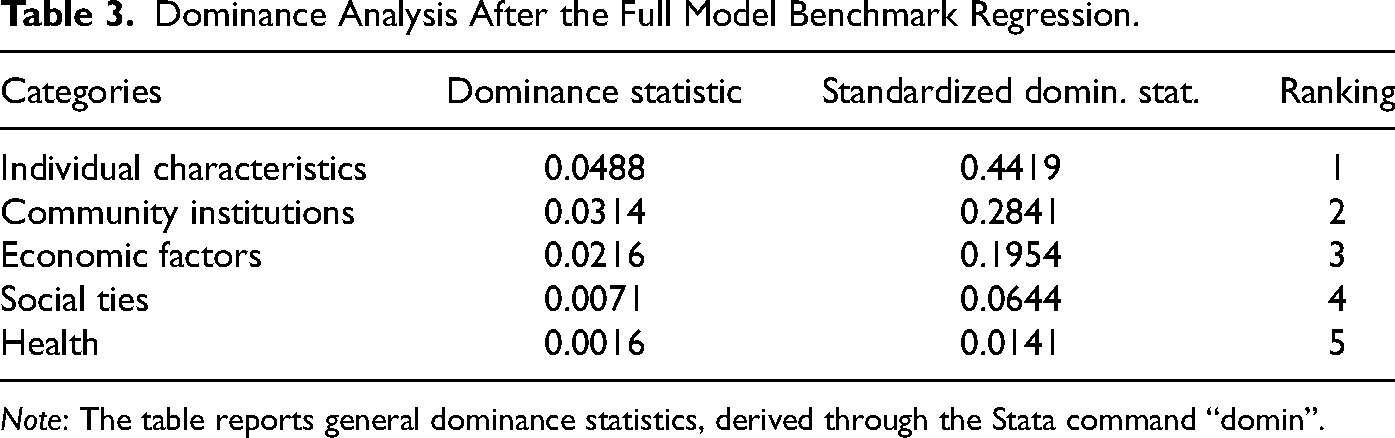
In order to better understand the relative contribution of the various categories of independent variables in explaining preferences to stay, we conduct a dominance analysis. The latter determines the relative importance of each category by aggregating fit metrics across multiple models containing each possible combination of independent variables in the full model (see Grömping 2007 for a discussion). Table 3 reports the general (standardized) dominance statistics and their ranking obtained through the Stata command “domin”, equivalent to Shapley values decomposing the overall fit statistic from the full model (Luchman 2021). The general dominance statistics are derived as the weighted average marginal contribution that a category of independent variables makes to the overall R square across all models in which the category is included.
Dominance Analysis After the Full Model Benchmark Regression.
Note: The table reports general dominance statistics, derived through the Stata command “domin”.
The category Individual characteristics, for instance, has a value of 0.049, which means, on average, individual characteristics result in an increment to the R square of about four percentage points when they are included in the model. In fact, this is the largest contribution across all categories, good for 44 percent of the full model's explanatory power, hence ranking first. Interestingly, the variables that we include under community institutions — including trust and satisfaction with local institutions and amenities alongside civic and political engagement — are the second most important set, constituting 28 percent of the full model's explanatory power. Together, these have a greater influence on staying aspirations than other economic, social, or health-related factors.
The relative importance of the various determinants of staying aspirations is likely to vary both across countries — depending on levels of “development” however defined — and within countries, depending on the demographic or socioeconomic characteristics of different populations. To test this, we rerun our benchmark model on various subsamples defined on the basis of specific characteristics of countries — here we consider levels of urbanization and GDP per capita 9 — and of subpopulations based on gender, educational attainment, and rural/urban residence. It is important to note that discrepancies in findings between subgroups might, to some extent, be related to differences in sample size as most of these breakdowns typically do not produce balanced subsamples. However, the sample size in each of the subsamples is still sufficiently large to obtain reliable estimates.
Variation across countries by urbanization level
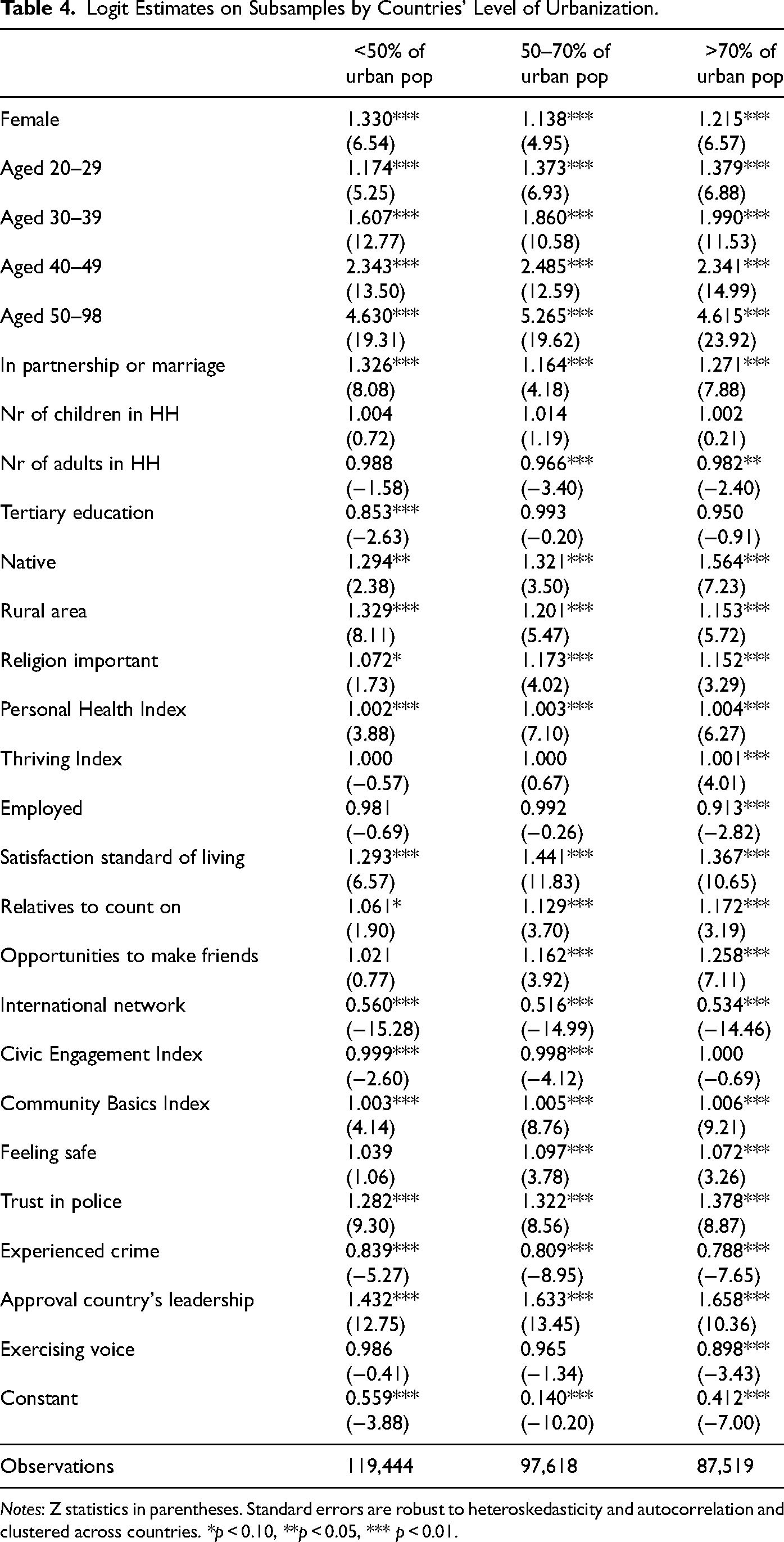
Table 4 presents the results from regressions on subsamples of countries by urbanization level, which we consider an underlying dynamic of economic growth capturing social changes beyond income level differences. We expect certain variables to operate differently for countries at different levels of urbanization. For example, what it means to be rural in a country like the Netherlands is a very different reality from rural Ethiopia. Information on countries’ urbanization levels is obtained from the World Development Indicators for the period of analysis. Countries are distributed across three balanced groups corresponding to (a) primarily rural societies (i.e., countries with less than 50% of urban population); (b) middle/transitioning countries (50–70% of urban population); and (c) highly urbanized societies (more than 70% of urban population). Descriptive statistics according to urbanization levels can be found in Appendix Table A5.
Logit Estimates on Subsamples by Countries’ Level of Urbanization.
Logit Estimates on Subsamples by Countries’ Level of Urbanization.
Notes: Z statistics in parentheses. Standard errors are robust to heteroskedasticity and autocorrelation and clustered across countries. *p < 0.10, **p < 0.05, *** p < 0.01.
Table 4 reveals that while some relationships hold for countries at all levels of urbanization (i.e., for gender, age, and relationship status), some factors only affect staying preferences in most urban societies, while others only seem to matter in predominantly rural areas. Living in a rural area is, for instance, associated with greater aspirations to stay across all levels of urbanization. In contrast, it appears that being tertiary educated decreases the likelihood of aspiring to stay only in primarily rural countries, while factors like thriving, feeling safe, having relatives to count on, and being religious are significant retain factors only in more urban countries. Being employed and exercising voice are only significant and negatively associated with staying aspirations in the most urbanized countries.
The stated importance of religion in one's everyday life has a stronger effect on staying preferences in more urban societies. The relationship is only marginally significant in rural societies, likely because variation is comparatively low there. Most people value religion in predominantly rural countries (i.e., 93 percent in the primarily rural societies in our sample), while there is more variation in the stated importance of religion among individuals in more urbanized countries (the share of practicing religious respondents stands at 57 percent in the highly urbanized societies in our sample, and 73 percent for those in between), which makes for a larger source of identification, explaining the positive significant effect in those countries.
Categorizing countries by more traditional criterium like a country's aggregate income level rather than urbanization level reveals very similar results. There are a few divergent findings, which we would expect given that — while correlated — these indicators are not perfectly overlapping. Appendix Figure A1 displays average GDP per capita by country during our sample period. Table A6 presents the results from regressions on subsamples of countries by income level using the World Bank income classification of countries into low, lower-middle, upper-middle, and high-income countries. Tertiary education is associated with reduced staying aspirations only in lower-middle-income countries, while the estimated effect remains insignificant in the other samples. The number of children in the household is also only significant in this group of countries. On the contrary, being born abroad is associated with a lower likelihood of aspiring to stay in one's country in all but lower-middle-income countries. Local social ties (having relatives to count on when needed and finding it easy to make friends in the local region) and the importance of religion act as significant retain factors only in wealthier, that is, upper-middle and high-income countries. Aspirations to stay also decrease with the number of adults in the household only in this group. Thriving, being employed, and exercising voice seem to affect aspirations to stay only in high-income countries (at the 1 percent significance level). Feeling safe at night seems to matter only in low and upper-middle-income countries. All other variables appear with a robust significant effect across country groups.
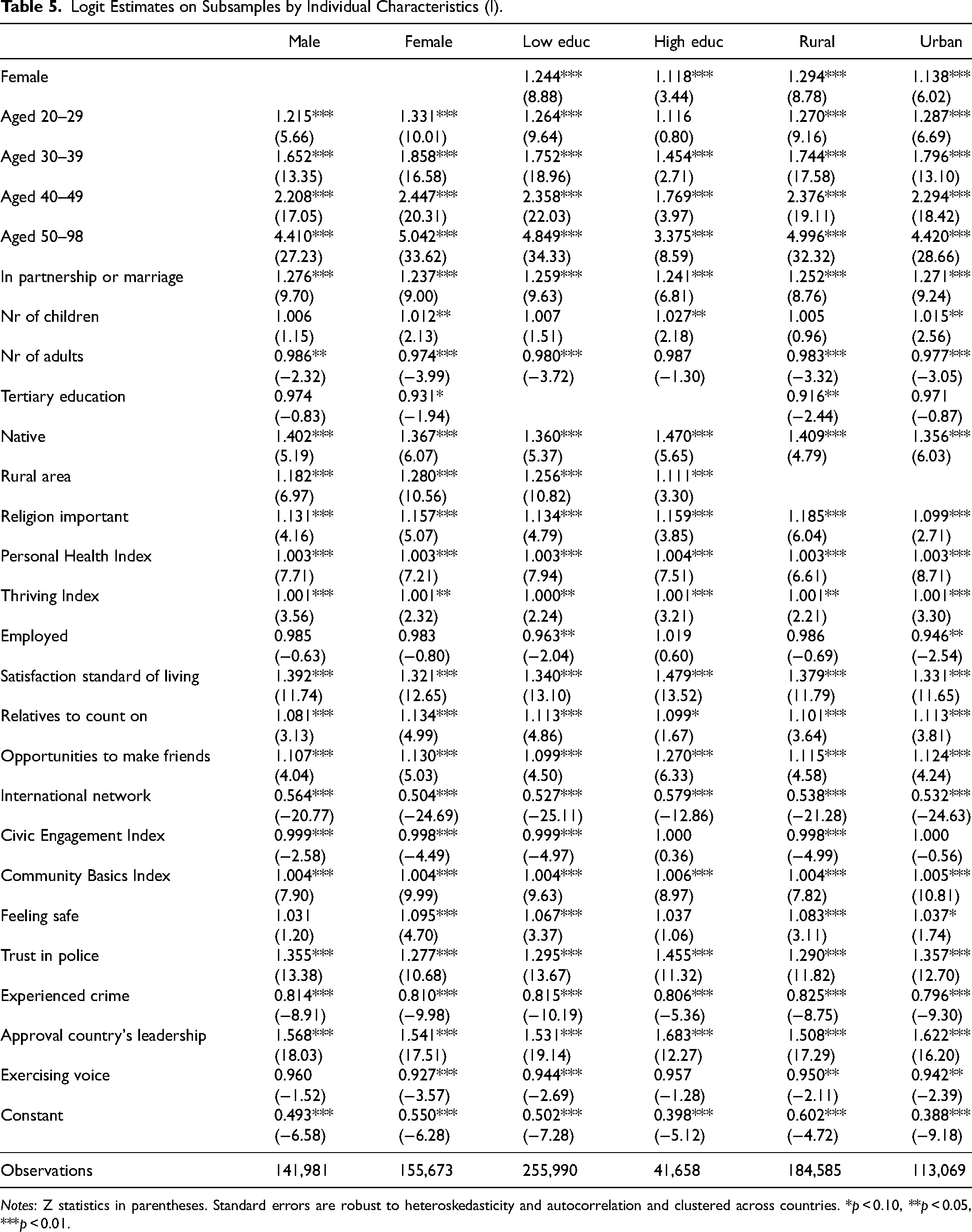
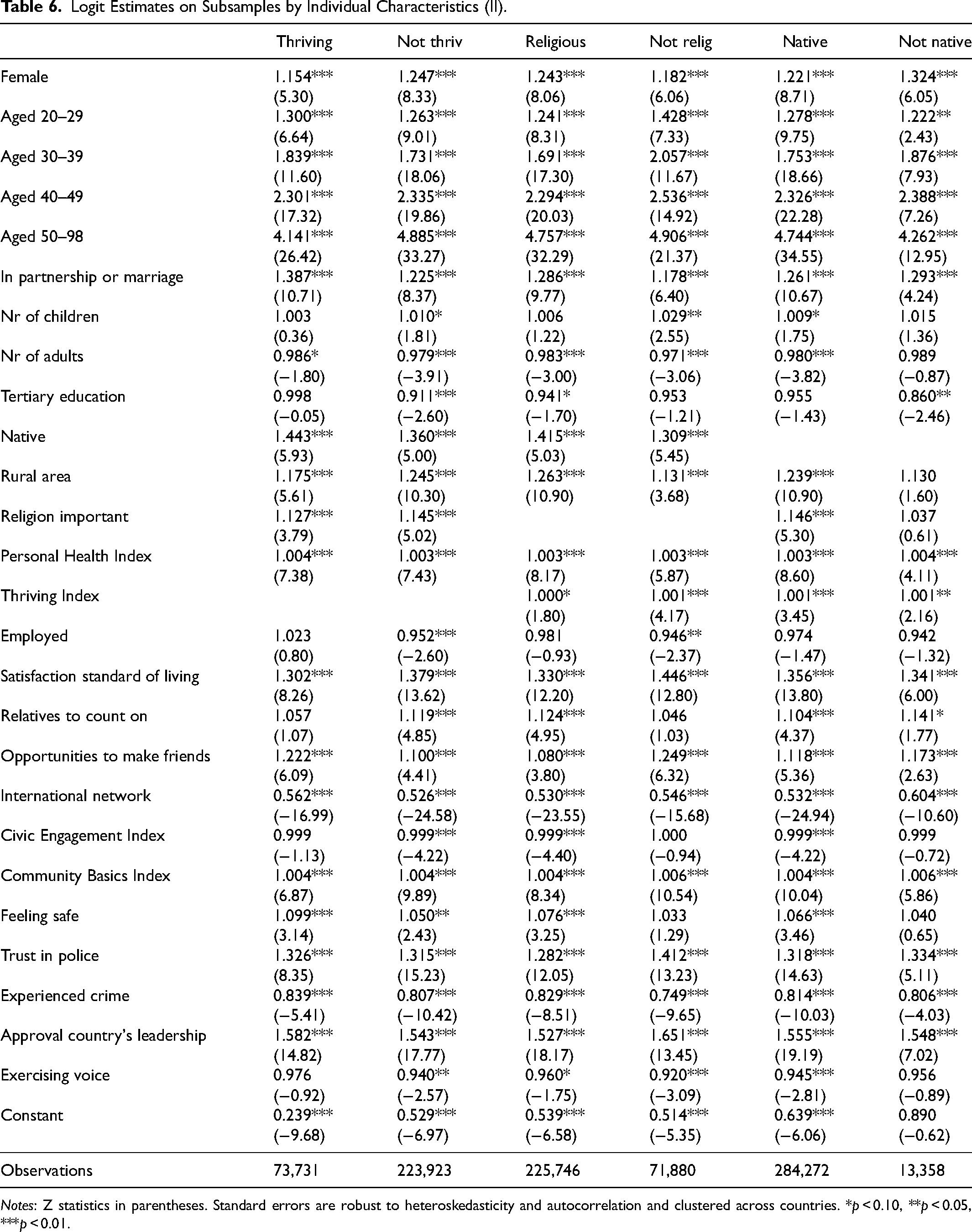
Tables 5 and 6 present the results from regressions on subsamples of the population to explore the impact and intensity of retain factors across social groups. Specifically, in Table 5, we rerun the benchmark regression separately for men versus women (columns 1–2), low versus high educated (columns 3–4), and respondents living in rural versus urban areas (columns 4–5). In Table 6, results are shown separately for those who are thriving or not thriving (columns 1–2), the religious versus the non-religious (columns 3–4), and natives versus the non-natives (i.e., foreign-born; columns 5–6). The breakdowns reported in Table 5 are common in the literature; those shown in Table 6 are less explored, but potentially interesting.
Logit Estimates on Subsamples by Individual Characteristics (I).
Logit Estimates on Subsamples by Individual Characteristics (I).
Notes: Z statistics in parentheses. Standard errors are robust to heteroskedasticity and autocorrelation and clustered across countries. *p < 0.10, **p < 0.05, ***p < 0.01.
Logit Estimates on Subsamples by Individual Characteristics (II).
Notes: Z statistics in parentheses. Standard errors are robust to heteroskedasticity and autocorrelation and clustered across countries. *p < 0.10, **p < 0.05, ***p < 0.01.
For example, one might imagine that a person who aspires to migrate even though they are reportedly “thriving” at home is qualitatively different from aspiring to migrate because of strong discontent with one's home situation. If a person is reportedly thriving, a tertiary education degree may increase their opportunities for work and thus the likelihood of staying. If a person is not thriving, achieving tertiary education may increase their ability to migrate internationally. A similar reasoning could also apply to employment. If you are content with your life and are employed, this may enhance your desire to stay, but if you are dissatisfied, being employed may help you afford the costs of migration and imagine leaving.
We include religion because this expressed religiosity acts as an important retain factor, most notably in urban societies. As mentioned above, religiosity is less of a differentiating factor in more rural societies. Thus, it is harder to discern its impact in rural countries where the vast majority of the population value religion as an important part of their everyday life. This analysis allows us to zoom in on potential differences between religious and non-religious populations within countries.
Finally, we differentiate between natives and non-natives (i.e., those who are foreign-born) to allow for heterogeneity stemming from the migration history of the latter. Former migrants might be more inclined to migrate again, given that they already have migration experience, or to return to their country of birth.
Differentiating by gender (Table 5, columns 1–2), we find that staying preferences rise with the number of children in the household for women but not for men. Women's staying preferences also increase as they feel safer, while this does not seem to play a role for men. The effect of tertiary education — rising aspirations to migrate — is only significant, but marginally so, for women. This is not the case for exercising voice, which appears to have a strongly significant negative effect for women but remains insignificant for men. Focusing on the magnitude of some of the effects, having relatives to count on when in need appears as a stronger retain factor for women than for men: the probability of aspiring to stay over migrating abroad stands at 13.4 (8.1) percent for women (men) who indicate having relatives to count on versus those who do not. In contrast, men are relatively more responsive to being able to trust the police: the probability of aspiring to stay over migrating abroad is 35.5 (27.7) percent higher for men (women) when they have trust in the police versus when they do not.
Distinguishing those with tertiary education from those with lower education (columns 3–4) also reveals some stark differences. Only the tertiary educated seem more likely to aspire to stay if there are more children in the household, while the latter does not affect aspirations to stay or migrate for those with less education. In contrast, employment, civic engagement, and exercising voice only have a significant and negative effect on staying aspirations for those with lower levels of education. Similarly, feeling safe acts as a retain factor only for this group. In terms of magnitude, having relatives to count on matters more for those with less education, while those with tertiary education seem to attach more weight to opportunities to make friends when considering living abroad versus staying.
Concerning the rural-urban breakdown (columns 5–6), we find that staying aspirations rise with the number of children in the household only for those living in urban areas. Tertiary education is associated with reduced staying aspirations (or greater migration aspirations) in rural areas but has no significant effect in urban areas — perhaps because it is harder to find professional work in rural areas, introducing the need to migrate for work, while there tend to be more opportunities for professional employment in urban areas. On the contrary, employment is associated with reduced staying aspirations only in urban areas.
As can be seen from columns 1 and 2 in Table 6, achieving tertiary-level education reduces the likelihood of staying and increases aspirations to migrate only for those who are struggling in life, while for those who are thriving, tertiary-level education does not seem to affect staying or migration aspirations. The same holds for employment status and civic engagement; these are negatively associated with staying aspirations only for those who are not thriving. Interestingly, those who are struggling might be more inclined to stay when they have relatives to count on, while there is no significant relationship with staying aspirations for those who are thriving.
Regarding religiosity (columns 3–4), more children in the household act as a retain factor only for the non-religious (i.e., those who state that religion is not an important part of their daily life). Employment is associated with reduced staying aspirations for the non-religious but has no significant effect for the religious cohort. Alternatively, those who are religious are more inclined to stay if they have relatives to count on and feel safe in their area of residence, while these variables are not significant for the non-religious.
Focusing on natives versus non-natives (columns 5–6), we find that tertiary education reduces incentives to stay for those who were not born in their current country of residence. Staying aspirations are higher for natives residing in rural areas, for whom religion is important and who feel safe, while those factors do not seem to be significant for non-natives. Also exercising voice seems to matter only for natives, not for the foreign-born. A stronger significant effect is also obtained for having relatives to count on among natives than non-natives.
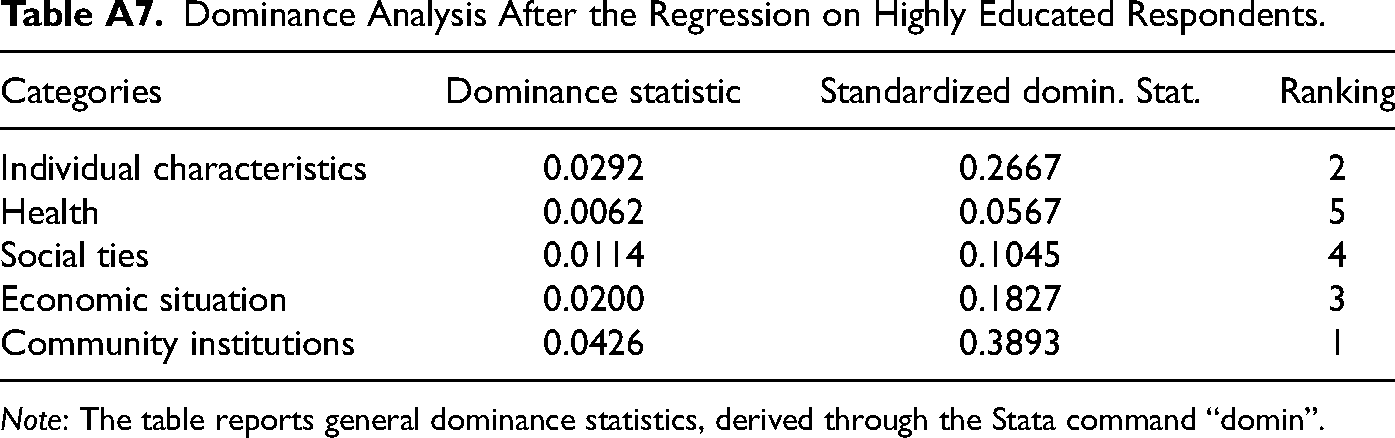
Finally, the dominance analyses for the regressions on the subsamples provide strikingly similar results as those obtained from the dominance analysis conducted after the benchmark regression on the full sample. The only exception where a different ranking of the importance of the various categories is obtained is for the sample of tertiary educated, for whom indicators related to community institutions now even top the ranking before individual characteristics. The results for the latter are reported in Appendix Table A7.
This article provides the first global analysis of the characteristics and contexts associated with the aspiration to stay. We use the unique Gallup World Polls, which provide information on the aspiration to stay (as opposed to migrating abroad) as well as on individual characteristics and opinions for 130 countries worldwide between 2010 and 2016. We map staying preferences around the world and find the vast majority of the population in almost all countries surveyed prefers to stay in their country of residence.
Some factors associated with staying aspirations may be unsurprising to readers well familiar with research on migration aspirations, such as the finding that staying aspirations increase with age and are more common among women and married adults. Age is the strongest retain factor across models — particularly for individuals over age 50 — and reiterates the importance of a life course perspective in migration and immobility research. However, we also find evidence for other important retain factors that have not yet received significant attention in quantitative studies of migration aspirations yet appear to be crucial to explain widespread desires to stay put — such as the importance of community institutions and local amenities, approval of one's country's leadership, feeling safe or personal health.
Many of the retain factors we uncover are intuitive. Our findings generally support the idea that individuals who are more content with their life circumstances are more likely to want to stay where they are. We find staying aspirations are higher for those who express higher levels of life satisfaction, higher satisfaction with the institutions and amenities of their community, those who have stronger local networks of support and opportunities to make friends, those who feel safe, have not experienced crime, have trust in the police and approve of their country's leadership. These findings resonate and add to recent research on the relationship between migration and happiness. Brzozowski and Coniglio (2021), for example, find that unhappy individuals from unhappy households are significantly more likely to declare their intentions to migrate abroad. Our findings show the relevance of different factors that contribute to overall life satisfaction and happiness and thus a preference to stay.
Other relationships are less immediately intuitive. For example, previous research shows that individuals who choose to migrate tend to be healthier than the average population (Jasso et al. 2004; Antecol and Bedard 2006), but our findings show that healthier individuals overall are more likely to aspire to stay. Higher levels of education and employment are not associated with greater desires to stay — in fact, they are more often associated with greater migration aspirations, but their influence varies for different population groups. Interestingly, greater civic engagement (or those who volunteer their time and energy to help others) is more often associated with greater migration aspirations, perhaps because those individuals who take the initiative to volunteer may also be more likely to take the initiative to migrate. Relatedly, exercising “voice” through, for example, contacting a public official, is also associated with migration aspirations, though this relationship only holds in highly urban societies and for particular population subsamples like women or those with less education. One implication is that exercising voice may reflect discontent with one's local situation more than a commitment to it.
One important limitation of our analysis is that we are unable to examine whether respondents have a realistic opportunity to migrate internationally, and thus how the aspiration to stay may be influenced by the capability to migrate, or lack thereof (see Carling and Schewel 2018). Among those who express the aspiration to stay, one can distinguish between those with and without the capability to migrate — theorized by Schewel (2020) as “voluntary immobility” and “acquiescent immobility,” respectively. The immobility of those who aspire to stay but have the capability to migrate is arguably more voluntary than those who aspire to stay but lack the capability to leave. Regarding the latter, some of the acquiescently immobile may have never aspired to migrate; others might have once aspired to leave but, in the face of significant constraints on their mobility, adapted their preferences toward immobility to avoid the cognitive dissonance and discomfort that comes from being unable to realize one's aspirations (Carling and Schewel 2018; Ortiga and Macabasag 2021; Osburg 2020). We were not able to explore these differences between voluntary and acquiescent immobility here, but this is an important area for further research.
Finally, in an exploratory paper of this scope, it is impossible to give every relevant factor the level of conceptualization or analysis it deserves. Our intention is not to provide an exhaustive analysis of each variable but rather to sketch their relationship with staying preferences to pave the way for future in-depth studies that may explore these factors in greater detail. In this light, our findings highlight the important influence of community-level dynamics — such as trust in institutions or the quality of local services and infrastructure — on staying preferences. Exploring the relative contribution of different types of factors on staying aspirations, a dominance analysis reveals that individual characteristics hold the highest contribution to the full model's explanatory power, followed by indicators of community institutions which outrank all other categories, that is, economic factors, social ties, and health indicators, in that order. Our global analysis thus confirms the findings of many small-scale, qualitative studies of voluntary immobility, which have long shown that economic factors are important but alone insufficient to explain aspirations to stay. Among the many non-economic factors that could be given more systematic attention, we find community-level dynamics emerge as a central area for further exploration in future migration and immobility research.
Footnotes
Acknowledgments
We are grateful to participants of the 2021 Conference on Economics of Global Interactions in Bari, the 2021 online IMISCOE Conference, the 2021 CESSMIR Migration in practice Conference in Ghent, the 2022 Understanding Voluntary & Forced Migration Conference in Lille, the 2022 Borders Workshop in Ghent, the 2021 ITIM seminar in Ghent and the 2021 PSE summer school in Migration Economics in Paris, as well as two anonymous Reviewers for their valuable comments and suggestions.
Declaration of Conflicting Interests
The authors declared no potential conflicts of interest with respect to the research, authorship, and/or publication of this article.
Funding
The authors received no financial support for the research, authorship, and/or publication of this article.

Notes
Appendix
Dominance Analysis After the Regression on Highly Educated Respondents.
| Categories | Dominance statistic | Standardized domin. Stat. | Ranking |
|---|---|---|---|
| Individual characteristics | 0.0292 | 0.2667 | 2 |
| Health | 0.0062 | 0.0567 | 5 |
| Social ties | 0.0114 | 0.1045 | 4 |
| Economic situation | 0.0200 | 0.1827 | 3 |
| Community institutions | 0.0426 | 0.3893 | 1 |
Note: The table reports general dominance statistics, derived through the Stata command “domin”.