







Abstract
In this systematic review, we examined interventions for increasing prosocial employment skills for adolescents with emotional and/or behavioral disorders (EBDs). Many studies have focused on social skills related to employment for individuals with intellectual disabilities or autism spectrum disorders. However, there is a paucity of research on employment skills for individuals with EBD. A synthesis of available literature may help inform what is currently known about supporting prosocial employment skills for this group of students. We examined components of strategies that promote successful employment outcomes for individuals with EBD. We identified 12 studies involving 2,095 transition-age students, with 249 students identified with or at risk of EBD. Findings indicate that explicit teaching of prosocial employment skills is an effective strategy for increasing these skills. Included studies were evaluated using the Council for Exceptional Children Standards for Evidence-Based Practices in Special Education. Recommendations for future research and practice are discussed.
The transition from high school to adulthood is often characterized by both excitement and apprehension. Graduating from high school, gaining meaningful employment, and living independently are goals for most young adults including those with disabilities (Carter & Wehby, 2003), such as emotional and/or behavioral disorders (EBDs). Emotional and/or behavioral disorder is a broad term used to describe the full spectrum of students with social, emotional, and behavioral problems who may or may not receive special education services. This term includes a subset of students who qualify for special education and are served under the Individuals with Disabilities Education Improvement Act of 2004 (IDEA) category of emotional disturbance (ED) due to social–behavioral difficulties that lead to adjustment difficulties in educational, psychosocial, and vocational domains (Bullis & Cheney, 1999; Cook et al., 2008; Mitchell et al., 2019). Both terms will be used in this article. While we will specifically address children and youth with ED, our reference to EBD within this article includes this group of students. Upon graduation from high school individuals with EBD often experience substantial challenges managing the variety of roles and responsibilities that are components of adult life (Davis & Cumming, 2019; Wagner et al., 2017).
Over the last two decades, studies of post-high school outcomes for students with EBD have portrayed rather bleak scenarios. Mitchell et al. (2019) noted that outcomes for students identified with ED are among the worst when compared with both typically developing peers and those eligible for service in other disability categories. Many individuals with EBD experience challenges successfully making the transition from school to work. If they find that some aspect of a job is unsatisfactory, they are likely to leave a position before gaining opportunities to advance and improve their work life (Wagner et al., 2017; Zigmond, 2006). According to Test et al. (2009), “unfortunately for students with disabilities, the floundering period often lasts for years” (p. 160). This period of uncertainty can be addressed and alleviated through intentional transition planning. Individuals with Disabilities Education Act of 2004 mandates that a transition plan be developed for students ages 16 or older who receive special education services through the Individualized Education Program (IEP) process. The transition plan is an important aspect of the IEP, as it helps facilitate a successful transition from school to adult life. The provisions of IDEA define transition services as a coordinated set of activities focused on improving academic and functional achievement to facilitate movement from school to post-school education, employment, and independent living (see 20 U.S.C. § 1401 sec. 602 [34]). Special education case managers are expected to work with students, parents, teachers, and other stakeholders to establish meaningful goals for post-secondary employment, education and training, and independent living along with a plan for reaching these goals (Harrison et al., 2017; Swank & Huber, 2013). One of the greatest challenges for educators who develop and implement transition programs is to determine what strategies most effectively lead to improved post-school outcomes for students with disabilities (Test et al., 2009; Wehman, 2013). Haber et al. (2016) found that proposed education outcomes did not consistently predict employment, and suggested educators focus on the post-school goals of youth when designing targeted interventions.
Despite legislation and national hiring initiatives, employment rates for individuals with disabilities continue to remain low in comparison with the employment rate for individuals without disabilities (Butterworth et al., 2012; Wehman, 2013). In the final quarter of 2019, the Bureau of Labor Statistics reported the employment participation rate in the United States for individuals ages 18 to 64 with disabilities was 19.2%, whereas the employment rate for individuals without disabilities was 66.6% (Bureau of Labor Statistics, 2020). This represented a large employment gap. Post-secondary employment outcomes for students with EBD are particularly grim, as they have lower rates of enrollment in post-secondary education than their peers (McKay & Ellison, 2021). They also have higher rates of unemployment and job termination compared with other peers with disabilities (Davis & Cumming, 2019; Harrison et al., 2017). Data from the National Longitudinal Transition Study-2 (NLTS2) indicate that 55.8% of students with ED had graduated from high school, and 35.5% had been unemployed at some point between high school and up to 8 years after high school (Carter et al., 2009; Sanford et al., 2011). In addition, individuals with ED have higher levels of involvement with the criminal justice system than those in other disability categories, which cause disruption to their educational progress and employment (Cook et al., 2008; Davis & Cumming, 2019). These outcomes raise the question: how can post-secondary outcomes for individuals with EBD be improved?
When examining which factors promote employability, it has been determined that employees do not lose their jobs because they lack skills to perform required tasks (i.e., hard skills), but because they have difficulty with the social skills (i.e., soft skills) needed to navigate the workplace (Agran et al., 2016; Carter et al., 2010; Carter & Wehby, 2003; Park et al., 2016). Hughes and Carter (2012) suggested that employability skills may be categorized into four areas: (a) work-production-related behaviors, (b) task-related social behaviors, (c) non-task-related social behaviors, and (d) general work behaviors that have relevance across a variety of employment settings. Some examples of work-production-related behaviors include working at the speed expected by the employer, completing quality work, and working continuously without being distracted. Some examples of general work behaviors are being at work on time, following workplace norms for breaks, dressing appropriately for the workplace, and taking responsibility for one’s own actions. The task-related and non–task-related social behaviors can be viewed as employment-related social skills or prosocial employment skills. Examples of employer-desired prosocial skills include the ability to collaborate with teammates, engage in conversation without interruption, limit the use of curse words and offensive gestures, accept feedback appropriately, and incorporate suggestions into job tasks.
Agran et al. (2016) conducted a national survey of professionals, including educators, transition coordinators, vocational rehabilitation counselors, and job coaches responsible for supporting transition programs and career development for youth with disabilities. Results indicated that the skills professionals rated as most important included seeking clarification for unclear instructions, arriving at work on time, refraining from inappropriate touching of others, carrying out instructions needing immediate attention, notifying a supervisor when assistance is needed, responding appropriately to critical feedback, and interacting well with customers/clients (Agran et al., 2016). Employers expect workers to come to the job with the needed social skills to function successfully and do not feel it is their responsibility to teach these work-related social skills. Therefore, secondary transition training plans should address social skills that are socially valued in the workplace (Carter & Lunsford, 2005).
Students with EBD often have difficulty regulating their behavior in social settings including meeting the social demands of the workplace (Carter & Wehby, 2003; Nochajski & Schweitzer, 2014). These youth may have limited opportunities for experiential learning in employment-related settings and may not know what accommodations would be supportive in the workplace. In high school, students with EBD have lower enrollment in school-based job training or vocational courses; therefore, they have fewer opportunities to learn essential employment skills and may have difficulty transferring those skills to actual work sites (Carter & Wehby, 2003; Sitlington & Neubert, 2004; Wagner et al., 2017). Students with EBD may be less likely to disclose their disability to employers, and supervisors may hold different expectations for employees who have known or more apparent disabilities (Carter & Wehby, 2003).
Employers value social skills instruction in secondary school settings where students engage regularly with peers and staff, which provides regular opportunities for practicing employment skills (Agran et al., 2016). The incorporation of explicit social skills training to students with EBD along with self-monitoring strategies facilitates independence in the work environment (Davis & Cumming, 2019). Therefore, IEP teams should consider which specific workplace social skills individual students with EBD need to improve and address them within the transition plan. It is essential to involve the student in the process to ensure the transition plan addresses their post-school goals. Corbett et al. (2002) found that general vocational skills training in the classroom paired with specific on-the-job training and opportunities to practice social skills in the workplace environment were predictors of positive post-school employment outcomes. Karpur et al. (2005) found that students with EBD who took part in the Steps-to-Success transition program had better overall post-school outcomes than those in a control group in terms of post-secondary education opportunities. Students were referred to the program based on demonstrated interest in pursuing a vocational area along with the recommendation of the IEP team. Along with person-centered planning that incorporated academic curriculum and employability training within the community, students had the opportunity to engage in work experiences with supports tailored to help them succeed (e.g., academic tutors, co-worker mentors), and counseling services (e.g., individual and group therapy). Despite the positive post-secondary education outcomes, results of this study indicated that employment outcomes for both groups were similar and highlighted the need for more generalization and maintenance data.
Further research is needed to understand how to teach employment-related social skills to students with EBD during the transition years. Specifically, a comprehensive literature review is needed to address the: (a) intervention strategies found to be effective for teaching employment related social skills to secondary students with or at risk of EBD, (b) characteristics of the students, instructors, and settings involved in these studies, (c) key components comprising these intervention approaches, and (d) quality of extant research against a rigorous set of indicators. To date, such a review focusing specifically on employment-related social skills has not been conducted; the present study aims to fill this gap.
Purpose of the Current Study
The purpose of this systematic review was to explore the literature on interventions used to teach employment-related social skills to secondary students with or at risk of EBD. The following research questions were investigated:
Method
To address the research questions, we followed the Preferred Reporting Items for Systematic Reviews and Meta-Analyses (PRISMA; Page et al., 2021) guidelines throughout the processes of article identification and screening. The first author and two independent coders conducted a systematic search of interventions used to teach employment-related social skills to secondary students with or at risk of EBD. The coding team comprised advanced doctoral students trained in systematic review procedures. In addition, all three coders evaluated the quality of identified studies based on Council for Exceptional Children (CEC, 2014) Standards for Evidence-Based Practices in Special Education. The CEC standards are a set of QIs and criteria for categorizing the evidence base of special education practices that can be applied to studies examining the effect of an operationally defined practice or program on student outcomes using group comparison or single-subject research (CEC, 2014). The QIs are intended for application by those with advanced training and experience in educational research design and methods.
Article Identification and Screening
Studies were initially identified from electronic database searches of Academic Search Ultimate, APA PsycINFO, Child Development & Adolescent Studies, Education Source, ERIC, Psychology and Behavioral Sciences Collection, Vocational and Career Collection, and Vocational Studies Complete. The following search terms were used: “employment experience*” or “employment skills” or “occupational social skills” or “occupational skills” or “job skills” or “vocational skills” or “job behavior*” or “employment success” or “career development” or “job performance” and “emotional behavioral disorder*” or “emotional disorder*” or “emotional problems” or “emotional disturbances” or “behavior disorder*” or “behavioral disorder*” or “behavioral problems” or “affective disorder*” or “special education” and “adolescent*” or “teen*” or “transition age” or “high school” or “secondary school.” Search results were limited to studies published in English in academic journals and studies completed as dissertations between 2004 and 2022. This timeframe was selected because the intent of this study was to examine the literature that followed the reauthorization of IDEA that mandates transition planning. The search was conducted in February 2022 and produced 658 studies.
Search results were uploaded into Rayyan, a free web-based application designed to help researchers with the screening of titles and abstracts for systematic reviews (Ouzzani et al., 2016). Rayyan provides an expedited way to organize and filter search results, identify duplicates, and allow raters to make inclusion–exclusion decisions. Duplicate studies (n = 237) were removed using Rayyan followed by a manual review, leaving 421 abstracts to screen for inclusion.
The first and third authors performed a two-step screening process to apply inclusion criteria: abstract screening and full-text screening. Article identification and screening procedures are illustrated in Figure 1. First, titles and abstracts of the remaining 421 studies were reviewed to determine whether they met the following criteria: (a) studies must have used either group comparison (e.g., randomized experiments, nonrandomized quasi-experiments, regression discontinuity designs) or single-case research design (e.g., alternating treatment design, multiple-baseline design, multiple-probe design) that included an intervention or strategy, (b) participants needed to be students of transition age, meaning they were between 14 and 22 years old, (c) interventions needed to be school-based (i.e., they took place within general education classrooms, special education classrooms, or vocational sites used for school programming), (d) studies needed to be published in English, and (e) studies needed to be published in peer-reviewed journals or completed as dissertations. As a note, students with or at risk of EBD needed to be included as participants in the studies as the present review is focused on participants who have been identified with or at risk of EBD. For the present study, this is defined as being served through an IEP for ED, or demonstrating at-risk behaviors (e.g., substance abuse problems, chronic absenteeism, suspensions, prior arrests) and/or mental health issues. Exclusionary criteria were also applied. Studies focusing solely on specific vocational tasks unrelated to prosocial skills, studies taking place outside of vocational settings with no school-based interventions, and studies that did not include participants with EBD were excluded. A total of 19 abstracts met the inclusion/exclusion criteria.
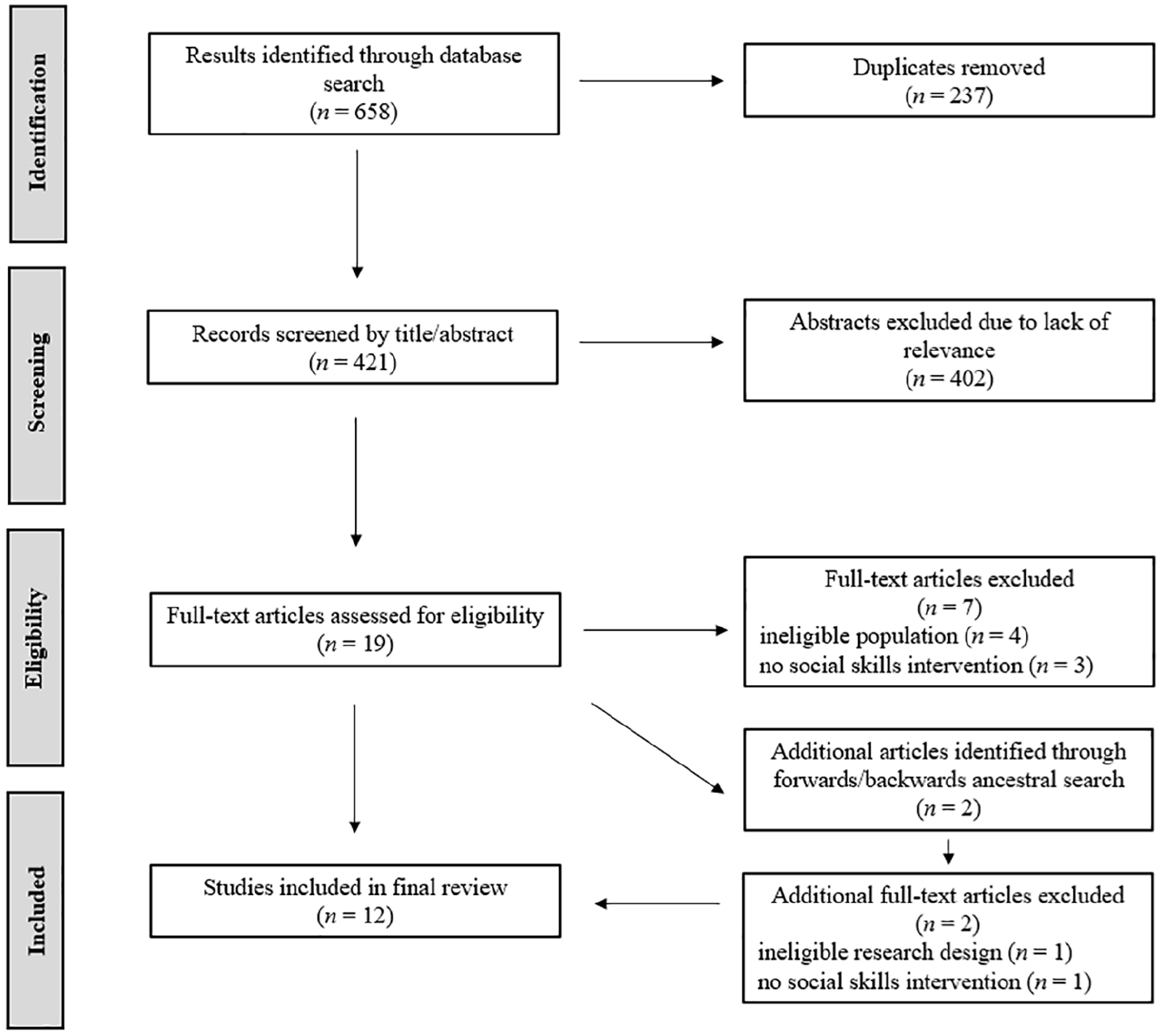
Article Identification and Screening Procedures.
Following the abstract screening, full-text screening of 19 studies was conducted to further determine whether inclusion/exclusion criteria were met. A total of 12 studies were identified for inclusion. Forward and backward ancestral searches were then conducted in April 2022 with the 12 studies to determine whether additional relevant studies were missed during screening. This search resulted in two additional studies, one of which met inclusion/exclusion criteria based on abstract screening. Following the full-text screening, no additional studies met the inclusion/exclusion criteria. Although our search and screening procedures included dissertations, none met inclusion criteria for our study. Therefore, a total of 12 peer-reviewed articles were included in the current review.
Coding Procedures
Participant and Study Codes
A description of each of the participant and study coding categories appears in Table 1. The articles selected for the review were coded for their attributes. Participant codes related to demographic variables (e.g., age, gender). We also coded disability category as reported by authors. Setting codes described whether the intervention took place in the school setting, work-based setting, or a combination of settings. We coded study design (i.e., group, single-case) as well as interventionist (i.e., teacher, paraprofessional, job coach, employer, and mentor).
Description of Coding Categories.
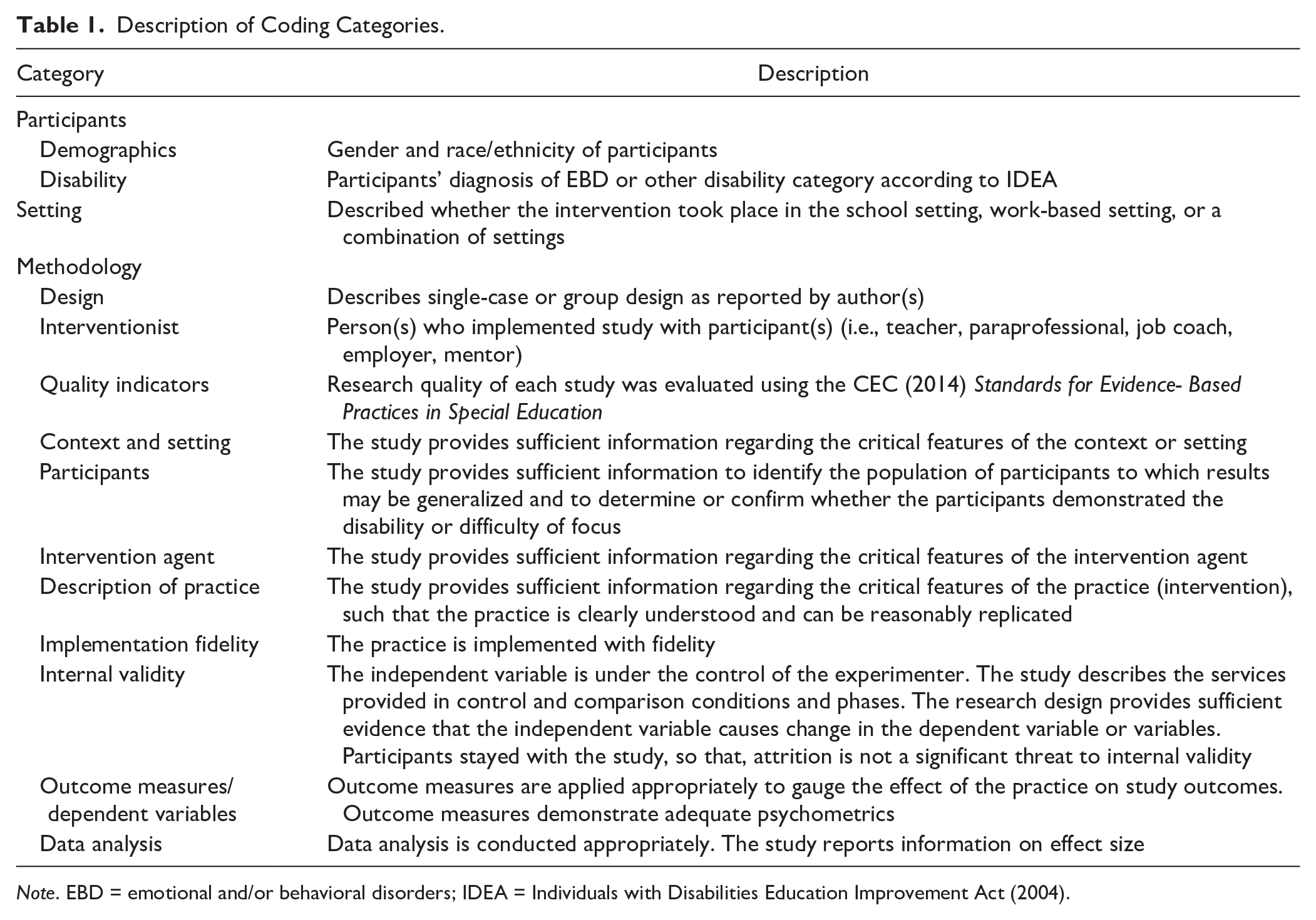
Note. EBD = emotional and/or behavioral disorders; IDEA = Individuals with Disabilities Education Improvement Act (2004).
Quality Assessment
The research quality of each study was evaluated using the CEC (2014) Standards for Evidence-Based Practices in Special Education. Cook et al. (2014) described how special education researchers can apply CEC’s approach to categorizing the evidence base of special education practices when examining single-case and group design studies. The standards include eight quality indicators essential for trustworthy, methodologically sound intervention studies in special education to guide researchers in special education in determining which studies merit confidence in their findings. The eight categories of QIs are: (a) context and setting, (b) participants, (c) intervention agent, (d) description of practice, (e) implementation fidelity, (f) internal validity, (g) outcome measures/dependent variables, and (h) data analysis. Each of the categories has between one and six subcategories with a total of 23 subcategories (Cook et al., 2014). Although the standards are designed to be applied in a systematic manner, the CEC (2014) guidelines allow for informed judgment by special education researchers to determine whether a QI has been met.
Interrater Reliability
Interrater reliability (IRR) was calculated using the formula (number of agreements divided by agreements + disagreements × 100; House et al., 1981) for the two screening stages and article coding.
Title and Abstract Screening
The mean IRR for the title and abstract screening stage was 92%. Coders (the first and third author) were considered to disagree over whether to include a study when there were any inconsistencies across the inclusion/exclusion categories. Coders were considered to agree on a study when both categorical ratings across criteria and overall ratings were consistent. Disagreements regarding study inclusion were resolved by discussion; and if consensus could not be reached, a third reviewer was consulted. Final IRR was 100%.
Full-Text Screening
Next, we applied the inclusion criteria to the full text of each remaining article. During the full-text screening stage, we excluded studies based on five categories: ineligible research design, ineligible population, ineligible setting, ineligible publication language (i.e., not published in English), and ineligible publication type (i.e., not published in a peer-reviewed journal or dissertation). If a study had multiple reasons for exclusion, the team categorized it according to the first exclusion category identified. Using the percentage agreement method, the initial IRR for full-text screening was 83%. Disagreements regarding study inclusion based on full-text screening were primarily in the category of participant eligibility and were resolved by discussion until consensus was reached. Final agreement for full-text screening was 100%.
Article Coding
Training for two independent coders was provided for 25% (n = 3) of the included studies. The first author calculated IRR for the 12 included studies using data from two independent coders. Initial IRR for training articles averaged 90%; disagreements at the training stage were resolved by discussion and consensus. Average IRR across all 12 included studies was 89.7% (range = 82.5%–96.9%). Reliability at the category level averaged 95.18% (range = 71.0%–100%). One category yielded agreement below 80% (i.e., reporting of participants). Retraining on this category was provided to the two independent coders by the first author. Disagreements were resolved by discussion and consensus. Category-level IRR can be obtained by contacting the first author.
Results
A total of 12 articles met inclusion criteria. The publication year range was from 2010 to 2020. An overall summary of participant- and study-level characteristics is displayed in Table 2. We provide detailed description of the data codes related to the participants and interventions as follows.
Summary of Characteristics of Studies Included in Review.
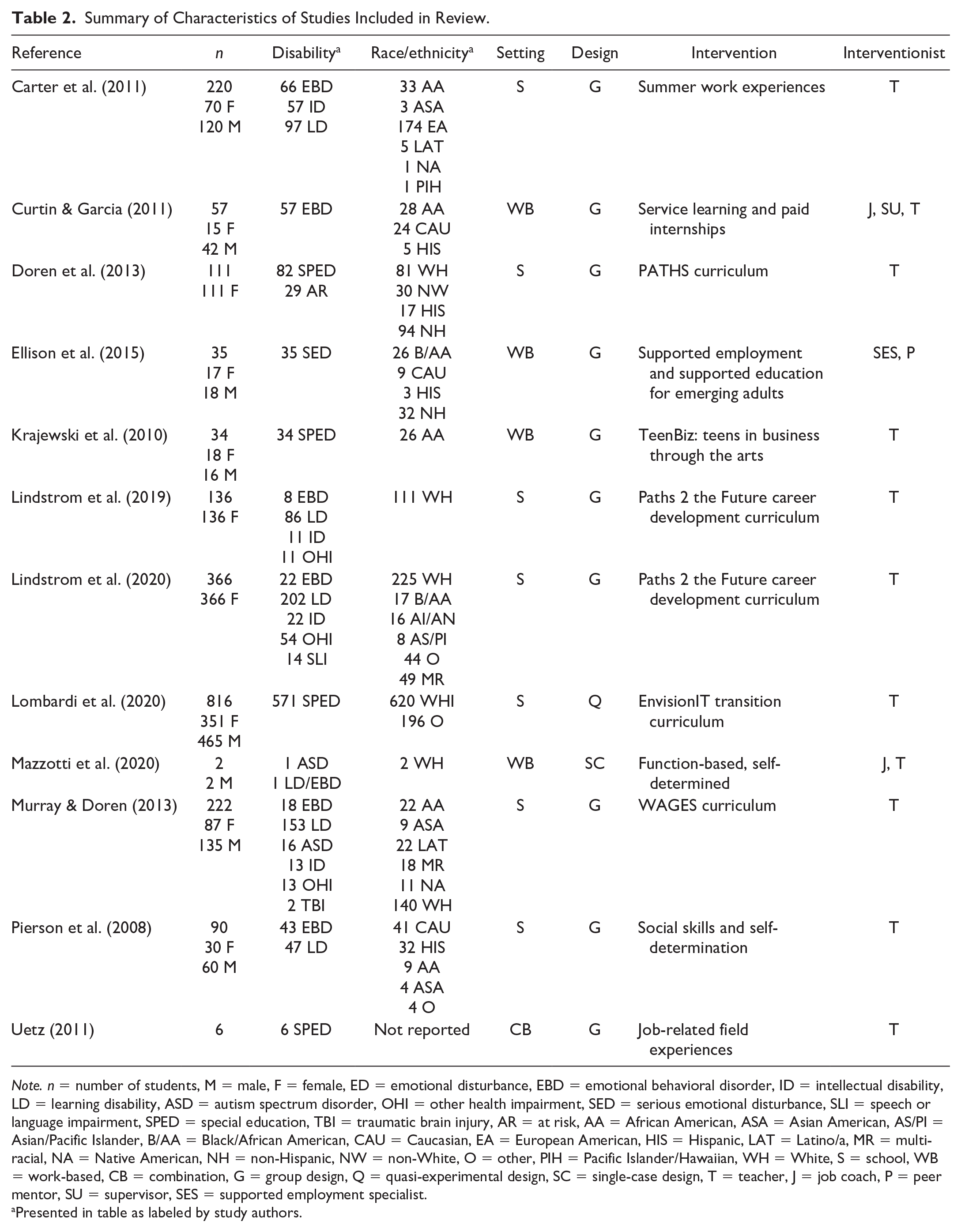
Note. n = number of students, M = male, F = female, ED = emotional disturbance, EBD = emotional behavioral disorder, ID = intellectual disability, LD = learning disability, ASD = autism spectrum disorder, OHI = other health impairment, SED = serious emotional disturbance, SLI = speech or language impairment, SPED = special education, TBI = traumatic brain injury, AR = at risk, AA = African American, ASA = Asian American, AS/PI = Asian/Pacific Islander, B/AA = Black/African American, CAU = Caucasian, EA = European American, HIS = Hispanic, LAT = Latino/a, MR = multi-racial, NA = Native American, NH = non-Hispanic, NW = non-White, O = other, PIH = Pacific Islander/Hawaiian, WH = White, S = school, WB = work-based, CB = combination, G = group design, Q = quasi-experimental design, SC = single-case design, T = teacher, J = job coach, P = peer mentor, SU = supervisor, SES = supported employment specialist.
Presented in table as labeled by study authors.
Participant-Level Characteristics
A total of 2,095 transition-age students were participants across the 12 studies that met the criteria for inclusion in this review. Of the 2,089 (99.7%) participants with gender reported, 1,201 (57.5%) were female and 888 (42.5%) were male; no non-binary participants were reported. Of the 12 studies, authors of one (8.3%; Uetz, 2011) did not report race/ethnicity. In three studies (25%; Carter et al., 2011; Doren et al., 2013; Lombardi et al., 2020), the authors reported some information on participant socioeconomic status (SES).
Among the 12 included studies, 1,477 (70.5%) participants were identified as receiving special education services; no further disability identification was provided for 611 (41.4%) of these participants. For 249 participants (16.8% special education; 11.9% overall), authors reported the primary diagnosis as EBD (n = 214) or serious emotional disturbance (SED, n = 35). Disability classifications and descriptions of the participants varied across the studies; authors often did not make a clear distinction between students with or at risk of EBD and students being served under IDEA for ED. Other disabilities reported in the studies included autism spectrum disorders (ASDs), intellectual disabilities (IDs), other health impairment (OHI), learning disabilities (LDs), speech or language impairment (SLI), and traumatic brain injury (TBI).
Study-Level Characteristics
Setting
Employment-related social skills interventions took place in a variety of settings across the 12 included studies. Public high schools were the most common setting, represented in nine studies (75%; Carter et al., 2011; Doren et al., 2013; Krajewski et al., 2010; Lindstrom et al., 2019, 2020; Lombardi et al., 2020; Mazzotti et al., 2020; Murray & Doren, 2013; Uetz, 2011). Additional settings included non-public special education schools (8.3%; Curtin & Garcia, 2011), a psychiatric treatment program (8.3%; Ellison et al., 2015), and a combination of public high schools and alternative schools (8.3%; Pierson et al., 2008). Half of the interventions (50%; Carter et al., 2011; Doren et al., 2013; Lindstrom et al., 2019, 2020; Lombardi et al., 2020; Murray & Doren, 2013; Pierson et al., 2008) took place within the school setting in either special education classrooms or a combination of general and special education classrooms. Work-based settings in either the school or community were used for four (33.3%; Curtin & Garcia, 2011; Ellison et al., 2015; Krajewski et al., 2010; Mazzotti et al., 2020) of the interventions. The remaining intervention (8.3%; Uetz, 2011) took place in a combination of classroom and work-based settings.
Study Design
A wide variety of design types were reported across the studies to investigate the improvement of work-related social skills for students with EBD. Ten (83.3%) of the included studies used group design (e.g., pre–post control group design, clustered school-randomized control group design, pre–post survey, open trial feasibility design), one (8.3%; Mazzotti et al., 2020) used single-case A–B–A–B withdrawal design, and one (8.3%; Lombardi et al., 2020) used a quasi-experimental design.
Intervention
Some type of teacher-led or employer-led instruction was incorporated into each of the studies whether in the form of skill-specific (i.e., social competence in service job) or an entire curriculum (e.g., Promoting Alternative Thinking Strategies—PATHS, Working at Gaining Employment Skills—WAGES, Paths 2 the Future—P2F). Five studies (41.7%; Doren et al., 2013; Lindstrom et al., 2019, 2020; Lombardi et al., 2020; Murray & Doren, 2013) were based on a specific curriculum. Four studies (33.3%; Curtin & Garcia, 2011; Ellison et al., 2015; Krajewski et al., 2010; Mazzotti et al., 2020) were based on field-based interventions in school or community work settings. All 12 of the included studies incorporated prosocial employment skills; however, few provided details on the specific social skills being addressed. Four studies (33%; Doren et al., 2013; Krajewski et al., 2010; Lindstrom et al., 2019, 2020) identified communication skills as part of the intervention. Krajewski et al. (2010) identified listening and following directions, demonstrating respect for self and others, and interpersonal skills as markers of social skills.
Students who participated in 13-week work experiences involving either paid internships or service learning all demonstrated significant improvement in social skills; the service-learning group also demonstrated significant gains in work performance that included independent work skills, relating well with co-workers, response to job assignments, and appropriate response to supervisors (Curtin & Garcia, 2011). Carter et al. (2011) discussed the value of summer work experience for practicing occupational and social skills. However, the study revealed limited numbers of youth with EBD participated in summer work experience opportunities, which was partially attributed to lack of encouragement and support from parents to engage in summer work.
Students exposed to the WAGES curriculum to improve social and vocational skills demonstrated greater empathy, cooperation, and assertion skills following the intervention (Murray & Doren, 2013). The P2F curriculum led to growth in self-awareness, self-efficacy, confidence, and empowerment for young women with or at risk of EBD (Lindstrom et al., 2019, 2020). Lindstrom et al. (2019, 2020) reported the positive impact of using a gender-specific program to increase awareness and empowerment surrounding gender, disability, and career options. Participants described feeling more comfortable having discussions in a single-gender learning environment where the curriculum was specifically designed for females.
Lombardi et al. (2020) reported positive outcomes in career readiness for students with and without disabilities using the EnvisionIT online curriculum in inclusive and special education settings. Finally, the TeenBiz curriculum was used to bolster both job-specific skills and social/interpersonal skills during a summer program specifically designed for students with disabilities including those with EBD (Krajewski et al., 2010).
Interventionists
The primary interventionists were teachers in 11 studies (91.7%; Carter et al., 2011; Curtin & Garcia, 2011; Doren et al., 2013; Krajewski et al., 2010; Lindstrom et al., 2019, 2020; Lombardi et al., 2020; Mazzotti et al., 2020; Murray & Doren, 2013; Pierson et al., 2008; Uetz, 2011). One study (8.3%; Ellison et al., 2015) reported using supported employment specialists as primary interventionists. Other interventionists included job coaches (16.7%; Curtin & Garcia, 2011; Mazzotti et al., 2020), supervisors (8.3%; Curtin & Garcia, 2011), and peer mentors (8.3%; Ellison et al., 2015).
Several authors noted considering the role and impact of interventionists as well as natural supports in the work-based setting. Ellison et al. (2015) used both supported employment specialists (SES) and peer supports to reinforce job-specific and work-related social skills with favorable outcomes. In addition, job coaches were used to support interventions in two studies (Curtin & Garcia, 2011; Mazzotti et al., 2020) with positive outcomes in social competence, peer relations, and work performance.
Quality Assessment
Each of the 12 included studies met CEC (2014) QIs for context and setting as well as participants. Nine studies (75%) met QIs for intervention agent and outcome measures/dependent variables. Eight studies (66.7%) met QIs for description of practice and data analysis. Seven studies (58.3%) met QIs for internal validity, and only six studies (50%) met QIs for implementation fidelity. The findings of the overall quality assessment coding including the number and percent of studies that met criteria for each of the subcategories within each QI are presented in Table 3.
Council for Exceptional Children (CEC) (2014) Quality Indicators for Included Studies.
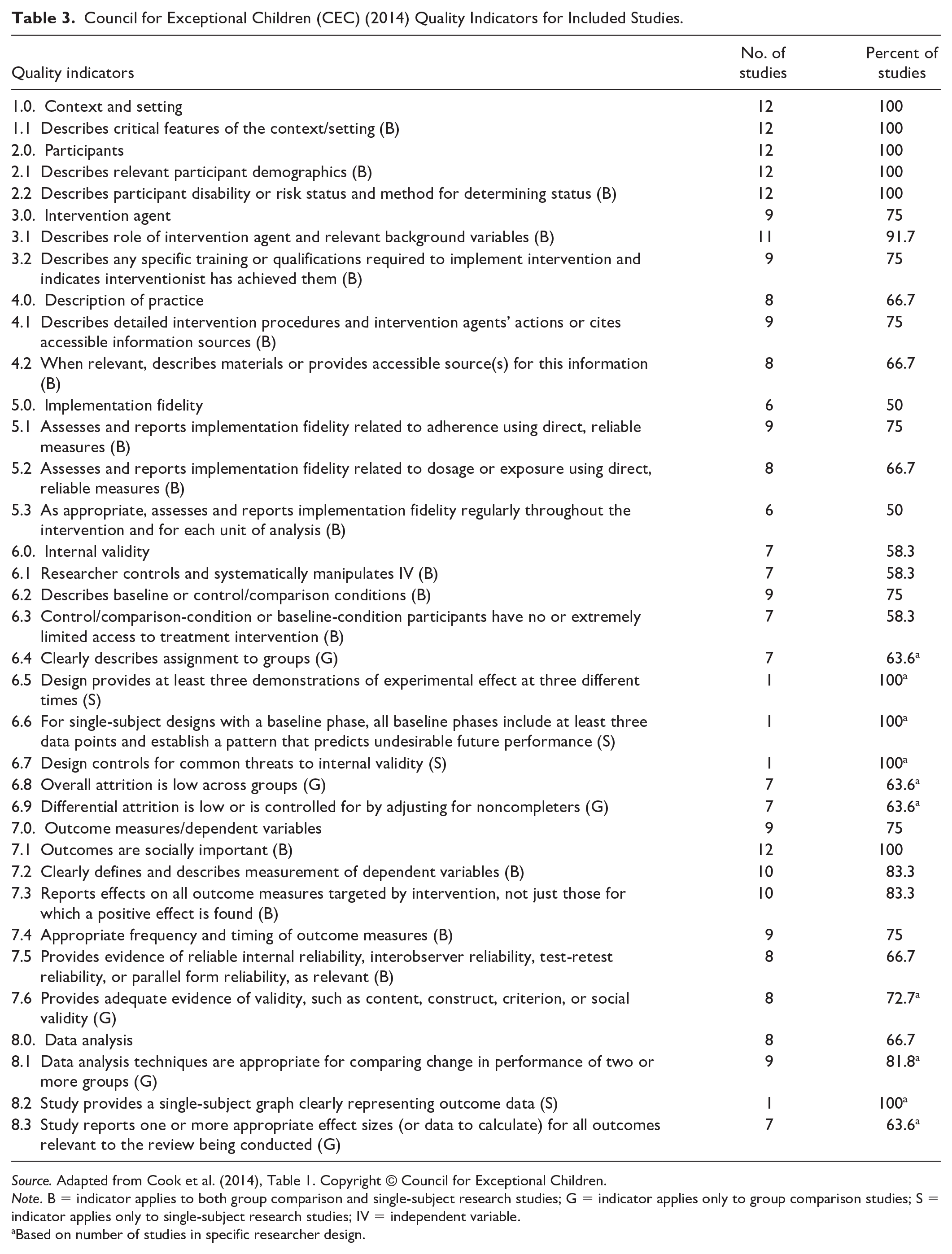
Source. Adapted from Cook et al. (2014), Table 1. Copyright © Council for Exceptional Children.
Note. B = indicator applies to both group comparison and single-subject research studies; G = indicator applies only to group comparison studies; S = indicator applies only to single-subject research studies; IV = independent variable.
Based on number of studies in specific researcher design.
Discussion
We reviewed 12 studies in which interventions were implemented to increase prosocial employment skills for transition-age students with disabilities, including students with EBD. Curtin and Garcia (2011) emphasized how the development of social and interpersonal skill development may be more important for students with EBD than the occupational skills traditionally focused on through paid work experience programs. However, it is necessary to consider how social skills can be taught in the classroom and then be generalized to the workplace.
Most of the included studies used a group design to target prosocial employment skills, and half investigated interventions using a specific curriculum. Positive results for curriculum-based interventions hold promise for educators and transition teams looking for structured methods to increase employment-related social skills for students with EBD. Learning environment (e.g., classroom-based, community-based) and student grouping (e.g., gender-specific, mixed groups) also impacted how the participants interacted with an intervention. This suggests the need to consider how to structure the intervention to best meet the needs of individuals or groups of students. The incorporation of work experiences in the community offers a promising opportunity to practice prosocial skills in natural settings. Several studies noted the need to consider the role and impact of interventionists as well as the availability of natural supports in the work-based setting. Mazzotti et al. (2020) highlighted the need for training and practice in using evidence-based instructional strategies for job coaches providing interventions.
The results suggest that researchers have addressed employment-related social skills broadly as highly relevant to obtaining and maintaining employment for students with EBD. However, there have been limited comprehensive descriptions of interventions that promote prosocial skills acquisition and generalization in the employment setting. Research to extend understanding of how to increase employment-related social skills for students with EBD is paramount, and recommendations for future directions in research and practice are provided in the following sections.
Limitations
Several limitations should be considered when interpreting the findings from this review. First, by focusing specifically on studies explicitly addressing employment-related social skills, we may have excluded studies measuring the same skills or similar skills whose authors labeled them as social skills without framing them as employment-related. Although ancestral and forward searches of included articles were conducted, we did not conduct expert queries that may have produced additional studies. Second, each of the studies in this review had fairly small sample sizes, varying degrees of participant demographic description and was conducted in a limited geographical region. Thus, results gathered here may not be generalizable to other settings and populations. For example, there were a limited number of studies conducted in alternative education settings; it is unknown whether interventions that are successful within typical public high school settings would have the same impact in alternative school settings.
Third, we encountered challenges with the clarity of reporting on participants with or at risk of EBD. While we shared the participant demographic data as reported by the authors in each study, we found a similar issue as other researchers studying this population: there is not a universally accepted description for this group of students in the literature (Coutinho et al., 2000; Maag, 2006; Royer et al., 2017). We noticed the terms ED and EBD used to describe students inconsistently in the included studies. Sullivan (2017) highlighted the ambiguous nature of the IDEA definition of the ED category used to determine eligibility for special education services creates challenges with subjective interpretation of emotional and behavioral functioning in both practical settings and policy. One of the most notable challenges is the lack of guidance on how inclusion criteria (i.e., long period of time, marked degree, and adverse impact on educational performance) should be measured (Mitchell et al., 2019; Sullivan, 2017). Fourth, our ability to analyze instructional methods was dependent on the quality of reporting by authors. Some authors did not provide thorough descriptions of their intervention approaches, specific social skills targeted, experimental procedures, and instructor training. Only two studies directly reported effect sizes for the intervention (Lindstrom et al., 2019, 2020). As was the case with participant demographics, we could only draw conclusions based on the quality of reporting across studies.
Fifth, we assessed quality of the studies using the CEC (2014) standards and the majority of the included studies (58.3%; Carter et al., 2011; Curtin & Garcia, 2011; Doren et al., 2013; Krajewski et al., 2010; Murray & Doren, 2013; Pierson et al., 2008; Uetz, 2011) were published prior to their introduction. Perhaps utilizing a different set of standards, such as the What Works Clearinghouse (WWC, 2020) standards would have led to different outcomes in terms of quality assessment; however, we may have encountered similar challenges with quality of reporting. Finally, although we attempted to conduct a comprehensive search across a wide body of literature, this group of studies may be influenced by publication bias as our included studies were all published in peer-reviewed journals.
Implications for Research
The findings of this review bring several recommendations for future research. Most of the studies suggested using larger sample sizes, longer implementation time, collecting more generalization data, and expanding scope of studies to include how intervention results differ across disabilities. Two studies (Lindstrom et al., 2019, 2020) emphasized the need to continue to identify and explore gender differences in school experiences, career planning, and post-school outcomes for students with disabilities receiving special education services. Exploring the role of interventionists other than teachers, such as job coaches and supported employment specialists has also been highlighted (Ellison et al., 2015; Mazzotti et al., 2020). Most of the studies in this review took place in school settings, so that, conducting more studies in work-based settings could add valuable information to the literature base in terms of how participants perform in naturalistic employment settings. In addition, researchers could conduct more studies in alternative education settings serving students with EBD to add context to the impact of interventions for a broader range of this population. Furthermore, more detailed reporting of intervention procedures (e.g., specific skills taught, dosage) and effectiveness would be useful for designing future studies to identify which interventions support the development of prosocial employment skills as individuals with EBD prepare to transition to the workplace.
Using CEC (2014) Standards for Evidence-Based Practices in Special Education QIs, all studies met QIs for reporting on context and setting as well on participants. However, future studies could benefit from using more consistent language to report participant demographics (e.g., QI 2.1 related to race/ethnicity, gender, and SES) and disability or at-risk status (e.g., QI 2.2). The majority of included studies met QIs for reporting on outcome measures/dependent variables, intervention agent, and description of practice and data analysis. Increased description of participants, intervention agents (e.g., QI 3.1), training of the intervention agent (e.g., QI 3.2), and more detailed descriptions of practice (e.g., QI 4.1) could lead to enhanced understanding of how the interventions were implemented in each setting. Enhanced details of implementation fidelity (e.g., QI 5.0), internal validity (e.g., QI 6.0), and outcome measures (e.g., QI 7.0) could assist future researchers in replication and expansion of the studies. Future researchers could provide effect sizes (e.g., QI 8.3) or the data needed to calculate them to give a clearer picture of the effectiveness of the interventions.
Implications for Practice
Thorough descriptions of participant and setting characteristics along with detailed steps of intervention implementation could help practitioners evaluate whether an intervention may be a potentially effective option for the students they serve. Since school-based settings with teachers as interventionists were a common theme in most of the studies included in this review, it is important to consider the potential value of incorporating more work-based settings into transition plans to better prepare students for post-school employment. Giving students more opportunities for hands-on employment training in work-based settings paired with classroom training may be the combination students need to generalize the social skills they are learning into their employment environments (Carter et al., 2011; Lombardi et al., 2020; Uetz, 2011). The development of strong communication skills that transfer into the employment setting was a key component of several studies (Doren et al., 2013; Krajewski et al., 2010; Lindstrom et al., 2019, 2020). Krajewski et al. (2010) identified three key social skills that contribute to success in the workplace: listening and following directions, demonstrating respect for self and others, and interpersonal skills. Mazzotti et al. (2020) stressed the importance of building collaborative relationships with employers in the community to create pathways for students after high school. Proper training for those who support students with EBD and other disabilities in work-based settings is also key to student success. Although Mazzotti et al. (2020) utilized job coaches as interventionists, it was noted job coaches typically do not have extensive training or experience using evidence-based instructional strategies in daily practice. Perhaps, more professional development and training could be provided for job coaches prior to supporting students with EBD in the workplace with opportunities for ongoing training once they are in field-based placements.
Conclusion
This systematic literature review and quality review of employment related social skills interventions for students with EBD provided information on participants, interventionists, and settings for 12 studies. More detailed reporting of intervention procedures and effectiveness would be useful for future researchers and practitioners. Using CEC (2014) Standards for Evidence-Based Practices in Special Education, all included studies met QIs for reporting on context, setting, and participants. Although the majority of the included studies met QIs for reporting on outcome measures/dependent variables, intervention agent, description of practice, and data analysis future researchers could consider providing more detail when reporting on their interventions. The use of employment-related social skills interventions, specifically interventions that provide explicit instruction in social skills and opportunities to practice prosocial workplace behaviors, offers promise for students with EBD and their transition teams as they prepare to navigate the world of work.
Footnotes
Declaration of Conflicting Interests
The author(s) declared no potential conflicts of interest with respect to the research, authorship, and/or publication of this article.
Funding
The author(s) received no financial support for the research, authorship, and/or publication of this article.
