







Abstract
Restraint and seclusion are practices used by educators to intervene when a student is in imminent danger of hurting themselves or others. These practices are often misused, resulting in negative long-term emotional, behavioral, and academic impacts on students and families. Although restraint and seclusion practices are recognized as dangerous and abusive, there is no federal legislation restricting their use, and states are tasked with developing their own protections for students. The United States Department of Education issued 15 guiding principles to assist states when developing laws governing the use of restraint and seclusion. The current study extends previous research by using micro-coding to analyze and compare how states address each of the 15 guiding principles. Across states, there were considerable inconsistencies in the number of principles covered in state laws and in how each principle was addressed. Recommendations are provided for policymakers at the district and state levels as they review and revise policies and laws to more consistently address the 15 guiding principles and better protect students from the misuse of restraint and seclusion practices.
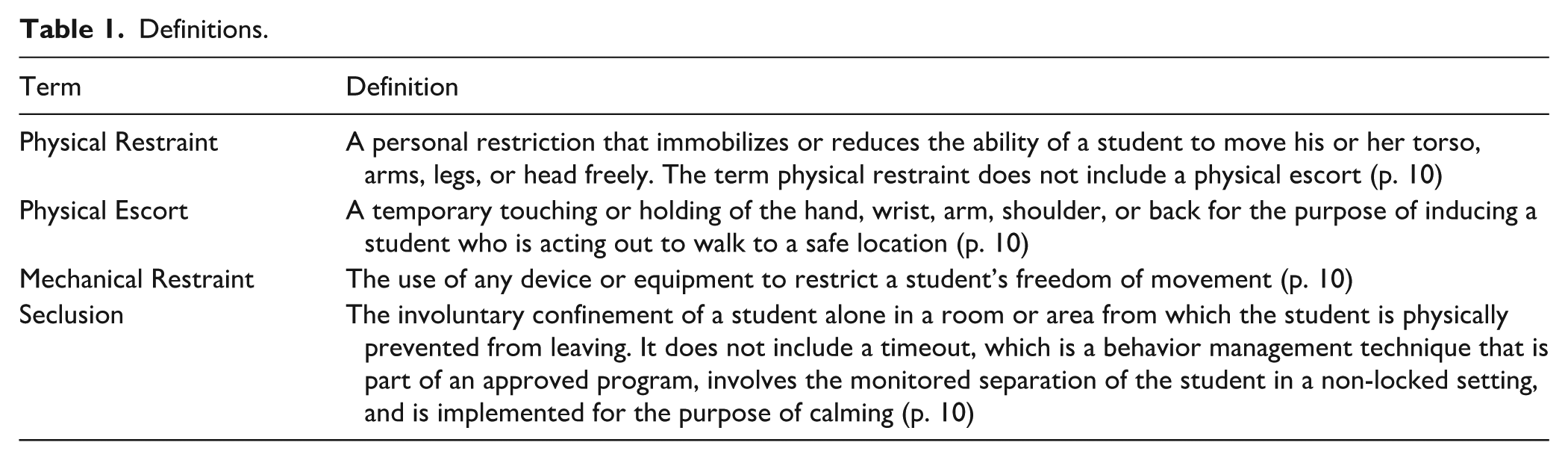
Educators have an ethical responsibility to protect children from harm and create a physically and emotionally safe environment in which learning and thriving occur (USDOE, 2012). This duty extends to all children at all times, even when a child’s behavior poses a risk. In many schools, educators use restraint and seclusion practices to intervene when a student is in imminent danger of hurting themselves or others (Trader et al., 2017). The USDOE Office for Civil Rights categorizes restraint as physical and mechanical in its definition. See Table 1 for the definitions of key terms (USDOE, 2012). Restraint and seclusion are often misused, leading to long-term physical, psychological, and emotional damage in students (Trader et al., 2017). Misuse of restraint and seclusion practices include: (a) using restraint and seclusion to increase compliance, (b) resorting to restraint and seclusion before less-restrictive methods have been used to prevent the behavior, (c) restraints conducted by untrained staff members, and (d) continuing a restraint or seclusion when the imminent danger of harm has passed (Scheuermann et al., 2016).
Definitions.
Outcomes
The use of restraint and seclusion in schools can have a detrimental impact on students and families. Trauma resulting from being subjected to restraint and seclusion can lead to student physiological health concerns and even affect outside of school, such as parental job loss and an overall disruption to the household (Bell & Craig, 2023). In some cases, immediate adverse effects are not evident, but over time, psychological effects have also been noted, especially when the trauma was caused by adults (Freeman et al., 2021; Kern et al., 2022). Another noteworthy impact of the use of restraint and seclusion is the development of long-term behaviors, such as distancing from others and aggressive outbursts (Graves, 2024). Improper use of restraint and seclusion can also lead to death from cardiac arrhythmia, cardiac arrest, asphyxiation, dehydration, and aspiration (Nunno et al., 2022). The Child Welfare League of America (CWLA, 2004) estimates improper restraint and seclusion practices cause eight to 10 deaths annually. Improper restraint or seclusion practices include face-down restraints, restraints in cramped or small spaces, or the use of tape or straps to restrain a student in a seat (Gagnon et al., 2017). School, which is supposed to be a place of learning and safety for students, can be a source of stress and anxiety for families of students who exhibit challenging behaviors. The above-mentioned adverse effects, and in some cases even death, underscore the need for laws to be enacted and these practices to be consistently implemented.
Disproportionality
Students with disabilities are 2.71 times more likely to be subjected to restraint and seclusion than their non-disabled peers (Barnard-Brak et al., 2014). In the 2017–2018 Civil Rights Data Collection (USDOE), a total of 101,990 students were restrained or placed in seclusion during the school day. Of the 101,990 students, 79,676 (78.12%) were students with disabilities, as defined by the Individuals with Disabilities Education Act (IDEA). Students of color who also have disabilities are subjected to restraint and seclusion practices more frequently than their peers (U.S. Commission on Civil Rights, 2019). Beyond just alarming rates, the report suggests that the data gathered may even highlight a violation of Title VI of the Civil Rights Act.
History of Laws
In 2009, the Secretary of the USDOE sent a letter out to all 50 states asking them to review their current laws on restraint and seclusion. States with laws in place were urged to revise them to emphasize student safety, communication with families, and prevention, thereby reducing the need for restraint and seclusion in their schools. Meanwhile, states without laws were encouraged to develop them (USDOE, 2012). In 2010, House Bill 4247, the Keeping All Students Safe Act (KASSA), was introduced in Congress to further protect students and to provide measures to restrict and govern the use of restraint and seclusion in school settings. Unfortunately, this bill did not pass in 2010, nor did it pass when it was reintroduced every year since.
Since no federal law exists on the use of restraint and seclusion practices in schools, the USDOE (2012) created a document containing 15 guiding principles to serve as a reference when creating law addressing the use of restraint and seclusion. It is also vital to ensure these practices are used only in situations that pose an imminent risk to those around them, while also striving to protect the students who are being restrained or secluded. The principles also provide guidance to prevent the need for restraint and seclusion.
Previous Research on Restraint and Seclusion Laws
Following the 2009 request from the Secretary of Education, several legal analyses have been conducted investigating the number of states with restraint and seclusion laws. In 2013, Freeman and Sugai conducted a policy analysis to examine the extent to which states had followed the guidance from the Secretary of Education in creating new or revising current restraint and seclusion laws. They found that 33 states had legislation or regulatory documents and 15 states had policy documents governing the use of restraint and seclusion in schools (Freeman & Sugai, 2013). Their findings highlighted that federal guidance alone is insufficient to guide states in creating laws protecting students from restraint and seclusion, and that federal legislation is needed.
In 2017, Marx and Baker extended the work of Freeman and Sugai by analyzing the extent to which state legislation and policy aligned with the 15 guiding principles provided in the USDOE resource document (2012). They found that (a) while 38 states had legislation guiding the use of restraint and seclusion, 14 states only covered students with disabilities, (b) 45 states had policy related to the use of restraint and seclusion, and (c) 16 states’ legislation and/or policy specifically referenced the resource document. The findings echoed the need for federal legislation on the use of restraint and seclusion, as well as for the broader dissemination of the resource document, so that states may better incorporate the guiding principles into their legislation and policies.
In 2019, the How Safe is the Schoolhouse? report was updated to include states with newly developed or revised laws since the initial report in 2012 (Butler, 2019). In the revised report, 30 states had laws protecting all students from restraint and seclusion, 39 had laws protecting students with disabilities from restraint and seclusion, and 21 had laws prohibiting the use of non-emergency restraint and seclusion. Findings echoed previous policy analyses, as many states have no protections or rely on outdated legislation and policies regarding restraint and seclusion.
Kern and colleagues (2024) explored state and territory policy and legislation with the content of KASSA as proposed. In their analysis, Kern and colleagues found that 32 of 54 states and territories had laws governing the use of restraint and seclusion, while 48 of 54 had legislation on the use of restraint and seclusion (Kern et al., 2024). Findings from this study echoed previous research, highlighting the need for federal legislation to address inconsistencies in state laws and legislation on restraint and seclusion practices.
Previous law analyses indicate increasing progress toward the 2009 USDOE request for all states to develop legislation and policy related to their use of restraint and seclusion. However, inconsistencies in state laws, combined with outdated laws resulting from the lack of federal legislation on such laws, have only made a modest impact on protecting students, particularly students with disabilities who are more prone to being subjected to restraint and seclusion, from these practices (Gagnon et al., 2017). States may further protect their students by aligning their restraint and seclusion laws with the 15 guiding principles in the USDOE resource document (USDOE, 2012). This alignment addresses the need for more current principles and more consistent laws across states (Kern et al., 2024).
Purpose
To date, no study has analyzed differences across states in their alignment with the 15 guiding principles. The purpose of this study is to evaluate restraint and seclusion laws across all 50 states, analyzing how each state’s laws align with the 15 guiding principles. The current study uses micro-coding to more deeply analyze all components of state laws, rather than the 15 guiding principles. To better organize this analysis, we have divided the 15 guiding principles into four categories: (a) general guidance on restraint and seclusion practices, (b) guidelines focusing on prevention and training, (c) guidelines for actions taken during restraint or seclusion, and (d) guidelines for actions taken after the restraint or seclusion has ended.
The following questions guide the study:
How many state laws address the seven 2012 U.S. Department of Education guidelines concerning general guidance on restraint and seclusion practices?
How many state laws address the three 2012 U.S. Department of Education guidelines concerning prevention and training for restraint and seclusion?
How many state laws address the three 2012 U.S. Department of Education guidelines for actions taken during restraint and seclusion?
How many state laws address the two 2012 U.S. Department of Education guidelines concerning actions taken after a restraint or seclusion has ended?
What are the similarities and differences in the way states address the fifteen 2012 U.S. Department of Education guidelines on restraint and seclusion practices?
Method
Search Procedures
The authors began by searching each state’s Department of Education website for all laws and technical assistance documents addressing restraint and/or seclusion. Next, the law found on each state department’s website was compared with the Alliance Against Seclusion and Restraint’s Laws and policies for the use of restraint and seclusion in schools in North America (2022) and the U.S. Department of Education Compendium of School Discipline Laws and Regulations for all 50 States, District of Columbia, and the U.S. Territories (2023). If the law reported on the state department’s website was older than the law reported in the Alliance Against Seclusion and Restraint (2022) and the U.S. Department of Education, National Center on Safe and Supportive Learning Environments (2023) documents, the authors emailed the state to confirm access to the most current restraint and seclusion law. Each of the laws on the state department’s websites was the same or newer than those reported in the 2022 and 2023 documents, so there was no need to email any state departments to request more current restraint and seclusion laws. Two researchers conducted the initial law search. The states were listed alphabetically, and the first researcher collected laws for the first 25 states (i.e., Alabama through Missouri) and the second researcher collected laws for the remaining 25 states (i.e., Montana through Wyoming). Inter-observer agreement (IOA) and the state laws were collected by a third researcher. Before collecting any state laws, the states were listed alphabetically and placed in a randomizer. The first 18 states (36%) selected by the randomizer were assigned for IOA. The researcher tasked with collecting IOA for the state laws searched the assigned states’ department websites for laws related to restraint and seclusion. The findings were then compared to those collected in the initial search. Agreement was determined by comparing the laws collected from the initial search with those from the IOA search. If both searches yielded the same law, agreement was established. IOA for the state laws was 88%, and after the research team discussion, it reached 100%. Both the initial and IOA searches occurred between August and November of 2024.
Coding Training
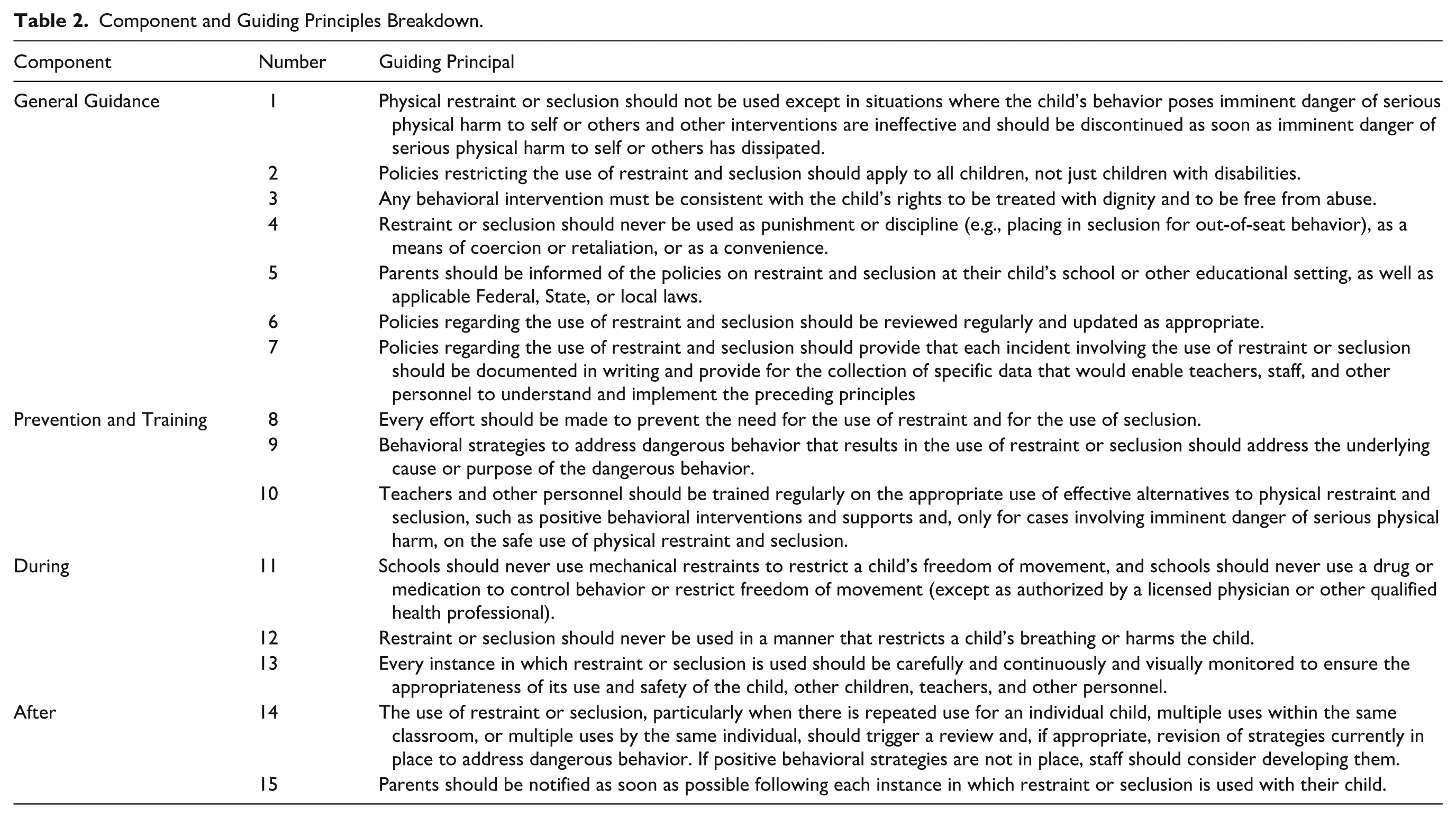
Training for coding occurred before any coding was completed. Prior to data collection, each state was listed alphabetically and placed into a randomizer. The first state selected by the randomizer (i.e., Montana) was identified as the state to be coded for training. Each researcher independently coded that state, then met to compare their coding sheets and establish rules to clarify any points of confusion during the coding process. The following rules were established for coding the remaining states: (a) any language implying the law is intended to cover all students, not just those with disabilities (e.g., “student for the purposes of these rules only, means any individual 3–21 years [Colorado]), would meet the criteria for addressing guiding principle two (see Table 2), (b) any mention of restraints or seclusion being free from physical or emotional harm, regardless of the specific language used, would meet the criteria for addressing guiding principle three (see Table 2), and (c) when coding for the use of seclusion, the definition for seclusion from the U.S. Department of Education Restraint and Seclusion Resource Document (2012) would be used and any action falling under this definition of seclusion would be used to determine if the state allows seclusion (e.g., “Isolated time out means the involuntary confinement of a student alone in a time out room or other enclosure outside of the classroom without a supervising adult in the time out room or enclosure” [Illinois]).
Component and Guiding Principles Breakdown.
Coding Procedures
Before any coding, the states were assigned to each researcher using the same procedures as for the initial law search. Next, the 45 states with restraint and seclusion laws were first coded for the year the law was last updated, and if the state had any law restricting the use of seclusion. The method for data analysis was micro-coding, replicating the procedures outlined by Hackney and colleagues (2024), to examine each state’s restraint and seclusion law, specifically assessing the extent to which each state addressed the 15 guiding principles (2012). Each of the 15 principles (see Table 2) were divided into the following categories: (a) general guidance on restraint and seclusion [n = 7], (b) guidelines focusing on prevention and training [n = 3], (c) guidelines for actions taken during a restraint or seclusion [n = 3], and (d) guidelines for actions taken after a restraint or seclusion has ended [n = 2]. Each researcher micro-coded the 25 states assigned to them by copying and pasting the excerpts from the states’ laws into the corresponding principles’ category. If the state’s law did not address a guiding principle, N/A was recorded.
Inter-Observer Agreement
Inter-observer agreement (IOA) was completed by a third researcher who followed the micro-coding procedures for the 18 states (34%) randomly assigned for IOA prior to the law search. An agreement was established if both the initial coder and the IOA coder included the same language in each cell of the spreadsheet. Inter-observer agreement for micro-coding was calculated using cell-by-cell agreement by dividing the total number of cells with agreement (301) by the total number of cells in the IOA spreadsheet (367) and multiplying by 100 (Hackney et al., 2024). The IOA for micro-coding was calculated at 82%. Next, the researchers met to resolve disagreements in their micro-coding. Most of the disagreements arose because a researcher missed the portion of the law addressing a guiding principle, and they were easily resolved upon re-reading each law. After disagreements were resolved, IOA was calculated at 100%.
Results
Reauthorization Timelines
Many states have recently made changes and reauthorized their laws. Since 2020, 26 states have updated their laws—7 in 2021 (i.e., Arkansas, Florida, Kentucky, Maine, Missouri, Ohio, and Oklahoma), 5 in 2022 (i.e., Alabama, Delaware, Maryland, Rhode Island, and Texas), 8 in 2023 (i.e., Alaska, Arizona, Hawaii, New Hampshire, New Mexico, Oregon, Tennessee, and Wyoming), and 6 in 2024 (i.e., Idaho, Illinois, Indiana, Iowa, Minnesota, and New York). Four states (i.e., Georgia, Louisiana, Nevada, and Vermont) had not reauthorized or updated their restraint and seclusion laws since before 2012, when the U.S. Department of Education published the resource document (see Figure 1).
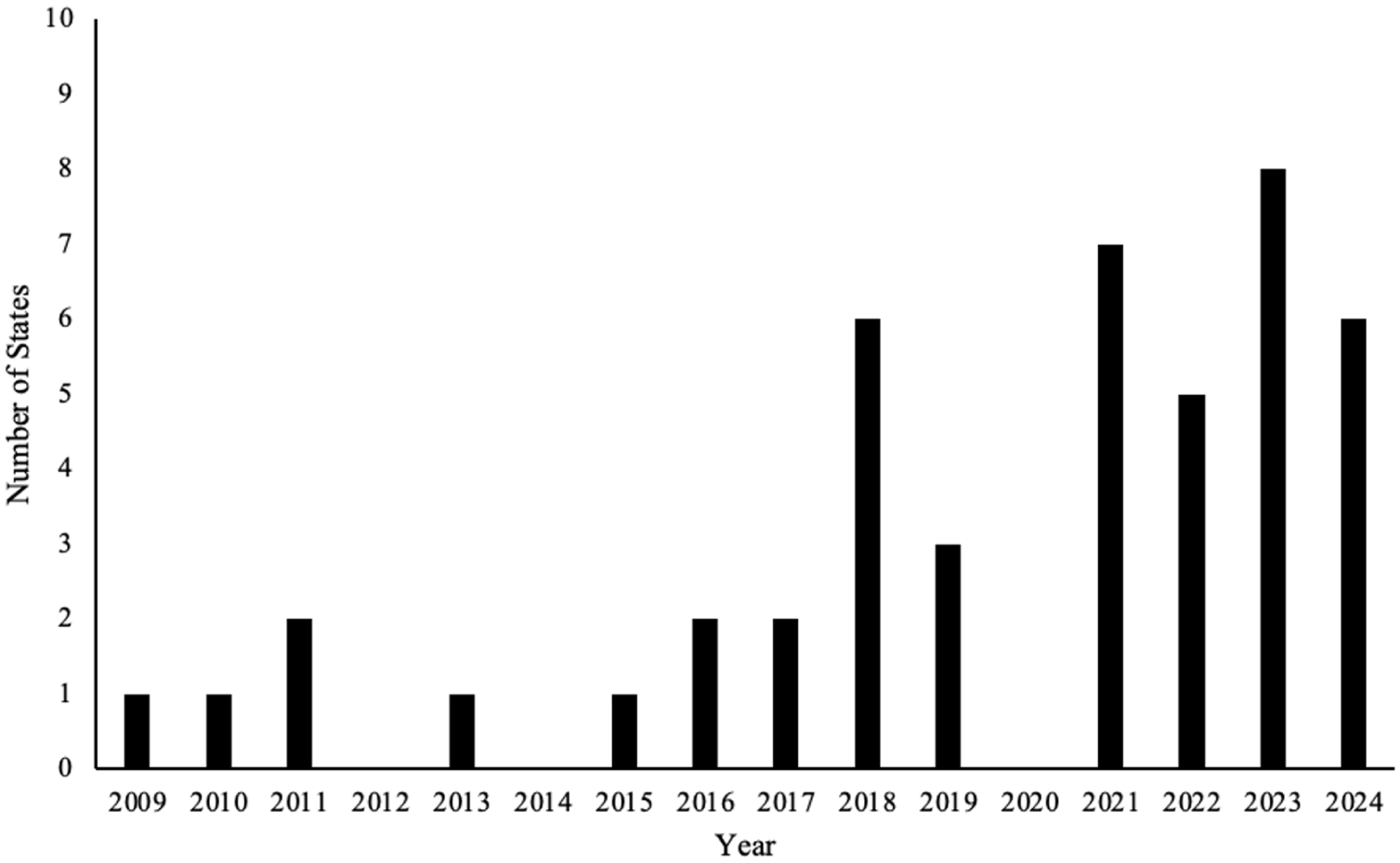
The Number of States per Year the Restraint and Seclusion Laws Were Enacted or Reauthorized.
General Guidance on Restraint and Seclusion Practices
The general guidance category included seven guidelines (see Table 2). Five state laws addressed all seven guiding principles; five states addressed six, twelve states addressed five, nine states addressed four, seven states addressed three, eight states addressed two, and four states addressed zero guiding principles (see Figure 2). Eighty-eight percent (n = 44) of the states have language about physical restraint or seclusion only permitted to be used in situations in which there is imminent danger of serious physical harm to themself or others. Of the laws analyzed in this category, this law had consistent wording across states, with all explicitly stating that restraints should be used only as a last resort, when all other positive methods have been exhausted, and when there is imminent danger. Fifty percent (n = 25) of the states include language that applies the laws to all children, not just children with disabilities. Fifty-six percent (n = 28) of the states have language that any intervention must be consistent with the child’s rights to be treated with dignity and to be free from abuse.
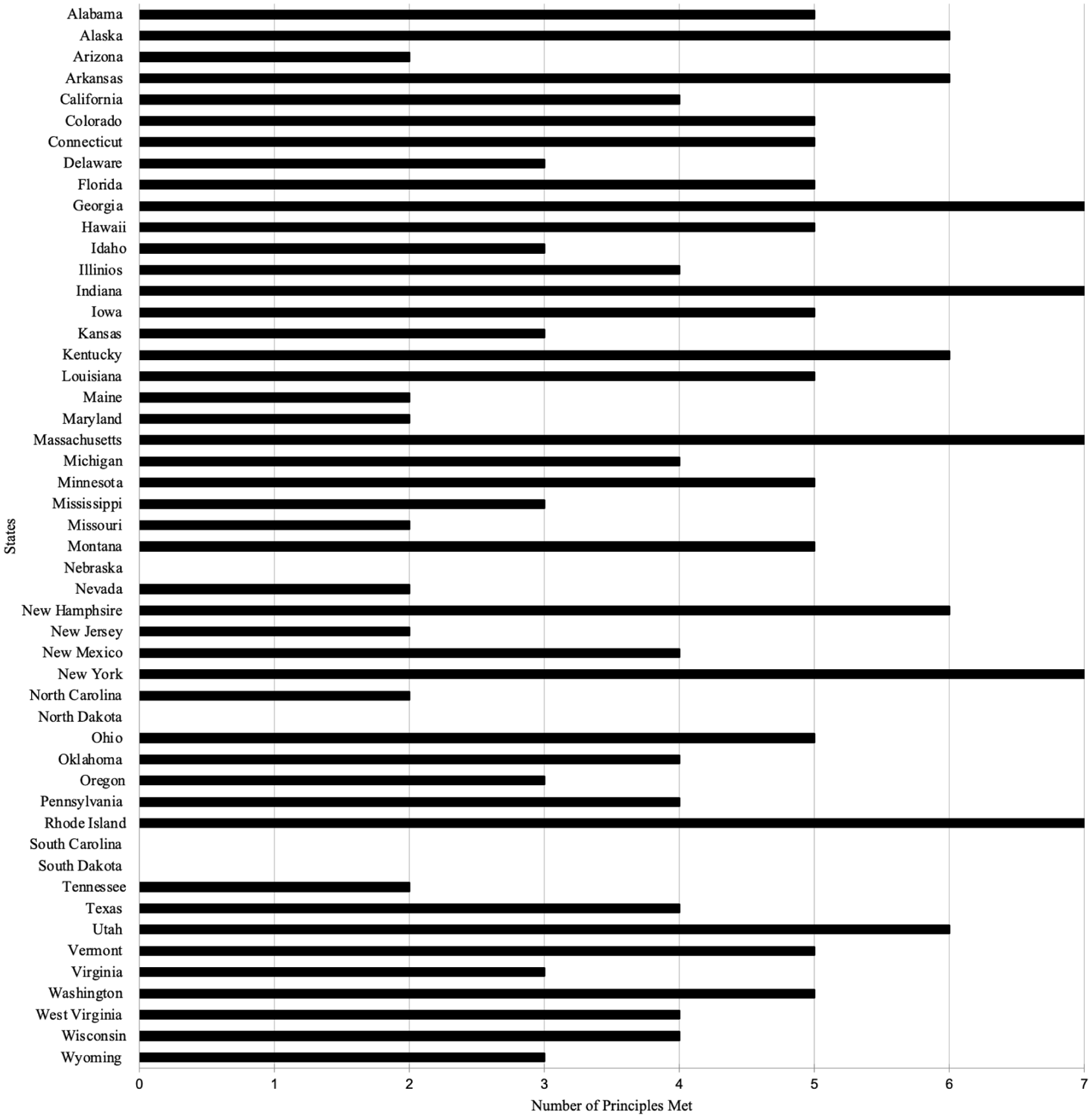
States Meeting General Guidance.
Seventy percent (n = 35) of states include laws with language about restraint and seclusion that should never be used as punishment or discipline, as a means of coercion or retaliation, or as a convenience. This principle was consistently worded across all states, with all laws using the same or similar wording as the resource document (USDOE, 2012). Interestingly, some states (i.e., Illinois, Kentucky, Oklahoma, and Virginia) added additional provisions that restraint should not be used as a method of preventing property destruction, while some states specified that restraint may be used as a method of preventing property destruction (i.e., Hawaii, Iowa, Montana, Nevada, North Carolina, and Texas).
Forty-four percent (n = 22) of states include language about informing parents of laws and policies at the school, local, state, or federal level. Among the states with laws related to informing parents, there was considerable inconsistency in the detail provided. For example, Hawaii requires every parent of students enrolled in their schools be provided a written statement describing (a) the type of restraint training provided to school employees, (b) the board policy on use of restraint and seclusion, (c) determining factors in the use of restraint, (d) the definition of restraint, (e) procedural safeguards for student and parents’ rights relative to the use of restraint and seclusion, (f) how system laws align with state laws, (g) plans for notifying parents or legal guardians when a restraint has been used, and (h) plans for notifying parents of any changes at the school, system or state-level laws in the use of restraint or seclusion in schools. In contrast, Colorado’s law requires parents or guardians of students who have a “reasonable probability” of requiring a restraint to be notified, in writing, of the circumstances where a restraint might be used, the types of restraint that could be used, and the type of staff who may be involved in a restraint.
Only 30% (n = 15) of states require the regular review and update of laws or policies as appropriate. Seventy-six percent (n = 38) of states include language about the documentation of emergency interventions. Many states addressing this principle specify annual review and revision to restraint and seclusion laws (i.e., Alaska, Hawaii, Indiana, Massachusetts, Missouri, Ohio, Rhode Island, and Virginia) while other states have more vague parameters such as “periodically” or “regularly” describing how often reviews and revisions should occur (i.e., Alabama, Connecticut, Georgia, Kansas, Kentucky, New York, and Utah). Finally, only 11 states ban seclusion.
Prevention and Training for Restraint and Seclusion
This category included three guiding principles focusing on prevention and training (see Table 1). Twenty states addressed all 3 guiding principles, 15 states addressed 2, 10 states included 1, and 5 states addressed 0 of the guiding principles (see Figure 3). Sixty percent (n = 30) of the state laws included language requiring every effort to be made to prevent the need for the use of restraint and seclusion. Most states include this principle, using the specific wording that restraint and seclusion should be used only as a last resort when all other, less-restrictive, preventive, and positive measures have been exhausted.
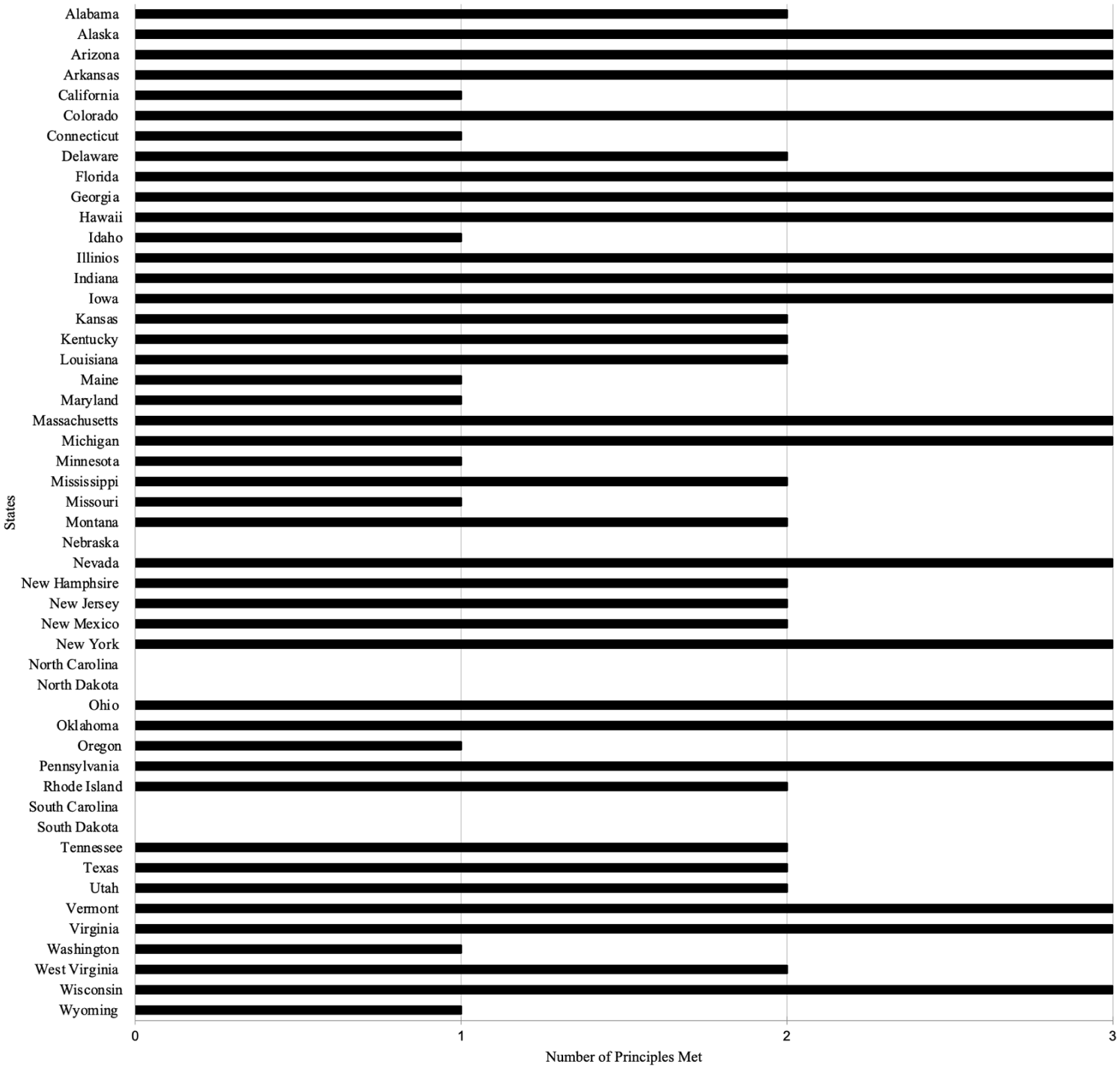
States Meeting Prevention and Training Guidelines.
Fifty-six percent (n = 28) of states had laws that included behavioral strategies to address the underlying cause or purpose of the behavior that results in restraint or seclusion. Many states specifically mentioned the need for a Functional Behavioral Assessment (FBA) and/or Behavioral Intervention Plan (BIP) for students with a history of restraint and/or seclusions (i.e., Arizona, Arkansas, Florida, Georgia, Illinois, Maine, Michigan, Montana, New Jersey, Rhode Island, Texas, Vermont, and Virginia). Significantly, a few states (i.e., Arkansas, Nevada, and Rhode Island) specified that changes in the environment may be needed to proactively and positively support student behavior, thereby decreasing the need for restraint and seclusion. Finally, a few states (i.e., Maine, Maryland, and New Hampshire) specifically mentioned the need for trauma-informed practices to reduce the frequency of restraint and seclusion use.
Eighty-four percent (n = 42) of states required some sort of training in the use of restraint and seclusion. Surprisingly, only 36% of states (n = 18) specified frequent training (i.e., Alaska, Arkansas, Colorado, Connecticut, Delaware, Georgia, Hawaii, Idaho, Indiana, Massachusetts, Missouri, New Jersey, New York, Ohio, Rhode Island, Tennessee, West Virginia, and Wyoming), as recommended in the resource document (USDOE, 2012). Most states specified the training must include use of evidence-based practices, positive behavioral support, and/or de-escalation techniques (i.e., Alabama, Arkansas, Colorado, Delaware, Florida, Georgia, Hawaii, Idaho, Indiana, Iowa, Kansas, Kentucky, Massachusetts, Michigan, Minnesota, Montana, Nevada, New Hampshire, New York, Ohio, Oklahoma, Oregon, Rhode Island, Tennessee, Texas, Utah, Vermont, Virginia, West Virginia, Wisconsin, and Wyoming). However, a few states’ laws remained vague, stating that personnel trained in the use of restraint and seclusion may use such measures (e.g., Alaska, Arizona, Louisiana, New Jersey, Pennsylvania, and Washington).
Actions Taken During Restraint or Seclusion
This category included three guiding principles that address actions during a restraint or seclusion (see Table 2). Nineteen states addressed all three guiding principles, nineteen states addressed two, five states addressed one, and seven states addressed zero of the guiding principles (see Figure 4). Sixty-six percent (n = 33) of the state laws banned mechanical and chemical restraints. The wording of this principle was consistent across states, with all states specifically stating that mechanical restraints were not permitted, and a vast majority explicitly stating that chemical restraints were not permitted.
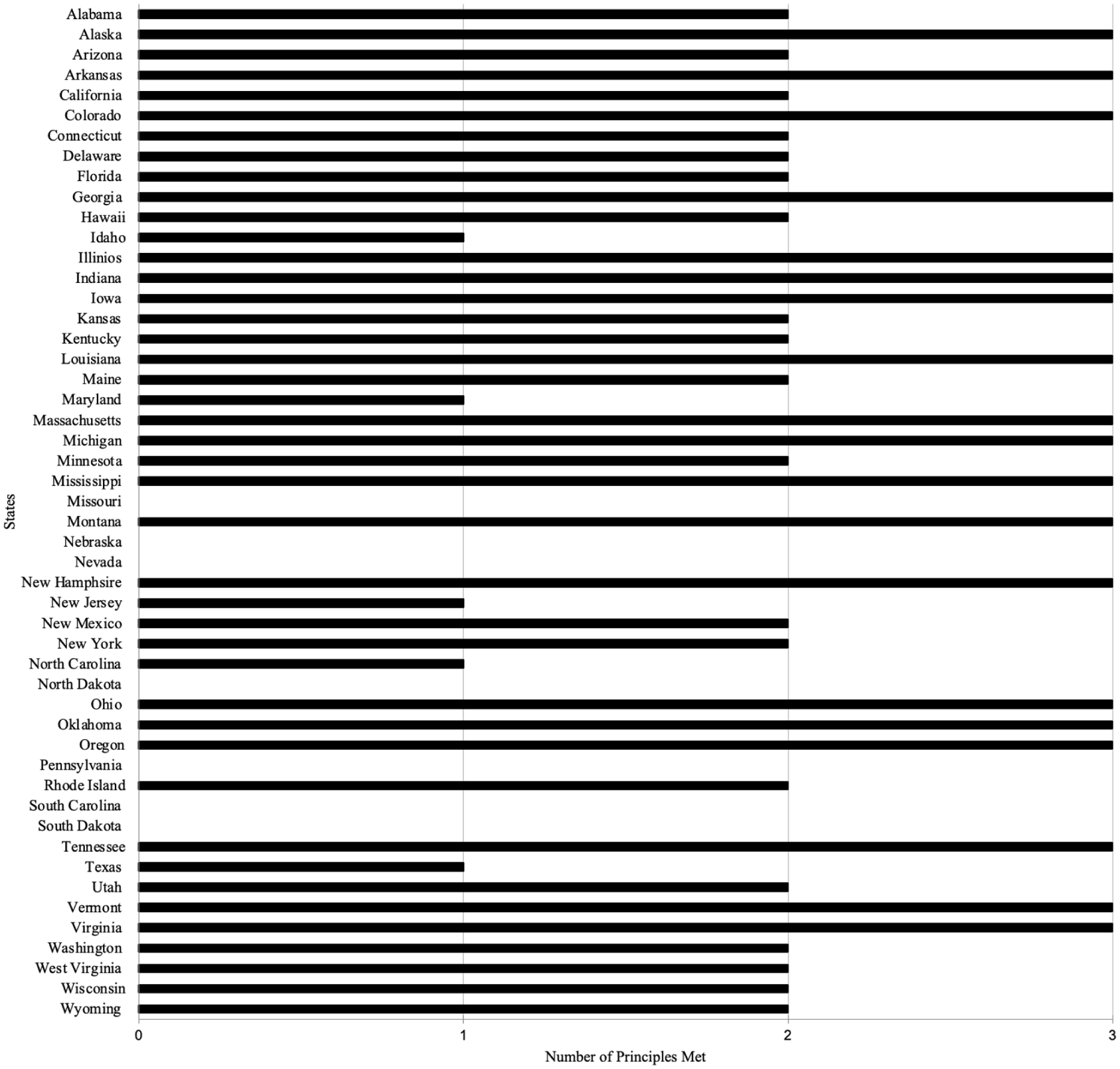
States Meeting Guidelines for Actions Taken During Restraint or Seclusion.
Seventy-four percent (n = 37) of states had laws that prohibited restraint or seclusion from being used in a manner that restricts a child’s breathing or harms the child. Within this category, the restriction of using restraint and seclusion that may restrict a child’s breathing or harm the child was the most frequently included principle across states. The wording of this principle was also the most consistent across states, with all states specifically stating that restraints or seclusions may not be conducted in a manner that makes it difficult for a child to breathe or causes any undue harm to the child. In addition, a majority of the states also included that restraints may not be conducted in a manner that prevents the child from communicating within their laws.
Sixty percent (n = 30) of state laws included language surrounding every instance in which restraint and seclusion is used should be carefully and continuously visually monitored to ensure the appropriateness of use. The wording for this principle was consistent across states, with all states explicitly stating that each instance of restraint and seclusion must be continually, directly observed by another staff member. Connecticut added a contingency of video monitoring if no adult was available for direct monitoring. Notably, Nebraska’s law requires an adult, in addition to the observer, to serve as a co-regulator during the restraint or seclusion. The role of the co-regulator, a trusted adult trained in trauma-informed practices, is to engage the child in regulation strategies at regular intervals during the restraint or seclusion with the goal of having them ready to return to less-restrictive practices as quickly as possible.
Actions Taken After a Restraint or Seclusion Has Occurred
This category included two guiding principles that address actions taken after restraint or seclusion has ended (see Table 2). Twenty-nine states addressed both guiding principles; 13 addressed one; and eight addressed none (see Figure 5). Sixty percent (n = 30) of the state laws included requirements for when there is repeated use for an individual child, multiple uses within the same classroom, or multiple uses by the same individual, a review should occur, and, if appropriate, a revision of strategies currently in place to address dangerous behavior. If positive behavioral strategies are not in place, staff should consider developing them. To address this principle, many states (i.e., Connecticut, Floridia, Illinois, Louisiana, Maryland, Massachusetts, Nevada, Ohio, Oregon, Rhode Island, Vermont, Virginia, and Wisconsin) explicitly defined how many restraints or seclusions occurring in each period of time to trigger the need for a review and revision of the behavioral strategies in place for the student. Although there were varying levels of specificity across states, all required data collection and analysis to implement less-restrictive, positive, and proactive strategies to reduce the need for restraint and seclusion.
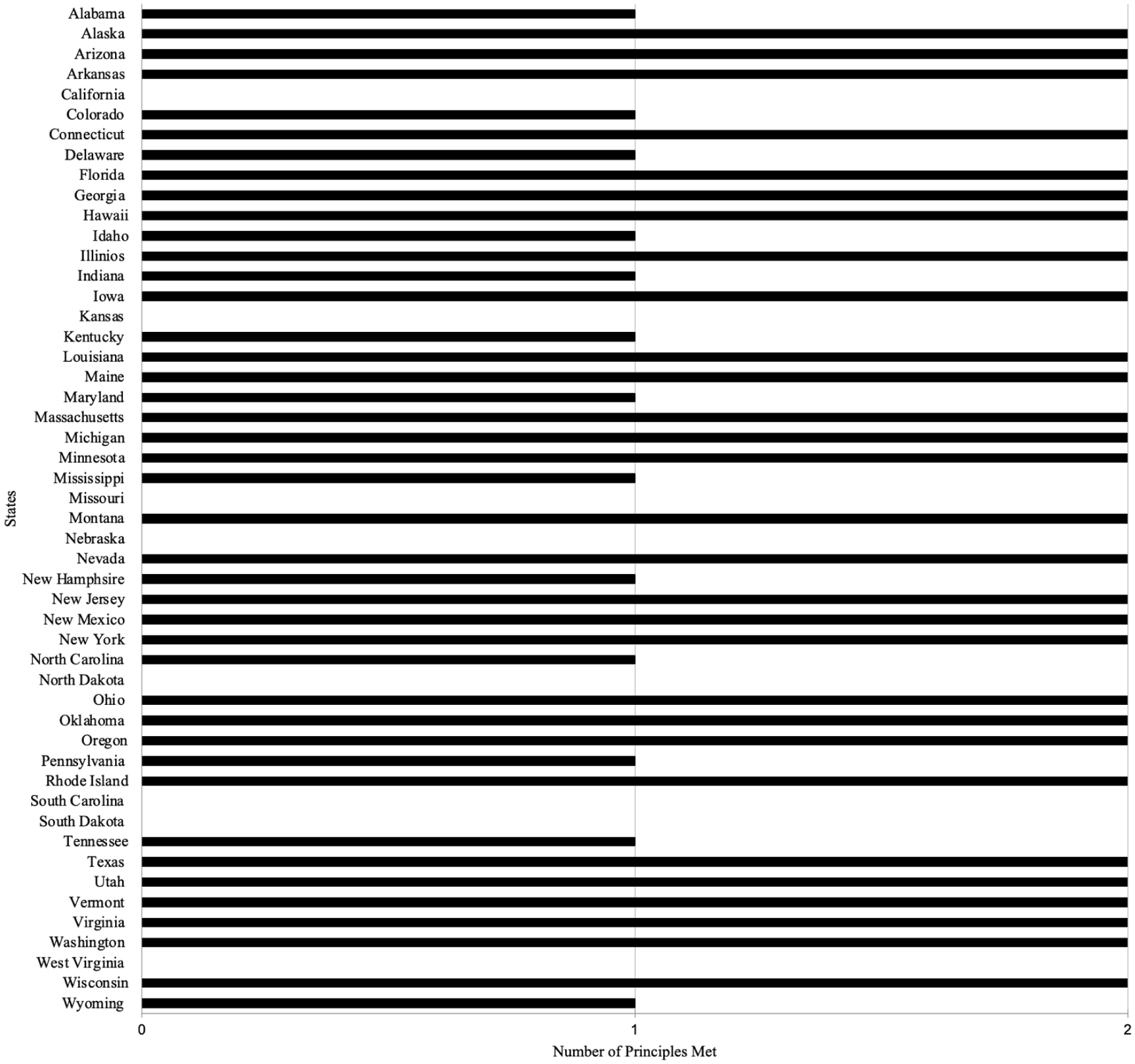
States Meeting Guidelines for Actions Taken After Restraint or Seclusion Has Occurred.
Eighty-two percent (n = 41) of states had laws that require parents to be notified as soon as possible following each instance of restraint or seclusion. The majority of states were vague and simply stated parents/guardians should be notified as soon after the restraint as possible, (i.e., Alabama, Alaska, Connecticut, Delaware, Florida, Georgia, Hawaii, Idaho, Iowa, Kentucky, Maine, Massachusetts, Minnesota, Mississippi, Montana, Nevada, New Hampshire, New Jersey, New Mexico, New York, Ohio, Oklahoma, Rhode Island, Tennessee, Virginia, Washington, Wisconsin, and Wyoming). The remaining states explicitly stated required inclusions in the notification to parents/guardians. Examples of such requirements include the event’s antecedents, the proactive strategies attempted, the student’s response to the strategy, the names and training of staff conducting the restraint or seclusion, and any potential injuries resulting from the restraint or seclusion. State laws varied in requiring electronic, mailed, or oral communication of the events. State laws also varied in requiring that school administration or personnel involved in the restraint be the ones reporting to their parent or guardian.
Discussion
The purpose of this law analysis was to compare state laws on restraint and seclusion with the 15 guiding principles for developing such laws, as outlined by the U.S. Department of Education (2012). We categorized each of the principles into (a) guidelines for actions taken during a restraint or seclusion, (b) guidelines focusing on training and prevention, (c) guidelines for actions taken during restraint or seclusion, and (d) guidelines for actions after restraint or seclusion has ended and analyzed the number of states meeting the guidelines in each of the four categories. Given the detrimental impacts of the use of restraint and seclusion (Substance Abuse and Mental Health Services Administration [SAMHSA], 2010), particularly for students with or at-risk for disabilities, combined with the inconsistencies in both laws and practices across school systems and states (Kern et al., 2024), it is necessary to understand specifically how states excel or fail to meet each of the guiding principles. This understanding may guide states in aligning their laws with recommendations from the USDOE (2012) and to use “model” states as examples. Such alignment may better serve students with behavioral challenges in school systems across the United States.
Reauthorization Timelines
The USDOE (2012) recommended that states review and update their laws on restraint and seclusion to reflect current research and evidence-based best practices. Our analysis revealed that over half of the states have updated their laws within the last 5 years. Of the remaining 24 states, five states had no laws in place, and four states had not updated their laws since the U.S. Department of Education released the 15 guiding principles. The lack of federal laws mandating a cohesive set of state laws for the use of restraint and seclusion in schools, combined with inconsistency across state laws, necessitates more frequent reviews and updates of state laws (Freeman & Sugai, 2013; Kern et al., 2024), particularly for the states that have no laws in place or for those with laws over 10 years old. As state lawmakers are reviewing and revising restraint and seclusion laws, they may develop laws that are more consistent across states if they align their laws with the 15 guiding principles in the resource document (Marx & Baker, 2017; USDOE, 2012).
General Guidance on Restraint and Seclusion Practices
The first research question focused on the seven principles outlined in the resource document, which provided recommendations related to general restraint and seclusion practices. The most frequently addressed principle across all states is that restraint and seclusion should be avoided, except when the student is in imminent danger of serious physical harm to themselves or others. Micro-coding revealed that states were consistent in the way this guidance was addressed. Restraint and seclusion practices are often misused, particularly with vulnerable populations, by initiating restraints or seclusions in response to disruptive situations and continuing them past the point of imminent danger (Simonsen et al., 2014). Vulnerable populations may be further protected from the misuse of restraint and seclusion practices as all states consistently enact laws restricting their use to prevent serious physical harm (Scheuermann et al., 2016).
The least frequently addressed principle across all states is the one recommending regular review and update of laws or policies as needed. The limited number of states that specifically called for regular revisions to their restraint and seclusion laws mirrored this study’s finding that many states had not updated their laws in the past 5 years. More frequent revisions of state laws may decrease the need for restraint and seclusion, as they can incorporate new research on evidence-based behavioral practices and trauma-informed responses to behavior (Kern et al., 2024).
Another principle covered in a few state laws was the plan for informing parents of laws and policies at the school, local, state, or federal level. Generally, parents are unaware of their rights when it comes to supporting their children, especially those with disabilities (Resch et al., 2010). The school and students’ parents should work as a team to best support students (Paccaud et al., 2021). It may be hard for parents to receive a call that their child was restrained or secluded at school. As such, if parents are aware of these practices and how the school might prevent restraint or seclusion beforehand, the conversation might be easier for the two parties.
Prevention and Training for Restraint and Seclusion
The second research question addressed the three principles outlined in the resource document, which offered recommendations for training and preventing restraint and seclusion. Although more states addressed each of the principles than did those addressing the principles on general restraint and seclusion practices, our analysis revealed inconsistencies in how each state addressed them. Within this category, the most frequently addressed principle is the requirement for training in restraint and seclusion. Our micro-coding confirmed previous results that there was little consistency in the type, frequency, or general inclusions of such training (Freeman & Sugai, 2013). Prior analysis of restraint training programs revealed little consistency in program emphasis (e.g., de-escalation vs. physical restraint procedures), training requirements, and time spent in training sessions across commercially used restraint and seclusion training programs by school districts and states (Couvillon et al., 2010). The lack of consensus on the necessary components and the emphasis on restraint and seclusion training in both state laws and training programs may result in the overuse and misuse of restraint and seclusion practices. Students may be further protected from the misuse of restraint and seclusion practices if there were greater consistency across states and school districts in the nature of training programs, with a particular focus on increasing training in positive, preventive measures (Couvillon et al., 2010; Freeman & Sugai, 2013).
The least frequently addressed principle across all states was defining behavioral strategies to address the underlying cause or purpose of the behavior that results in restraint or seclusion. This is problematic, as the use of restraint and seclusion practices often results from a failure to use effective positive preventive measures to respond to behavior before it escalates into an emergency situation (Scheuermann et al., 2016). Schools and institutions need guidance on specific prevention strategies, including the use of function-based thinking to prevent harmful behaviors (Trader et al., 2017). Function-based thinking is the foundation for understanding what the behavior is communicating and for developing a plan to proactively teach more contextually appropriate behaviors that serve the same function (Sugai et al., 2000).
Actions Taken During Restraint or Seclusion
The third research question focused on the three principles outlined in the resource document, which provide guidelines for actions during restraint or seclusion. Analysis of recommendations within this category revealed that states were more consistent in addressing each of these three principles, and there was greater uniformity in the wording of these principles across states. The most frequently addressed principle is that restraint and seclusion may not be used in a manner that restricts a child’s breathing or harms the child. Micro-coding revealed that all states that included this guidance used consistent wording in their laws.
The least frequently addressed principle across states, although still addressed by over half the states, was that every instance in which restraint and seclusion are used should be carefully and continuously visually monitored to ensure the appropriateness of use. Visual monitoring is very important to prevent serious harm or death to the student. As previously mentioned, this is a reported outcome of the use of restraint and seclusion (CWLA, 2004). Although micro-coding revealed states were consistent in their wording of requiring visual monitoring of all instances of restraint and seclusion, some states specifically outlined a plan for additional monitors to engage in trauma-informed de-escalation practices during the restraint or seclusion. Increasing the specificity of observers’ roles to include practices that may reduce the time spent in a restraint or seclusion may protect students from the negative outcomes associated with prolonged restraint or seclusion (Scheuermann et al., 2016).
Actions Taken After a Restraint or Seclusion Has Occurred
The fourth research question focused on the two principles outlined in the resource document, which provide guidelines for actions to be taken after a restraint or seclusion has occurred. Both principles were consistently addressed within state laws. Analysis across states indicated varying levels of specificity of the requirements within the laws. The most frequently addressed principle is the requirement that parents or guardians be notified as soon as possible after each instance of restraint or seclusion. Micro-coding revealed that most states lacked specificity in their laws regarding how parents or guardians should be notified and what should be included in such notifications. Few states specify that parents should be notified of the event antecedents and the proactive strategies implemented prior to the restraint. Providing such information may help strengthen the home-school partnership and build collaborative relationships to further develop individualized plans for proactively preventing dangerous behavior (Paccaud et al., 2021). States may further protect students from restraint and seclusion practices by requiring protective strategies to be attempted prior to and after a restraint, and by requiring that parents or guardians be notified of the use of restraint and seclusion in their laws.
The least frequently addressed principle in this category is that a review should occur and, if appropriate, that strategies currently in place to address dangerous behavior for students with multiple restraints within a particular location or timeframe be revised. Micro-coding revealed consistency across states in the requirement to collect and analyze data for the purpose of implementing less-restrictive, positive, and proactive strategies for decreasing the need for restraint and seclusion; however, states varied in the specificity of the number of instances of restraints or seclusion in the same context that should trigger the need for a review. Increasing specificity in this area may increase the need to review and revise positive, preventive strategies in place, allowing staff to monitor the fidelity of their implementation and decreasing the need for restraint and seclusion (Graves et al., 2025).
Policy Implications
The results of this study can be used to improve both law and practice. First, the findings reveal substantial variability in how states align with recommended guidance from the U.S. Department of Education, with some states lacking laws altogether and others omitting critical protections. This inconsistency reinforces the need for federal legislation, such as KASSA, to establish baseline protections and ensure all students, regardless of state, are afforded the same safeguards. Second, given that many states have not revised their laws in over a decade, legislation should require periodic reviews (e.g., every 3–5 years) to ensure alignment with current research, evidence-based practices, and legal standards. Next, laws should standardize protocols for timely parent notification and data-informed reviews following incidents. This supports transparency, strengthens family-school partnerships, and ensures continuous improvement in behavioral supports. Finally, states should prioritize preventive measures, including trauma-informed care, functional behavior assessments, and positive behavioral interventions. Mandated annual staff training on de-escalation strategies and safe practices is essential.
Limitations
As with all research, this article contains some limitations to consider. First, the study analyzes written state laws. Some states have technical assistance documents and other information for districts to use in developing their laws. Further, the analysis is limited to state-level laws. District- or school-level variations and guidance—which could significantly impact actual practice—are not accounted for. Districts could also be receiving state-level funding, training availability, or enforcement mechanisms that could influence the presence or strength of policy language. Finally, the micro-coding approach, while systematic, may still be subject to interpretation biases, especially when laws use vague or varied terminology. Despite inter-observer agreement procedures, subtle differences in meaning could be missed.
Future Research
Building off the current study, future research should conduct a more in-depth analysis of district-level laws and how they are followed in classrooms. Law is an important foundation, but evaluating how it is implemented is what truly affects the students. Similarly, longitudinal studies are needed to assess whether recently updated laws (post-2020) are associated with reductions in restraint and seclusion incidents, improved student behavior, or fewer injuries. Finally, it is important for research to uplift and amplify the experiences of educators, students, and families. Gathering narratives from students, families, and educators about their experiences with restraint and seclusion can illuminate gaps between law and practice and inform more compassionate, effective strategies.
Conclusion
This law analysis reveals inconsistencies in how states address the U.S. Department of Education’s guiding principles on restraint and seclusion, with many laws lacking key protections, updates, or clarity. While some states have made progress in aligning with federal guidance—particularly in prohibiting harmful practices and emphasizing staff training—many still fall short in areas such as regular law review, prevention-focused strategies, and equitable protections for all students. These gaps are especially concerning given the well-documented physical and psychological harms associated with restraint and seclusion, as well as the disproportionate impact on students with disabilities and students of color. To ensure the safety and dignity of all students, state lawmakers must prioritize law reform that reflects current research, centers equity, and incorporates comprehensive training and monitoring systems. Aligning laws with the 15 guiding principles offers a critical step toward creating school environments that are safe, supportive, and just for every student.
Footnotes

Funding
The authors received no financial support for the research, authorship, and/or publication of this article.
Declaration of Conflicting Interests
The authors declared no potential conflicts of interest with respect to the research, authorship, and/or publication of this article.