







Abstract
Background
The Ross procedure, introduced in 1967, transformed cardiac surgery. This study presents one of the first global bibliometric analyses, to the best of our knowledge, mapping research trends, collaborations, and authorship to identify future directions in this field.
Methods
A global bibliometric analysis of Ross procedure publications (1967–2025) was performed using Scopus and PubMed. Data processed in R (bibliometrix, biblioshiny) explored productivity, collaborations, authorship, and thematic evolution. Future publication trends to 2050 were forecast using a linear extrapolation model with 95% confidence intervals.
Results
A total of 2370 Ross procedure publications were identified (1967–2025), showing an 8.1% average annual growth rate. Original articles dominated (65%), followed by reviews/meta-analyses (13.9%) and case reports (13.5%). Among 6228 authors (69.5% male), collaboration averaged 4.9 coauthors/document, with 12.6% international partnerships. The USA (32.3%), the Netherlands (19.3%), and Germany (14.5%) led in productivity. Top institutions were Erasmus University Medical Center (4.3%), Mount Sinai Health System (3.0%), and University Heart Center Lübeck (2.2%). Major journals included Annals of Thoracic Surgery (13.5%), Journal of Thoracic and Cardiovascular Surgery (12.2%), and European Journal of Cardio-Thoracic Surgery (7.6%). Faculty surgeons authored 66% of first-author papers. Main research themes involved allograft reintervention, durability, suture technique, failure, and postoperative complications. Linear regression predicted 164 annual publications by 2050.
Conclusions
This analysis reveals an exponentially increasing and sustained global interest in the Ross procedure, which continues to shape cardiac surgery worldwide. The findings highlight growing research output, robust international collaboration, and a focus on clinical innovation, ensuring ongoing advancements in surgical techniques, patient outcomes, and global cardiovascular surgical excellence.
Introduction
Since its introduction in 1967, the Ross procedure has revolutionized aortic valve replacement by providing young, active patients with a long-lasting and physiologically advantageous alternative for replacing their diseased aortic valve. 1 Tens of thousands of patients are likely to have received this procedure worldwide, and in many high-volume centers (institutions performing >20 Ross procedures annually with cumulative experience exceeding 100 cases), the 10-year survival rate is over 90%.2,3 When compared to mechanical valves, the transplantation of the patient's own pulmonary valve for the aortic valve has been associated with superior hemodynamic performance and a reduced need for anticoagulation. Its use has grown throughout Europe, North America, and Asia over the years due to increasing experience, technical refinements, and improvements in patient selection. 4 Despite its clinical importance, little has been studied about the scientific development and global research trends of the Ross procedure. To the best of our knowledge, this study offers an early bibliometric perspective, mapping its scholarly growth and highlighting the worldwide impact of this enduring surgical innovation.
Methods
Study design and data source
This research was a retrospective, descriptive bibliometric analysis that also includes a prediction element. All pertinent Ross procedure publications from around the world, published between 1967 and 2025, were identified and examined using the Scopus database (Elsevier) and PubMed. In comparison to other databases, they were chosen because of their extensive and carefully chosen coverage of peer-reviewed literature, which is especially strong in the fields of medicine and the biological sciences, as well as their sophisticated citation analysis and author disambiguation tools. All bibliographic information was exported, including publication details, authors, affiliations, citations, and keywords. This methodology made it possible to conduct a thorough analysis of the evolution of research foci over the specified period, publication trends, collaboration networks, and citation impact.
Search strategy and query
The search was executed in PubMed and Scopus in December 2025 using the query: TITLE-ABS-KEY (“Ross procedure” OR “pulmonary autograft” OR “aortic valve replacement Ross” OR “Ross-Konno” OR “Ross operation”) AND PUBYEAR 1967–2025. The search field included Title, Abstract, and Author Keywords. The initial yield was refined by removing duplicates and nonrelevant publications through a manual screening process, resulting in 2370 publications for analysis. The complete database-specific search strings are provided as Supplemental Material. For PubMed, the search strategy incorporated both MeSH terms and free-text keywords: ((“Ross procedure"[MeSH Terms] OR “Ross procedure"[All Fields] OR “pulmonary autograft"[MeSH Terms] OR “pulmonary autograft"[All Fields] OR “Ross-Konno"[All Fields] OR “Ross operation"[All Fields]) AND (“1967/01/01"[PDAT]: “2025/12/31"[PDAT])). For Scopus, the equivalent TITLE-ABS-KEY search was employed as described (Supplemental Text S1).
Eligibility criteria and study selection
Peer-reviewed original articles, reviews, and case reports were included if they focused on Ross procedures. While we acknowledge that case reports have limited scientific weight compared to original research, they were retained in this bibliometric analysis for two reasons: (1) they represent a non-negligible portion (13.5%) of the published literature on the Ross procedure and their exclusion would incompletely represent the full scholarly discourse; and (2) in surgical innovation, case reports historically document early experiences, technical modifications, and rare complications that contribute to the procedural knowledge base. However, we recognize this as a limitation, and sensitivity analyses (not shown) confirmed that excluding case reports did not materially alter the main trend findings. The exclusion of non-English articles, while necessary for feasibility, may introduce language bias, as valuable contributions published in other languages are not represented. Editorials and conference abstracts were excluded. The screening process involved a title/abstract review for relevance, followed by a full-text assessment to confirm eligibility.
The screening process was conducted independently by two reviewers (AA and YK). Disagreements were resolved by consensus or by consultation with a third reviewer (WSC). The selection process followed Preferred Reporting Items for Systematic Reviews and Meta-Analyses (PRISMA) guidelines for study selection where applicable. A PRISMA flow diagram is provided as Figure 1, documenting the number of records identified (n = 10,765) and final included publications (n = 2370).
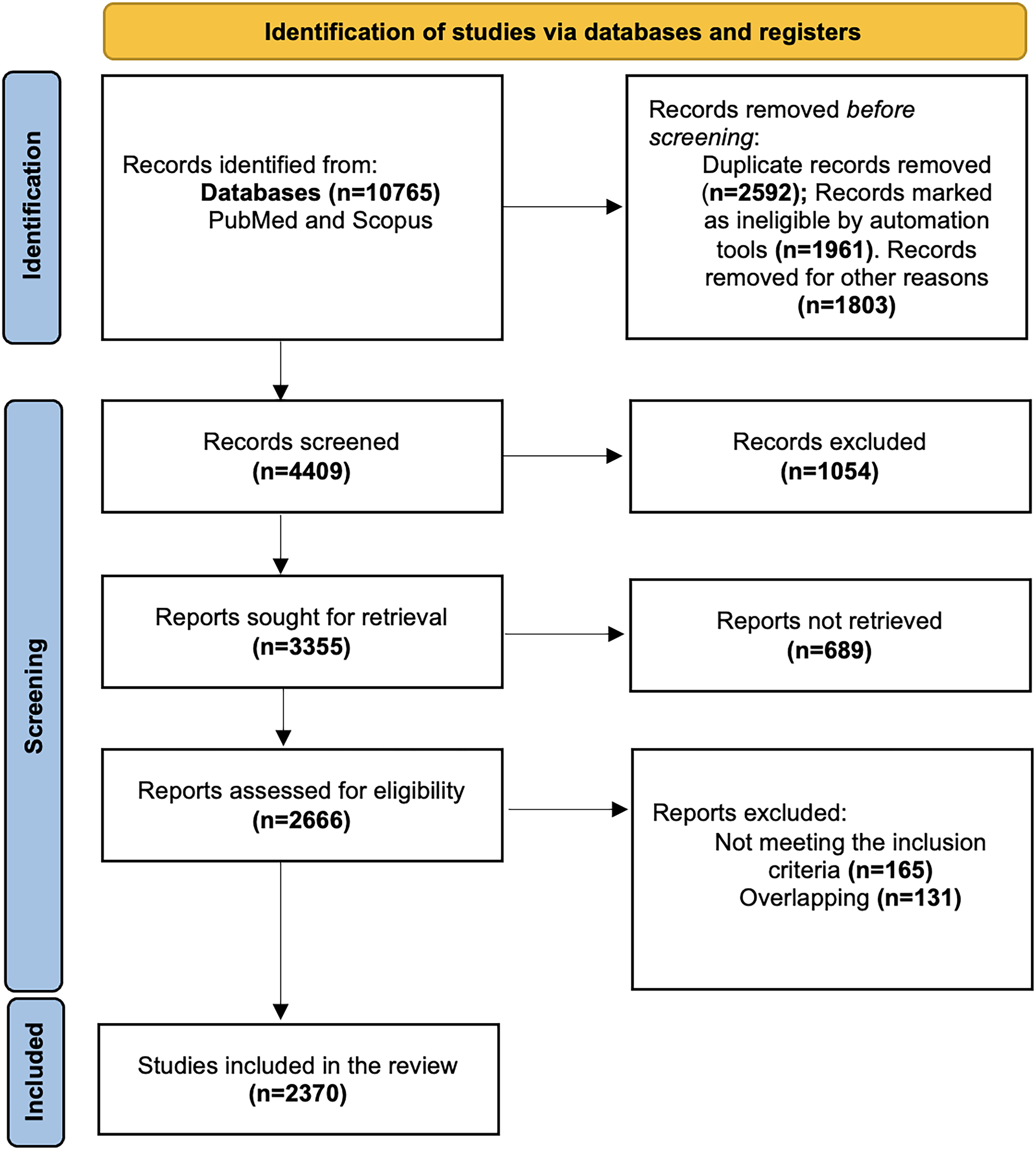
PRISMA flow diagram.
Data extraction and standardization
Each publication's title, authors, affiliations, year, journal, number of citations, document type, Field-Weighted Citation Impact (FWCI), and keywords were extracted. FWCI values were derived from Scopus, comparing actual citations received by a document to the expected average for similar documents in the same field, publication year, and document type. An FWCI > 1.0 indicates above-average performance. The h-indices reported in Table 1 represent the authors’ career-wide h-indices (as of December 2025) rather than Ross-specific indices, providing context for their overall scientific influence. Ross-specific publication counts are presented separately in the article's column. On the other hand, based on first names, the gender R package was used to programmatically infer the gender of the authors, with manual verification in cases of ambiguity. We acknowledge that name-based gender inference is an imperfect method that does not account for nonbinary gender identities, cultural variations in naming conventions, or potential misclassifications. These results are therefore presented as approximate and should be interpreted with caution. Publication order determined the roles of the first and senior authors. To ensure accurate network mapping and trend analysis, synonymous terms, such as “Ross operation,” “pulmonary autograft,” and “Ross-Konno,” and institutional name variations were standardized and merged. This harmonization process minimized redundancy and enhanced the precision of keyword co-occurrence, authorship, and collaboration network analyses.
Top 20 most productive individual authors in Ross procedure research (1967–2025).
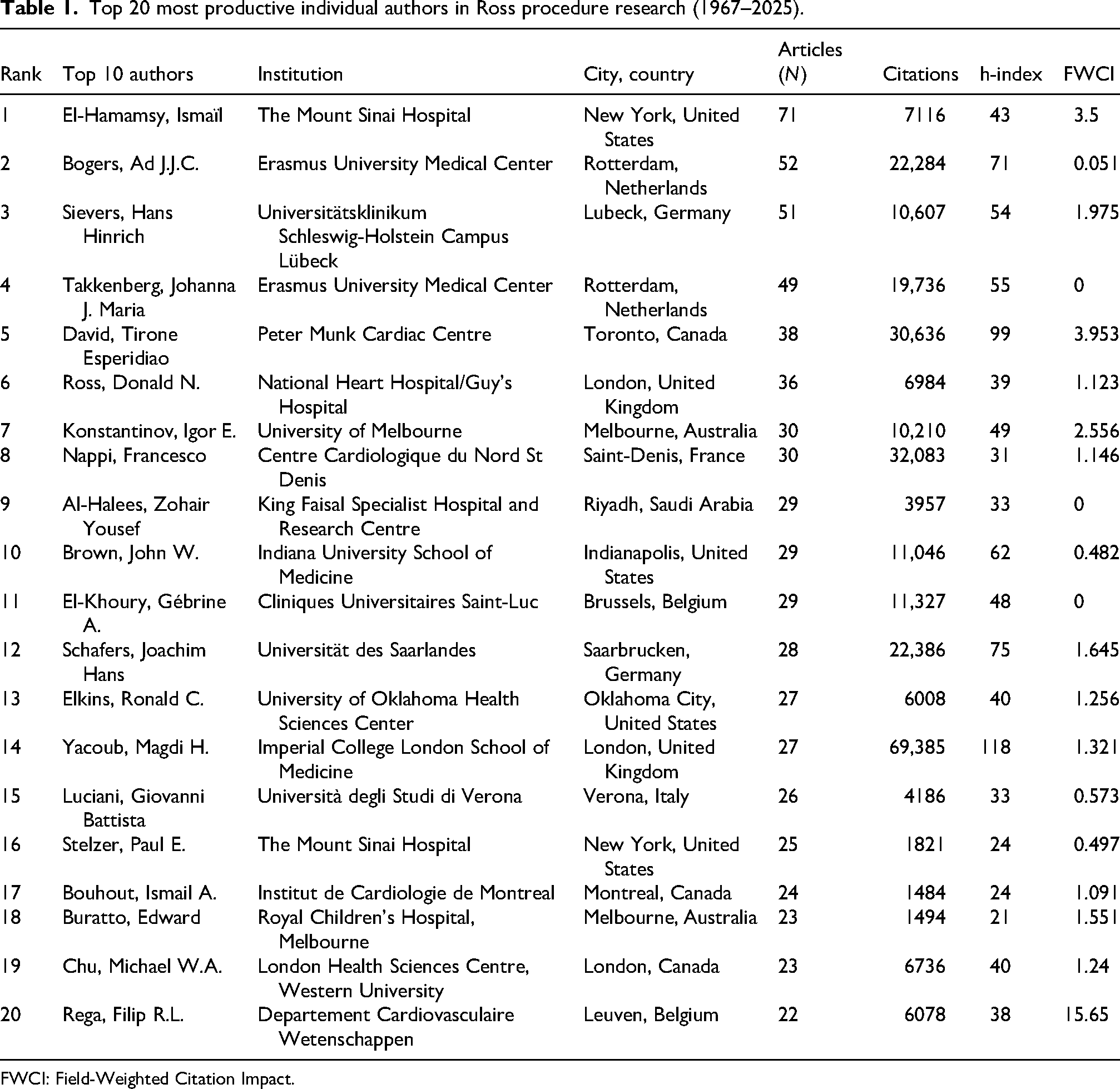
FWCI: Field-Weighted Citation Impact.
Data analysis, visualization, and ethical considerations
R software (v4.4.2) with the bibliometrix and biblioshiny packages was used to conduct the bibliometric analysis and statistical analyses, such as Spearman correlations. In addition to mapping collaboration networks and thematic trends, we computed descriptive metrics (annual production, citations, and h-index). To predict future publication output, a linear regression model was fitted to historical annual publication counts (1967–2025). Linear regression was selected after testing alternative models, as it provided the optimal balance of fit (R2 = 0.84) and parsimony while avoiding overestimation. These projections should be interpreted as illustrative trend extrapolations based on historical patterns, not as precise predictions, as they cannot account for unforeseen disruptive innovations, shifts in clinical practice, or changes in research funding that may substantially alter future publication volumes. The forecast to 2050 was presented as a hypothetical scenario only, not a clinical prediction. Since there were no human subjects or medical records involved, ethics approval was not required.
Results
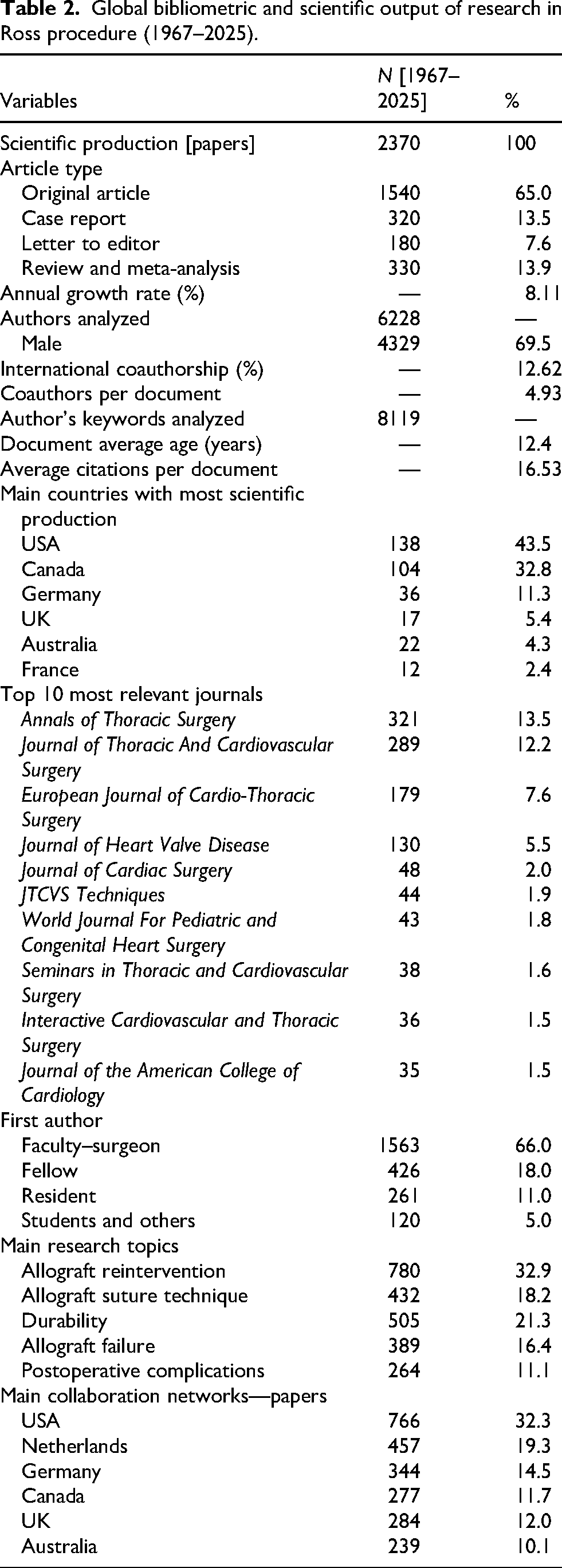
A total of 2370 publications were identified, predominantly original articles (65%), followed by reviews and meta-analyses (13.9%) and case reports (13.5%). Scientific output has sustained an average annual growth rate of 8.11% over the study period.
The data show that beginning with only one article per year in the late 1960s, and rose sharply over time. Production accelerates in the 1990s, reaching 91 articles in 2014, 95 in 2020, and peaking at 174 in 2022. Although output declines slightly thereafter, 2025 still reports 92 publications, far above early historical levels. The linear prediction model estimated continued growth, projecting 109 articles in 2026 and increasing steadily to 164 by 2050 (95% CI [122.2–206.4]). The analysis includes 6228 authors, of whom 69.5% are male, with a moderate international coauthorship rate of 12.62% and an average of nearly five coauthors per article. Documents show a mean age of 12.4 years and an average citation rate of 16.53 per paper. The United States, the Netherlands, and Germany are the leading contributors globally. The most influential journals include Annals of Thoracic Surgery and The Journal of Thoracic and Cardiovascular Surgery. Dominant research themes focus on allograft reintervention, suture techniques, durability, and failure, with strong collaboration networks centered in the USA and Europe (Table 2) (Figure 2).
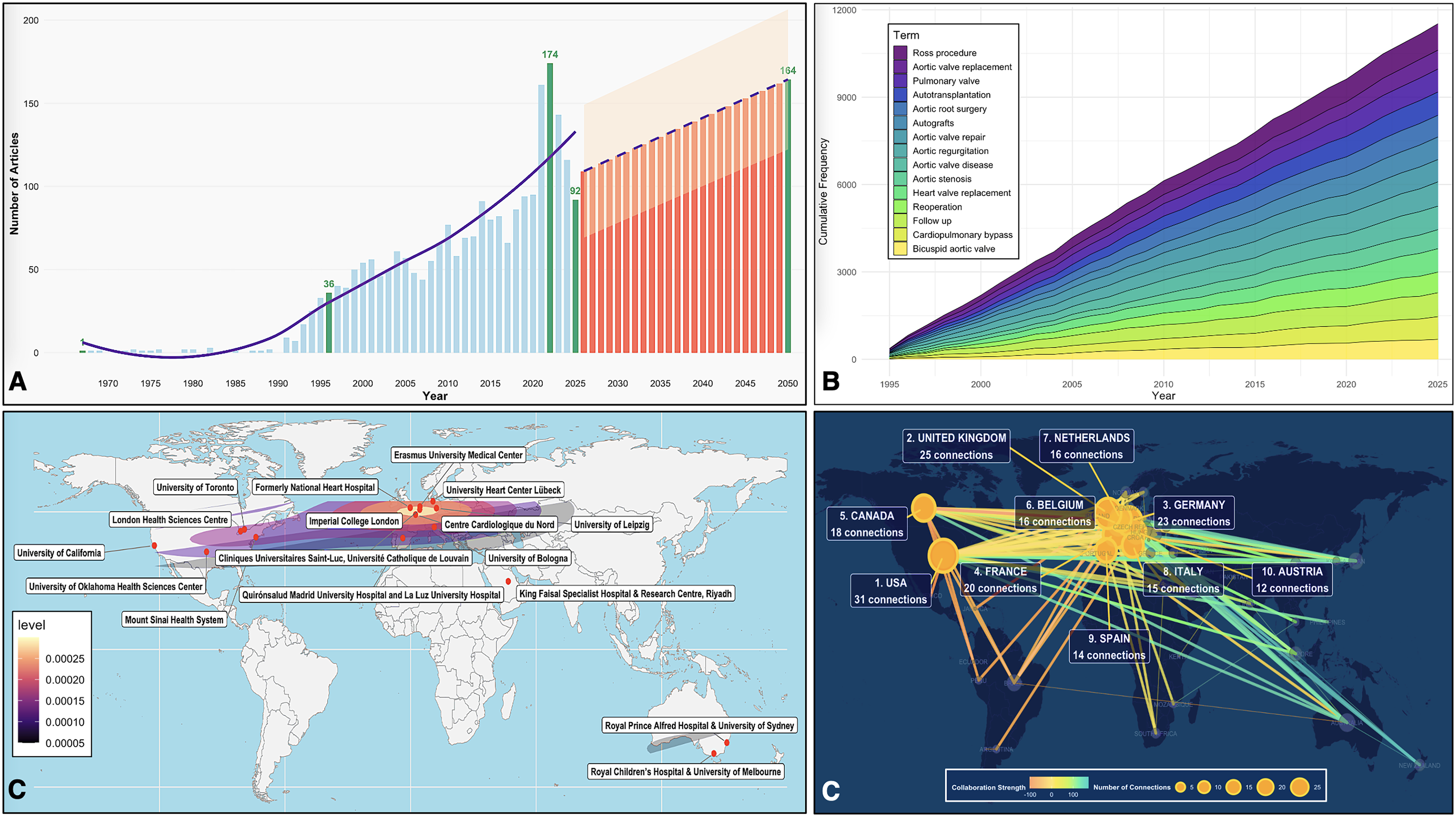
(a) Annual scientific production (1967–2025) with linear forecast to 2050 (shaded area represents 95% CI). (b) Keyword tendency analysis showing thematic evolution over time. (c) Global distribution of Ross procedure research output by country. (d) International collaboration network map showing research partnerships.
Global bibliometric and scientific output of research in Ross procedure (1967–2025).
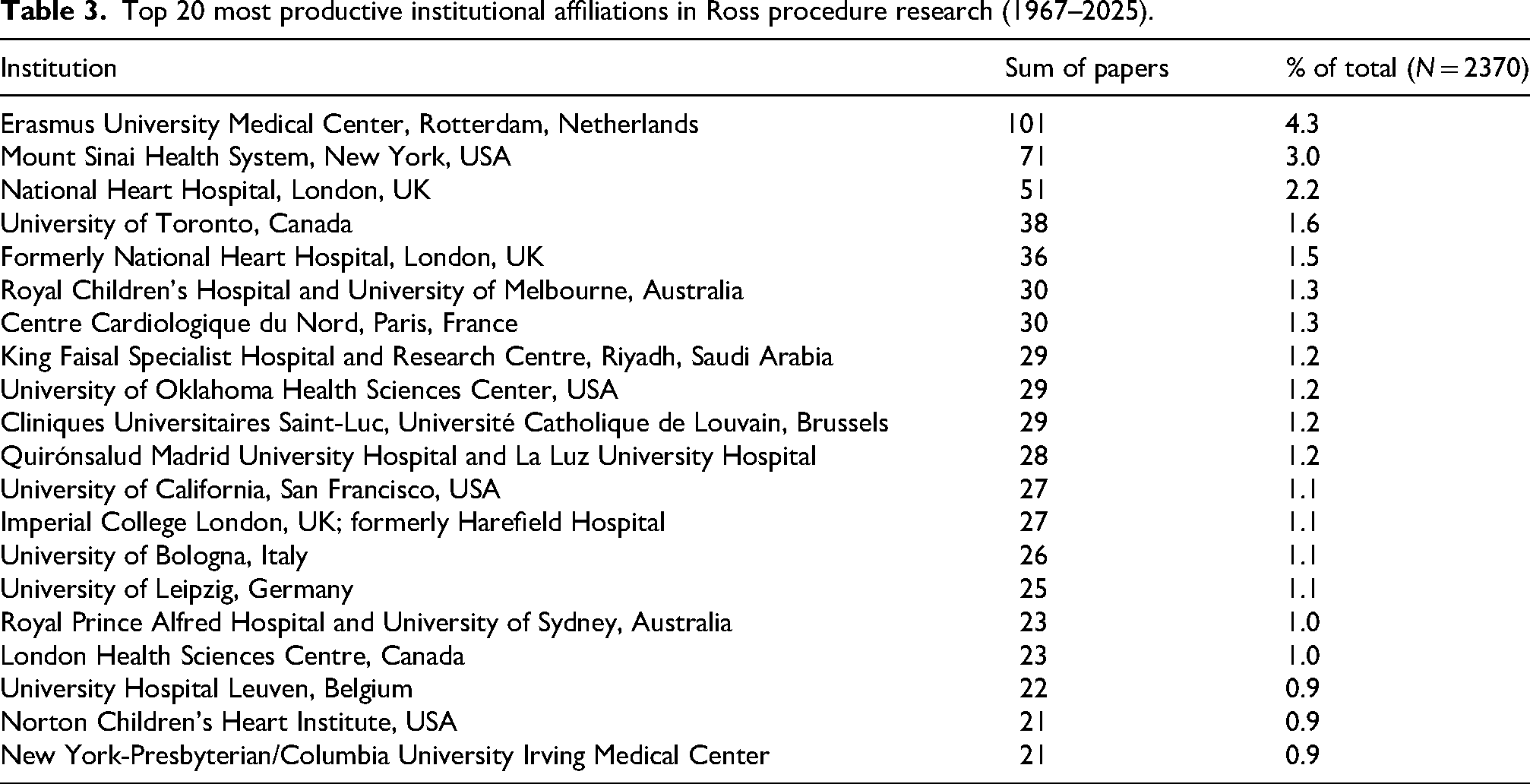
The author ranking demonstrates a highly influential group, led by El-Hamamsy with 71 papers and 7116 citations, and Bogers with 52 papers and over 22,000 citations. Several authors, such as David and Yacoub, display exceptional citation impact and high h-indices, reflecting longstanding authority in the field (Table 1, Figure 3). Institutionally, productivity is concentrated in a small number of global centers. Erasmus University Medical Center leads with 101 publications, followed by Mount Sinai (71) and Lübeck (51). Major hubs in Canada, the United Kingdom, Germany, France, Australia, Saudi Arabia, and Belgium contribute steadily, underscoring an international and collaborative research landscape anchored in high-volume academic cardiac surgery programs (Table 3).
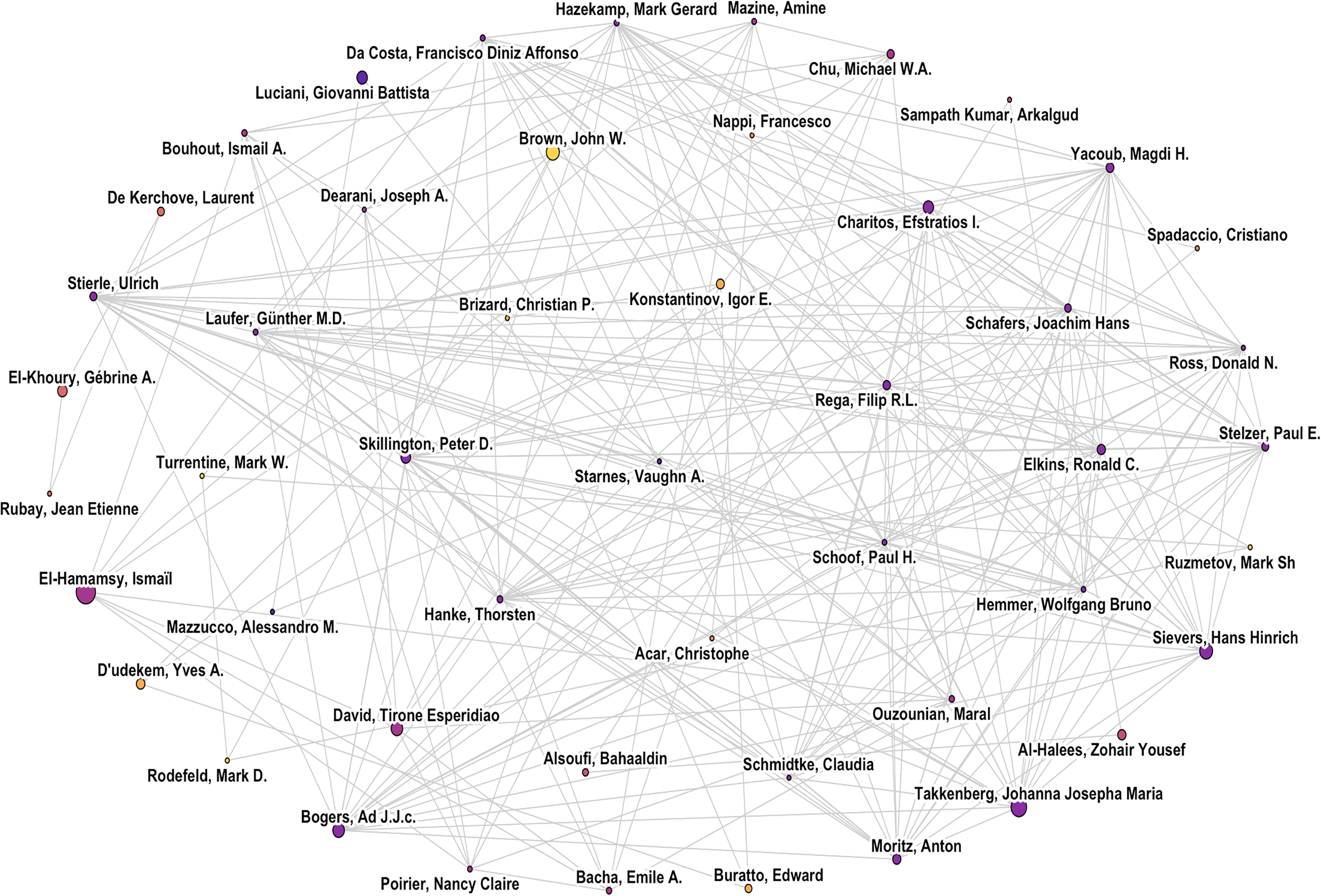
Ross procedure collaboration network showing author clusters; node size represents publication count; edge thickness indicates collaboration strength.
Top 20 most productive institutional affiliations in Ross procedure research (1967–2025).
The word-frequency analysis shows a strong concentration on core concepts such as “Ross procedure” (1548 occurrences), “aortic valve” (1001), “pulmonary valve” (806), and “autograft” (690), confirming that the literature remains centered on operative technique, valve pathology, and reintervention dynamics. Frequent terms such as “surgical technique,” “reoperation,” and “postoperative complications” reflect the persistent clinical emphasis on durability and outcomes (Figure 4). The trend-topic table provides a chronological view of thematic progression. Early topics—such as “pulmonary valve” (Q1: 2001) and “reoperation” (Q1: 2008)—dominated earlier decades, whereas more contemporary themes, including “aortic stenosis,” “aortic valve repair,” and “aortic valve disease,” concentrate in the 2019–2023 period (Figures 1 and 2). The collaboration-network table identifies pivotal authors with high structural influence. Figures such as Takkenberg, Sievers, Bogers, and especially El-Hamamsy, who has the highest betweenness and PageRank, serve as major connectors within global research clusters, facilitating the dissemination of innovations and standardization of practice. Finally, the international collaboration map reveals dense, multidirectional partnerships across Europe, North America, Oceania, and Asia. Strong positive collaboration indices—particularly between countries such as Australia–New Zealand, Japan–Canada, and Germany–New Zealand—indicate robust scientific exchange, while negative coefficients in certain pairs reflect limited or unidirectional cooperation (Figure 2).
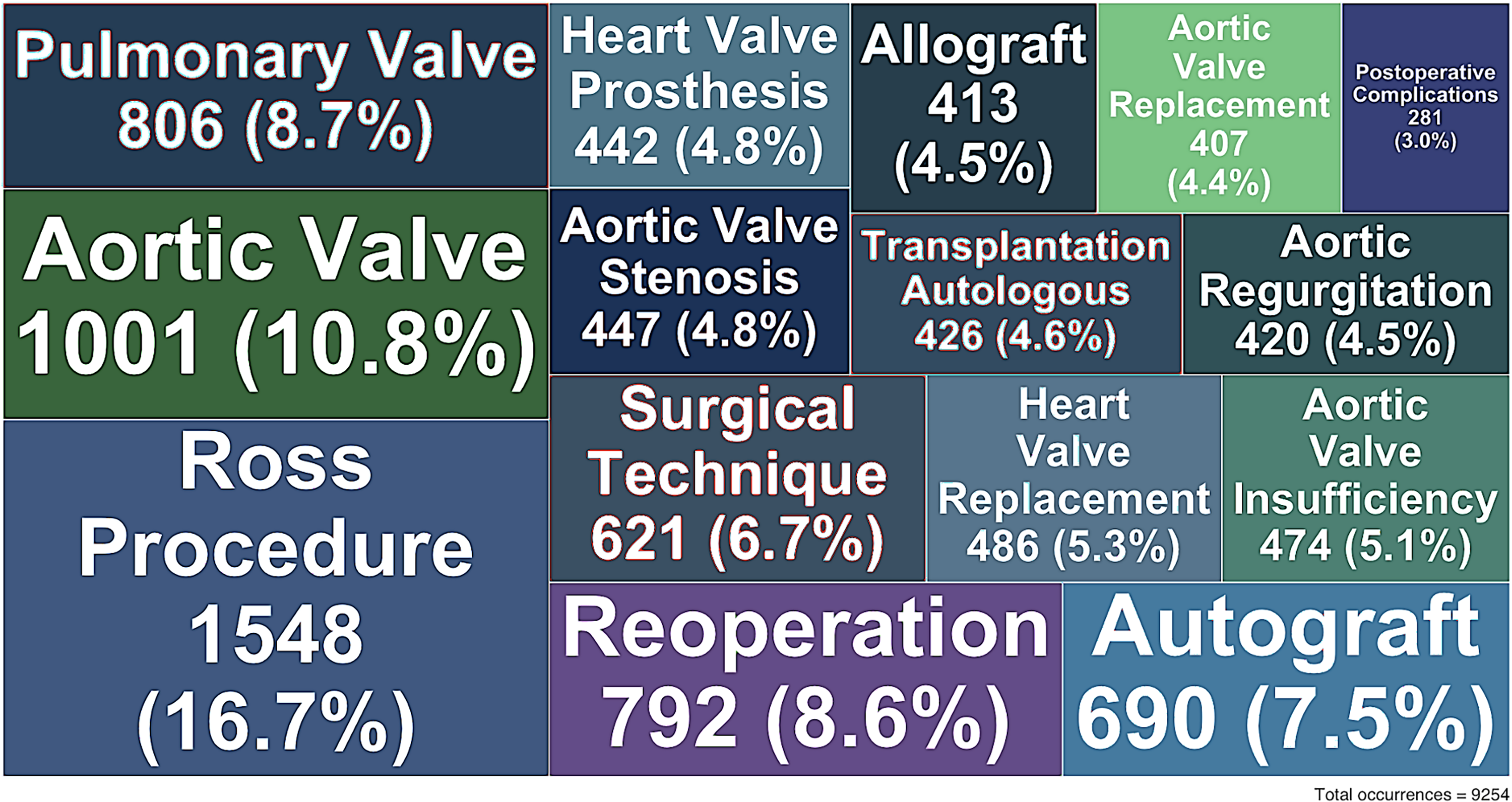
Treemap visualization of the 15 most frequent keywords in Ross procedure literature (1967–2025).
Discussion
For more than 50 years, the Ross procedure has been recognized as a distinctive and refined answer to a complicated issue: finding a living, long-lasting, and biologically superior substitute for a diseased aortic valve in young, active patients. We conducted a global bibliometric analysis that offers a robust, data-informed account of how this procedure evolved from an innovative idea to a dynamic subject of international scientific investigation. The narrative conveyed by 2370 publications and more than 6000 authors is one of resilience, teamwork, and ceaseless innovation, establishing the Ross procedure not as a relic of the past but as a fundamental element of future cardiac surgery.
What our bibliometric data shows
The sustained 8.1% average annual growth rate in publications, projecting to 164 annual papers by 2050 as a hypothetical scenario based on historical trends, is a testament to the procedure's enduring relevance. This is not the profile of a forgotten technique, but of one experiencing a powerful renaissance. The initial wave of enthusiasm in the 1990s, followed by a period of cautious reflection due to concerns over autograft dilation and homograft stenosis, as noted by Stelzer in his state-of-the-art review, is vividly captured in our data. 5 The subsequent resurgence in research output mirrors the clinical community's response to these challenges: not abandonment, but determined problem-solving.
Our thematic evolution maps show a clear progression from foundational topics like “pulmonary valve” and “reoperation” to contemporary, nuanced themes such as “aortic valve repair,” “suture technique,” and “postoperative complications.” This evolution reflects a mature field moving beyond proving feasibility and toward perfecting execution and long-term management, a shift endorsed by the recent 2025 EACTS Expert Consensus Statement. 6
The geographic and institutional landscape of Ross research underscores that excellence is not confined to a single center but is a global collaborative achievement. The 12.6% international coauthorship rate and the dense collaboration networks we identified are more than just metrics; they represent a shared global mission. This spirit of cooperation is perhaps best embodied by initiatives like the North American Ross Consortium, which, as described by Brinkman, brings together master surgeons to “standardize” the procedure and “get very granular on the technical aspects.” 7 Our identification of key authors with high betweenness centrality, such as El-Hamamsy, functions as the vital connective tissue in this global network, facilitating the rapid dissemination of technical refinements that underpin improved outcomes.
A central theme emerging from our keyword analysis is the living nature of the autograft. Our data highlight terms like “autograft,” “patency,” and “failure,” showing the research community's deep engagement with this biological process. Computational models, like those developed by Middendorp and Maes, are now providing unprecedented insights into this mechanobiology, simulating how the valve achieves “mechanical homeostasis” and identifying stress-based signaling as a key driver.8,9 Concurrently, innovative surgical strategies aimed at guiding this remodeling are being actively refined. These include extra-aortic annuloplasty to support a dynamic Ross procedure, as well as a modified inclusion technique incorporating anticommissural plication.10,11 The last one, evaluated by Zhu et al. in ex vivo simulator models, is being rigorously investigated to mitigate progressive dilation and enhance leaflet biomechanics. 10 This synergy between computational science, basic research, and surgical innovation is a hallmark of a forward-thinking field.
Clinical outcomes in the published literature
Separately from our bibliometric findings, the clinical literature reports consistently excellent long-term outcomes following the Ross procedure. As reported in the clinical literature, 15-year survival rates exceeding 90% and remarkable freedom from reintervention have been documented across multiple studies.12,13 Clinical studies have suggested that perhaps the most compelling argument for the Ross procedure is its unique ability to restore a patient's life expectancy to that of the general population, a benefit that some authors have argued is not yet matched by other aortic valve replacement options. 14 Furthermore, studies by Hammoud et al. confirm that this longevity is paired with an enhanced health-related quality of life, with patients reporting superior mental health scores and freedom from the lifestyle limitations imposed by anticoagulation. 15 Based on published outcome studies, this patient-centric benefit, the promise of a full, active, and unrestricted life, has been described as a driving force behind the procedure's patient-driven demand, as Stelzer astutely observed. 5
Integration of bibliometric and clinical evidence
The increasing publication volume on “durability” and “reintervention” observed in our bibliometric analysis correlates with the clinical focus on long-term outcomes seen in studies such as Van Hoof et al. 12 Looking ahead, the road is paved with exciting possibilities. The “learning curve” study by Tagliafierro et al. demonstrates that with dedicated mentorship and centralized expertise, the Ross procedure can be reproduced safely and efficiently, allaying one of the primary concerns about its complexity. 16 Furthermore, groundbreaking innovations like the “living Ross” procedure, which incorporates a partial heart transplant for the RVOT conduit, aim to solve the last remaining hurdle of homograft degeneration in the growing child, potentially offering a truly permanent solution. 17 The development of large animal models, as pursued by Van Hoof et al., will be crucial for testing these and other novel concepts. 13
Limitations
Although the dependence on Scopus and PubMed is thorough, it may have excluded pertinent studies from sources that are not indexed. Although the gender inference of authors is supported by algorithms and checked manually, it is still an approximation. Our predictive model, though reliable, is based on extrapolated historical trends and does not take into consideration future disruptive innovations or changes in clinical practice that could affect publication volumes. In addition, while bibliometric data offers a broad overview of research activity, it does not evaluate the qualitative clinical impact of individual studies. Likewise, non-English publications were excluded, as they may have affected the global perspective. Our gender analysis relied on algorithmic inference from first names, which introduces potential misclassification and does not capture nonbinary identities. These findings should be considered exploratory. Finally, a methodological limitation inherent to many bibliometric databases and our analysis pertains to the handling of author affiliations. The bibliometric data we extracted typically reflects the current or most recent institutional affiliation of the authors as indexed in the database, rather than the affiliation at the time the research was conducted and published. Consequently, all publications by an author are programmatically assigned to their latest institution, which may introduce a temporal and geographical bias. This limitation potentially overestimates the scholarly output of an author's current institution while underestimating the historical contributions of their former institutions. Therefore, the institutional productivity rankings and collaboration networks presented should be interpreted as a snapshot of where leading Ross procedure experts are currently based, rather than a definitive historical record of where the research was originally performed.
Conclusion
In conclusion, this bibliometric analysis paints a picture of a procedure that has triumphantly navigated its legacy challenges and is now powerfully surging toward the future. The data reveal a global community of surgeons and scientists united by a common goal: to harness the unique biological potential of the Ross procedure for the benefit of patients worldwide. The journey from Donald Ross's first operation in 1967 to the predicted growth of annual publications in 2050 is a story of scientific perseverance. It is a story that assures us the Ross procedure will continue to be a vital, evolving, and life-affirming option in the cardiac surgeon's armamentarium for generations to come.
Supplemental Material
sj-docx-1-aan-10.1177_02184923261458925 - Supplemental material for From legacy to future: A global bibliometric analysis of the Ross procedure over 60 years
Supplemental material, sj-docx-1-aan-10.1177_02184923261458925 for From legacy to future: A global bibliometric analysis of the Ross procedure over 60 years by W Samir Cubas, Ace Alfabeto, Yasuhiko Kawaguchi, Lin-Rui Guo and Michael WA Chu in Asian Cardiovascular and Thoracic Annals
Footnotes

Ethical approval
Not applicable.
Informed consent
Not applicable.
Funding
The authors received no financial support for the research, authorship, and/or publication of this article.
Declaration of conflicting interests
The authors declared the following potential conflicts of interest with respect to the research, authorship, and/or publication of this article: MWC is supported as the Ray and Margaret Elliott Chair in Surgical Innovation and has received speakers’ honoraria from Medtronic, Edwards Lifesciences, Terumo Aortic, and Artivion. All other authors have no conflicts of interest to declare.
Data availability
All data underlying this study are available upon reasonable request to the corresponding author.
Supplemental material
Supplemental material for this article is available online.
References
Supplementary Material
Please find the following supplemental material available below.
For Open Access articles published under a Creative Commons License, all supplemental material carries the same license as the article it is associated with.
For non-Open Access articles published, all supplemental material carries a non-exclusive license, and permission requests for re-use of supplemental material or any part of supplemental material shall be sent directly to the copyright owner as specified in the copyright notice associated with the article.
