







Abstract
Over the past two decades the topic of graduate outcomes has increasingly informed the discourse on the changing nature of universities. For conservatoires and university music departments the global shift in audience demand away from western classical music and jazz styles (traditionally the cornerstone tertiary music programs) to contemporary commercial music (CCM) has added an extra dimension to the graduate outcomes discussion with respect to vocation preparation and musicians’ portfolio careers. Few studies have tracked the career paths of music graduates across time with none focused on jazz/contemporary singers. This report discusses the findings from a snapshot study of Jazz/Contemporary Voice graduates (2001 to 2012) of one Australian conservatoire. The purpose of this research was to better describe this population of graduates in terms of employment outcomes, the dynamics of their employment activities, employment-seeking strategies and the relevance of university coursework to their employability. Their responses have implications for tertiary music training programs.
Graduate tracking
Over the past two decades the topic of graduate outcomes has increasingly informed the discourse on the changing nature of universities (Coetzee, 2014; Purcell, Wilton, & Elias, 2007; Tomlinson, 2007) with a growing body of research that focuses on graduates’ transition from university to work (Bridgstock, 2011; Graduate Destinations, 2012; Perrone and Vickers, 2003). However, few studies have reported outcomes for graduates of tertiary music programs (Bartleet et al., 2012).
Within the small body of data describing the likelihood of employment for tertiary music graduates, discussion has centered on employment in areas of orchestral, opera, and higher education (Bennett, 2012). We could find few reports that discussed the employment activities of jazz and contemporary commercial music (CCM) musicians generally and none that identified those who are the focus of this report—that is, jazz/contemporary singers.
With the global audience shift away from western classical music to a preference for popular (CCM) music, conservatoires and university music departments have been challenged to meet a growing student demand for training in mainstream CCM styles (e.g., pop, rock, R&B, country, jazz and all associated sub-styles). However, while there is growing proof that “one-size-fits-all” traditional training methods cannot fully address the differences in voice management (laryngeal set-up, resonance, breath flow and breath support) or the style specific elements and vocal effects that define CCM styles (Bartlett, 2010, 2011; Chandler, 2014; LoVetri, 2008; “In support of contemporary commercial music,” 2008), it is reported that traditional conservatoire-based voice programs have continued to focus on western classical style training (Meyer & Edwards, 2014).
This was not the case at the particular Australian conservatoire that is the focus of this current study where, to complement an existing and highly successful classical voice program, in 1996 a jazz/contemporary voice program was established with a specific contemporary voice teaching model. In formulating the current research project, we were interested to hear from the jazz/contemporary singers themselves about their work-lives and career directions post-graduation. In an Australian study which discussed preparation of tertiary students for portfolio careers, authors Bartleet et al. (2012) had suggested that “while most university-level music students view performing as their eventual work destination, there are comparatively few performance jobs in music.”. We decided to test this assertion by inviting graduates of the Jazz/Contemporary Voice program across 12 years (2001 to 2012) from this single conservatoire to respond to questions in the form of an online survey.
The survey was designed to elicit responses to questions regarding whether graduates had developed their careers as performers and/or if they were employed also in music-related, non-performance-based activities or, if they had chosen a non-performance career path. Finally, we wanted to know if they were satisfied that their music education had adequately prepared them for work in and outside the music industry. What follows are the results of this pilot investigation.
Defining “Musician” as a work identity
To contextualize the study, dictionary definitions of “musician” are simply, “a person who writes, sings, or plays music” (Musician, 2015); yet, “musician” as a “work identity” appears much harder to define. In census data, musicians’ work is often categorized as being within the “Creative Industries.” In the literature of the field, some authors apply the term “creative class” to describe employees of the “creative industries” (Comunian, Faggian, & Li, 2009) while others use an umbrella descriptor, “cultural industries”, to describe a broad and diverse range of creative activities including: film and video, motion pictures, television, art galleries, libraries, archives, museums, botanic gardens, performing arts venues, music and theatre, and services such as education (Bennett, 2008).
Cunningham and Higgs (2009) highlighted the inherent difficulties of making any meaningful interpretation of data across such a ranging and diverse field, “it is difficult to gather accurate, authoritative and time data about sectors … it [the collection of data] is subject to unfocused analysis and intervention” (2009, p. 190). Likewise, in writing on the impact of employability skills on graduate labor market prospects in the UK, Cranmer suggested that “[measuring] employability outcomes is even more difficult than defining them” (2007, p. 173). In discussing musicians’ “portfolio” careers, Australian researchers Bartleet et al. (2012) supported this view:
Estimating the scale and characteristics of the music workforce itself is problematic because national census collections, including the Australian census, record only the main source of income for each respondent; hence much of the activity undertaken by musicians with diversified work patterns is not captured. (p. 33)
Australian census data does provide some descriptions of people working in the creative industries; however, data collection tends towards canvassing the total Arts environment and consequently lacks detail and clarity about specific component sectors. This appears to be a global problem. In a public response to a British survey of university graduates titled “First Destinations,” a group of prominent academics publicly questioned the value of such broad brush studies with a pointed critique forecasted by the banner headline: “Survey a flop, say heads” (Times, 2004).
Musicians’ portfolio careers
Taken that measuring employability outcomes for creative arts graduates is difficult generally, we propose that this is especially so for graduates of music programs where very little is known about employment outcomes post-graduation. Reports in the literature of the field suggest that “portfolio careers” have become the norm for graduates of music study programs. The Cambridge Dictionary describes “portfolio career” as, “the fact of having several part-time jobs at once, rather than one full-time job“ (“Portfolio career,” 2016a), while Dictionary.com describes a portfolio career as “a tapestry of a variety of eclectic employment experiences; employment in a series of short-contract or part-time positions” (“Portfolio career,” 2016b).
In an Australia Council for the Arts report, “What’s your other job? A census analysis of arts employment in Australia”, researchers Cunningham, Higgs, Freebody, and Anderson (2010) suggested that, “…arts employment is characterized by high levels of part-time work and the existence of many sole practitioners and business operators”; they commented further that this was “…unlike the total workforce in which full-time work by wage-earning employees is the norm” (Cunningham et al., 2010, p. 5). In an attempt to clarify published Australian census data, the authors grouped respondents into three categories: “specialist,” “support,” and “embedded,” with “performing arts” selected as a sub-category of “specialist” and, “music” as a further sub-segment. This collection of statistical data is relevant for this current article as it does nominate “singer” as an occupation listing the median income for singers’ “full-time and part-time employment” in 2006 as $42,000, and $23,200 respectively (Cunningham et al., 2010, p. 26). However, there was no indication of whether those identifying themselves as “singers” specified any additional involvement in other listed occupations which might have contributed to their overall declared income; the other listed occupations were “Musicians and Related Professionals,” “Instrumental Musician,” and “Composer.” Significantly, “singers” were represented as a homogeneous group with no identification of their chosen music genre or specific performing styles (e.g., classical, choral, opera, pop, rock, R&B, country, jazz, Musical Theatre, etc.) and there was no representation or inclusion of data on the frequency, if any, of non-performance activity (i.e. the “day job”) within their work portfolio.
Bartleet et al. (2012) pointed to musicians’ engagement with “non-performance based work” while noting the limitations of existing research:
Australian musicians are increasingly described as maintaining “portfolio” careers, in which they combine diverse employment arrangements and activities, often incorporating non-performance based work. This career pattern is widespread but not well understood, largely because of the limitations of existing research. (p. 1)
As a point of difference with some others in the field (for example: Bennett & Stanberg, 2006; Phillips, 2013), Bartleet et al. (2012) suggested also that approximately one-third of the jobs within a musician’s portfolio are embedded outside the music sector entirely. They considered employment outside the music sector to include “jobs like music production and dissemination utilising the online realm (cf Draper, 2008), music education (cf Mills, 2004), or social work in the not-for-profit sector (cf Bartleet, 2008)” and concluded that further research was needed to outline a detailed and accurate picture of the working lives, career trajectories, and economic circumstances of portfolio musicians in Australia.
We believe that clearer theorization is needed to better explain research findings in relation to connections between tertiary trained, graduate musicians’ employment outcomes and associated formative study. To this end we have taken a constructivist position (Shively, 2015) linking training with more discernible graduate outcomes described by the population of Australian jazz/contemporary singer participants whose data are reported in this study.
Method
In considering all aspects of discussion in the literature, data were collected via an online survey from a population of Jazz/Contemporary Voice graduates of one Australian conservatoire. The decision to employ an “online” survey method was grounded in reports from the literature of behavioral research (Sue & Ritter, 2007; Tuten, 2010) where discussion confirmed the ability of the medium to access an appropriate sample of the selected population within a short time span. Additionally, the method was highly cost effective and contact via email addresses allowed access to graduates whose geographical location was otherwise unknown. The return rate was high, reflecting Creswell’s (2008) view that the online method of data collection was well suited for the collection of data to occur at “one point in time” (p.146).
Eighty-four graduates of an Australian Jazz/Contemporary Voice program were identified from university records spanning the period 2001–2012. The group was primarily undergraduate but did include some who had also continued to postgraduate study. Once potential participants were identified, their contact details were gathered through various means. In the first instance contact addresses were identified from the university’s alumni data bank. However, due to the breadth of the timespan (2001–2012), many of these email addresses were no longer viable so we were tasked to establish current contact details from other sources as follows: from the personal contact lists of the Coordinator of the Jazz/Contemporary Voice, via peer group networks and through social media. Once identified, graduates received an “invitation to participate” letter via email which outlined the study, explained the university ethics policy and offered a link to the online survey document hosted by KwikSurveys, a web-based survey software.
From the initial list of 84 graduates the online contact achieved a 55.95% response rate (n = 47). This is considered an adequate sample size for the purposes of this pilot study (Baruch, 1999; Nulty, 2008). Although the participant number was relatively small (n = 47) when compared to large numbers in census reports, we subscribe to the proposition that while not all artists can be located through associations, this is an arguably better method of information gathering than is the broader, but less specific, census reporting (Heckathorn & Jeffri, 2001).
Survey design
The chosen method of data collection was a self report survey; that is, a predominantly quantitative (closed-ended and/or multiple-choice/response) questionnaire. An open-ended “other” option was offered on non-demographic questions to capture the lived experiences of the participants. All questions were newly designed for this study (see Appendix A). The cross-sectional survey topics included: demographic information, tertiary education background and current and previous employment activity (post-graduation) including duration of any career interruptions. Other questions were framed to elicit information regarding post-graduation skill maintenance and development, the nature of employment, employment-seeking strategies, paid and non-paid industry activity, and participation in non-music employment. Participants’ employment data and their reflections at the conclusion of the survey informed the qualitative inquiry. With “the intent of generalizing from a sample to a population” (Babbie in Creswell, 2008, p. 12), the survey method contributed to the pragmatic worldview approach of this study (Cherryholmes, 1992; Murphy, 1990; Patton, 1990; Rorty, 1990).
Results
Response rates to the 35 questions in the survey ranged from 85%–100% engagement by the 47 participants. Three participants were distinct in their failure to contribute to some questions, but their responses have been included for those questions in which they did participate as they contribute to the broad profile of responses from the jazz/contemporary singers in this sample.
The gender ratio of participants was 85% female and 15% male. This sample was reflective of the gender representation of the particular jazz/contemporary voice program across the years 2001–2012 where female students predominated (the small number of enrolled male students ranging from zero to a maximum of two in any given year). The majority of participants (42.55%) were aged between 25–29 years. Across the sample (N = 47) the youngest participant was 23 years of age and the oldest 50 years of age. In terms of locality (at the time of participation) 8% of participants were living overseas, 11% were living in Australian regional areas, and 81% were living in Australian metropolitan areas. Of the metropolitan group, 89.47% were resident in Brisbane; the remaining 10.53% were resident in either Melbourne or Sydney. The large number of graduates located in metropolitan areas was not unexpected. From our emic knowledge and from reports in the literature, it is understood that larger population centers provide more performance opportunities, access to established networks (Berliner, 2009; Dempsey, 2008; MacLeod, 1993), and easier access to supplementary, non-performance based work—i.e., a “day job” (Florida, Mellander, & Stolarick, 2010).
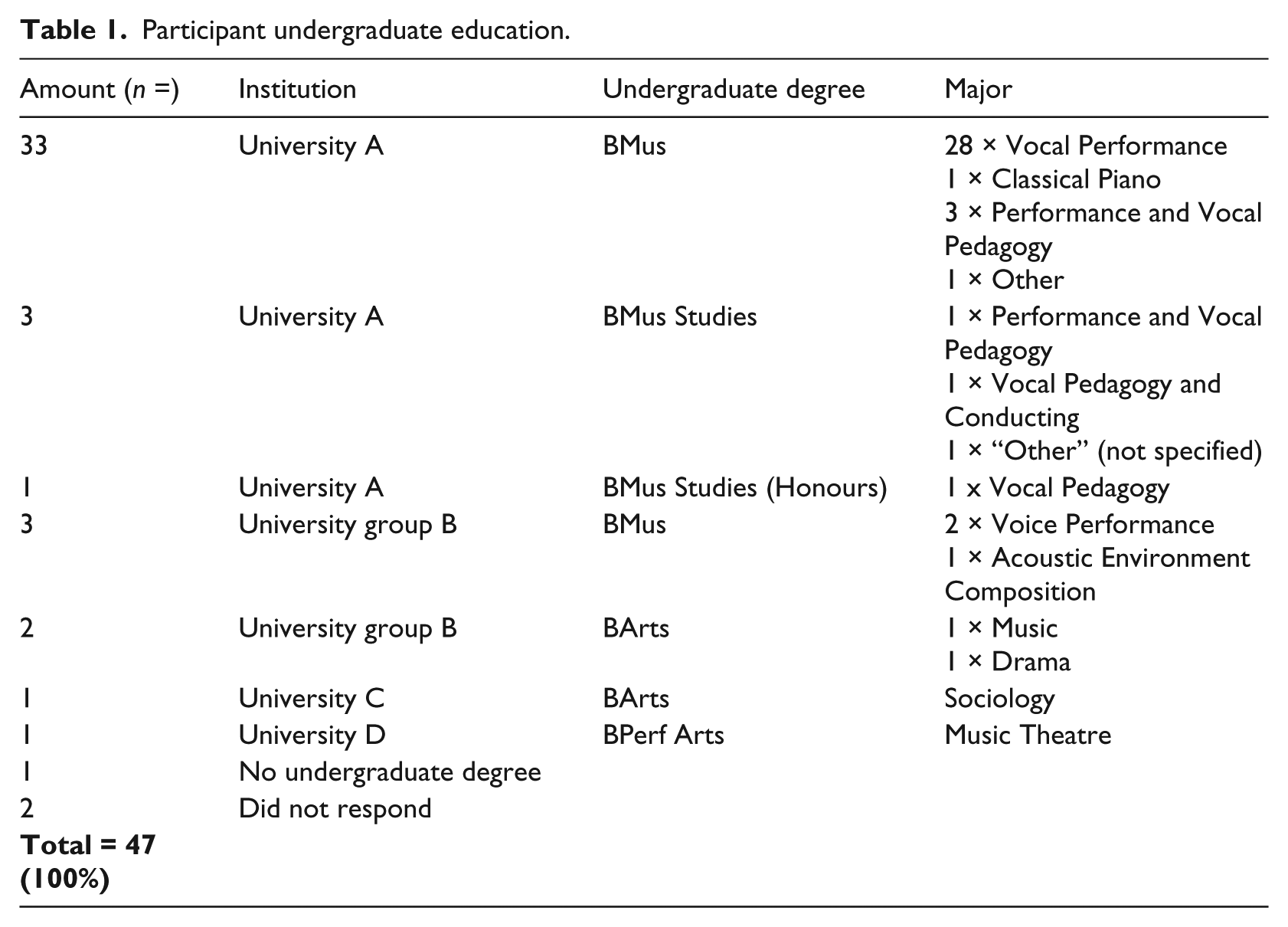
Thirty-seven participants (N = 47) reported their undergraduate (UG) music education as completed at one Brisbane-based tertiary institution (University A); five reported enrolment at two other Brisbane-based institutions (University group B); one nominated an interstate tertiary institution (University C); another nominated an international tertiary institution (University D). Two participants did not respond to the question and one postgraduate claimed not to hold an UG music degree (see Table 1).
Participant undergraduate education.
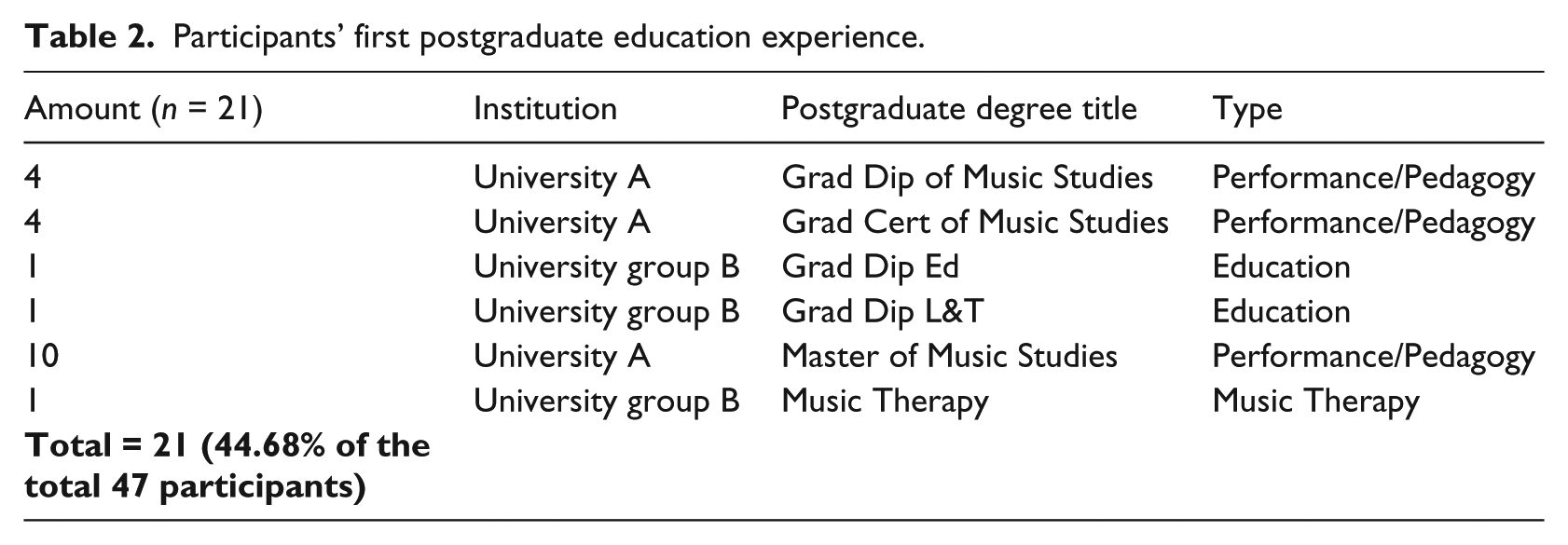
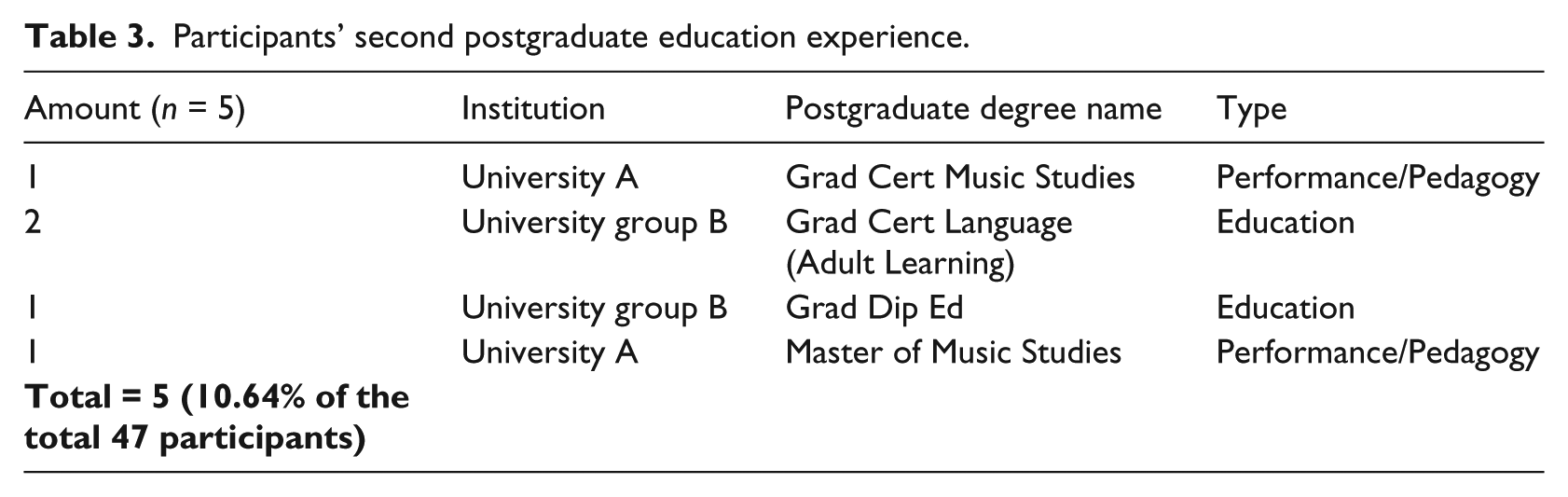
Interestingly, within the entire participant sample (N = 47), 21 graduates (44.68%) from bachelor programs had undertaken further postgraduate study. The majority of this group (n = 18) reported completion of postgraduate studies (Table 2) in either Vocal Performance or Vocal Pedagogy, while two had completed Education degrees and one a Master of Music Therapy. The seven participants who had completed undergraduate music degrees (between 1993 and 2012) from tertiary institutions “other than” University A were included in the sample as they were identified as having completed a postgraduate program in Jazz/Contemporary Voice at University A. Four of this group (n=7) had completed a Graduate Diploma of Music Studies, and three others a Master of Music Studies. Five participants (N = 47) had completed a second postgraduate degree; two of these were music focused and three were in education (see Table 3).
Participants’ first postgraduate education experience.
Participants’ second postgraduate education experience.
Graduates’ performance work
Forty participants responded to the item, Please select the type of performance that you are involved in. Their responses revealed a wide variety of music-related work with many offering multiple responses to a list of possible performance identities (Table 4).
Performance identity of survey participants.
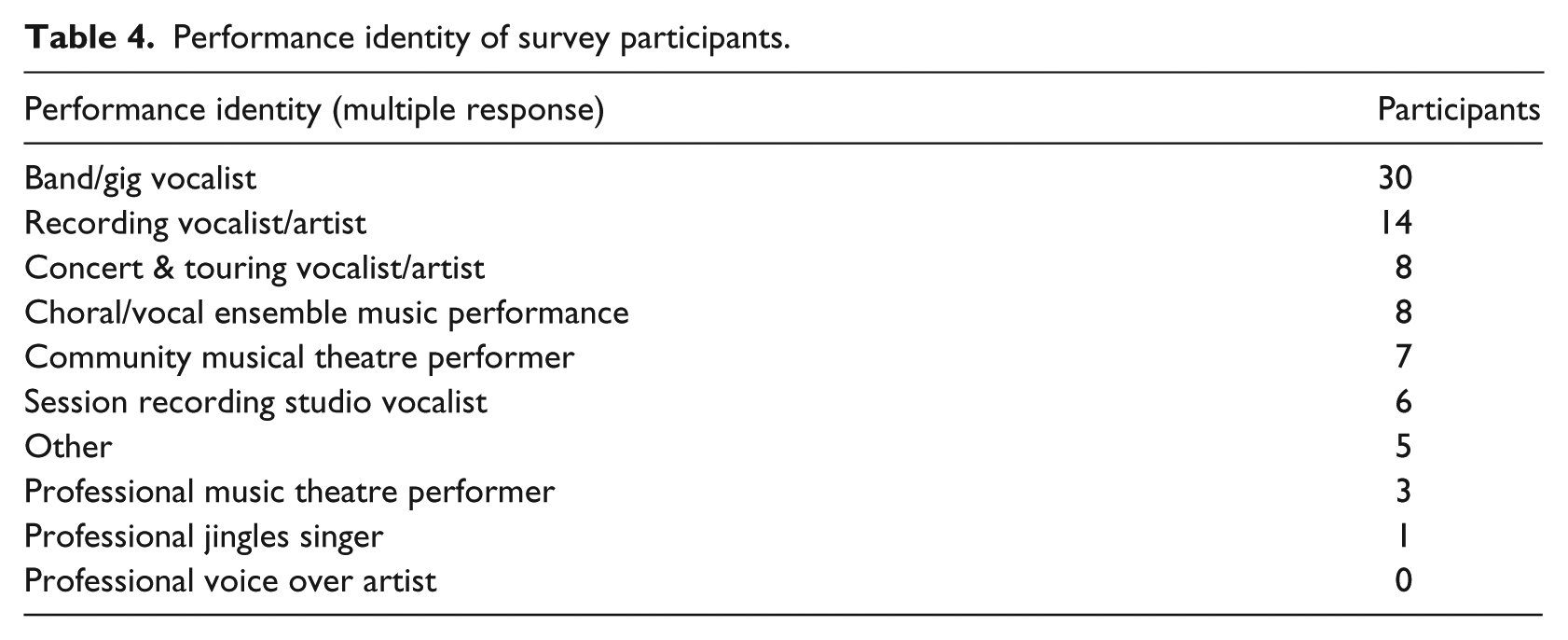
When comparing older to younger graduates, the data represented no differences in employment activity. Given the focus on jazz/contemporary performance study in their undergraduate training, it was not unexpected that most participants described their performance identity as Band/gig vocalist (Table 4). However, the high-ranking (n = 14) self-identification as Recording vocalist/artist was surprising. Further research is needed to investigate singers’ perceptions of what it is to be a recording artist.
In response to a question regarding their Performance styles, participants’ revealed engagement with a wide variety of styles, with many offering multiple responses to the proffered list. Most were engaged in performance of Jazz (62%), Classic pop (47%), Soul (38%), Top 40 pop (36%), and R’n’B (36%) (see Table 5).
Performance styles (multiple response).
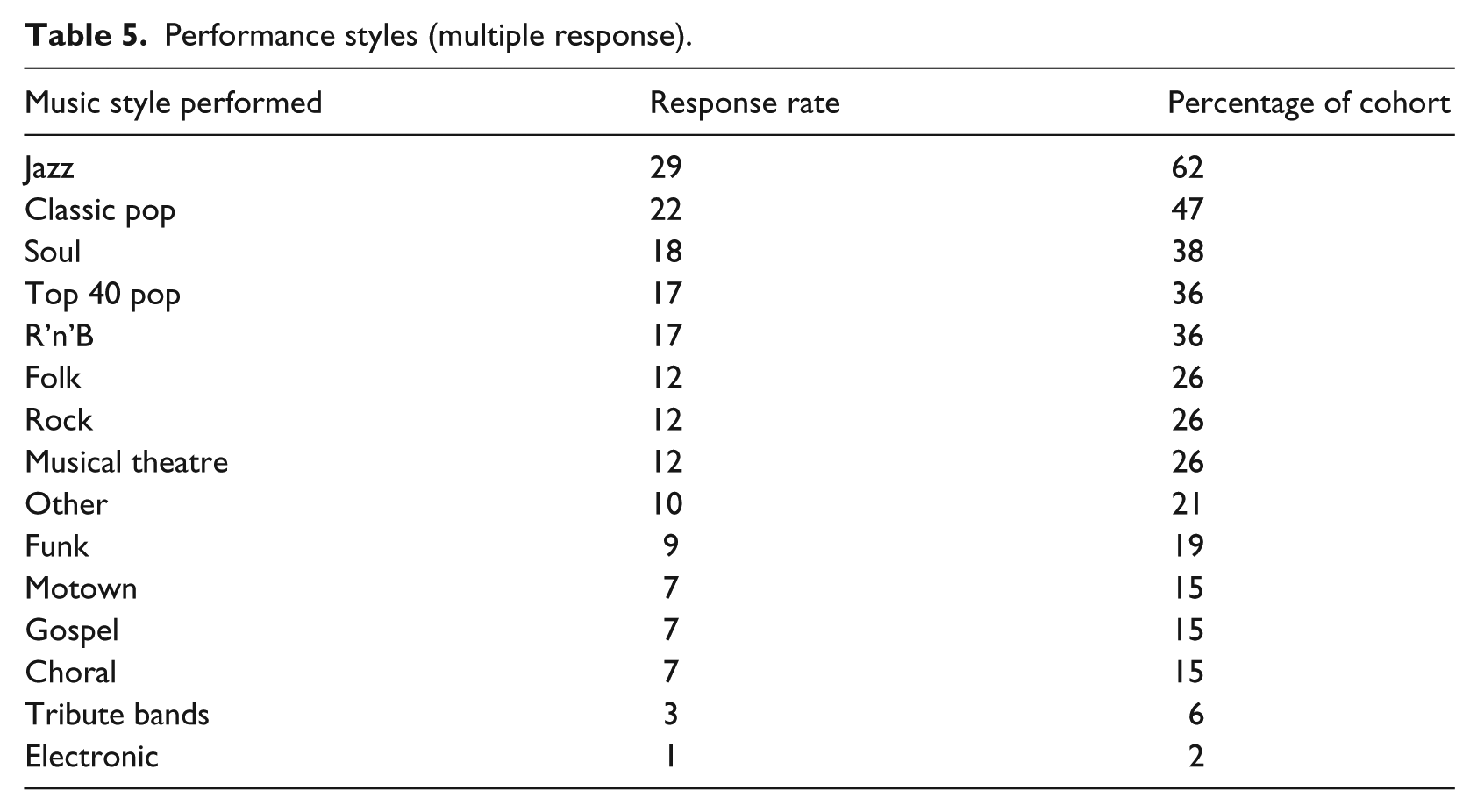
The multiple responses were not unexpected as both anecdotal commentary and research reports in the literature (Bartlett, 2011; LoVetri, 2008) point to an audience demand for gig singers to perform across a wide range of styles in order to maintain a viable career in the CCM industry.
Jazz/Contemporary Voice graduate employment profiles
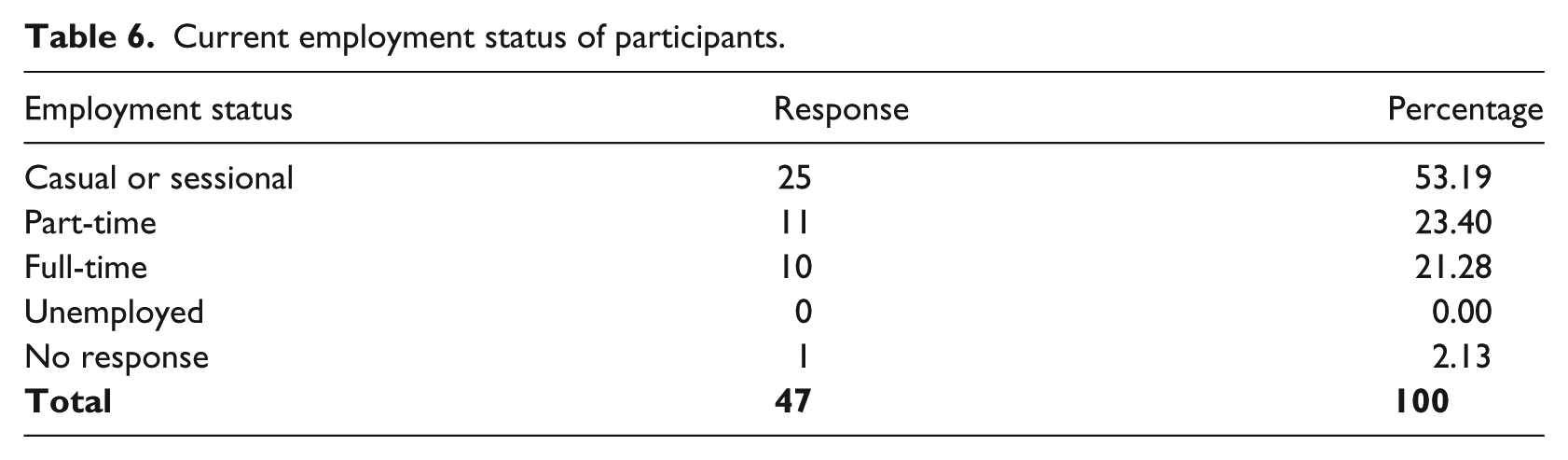
Under Australian industrial law, a full-time employed person will be paid to work, on average, 38 hours each week. Working conditions guarantee four weeks per annum paid holiday leave, sick leave, and superannuation payments as components of the salary package. Casual, sessional, or part-time contracts can be either verbal or written agreements where an employer engages a worker for a limited or specified period. Employees are paid an hourly rate with no entitlements other than a reduced superannuation payment and employment can be terminated with little notice. In response to the question, What is your current employment status, the majority of participants (77%) categorized themselves as “casual,” “sessional,” or “part-time” employed. These descriptors indicate that participants were not in permanent “full-time” employment at the time that they had completed the survey.
None of the participants stated that they were “unemployed” (Table 6).
Current employment status of participants.
Given their undergraduate and postgraduate music education, we sought to ascertain their reasoning around their diverse employment: If you are currently working in the music performance, music education, singing teaching or arts industry, what is your reason for pursuing this type of career? From a list of possible stimuli (concerning their sense of employment capability, diverse employment opportunities, potential financial earnings, employment lifestyle, contribution to the industry or society), 63% of this group (n = 41) chose, Doing what I love and feel passionate about. Seven percent (n = 3) suggested it was a combination of the above list.
A subsequent question concerned the duration of participants’ music-related employment in hours, Please select the estimated number of hours you participate in music related activity, paid or unpaid work (see Table 7) with 53% of the participants in this group describing their employment as “Casual or sessional”. Interestingly, three participants declared themselves full-time yet reported work of only one to 10 hours per week.
Employment profile.
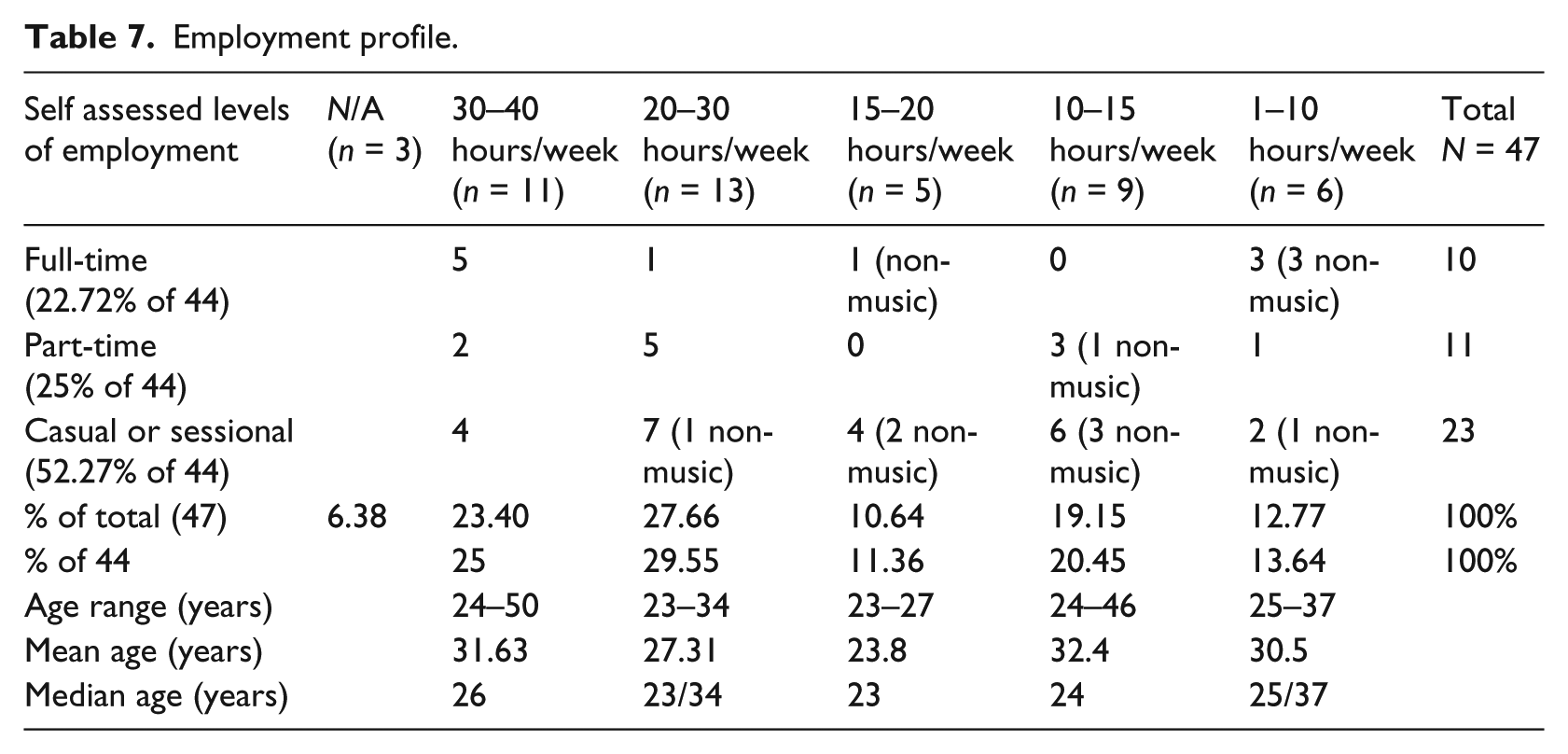
Although the age range per category is broad overall, the median age is consistently young (see Table 7) with 30 participants aged between 23 to 29 years (N = 47). This is not unexpected given that, within the target population, the majority of participants were graduates from a cohort of undergraduate degree students. The mean age does not represent any particular pattern; this could be attributed to the adequate, yet relatively small sample.
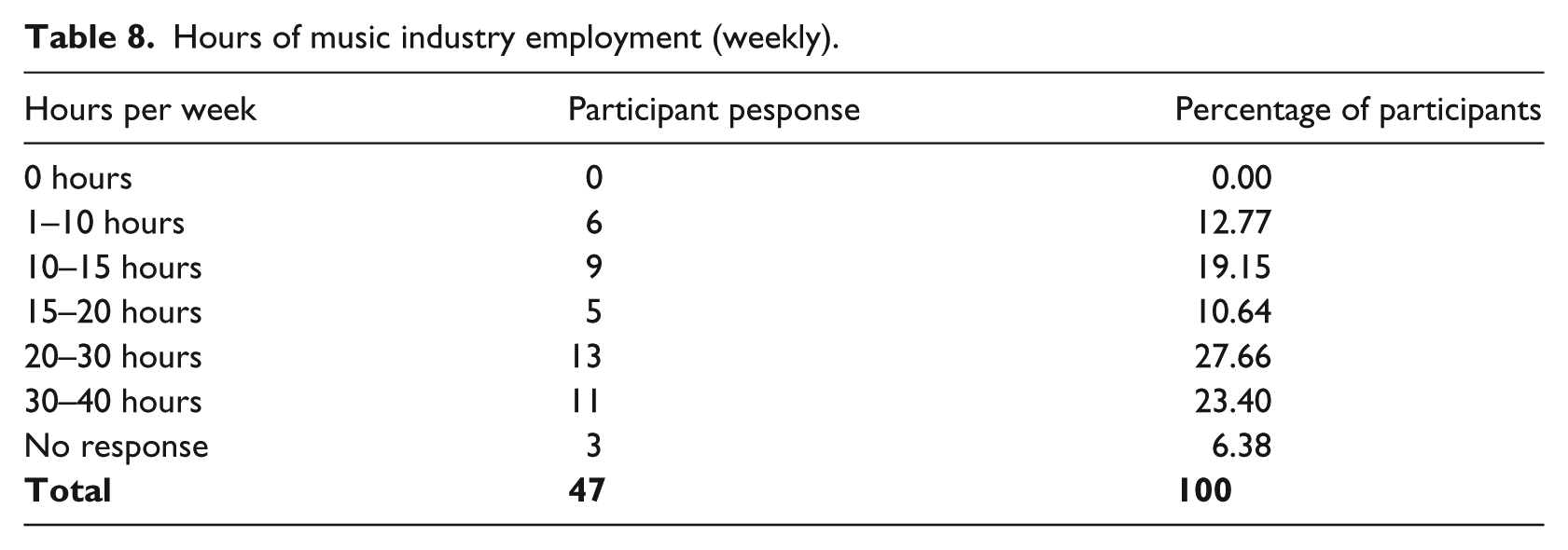
Thirty-five participants (N = 47) regarded themselves as “music industry performance active” with zero to nine concurrent music identities contributing to their portfolio of work. Over half (51%) of the participants were actively employed in the field of music performance citing either 20–30 hours (27.66%) or 30–40 hours (23.40%) of work per week (see Table 8).
Hours of music industry employment (weekly).
Non-performance music work
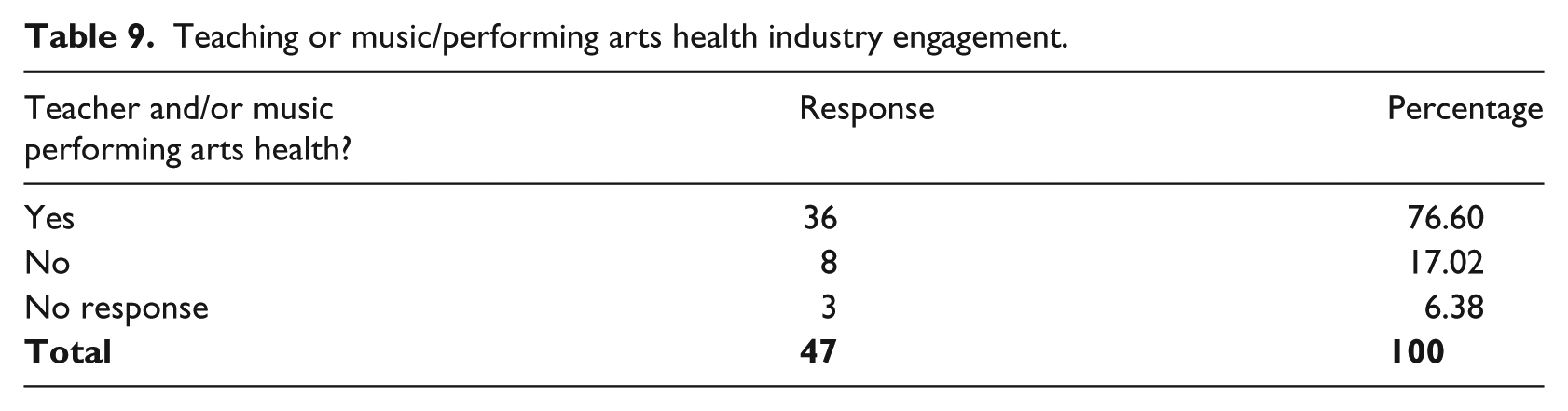
We were interested to know to what extent graduates’ performance work was supplemented by non-music related “day jobs.” The raw data revealed a diversity of such employment including: retail, administration, teaching, hospitality, and legal work. However, most participants (77%) reported their other than performance work as “music teacher” (see Table 9) with one-to-one studio teaching as the most common teaching environment.
Teaching or music/performing arts health industry engagement.
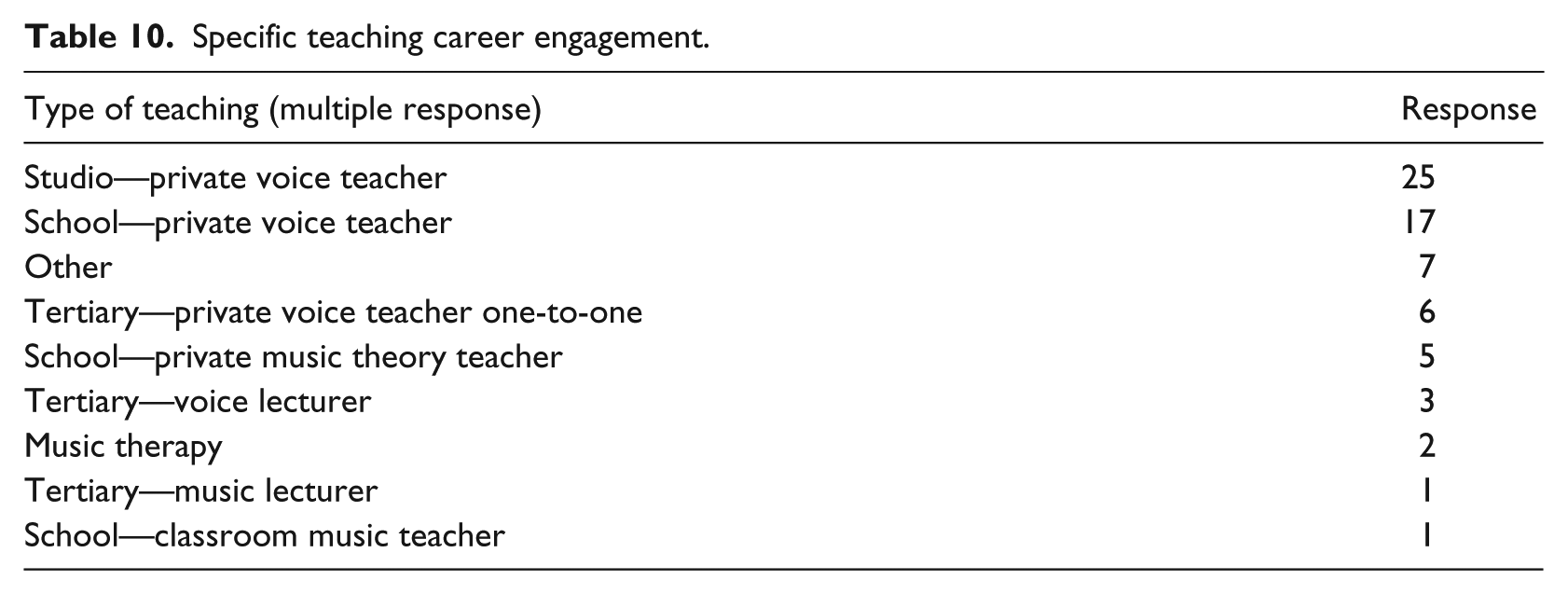
This group reported concurrent participation in up to four teaching jobs (see Table 10) with private voice teacher occurring in a number of environments.
Specific teaching career engagement.
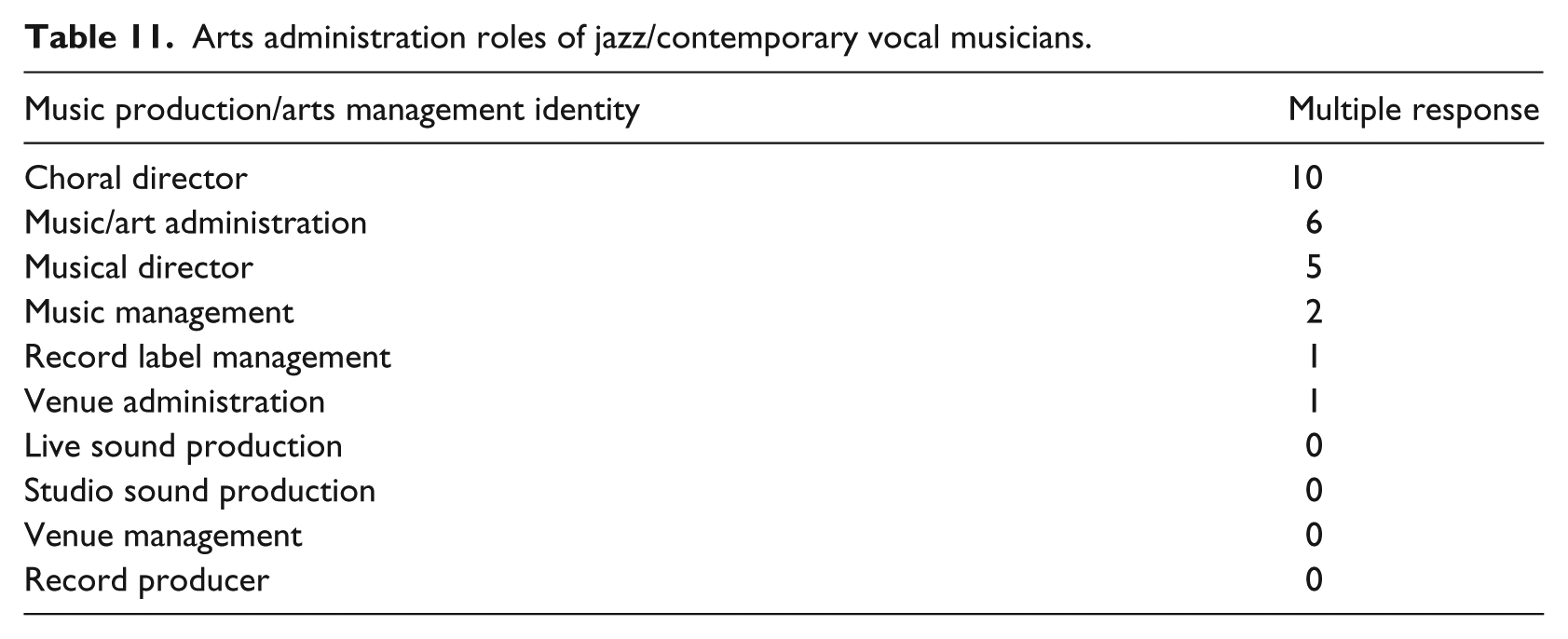
Thirty percent of participants (n = 14) responded to specific questions concerning engagement in arts administration work, reporting one to three concurrent administration roles. Highest response in this group was for choral director (see Table 11).
Arts administration roles of jazz/contemporary vocal musicians.
Unpaid music engagement
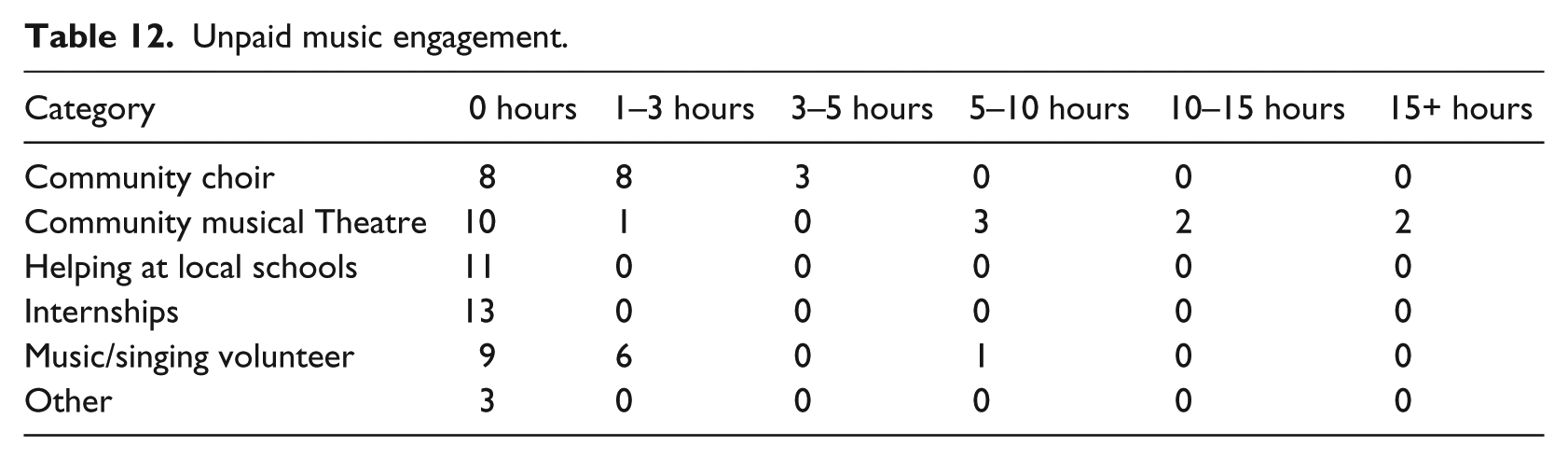
From a formatted list, participants were asked to estimate the number of hours of unpaid involvement in music per week (see Table 12). Eleven participants responded to this question (N = 47) indicating their unpaid work was focused in community-based choir and music theatre performance (these figures were similar to the responses for “administration roles” encountered in Table 11). Nine additional participants described their work in the category “other,” categorizing their unpaid work in a range of activities including “church band,” “administration,” “composition,” “practice,” “recording,” “rehearsal,” and “lack of income from originals band.”
Unpaid music engagement.
Summary of findings
Participants’ data revealed an engagement in a broad portfolio of work soon after graduation. Three out of four remained engaged with performance at some level—an excellent outcome for a population of music graduates from a single Australian university. That stated, we are aware that participants in our sample (N = 47) might represent those satisfied musicians who were willing to report their successes post-graduation; a broader study with a larger pool of participants recruited from a range of music schools may suggest otherwise.
Across the sample, 75% (n = 35) regarded themselves as “music industry performance active” with zero to nine concurrent music identities contributing to their portfolio of work. While 28% reported high levels of employment post-graduation and described themselves as “full-time” employed, it is noted that this was not necessarily in full-time music-based performance employment. For the majority, their performance-related employment was mostly casual or sessional with non-performance and/or non-music related work completing their portfolio of work. For example, multiple response rates to the list of Teaching Types (see Table 10) indicate a complex portfolio of “part-time/casual” employment for this particular population of performance study graduates. These findings coalesce with reports of musicians’ portfolio careers found in the literature (Bartleet et al., 2012; Bennett, 2012; Cunningham et al., 2010) and point to a lack of linear careers for those graduates (of tertiary music programs) who aspire to have performance as their primary focus.
The study revealed a concentration of participants in a metropolitan area (Fig. 1) up to 12 years post-graduation. This phenomenon is most probably due to strong music-based networks formed by participants during the years of their undergraduate studies. From our extensive professional performance backgrounds, we can report that musicians’ employment opportunities (in both performance and non-performance environments) often present through pre-formed peer networks, word of mouth recommendations, and familiarity with a local environment that could be described as “vibrant and sustainable arts and cultural” (Arts Queensland, 2016). Our findings coalesce with reports in the literature (Berliner, 2009; Dempsey, 2008; Florida et al., 2010; MacLeod, 1993).
As noted earlier, there was a higher than expected response rate to the category of Recording artist (see Table 4). This result could be reflective of self-categorization by six participants as sessional/recording studio vocalist and one as professional jingles singer (Question 12 of the survey). It may also reflect participants’ increased accessibility to technology for online dissemination of self-designed video and audio recordings. However, our emic knowledge of the field leads us to suspect that the singer participants who responded may have attributed Recording vocalist/artist to include their recording of demos (digital recordings uploaded to their websites to secure gig work and/or hardcopy CD recordings for promotional sale at gig performances). The much lower response to the Concert & touring vocalist/artist category lends support to this opinion as it could be expected that a Recording vocalist/artist would need to engage in promotional touring activities to launch and/or sustain a professional career. We suggest that more in-depth research is needed to investigate this area of performance identity.
Discussion
While some researchers suggest that graduate employment in the arts possesses value beyond the economic (Pinheiro & Dowd, 2009), others clearly believe that the unpredictable nature of the performing arts industry and resultant financial instability, maneuvers many musicians toward portfolio careers (Cunningham et al., 2010; Florida et al., 2010). Given the findings of this current study and the prevailing views in the literature that portfolio careers have become the norm rather than the exception, we propose that through the inclusion of associated, work-integrated learning courses students might be better prepared to meet the challenges of the modern music industry; that is, the diversity of work within a music-based portfolio career. While we are aware that some tertiary institutions have responded to this need in the form of vocation preparation strands, the time and budget constraints faced by many may be limiting coursework to a primarily theoretical activity.
Through analysis of the collected data we have been able to build a general profile of Jazz/Contemporary Voice graduates from one Australian university that might be of some relevance to similar programs in and beyond the Australian context. The profile is as follows: A female singer equipped with performance and/or pedagogy tertiary training residing in a metropolitan location close to tertiary education networks leading a peripatetic teaching career while remaining passionately engaged in music performance through band/gig activities. Unpaid music activity is centered on community choir and music theatre involvement, where developed arts administration skills are transferrable and used in both paid/unpaid work environments.
While at first glance “non-music” paid employment appears unrelated to music education, it could be argued that the skills acquired through tertiary training equip graduate singers with the organization and planning capabilities required to manage such work within their portfolio careers. Additionally, transferable skills such as clear communication and group management/engagement could be beneficial in the most common work environments undertaken by musicians (e.g., teaching, hospitality, retail, and administration). This is another aspect of the current research that might be further investigated with a larger population via interviews and life-story analysis.
Conclusion
Although no degree program entry data were collected, from a constructivist viewpoint the ongoing music performance activities of this group of singing voice graduates (in some cases, many years’ post-graduation) suggests that their tertiary music training equipped, enabled, and/or encouraged a career engagement with music performance in some form.
The constructivist explanation presents one viable interpretation of the connection between graduate outcomes (i.e., employment in the music industry) and training. As previously suggested, a broader research project is needed to fully investigate graduate outcomes for tertiary trained jazz/contemporary singers; however, we believe that the data reported in this pilot study are more detailed around this specific group of Australian jazz/contemporary voice graduates from one university than any found in existing census reports or in the literature of the field to date.
Footnotes
Appendix A: Survey tool
Funding
This research received funding from the Queensland Conservatorium Research Centre