







Abstract
The purpose of this study was to examine the effects of wind ensemble seating configurations on college instrumentalists’ ratings of ensemble sound. Members of a university wind ensemble (N = 40) were recorded while performing a 1-minute excerpt of Only Light by Aaron Perrine in one of four ensemble configurations. At the conclusion of the recording session, the performers wrote free-response comments to “In which of the four configurations did you feel the ensemble sounded their best?” and “Why?” Another set of participants, college ensemble members (N = 121), listened to the four audio recordings and rated the ensemble tone quality, ensemble balance, and ensemble blend of each performance. Performers mentioned that ensemble balance and ensemble blend were important factors that influenced their decision as to why the ensemble sounded their best in a particular configuration. An analysis of the composite ratings revealed a significant main effect for ensemble configuration. However, there was a significant ensemble configuration × order interaction signifying that participants’ ratings were influenced by the order in which they heard the excerpts. Our results may suggest that ensemble configurations produce different listening environments for performers and audience members.
The wind ensemble has been the dominant performing group in the band medium since the middle of the 20th century (Battisti, 2002; Hansen, 2005). Renowned conductor Frederick Fennell employed three principles when he created the wind ensemble: (1) the wind ensemble performs original works written for any combination of wind and percussion instruments; (2) the wind ensemble uses a one player per part approach, identical to that of the wind section found in the orchestra; and (3) the wind ensemble strives to develop and refine instrumental timbres (Fennell, 1954). In order to achieve these basic principles, factors related to ensemble configuration were taken into consideration, including the size of ensemble, the piece being performed, the musical maturity and experience of the players, and acoustical conditions. The use of different seating configurations on the effect of intonation, balance, blend, and overall musical performance has been discussed extensively (Begian, 1997; Colwell & Goolsby, 2002; Curry, 1994; Gifford, 1995; Hindsley, 1976), with many pedagogues suggesting ensemble configurations that may function best for both performers and audience members (Garofalo & Whaley, 1976; Hunsberger, 1985; Miles, 2004). However, these decisions are largely based on opinions rather than empirical data.
Most of the research literature involving ensemble configuration exists in choral music settings (Daugherty, 1999, 2003; Ekholm, 2000; Tocheff, 1990). Research findings have indicated that inservice teachers prefer sectional (i.e., soprano, alto, tenor, bass) over mixed choral formations (Tocheff, 1990). Choral researchers have also had expert choral conductors manipulate singers’ placements within sections to achieve optimal tonal blend, reporting that listeners detected improved intonation, blend, and rhythmic precision over random configurations. For example, Ekholm (2000) found that placing singers within sections for homogenous tonal blend resulted in better listener-perceived dynamic range and tone quality, in addition to positively affecting evaluations of choral performance, choral sound ratings, vocal comfort, and individual vocal production. In contrast, Daugherty (1996, 1999) concluded that listeners had no preference for one configuration over another in a choral ensemble setting, but did identify spacing between individuals as having a key function in listener and singer perceptions of ensemble sound. Singers have reported improved vocal production and listening ability to self and ensemble in a spread space (i.e., singers on every other row of the risers with 24-inch lateral spacing) configuration (Daugherty, 1999, 2003). Furthermore, listeners also preferred spread spacing over close (i.e., singers on each row of the risers and one-inch between each person’s side) and lateral spacing (i.e., singers on each row of risers with 24-inches between each person’s side) configurations.
Pedagogues and conductors have discussed the best ways to arrange instruments for ideal balance, blend, and timbre in wind ensemble configurations (Begian, 1997; Colwell & Goolsby, 2002; Curry, 1994; Gifford, 1995; Hindsley, 1976). Some practitioners advocate changing seating so that performers can have the best “possible quality of sound” (Kruth, 1962, p. 46), including arranging the ensemble in a way that it is easier for the audience to hear smaller sections (Colwell & Goolsby, 2002; Cooper, 2004; Hindsley, 1976). Others suggest that wind ensemble members should be seated such that all timbres are heard by the audience by keeping instrument families together (Gifford, 1995; Hunsberger, 1985; Page, 2004). Although many conductors suggest a change in ensemble configuration for balance and timbre reasons, some pedagogues recommend that the ensemble should not be changed after every piece and changes should only happen for a “musical result” (Hunsberger, 1985, p. 8).
While many authors suggest that there is no specific way to arrange sections within a wind ensemble for an optimal performance, there is agreement that conductors should adjust their seating arrangements according to ensemble instrumentation (Cooper, 2004; Hindsley, 1976; Jagow, 2007; Miles, 2004) and performers’ strengths and weaknesses (Cooper, 2004; Garofalo & Whaley, 1976; Jagow, 2007). Several authors also suggest that seating should be influenced by factors not related to the performers, such as the acoustical properties of the performance hall (Garofalo & Whaley, 1976; Gifford, 1995; Miles, 2004; Renshaw, 2000) and the scoring of the pieces to be performed (Curry, 1994; Garofalo & Whaley, 1976). Perhaps ensemble performers should be seated so they can hear themselves and one another while providing their best sound to the audience (Hindsley, 1976; Jagow, 2007).
Despite the many suggestions of conductors and pedagogues, there is scant evidence about how wind ensemble configurations affect listener perceptions and preferences. In one of the only empirical investigations involving wind ensemble configurations, Murray (2006) measured listeners’ preferences and perceptions of overall wind ensemble sound for four virtual wind ensemble configurations (blocked sections, families, random, and center). To achieve these formational differences, each section of the ensemble recorded their parts separately and the author digitally arranged the ensemble according to the four virtual configurations. After listening to pairs of recordings, participants indicated whether they preferred performance A or B, or had no preference. If participants chose A or B, then degree of preference was indicated, followed by the musical factor that most contributed to their choice (e.g., volume, tone quality, tempo). No significant difference was found between the blocked, families, random, or center configurations.
Many prominent conductors (Hindsley, 1976; Hunsberger & Ernst, 1992; Maiello, Bullock, & Clark, 1996) and instrumental music education textbook authors (Colwell & Goolsby, 2002; Feldman, Contzius, & Lutch, 2015; Green, 1992) have suggested ways that musicians could be seated within wind ensembles. Although researchers have explored choral spacing and seating arrangements, and their effects on sound preferences (Daugherty, 1999, 2003; Ekholm, 2000; Tocheff, 1990), we found little empirical evidence to suggest that any particular configuration might result in instrumentalists hearing wind ensemble performances differently. Therefore, the primary purpose of this study was to examine the effects of wind ensemble seating configurations on college instrumentalists’ ratings of ensemble sound. Would college instrumentalists hear the balance, blend, or tone quality of a wind ensemble performing an identical music excerpt differently based upon the configuration in which the wind ensemble was audio recorded? A secondary purpose was to explore ensemble members’ perceptions of their experiences performing in these configurations.
Method
Participants
Performers. Participants (N = 40) included members of the top auditioned wind ensemble at a Midwestern university school of music located in the United States. The group featured standard and complete instrumentation. Ensemble members (Mage = 20.7, SD = 2.63) reported their gender (male, n = 28; female, n = 12), year in school (freshmen, n = 9; sophomores, n = 7; juniors, n = 5; seniors, n = 12; and graduate students, n = 7), and major (music education, n = 18; music performance, n = 10; bachelor of arts, n = 6; non-music major, n = 6).
Evaluators. Before recruiting audio evaluators, we conducted an a priori power analysis using G*Power 3.1.9.2 software (Faul, Erdfelder, Lang, & Buchner, 2007) to identify the minimum sample size with an acceptable level of statistical power to identify a small effect (Cohen, 1992). We conducted this analysis based upon the use of a MANOVA with repeated measures (within–between interaction), the results of which indicated a minimum sample size of 120 (input parameters included a projected effect size of f = .25, α = .05, and a power level [1-β] of .8). College ensemble members from two Midwestern and one Southwestern university schools of music in the United States (N = 121) served as audio evaluators in this study. They reported their years of previous performing experience in concert bands (M = 8.93, SD = 4.08) and their year in school (freshmen, n = 32; sophomores, n = 24; juniors, n = 34; seniors, n = 23; graduate students, n = 7). One participant did not provide their year in school.
Ensemble configurations and music selection
After reviewing several pedagogical texts, we identified four wind ensemble configurations for use in this study (Miles, 2004). These were selected because they (a) represented actual configurations that had been used previously by collegiate and professional wind ensembles and (b) were distinct enough from one another that it was conceivable our participants might hear identical performances differently on the basis of these configurations. For the purposes of this study, we labeled the configurations as such: (a) Centered Brass; (b) V-shaped Woodwind; (c) Arc-shaped Brass; and (d) Boxed Woodwinds. To ensure that the four configurations were dissimilar, we sent them to three university wind ensemble conductors within our state for verification, all of whom agreed they were distinct from one another. (See Figures 1–4 for diagrams of each configuration.)
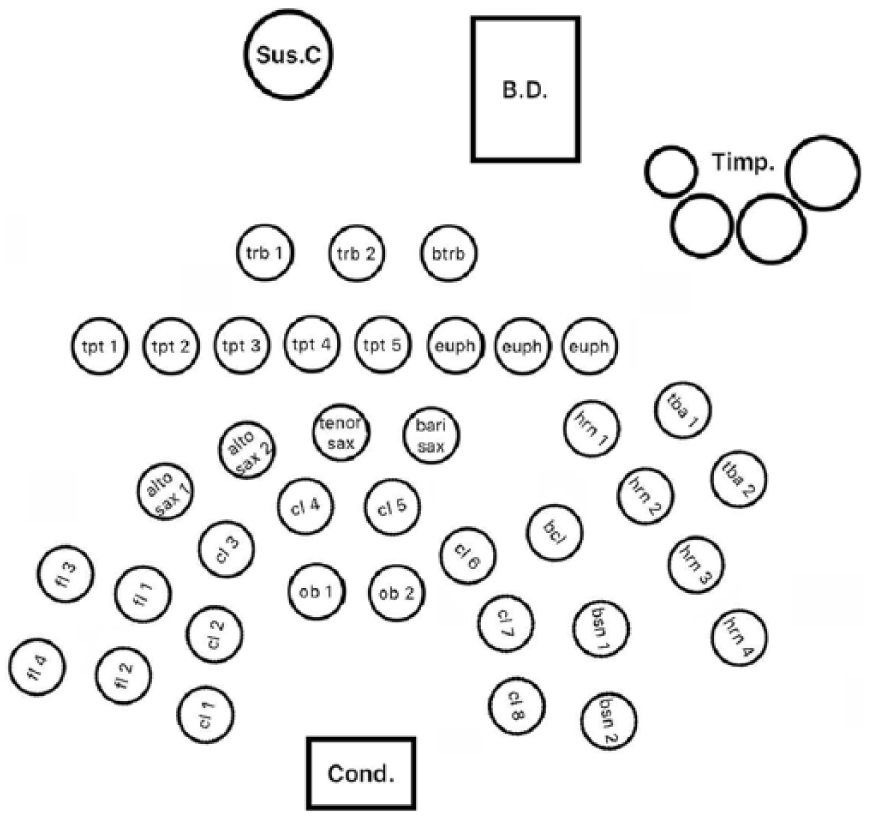
Centered Brass formation.
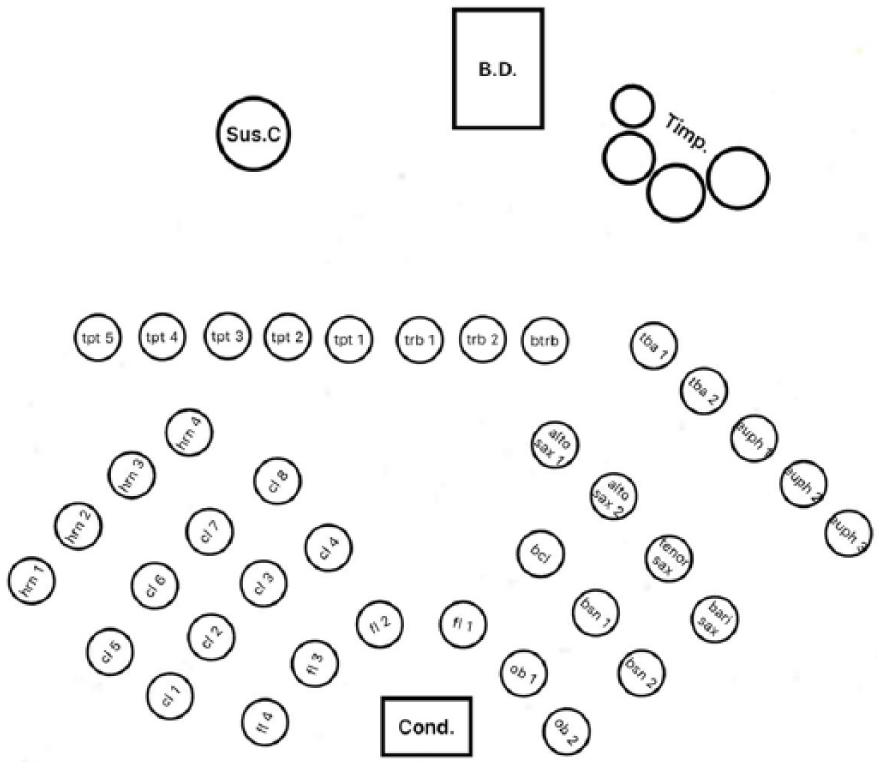
V-shaped Woodwind formation.
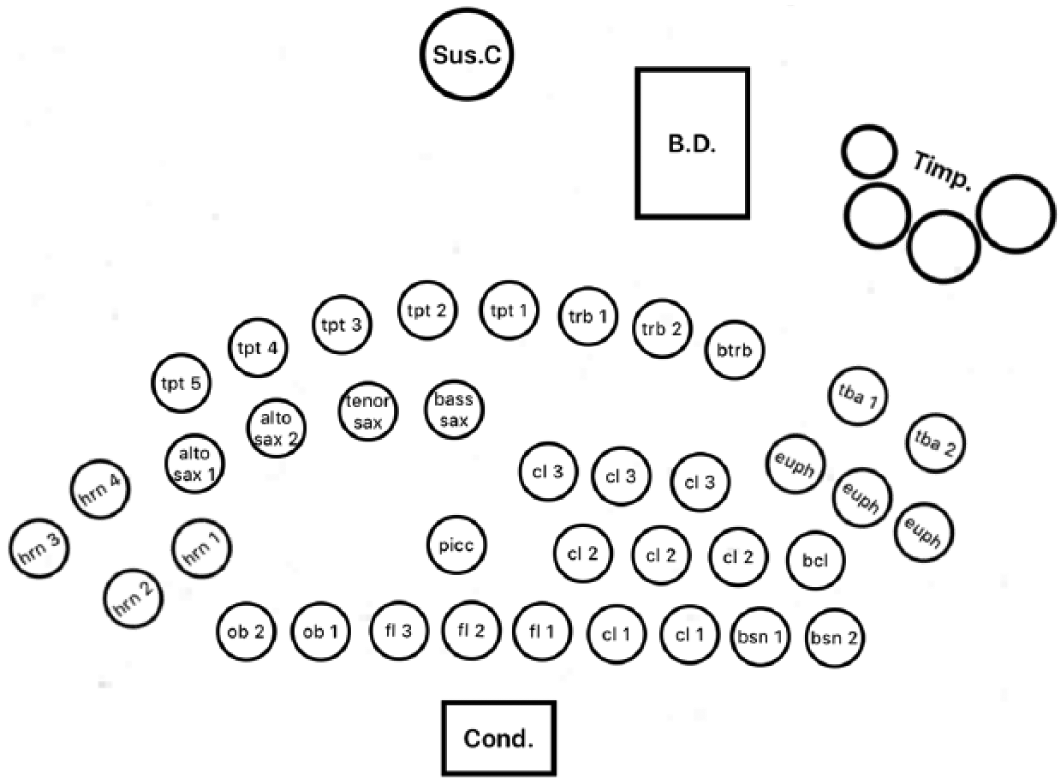
Arc-shaped Brass formation.
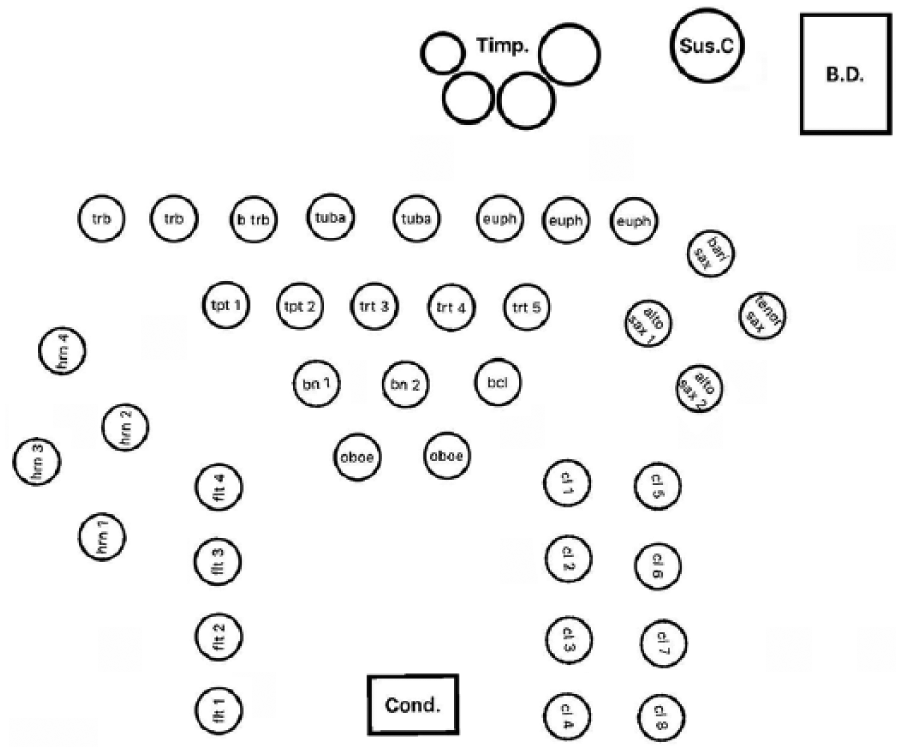
Boxed Woodwinds formation.
The music that was selected for use in this study was excerpted from Only Light by Aaron Perrine (2014). This approximately 1-minute excerpt (mm. 90–103) featured a slow tempo (quarter note equals 60 beats per minute), dynamic contrasts, and tutti ensemble playing. Excerpt duration and selection of musical criteria were derived from similar research involving instrumental ensemble seating configurations (Clark, 2015; Murray, 2006). This excerpt had been rehearsed extensively and performed at a concert that was led by the primary author. As such, we believed that the conductor would conduct the excerpt in the same manner during each recording (i.e., tempi, expressivity), allowing the ensemble members to perform similarly irrespective of the ensemble configuration. However, consistent with a previous research protocol (Ekholm, 2000), we asked three experienced collegiate wind ensemble conductors to listen blindly to the four excerpts to verify tempo consistency in the performances. All three agreed that there were no tempo differences among the excerpts.
Audio recording session
Audio recording took place in a university concert hall at the end of a regularly-scheduled rehearsal that occurred after the second wind ensemble concert performance of the academic year. At the beginning of the recording session, we provided our performers with evaluation forms and four diagrams to inform them of where they should be sitting. Two of the researchers, along with volunteer student helpers, reset the ensemble for each of the four configurations. In addition, we assisted students in finding their seats to ensure that everyone was seated correctly in accordance with each diagram. Irrespective of the configuration, performers—when seated beside one another in rows or arcs—had approximately two feet of space on either side of their chair.
Given that our performers would be playing in configurations in which they were unaccustomed, we had them perform the excerpt twice consecutively within each configuration for sensitization purposes, with only the second performances being used as audio stimuli in this study. After the recording session was finished, we directed our performers to answer the following questions found on their evaluation forms: (1) “In which of the four configurations did you feel the ensemble sounded their best?” (2) “Why?” (To help aid their memory, we directed the performers to the printed diagrams they were given previously and asked them to circle configuration 1, 2, 3, or 4 on their evaluation forms for question 1. These numbers corresponded to the order in which each configuration was recorded.)
A Zoom H2n Handy recorder (44,100 Hz sampling rate and 16-bit stereo), which was mounted on a stand and placed slightly above the conductor approximately 20 ft in front of the ensemble, was used to record the ensemble. To help control for order effects, we created four presentation orders using a 4×4 Latin square design which were rotated equally among our participants.
Audio evaluation task
We used three dependent measures in this study: ensemble balance, ensemble blend, and ensemble tone quality. Considering our interest in determining if ensemble configuration would affect perceptions of large ensemble performances, and that these criteria are found on many national music contest adjudication rubrics (e.g., Boyle & Radocy, 1987), we deemed these measures appropriate.
We sent an email message to all prospective evaluators detailing the study procedures. Those choosing to participate were instructed to click a hyperlink, whereupon they were led to Qualtrics, an online survey system. Institutional Review Board-approved consent information appeared on the first screen, followed by a screen on which the evaluation task was described: Thank you for your participation in this study. You are about to hear four, 1-minute wind ensemble performances. After hearing each excerpt, please evaluate the ensemble’s balance, blend, and tone quality by indicating a number from poor (1) to excellent (10). You will have 20 seconds to respond after each excerpt.
Participants were randomly assigned by Qualtrics to one of four presentation orders (order 1, n = 30; order 2, n = 31; order 3, n = 30; order 4, n = 30) and listened to the four excerpts through their particular computing device. Participants were unaware of the purpose of the study, nor did they know that the excerpts were recorded in different configurations. Participants were visually prompted before each excerpt (e.g., “Excerpt 1 will begin now”) and given 20 seconds to mark their evaluation sheets once playback had ended. At the conclusion of the experiment, participants were asked to provide demographic information, with the entire evaluation process lasting approximately 8 minutes.
Results
Participants’ audio evaluations
Because we considered our three dependent variables to be measuring the same construct (i.e., ensemble sound), we averaged participants’ ratings of ensemble balance, ensemble blend, and ensemble tone quality to create an overall composite rating for each of the four ensemble configurations. This analysis decision was consistent with standard large group ensemble adjudication practice (Boyle & Radocy, 1987) and recent research studies involving similar variables (Montemayor & Silvey, 2018; Silvey, Montemayor, & Baumgartner, 2017).
A repeated-measures ANOVA with one between-subjects factor (order) and one within-subjects factor (ensemble configuration) was used to determine the effect of ensemble configuration on ensemble sound ratings. Results indicated a significant main effect for ensemble configuration, F(3,117) = 5.59, p = .001, partial η2 = .046. No presentation order effect was found, F(3, 117) = 1.26, p = .289, partial η2 = .031. However, there was a significant ensemble configuration × order interaction, F(3, 117) = 3.89, p = .011, partial η2 = .091. Figure 5 shows mean responses and standard deviations for participants’ composite ratings by ensemble configuration and order.
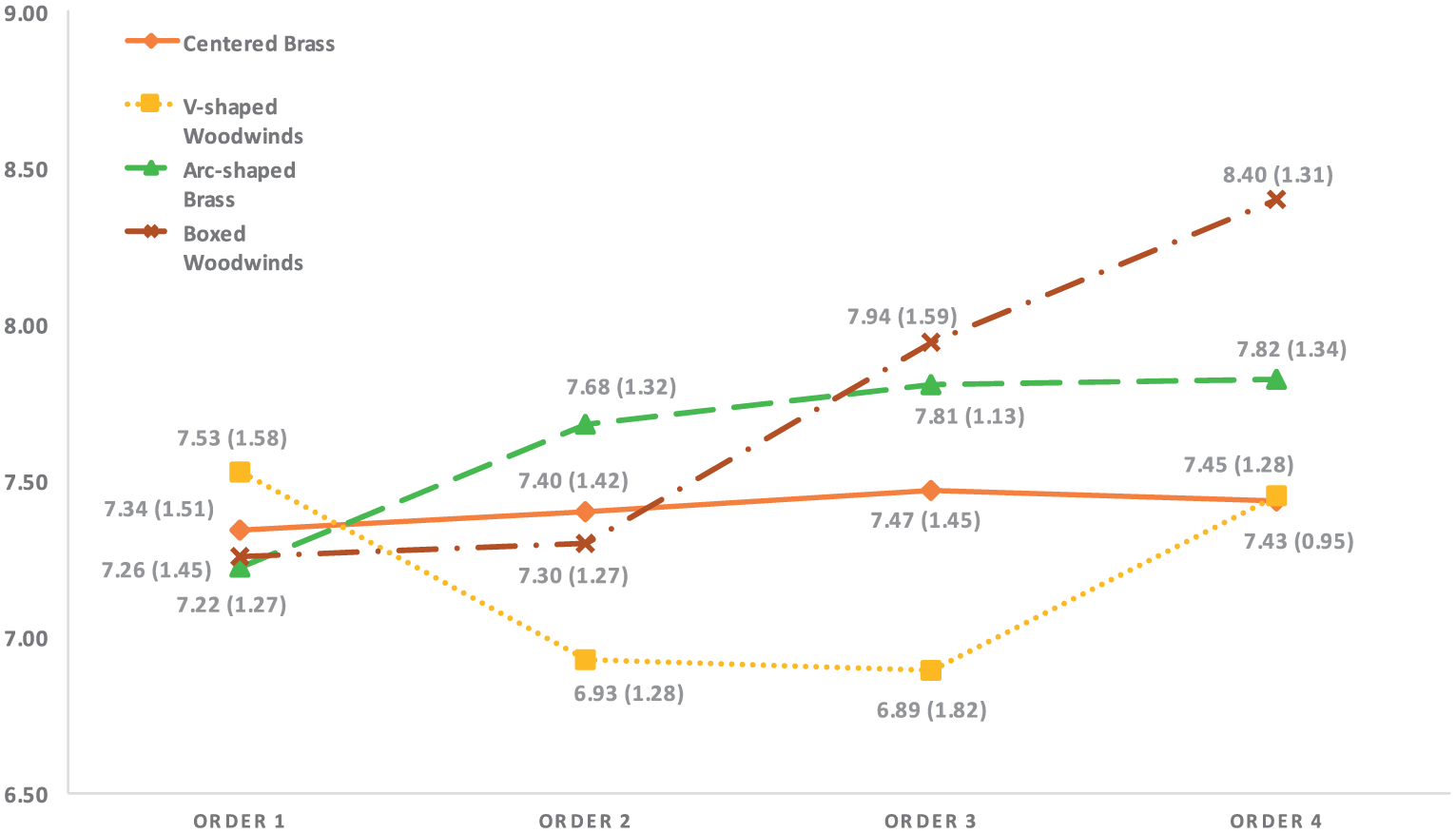
Mean composite ratings (and standard deviations) by ensemble configuration and order.
Results of a Bonferonni post hoc test for multiple comparisons indicated that participants’ ensemble sound ratings were significantly different within orders 3 and 4. Mean ratings assigned by participants in order 3 were significantly higher for the Arc-shaped Brass (M = 7.81, SD = 1.13, p = .009) and Boxed Woodwinds configurations (M = 7.94, SD = 1.59, p = .004) than the V-shaped Woodwinds configuration (M = 6.89, SD = 1.82). However, in order 4, Boxed Woodwinds (M = 8.40, SD = 1.31) was rated significantly higher than both Centered Brass (M = 7.43, SD = 0.95, p = .006) and V-shaped Woodwinds (M = 7.45, SD = 1.28, p = .014) configurations. There were no other significant differences between ratings in orders 1 or 2.
Ensemble members’ comments
Immediately following the audio recording session, we asked ensemble members to respond to two questions regarding their perceptions after performing in each of the four configurations. The first question asked was “In which of the four configurations did you feel the ensemble sounded their best?” Their responses, in order of preference, were Boxed Woodwinds, V-shaped Woodwinds, Arc-shaped Brass, and Centered Brass (n = 12, 10, 10, and 6, respectively).
For the follow-up question “Why?,” we employed a three-part qualitative procedure for analyzing participants’ answers by (a) assigning codes, (b) combining codes into themes, and (c) displaying the data (Creswell, 2007). To establish reliability, the first author examined all of the participants’ comments; the second author independently examined 25% of those comments. Reliability was calculated by dividing the number of agreements by agreements plus disagreements (multiplied by 100 to express it as a percentage), resulting in interrater reliability of 91.67%. Themes and frequency of comments associated with Question 2 are displayed in Table 1.
Categorization of ensemble member responses for the reasons why they felt they sounded their best within their preferred configuration.
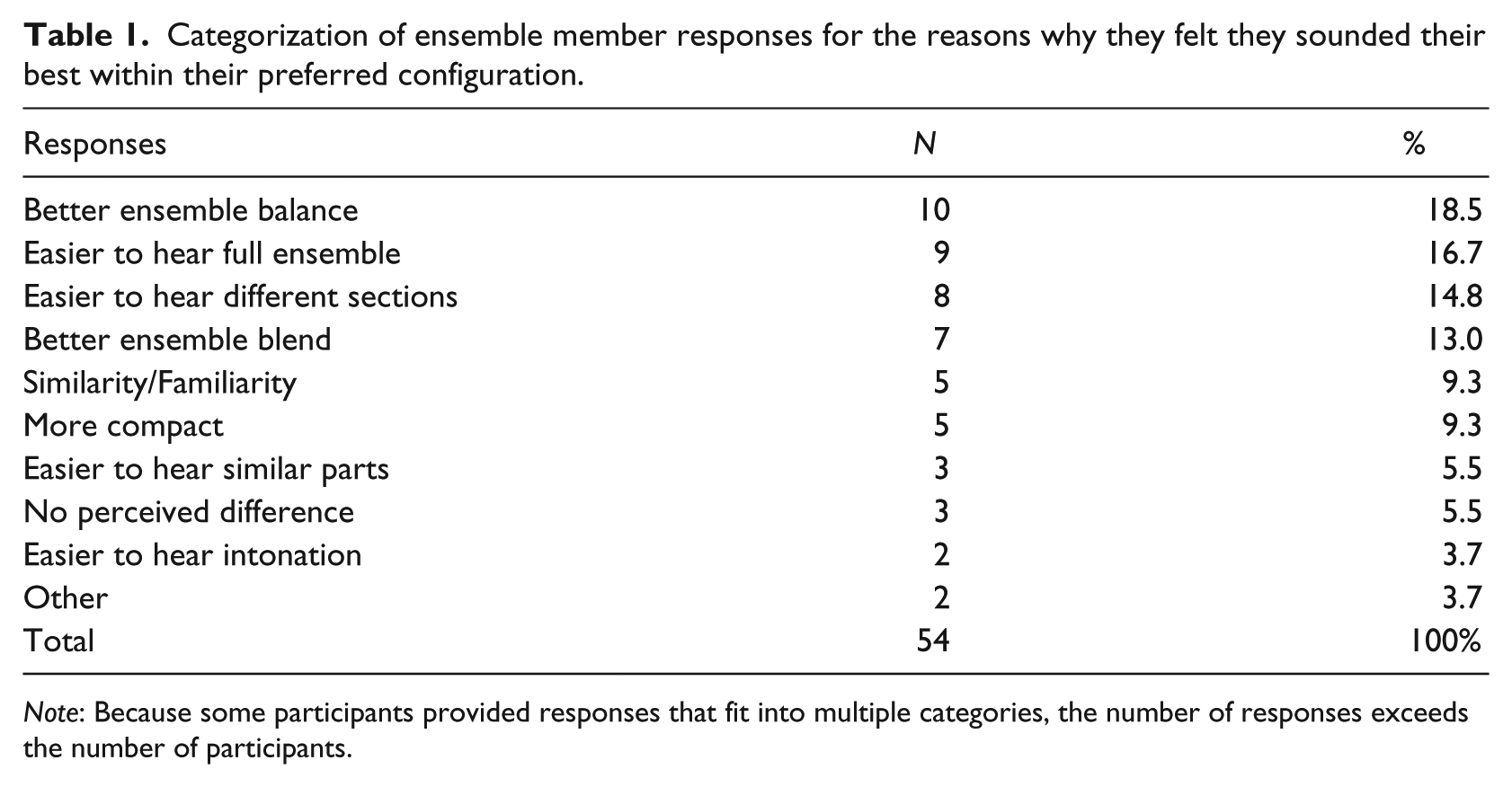
Note: Because some participants provided responses that fit into multiple categories, the number of responses exceeds the number of participants.
Nearly one-third (31.5%) of all participants indicated that improved ensemble balance (18.5%) or ensemble blend (13.0%) was the reason why they believed the ensemble sounded best in their preferred ensemble configuration. Comments related to these ideas included “It was easier for us to pay attention to balance and blend” (Boxed Woodwinds), “It sounded very balanced overall” (V-shaped Woodwinds), and “I felt like everything blended well in this formation” (Boxed Woodwinds). Participants also felt they could hear the full ensemble (16.7%) and different sections (14.8%) much better, with ensemble members writing “I felt as if the brass and woodwinds could hear each other more” (V-shaped Woodwinds) and “I was able to hear all the different parts, several of which I had never heard before” (Arc-shaped Brass).
Discussion
The purpose of this study was to examine the effects of wind ensemble seating configurations on college instrumentalists’ ratings of ensemble sound. Our results indicated that participants assigned significantly different ratings based upon ensemble configuration, a finding that appears to support anecdotal evidence from university band directors and instrumental conducting pedagogues regarding their belief that audible differences occur within varying configurations (Begian, 1997; Colwell & Goolsby, 2002; Curry, 1994; Gifford, 1995; Hindsley, 1976). Furthermore, this finding is consonant with empirical studies involving choral ensembles in which auditors heard differences in identical repertoire based upon the placement of the singers (Daugherty, 1999, 2003; Ekholm, 2000; Tocheff, 1990).
It is important to note, however, that this effect was mitigated by the presence of an ensemble configuration × order interaction. Within the four orders, the largest mean difference among configuration scores occurred in orders 3 and 4, with Boxed Woodwind configurations being assigned the highest ratings (order 3, M = 7.94, SD = 1.59; order 4, M = 8.40, SD = 1.31) of any configuration. (Both of these ratings were a full point higher than the lowest-rated configuration in these orders.) This dispersion of scores is what likely resulted in our significant main effect for ensemble configuration and the ensemble configuration × order interaction. The effect sizes associated with these findings were small (ensemble configuration, partial η2 = .046; ensemble configuration × order interaction, partial η2 = .091), further diminishing the magnitude of our results.
Considering the limitations of our statistical findings, we still believe there are a number of potential implications for ensemble directors. Exploring multiple configurations during ensemble rehearsals in order to expose performers to varying auditory experiences would seem helpful. By altering configurations, individuals may be able to hear similar and differing parts more easily, thus providing additional opportunities for achieving better ensemble balance and blend. Furthermore, each rehearsal and performance venue presents unique acoustical challenges that could be alleviated through the exploration of different configurations within those spaces, a suggestion made previously by ensemble conductors (Garofalo & Whaley, 1976; Gifford, 1995; Miles, 2004). Altering configurations such that ensemble members are compelled to hear themselves, their section, and the ensemble in different ways could develop better individual and ensemble listening skills.
For ensemble directors who are taking their ensembles to large group festivals or contests, knowing the acoustical properties of a particular venue may prove helpful when determining which ensemble configuration(s) might work best in producing the best ensemble sound. Allowing the musical characteristics of a piece to dictate the type of ensemble configuration used is a suggestion that has been made by conductors previously (Curry, 1994; Garofalo & Whaley, 1976). Because composers may formulate their pieces with different conceptions of ensemble balance and blend, altering configurations by piece so that they sound best according to the acoustical properties of a given composer may prove helpful toward expressing the composer’s musical intentions. The inclusion of printed ensemble seating configurations (from whomever publishes the music) with the purchase of scores and parts may be advantageous for conductors who are wishing to adhere specifically to composers who may have particular configurations in mind for their pieces.
Results of our study suggest that ensemble directors might consider the amount of space given between performers within sections to better facilitate performers’ rehearsal experiences. It is interesting to note that twice the number of ensemble members preferred a configuration in which the woodwind section was spread further apart (Boxed Woodwind, n = 12) versus closer together (Centered Brass, n = 6). A similar preference toward spread spacing has been reported in choral investigations involving ensemble configuration (Daugherty, 1999, 2003). Having more room to perform may have enabled performers in our study the opportunity to hear themselves and others more easily. Although already completed within choral settings, investigators may want to explore how chair and row spacing within the same instrumental ensemble configuration affects perceptions of ensemble balance, ensemble blend, and/or ensemble tone quality.
Nearly one-third (31.5%) of participants’ written comments regarding their seating configuration preference specified that they picked an arrangement due to their perception of improved ensemble balance or blend. Furthermore, 30.5% of our participants wrote how it was easier to hear different sections or the full ensemble within various configurations. These perceptions could be attributed to the novelty of performing in these configurations; however, it still remains that changing ensemble configurations may be a helpful pedagogical tool for ensemble members to hear parts they normally are not accustomed to hearing, as well as help with section and ensemble balance and blend. As Hunsberger (1985) suggested, “locating the different players in their best position can help the clarity and variety of sound coming off the stage. It may also help performers to hear one another more easily” (p. 7).
We acknowledge certain limitations concerning our study. Variables and their interactions, such as stage acoustics, the type of microphone used to record, microphone placement, and the number of students in the ensemble and within each section have the potential to change the recorded sound of any ensemble. In an attempt to mitigate these possible issues, we controlled for spacing between chairs in each configuration, selected dissimilar configurations, and chose an excerpt that featured tutti playing. In the future, investigators may wish to record different ensembles (i.e., chamber ensembles, string orchestra, large symphonic band) while using additional configurations in both rehearsal or concert venues. Because these spaces vary acoustically, it would be interesting to see if listeners perceive ensemble performances differently by venue or on the basis of the interaction between venue and configuration. In addition, the listening devices in which participants chose to hear the excerpts could potentially have influenced their evaluations. Finally, it may be that the performers’ preferences for their chosen seating configurations were influenced by the order in which the configurations were recorded. Investigators choosing to replicate or extend this study may choose to collect responses from performers immediately following each performance rather than waiting until the recording session is complete.
Although ensemble conductors have written about the perceived effects of ensemble seating configurations on musical skills such as intonation, balance, and blend (Begian, 1997; Curry, 1994; Gifford, 1995; Hindsley, 1976), there are still only a few experimenters that have explored these issues empirically. Additional research regarding how these configurations affect performers’ opinions (perhaps in the form of a multiple case study with students sampled from various sections) about their ability to rehearse and perform successfully would be an interesting addition to the research literature. Regardless of their perceived or actual effects on ensemble performance, it is clear that the use of various ensemble configurations will continue to be questioned by conductors, performers, and audience members.
Footnotes
Funding
This research received no specific grant from any funding agency in the public, commercial, or not-for-profit sectors.