







Abstract
The purpose of this study was to explore the factors that influence preservice music teacher efficacy. Participants in this study were undergraduate music education students (N = 124), a convenience sample taken from six mid-South university music education programs in the United States. To explore the factors influencing preservice music teacher efficacy, a survey was sent to participants. The survey consisted of demographic information (race, gender, classification, etc.), questions about the predictor variables, and the Preservice Music Teacher Efficacy Scale (PMTES). Multiple regression revealed that the predictor variables accounted for 38% (R2 = .38; adjusted R2 = .33) of the variance in the PMTES. Professional Disposition Scale score (β = .35, p < .001) and Music Performance Efficacy Scale score (β = .39, p < .001) contributed the greatest to the regression model. Based on these findings, music teacher education programs may consider implementing a type of professional disposition measurement throughout music education students’ undergraduate education. The results also reinforce the importance of developing music performance skills as part of a music education program.
Keywords
Music teacher preparation programs continue to adapt their programs to improve the overall readiness and effectiveness of their teacher candidates. Curricular adjustments, disposition evaluations, quality and types of field placements, as well as numerous other experiences have been implemented with little empirical evidence of their positive impact on teacher preparation (Kladder, 2017). Most music education programs in the United States must meet the standards of two accrediting bodies to retain or attain membership: the Council for Accreditation of Educator Preparation (CAEP) and the National Association of Schools of Music (NASM). CAEP has designed standards for the recruitment and retention of high-quality teacher candidates from teacher education programs; these standards include high school grade point average (GPA), standardized test scores, and candidates’ attributes and dispositions (Standard 3: Candidate Quality, Recruitment, and Selectivity; CAEP, 2018). NASM has also specified desirable attributes for university music students seeking a degree in music education such as commitment, leadership, advocacy skills, the ability to inspire students, professionalism, and the desire to improve their musicianship and teaching ability (NASM, 2017, p. 118). Researchers have described preservice student teachers’ professional dispositions and articulated the need for teacher preparation programs to facilitate the development of teacher identity by incorporating practices like reflection and experiential learning (Chong et al., 2011; Garza et al., 2016).
Given that teacher preparation programs strive to develop their candidates’ teacher effectiveness, one must consider what characteristics contribute to teacher quality. Some research cites content and pedagogical knowledge as important (Berliner, 1986). Madsen (2003) found that the experience level of observers impacted whether they considered accurate instruction more important than delivery skills or the teachers’ perceived classroom management skills. Preservice music teachers listed knowledge (of students and content matter), instructional skills (planning and pacing), and teacher traits (ethics, order, learning, and imagination) as essential components of effective teaching (Butler, 2001). Rohwer and Henry (2004) found that collegiate music educators rated teaching skills as more important than musical skills or personality characteristics; within those three categories, classroom management was considered the most important teaching skill, motivation the most important personality characteristic, and musical expressiveness the most important musical skill. Collegiate music educators consider personality characteristics to be particularly difficult to evaluate outside of authentic teaching situations. Specific musical skills may differ in importance for choral, instrumental, and general music education tracks. For instance, respondents ranked conducting as a higher skill needed for choir and band teachers, but not as essential for general music teachers (Rohwer & Henry, 2004). Baker (1981) found that music educators considered enthusiasm, classroom management, and student engagement to be the three essential elements of music teacher effectiveness. High school instrumental students rated competence, positivity, respect for students, ability to deliver clear instructions, and confidence as the most important skills and behaviors for music teachers out of a list of 31 behaviors (Kelly, 2008). Social skills, such as nonverbal communication and the ability to converse with others, positively influence preservice teacher effectiveness (Hamann et al., 1998; Juchniewicz, 2010).
Teacher efficacy
Steele (2010) identified teacher efficacy as a crucial quality for effective music educators to possess. Bandura defined self-efficacy as the belief in one’s own capabilities to organize and execute a certain task (Bandura, 1997). For the purposes of the study, we define teacher efficacy to be one’s perceived capability to execute specific teaching tasks. Teacher efficacy centers on the beliefs of teachers to perform actions that will positively impact student learning even when there are difficulties to be overcome (Armor et al., 1976; Bandura, 1977; A. W. Hoy & Spero, 2005; Raudenbush et al., 1992; Ross, 1994; Trentham et al., 1985; Tschannen-Moran & Hoy, 2001; Waggoner, 2011). Unlike self-esteem or self-concept, teacher efficacy is specific to teaching tasks and is focused on teacher beliefs about abilities (Tschannen-Moran et al., 1998). Teacher efficacy is also distinct from expectations about specific results in that teachers may have high teacher efficacy for a task but understand that outside influences may negatively impact the outcome of their actions (Raudenbush et al., 1992; Soodak & Podell, 1996). Teaching efficacy positively influences effective teaching characteristics and student evaluations of teachers (Armor et al., 1976; Magno & Sembrano, 2007; Trentham et al., 1985).
The influence of teacher efficacy on student achievement and other positive educational outcomes has been extensively researched (Anderson et al., 1988; Gibson & Dembo, 1984; Goddard et al., 2000; Ross, 1992). Higher teacher efficacy has been shown to impact time spent on instruction (Gibson & Dembo, 1984; Stallings & Kaskowitz, 1974), types of instructional activities chosen by the teacher (Gibson & Dembo, 1984), teacher feedback patterns (Gibson & Dembo, 1984), teacher persistence (Gibson & Dembo, 1984), teacher stress (Parkay et al., 1988), classroom management strategies employed (Gibson & Dembo, 1984), changes in instructional behavior (Smylie, 1988), and teacher expectations (Tschannen-Moran & Hoy, 2001). Educators with higher teacher efficacy reported greater success with mainstreaming students with disabilities (Brownell & Pajares, 1999). Künsting et al. (2016) found that higher teacher efficacy predicted self-reported healthy classroom climate, adaptive classroom management, and effective instructional strategies. Higher teacher efficacy also predicted teachers’ mastery goal orientation (Künsting et al., 2016). Teacher efficacy directly impacts students in areas such as positive academic beliefs (Midgley et al., 1989), attitude toward school (Miskel et al., 1983), and student self-efficacy (Anderson et al., 1988).
Higher teacher efficacy also predicts greater job satisfaction (Caprara et al., 2006; Viel-Ruma et al., 2010). Educators with higher teacher efficacy worry less about teaching concerns (Ghaith & Shaaban, 1999) and are more committed to the teaching profession (Coladarci, 1992). Low teacher efficacy predicted intent to leave the profession (Swanson, 2012). Greater music teacher efficacy has been shown to mitigate the risk of attrition or migration in music teachers (Hancock, 2008); however, research on music teacher efficacy is scant.
Influences on teacher efficacy
Given the importance of teacher efficacy, influences on teacher efficacy have been thoroughly investigated and have been categorized as external or internal factors. External factors include characteristics of students, courses, and schools that impact teacher efficacy and are independent of the teacher’s own personal attributes. Characteristics of a specific group of students can either positively or negatively impact teacher efficacy (Ross et al., 1996). Student characteristics such as higher class achievement levels (Raudenbush et al., 1992), higher grade levels (Raudenbush et al., 1992), and higher teacher ratings of student commitment to academic achievement (Pas et al., 2012) all increase teacher efficacy. The level of student engagement has a profound positive impact on teachers’ efficacy beliefs (Raudenbush et al., 1992; Ross et al., 1996).
Additional external factors include attributes of schools and courses. Course characteristics, such as smaller class sizes (Raudenbush et al., 1992), can increase teacher efficacy. School characteristics that positively influence teacher efficacy include higher academic achievement levels for the entire school (W. K. Hoy & Woolfolk, 1993; Moulding et al., 2014), higher school grade levels (i.e., elementary vs. high school students) (Tschannen-Moran & Hoy, 2007), increased parental involvement in the school (Rosenholtz, 1989), positive collective school efficacy (beliefs about how well a school’s faculty members are able to achieve academic goals) (Goddard et al., 2000; Knoblauch et al., 2008), greater teacher access to resources (Tschannen-Moran & Hoy, 2007), and a greater degree of teacher control and collaboration (Raudenbush et al., 1992; Riggs & Enochs, 1990). School setting (urban, suburban, and rural) does not impact teacher efficacy (Knoblauch et al., 2008; Tschannen-Moran & Hoy, 2007). Support from administrators and parents may increase music teachers’ efficacy (Stipek, 2012). In contrast, Pas et al. (2012) found that increased parental and student involvement did not predict higher teacher efficacy, although better administrative leadership was associated with higher teacher efficacy ratings. West and Frey-Clark (2019) found that traditionally certified music teachers and music teachers with alternative certification pathways reported similar levels of teacher efficacy.
Since teacher efficacy involves beliefs about teaching, educators’ internal characteristics impact those beliefs. Educators’ philosophies about teaching, such as willingness to try new instructional methods (Cousins & Walker, 2000; Ghaith & Yaghi, 1997; Guskey, 1988) and greater commitment to teaching as a profession (Trentham et al., 1985), can increase teacher efficacy. Increased academic optimism, hope, and zest for work predict higher teacher efficacy (Sezgin & Erdogan, 2015). Educators who felt prepared to handle the challenges of teaching also had higher teacher efficacy (Pas et al., 2012). Teachers’ professional abilities have been correlated with teacher efficacy, since the degree of teacher preparation for a class (Allinder, 1994; Raudenbush et al., 1992) and the use of in-service knowledge positively influence teacher efficacy (Ross, 1994). More stable characteristics such as the gender of the teacher (Raudenbush et al., 1992; Ross et al., 1996), birth order (Trentham et al., 1985), and years of teaching experience (Wagoner, 2011) also play a role in teachers’ efficacy beliefs. West and Frey-Clark (2019) found that music teachers with more than 10 years of teaching experience reported higher levels of teacher efficacy than music teachers with 10 years or less of teaching experience, although the authors note that teachers with lower self-efficacy may choose to leave the profession.
Preservice teacher efficacy
Teacher efficacy beliefs seem most amenable to change early in a teacher’s career and most resistant later in the career (A. W. Hoy & Spero, 2005; Künsting et al., 2016). This pattern of change in efficacy beliefs seems to present in preservice teachers as well. A. W. Hoy (2000) found that teacher efficacy increased for undergraduate students during their time in school, but then decreased as novice teachers entered the field, experiencing the complex challenges of education. Increased teacher efficacy predicts stronger commitment to teaching in preservice teachers (González et al., 2017). Determining factors that positively impact preservice teachers’ efficacy beliefs has been a goal of researchers in the teacher education field.
For preservice teachers in undergraduate studies, coursework and field experience strongly impact teacher efficacy (Brownell & Parares, 1999; Cantrell et al., 2003). Preservice science teachers who spent more time teaching science to K–12 students demonstrated increased teacher efficacy (Cantrell et al., 2003). Unsurprisingly, preservice teachers’ self-reported possession of the knowledge, skills, and dispositions needed for effective teaching predicted increased teacher efficacy (González et al., 2017). Preservice teachers with more extracurricular experiences in their domain of interest, such as science, exhibited higher teacher efficacy for that domain (Cantrell et al., 2003). Perceived support from professors for preservice teachers’ autonomy predicted increases in teacher efficacy (González et al., 2017). The student teaching experience can have a significant impact on preservice teachers’ perceptions of their teaching abilities (Mulholland & Wallace, 2001). For preservice teachers in senior level internships, teacher efficacy was impacted by the mentor teacher (Knoblauch et al., 2008; Moulding et al., 2014), mastery experiences (Mulholland & Wallace, 2001), and degree of support (A. W. Hoy & Spero, 2005) through an online community (Ekici, 2018). Jamil et al. (2012) found that supervisors’ ratings of student teachers’ observed teaching sessions did not predict teacher efficacy levels. Personality traits have been shown to influence preservice teachers’ efficacy in that extroverted individuals reported higher teacher efficacy and neuroticism predicted lower teacher efficacy (Jamil et al., 2012). Student-centered beliefs also predicted higher teacher efficacy for preservice educators (Jamil et al., 2012). A science content course positively increased first semester preservice science educators’ teacher efficacy; teaching methods used by the professor may account for the positive impact (Palmer et al., 2015). Gao et al. (2013) found that preservice physical education teacher efficacy increased over the course of semester-long student teaching experiences.
The literature on teacher efficacy of preservice music educators is relatively unexplored with a few exceptions. As with general education preservice teachers, preservice music teachers’ efficacy increases through years spent in university coursework (Bergee & Grashel, 2002). Prichard (2017) found that preservice music teacher efficacy was positively impacted by university coursework, including field experiences incorporating teaching experience, observation, and mentoring. Preservice music teachers’ commitment to the teaching profession was also correlated with music teacher efficacy (Prichard, 2017). Preservice music teacher efficacy can be divided into beliefs about both teaching music and classroom management/elements of education unrelated to music (Prichard, 2017). Bergee (2002) found that preservice music teachers’ classroom management efficacy could be influenced by practice in using classroom management strategies as well as discussion and observation of experienced teachers’ use of classroom management strategies. Morris et al. (2017) adapted a preservice science teacher efficacy scale for use with music and visual arts preservice teachers and found that the items in their instrument measured two separate constructs: teacher efficacy and outcome expectations.
Bandura (1986a) noted that mastery experiences and vicarious experiences/observations greatly influence efficacy, which may explain the implementation of field experiences in most music teacher preparation programs. Music educators’ teacher efficacy may also be impacted by one’s musical efficacy, the perception of one’s competence as a musician (Ballantyne, 2005). Although music teacher preparation programs have implemented formative evaluations of student professional dispositions, academic requirements, music performance expectations, as well as various levels and types of field experiences, little is known on how these components of music teacher preparation programs influence preservice music teacher efficacy. The purpose of this study was to explore the factors that influence preservice music teacher efficacy. The following research question guided this study:
Method
Participants in this study were undergraduate music education students (N = 124), a convenience sample taken from six mid-South university music education programs in the United States. Freshman (n = 29), sophomore (n = 43), junior (n = 34), and senior (n = 18) music education majors participated, and the sample included both males (n = 75) and females (n = 49). The majority of the sample identified as White (n = 96), but also included Black (n = 13), Latino (n = 8), Asian (n = 1), and Multiracial (n = 6) participants. According to data from the 2017 Integrated Postsecondary Education Data System (IPEDS) Completions, White students make up the majority of music degrees awarded (57%) in the United States and the majority of these graduates were male (55.9%) (DataUSA, 2020). The majority of participants were pursuing an instrumental music education degree track (n = 88), while 27.4% of the sample were pursuing a choral music education degree track. The overall GPA of participants (n = 110, first semester freshmen excluded) ranged from 2.00 to 4.00 (M = 3.42, SD = 0.46).
After obtaining permission to conduct this research from our university institutional review board (IRB), music education faculty representatives from six universities were contacted to assist us by distributing an invitation to participate in this study to their undergraduate music education majors. Participants received an email describing the study with a link to the survey, which took approximately 15 min to complete. Due to the indirect solicitation of participants, we did not track the response rate. The survey consisted of demographic information (race, gender, classification, etc.), questions about the predictor variables, and the Preservice Music Teacher Efficacy Scale (PMTES). The survey was designed and distributed using Qualtrics.
Procedures
Participants were first asked to type the name of the university they currently attended. Next, they selected their current music teacher licensure track (choral-vocal, choral-keyboard, choral-guitar, instrumental-band, instrumental-string, or other). Participants responded to a series of questions regarding the total hours of experiences in peer teaching, K–12 classroom observations, and K–12 teaching during their undergraduate studies as well as non-coursework teaching experience. They were also asked to input the credit hours they had completed in their music education coursework and education coursework. We asked participants to enter their GPA and total number of hours of professional development they had participated in during their undergraduate studies. All participants then completed the Professional Disposition Scale (PDS), the Music Performance Efficacy Scale (MPES), and the PMTES.
Instruments
The PDS, an instrument designed by the researchers, consisted of 12 statements like “I come to class and rehearsal well prepared.” We adapted the PDS from a teacher assessment tool used to evaluate the dispositions of preservice music educators at the primary researcher’s institution. Participants responded to each statement by selecting “Never,” “Rarely,” “Sometimes,” “Frequently,” and “Always.” A response of “Never” was converted to a numerical score of “0” and “Always” equated to a numerical score of “4.” See Figure 1 for the full questionnaire. The item scores of the PDS were summed, and the potential range of scores was 0–48, with scores closer to 48 indicating professional behaviors and scores closer to 0 indicating extremely unprofessional behaviors. Validity was established through analyzing various professional disposition rubrics implemented by several peer institutions and submitting the PDS to a content validity panel consisting of music teacher trainers and music education doctoral students. Cronbach’s alpha of .76 indicated the PDS was a reliable measure.
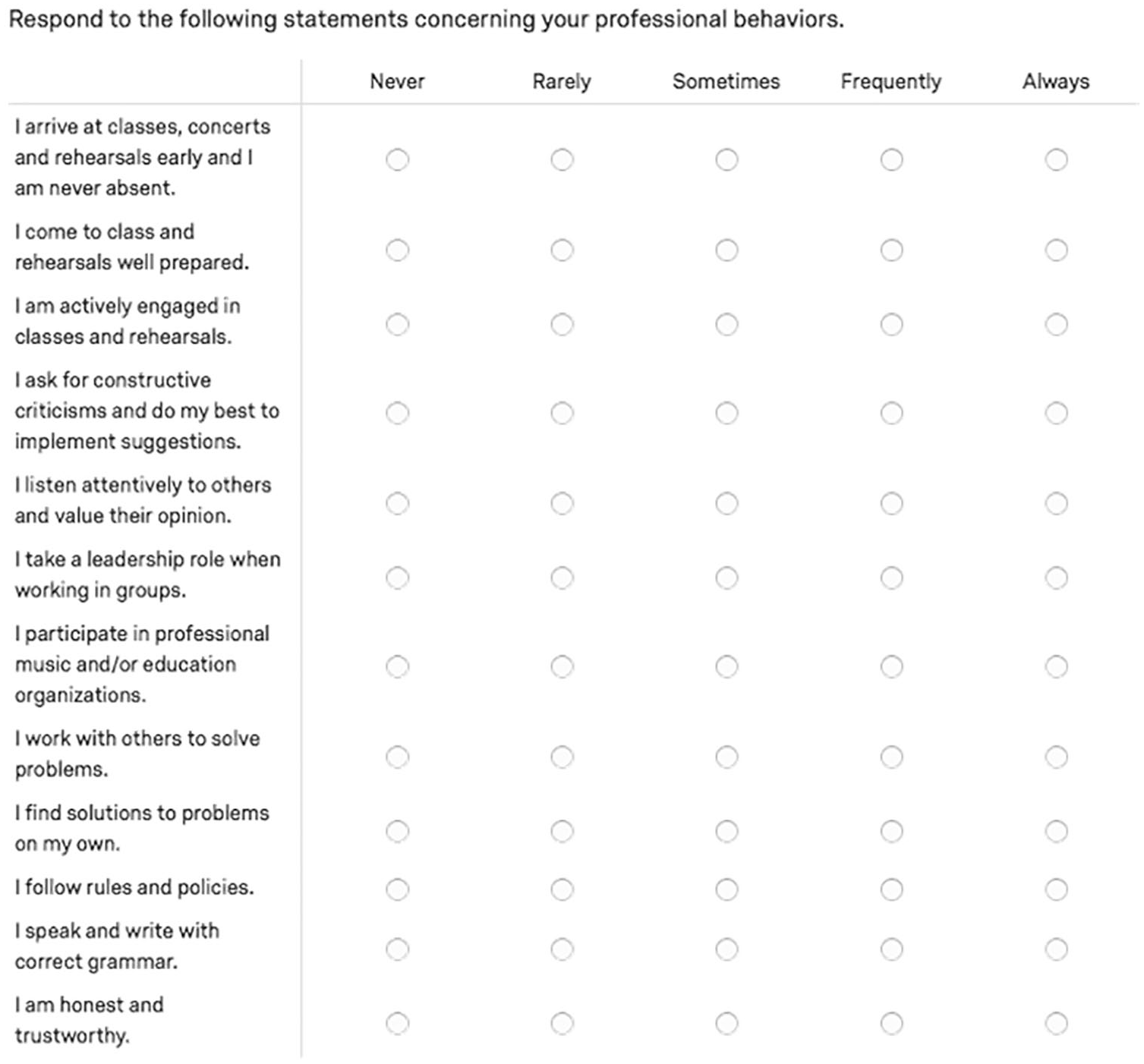
Professional Disposition Scale.
The MPES, an instrument designed by the researchers, consisted of 10 “I can” statements (see Figure 2). Each statement had a Likert-type scale with 11 degrees ranging from “cannot do at all” (0) to “certain I can do” (10). The degree of music performance efficacy was determined by summing the scores of the MPES item responses. Possible range of scores was 0–100, with scores closer to 0 indicating low performance efficacy and scores closer to 100 indicating high performance efficacy. Validity was established using a content validity panel consisting of music teacher trainers and music education doctoral students. Cronbach’s alpha of .92 indicated the MPES was a reliable measure.
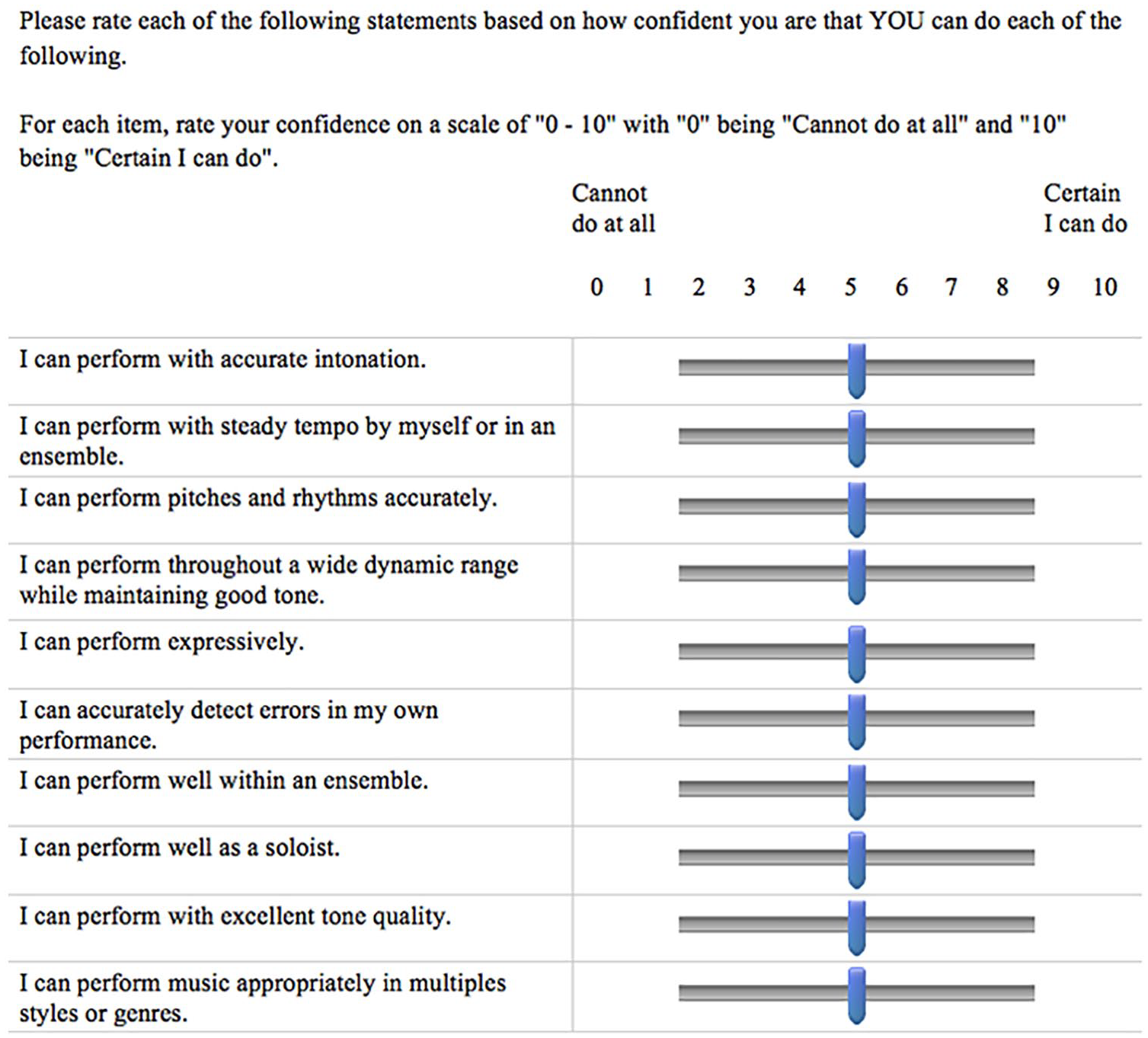
Music Performance Efficacy Scale.
The PMTES, an instrument designed by the researchers, consisted of 30 “I can” statements (see Figure 3). Each statement had a Likert-type scale with 11 degrees ranging from “cannot do at all” (0) to “certain I can do” (10). The degree of music teacher efficacy was determined by summing the scores of the PMTES item responses. Possible range of scores was 0–300, with scores closer to 0 indicating low efficacy and scores closer to 300 indicating high efficacy. These statements were influenced by five other teacher and music teacher measures: Gibson and Dembo (1984) Teacher Efficacy Scale, Bandura (2006) Teacher Self-Efficacy Scale, Wagoner (2011) Survey of Music Teacher Professional Identity, Jackson (2008) Music Teaching Self-Efficacy Questionnaire, and Teachout (1997) Preparedness for the First Years of Teaching. Fifty-seven questions from the source measures were rephrased into “I can” statements, and categorized into five constructs: classroom management, content delivery, impacting student achievement, planning, and use of instructional strategies. Validity was established using a content validity panel consisting of experts in the field of music education who have developed and/or used self-efficacy scales in the past. The content validity panel members recommended reducing the number of items, rephrasing 10 of the questions, and adding 2 questions, resulting in 30 questions for the final measure. The PMTES was pilot tested with a sample of recent music education graduates resulting in a Cronbach’s alpha of .89, indicating acceptable reliability. For the main study, Cronbach’s alpha of .98 indicated the PMTES was a reliable measure.
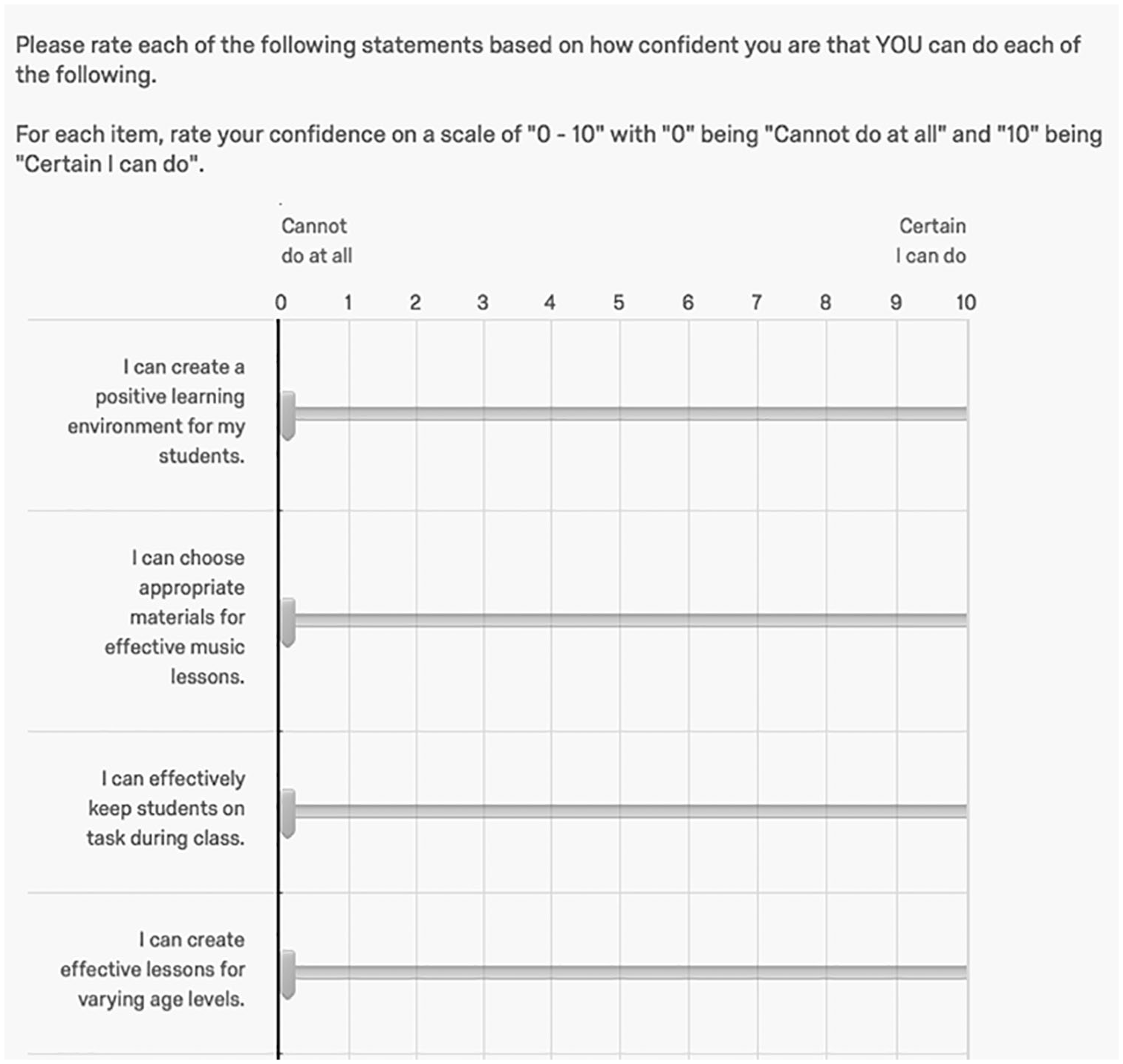
Small portion of the Preservice Music Teacher Efficacy Scale.
Results
To determine the influences on preservice music educators’ teacher efficacy as measured by PMTES scores, a simultaneous multiple regression analysis was conducted. Predictor variables included observation hours, professional development hours, peer teaching hours, K–12 teaching hours, non-coursework teaching hours, music education credit hours, education credit hours, MPES score, and PDS score.
Because the largest percentage of the participants were freshmen, their responses to items related to field experiences, teaching experiences, professional development experiences, and earned credit hours resulted, in most instances, as zero values, which severely impacted each distribution. To resolve this issue, we decided to group these independent variables resulting in what some researchers refer to as dummy variables for “observation hours” (Group 1 [n = 61] = 0–4 hr; Group 2 [n = 63] = 5+ hr), “peer teaching hours” (Group 1 [n = 51] = 0 hr; Group 2 [n = 41] = 1–5 hr; Group 3 [n = 32] = 6+ hr), “K–12 teaching hours” (Group 1 [n = 81] = 0–1 hr; Group 2 [n = 43] = 2+ hr), “non-coursework teaching hours” (Group 1 [n = 63] = 0–15 hr; Group 2 [n = 61] = 16+ hr), “music education credit hours” (Group 1 [n = 47] = 0–3 credit hours; Group 2 [n = 35] = 4–12 credit hours; Group 3 [n = 42] = 13+ credit hours), “education credit hours” (Group 1 [n = 72] = 0–3 credit hours; Group 2 [n = 52] = 4+ credit hours), and “professional development hours” (Group 1 [n = 57] = 0 hr; Group 2 [n = 35] = 1–10 hr; Group 3 [n = 32] = 11+ hr).
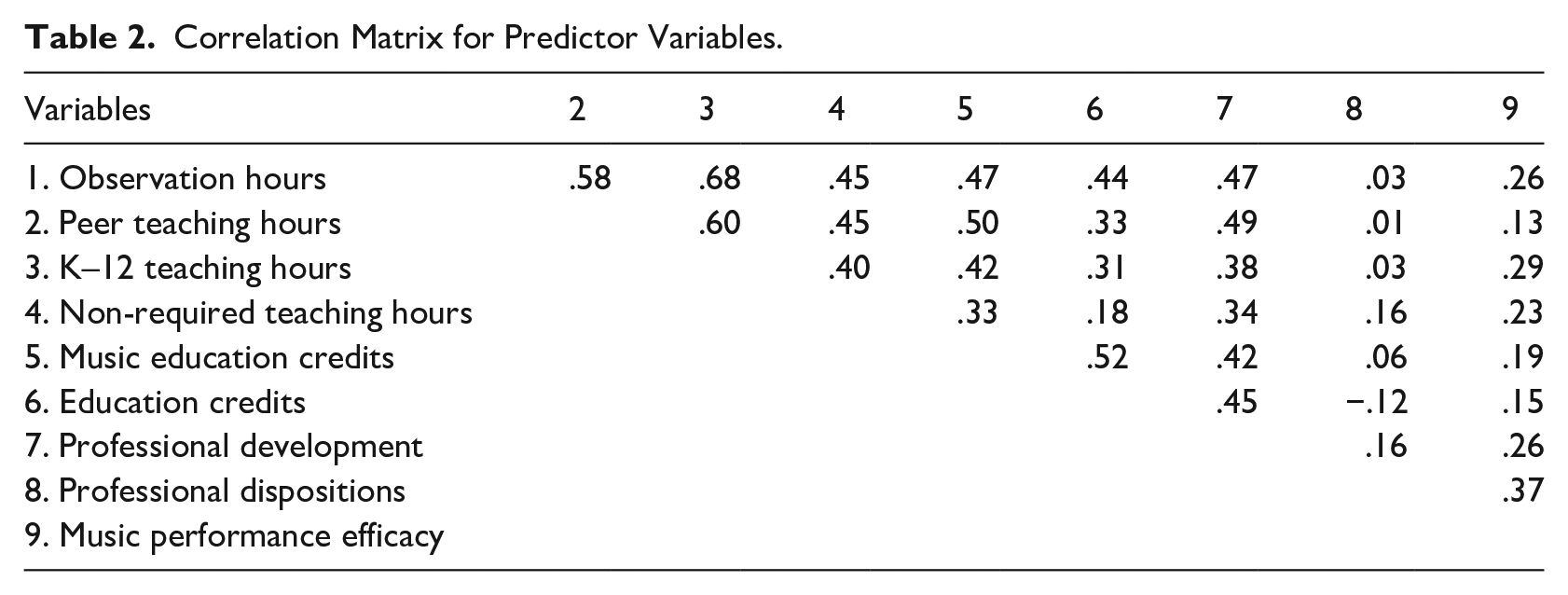
Before conducting the regression, outliers were detected when examining the normality of the distributions for the intervallic variables, and those outliers were removed reducing the size of the sample for the regression analysis (n = 115). Descriptive statistics were calculated for all intervallic variables (see Table 1). The assumptions of multiple regression were examined for normality of residuals, homoscedasticity, multicollinearity (see Table 2), model specification, linearity, and independence. No violations of the assumptions were observed. All predictor variables were entered simultaneously in the regression.
Descriptive Statistics of PDS, MPES, and PMTES.
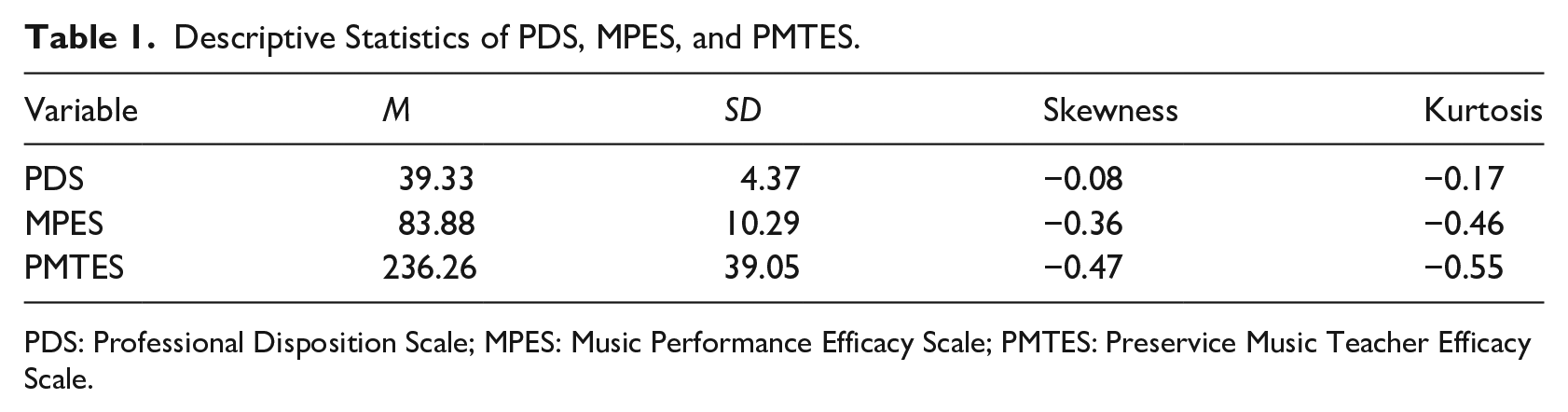
PDS: Professional Disposition Scale; MPES: Music Performance Efficacy Scale; PMTES: Preservice Music Teacher Efficacy Scale.
Correlation Matrix for Predictor Variables.
The coefficient of determination (R2 = .38; adjusted R2 = .33, p < .001) indicated the model was a good fit and explained 38% of the variance in preservice music teacher efficacy. PDS scores (β = .35, p < .001) and MPES scores (β = .39, p < .001) contributed the greatest to the regression model (see Table 3).
Predictors of Preservice Music Teacher Efficacy.
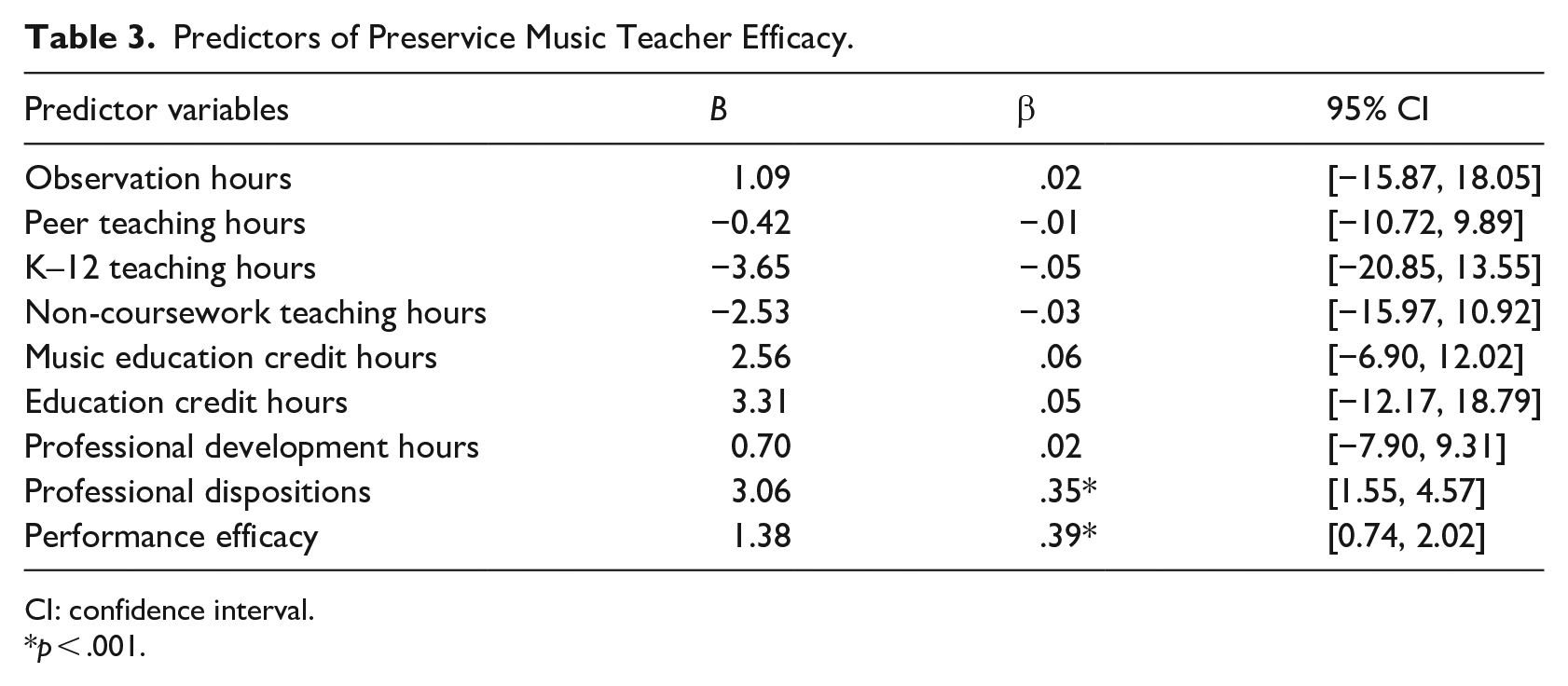
CI: confidence interval.
p < .001.
The unstandardized coefficient for participants’ PDS scores was 3.06, indicating that for every 1-point increase in PDS scores, PMTES scores increased by 3.06 points. The unstandardized coefficient for participants’ MPE scores was 1.38, indicating that for every 1-point increase in MPE scores, PMTES scores increased by 1.38 points.
Discussion
The purpose of this study was to explore the factors that influence preservice music teacher efficacy. Results from this study revealed our predictor variables explained 38% of the variance in participants’ PMTES scores with professional dispositions and music performance efficacy serving as the stronger predictors. Results should be interpreted with caution, as response rates could not be tracked and all responses consisted of participants’ self-reported data.
Participants’ scores for music performance efficacy contributed significantly to the variance in PMTES scores. This finding aligns with previous research that indicates music teacher identity may be impacted by educators’ perceptions of their competence as musicians (Ballantyne, 2005). In addition, preservice teachers in other domains such as science experience higher teacher efficacy when they engage in more domain-specific activities (Cantrell et al., 2003).
This study found that participants’ PDS scores contributed significantly to the variance in PMTES scores. Professional dispositions include adaptive behaviors such as promptness and social skills, as well as personality traits such as honesty and trustworthiness. Such adaptive behaviors have been connected with excellent music teaching; for example, previous research indicates that social skills are considered crucial for effective music educators (Hamann et al., 1998; Juchniewicz, 2010). Higher self-ratings of teacher competencies positively predicted preservice teachers’ efficacy (González et al., 2017). Teacher efficacy has been linked to adaptive professional dispositions such as persistence (Good, 1981), as well as organization, confidence, and enthusiasm (Allinder, 1994). Admissions officers and students believe that dispositions positively impact success in college music education programs (Fitzpatrick et al., 2014; Royston & Springer, 2017). Both NASM and CAEP recommend that schools of music and colleges of education recruit students who possess adaptive professional attitudes and skills (CAEP, 2018; NASM, 2017, p. 118). The results from this study may support music education program admission practices involving the assessment of candidates’ dispositions.
Our results indicated that music education credit hours and education credit hours did not contribute significantly to the variance in PMTES scores. This finding is in contrast to previous research. Teachers’ level of preparation has been found to positively predict teacher efficacy (Pas et al., 2012; Raudenbush et al., 1992). The teacher efficacy of Master of Education students rose throughout their coursework (A. W. Hoy, 2000). Preservice music teacher efficacy was positively impacted by university coursework in previous studies (Bergee & Grashel, 2002; Brownell & Parares, 1999; Cantrell et al., 2003; Prichard, 2017). Prichard (2017) found that field experiences, individual mentoring, and peer teaching experiences could impact the music teacher efficacy of preservice teachers enrolled in introductory music education courses. In-service teachers have reported higher efficacy levels for teaching students with disabilities when their preservice coursework included instruction on how to include students with diverse needs (Brownell & Parares, 1999). Our contrasting results may indicate the quality of our participants’ coursework may be uneven or too theoretical, which may explain why these variables did not serve as strong predictors of preservice music teacher efficacy.
Hours of field experience did not contribute significantly to the variance in PMTES scores, which is surprising in light of Bandura’s (1977) description of mastery and vicarious experiences as having the greatest impact on self-efficacy. We examined participants’ observation hours, peer teaching, and hours of K–12 teaching experience, as well as non-coursework teaching hours. This is in contrast to previous research (Bergee, 2002; Brownell & Parares, 1999; Cantrell et al., 2003). Cantrell et al. (2003) found that increased hours of field experience positively impacted preservice science teachers’ teacher efficacy. Preservice music teachers’ classroom management efficacy increased as a result of practice using classroom management strategies (Bergee, 2002). As stated previously, our study simply asked participants to self-report the number of hours of teaching and observation experiences they have had; we did not measure the quality of these experiences.
Implications for music teacher education
In examining the factors that contributed significantly to the variance in preservice music teachers’ PMTES scores, some recommendations may be made for teacher preparation programs. Music teacher preparation programs may wish to focus on dual preparation of future music teachers as both musicians and educators, since music performance efficacy positively influences teacher efficacy. NASM recommends that university music students pursuing a degree in music education be provided with opportunities to develop skills both as soloists and ensemble musicians (NASM, 2017, p. 120). Current practice of music education students performing alone and with ensembles would be supported by our findings. While CAEP already requires teacher preparation programs to monitor preservice teachers’ dispositions, such programs may wish to design intervention strategies to positively impact dispositions and adaptive behaviors. It may also be advisable to regularly assess and provide music education students feedback regarding their professional behaviors in the classroom and field experiences. Preservice music teacher candidates may also benefit from regular self-evaluation of professional dispositions as they develop their teacher identity.
Although observation hours and teaching hours did not predict preservice music teacher efficacy, it does not mean these experiences are not important in developing effective music educators. Past research has consistently shown that vicarious and mastery experiences are predictors of teacher efficacy. Our results could be attributed to the large number of freshman music education majors who had not had field experiences. In addition, it could be that participants in this study may have had uneven or negative experiences in their observations or early teaching experiences. Rather than simply acquiring participants’ hours of observation and teaching, it may have been more revealing to understand participants’ perceptions of the quality of their observation and/or teaching experiences.
Future research
It is possible that the results of this study may have been impacted by attrition in music teacher preparation programs. Researchers may wish to investigate means of measuring teacher efficacy for students who leave teacher preparation programs. Since teacher efficacy was positively impacted by preservice music teachers’ dispositions, researchers may wish to further investigate the impact of personality traits on music teacher efficacy. More research into factors that influence music performance efficacy may be warranted by its positive influence on preservice music teacher efficacy. It may be that the link between the two constructs is the perception of being “in front” of an audience for both teachers and musicians. Alternatively, it could be that teachers possess more confidence for instruction in a domain in which they possess more expertise and skill. Finally, future researchers may wish to investigate the influence of music performance efficacy and professional dispositions on in-service music teachers’ efficacy.
Footnotes
Declaration of conflicting interests
The author(s) declared no potential conflicts of interest with respect to the research, authorship, and/or publication of this article.
Funding
The author(s) received no financial support for the research, authorship, and/or publication of this article.
