







Abstract
A growing concern is the low number of learners who choose to participate in music during their high school years. Extending previous research by McPherson and O’Neill, this study explored South African high school learners’ motivation and value perceptions to continue with music as an elective in grade 10. A further objective was to understand how value perceptions vary according to grade, gender, and intention to continue with music. 180 music leaners in grades 9 and 10 completed questionnaires modeled on those by McPherson and O’Neill, based on the expectancy-value framework. Results show that learners value music less than physical sciences and life sciences/biology, but more than history, geography, and accounting/EMS. Overall, outcomes show that learners who select music exhibit higher (and more intrinsic) value perceptions for music than for other electives and hold a higher value perception for all electives combined. Males hold higher value perceptions for music than females.
Keywords
Introduction
The current study extends an eight-country 1 series of studies (McPherson & O’Neill, 2010) which investigated learners’ motivation to study music as compared to other school subjects. The aim of the series was to explore why students want to pursue music as a school subject, and how their beliefs and attitudes about music may differ from other subjects (McPherson et al., 2015). According to the expectancy-value theory subjective task value includes attainment value, intrinsic value, utility value, and cost (Wigfield & Eccles, 2000). McPherson and O’Neill (2010) reported a decline in values for all school subjects, and music was ranked lower on value than other subjects. Females reported higher value for music in five of the eight countries. The study concludes that high school students value music less as they age.
The South African context
Music as a specialized high school subject is offered at a limited number of government-funded schools in South Africa. Jansen van Vuuren (2011) believes that subject music is struggling for survival because of limited music resources at government schools, together with a music syllabus that lacks a logical progression. At schools where music is offered, very few learners choose to commit to it as a subject from grade 8 2 until Matric (the final year of high school). Despite high numbers of learners in Senior phase music (grades 7–9), the music retention rate is low after grade 9. Learners do not appear motivated to choose music as a high school elective. According to the CAPS 3 Creative Arts curriculum in South Africa, grade 8 learners choose two creative arts subjects from: dance, drama, music, and visual arts. After 2 years learners decide whether or not to continue with one or both of those arts subjects as a specialized subject from grades 10 to 12 (Department of Basic Education, 2011). At the end of grade 9, learners choose three elective subjects, or more if learners wish to take extra subjects. In addition to these elective subjects, learners are required to study the following core subjects: English, a first additional language as offered by the school, life orientation, and a choice of either mathematics or mathematical literacy.
It is important to mention that grade 8 and 9 learners seldom have the opportunity to choose between all four of the Creative Arts subjects aforementioned, because the art forms offered are determined by each individual school. According to the CAPS document (Department of Basic Education, 2011), not all schools have the resources and/or teacher specialization and/or learner abilities to justify offering all four in the Senior phase. Furthermore, not all schools are required or are able to offer arts subjects in the FET phase because of a lack of resources or appropriately-trained staff (Department of Basic Education, 2011). These factors diminish the number of learners who choose an arts subject in the FET phase, and even more so the number of learners who choose music.
Music and attrition
Recent studies have confirmed the general trend that globally very few learners enrol in music as a school subject (Freer & Evans, 2018, 2019). Extensive research has been conducted into reasons for the high “dropout” rate from music at school level (including band programs, choirs, orchestras). Freer and Evans (2018, 2019) explored psychological needs-based reasons for low music participation in high school, as well as low value perceptions. Lamont et al. (2003) demonstrated that although many learners show interest in music-making outside of school, they are less interested in it as part of the school curriculum. Some researchers have attributed the unpopularity of music as a school subject to a lack of music teacher competence or self-confidence, especially at the high school level (see Hennessy, 2000; Lamont & Maton, 2010). Reasons for music attrition rates at school include the time consuming nature of music, competing interests, timetabling conflicts, weak practicing habits, poor lesson attendance, socialization factors, diminished, or skewed ability beliefs (especially considering the typically competitive nature of music), parental and teacher influences, and frequently, a lack of value for music as an academic subject (Boyle et al., 1995; Corenblum & Marshall, 1998; Costa-Giomi, 2004; Cutietta & McAllister, 1997; Evans et al., 2013; Gamin, 2005; Kinney, 2010; Lamont & Maton, 2010; Lamont et al., 2003; Pitts, 2005; Pitts et al., 2000; Sichivitsa, 2003, 2004; Stewart, 2005). In our South African context Buthelezi (2016) and Nompula (2011) criticize the subject music curriculum (CAPS) for its Western focus and lack of attention to traditional African music. This may weaken learners’ interests in music as a subject.
The perceived value of the arts in South African schools has not been researched. In our experience as educators, few learners in Gauteng seem motivated to pursue music during high school, which resonates with similar trends worldwide (Freer & Evans, 2019; McPherson & O’Neill, 2010).
Value perceptions
Value in the context of this paper 4 is viewed as a component of academic motivation through the lens of Eccles’ expectancy-value theory. Eccles and Wigfield (1995) conceptualize subjective task values according to four main components: importance/attainment value; interest/intrinsic value; usefulness/utility value; and cost (see Atkinson, 1964; Rotter, 1982 for other definitions). The amount of value learners place on a task determines how much effort they will exert on that task, as well as future performance and feelings of self-worth (Eccles et al., 1998). It stands to reason, then, that students who do not value music highly as a subject are less likely to pursue it, whereas high value perceptions would result in learners being readily and regularly engaged in it. Learners who value a subject might begin to exert more effort on tasks, achieve high results, and subsequently persist in that subject (see McPherson, 2000/2001; Wigfield & Eccles, 2000).
A number of researchers have demonstrated the influence of value perceptions on academic enrolment intentions, level of applied effort, performance, achievement, and intensity of persistence. For example, in mathematics, value has been shown to be the strongest predictor of future course enrolment intentions (Bong, 2001; Crombie et al., 2005; Wigfield & Eccles, 2000). 5 In a music-related context, Sichivitsa (2003) found value to be the strongest direct predictor of choir enrolment intentions. Similarly, Stewart (2005) reported that learners in a school band program are only likely to continue band membership if they find it interesting and valuable (see also Corenblum & Marshall, 1998; Costa-Giomi, 2004; Davidson et al., 1995/1996; Gamin, 2005; McPherson, 2000/2001; Sichivitsa, 2004).
Regarding gender and value perceptions, Wigfield et al. (1997) showed that female elementary school learners rate instrumental music as more useful, important, and interesting than did males. McPherson and O’Neill (2010) found similar results in their international study using a sample from three different grade levels. Kinney (2010) researched predictors of middle school band persistence, and found that females are twice as likely to enrol in a school band program than males. Contrary to these three studies, Lamont et al. (2003) revealed that male learners in grade 9 report enjoying class music more than females. Perhaps the discrepancy lies in the contexts of class versus instrumental music.
Aim of the study
This study extends previous research by McPherson and O’Neill (2010), exploring students’ motivation to study music within the South African context. The aim of the study was to explore high school learners’ perceptions of value for music as an academic subject specifically in comparison to their perceptions of value for other elective modules. A further objective was to compare learners’ value perceptions according to subject, grade, gender, and music continuation intention.
Method
Sample
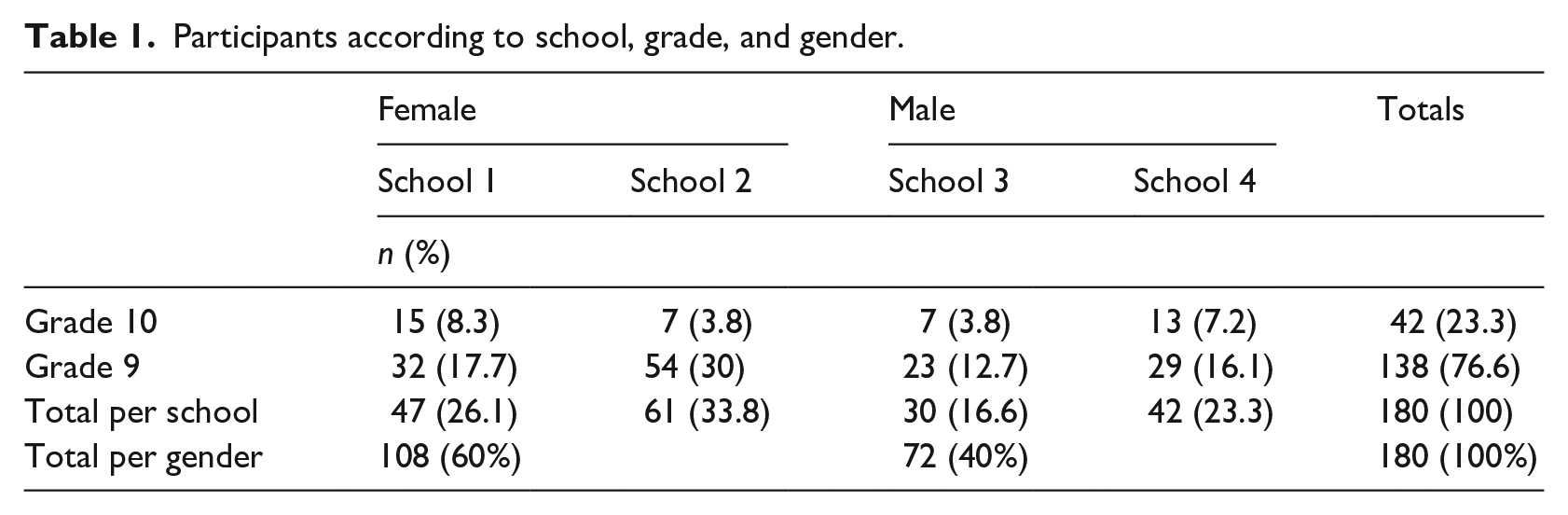
Participants comprised 180 music learners in grades 9 and 10 (aged 15–16), recruited at four single-sex government-funded high schools in Gauteng. About 60% were females (n = 108) and 40% were males (n = 72). The sample included 138 grade 9 learners (who will need to decide whether to continue with music as an elective subject) and 42 grade 10 learners (who have chosen to pursue music as an elective).
Table 1 presents the sample distribution according to school, grade, and gender. While McPherson and O’Neill (2010) used a sample across three grade levels, the current study used high school learners only.
Participants according to school, grade, and gender.
Questionnaire
The 33-item questionnaire was based on McPherson and O’Neill’s (2010) original research instrument with a few alterations to increase applicability to the South African context. The questionnaire sought to assess learners’ motivational beliefs for a range of school subjects. Learners were asked to rate their subjects according to these motivational beliefs. Of the 13 elective subjects, 6 only responses for six subjects with the highest number of learners were analyzed: physical sciences, life sciences/biology, accounting/EMS (economic and management sciences), music, geography, and history. Motivation in this study was assessed according to the following value perceptions: “Interest/Enjoyment” (two items), “Importance” (to learn and to do well in: two items), and “Usefulness” (to daily life and to future employment: two items). Items were rated on a five-point Likert scale. An example of an item measuring value is “Of the subjects you take, how useful do you think learning these subjects will be for when you leave school and get a job? (1—not useful, 5—very useful).”
At the end of the questionnaire, grade 9 learners were required to indicate their intentions for continuing music in grade 10.
Procedure
After obtaining the appropriate ethical clearances from the University of Pretoria, the Gauteng Department of Education and each participating school, letters of informed assent and consent were distributed to learners and their parents to sign prior to receiving the questionnaires. Questionnaires were delivered to each school and administered by the music teachers. The attrition rate was 51.9%.
Data analysis
The data were analyzed using the IBM Statistical Product and Service Solutions package (SPSS), conducted by the statistical services at the University of Pretoria. Descriptive statistics and univariate ANOVAs were conducted to determine differences according to subject, grade, and gender. Significance was tested at p < .001.
Results
These results represent value as a motivational construct. Across all school subjects, grades 9 and 10, and gender, learners who intend to continue with music to Matric reported a moderately significant effect for value perceptions for music F = 0.806 (df = 2), p = .448.
Value perceptions according to subject
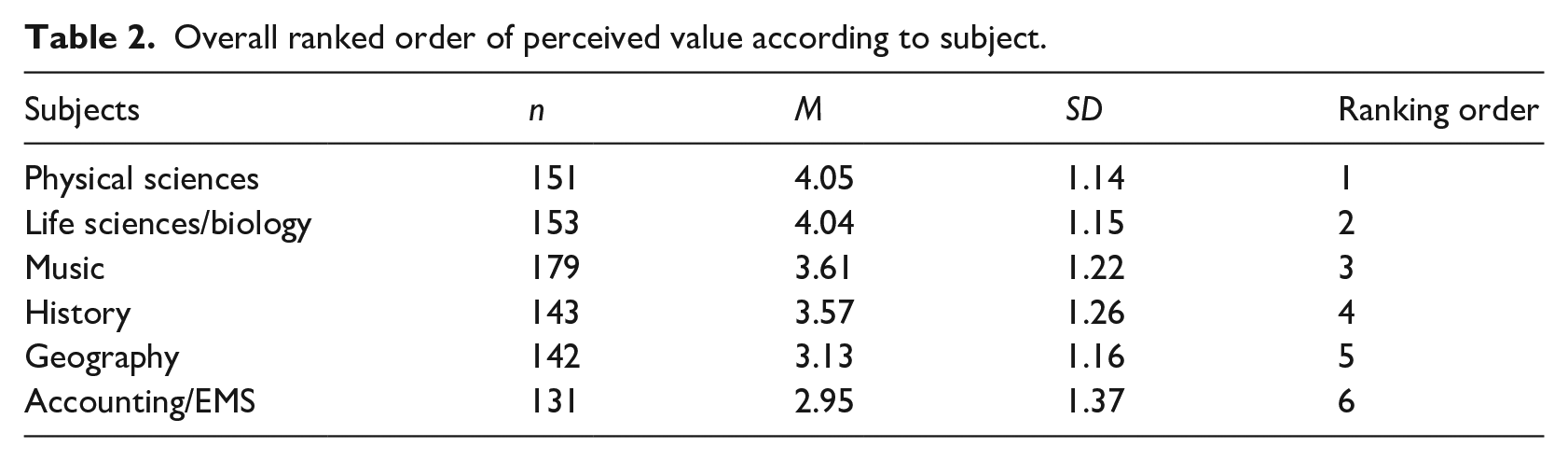
School subjects were ranked according to most valuable in terms of enjoyment, importance, and usefulness by all learners in the sample (see Table 2). While not statistically significant the mean values show that physical sciences (M = 4.05; SD = 1.14) was rated the most valuable subject overall. Music was rated third-highest (M = 3.61; SD = 1.22), and accounting/EMS received the lowest value perception reports (M = 2.95; SD = 1.37).
Overall ranked order of perceived value according to subject.
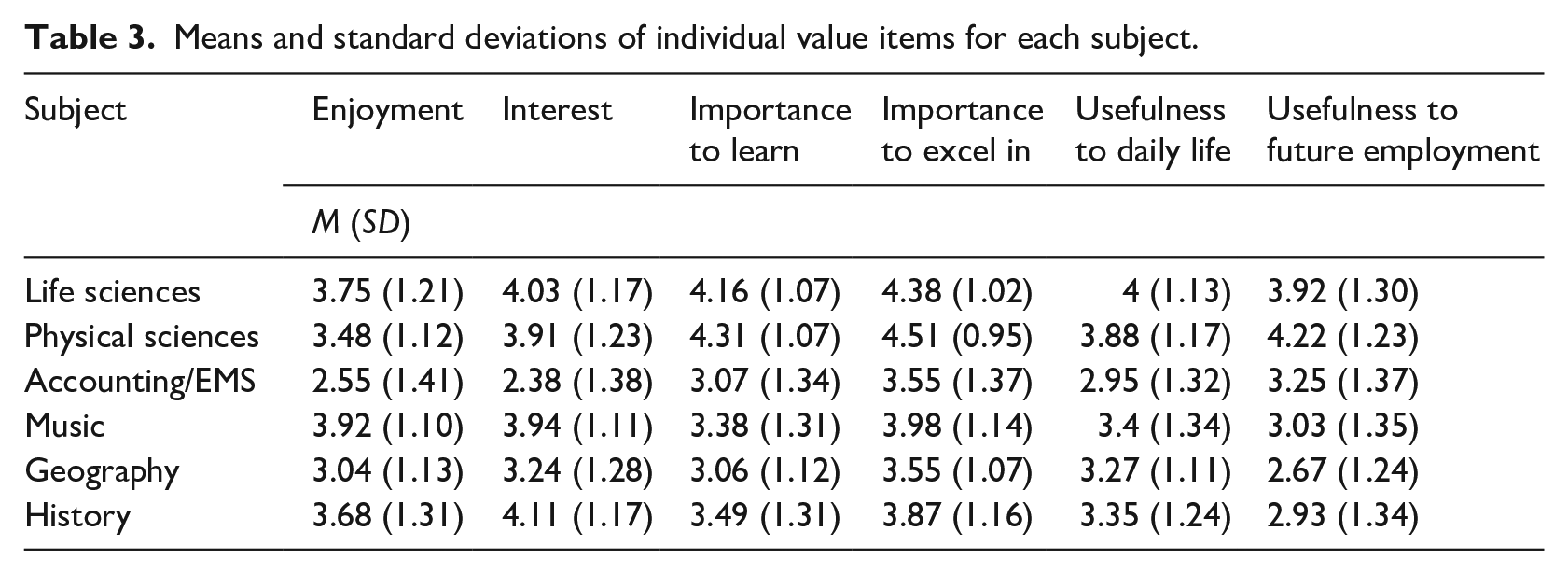
Value was measured according to individual items: enjoyment, interest, importance, and usefulness (see Table 3). Regarding enjoyment music was ranked higher than any of the other elective subjects (M = 3.92, SD = 1.10), but in terms of importance to excel in and usefulness to future employment, music was ranked third and fourth respectively.
Means and standard deviations of individual value items for each subject.
Value perceptions according to grade
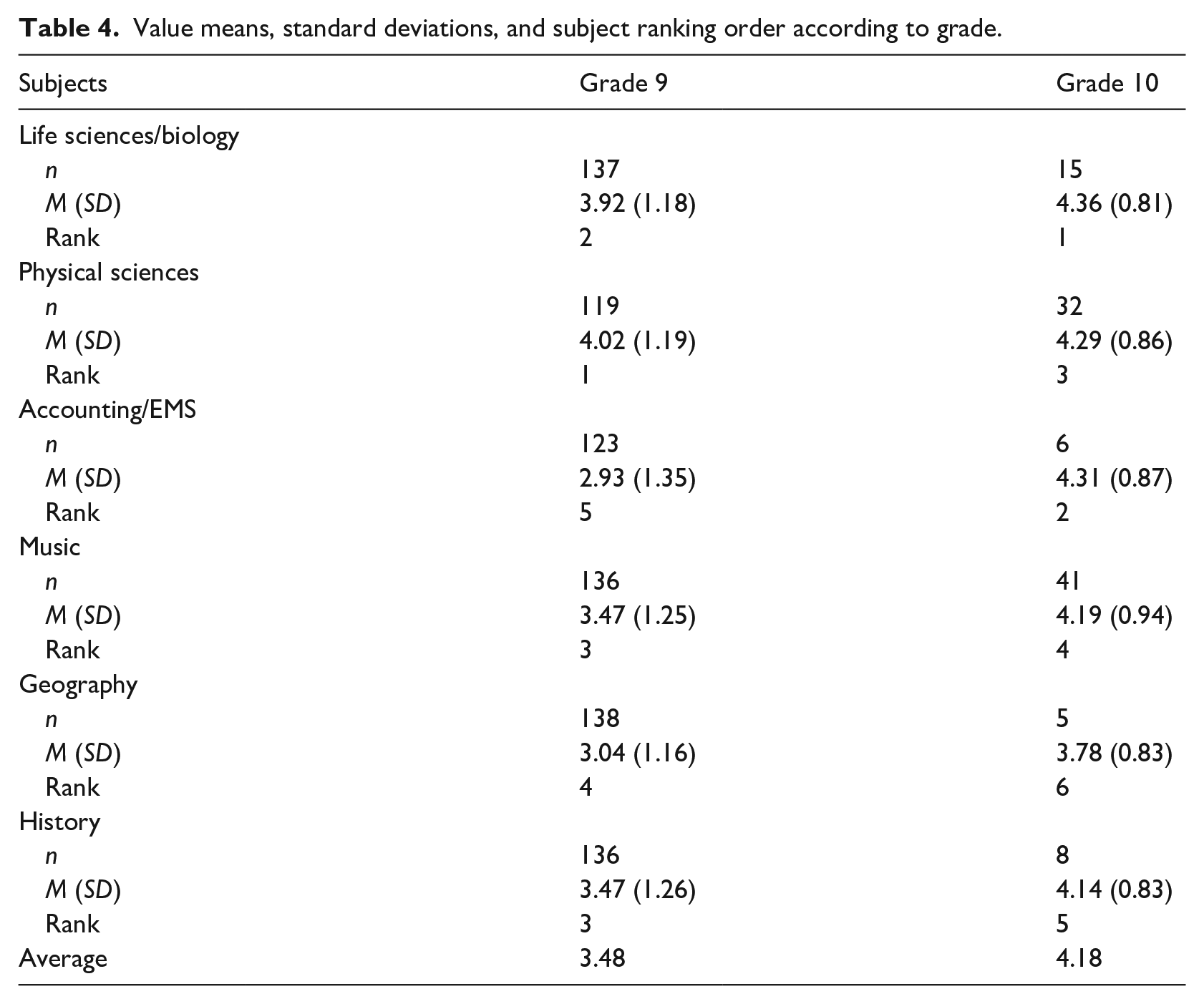
There was a highly significant effect of value perceptions for music by grade F = 16.792 (df = 1), p = .000. Grade 10 learners (M = 4.19; SD = 0.94) who had already selected music as a specialized subject value music significantly higher than grade 9 learners (M = 3.47; SD = 1.25) (See Table 4). The most valuable subjects to both grades were life sciences/biology and physical sciences. In a subject-comparative context in both grades, music was not highly rated in terms of value, even though the actual reported means were relatively high (see Table 4).
Value means, standard deviations, and subject ranking order according to grade.
The bar chart in Figure 1 shows the mean rating for all subjects by grade 9 and 10 learners. In addition to grade 10 learners reporting higher value perceptions than grade 9 learners for all subjects, grade 10 responses are also slightly more generalized across subjects than are grade 9 responses.
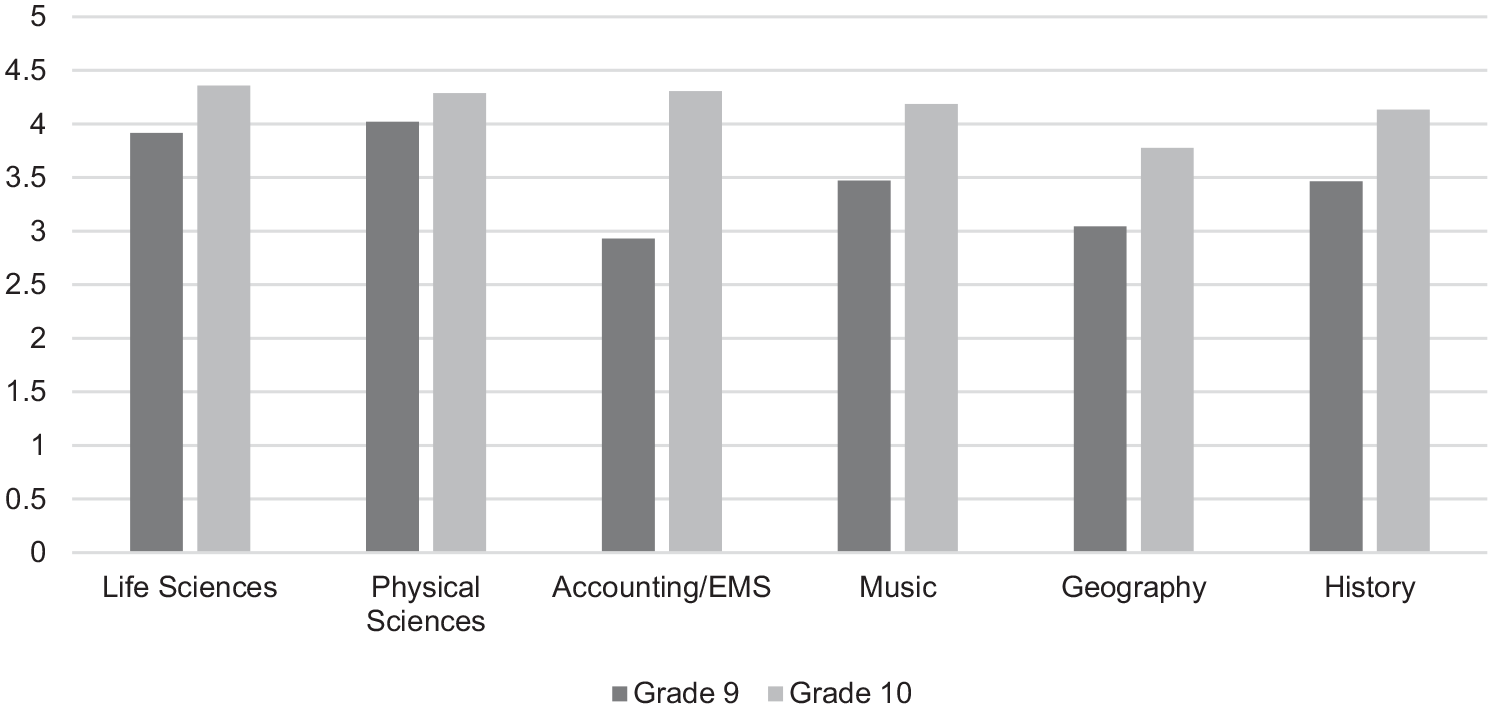
Mean ratings of value for subjects according to grade.
Value perceptions according to gender
While not statistically significant males reported higher value perceptions for music than females (Males: M = 4.04; SD = 0.13. Females: M = 3.62; SD = 0.12). Physical sciences and accounting/EMS were also more highly rated by males than by females (see Table 5). Both genders reported the lowest ratings for geography. When comparing the overall mean value perceptions for all subjects combined, females reported a higher overall subject value perception than did males.
Value means, standard deviations, and subject ranking order according to gender.
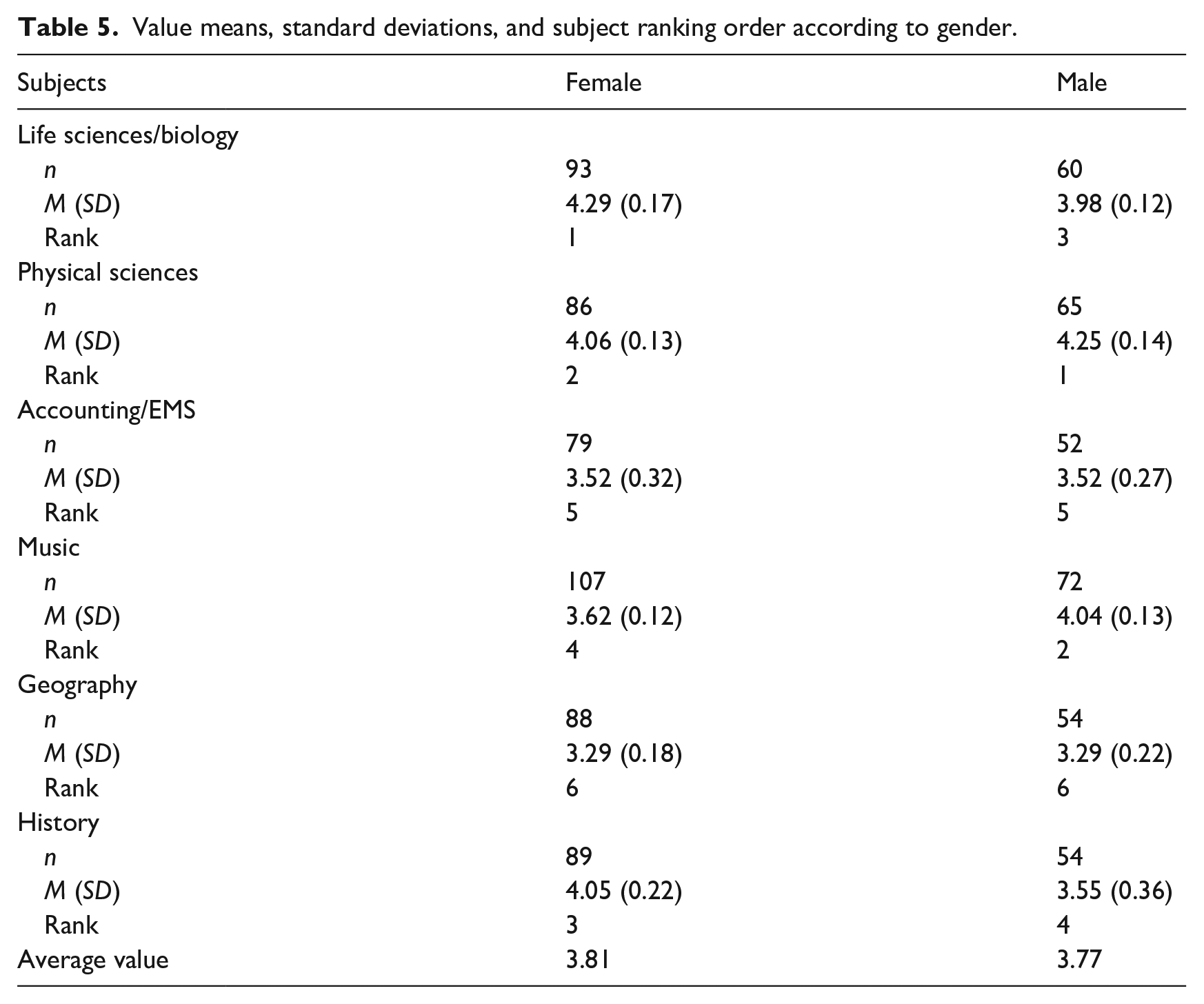
The most strongly contrasting findings between gender were for music and history, with males reporting higher value perceptions for music, and females reporting higher value perceptions for history (see Figure 2).
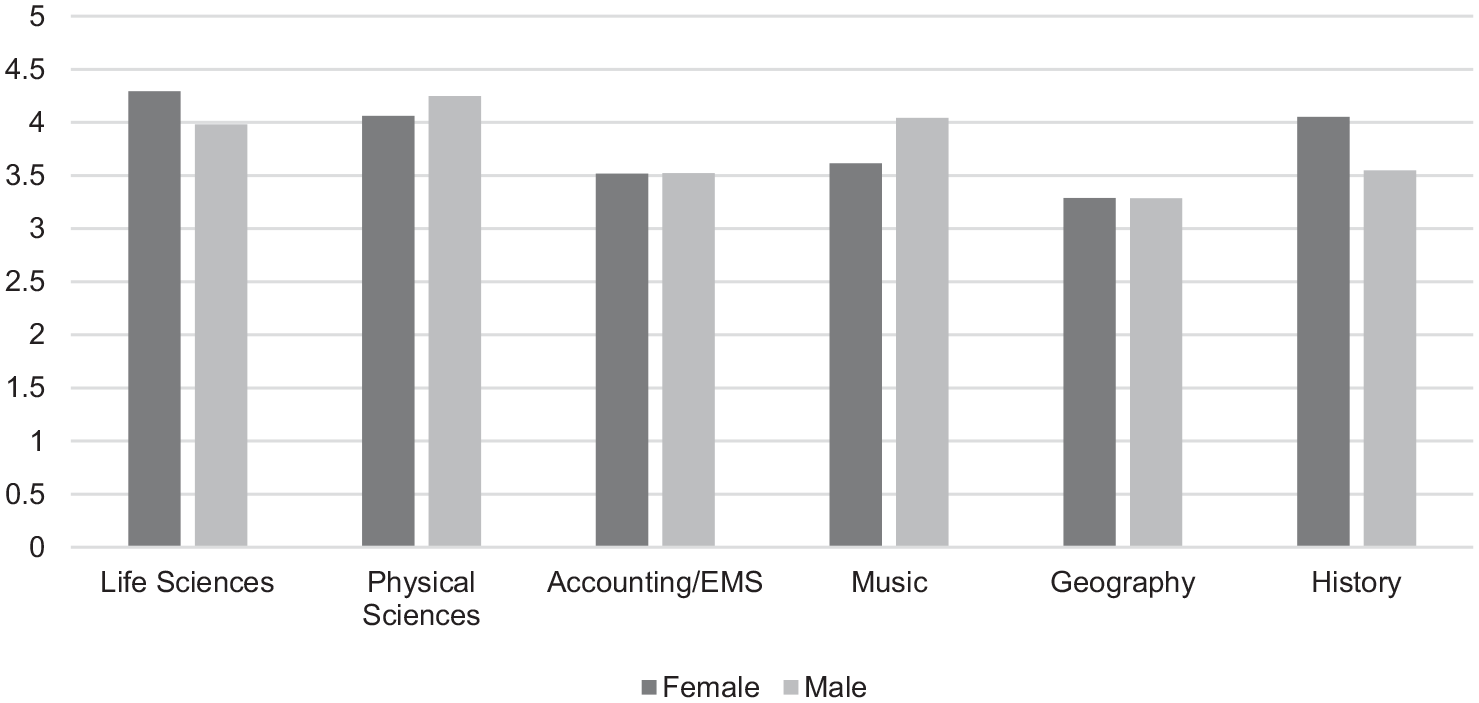
Mean ratings of value for subjects according to gender.
Value perceptions according to grade 9 music continuation intentions
According to the mean value ratings for all school subjects, grade 9 learners intending to continue with music in grade 10 reported the highest value ratings for music, followed by physical sciences and accounting/EMS (Table 6). Notice how the value ratings for each subject differ quite substantially between the two groups (see Figure 3).
Overall value means, standard deviations, and ranking order according to grade 9 music continuation decisions.
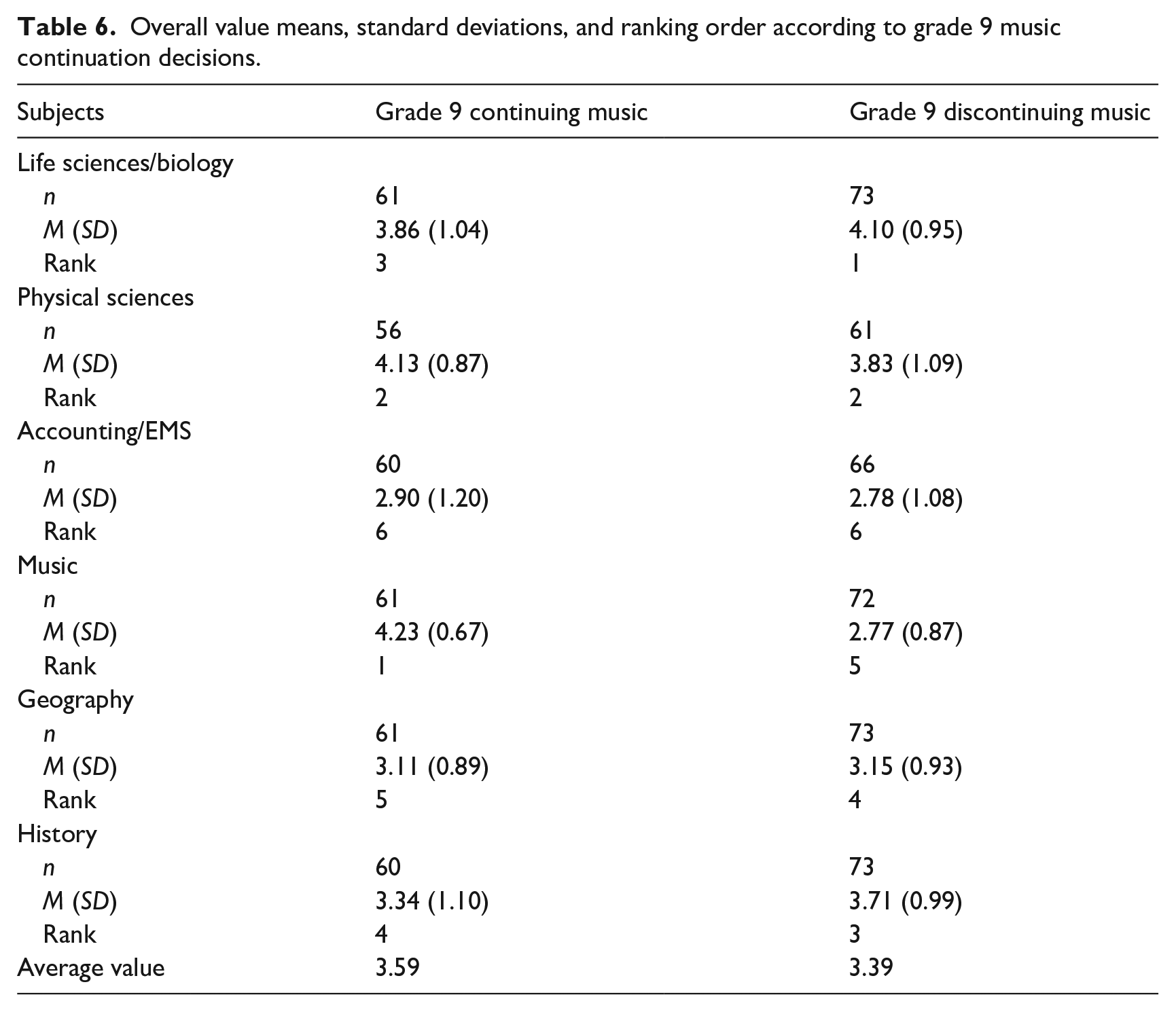
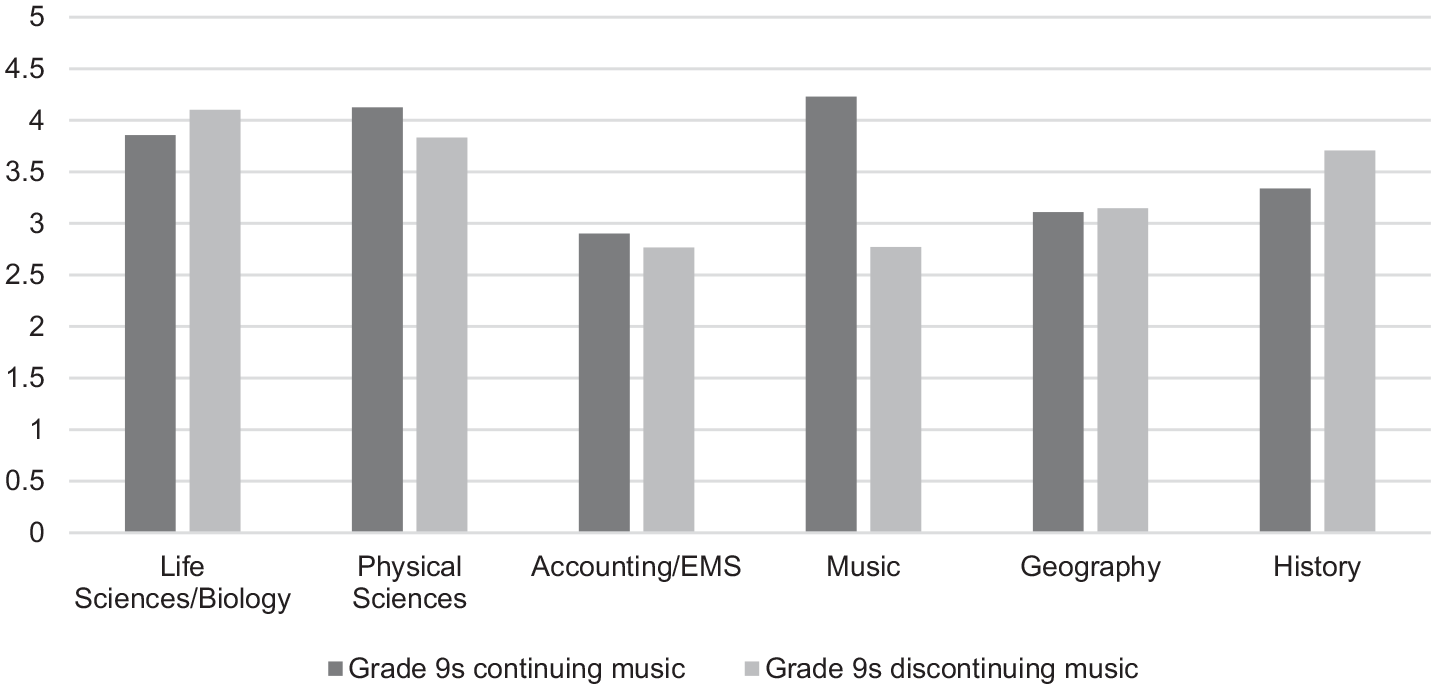
Overall mean value ratings according to grade 9 intentions to continue or discontinue music.
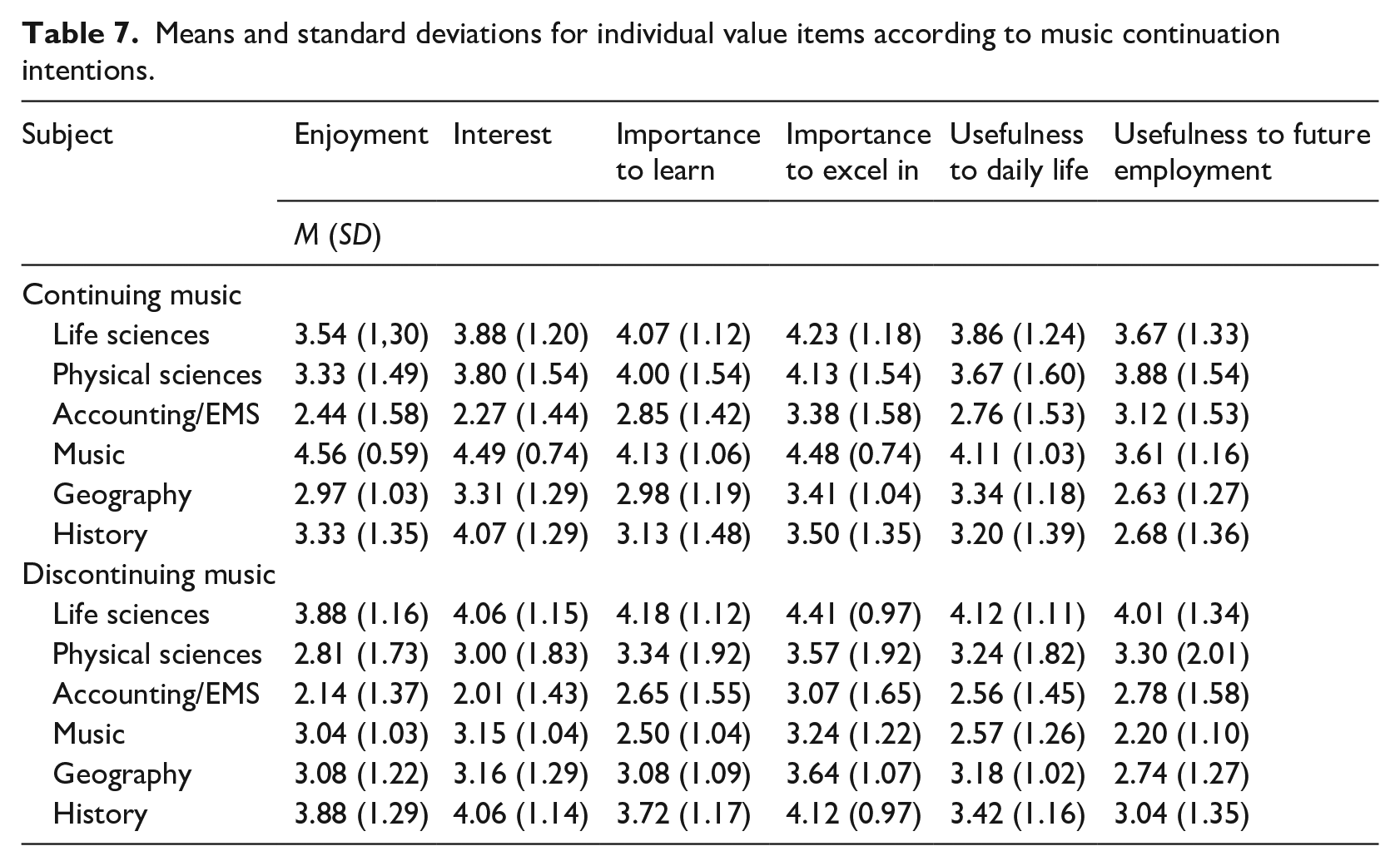
To demonstrate which aspects of value influence music continuation most strongly, Table 7 shows the means and standard deviations for each individual value item, according to music continuation intentions. Notice that those continuing music value it more than any other subject for five of the six items measuring value. In comparing the mean ratings for music between the groups, the most contrasting item is Importance to learn. This could suggest intrinsic value in those continuing with music, further supported by the fact that these learners exhibit high levels of enjoyment and interest in the subject, but lower levels of usefulness to daily life and usefulness to future employment—both of which veer toward extrinsic value.
Means and standard deviations for individual value items according to music continuation intentions.
Country comparisons
When we compare the results from this study in South Africa to Brazil, China, Finland, Hong Kong, Israel, Korea, Mexico, and USA (Figure 4), it is encouraging that learners in South Africa reported the second highest value perceptions for music, following Brazil. It must be stated that a much smaller representative sample was taken from South Africa than from the other eight countries. Because the current study used a high school sample only, only the data for the upper grade levels in the other eight countries are presented in Figure 4.
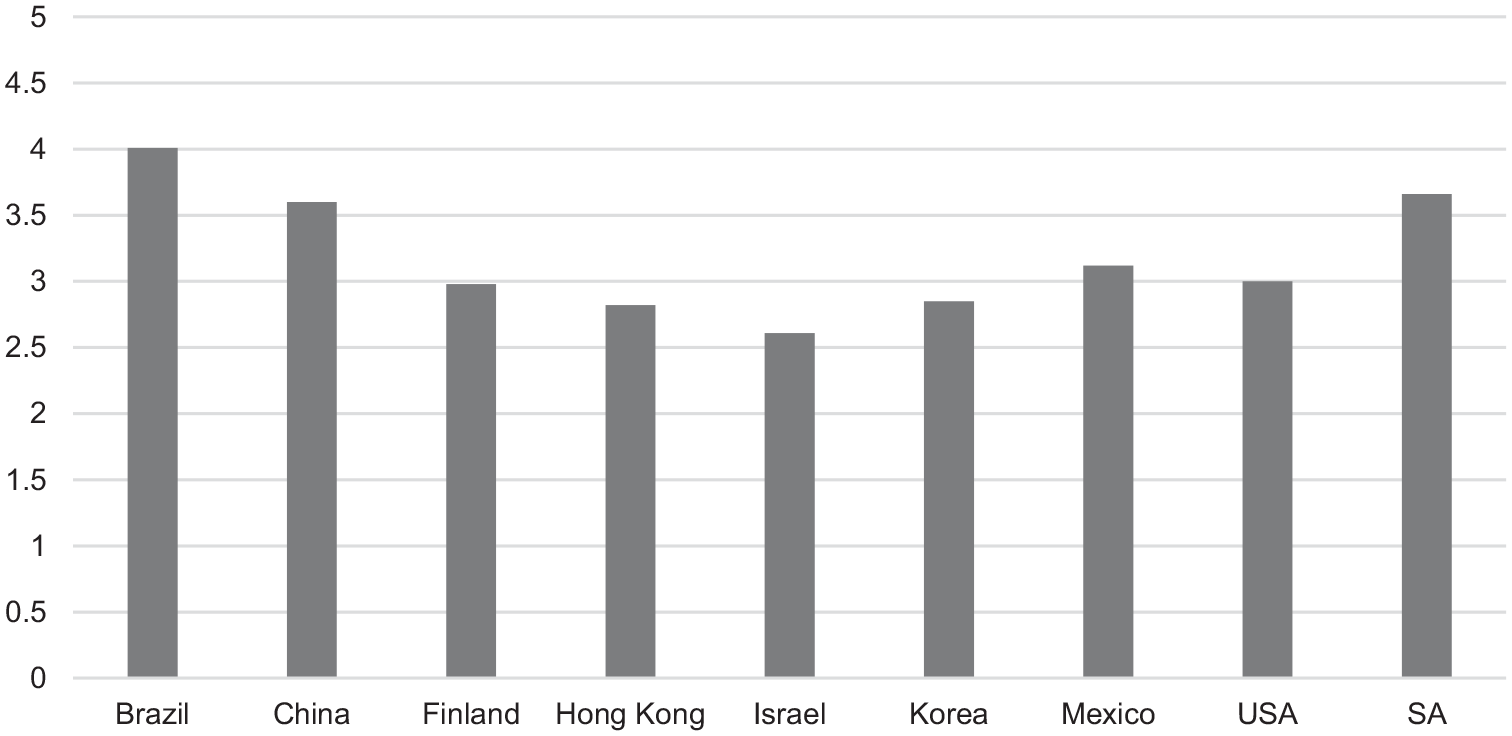
Worldwide comparison for value perceptions.
Discussion
This South African study extends an existing eight-country research project that explored learners’ motivation to study music (McPherson & O’Neill, 2010) and focused on value perceptions that learners hold for music compared to other elective subjects. In contrast to the original studies which focused on core academic subjects as compared to music, the current study focused only on elective subjects. It seemed appropriate to explore motivational beliefs in subjects for which learners can choose to enrol, rather than for compulsory subjects.
Music as a school subject in South Africa seems to be struggling for credibility and participants (Buthelezi, 2016; Jacobs, 2010; Jansen van Vuuren, 2011; Klopper, 2008). The schools represented in this study typically have between 20 and 30 learners per class, and usually between four and six classes per grade. The very fact that the entire grade 10 sample (of music learners) from four different high schools comprised only 42 learners corroborates earlier findings that very few learners choose to continue with music to Matric (Sloboda, 2001).
According to the expectancy-value theory, several factors shape learners’ expectancies for success as well as their values, which ultimately determine their choices, performance quality and the level of persistence exercised (Wigfield & Eccles, 2000). The current study found that grade 9 and 10 learners value physical sciences and life sciences/biology most highly, placing music third-highest in terms of value. This finding resonates with those of Bong (2004) who found that value perceptions are subject-matter specific, with very limited generalizability across subjects. The result is consistent with the eight-country study (McPherson & O’Neill, 2010) which also reported high value ratings for science by upper grade level learners. This is hardly surprising considering the continued emphasis placed on subjects such as science, mathematics, and economics at school. What is striking and unique about the current study is when focusing on individual items that measured value, music received higher ratings for Enjoyment than any other subject. This suggests that although learners see more utility value in the sciences than in the arts, they do not necessarily enjoy the sciences as much as the arts. We believe that high school learners would benefit from more enjoyment at school.
Several studies reveal that learners generally report very low value perceptions for music at school (see Ghazali & McPherson, 2009; Lamont & Maton, 2010; McPherson, 2007; McPherson & O’Neill, 2010; O’Neill, 2006; Pitts, 2005). In fact, McPherson and O’Neill (2010) found that overall across the eight countries, music was valued second-least of all the subjects assessed. In our study, we only compare results for music and science, which were common to our study and McPherson and O’Neill’s eight-country series. McPherson (2000/2001), Evans et al. (2013), Burak (2014), and more recently Freer and Evans (2018, 2019) found that learners do not see long-term value in music as a school subject, nor do they feel that music is relevant to their lives. In terms of usefulness to future employment the results of the current study corroborate these findings, in that music is not highly rated, even by learners who intend to continue with music until Matric.
Despite low utility value ratings for music according to the current study, we would argue that there is utility value in arts subjects. A growing body of research into STEM (Science, Technology, Engineering, and Mathematics) versus STEAM (STEM plus the Arts) curricula is rapidly showing the importance and benefits of integrating the arts into education (Gregorio et al., 2015; Land, 2013; Segarra et al., 2018). Studies show that at university level, interest in the sciences needs to be increased in order to maintain a full workforce of scientists, and researchers such as Gregorio et al. (2015) believe that the arts is the means by which to do this. A commonly held belief seems to be that arts inclusion could strengthen and help to maintain the much-needed STEM workforce globally, because of the more divergent skills nurtured by the arts (Land, 2013).
The above-mentioned research focuses mainly on utility value, which lends itself to the belief that education’s sole purpose is to prepare learners for future employability. However, several studies highlight the value of arts education in other areas of life which are not directly linked to employment. In fact, Upitis (2011) claims that one of the aims of arts education is not to prepare learners for the future, but to fill their everyday lives with moments of joy and beauty. Our study corroborates these findings in that learners report high levels of enjoyment for music. Roege and Kim (2013) conducted a study in the United States on the usefulness of arts education, and found that it improves learners’ mental health and self-confidence, while nurturing creativity. Upitis (2011) wrote an extensive literature review about the benefits of arts education for the “whole child.” She specifies that arts education has benefits intellectually, emotionally, socially, and physically. Furthermore, she claims that because learning an art is so intense, all-encompassing and brings with it a certain amount of struggle, it contributes toward our humanity and shows us what it means to be human. Hofmann Davis (2012) wrote an entire book on the benefits of arts education in high school. Apart from arguments around academic benefits of the arts, she provides case studies validating the effects of arts education on increased emotional expression, heightened respect for others and improved connection with oneself, with others and with one’s community. These aspects are merely the tip of the iceberg regarding the non-academic benefits of arts education.
Regarding school grade, previous research has shown that value perceptions for school subjects decrease as learners get older (Eccles et al., 1993; McPherson & O’Neill, 2010; Wigfield et al., 1997). Contrary to expectation, the current study found that grade 10 learners reported higher value perceptions for all subjects. The strong correlation found between value and grade suggests that value increases when music is chosen as an elective in grade 10, which resonates with Sichivitsa (2002) who revealed that as learners rearrange their priorities, their values change accordingly.
When exploring gender, research shows that more females are involved in music activities than males, suggesting higher value perceptions for music in females (Costa-Giomi, 2004; Kinney, 2010; McPherson, 2000/2001). Wigfield et al. (1997) found that females rate instrumental/practical music learning as more useful, important, and interesting than do males. Similarly, McPherson and O’Neill (2010) showed that in six of the eight countries, females reported marginally higher values for music than males. Contrary to these findings, our study revealed that males value music higher than females. This finding echoes that of Lamont et al. (2003), who showed that among grade 9 learners in England, males hold higher value perceptions for class music than females. A possible explanation for this result is that the representative boys schools in our study have reputably strong music departments with a robust culture of music and many successful alumni. Furthermore, the staff at these schools are generally highly qualified in music (most hold postgraduate music degrees), which is rare in South African public schools. This finding verifies those by Sichivitsa (2007) who found that value perceptions for music were higher in learners who deemed their music teachers competent and skilled.
Responses by grade 9 learners intending to continue with music were compared to grade 9 learners not intending to continue. Consistent with prior research (Eccles & Wigfield, 1995; Sichivitsa, 2003; Simpkins et al., 2006; Stewart, 2005), value for music seems to be a strong predictor of musical intention. According to our study, grade 9 learners intending to continue with music not only reported significantly higher value perceptions for music than other grade 9 learners; they also reported higher value perceptions for music than for any other subject (whereas learners not continuing ranked it second-least valuable). Furthermore, learners who intend to continue with music rated higher value perceptions for music, physical sciences, and accounting/EMS. McPherson and O’Neill (2010) and McPherson et al. (2015) found similar results that music learners (specifically instrumentalists) hold higher value perceptions for all subjects than non-music learners.
One of the most striking results of this study is that the grade 9 learners continuing with music value music more than any other subject on five of the six items related to value. These five items are: enjoyment, interest, importance to excel in, usefulness to daily life, usefulness to future employment. The biggest difference was for the item importance to learn. This finding could suggest that grade 9 learners continuing with music are more intrinsically motivated since they report high levels of enjoyment and interest, and find it important to learn and continue to learn this subject (whereas their counterparts do not), despite acknowledging a lack of perceived future value in music participation. We then surmise that intrinsic motivation, driven by enjoyment and interest, explains music participation until grade 12.
The study acknowledges limitations. It must be acknowledged that the four schools which took part in the study were all fairly affluent government institutions with well-qualified music teachers and access to sufficient resources. These schools are classified as “Quintile 5 schools” by the South African government, meaning that they cater for the “least poor 20% of learners” in the province (Department of Education, 2004). This sample is therefore not reflective of all South African schools. Further research will need to be conducted in order to gain a more balanced understanding of subject music throughout South Africa. The results of the current study differ from other research in terms of age/grade since a smaller age range is reported. Further research could include a larger, more socio-economically diverse sample using a longitudinal approach. A mixed-methods approach may provide deeper insight into the highly multifaceted nature of subject-specific motivation and potential cultural factors impacting decisions.
Conclusion
Similar to other international studies, music is not viewed as an especially highly-valued subject in South African high schools, however, it is ranked as “most enjoyable” overall in this study. Despite this, learners report low levels of utility value for music, whereas physical sciences was deemed most valuable overall, consistent with previous research. The fact that grade 10 learners reported higher value perceptions for all subjects than grade 9 learners suggests a change in priorities between grades 9 and 10. Contrary to existing research, males reported higher value perceptions for music than did females. Grade 9 music continuation intentions appear to be strongly influenced by value perceptions of various subjects. Those continuing with music not only value music above any of their other subjects, but they also hold higher value perceptions for physical sciences and accounting/EMS than those not continuing with music. An analysis of the sub-constructs of value perceptions strongly suggest intrinsic motivation for music continuation until grade 12.
Existing research shows that arts education as a whole is extremely beneficial not only for future artists, but also for future scientists, mathematicians, and engineers. The fact that South African learners find enjoyment value in subject music could be used to advocate for its utility value across all fields.
