







Abstract
Intercultural competence is essential in schools attended by students of different ethnicities, cultures, and religions. A number of studies have suggested that music facilitates the transmission of values and emotions inherent in intercultural competence. The role of teachers is considered essential as well. Thus, it is important to consider music teachers’ perceptions on intercultural competence. This study drew out the perceptions of 74 teachers delivering music teaching in primary and secondary schools, conservatories, and music schools in Spain. Data were gathered through semi-structured interviews. A content validity index of 0.92 was obtained after considering the judgments of 19 experts in the fields of research and practice in music education. The teachers’ responses were analyzed using NVivo (11). The findings highlighted the positive perceptions of the benefits of intercultural competence in students. Aspects such as the lack of training, the requirement to teach a planned/structured curriculum and the shortage of advisors on the subject, emerged as negative perceptions communicated by the teachers.
Keywords
Introduction
Following the Christian Reconquest which led to Muslims, Jews, and Catholics living side by side, Spain has been characterized as being inter-religious. This cultural inheritance endures in the country to date, despite the fact that the rights of the latter group have prevailed above those of the others at certain points in time (Luengo & Dalmau, 2018). With the adoption of the 1978 Constitution, Spain officially declared its support for the equality of all religions. Together with the receipt of immigrants mainly from North Africa, Latin America, and other European countries (Becker, 2020), this fact has converted Spain into a melting pot of cultures comprising people from Catholic, Islamic, Protestant, Orthodox, Jewish, Buddhist, Mormon, and Gypsy communities. This interculturality is reflected in schools (Watkins & Noble, 2019), where there are often cases of racism and intolerance among students through a kind of harassment or cyberbullying. These are sustained by beliefs, stereotypes, and prejudices against those who identify themselves as different to most of the population (Peker & Yalçın, 2022; Tintori et al., 2021). This extends to classrooms throughout the whole of southern Europe since it is those geographical areas where most cultural interactions occur among students (Zych & Llorent, 2021). Therefore, it is necessary to teach students intercultural competencies in order to build pacific and tolerant societies (Akdere et al., 2021).
Interculturality affects the music teaching delivered at ordinary schools and the extracurricular music teaching delivered across the country at conservatories and musical schools (MacIntyre et al., 2018). Ogay and Edelmann (2016) considered music teaching at institutions to be an ideal context for the promotion of intercultural competence because musical content is the best means through which to teach values such as respect, solidarity, equality, and tolerance (Casas et al., 2015). Music facilitates communication among individuals in a classroom. This makes it an essential tool to carry out intercultural social interactions (Mellizo, 2019). Music teaching strengthens feelings of belonging to a certain culture. Aparicio and León (2017) considered music the cultural output of a country and identified music education as a means for students to learn about other cultures, while also understanding the differences and similarities between these cultures and their own. This can enhance the knowledge of different customs, traditions, music, and dance (Campbell, 2020). These aspects are necessary for intercultural competence, especially at institutions delivering music education in Spain (Agostinetto & Bugno, 2020). Few studies have focused on uncovering whether such institutions promote intercultural competence and, therefore, its inclusion in Education. The current study seeks to address the existing gaps in research, while also accentuating the role of teachers given that the acquisition of intercultural competencies by students takes place with the help and engagement of teachers (Wyant et al., 2018). Teachers must be equipped and trained in interculturality and must be capable of transmitting and teaching values (Loo et al., 2019).
Acculturation, integration, and educational inclusion
It is necessary to define a number of terms used in this study given that the concepts may seem similar. Acculturation refers to the evolution that takes place when groups with different ideologies, traditions, identities, values, customs, and languages live together in the same space (Makarova et al., 2019). Evolution occurs when, through adaptation, a new cultural group is configured that is characterized by its own identity (Crawford, 2020). Acculturation has become the biggest challenge to current intercultural education and constant and ongoing evolution of the initial groups is necessary (Osman et al., 2020). Integration refers to changes in the way people relate to each other as minority groups will adapt to the context of their new country without losing their customs, traditions, identities, and languages (Campbell, 2020). It is characterized by a lower level of adaptation than that achieved through acculturation, although understanding and empathy of different cultures is also necessary, as is pacific coexistence (Hecht et al., 2016). Intercultural competence pertains to the equality of opportunities for all students, and the prevention of exclusion and marginalization (Mendoza-Zuany, 2020). This concept is related to the two previously discussed ones as it strives for the integration and acculturation of students in an equal manner (Garson et al., 2021). All resources and methods available to intercultural education are used to facilitate intercultural competence (Rowe et al., 2016). Intercultural competence and its inclusion at educational institutions are evident in projects that achieve equal and fair education (Ferm, 2019) and encourage relationships based on cultural enrichment (Conway & Hodgman, 2020). This may be achieved through the teaching of values and approaches such as dialogue, respect, communication, and tolerance (Odendaal et al., 2018).
Teachers’ perceptions of intercultural competence in musical education
Music teaching provides the best context for the development of student intercultural competence, given that it promotes opportunities for empathy, awareness, sensitization, organization, and understanding (Schroeder et al., 2019). Some studies have examined teachers’ perceptions of inclusiveness. Of the perceptions held by teachers, those stating a lack of interculturality and resources to approach the topic in classrooms stand out the most (Arnaiz-Sánchez et al., 2021). Roiha and Sommier (2021) recommended that teachers should have positive and open attitudes and establish dialogues with the rest of the educational community to improve the understanding of intercultural aspects (Kiel et al., 2017) and the teaching of values (Agostinetto & Bugno, 2020; Loo et al., 2019). Such training must promote the positive resolution of cultural conflicts in the classroom (Miettinen et al., 2018). Teaching perceptions outline the challenges of tackling interculturality in musical practice (Alegre & Villar, 2015) because lesson plans focus on textbooks and leave intercultural education to one side (Acquah & Commins, 2017). Ho (2021) suggested that music sessions should consider the ethnic, racial, and religious characteristics of students, in addition to including musical works and folklore inherent in their backgrounds. The current study seeks to enhance knowledge on the topic with the aim of proposing future actions to address the needs identified above. For this, the concept of intercultural inclusive education was used from a global perspective that considers four dimensions: (1) the efficacy of intercultural competence, understood as the achievement of equal opportunities, rejection of racism, and coexistence of individuals from different cultures in the same space (Garson et al., 2021); (2) the ease with which intercultural competence can be taught in practical music sessions (Kladder & Lee, 2019); (3) curricular adaptations or modifications to the aims, content, and/or resources employed in music teaching due to educational needs related with culture gaps or linguistic limitations (Virkkula, 2016); and (4) student achievements related with the acquisition of new music knowledge in intercultural educational contexts. This study seeks to respond to the following questions: What are the perceptions of music teachers on intercultural competence? How should the knowledge drawn from teachers be used?
Method
Participants
A total of 74 music teachers participated in this study, of which 48 were women (64.9%) and 26 were men (35.1%). The age of the sample ranged between 23 and 46 years (x- = 31.2; σ = 3.6). The average length of teaching experience was x- = 12.2 (σ = 4.9), with 8.7% reporting less than 5 years, 17.4% reporting between 6 and 10 years, 52.2% reporting between 11 and 15 years (52.2%), and 21.7% reporting between 16 and 20 years. The participants worked at six different public and state-funded training centers (Table 1) across the south of Spain: Melilla (37.2%); Ceuta (32.3%); Almería (5.2%), Cádiz (4.4%), Córdoba (2.6%), Granada (3.6), Huelva (2.8%), Jaen (2.7%), Málaga (4.8%), and Sevilla (4.4%).
Teaching institutions attended by the sample.
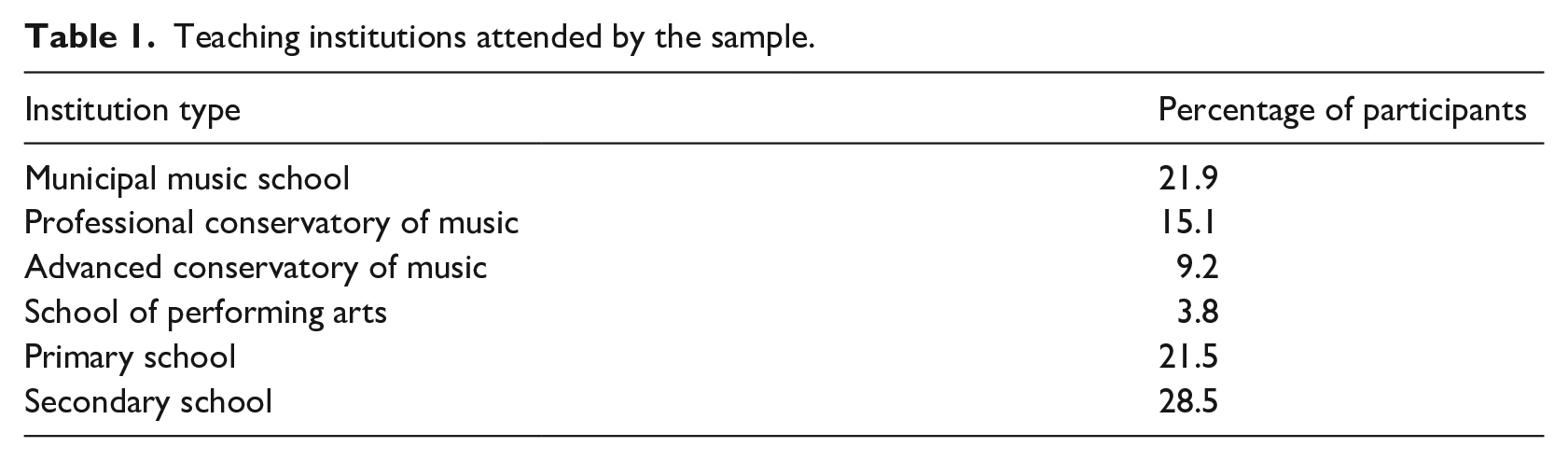
Table 1 shows the distribution based on type of center.
Instrument
A semi-structured interview was designed (see Appendix) to conduct this study. The preliminary ad hoc interview was adapted from and validated by VanWeelden and Whipple (2014) and complemented with additional questions on the influence of culture on music teaching (Yu, 2017). The instrument was validated by an expert panel, where 8 researchers on intercultural and inclusive education participated alongside 11 music teachers. Content validity indices were estimated for responses to each item included in the interview (I-CVI). Experts rated the relevance of each item to the analysis of music teachers’ perceptions of intercultural competence along a four-point Likert scale (1 = not at all, 2 = somewhat, 3 = quite a lot, and 4 = a lot). Questions producing an I-CVI < 0.78 were eliminated, as recommended by the literature (Polit et al., 2007). Following this, a content validity index was obtained for the interview (S-CVI) by calculating the average I-CVI (Berry et al., 2012). An S-CVI of 0.88 was obtained, and was considered excellent (Polit et al., 2007). Following the interviews and after modifying the existing questions and incorporating new ones, the S-CVI was analyzed again. A value of S-CVI=0.92 was obtained, indicating even better validity.
Data collection
After receiving permission from the relevant educational authorities, interviews were conducted in the 2020/2021 academic year. The researcher carried the weight of the conversation (Mobley et al., 2019), incorporating and modifying questions as the dialogue proceeded. Interviews were conducted virtually using Google Meet and lasted 20 minutes on average. For data collection, ethical requisites laid out in the Declaration of Helsinki in 1975 and later updated in Brazil in 2013 were followed. Recommendations of the Ethics Committee of the University of Granada (Reference number: 742/CEIH/2018) were also followed. Interviews were conducted in Spanish, although responses were translated into English. Two English speaking academics verified all the responses.
Data analysis
Interviews were evaluated in line with previously described stages of thematic analysis (Braun & Clarke, 2016) and were analyzed using NVivo (11). In the first stage, responses recorded via Google Meet were transcribed. In the second stage, codes arising from the analysis of the recorded responses were developed (Table 2).
Codes.
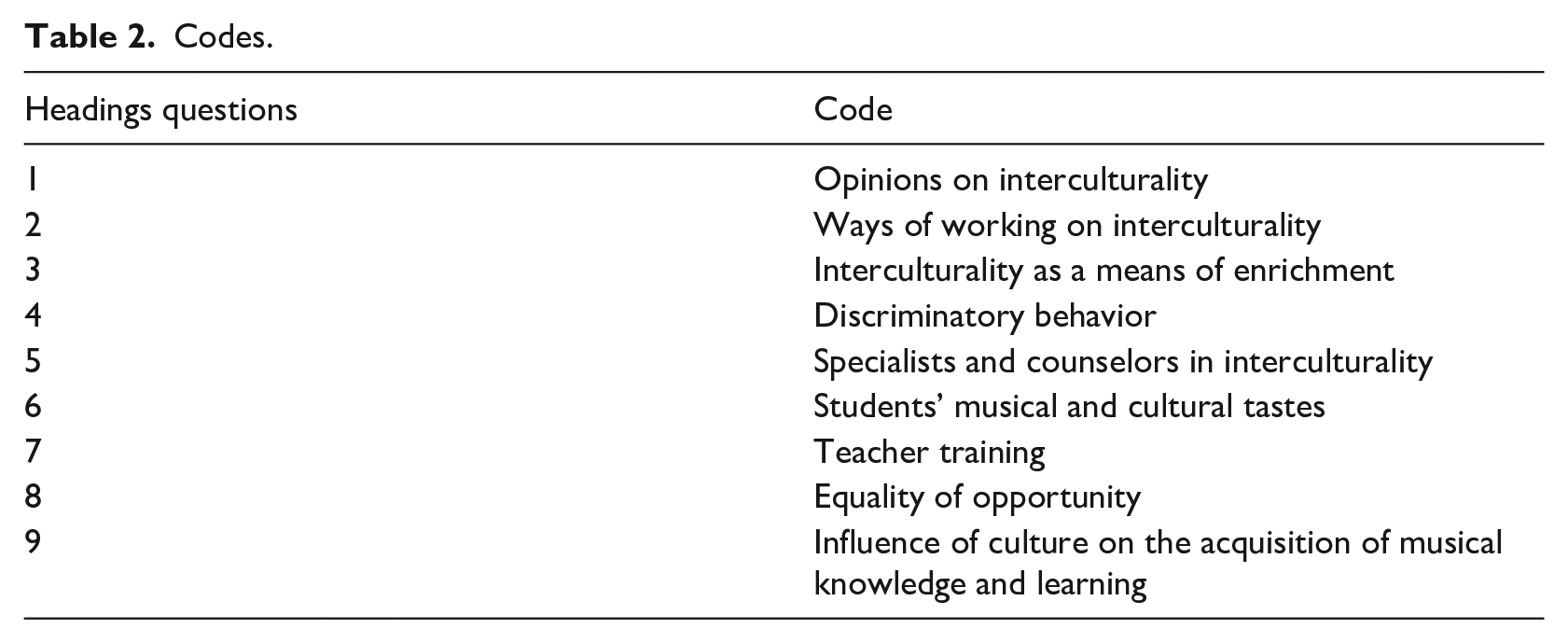
In the third stage, responses with similar content were grouped together within relevant codes. In the fourth stage, sub-codes were identified. In the fifth stage, dimensions were redefined as a function of the codes and sub-codes identified. In order to evaluate the reliability of the codes and sub-codes, concordance analysis was conducted. Classifications by two English speaking researchers were compared. Concordance analysis outcomes varied between K ⩾ 76 and K ⩾ 85. Any codes and sub-codes with poor agreement were reviewed and adapted in order to be included in further analysis. An external researcher evaluated 40% of all the interviews. Codes attributed by the study and external researchers were compared. An agreement rating of K ⩾ 85 was obtained, indicating strong reliability of the classification employed.
Results
Opinions on interculturality
Music teachers were knowledgeable about the intercultural construct, and considered it positive when used in the classroom: “I see it as positive, because the kids become familiar with students from all types of cultures and this always enriches and causes them to mature and see their classmates as equals” (Male teacher at a professional conservatory of music in Melilla, 10 years of experience). However, a minority group held negative opinions: “So much interculturality isn’t beneficial” (Female teacher at a primary school in Huelva, 17 years of teaching experience). “From my own experience, I have seen that this interculturality is not even (. . .) necessary in musical teaching” (Female teacher at an advanced conservatory of music in Jaen, 2 years of experience).
Ways of working on interculturality
A large number of teachers responded positively to the question: “Do you think that music is beneficial for being able to work on interculturality?” One said: “I think that, through music, we can come to experience many different ways of thinking or seeing the lives of others that, through music, reflects their way of being” (Female teacher at a professional conservatory of music in Granada, 3 years of experience). Most teachers agreed that the way in which this topic is taught is highly important. Two main working options were identified:
- In groups. “The group aspect seems much richer to me. I think that is what is most going to be worked on, where most sharing will take place and where most gains can made” (Male teacher at a professional conservatory of music in Málaga, 3 years of experience).
- Combination of individual and group tasks. “Well, in all different ways, as much individually as in group classes” (Male teacher at a secondary school in Almería, 18 years of experience).
Interculturality as enrichment
Most teachers believed that interculturality can promote respect, knowledge of cultures, and the acquisition of musical knowledge. As one noted: “It is beneficial to have students from different religions and ethnicities in the classroom because it enriches musical education” (Female teacher at a primary school, 2 years of experience). Other teachers did not think that interculturality could enrich students because these aspects were not taught in music classrooms. This was often because teachers did not consider it a necessary area of focus given the type of students they taught. As one noted: “At my school, there isn’t much diversity. Thus, it is not necessary to work on interculturality. I don’t think focusing on the topic is necessary or enriching” (Female teacher at a secondary school in Huelva, 10 years of experience). Curricular challenges prevented intercultural content from being provided. As a teacher noted: “At the moment, the curriculum leaves little room to practice what is already there in writing, and what is normally in writing is highly generalized and restrictive” (Male teacher at a professional conservatory of music in Málaga, 3 years of experience). Teachers lacked training to evaluate whether or not interculturality was enriching. One mentioned: “I think I lack training to respond effectively” (Male teacher at a performing arts school in Málaga, 5 years of experience).
Discriminatory behavior
Most teachers stated that they had never witnessed discriminatory behavior at their institutions. As one noted: “Students at this school know the basic norms of sharing space with others from the outset” (Male teacher at a municipal music school in Melilla, 18 years of experience). Very few had witnessed racist or xenophobic behavior. One explained: “Some students discriminate against their classmates from other cultures as they believe that belonging to particular minorities makes them clumsier musicians” (Male teacher at an advanced conservatory of music in Sevilla, 14 years of experience).
Specialists or counselors in interculturality
Most of those interviewed stated that their institutions did not employ specialists with knowledge of interculturality. Here, a distinction emerged between institutions that were dedicated solely to teaching music and primary and secondary schools. In the former, the absence of such specialists was more significant: “In all my years at the school, I have not seen a single counselor who can help students on these topics” (Male teacher at an advanced conservatory of music in Málaga, 12 years of experience).
Students’ musical and cultural tastes
The teachers stated that they considered the musical preferences of their students while always remaining within the framework of the curriculum. One noted: “As far as the teaching unit allows me to, I use content derived from the musical preferences of my students” (Male secondary school teacher, 9 years of experience). Teachers considered it highly positive and beneficial to include musical works that motivated their students. One teacher explained: “It seems quite useful and appropriate to use whatever type of music they listen to or enjoy and adapt it to their instrumental or other musical aspects. I think it improves performance and motivation” (Male teacher at a municipal music school in Ceuta, 5 years of experience). Other teachers did not consider this because they adapted their lessons exclusively to suit their teaching plans and/or because they did not consider it entirely necessary. As a few teachers noted: “I can’t consider it because PGA targets other things” (Female primary school teacher in Ceuta, 17 years of experience); “At present, I do not consider students’ musical tastes while planning my classes. I limit myself to the established methods (. . .)” (Male teacher at a municipal music school in Granada, 8 years of experience).
Teacher training
When asked if they were trained in interculturality, some said that they had received meaningful training on the topic owing to the geographical location of the city in which they worked, or because of the courses offered at their educational institutions: “I think that the teachers at our school, as a result of being in this city, have many years of experience working with students from different ethnicities” (Female teacher at a secondary school in Jaen, 13 years of experience). Most teachers said that they had not been trained in interculturality as such training programs either did not exist or were not deemed necessary in the institutions in which they underwent training. As a few noted: “I have not been trained on interculturality at any point throughout my teaching career” (Male teacher at an advanced conservatory of music in Granada, 3 years of experience); “I have always preferred to undertake training courses linked to the arts given that I didn’t consider it necessary to learn about interculturality” (Male teacher at a performing arts school in Seville, 2 years of experience).
Equality of opportunity
Most teachers responded in the affirmative when asked whether they believed that all students had the same opportunities to complete their musical studies regardless of their race, ethnicity, or religion. One said: “I think all students have the same opportunities to study Music” (Male teacher at a municipal music school in Huelva, 10 years of experience). Some said that all students did not have the same opportunities. They pointed to cultural and economic reasons as divisive factors. For example, one noted: “Learning some types of instruments carries a cost that is difficult to meet for certain cultures that have been associated with a low economic status” (Female teacher at a performing arts school in Málaga, 13 years of experience).
The influence of culture on the acquisition of musical knowledge and learning
Most teachers considered that belonging to a particular race, ethnicity, or religion impacted the acquisition of musical knowledge. As one noted: “I think there are certain ethnicities, races, or religions that use music more than others when they relate to each other. This facilitates student learning” (Female teacher at a primary school in Granada, 8 years of experience). Other teachers felt that culture had no influence on anything and that the acquisition of knowledge depended on the individual in question, the evolution of learning, their families, and the musical environment created by their peers or present in their most familiar setting. “I think it depends on the person. There are people who need a little more time to learn and others people who need a little less” (Male teacher at a performing arts school in Córdoba, 3 years of experience).
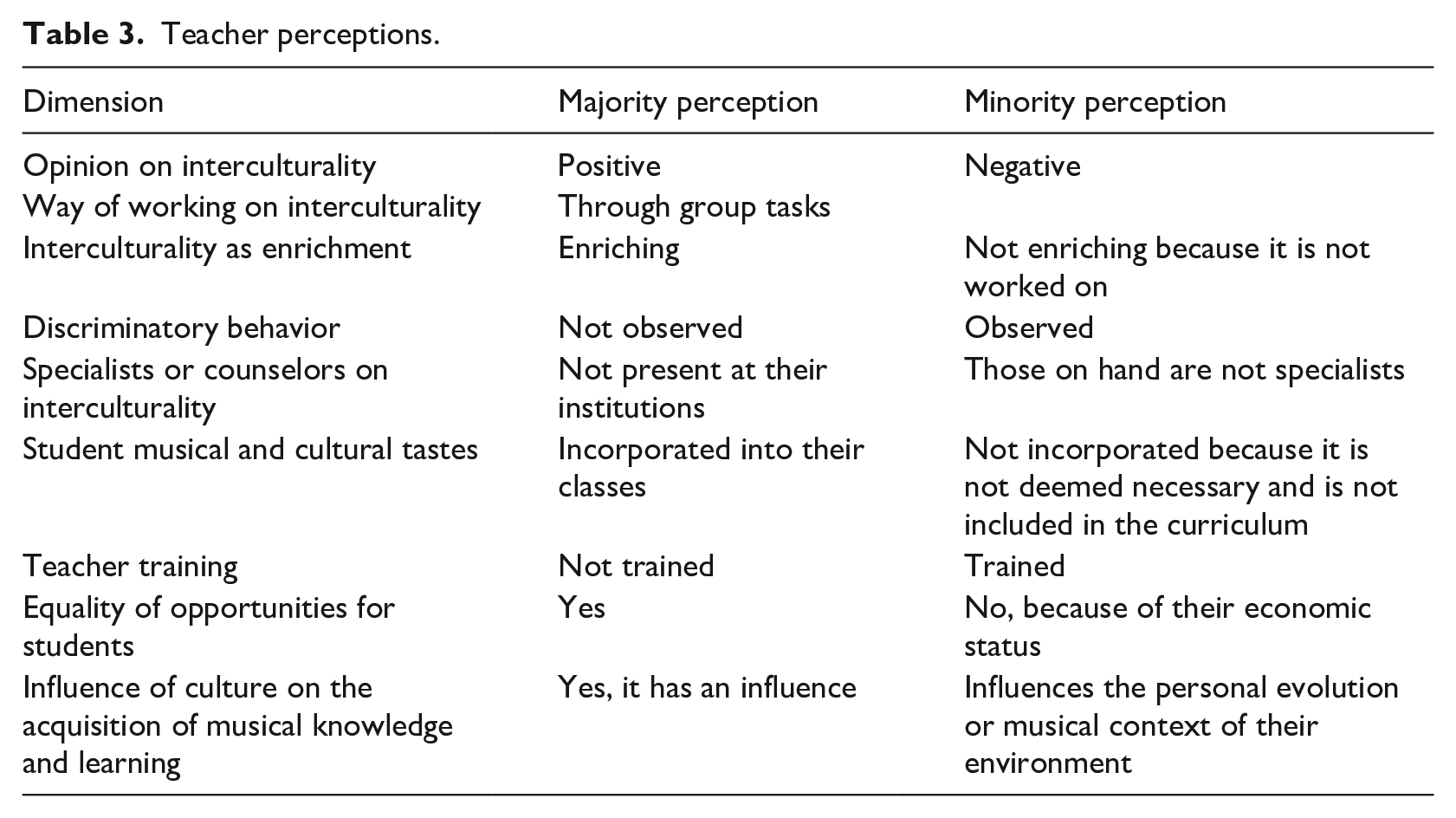
As a summary, Table 3 presents the teachers’ perceptions.
Teacher perceptions.
Discussion
The literature review highlighted the importance of this research that aims to know what are the perceptions of music teachers about intercultural competence. In this sense, mostly positive perceptions were obtained, which confirms the findings of previous studies (Crawford, 2020; Mellizo, 2019; Ogay & Edelmann, 2016). This indicates that, like other types of teachers, music teachers conceive intercultural competence as beneficial and necessary in diverse contexts (Bernabé, 2015; Pérez-Aldeguer, 2013). In fact, most of the teachers used music to instill intercultural competence in their students, as is the case in other research (Akdere et al., 2021; Solhaug & Kristensen, 2019). They suggested that the use of content inherent in the folklore of the classroom helped them address racist stigmas and instill intercultural values that form the basis of inclusion (Casas et al., 2015; Watkins & Noble, 2019). The implementation of these educational strategies reflects teaching behaviors in favor of intercultural education that are sometimes not contemplated in classroom programming, especially in Conservatories and Music Schools. Which indicates the practical need to educate taking into account contextual conditions (Carabetta & González, 2017).
Only a few teachers, who taught culturally homogeneous groups, thought that it was not unnecessary to work on this construct. This erroneous perception of interculturality coincides with that of other music teachers in previous studies (Alegre & Villar, 2015; Arnaiz-Sánchez et al., 2021), where it is not considered, teaching this topic could help prevent future discrimination and promote socially committed citizens (Roiha & Sommier, 2021). At the same time, teachers considered group work to be the best way to address the intercultural inclusive education, whether as a single approach or by combining it with individual tasks. As in other studies (Kenner et al., 2020; Lipiäinen et al., 2020), music teachers’ preference for this type of work is centered on the fact that in order to be accomplished, students must share and communicate and tolerate their peers to accomplish a task (Hitlin et al., 2021). This uses fundamental values for intercultural education, such as empathy, solidarity, and equality (Agostinetto & Bugno, 2020; Odendaal et al., 2018; Tomé-Fernández et al., 2019). In addition, students’ group work can provide opportunities for teachers to reflect on their own intercultural competence, since it involves situations where it will be necessary for the teacher to empathize and participate with students from different cultural backgrounds (Mora Acosta et al., 2018).
Teachers in this study, similarly as in earlier studies (Arnaiz-Sánchez et al., 2021; Schroeder et al., 2019) believe that interculturality promote respect, cultural and musical knowledge, and tolerance in students (Jorgensen, 2020). Despite this, some teachers do not apply interculturality because they do not consider it necessary, it is not allowed in the curriculum or because of a lack of training. This last aspect explains the majority of cases in which intercultural resources are not used in the classroom despite being considered beneficial. In these situations, experts recommend that teachers establish a learning relationship with the intercultural community around them to improve the intercultural understanding of their classroom (Kiel et al., 2017; Roiha & Sommier, 2021). In this way, the shortcomings of the Spanish education system (LOMCE, 2013), which also shows the lack of autonomy of teachers to address this issue in the classroom, can be balanced. Teacher training in intercultural competence should also be promoted by faculties of education (Roiha & Sommier, 2021), as well as prioritized throughout the career (McKenzie, 2021). In addition, the lack of specialists in the field such as educational counsellors does not help this training to improve, as these professionals are usually the ones in charge of carrying it out in schools (Ieva & Beasley, 2022).
Most teachers stated that they had not observed any discriminatory behaviors at their institutions. This may be due to the normalization of intercultural coexistence in students by teachers who are exposed to diverse contexts for long periods (Demelius, 2021) or to their own lack of training that prevented them from picking up subtle racist and xenophobic behaviors (Moore, 2021). This will make it difficult to prevent violent behavior of a more serious nature that may occur in the future (Tintori et al., 2021; Peker & Yalçın, 2022). Finally, some music teachers perceive that, despite having equal learning opportunities, students’ ethnicity, race, and religion influence their musical learning. This reflects the misconception of these teachers who generally attribute low cultural or economic levels to certain cultures, which has been shown to influence this learning (D. García et al., 2020). Very few teachers considered that music learning has a significant impact on students’ personal development or on the musical context of their environment. This finding is similar to previous studies (Losorelli et al., 2020).
Limitations of this study
Despite the findings obtained, the knowledge gained from teachers should be used with caution as this study has some limitations. First, the participants, although sufficient for the qualitative study conducted, were specific to one geographic area. Future research should cover all provinces of Spain and allow generalization of the findings to the broader Spanish intercultural context. Secondly, in order to better understand the topic, future research should deepen the qualitative analyses carried out on musical influence in intercultural educational contexts. Furthermore, it is desirable to triangulate the current results with those obtained through other research methods and techniques, thus giving greater rigour to the research and gathering as much information as possible on the subject.
Conclusions
The findings of the study answer two fundamental questions. First, they clarify music teachers’ perceptions of intercultural competence. The teachers recognized the importance of promoting interculturality in music classrooms and considered music and group work beneficial in the process. This shows their empathy for the social problems immersed in the intercultural context, as well as their knowledge for the educational prevention of these problems, which is so important in inclusive education (Sales et al., 2023). In this educational prevention, teachers consider it essential to take into account the musical and cultural tastes of students. This will increase their motivation to learn music (N. García & Álvarez, 2007) and turn the classroom into a context for sharing knowledge and cultural traditions that promote intercultural tolerance (Martín et al., 2020). However, music teachers feel that they still lack more training in intercultural competence, as well as the support of counselors to improve it. These shortcomings directly influence the diagnosis of educational needs related to intercultural inclusion problems (Pérez-Aldeguer, 2013). This explains the difficulty for music teachers to observe discriminatory, racist, and/or xenophobic behavior in their institution.
Secondly, the conclusions clarify how the extracted knowledge should be used. Thus, the results obtained on the lack of training, requirements for teaching the curriculum and the shortage of specialized counselors on the subject, highlight the need to focus on intercultural education in the ongoing training of teachers and to prioritize intercultural education in educational policy. All of the above are aspects recommended by the earlier studies on the subject (Zhu, Alberts, Bork & Wong, 2023; Agostinetto & Burgo, 2020) and which also apply to music teachers. The study offers a starting point for further research and possibilities for advancing intercultural competence in music education.
