







Abstract
Sight-reading poses persistent challenges for professional musicians, particularly those lacking adept sight-reading skills. Recognizing the practical implications of sight-reading as a facilitator of musical learning, scholarly endeavors have sought to identify the components that influence sight-reading proficiency. The focus on diverse tonal environments has surfaced as a key avenue for unveiling the complexities of tonality-related sight-reading skills. Against this backdrop, the present study delved into the intricate relationship between sight-reading components and tonal characteristics in music, employing performers’ self-assessments of their proficiencies in these domains. The findings revealed that sight-readers exhibit comparable self-assessments of their proficiency in sight-reading, but a significant disparity emerged between tonal and atonal sight-reading. Common predictors—rhythm reading, playing by ear, and performance techniques—emerged as influential factors explaining proficiency in both tonal and atonal sight-reading proficiency. In contrast, the predictors that include knowledge of tonal center, tonal function, and basic music theory were indicative for tonal sight-reading, while music interpretation and complexity of tonality were connected to atonal sight-reading proficiency. The findings highlight the useful integration of sight-reading components within diverse tonal environments, which offers flexibility, practicality, and adaptability in sight-readers’ practice.
Keywords
Sight-reading, a complex skill in music performance, is widely recognized as essential for musicians aspiring to develop their professional musical abilities. It holds particular significance in various contexts such as auditions and music-reading scenarios (Lehmann & McArthur, 2002; Pike & Shoemaker, 2013; Price et al., 1998; Smith, 2009; Stenberg & Cross, 2019; Zhukov, 2014a). Nevertheless, the proficiency of sight-reading among professional musicians varies widely (Wolf, 1976).
Scholarly attention has increasingly focused on the various components of sight-reading (McPherson, 1994; Mishra, 2014b). Researchers have found that pitch and rhythm reading are fundamental in distinguishing different levels of sight-reading proficiency (Price et al., 1998; Wolfs et al., 2020; Zhukov, 2017). Proficient sight-reading involves aural acuity for discerning rhythmic features, as well as the ability to accurately identify tonal centers and pitch functions (Alexander & Henry, 2012; Hayward & Eastlund Gromko, 2009). Furthermore, proficient sight-readers exhibit the ability to process musical information at a macroscopic level, recognizing intricate musical patterns—an attribute closely linked to their validated sight-reading proficiency (Fournier et al., 2019; Goolsby 1994a, 1994b; Kopiez & Lee, 2008; Lewandowska & Schmuckler, 2020; Pike & Carter, 2010; Waters et al., 1998).
While sight-reading has long been a crucial aspect of research into music performance, there remains a lack of studies exploring the nuanced understanding of sight-reading components in relation to various tonal characteristics. Additionally, as performers gain experience and develop their musicality and ability to process musical information over time, their approaches to sight-reading may evolve as they mature in their musicianship and acquire practical knowledge that enhances their sight-reading skills (Sloboda, 1984). Therefore, it is important to consider performers’ self-assessed proficiency in sight-reading components as a means of understanding sight-reading abilities. Specifically, the interconnectedness between performers’ self-assessed proficiency in sight-reading components, their sight-reading performance in tonal and atonal structures in music, and their experience can provide valuable resources into the investigation of sight-reading proficiency. As such, this study aimed to investigate the associations between sight-reading proficiency, as determined by performers’ self-assessments, and sight-reading components aligned with tonal and atonal environments in music.
Literature review
Sight-reading, often defined as performing music at first sight (Lehmann & Kopiez, 2016), involves a contextualized approach, especially in professional audition settings. However, the distinct nature of sight-reading, which requires immediate performance without extensive preparation, presents challenges for many experienced performers, particularly those who lack sight-reading skills.
The exploration of sight-reading components has delved into the multifaceted dimensions of sight-reading performance. With regard to the cognitive processes associated with such performance, studies have outlined that efficient sight-reading skills involve pattern recognition in music (McPherson, 1994), looking-ahead techniques during performance (Meinz & Hambrick, 2010), and the interplay of sight-reading ability with technical proficiency (Kim et al., 2021; Lehmann & McArthur, 2002). Performers’ music backgrounds—the primary instruments of sight-readers—add nuance to the effectiveness of musical elements, including rhythmic audiation, within specific performer groups such as wind players (Elliott, 1982; Gromko, 2004).
Research on components related to sight-reading achievement also suggests that performers’ position knowledge of instrument, such as precise upper or lower positioning on strings (Wolfs et al., 2020), and their experience with accompaniment training (Lehmann & Ericsson, 1993, 1996), are associated with improved sight-reading accuracy. McPherson et al. (1997) addressed the potential impact of the ability to play by ear, both on proficient sight-reading and on rehearsed music performance. Efforts to enhance sight-reading skills have evolved into curricular designs that integrate theoretical knowledge and practice tailored for sight-reading in a hybrid approach that utilizes rhythm training, varying musical styles, and accompanying (Zhukov et al., 2016).
A crucial discourse on sight-reading has focused on the links between its performance and the characteristics of diverse tonal environments. Scholars have articulated that tonality, as distinguished from atonality, encompasses the use of triads and seventh chords, predictable chord progressions, melodic gestures, and tonal organization (Song & Ahn, 2019). Sight-readers’ extensive knowledge of tonality—considering hierarchical features or chromatic configurations—aids in establishing sight-reading strategies based on tonality. Researchers have found that performers’ focus on music characteristics (e.g. music style, rhythmic figures, metrical organization, and tonality) during preparation assists them in intuitively shaping music during a performance (Bogunović & Vujović, 2012).
Lewandowska and Schmuckler (2020) underscored the profound impact of tonality, in conjunction with texture, on the perceptual-motor control exhibited by pianists during sight-reading. The study revealed a higher error rate and more substantial required study time for atonal music than for tonal music. Kim et al. (2021) expanded the exploration of tonality by introducing diverse tonal environments comprising tonal, non-tonal, and ambiguously tonal music. This approach, which reflects tonal plurality, including ambiguity in music notation, revealed that advanced sight-readers’ strategies aligned with performers’ analytical and intuitive approaches to rehearsed music performance. In addition, musical stimuli within tonal or atonal contexts were found to enhance the role of pattern expectancy, confirming the utility of tonal cues as a sight-reading technique (Fine et al., 2006).
While the effects of sight-reading components have been extensively validated through prior analyses (Mishra, 2014a), there remains a need to broaden our exploration to encompass the diverse tonal characteristics of music. This expansion is crucial for understanding the practical implications of sight-reading components across varied tonal environments. Grounded in the discourse of sight-reading proficiency, this study seeks to examine the relationship between the sight-reading components identified with prior research and varying tonal environments from the performers’ self-assessed sight-reading proficiency. Professional performers, often exposed to diverse musical circumstances and extensive sight-reading experience throughout their careers, typically possess heightened self-awareness of their sight-reading skills. This exposure tends to enhance their ability to self-assess their proficiency in sight-reading (Zhukov, 2014b). The characteristics of tonal or atonal music provide crucial contexts for sight-reading tasks, adding depth to the exploration of the relationship between sight-reading components and proficiency as evaluated by performers. Therefore, this study aims to investigate this relationship within various tonal environments, covering both tonal and atonal music, using performers’ self-assessments on sight-reading components and their sight-reading.
This study asks the following questions:
RQ1: To what degree do performers assess their proficiency in sight-reading components and their sight-reading performance in both tonal and atonal environments?
RQ2: To what extent is there a disparity in performers’ self-assessed sight-reading proficiency between tonal and atonal environments?
RQ3: Is performers’ self-assessed proficiency in sight-reading components associated with their self-assessed sight-reading proficiency in both tonal and atonal environments?
RQ4: To what extent does performers’ self-assessed proficiency in sight-reading components predict their overall self-assessed sight-reading proficiency in tonal and atonal environments?
Method
Participants
All participants were enrolled in either undergraduate or graduate programs at music institutions in the Republic of Korea. A total of 354 respondents completed the online survey, providing demographic information including age, primary instrument, and musical experience.
Of the participants, 282 were female and 72 were male; ages ranged from 19 to 46 years (M = 23.1, SD = 3.5). The gender distribution was not a deliberate aspect of the study design. The participants majored in keyboard (n = 176), composition (n = 92), string instruments (n = 41), vocal music (n = 25), wind instruments (n = 18), and conducting (n = 1, choral conducting = 1). As an incentive, the respondents received a mobile gift coupon valued at $5. This study received approval from the institutional review board.
Procedure
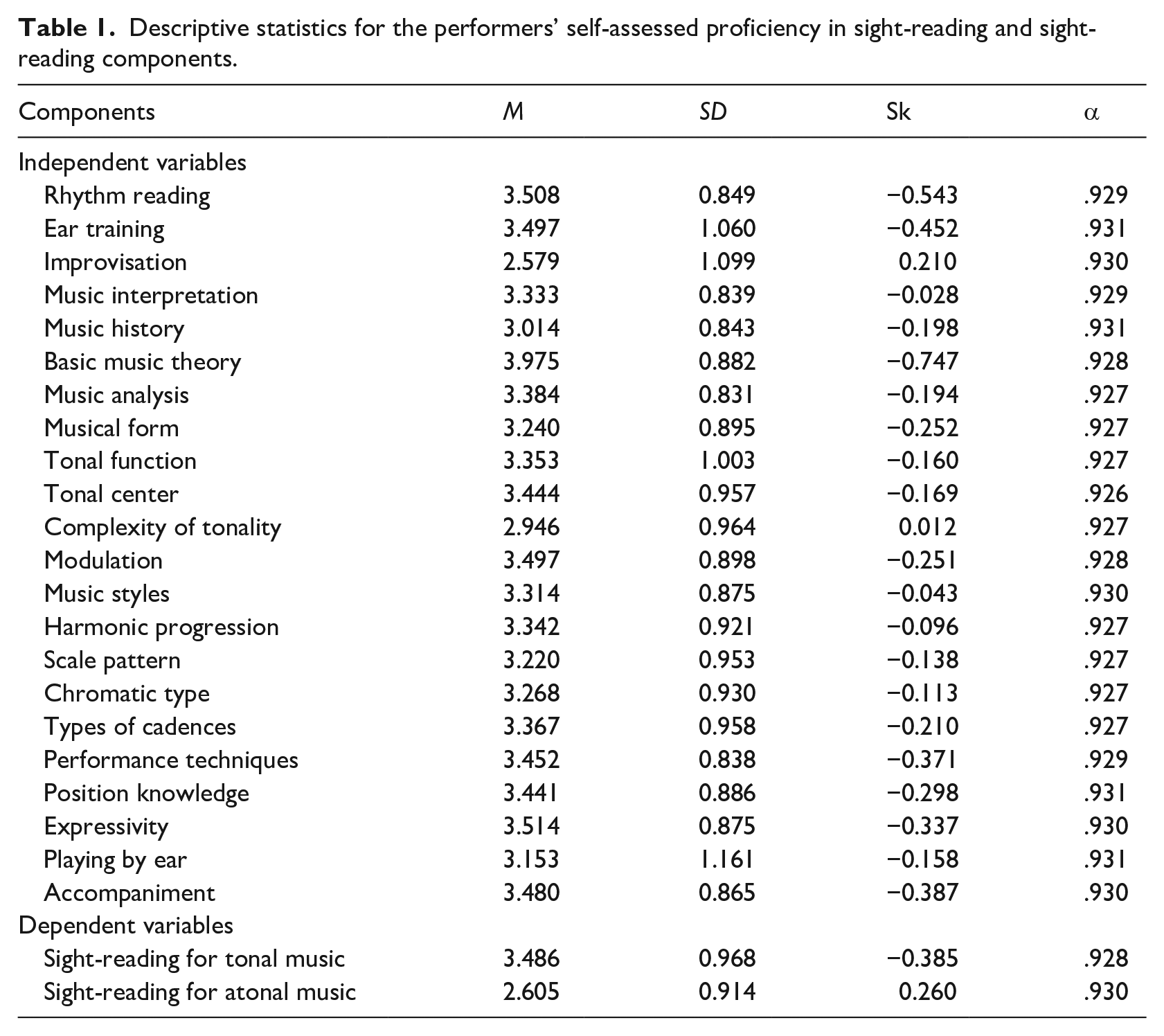
Based on previous studies on sight-reading components, an online survey was developed to assess such sight-reading components. Mishra’s (2014a) meta-analysis from 1925 to 2010 identified influential sight-reading components, including improvisation, ear training, technical ability, and music knowledge. Rhythm reading was also added to the sight-reading components (Mishra, 2016). Additional components such as positional knowledge, expressivity, playing by ear, and accompaniment were incorporated based on research by Arthur et al. (2020), Kim et al. (2021), Lehmann and Ericsson (1993, 1996), Wolfs et al. (2020), and Woody (2012).The music knowledge category was detailed to include music interpretation, history, basic theory, analysis, form, tonal function, center, tonality complexity, modulation, styles, harmonic progression, scale patterns, chromatic types, and cadence types within tonal and atonal domains. The selected components remained measurable for survey questions assessing performers’ self-assessed proficiency. Table 1 summarizes the 22 components.
Descriptive statistics for the performers’ self-assessed proficiency in sight-reading and sight-reading components.
The online survey was disseminated to music departments in the central region of Seoul, Republic of Korea and the participants were asked to rate their proficiency on a 5-point scale on the sight-reading components. Statistical analyses, including Pearson’s correlation coefficients, paired-samples t-tests, and stepwise multiple regression analysis, were conducted to investigate performers’ self-assessments alongside their sight-reading proficiency, considering tonal and atonal music environments.
Results
Table 1 presents the mean, standard deviation, skewness, and reliability coefficients of the sight-reading components. The skewness coefficients for all variables were in the range of −1 to +1, which were indicative of relatively normal distributions. The components exhibited high reliability, with Cronbach’s alpha values ranging between .926 and .931.
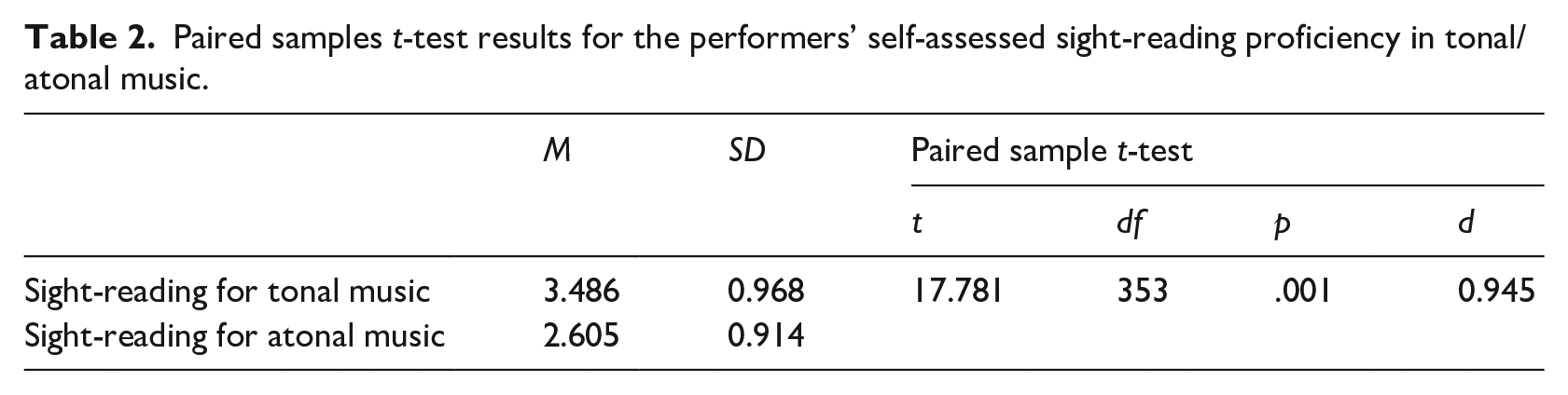
When examining performers’ overall self-assessed sight-reading proficiency, a significant disparity emerged between tonal music (M = 3.486, SD = 0.968) and atonal music (M = 2.605, SD = 0.914; t(353) = 17.781, p < .001), illustrating a substantial effect size of tonal characteristics with Cohen’s d = 0.945, as outlined in Table 2.
Paired samples t-test results for the performers’ self-assessed sight-reading proficiency in tonal/atonal music.
Pearson’s correlation analyses were conducted to examine the relationships between performers’ self-assessed sight-reading components and proficiency, revealing varied associations across tonal and atonal sight-reading. The strongest correlations were observed in rhythm reading (M = 3.508, SD = 0.849) for both tonal music (r = .509, p < .001) and atonal music (r = .384, p < .001). Music history exhibited the weakest correlation with tonal sight-reading (r = .224, p < .001) and atonal sight-reading (r = .184, p < .001; see Tables 3 and 4). The strength of correlations of all components demonstrated varied relationships with tonal and atonal music, ranging from weak to moderate levels.
Correlations between the performers’ self-assessed sight-reading components and corresponding sight-reading proficiency in tonal music.
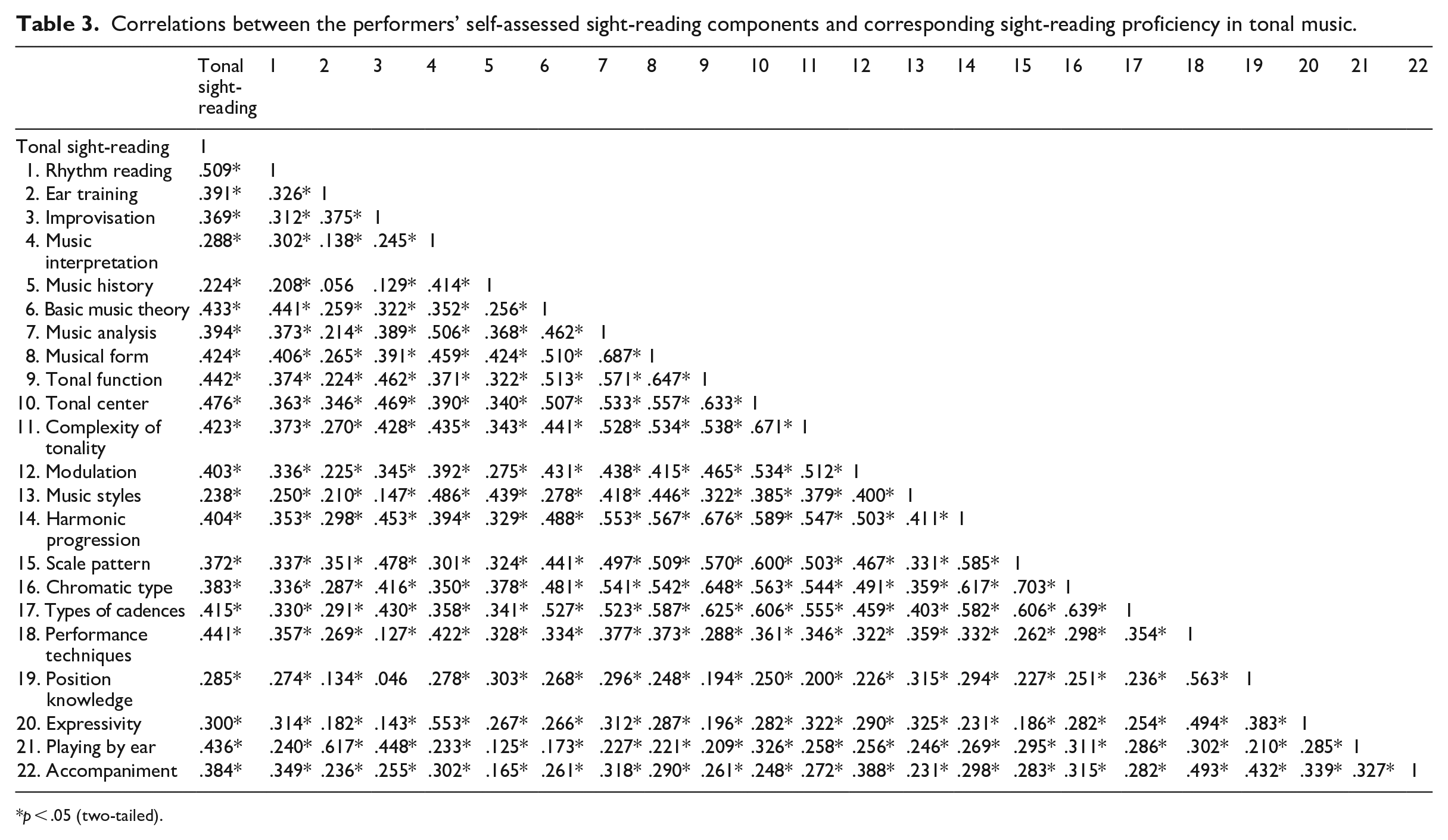
p < .05 (two-tailed).
Correlations between the performers’ self-assessed sight-reading components and corresponding sight-reading proficiency in atonal music.
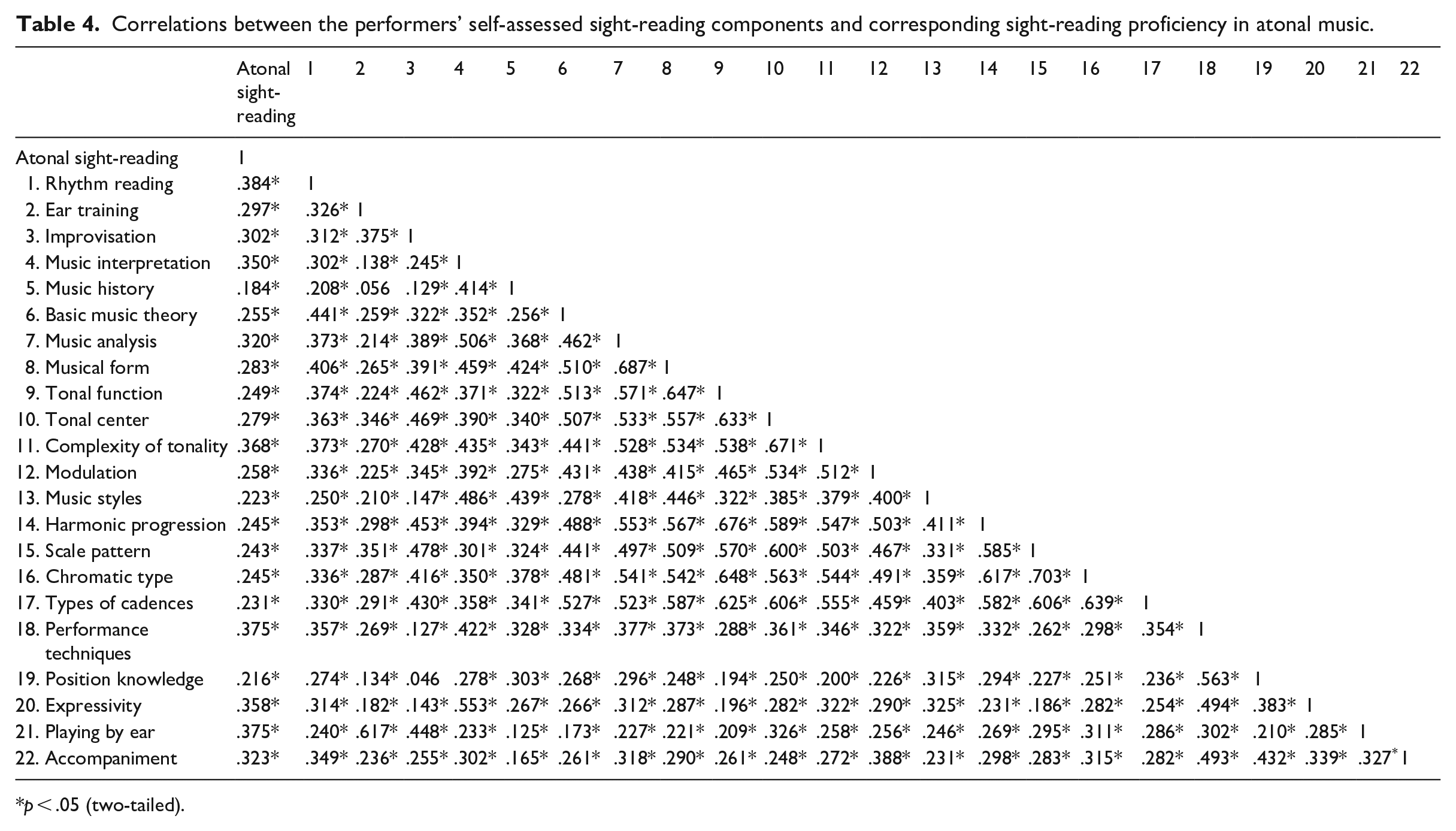
p < .05 (two-tailed).
To identify sight-reading components that were significant predictors of self-assessed tonal sight-reading performance, stepwise regression analyses were conducted. In terms of self-assessed sight-reading for tonal music, a stepwise regression model was derived with rhythm reading (β = .260, p < .01), playing by ear (β = .243, p < .01), tonal center (β = .115, p < .05), performance techniques (β = .165, p < .01), tonal function (β = .122, p < .05), and basic music theory (β = .1, p < .05): F(6, 347) = 25.502, p < .001, with an adjusted R² = .454 (see Table 5), which accounted for 45.4% of the variance in the self-assessed tonal sight-reading. This 45.4% of the overall variance explained in self-assessed tonal sight-reading performance can be ascribed to rhythm reading (25.7%), playing by ear (10.4%), tonal center (5.6%), performance techniques (2.6%), tonal function (1.2%), and basic music theory (0.6%).
Stepwise multiple regression analysis for predictors of the performers’ self-assessed sight-reading proficiency in tonal/atonal Music.
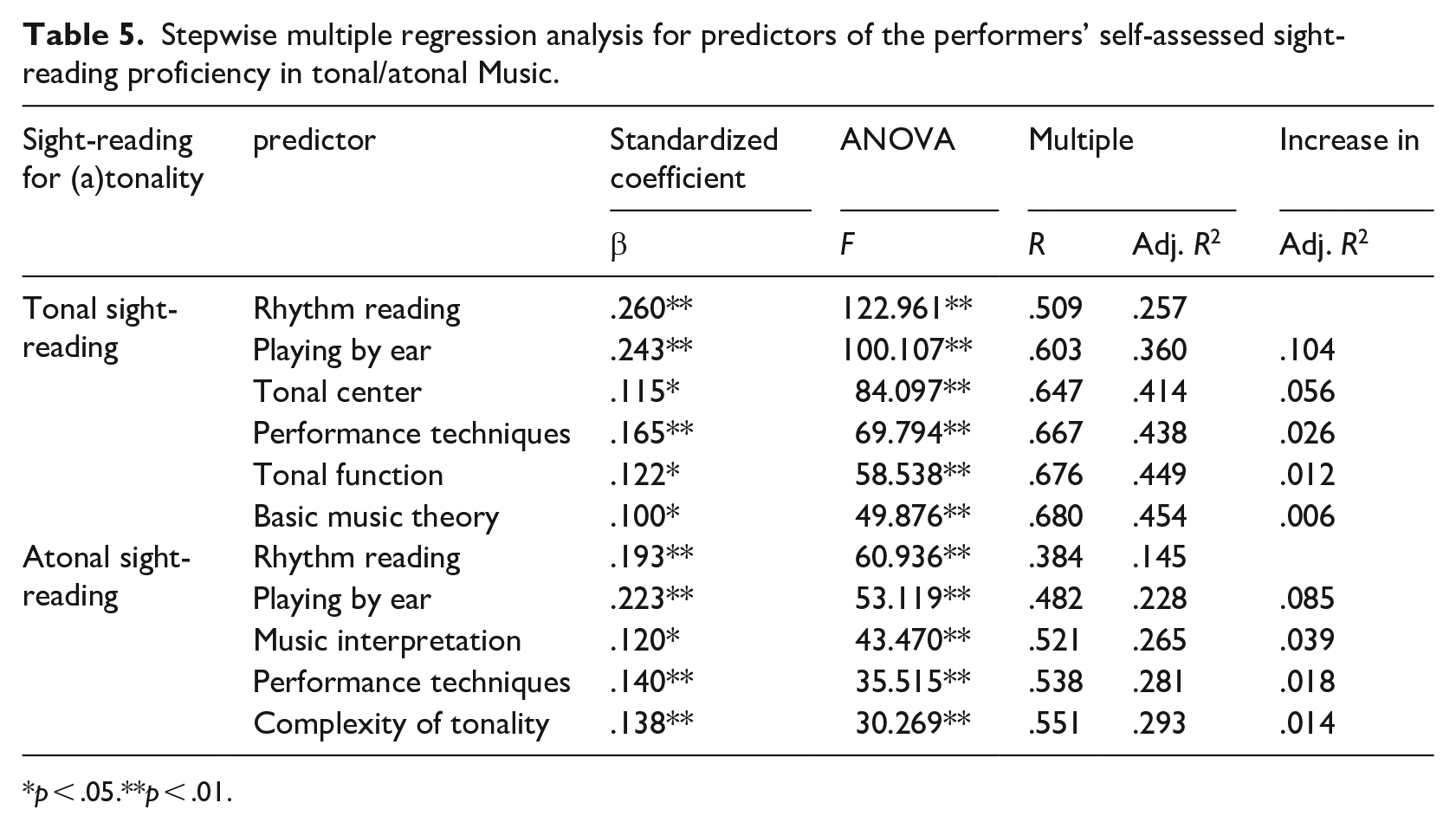
p < .05.**p < .01.
In terms of self-assessed atonal sight-reading performance, a stepwise regression model was derived: F(5, 348) = 17.86, p < .001, with an adjusted R² = .293 (see Table 5). Significant predictors were rhythm reading (β = .193, p < .01), playing by ear (β = .223, p < .01), and performance techniques (β = .14, p < .01); other predictors included music interpretation (β = .12, p < .05) and complexity of tonality (β = .138, p < .01), collectively accounting for 29.3% of the variance in the self-assessed sight-reading for atonal music. This 29.3% of the overall variance explained in self-assessed atonal sight-reading performance can be owed to rhythm reading (14.5%), playing by ear (8.5%), music interpretation (3.9%), performance techniques (1.8%), and complexity of tonality (1.4%).
Discussion
Sight-reading, recognized both as a form of music perception (Sloboda, 1984) and as a manifestation of technical prowess in music performance (McPherson, 1995/6), has garnered scholarly interest, particularly regarding exploration of components that influence overall sight-reading proficiency (Kopiez & Lee, 2008; Mishra, 2014a, 2014b, 2016; Pike & Shoemaker, 2013; Waters et al., 1997). However, there remains a paucity of studies on the nuanced relationship between sight-reading proficiency and distinct tonalities, as well as on the validation of components within the domain of sight-reading. This study revisited previously validated sight-reading components to examine the understanding of the components associated with performers’ self-assessed sight-reading proficiency in both tonal and atonal sight-reading practices. In doing so, professional performers’ self-assessments provided insights into the effectiveness of these components in sight-reading, particularly in relation to different tonalities.
Expanding on established findings in sight-reading research, the choice of sight-reading components was guided by their measurability by individuals, as demonstrated by performers’ self-assessments in this study. The effect sizes of the sight-reading-related variables, grouped by construct to indicate an observable component, supported the use of improvisation, ear training, technical ability (i.e. performance techniques in this study), and music knowledge (Mishra, 2014a). Additionally, this study advanced the transformation of some variables into specific components that are of use for tonal and atonal sight-reading. The group of specific components related to different forms of tonalities has implications for those practicalities in sight-reading. Performers self-assessed a high level of proficiency on the majority of the sight-reading components, but a few reported relatively poor proficiency levels, such as in improvisation and complexity of tonality. Regarding the prior research findings, the level of technicality which supports improvisation has been linked to proficient sight-reading (Thompson & Lehmann, 2004). Further understanding tonal complexity, exemplified by advanced sight-readers’ emphasis on recognition when reading intricate characteristics of tonal and atonal compositions, has strengthened its role in building cognitive strategies for proficient sight-reading (Kim et al., 2021). Therefore, this endeavor highlights the merit of using sight-reading components achieved from research for sight-reading practice and instructions, as such an approach enhances interplay with sight-readers’ practical knowledge and skills.
Research examining diverse musical styles has shed light on the inherent challenges associated with sight-reading atonal music. This difficulty, possibly stemming from its inherent structural complexity, often results in higher error rates and less accurate interpretations compared to tonal sight-reading (Lewandowska & Schmuckler, 2020). Consequently, it’s not surprising that self-assessed tonal sight-reading tends to receive higher ratings than atonal sight-reading. This disparity underscores the importance of incorporating a variety of stylistic elements into sight-reading practice. By doing so, performers can better understand and navigate the differences between tonal and atonal sight-reading. It would be valuable for sight-reading research to encompass a broader range of characteristics in tonalities and incorporate more comprehensive metrics for assessing performers’ abilities on sight-reading components.
The associations between sight-reading and its components were predominantly stronger in tonal sight-reading compared to atonal sight-reading. With the components selected based on thorough analyses (Mishra, 2014a, 2014b), it is evident that all components hold potential for contributing to sight-reading proficiency. Despite this, the effect sizes of sight-reading components, particularly in the context of atonal sight-reading, necessitate a reevaluation of these components. For instance, some components, such as music interpretation (r = .350) and expressivity (r = .358), exhibited higher correlation coefficients with atonal sight-reading than tonal sight-reading. Hence, performers’ understanding of musical interpretation and expressivity across various styles when sight-reading atonal music offers an intriguing direction for exploring some weighted components associated with either tonal or atonal sight-reading in future studies.
An attempt was made in this study to illustrate the ties between music knowledge utilized for sight-reading and diverse tonal environments. Applicable music knowledge to sight-reading facilitates the automated mental processes linked to encoding recognizable music features (Lehmann & McArthur, 2002). Previous investigation has argued that extensive music knowledge, including music theory and history, is transferrable to sight-reading and can enhance its accuracy (Zhukov et al., 2016). For example, advanced sight-readers have described their focus on the structural or expressive characteristics of music—made possible by utilizing music knowledge from distinct tonal environments—which highlights these sight-reading strategies for a higher level of proficiency (Kim et al., 2021). By supporting the inclusion of transferrable music knowledge, including stylistic features, in the practice of sight-reading (Zhukov, 2014b), this study substantiated the use of tonality-related knowledge resources in alignment with performers’ self-assessed proficiency. Therefore, future research should explore the enhancement of knowledge-driven components for sight-reading pedagogy.
Previous research has suggested that a broad understanding of music, encompassing music theory and history, can positively impact sight-reading accuracy (Zhukov et al., 2016). For instance, experienced sight-readers tend to selectively focus on the structural and expressive aspects of music, drawing upon their knowledge of various tonal environments, suggesting effective sight-reading strategies (Kim et al., 2021). By advocating for the incorporation of transferrable music knowledge, including stylistic elements, into sight-reading practice (Zhukov, 2014b), this study reinforces the importance of leveraging tonality-related knowledge resources to align with performers’ self-assessed proficiency levels. Such pedagogical applicability to sight-reading practice could be feasible in higher music education.
It is necessary to construct learning environments in which performers adopt strategic approaches that incorporate their learned musical knowledge and skills to improve certain types of errors regarding either tonal or atonal sight-reading. Expanding the combined pedagogical practice that aligns both theoretical and practical training of musical styles (Zhukov et al., 2016), the selection of sight-reading components based on performers’ reports on their proficiency levels could be added to the construction of pedagogical practice individualized for sigh-readers. This notion is also supported by the predictors having strong and weak predictive values according to the nature of the components (as presented in Table 5). An effective sight-reading course could be structured around fundamental exercises for rhythm reading, ear training, and instrument-specific technical skills, irrespective of the tonalities present in the music. Additionally, the course design could incorporate other relevant components, such as basic music theory or music interpretation skills, as needed. Instructors could guide performers to recognize the significance of sight-reading components, encouraging self-directed understanding of these components across different tonal environments. This aspect could also be addressed in the development of instructional techniques for sight-reading. Recent research into learning designs that involve a cycle of feedback provided by experienced instructors on a performer’s rhythmic reading abilities underscores the importance of creating personalized learning environments in sight-reading (Ji & O’Neill, 2022).
While the study has limitations due to the absence of actual tasks to measure sight-reading components, it is reasonable to suggest that performers’ self-assessment of sight-reading is influenced by their musicality, music knowledge, and proficiency on their primary instruments. Exploring sight-reading components associated with performers’ instruments could provide deeper insights, potentially revealing group differences in sight-reading abilities and music comprehension. Future investigations could benefit from considering multiple groups of primary instruments with similar sizes to assess performers’ self-assessed proficiency in sight-reading components relevant to their instruments. By compiling sight-reading predictors that encompass a broader range of components derived from empirical studies, further research can assess the effectiveness of structured instructional practices for sight-reading proficiency in both tonal and atonal environments in music as suggested in this study.
Conclusion
The investigation into performers’ self-assessed proficiency in sight-reading has revealed intricate connections between valid sight-reading components, particularly those associated with both tonal and atonal music environments, and performers’ proficiency levels in these components and skills. Building upon the notion of professional performers’ reliable and valid self-assessments on sight-reading (Zhukov, 2014a, 2014b), this study suggests potential approaches for leveraging sight-readers’ perspectives and practical knowledge of sight-reading components, especially at advanced practice stages. Drawing upon sight-readers’ practical insights, this study emphasizes the importance of tailoring sight-reading programs to individualized levels. This approach, informed by the identification of specific components based on sight-readers’ deficiencies and requirements, has the potential to inform the design of sight-reading instruction, thereby expanding the scope of goal-oriented programs in sight-reading education (Zhukov et al., 2016).
The findings highlight the valuable integration of sight-reading components within different tonal environments, offering flexibility and adaptability in sight-reading practice. By deepening our understanding of how these components interact within various tonalities across different levels of self-assessed sight-reading proficiency, this study lays the groundwork for the development of nuanced and effective training methodologies that cater to the diverse needs of sight-readers. This approach could facilitate the establishment of individualized guidelines for sight-reading instruction, as advocated in this study, by incorporating performers’ self-assessments of sight-reading components.
Footnotes
Declaration of conflicting interests
The author declared no potential conflicts of interest with respect to the research, authorship, and/or publication of this article.
Funding
The author disclosed receipt of the following financial support for the research, authorship, and/or publication of this article: This research was supported by a grant from Kyung Hee University in 2021, KHU-20211865.
