







Abstract
With every product we buy, there is an associated experience. The better the experiences, the better a user feels about his/her decision to buy and use the product; and the feelings do not stay with the product. They are indeed transferred as brand associations and imagery with the brand of the product, defined as brand equity in the marketing literature. Positive brand equity is critical for the success of a brand as it creates repeat transaction of the user with the manufacturer. It is in this context that this study attempts to understand the relation between different components of user experience and brand equity. Intrinsic and extrinsic values have been taken as components of user experience while association, perceived quality, perceived value, trust and loyalty are elements of brand equity. All the relationships between the different constructs of experience and brand equity were found significant. We also found significant evidence for the hierarchical formation of both user experience and brand equity. The study contributes to the literature of brand experience and how it is critical for brand equity and for the consumer. For marketers, we establish how important it is for them to provide a positive user experiences for their brands to be successful. A proper mix of intrinsic and extrinsic consumption values to the consumer will go every length to convince him/her to stay with the brand.
Introduction
According to a famous saying, designers do not design products, rather they design experiences. Every product that one buys serves as a means to an end. The means end theory (Gutman, 1982) postulates that each product owned has a utility which then leads to instrumental and terminal values. Every product is a source of experience for the user. The famous technology acceptance model (TAM) (Davis, 1989) emphasizes how perceived usefulness and perceived ease of use are precursors to prolonged usage of a product by the user. In other words, positive user experience does have a long-term effect on the intention of a consumer to keep using or belonging to a brand. One of the measures to understand such a behaviour is measured by the consumer-based brand equity. Aaker (1991) defines brand equity as ‘a set of brand assets and liabilities linked to a brand, its name and symbol that add to or subtract from the value provided by a product or service to a firm/or to that firm’s customers’ in his seminal work Managing Brand Equity (1991). On the other hand, Keller (1998) defines it as ‘the differential effect of brand knowledge on consumer response to the marketing of the brand’. Though both the outlooks are slightly different, they refer to a positive attitude of a person towards a brand which in turn leads to his propensity of repeat purchase. Keller (1998) further posits that building brand equity entails creating product performance, positive brand imagery and user feelings towards the product. While brand performance derives its meaning from internal functional attributes and superiority, brand imagery is composed of social meaning that is ascribed to the user of the product. Finally, Keller refers to brand feelings as the emotional response of the user generated from product usage. Keller’s antecedents of creating positive consumer-based brand equity gel well with the theory of customer value (Woodruff, 1997). Woodruff posits that ‘Implementing the value concept influences the image that comes to a customer’s mind when he or she thinks about the seller’s brand. An image that is responsive to customers’ desired value is likely to become a core influence on the brand’s equity’. Consequently, we make an endeavour to understand the relationship between consumer value/experience and brand equity.
Research Objectives
According to Holbrook (1999), the exploration of the customer experience actually builds a path to insights into the concept of customer value. Holbrook (1999) defined customer value as an interactive, relativistic, preference experience. Thus, it seems logical to understand user experience from Holbrook’s framework. Holbrook (1999) defines consumption value as composed of two components: intrinsic and extrinsic. While intrinsic values are experiences in a personal setting, extrinsic values are derived in the context of a reference group. These values tag well with the antecedents that Keller proposed in the form of performance and social image, respectively. Thus, we propose to study user experience taking Holbrook’s framework while understanding brand equity from Aaker (1996) and Yoo and Dontu (2001) framework, which are being composed of brand awareness, association, perceived value, perceived quality, trust and loyalty. In a nutshell, we aim to achieve the following goals in this article:
Understand the different constructs involved in measuring user experience and brand equity. Develop the relationship between constructs of experience and brand equity.
No matter how modern or traditional is a product that we use today, there is always a two-way communication that happens between the product and the user. Everything we use communicates with us in the form of indications/warnings/feedback while we do so with the inputs in the system. None of them have an interactive capability greater than that of the smartphone, one of the most modern tools available to us. Smartphone is defined as ‘a mobile phone that is able to perform many of the functions of a computer, typically having a relatively large screen and an operating system capable of running general-purpose applications’ by the Oxford Dictionary. They are not only like the micro-computers in our hands (Igbaria Guimaraes, & Davis, 1995; Igbaria, Parasuraman, & Baroudi, 1996) replacing PCs and laptops for daily functions like e-mailing, social networking and selected data processing but also act as a personality extension being with the owner 24 × 7 and hence, a tool for self-expression (Dess, Lumpkin, & Eisner, 2006). Thus, the category of smartphones have been chosen to represent the interactive devices in this study. Though there is no specific parameter to define a smartphone, we have taken price as a suitable reference and have taken into consideration the smartphones priced above US $100.
Literature Review
User Experience
Literature on customer experience talks about two approaches: Emotion approach (Westbrook & Oliver, 1991) and customer value approach (Holbrook, 1994; Mathwick, Malhotra, & Rigdon, 2001). In the first approach, customers’ emotions are the mainstay of conceptualizing experience. While in the latter, customers’ perceived value is the central point of customers’ perceived experience. Holbrook (1999) defined customer value as an interactive, relativistic, preference experience. He further argues that consumption experiences underlie the creation of all customer value. According to his work, Holbrook emphasized that customer experiential approach actually examines the customer value that is attached to the consumption. This means that in order to create customer experience, it is important to identify customer value. Following Holbrook’s argument, this study takes the customer value approach in conceptualizing the experience.
Dimensions of User Experience
Information processing lies at the heart of the user–product interaction. The information processing model (Bettman, 1979) assumes the user to be a rational thinker who uses logic in dealing with day-to-day purchase and usage situations. Subsequent research, however, points out the natural flaws of the model and proposes that product usage not only involves rational problem solving but also has other consequences for the user in the form of symbolic meanings (Sheth, 1979). In other words, the product not only serves as a means in itself but also as a means to another end—symbolic interpretation of the product in others’ eyes (Crilly et al., 2004). Holbrook (1999) considers the former as an intrinsic consumption value and the latter as extrinsic value.
Intrinsic Value: The concept is well embedded in the theory of affordances with Norman (1988) urging designers to make products intuitive. It derives its meaning from cognitive attitude of Rosenberg’s tripartite attitude theory and utilitarian value in the context of the theory of experiential consumption. From the theory of planned behaviour vantage point, intrinsic value ensures higher perceived behavioural control making the user interact with the device more frequently and fluently (Ajzen, 1991) assuring user confidence in one’s cognitive abilities (Wigfield, Tonks, & Klauda, 2009). As a measure, intrinsic value entails functional value which rotates around efficiency and effectiveness of using a device and subsumes the perceived ease of use and perceived usefulness, from TAM, as a measure of functional value (Boztepe, 2003; Sheng & Teo, 2012;). It is the core requisite of satisfaction from consumption experience (Jordan, 1998). Hazzssenzahl (2004) conceives it as a source of pragmatic quality by quoting that ‘a product can be perceived as pragmatic if it provides effective and efficient ways to achieve behavioral goals’.
Extrinsic Value: Owning and using a product always has social consequences. Also referred to as sociability benefit (Leung & Wei, 2000), this is the second value which accrues to the user because of possession of a particular product (Holbrook, 1999, Sheth, Newman, & Gross, 1991). Holbrook (1999) defines extrinsic value as the one derived when consumption behaviour serves as a means of altering the responses of others. Products have an established pedestal as a source of social interpretation by others, and ownerships of such products have a carryover effect on the social impression of the user (McDonagh, Bruseberg, & Haslam, 2002). The user–product association may go to such an extent that he or she starts regarding possessions as parts of the self or as an extension of the self (Belk, 1988). In such a case, the onus of social acceptance and status of the user and the product becomes concomitant. For any product including mobile phones, ownership is an aftermath of the motivation for seeking social identity and value systems clubbed with socio-psychological benefits implying belonging to relevant social and professional groups (Costabile & Addis, 2002; Petruzzellis, 2008).
Consumer based Brand Equity
User experience is critical for a user to connect to a brand. Smartphones are a great source of varied experiences in the modern era. Users form a positive brand impression echoed by a satisfactory user experience and prefer to stay with the brand in the long run (Keller, 2003). From the consumer’s perspective, brand equity relates to a consumer’s ability to recall and recognize a brand as well as a positive brand imagery and an intention to purchase repetitively (Keller, 2003). Yoo, Donthu, and Lee (2000) define it as the difference in consumer choice between a branded and an unbranded product. Thus, from a manufacturer perspective as well as a consumer perspective, brand equity is the ultimate objective for a manufacturer with all the generated experiences aimed towards it.
Dimensions of Brand Equity
Following Aaker (1991), we have chosen to consider brand equity to be a hierarchical multidimensional construct as different from the overall brand equity. This enables us to not only understand the relative importance of each dimension on the overall consumer-based brand equity but also analyze the exact effect of each dimension of experiential value on each aspect of brand equity to facilitate the marketers and designers equally in targeting the right design combination to generate the maximum consumer-based brand equity. The question lies in which dimensions of brand equity are to be considered for our analyses as our work pertains specifically to the usage context. Scanning through the various definitions of brand equity starting from Farquhar (1989) to Rauyruen, Miller, and Groth (2009), the only study which develops brand equity from a mobile phone perspective is that of Liaogang, Chongyan, and Zi’an (2007) where they have considered only brand loyalty, perceived quality and brand association. However, brand trust has been found to be affecting brand loyalty, an equally important measure of consumer-based brand equity (Chaudhuri & Hobrook, 2001). Hence, to provide rich understanding for gaining maximum consumer acceptance, we undertake all the major dimensions of brand equity found in the literature and define consumer-based brand equity as a hierarchical construct made of brand association, perceived quality, perceived value, brand trust and brand loyalty.
Hypotheses Development
Experience with a product and its brand has a significant relation to brand equity. The relation between brand equity and consumer experience has been well established, both in a product and service context (Biedenbach & Marell, 2010; Brakus, Schmitt, & Zarantonello, 2009; Ferguson, Paulin, & Bergeron, 2010; Helkkula & Kelleher, 2010). However, not only are the definitions of brand equity in each of the works separate but also the definition of experience defined differently. Intrinsic consumption value of the product enables the user to consume a product in the most suitable way as per his or her needs and, thus, should create an association of the user with the brand of the product. Kuhn, Alpert, and Pope (2008) found this exactly when they reported intrinsic functional value as a major contributor to the brand association, in line with Keller’s (1993) definition. In Holbrook’s framework, economic value is intertwined with the overall utility value derived from product consumption. The interrelationship between functional value and perceived value is, thus, clearly present. This work proposes the direction of the model to start with the product and ends with the brand implications for the manufacturer. With this logic, it is expected that there is a positive effect of intrinsic consumption value on the perceived value. Ben-Bassat, Meyer, & Tractinsky (2006) have also elaborated the effect of intrinsic functional value on the perceived value for the user. Hazzssenzahl (2004) postulates that products, as a means to an end, make us interpret them as more usable if they help us achieve the goals. The sense of goal achievement, in turn, increases the perceived value of it in our opinion.
Keller and Lehmann (2003) opine that social approval, as a determinant of extrinsic value, is also an important driver of building brand equity by generating brand meaning for the consumer. Extrinsic value, thus, is deemed pertinent for a positive brand association. This is because if the design of a phone enhances the social status of the consumer, he or she is bound to develop a long-term relation with the brand. Further, literature on luxury brands points to how social status derived from the brands are reflective of their refined and superior quality, warranting the price premium they command over other brands (O’Cass & Frost, 2002). This is because users looking for social status prefer buying brands which they perceive to be having lower variation in quality and higher in performance.
A major underpinning of the brand trust theory lies in how the product is perceived by others within a community, family or peers. Usage of the product by others or a perception that the product is acceptable in society increases brand trust in the eyes of the consumer. Consumers develop trust in a brand only if they sincerely believe that the brand organization will leave no stone unturned in helping the consumer in case he or she lands into trouble (Ashley & Leonard, 2009). Superior brands excel on this dimension. They are no doubt pricier than the competitors around them but command respect in the society and, thus, are able to build significant trust on the part of the users (Chaudhuri & Holbrook, 2001).The theory on brand trust also entails the capability of a product to perform its intended function well and be highly capable in its functions so as to ensure the satisfaction of consumer’s needs as well as keeping promises. From this vantage point, brand trust is related to the ease of use of the product so that the consumer does not feel betrayed and trust can thus be developed by delivering usable product offering at a great functional value (Keller, 1993).
With this discussion, we postulate the following hypotheses:
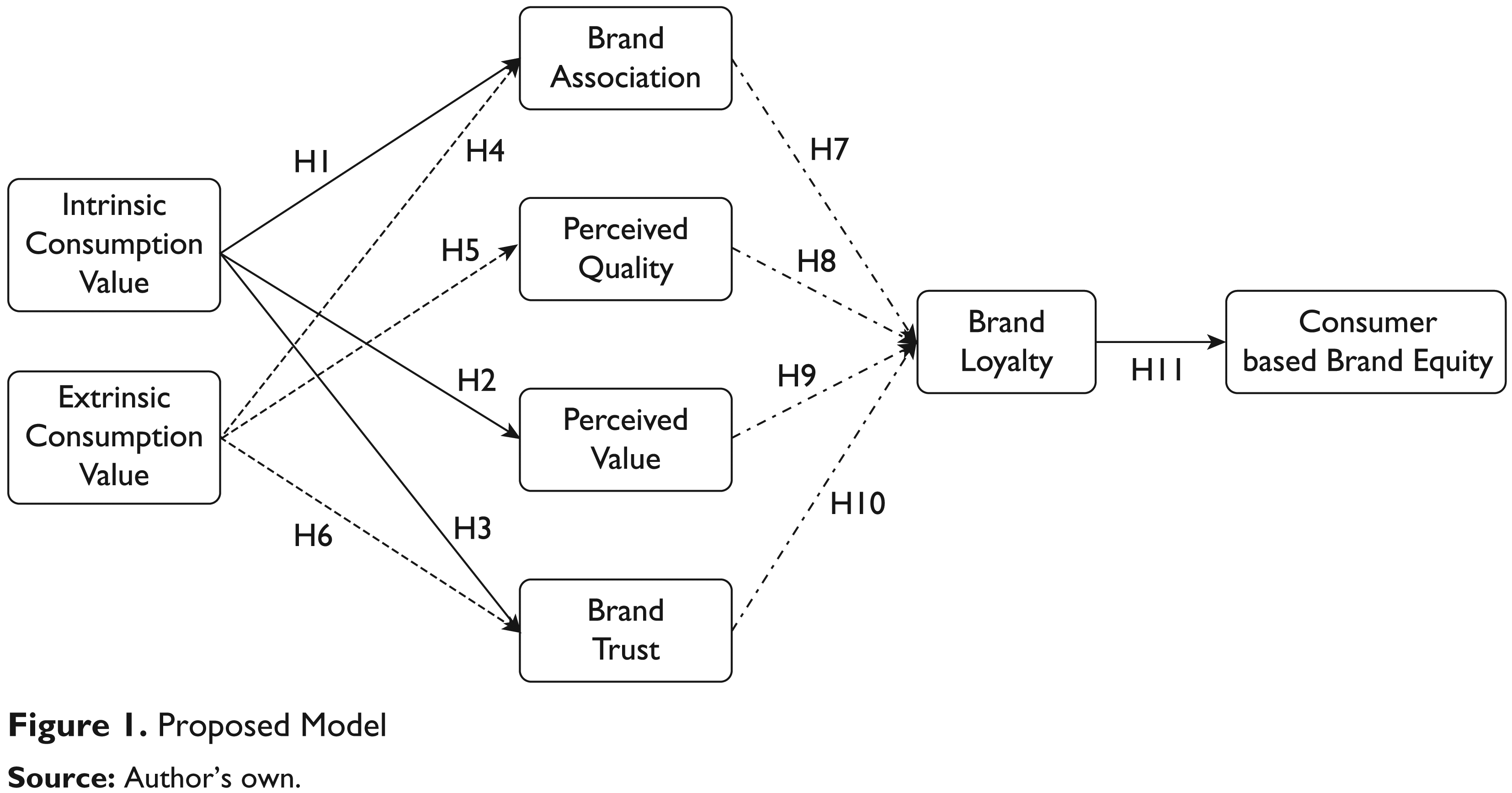
H1: Intrinsic value positively affects brand association. H2: Intrinsic value positively affects the perceived value of the brand. H3: Intrinsic value positively affects brand trust. H4: Extrinsic value positively affects brand association. H5: Extrinsic value positively affects perceived quality of the brand. H6: Extrinsic value positively affects brand trust.
Hierarchical Creation of Brand Loyalty and Overall Consumer-Based Brand Equity
According to Pitta et al. (2006), in a perfect world, trust is unnecessary; but in the real world, it reduced the perceived risk by decreasing the possibility of incurring a loss. As a result, Rauyruen, Miller and Groth (2007) argued that in order to gain the loyalty of customers, one must first gain their trust, have a positive association and believe in the value and quality propositions. In other words, only when a brand scores high on brand association, perceived value, perceived quality and brand trust can it expect to evoke a high level of loyalty from the user. Furthermore, based on the commitment–trust theory of relationship marketing (Morgan & Hunt, 1994), brand trust had been recognized as a prominent variable leading to long-term relationships with customers, which is defined by brand loyalty (Chiou & Droge, 2006; Matzler Grabner-Kräuter & Bidmon, 2008; Sichtmann, 2007). Hence, it is well established in the literature that brand trust leads to brand loyalty and we hypothesize it as follows:
H7: Brand association positively affects brand loyalty. H8: Perceived quality positively affects brand loyalty. H9: Perceived value positively affects brand loyalty. H10: Brand trust positively affects brand loyalty.
Yoo et al. (2000, 2001) conceptualized brand equity as a construct that is separate from the dimensions of brand equity. The significance of segmenting the contributing elements of brand equity lies in the ability to not only understand the levers of brand equity but more importantly in the optimum allocation of resources across the organization to enhance the brand equity. Therefore, we conceptualize consumer-based brand equity as a separate construct. Pappu and Quester (2008) have established how brand loyalty feeds into the overall brand equity. Thus, we propose the following hypothesis:
H11: Brand loyalty positively affects the overall consumer-based brand equity.
Figure 1 depicts the final model to be tested.
Research Methodology
Measurement of Constructs
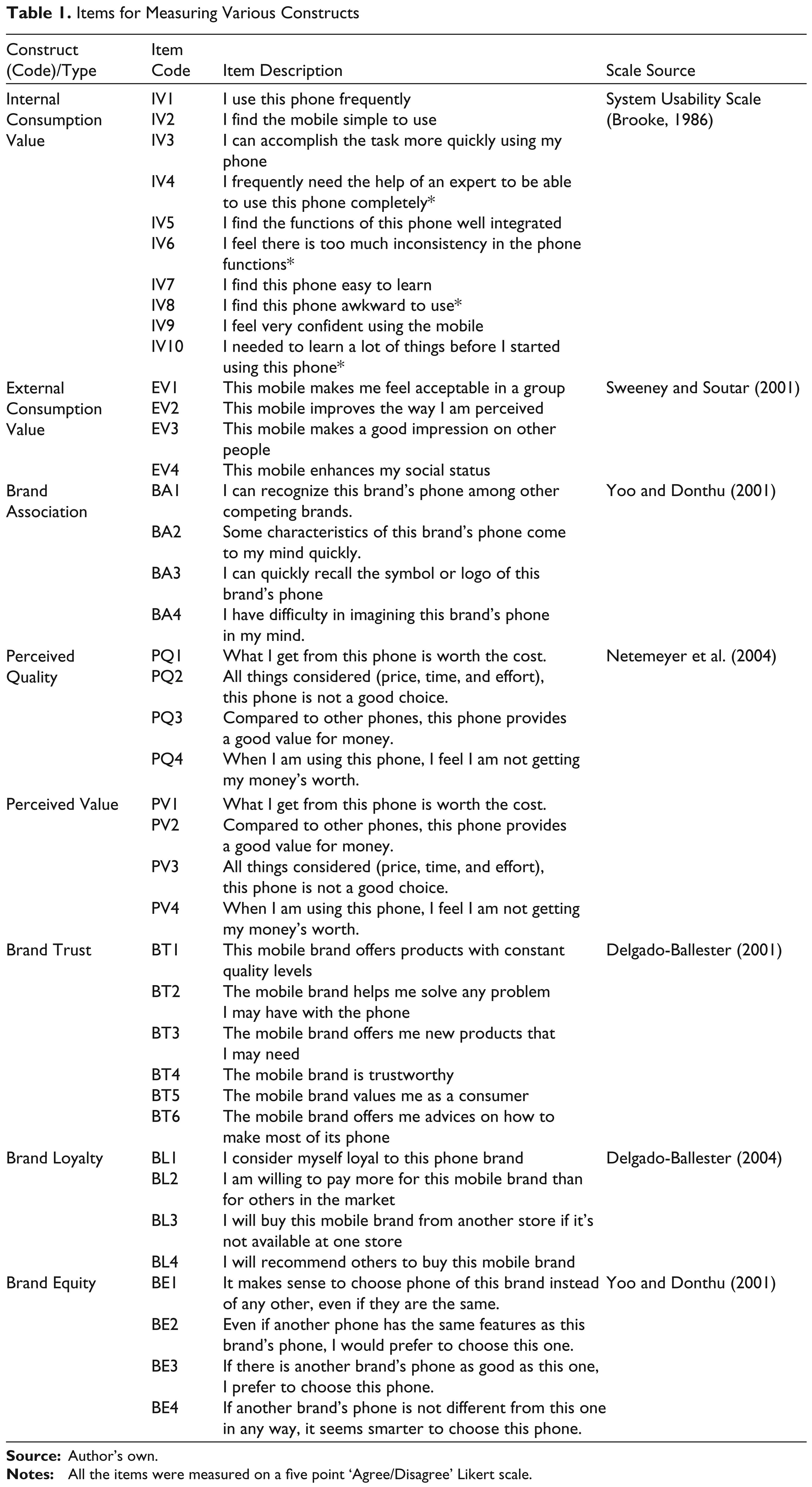
For the purpose of this study, all standard scales were used. For measuring intrinsic consumption value, the scale for system usability was used for comprehensive measurement. Since external consumption value implies social consequences, the scale for social value was used. For components of brand equity, readily available scales developed were used. Table 1 highlights the standardized scales tweaked for the context of smartphones.
Items for Measuring Various Constructs
Data Collection and Analysis
Facebook advertisement was used as a source of data collection as 93 per cent of the smartphone owners in India are active on Facebook. Thus, it provides a ready access to the targeted population in a random manner. We planted a Facebook ad with a link to our online questionnaire promising goodies (a smartphone from a leading manufacturer) to one random respondent. This Facebook advertisement ran for 4 months targeting approximately 30 million smartphone owners. At the end of the campaign, 22,376 people saw the ad out of which 802 people filled the questionnaire; 68 of them were incomplete resulting in a total of 744 filled questionnaires.
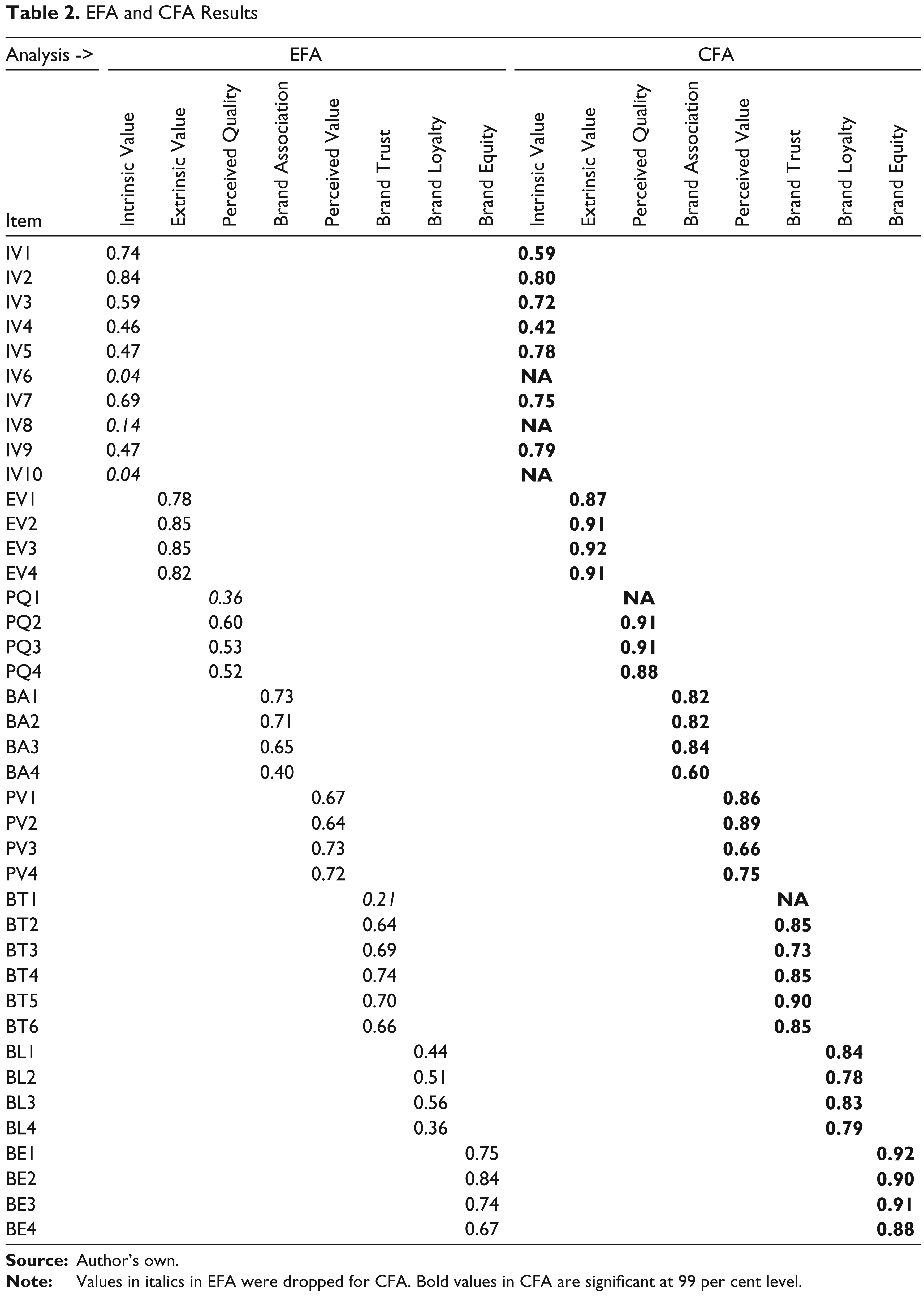
Initially, exploratory factor analysis(EFA) was conducted to understand the emerging factor structure. EFA was followed by confirmatory factor analysis (CFA) and path analysis of the hypothesized relationships using structural equation modelling (SEM). Items with loadings lower than 0.32 and having significant cross-loadings were dropped from further analysis (Costello & Osborne, 2005; Tabachnick & Fidell, 2007). Tests of reliability and validity were established as per the norms. Finally, in path analysis, the strength of relationships between the constructs was tested with their values and significance.
Results
The EFA seemed satisfactory with Kaiser–Meyer–Olkin (KMO) at 0.91, suggesting sufficient sample size, and Bartlett’s test of sphericity reported with Chi-square value of 1730 (p = 0.000). The factor structure was obtained by applying Varimax rotation in the EFA and cutoff for eigen values as 1. A total of eight factors were extracted as expected on the lines of eight reflective dimensions conceptualized above. Table 2 depicts the results of EFA and CFA analyses. None of the communalities for factors was less than 0.2 with the highest communality at 0.82 and the lowest at 0.54 (Tabachnick & Fidell, 2007). The factor loadings for each variable for each of the reflective measure from the EFA and that obtained from the CFA using AMOS are highlighted in Table 2.
EFA and CFA Results
Reliability and Validity
The composite reliability of the constructs obtained is 0.86 for IV, 0.95 for EV, 0.94 for perceived quality, 0.86 for brand association, 0.95 for perceived value, 0.92 for brand trust, 0.89 for brand loyalty and 0.95 for brand equity. Cronbach alpha values are also above 0.7 for all the five constructs as well as with values ranging from 0.78 to 0.93.
First, convergent validity is established with the factor loadings of each item to each construct above 0.4 (well above the threshold of 0.32 proposed by Tabachnick and Fidell (2007)). Second, the values of average variance extracted (AVE) for each of the constructs are above the cutoff value of 0.5 (Fornell & Larcker, 1981). For discriminant validity, Fornell and Larcker (1981) recommendations of AVE being higher than the squared correlations of that construct with others were followed. As depicted in Table 3, the AVE for each construct is indeed higher than the squared correlations. The diagonal in Table 3 represents the AVE values.
Discriminant Validity
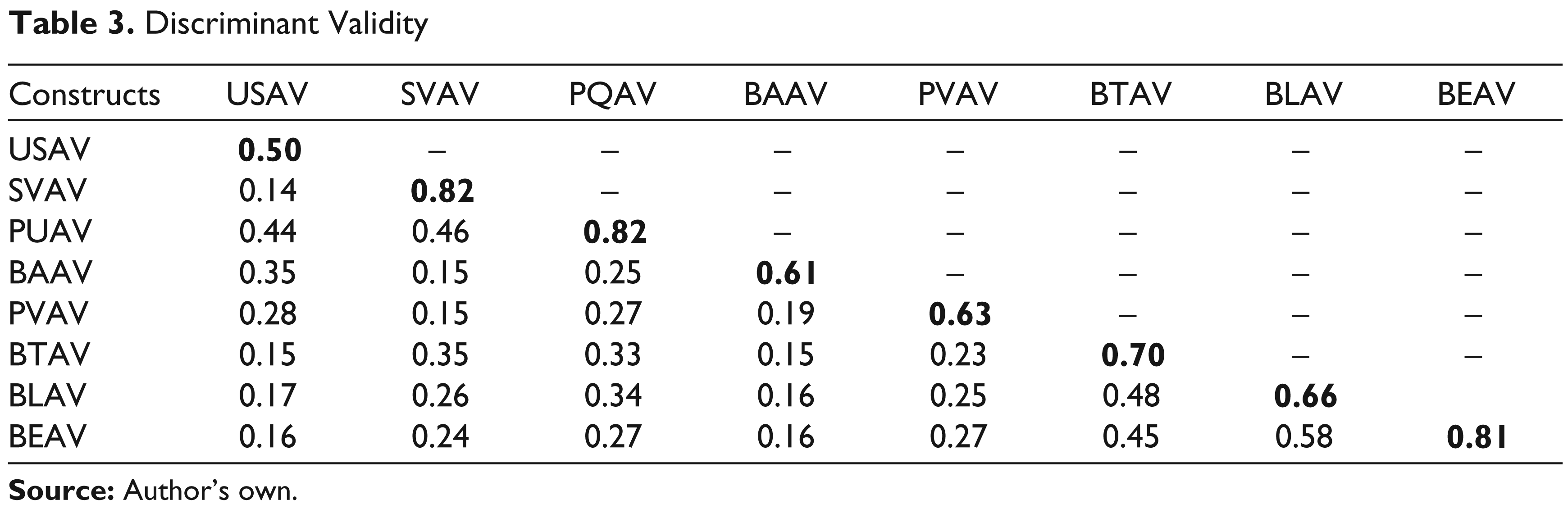
Further, the inter-construct correlation is significantly lower than 1.0, thus reinforcing the discriminant validity.
Path Analysis
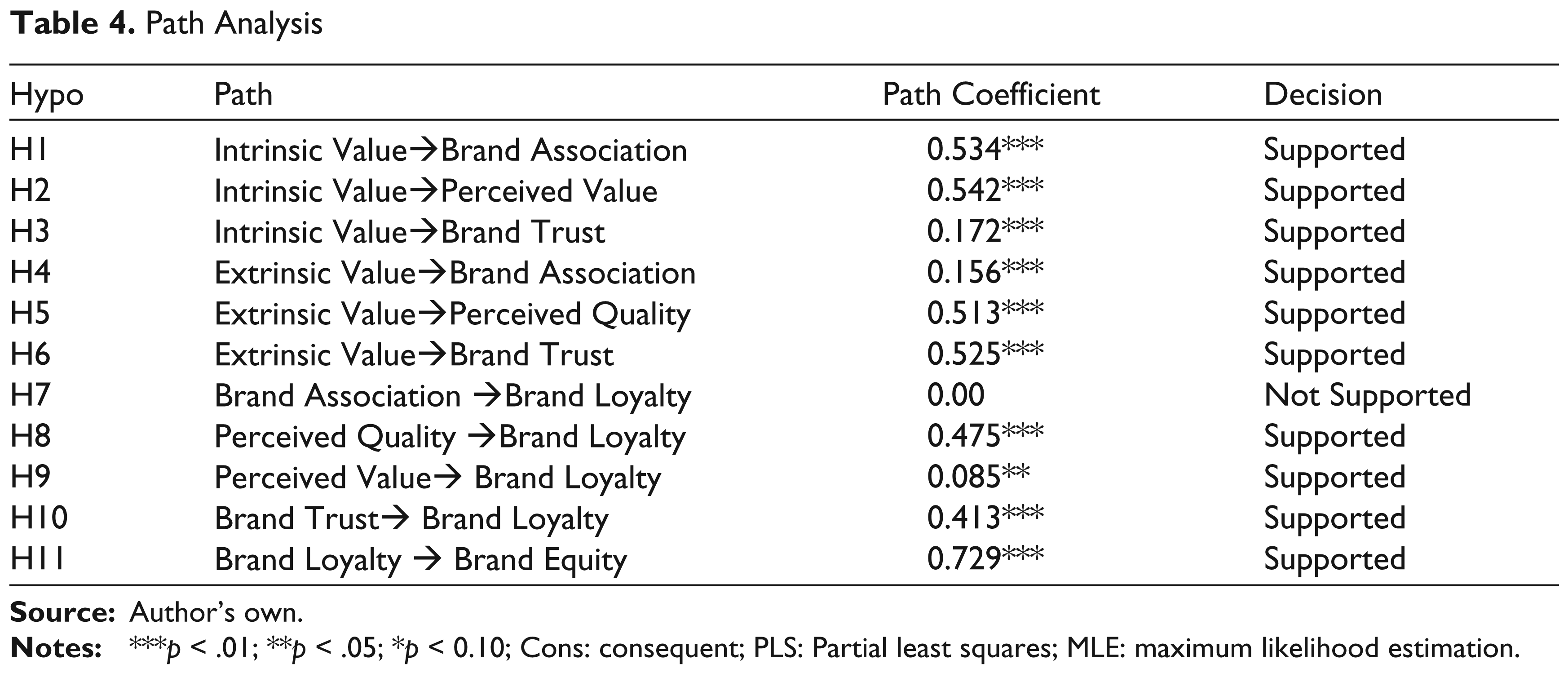
The structural model was tested using path analysis in AMOS 4.0. Table 4 provides the strength of the relationships in the model. The constructs represent summated measures of the items shortlisted from the CFA above.
We have, thus, been able to establish all the hypotheses proposed except one. The model produces gross fit index (GFI) of 0.84, incremental fit index (IFI) of 0.83, comparative fit index (CFI) at 0.83 and normed fit index (NFI) at 0.81. The fit measures obtained were not very high but were satisfactory giving credence to our proposed model.
Path Analysis
Discussion
Smartphone companies are fighting hard to create unique and positive user experiences for the consumer. This is done in an effort to habituate the user to the product interaction design, which ultimately leads to repeat purchase of the product of the same brand. Consumers are ready to pay even premium prices to obtain the product. Both these behaviours are signal of high consumer-based brand equity (Netemeyer et al., 2004). In a novel approach, this study aimed to empirically establish relationship between user experience and consumer-based brand equity by considering the subdimensions of each based on established frameworks. We found that intrinsic consumption value of a product has positive influence on brand association, perceived value and brand trust. The inherent meaning is that as consumers find a product more useful and easy to use, the brand gets impinged in their minds which is enough for them to have a positive brand imagery (Keller, 2003). Further, with higher usefulness, consumers find their money well spent on the brand with enhanced trust. We also found that social implications of the smartphone, measured through extrinsic consumption value, also have a great effect on brand association, perceived quality and brand trust. Consumers just cannot forget the brand that gave them social recognition. It further enhances the trust in the brand as a common denominator for social acceptance. In a usage condition, this process of generation of brand equity happens stage by stage. Initially, experience is formed sequentially where intrinsic and extrinsic consumption values lead to consumer happiness with the product. Following this happiness, the consumer starts getting attached to the brand and the different stages of brand equity follow until the consumer becomes completely loyal to the brand. This is supported by strong relation between the different stages of experience and brand loyalty. This loyalty, in turn, enhances the overall consumer-based brand equity.
Contributions
This work offers some unique contributions that are both theoretical and managerial. The empirical model presents a unique way of defining consumption experience using the extrinsic and intrinsic value paradigm, as proposed by Holbrook (1999). The framework helps capture both aspects of consumption experience, with one experienced in a private setting and the other experienced with respect to others. Though Holbrook’s framework has been referred extensively, this article, in all probability, presents a unique way of empirically measuring the two. Another contribution of the article lies in examining the effect of consumption experience with consumer-based brand equity. The article presents a unique way in which the dichotomous user experiences have an impact on the individual components of brand equity which then sequentially affect brand loyalty and in turn enhances the overall consumer-based brand equity. While various works have studied consumer-based brand equity in different ways, this work examines the individual effect of the different components of brand equity on brand loyalty, a sparsely researched area.
Another contribution lies in the form of extendibility of the model to other product categories. The scales used are established ones and thus can easily be adapted for other interactive products like automobiles, microwave, refrigerator, etc. The effort can establish the validity of the model to other relevant categories which can be a future endeavour.
For managers, findings of this study will not only give an understanding of how well the two are linked but also how to tweak user experience by way of one of the components to achieve higher brand equity.
Limitations and Future Directions
The work does have some limitations. First, brand equity of a product is also determined by the marketing efforts of the same organization as well as by the offerings and marketing efforts of the competitors (Ailawadi et al., 2003). We have not factored these parameters into the model and they can also be analyzed for their effects on brand equity. Second, generalizability of the model can be tested across different product categories, which have different configuration of each consumption value. Therefore, while the constructs in the work were developed from a smartphone perspective, the definition and measurement of consumption values may change for other similar categories. Third, the study used online data collection. Literature mentions that offline and online data collection methods have different pros and cons and are complementary to each other. We recommend a mixed-method approach to data collection to ratify this model.