







Abstract
This study investigates the relationship between psychological ownership and organizational commitment of millennial employees working from home during the COVID-19 pandemic. The study also examines the mediating role of job satisfaction in the effect of psychological ownership on organizational commitment. Using a data set of 255 Vietnamese millennial employees, the partial least squares-structural equation model results indicated that millennial employees had a positive perception of psychological ownership and organizational commitment during this crisis. The impact of psychological ownership on organizational commitment through the mediating role of job satisfaction is demonstrated. This study serves as a scientific reference for operational and managerial decisions in organizations with millennial employees.
Introduction
Since the outbreak of the COVID-19 pandemic in 2020, the complexity and severity of it have affected every aspect of every organization (Hamouche, 2021; Przytuła et al., 2020). The human resource management (HRM) has faced many changes and challenges that have prompted scholars and practitioners to explore coping and adapting mechanisms to address the uncertainty generated by the pandemic (Przytuła et al., 2020). The work-from-home set-up, one of the practices accelerated by the pandemic, has produced dire consequences in employment communication, employees’ psychological emotions and mental health that have affected employee motivation and productivity (Ho et al., 2020) and retention (Elsafty & Ragheb, 2020). Winning employee commitment is always a critical function of HRM (Mercurio, 2015), and in externally turbulent times like the COVID-19 pandemic, this function has become increasingly challenging and essential (Elsafty & Ragheb, 2020; O’driscoll et al., 2006). In their survey study involving 5,800 small-scale companies in America, Bartik et al. (2020) found three distinct trends in response to the pandemic, namely (a) the majority of the businesses are shuttered temporarily, and mass layoffs are prevalent; (b) small enterprises are in a precarious financial position such that those with limited financial resources can cover expenditures for less than two months; and (c) businesses have widely differing perspectives regarding the extent of the negative impact of the pandemic. Consequently, COVID-19 has exacerbated job insecurity among employees due to organizational restructuring and downsizing, wherein millennials are particularly affected (Jung et al., 2021). As a result, retaining and increasing employee job commitment is one of the top priorities of firms to survive and thrive despite the pandemic and to be better prepared for future crises.
Recent literature suggests that organizational commitment may depend on psychological ownership, which is ‘the psychologically experienced phenomenon in which an employee develops possessive feelings for the target’ (Van Dyne & Pierce, 2004). Previous research conducted in an organizational context has widely examined the impact of psychological ownership on several favourable attitudinal and behavioural outcomes, such as entrepreneurship behaviours (Mustafa et al., 2016), the initiation of organizational change (Pierce et al., 2001), organizational commitment, performance and organizational citizenship behaviour (Van Dyne & Pierce, 2004).
Over and above the data on psychological ownership, there is also evidence that job satisfaction can influence the extent to which employees feel committed to the organization (Avey et al., 2009), and this can play a mediating role in the likelihood of employees experiencing attitudinal shifts (Wu et al., 2021). Moreover, according to the Attachment Theory, psychological ownership can elicit job satisfaction in the organization (Mustafa et al., 2016; Zhang et al., 2021). Hence, it is likely that there is a causal link between psychological ownership, job satisfaction and organizational commitment of working millennials after the pandemic. Although extant research has exerted significant effort in exploring the antecedents and outcomes of the psychological ownership phenomenon, the underlying mechanism of its beneficial impact on organizational commitment has hitherto been neglected in the literature on organizational behaviour (Tabor et al., 2018), especially among millennial employees during a health crisis like the COVID-19 pandemic.
Millennials refer to individuals born between 1982 and 2004 (Howe & Strauss, 2009), the first generation to have grown up in the times of the Internet and other technological devices (Thompson & Gregory, 2012). Millennials are characterized by their desire for diversity, excitement for technology, the spirit of continuous learning, the value of teamwork, higher community awareness compared to previous generations and a multi-dimensional approach to solving problems (Thompson & Gregory, 2012; Tohmatsu, 2017). As expected, the generation of millennials is gradually becoming the core labour force and is playing a critical part in the development of the global economy. This generation is the largest in the United States, accounting for one-third of its population in 2013. In Vietnam, this group currently accounts for 51% of the Vietnamese workforce (GSO, 2016). In addition, it is anticipated that millennials will make up 75% of the workforce by 2025 and are expected to influence the global economy for many decades to come (Howe & Strauss, 2009; Tohmatsu, 2017). This group has specific and typical attributes different from the previous generations. Millennials are known for valuing community, family and creativity in their work (Baker Rosa & Hastings, 2016). Instead of focusing on financial aspects, they are more concerned about work–life balance, training, promotion prospects, workplace flexibility and personal development (Thompson, 2011). However, this group also possesses characteristics that employers must consider and hone to retain them and fully explore their potential. Although they are dynamic and competent, they are unstable and not engaged with the job position and organization (Weyland, 2011). They have the tendency to switch jobs to diversify their pool of experience in multiple working environments (Miller, 2015; Thompson & Gregory, 2012). This pattern became even more conspicuous during the COVID-19 pandemic. Millennials are also more vulnerable to experiencing unpleasant outcomes and thus, find it difficult to maintain interest in their profession when they meet challenges at work (Yunita & Saputra, 2019). Therefore, the implications of the COVID-19 epidemic on the organizational commitment of millennials require further research.
On the basis of the Attachment Theory, the study aimed to add to the body of knowledge in the field of psychological ownership by proposing job satisfaction as an affective attachment mechanism that can facilitate the influence of psychological ownership on the organizational commitment of millennials who worked from home during the pandemic. This research also contributes to the literature on factors that activate the attachment-behavioural system (Yip et al., 2018) and the investigation of the underlying mechanism of the influence of psychological ownership on organizational commitment. As a practical implication, this study can help HR managers understand and improve employees’ organizational commitment. Businesses will also be able to plan and implement policies to enhance millennial employees’ satisfaction, leading to increased productivity and organizational development despite challenging events like the COVID-19 pandemic.
The first section introduces the research context and objectives, discussing the proposed relationships among psychological ownership, job satisfaction and organizational commitment. The second section presents the literature review and hypotheses development. The third section describes the methodology, which details the study’s research procedures, samples and measures. Data analysis and key results are presented in the fourth section, while the conclusion and recommendations from the research findings, including theoretical and practical implications, are discussed in the fifth section. The conclusion, limitations and future research direction are described at the end.
Literature Review
Attachment Theory
The Attachment Theory is a well-established framework for understanding human relationships and is universally considered one of the most prominent theories in psychology (Yip et al., 2018). The theory establishes the cognitive and emotional mechanisms of ‘attachment’ which refer to the human instinct to seek and build affectionate relationships with specific individuals (Bowlby, 1969). While Bowlby (1969) discussed the Interaction Theory in terms of interactions between parents and children, subsequent studies on adult attachment have examined comparable attachment patterns in organizational relationships (Hazan & Shaver, 1990), such as affectionate bonds among organizational leaders, colleagues, supervisors and other individuals within the organization.
The Attachment Theory offers a novel interpersonal approach to studying organizational attitudinal and behavioural outcomes. Previous studies have demonstrated that attachment dynamics in workplace interactions are closely associated with desirable organizational outcomes such as employees’ proactive behaviour (Guohao et al., 2021), emotional resilience (Pahwa & Khan, 2022) and innovative behaviour (Muñoz et al., 2023). On the other hand, when an individual’s affective attachment demands are not satisfied, unpleasant outcomes come into effect. For example, a lack of interpersonal attachment may result in stress during crises (Rollè et al., 2022), burnout and decreased job performance (Vîrgă et al., 2019) and lower psychological safety (London et al., 2023).
During the COVID-19 outbreak, governments imposed several political measures to keep people safe from the virus (e.g., the ‘shelter in place’ policy). This, in turn, became an impediment for individuals to connect on a personal basis. Thus, leaving people high and dry in their need for socialization (Parent et al., 2021). For millennials, the consequence of remote work may be even more severe as their longing for social interaction aligns with their developmental objectives (Duke et al., 2009). The most prevalent reactions to the pandemic include symptoms of anxiety, nervousness, depression and desperation (Rajkumar, 2020; Wang et al., 2021), all of which are natural tendencies among humans when there is separation from attachment figures (Bowlby, 1969). Furthermore, deficiencies in social bonds during COVID-19 may have impacted not only the psychological well-being of employees but also their capacity to perform well. Researchers have found empirical evidence showing that attachment-relevant anxiety is associated with burnout and reduced job performance (Vîrgă et al., 2019) or counterproductive work behaviours (Malik et al., 2020). Therefore, on account of the impact of the pandemic being akin to chronic situations of experienced stress, it is of utmost importance to examine employees’ responses to work disruptions in light of the attachment theory.
Organizational Commitment
Organizational commitment is generally described as the employees’ degree of involvement and identification with the organization. According to Meyer and Allen (1991), organizational commitment comprises three critical components: (a) affective commitment, (b) continuance commitment and (c) normative commitment. Affective commitment reflects one’s commitment to the organization as indicated by his/her attitude towards the organization (Mowday et al., 1979). It is the extent to which an individual psychologically identifies with and dedicates himself to the organization (Jaramillo et al., 2005). Continuance commitment of an employee involves taking into account the estimated cost involved in exiting from the organization (Meyer & Allen, 1991). This means that when individuals have a high level of continuance commitment, they commit to and stay in the organization not only because of favourable emotions but also because there are external stakes like retirement plans or family-related issues (Shaw et al., 2003). Finally, normative commitment refers to a responsibility to sustain one’s employment with the company (Meyer & Allen, 1991). In general, according to Meyer and Allen (1991, p. 11), ‘[…] individuals who have strong affective commitment remain in the organization because they feel they want to; some with a stronger normative commitment remain because they ought to and those with strong continuance commitment remain because they need to’.
The affective commitment dimension has been extensively studied and is seen to be significantly related to several organizational outcomes (Meyer et al., 2002). Due to its origin in organizational identification and the fact that employees high in affective commitment usually internalize organizational values (Muñoz et al., 2023), earlier studies have shown that affective commitment significantly associates with positive attitudes and pro-social behaviours, such as innovative behaviours (Muñoz et al., 2023), altruism and the presence of civic virtues (Ficapal-Cusí et al., 2020). Given that affective organization commitment is a major concept of the Attachment Theory (Guohao et al., 2021; Moulik & Giri, 2022), and that affective commitment might be a significant factor that motivated employees to exhibit favourable behaviours during the COVID-19 pandemic, this research focuses on the affective dimension of organizational commitment.
Psychological Ownership
According to Etzioni (1991, p. 466), possessiveness refers to a ‘dual creation, part attitude, part object, part in the mind, part “real”’. Based on this premise, Pierce et al. (2001) described psychological ownership as the degree to which the individual perceives the object of possession or a part of that object as ‘theirs’. According to this definition, psychological ownership reflects the connection between the person and the object of ownership, such that the object is perceived as being closely associated with the individual as though it were an extension of their own identity (Belk, 1988; O’driscoll et al., 2006). This perception is characterized by possessive sentiments and a strong psychological bond with the target. Researchers have suggested that psychological ownership motivates individuals to internalize the target such that it becomes a part of themselves (O’driscoll et al., 2006).
Three fundamental underlying driving forces induce ownership feelings in individuals. They are (a) efficacy and control, (b) self-identity and (c) place. Having perceptions of effectiveness and control will cause one to believe that they are the source of something that can change the situations around them (Beggan, 1992; Mustafa et al., 2016). On the other hand, ownership enables people to convey their self-identity to others while preserving their cohesive selves. As a result, one’s self-identity and perceived self-cohesiveness may be perpetuated, at least in part, by their sense of psychological ownership (Curasi et al., 2004; Pierce et al., 2001). Finally, having a sense of place satisfies one’s demand for territoriality and safety (Mustafa et al., 2016). Moreover, there are three key motives from which psychological ownership arises: investing oneself in the possessive object, getting intimately familiar with the object and exerting influence or power over the object (O’driscoll et al., 2006).
Extant research conducted in the organizational context has significantly contributed to the literature by suggesting several attitudinal and behavioural outcomes induced by feelings of psychological ownership, according to which possessive feelings, which constitute the foundation of psychological ownership, stimulate more favourable appraisal in the individual pertaining to the ownership target (Mustafa et al., 2016). As a result, this state of psychological ownership leads to several positive organizational outcomes, even without formal ownership (Pierce et al., 2001). Specifically, to satisfy the motivation of enhancing self-identity, which is one of the three basic underlying drives of psychological ownership, individuals with high psychological ownership are more likely to engage in pro-organizational behaviours, such as extra-role behaviours (Vandewalle et al., 1995), organizational citizenship behaviours (Van Dyne & Pierce, 2004), or showing personal sacrifice (Pierce et al., 2003). Furthermore, psychological ownership also elicits favourable attitudes towards the organization, namely organizational commitment and satisfaction (Avey et al., 2009).
Given that affective commitment originates from the extent to which employees identify with their organization (Muñoz et al., 2023), the current study mainly focuses on the self-identity dimension of psychological ownership to explain how psychological ownership can lead to organizational commitment.
Job Satisfaction
In literature, job satisfaction refers to the employees’ sentiment or overall attitude towards their occupation and aspects of it, including the workplace environment, human management practices, fair compensation and open channels of communication with co-workers (Gunlu et al., 2010; Kim et al., 2005). Job satisfaction is also demonstrated as a subjective emotion that employees experience when they believe that their work contributes to fulfilling their job-related ideals and values (Locke, 1969).
Herzberg et al. (1959) proposed that job satisfaction can be based on a model of two categories of job demands: hygiene factors and motivational factors. Hygiene factors are requirements that are mostly fulfilled by primary job conditions, such as management or leadership, interpersonal interactions, working environment, remuneration and bonus. Herzberg’s theory asserts that job discontent is likely to occur when hygiene-related aspects of the person’s work setting are absent. However, addressing an individual’s hygienic concerns does not always result in contentment/satisfaction. Meanwhile, the motivational factors, which are task-related, caused happy feelings or a good attitude within the worker.
In this study, job satisfaction is defined as an attitude-based assessment or psychological evaluation of how one feels about their employment or working experiences (Ilies et al., 2009). Research in psychology and organizational science has historically focused on the importance of job satisfaction as a crucial outcome (Chen et al., 2011). A substantial body of literature has suggested a favourable relationship between job satisfaction and a wide range of work outcomes, such as job performance (Judge et al., 2001), organizational citizenship behaviours (Fassina et al., 2008) and innovativeness (Shipton et al., 2006). The reason that underpins such relationships is mainly based on the notion that content workers would exhibit a higher level of productivity in their job (Batt, 2002; Mustafa et al., 2016).
Psychological Ownership and Organizational Commitment
According to the Attachment Theory, a sense of ownership provides employees with a distinct kind of pleasurable feeling. Hence, individuals usually dedicate themselves to preserving the connection to the target of ownership that brings them positive emotions (Pierce et al., 2001). Moreover, when individuals perceive high levels of psychological ownership, they are more likely to integrate with their organization (Pierce et al., 1991). This integration manifests itself, to some extent, via attachment to the organization and determination to keep that relationship intact (O’driscoll et al., 2006). Particularly, psychological ownership needs to be associated with the kind of organizational attachment identified as affective commitment, as described by Meyer and Allen (1991). This kind of commitment is characterized by sentiments of belonging to the organization and a desire to be inextricably linked to it. It is based on an identification with the organization, its objectives, its values and its principles (O’driscoll et al., 2006).
It is recognized that when employees experience high levels of psychological ownership, the organization is internalized and becomes a crucial part of the self, compelling individuals to commit to the organization to preserve their self-identity (Belk, 1988). According to Belk (1988, p. 142), once a particular possession is viewed as a core component of one’s self, forfeiting it becomes associated with a ‘loss or reduction of the self’, which has negative repercussions. Thus, those with a sense of ownership towards an organization insist on retaining their relationship with it to avoid the detrimental consequences of a relationship breakdown (Mayhew et al., 2007). As a result, they develop belongingness with their organization. As affective attachment and belongingness are considered crucial elements of organizational commitment (Meyer & Allen, 1991), it is expected that a sense of psychological ownership can lead to higher organizational commitment.
Empirical studies provide sufficient evidence to support the validity of links that connect psychological ownership and organizational commitment. Particularly, to foster organizational commitment in an active-involvement organization, it is recommended that managers should induce, among the employees, a feeling of ownership towards the organization (Lawler III, 1992). Furthermore, it has been suggested that psychological ownership is a noteworthy determinant of organizational commitment (Pierce et al., 1991), as has been consistently demonstrated across multiple samples (e.g., supervisors, managers, professional employees across industries) (Van Dyne & Pierce, 2004; Vandewalle et al., 1995). Therefore, in this study, the authors propose that the psychological ownership of millennial employees would enhance their level of organizational commitment.
H
Psychological Ownership and Job Satisfaction
Millennials who possess high psychological ownership may develop job satisfaction because they feel assured of having control and autonomy. Millennials are known to prioritize job autonomy and the ability to control their work (Cennamo & Gardner, 2008); hence, those with high psychological ownership resulting from the satisfaction of basic needs such as control, place, and affective commitment are more likely to develop a sense of possessiveness.
Furthermore, according to the Attachment Theory, an individual’s feeling of ownership inspires fondness for the object (Heider, 2013). This result is in line with the findings of previous research conducted by Irwin and Gebhard (1946) who asserted that ownership increases the value of a thing for the owner. Extant research has consistently provided empirical evidence to support the claim that when individuals possess an object, they assess it more favourably because of the primary ownership effect (Beggan, 1992; Schultz et al., 1989). Hence, it can be expected that millennials are likely to develop fondness towards the organization and experience heightened levels of general satisfaction when they exhibit such possessive inclinations. This, in turn, creates a setting or context where job satisfaction is favourably affected (Brown et al., 2014).
The positive effect of psychological ownership on job satisfaction has been empirically supported by research (Van Dyne & Pierce, 2004). Van Dyne and Pierce (2004) stated that employees may develop a sense of ownership towards the organization even in the absence of formal ownership. This psychological ownership leads to several favourable attitudinal outcomes, which include job satisfaction. The positive effects that emerge from psychological ownership, in turn, result in beneficial organizational behaviours, such as organizational citizenship behaviours and work performance. Experiments conducted by Mayhew et al. (2007) also corroborated previous research findings, revealing the positive association between psychological ownership and job satisfaction. With the above reasoning, the following hypothesis is offered:
H
Job Satisfaction and Organizational Commitment
A significant body of literature has examined the causal relationship between job satisfaction and organizational commitment (Gaertner, 1999; Lok & Crawford, 2001). According to Mowday et al. (1982), while commitment is a more comprehensive response towards the organization as a whole, job satisfaction is a response to a particular aspect of work or challenge relating to that work. As a result, commitment must eventually be more persistent than job satisfaction, and it takes longer to develop even after an employee has achieved job satisfaction (Feinstein & Vondrasek, 2001). The findings of an investigation conducted among restaurant workers by Feinstein and Vondrasek (2001) into the relationship between employee job satisfaction and organizational commitment demonstrated that an employee’s level of satisfaction has the potential to predict the level of commitment to the company. Gaertner (1999) also performed an analysis of the factors that determine job satisfaction and organizational commitment. These factors include salary, job demand, organizational justice, advancement opportunities and management practices, among others. The research result suggests that job satisfaction is an antecedent of organizational commitment. Jernigan et al. (2002) investigated the significance of particular components of job satisfaction in predicting types of organizational commitment. According to research results, affective commitment differed with employees’ satisfaction levels across various components of their working conditions. In a survey study of hospitality managers, Maxwell and Steele (2003) found that high levels of fair compensation, employer recognition, collaboration and confidence among colleagues and supervisors, and chances to participate in social events—all of which are determinants of job satisfaction (Deci & Ryan, 2012)—contributed to a higher degree of commitment. Furthermore, millennials tend to strive for achievements that do not only fulfil their monetary needs but also offer opportunities for professional advancement and personal development (Holtschlag et al., 2020). Therefore, it is expected that millennials are more likely to commit to the organization once satisfied with their job demands. Together, these studies enable us to propose the hypotheses below:
H
H
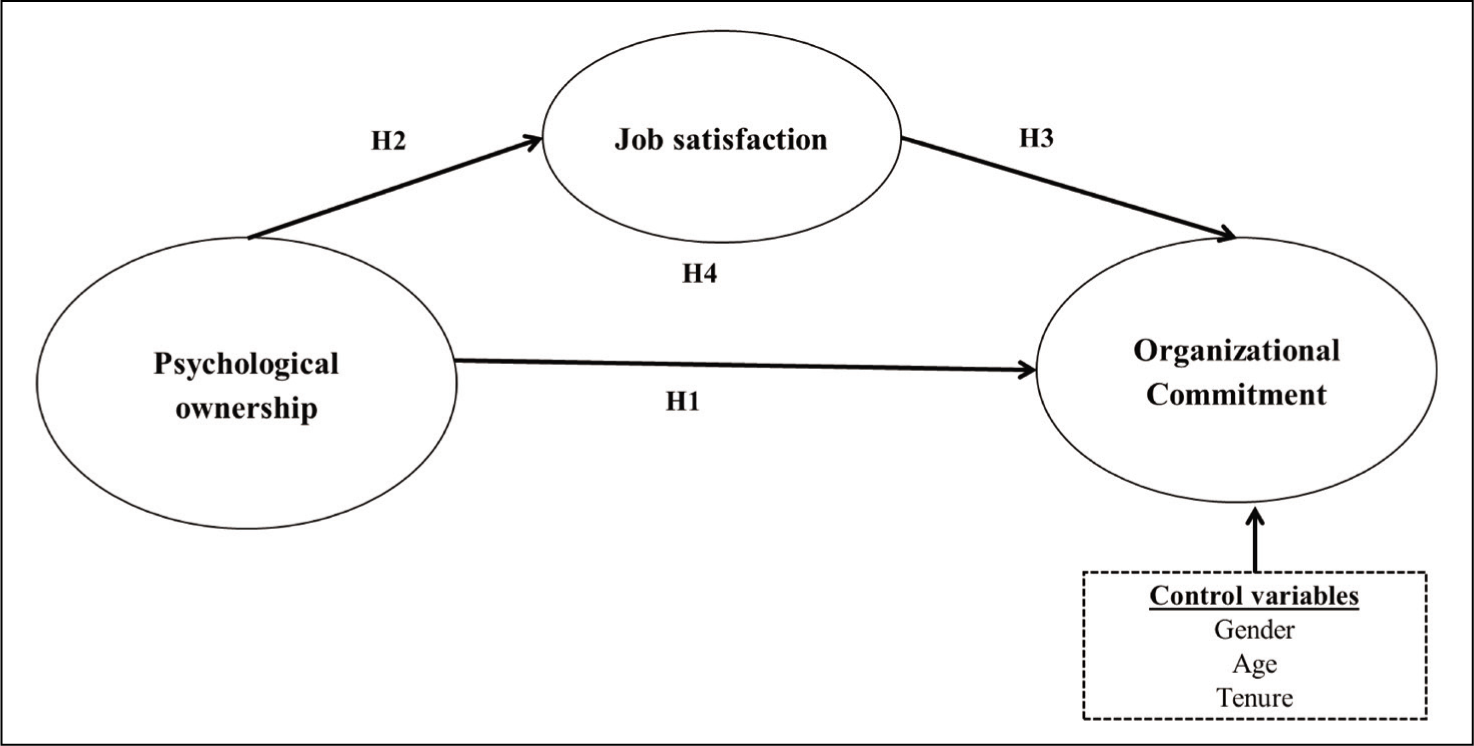
The conceptual research framework is shown in Figure 1.
The Conceptual Research Framework.
Method
Procedure
This study was implemented using a quantitative research approach. A cross-sectional survey was conducted to obtain data from millennial employees through the convenience sampling method. The data collection time was during the COVID-19 pandemic, when social distancing was implemented in Vietnam. The data collection period was from May to August 2021, during which business activities were brought to a halt because of the social distancing policy imposed by the government. First, we used a screening question to identify whether the participants qualified as target respondents (Are you working from home during the social distancing period?). Then the respondents answered self-assessment statements related to psychological ownership, job satisfaction and organizational commitment. The measurement scales adopted from previous studies were translated into the Vietnamese language and pretested. Two scholars were asked to separately translate the instrument back to English to ensure the accuracy and validity of the measurements (Bracken & Barona, 1991). Additionally, demographic information was also collected.
Sample
There were 255 usable samples collected from participants, which were subjected to further analysis. Female and male respondents accounted for 72.2% and 27.9% of the total samples, respectively. Respondents aged 25 to 30 years constituted the most significant portion of 48.6%, followed by those belonging to the 31–35 years age group at 29.4%. About 67.1% of the respondents had a university educational background. Regarding the positions held, 68.2% were official employees, 2.4% were interns and 2.7% served as high-level managers. Respondents who had worked for the current organization for over 10 years accounted for 14.5% of the sample. Working tenure under two years, from 2 to 5 years, and from 5 to 10 accounted for 36.1%, 29.4% and 20.0% of the total respondents, respectively. Most of the respondents (38.1%) worked in public and civil services and government organizations, and the remainder were working in other types of organizations.
Measures
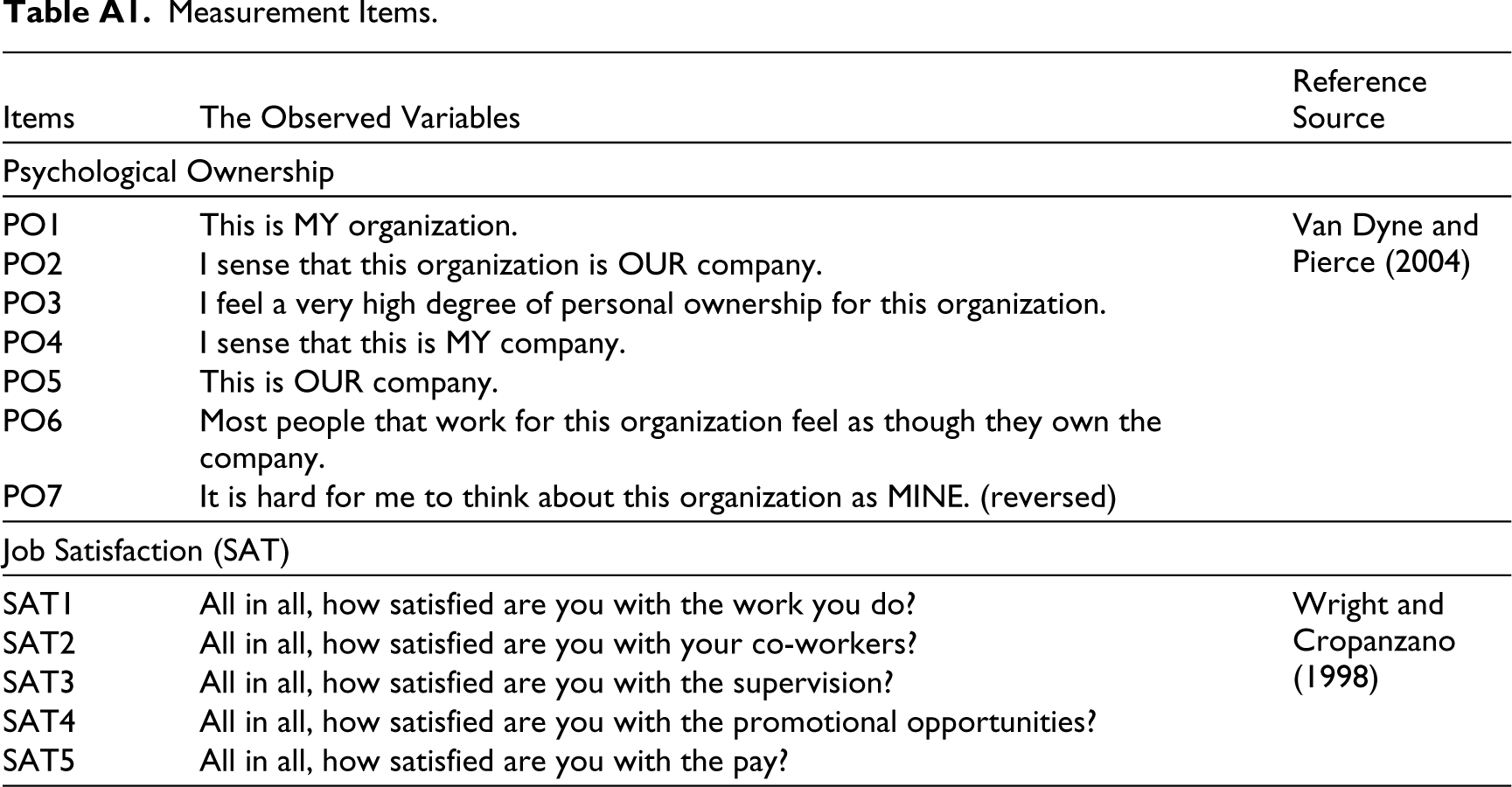
Psychological ownership was captured by a 7-item inventory developed by Van Dyne and Pierce (2004). Target respondents rated the extent to which they agreed or disagreed with the items on a list of statements regarding their feelings of ownership towards their organization using a 7-point Likert scale ranging from 1 (strongly disagree) to 7 (strongly agree). The reversed-item scale, It is hard for me to think about this organization as MINE, was eliminated due to the unsatisfactory outer loading (0.283). Cronbach’s alpha coefficient value for this scale was 0.893 after removing the unsatisfactory item.
Job satisfaction was measured with five observed variables developed by Wright and Cropanzano (1998) that can be answered on a 5-point scale ranging from 1 (very dissatisfied) to 5 (very satisfied). Respondents were asked about their assessment of their current job satisfaction, co-workers, supervision, opportunities for promotion and pay. Cronbach’s alpha coefficient for the scale was .815.
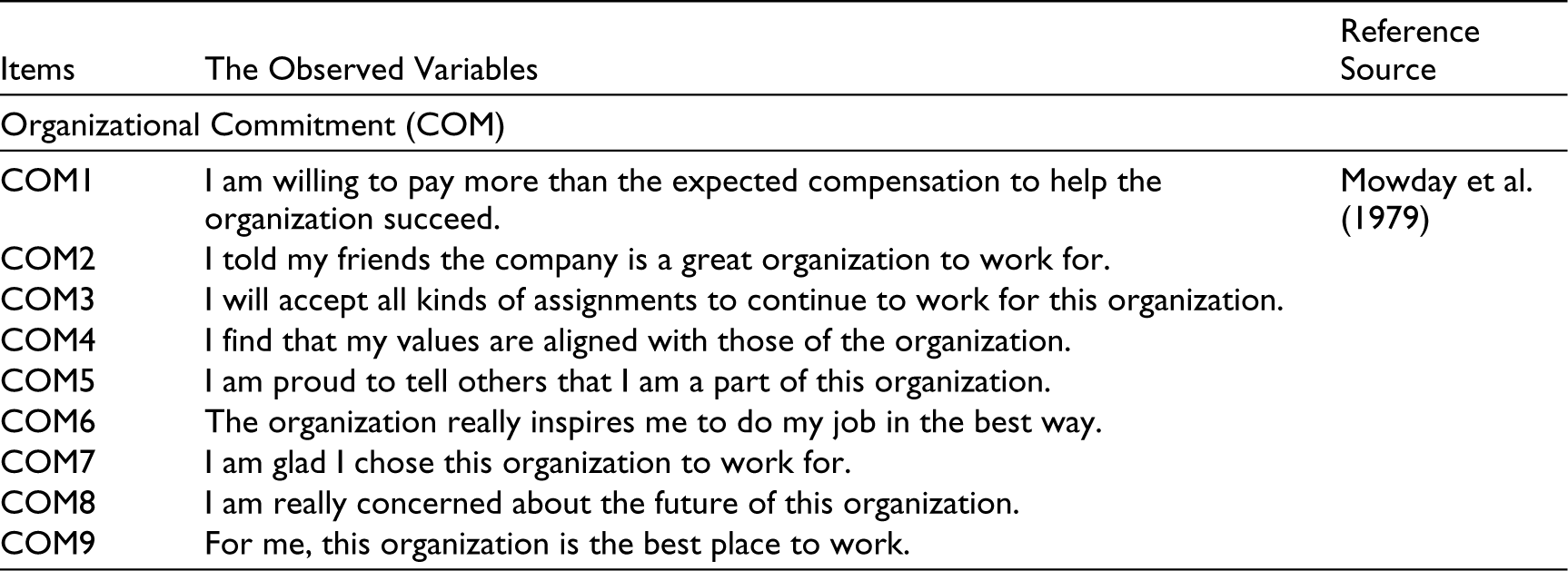
Organizational commitment was measured using Mowday et al.’s (1979) scale, consisting of nine items. Respondents indicated their assessment of their perceptions about their commitment based on a 7-point Likert scale ranging from 1 (strongly disagree) to 7 (strongly agree). All measurement items satisfied the requirements, and Cronbach’s alpha coefficient value for this scale was 0.950.
Three control variables, namely age, gender and working tenure in the current organization, were included in the model to reduce the variance caused by these factors (Lok & Crawford, 2001) on the dependent variable. Though the millennials shared several characteristics, the respondents belonged to a wide range of age groups, including gaps of more than twenty years. Thus, age was controlled in this study on millennials (Knittel & Murphy, 2019; Kurz et al., 2019).
The list of measurement items is presented in the Appendix.
Results
To test the proposed model, partial least-squares structural equation modelling (PLS-SEM) was used with the support of the SMARPLS software. This technique is becoming a critical multivariate analysis technique in business (Sarstedt et al., 2014), especially in HRM research (Ringle et al., 2020). This method is designed as a prediction-oriented approach to SEM that relaxes the demands on data and the specification of relationships set by the covariance-based SEM (Rigdon, 2012). Primarily, this method is suitable for exploratory research settings (Hair et al., 2021; Sarstedt et al., 2014). Moreover, the PLS-SEM can be potentially applied in HRM and family business research due to fewer constraints in the complexity of theories and cause–effect models, over-surveyed respondents and decreasing response rates (Benavides-Velasco et al., 2013; Rigdon, 2012; Sarstedt et al., 2014). This analysis method has two stages: (a) measurement model evaluation to check for validity and reliability; and (b) the structural model assessment.
The Measurement Model Assessment
The measurement validity and reliability assessment showed that factor loadings of all items were around 0.70, and the average variance extracted (AVE) was over 0.50, with the satisfaction level at 0.576, psychological ownership at 0.651 and organizational commitment at 0.717. Thus, the convergent validity of the research constructs was satisfied. All three variables used in this study demonstrated satisfactory internal consistency and reliability with Cronbach’s alpha values ranging from 0.815 (job satisfaction) to 0.950 (organizational commitment), exceeding the 0.70 requirement (Nunnally, 1978). Composite Reliability (CR) values ranged from 0.871 (job satisfaction) to 0.958 (organizational commitment), exceeding 0.50 (Hair et al., 2021; Sarstedt et al., 2014). The discriminant validity of constructs was also tested on the basis of the Fornell–Larcker criterion. The square root of the AVE values of each construct was larger than its correlation with other constructs; hence, the adequate discriminant validity of all constructs was demonstrated (Hair et al., 2020). The detailed results are presented in Tables 1 and 2.
Measurement Items of the Construct’s Analysis Result.

Inter-Construct Correlation.

Common Method Bias Testing
In this study, we assessed the common method bias by applying a full collinearity assessment approach. The inner VIF values of all factors were found to be lower than 2.0 (ranging from 1.006 to 1.739). In addition, Harman’s one-factor test and the exploratory factor analysis (EFA) were employed. The EFA result showed that the eigenvalues of three factors (2.014) were greater than 1.0, and the cumulative variances of three factors explained most variances. Therefore, there is evidence to conclude that the potential common method bias was not a serious threat to this study (Kock, 2015).
Structural Model Assessment
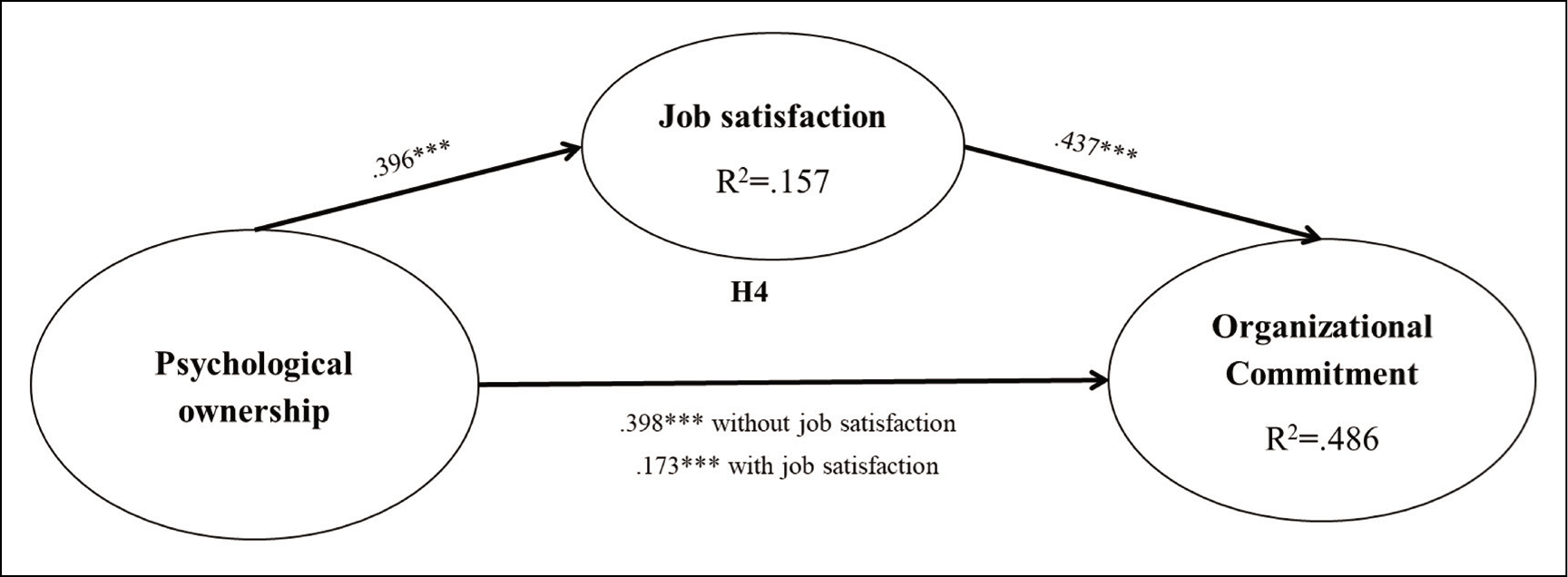
For the model fit assessment, the chi-square value was 643.696 at the .05 significant level; the standardized root mean square residual was 0.064 (smaller than 0.08); and the normed fit index was .841. Hence, this model satisfied the criteria for model fit (Hair Jr. et al., 2021). The result of R2 (explained variance) of organizational commitment was 0.486, which means independent variables explain 48.6% of the variance of the dependent variable (organizational commitment). The R2 of job satisfaction is 0.157. This indicator, the coefficient of determination, assesses the extent of the overall effect of the structural model (David Garson, 2016). The f2 (effect size) enables the evaluation of the independent variable’s contribution to the dependent variable, where f2 = .02 is small, 0.15 is medium and 0.35 is high (Bagozzi & Yi, 1988). In this study, the f2 effect sizes of psychological ownership and job satisfaction were 0.248 and 0.308, respectively, indicating medium and high f2 effect sizes.
Table 3 presents the result of hypotheses testing with bootstrapping analysis of 5,000 re-sampling of 255 cases. This study followed Preacher and Hayes’ approach to the mediation model presented by Hair et al. (2021) in testing the proposed model.
Result of Path Estimation.
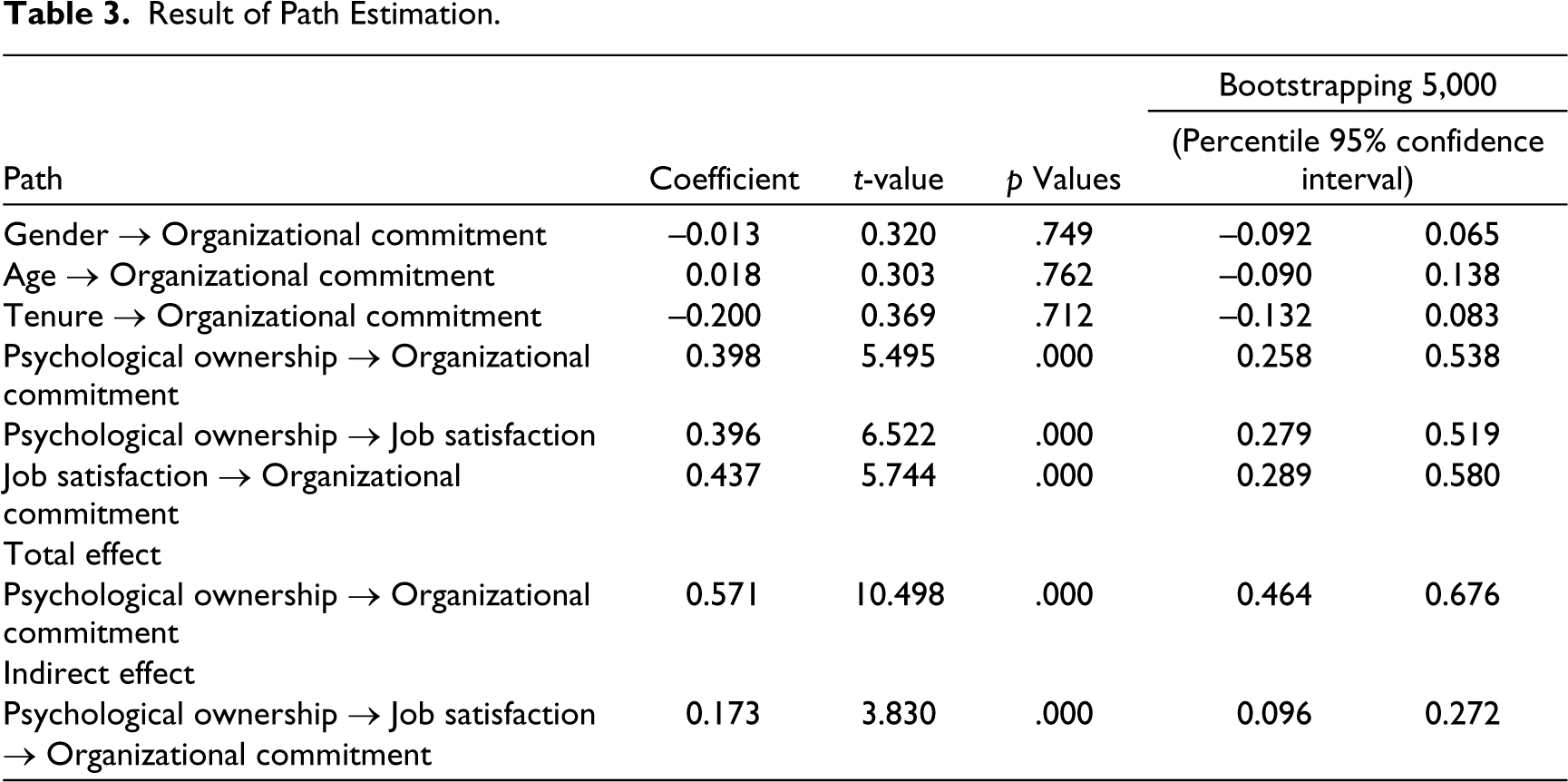
Given the results, all proposed hypotheses were supported at the significant level of 0.01.
H1 proposed the direct effect of psychological ownership on employees’ organizational commitment during the pandemic. The results showed that the coefficient of psychological ownership on organizational commitment was positive and significant (β = 0.398, p < .001). Thus, H1 was statistically supported. The results also showed that H2 was supported, as psychological ownership was positively and significantly related to job satisfaction (β = 0.396, p < .001). In addition, job satisfaction directly impacts organizational commitment positively and significantly (β = 0.437, p < .01), thus supporting H3.
H4 was about the mediating effect of job satisfaction on the linkage between psychological ownership and organizational commitment. The result of the analysis with the bootstrapping procedure of 5,000 resamples indicated that job satisfaction partially mediates the said relationship. Specifically, the direct effect of psychological ownership on organizational commitment is significant with β = 0.398, p < .001, 95% CI [0.258; 0.538]. The indirect effect of psychological ownership on organizational commitment, through job satisfaction, was significant with β = 0.173, p < .001; 95%CI [0.096; 0.272]. The total effect of psychological ownership–organizational commitment was significant with β = 0.571, p < 0.001; 95%CI [0.464; 0.676]. This implies that the effect of psychological ownership on organizational commitment was reduced when the intervention of job satisfaction or job satisfaction partially mediated the impact of psychological ownership on organizational commitment (Baron & Kenny, 1986). Thus, H4 is statistically supported. The results of model estimates are shown in Figure 2.
Discussion
Based on the Attachment Theory, this article examined the importance of psychological ownership in enhancing millennial employees’ organizational commitment during the COVID-19 pandemic. Furthermore, we hypothesized a relationship model using job satisfaction as the mediating variable to explain the underlying mechanism between psychological ownership and organizational commitment. In this study, 255 millennials working in Vietnamese companies across industries participated in the survey. We tested the hypothesized model by applying the PLS-SEM with the support of SMARPLS software.
The most prominent finding of the analysis was that psychological ownership significantly and positively affected the organizational commitment of the millennial generation during the COVID-19 pandemic. This could be due to many factors surrounding remote work conditions. This study produced results that corroborated the findings of previous research (Mayhew et al., 2007; Van Dyne & Pierce, 2004). The observed correlation between psychological ownership and employee commitment might be explained by the fact that as employees perceive a sense of ownership towards their organization, they tend to develop a close relationship and a sense of belonging with the organization (Mayhew et al., 2007). As a result, they commit more to their organization. Moreover, millennials prioritize autonomy, the power of controlling their job, and personal values at work when they perceive high levels of psychological ownership (i.e., they are satisfied with the needs of control, self-identity and affective commitment). Therefore, they are more likely to internalize the ownership target (the organization) as part of themselves. Consequently, they develop a tendency to commit more to the organization, maintaining the relationship with the ownership target. During uncertain circumstances such as the COVID-19 pandemic, affectionate relationships are adversely affected by the lack of direct and physical connections. The pandemic might have eroded the millennials’ psychological attachment to the organization and their psychological well-being and work performance may have diminished. Now, post the pandemic, millennials need to enhance their sense of possession and connection with their organization, even in remote working conditions. Accordingly, their attachment and commitment to the existing organization will be enforced.
Another compelling finding in this study was that job satisfaction significantly mediated the positive relationship between psychological ownership and organizational commitment. According to the Attachment Theory, individuals have an instinctive need to establish and maintain an affectionate relationship with their essential entities, for example, their organizations or jobs (Zhang et al., 2021). Once workers cultivate a sense of psychological ownership towards their organization, powerful psychological attachments and relationships are developed with both the company and the work (O’driscoll et al., 2006). This is because psychological ownership has the ability to fulfil all three fundamental human demands: efficacy, self-identity and belongingness (Pierce et al., 2001). Once these three basic needs are fulfilled, employees are likely to feel satisfied with their job, which in turn leads to higher organizational commitment. Thus, psychological ownership results in higher organizational commitment through increased job satisfaction.
These research results provided theoretical implications for the literature on psychological ownership by explaining the underlying mechanism of the said relationship. Even though extant research has exerted great effort in examining the antecedents and consequences of psychological ownership, little is known about how psychological ownership leads to several organizational outcomes (Pierce et al., 2003). This study’s initial results add to a growing body of evidence that psychological ownership enhances organizational commitment through increased employee job satisfaction, thereby providing further understanding of psychological ownership outcomes. Furthermore, this study responds to a recent call to explore the activation of the attachment mechanism, adding to our understanding of the Attachment Theory (Yip et al., 2018).
Given that millennials are less satisfied with their job (Dara & Eliyana, 2020), less committed to organizations (Rodriguez et al., 2019; Struckell, 2019), are more likely to experience job insecurity (Jung et al., 2021), and the fact that they tend to switch jobs frequently (Thompson & Gregory, 2012), the present study has shed new light on the contentious issue of retaining millennial employees in organizations, especially during uncertain business conditions like the ones resulting from the COVID-19 pandemic. By providing millennial employees with a sense of ownership towards the organization, companies can enhance their job satisfaction, which ultimately contributes to their commitment to the organization. To implement this practical suggestion, companies, especially HR managers, should focus on understanding what motivates millennials. By understanding their motives, managers can design engagement strategies involving reward and recognition programmes that align with these motives (Acheampong, 2021). Organizations can retain exceptional talent by adopting a specific, timely and impactful recognition and reward programme along with sharing the organizational vision and values. These practices can enable compatibility and keep millennials gainfully engaged in the organization (Suleman & Nelson, 2011). Subsequently, the psychological ownership and job satisfaction of millennial employees would be enhanced when they see that their contribution to the organization was meaningful.
Organizations can also offer employees incentives such as stock-ownership schemes, stock options, or compensation plans to positively impact their psychological ownership (Rousseau & Shperling, 2003). In addition, managers should focus on providing their millennial employees with instant gratification, customized recognition, clear information and sufficient power to influence organizational decision-making processes (e.g., goal setting and resource allocation). As a result, a feeling of ownership towards the organization would develop (Pierce et al., 1991, 2003). Through quick measures (new policies, customized performance indicators, online management systems and online meetings) to respond to the changes caused by the pandemic and remote working conditions, organizations need to maintain and enhance the feeling of caring and belongingness of employees. Besides, managers need to create and disseminate new expectations and requirements for the job in the ‘new normal’ to ensure job satisfaction among employees, prevent feelings of disappointment and avert the tendency to be dissatisfied with the old requirements in new working conditions.
Conclusion
The present study examined the role of psychological ownership in enhancing the commitment of millennial employees towards their organization even in challenging times like the COVID-19 pandemic. The findings of the current study supported previous research on the relationship between employee satisfaction and organizational commitment. In addition, this study contributes to the literature on psychological ownership by exploring the mediating role of job satisfaction in relation to organizational commitment. This study also provides practical implications that emphasize the role of psychological ownership, or the psychological state of mind that lets the millennials feel attached to their organization, especially during times of unfavourable circumstances. Managers should think of strategies to communicate and enhance this sense of ownership among employees, especially during psychologically challenging circumstances at the workplace, as it may positively affect the employees’ attitude and behaviour in ways that will be beneficial to the organization.
This study has a few limitations in terms of its conventional cross-sectional research design and the small sample size of respondents, both of which limit the generalizability of the results. Future research should complement our findings by adopting different research methods with a longitudinal research design to collect more data from different groups of participants to examine and test the relationship. In addition, the samples of this study were limited to one country, which hinders the investigation in terms of diversity in culture, belief and values. This study thus calls for further investigation in countries with diverse cultures, as comparative studies can aid in gaining more insight. Finally, the moderating effects of contextual factors and personality heterogeneity have not been included in this study. Thus, more extensive and profound research to scrutinize the effects of the aforementioned factors is suggested for a more comprehensive model with individual as well as organizational levels of analysis.
Footnotes
Declaration of Conflicting Interests
The authors declared no potential conflicts of interest with respect to the research, authorship and/or publication of this article.
Funding
The authors received no financial support for the research, authorship and/or publication of this article.
Appendix A
Measurement Items.
| Items | The Observed Variables | Reference Source |
| Psychological Ownership | ||
| PO1 | This is MY organization. | Van Dyne and Pierce (2004) |
| PO2 | I sense that this organization is OUR company. | |
| PO3 | I feel a very high degree of personal ownership for this organization. | |
| PO4 | I sense that this is MY company. | |
| PO5 | This is OUR company. | |
| PO6 | Most people that work for this organization feel as though they own the company. | |
| PO7 | It is hard for me to think about this organization as MINE. (reversed) | |
| Job Satisfaction (SAT) | ||
| SAT1 | All in all, how satisfied are you with the work you do? | Wright and Cropanzano (1998) |
| SAT2 | All in all, how satisfied are you with your co-workers? | |
| SAT3 | All in all, how satisfied are you with the supervision? | |
| SAT4 | All in all, how satisfied are you with the promotional opportunities? | |
| SAT5 | All in all, how satisfied are you with the pay? | |
| Organizational Commitment (COM) | ||
| COM1 | I am willing to pay more than the expected compensation to help the organization succeed. | Mowday et al. (1979) |
| COM2 | I told my friends the company is a great organization to work for. | |
| COM3 | I will accept all kinds of assignments to continue to work for this organization. | |
| COM4 | I find that my values are aligned with those of the organization. | |
| COM5 | I am proud to tell others that I am a part of this organization. | |
| COM6 | The organization really inspires me to do my job in the best way. | |
| COM7 | I am glad I chose this organization to work for. | |
| COM8 | I am really concerned about the future of this organization. | |
| COM9 | For me, this organization is the best place to work. | |