







Abstract
This study focuses on reducing attrition intention by enhancing employee engagement with work, with self-efficacy acting as a moderating factor. The study investigates the role of self-efficacy, a personal resource, as a moderator between job resources and turnover intention through the mediating role of work engagement. Using the convenience sampling technique, data were collected from 307 employees working in different private and public sector banks in Lahore, Pakistan. The moderated mediation model with the bootstrap method was used to test the hypotheses. The study’s empirical results have revealed that self-efficacy moderates the path of mediating the relationship of work engagement between supervisory support and turnover intention. This study is the first attempt to empirically investigate the moderated mediation model of self-efficacy between supervisory support and work engagement with the purpose of decreasing turnover intention among banking sector employees in Lahore, Pakistan.
Keywords
Introduction
Any organization’s success or failure is directly connected to its capacity to attract and retain employees (Kurdi et al., 2020). Turnover intention is explained briefly as an individual’s voluntary desire to switch or change jobs or companies. It includes thoughts, intentions, and plans to quit the job and search for an alternative (Jensen, 2021). Turnover intention is investigated as a profoundly significant predictor of behaviour to quit in order to protect employees from voluntary turnover (Rubenstein et al., 2018). When employees leave the organization, particularly those with the valuable tacit knowledge, skills and expertise gained through experience, organizations risk losing vital intellectual capital. This loss can negatively impact productivity, innovation, and overall business performance (Firth et al., 2004).
Retention of valued employees is one of the organizations’ most significant managerial challenges (Reina et al., 2018). Turnover intention, as an important construct of organizational behaviour, remains an essential factor for academia and practitioners because of its impact on organizational functioning (Hom et al., 2012). Losing valued employees means losing tacit knowledge of the organization. Also, as per an estimate given by Boushey and Glynn (2012), the recruitment and selection process can cost anything between 90% and 200% of a person’s annual salary. Besides these costs, the organizations have to bear the cost of damaged client relationships, work-related disruptions and an overall reduction in the effectiveness of organizational performance (Allen et al., 2010; Eckardt et al., 2014; Holtom et al., 2008). Different antecedents are being investigated to understand turnover intention. Many employees leave their bosses or supervisors, not their jobs or organizations, indicating that managerial support is vital to reduce turnover intention and turnover behaviour. According to a survey conducted on around 10,000 job searchers, a sizeable percentage shows that 42% of employees left their jobs as they were disappointed with their managers (Reina et al., 2018). Supervisory support is demonstrated when employees perceive being appreciated and shown concern by their supervisors (Fazio et al., 2017).
The era of modern HR emphasizes the high need for elevated employee flexibility, quick innovations, and efficient implementation of new ideas (Lisbona et al., 2018). In this rapidly changing working environment, employees must be more engaged and self-efficacious at work (Musenze et al., 2021). This situation has led to an interest in work engagement (WE) in organizational practice (Lisbona et al., 2018). Employees’ engagement with their work is a key concern for advancement and a prime challenge in business, consultancy and academia (Liu et al., 2017). In America, the circumstances around WE are worse. As per the 2013 Gallup report, only 30% of U.S. employees felt engaged with their work. The companies had to bear the cost of around $300 billion annually because of disengaged employees (Liu et al., 2017).
A global workforce study conducted in 2014 shows that only 40% of the workforce was fully immersed in their work. According to De Simone et al. (2018), self-efficacy is a significant personal resource of an employee and refers to employees’ belief in their ability to achieve tasks in different and challenging situations (De Simone et al., 2018). In their research, Afzal et al. (2019) and other researchers found that individuals with high levels of self-efficacy could better deal with problematic scenarios by having an approach that focuses on the problem with a solution-seeking mindset (Afzal et al., 2019). The focus reduces their vulnerability, leading to an elevated commitment to the organization and state of involvement with the job. Self-efficacy is a significant personal resource of an employee and refers to the employee’s belief in their ability to achieve tasks in different and challenging situations (Ibrahim et al., 2019). Self-efficacy empowers the individual to regulate the extent to which they can address challenges and how much resistance they can offer when faced with impediments or obstacles. Self-efficacy is a pragmatic element for employees working in the service sector who need to demonstrate confidence to handle different challenging tasks successfully. Thus, self-efficacy can be briefly defined as a belief that an individual has to complete a task with full control (Afzal et al., 2019).
The current study aimed at answering the following research questions:
What is the impact of supervisory support on reducing turnover intention in the banking sector of Lahore, Pakistan? What are the mediating effects of WE between supervisory support and turnover intention? How does the moderating effect of self-efficacy reduce turnover intention in the banking sector of Lahore, Pakistan?
The research objectives of this study are as follows:
To investigate the relationship between supervisory support as a job resource in Pakistan’s banking sector and Lahore to reduce employee turnover intention. To examine whether the mediating effects of WE reduce employee turnover intention. To examine the moderating effect of self-efficacy for supervisory support and WE for reducing turnover intention in the banking sector. Scant research has been done to investigate the impact of supervisory support and the moderating effect of self-efficacy, which is a personal resource that influences the turnover intention of employees in the banking sector of Pakistan. The banking sector is considered a huge hub of employment in Pakistan (Kamal et al., 2021). Changes in this sector are a result of the increasing number of private and foreign banks in the country (Afzal et al., 2019). Turnover intention has shown an upward trend in this particular sector due to more employment opportunities and, for some, a lack of job resources such as supervisory support (Afzal et al., 2019). Service-based organizations need a broad range of supportive elements where all stakeholders, including the employees, the management and the customers, are a part of the whole service process. The service sector faces many challenges, a major one being reducing employee turnover intention and retaining the talent pool (Reina et al., 2018). Service sector employees are affected by disengagement, as the previous studies clearly show that job resources and personal resources are the two main predictors of WE (Rai & Maheshwari, 2020). The support given by the supervisors activates self-efficacy and helps employees engage with work (Karatepe & Olugbade, 2009; Suan & Nasurdin, 2016).
Consequently, this study attempts to extend the research to fill this void area of investigation where the managerial support and the ability of employees to handle the challenging situation (self-efficacy) are studied.
Literature Review
Retention of employees is the main concern of organizations, and the lack of managerial support is considered a significant reason for increasing the likelihood of developing quit intentions among employees (Chan et al., 2015). To retain them as a productive entity, it is imperative to realize the importance of supervisory support (Fazio et al., 2017) as a significant antecedent responsible for their retention, and self-efficacy, which is an employee’s belief to have a to-do attitude, amplifies the effect of this support. Turnover does not determine the end of an employee’s relationship with the organization, yet it is reason enough to evoke the intention to quit among employees (Laulié & Morgeson, 2018). The reason why employees voluntarily quit their jobs has long been a topic of study (Hom et al., 2017). Retaining talent and decreasing turnover intention is a crucial aspect of HRM and industrial psychology literature. Organizations strive to be ‘employers of choice’ by retaining talent (Maurya & Agarwal, 2018). The fact that the turnover intention of a focal employee, displayed in his deviant work behaviour, might have a contagious effect on the rest of the employees cannot be ignored (Trusty et al., 2019). The phenomenon could happen when employee turnover leads to turnover intention among those who remain with the organization (Laulié & Morgeson, 2018). According to the seminal work of Fazio et al. (2017), the global economy has become more knowledge-driven and considers human capital an asset to organizational competitive advantage; the need to retain tacit knowledge is imperative (Fazio et al., 2017). Turnover intention can slowly but steadily spread among employees (Alkhateri et al., 2018).
Extant literature identifies that quit intention is the main predictor of turnover behaviour, leading to a complex process resulting from employees’ negative psychological responses to occupational and organizational conditions. It evolves into withdrawal from the current job to get better opportunities (De Simone et al., 2018).
Firms with high employee turnover underperform their rivals, as the turnover of one employee is not the end; it is the beginning of another employee turnover cycle likely to occur in organizations (Laulié & Morgeson, 2018). The employees consider their supervisors to be the main reason for their quit decision (Fazio et al., 2017). Employees’ decisions whether or not to continue working can be affected by how managers deal with them (Lee et al., 2019). Organizations have long since been striving to work on the antecedents of turnover intention with the perspective of retaining workers who have essential knowledge so that the expense of recruitment and socialization decreases. Organizations also try to leverage human resources to gain a more competitive advantage and enhance financial performance (Onyemah et al., 2021). Ironically, it is suggested that managers’ behaviour in the form of a lack of social support is questionable for most cases of turnover intention (Gordon et al., 2018). This issue needs to be carefully addressed in order to enhance organizational performance and effectively leverage human capital to gain a competitive advantage (Nyberg & Ployhart, 2013). Most organizations consider support from management to be an essential strategy for their business in order to gain a competitive advantage. Organizational support offered by supervisors decreases turnover intention. The most challenging issue is to reduce the attrition rate and improve retention of the talent pool (Randel et al., 2018).
Supervisory support is well-explained as an employee’s belief that their supervisors or line managers willingly provide work-related support to assist in the performance of their jobs. Thus, employees who receive adequate and satisfactory support from their superiors will most likely consider that support as an organizational function. The management is eager to know the antecedents of employees’ quit decisions so that they can advise managers on techniques to reduce or stop attrition loss (Randel et al., 2018). It is claimed that the organization’s job resources, such as supervisory support, reduce the pressure on job demand and turnover intention. Supervisory support is demonstrated when an employee perceives being appreciated (Fazio et al., 2017).
Based on the rule of reciprocity, when employees working in an organization feel that their supervisors are supportive in terms of giving them care and value, they feel obliged to repay the business through WE and desirable behaviour such as retention (Ibrahim et al., 2019). Similar to supportive supervision, those individuals who exhibit higher levels of WE do so on the basis of the rules of exchange. Highly engaged employees find themselves in a more trusting and loyal relationship with the employer and therefore exhibit positive job outcomes (Ibrahim et al., 2019). Employees who persevere and endure despite difficulties and challenges are retained in the organization. WE is a critical motivational variable, diminishing employees’ intention to quit (Ibrahim et al., 2019). The latest study highlighted a robust negative link between WE and quit intention (Memon et al., 2018). Higher levels of WE reduce employees’ quit intention in the context of organizational support (Shuck & Reio Jr., 2011). As self-efficacy is confidence in abilities to take on challenging tasks with resilience to adverse situations (Lyons et al., 2015), this study proposes that self-efficacy plays a vital role in making employees engage with work. Such employees who can push and sustain their level of self-efficacy can proactively engage themselves in work and plan their careers and are likely to achieve remarkable success in every part of their career path (Baruch, 2014). Self-efficacy is a significant personal resource of an employee and refers to the employees’ belief in their ability to achieve tasks in different and challenging situations (Ibrahim et al., 2019). Self-efficacy empowers individuals to regulate to what extent they can put their efforts into challenging tasks and, when faced with impediments or obstacles, how well these employees can withstand the test. Self-efficacy is a pragmatic element for service sector employees who have to demonstrate confidence in handling various challenging daily tasks successfully. Thus, self-efficacy can be briefly defined as a belief that an individual has to complete a task with full control (Afzal et al., 2019).
To understand the moderating effect of self-efficacy on job resources (supervisor support) and WE, behavioural plasticity (Liu et al., 2017) is under consideration as a lens to look at. It states the extent to which individuals are affected by external factors. Thus, according to behavioural plasticity, low self-efficacious employees are more caught up in the spiral of external factors; behaviourally plastic means they are more susceptible to external factors and their influence on them, thus more malleable than those with a higher level of self-efficacy (Liu et al., 2017).
For employees who work on changing or developing an innovative work environment, their psychological capital (self-efficacy is one dimension) increases (Vogt et al., 2016).
It is also proposed that when personal resources such as self-efficacy are included in the motivational pathway, it creates a buffer in the relationship between supervisory support and WE. Self-efficacious employees are more work engaged (Liu et al., 2017).
Underpinning Theories
This research uses the motivational pathway under the theoretical lens of the Job Demands Resources Theory (JD-R) (Bakker & Demerouti, 2017) and the Social Exchange Theory (SET) (Cropanzano & Mitchell, 2005).
The JD-R model concludes that employees are broadly reactive. The traditional JD-R model uses a top-down perspective explicitly for organizational functions, where the management is responsible for creating a work environment by setting targets, explaining job tasks and providing resources to its employees. Thus, the management designs the job demands and job resources and consequently, the employees may feel benefitted or they may experience strain (Bakker & Demerouti, 2017).
Recent research conducted in 2012 by Tims argues that individuals are proactive and can take the initiative in their work-life to change the scenario. Employees take charge to look proactively and change the demands and resources (Tims et al., 2012). Thus, it is argued that employees may increase job resources and take the initiative to challenge and decrease job demands (starting new assignments and initiating learning new skills) (Bakker & Demerouti, 2017). Hence, individuals optimize the work environment, leading to a bottom-up approach (Tims et al., 2013).
Job resources, such as supervisory support, enhance employees’ WE, which in turn leads to positive outcomes like increased retention within the organization. The JD-R theory also proposes the mediation effect of personal resources, job resources and WE in many types of research (Bakker & Demerouti, 2017).
The theoretical underpinning for this research work is rooted in the SET proposed by Homans (1961). This theory postulates that employees get engaged in a sequence of interlinked events. Social behaviour results from the social exchange process to maximize benefits and minimize costs. When employers are supportive, employees want to reciprocate by performing well and displaying a positive attitude (Harden et al., 2018). The SET posits as a rule of exchange between employer and employees that this exchange may lead to positive outcomes (Cropanzano & Mitchell, 2005).
In short, when individuals working in the organization are aware that the organization supports them, they develop a sense of responsibility to repay the support to the organization for the achievement of its goals (Fazio et al., 2017). The SET guides us to develop the relationship between supervisory support and WE for reducing quit intentions.
Hypotheses Development and Conceptual Framework
Hypotheses grounding for each of these variables’ relationships are mentioned below.
Impact of Supervisory Support on Turnover Intention
Quit intentions are subjective assessments of an individual for his/her propensity to leave the organization soon (Caesens et al., 2016). When employees working in the organization have a perception that their supervisors are supportive for giving them care and value, they feel obliged to repay the business based on the rule of reciprocity (Fazio et al., 2017; Ibrahim et al., 2019). Employees take support as an obligation to reciprocate and do well for the organization (Fazio et al., 2017; Melián-González, 2016) by generating high-quality outcomes (DeConinck & Johnson, 2009). Supportive practices by supervisors such as listening to subordinates’ disputes, implementing employee-focused programmes, providing feedback to employees and encouraging them in their advancement are perceived as supervisory support. It has been ascertained that supervisory support can decrease employees’ reluctance to deliver quality services to the organization (Gordon et al., 2018).
Mediating Effects of Work Engagement between Supervisory Support and Turnover Intention
The SET contends that highly engaged employees are more likely to display lower quitting intentions because they possess high-quality relationships with their organization (Ibrahim et al., 2019). High levels of WE expressively reduce employees’ quit intention (Shuck & Reio Jr., 2011). There are three dimensions of WE, namely, individual vigour, absorption with work and self-dedication. Vigour holds a high level of strength and persistence. It is an interplay of feelings of emotional energy, physical strength and cognitive spirit (Caesens et al., 2016). Absorption includes concentration and being fully immersed in the job; it is difficult for engaged employees to get detached from it (Tugade & Arcinas, 2023). Dedication is defined as a strong engagement with work; this gives a sense of worth, demonstrating enthusiasm and assigning challenges to own and resist in a challenging environment, accompanied by the feeling that the job is inspiring to the employees (Caesens et al., 2016).
Support provided by the immediate supervisors encourages and inspires the employees who feel that the goals set for them by the management are achievable; so these employees demonstrate high WE and are unlikely to develop turnover intention (Ibrahim et al., 2019). Investigations on the direct relationship between supervisory support and WE have thrown up mixed findings. For example, an investigation conducted in Malaysia recognized a positive linkage between supervisory support and employee WE (Idris & Dollard, 2011; Suan & Nasurdin, 2016). Under different circumstances, previous research conducted in 2013 by (Menguc et al., 2013) showed that supervisory support does not always lead to work engagement.
Similarly, Ibrahim et al. (2019) investigated this phenomenon and found that while supervisory support can positively influence WE, its effect is often contingent on factors such as organizational culture, individual employee characteristics and external pressures. In some cases, supervisory support alone may not be sufficient to foster engagement if these other factors are not aligned. Since the relationship between the two constructs is not candid in every sector, investigating it in the banking sector of Pakistan could lead to valuable insights.
Moderated Effect of Self-Efficacy for Reducing Turnover Intention
As self-efficacy is confidence in inabilities to take on challenging tasks in adverse situations with resilience (Lyons et al., 2015), this study proposes that self-efficacy plays a vital role in making employees engage with their work. Self-efficacy, a personal resource, is a key predictor of an employee’s choices for tasks, goals, achievement levels and persistence in the direction, thoughts and feelings for the performance of tasks (Ngo & Hui, 2018).
To understand the moderating effect of self-efficacy on job resources (supervisory support) and work engagement, behavioural plasticity is under consideration as a lens to look through; it states the extent to which the individual is affected by factors that are situated externally (Liu et al., 2017). Thus, according to behavioural plasticity, low self-efficacious employees are more caught up in the spiral of external factors; behaviourally plastic means they are more susceptible to external factors and their influence on them, thus more malleable than those with a high level of self-efficacy (Liu et al., 2017). Low self-efficacious persons are quickly caught up in the spiral of external work conditions, environment and characteristics of organizations. Thus, these employees are more vulnerable to the unavailability of management support and may quickly give up when the situation is not favourable. On the other hand, individuals with high self-efficacy are less affected by external factors, as their boosted self-efficacy level compensates for the lack of circumstantial support. In other words, it can be said that self-efficacious employees might not need management support to maintain their WE. The hypothesis for self-efficacy is postulated and grounded on the following statements to test this scenario empirically.
The fact is, self-efficacious employees are more determined and persistent when they encounter challenging situations (Consiglio et al., 2016). In today’s era of advancement, organizations need individuals who can thrive in stressful and demanding environments. Employees with high levels of self-efficacy are well-equipped to meet these demands. Empirical evidence supports a positive association between self-efficacy and WE, showing that employees with higher self-efficacy are more likely to be engaged in their work (Consiglio et al., 2016; Llorens et al., 2007). The researchers established that employees with high self-efficacy could deal with distress situations with a solution-focused approach. Self-efficacious individuals respond to negative scenarios with elevated effort and motivation, becoming more engaged with the job and more keen to stay with the organization (Afzal et al., 2019).
Thus, personal resource (self-efficacy) buffers and magnifies the effect of a specific context (supervisory support as a job resource) on an employee outcome (such as being engaged with work) due to synergistic person–context interaction (Chen et al., 2016).
Self-efficacious employees have significantly high self-evaluations and demonstrate confidence in their capabilities (Xanthopoulou et al., 2009). They are vigilant in looking at job resources (become more alert to supervisory support) to achieve their objectives; they possess great perseverance in the face of difficulties (Breevaart et al., 2014). When supervisory support is not present, their self-efficacy encourages them to engage with work due to their self-belief. Thus, the trait of self-efficacy empowers organizational employees to elevate the effect of job resources, and they invest the effort in engaging in work (van Woerkom et al., 2016), leading to a decrease in turnover intention.
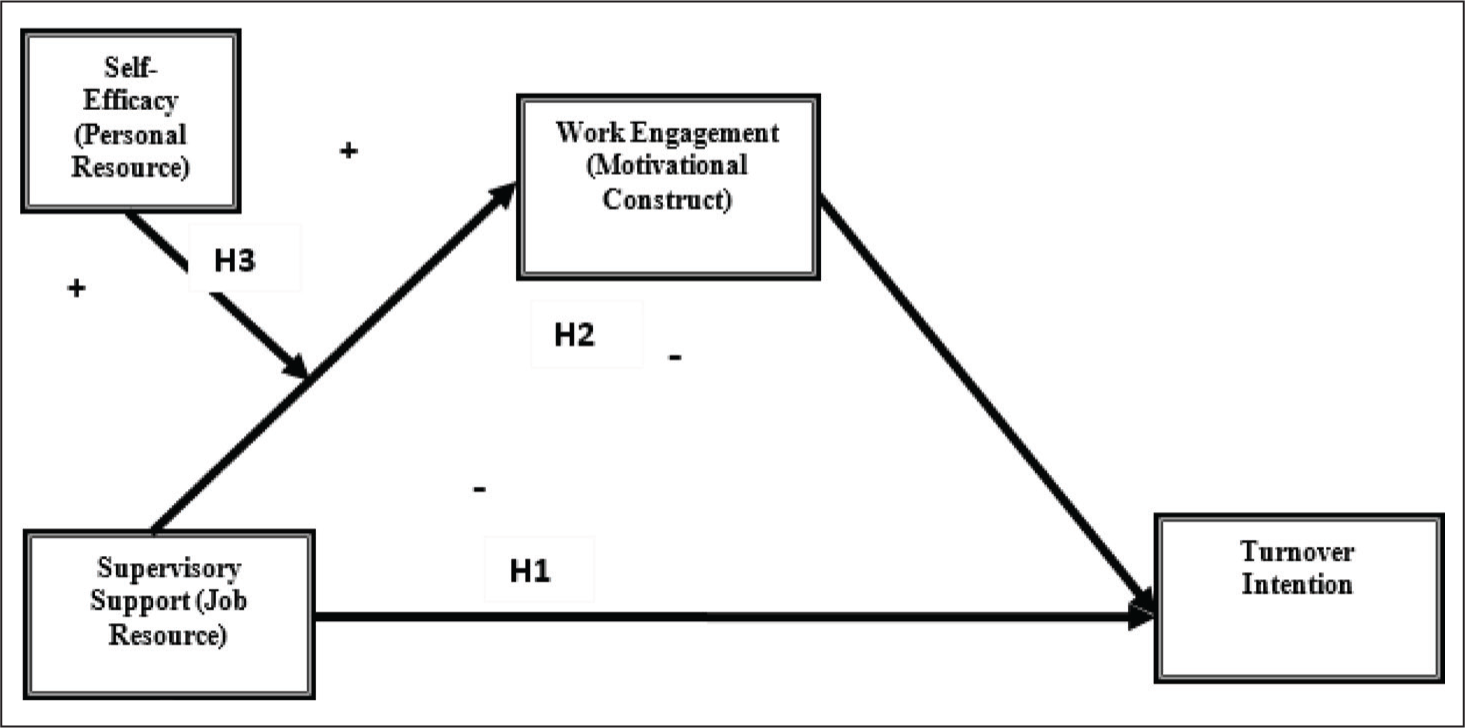
Figure 1 shows the conceptual framework of this study. Supervisory support has a direct relationship with turnover intention. More supervisory support will decrease the intention to quit the organization. WE is the motivational variable that has a mediation effect in this research. Employees who get supervisory support will engage with the work and will not develop turnover intention; the moderating effect of self-efficacy between supervisory support and WE is investigated. To examine the effects of self-efficacy, moderated mediation is used. Self-efficacious employees will engage with work as compared to those who do not engage.
Conceptual Framework.
Research Methodology
This study follows a quantitative approach, which is an efficient way to investigate the effect of self-efficacy as a moderator on turnover intention. Statistical analysis helps analyse the moderating effect. This research has variables that can be represented numerically; therefore, the quantitative design is best suited for this research. The research is conducted in non-contrived settings without the interference of the researchers. The self-administered questionnaire is used to gather the data. The researcher has sent the survey questionnaires to different branches of private and public sector banks working in Pakistan.
Population and Sample
The population of this specific study is the employees working in private and public sector banks. Convenience sampling, a sampling technique to gather data from a population that is easily accessible, is used to distribute the questionnaire. This sampling method is fast at collecting data. The time horizon is cross-sectional for collecting data in which the data is collected at one point in time. The time interval for collecting the data is 3–4 weeks.
Data Collection
The survey instrument is designed to collect data from the permanent employees of private and public sector banks. This survey collects primary data from the employees working for banks in Lahore, Pakistan. Researchers conducted the questionnaire survey to collect the data and received a good response rate of 85.27%.
Some personal information, such as gender, age, qualification, bank name and designation, and the total tenure of employees’ experience in banks, is also collected from the respondents. The respondents are asked questions on a 5-point Likert scale ranging from strongly disagree to agree strongly. The sample size for this research is 307. The questionnaire survey was sent to around 360 employees working in different banks in Lahore. A total of 307 questionnaires were analysed in the final statistical analysis.
Variables
Supervisory support is the independent variable having four items (SS1, SS2, SS3, SS4). No question was reverse-coded. The dependent variable is turnover intention having three items named in SPSS (TI1, TI2, TI3). The mediation has nine items (WE1, WE2, WE3, WE4, WE5, WE6, WE7, WE8, WE9); the mediating effects of WE are between supervisory support and turnover intention. Self-efficacy, which is the moderator of this research, has eight items namely SE1, SE2, SE3, SE4, SE5, SE6, SE7 and SE8.
Control Variables
Demographic variables taken as control variables are gender, age, education, income and work experience. Gender is one of the most commonly asked demographic questions, as it can influence how individuals respond to specific questions or topics. Differences in experiences, perspectives, or societal expectations based on gender may lead to varying answers. Age can also affect the responses, as more knowledge and experience come with age. The respondents with diverse educational backgrounds may also respond to the questions differently. Thus, it is also taken as the control variable. Income and work experience are also taken as demographic variables, as the respondents with more experience and high incomes may respond differently to the questions.
Data Analysis Techniques
The following analysis is used in the study:
Demographic analysis Descriptive analysis Reliability testing Correlational analysis Regression analysis (Moderated mediation using Hayes’ Process Macro Model 7)
Measurement of Variables
All the variables are measured on a 5-point Likert scale ranging from strongly disagree to agree strongly. Eight items borrowed from Chen et al. (2016) were used to measure self-efficacy. WE is operationalized through the shortened version of the original scale. This short version scale consists of nine items. Using these nine items to measure employee WE from the original scale still stands out. Three items were utilized to measure the intention to quit.
Results and Discussion
A total of 307 usable responses were collected out of a total of 360 distributed, the response rate being 85.27%. The highest response rate of 96.87% was from Mezan Bank, where 32 questionnaires were distributed, of which 31 were received and used. The complete analysis is presented below.
Demographic Analysis
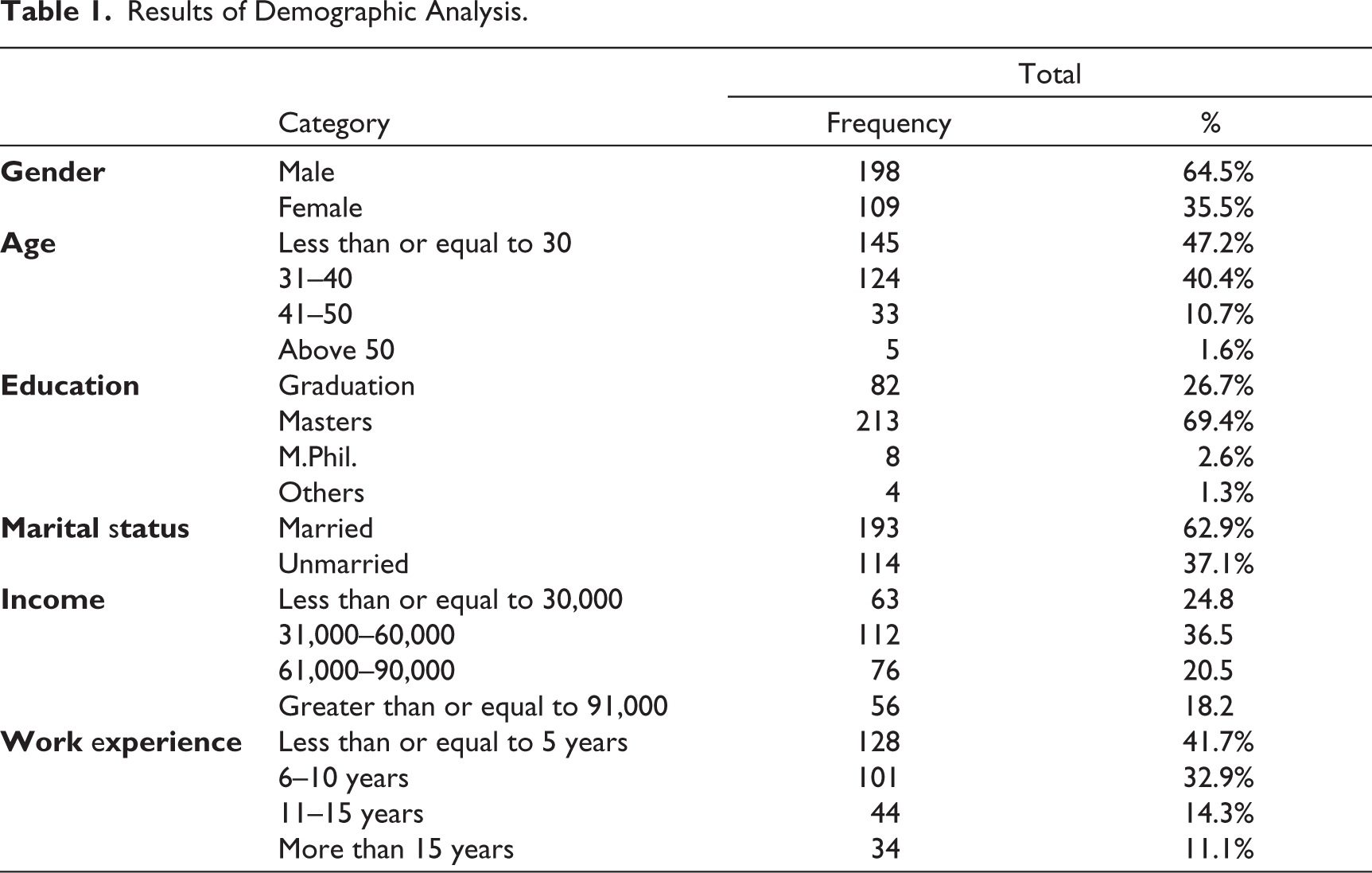
Table 1 shows the results of the demographic analysis of the sample data. The majority of respondents (64.5%) of the target population were male. 47.2% of the total sample was less than or equal to 30 years, while another key chunk of the sample was 40.4% between 31 and 40 years. A total of 69.4% of the respondents are post-graduation degree holders. The organizational tenure of most of the respondents is found to be between equal to or less than five years (i.e., 128 employees making 41.7% of the total sample). Additionally, 36.5% of the total sample size was at the income level of 30,000 to 60,000 rupees working at different designations in different Lahore private and public banks.
Results of Demographic Analysis.
Descriptive Analysis
Table 2 shows the results of descriptive statistics. The main aim of descriptive statistics is to organize, summarize, simplify and present the data. It provides information related to mean, median, mode and standard deviation. Supervisory support has a mean value of 3.773 with a standard deviation of 0.75221. Self-efficacy has a mean value of 3.98 with standard deviations of 0.521. This mean value portrays that a significant portion of our sample is experiencing an above-average value of self-efficacy. The mediator of WE is 3.76. Finally, the dependent variable turnover intention shows a mean value of 2.25 with a standard deviation of 0.91, showing that in the sample of 307 employees, most of them have the least intention to quit.
Results of Descriptive Statistics.

Correlational Analysis
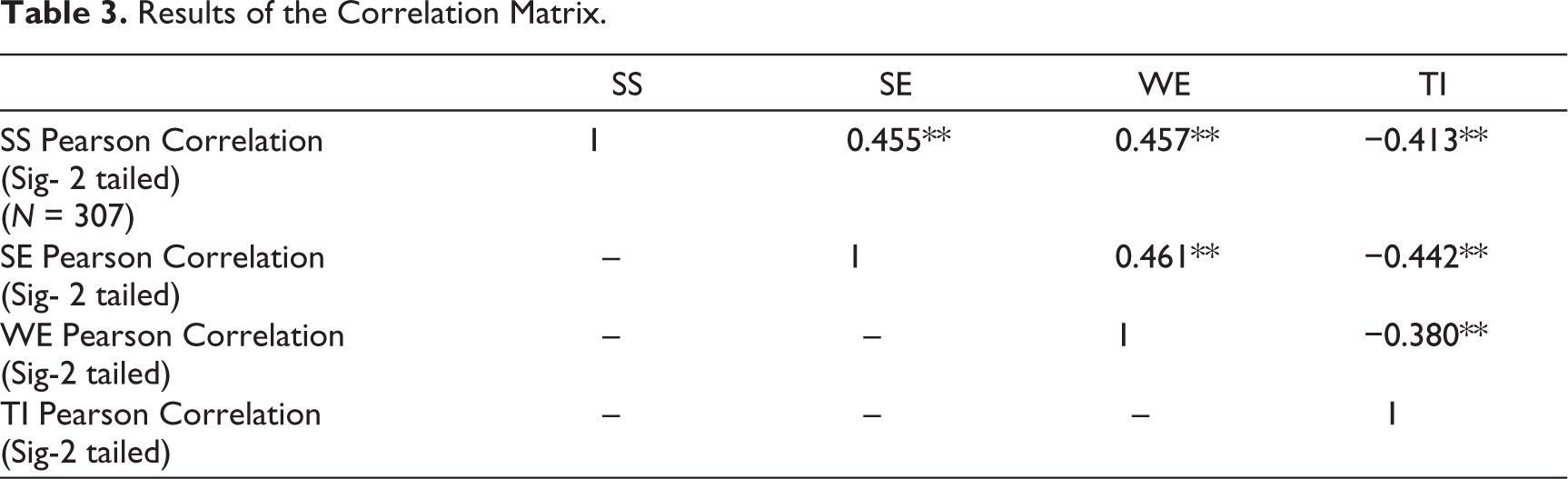
Table 3 describes the results of the correlation analysis. The association among study variables is analysed with the help of correlational analysis. The coefficient value ranges from −1 to +1 whereas 0 stands for no relationship between the variables. The correlation matrix results indicate that supervisory support has a significant and moderate correlation with self-efficacy, with a value of 0.455, moderate positive correlation with WE 0.457 and a negatively significant correlation with turnover intention r = −0. 413. Self-efficacy, which is the moderator of the study, has a significant moderate correlation with WE. It is 0.46, and with the turnover intention, it is −0.442, showing a moderate negative correlation while WE is negatively correlated with turnover intention that is r = −0.380 and p = .00 which is significant as p < .01.
Results of the Correlation Matrix.
Reliability Analysis
Table 4 shows the results of the reliability analysis. The overall reliability score is 0.829, indicating good and consistent reliability. Table 4 shows that all item scores are good, so there was no need to delete any item from the analysis. Traditionally, the overall reliability should be more than 0.7. The internal reliability of the constructs is measured on the basis of Cronbach alpha.
Results of Reliability Analysis.

Regression Analysis
To run the regression, moderated mediation Model 7 is used in this study. Hayes Evaluation Model 7 is used to test the moderated mediation with an approach of bootstrapping. This model is used to analyse the significance of the indirect effects of study variables on the different levels of moderators (Edwards & Konold, 2020). This is a valuable technique to assess whether or not an indirect effect of study variables is contingent on the different values of a moderator. This model allows the moderation and mediation integration in a combined model of regression framework. It discusses the instances through which X variable affects Y variable through the different values of W moderator, where one or both direct paths X ➙ M and M ➙ Y is moderated, concluding that the effects of X on Y are described as conditional indirect effects.
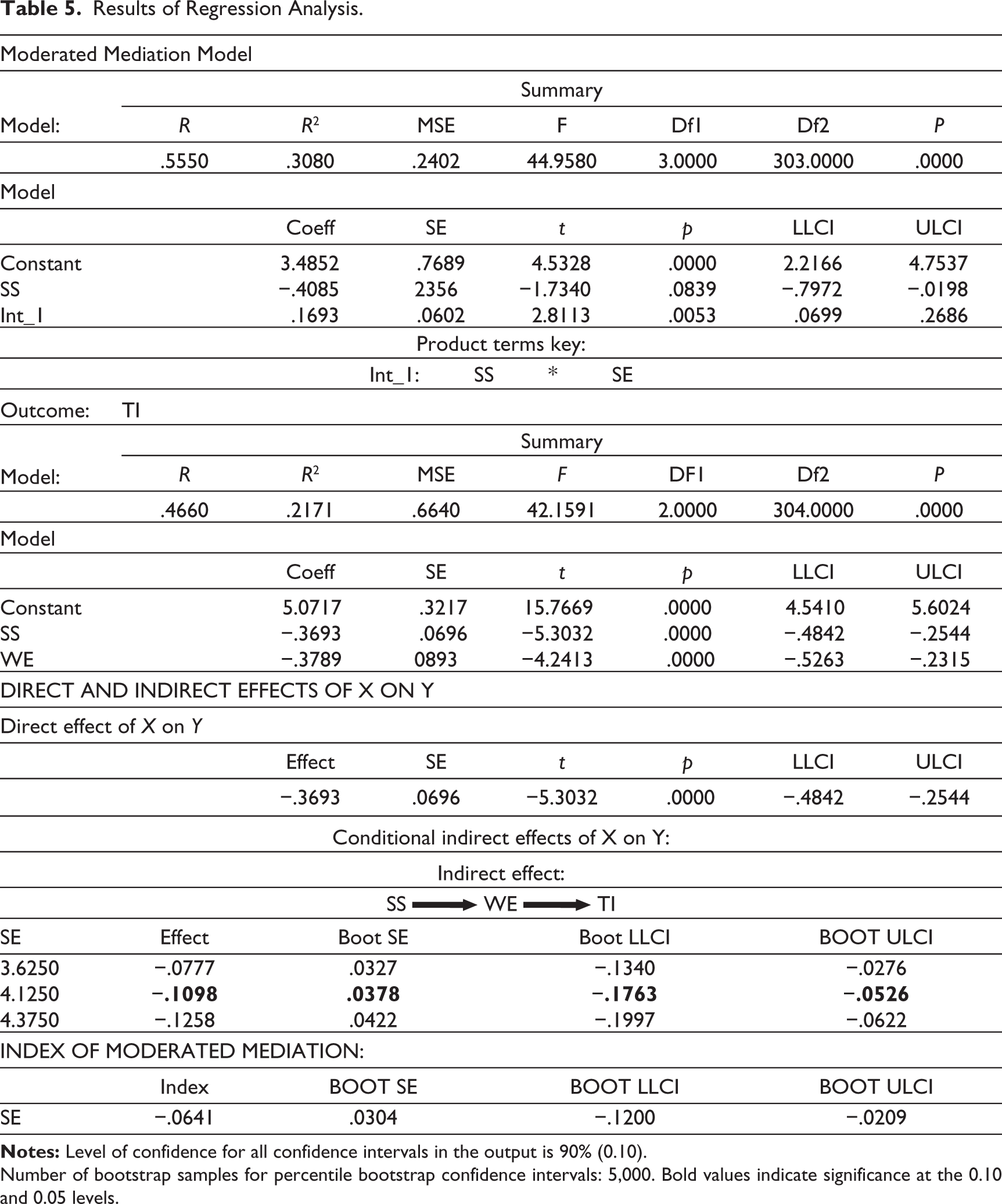
The conceptualization of Model 7 explains that the conditional indirect effect assesses how the moderator influences the first stage of the moderated mediation, specifically when the independent variable (X) affects the mediator (M). In order to test the hypothesis for the moderator, moderated mediation analyses with bootstrap methods are performed. Table 5 shows the results of the regression analysis. With various benefits, this tool first tests moderation hypotheses and corresponding moderated mediation hypotheses. Furthermore, a moderated mediation analysis identifies the stage of moderation and explains the direct and indirect effects of the constructs. It also permits a direct test of moderated mediation effects by providing an Index of Moderated Mediation (Hayes, 2017). The confidence interval is 90% (0.10) with 5000 bootstrap rotations which means there is a 10 % chance of errors, and so the relationship fits between the variables.
Results of Regression Analysis.
Number of bootstrap samples for percentile bootstrap confidence intervals: 5,000. Bold values indicate significance at the 0.10 and 0.05 levels.
Supervisory Support and Work Engagement
The R2 value of the model predicts the interaction of the independent variable, supervisory support and the moderator, self-efficacy, describing 30.8% variance for the outcome variable, WE, and the model is to be significant as p = .000 < .1. Results showed a significant relationship between supervisory support and WE (p = .08 < .10). Supervisory support is significantly related to WE, as LLCU = −0.7975 and ULCI = −.0198 have the same signs. The value of β = −0.4085, t = −1.73.
Interaction Effect of Self-Efficacy and Supervisory Support on Work Engagement
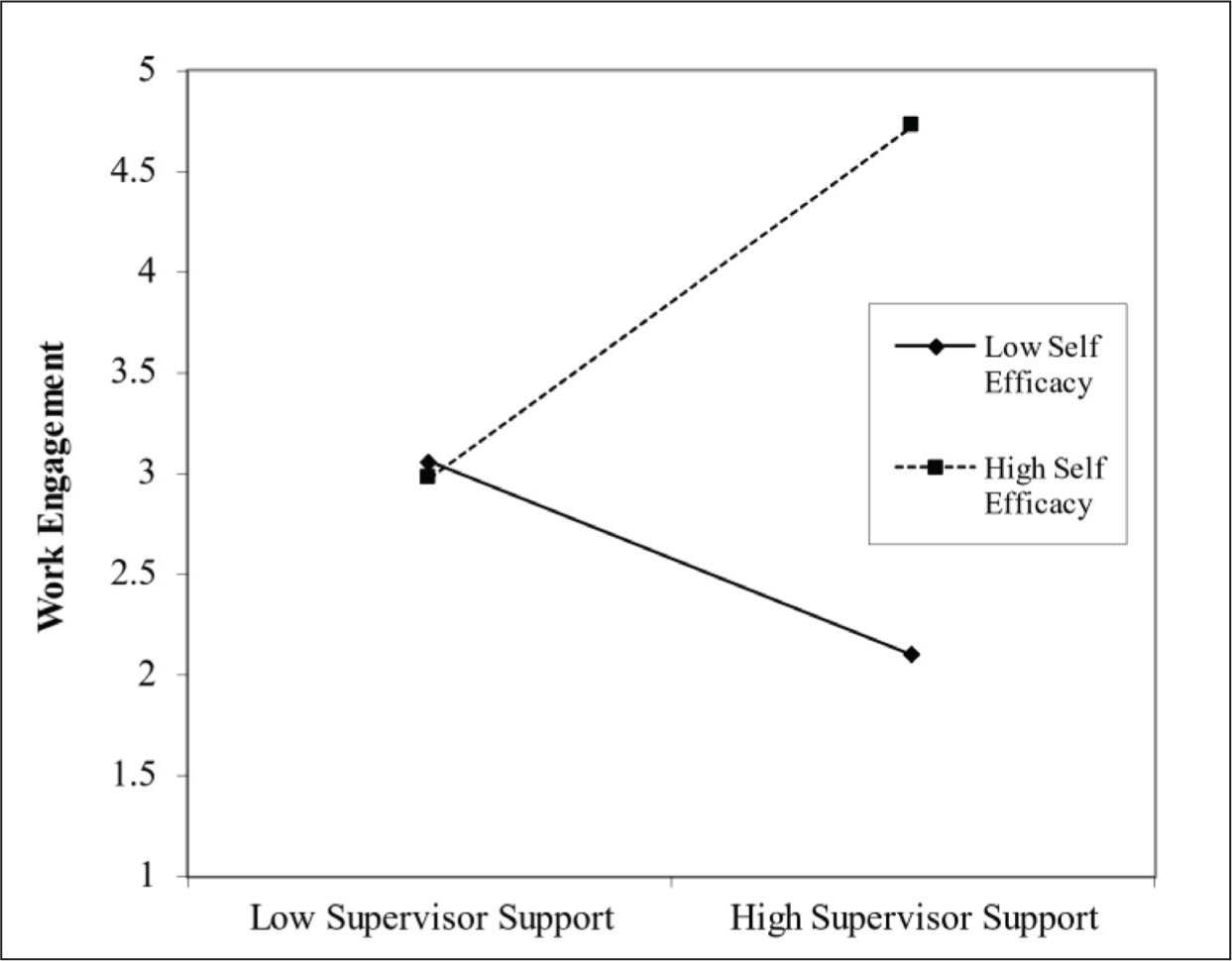
The interaction effect of supervisory support and self-efficacy on WE has shown significant results (β = 0.1693, t = 2.8113, p = .0053). The positive value of β = .1693 represents a positive impact of supervisory support and self-efficacy on WE. The result shows that the interaction values: LLCI = .0699 and ULCI = 0.2686 for supervisory support and self-efficacy have the same positive signs, which imply a significant relationship. Thus, self-efficacy moderates the relation between supervisory support and WE. The value of p is less than 0.1, p = .0053. Figure 2, which displays the graphical representation of the results, shows that supervisory support is beneficial for high self-efficacious employees who register supervisory support and report more WE. The slope is shifted upwards, showing a positive increasing role of the moderator. Even with high supervisors’ support, those who were not passionate about their work did not get engaged in work. However, in the presence of a high level of self-efficacy, high self-efficacious employees registered the supervisor’s support and engaged with their work.
Graphical Representation of Moderated Mediation Model.
Direct Impact of Supervisory Support on Turnover Intention
The direct effect of the support given by supervisors on turnover intention is negative (effect = −0.3693, t = −5.3032, p = .000), as p < .1, so it is significant also. LLCI = −0.4842 and ULCI = −0.2544 have negative and the same signs depicting that the relationship is significant. The increase in supervisory support reduces quit intention among employees. Thus, hypothesis 1 is supported.
Work Engagement and Turnover Intention
In the second model, supervisory support and WE explain R2 = 21.71% variance in the outcome variable, that is, turnover intention and the model is significant as p = .0000 < .1. WE has a significant relationship with turnover intention (β = − 0.3789, t = −4.2413, p = .000). The interaction effect of supervisory support and WE on turnover intention has shown significant results, as given in the above table. The indirect effect of supervisory support on turnover intention is negative (effect = −0.0777). Thus, the study supports the partial mediation of WE between supervisory support and turnover intention. Partial mediation occurs when both direct path effects and indirect effects through the mediator are satisfied.
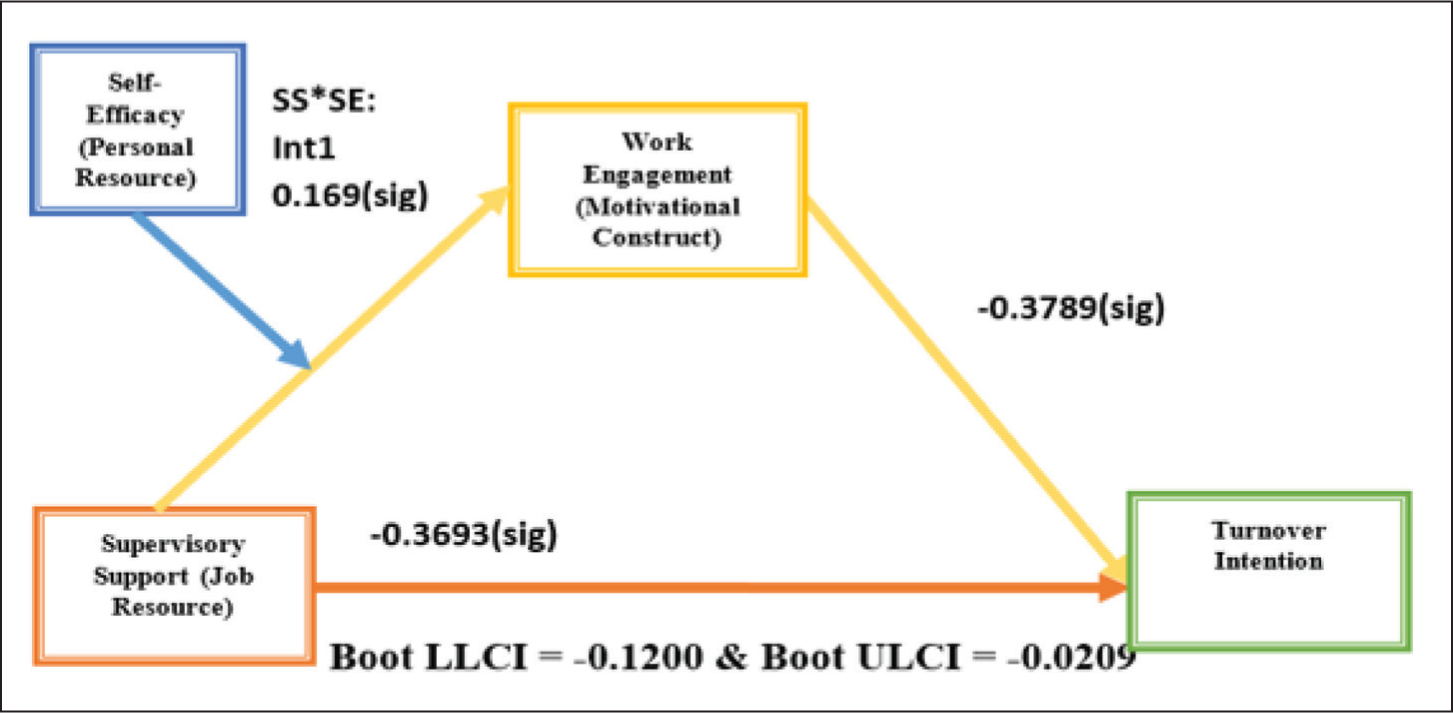
Figure 3 shows the model summary. Moderated mediation results are significant, and both values of Boot LLCI = −0.1200 and Boot ULCI = −0.0209 are negative, having the same signs. Thus, the moderated mediation results indicate that the indirect effect of supervisory support on turnover intention through WE is moderated by self-efficacy, which supports moderated mediation. Therefore, the second hypothesis is supported.
Model Summary.
Conclusions and Implications
The research aimed to investigate the relationship between one of the job resources, supervisory support and quit intention with the mediating effect of WE (Afzal et al., 2019). The study focused on commercial banks in Lahore. The data were collected from 307 permanent employees working in different private and public sector banks and belonging to different ages and income groups. The results indicated overall good reliability for the constructs α = 0.829 with significant correlation results where p < .01. A negatively significant relationship is found between supervisory support and turnover intention (p = .000 < .10, LLCI = −0.4842 and ULCI = −0.3693), which is persistent with previous research (Lloyd et al., 2015) and the first hypothesis of this study is supported. The findings of this research are persistent with previous literature. When the employees experience support from their supervisors, they get engaged in work. The provision of job resources in the form of supervisory support for the care and wellbeing of employees leads to WE as p = .08 < .1; moreover, self-efficacious employees are more persistent in facing challenging situation (Consiglio et al., 2016).
The findings for moderated mediation are satisfactorily indicating bootstrap values LLCI = −0.1200, ULCI = −0.0209. Self-efficacious individuals who get adequate support from their immediate supervisors practice more WE at elevated levels, and this argument is consistent with the Theory of Social Exchange (Cropanzano & Mitchell, 2005); thus, these findings support the third hypothesis. Both supervisory support and self-efficacy boost banking sector employees’ level of WE to reduce their intention to quit. Adequate support from supervisors makes employees feel efficacious, as Nisula (2015) investigated. In this investigation, employees who have personal resources, such as self-efficacy, can buffer the impact of job resources. These employees use their high level of personal psychological capital (self-efficacy) to appeal to supervisory support and become more engaged with their work. The research findings endorse that support provided by the supervisors can influence the employee’s decision to quit or stay in the organization.
The target population is limited to the banking sector in Lahore, depicting the service sector industry. It limits the generalizability of findings to other service sectors. The sample size of 307 employees working in different banks in Lahore does not cover the stand of maximum employees working in the same industry. This study is a cross-sectional investigation because of time constraints, and data were collected at one point in time, which raises the concern of causality. To generalize the findings, the study can be replicated for other sectors and industries other than the banking sector. A longitudinal study with the same constructs for future research is suggested to better understand the relationships between these variables. One type of job resource is supervisory support in this study; management should provide career-related support to encourage WE. This article is a call for research. Future studies should discover moderators other than self-efficacy to increase employees’ WE, such as task-specific self-efficacy.
Proposed practical implications can be used by focusing on supervisory support while simultaneously investigating self-efficacy as the significant resource that makes the employees capable of meeting the challenges of the service sector (Menguc et al., 2013). Harter (2017) and Wan Hisham (2016) argue that the service industry, in particular, faces the problem of disengaged employees, which is the cause of tangible and intangible costs. Therefore, the management needs to relate with the employees to increase interest in their work. Self-efficacious individuals get ready to work intensely, so the management should focus on facilitating employees’ efficacy level and finding out the pool of such individuals who take charge of their responsibilities, believing that they can do any task in a challenging situation. This study describes one outcome construct, which is turnover intention. In future studies, other counterproductive behaviours like job stress and emotional burnout can also be studied as consequences and separately with turnover intention.
Footnotes
Declaration of Conflicting Interests
The authors declared no potential conflicts of interest with respect to the research, authorship and/or publication of this article.
Funding
The authors received no financial support for the research, authorship and/or publication of this article.