






Abstract
Cyberloafing refers to employees’ use of organizational internet resources during work hours for activities unrelated to their job responsibilities. Although historically regarded as a negative and resource-wasting behaviour, extant literature has increasingly acknowledged the dual nature of cyberloafing. Beyond being a counterproductive workplace behaviour, it may also function as a restorative strategy for self-regulation and stress recovery. This study is based on a systematic review of 30 peer-reviewed articles, with particular emphasis on the relational predictors of cyberloafing, including leadership styles and team norms. The findings indicate that hostile leadership and co-workers’ deviant behaviours often serve as precursors to cyberloafing as a form of retaliation, whereas constructive leadership generally mitigates such behaviour unless high job demands paradoxically necessitate cyberloafing as a coping strategy. In addition, team norms reinforce cyberloafing through processes of social learning. To reconcile these relationships, this article proposes a ‘Two-way Relational Framework’ grounded in the social exchange theory and conservation of resources theory. The framework suggests that relational dynamics generate two motivational pathways leading to the same behavioural outcome: a retaliatory pathway rooted in deviant withdrawal and a restorative pathway functioning as adaptive coping. This study contributes to the literature by showing how specific relational antecedents activate these contrasting mechanisms, thereby addressing a critical issue in understanding and managing digital behaviour in contemporary work settings.
Keywords
Introduction
In today’s increasingly digitized professional environment, the boundary between work-related tasks and personal internet use has become progressively blurred (Jiang et al., 2024; Tandon et al., 2022). Cyberloafing, defined as employees’ self-initiated use of organizational internet access for non-work-related activities during paid working hours (Lim, 2002), has traditionally been conceptualized as a form of counterproductive work behaviour (CWB). Consequently, it has mostly been perceived as a significant drain on organizational productivity and resources (Nguyen et al., 2025; Wagner et al., 2012). The relevance of cyberloafing has become even more pronounced in the era of ‘quiet quitting’. Recent reports indicate that nearly 50% of Japanese workers may be classified as ‘quiet quitters’, referring to employees who limit their efforts to formal job requirements due to emotional exhaustion (Japan Times, 2025). In this context, cyberloafing can be interpreted as a form of quiet quitting, where employees prioritize online browsing over occupational efforts.
In addition, the normalization of flexible routines in modern workplaces has further contributed to the prevalence of such behaviour. Flexible arrangements such as hybrid and remote work environments reduce direct managerial visibility and supervision, thereby increasing employee autonomy and, potentially, opportunities for cyberloafing deviance (Chakraborty et al., 2024; Wang et al., 2021).
However, academic perspectives on this phenomenon have evolved significantly beyond a unidimensional view of deviance. For more than a decade now, a growing body of literature has highlighted the duality characterizing cyberloafing. This lays stress on the fact that the usage of technology at the workplace is highly context dependent (Perrigino et al., 2024; Şimşek & Şimşek, 2019). Scholars increasingly recognize that cyberloafing may serve a compensatory coping or escape function, acting as a form of ‘digital micro-break’ that enables employees to recover from workplace stressors, prevent resource depletion and restore cognitive and affective energy (Lim & Chen, 2012; Liu & Zhang, 2023; Mason, 2022; Pindek et al., 2018; Ye & Qian, 2023; Zhang, Tian, et al., 2022). Thus, cyberloafing represents a single behavioural form that may emerge from distinct psychological mechanisms (Aghaz & Sheikh, 2016; Henle, 2024).
Despite widespread acknowledgement of the dual nature of cyberloafing (deviance vs coping), there remains a lack of integrative theoretical explanation regarding the conditions that activate these differing pathways. Existing research has examined individual-level predictors such as personality traits, self-control and internet addiction (Lim & Teo, 2024; Tandon et al., 2022; Tepper, 2007). In contrast, little theoretical attention has been paid to understanding how social or interpersonal dynamics, that is, leadership behaviour, co-worker interactions and team norms, differentially trigger deviant versus restorative forms of cyberloafing. Earlier models primarily conceptualized cyberloafing as retaliatory deviance resulting from hostile workplace experiences. Conversely, studies examining constructive leadership have often treated such leadership only as a linear inhibitor of cyberloafing, without considering how elevated role demands associated with constructive leadership may paradoxically encourage cyberloafing as a coping mechanism. This is a significant omission because social interactions can become sources of resource depletion and perceived injustice, thereby fostering retaliation and coping responses.
This complexity has recently been highlighted by empirical evidence, yet no unified framework currently exists to explain these contradictory results. For instance, Zhou et al. (2023) explained that leaders’ bottom-line mentality may frame cyberloafing as a deviant response associated with social undermining. Conversely, Zhu et al. (2021) and Yang et al. (2023) also argue that ‘positive’ leadership styles, such as responsible leadership, may unintentionally boost cyberloafing by imposing heightened role demands that exhaust employees and encourage them to seek digital respite. These results seem paradoxical and contradictory in the absence of an overarching theoretical model that might allow for distinguishing between both facets of leadership.
To address this gap, the present study adopts a systematic literature review (SLR) approach, analysing 30 peer-reviewed articles to develop an integrated two-way relational framework. Unlike previous reviews, this study specifically connects relational antecedents with two distinct theoretical explanations. Drawing on the social exchange theory (SET) (Cropanzano & Mitchell, 2005), the framework proposes that negative relational experiences (e.g., incivility, ostracism or abusive supervision) constitute violations of the psychological contract. Under such conditions, cyberloafing emerges as a form of negative reciprocity, functioning as a retaliatory withdrawal response (Kayas et al., 2025; Koay et al., 2022). Simultaneously, based on the conservation of resources (COR) theory (Hobfoll, 1989), the framework argues that relational demands at the workplace (e.g., loneliness, ‘always-on’ team expectations) deplete employees’ cognitive and emotional resources. In this context, cyberloafing is engaged in, not with malicious intent but as a legitimate recovery mechanism aimed at restoring energy and maintaining long-term performance (Pindek et al., 2018; Zhu & Zhao, 2024). Critically, while the aetiology (the underlying cause) of cyberloafing may differ between retaliatory intent and resource recovery depending on the relational antecedents involved, the behavioural manifestation remains constant as a non-work-related activity. Accordingly, the framework conceptualizes cyberloafing as an equifinal (same) behavioural outcome arising from distinct motivational pathways.
To develop such a comprehensive framework, this article synthesizes the existing literature to identify the relational predictors, mediators and moderators of cyberloafing. Drawing on the principles of SET and COR theory, the identification of these variables is not treated as an end in itself; rather, it serves as the foundation for the development of an integrated conceptual framework. By incorporating these predictors and boundary conditions, the study seeks to discover the underlying ‘causal mechanisms’ of cyberloafing, specifically distinguishing between retaliatory deviance and restorative coping pathways.
Literature Review
Cyberloafing: Between Deviance and Duality
Cyberloafing refers to the non-work-related use of an organization’s internet access during work hours, such as engaging with social media, online shopping or reading news websites (Lim, 2002; Wagner et al., 2012). Organizational research has traditionally conceptualized cyberloafing as a form of CWB, often characterized as ‘time theft’ that diminishes productivity, compromises information systems and violates the employment contract (Liberman et al., 2011; Nguyen et al., 2025; Zoghbi-Manrique-de-Lara et al., 2006).
However, this understanding has evolved over time. Over the past decade, a substantial body of literature has demonstrated that cyberloafing may serve multiple functional purposes. Beyond its potentially detrimental effects, scholars have identified cyberloafing as a form of compensatory coping or a ‘digital micro-break’ that enables employees to manage workplace stress and restore depleted mental resources (Henle, 2024; Lim & Chen, 2012; Pindek et al., 2018). Consequently, cyberloafing should be considered a behavioural outcome driven by distinct psychological mechanisms in response to environmental cues, which may be either retributive or restorative in nature.
Theoretical Framework: A Two-way Relational Model
This study seeks to consolidate fragmented findings on relational predictors through a two-way relational framework. Specifically, we argue that antecedents of cyberloafing, such as leadership styles and team norms, do not directly determine an individual’s engagement in cyberloafing. Rather, these antecedents activate two distinct theoretical processes, namely social exchange and resource conservation, which generate separate psychological pathways explaining why the behaviour occurs, without altering its intrinsic nature. By conceptualizing the model around dual explanatory pathways instead of dual behavioural forms, we clarify that the distinction lies in the underlying mechanism and intentions rather than in the behaviour itself.
Retaliatory or Deviance Pathway
SET proposes that workplace relationships are governed by norms of reciprocity. When employees experience negative relational treatment, such as abusive supervision or toxic leadership, they perceive a violation of their psychological contract. Within this pathway, cyberloafing functions as a mechanism for negative reciprocity. As noted by Koay et al. (2022), employees engage in cyberloafing to ‘get even’ by intentionally reducing work effort. In this context, the behaviour is purposeful and retaliatory, serving as a passive means of penalizing the organization for perceived mistreatment. Thus, the aetiology of cyberloafing within this pathway is rooted in negative reciprocity and the desire to restore equity through withdrawal behaviour.
Restorative or Coping Pathway
In contrast, the restorative pathway underlying cyberloafing is more appropriately explained through the COR theory, which posits that people strive to preserve available resources such as energy and emotional well-being while avoiding resource depletion. High-demand antecedents, including workplace ostracism, ‘always-on’ norms and the paradoxes associated with responsible leadership, consume employees’ psychological resources. On the other hand, positive leadership styles such as empowering, servant and ethical leadership serve as protective resources that buffer against stress, thereby diminishing the need for employees to engage in cyberloafing for recovery purposes (Peng, Nie & Chen, 2023; Tan et al., 2024).
Relational Predictors of Cyberloafing
Expanding on this two-way framework, we examine several relational processes identified in the literature that may activate these pathways:
Leadership behaviour: Leadership is a significant predictor of cyberloafing and operates through both mechanisms. Leadership styles such as abusive supervision or authoritarianism align with the SET pathway (Duffy et al., 2002; Henle et al., 2009; Klotz & Buckley, 2013; Liu et al., 2012; Lu et al., 2024; Malik et al., 2025), as employees may retaliate against hostile leaders through cyberloafing. Research indicates that when supervisors display hostile behaviour, employees engage in cyberloafing as a form of revenge against perceived mistreatment. In contrast, contemporary research has shown that ‘positive’ leadership styles, such as responsible leadership, may paradoxically increase cyberloafing (Zhu et al., 2021; Zhu & Zhao, 2024). From our perspective, the COR process provides an explanation for this relationship: the high role demands and ethical expectations imposed by such leaders can deplete employees’ psychological energy, unintentionally encouraging cyberloafing as a means of recovery and recharge (Yang et al., 2023). Co-worker influence and team norms: Peers also influence cyberloafing through parallel explanatory pathways. Employees who experience social conflict or ostracism from peers activate the SET pathway, with cyberloafing serving as a withdrawal behaviour that helps them escape social stress (Askew et al., 2014; Gellmers & Yan, 2023; Robinson et al., 2013; Wu et al., 2012). Conversely, while permissive team norms may encourage cyberloafing through social learning, supportive co-worker climates can help prevent such behaviour (Blanchard & Henle, 2008; Lim, 2002). Within the COR framework, emotional support from colleagues mitigates stress and reduces the likelihood of employees resorting to cyberloafing as a recovery mechanism (Zhou et al., 2023). In this parallel pathway, cyberloafing is driven by a resource-recovery process, illustrating how the same behaviour may serve a restorative function when triggered by resource depletion.
Methods and Systematic Review of the Literature
An SLR identifies and evaluates relevant studies within a specific domain using standardized procedures (Jahan et al., 2016). The review process generally consists of three primary stages: planning, conducting and reporting (Brereton et al., 2007). First, there is a need to clearly define the topic or purpose of the study, as it guides the whole review process. Then, appropriate databases are systematically searched using explicit and transparent procedures to ensure methodological rigour. After establishing inclusion and exclusion criteria, relevant literature is identified, extracted, evaluated and summarized. Finally, the findings are reported and disseminated (Xiao & Watson, 2019).
Methodology
Systematic Literature Review
This study employs an SLR to analyse existing research and develop a framework for understanding the relational factors affecting cyberloafing. A systematic review not only synthesizes and extends existing knowledge but also contributes to theory development, addresses key research questions and provides the direction for future studies (Snyder, 2019). The findings are subsequently organized within a balanced analytical framework and presented concisely.
Data Collection
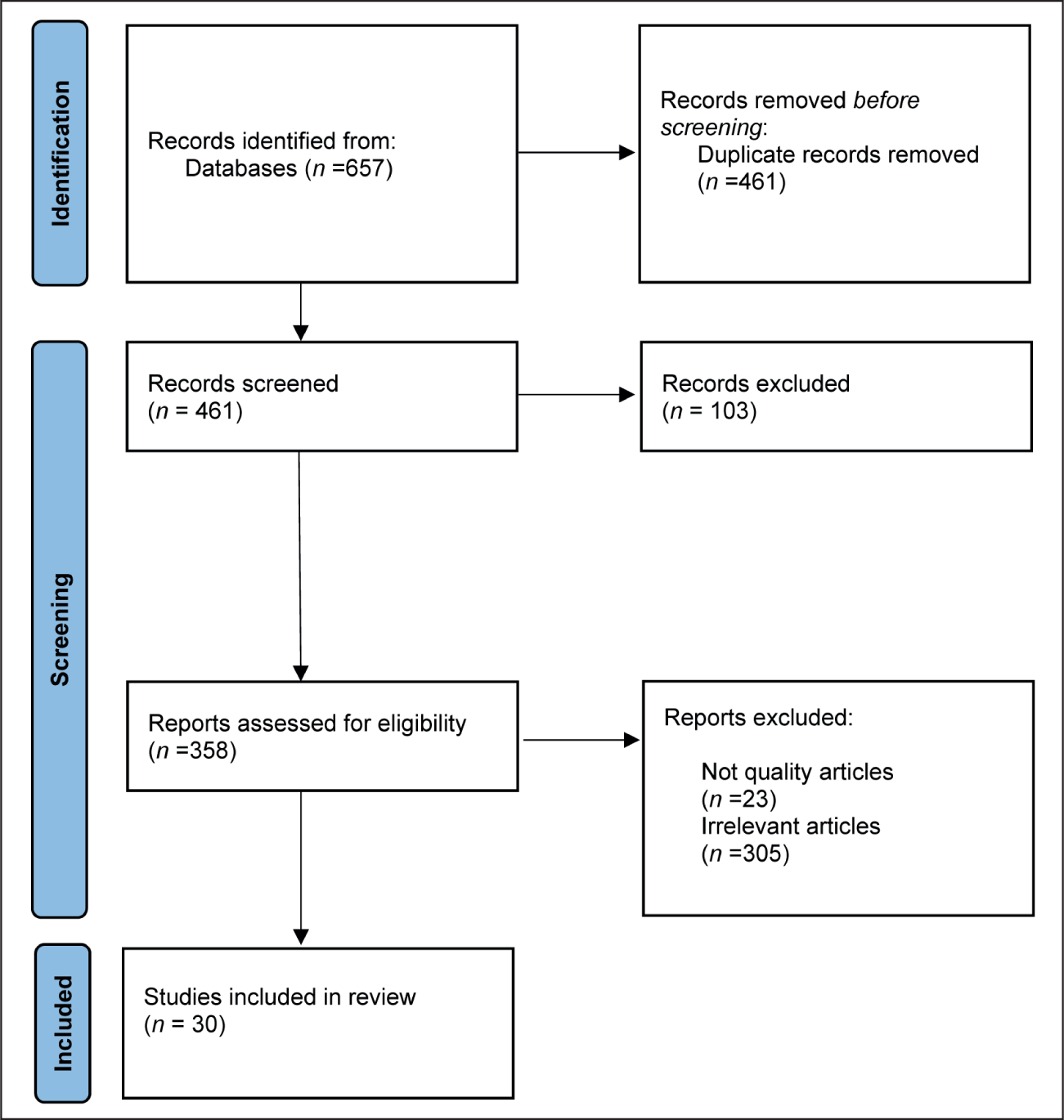
An SLR follows a transparent and reproducible process for collecting and analysing research. This process begins with defining the research questions, followed by identifying studies relevant to the established inclusion and exclusion criteria. The selected studies are then evaluated for quality, and their findings are synthesized. This process can be divided into four main stages: search strategy, selection criteria, quality assessment and data extraction. These have been presented in Figure 1.
Search Strategy
A search strategy was developed to retrieve relevant literature. The strategy was designed for two databases, Scopus and Web of Science, using the search terms ‘Cyberloafing’, ‘Cyberslacking’ and ‘Internet Misuse’. The terms were searched within titles, abstracts and keywords. A total of 657 records were identified.
Selection Criteria
Duplicates: A total of 196 duplicates were removed using R software.
Scope: Only research studies related to business, management, accounting and psychology were included.
Fields: The selected studies belonged to the fields of business economics, psychology, computer science, information library science, telecommunications and social sciences.
Type: Only journal articles were considered. Conference papers, book chapters, reviews and other non-journal publications were excluded.
Quality Assessment
Source: Only original research publications were included, while review and conference papers were excluded.
Process: Duplicate records were checked to ensure data quality. A total of 103 articles were retrieved, and their abstracts were reviewed for quality assessment.
Data Extraction
Removal: 328 articles were excluded following the quality assessment.
Final selection: 30 articles were selected for the final review after applying the inclusion and exclusion criteria.
Figure 1 illustrates the inclusion and exclusion process.
To ensure methodological rigour, the review extended beyond result extraction. First, the methodological strength of the included studies was evaluated to assess the rigour of their research designs and data analysis procedures. Although no studies were eliminated based on quality, the predominance of cross-sectional research designs was identified as a limitation. We specifically focused on studies that examined the relational antecedents of cyberloafing. Studies addressing other antecedents, such as job stress and work load, were excluded because they did not fall within the purview of the research question.
Second, data extraction emphasized the theoretical mechanisms put forward in the primary studies. Rather than merely coding whether leadership ‘increased’ or ‘decreased’ cyberloafing; the analysis focused on the underlying causes. In particular, findings within each group were categorized according to whether cyberloafing was explained as a compensatory or retaliatory reaction to perceived injustice (the retaliatory mechanism) or as a regulatory response to resource depletion or stress (the restorative mechanism). This coding technique was crucial for developing a holistic framework to better understand the underlying processes associated with cyberloafing.
Descriptive Analysis
After reviewing the literature and selecting 30 publications, a content analysis was conducted to classify the papers into themes and categories. These themes provided a structured basis for the final evaluation and digitalization of the literature. This review examines trends in cyberloafing research and its causes over the past decade, with particular attention to aspects such as journal sources, publication trends, geographical distribution, research methodologies and study characteristics. Table 1 provides the list of journal sources.
List of Journals.
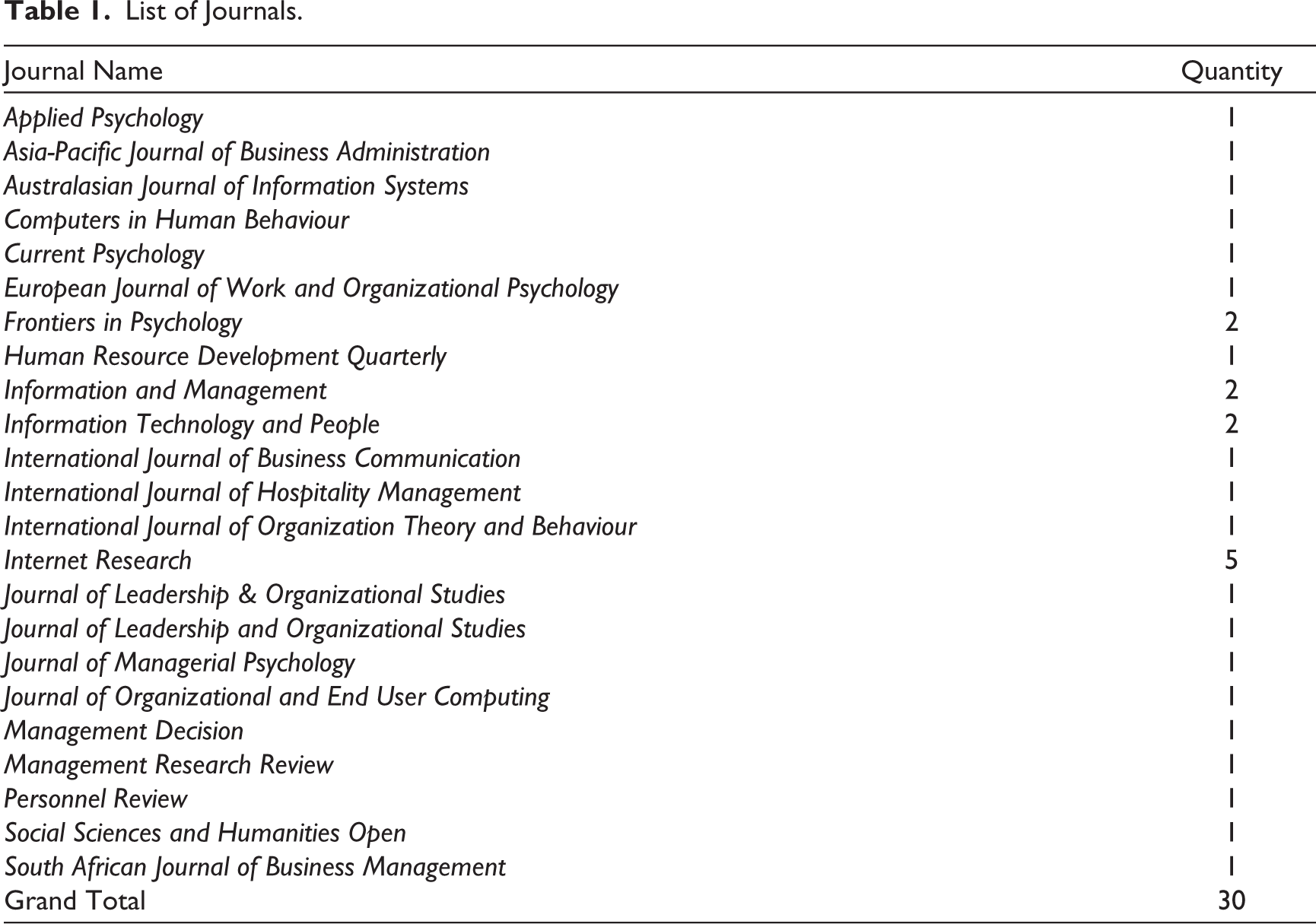
The data cover 30 articles published in various journals. Internet research leads with five articles, followed by three journals with two articles each, and the rest with one article each. This suggests that research is spread across diverse fields, but internet research stands out as key for internet-related organizational studies.
The data show a slow start in research, with only one article per year from 2006 to 2018. Interest grew steadily from 2019 and peaked in 2023, with 11 articles. While 2024 saw a drop to five titles, the overall trend of 30 articles reflects growing focus and activity in this field. Figure 2 illustrates the publication trends over the years.
Publication Trends over the Years.
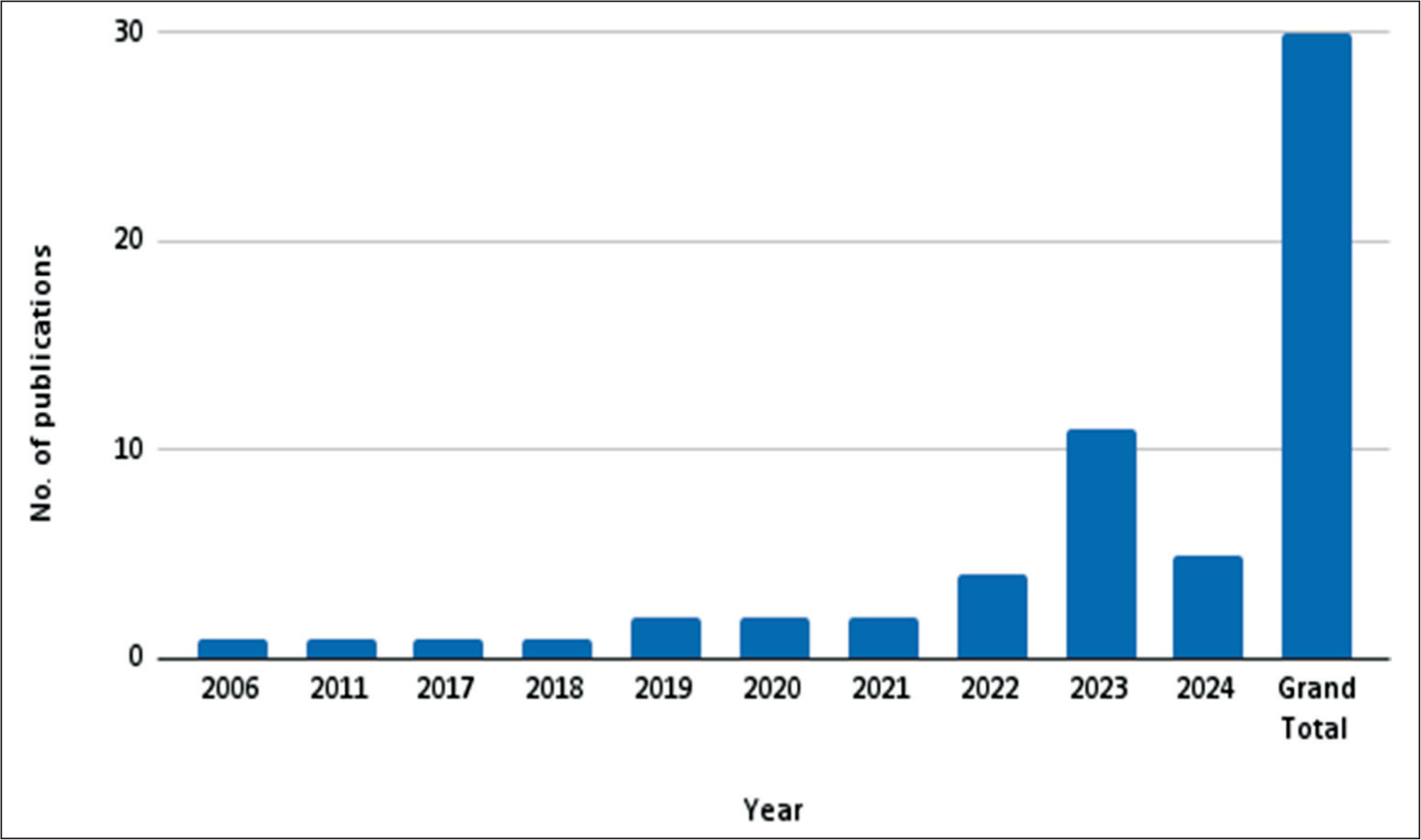
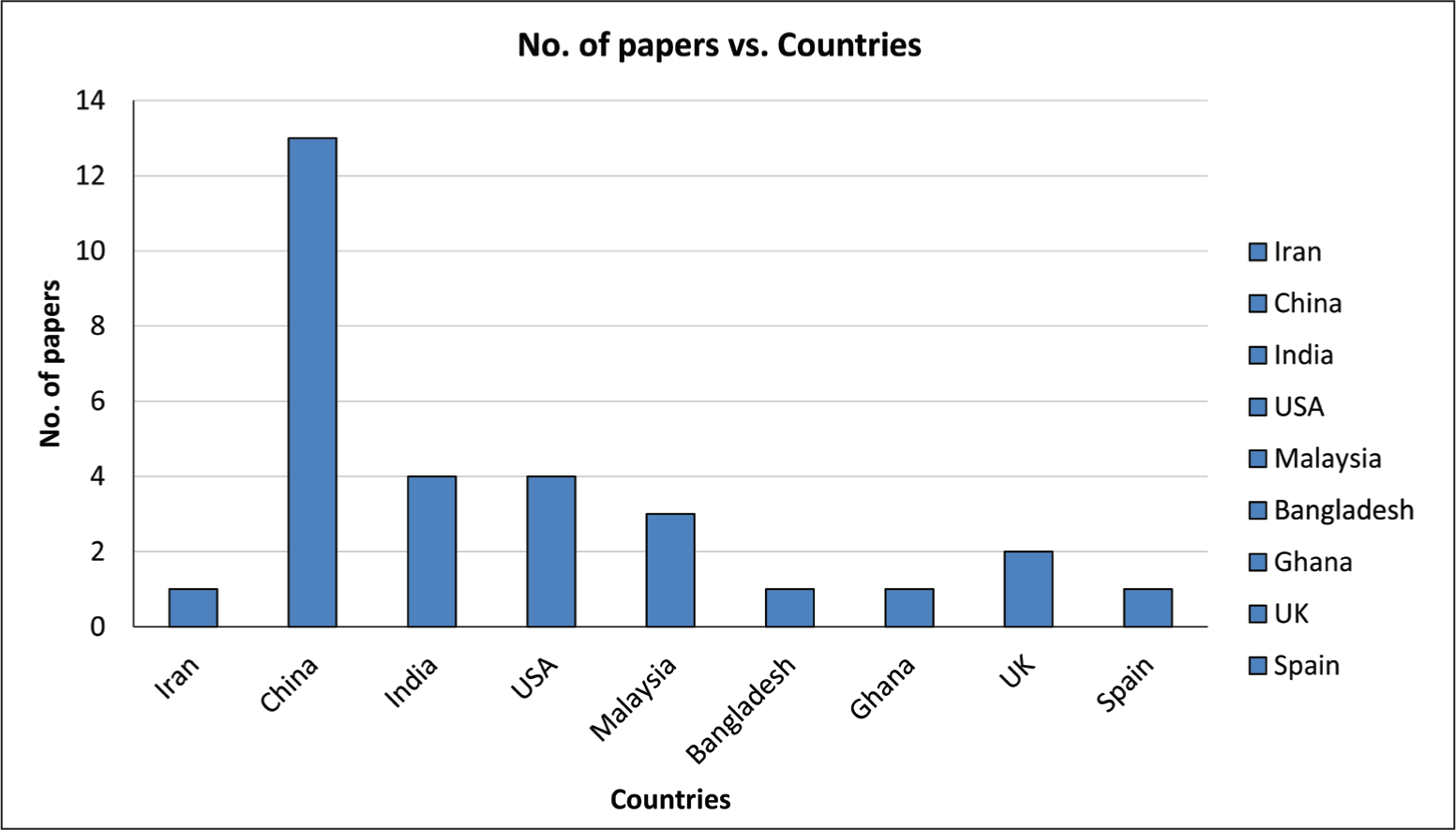
Figure 3 presents the country-wise distribution of research contributions. China leads with 13 papers, while the USA and India have 4 papers each. Malaysia has contributed 3 papers; the UK, 2; and Iran, Bangladesh, Ghana and Spain, 1 paper each. These findings highlight China’s dominant role in this research area and the comparatively limited contributions from other regions.
Geographical Spread of the Articles.
Results and Conceptual Framework
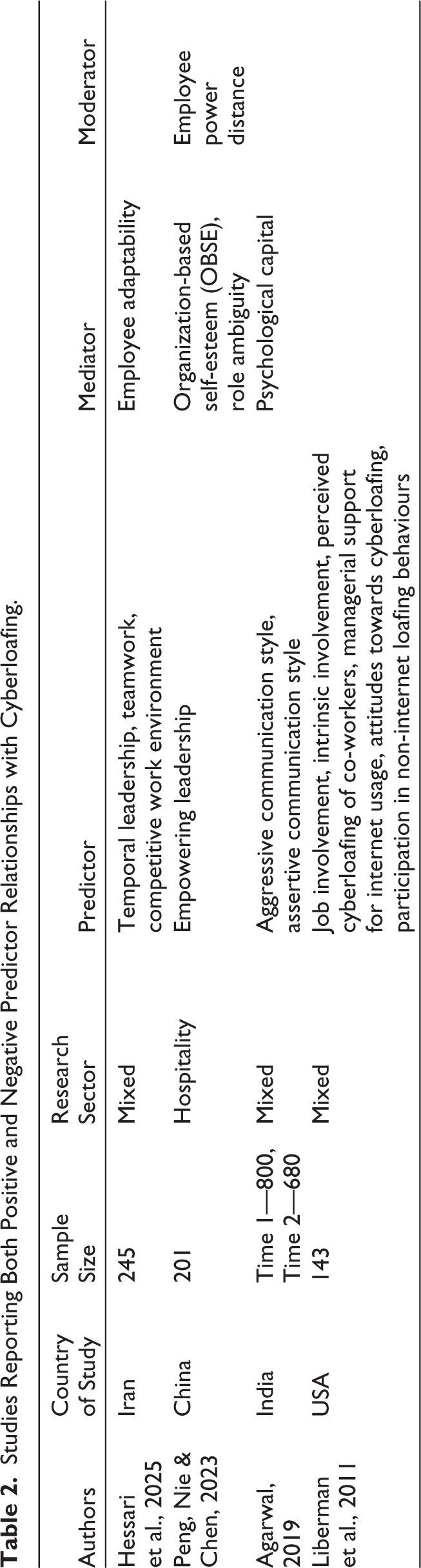
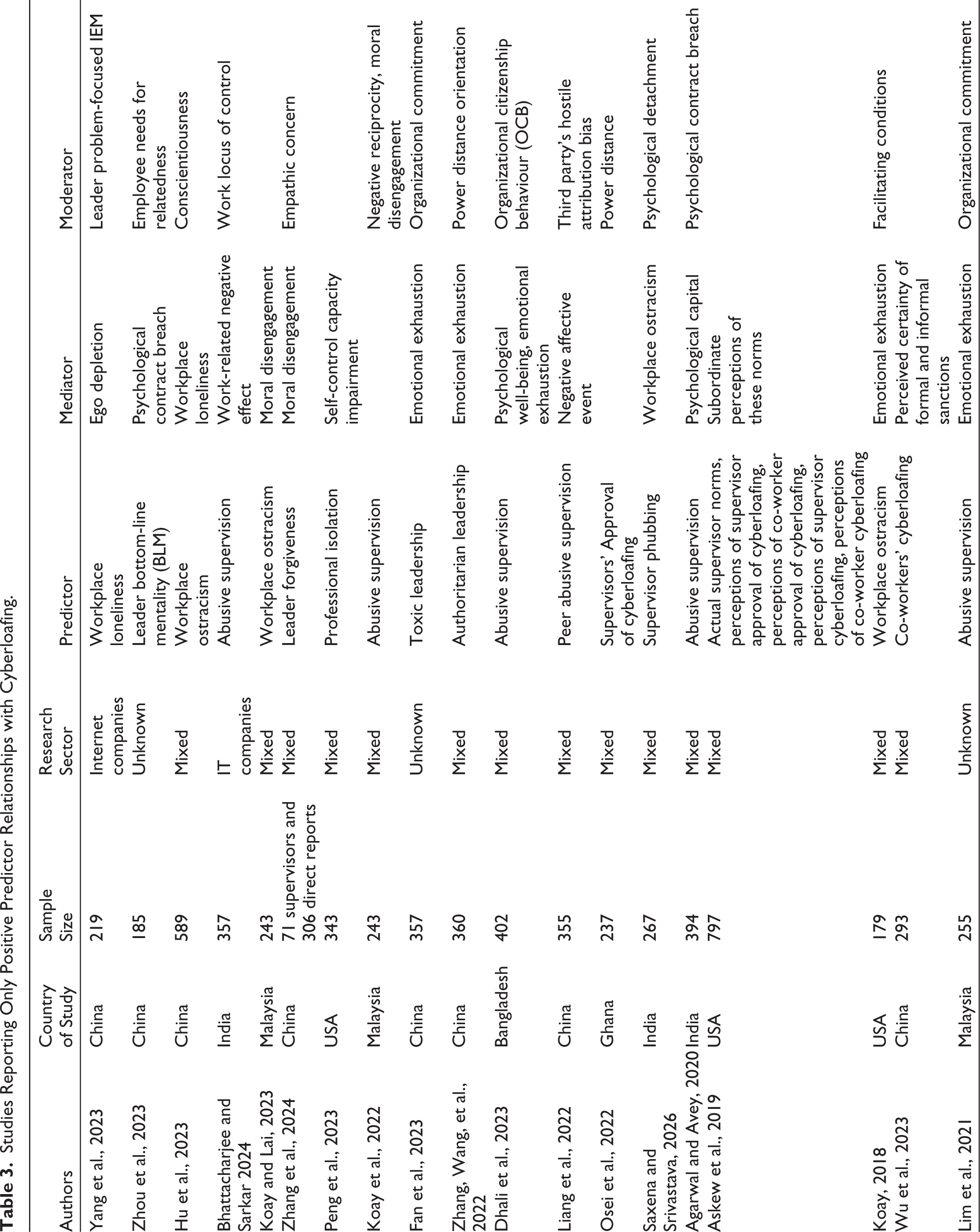
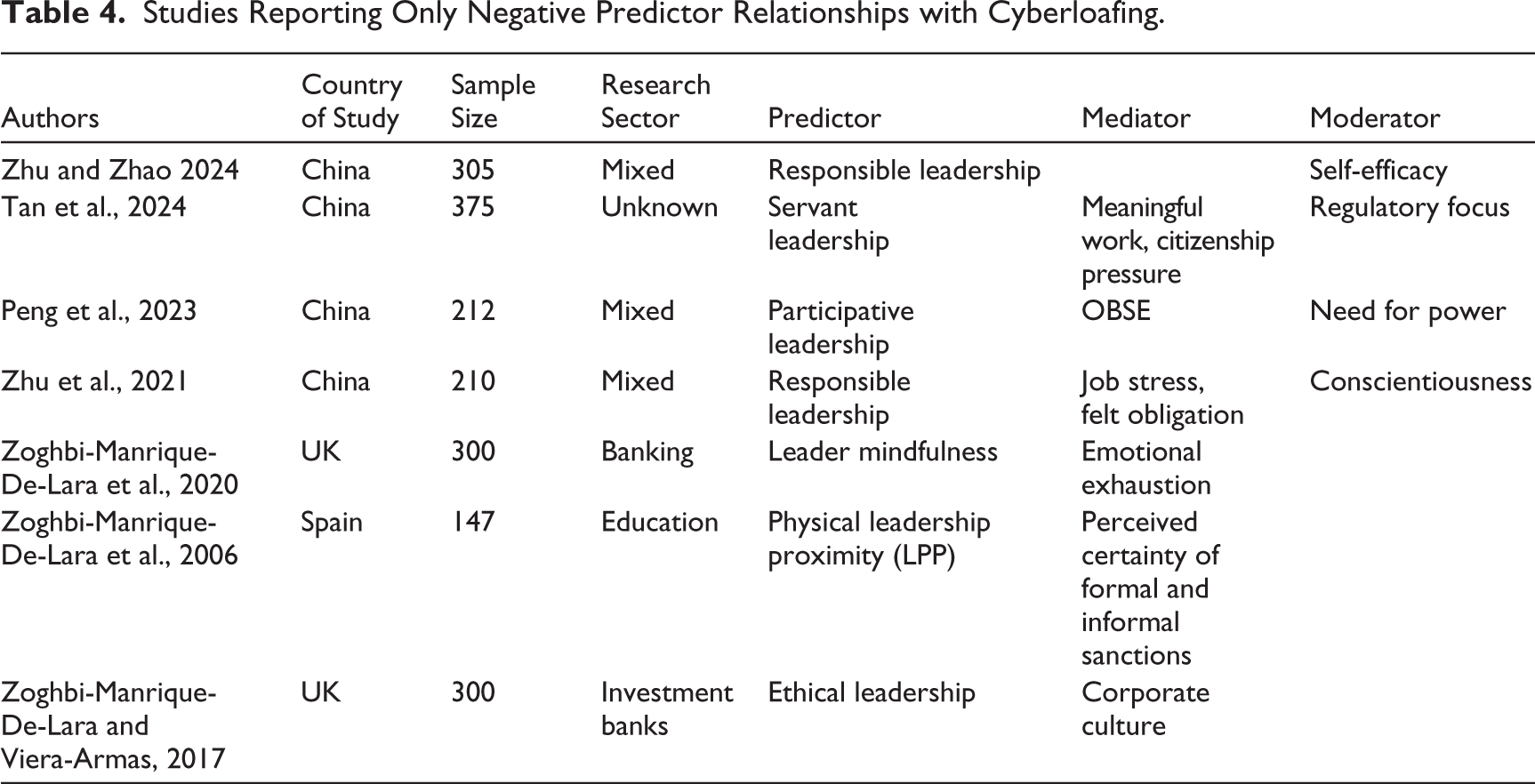
In total, 30 unique predictors, 19 mediators and 15 moderators were identified from Tables 2–4. This section highlights only the key relational predictors, mediators and moderators. These variables were selected because they appeared most frequently in the reviewed studies and aligned strongly with the frameworks of SET and COR theory. The social learning theory (SLT; Bandura & Walters, 1977) is also employed as a supporting framework. By organizing these findings within the two-way relational framework, we illustrate how different variables can lead to the same equifinal behaviour through distinct pathways.
Studies Reporting Both Positive and Negative Predictor Relationships with Cyberloafing.
Studies Reporting Only Positive Predictor Relationships with Cyberloafing.
Studies Reporting Only Negative Predictor Relationships with Cyberloafing.
This approach enables the discussion to remain focused on factors that are both strongly supported by evidence and theoretically aligned with leading perspectives on interpersonal behaviour in the workplace.
Relational Antecedents
Destructive leadership behaviours were the most frequently studied relational antecedents of cyberloafing. These behaviours refer to supervisory actions that harm subordinates, exert excessive control or disregard employees’ needs (Einarsen et al., 2007). Abusive supervision was examined in five studies and was found to deplete employee resources and evoke perceptions of injustice. Toxic leadership, authoritarian leadership, leader bottom-line mentality and supervisor phubbing each appeared in one study and similarly reflected resource-depleting patterns. These results suggest that leadership styles that weaken or overcontrol employees activate the retaliatory pathway, fostering a sense of injustice and motivating employees to ‘get even’ through internet use.
In contrast, constructive leadership behaviours were associated with lower levels of cyberloafing. These behaviours occur when leaders create a positive environment that supports employees and benefits the organization (Harris & Kuhnert, 2008). Such leadership styles typically function as resource-enriching factors within the restorative pathway, thereby reducing employees’ need to cyberloaf for recovery purposes.
Responsible leadership appeared in two studies. One study identified it as a resource-enriching factor, whereas another viewed it as potentially paradoxical depending on certain contextual mediators. Ethical leadership, servant leadership and empowering leadership were each reported once and consistently reflected resource-enriching effects. Leaders who empower, support and acknowledge their employees appear to reduce cyberloafing by promoting gains in employee resources. This highlights a key condition underlying the restorative pathway: even ‘positive’ leadership styles may unintentionally encourage cyberloafing when they impose excessive role demands, thereby increasing employees’ need for restoration.
Team norms also played an important role. According to Nelson et al. (2019), team norms refer to the ways people interact and depend on one another while working within an organization. Workplace ostracism and co-worker cyberloafing or peer cyberloafing modelling appeared in three studies each and demonstrated resource-depleting effects. These findings suggest that negative co-worker interactions, such as ostracism, serve as relational triggers for the retaliatory pathway, while co-worker modelling facilitates cyberloafing through social learning mechanisms.
Mediating Mechanisms
Several mediating mechanisms explained how key relational factors affected cyberloafing. Emotional exhaustion was the most frequently reported mediator, appearing in five studies. It reflected the restorative mechanism within the restorative pathway, where cyberloafing functions as a response to energy depletion. Other mediators, including psychological contract breach and role ambiguity, appeared once each and similarly reflected resource-depleting conditions associated with relational and role stress, thereby activating the retaliatory pathway.
Positive mediators were fewer but remained significant. Organization-based self-esteem appeared in two studies, while felt obligation and meaningful work were each reported once. These mediators reflected resource-enriching pathways, suggesting that supportive workplace relationships enhance employees’ sense of value and responsibility, thereby reducing cyberloafing by diminishing the perceived need for recovery or retaliation.
Moderating Conditions
Moderators influenced the strength of the relationships among the vital antecedents, mediators and cyberloafing. Power distance orientation appeared in three studies and reflected resource-depleting effects in high power distance contexts. Conscientiousness was reported in two studies and reflected resource-enriching effects. Other moderators, including psychological detachment, locus of control, organizational commitment and self-efficacy, appeared once each, indicating meaningful but less frequently examined effects.
The moderators can be classified into two categories. Individual-level moderators included conscientiousness, psychological detachment, locus of control and self-efficacy. Contextual-level moderators included power distance orientation and organizational commitment. This classification demonstrates that both personal traits and organizational conditions jointly shape the psychological processes leading to the equifinal outcome of cyberloafing. These boundary conditions determine the extent to which a relational antecedent is likely to activate a specific motivational mechanism.
For more detailed information, the features of the included studies are presented in Tables 2–4. These tables outline the parameters investigated across different contexts as predictors, mediators and moderators, along with study characteristics such as country, sample size and sector. Table 2 presents studies reporting both positive and negative predictor relationships with cyberloafing, Table 3 reports studies examining only positive associations and Table 4 summarizes studies predicting negative relationships.
Integrated Conceptual Framework
Drawing from our synthesis, we propose a conceptual model (Figure 4) that links relational antecedents to two distinct theoretical constructs. We argue that cyberloafing represents an equifinal outcome. It is a singular behavioural manifestation that can emerge through different psychological processes. Whether motivated by a desire to ‘get even’ (SET) or a need to ‘recharge’ (COR), the resulting behaviour (non-work-related internet use) remains the same.
Integrated Two-way Relational Framework.
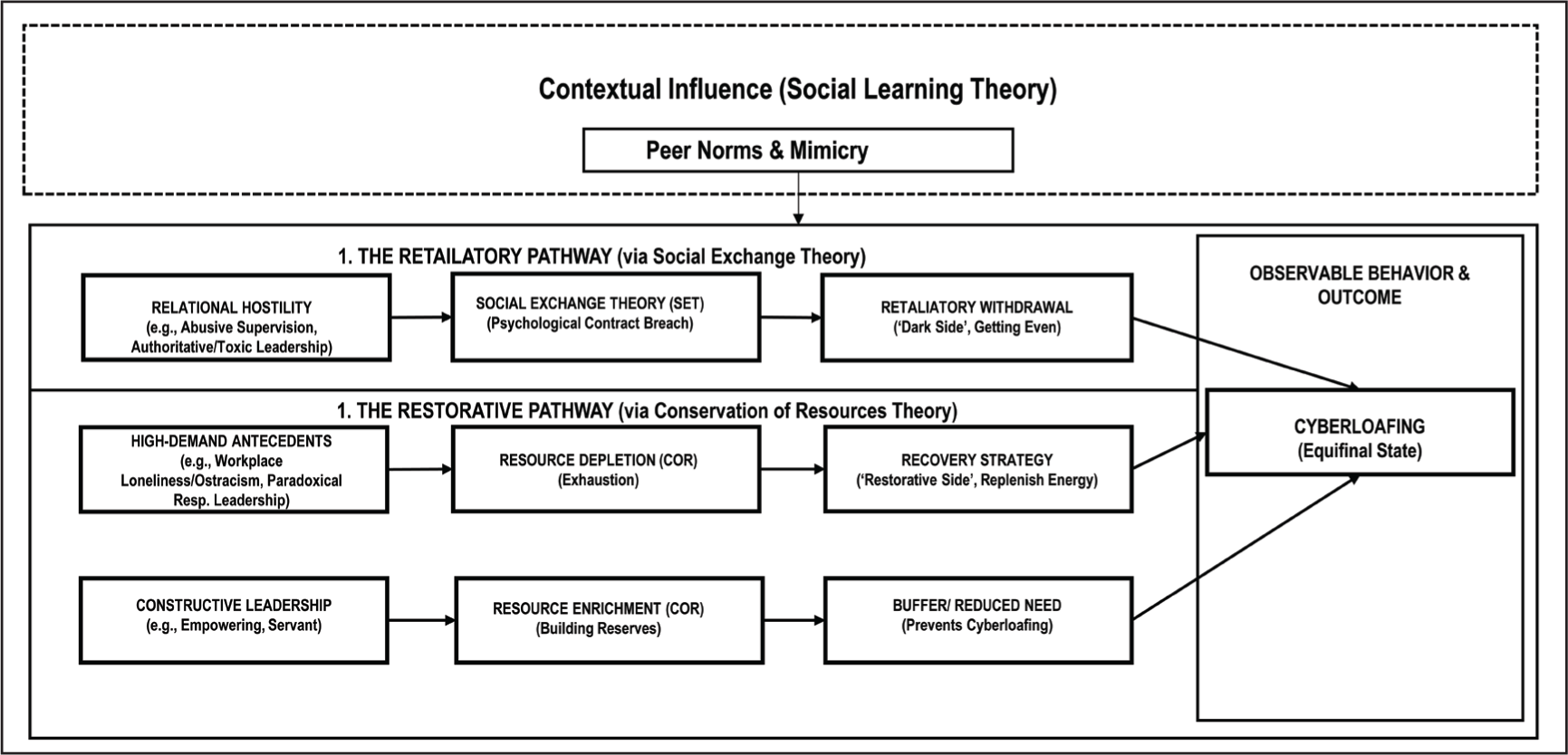
The retaliatory pathway (through SET): Initiated by relational aggression (e.g., abusive supervision), this pathway reflects the retaliatory mechanism underlying cyberloafing. Such behaviours are perceived by employees as violations of the psychological contract. Consequently, employees may retaliate against negative interactions with supervisors or customers by withholding effort and engaging in loafing behaviours. Within this mechanism, cyberloafing functions as a form of deviant withdrawal.
The restorative pathway (through the COR theory): Driven by fluctuations in resources, this pathway reflects the ‘restorative’ counterpart leading to the same behavioural outcome and operates in two directions:
Depletion (the trigger): Job-demanding antecedents (e.g., workplace loneliness/isolation, paradoxical responsible leadership) deplete cognitive and emotional resources, prompting employees to engage in cyberloafing as a recovery strategy aimed at restoring energy. Here, the behaviour is motivated by an adaptive coping mechanism. Enrichment (the buffer): On the other hand, constructive leadership behaviours (e.g., enabling and servant leadership) serve as resource-enriching factors. By providing employees with a reserve of resources, such leadership behaviours mitigate the stressors that might otherwise lead to cyberloafing.
Contextual constraint (SLT): Team norms serve as an additional contextual layer. When employees observe co-workers openly engaging in cyberloafing, the behaviour is learned through imitation and gradually becomes normalized, regardless of resource conditions or grievances. This adds a dimension of social permission to the equifinal outcome, independent of the underlying motivational pathway.
Discussion
This research proposes a two-way relational framework by consolidating the relational predictors of cyberloafing. In contrast to prior binary perspectives, the findings suggest that leadership and team-process dynamics operate through two distinct mechanisms: a retaliatory pathway (motivated by hostility) and a restorative pathway (motivated by depletion). By conceptualizing these as dual explanatory pathways leading to the same behavioural outcome, the framework clarifies why cyberloafing occurs without redefining the intrinsic nature of the behaviour itself. Within this perspective, leadership and co-worker/team norms emerge as the primary relational antecedents of cyberloafing.
Among detrimental leadership styles, abusive supervision, toxic leadership, authoritarian leadership and bottom-line leadership behaviours (with supervisor phubbing also emerging as a significant predictor) were strongly associated with elevated levels of cyberloafing (Bhattacharjee & Sarkar, 2024; Fan et al., 2023; Saxena & Srivastava, 2026; Zhang, Wang, et al., 2022; Zhou et al., 2023). Such studies confirm that when supervisors are hostile, controlling or neglectful, employees perceive injustice and disengage online to restore a sense of fairness and ‘get their own justice’. This aligns with the retaliatory mechanism of the framework, in which cyberloafing functions as a form of negative reciprocity.
Conversely, responsible, ethical, servant and empowering leadership styles were generally negatively associated with cyberloafing because they promote fairness, recognition and support (Peng, Nie & Chen, 2023; Tan et al., 2024; Zhu et al., 2021; Zhu & Zhao, 2024; Zoghbi-Manrique-De-Lara & Viera-Armas, 2017). However, our review also shows a key exception: when these positive leadership styles become excessive, they may inadvertently increase cyberloafing by depleting energy resources and increasing the need for recovery (Zhu et al., 2021; Zhu & Zhao, 2024). This paradox is explained through the restorative mechanism of the framework, where the motive shifts from retaliation to resource recovery.
In addition, co-worker and team norms played a vital role. Both workplace ostracism and co-worker cyberloafing were positively associated with cyberloafing, suggesting that exclusion (which activates the retaliatory mechanism) and peer influence (which activates the mimicry mechanism) can similarly encourage employees to engage in online withdrawal behaviours (Hu et al., 2023; Koay & Lai, 2023; Wu et al., 2023).
Several mediators further described these relationships within the two-way framework. Affective exhaustion emerged as a consistent mediator in the relationship between abusive leadership and cyberloafing (Fan et al., 2023; Zhang, Wang, et al., 2022), supporting the restorative pathway. Psychological contract breach also acted as a mediator of the retaliatory pathway, indicating that when roles are ambiguous or unfairly enacted, employees are more likely to engage in withdrawal behaviours (Peng, Nie & Chen, 2023; Zhou et al., 2023). In contrast, felt obligation, meaningful work and organization-based self-esteem were associated with reduced cyberloafing (Peng, Hou, et al., 2023; Tan et al., 2024; Zhu et al., 2021). Collectively, these mediators illustrate the distinct psychological processes underlying the behaviour.
Furthermore, several moderators influenced these relationships. Power distance orientation and conscientiousness were the most frequently examined ones, followed by psychological detachment, locus of control, organizational commitment and self-efficacy. Taken together, these findings demonstrate that personal characteristics and organizational environments determine which motivational pathway (retaliatory or restorative) becomes activated in response to leadership dynamics (Fan et al., 2023; Hu et al., 2023; Osei et al., 2022; Zhang, Wang, et al., 2022; Zhu & Zhao, 2024).
Theoretical Contributions
The primary contribution of this review is the formalization of the two-way relational framework as an integrative, theory-organizing structure. This framework clarifies the equifinal nature of cyberloafing by demonstrating how a single behavioural outcome may emerge through distinct motivational pathways. First, this review extends SET (Cropanzano & Mitchell, 2005) in conceptualizing the retaliatory pathway. When employees perceive a breach of the principle of reciprocity in their exchanges with their superiors or peers, they may respond through withdrawal behaviours or covert retaliation (Blau, 1964). Destructive leadership styles and workplace ostracism consistently emerged as predictors of cyberloafing because employees interpreted them as forms of unfair treatment. As a result of this perceived unfairness, employees responded by withholding work effort through online disengagement (Fan et al., 2023; Koay & Lai, 2023). This supports Henle’s (2024) assertion that retaliation is an important motive for cyberloafing and extends SET by showing that hidden internet activities can function as a form of social exchange regulation under conditions of perceived injustice.
Second, the results suggest that the COR theory (Hobfoll, 1989) provides a useful conceptualization of the restorative pathway. Employee cyberloafing appears linked to resource‐depleting demands, as employees experiencing high job demands may resort to cyberloafing activities to replenish their depleted resources (Zhang, Wang, et al., 2022). In contrast, positive leadership behaviours typically provide resources such as justice and trust, thereby reducing the need for cyberloafing (Peng, Nie & Chen, 2023). Fundamentally, this model also explains the ‘paradox of positive leadership’. Although responsible leadership generally has a negative relationship with cyberloafing (Yang et al., 2023; Zhu et al., 2021), excessive demands associated with positive leadership may unintentionally contribute to employee depletion. Employees may then engage in cyberloafing to reenergize themselves. In this way, our model offers an explanation for how ‘good’ leadership can sometimes produce ‘undesirable’ behaviour: not out of malice, but as a response to resource depletion. By distinguishing this restorative mechanism from the retaliatory one, the framework provides greater theoretical precision in explaining how the same behaviour (cyberloafing) may be motivated by either recovery-oriented or retaliatory processes depending on the relational context.
Although the model is primarily grounded in COR and SET, it also incorporates support from SLT (Bandura & Walters, 1977) regarding peer relationships. Existing evidence suggests that workers tend to imitate the actions and behaviours of their co-workers, particularly when such behaviours appear to be ‘normalized’ within the organization (Bandura & Walters, 1977; Osei et al., 2022). These three perspectives together provide a comprehensive understanding of the occurrence of cyberloafing. Rather than viewing cyberloafing as a fragmented phenomenon, our framework integrates these views into a unified explanation. SET proposes that cyberloafing may emerge as a retaliatory response to perceived unfair treatment. COR suggests that people may indulge in cyberloafing to recover and conserve depleted energy resources. Meanwhile, SLT explains that people may adopt such behaviour after observing others engage in it. Although the underlying reasons behind cyberloafing may differ, the behaviour itself remains the same. It represents a single equifinal response through which employees react to their work environment.
Practical Implications
The research offers practical implications that extend beyond the traditional punitive approach to reducing cyberloafing. Effective management is no longer about monitoring employee behaviour; rather, it is about building supportive relationships and maintaining employee resources. Interventions should therefore be aligned with the underlying root cause of cyberloafing. When the behaviour is driven by retaliatory intent associated with the deviance pathway, it indicates a breach in the psychological contract, including perceived injustice or toxic supervision. In such cases, firms should incorporate relational risk indicators into employee surveys or 360-degree feedback systems to identify subtle signs of mistreatment while emphasizing trust-building rather than increased surveillance.
Conversely, when cyberloafing is driven by the restorative mechanism of the coping pathway, it reflects resource depletion and exhaustion. Under these conditions, punitive measures are likely to be counterproductive, as the solution lies in restoring energy rather than enforcing stricter compliance.
Importantly, companies need to understand that even positive leadership styles may produce unintended consequences. Evidence suggests that high-demand leadership can unintentionally contribute to employee depletion, creating a responsible leadership paradox. Thus, leaders should adopt a ‘resource-sensitive’ approach that balances high-performance expectations with adequate opportunities for recovery. Managers must therefore move beyond merely preventing toxic behaviour; they should proactively monitor the collective energy levels of their teams. Practical interventions may include establishing realistic workloads and permitting ‘digital micro-breaks’ such as short periods of approved internet surfing. By normalizing these breaks and framing them as legitimate recovery strategies rather than inherently negative acts of cyberloafing, leaders can shift from being perceived as regulators to resource providers. Such an approach may reduce employees’ inclination towards covert and unregulated cyberloafing. This shift recognizes that the motivations and mechanisms underlying cyberloafing vary according to the organizational context.
Furthermore, since people learn behaviours through observation, companies should establish and communicate clear rules regarding internet use. This is particularly important in hybrid and remote work settings, where it is difficult to control people. While companies may permit limited and purposeful internet use for short breaks, they should ensure that such practices do not become a normalized pattern of unproductive online behaviour.
Finally, increased cyberloafing may serve as an early indicator of ‘silent quitting’. By treating cyberloafing as an early warning signal rather than just a policy violation, managers can shift from a policing role towards a more supportive and preventive approach. Proactive interventions, such as role realignment or career coaching, may help reverse withdrawal tendencies before they develop into silent quitting.
Gaps and Future Directions
Research on leadership styles, co-worker norms and cyberloafing remains at a relatively early stage. Existing studies have primarily focused on authoritarian, abusive and ethical leadership, while transformational, servant and authentic leadership styles have received comparatively limited attention. Moreover, current evidence is drawn predominantly from collectivist and high power distance societies such as China and India, limiting the generalizability of findings to individualistic cultures and diverse industrial contexts. Comparative research is also required for cultural, generational and occupational variations of cyberloafing norms. A relational perspective that integrates leadership, co-worker norms and climate of the organization may offer a more comprehensive explanation of the pathways leading to this equifinal outcome. Furthermore, much of the existing research relies heavily on cross-sectional surveys and self-reported data, limiting causal inference and raising the risk of bias. The use of mixed-method, longitudinal and real-time approaches, such as diary-based studies and digital tracking methods, could improve the accuracy and depth of behavioural investigations.
Furthermore, prior studies have concentrated largely on direct relationships while overlooking important mediators, including psychological safety, emotional exhaustion and reciprocity. Moderators such as personality traits, relations with co-workers and job crafting have also received insufficient attention. Although co-worker behaviour is primarily examined through the lens of SLT, distinctions between cooperative and competitive processes remain unaddressed.
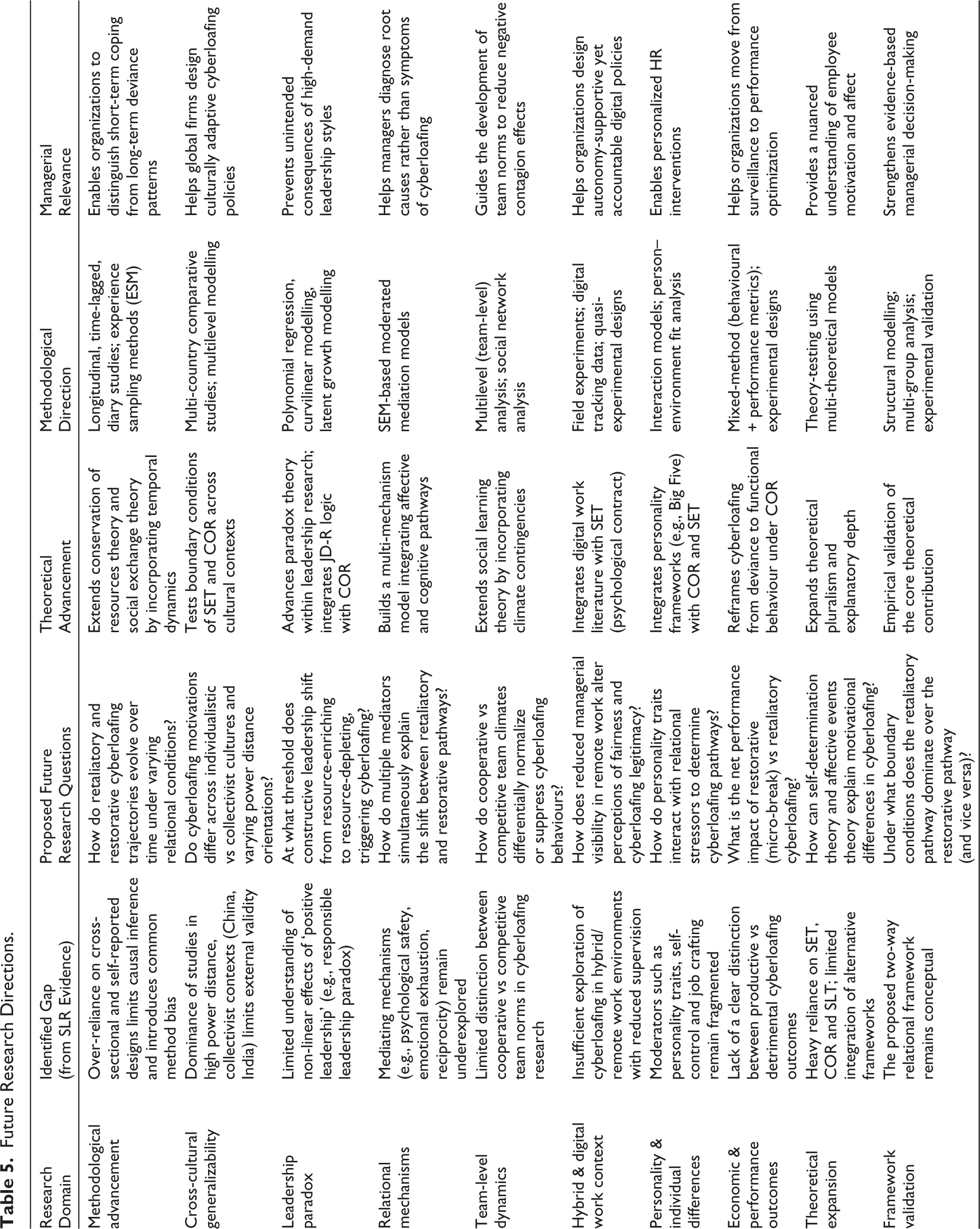
Finally, current theoretical frameworks may not fully capture the complexity of browsing behaviours associated with cyberloafing. Researchers should therefore explore alternative perspectives such as self-determination theory and affective events theory, to gain valuable insights into how social influences shape the diverse motivational pathways leading to cyberloafing. Table 5 further illustrates a detailed and extended future research agenda that may be pursued in subsequent studies.
Future Research Directions.
Limitations and Future Research Directions
Several limitations of the current review should be acknowledged. First, only English-language peer-reviewed journal articles indexed in Web of Science and Scopus were considered. Consequently, relevant insights from books, dissertations and other forms of grey literature may have been excluded. Second, the majority of the reviewed studies relied on cross-sectional self-report data. Such designs limit the ability to establish causal inferences and may also introduce common method bias. Third, most of the included studies were conducted in Asian countries, particularly China and India, which may limit the generalizability of the results to other organizational and cultural contexts. Fourth, considerable variations existed in how cyberloafing was conceptualized and measured across studies, reducing consistency and complicating comparative analysis.
These limitations also highlight several important directions for future research. Future studies should expand the coverage to other databases, languages and non-traditional sources of literature. Moreover, the use of longitudinal designs, experimental methods and multi-source data collection techniques would strengthen causal inference and reduce methodological bias. Cross‐cultural comparative research would be particularly valuable in determining whether relational antecedents of cyberloafing operate similarly across geographical and cultural settings. At a more fundamental level, future research should empirically test the proposed ‘Integrated Two-way Relational Framework’. Although we have conceptually integrated SET and COR perspectives, empirical investigation is required to directly examine the distinct mechanisms of retaliation and recovery that may lead to the same cyberloafing behaviour. To verify the mechanisms identified in this review, researchers should also investigate specific boundary conditions, such as the circumstances under which constructive leadership shifts from functioning as a resource buffer to becoming a resource drain, and how such shifts influence employees’ motivation from restoration-oriented behaviour to withdrawal-oriented behaviour.
Conclusion
This article synthesizes extant literature and proposes an ‘Integrated Two-way Relational Framework’, suggesting that cyberloafing is an equifinal behaviour that may emerge through different psychological trajectories. The review demonstrates that destructive leadership and negative co-worker behaviour are associated with the activation of retaliatory processes, whereas highly demanding forms of constructive leadership may paradoxically trigger recovery-oriented processes. In addition, co-worker and team norms emerge as crucial amplifiers of these dynamics. Overall, organizations should move beyond focusing solely on employees’ screen-based behaviour and instead consider the underlying relational motivations driving cyberloafing. In particular, it is important to distinguish between the different psychological pathways, namely ‘getting even’ versus ‘recharging’, that may manifest through the same digital behaviour.
AI Use
The authors acknowledge the use of AI-assisted tools, specifically ChatGPT-5 and Grammarly, to enhance the clarity, coherence and linguistic quality of the article. These tools were employed solely for language refinement and structural improvement; no generative AI content was accepted without rigorous human review and verification. The authors retain full responsibility for the conceptualization, analysis, interpretation and integrity of the scholarly content.
Footnotes
Data Availability Statement
The data used in this study are not applicable for sharing as no data sets were generated or analysed.
Declaration of Conflicting Interests
The authors declared no potential conflicts of interest with respect to the research, authorship and/or publication of this article.
Funding
The authors received no financial support for the research, authorship and/or publication of this article.