







Abstract
Background:
Relevant evidence has addressed the negative impact of food processing on health. However, maternal ultra-processed food consumption is poorly investigated.
Aim:
To analyze food consumption according to the degree of food processing, dietary diversity, and associated socio-demographic factors during pregnancy.
Methods:
Cross-sectional data was taken from a birth cohort in Rio de Janeiro, Brazil, with 142 pregnant women. We assessed diet using a qualitative food frequency questionnaire and classified food items according to the NOVA classification system as non-ultra-processed-foods and ultra-processed-foods. Non-ultra-processed-food and ultra-processed-food scores were calculated, reflecting weekly intake of more than one subgroup. Dietary diversity of the non-ultra-processed-food diet fraction was described according to the Food and Agriculture Organization guidelines. The association between food consumption and socio-demographic factors were investigated using logistic regression models.
Results:
Over 60% of the pregnant women reported consumption of at least three non-ultra-processed-food groups. However, only 25% had adequate dietary diversity. The level of education (Complete high school: odds ratio, 5.36; 95% confidence interval, 1.73–16.65) was associated with regular intake of “meat and eggs.” Among the ultra-processed-food score, 27% of the participants described a weekly consumption of at least two ultra-processed-food subgroups. White women (odds ratio, 2.63; 95% confidence interval, 1.05–6.63) had a higher chance of reporting “packaged ready meals” consumption.
Conclusions:
This study shows a high weekly consumption of ultra-processed-food subgroups and low dietary diversity of the non-ultra-processed-food fraction of the diet of pregnant women in Brazil. Our results elucidate the influence of socio-demographic characteristics on diet quality during pregnancy.
Keywords
Introduction
The hypothesis that early nutrition is part of the programming of obesity and associated co-morbidities at later ages is likely to be multifactorial. It has been demonstrated that maternal diet and lifestyle factors during the fetal period and early life are related to long-lasting fetal programming and might affect the risk of non-communicable diseases in adulthood (Ojha et al., 2013; Koletzko et al., 2012). Moreover, the global prevalence of obesity in children and adolescents has increased around 10% in the last four decades and has achieved about a 20% rise in several low- and middle-income countries, including Brazil (NCD-RisC, 2017).
Industrial food processing is now shaping global food systems and is a key determinant of diet and health (Baker et al., 2020). A food classification system based on the nature, extent, and purpose of food processing, named NOVA, has been applied worldwide to understand the impact of modern industrial food systems on human health (Monteiro et al., 2018). NOVA classifies foods into four groups: unprocessed and minimally processed foods; processed culinary ingredients; processed foods; and ultra-processed foods (UPF). The Brazilian Dietary Guidelines recommend a healthy diet pattern based on a variety of unprocessed and minimally processed foods, mostly from plants, and avoiding the consumption of UPFs (Brazil Ministry of Health, 2014).
UPF are formulations manufactured from cheap ingredients that result from a sequence of industrial processes (hence “ultra-processed”). As well as high amounts of fat, sugar, and salt, the manufacture of UPF typically includes industrial ingredients, such as hydrogenated fat, modified starches, protein isolates, and synthetic substances such as additives (colors, flavors, artificial sweeteners, emulsifiers) to provide sensory qualities of natural foods or disguise undesirable qualities in the final product (Monteiro et al., 2019). The consumption of UPF has been associated with overall mortality, overweight, obesity, cancer, cardio-metabolic risks, type 2 diabetes, cardiovascular diseases, irritable bowel syndrome, and depression (Elizabeth et al., 2020).
In contrast, unprocessed or minimally processed foods, such as rice, beans, fruits and legumes, meats, eggs, and fish and culinary preparations made up of these foods can provide nutritious, delicious, and culturally appropriate meals adequate for a healthy diet (Brazil Ministry of Health, 2014). Recent studies have highlighted the importance of dietary diversity on pregnancy and offspring outcomes as maternal body mass index (BMI) (Kornatowski and Comstock, 2018), birth weight, and preterm delivery (Zerfu et al., 2016).
In Brazil, the caloric share of UPF significantly increased in recent decades (Martins et al., 2013), and these products currently account for 20.4% of the total energy intake of adults and adolescents (Louzada et al., 2017). Despite growing literature linking the degree of food processing to all forms of malnutrition (Kelly and Jacoby, 2018; Monteiro et al., 2018) and the potential impact of the maternal diet on offspring health (Ojha et al., 2013), there is a gap in the literature concerning the diet quality of pregnant women considering the degree of industrial food processing. For these reasons, this study aims to describe the food intake of pregnant women who attended public prenatal care according to the degree of food processing. A secondary aim of the study was to describe the diversity of the diet. The results will inform further studies with pregnant women and/or their offspring, and in particular analysis aiming to investigate the association between the maternal diet and the infants’ microbiome as part of the Rio Birth Cohort Study of Environmental Exposure and Childhood Development (PIPA project).
Methods
Study population and data collection
We used cross-sectional data from the pilot study of the PIPA Project conducted in a public Maternity School located in the south area of Rio de Janeiro, Brazil, between October 2017 and August 2018. Briefly, a cohort of pregnant women (n = 142) during the third trimester of pregnancy were enrolled in a birth cohort study to investigate the effects of environmental pollutants on maternal-child health (Asmus et al., 2020).
A broader questionnaire was designed to collect data on the prevalence and pattern of maternal environmental pollutant exposure. It was applied by trained interviewers and encompassed questions on demographic characteristics (per-capita family income, ethnicity, age, and educational attainment), diet, smoking and alcohol habits, drug consumption, and physical activity, among others.
Dietary assessment
Dietary assessment was based on a qualitative food frequency questionnaire (FFQ) structured on 79 specified food items. It was designed to be a short survey of foods commonly consumed in Brazil, such as rice, beans, meat, fruits, vegetables, fish, reconstituted meat products (e.g. sausages, ham, meat paste), fast food dishes, and frozen ready meals. For each food item, participants were asked to indicate their frequency of consumption by month (< 1, 2, or 3 times), week (1–2, 3–4, 5–6, or 7 times) or day (1, 2, or ≥ 3 times). Portion sizes and the number of servings consumed were not assessed. Out of the 142 pregnant women, 133 cohort participants completed the dietary assessment of the questionnaire.
Description of variables and construction of food groups and subgroups
First, we classified foods reported in the 79-item FFQ according to the NOVA food classification system into two groups: non-UPF (including unprocessed or minimally processed foods, processed culinary ingredients, and processed foods); and UPF. More information regarding the NOVA system can be found elsewhere (Monteiro et al., 2019).
Then, food items were divided into the following seven subgroups: fruits and vegetables; rice and beans; meat and eggs; fish; sausages and other reconstituted meat products; fast food dishes; and packaged ready meals (Louzada et al., 2017). The first four groups were considered non-UPF and the remainder of the subgroups UPF.
Food intake of these subgroups was categorized by whether a food type was regularly consumed: at least five times per week for “fruits and vegetables” and “rice and beans;” at least three times per week for “meat and eggs,” “fish” and “sausages and other reconstituted meat products;” at least once per week for “fast food dishes” and “packaged ready meals.” Different consumption frequencies were used for the food subgroups considering the FAO/World Health Organization and the Brazilian Ministry of Health recommendations on pregnancy healthy dietary practices (FAO, 2010; Brazil Ministry of Health, 2014; Brazil Ministry of Health, 2013).
Scores of non-UPF and UPF were created to evaluate regular weekly consumption of more than one of the groups and subgroups. The non-UPF score was calculated based on the regular weekly consumption of each of the four non-UPF groups (“fruits and vegetables,” “rice and beans,” “meat and eggs,” and “fish”). The total non-UPF score ranged from 0–4, with 0 representing non-consumption of non-UPF and 4 representing regular consumption of the four non-UPF. The UPF score was calculated based on the regular intake of each of the three UPF subgroups (“sausages and other reconstituted meat products,” “fast food dishes,” and “packaged ready meals”). Total UPF score ranged from 0–3, with 0 representing non-consumption of UPF and 3 representing regular consumption of the three UPF subgroups weekly. Further, the scores were categorized into regular weekly consumption of two or more subgroups (yes/no).
Dietary diversity was described based on the daily consumption of 41 non-UPF items that were divided into nine food groups according to the Women’s Dietary Diversity Score (not specific for pregnant women): “cereals,” “white roots and tubers,” “vegetables,” “fruits,” “organ meat,” “meat and fish,” “eggs,” “legumes, nuts, and seeds,” and “milk and milk products” (FAO, 2011).
Socio-demographic variables
The socio-demographic variables considered in this study were: age group (16–19 years old (yo), 20–29 yo, 30+ yo); ethnicity/skin color (non-white, white); per-capita family income (low, R$259.54, SD = 179.59; middle, R$814.51, SD = 162.55; high, 1725.11, SD = 689.09; created by dividing the total monthly household income by the number of residents, with 1 US dollar nearly 1.39 Brazilian currency); education level (complete middle school: 8 years; complete high school: 11 years; complete higher education: 15 years, including postgraduate); parity (number of parturition, continuous); and pre-gestational and gestational tobacco exposure (yes/no).
Data analysis
First, the population was described by their socio-demographic characteristics and according to regular consumption of dietary groups and subgroups. Crude and multiple logistic regression models were carried out to investigate the association between consumption of non-UPF and UPF (individually and aggregated in the scores) with socio-demographic variables. All socio-demographic variables were included in the adjusted model (age, ethnicity/skin color, family income, education level, and parity). Dietary diversity was described as a percentage of daily consumption of non-UPF according to the FAO guidelines for dietary diversity assessment. All statistical analyses were performed using Stata Software version 14.0 (Stata Corp., College Station, United States). The significance level was set to p < 0.05.
Results
Participant characteristics
Table 1 shows the characteristics of the participants. Women were mostly 20 yo or older (89%), with mean age of 28 years (SD = 6.9) and non-white (76%). About 17% of the women had a low education level (complete middle school), 68% completed high school, and 15% had a high education level (complete higher education). Most of them had low (38%) or middle (39%) per-capita family income and almost 60% of the women were multiparous (Table 1).
Participant characteristics. PIPA, 2017 (n = 142).
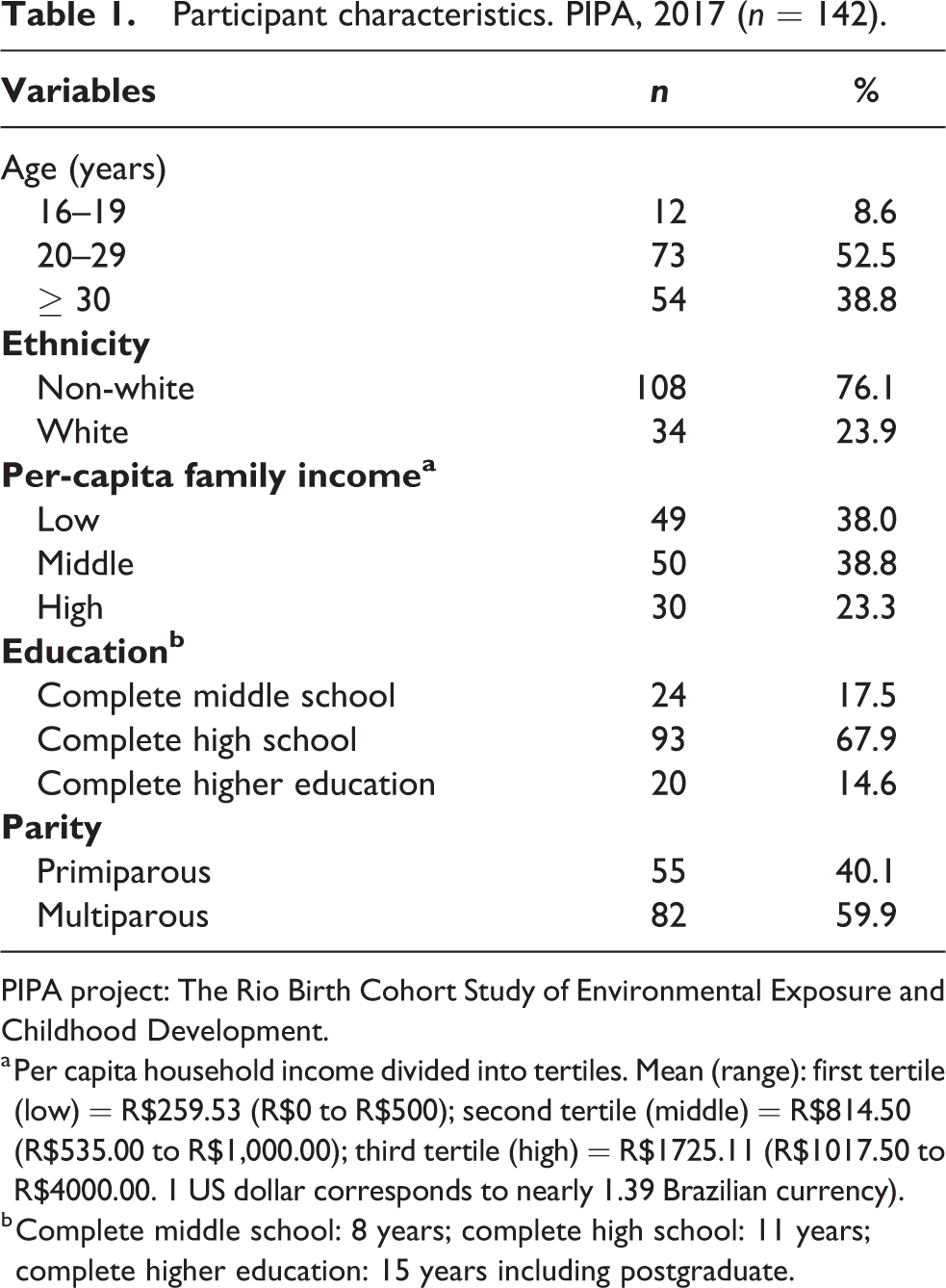
PIPA project: The Rio Birth Cohort Study of Environmental Exposure and Childhood Development.
a Per capita household income divided into tertiles. Mean (range): first tertile (low) = R$259.53 (R$0 to R$500); second tertile (middle) = R$814.50 (R$535.00 to R$1,000.00); third tertile (high) = R$1725.11 (R$1017.50 to R$4000.00. 1 US dollar corresponds to nearly 1.39 Brazilian currency).
b Complete middle school: 8 years; complete high school: 11 years; complete higher education: 15 years including postgraduate.
Dietary habits
More than 80% of the pregnant women reported regular consumption of all the non-UPF groups, except fish, in which the intake was reported by only 10% of individuals. Concerning the intake of UPF, most regular intakes came from fast food dishes (42%) and sausages and other reconstituted meat products (40%). Regular consumption of packaged ready meals was reported by 20% of the women.
Table 2 shows the chance to consume each non-UPF subgroup regularly within socio-demographic variables. Pregnant women with complete high school education (odds ratio (OR), 5.36; 95% confidence interval (CI), 1.73–16.65) were more likely to report regular intake of “meat and eggs” and the higher level of education (OR, 5.04; 95% CI, 0.78–32.63) trended toward significance. Although not significant, the chance to report regular intake of “rice and beans” and “fruits and vegetables” was of great magnitude among 30+ yo women. Elevated ORs (≥ 1.60) were also observed for “fruit and vegetable” consumption and respondents with middle and high per-capita family income.
Odds ratio of regular consumption of non-ultra-processed foods and socio-demographic variables among pregnant women in Rio de Janeiro, Brazil. PIPA 2017 (n = 133).
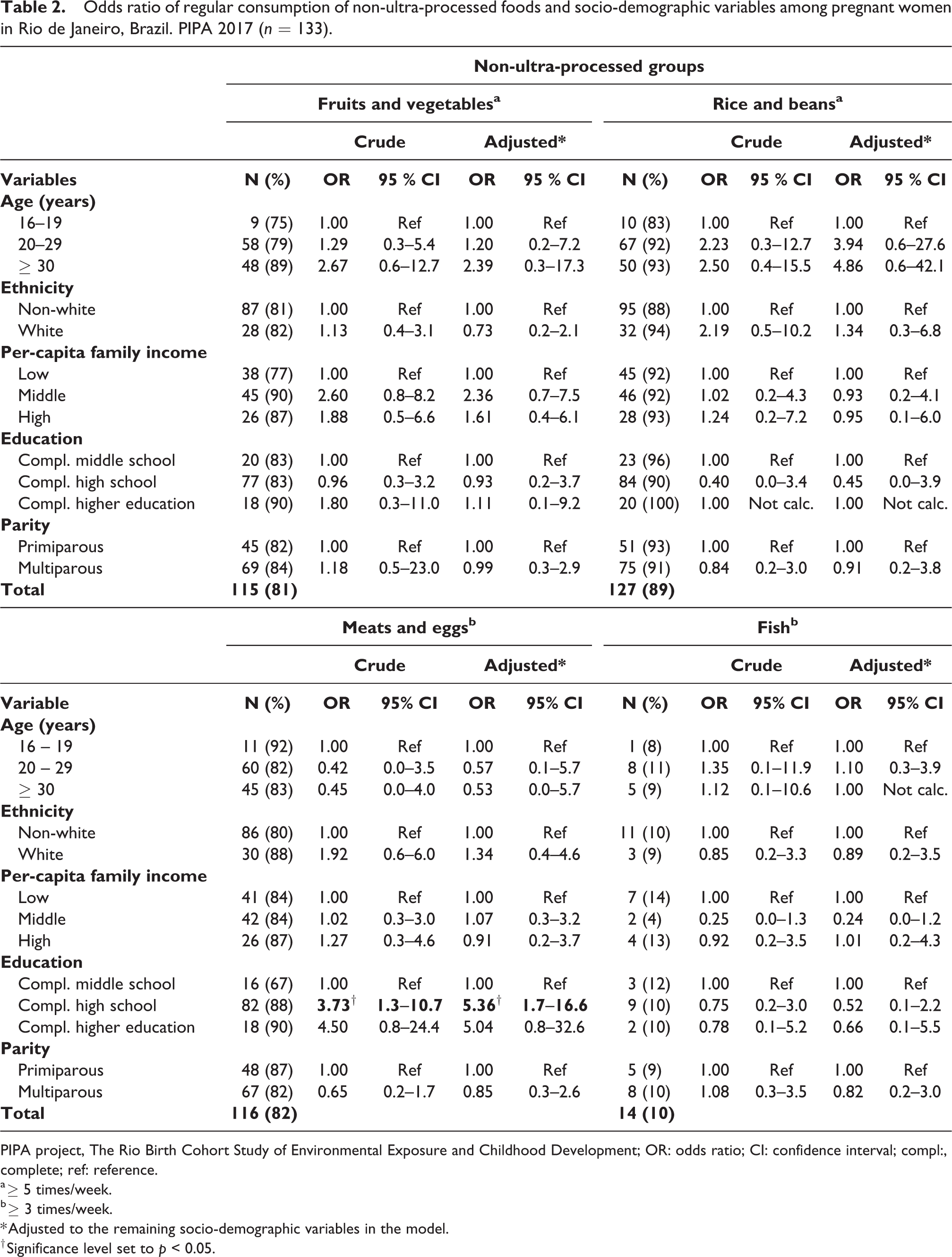
PIPA project, The Rio Birth Cohort Study of Environmental Exposure and Childhood Development; OR: odds ratio; CI: confidence interval; compl:, complete; ref: reference.
a ≥ 5 times/week.
b ≥ 3 times/week.
* Adjusted to the remaining socio-demographic variables in the model.
† Significance level set to p < 0.05.
Regarding the regular intake of UPF subgroups, white women (OR, 2.63; 95% CI, 1.05–6.63) reported a higher chance of consuming “packaged ready meals”. Elevated, but not significant, associations were observed among respondents with complete higher education and “sausage and other reconstituted meat products” consumption whereas the older women reported a lower chance of consuming this subgroup and “packaged ready meals.” The consumption of “packaged ready meals” decreased across the increasing level of education. The older, less educated, and primiparous reported a higher consumption of “fast food dishes” (Table 3).
Odds ratio of regular consumption of ultra-processed foods and socio-demographic variables among pregnant women in Rio de Janeiro, Brazil. PIPA, 2017 (n =134).
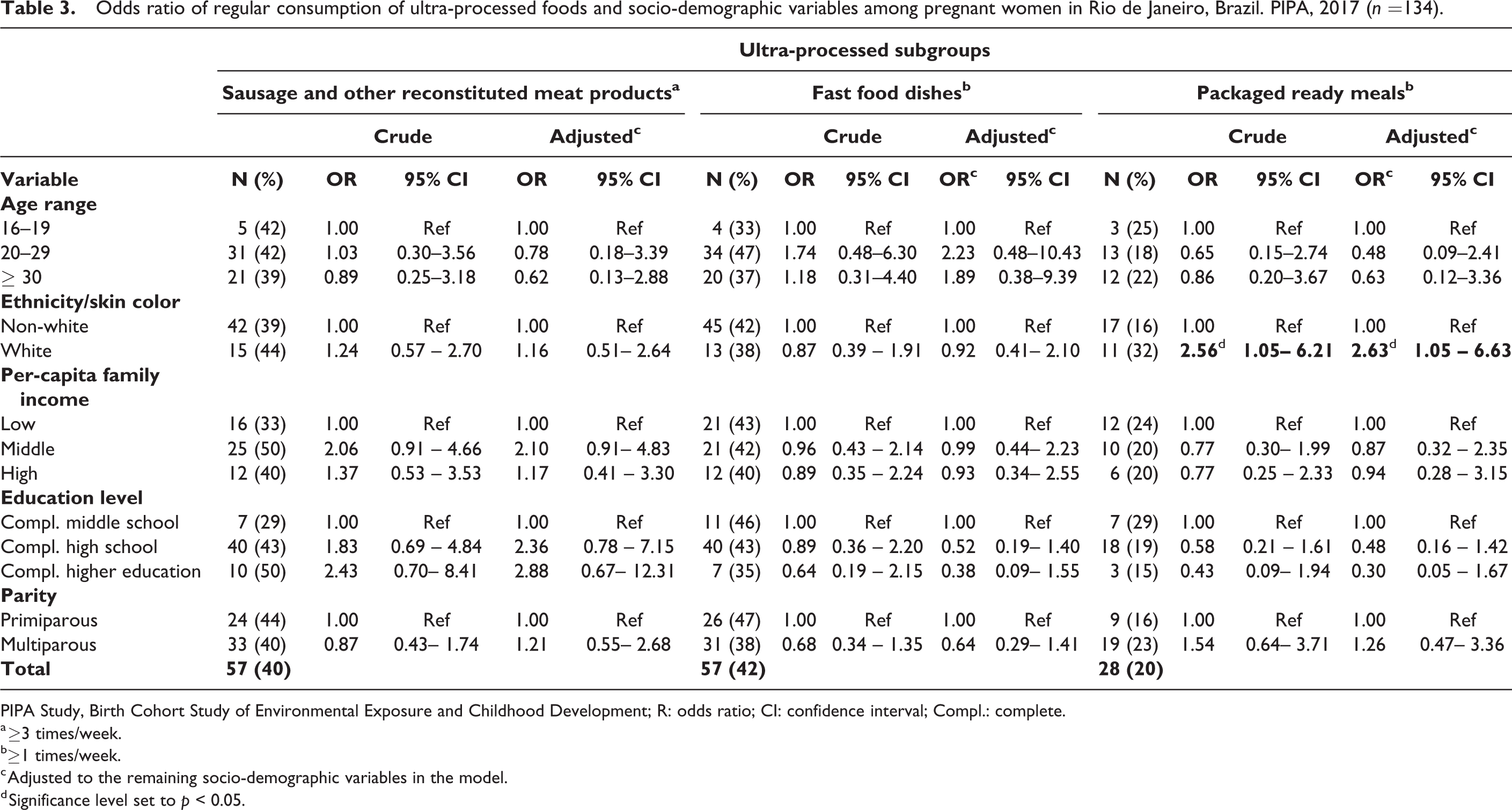
PIPA Study, Birth Cohort Study of Environmental Exposure and Childhood Development; R: odds ratio; CI: confidence interval; Compl.: complete.
a ≥3 times/week.
b≥1 times/week.
c Adjusted to the remaining socio-demographic variables in the model.
d Significance level set to p < 0.05.
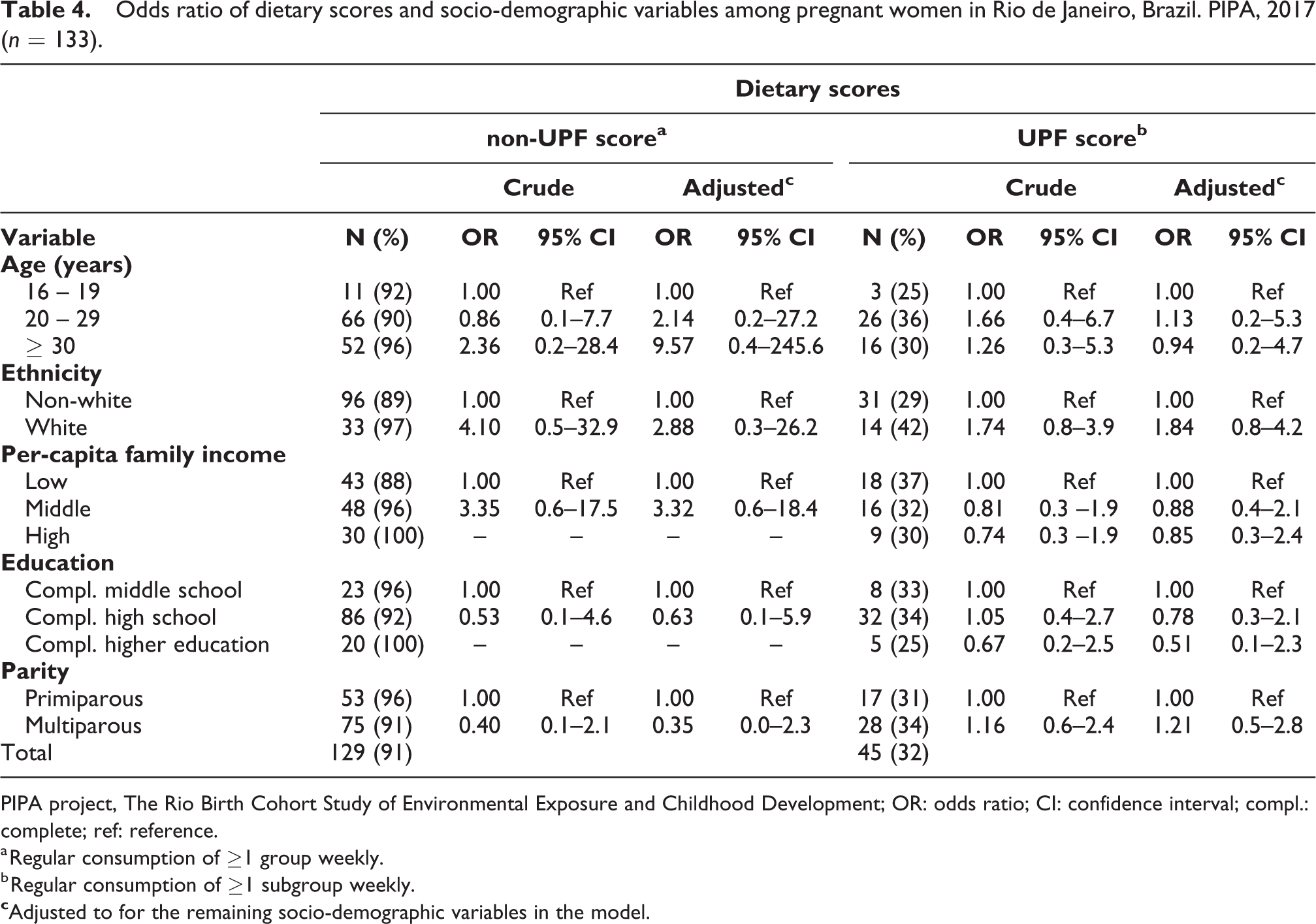
Figure 1 shows the percentage of participants that scored 0–4 in the non-UPF score and 0–3 in the UPF score. At least three non-UPF groups were regularly consumed by 61% of pregnant women and only 8% of participants reported regularly consuming the four non-UPF groups investigated. Over 27% of the women reported regular consumption of two UPF subgroups and 33% of at least one UPF subgroup during pregnancy. Although the multivariate models showed no significant differences, elevated ORs (≥ 2.80) to achieve a higher non-UPF score were observed among women 30+ yo, who were white with middle per-capita family income. Also, white and less educated women were more likely to achieve a higher UPF score (Table 4).
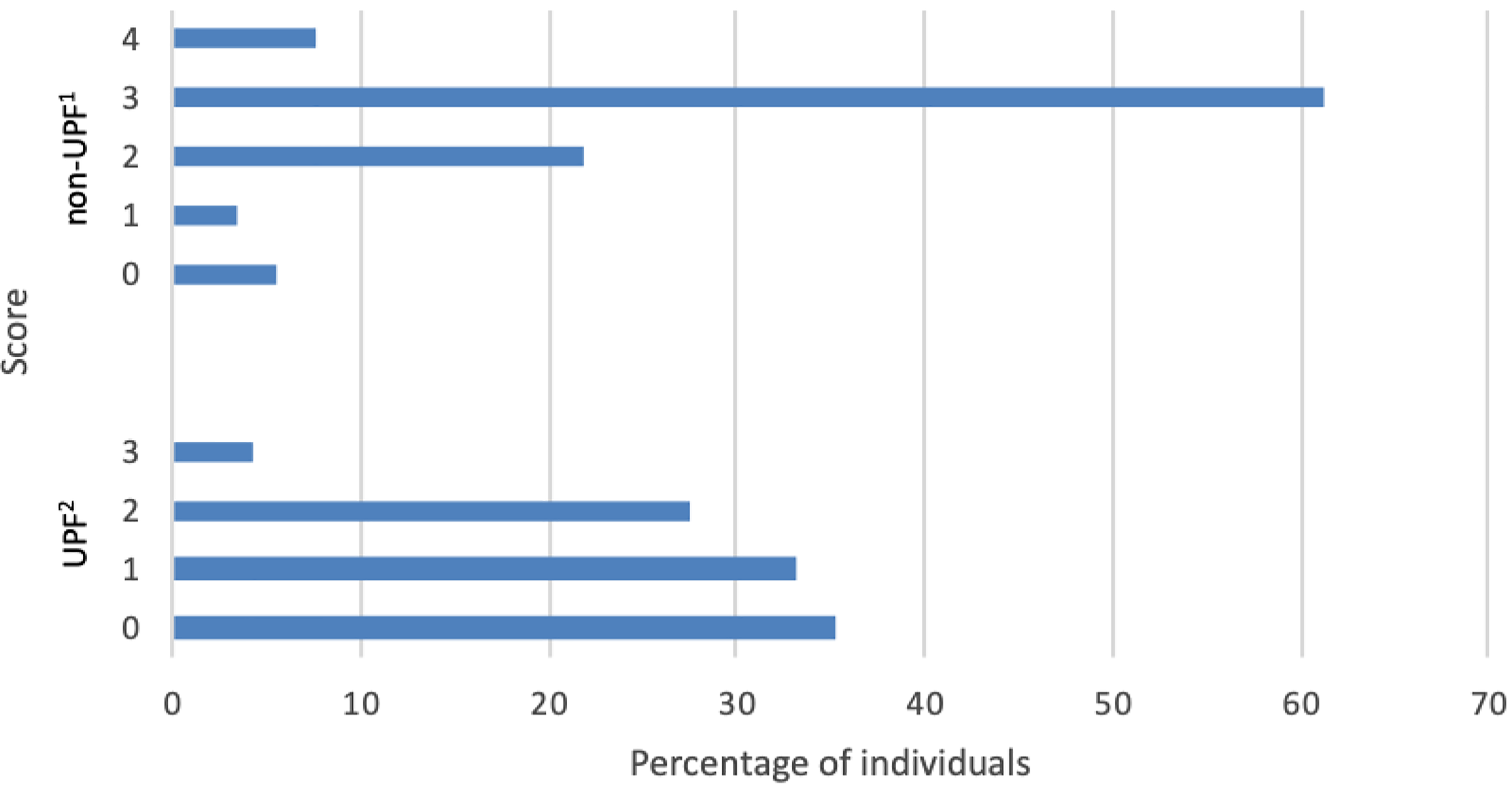
Percentage of pregnant women and weekly consumption of 0-4 non-processed groups (non-UPF Score) and of 0-3 ultra-processed subgroups (UPF Score). PIPA, 2017 (N=133). (1) Composed of non-ultra-processed-subgroups: “fruits and vegetables,” “rice and beans,” “meat and eggs” and “fish.” (2) Composed of ultra-processed-subgroups: “sausages and other reconstituted meat products,” “fast food dishes” and “packaged ready meals.”
Odds ratio of dietary scores and socio-demographic variables among pregnant women in Rio de Janeiro, Brazil. PIPA, 2017 (n = 133).
PIPA project, The Rio Birth Cohort Study of Environmental Exposure and Childhood Development; OR: odds ratio; CI: confidence interval; compl.: complete; ref: reference.
a Regular consumption of ≥1 group weekly.
b Regular consumption of ≥1 subgroup weekly.
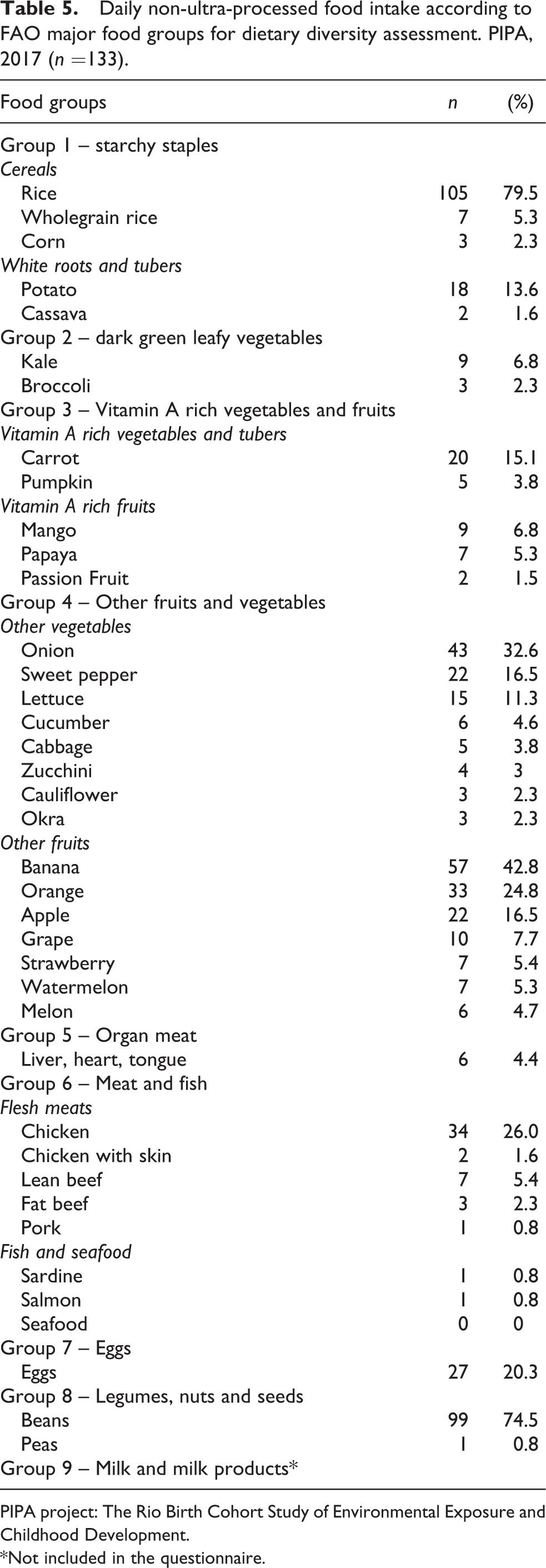
The diversity of the non-UPF fraction of the diet was another focus of the study, shown in Table 5. Only 25% of the participants reported consumption of at least four different food groups of the FAO guidelines. These groups were “starchy staples,” of which the consumption of rice was reported by 79% of participants; “other fruits and vegetables,” of which onions (33%), bananas (43%), and oranges (25%) were most frequently consumed; of “meat and fish,” chicken was the most frequently consumed (26%), followed by lean beef (5%). Few participants (2%) reported the intake of fish and the last most consumed group was “legumes, nuts, and seeds” mainly represented by beans 74%.
Daily non-ultra-processed food intake according to FAO major food groups for dietary diversity assessment. PIPA, 2017 (n =133).
PIPA project: The Rio Birth Cohort Study of Environmental Exposure and Childhood Development.
*Not included in the questionnaire.
Discussion
This cross-sectional study of pregnant women assisted by public healthcare in Brazil shows that only 8% of the participants reported weekly consumption of all four non-UPF-groups investigated during pregnancy. We found a strong association of regular intake of “meat and eggs” among respondents with high school education. Although not significant, the non-UPF score presented a strong association with older, white, and middle per-capita family income women. Regarding UPF, the regular intake of “packaged ready meals” was significantly higher among white respondents. More than 40% of the women reported regular consumption of “sausages and other reconstituted meat products” and “fast food dishes” and consumption was higher among younger respondents, but not significantly. The weekly consumption of all three UPF subgroups investigated was reported by 4% of the women and was associated with white and less educated women, but not significantly. Besides, only 25% of the participants reported a diverse diet.
In a previous study, with a sample population similar to ours, the unprocessed or minimally processed food group represented 49% of total energy intake of pregnant women attending to public healthcare, but among UPF, the total energy intake represented 41% and cannot be disregarded (Alves-Santos et al., 2016). Gomes et al. (2019) described a high content of energy (67%) provided by maternal consumption of unprocessed or minimally processed food groups and lower energy intake from UPF (24.6%). Comparisons with our results should be made cautiously as we did not assess the UPF consumption through 24 h recall.
The weekly intake of at least two UPF subgroups (28%) and at least one UPF subgroup (33%) was most prominent. Considering the questionnaire was not specifically designed to classify food items according to the degree of processing, it may lead to underestimation of UPF consumption commonly consumed in Brazil, such as salty snacks, sweet biscuits, confectionaries, and sugar-sweetened beverages.
Interestingly, UPF consumption among pregnant Brazilian women seems to be higher than that in Brazilian adults and adolescents (Louzada et al., 2017). However, it is lower compared to the results described in high-income countries such as the United States (Rohatgi et al., 2017). The studies carried out in public health centers in Brazil reported that the UPF subgroups most consumed by pregnant women were cookies and ultra-processed sweets (27%), sugar-sweetened beverages (18.7%), and reconstituted meats (12.7%) in Botucatu (Gomes et al., 2019); and bread (9.9%), cakes, and cookies (5.6%), candies (5.4%), and fried/baked salted pastries (4.9%) in Rio de Janeiro (Alves-Santos et al., 2016).
We found a positive and statistically significant association of “packaged ready meals” with white women. It can potentially be explained by the fact that, in Brazil, ready meals are more expensive than meals prepared at home (Claro et al., 2016), and non-white women are more vulnerable and spend more time in domestic work than men and white women (IBGE, 2018). Additionally, the regular consumption of “sausages and other reconstituted meat products” showed a positive but not significant association with middle income and education in a dose-response manner. Other authors described the consumption of UPF differently according to socio-demographic status, younger women, with a lower education level, and white had the highest percentage of energy coming from UPFs (Gomes et al., 2019).
Our results support previous studies showing that maternal socio-demographic characteristics can influence diet during pregnancy (Alves-Santos et al., 2016; Shapiro et al., 2016; Gomes et al., 2019). A study of American pregnant women (n = 200) found regular consumption (1–3 times per week) of ultra-processed desserts (37%), canned food (29%), and fast foods (26%). The income was inversely correlated with canned food consumption, suggesting that women of low socioeconomic status may be at risk (Santiago et al., 2013). In Brazil, better socioeconomic status is likely to provide healthier eating behavior during pregnancy with higher consumption of legumes, vegetables, and fruits (de Castro et al., 2016).
The direct relationships between UPF consumption and gestational weight gain, as well as neonatal outcomes (e.g., body fat percentage), have been demonstrated in a sample of American pregnant women (Rohatgi et al., 2017). Although health outcomes were not evaluated in this study, a considerable part of the studied pregnant women may be at risk given their regular consumption of the UPF. It also goes against the Brazilian Ministry of Health (2013) recommendations for a healthy diet during pregnancy for mother and fetus wellbeing and to avoid complications during pregnancy, childbirth, and development (Brazil Ministry of Health, 2013).
Furthermore, the Brazilian Dietary Guidelines recommend that most of the dietary intake must come from a variety of fresh and minimally processed foods (Brazil Ministry of Health, 2014). It is relevant considering that higher and diverse dietary share of fresh and minimally processed foods is related to micronutrient adequacy (Nguyen et al., 2018), positive pregnancy outcomes and child health (Zerfu et al., 2016). Dietary diversity and maternal pre-pregnancy BMI have been inversely correlated in a US pregnancy cohort. Nevertheless, only 25% of the participants in our study reported consumption of at least four different food groups. Zerfu et al. (2016) described the daily intake of at least four food groups as a cutoff of adequate micronutrient intake. Another study reported a cutoff of six food groups as the correct classification for dietary micronutrient adequacy during pregnancy (Nguyen et al., 2018).
This scenario calls for interventions aiming to reduce UPF consumption and to improve dietary diversity among pregnant women. Gomes et al. (2019) described a positive impact of training healthcare professionals to discourage the consumption of soft drinks and industrially processed cookies and encouraging the consumption of fruits, vegetables, and beans (Gomes et al., 2019). Pregnancy is considered a more accessible time for professionals to communicate the importance of healthy eating to women (Shapiro et al., 2016). Moreover, actions aiming at increasing the healthiness of food environments, by pricing interventions, improving food labeling, limiting promotion and advertising of UPF, and increasing the availability of unprocessed and minimally processed foods would bring benefits for the whole population (Popkin, 2020).
Potential limitations of our study should be considered. The population size of the survey did not guarantee high statistical power and some potential differences could not reach statistical significance, even though some socio-demographic variables such as age, skin color, and education level exerted a great magnitude of association. Besides, this is a cross-sectional analysis that can account for underreporting and recall bias and the dietary changes due to pregnancy must also be dissembled. Another potential limitation is that the diet module is not a complete dietary assessment, which may lead to misestimation of either non-UPF or UPF consumption and dietary diversity. However, other authors have used non-complete dietary assessment before (Santiago et al., 2013). Also, the FFQ has not been validated. Nevertheless, this study deserves appreciation for being innovative in assessing both food intake according to the degree of food processing and dietary diversity of the non-UPF fraction of the diet during pregnancy. The use of the NOVA system is a key strength, as it has been considered the most specific, coherent, and comprehensive food classification system based on food processing (Moubarac et al., 2014), as well as a relevant approach for linking dietary intakes and all forms of malnutrition (FAO, 2016). It is important to highlight that, different from other studies on dietary diversity, our study was applied considering only the non-UPF fraction of the diet, befitting from the Brazilian Dietary Guidelines recommendations. Also, these results will inform future analysis of infants’ microbiome in the PIPA project.
In conclusion, our study showed that despite most of the pregnant women reporting regular intake of non-UPF groups, only a quarter of the individuals reported a diverse diet. Additionally, more than one-third reported weekly consumption of at least two UPFsubgroups. A positive association was observed between education level and regular intake of “meat and eggs.” Besides, white pregnant women had reported higher consumption of “packaged ready meals.” Our findings suggest that food consumption during pregnancy may differ according to sociodemographic factors. Healthier maternal eating should be encouraged, given the window of opportunity to improve dietary quality during pregnancy for the long-term benefits for both mothers and their children.
Footnotes
Notes
If requested, the corresponding author will fully cooperate in obtaining and providing full access to all aspects of the research and writing process and take ultimate responsibility for the paper.
Acknowledgements
The authors are grateful to the pregnant women who participated in this study, to the Maternity School of the Federal University of Rio the Janeiro for their technical and logistical assistance, and the Oswaldo Cruz Foundation and Federal University of Rio de Janeiro for their research support.
Author contributions
NFN and PPM: Conceptualization, formal analyses, and writing the original draft. AM: Methodology. JCM and AM: Supervision, reviewing, and editing. CIRFA and VC: Project administration and funding acquisition.
Consent for publication
All authors have reviewed, approved, and consent the final version for publication.
Declaration of conflicting interests
The author(s) declared no potential conflicts of interest with respect to the research, authorship, and/or publication of this article.
Ethical statement
This study was conducted according to the guidelines laid down in the Declaration of Helsinki, and all procedures involving research study participants were approved by the Researches Ethics Committees of the Maternity School (number: 2.092.440) and the Oswaldo Cruz Foundation (number: 2.121.397). All pregnant women over 16 yo who attended the Maternity School visit for delivery orientation were recruited with informed consent.
Funding
This work was carried out under a pilot study of the “Prospective Study Project of Environmental Pollutants Exposure and Children’s Health – Birth Cohort” funded by the Pan American Health Organization (TC 69 - SCON2018-00192) and by the Brazilian Ministry of Health. NFN received a doctoral scholarship from Coordenação de Aperfeiçoamento de Pessoal de Nível Superior (CAPES; CGC 00.889.834/0001-08). The funders had no role in study design, data collection, and analysis, decision to publish, or preparation of the manuscript. The authors declared no potential conflicts of interest with respect to the research, authorship, and/or publication of this article.
