






Abstract
Introduction
Diet is the leading modifiable risk factor for reducing risk of common, noncommunicable chronic diseases, including hypertension, diabetes, obesity, cancer, and cardiovascular diseases (Anand et al., 2015; Global Burden of Disease, 2017). However, the US food supply is dominated by unhealthy packaged foods and beverage products that are high in salt, saturated fat, and added sugars (Baldridge et al., 2019; Poti et al., 2015; Van Raaij et al., 2009). Front-of-package nutrition labels (FOPL) are intended to improve consumers’ ability to identify products with higher nutritional quality and thereby make healthier food and beverage choices (Egnell et al., 2018; Vandevijvere et al., 2020). Multiple systematic reviews found that FOPL improve public recognition of nutrient content and perception of healthfulness, as well as motivate food and beverage companies to reformulate products (Cecchini and Warin, 2016; Feteira-Santos et al., 2020; Shangguan et al., 2019). FOPL have been recognized by the World Health Organization as an effective tool for promoting healthy diets worldwide, but further evaluation and regulation regarding FOPL format, scope, and display are needed (Kelly and Jewell, 2018).
The American Heart Association's (AHA) Heart Check programme certifies food and beverage companies to add an AHA Heart Check logo to FOPL, thereby identifying heart healthy food and beverage products within designated categories and established criteria for eligible ingredients and nutrient values (AHA, 2018). The Heart Check programme was initiated in 1995 and currently has 7 certification categories, each with a different set of nutrition requirements. The Standard Certification applies to all FDA-regulated products, and thus, is the most inclusive. Individuals who consumed at least 16% of their daily calorie intake from AHA Heart Check-certified products were less likely to be obese (odds ratio [OR] 0.74; 95% confidence interval [CI] 0.59 to 0.93), have elevated waist circumference (OR 0.71; 95% CI 0.55 to 0.92), or have metabolic syndrome (OR 0.76; 95% CI 0.60 to 0.98) compared to individuals who consumed none of these products (Lichtenstein et al., 2014).
While the effectiveness of FOPL like the Heart Check programme seems promising, evaluation and regulation on FOPL format, scope, and display could potentially achieve even broader public health impact. For example, it is recommended that the FOPL design should be simple, graphical, and interpretive to be easily understood by most consumers. Food components and nutrients involved with certification should also be specifically associated with disease risk (Jones et al., 2019). The objective of this study was to perform a cross-sectional assessment of the AHA Heart Check Standard Certification in the US packaged food and beverage supply by comparing certification with certification-eligible status of products across grocery aisles and food brands. The study aimed to provide insights regarding key stakeholders, including consumers, food manufacturers, and policymakers, as well as the AHA, with the long-term intent to improve diet quality and health of the US population.
Materials and methods
Data source
Data for this study were derived from Label Insight's Open Data initiative, which is the largest publicly-available US branded food composition database (Label Insight, 2020). Label Insight directly captures information from product labels and generates more than 22,000 variables per product, including micro and macronutrient, allergens, sustainability practices and specialty diet eligibility. Label Insight uses a cloud-based data warehouse to store and gather data, which cleans and normalizes the raw data to ensure data quality and completeness. The database is updated daily and contains information on more than 300,000 barcoded food and beverage items, representing >80% of all food and beverage products sold in the US over the past three years. The data warehouse automatically adapts to changes in the source data, which avoids manual data entry errors and ensures timeliness and accuracy of product data. Raw data files on food and beverage products were extracted in April 2019, which included product ingredients, all information from the Nutrition Facts Panel, product categorization by: 1) hierarchy of product categories moving from broad to narrow categorization using a grocery store analogy (from aisle to shelf categories), based on categories recommended by the Global Food Monitoring Group (Baldridge et al., 2019), 2) regulatory attributes such as the standard unit of measure, and 3) presence of the AHA Heart Check logo on the package based on image recognition.
Exclusion criteria
Products categorized as foods that are specifically excluded from consideration by the AHA in the Heart Check certification programme include alcohol, candy and confections, desserts, dietary supplements, diet-branded and weight-loss products, foods with partially hydrogenated oils, medical foods, and meal replacements (Supplemental Figure 1). Products with missing Reference Amounts Customarily Consumed (RACC) values, serving size, or nutrient values or products that had a unit of measurement inconsistent with standard unit of measure were also excluded.
AHA standard certification
The AHA Standard Certification process consists of 2 components: 1) a set of “main requirements” that apply to all FDA-regulated products, and 2) a set of “additional requirements” that only apply to products stipulated within 9 food categories defined by the AHA: 1) canned fruits/vegetables, 2) frozen fruit, 3) fruit and vegetable juice, 4) grain-based products, 5) grain-based and snack bars, 6) milk and milk alternatives, 7) smoothies, 8) snacks, and 9) yogurt. AHA Standard Certification requires that certain products must meet both the main and additional requirements, while other products outside of these 9 categories are specifically designated to meet the main requirements. A subset of the five alternative categories of AHA certification (Standard Extra Lean, Main Dish & Meal Products, Whole Grain, Healthy Oils, and Healthy Snacks) also exist (Supplemental Tables 1–5).
Main requirements
Main requirements for Standard Certification include the amount of total fat (<6.5 g), saturated fat (≤1 g and 15% or less calories from saturated fat), trans fat (<0.5 g), cholesterol (≤20 mg), sodium (varied depending on product type; Supplemental Table 6), and beneficial nutrients (10% of the daily value of 1 of 6 nutrients: vitamin A, vitamin C, iron, calcium, protein or dietary fibre) that a product needs to have to be eligible. Most nutrient requirements are per RACC, unless specified otherwise. A product is eligible for AHA Heart Check certification under the main requirements if it meets all six of the nutrient-specific requirements.
Additional requirements
In this evaluation, products were considered eligible for AHA Heart Check certification if they met both the main and product-specific nutrient requirements, which are outlined below and in Supplemental Table 7.
1) Canned Fruits/Vegetables
Canned fruits/vegetables products were included in the dataset containing the words “canned fruits” or “canned vegetables” in their category names. The AHA Standard Certification requires that canned fruits/vegetable products contain no “heavy syrup”. In this study, the amount of added sugar listed in the product was used to estimate the equivalent used in heavy syrup. Thus, a canned fruits/vegetable product was labelled as meeting the additional category-specific requirement if it contained 0 g of added sugar.
2) Frozen Fruit
Frozen fruit products were designated as any product in the dataset that contained the words “frozen fruit” in their category names in the current study. A frozen fruit product was labelled as meeting the additional category-specific requirement if it contained 0 g of added sugar.
3) Fruit and Vegetable Juice
Fruit and vegetable juice products were designated as any product in the dataset that contained the words “juice or drink” in their category names. A fruit or vegetable juice product was labelled as meeting the additional category-specific requirement in the current study if it contained 0 g of added sugar, ≤120 calories per 8 fluid ounces, and ≥10% daily value of 3 of 6 beneficial nutrients (vitamin A, vitamin C, iron, calcium, protein and dietary fibre).
4) Grain-Based Products
Grain-based products were designated as any product in the dataset that contained a list of words related to grains in their category names. A grain-based product was labelled as meeting the additional category-specific requirement if it contained either: 1) ≤7 g total sugar and 10–19% of the daily value for dietary fibre or 2) ≤9 g total sugar and ≥20% of the daily value for dietary fibre.
5) Grain-Based and Snack Bars
Grain-based and snack bar products were designated as any product in the dataset that contained a list of words related to grains and the word “bar” in their category names. If a product used the new Nutrition Facts label format, then it was labelled as meeting the additional category-specific requirement if contained ≥ 10% daily value of dietary fibre per RACC and ≤8 g added sugar per serving. If a product used the previous Nutrition Facts Panel format, then all rules for the grain-based products were applied.
6) Milk and Milk Alternatives
Milk and milk alternatives products were defined as any product in the dataset that contained the word “milk” in the category name. A milk or milk alternative product was designated as meeting the additional category-specific requirement if it contained ≤130 calories per 8 fluid ounces.
7) Smoothies
Smoothie products were designated in the dataset as including the word “smoothie” in the category names. A smoothie product was designated as meeting the additional category-specific requirement if it contained ≤200 calories per 8 fluid ounces and ≤8 g added sugar per serving. The AHA Standard Certification also requires that smoothie products contain at least one serving of whole fruit or vegetable (not including any added juice or puree concentrate) or dairy/dairy alternatives, and no added caffeine nor other stimulant additives. These criteria could not be included in the classification process for this study because data on servings of whole fruits, vegetables, or added caffeine could not be accurately identified.
8) Snacks
Snack products were designated as any product in the dataset that contained the word “snack” in the category name. A snack product was identified as meeting the additional category-specific requirement if it contained ≤5 g added sugar per serving and ≥10% of the daily value for dietary fibre.
9) Yogurt
Yogurt products were designated as any product in the dataset that contained the word “yogurt” in the category name. We labelled a yogurt product as meeting the additional category-specific requirement if it contained ≤20 g total sugar per 6 oz serving.
Statistical analysis
Summary statistics were calculated using proportions for categorical variables and median with interquartile range for continuous variables because these data were skewed. Between-group comparisons were made using Chi squared and Wilcoxon rank sum tests based on the type of comparison. Graphical representations were created to assess AHA Heart Check certification and eligibility. Proportions of products that were AHA Heart Check certified versus eligible to be certified under the Standard Certification designation were calculated by grocery aisle and shelf. Among products with AHA Heart Check additional food category-specific requirements, proportions of products meeting the main requirements only, additional requirements only, and both requirements were calculated by category, respectively. Proportions of products meeting specific attributes of the Standard Certification (i.e. total fat, saturated fat, trans fat, cholesterol, sodium, beneficial nutrients, and additional food category-specific requirements) were also calculated by aisle. The top 10 brands with the most certified products were identified. For each of the top 10 brands, the number of products by grocery shelf categories were calculated. Further, the top 10 brands with the most eligible products that were not certified were also identified. For each of these top 10 brands, proportions of eligible food products to all products from the brand were calculated.
A univariate logistic regression model was developed to assess the association between aisle category and AHA Heart Check certification and eligibility as an exploratory analysis. The reference group consisted of a random sample of 25,000 products from all included products, which served as a representative comparator for these analyses. Odds ratios were calculated for each aisle to represent the likelihood of AHA Heart Check certification and eligibility of products in the aisle in comparison to a random sample of products. A two-sided p value < 0.05 determined statistical significance. SAS version 9.4 (SAS, Cary, NC, USA) and R version 1.0.153 were used for analysis.
Results
As of April 2019, there were 343,414 food and beverage products in the Label Insight Open Data initiative database. After removal of 154,275 (44.9%) ineligible products based on the AHA exclusion criteria, products with missing serving size or unit of measurement inconsistent for the category (n = 24,956; 7.3%), products with missing information for all 6 beneficial nutrients (n = 10,868; 3.2%), and products with missing RACC value (n = 44; 0.1%), the final sample included 153,453 (44.7% of the overall database) food and beverage products (Supplemental Figure 1).
Tables 1 & 2 reports eligibility and accuracy of AHA Heart Check Standard Certification by grocery aisle category. Among the included sample, 530 (0.3%) products included the Heart Check certification on their label, and 152,923 (99.7%) did not. Among Heart Check certified products, 143 (23.0%) met criteria for the Standard Certification, and 387 (73.0%) products did not, which received Heart Check certification through 1 of 5 alternative categories of certification. Median values with interquartile ranges for sodium, saturated fat, cholesterol, and calories across these 5 alternative categories are reported and compared in Supplemental Tables 8a and 8b. Among products that were not Heart Check certified, 21,047 (13.8%) were eligible for Standard Certification, and 131,876 (86.2%) products were not. The “Deli” aisle (1.2%) had the highest proportion of products that were Heart Check certified, and the “Fresh Fruit and Vegetables” aisle (65.7%) had the highest proportion of products eligible for Standard Certification. Additional details of eligibility and accuracy of AHA Heart Check Standard Certification by shelf categories are reported in Supplemental Table 9
Eligibility and prevalence of AHA heart check standard certification by grocery aisle category.
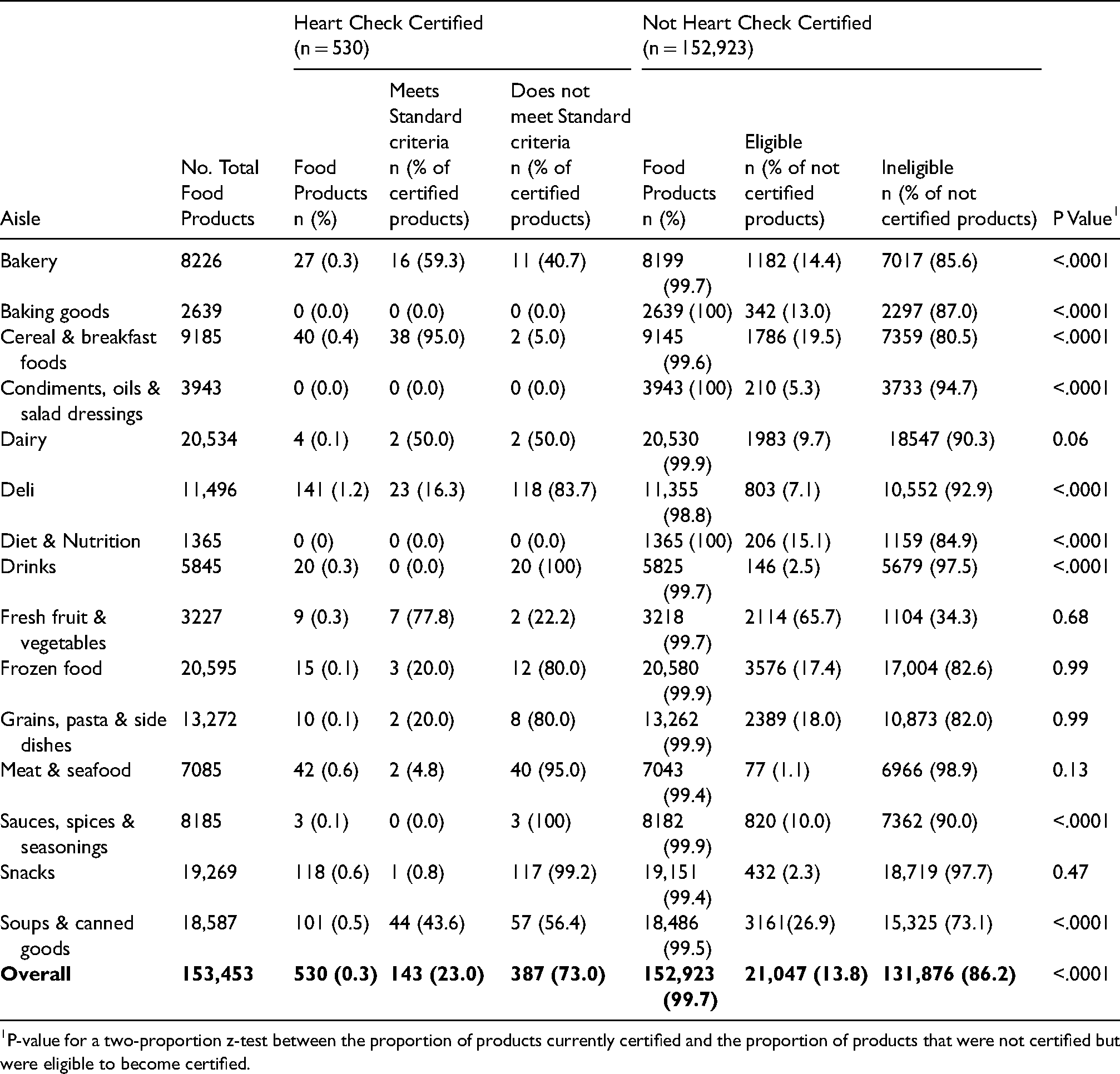
P-value for a two-proportion z-test between the proportion of products currently certified and the proportion of products that were not certified but were eligible to become certified.
Among 82,367 products meeting eligibility standards for the AHA Heart Check main requirements within Standard Certification, more than half met the requirements for total fat (54.5%), cholesterol (55.0%), sodium (53.5%), and beneficial nutrients (62.8%). Less than half of the products met the requirements for saturated fat (48.3%), while nearly all products met the requirements for trans fat (92.2%). Proportions of products meeting these nutrient specific attributes varied by grocery aisle category (Supplemental Table 10).
Figures 1 & 2 illustrates the proportion of Heart Check- eligible products based on the additional, food category-specific requirements. Proportion of these products meeting the main Heart Check requirements, additional requirements, or both differed substantially by AHA food category. For example, the proportion of products that met the main Heart Check requirements was lower than that meeting the additional requirements among “Grain-based and Snack Bars” (9% vs. 89%), “Milk” (27% vs. 59%), “Smoothies” (46% vs. 88%), and “Snacks”(4% vs. 51%). For “Canned Fruits and Vegetables” (31% vs. 7%) and “Fruits and Vegetables Juice” (39% vs. 2%), the proportion of products meeting the main requirements was higher than the proportion meeting the additional requirements (P < 0.001 for all). “Frozen Fruit” products had the highest proportion of products meeting both the main and additional requirements, while “Canned Fruits and Vegetables” products had the lowest proportion.
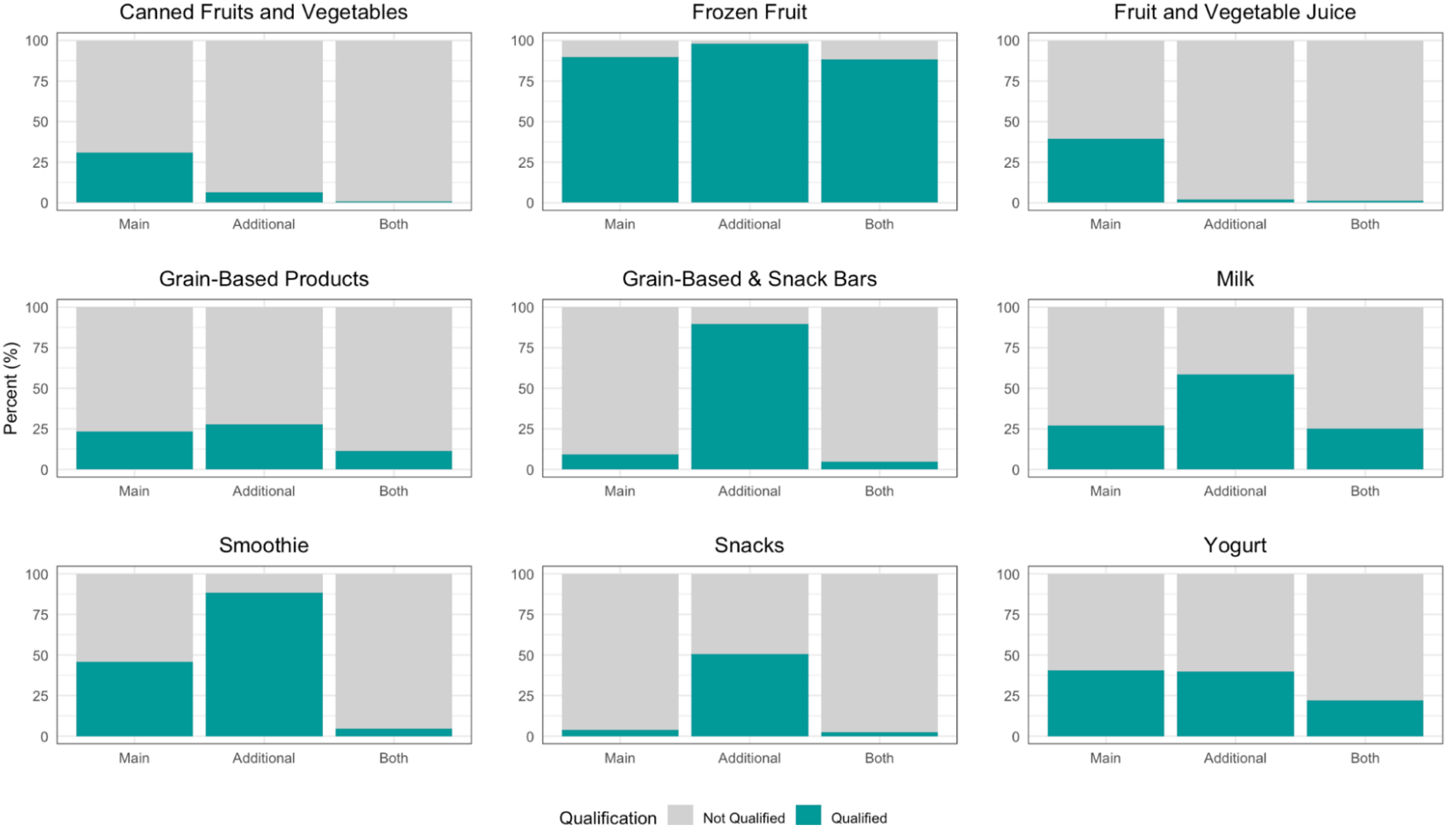
Proportion of AHA heart check certification-eligible products in the label insight open data initiative database, based on AHA standard certification main requirements, AHA category-specific additional requirements, or both.
Likewise, proportions of products that met the AHA Heart Check nutrient-specific attributes also differed substantially by AHA food category (Supplemental Figure 2). For instance, while more than 80% of “Frozen Fruit” products met requirements for total fat (96%), saturated fat (95%), trans fat (97%), cholesterol (97%), sodium (97%), and beneficial nutrients (92%), approximately 50% of “Fruits and Vegetables Juice” products met the requirements for the corresponding nutrients. Further, less than half of “Milk” (29%) and “Yogurt” (42%) products met the requirements for saturated fat, and very few “Snack” products met the requirements for total fat (12%) and saturated fat (20%), respectively.
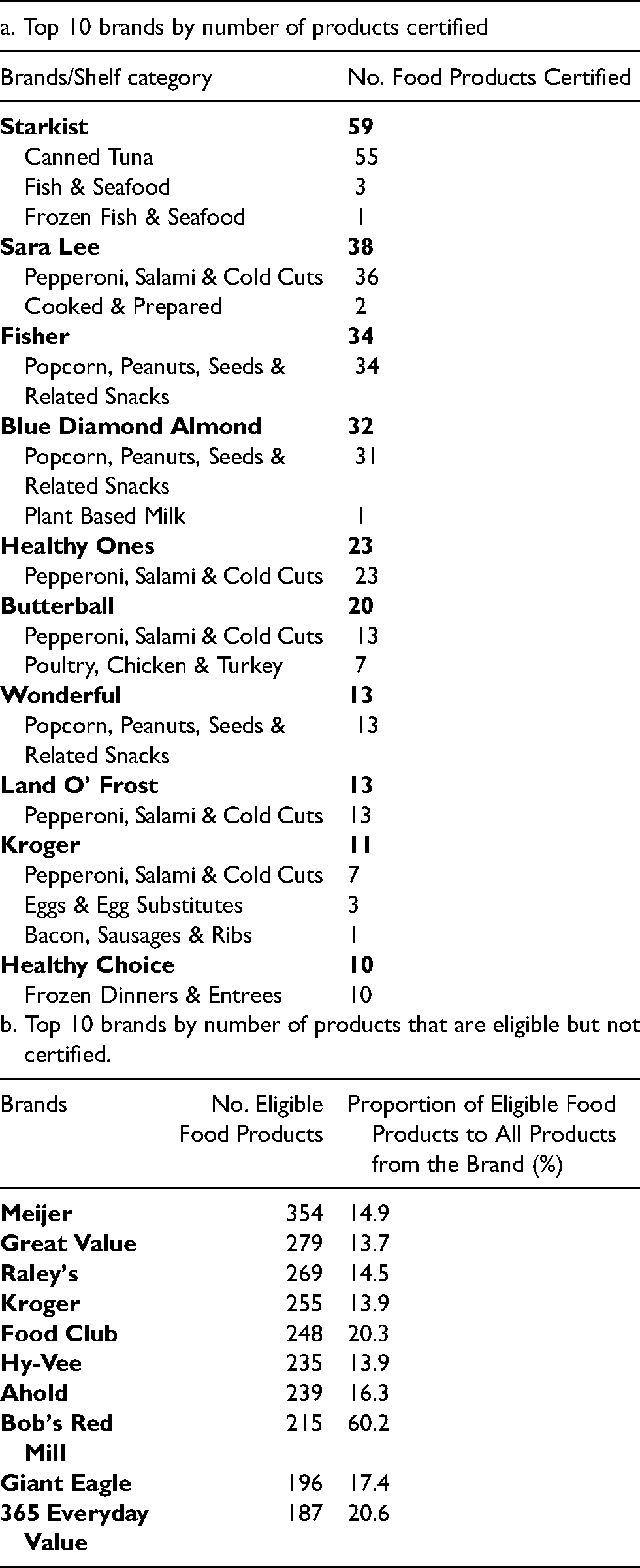
Figure 2a and b show the top 10 brands by number of products Heart Check certified and number of products eligible but not certified, respectively. Brands with the highest number of currently Heart Check certified products were Starkist, Sara Lee, and Fisher. Top shelf categories with the most number products certified are also listed under each brand. For example, the most commonly certified Starkist products were in the “Canned Tuna”, “Fish & Seafood”, and “Frozen Fish & Seafood” shelf categories. Brands with the highest number of products that were eligible but were not certified included: Meijer, Great Value, and Raley's, most of which were supermarket “own brand” products. Proportion of eligible food products among the top 10 manufacturers by opportunity for certification differed substantially, ranging from 60.2% of all Bob's Red Mill products to 13.7% of all Great Value products.
Exploratory analysis
The results for the association between aisle category and AHA Heart Check certification and eligibility are reported in Table 3. The aisle category with the highest odds of having AHA Heart Check certification was Deli products (OR [95% CI]: 3.72 [2.84–4.89]) and the aisles with the lowest odds of having AHA Heart Check certification were Baking Goods, Condiments, Oils,& Salad Dressings, and Diet & Nutrition products (OR <0.001 for all, [95% CI: non-estimable for all]). The aisle category with the highest odds of being eligible for AHA Heart Certification was Fresh Fruits & Vegetables products (OR [95% CI: 13.40 [12.35–14.54]), and the aisle category with the lowest odds of being eligible for AHA Heart Certification was Meat & Seafood products (OR [95% CI]: 0.08 [0.06–0.09]).
Odds of AHA heart check certification and eligibility among products from each grocery aisle category in comparison to a random sample of products.
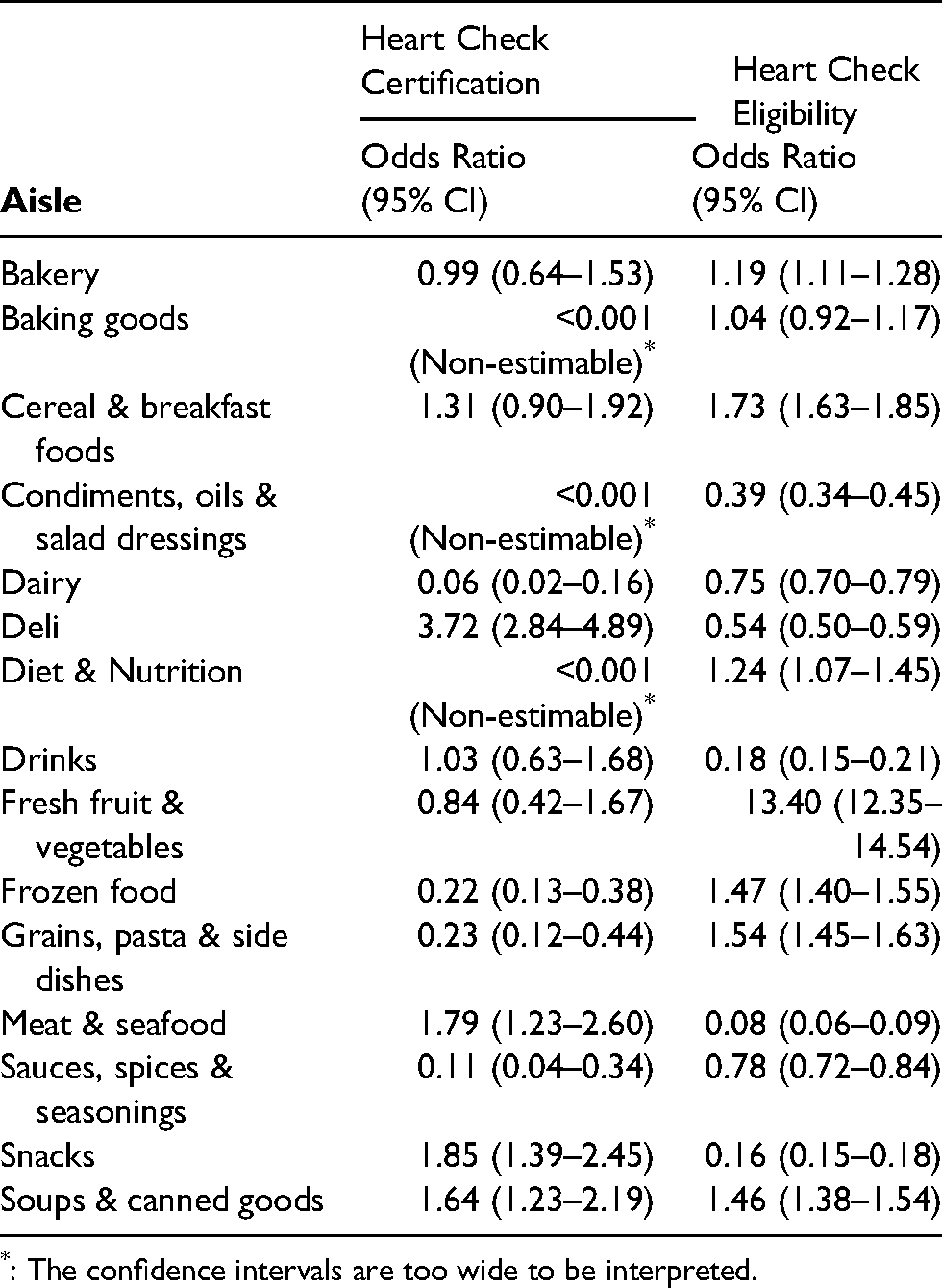
: The confidence intervals are too wide to be interpreted.
Discussion
A very small number of products have sought and received AHA Heart Check certification (<1%) in the context of an overall unhealthy packaged food and beverage supply in the US. Whereas 55.1% of analyzed products were considered eligible for AHA Heart Check Standard Certification, over 150,00 products did not meet these criteria and were available for purchase and consumption. The most common reasons for ineligibility among products requiring only the main Heart Check Standard Certification were excessive saturated fat content (52%), followed by total fat content (47%) and excessive sodium (47%). Most products met the trans fat requirements (92%).
The current fat profile in the US packaged food and beverage supply reflects changes in food and nutrition policy in the past decade. The relatively few packaged food products currently labelled as containing trans fat reinforces the effects of the FDA trans fat ban, which was fully implemented in 2019 (Food and Drug Administration, 2019). The remaining 8% of products labelled as containing trans fat could be due to outdated labels not yet removed from the Label Insight database. Conversely, research on the change in fat profiles among US snack foods found that the saturated fat content of cookie products listed significantly higher amounts following the implementation of mandatory trans fat labelling policy in 2006 (Van Camp et al., 2012). The abundance of products failing the Heart Check saturated fat requirements may reflect efforts to replace trans fat with other sources, including butter or other solid fats. Also, the 2015 US Dietary Guidelines Advisory Committee report omitted an upper limit from the recommended total fat intake with the potential unintended consequence of increased total fat content in packaged food and beverage products (Dietary Guidelines Advisory Committee, 2015).
Likewise, the high proportion of products failing the Heart Check sodium requirement could partially be explained by recent limitations in US dietary sodium policies. For example, the US Department of Agriculture sodium designates standards for foods approved for schools and certain government settings, but few other regulatory policies exist to govern the amount of sodium allowed in packaged foods due to sodium's status as “generally regarded as safe”, according to the US Food and Drug Administration (Appel et al., 2012). Food purchasing decisions are influenced by multiple and complex determinants within individual, sociocultural, environmental, industrial, governmental, and global domains (Mozaffarian et al., 2018). In the absence of consistent, centralized, and comprehensive public health policy to improve the nutritional content of US food supplies, FOPL such as Heart Check can play an important role in helping consumers make healthier choices at the point of purchase.
Of the products that were Heart Check certified, nearly three-fourths did not meet all requirements for the Standard Certification. These may have achieved certification based on the five alternative categories of AHA certification, but the complexity of other certification requirements may not readily appear on a product label. However, data are limited to confirm this hypothesis. Although nutrient requirements differ substantially across categories of Heart Check certification, the same Heart Check logo is currently applied, potentially raising some uncertainty about interpretation of the logo. Notably, the five alternative categories did not have equally specific restrictions for added sugar and total sugar as the Standard Certification. Many Heart Check certified products, especially fruit and vegetable based food and beverages, did not meet all requirements for the Standard Certification due to excessive among of sugar. For instance, 93% of “Canned Fruits and Vegetables” products did not meet the additional requirements solely because they contained added sugar. Similarly, 98% of “Fruit and Vegetable Juice” products also did not meet the additional requirements for added sugar, beneficial nutrients or dietary fibre. While these products might have acquired Heart Check certification because they likely satisfied eligibility criteria for fats, sodium and beneficial nutrients, they should not be perceived as healthy products due to their elevated added sugar content. Robust scientific evidence should guide criteria for certification to support heart healthy diets with transparent criteria for monitoring and evaluation.
A 2017 randomized controlled trial in Australia demonstrated that FOPL format and style have significant effects on consumer conception of products and the healthfulness of food purchases (Neal et al., 2017). The “Health Star Rating” system (HSR), an evaluative FOPL with a summary indicator rating the overall nutritional quality of the product, was considered easiest to understand among all FOPLs. Alternatively, FOPLs with explicit warnings against unhealthy nutrient contents also resulted in overall healthier food purchases compared to other FOPLs. Heart Check certification provides a summary label similar to the HSR that may be easier for consumers to interpret, emphasizing the positive nutritional qualities, but do not warn against negative qualities, despite the influence of warning labels on reducing availability and purchase of unhealthy products (Reyes et al., 2020; Taillie et al., 2020). Consumers may benefit from identifiable differences across AHA Heart Check products. For example, a simple, graphical FOPL was recommended by the WHO to address diet-related diseases, recommending that transparency and accountability should guide the labelling process (Jones et al., 2019). Providing more detailed information on the nutritional requirements for FOPL may help consumers make the most informed decisions for grocery purchases.
In this study, among products that were not AHA Heart Check certified, relatively few (14.0%) were eligible for Standard Certification, and eligibility differed substantially by grocery aisle category. Top grocery aisle categories by the number of eligible products included “Frozen Foods”, “Soup and Canned goods”, and “Grains, Pasta and Side Dishes products”. Manufacturers of healthy products may seek AHA Heart Check certification to help more readily distinguish them from other products in other aisle categories.
On the other hand, top grocery aisles by the proportion of overall certified products included “Deli” (26%) and “Snacks” (21%), which may not always be commonly considered healthy. The AHA Heart Check FOPL may promote the perception of healthfulness and attract more health-conscious consumers, which could potentially incentivize manufacturers of such products to seek certification.
AHA Heart Check certification is driven by the choice of a food company to seek such designation. As a not-for profit organization, a fee is attached to this process since it requires staff time and effort to review products and apply criteria. For some potentially eligible products, cost may be a barrier; on the other hand, some companies may recognize this FOPL designation as a potential marketing advantage. Such considerations need further evaluation. Overall, the AHA Heart Check certification programme provides a useful and easy-to-interpret FOPL that helps consumers to identify heart healthy food and beverage products by highlighting positive nutritional qualities. In comparison to other food classification systems such as the NOVA classification system that categorize products into multiple groups, the AHA Heart Check classification uses a singular classification system, which may limit the ability to identify unhealthy foods and beverages. On the other hand, because the Heart Check label itself does not provide information on how and why a product becomes certified, it lacks transparency and interpretability that other classification systems provide
The current study has several key strengths. To our knowledge this was the first study to conduct this type of analysis of the AHA Heart Check Certification programme using the largest publicly-available US branded food composition database. Based on these analyses, the availability of healthy products in the US packaged food and beverage supply could be identified as well as potential opportunities for other products to achieve certification.
There are also limitations involved with this investigation including: 1) inability to capture 100% of the US packaged food and beverage products, 2) focusing on products designated by AHA Heart Check Standard Certification, and 3) evaluating potentially outdated labels or products no longer in circulation due to the trans fat ban. Alternative methods of analysis of the product ingredient list, such as image recognition or text parsing, may be useful to more rapidly and fully evaluate all requirements.
Conclusions
The present study was conducted to explore labelling and certification that could help consumers make heart healthy food and beverage purchases. As the leading certification programme offering such a designation, a cross-sectional assessment of the AHA Heart Check Standard Certification in the US packaged food and beverage supply was conducted to compare certification and certification-eligible status of products across food categories and food brands. Results demonstrate potential opportunities for food manufacturers to consider participation in Heart Check and for the AHA to certify more healthy food and beverage options FOPLs like the AHA Heart Check to help guide consumer preferences and promote healthier choices. Determining the most effective approach towards guiding food purchasing behaviour warrants further study.
Supplemental Material
sj-docx-3-nah-10.1177_02601060221075536 - Supplemental material for Eligibility and Prevalence of the American Heart Association Heart Check Certification Program in the US Packaged Food and Beverage Supply: A Cross-Sectional Study
Supplemental material, sj-docx-3-nah-10.1177_02601060221075536 for Eligibility and Prevalence of the American Heart Association Heart Check Certification Program in the US Packaged Food and Beverage Supply: A Cross-Sectional Study by Mianzhao (Tracy) Guo, Abigail S. Baldridge, Kiarri N. Kershaw, Linda V. Van Horn, Kranti Rumalla, Brooke Bright, Dagan Xavier and Mark D. Huffman in Nutrition and Health
Footnotes
Authors’ contributions
Study conception: MG, ASB, BB, DX, MDH; Study design: MG, ASB, KNK, LVH, BB, DX, MDH; Data collection: BB, DX; Statistical analysis: MG, ASB, KR; Interpretation of data: All; First draft writing: MG; Review and critical edits and revisions: All; Approval: All; Funding: DX, MDH
Availability of data and materials

Declaration of conflicting interests
The author(s) declared the following potential conflicts of interest with respect to the research, authorship, and/or publication of this article: MDH has planned patents for combination therapy for the treatment of heart failure. The George Institute for Global Health has a patent, license, and has received investment funding with intent to commercialize fixed-dose combination therapy through its social enterprise business, George Medicines. The other authors do not report any disclosures.
Ethical statement
The study was a secondary data analysis of a food composition database and thus considered human subjects’ research.
Funding
The author(s) disclosed receipt of the following financial support for the research, authorship, and/or publication of this article: This research was supported by One Brave Idea, a program funded by the American Heart Association, Verily, and AstraZeneca as well as generous support from Michael Fasano.
Supplemental material
Supplemental material for this article is available online.
Author note
Mark D. Huffman: Division of Cardiology and Global Health Center, Washington University in St. Louis, MO, USA
References
Supplementary Material
Please find the following supplemental material available below.
For Open Access articles published under a Creative Commons License, all supplemental material carries the same license as the article it is associated with.
For non-Open Access articles published, all supplemental material carries a non-exclusive license, and permission requests for re-use of supplemental material or any part of supplemental material shall be sent directly to the copyright owner as specified in the copyright notice associated with the article.
