







Abstract
Introduction
Stroke is the fifth leading cause of death and leading cause of disability in the adult population affecting over half a million people every year in the US alone (Mozaffarian et al., 2016; Kochanek, 2014). In 2019, there were approximately 12.2 million incident strokes and 6.55 million related deaths (GBD 2019 Stroke Collaborators, 2021). There is a projected increase in these numbers as the population ages and our life expectancy increases (Yousuffuddin and Young, 2019). There is also a significant economic impact of stroke. Between 2011-2012, the direct and indirect cost of managing patients with stroke in the US was over $33 billion and is projected to triple by 2030 (Mozaffarian et al., 2016). Multiple strategies for primary and secondary stroke prevention have been implemented successfully. However, the role of nutrition in affecting the rate of stroke is not well understood (Yu et al., 2018).
Several observational studies have shown that nutrition affects cardiovascular morbidity and mortality which includes strokes, myocardial infarctions, and cardiac arrests (Casas et al., 2018; Pan et al., 2018; Anand et al., 2015). It is estimated that a 33% reduction in cardiovascular events can be achieved when incorporating whole grains, fruits, vegetables, poultry, nuts, and vegetable oils in the diet and avoiding refined carbohydrates, processed meats, and sugar sweetened beverages (Casas et al., 2018). The effect of nutrition on cerebrovascular events, strokes, and transient ischemic attacks (TIAs) has also been studied but no consensus exists for dietary recommendation for primary and secondary stroke prevention (Spence et al., 2019; Anand et al., 2020). While these observational trials cited have demonstrated significant associations, the risk of inherent bias may impact those observations. We performed a systematic review to analyze the impact of nutritional intervention on risk of stroke. The scope of the study is to determine the possible relationship of stroke risk with variation in dietary components and supplements.
Methods
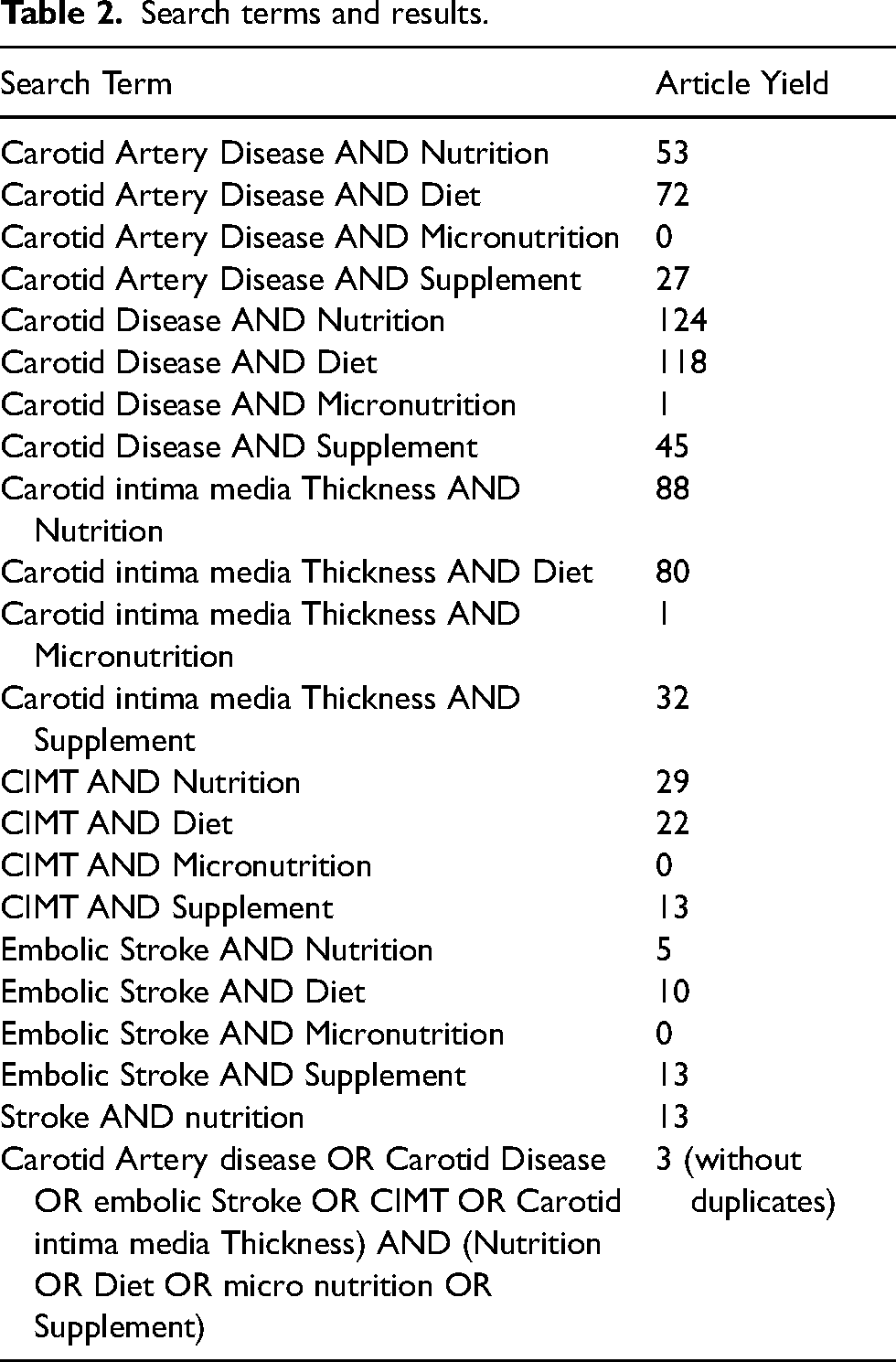
The high number of search combinations required for thorough study of this topic coupled with varying levels of access across several other databases prompted us to focus our investigation on PubMed® articles to maximize article yield and reproducibility. A literature search of the PubMed database from January 2010 to June 2020 was performed using combinations of the following search terms: carotid disease, carotid artery disease, carotid stenosis, carotid intima-media thickness (CIMT), diet, nutrition, micronutrition, embolic stroke, and stroke. We restricted the data collection to the last 10 years to minimize potential for confounders such as improved modern medical management, such as the routine use of statins, antiplatelets, and anticoagulation therapy which have been shown to significantly decrease the rates of stroke (Bushnell and Colon-Emeric, 2009).
Three independent reviewers screened abstracts for search term matches (Table 2). There were no discrepancies, but matches were double-checked. Each of the three reviewers compared our compiled data to a collected pool of corresponding, unpublished data to lessen the bias of our results. We used the Preferred Reporting Items for Systematic Reviews and Meta-Analyses (PRISMA) 2009 checklist to guide our review and writing process (Figure 1) (Moher, 2019).
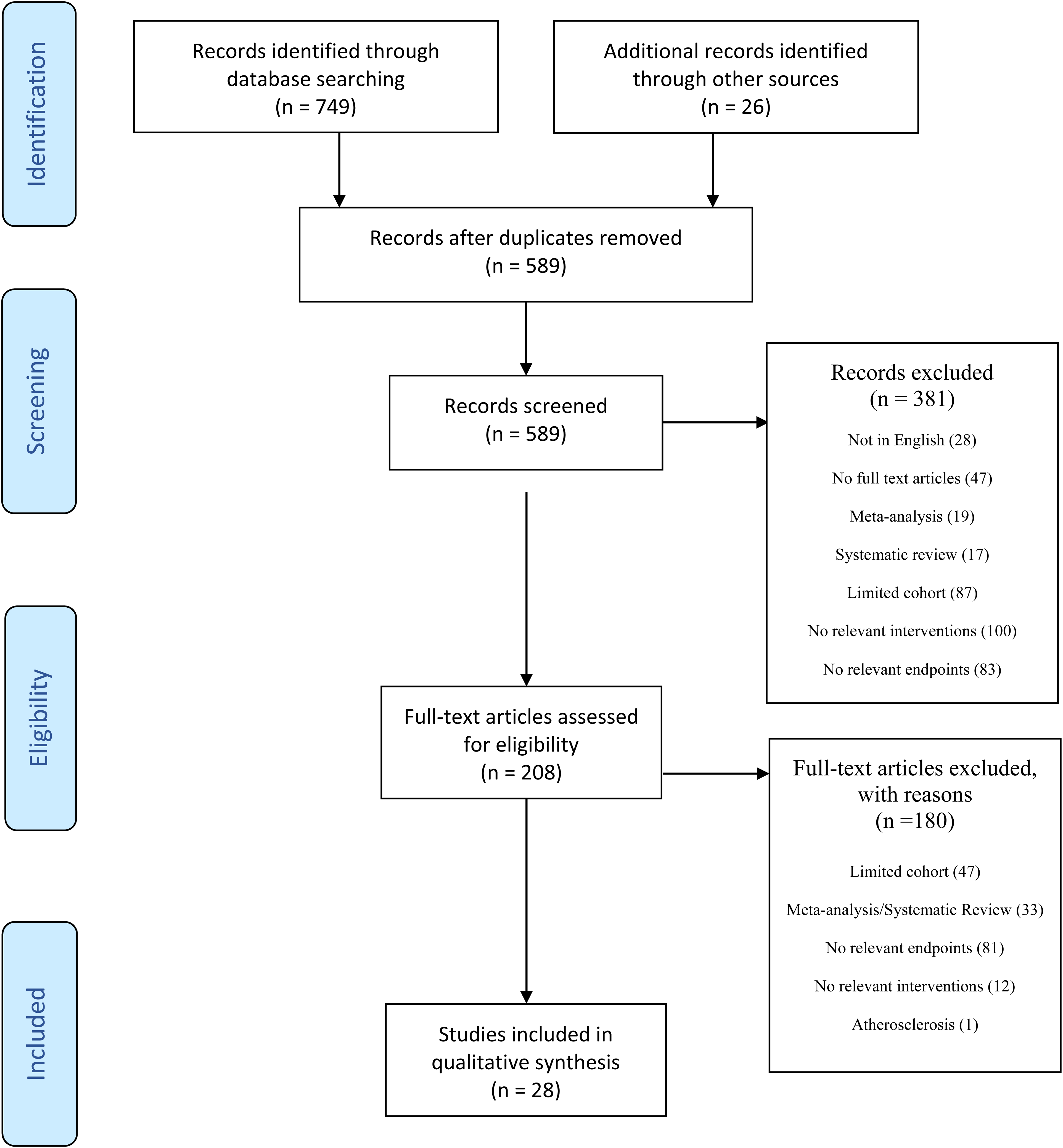
Preferred reporting items for systematic reviews and meta-analyses (PRISMA).
Search terms and results.
Inclusion and exclusion criteria
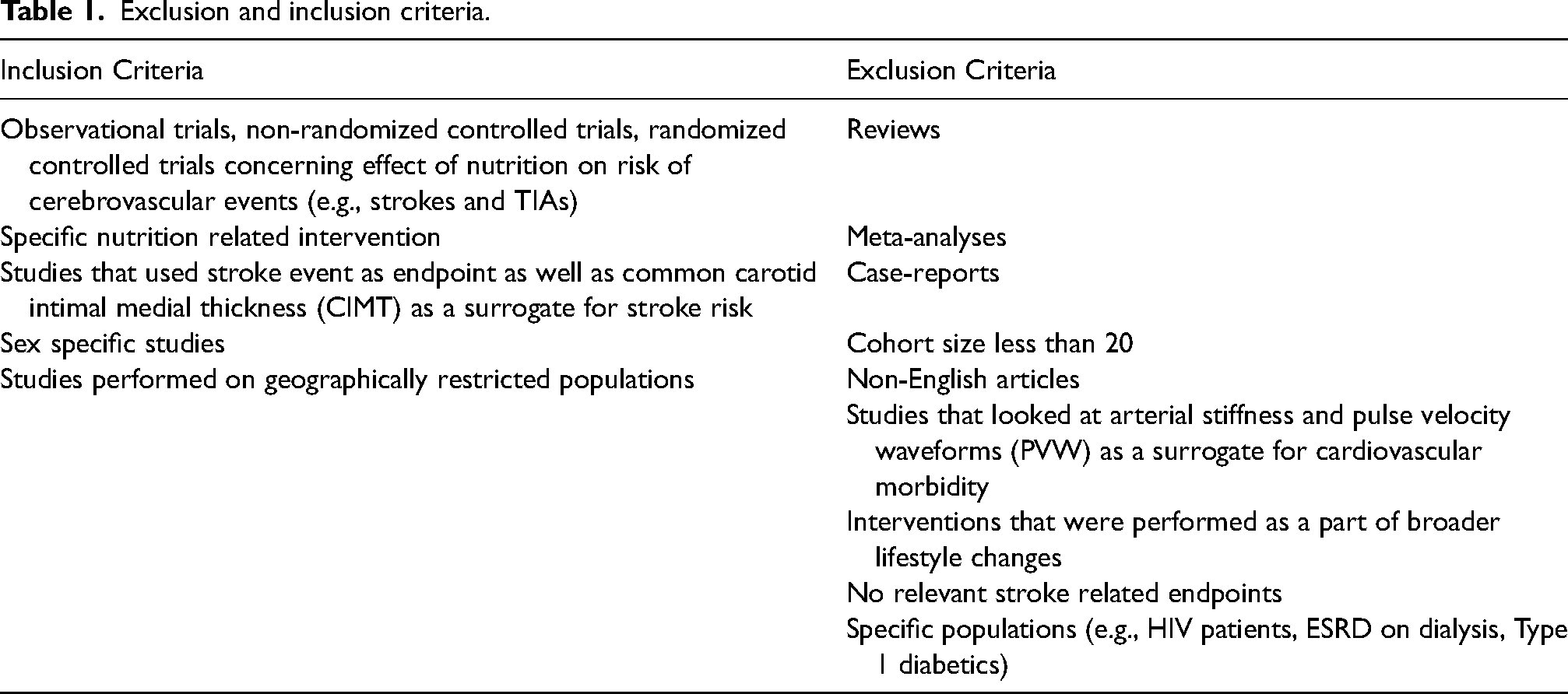
Observational, non-randomized and randomized controlled trials that were performed to study the effect of nutrition on risk of cerebrovascular events (strokes and TIAs) were included in this systematic review. All included studies had a specific nutrition related intervention. Studies that used a stroke event as an endpoint, including stroke risk and death from stroke, as well as common carotid intimal medial thickness (CIMT) as a surrogate for risk of stroke were included. CIMT has been used as a surrogate for stroke risk in multiple studies (Kumar et al., 2020; Harris, 2012; O’Leary et al., 1999; Chambless et al., 2000; Lorenz et al., 2006; Bots et al., 1997, Kitamura et al., 2004; Sun et al., 2020; Rosvall et al., 2005). Though minor variations (i.e., technology, operator, etc.) may exist between studies measuring CIMT, a well-defined standardized approach is used to measure CIMT which is validated in each study (Kitamura et al., 2004). However, we do address concerns involving utilization of CIMT as a surrogate marker for stroke risk in the “limitations” section of our paper. Studies that looked at arterial stiffness and pulse velocity waveforms (PVW) as a surrogate for cardiovascular morbidity were excluded. Although arterial stiffness may correlate with cardiovascular morbidity, there is not enough evidence in the literature to determine correlation between arterial stiffness and PVW and risk of stroke (Chen et al., 2017; O’Leary et al., 1999; Chambless et al., 2000; Lorenz et al., 2006; Bots et al., 1997; Kitamura et al., 2004; Sun et al., 2020; Rosvall et al., 2005). Also, a wide variation exists while measuring the arterial stiffness and PVW as this can be done across various vascular beds (Bots et al., 1997). We included studies that used a measured approach to validate their findings.
Reviews, meta-analyses, case-reports, cohort size less than 20 and non-English articles were excluded. The references from excluded studies were screened to ensure inclusion of all relevant articles. If interventions were performed as a part of broader lifestyle changes the study was excluded because of the risk of confounding from other lifestyle changes that can affect the outcome. If no relevant stroke related endpoints were measured the study was excluded as well. Studies done on specific populations (e.g., HIV patients, ESRD on dialysis, Type 1 diabetics) were excluded since generalizing these results to the general population is not applicable. We did include sex specific studies and studies performed on geographically restricted populations (Table 1).
Exclusion and inclusion criteria.
Bias risk assessment
Publication bias risk assessment was not undertaken during our review due to the heterogeneity of our included studies, as findings would have been difficult to generalize.
Results
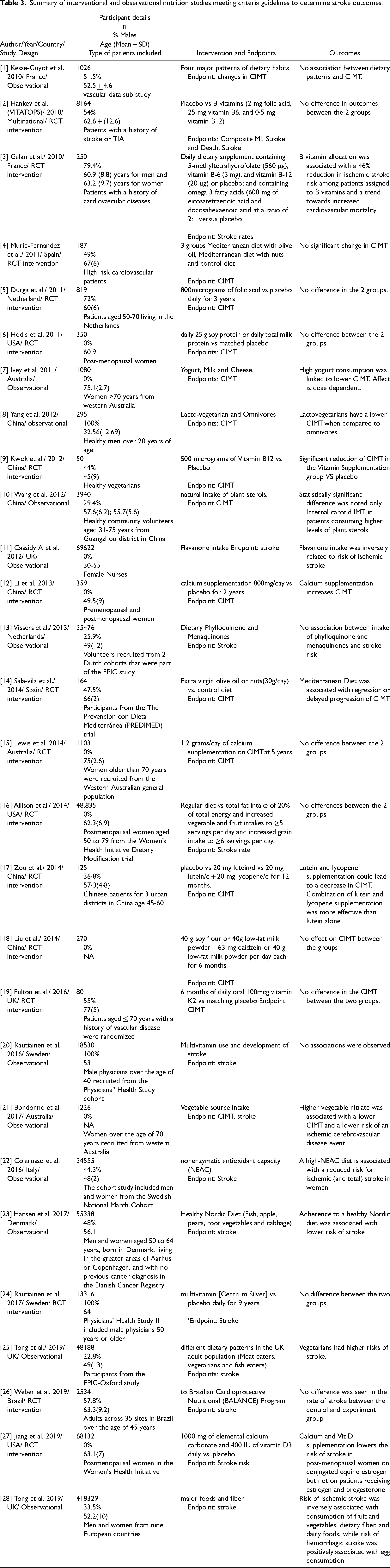
Removal of duplicates from our original search total of 775 records yielded 589 articles. We then screened these articles and assessed 208 full-text articles for eligibility. After exclusion, 28 full-text articles were selected for final inclusion. A total of 28 studies met the inclusion criteria (Table 3); Twelve (43%) were observational studies (OS) (Anand et al., 2020; Kesse-Guyot et al., 2010; Rautiainen et al., 2016; Tong et al., 2019; Hansen et al., 2017; Bondonno et al., 2017; Cassidy et al., 2012; Wang et al., 2012; Yang et al., 2012; Ivey et al., 2011; Vissers et al., 2013; Colarusso et al., 2017) and sixteen (57%) were randomized controlled trials (RCT) (Jiang et al., 2019; Li et al., 2013; Lewis et al., 2014; Kwok et al., 2012; Galan et al., 2010; VITATOPS Trial Study Group, 2010; Durga et al., 2011; Fulton et al., 2016; Rautiainen et al., 2017; Murie-Fernandez et al., 2011; Sala-Vila et al., 2014; Allison et al., 2014; Hodis et al., 2011; Zou et al., 2014; Liu et al., 2014; Weber et al., 2019). The median adult age was 56.1 (30-77) years. Nine (32%) studies included only women (Bondonno et al., 2017; Cassidy et al., 2012; Ivey et al., 2011; Jiang et al., 2019; Li et al., 2013; Lewis et al., 2014; Allison et al., 2014; Hodis et al., 2011; Liu et al., 2014) whereas three (9%) studies included only males (Rautiainen et al., 2016; Yang et al., 2012; Rautiainen et al., 2017) Twelve (43%) studies explored the impact of supplements (Rautiainen et al., 2016; Jiang et al., 2019; Li et al., 2013; Lewis et al., 2014; Kwok et al., 2012; Galan et al., 2010; VITATOPS Trial Study Group, 2010; Durga et al., 2011; Fulton et al., 2016; Rautiainen et al., 2017; Zou et al., 2014; Liu et al., 2014) and sixteen (57%) studies looked at the impact of dietary changes (Anand et al., 2020; Kesse-Guyot et al., 2010; Tong et al., 2019; Hansen et al. 2017; Bondonno et al., 2017; Cassidy et al., 2012; Wang et al., 2012, Yang et al., 2012; Ivey et al., 2011; Vissers et al., 2013; Colarusso et al., 2017; Murie-Fernandez et al., 2011; Sala-Vila et al., 2014; Allison et al., 2014; Hodis et al., 2011; Weber et al., 2019). Fourteen (50%) studies examined CIMT as the endpoint (Kesse-Guyot et al., 2010; Wang et al., 2012; Yang et al., 2012; Ivey et al., 2011; Li et al., 2013; Lewis et al., 2014; Kwok et al., 2012; Durga et al., 2011; Fulton et al., 2016; Rautiainen et al., 2017; Murie-Fernandez et al., 2011; Sala-Vila et al., 2014; Allison et al., 2014; Hodis et al., 2011; Zou et al., 2014; Liu et al., 2014) whereas thirteen (46%) examined stroke rate as the endpoint (Anand et al., 2020; Rautiainen et al., 2016; Tong et al., 2019; Hansen et al. 2017; Cassidy et al., 2012; Vissers et al., 2013; Colarusso et al., 2017; Jiang et al., 2019; Galan et al. 2010; VITATOPS Trial Study Group, 2010; Rautiainen et al., 2017; Allison et al., 2014; Weber et al., 2019). Only one (4%) study looked at both as an endpoint (Bondonno et al., 2017).
Summary of interventional and observational nutrition studies meeting criteria guidelines to determine stroke outcomes.
Supplements
A significant risk reduction was noted in one study that used calcium and vitamin D in postmenopausal women on conjugated equine estrogen (Jiang et al., 2019). Another study in postmenopausal women looking at calcium supplementation showed an increase in CIMT with calcium supplementation (Li et al., 2013). A third study in post-menopausal women showed no difference with calcium supplementation between CIMT in the 2 groups at 5 years (Lewis et al., 2014). The dose of calcium used was different in the studies with one study using 1.2g/day and the other studies using 800mg/day. No study looked at the role of calcium supplements in the general population and males.
We found that vitamin B12 or a combination of B Vitamins was the most common supplement studied in stroke prevention. Two RCTs demonstrated a correlation between B vitamins and lower CIMT (Kwok et al., 2012; Galan et al., 2010) within our study parameters. Vitamin K showed no difference in the outcomes between the two groups (Fulton et al., 2016). Use of multivitamins for stroke reduction in men have shown no significant reduction in stroke rates (Rautiainen et al., 2016; Rautiainen et al., 2016). Use of omega-3 supplements, soy proteins, lutein and lycopene has shown no difference in change in CIMT over time (Galan et al., 2010; Hodis et al., 2011; Zou et al., 2014; Liu et al., 2014).
Dietary patterns
Multiple studies showed an inverse relationship between consumption of vegetables and fruits and the risk of stroke (Anand et al., 2020, Hansen et al., 2017; Bondonno et al., 2017). Descriptions of the specific dietary intake in these studies included diets rich in dairy, fruits, and vegetables but were vague. However, we found one study that mentioned that vegetarians have a higher incidence of stroke than meat-eaters (Tong et al., 2019). In addition, the Women’s Health Initiative Dietary Modification trial revealed no differences between the group that consumed more fruits, vegetables, and grains compared with the control group (Allison et al., 2014). A randomized control trial (PREDIMED-Navarra) did not initially demonstrate significant group differences between CIMT after one year of dietary changes (Murie-Fernandez et al., 2011). This three-armed intervention study included a Mediterranean diet with supplemental virgin olive oil, Mediterranean diet with supplemental nuts, and a control diet. However, a long-term follow-up subset analysis of the trial after 2.4 years demonstrated a significant decrease in CIMT with Mediterranean diet supplemented with nuts (30g/day) (Sala-Vila et al., 2014).
One RCT in healthy Chinese men which demonstrated a protective effect on blood pressure, insulin secretion index, and lipid profiles, showed patients who consume lactovegetarian diets have lower CIMT (Yang et al., 2012). A similar observational study looking at dairy products showed consumption of yogurt lowered risk of stroke but not with milk and cheese consumption. Higher yogurt consumption (>100gms/day) was associated with increased levels of HDL cholesterol. (Ivey et al., 2011) A large interventional trial evaluating 48,000 postmenopausal women over an eight-year follow-up did not demonstrate a significant risk of incident carotid disease using the Women’s Health Initiative Diet Modification Trial. This diet included fruits, vegetables, and fiber intake and measurement of polyunsaturated to saturated fat intake. Although LDL and HDL cholesterol levels were lower at one year follow up, the results did not sustain out to year 6 (Murie-Fernandez et al., 2011). Trends among our included studies concerning the association between intake of substances containing molecules such as flavanone, plant sterols, phylloquinones, menaquinones, and nonenzymatic antioxidants and stroke could not be established (Cassidy et al., 2012; Wang et al., 2012; Vissers et al., 2013; Colarusso et al., 2017).
Discussion
Stroke is one of the leading causes of disability worldwide in the adult population; the morbidity of non-fatal stroke remains high and requires a significant amount of financial support which is expected to triple by the year 2030 (Mozaffarian et al., 2016, Donkor, 2018; Boehme et al., 2017). Given that diet is a modifiable risk factor and its direct impact on stroke risk has not been explored in a broader context, we performed a systematic review to analyze the impact of nutritional intervention on stroke risk. This study was designed to determine the possible relationship of stroke risk with variation in dietary components and supplements. Our systematic review indicates that adopting a diet rich in vegetables, fruits, and fiber earlier in life may lower stroke risk. However, the relationship between stroke risk, fish, meat, and fat intake is unclear. We found two RCTs that demonstrated a correlation between B12 and lower CIMT (Kwok et al., 2012; Galan et al., 2010) within our study parameters. There are several studies, including the China Stroke Primary Prevention Trial (CSPPT), that support the association between B vitamins and stroke risk reduction (Lonn et al., 2006; Refsum et al., 2006; Jenkins et al., 2021; Huo et al., 2015). It is important to note that misconceptions regarding the homocysteine lowering effect by B vitamins being contributory or unrelated to stroke risk are mistakenly propagated by improper contextualization of previous studies such as those involving cyanocobalamin use among participations with renal failure (House et al., 2010; Spence et al., 2010, Spence et al., 2017). Stroke prevention by homocysteine level decrease with B vitamins is compelling per the CSPPT, a trial involving over 20,000 hypertensive patients who were followed for a median of 4.5 years, which demonstrated stroke reduction was proportional to a significant plasma total homocysteine reduction of greater than 15 µmol/L and 73% reduction of ischemic stroke with folic acid (Kong et al., 2018; Huang et al., 2017). Currently, there is a lack of data concerning use of multivitamins, calcium, soy products and other supplements for primary or secondary prevention of stroke. These findings stress the importance of continued, focused study concerning the effect of nutrition on stroke risk so that we could better explore non-medical management options.
Nutrition has long been implicated as a modifiable risk factor for stroke as well as cardiovascular events, in which healthy diets work indirectly by lowering blood pressure, controlling blood sugar levels, and limiting the harmful effects of lipidemia associated free radicals (Zhang et al., 2011; Goldstein et al., 2006) It has also been shown to work directly by lowering the intima medial thickness which is a surrogate marker for ischemic stroke. A systematic review by Ndanuko et al. analyzed the effect of healthy dietary habits on hypertension and found that diet alone without other lifestyle changes caused significant improvement in blood pressure control (Ndanuko et al., 2016). Nutrition has also been shown to have similar effects on hyperlipidemia. A study by Clarke et al. showed that replacing 60% of the calories from saturated fats to polyunsaturated fats led to a decrease in total cholesterol by 15%, with 80% of this reduction being LDL (Clarke et al., 1997). Based on the current body of literature, the U.S. Department of Health and Human Services recommends consuming a dietary pattern that emphasizes intake of vegetables, fruits, and whole grains, low-fat dairy products, poultry, fish, legumes, non-tropical vegetable oils and nuts and limits intake of sweets, sugar-sweetened beverages, and red meats. (HHS/USDA. Dietary Guidelines for Americans 2015–2020, 2015). It is important to note, however, that geographical and cultural practices may influence what constitutes a healthy diet for some populations.
The direct effect of nutrition on stroke risk is difficult to study given the long term follow up required and large study population needed. However indirect markers for stroke risk can be studied over time after an intervention. Carotid intimal medial thickness (CIMT), which can be measured using an ultrasound, is commonly utilized as a marker for stroke risk (Bots et al., 1997; Lorenz et al., 2006; Geisel et al., 2017, Sun et al., 2020). CIMT is measured using a strict ultrasound protocol. One centimeter of the distal two centimeters of the common carotid artery is identified and the thickness of the inner two layers is measured using a preloaded software (Stijn et al., 2013). Using a strict protocol allows reproducibility and assessment over time which makes it possible to use CIMT as marker for interventional studies for stroke risk.
During our investigation we noted that half of the studies we included in our final count exploring the association between nutrition and cardiovascular health use myocardial infarction, stroke, or death as composite endpoints (Anand et al., 2020; Bushnell et al., 2009; Chen et al., 2017; Rautiainen et al., 2016; Tong et al., 2019; Hansen et al., 2017; Bondonno et al., 2017; Colarusso et al., 2017; Jiang et al., 2019; Galan et al., 2010; VITATOPS Trial Study Group, 2010; Rautiainen et al., 2017; Allison et al., 2014; Weber et al., 2019). We used a strict inclusion for our systematic review only including studies that used a single intervention in the form of dietary changes and specifically looked at stroke rate or change in CIMT. This allowed us to avoid confounding effects from other interventions on our results and avoid skewing of the results that can happen with composite endpoints due to etiologic heterogeneity. A balanced diet for ages 3 and older for either sex consists of approximately 45-65% of total calorie intake from carbohydrates (U.S. Department of Agriculture and U.S. Department of Health and Human Services. Dietary Guidelines for Americans, 2020-2025, 2020). The macronutrients that constitute a healthy diet include carbohydrates with low glycemic index (GI); based on GI, carbohydrates are divided into 3 groups; low (55 or less); medium (59-69) or high (70 or over) (Glycemic index and glycemic load. Glycemic Index and Glycemic Load, 2021). Low GI foods can be found in rolled oats, barley, and most fruits and vegetables (Goldstein et al., 2006, Ndanuko et al., 2016).Though a few large cohort studies, such as those involving Nordic and Mediterranean diets (Hansen et al., 2017; Sala-Vila et al., 2014) involved selections rich in fruits and vegetables, there were no studies that met the inclusion criteria for our systematic review that directly explored low glycemic index carbohydrate diets and stroke risk.
A balanced diet for ages 3 and older for either sex consists of approximately 10-35% of total calorie intake from protein (U.S. Department of Agriculture and U.S. Department of Health and Human Services. Dietary Guidelines for Americans, 2020-2025, 2020). Protein type may have differential effects on cardiovascular health, in which the literature reports that protein intake in the form of soy, nuts, fish and poultry lowers cardiovascular disease risk compared with heavier, processed animal protein (Clarke et al., 1997). However, there is a lack of data concerning the effect of different protein sources on cardiovascular events such as stroke rate. Although our systematic review did not show any difference in the stroke rate with addition of soy protein, the intake of nuts, plant sterols, and fish has shown to reduce the risk of stroke (Hansen et al., 2017; Wang et al., 2012; Sala-Vila et al., 2014). However, we note that our discussion of the effect of soy protein on outcomes is limited due to only two studies meeting inclusion criteria for this review (Hodis et al., 2011; Liu et al., 2014).
Perhaps the most important component for reducing cardiovascular morbidity is the quality and quantity of fat intake. A balanced diet for ages 3 and older for either sex consists of approximately 20-35% of total calorie intake from fat (U.S. Department of Agriculture and U.S. Department of Health and Human Services. Dietary Guidelines for Americans, 2020-2025, 2020). Sources of dietary fats include dairy products, animals, and plants such as nuts and seeds (Types of fat. The Nutrition Source., 2021). Saturated fats, which comprise most animal-based fats, should be avoided because they cause a rise in total cholesterol and LDL (Barendse, 2014). Monounsaturated fatty acids (MUFAs) and polyunsaturated fatty acids (PUFAs) have been shown to lower total cholesterol and LDL and raise HDL (Mensink and Katan, 1992). Though the effect of MUFAs and PUFAs on stroke risk is still being debated (Gillman et al., 1997; Venø et al., 2019), plant-based oils and nuts that are rich in MUFA and PUFAs should be considered as a primary fat source in the diet given some that there is some evidence that shows a diet high in omega-3 and omega-6 PUFA consumption may lower symptomatic ischemic stroke and carotid atherosclerosis (Mahe et al., 2010). One observational study shows that higher consumption of yogurt lowers CIMT compared to cheese and milk (Ivey et al., 2011). We did not find evidence that consumption of omega-3 (PUFA) lowers stroke risk (Galan et al., 2010) but use of plant-based oils either from seeds or nuts compared to animal sources may reduce stroke risk (Murie-Fernandez et al., 2011; Sala-Vila et al., 2014).
Currently, there is limited data that supports the role of supplements in reduction of stroke risk as well as cardiovascular morbidity and mortality overall (Jiang et al., 2019; Li et al., 2013; Lewis et al., 2014; Kwok et al., 2012; Galan et al., 2010, Zou et al., 2014). Dietary supplements with calcium have shown mixed reports in limited study populations (Jiang et al., 2019; Li et al., 2013; Lewis et al., 2014). We found that multivitamins and vitamin K exhibit little to no effect on stroke risk in the general population (Rautiainen et al., 2016; Durga et al., 2011; Rautiainen et al., 2017). Two RCTs demonstrated that B vitamins decrease CIMT (Kwok et al., 2012; Galan et al., 2010). The only supplements, aside from B vitamins, that showed a benefit in stroke risk in our systematic review were lutein and lycopene (Zou et al., 2014). These are plant-based nutrients. The mechanism for this effect is not known and sources rich in these nutrients include red and orange fruits and vegetables.
The results of this systematic review are consistent with the literature on cardiovascular health and hold true for lowering stroke risk. Based on these findings, a diet rich in vegetables, fruits, nuts, plant-based oils, fish, and poultry seems to lower the risk of stroke whereas consumption of non-lean meats tends to increase the risk of stroke. Though B vitamins appear to reduce stroke risk, the role of other vitamins and supplements needs to be studied further because of conflicting or scant results. The challenges and limitations of performing large population-based studies on the effect of nutrition on stroke risk are understandable but the current body of literature points to a clear impact of nutrition on cardiovascular disease, which includes coronary artery disease and stroke (Pan et al., 2018). This necessitates further RCTs to better comprehend the role of supplements in preventing strokes specifically. Accruing and better understanding these results can lead to earlier adoption of good dietary habits during childhood; this can lower CIMT values which may translate to lower stroke risk due slowed progression of atherosclerosis.
Limitations
Several limitations exist in these studies, especially observational studies since it is not possible to assign a causal relationship between nutrition and change in stroke risk based on observational studies alone. Another major limitation which was true for both observational studies and RCT is the duration of follow-up. Most studies had a short follow up where any intervention in the diet may not produce a reduction in stroke risk with longer follow up. Compliance with dietary habits, supplements and/or vitamins cannot be assessed since most studies used self-reported questionnaires. Self-reporting is also subjected to recall bias. Another important limitation was the dose of supplements used in studies. Lack of effect may be attributed, in several studies, to the use of a standardized dose in the intervention cohort which may not have been sufficient to produce an effect.
We cited several studies that support our use of CIMT as surrogate marker for stroke risk (Kumar et al., 2020; Harris, 2012; O’Leary et al., 1999; Chambless et al., 2000; Lorenz et al., 2006; Bots et al., 1997, Kitamura et al., 2004; Sun et al., 2020; Rosvall et al., 2005), including a recent meta-analysis by Kumar et al. which analyzed 19 studies comprised of 3475 ischemic stroke cases and 11,826 controls (Kumar et al., 2020). However, there are many who would disagree with using this measure in this context. Raggi et al. states that IMT should not be referred to as preclinical atherosclerosis (Raggi and Stein, 2020). The Mannheim intima-media thickness consensus in 2004 recommended that studies reporting IMT as a measure including plaque thickness in the carotid bulb are not truly reporting IMT, in which their parameters specify that the distal common carotid must only be included at a site where there is no plaque (Touboul et al., 2004). Paraskevas et al. and Rundek et al. have recently provided commentaries maintaining that plaque thickness predicts cardiovascular risk much more strongly than true IMT (Paraskevas et al., 2020; Rundek et al., 2008). In addition, the Tromsø study, which was the first population-based study involving measurements of both total plaque area and IMT, true IMT did not predict stroke in a 10-year follow up involving more than 6000 participants whereas carotid plaque burden did (Mathiesen et al., 2011).
Conclusions
The key findings from this systematic review indicate that adopting a diet rich in fruits and vegetables earlier in life may lower stroke risk compared with meats and fat intake. B vitamins also appear to confer some protection against stroke. However, one study mentioned that vegetarians have a higher incidence of stroke than meat-eaters. In addition, not enough data exists to support the use multivitamins, calcium, soy products and other supplements for primary or secondary prevention of stroke. Further investigations regarding the association between diet type and stroke risk is warranted given the current paucity of data and ambiguity posed by the current literature. It is also important that we continue exploring appropriate markers, and factors affecting these markers, when assessing stroke risk.
Footnotes
The “author contributions” section:
(1) Conception and design: All authors
(2) Administrative support: All authors
(3) Provision of study materials or patients: Jaineet Singh Chhabra, Amandeep Juneja
(4) Collection and assembly of data: Jaineet Singh Chhabra, Melissa Garuthara, Alisha Oropallo, Amandeep Juneja, Hannah Gardener, Tabea Hoffstaetter
(5) Data analysis and interpretation: Amandeep Juneja, Hannah Gardener, Alisha Oropallo
(6) Manuscript writing: All authors
(7) Final approval of manuscript: All authors
Declaration of Conflicting Interests
The author(s) declared no potential conflicts of interest with respect to the research, authorship, and/or publication of this article.
Funding
The author(s) received no financial support for the research, authorship, and/or publication of this article
