







Abstract
Background
Maternal time constraints lead to a lack of vegetable provision to children. Mothers use homemade meal strategies under time constraints; however, these strategies have not been well investigated.
Aim
This study aimed to classify the homemade meal strategies used by mothers under time constraints and to examine their association with the provision of vegetable dishes.
Methods
We conducted an online cross-sectional survey of 400 mothers of preschool children in Japan. Exploratory and confirmatory factor analyses were used to classify homemade meal strategies. The Mann–Whitney U test and Kruskal–Wallis test were used to compare the subscale scores by the demographic characteristics and provision of vegetable dishes, and logistic regression was used to predict the provision of vegetable dishes based on the subscales and adjusted for demographic characteristics.
Results
A 13-item scale comprising three subscales (“planning meals and shopping ahead,” “use of convenience foods,” and “batch cooking”) was developed. Full-time employed mothers had higher scores for “use of convenience foods” and “batch cooking” than did unemployed mothers. “Batch cooking” was positively related to the provision of vegetable dishes more than seven times a week after adjusting for maternal demographic characteristics, whereas “use of convenience foods” was negatively related. “Planning meals and shopping ahead” was not associated with the provision of vegetable dishes.
Conclusions
The results of this study suggest that batch cooking is a recommended strategy under time constraints and that education on nutritional considerations when using convenience foods is required.
Introduction
Establishing healthy eating habits during childhood is important for physical and psychosocial development. Dietary patterns and eating behaviors acquired in childhood can influence adulthood (Dubois et al., 2022; Mikkilä et al., 2005); thus, children must develop healthy eating behaviors. However, as with children in other countries, Japanese children are lacking in their vegetable intake; 23% of Japanese children aged 2 to 6 years do not eat vegetables every day (Ministry of Health, Labor and Welfare of Japan, 2016), and the average daily vegetable intake of children aged 1 to 6 years is 129.0 g/day (Ministry of Health, Labor and Welfare of Japan, 2020). Vegetables provide nutrients such as fiber, folate, potassium, vitamin A, vitamin C, and vitamin K, and increasing the intake of vegetables reduces the risk of diseases such as hypertension, coronary heart disease, and stroke (Boeing et al., 2012). Additionally, a longitudinal study has shown that vegetable intake in childhood is associated with a reduced risk of stroke in adulthood (Ness et al., 2005). Thus, maintaining an adequate vegetable intake from childhood is important for lifelong health.
Preschool children's vegetable intake is greatly influenced by the home food environment, especially foods provided by parents (Wyse et al., 2011). In some countries, parents’ barriers to providing healthy meals are being investigated. A qualitative study in the USA revealed that parents’ busyness and lack of time, costs, children's request for junk food, children being picky eaters, and early exposure to unhealthy eating were barriers to the promotion of healthy eating among school-age children (Nepper and Chai, 2016). In a study in Ireland, the reported barriers to cooking with raw ingredients included time pressure, a desire to save money, a desire for effortless meals, family food preferences, and the risk of kitchen disasters (Lavelle et al., 2016). These and other studies (Laila et al., 2023; Wijayaratne et al., 2021) all pointed out that, for parents, a lack of time is a barrier to healthy eating by their children. Indeed, preschool children whose parents had no time and energy to prepare meals for families consumed vegetables less frequently (Storfer-Isser and Musher-Eizenman, 2013). Perceived time pressure was negatively related to healthy meal preparation confidence among working mothers (Beshara et al., 2010). Although out-of-home food consumption can save parents’ time and effort, it also contributes to unhealthy food intake for children, as there is a tendency in such circumstances to eat food that is generally more energy-dense and less nutrient-dense (Burke et al., 2007; Moreira et al., 2015). Therefore, we should consider the lack of parental time and investigate homemade meal strategies to promote healthy food intake among preschool children.
According to a previous qualitative study, low-wage employed parents reported using food-coping strategies to reduce time and effort for food, such as “skip meals,” “simplify and speed up,” “multi-task,” “plan meals ahead,” and “get help with food from partner or child” (Devine et al., 2006). Morin et al. (2013) observed several specific strategies (determining the menu for the upcoming week, writing grocery lists, doubling recipes, and preparing meals in advance) used by working parents with preschool children. In a recent qualitative study in Canada, parents’ strategies to cook more often included planning and preparing meals ahead of time, using technology or services to make meal planning and grocery shopping more convenient, using devices and kitchen instruments, and receiving help from the spouse or child (Laila et al., 2023).
Lack of time for parents to prepare meals is an urgent issue since the number of dual-income households is increasing in Japan (Ministry of Health, Labor and Welfare of Japan, 2023). Nevertheless, Japanese mothers are still responsible for the majority of the meals prepared in the home. Japanese fathers’ share of housework is the lowest among fathers in developed countries (The United States of Bureau of Labor Statistics, 2023; Statistics Bureau, Ministry of Internal Affairs and Communications of Japan, 2022). In an international comparative study regarding cooking frequency, Japanese women cooked lunch and dinner 9.8 times a week, while Japanese men cooked 2.8 times a week (Wolfson et al., 2021). The Gender Equality Bureau Cabinet Office of Japan (2020) reported that 66% of mothers prepare meals every day, and 58% of fathers prepare meals less than once a week. Given this social background, it is thought that Japanese mothers are taking various homemade meal strategies under time constraints. However, no research has investigated these strategies for Japanese people. In addition, the association between specific homemade meal strategies reported in other countries and the provision of healthy meals, such as vegetable dishes, to children has not been investigated. Therefore, this study aimed to classify the homemade meal strategies used by mothers under time constraints and to examine the association of these strategies with vegetable dish provision to their children.
Methods
Participants and study design
In October 2021, we conducted an online, cross-sectional study targeting registered users of Cross Marketing Inc. (Company C). Company C has approximately 2.42 million monitors in Japan. For this study, the target number of participants was 400, and the ratio of unemployed to part-time employment to full-time employment was 4:3:3, based on the employment conditions of Japanese mothers with children aged 3 to 6 years (Ministry of Health, Labor and Welfare of Japan, 2019).
A recruitment e-mail was sent to participants, including a request to participate and a link to our survey by Company C. The inclusion criteria of our survey were as follows: being mothers who identified themselves as the primary meal preparers in their households, aged between 25 and 44 years, and part of a nuclear family with one to three children (including at least one child aged 3–5 years). The participants were informed that completing the questionnaire implied the provision of formal consent to participate. This study was approved by the Ethics Review Committee of Ochanomizu University (approval number: 2019-174) and has been performed in accordance with the ethical standards laid down in the 1964 Declaration of Helsinki and its later amendments. The researchers did not receive any information that could identify individuals to protect the privacy of the participants in this study. From the time of publication, the underlying data will not be made accessible to third parties for 10 years.
Measurements
Homemade meal strategies
Thirty-eight homemade meal strategies were developed based on consultation with previous studies (Devine et al., 2006; Morin et al., 2013; Storfer-Isser and Musher-Eizenman, 2013) and focus-group interviews with 12 Japanese mothers of children aged 3 to 5 years. In the focus-group interview, mothers were asked, “When you don’t have much time, how do you prepare meals?”
In this study, participants were instructed to rate their level of agreement with each homemade meal strategy. Responses were rated using a four-point scale (4, “strongly disagree”; 3, “slightly disagree”; 2, “slightly agree”; and 1, “strongly agree”). In the analysis, “strongly disagree” to “strongly agree” were converted to scores of 1 to 4 in that order, and negative items were reverse-coded.
Cooking and meal planning skills
Questions about the participants’ skills regarding cooking various types of vegetables (cooking skills) and planning well-balanced meals (meal planning skills) were asked using a four-point scale (“strongly disagree,” “slightly disagree,” “slightly agree,” and “strongly agree”).
Provision of vegetable dishes
The frequency of vegetable dish provision to their children was assessed by breakfast and dinner using a 5-point scale (“less than once a week,” “1–2 days a week,” “3–4 days a week,” “5–6 days a week,” and “7 days a week”). In the analysis, the frequency of vegetable dish provision for breakfast and dinner was converted into the following values: less than once a week, 0.5; 1–2 days a week, 1.5; 3–4 days a week, 3.5; 5–6 days a week, 5.5; and 7 days a week, 7. Subsequently, the total value (1–14 times a week) was calculated. In addition, it was categorized as “≥7 times a week” and “<7 times a week.”
Demographic characteristics
Data analysis was based on age, education, employment status, household income, number of children, cohabitation status, and subjective time availability.
Data analysis
Survey data from homemade meal strategies were analyzed according to the following procedure: item selection, explanatory factor analysis (EFA), confirmatory factor analysis (CFA), and examination of reliability. First, items with a mean + standard deviation > 4.0 for each item score were considered to have ceiling effects, and items with a mean - standard deviation < 1.0 were considered to have floor effects and excluded. Furthermore, no two items with a correlation coefficient of 0.75 or more were confirmed. To extract the valid items for the Homemade Meal Strategy Questionnaire (HMSQ), EFA was performed using maximum likelihood factor analysis with Promax rotation, and the number of subscales was selected based on a screen plot and eigenvalues > 1. Scale items with factor loadings > 0.40 and no multiple loadings were selected. Using the selected subscales, CFA was performed to evaluate the construct validity. The fitness of the model was assessed using the following indices: goodness of fit index (GFI), adjusted GFI (AGFI), comparative fit index (CFI), and root mean square error of approximation (RMSEA). GFI, AGFI, and CFI values higher than 0.90 indicate a good fit; meanwhile, RMSEA values lower than 0.10 indicate an acceptable fit, with those lower than 0.05 indicating a good fit. Based on this, we aimed to determine the optimal model. Names for the subscales obtained from the EFA and CFA were created based on item content. Cronbach's α was used to examine the reliability of each subscale.
As a subscale score, the total scores divided by the number of items were used (1–4 points). The Mann–Whitney U test and Kruskal–Wallis test were used to compare the subscale scores by demographic characteristics, skills, and provision of vegetable dishes. In addition, we used logistic regression to predict the provision of vegetable dishes based on the subscales and adjusted this analysis for employment status (Bauer et al., 2012; Datar et al., 2014; Wu, 2018), education (Vereecken et al., 2004; Vereecken and Maes, 2010), household income (Darmon and Drewnowski, 2008), subjective time available (Beshara et al., 2010; Djupegot et al., 2017; Storfer-Isser and Musher-Eizenman, 2013), and cooking and meal planning skills (Morin et al., 2013), which have shown an association between children's vegetable consumption or maternal strategies in previous studies.
We used IBM SPSS Statistics version 25.0 for Windows (IBM Japan, Ltd) and Amos version 25.0 (IBM Japan, Ltd) to perform our analyses, and the significance level was set at p < 0.05
Results
Characteristics of the participants
Table 1 presents the demographic characteristics, skills, and provision of vegetable dishes for the 400 participants.
Participants’ demographic characteristics, skills, and frequency of vegetable dish provision.
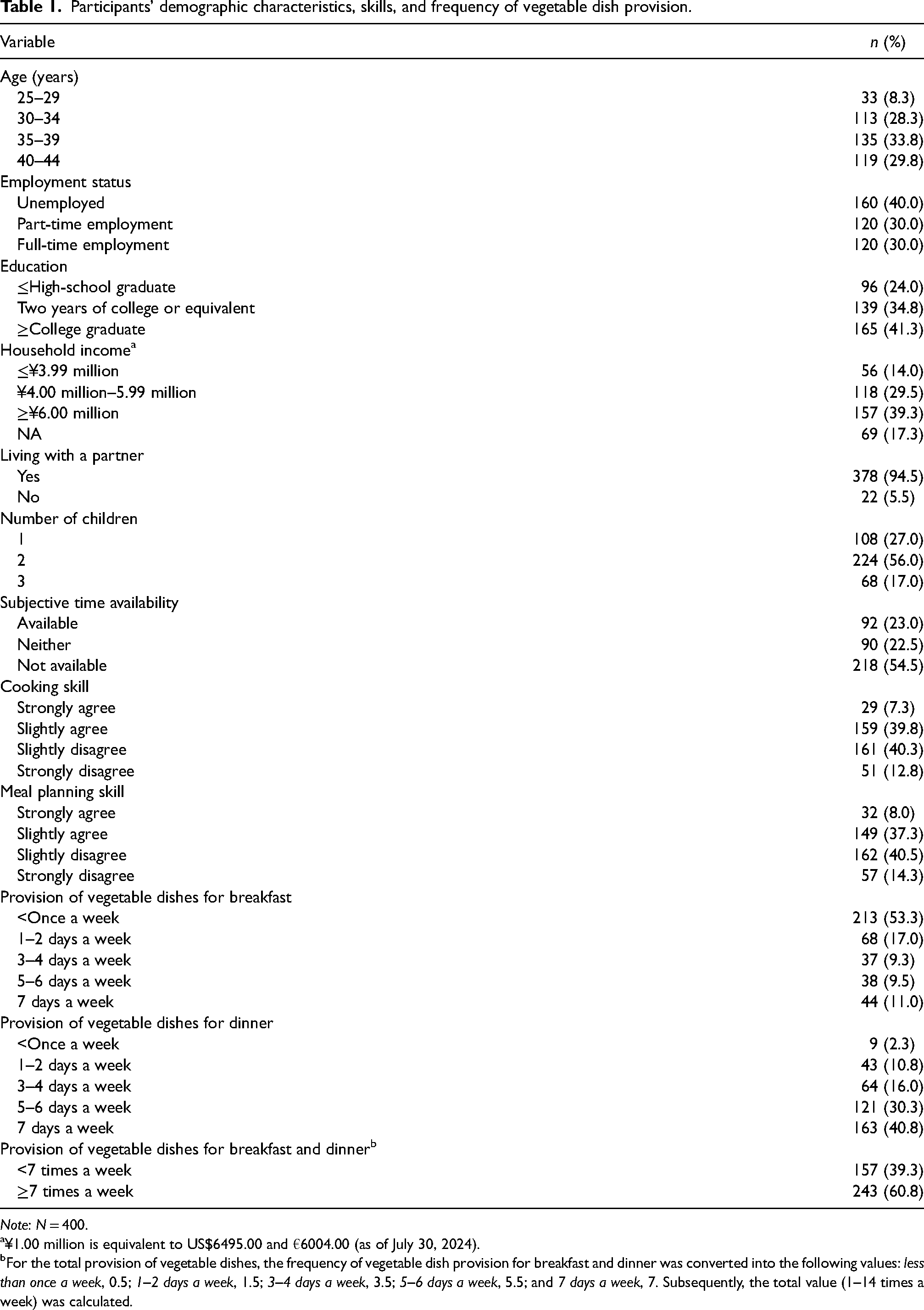
Participants’ demographic characteristics, skills, and frequency of vegetable dish provision.
Note: N = 400.
¥1.00 million is equivalent to US$6495.00 and €6004.00 (as of July 30, 2024).
For the total provision of vegetable dishes, the frequency of vegetable dish provision for breakfast and dinner was converted into the following values: less than once a week, 0.5; 1–2 days a week, 1.5; 3–4 days a week, 3.5; 5–6 days a week, 5.5; and 7 days a week, 7. Subsequently, the total value (1–14 times a week) was calculated.
In total, 41.3% (n = 165) of the participants had ≥college degree, and 157 (39.3%) participants had ≥¥6.00 million in household income. Approximately 50% of the participants (56.0%) had two children. Most participants (94.5%) lived with their partners. Regarding the provision of vegetable dishes, 243 (60.8%) participants provided vegetable dishes for children at breakfast and dinner more than seven times a week.
In the item selection, a ceiling effect was found for the following two items (mean [SD]): “When I do not have sufficient time, I cook meals with recipes that are easy to prepare (3.4 [0.7]),” and “I do grocery shopping almost every day (reverse item) (3.2 [0.9]).” Moreover, a floor effect was found for the following six items (mean [SD]): “I use a meal kit with recipes and ingredients (precut vegetable and meat and seasoning) for the number of persons (1.9 [0.9]),” I use home delivery or online supermarket (1.9 [1.1]),” “I share the responsibility of preparing meals with my husband (or partner) (1.9 [1.0]),” “I always prepare meals alone (reverse item) (1.6 [0.7]),” “I cook while my children are asleep (1.9 [0.9]),” “I ask my parents or parents-in-law (children's grandparents) to cook meals for us (1.6 [0.8]).” EFA was then performed using the 30 items. The number of subscales was set to three based on a screen plot. Consequently, 14 items had factor loadings > 0.40.
In the next phase, CFA was performed to confirm the construct validity of the model suggested by the EFA. We obtained moderate fitness indicators (GFI, 0.89; AGFI, 0.85; CFI, 0.84; RMSEA, 0.093). Subsequently, we excluded one item (“I plan meals several days in advance”), set the error correlation between some items, and obtained a high degree of model fit (GFI, 0.93; AGFI, 0.90; CFI, 0.91; RMSEA, 0.074). Accordingly, these three subscales (13 items) were named as follows: “planning meals and shopping ahead” (five items), “use of convenience foods” (five items), and “batch cooking” (three items), as shown in Table 2.
Factor loadings for the final three subscales (n = 400).
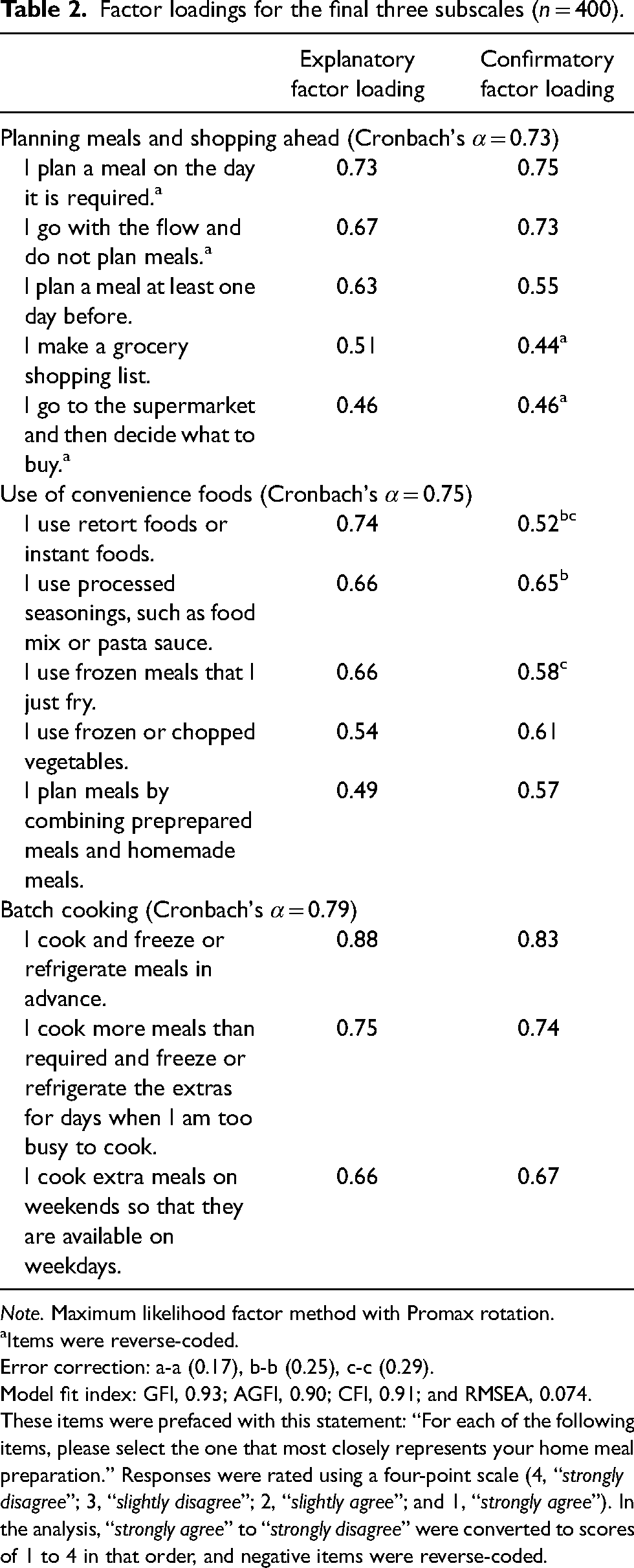
Factor loadings for the final three subscales (n = 400).
Note. Maximum likelihood factor method with Promax rotation.
Items were reverse-coded.
Error correction: a-a (0.17), b-b (0.25), c-c (0.29).
Model fit index: GFI, 0.93; AGFI, 0.90; CFI, 0.91; and RMSEA, 0.074.
These items were prefaced with this statement: “For each of the following items, please select the one that most closely represents your home meal preparation.” Responses were rated using a four-point scale (4, “strongly disagree”; 3, “slightly disagree”; 2, “slightly agree”; and 1, “strongly agree”). In the analysis, “strongly agree” to “strongly disagree” were converted to scores of 1 to 4 in that order, and negative items were reverse-coded.
Cronbach's α coefficients were calculated to examine the reliability of each subscale (Table 2). As a result, Cronbach's α coefficients were found to have an acceptable value, ranging from 0.73 to 0.79, confirming reliability.
Association between the homemade meal strategy questionnaire subscales and demographic characteristics, skills, and provision of vegetable dishes
The association between the scores for the HMSQ subscales and participants’ characteristics is presented in Table 3.
Association between the scores for the homemade meal strategies questionnaire subscales and the participants’ demographic characteristics (n = 400).
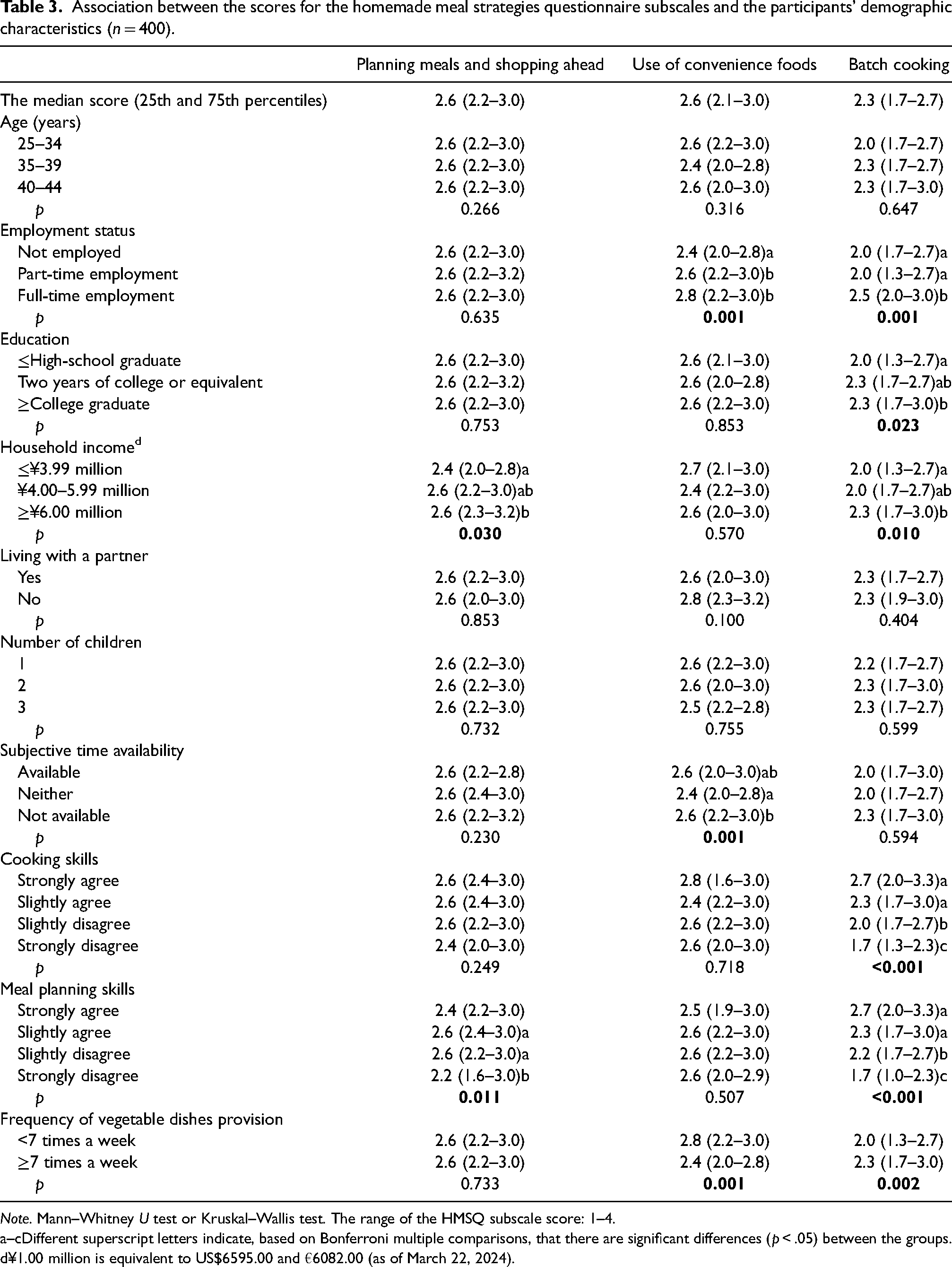
Association between the scores for the homemade meal strategies questionnaire subscales and the participants’ demographic characteristics (n = 400).
Note. Mann–Whitney U test or Kruskal–Wallis test. The range of the HMSQ subscale score: 1–4.
a–cDifferent superscript letters indicate, based on Bonferroni multiple comparisons, that there are significant differences (p < .05) between the groups.
¥1.00 million is equivalent to US$6595.00 and €6082.00 (as of March 22, 2024).
Employed mothers scored higher in the “use of convenience foods” than did unemployed mothers (p = 0.001). Full-time employed mothers scored higher in “batch cooking” than did unemployed mothers (p = 0.001). Meanwhile, higher education was positively associated with scores for “batch cooking” (p = 0.023). Higher household income was positively associated with “planning meals and shopping ahead” (p = 0.030) and “batch cooking” (p = 0.010). Mothers with less subjective time available had higher “use of convenience foods” scores than did their counterparts (p = 0.001). Mothers with cooking and meal planning skills had a higher “batch cooking” score compared to those without cooking and meal planning skills (p < 0.001). Mothers with meal planning skills had higher scores for “Planning meals and shopping ahead” than did those without meal planning skills (p = 0.011). Mothers who provided vegetable dishes more than seven times a week had a higher score for “batch cooking” (p = 0.002) and a lower one for “use of convenience foods” than did their counterparts (p = 0.001).
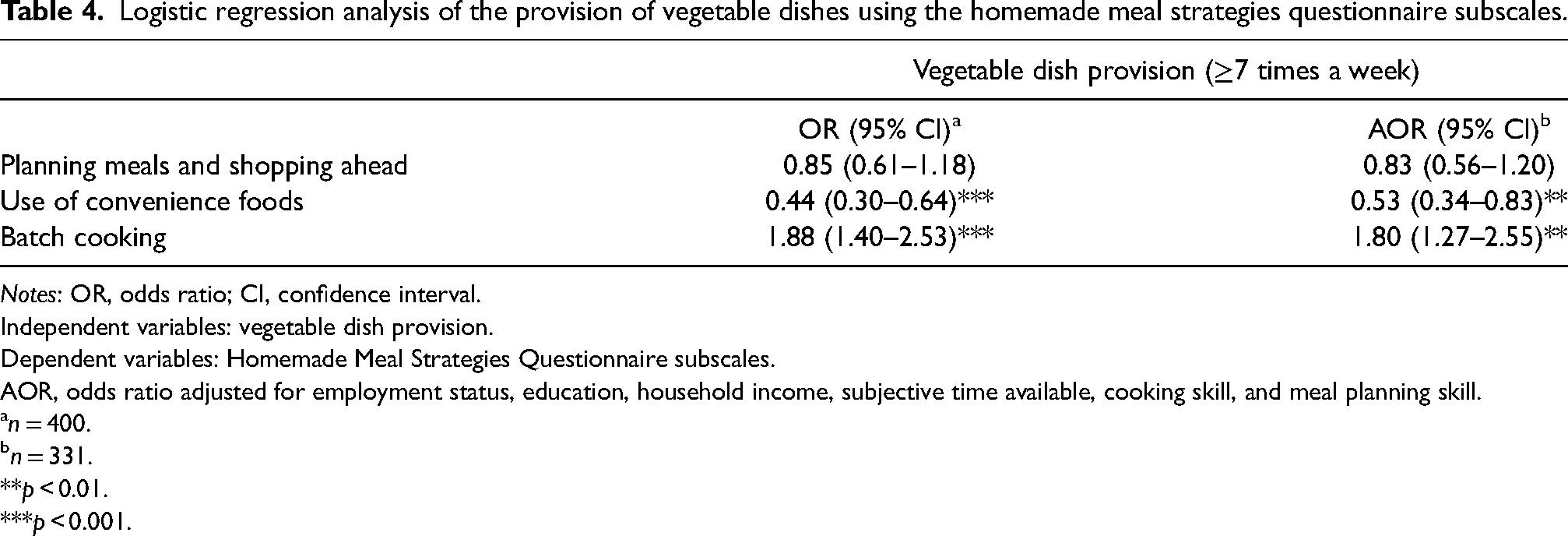
Table 4 shows the logistic regression analysis results performed to predict the provision of vegetable dishes based on the HMSQ subscales.
Logistic regression analysis of the provision of vegetable dishes using the homemade meal strategies questionnaire subscales.
Notes: OR, odds ratio; CI, confidence interval.
Independent variables: vegetable dish provision.
Dependent variables: Homemade Meal Strategies Questionnaire subscales.
AOR, odds ratio adjusted for employment status, education, household income, subjective time available, cooking skill, and meal planning skill.
n = 400.
n = 331.
**p < 0.01.
***p < 0.001.
After adjusting for maternal demographic characteristics and cooking and meal planning skills, a higher “batch cooking” score was positively associated with the provision of vegetable dishes more than seven times a week (odds ratio [OR], 1.80; 95% confidence interval [CI], 1.27–2.55). Meanwhile, higher “use of convenience foods” score was negatively associated with the provision of vegetable dishes more than seven times a week (OR, 0.53; 95% CI, 0.34–0.83).
In the present study, homemade meal strategies used by mothers were classified into three: “planning meals and shopping ahead,” “use of convenience foods,” and “batch cooking.” Our findings showed that “batch cooking” was positively related to the provision of vegetable dishes more than seven times a week, whereas “use of convenience foods” was negatively related to the provision of vegetable dishes more than seven times a week.
Mothers with higher scores on “batch cooking” provided vegetable dishes more than seven times a week. The results obtained in the current study are consistent with those of previous studies showing that preschool children whose parents kept fruit and vegetables in ready-to-eat format consumed more fruits and vegetables (Wyse et al., 2011). Children whose mothers prepared dishes ahead of time to eat also consumed two or more servings of vegetables per day (Crawford et al., 2007). In addition, full-time working mothers scored higher than unemployed mothers in “batch cooking.” Previous studies have reported that working parents experience the greatest time pressures and have much work- and family-related responsibilities; therefore, they perceive themselves as lacking sufficient time to cook (Devine et al., 2003; Jabs et al., 2007). Thus, it is reasonable to hypothesize that when full-time working mothers have the time to cook, they cook meals several days in advance so that they are available on subsequent busy days. We have concluded that “batch cooking,” including vegetable dishes, has led to the provision of vegetables for children even on days when mothers come home late and do not have sufficient time to cook meals. Although “batch cooking” is a recommended strategy in terms of the provision of vegetable dishes, it is necessary to consider that mothers who practice it have higher education and household income and cooking and meal planning skills.
Regarding the “use of convenience foods,” there was a negative correlation between scores on this subscale and maternal provision of vegetables to children. This result agrees with previous studies showing that a greater maternal preference for convenience in meal preparation is positively associated with healthy meal provision (Beshara et al., 2010). In addition, the results that mothers with less subjective time available had higher scores on “use of convenience foods” were reported in previous studies (Beshara et al., 2010; Djupegot et al., 2017). Convenience food removes the time and energy demands associated with cooking meals at home (Brunner et al., 2010; Contini et al., 2018). It is reasonable that mothers with both objectively and subjectively less time available have higher scores on the “use of convenience foods.” Therefore, information about how to add vegetables to convenience foods needs to be provided to working mothers, and food companies should develop convenience foods that include vegetables.
“Planning meals and shopping ahead” was not associated with the provision of vegetable dishes. The results were not consistent with previous results showing that planning meals ahead is positively associated with vegetable provision and intake (Storfer-Isser and Musher-Eizenman, 2013). Advanced individuals who enjoy cooking (Jones et al., 2014) or have a routine of providing a certain vegetable dish every day may provide vegetable dishes without this strategy. Further investigations on this topic are required, taking confounding factors into account.
Finally, some homemade meal strategies were not investigated among the participants of this study. One of them involves getting help with family, such as “I share the responsibility of preparing meals with my husband (or partner).” This item was excluded from the item selection process because many respondents answered “disagree.” The results of this study are consistent with the current situation reported in previous surveys, in which Japanese women are responsible for most meal preparations (Gender Equality Bureau Cabinet Office of Japan, 2020). Different results may be obtained in other countries. In addition, from the viewpoint of fairness in the division of household work between genders, the number of those who cooperate with their families in preparing meals is expected to increase in the future.
The present study has some limitations. First, we encountered selection bias because all participants were registered monitors with a social research company and completed an online survey. Thus, it is possible that the sample included relatively few extremely busy mothers, as such individuals might not have had time to answer the questionnaire. Second, the cross-sectional design of the study means that the observed association does not necessarily indicate causality. The impact of mothers adopting new strategies to provide vegetable dishes to their children should be examined via longitudinal studies. Third, the provision of vegetable dishes was assessed as a single item. Thus, the nutritional quality and variety of vegetables were not considered in this study. Moreover, as this evaluation was subjective, social-desirability bias might have influenced the results. Finally, we did not conduct testing of the questionnaire.
Conclusion
This study classified maternal homemade meal strategies under time constraints into three strategies: “planning meals and shopping ahead,” “use of convenience foods,” and “batch cooking.” Batch cooking was positively related to the provision of vegetable dishes, “use of convenience foods” was negatively related to the provision of vegetable dishes, and full-time employed mothers used both strategies. These results suggest that batch cooking is a recommended strategy under time constraints and that information about how to add vegetables to convenience foods is required.
Footnotes
Acknowledgments
The authors thank all mothers for participating in our study.
Authors’ contributions
Emi Yoshii did conceptualization, data curation, formal analysis, investigation, writing the original draft, and writing—review and editing. Rie Akamatsu performed supervision, conceptualization, writing—review and editing. Tomoko Hasegawa did funding acquision and writing—review and editing. Kazuhiko Fukuda and Tomomi Ainuki did writing—review and editing.
Availability of data and materials
Not applicable.
Code availability
Not applicable.
Consent to participate
The participants were informed that completing the questionnaire implied the provision of formal consent to participate. Details that might disclose the identity of the participants are omitted.
Consent for publication
All participants gave their informed consent for their data to be published in this study.
Declaration of conflicting interests
The authors declared no potential conflicts of interest with respect to the research, authorship, and/or publication of this article.
Ethics approval
This study was approved by the Ethics Review Committee of Ochanomizu University (approval number: 2019-174). This study has been performed in accordance with the ethical standards laid down in the 1964 Declaration of Helsinki and its later amendments.
Funding
The authors disclosed receipt of the following financial support for the research, authorship, and/or publication of this article: This work was supported by the Japan Society for the Promotion of Science KAKENHI (Grant Number: JP 17H01952, JP 22K02389).
