







Abstract
Chlormequat (chlorocholine) is a plant growth regulator and gibberellin biosynthesis inhibitor used to produce plants with sturdier and thicker stalks, facilitating the harvesting of ornamental flowers, cereal crops such as wheat, barley, oats, and fruit trees (Chlormequat Chloride | C5H13Cl2N | CID 13836 – PubChem, n.d.). A recent study reports the substantial detection of chlormequat in urine samples from 77 out of 96 adult Americans, with the detection rate increasing significantly from 69% in 2017 to 90% in 2023 (Temkin et al., 2024). Additionally, oat-based and wheat-based products consumed regularly have shown high levels of chlormequat detection in the human body in recent years, particularly in 2022 and 2023 (Temkin et al., 2024). Interestingly, chlormequat's approval by the U.S. Environmental Protection Agency (EPA) for use on crops raises serious concerns about the safety of our food and the health of both us and our families.
Multiple studies have raised concerns about the potential side effects of chlormequat, particularly its reproductive and endocrine toxicities (Figure 1). Research on mice has shown significant disruptions in steroid biosynthesis pathways, indicating potential endocrine-disrupting effects. For instance, studies have found that chlormequat exposure in mice can lead to decreased levels of critical reproductive hormones, which may impair fertility and reproductive health (Sørensen and Danielsen, 2006). Similar studies on pigs have also highlighted reproductive issues, including altered hormone levels and reduced fertility rates (Nisse et al., 2015). Moreover, animal studies also showed that chlormequat exposure during pregnancy resulted in postnatal adverse effects like hyperproteinemia, hypoglycemia, and hyperlipidemia, although the exact pathophysiology is unknown (Xiagedeer et al., 2020).
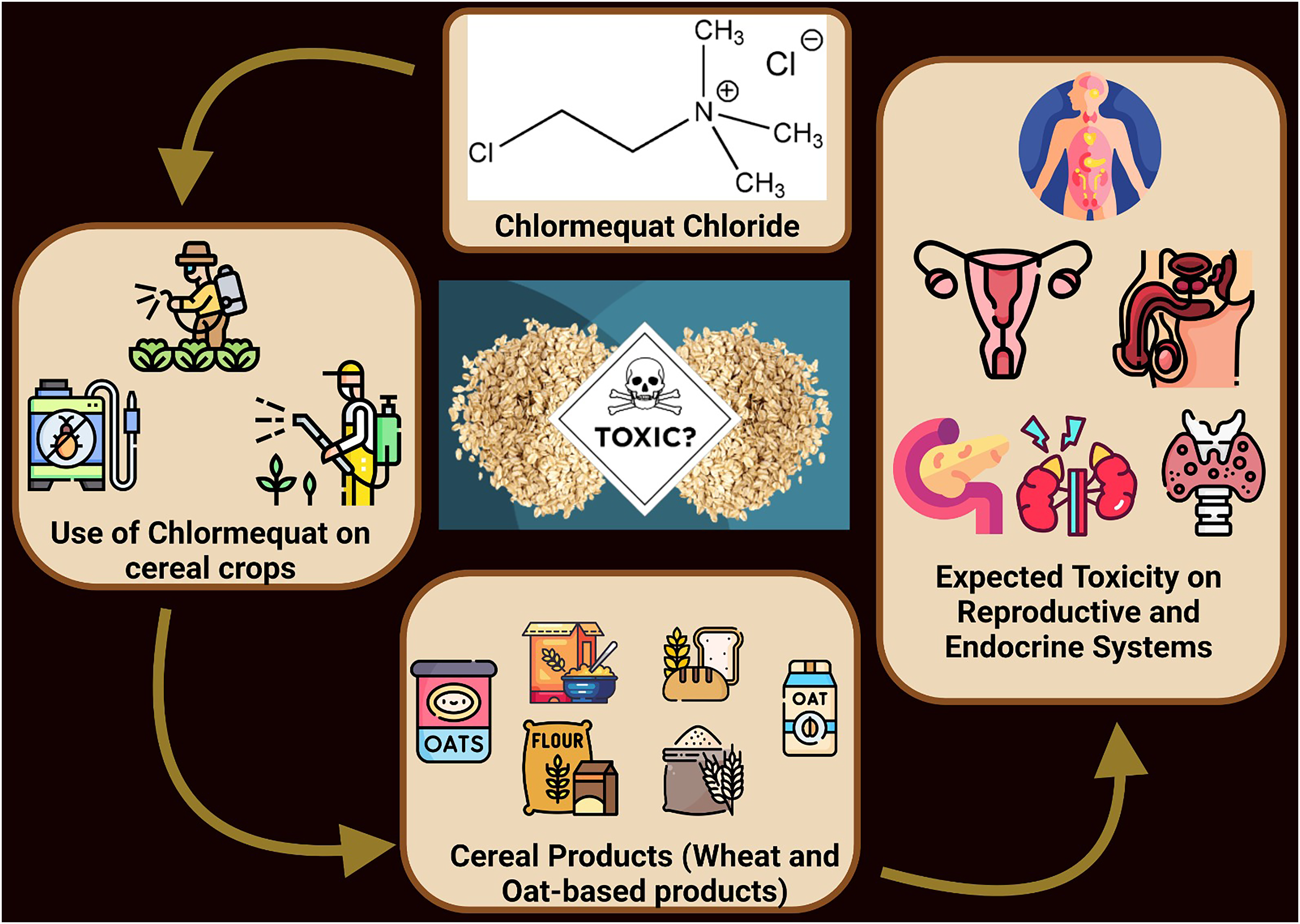
Schematic representation of the potential toxicological pathway of chlormequat chloride.
Recent studies on other quaternary ammonium compounds, which have similar properties to chlormequat, indicate that certain chemicals within this class can be detected in breast milk. This raises the possibility that chlormequat could behave similarly, especially given its persistence in the environment and food chains (Zheng et al., 2022). Even with these results, a substantial knowledge vacuum persists on the impacts of chlormequat on humans. Regarding human exposure, a few pilot studies, such as one conducted in the United States, measured chlormequat in food and urine samples from adults between 2017 and 2023. This study found that the detection rate of chlormequat in urine increased significantly over time, raising concerns about the potential health impacts of ongoing exposure. However, while this study highlights the need for further investigation, it did not directly assess long-term health effects in humans. Moreover, a comprehensive human subject study has yet to be conducted to evaluate the chronic effects of chlormequat exposure. Regulatory bodies, such as EPA, have established maximum residue limits for chlormequat in food. However, research gaps still exist, particularly regarding its long-term safety in humans (Temkin et al., 2024). Furthermore, farmers often lack comprehensive guidance on its proper dosage and application in the field. This gap in practical, on-the-ground instructions increases the risk of misuse, potentially leading to excessive exposure for both agricultural workers and consumers. Hence, conducting comprehensive human studies and creating precise, evidence-based chlormequat usage guidelines are essential to addressing these problems.
A collaborative effort among regulatory agencies, manufacturers, and consumers is essential to create a safer and more sustainable food system. Implementing several vital strategies can help reduce the potential toxicity of chlormequat in the food we and our children often consume. Firstly, reduce the reliance on synthetic chemical growth regulators by various strategies. One such strategy is adopting Integrated Pest Management, which provides a comprehensive pest and disease control framework, thereby reducing the need for chemical growth regulators (Kogan, 1998). Organic farming practices, such as composting, crop rotation, and biological pest control, further support healthy plant development while minimizing chemical inputs. Additionally, precision agriculture techniques, which utilize advanced technologies to optimize growing conditions, can contribute to reducing the use of synthetic growth regulators. These approaches promote sustainable agriculture and mitigate chemical use's environmental and health risks.
Secondly, increasing consumer awareness through transparent labeling and educational campaigns at both national and international levels about the risks posed by chemicals like chlormequat and the benefits of organic food products is crucial for reducing exposure. Encouraging consumers to demand transparency and safer food production practices will also help hold the industry accountable and promote healthier food choices.
Finally, developing more advanced detection methods capable of accurately identifying low levels of chlormequat in biological samples, such as blood, urine, or tissues, is essential, particularly for vulnerable groups like pregnant women and children. Current detection methods primarily focus on urine, reflecting only recent exposure and failing to capture long-term accumulation in specific organs. Advancing more sensitive techniques to monitor chronic exposure will improve our understanding of chlormequat bioaccumulation and help refine safety standards and permissible exposure limits, ultimately better protecting public health.
Footnotes
Authors’ contributions
A: Conceptualization, Writing and review, Figure formation. AAR: Writing and reviewing. AGR: Writing and reviewing. AA: Conceptualization, Supervision, Writing and reviewing.
Availability of data and materials
All data in the manuscript is publicly available and will be provided to the editorial office upon reasonable request.
Declaration of conflicting interests
The authors declared no potential conflicts of interest with respect to the research, authorship, and/or publication of this article.
Ethical approval
Correspondence is exempted from ethical approval.
Funding
The authors received no financial support for the research, authorship, and/or publication of this article.
