






Abstract
Background
The consumers’ wants have gradually resulted in the shift toward the sustainable food paradigm, where foods that are environmentally friendly, ethically produced, and good for health are being emphasized. Thus, sustainability has become one of the most important purchasing decision criteria along with nutrition and quality.
Aim
The paper aims to see the effect on consumer's attitude and behavior towards sustainable food by the factors of health and environmental consciousness, with the focus on the mediation of a healthy lifestyle.
Methods
The PLS-SEM (Partial Least Squares Structural Equation Modeling) method was used for the analysis of the data collected by the questionnaires given to 443 people in Haryana, India.
Summary
The study brought out the conclusion that health and environmental consciousness both significantly and positively influence consumer attitudes towards sustainability in food, along with the healthy lifestyle being a vigorous mediator of the consumer attitudes and, health and environmental consciousness. The model was found to have a very high explanatory power and also a high predictive relevance. The study in its theoretical aspect broadens the value-attitude-behavior framework by connecting awareness to lifestyle practices, while in its practical aspect it gives marketers and policymakers a signal to promote sustainable food through health and environmental consciousness.
Introduction
Food-related crises, along with the growing awareness of the environmental degradation have led the customers to think about their food source and the impact of conventional production systems. The use of high amounts of pesticides, the high level of carbon emissions from intensive farming, the overreliance on chemical fertilizers, and the unethical treatment of animals have all contributed to the fall of the consumers’ trust in the conventional methods of food production. The consumers’ wants have gradually resulted in the shift toward the sustainable food paradigm where foods that are environmentally friendly, ethically produced, and good for health are being emphasized. The current research shows that “sustainable food”, “organic food”, and “eco-friendly food” do not have distinct meanings despite their common use in scholarly work. The term “sustainable food” describes a comprehensive system that unites environmental protection with social equity and economic sustainability throughout the complete food production process (FAO, 2018). “Organic food” describes products that producers create according to certified standards through methods that exclude synthetic fertilizers and pesticides and genetically modified organisms. The term “eco-friendly food” is comparatively broader and less standardized, typically describing food products that reduce environmental damage through their lower resource consumption and emissions and sustainable packaging (Grunert, 2011). Therefore, while overlapping; sustainable food serves as an umbrella concept encompassing organic and eco-friendly dimensions.” Thus, sustainability has become one of the most important purchasing decision criteria along with nutrition and quality (Wandel and Bugge, 1997; Magnusson et al., 2001). Thus, the market for food that is produced in a sustainable way has grown a lot in the last few years. The production of sustainable food involves farming that's friendly to the environment, uses less resources, and practice social and economic fairness over the whole supply chain. Generally, sustainable foods are thought to be safer, healthier, and least harmful to the environment than those produced by conventional methods. As a result, customers often picture sustainable foods as having higher quality, being more nutritious, and having a positive impact on the environment (Magnusson et al., 2001; Grankvist and Biel, 2001), even though there is a lack of scientific evidence to support these perceptions. Recent studies show that consumers now link sustainable and organic food products with health benefits, environmental protection and ethical responsibility (Chekima et al., 2023; Hu et al., 2024; Singh et al., 2025). New research from developing and developed countries proves that people who care about their health and the environment will choose sustainable food products (Shenoy et al., 2024; Castro Campos and Qi, 2024). The changing consumer preferences show that people now buy products based on their values, which combine personal health benefits with environmental conservation efforts (Yilmaz, 2023). The selection of sustainable foods is frequently influenced by health concerns, as demonstrated by an increasing number of studies (Williams and Hammit, 2001; Nagaraj, 2021; Su et al., 2022; Tan et al., 2022; Ahn and Shamim, 2023). Furthermore, the consumer's willingness to take health risks plays an important role in their perception of the eco-friendly food market. The shift from a slight preference for health practices to a strong one is mirrored by the change from a negative to an overly positive attitude towards eco-friendly food. Consumer food choices not only impact their own health but also determine the product's viability to a decent extent in today's customer-oriented, competitive market. It is assumed that consumers towards sustainable foods have positive attitudes because they think it is the way to help environmental protection and conservation. Environmental concern has been found to be a major factor influencing consumer attitudes and preferences towards sustainable food choices in various studies (Chen, 2009; Stranieri et al., 2017; Golob et al., 2018; Kusumaningsih et al., 2019; Ahmed et al., 2021). Lifestyle factors have turned out to be the most important explanation for consumers’ food choices in the last few years (Senauer et al., 1991). The lifestyle concept, which has its roots in marketing research, represents people's activities, interests, and opinions as a whole (Wells and Tigert, 1971). A more limited perspective connects lifestyle to health-associated behaviors—like eating, working out, smoking, and drinking—which are the main contributors to health differences (Sacker et al., 2001; Manderbacka et al., 1999). Thus, the present research adopts a health-based lifestyle definition, with a focus on natural food consumption, health care, and life balance (Gil et al., 2000). The existing research about sustainable food consumption needs more studies which explore how healthy lifestyles act as intermediaries between health consciousness and environmental concern to determine consumer attitudes in India (Haryana). Address this gap, the present study tests whether people who are aware of their health and the environment use their understanding to assess sustainable food based on their dedication to maintaining a healthy lifestyle. The results of this study could be very useful for both sustainable food producers and marketers in terms of creating proper marketing and promotional techniques for boosting the consumption of sustainable products.
The mediating effects of a healthy lifestyle on consumer's attitude toward sustainable food. Sources: Author's own work. G*Power 3.1.9.7 analysis. Sources: Faul et al. (2007, 2009). Structural model. Source(s): Partial least squares output. IPMA. Source(s): Partial least squares output.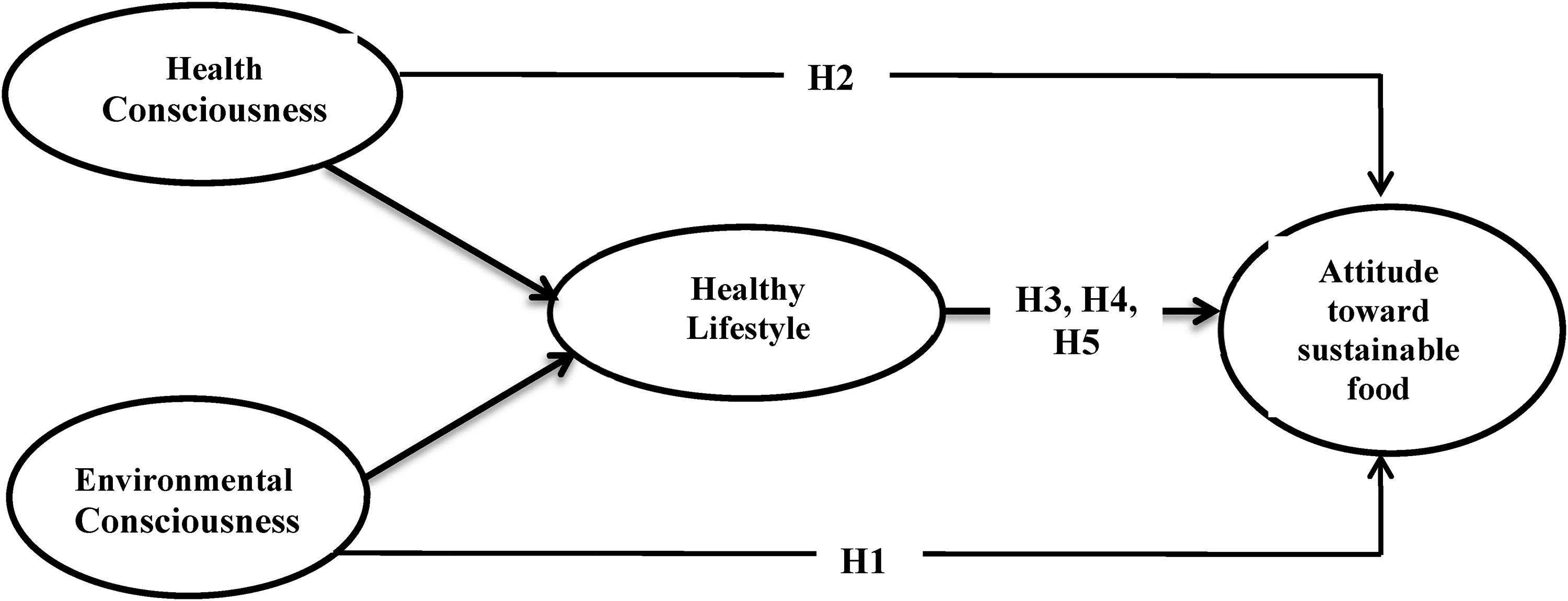
Theoretical background and hypothesis development
Attitude denotes the psychological disposition of a person to judge an object positively or negatively to some extent (Eagly and Chaiken, 2014). The very foundation that builds up attitudes is on the other hand, values, and beliefs that gradually lead to an influence on behavior through the value–attitude–behavior hierarchy (Homer and Kahle, 1988; Thøgersen and Ölander, 2002). In the area of sustainable food consumption, the belief that such foods are healthy and eco-friendly attracts positive attitudes to a great extent (Tan et al., 2022; Ahn and Shamim, 2023). Thus, both health and environmental issues awareness are deemed as prime drivers of consumer attitudes toward sustainable foods. A healthy lifestyle, which is a reflection of proper diet and responsible consumption, may further bolster the linkage between the aforementioned drivers through its role as a mediator (Su et al., 2022; Chen, 2020). Consequently, the current research considers a healthy lifestyle as a mediating factor connecting health and environmental awareness to sustainable food consumption attitudes. According to the Value-Attitude-Behaviour (VAB) paradigm, people's values drive their attitude, which in turn affect their conduct (Teng et al., 2014). In the present study, the Value–Attitude–Behavior (VAB) framework is operationalized by conceptualizing health consciousness and environmental consciousness as value-based orientations, meaning they reflect consumers’ essential concerns about personal well-being and environmental sustainability. Attitude toward sustainable food plays a role, so it reflects how consumers evaluate sustainable food products in general. A healthy lifestyle is treated like the behavioral manifestation of those values because it really captures what people do in practice, not only what they think, such as health-related practices and consumption patterns.
Therefore, the proposed model suggests that those value-driven beliefs (health and environmental consciousness) shape sustainable food attitudes both directly and indirectly via healthy lifestyle behaviors, which in turn helps extend the use of the VAB framework for sustainable food consumption more contextually. Values are persistent cognitive beliefs that direct people toward desired behaviours (Cheung and To, 2019), whereas attitudes are assessments of particular things or circumstances (Kim and Hall, 2021). In turn, behavior is how these assessments are expressed through deliberate acts. The VAB model has been widely used in studies on sustainable consumption, including food waste reduction, functional food consumption, green purchasing behavior, and intentions to make environmental sacrifices (Han et al., 2019; Tudoran et al., 2009; Kim and Hall, 2021). The VAB framework's ability to describe consumer behavior and sustainable consumption patterns in a variety of scenarios is further supported by empirical data.
Environmental and health consciousness
The sustainable food purchase and consumption, less waste and cost and advanced technology in food preparation, and a healthy diet are all examples of sustainable food practices that are essential in developing countries due to the environmental problems that are gradually taking over the political landscape in these countries. The consumers’ feeling of environmental responsibility and their taste are the factors behind this shift to sustainable consumption (Jermsittiparsert et al., 2019). Furthermore, prior studies have shown that environmental concerns have a favorable and direct impact on green purchases (Sinnappan and Abd Rahman, 2011; Wahid et al., 2011). Setyarko et al. (2024) and Aprilia et al. (2024) also stated that customers’ decisions to purchase green foods are still heavily influenced by pro-environmental motives. Customers also consider the environmental impact and quality of ecological items while making purchases (Moser, 2016; Do Paco et al., 2019). Along with this, health conscious people are also paying attention towards sustainable food consumption. A balanced diet, adequate nutrition, and a healthy lifestyle are crucial for people who are more worried about their health (Kumar et al., 2021). Additionally, research carried out in different countries has pointed out that health consciousness was one of the frequently mentioned factors influencing customers’ choice to buy organic food (Nguyen et al., 2019; Yadav and Pathak, 2016; Sia et al., 2013). As a result, the following study prediction is applicable.
The conceptual framework illustrating the relationships among environmental consciousness, health consciousness, healthy lifestyle, and attitude toward sustainable food consumption is presented in Figure 1.
Healthy lifestyle
A person's attempt to change their behavior to align with their personal ideals in the face of shifting circumstances is known as their lifestyle (Chen, 2009). It is a methodical approach to forecasting customer behavior. Due to increased wages and busy schedules, people are increasingly altering their eating habits to reflect their health and environmental concerns. In terms of sustainable food consumption, this study adopts a more limited approach to lifestyle-that is, a healthy lifestyle, which includes natural food intake, medical care, and life balance (Gil et al., 2000). According to research, people who lead healthy lifestyles are more likely to respect sustainable and healthful food products, which make them more inclined to buy them (Garcia-Salirrosas et al., 2025). Additionally, adopting a healthy diet is also thought to be an essential tactic for advancing sustainable food systems since it simultaneously address issues related to public health and the environment (Arrieta and Aguiar, 2023). A healthy lifestyle here is seen as a mediator through which health consciousness and environmental attitudes exert their influence on people's attitudes toward sustainable foods. It is still the case that consumers are considering either the health or the environment, but the likelihood of their positive attitude towards sustainable food is higher in the situation where such concerns are made evident through healthy, sustainable lifestyles like regular exercise and the consumption of natural or organic foods. As a result, the following study prediction is applicable.
Methodology
Sampling technique and the targeted population
The objective of this investigation is to investigate Haryana consumers’ attitudes toward sustainable food since it will give us important information about regional problems and add to more general scholarly and policy conversations concerning regional growth and inequality. In this study, the non-probability convenience sampling technique was applied. Because sample selection is subjective, these non-probability sampling strategies have limitations, but they can be helpful when resources are limited, particularly when the population is huge (Etikan et al., 2016). Additionally, Hair et al. (2017) convenience sampling is an appropriate technique when researchers need to get data from a varied collection of respondents under resource constraints. Convenience sampling is widely used because it is inexpensive, simple, and requires less time than other sampling techniques. Convenience sampling is helpful when utilized to develop a possible hypothesis or study goal (Stratton, 2021). We include respondents from a range of demographic and socioeconomic groups in Haryana to ensure that they represent the key component of the population being addressed and to remove bias.
Measurement instrument
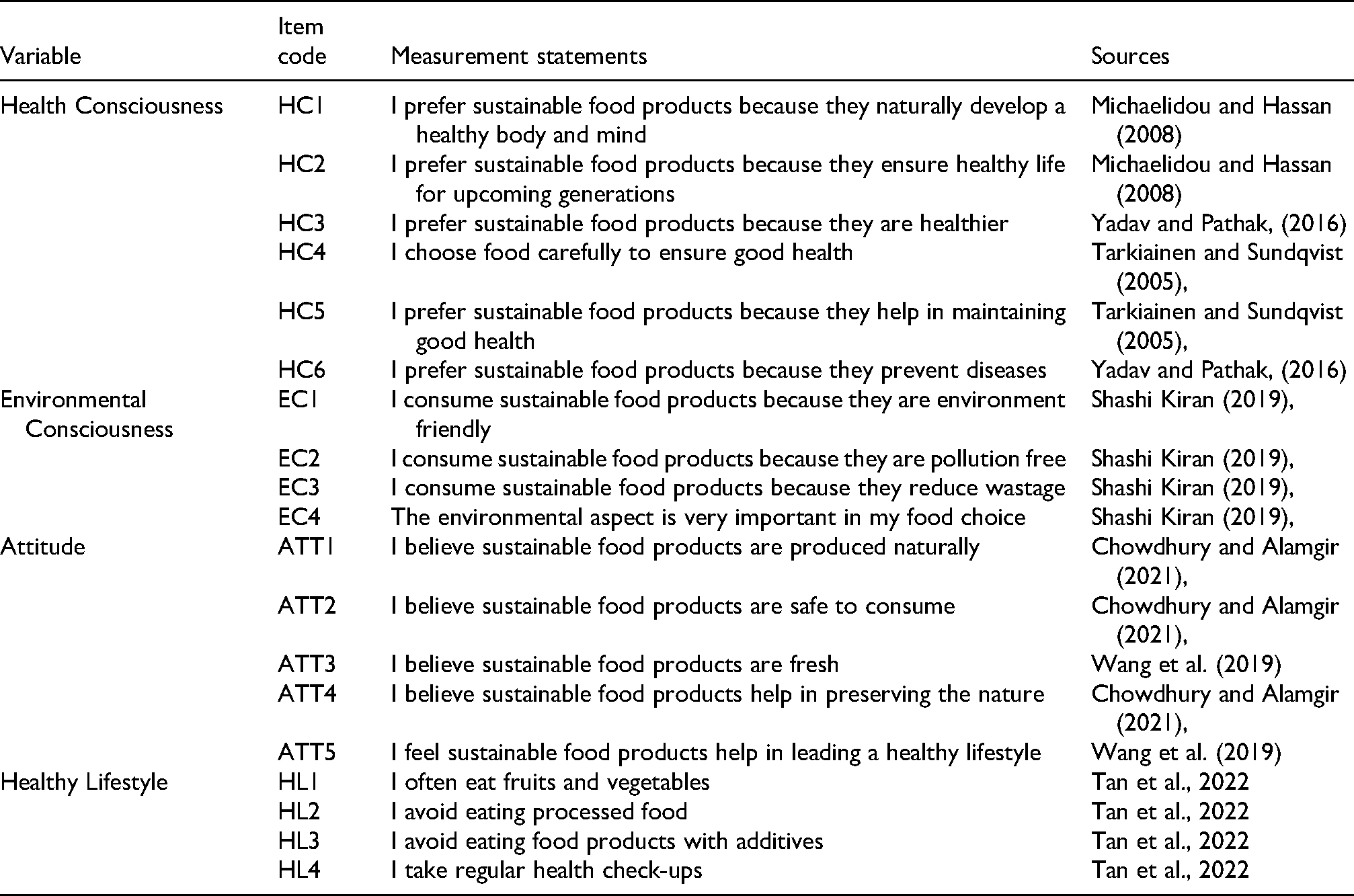
The development of the questionnaire was based on relevant studies and measurements items. The survey is composed of two parts, the first part contains demographic questions and the second part uses a likert scale of five points to assess various factors. The survey instruments developed for this research covered environmental consciousness, health consciousness, healthy lifestyle and attitude toward sustainable food. The multiple measures that had been confirmed in previous studies were modified according to the present study's requirements. The survey utilized a five-point Likert scale that identified the responses as “SA for strongly agree, A for agree, N for neutral, D for disagree, SD stands for strongly disagree”. This scale has been considered reliable due to its consistent usage across several studies (Marton-Williams, 1986). Customers experience less discomfort; consequently, their remarks are given more weight (Babakus and Mangold, 1992; Sachdev and Verma, 2004). Moreover, a 5-point scale is more advantageous than a 7-point scale in the case of a questionnaire with many questions (Newson, 2021).
Sample size
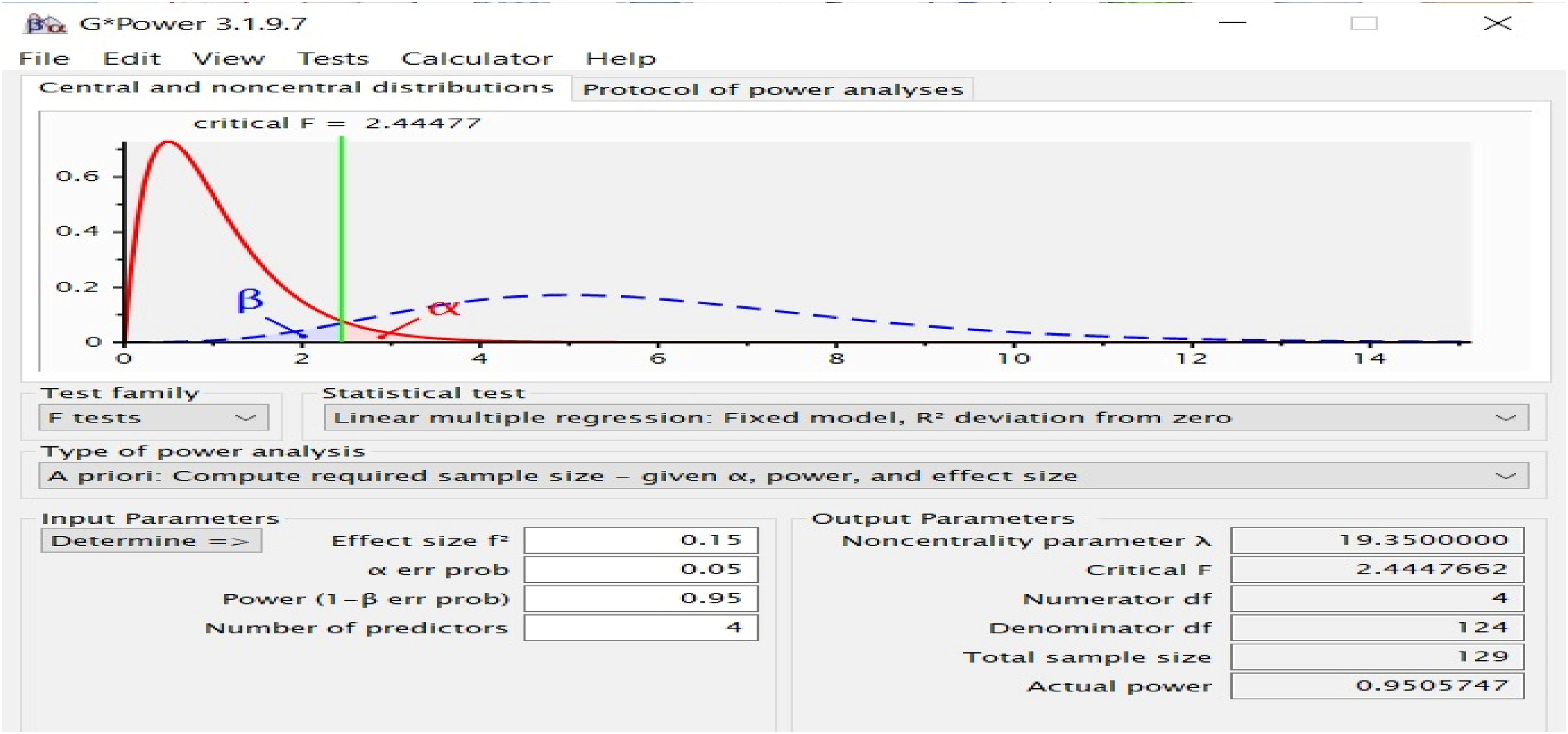
A G*Power analysis that produces a power of 0.95 is higher than the required threshold of 0.80 for social and behavioral science research (Faul et al., 2007, 2009). Furthermore, according to Faul et al. (2007), G*Power is an essential piece of software for performing statistical power analysis since it helps researchers determine the sample size required to find an effect in a number of statistical tests. According to Faul et al. (2009), G*Power guarantees that research is sufficiently powered by fulfilling these requirements, which enhances the standard of the results. This study found that in order to achieve a statistical power of 0.95, at least 129 people would be needed. The necessary sample size was met because 443 replies in all were taken into account for the final data analysis. The G*Power 3.1.9.7 analysis used to determine the minimum sample size required for the study is shown in Figure 2.
Pilot testing, gathering and cleaning data
In order to find any problems with data gathering, a pilot survey with 35 participants was also finished prior to the survey's full implementation. The first phase confirmed that the questionnaire was understandable and factor loading values more than 0.7 showed construct validity. There were 480 responses to the survey, which was given to 570 customers in Haryana, India. After 37 comments that were judged inappropriate or inadequate were removed, 443 appropriate responses remained.
Data analysis
The relationship between variables is examined using PLS-SEM. This quantitative approach is recommended for examining the complicated structure, according to Hair et al. (2017). Even with a small sample, PLS-SEM is more reliable than CB-SEM, especially in business research, and it supports both formative and reflective higher-order structures (González-Mendes et al., 2026). Furthermore, according to Dash and Paul (2021), “the PLS-SEM method indicates higher reliability and constructs validity, as both the average variance extracted and composite reliability values are higher.” Lastly, SmartPLS is the program used to validate the data and structural models.
Biasness check
The relationship between these data and suitable statistical hypotheses has been verified. The skewness and kurtosis values passed the univariate normality test and were both well within the threshold limits of ±2 for skewness and ±7 for kurtosis, respectively (Hancock and Mueller, 2013). We examined the VIF (variance inflammatory factor) values of the independent variables to see if multicollinearity was a problem. We found that the VIFs were below the cutoff value of 5 (Hair et al., 2006). As a result, there is no common method bias in this model. In addition, each construct was evaluated through self-reporting that was done with one questionnaire, and the possibility of common method variance was measured using Harman's single-factor test (Podsakoff et al., 2003). The result of the exploratory factor analysis without rotation indicated that the first factor accounted for less than half of the total variance, which means that common method bias was not very relevant in this study. This analysis not only confirms the methodological rigor but also reinforces the argument that the findings are not significantly affected by common method variance. Consequently, this model is free of conventional method bias.
Results
Demographic profile
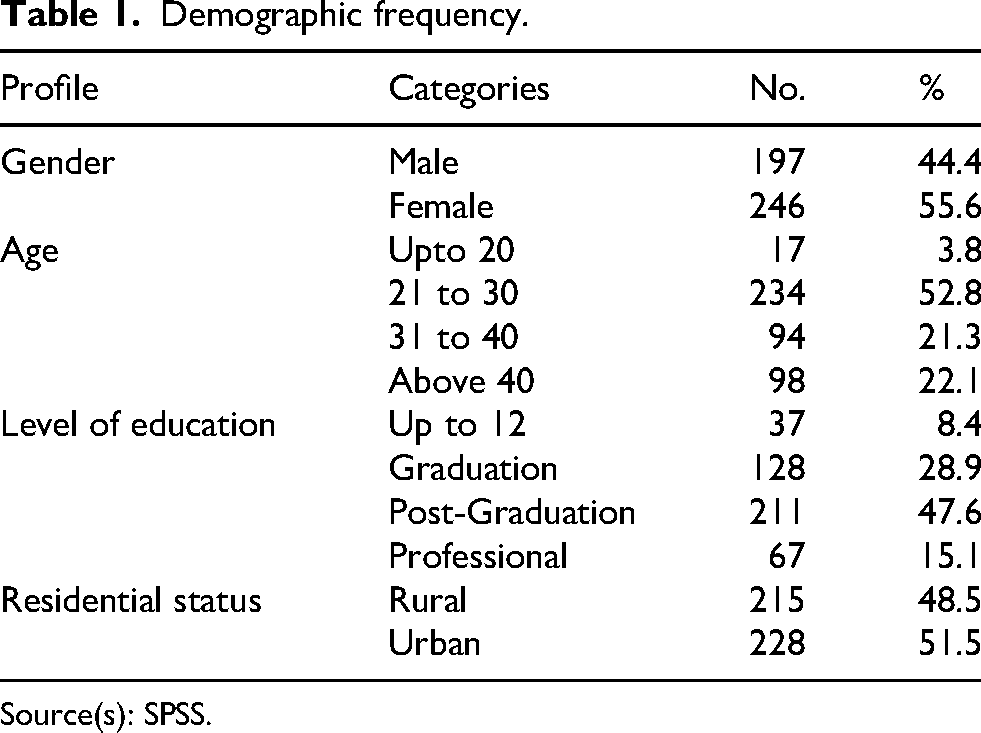
The characteristics of 443 participants, including gender, age, level of education, and place of residence, are shown in Table 1. The gender distribution is approximately equal (55.6% female, 44.4% male). With 52.8% of all respondents, the age group of 21 to 30 had the highest number of responses. Given that 47.6% of the respondents had a postgraduate degree, the sample seems to be made up of highly educated people. Decisions about sustainable food consumption, which are primarily driven by knowledge and awareness, depend heavily on the highly educated individuals. A wide variety of consumer viewpoints are ensured by the virtually equal representation of respondents from rural and urban areas (48.5% and 51.5%, respectively).
Demographic frequency.
Source(s): SPSS.
Measurement model assessment
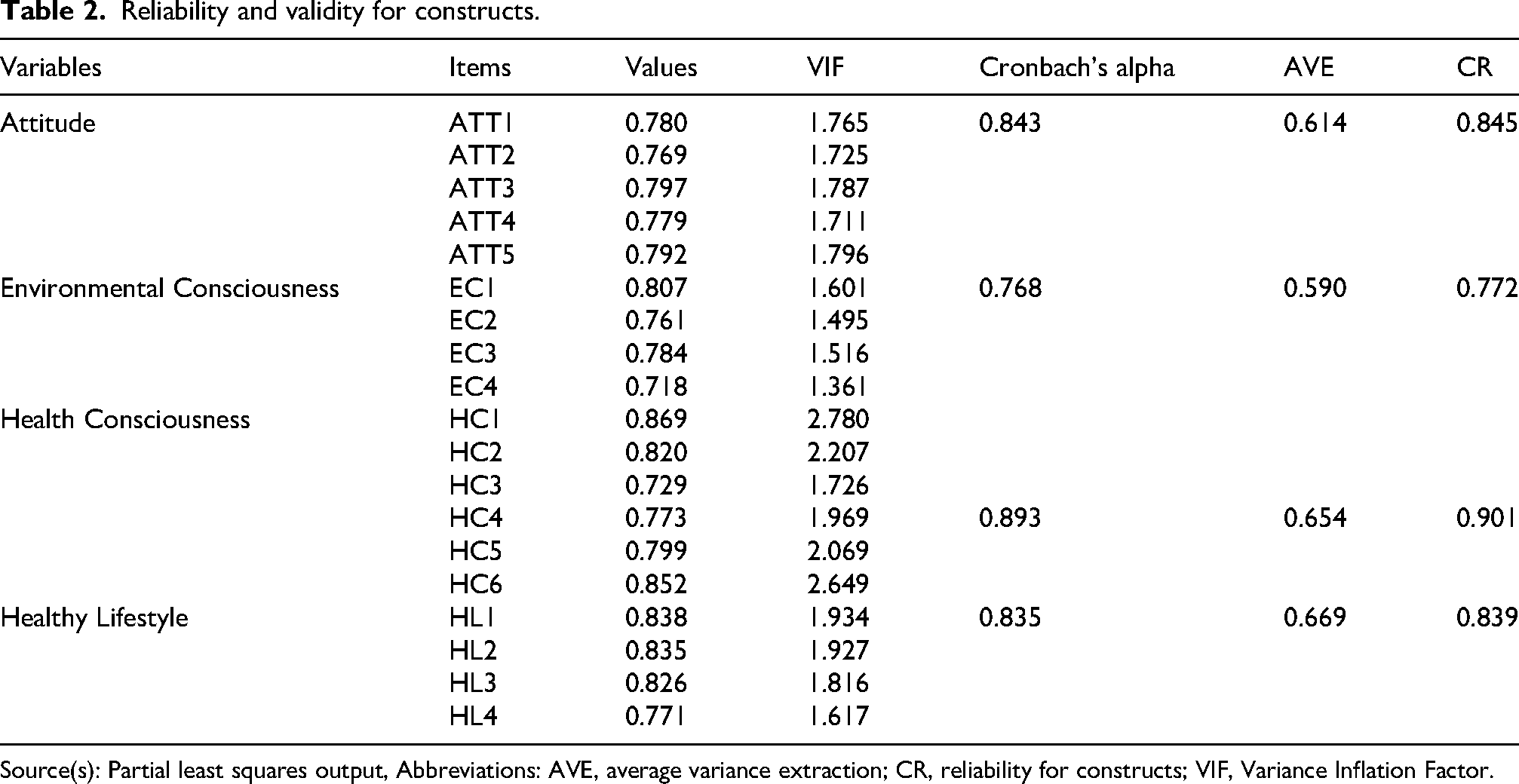
The model proposed by Hair et al. (2019) was critically analyzed in terms of both reliability and validity in this research. It was further confirmed that the factor loading for each item is greater than the minimum requirement of 0.708 (Hair et al., 2019). Besides, construct reliability was measured through Cronbach's alpha and composite reliability (CR) (Hair et al., 2017, 2019). All the constructs obtained more than 0.70 as Cronbach's alpha and CR values, which is illustrated in Table 2, showing that significant internal reliabilities were present for all constructs. The average variance extracted (AVE) score, which was substantially greater than the cutoff value of 0.50 for each construct in the model, both higher-order and lower-order, was used to show the convergent validity of the model (Hair et al., 2019).
Reliability and validity for constructs.
Source(s): Partial least squares output, Abbreviations: AVE, average variance extraction; CR, reliability for constructs; VIF, Variance Inflation Factor.
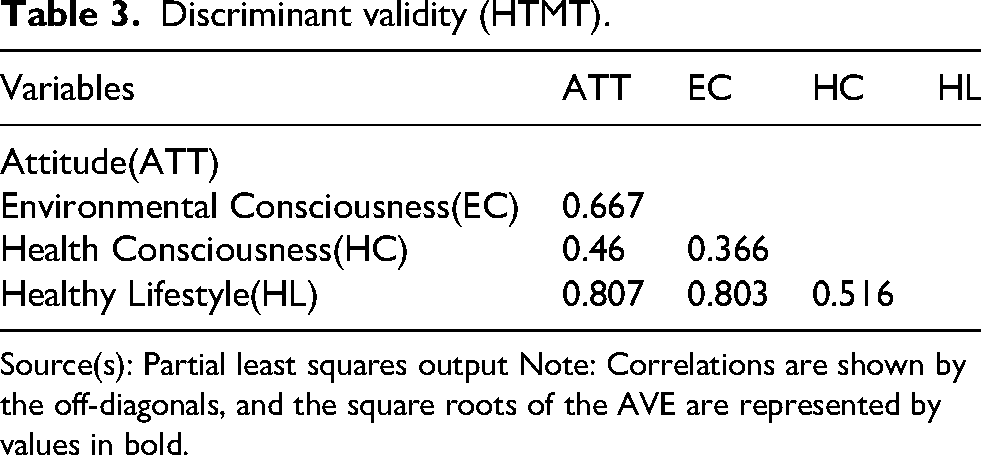
In order to assess the discriminant validity of the components of the study, the heterotrait-monotrait ratio (HTMT) and the Fornell and Larcker criterion were employed. Henseler et al. (2015) proposed the HTMT approach to assess discriminant validity. An HTMT score above 0.90 indicates no discriminant validity or lack of validity. And an HTMT result below 0.90 is acceptable. Table 3 shows that all of the HTMT values fall below the 0.90 criterion. Therefore, discriminant validity was determined to be valid based on the HTMT criterion.
Discriminant validity (HTMT).
Source(s): Partial least squares output Note: Correlations are shown by the off-diagonals, and the square roots of the AVE are represented by values in bold.
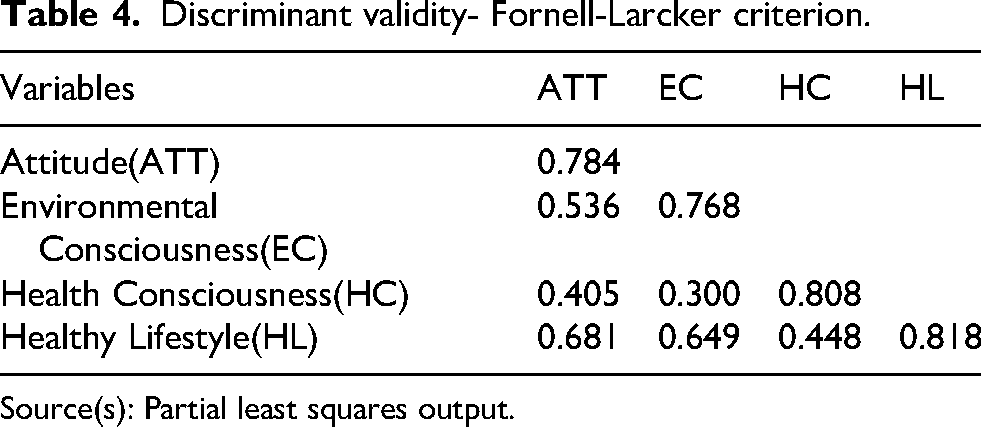
As can be seen in Table 4, the square roots of the AVEs of the constructs presented on the diagonal (in bold) were greater than the correlation values of all the constructs, which is a sign of the existence of discriminant validity (Fornell and Larcker, 1981).
Discriminant validity- Fornell-Larcker criterion.
Source(s): Partial least squares output.
After confirming the measurement model's reliability and validity, the SRMR value is typically used to determine it's goodness-of-fit. According to Hooper et al. (2008), the SRMR value of 0.058 falls comfortably within the recommended range of less than 0.08. As a result, the structural model and measurement model have both been verified.
Hypothesis testing
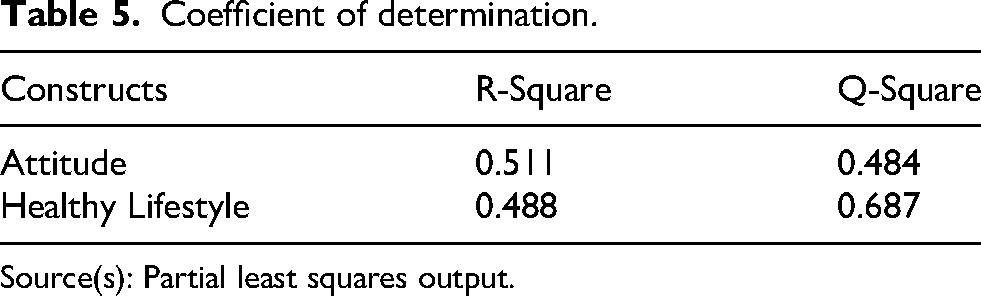
The validation of the relationship between the constructs and their predictive validity was accomplished by means of the structural model evaluation method. SmartPLS utilized a bootstrapping technique of 10,000 samples to acquire the p value required at α = 5% and to derive the t-value for the assessment of the significance of the pathways for the hypotheses posed in this research (Hair et al., 2011, 2021). The interrelationship between the constructs investigated is illustrated in Table 5. In the case of attitude, the coefficient of determination (R2) is 51%, while for healthy lifestyle it is 48.8%. Rasoolimanesh et al. (2021) report that social and behavioral sciences consider an R2 value of 20% as the lowest acceptable limit. The positive Q2 values (0.484 and 0.687) that support the model's capacity to predict customer responses and also confirm the predictive validity of both constructs.
Coefficient of determination.
Source(s): Partial least squares output.
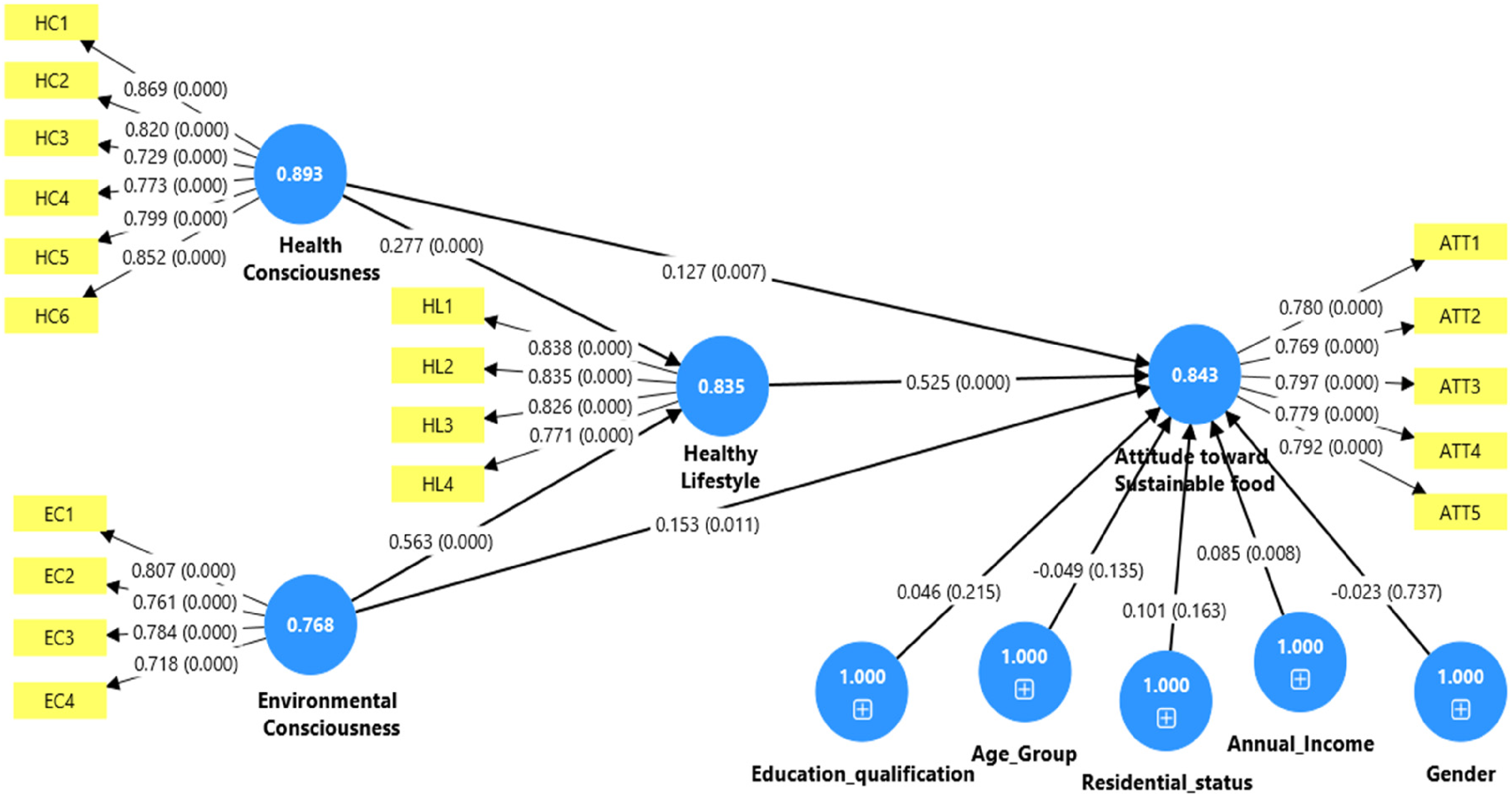
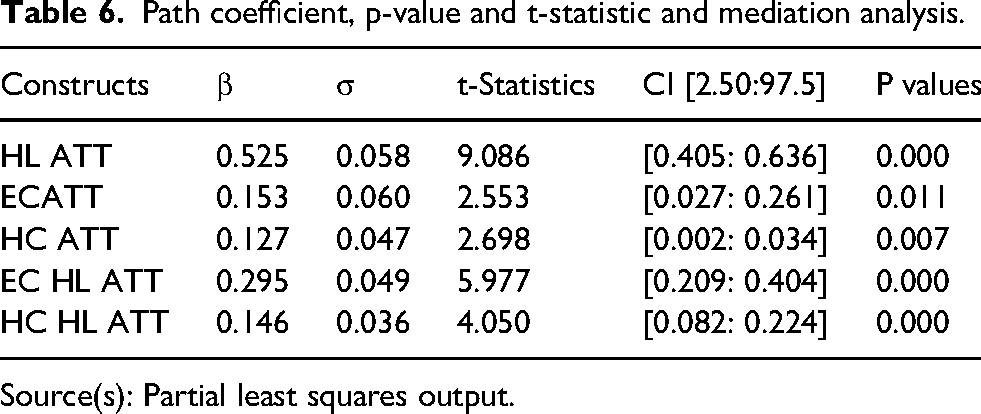
Table 6 shows clearly the links between Environmental Concern (EC), Health Consciousness (HC), Healthy Lifestyle (HL), and Attitude toward Sustainable Food (ATT) for the consumers from Haryana. The results reveal that the consumers’ environmental concern as well as their health consciousness significantly contribute to shaping their attitude toward sustainable food, with the values of β = 0.153, t = 2.553, p < 0.005 and β = 0.127, t = 2.698, p < 0.005, respectively. In other words, consumers who are more concerned about the environment and health consciousness are more likely to live a healthy lifestyle that includes being aware of what they eat, exercising regularly, and preferring natural or organic foods. Furthermore, a healthy lifestyle has the most substantial positive effect on the attitude toward sustainable food (β = 0.525, t = 9.086, p < 0.005), indicating that the consumers with healthier daily habits are the ones to develop more favorable attitudes toward the consumption of sustainable food. The structural model depicting the path relationships among environmental consciousness, health consciousness, healthy lifestyle, and attitude toward sustainable food consumption is presented in Figure 3.
Path coefficient, p-value and t-statistic and mediation analysis.
Source(s): Partial least squares output.
In Table 6, we also see the findings of the mediation study which showed the indirect effects of both health consciousness (HC) and environmental concern (EC) on the sustainable food attitude (ATT) through healthy lifestyle (HL) among the consumers in Haryana. The results with β = 0.295 (t = 5.977, p < 0.005) and β = 0.146 (t = 4.050, p < 0.005) indicate that indirectly, EC and HC are both very much active in passing through the channel of healthy lifestyle to the consumer attitude. These results support the notion that a healthy lifestyle is a mediating variable that increases the association between consumers’ values regarding the environment and health and their attitudes toward sustainable food consumption. To put it differently, health-conscious and environmentally-friendly consumers are more likely to adopt a healthier lifestyle with (e.g., organic, local, or less processed foods) which will be the reason for their positive attitude toward sustainable food. The significant t-values and very low p-values (< 0.005) show that these mediating effects are statistically quite strong and are worth considering. As a result, the analysis shows that encouraging a healthy lifestyle can be a very effective way of letting individuals with health and environmental awareness turn such awareness into positive attitudes toward sustainable food choices among Haryana consumers.
PLSpredict lv assessment
In our research model, we calculated the “cross-validated redundancy (CV-Red for the endogenous latent variables)” to also confirm predictive relevance. A CV-Red value (Q2) which is greater than 0 indicates predictive relevance (Sharma et al., 2021). The model of the study backs up the claim of strong predictive power by the fact that the Q2 values for healthy lifestyle and attitude (0.687 and 0.484) are indeed higher than the cutoff value of 0.
Control variables
The study found that most control variables which included age education gender and residential status showed no statistical significance. The study found that annual family income had a significant positive effect on consumer attitudes toward sustainable food. The research showed that higher-income consumers tend to demonstrate positive attitudes for sustainable food consumption. However, since the majority of control variables were insignificant, the core structural relationships remain robust, and the model interpretation primarily focuses on the main constructs.
Discussion and conclusion
The main goal of the current research was to evaluate the ways in which health consciousness and environmental consciousness impact the attitudes of consumers toward the consumption of sustainable food, with a healthy lifestyle playing the role of a mediator. The data gathered from 443 individuals from Haryana and analyzed provided support for all the proposed hypotheses (H1–H5), thus, confirming a very strong interaction of these variables.
Among the findings, one of the most important was that environmental consciousness has a considerable and positive impact on consumers’ attitudes towards sustainable food (β = 0.153, t = 2.553, p < 0.005). It suggests that those who are more conscious of environmental matters, like pollution, resource depletion, and the negative impacts of traditional agriculture, are likely to be more open to the idea of consuming sustainable and eco-friendly foods. This statement is consistent with the findings from earlier studies that have pointed out the significant role of pro-environmental motives in the making of green purchasing decisions (Chen, 2009; Golob et al., 2018; Ahmed et al., 2021; Setyarko et al., 2024). It has also reaffirmed the view of environmental concern being a moral and emotional motivator that drives customers towards the selection of sustainable food products. Consequently, attitudes toward sustainable food showed a high positive correlation with health consciousness (β = 0.127, t = 2.698, p < 0.005). This suggests that individuals who prioritize their own health, nutrition, and overall well-being are more likely to value organic and environmentally friendly products over those that are chemical-based and unsustainable. The people who consume healthily deem those kinds of products as less harmful, more nutritious, and thus, safer, which in turn gives rise to the creation of healthier, positive attitudes towards them. This notion has been backed by the studies conducted by Yadav and Pathak (2016), Nguyen et al. (2019), and Sia et al. (2013), who regarded health concern to be the most powerful of the factors influencing organic and sustainable food consumption behavior. The Indian dietary practices and rising knowledge about nutrition and diet-related health conditions drive people to select healthier and environmentally sustainable food options (Gupta et al., 2022). Recent research about India found that environmental concerns and consumer knowledge about sustainability drive people to buy organic food products which show that sustainability has become an essential factor in food selection (Ghosh et al., 2026). The research shows that people use sustainable diets to make food choices because they want to protect both human health and environmental health (Pal et al., 2026).
In addition, the mediation analysis revealed that healthy lifestyle significantly mediates the effects of both health consciousness and environmental consciousness on attitudes toward sustainable food. The indirect effects were found to be significant from a statistical point of view, thus confirming that people with health-conscious and environmentally friendly lifestyles do indeed see sustainability in food as a preferred alternative, to the extent that they even consume more of it. This result supported by Su et al. (2022) and Tan et al. (2022) that claimed that lifestyle habits are the connecting factors between values and opinions regarding sustainable consumption. Furthermore, the beneficial associations between environmental attitudes, health consciousness, and consumer attitudes toward organic goods are effectively mediated by a healthy lifestyle. In order to improve consumers’ perceptions of organic foods, a healthy lifestyle should be promoted (Chen, 2009).
The model's power of explanation (R2 = 0.511 for attitude and 0.488 for healthy lifestyle) and its relevance for prediction (Q2 = 0.484 and 0.687) indicate very good internal consistency and very high predictive validity (Hair et al., 2019; Rasoolimanesh et al., 2021). So, the presented values indicate the proposed framework's ability not only to explain the variance in consumer attitudes towards sustainable foods but also to reveal the lifestyle as a factor involved in both the behavioral and motivational aspects. The study found that consumption patterns of functional foods were found to be positively correlated with a healthy dietary lifestyle (Chen, 2011). The research study's results have led to the conclusion that health and environmental consciousness are the leading factors of the positive attitude towards sustainable food and that a healthy lifestyle makes them even stronger.
Practical and theoretical implications
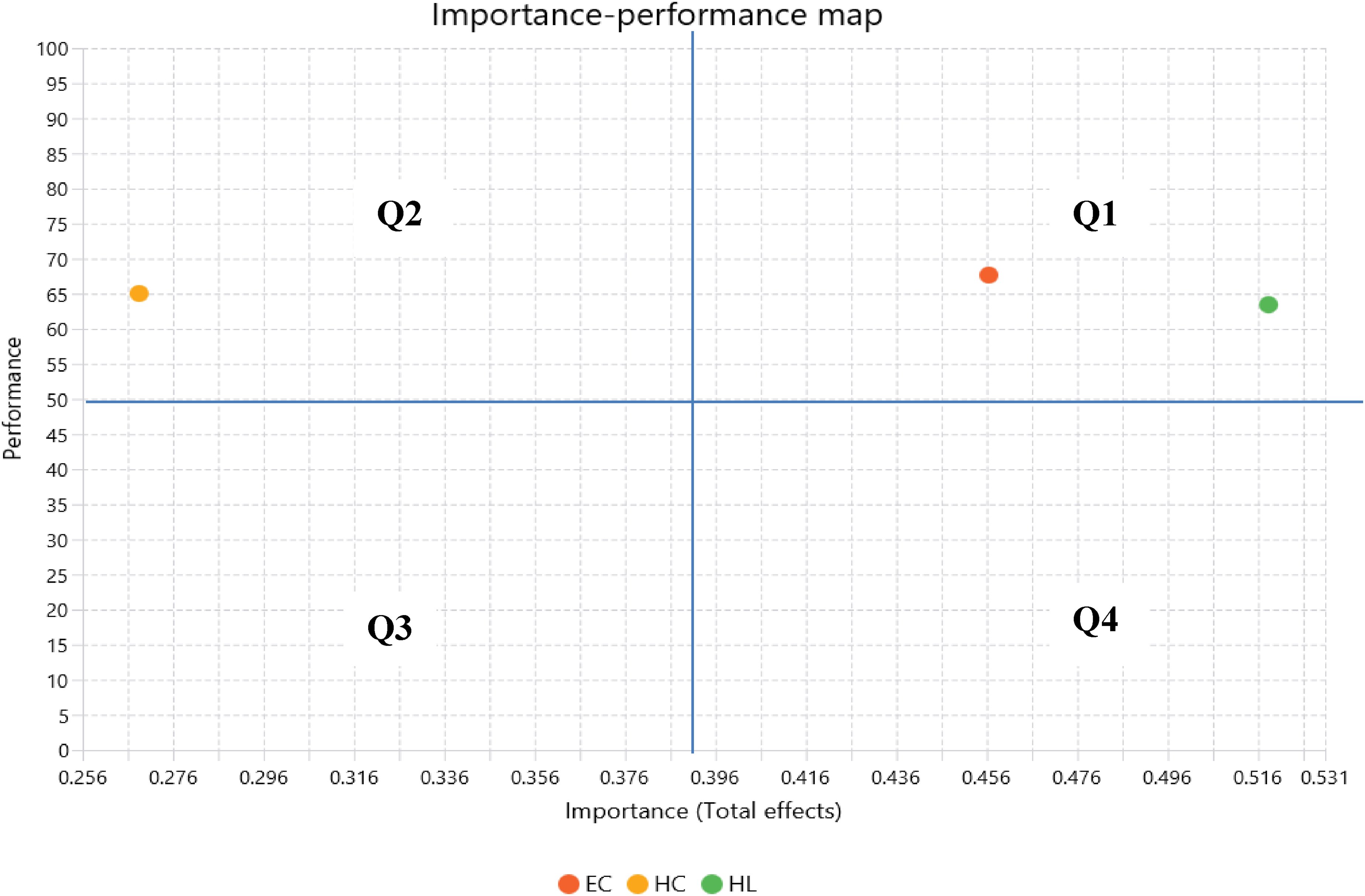
This study provides insights into the majority of recent literature as well as other theoretical and practical finding. Theoretically, the study enhances the knowledge of sustainable food consumption by asserting that health and environmental awareness are the main factors influencing consumer attitudes towards sustainable food and that a healthy lifestyle is the major mediator between these factors. Sustainability labeling improves consumer awareness and systems, helping customers make better purchasing decisions when they see trustworthy organizations and unambiguous visual elements support the system (Cook et al., 2023). The second point we make emphasizes how awareness campaigns should establish connections between personal well-being and environmental advantages. Recent research shows that health, ethical, and environmental claims together increase consumer interest in sustainable food products because combined messages work better than single messages (Ketkaew and Komsing, 2025). The evidence shows that people will choose sustainable diets when they believe they will benefit both their health and the environment. This result not only supports but also expands the existing behavioral theory such as the Value-Attitude-Behavior (VAB) model by illustrating how personal values and awareness are converted into positive attitudes and intentions through lifestyle practices. The Importance–Performance Map Analysis (IPMA) results, showing the relative importance and performance of the study constructs in influencing attitudes toward sustainable food consumption, are presented in Figure 4.
More specifically, this study sort of empirically demonstrates the VAB sequence by placing health consciousness and environmental consciousness as value constructs, then healthy lifestyle as some kind of behavioral expression of those values, and finally attitude toward sustainable food as the evaluative outcome. This explicit mapping strengthens the theoretical applicability of the VAB framework in explaining sustainable food consumption. Besides, the research also inserts its output into the mainstream literature by establishing empirical evidence from a developing region such as Haryana, India, thus increasing the cross-cultural legitimacy of consumer behavior models concerning sustainability. The practically, the results provide marketers, policymakers, and producers with extremely valuable insights. Marketers are able to create sales promotions that attract consumers’ double motives, emphasizing personal health benefits as well as environmental advantages of sustainable foods. Policymakers may utilize the study results to create not only educational but also public policies that would be more inclined to nurture the adoption of healthy and eco-friendly lifestyles, hence the promotion of sustainable consumption on a societal level.
We propose specific financial rewards which will motivate sustainable food producers to share their health benefits together with their ecological benefits. The combination of sustainability labels with supportive policy frameworks such as subsidies and certification systems enables consumers to identify sustainable products more easily which leads to increased sustainable consumption according to research findings and policy discussions (Luick et al., 2025). The development of sustainable food systems brings major advantages for both human health and environmental protection which demonstrates the necessity of government-driven financial rewards. Such a system is thought to be a good way to improve consumers’ perceptions of food safety and quality (Moe, 1998). It will also likely be a good way to reduce consumer mistrust and encourage consumers to adopt more positive consumers to adopt a more positive attitude toward sustainable food in the near future.
The IPMA recommends that organizations should focus on enhancing Healthy Lifestyle (HL) because it provides the most effective method to improve consumer attitudes toward sustainable food. Meanwhile, environmental consciousness should be sustained, and health consciousness can be addressed as a supportive factor rather than a central driver.
Limitations and future research suggestions
While this particular research has been done and it explains in a very good way how health consciousness and environmental consciousness affect consumers’ attitudes toward sustainable food through a healthy lifestyle, it still has some limitations. Firstly, the sample is geographically restricted to Haryana, which may not adequately reflect the diversity of consumers across different cultural and socioeconomic contexts. This limitation affects the external validity and broader applicability of the results. The study used a convenience sampling method, which creates a possibility of sampling bias and restricts the study's ability to produce a representative sample. The use of non-probability sampling methods leads to a decreased ability of research results to apply to a wider population base (Etikan et al., 2016). The research needs to implement probability sampling methods, which include simple random sampling and stratified sampling, to achieve better sample representation and research results that apply to a wider population base (Malhotra, 2020). The second limitation is that the present framework has evaluated only three primaries constructs—health consciousness, environmental consciousness, and healthy lifestyle—while explaining attitudes toward sustainable food. Nevertheless, other important factors like subjective norms, perceived behavioral control, price sensitivity, trust in labeling, or cultural values were left out from the discussion. Future studies might possibly take these factors into account or draw upon advanced behavioral models such as theory of planned behavior or norm activation model to explore even wider and deeper influences on the purchasing of sustainable foods.
Footnotes
Acknowledgments
Not applicable.

Author contributions
PG conceived and designed the study, conducted the literature review, collected and analyzed the data, and prepared the original manuscript. HB contributed to critical revision of the manuscript, and supervision of the study. All authors read and approved the final version of the manuscript and agreed to the published version.
Ethical approval and informed consent statements
This study involved a voluntary questionnaire survey. Formal ethical approval was not required. Informed consent was obtained from all participants, and the confidentiality and anonymity of respondents were maintained throughout the study.
Funding
The authors received no financial support for the research, authorship, and/or publication of this article.
Declaration of conflicting interests
The authors declared no potential conflicts of interest with respect to the research, authorship, and/or publication of this article.
Data availability statement
Through Questionnaire.
Appendix
| Variable | Item code | Measurement statements | Sources |
|---|---|---|---|
| Health Consciousness | HC1 | I prefer sustainable food products because they naturally develop a healthy body and mind | Michaelidou and Hassan (2008) |
| HC2 | I prefer sustainable food products because they ensure healthy life for upcoming generations | Michaelidou and Hassan (2008) | |
| HC3 | I prefer sustainable food products because they are healthier | Yadav and Pathak, (2016) | |
| HC4 | I choose food carefully to ensure good health | Tarkiainen and Sundqvist (2005), | |
| HC5 | I prefer sustainable food products because they help in maintaining good health | Tarkiainen and Sundqvist (2005), | |
| HC6 | I prefer sustainable food products because they prevent diseases | Yadav and Pathak, (2016) | |
| Environmental Consciousness | EC1 | I consume sustainable food products because they are environment friendly | Shashi Kiran (2019), |
| EC2 | I consume sustainable food products because they are pollution free | Shashi Kiran (2019), | |
| EC3 | I consume sustainable food products because they reduce wastage | Shashi Kiran (2019), | |
| EC4 | The environmental aspect is very important in my food choice | Shashi Kiran (2019), | |
| Attitude | ATT1 | I believe sustainable food products are produced naturally | Chowdhury and Alamgir (2021), |
| ATT2 | I believe sustainable food products are safe to consume | Chowdhury and Alamgir (2021), | |
| ATT3 | I believe sustainable food products are fresh | Wang et al. (2019) | |
| ATT4 | I believe sustainable food products help in preserving the nature | Chowdhury and Alamgir (2021), | |
| ATT5 | I feel sustainable food products help in leading a healthy lifestyle | Wang et al. (2019) | |
| Healthy Lifestyle | HL1 | I often eat fruits and vegetables | Tan et al., 2022 |
| HL2 | I avoid eating processed food | Tan et al., 2022 | |
| HL3 | I avoid eating food products with additives | Tan et al., 2022 | |
| HL4 | I take regular health check-ups | Tan et al., 2022 |