






Abstract
Background
Poor dietary habits due to inappropriate nutritional knowledge are becoming a major contributor to the development of chronic diseases, and these habits usually develop in the university years.
Aims
This study aims to investigate the influence of nutritional knowledge on eating patterns and the barriers inhibiting the adoption of healthy eating practices among university students in Lahore, Pakistan.
Methods
A cross-sectional study was conducted among university students enrolled in various disciplines. Data on sociodemographic characteristics, eating practices, nutrition knowledge, and barriers to healthy eating were collected using a structured questionnaire validated through rigorous reviews by experts and pilot-tested to ensure its clarity, relevance, and reliability.
Results
Out of 397 students, about half reported consuming fast food (52.4%), snacks (66.2%), and sugary drinks (62.2%). Many students mentioned following a vegetarian (27.9%) and gluten-free diet (11.8%). There was a low consumption of fruits (10.1%) and vegetables (10.1%) daily. Most students demonstrated moderately healthy eating practices with moderate nutrition knowledge (75.8%), while a relatively small proportion (15.9%) practiced healthy eating with good nutrition knowledge. Nevertheless, barriers like lack of time (30%), less availability of healthy food on campus (61.2%), and high cost of healthy foods (75.8%) hindered the implementation of nutrition knowledge into practice.
Conclusion
The results support that incorporating nutrition knowledge in health education campaigns for students will encourage healthy eating practices. However, to achieve meaningful outcomes, efforts should be made to address the behavioral and environmental barriers that hinder the translation of nutrition knowledge into actual practice.
Introduction
For many students, the university is the transitional period when an individual is most likely to begin making decisions, particularly regarding food consumption. The dietary patterns they establish during these foundational years set a stage for lifelong eating habits, ultimately increasing their risk of chronic diseases in adulthood (Arslan et al., 2016; Goldman and Janick, 2021). Students are the backbone of the nation's workforce and are expected to have sufficient knowledge regarding healthy eating patterns and appropriate dietary choices. They usually experience a new environment with a stronger focus on work and adopt new habits that may result in unhealthy living (Ramkissoon, 2020; Hashad & Mohamed, 2022). The major factors contributing to food consumption and eating patterns include knowledge about nutrition, socioeconomic status, cultural beliefs, and geographic limitations (Abdelhafez et al., 2020).
Dietary patterns with a high intake of processed, packaged, and refined foods, high in saturated fats and added sugars, and low in fruits and vegetables are associated with many chronic diseases, that is, obesity, diabetes, cardiovascular anomalies, and cancers (Clemente-Suárez et al., 2023). The United States Department of Agriculture (USDA) has introduced several well-known resources, like MyPyramid and My Plate, to assist with making nutritious food selections (Tagtow and Raghavan, 2017). Making nutritious food selections relies heavily on one's level of nutrition knowledge. It's one of the key modulators that can impact people's eating habits and their surroundings’ health (Labban, 2015). Many modern young individuals are nutritionally uneducated and unaware of the appropriate serving sizes for various food groups (Dolatkhah et al., 2019). Most of them cannot select nutritious meals, which results in them being at a higher risk for numerous illnesses and associated complications (Safdar et al., 2016). People's perspectives on food and eating can be influenced by their exposure to nutritional awareness positively or negatively (Ozgen, 2016). A person's nutritional literacy may vary according to academic field, gender, age, and socioeconomic status (Belogianni et al., 2022). Poor dietary habits due to inappropriate nutritional knowledge are becoming a major contributor to the development of chronic diseases, especially in the early stages of adulthood (Yahia et al., 2016).
Students have more freedom to decide what they eat at university (El Ansari et al., 2015). Unhealthy eating behaviors, such as skipping breakfast, snacking between meals, consuming large amounts of cold beverages, and increasing consumption of fast food and processed foods, are more likely to begin at this time (Bernardo et al., 2017; Sogari et al., 2018). In addition, university students struggle with various obstacles that inhibit their adherence to healthy eating patterns. These barriers can be due to environmental factors, ignorance, or insufficient physical activity (Abdelhafez et al., 2020). Moreover, some personal factors include less interest in preparing healthy meals, lack of cooking skills, poor strategies to cope with study-related stress, lack of time, and easy access to ready-to-eat foods, that is, fast foods, are among the major barriers. Constant advertisements, unhealthy food options, and limited access to healthy alternatives near campus negatively affect students’ dietary choices (Hilger et al., 2017; Wongprawmas et al., 2022). Considering these factors, promoting significant changes in food consumption and encouraging long-term adherence to healthy dietary practices has become a great challenge.
Recent national and international studies have highlighted the complex relationship between nutrition knowledge, dietary practices, and health outcomes among university students. Research conducted on the students of “University of Lahore” specifically enrolled in nutritional studies has shown that the majority of the students had good nutritional knowledge and they were practicing this knowledge in their daily dietary choices (Aslam et al., 2022b). Likewise, another study explored the impact of nutrition knowledge on eating practices among sports students. The study reported that approximately 75% of the sports students had good nutritional knowledge, yet only 57% were applying this knowledge in their daily eating routines (Shakeel et al., 2022). Recently, a quasi-experimental study conducted in Nepal investigated the impact of a 12-week nutrition education program on the eating habits of the students. They observed that the students enrolled in this program showed significant improvement in nutritional knowledge, their attitude, and eating habits compared to those who did not receive any educational session (Raut et al., 2024). Similar trends have been observed in various studies carried out in Saudi Arabia, Bangladesh, and China, demonstrating substantial gaps between nutritional knowledge and eating behaviors among university students (Alshahrani et al., 2024; Wohid et al., 2024; Deng et al., 2024). Notably, a comprehensive multicenter study by Elmskini and his companions revealed that higher nutrition knowledge and adherence to healthy eating habits specially Mediterranean diet, were associated with lower body mass index (BMI) and better health among university students (Elmskini et al., 2024).
Though few studies have been conducted in Pakistan to assess students’ dietary patterns, a comprehensive study integrating the three major elements, including nutritional knowledge, personal and environmental barriers, and eating practices, remains limited. This study aims to investigate the influence of sociodemographic factors and nutritional knowledge in maintaining healthy eating patterns and identify the barriers inhibiting the adoption of healthy eating practices among students enrolled in various degree programs in different universities of Lahore, Pakistan.
Methodology
Study design and settings
The research employed a cross-sectional study design, using a validated self-reported questionnaire for data collection. This study was designed to correlate nutritional knowledge, dietary practices, and barriers to adopting healthy diet patterns. For this cross-sectional survey, the sample size was calculated using the standard sample size formula for proportions.
Ethical approval
The ethical approval for the study was obtained from the Institutional Bioresearch Ethical Committee.
Study population
A convenient sample of university students from various departments and academic years was calculated. The students enrolled in different universities of Lahore were randomly picked, and consent was obtained from each participant, assuring them the confidentiality and anonymity of their responses.
Sample size
For this cross-sectional survey, the non-probability convenience sampling technique was used to identify the sample size. The study sample size was 397 subjects, and was calculated using Solvin's formula, with a total population size of 75,000 and 0.05 as the margin of error.
Validation of the questionnaire
The initially designed questionnaire underwent rigorous review by the field experts, who incorporated valuable suggestions to enhance the quality. To assess the questionnaire's internal consistency, it was pilot-tested with 50 students, and their responses were excluded from the final data analysis. The reliability of the questionnaire was established via Cronbach's alpha (α=0.79).
Inclusion criteria
The students enrolled in undergraduate, graduate, and postgraduate programs in five different universities in Lahore (University of Management and Technology, University of Central Punjab, Riphah International University, Superior University, and Minhaj University). Participants aged 18‒29 years were eligible to participate. Students from various study disciplines such as medical science (medicine, dentistry, pharmacy, or allied health), nutrition, social science (humanities, social sciences, linguistics), engineering (civil, electrical, mechanical, software), business (management, commerce, finance), and basic sciences (physics, chemistry, biology, mathematics) were included. There was no restriction on gender or year of the study.
Exclusion criteria
Students from universities other than the selected five were excluded from this study. Students with an age below 18 years or above 29 years were not included in this study.
Data collection
Relying on the existing questionnaires as a foundation, a novel self-administered English language questionnaire was developed, which incorporated adapted questions to meet the requirements of specific study objectives (Krešić et al., 2009; Abdelhafez et al., 2020). The data was collected via face-to-face and online modes. For the face-to-face mode, data were collected from the students in various classrooms, libraries, and common areas. For the online mode, the questionnaire link was shared through official emails. A convenience sampling method was used. Participants were allowed sufficient time to complete the questionnaire independently. Research assistants were available for face-to-face handling, while online queries were resolved via email.
Questionnaire
The questionnaire consisted of four main sections. The first part was about demographic details, comprising 10 items, including the age, gender, height, weight, and educational background of the participants (Ali et al., 2020; Raut et al., 2024). The second part of the questionnaire incorporated 15 questions to determine the eating practices of students, including what they eat in their daily routine, such as fruits, vegetables, fast foods, and snacks (Didarloo et al., 2022; Deng et al., 2024). For eating habits, the questions relevant to good eating practices received a “5” mark with responses for everyday consumption and “1” for never. On the other hand, the questions about bad practices, like consumption of fast food and snacks, never had a score of “5” while every day had a score of “1.” Eating practices were scored from 9 to 45. The lowest score was 9, while the highest was 45. However, the range from 9 to 21 scoring was in unhealthy eating practices, 22‒33 was in moderately healthy eating practices, and the scoring from 34 to 45 was included in the healthy eating practices category.
The third part of the questionnaire featured 11 questions regarding nutritional knowledge to get information about their understanding of food groups such as carbohydrates, fats, fiber, milk, and meat (Aslam et al., 2022a; Folasire et al., 2015). For the knowledge section, each question with a correct answer was given a “1” score, while incorrect responses received a “0” mark. The scoring of nutrition knowledge was done from “0‒7”. Participants included in 0‒2 were in the “poor knowledge and 3‒4 were added to the “moderate knowledge” section. However, participants with 5‒7 were included in the “excellent knowledge” group. Lastly, the fourth component, consisting of 13 items, addressed the barriers to healthy eating practices. This part collected information about students’ difficulties obtaining healthy food options within the university premises.
The total scores calculated for the subsections were categorized as low, medium, or high. These scores were subsequently used in statistical analysis to examine the association between all the subsections. This analysis revealed whether high nutritional knowledge or specific demographic characteristics were associated with healthy eating practices.
Statistical analysis
Data collected were entered and analyzed using IBM SPSS version 25.0. The frequency and percentages were tabulated using descriptive analysis. Chi-square analysis was employed to establish the strength and direction of the relationship between nutritional knowledge, eating practice, and barriers to healthy eating among the students. Statistical significance was set at p < .05.
Results
Demographic characteristics
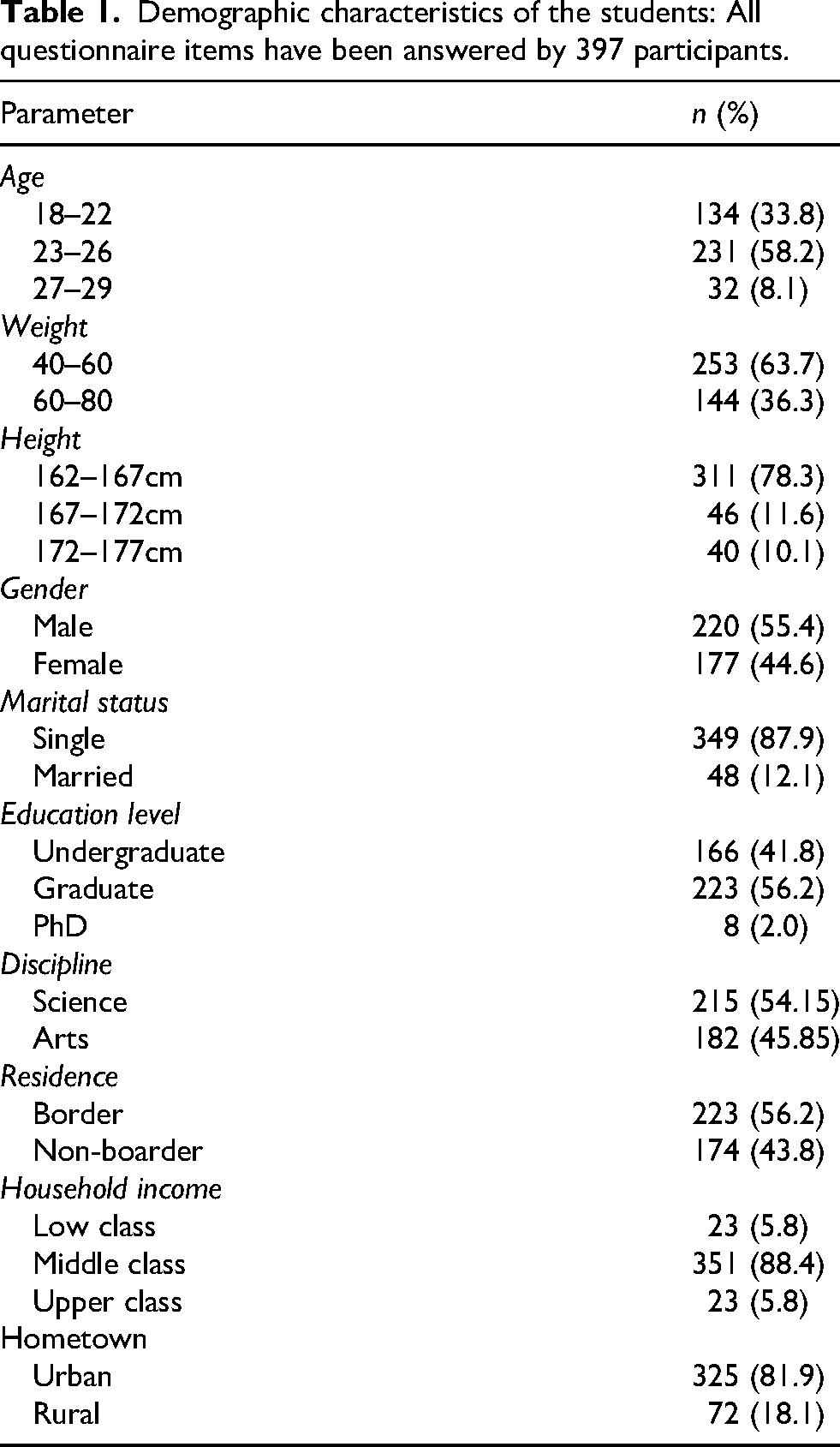
Table 1 shows the sociodemographic characteristics of the students. The number of male participants (55.4%) was more than the number of female participants (44.6%). Most of this study's participants (58.2%) were 23‒26 years old. Participants weighing 40‒60 kg were 63.7%, while 36.3% weighed 60‒80 kg. Moreover, 78.3% of the participants had a height between 162 and 167 cm. Regarding marital status, 87.9% of the participants were single. Considering the education level, 56.2% of the participants were graduates, 41.8% were undergraduates, and 2.1% were enrolled in postgraduate programs. Students from various disciplines who participated in this study were grouped in two major domains science including participants from medical science (40.1%), basic sciences (10.1%), nutrition (4%) and arts including respondents enrolled in engineering (8.1%), arts (2.1%), business (5.8%) and the other section (30.1%) with no specified education domain. Among all the participants, 56.2% were residing in hostels and with their relatives, 88.4% of the participants belonged to middle-class families, and 81.9% of the participants were from urban areas.
Demographic characteristics of the students: All questionnaire items have been answered by 397 participants.
Eating practices
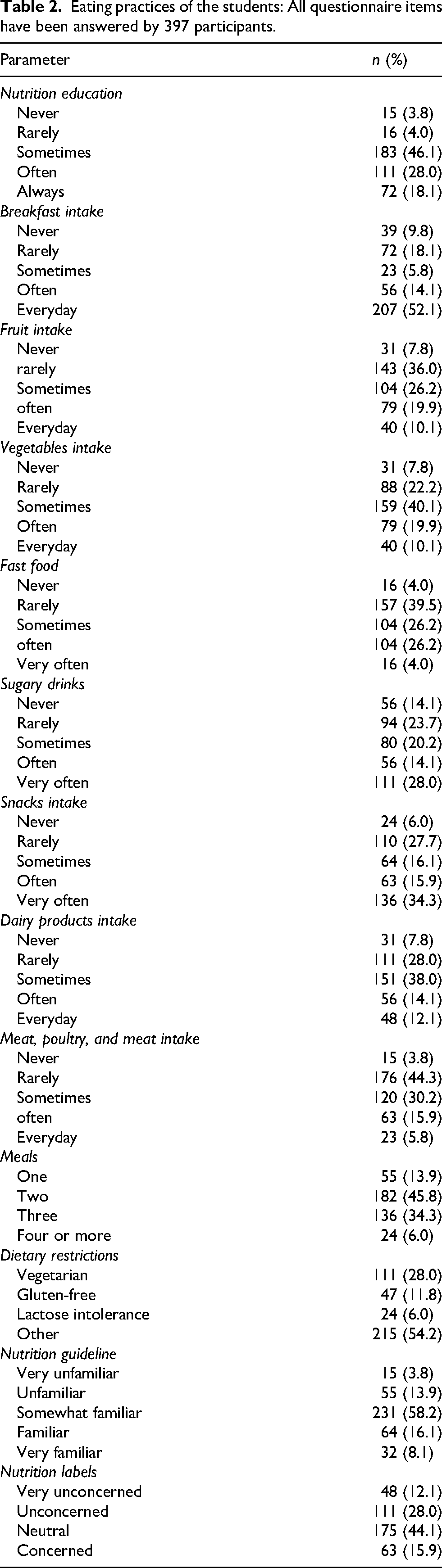
Table 2 shows that nearly half of the participants had two meals per day (45.8%). Around 58.2% were somewhat familiar with the random nutrition guidelines. However, around 46.1% of participants had some awareness of the nutrition education. It was observed that 28% of students were following a vegetarian diet, and 11.8% were relying on a gluten-free diet. Information regarding how often the participants consume fast food was collected, and it was noted that 52.4% had occasional fast-food consumption in their daily routine. Moreover, 52.1% had a daily breakfast intake in their diet. In comparison, only 10.1% of the students consumed fruits and vegetables daily. The score analysis highlighted that 7.5% respondents demonstrated unhealthy eating practices, 76% exhibited moderately healthy eating practices, while 16.37% reported healthy eating practices.
Eating practices of the students: All questionnaire items have been answered by 397 participants.
Nutritional knowledge
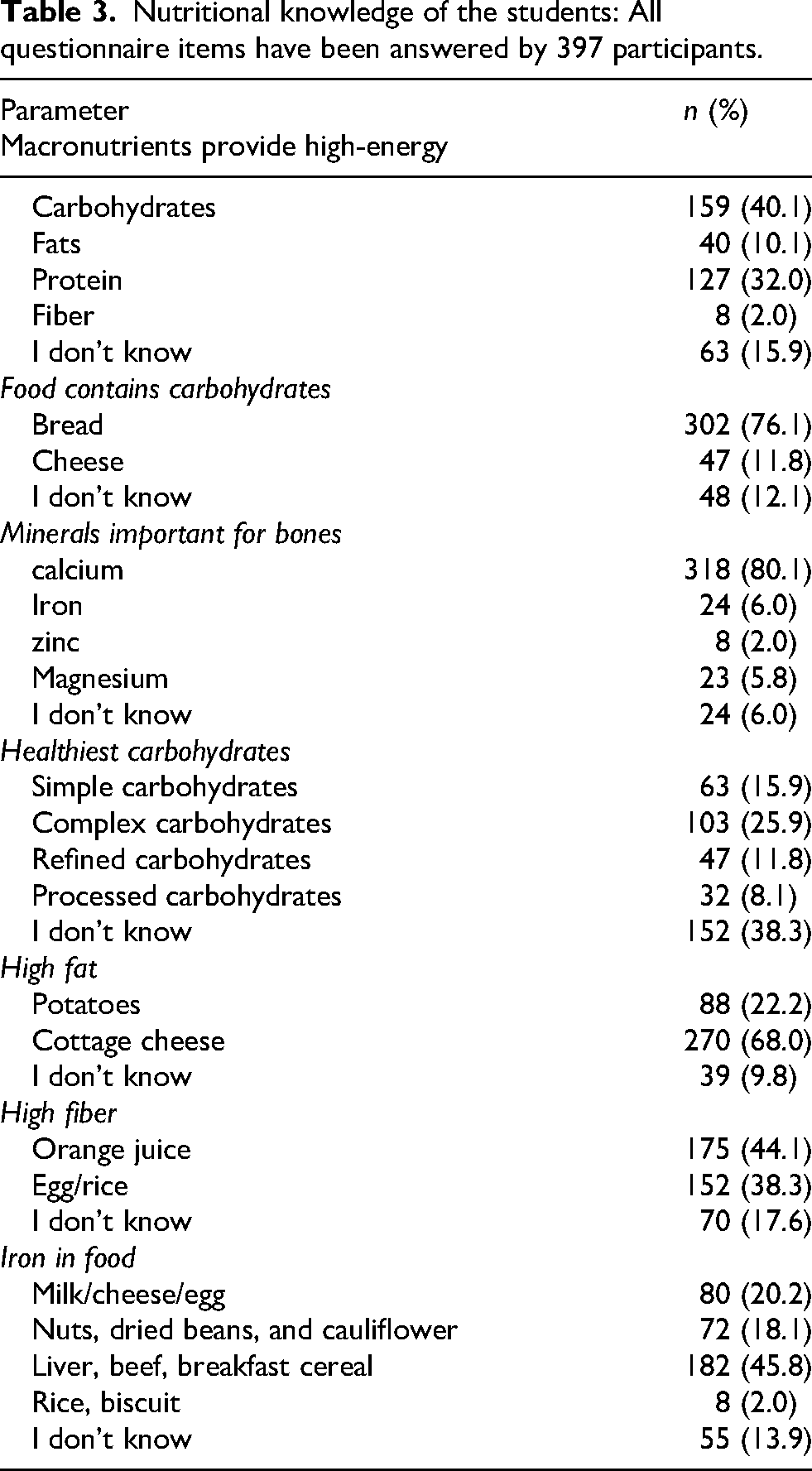
In the nutrition knowledge section (Table 3), different questions related to macronutrients, carbohydrates, minerals, fats, and fiber were added, and it was observed that a considerable number of participants (40.1%) chose carbohydrates as macronutrients, which provide the highest amount of energy. Similarly, approximately 76.1% chose bread as the food with high carbohydrate content. Moreover, a higher number of the participants (80.1%) identified calcium as a major mineral important for bone health. Furthermore, 38.3% respondents were not aware of the healthiest carbohydrates, and 68% chose cottage cheese as a food that provides a high amount of fat, while 45.8% thought that liver, beef, and breakfast cereals contain the maximum content of iron. On the basis of the scoring of the self-reported data, it was noted that 32% of participants had minimal nutritional knowledge, 33% participants had moderate nutrition knowledge, while 35% of respondents had good knowledge of nutrition.
Nutritional knowledge of the students: All questionnaire items have been answered by 397 participants.
Barriers to adherence to healthy eating
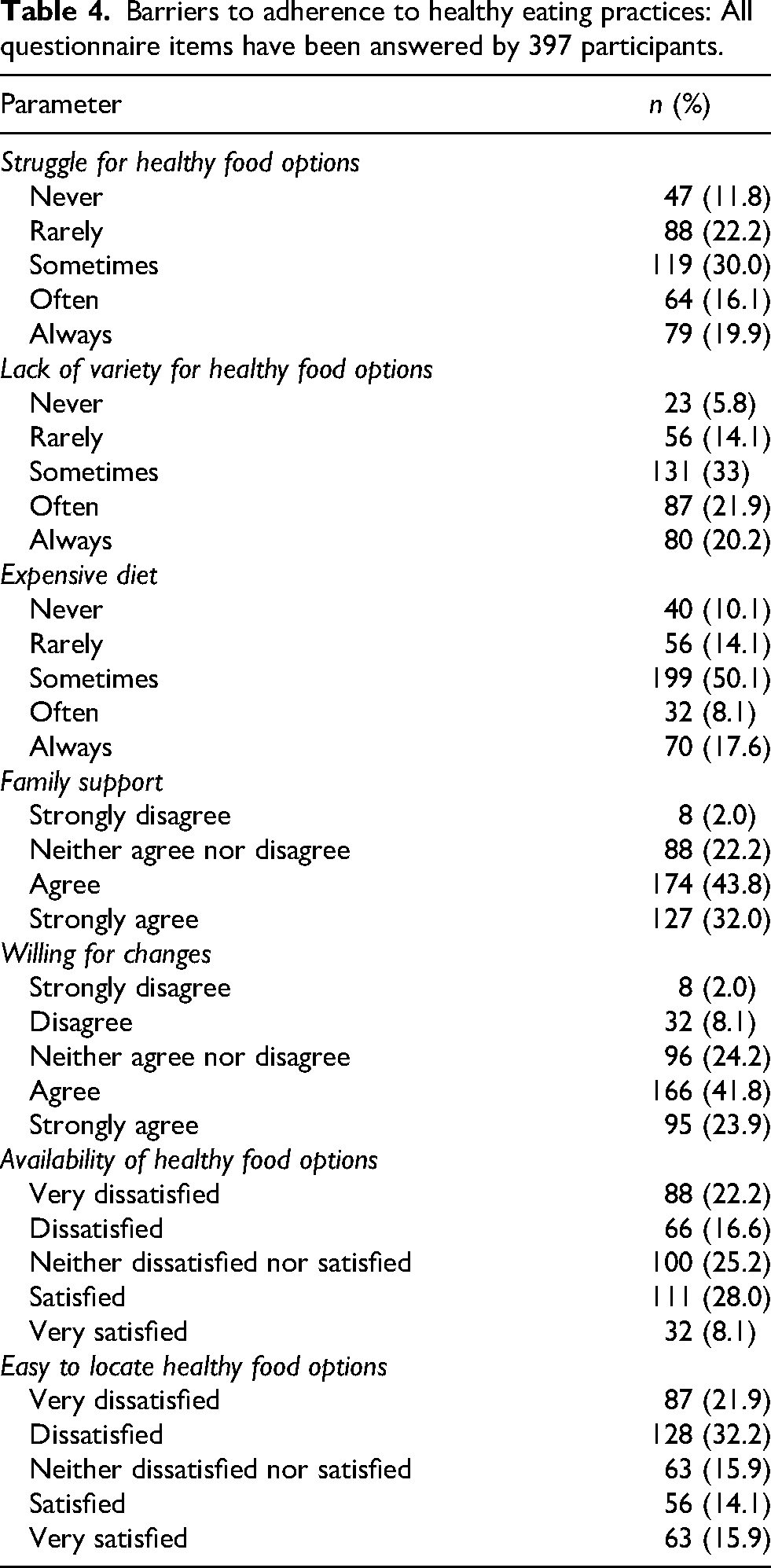
Table 4 highlights the barriers preventing students from adhering to healthy eating practices. The highest agreed barrier is the lack of healthy food options in university premises, i.e., 38.8% of the students are dissatisfied with the food available in campus cafeterias. Moreover, 34% participants struggled to find healthy foods always or often. Likewise, 54.2% of students cannot locate healthy food options in their surroundings. Moreover, 75.8% of the respondents mentioned that healthy food options are expensive, and 75.1% of students reported a lack of variety in healthy food options.
Barriers to adherence to healthy eating practices: All questionnaire items have been answered by 397 participants.
Association between sociodemographic characteristics, nutritional knowledge, and barriers to eating practices
Table 5 shows that no association was noted between gender, education level, and eating practices. On the other hand, age, weight, marital and financial status, residence, and discipline of study in which the students were enrolled significantly (p < .001) affected the eating practices of the students. The findings showed a significant (p < .01) association between nutrition knowledge and eating practices of university students. Our findings showed that 7.6% of students had unhealthy eating practices and poor nutrition knowledge. In comparison, around 76.1% had moderately healthy eating practices with moderate nutrition knowledge. However, 16.4% had healthy eating practices with excellent nutrition knowledge. The results showed that people with good nutrition knowledge had healthier food intake and better dietary habits. In addition, it was also found that barriers like lack of time, physical activity, lack of access to healthy food, insufficient knowledge, availability of healthy foods, and high cost of healthy alternatives significantly (p < .01) impacted the adherence to healthy eating practices.
Association of sociodemographic characteristics, nutrition knowledge, and barriers affecting eating practices.
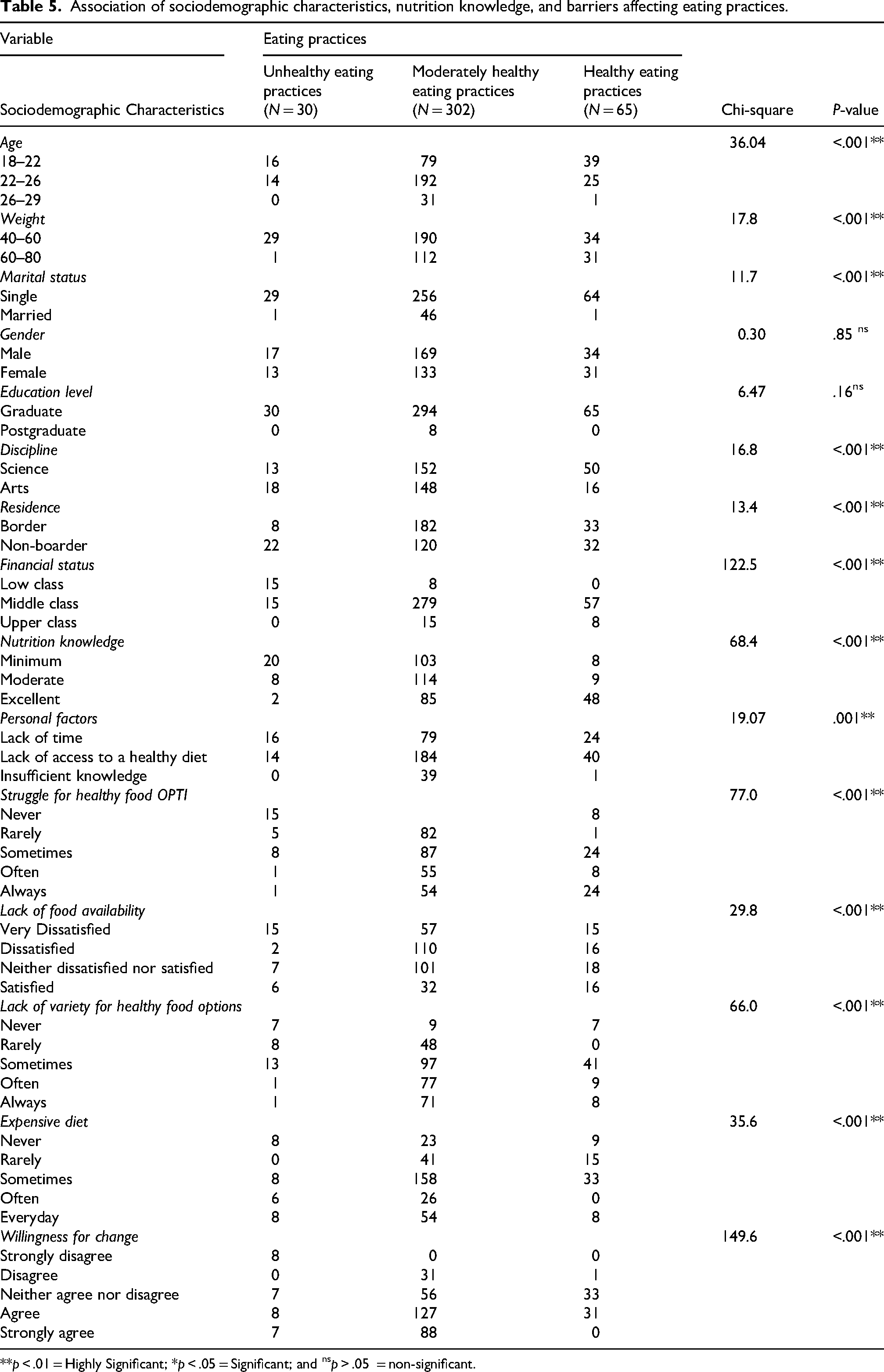
**p < .01 = Highly Significant; *p < .05 = Significant; and nsp > .05 = non-significant.
Discussion
This study addresses a critical gap in how nutritional knowledge translates to healthy eating practices and what possible barriers students might face when adopting healthy eating practices. This will also highlight the importance of nutritional awareness, as diet and nutrition are important aspects of healthy well-being. Although several studies have been conducted in Pakistan to explore the dietary behavior of selective students, particularly medical students or students from the same institute. Therefore, comprehensive studies incorporating students from multiple institutes with different educational backgrounds and nutritional knowledge, along with the identification of barriers to healthy eating, are limited. Our study fills this critical gap and highlights that nutritional knowledge significantly affects the eating patterns of university students, and it contributes significantly to decision-making related to food choices. Our findings revealed that the more students from science disciplines had healthier eating patterns (12.5%) than those in arts disciplines (4%). We observed that the dietary practices of the majority of students (∼76.1%) were moderately healthy, and only 16% of the students were familiar with general nutritional guidelines.
Consistent with previous findings, we observed that nutritional knowledge significantly affects food choices and is strongly associated with adhering to healthy eating practices. Earlier, a study conducted in Karachi, Pakistan, revealed that although medical students had more nutritional knowledge, their scores regarding healthy eating practices and lifestyle were not substantially different from those of non-medical students (Sajwani et al., 2009). Their findings revealed that, irrespective of knowledge, around half of the participants were skipping meals due to a lack of time and hostel arrangements. A recent study carried out in Rawalpindi, Pakistan, also reported that 66% of students were skipping their breakfast daily (Rai et al., 2023). Similarly, in our study, we noted that around half of the study participants did not have breakfast regularly, which could be attributed to early class schedules at university. The majority of respondents (56.2%) were boarders, i.e., living in hostels, so they might not have time for breakfast. Skipping breakfast negatively affects the availability of required nutrients to the brain for the formation of neurotransmitters, leading to decreased functionality of the central nervous system (Adonu et al., 2023). Researchers from other countries, such as reports from Egypt, have highlighted that 50.2% of students skipped breakfast daily (Abdelhafez et al., 2020). Moreover, studies conducted in Jordan and Brunei Darussalam reported inadequate consumption of recommended servings of fruits and vegetables (Yun et al., 2018; Al-Awwad et al., 2021), and the same behavior was observed among the current study group.
Given that most students do not have the time and resources to prepare healthy and nutritious foods, they turn to processed and fast food due to their convenience. Among our study group, 52.4% of the students reported fast food consumption regularly or more often than other healthy foods. Likewise, 42.1% of the students reported that consumption of sugary drinks is likely to get a quick energy boost and stay active during study hours. Similarly, a study among students of CMH medical college, Lahore, Pakistan, reported that even with good nutritional knowledge, many of the students consume fast foods on a weekly (62%) and daily (22%) basis (Tufail et al., 2020). The selection of unhealthy food choices by students could be due to the convenience or taste. Consumption of fast food and sugary drinks daily could negatively affect mental health, leading to disorders like stress, anxiety, and depression among students (Ra, 2022). Studies conducted in Pakistan have reported a significant prevalence (∼79%) of depression among different university students (Shaffique et al., 2020; Ong et al., 2023).
Considering the nutrition knowledge scores, we found that the students with more nutrition knowledge made healthier food choices. The relationship between nutrition knowledge and dietary practices is similar to those reported in previous studies (Krešić et al., 2009; Alzahrani et al., 2020). Among the study participants, only 34.0% of the students had good nutrition knowledge (score “5‒7”). This number highlights a special concern in promoting nutrition education among students from backgrounds other than those in the nutrition discipline. Though the nutritional education is of prime importance to enhance awareness for the selection of healthy food choices, there are multiple other factors that are preventing the students from adopting healthy eating patterns, irrespective of their nutrition knowledge. Our findings revealed that the “cost” of healthy food options is the prominent barrier, followed by the limited availability of healthy food options on campus or nearby surroundings (80%). Additionally, limited space and resources on campus can make it challenging to provide a wide variety of nutritious options. These findings are consistent with global and regional reports, which endorse that healthy dietary choices cost more than unhealthy food (Rao et al., 2013; Amore et al., 2019). It has been observed in international studies that the limited availability of healthy food is a barrier for university students to practice healthy eating patterns (Amore et al., 2019). The limited availability of healthy food can make it harder for students to maintain a balanced diet, hence negatively affecting their overall well-being. When comparing with the trends being followed in neighboring South Asian countries, similar patterns emerged. Different studies carried out in India highlighted that students with higher nutritional knowledge had healthier food choices. However, many of the students with good nutritional knowledge had inadequate consumption of fruits and vegetables (Vibhute et al., 2018; Gandhi & Shukla, 2025). These findings also support that while nutritional knowledge is critical but is often insufficient to overcome environmental and social barriers to healthy eating practices. Our findings contribute significantly to identifying these barriers being faced by students in different universities of Lahore, Pakistan. It highlights the importance of considering the university's influence on students’ dietary choices. Providing nutritious options within the university can encourage students to adopt healthy eating patterns.
Study limitations and future perspectives
This study has several limitations that should be considered before interpreting the outcomes. These outcomes have been reported based on the self-reported data by the students. Moreover, this study incorporated a cross-sectional study design, which provided data on current dietary practices and did not reflect the previous history of eating habits. Additionally, only five universities from Lahore were selected for this study due to limited resources, which could limit the generalizability of these findings nationwide. Despite these limitations, our study provides valuable insights suggesting several avenues for future research. Longitudinal studies should be conducted to explore the impact of nutrition knowledge on dietary choices over a long period of time. Furthermore, interventional studies should also be planned to evaluate the effectiveness of combining nutrition education with the availability of healthy and cost-effective foods in universities.
Conclusion
This study concludes that the eating habits of the students were moderately adequate but need further improvement. The common unhealthy eating habits reported by the majority of the participants include irregular meal consumption, skipping breakfast, eating fast food more often, and inadequate intake of fruits and vegetables. Considering the association between students’ educational background and healthy dietary patterns, it was found that a higher proportion of students in the sciences group had good eating habits. Statistically significant data indicated the positive impact of nutrition knowledge on eating practices. However, it was noted that adherence to healthy eating patterns requires more than nutrition education alone. The main barriers to healthy eating practices were the high cost of healthy food options, lack of time, easy access to fast foods, and lack of availability of healthy foods within the university campus. These findings suggest that attention should be paid to targeted nutrition awareness programs, combined with the provision of cost-effective, healthy, and nutritious food options within the university campus and hostel dining, could make it convenient for students to choose healthy food alternatives, thereby promoting healthy eating habits and overall well-being. In addition, evidence-based nutrition education should be incorporated into the university curriculum of students enrolled in every discipline to equip them with the knowledge and skills needed for sustainable healthy eating practices.
Footnotes
Acknowledgments
Authors are thankful to the School of Food and Agricultural Sciences, University of Management and Technology, Lahore for providing the technical support.

Ethical approval
The Bioresearch Ethical Committee of the School of Food and Agricultural Sciences, University of Management and Technology, Lahore, Pakistan, approved the study via approval number S2022425005.
Consent for publication
Informed consent was obtained from each participant, including the permission for publication, and they were assured of the anonymity of their responses.
Author contributions
Funding
The authors received no financial support for the research, authorship, and/or publication of this article.
Declaration of conflicting interests
The authors declared no potential conflicts of interest with respect to the research, authorship, and/or publication of this article.
Data availability statement
All the data is contained in the manuscript.