







Abstract
Appealing to fear of crime and perceived risk of victimization is a known political strategy for gaining popular support. While fear of crime and perceived risk may stem from vulnerability and past experiences of victimization, high levels of fear and perceived risk, despite declining crime rates, had prompted researchers to investigate other sources of fear of crime and perceived victimization risk. We used survey data from 1,200 households in Metro Manila to test the hypothesis that perceived risk of victimization may be predicted by broad insecurity, which encompasses insecurities in finances, employment, education, health, disaster preparedness and rights protection. Multivariate regression is used to measure variable effects. Our results showed that broad insecurity significantly influences perceived risk of victimization. Other reliable predictors included past victimization, local government spending and social identifiers such as age and gender, but none was as strong as broad insecurity. These findings suggest that perceptions of public safety depend not only on tough policing, but also economic opportunities, human capital development and overall wellbeing. This article corroborates budding research on the diffuse sources of fear of crime and victimization. It informs political and economic prioritization in pursuit of social harmony and development amidst a rapidly changing socioeconomic and political landscape.
Keywords
Introduction
Fear of crime and perceived risk of criminal victimization, independent of current crime statistics and past victimization, changes patterns of thought and behaviour, limits mobility and clouds decision-making with worry about self-protection (Bennett, 1991; Clotfelter, 1977; Doran & Burgess, 2012; Jackson & Gray, 2009; Moore & Trojanowicz, 1988; Pinho de Mello & Zilberman, 2008). Fear increases the likelihood of support for authoritarianism and punitive policies (Klama & Egan, 2011; Sales, 1973; Taylor, Scheppele, & Stinchcombe, 1979; Wanner & Caputo, 1987). It also induces flight from urban areas and the subsequent decline of neighbourhoods (Cullen & Levitt, 1999; Miethe, 1995; Skogan, 1986), which hampers the development and diversification of local economies (Carboni & Detotto, 2013; Rios, 2015).
Thoughts about crime are closely associated with the perceived intentions and actions of strangers, which can be used as a convenient repository of other anxieties (Holloway & Jefferson, 1997). Politicians have been known to leverage fear of crime and victimization to gain popular support, especially among people divided by stark inequality and disillusioned by the inability of government to deliver social services (Chevigny, 2003). These findings fit the current Philippine narrative, inasmuch as the administration is known for a hard-line, anti-crime and anti-illegal drug campaign bolstered by incendiary rhetoric.
Critics at home and abroad had voiced concern over alleged violations of human rights and due process. But the administration’s all-out war against criminality and illegal drugs has proven to be popular, because on the surface, it seems that Filipinos are particularly afraid of crime. A total of 69 per cent of the survey respondents felt safe from crime in their own neighbourhoods, but only 34 per cent felt safe in Metro Manila. Moreover, 57 per cent of respondents considered Metro Manila a high-crime metropolis. This finding is in line with the general tendency of perceived victimization risk to be higher than the statistical probability of victimization (Balkin, 1979; Hale, 1996; Warr, 2000).
Even if recent economic gains provided the Philippines a foundation for accelerated long-term growth and development, major hurdles such as transitional poverty, underemployment and income inequality remain (Garcia, Francisco, & Caboverde, 2016). Security is multifaceted, and the interplay between perceived risk of victimization, its politicization and the concurrent transformation of the socioeconomic landscape has prompted this investigation of the underlying determinants of perceived risk of criminal victimization among Filipinos.
Measuring Perceived Victimization Risk
Measures of fear of crime in the literature range from broad assessments of feelings of safety in one’s neighbourhood to emotional and behavioural responses to simulated situations in which fear may arise (Meško & Farrall, 1999; Meško et al., 2008; Taylor & Hale, 1986; Van der Wurff, van Staalduinen, & Stringer, 1989). Collins (2016), in a meta-analytic review of 114 studies on fear of crime, found that the way fear and perceived risk is measured and the phrasing of questions significantly impacted observed relationships. Collins (2016) thus recommended measures of fear and perceived risk involving multiple questions measured along multilevel scales. Common survey questions to measure fear of crime include ‘Is there anywhere near where you live where you would be afraid to walk alone at night/during the day?’, ‘How worried/afraid are you about/of being a (general ‘crime’ or specific crimes) victim?’ and ‘How worried/afraid are you about/of a break-in while no one was home?’ (Taylor & Hale, 1986; Warr, 2000).
Following the strand of research spurred by Ferraro and LaGrange (1987), we differentiate between cognitive and affective dimensions of fear of crime. Cognitive fear pertains to an assessment of safety based on perceived risk of victimization, while affective fear is an emotional response to the pain or loss associated with crime. Rountree and Land (1996) showed that affective and cognitive constructs were influenced differently by certain predictors. Using affective constructs, Dammert and Malone (2003, 2006), Hummelsheim, Hirtenlehner, Jackson, and Oberwittler (2010) and Britto (2013) investigated insecurities as a determinant of fear of crime. Dammert and Malone (2003, 2006) used levels of security or insecurity regarding violence, assault and robbery. Hummelsheim et al. (2010) used the common ‘How safe do you—or would you—feel walking alone in this area after dark?’ Britto (2013) used Ferraro’s affective model of fear, which asked about levels of fear of offenses, such as being approached by a beggar, swindling, rape or sexual assault, murder, vehicle theft, robbery and break-ins.
The results of our crime perceptions survey revealed that most residents considered Metro Manila in general to be a high-crime metropolis, even if they felt safe in their own neighbourhoods. Perceived risk of victimization was also disproportionately higher than victimization rates. So here, we chose to focus on perceived victimization risk to flesh out the role of broad insecurity in spurring this ‘cognitive’ fear of crime. A research gap on this relationship was pointed out by Dammert and Malone (2003) and, to the best of our knowledge, has remained unaddressed even as we followed studies that investigated the links between fear of crime and broad economic anxiety, as well as research that revealed unexpected relationships between fear of crime and perceived risk and common predictors in contexts different from the usual affluent Western setting (Britto, 2013; Khruakham & Lee, 2014; Liu, Messner, Zhang, & Zhuo, 2009; Smolej & Kivivuori, 2006; Villarreal & Silva, 2006).
Theories on the Determinants of Fear of Crime and Perceived Risk
Numerous models have been developed to explain fear of crime. Most of these theorizing has resulted in vulnerability and victimization models or disorder, community concerns and social integration frameworks (Franklin, Franklin, & Fearn, 2008; McGarrell, Giacomazzi, & Thurman, 1997). More recently, an emerging body of research linked fear of crime to other types of broad and diffuse anxiety (see Farrall, Gray, & Jackson, 2007). In this section, we discuss these models in turn and outline our own approach in explaining the determinants of perceived victimization risk.
Vulnerability and Victimization
Vulnerability encompasses susceptibility to victimization and capability to prevent or cope with it (Shippee, 2012; Skogan & Maxfield, 1981). Objective and perceived vulnerability are determined by sociodemographic characteristics—; most models look at the effects of age, sex, educational attainment, employment status and socioeconomic standing, among others. Considering the difference between actual and perceived vulnerability, Van der Wurff et al. (1989) proposed a social psychological model that related fear of crime and victimization to one’s attractiveness as a target, the intentions of potential attackers, one’s power in relation to potential attackers, and the areas in which attacks may take place. Meško and Farrall (1999), applying this model in Slovenia, Scotland and the Netherlands, found that fear was consistently related to perceptions of oneself relative to a potential attacker.
The literature is split on the influence of age on fear of crime and perceived victimization risk; age as a predictor was found to be sensitive to study design and dependent variable measurement (Collins, 2016; McCoy, 1996). The elderly and women, who may be considered physically vulnerable, were found to be systematically more fearful of crime (Rader, Cossman, & Porter, 2012; Skogan & Maxfield, 1981; Valera & Guàrdia, 2014). However, some studies that considered other insecurities, psychological predictors and alternative measures of fear found age to have an inverse relationship with fear (Hummelsheim et al., 2010; Jackson, 2009; Rountree & Land, 1996). And studies that explored cases beyond the usual Western setting, such as China or low-income neighbourhoods in Brazil, reported an inverse relationship between age and fear of victimization (Liu et al., 2009; Villarreal & Silva, 2006).
Income was mostly shown to have an inverse relationship with fear of crime (Meško et al., 2008; Rader, Cossman, & Porter, 2012; Skogan & Maxfield, 1981). The rich, though more attractive to criminals, generally engaged less in activities that put them close to threats of victimization. They were, by virtue of economic strength and social capital, also better able to cope with the consequences of victimization. Employment, independent of income, increased an individual’s sense of personal control (Shippee, 2012) and correlated with lower levels of fear of crime, particularly when accounting for other insecurities (Britto, 2013; Hummelsheim et al., 2010; Smolej & Kivivuori, 2006).
Education was found to be a strong predictor of personal control and thus reduced fear of crime (Shippee, 2012). However, like age, its significance in fear of crime studies was sensitive to study design and dependent variable measurement (Collins, 2016). Higher levels of education were associated with less fear of crime in studies that accounted for broad insecurities (Dammert & Malone, 2003; Hummelsheim et al., 2010). But in China, the young and better educated were found to be more fearful (Liu et al., 2009).
Victimization causes distress and trauma. It may also be seen as a manifestation of vulnerability and has been found to be a strong predictor of fear of crime across various geographical contexts, such as in the UK, the UA, Philippines, China and Brazil—measures of fear and empirical models (Balkin, 1979; Collins, 2006; Dammert & Malone, 2003; Khruakham & Lee, 2014; Liu et al., 2009; Rountree & Land, 1996; Skogan & Maxfield, 1981; Valera & Guàrdia, 2014; Villarreal & Silva, 2006). But these paradoxes were widely observed: fear of crime was often much higher than victimization rates, and those who felt more vulnerable and more afraid, women and the elderly, were in fact the least likely to become victims of crime (Skogan & Maxfield, 1981).
The paradoxes surrounding elevated fear of crime among women and the elderly were investigated by Warr (1984) in his test of the concept of perceptually contemporaneous offenses, offenses that are perceived to accompany or follow other offenses. Women and elderly were thought to be more afraid than men or youth of some or all crimes, because these fearful groups associated the risk of some crimes with that of other, usually worse, crimes. For women, the worst of these perceptually contemporaneous offenses may be rape, which according to Ferraro’s shadow of sexual assault hypothesis, heightened women’s fear of all other personal and property crimes (a result that was retested and affirmed by Fisher and Sloan but found by Cook and Fox (2012) to be less significant overall, for both men and women, than fear of physical harm). On the methodological front, Sutton and Farrall (2005) showed that men had a tendency downplay fear of crime and victimization when responding to surveys, in accordance to what was perceived to be socially desirable. Accounting for this bias revealed men were in fact more afraid of victimization than women, which aligned with men’s higher rates of past victimization and engagement in risky activity.
Indirect victimization, though filtered through family members or close relations, may induce the same negative emotions and effects on fear of crime. Sometimes, indirect victimization can even have direct financial or psychological consequences for the indirect victim, especially in the coping stages. Warr (2000) found that even when very serious crimes rarely occurred on the ground, they were often overrepresented in mass media compared to less serious crimes. Thus, media consumption, particularly watching television and listening to news on the radio, positively correlated with fear of crime, because it exposed individuals to grave incidents of crime in their community and reinforced perceived vulnerability. Individuals who had higher levels of personal vulnerability, lived in disorderly neighbourhoods, or perceived their environment as such were more susceptible to the influence of media on fear (Eschholz, Chiricos, & Gertz, 2003; Skogan & Maxfield, 1981). In the same vein, in low-income neighbourhoods, social cohesion, which facilitated the travel of news about crime incidents, increased perceived risk of victimization (Villarreal & Silva, 2006). Farrall, Gray, and Jackson (2007) summarize the victimization and indirect victimization theses into a key interplay between judgments about the impact of victimization and perceived vulnerability to falling victim to crime.
Vulnerability and victimization serve as controls in our analysis, which explores more diffused determinants of perceived risk.
Disorder, Community Concerns and Social Participation
The mechanisms through which physical and social environments influence fear of crime and perceived risk of victimization is based on theories of social capital and social disorganization (Skogan, 1986; Lindström, Merlo, & Östergren, 2003). Perceptions of disorder in the community and the capacity of the community for internal policing through informal control networks have been shown to be strong predictors of fear of crime, which explain the discrepancy between levels of fear of crime or perceived risk and actual rates of victimization (Franklin, Franklin, & Fearn, 2008; Lindström et al., 2003; McGarrell et al., 1997; Scarborough, Like-Haislip, Novak, Lucas, & Alarid, 2010; Taylor, 1999). In this paradigm, social incivilities, such as loitering and minor delinquency among the youth, and physical incivilities, such as unkempt public areas, vandalized property and dilapidated houses, signalled a general lack of personal and social control over the values and intentions of others that shared community space, leading to heightened fear of crime and perceived risk of victimization (Farrall, Gray, & Jackson, 2007; Hunter, 1978). Structural, physical or social community features influence perceived risk, but the effects are not automatic. The introduction of minorities and youth, in conjunction with attributes such as property ownership or job availability, affected the salience of incivilities (Taylor & Covington, 1993). The escalation of social and physical incivilities also led to actual rises in criminal activity, changing social interaction patterns in the community and leading to a downward spiral with ever higher levels of fear and perceived risk (Kelling & Wilson, 1982; Skogan & Maxfield, 1981).
As a countervailing force, social participation, through individual connections or through engagement in neighbourhood organizations, enhances feelings of mutual trust as it demystifies strangers and provides opportunities for cooperation, thereby reducing social vulnerability and perceived risk of victimization (Lindström et al., 2003; Skogan & Maxfield, 1981). Consistent with these observations, trust in law enforcement and perceptions of corruption were found to be significant predictors of fear of crime, and the disorder model explained the variation in both cognitive and affective dimensions of fear (Collins, 2016; Dammert & Malone, 2002; Franklin, Franklin, & Fearn, 2008).
Economic, Social and Political Insecurities
Garofalo and Laub (1978) were among the first to investigate mechanisms that explain the ambiguous relationship between victimization and fear of crime, the tendency not to perceive crime as an immediate threat, and the mixing of fear of strangers with fear of crime. They linked fear of crime to quality of life, determined by wealth, educational and cultural access, viability of the environment, and perceptions of personal achievement and individual freedom. Further research in sociology, criminology and social psychology characterized fear of crime and perceived risk as the identifiable, controllable and actionable scapegoats on which a range of intractable social, political and economic insecurities or diffuse anxiety that accompany modern life may be projected (Britto, 2013; Dammert & Malone, 2003; Elchardus, De Groof, & Smits, 2008; Farrall, Gray, & Jackson, 2007; Holloway & Jefferson, 1997).
Following Farrall, Gray, and Jackson’s (2007) investigation on diffuse anxiety and fear of crime, Hummelsheim et al. (2010) showed that socioeconomic and sociopolitical conditions and institutions that affected overall quality of life explained the variance in fear of crime in 23 European states. The same line of investigation was pursued by Dammert and Malone (2006), who found that combined insecurity in employment, educational opportunities for children, possibility of maintaining the quality of life, economic stability, political stability and human rights were strong and consistent predictors of fear of crime in several South American countries.
Britto (2013), synthesizing research on the political role of fear of crime, found that focusing on crime control, while downplaying the significance of other social problems led to a culture of control, which stalled social progress and changed the functioning of democracy. She then found that economic insecurity was an important predictor of fear of crime among American households in the wake of the Great Recession. Similarly, Smolej and Kivivuori (2006) discovered that unemployment, an indicator of economic insecurity, was strongly associated with fear of violence.
Following this line of research, our study took stock of economic, social and political insecurities related to overall quality of life and investigated their role as a key predictor of perceived victimization risk. A general feeling of malaise or diffuse anxiety about overall wellbeing is used as a third component that explained perceived victimization risk, alongside standard vulnerability indicators and environmental triggers. Perceived risk of criminal victimization represented a state of worry about financial security, health and their ability to exercise freedom in social and political interactions.
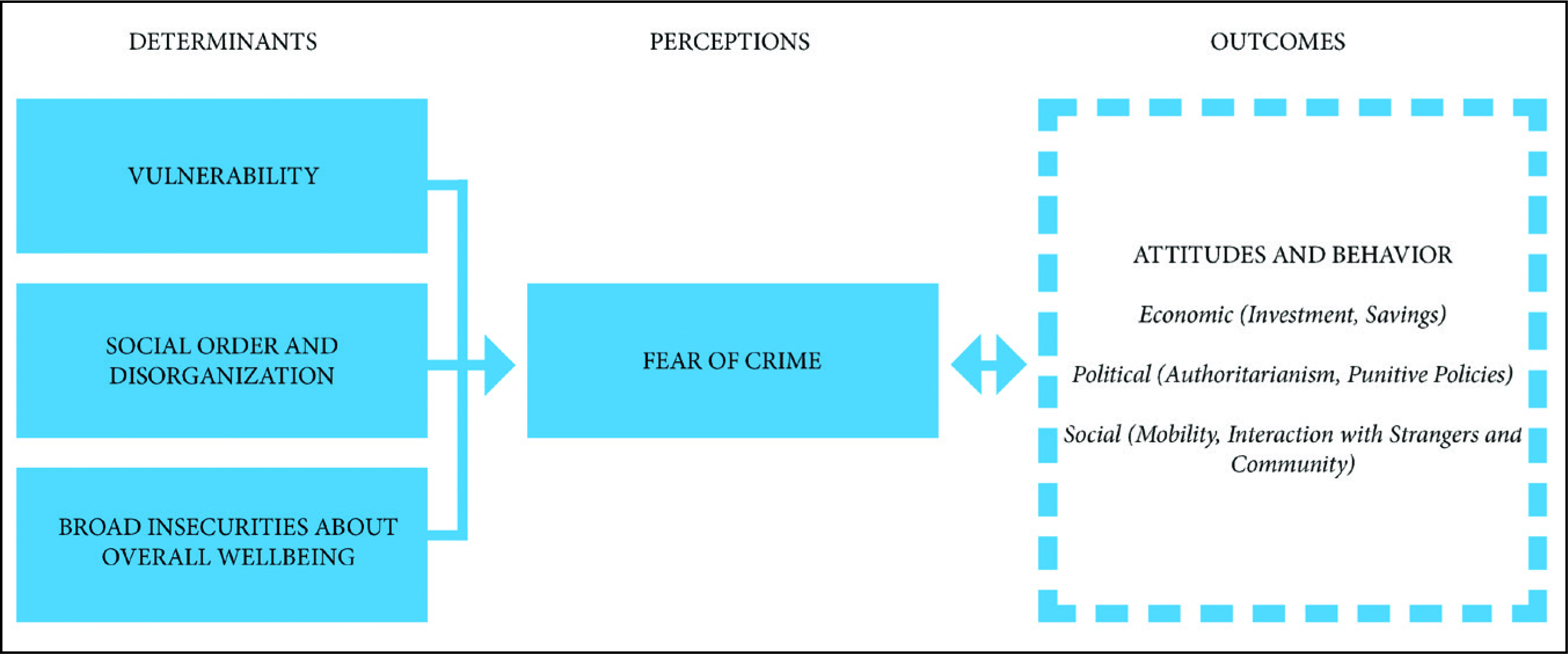
In summary, our central thesis attributes perceived risk of victimization to vulnerability and past victimization; the effects of physical and social disorder; and broad insecurities in relation to economic, social and political wellbeing or overall quality of life. These determinants when feed into perceptions of safety reported as perceived risk of victimization, which then leads to economic, social and political attitudes and behaviours. These relationships are illustrated in Figure 1.
Data, Measurement and Methods
Crime Perceptions Survey
A survey questionnaire with 54 items covers past victimization, fear of crime and perceived victimization risk; perceptions of authority; insecurities, political views and behaviour; media consumption; and sociodemographics. The questionnaire was pilot-tested in two villages, after which minor revisions were made to improve question clarity and response quality.
A sample of 1,200 Metro Manila households was chosen, approached and surveyed using multistage random sampling. The sample was proportionally distributed across Metro Manila based on the population size of each of its 17 component municipalities. A total of 13 survey enumerators conducted face-to-face interviews with household heads, their spouses or adult household members acting as household head over two weeks in August 2016. The interviews were conducted in Filipino, the language that 96 per cent of the respondents spoke at home.
Ordinary least squares regression was used to test the association between broad insecurity and perceived risk of victimization. Multiple alternative specifications resulted in the final model presented in the results section, which may be summarized as:

Dependent Variable
RISK i represents perceived risk or fear of future victimization for each respondent. It is a summative rating scale based on responses to the question: ‘How likely are you to become a victim of (specific crime) in the next 12 months?’ iterated for five different crimes, namely, pickpocketing or robbery, burglary or break-in, vehicle theft, rape and physical violence. Responses were recorded as very likely (1), somewhat likely (2), somewhat unlikely (3), very unlikely (4), do not know (5). For the analysis, item values were recoded to range from very unlikely (1) to very likely (5) with do not know (3) taken as a neutral response.
Initial results indicated high correlation among the items for individual crimes. To address this, they are combined into a scale, such that the mean rating or the arithmetic average of the responses to the five questions were recorded as the respondent’s perceived risk rating on a scale of 1– 5, 1 signifying the lowest level of perceived risk and 5 signifying the highest level of perceived risk. The scale captured a respondent’s general perceived risk of criminal victimization, while encompassing the perceived likelihood of falling victim to specific crimes—a combination of both physical and property crimes. Cronbach’s alpha is a scale reliability coefficient defined as the square of the correlation between a scale and the underlying factor it aims to measure (Cronbach, 1951). With a Cronbach’s alpha of 0.90 and satisfactory factor analysis results, RISK i reliably measured latent perceptions of perceived victimization risk.
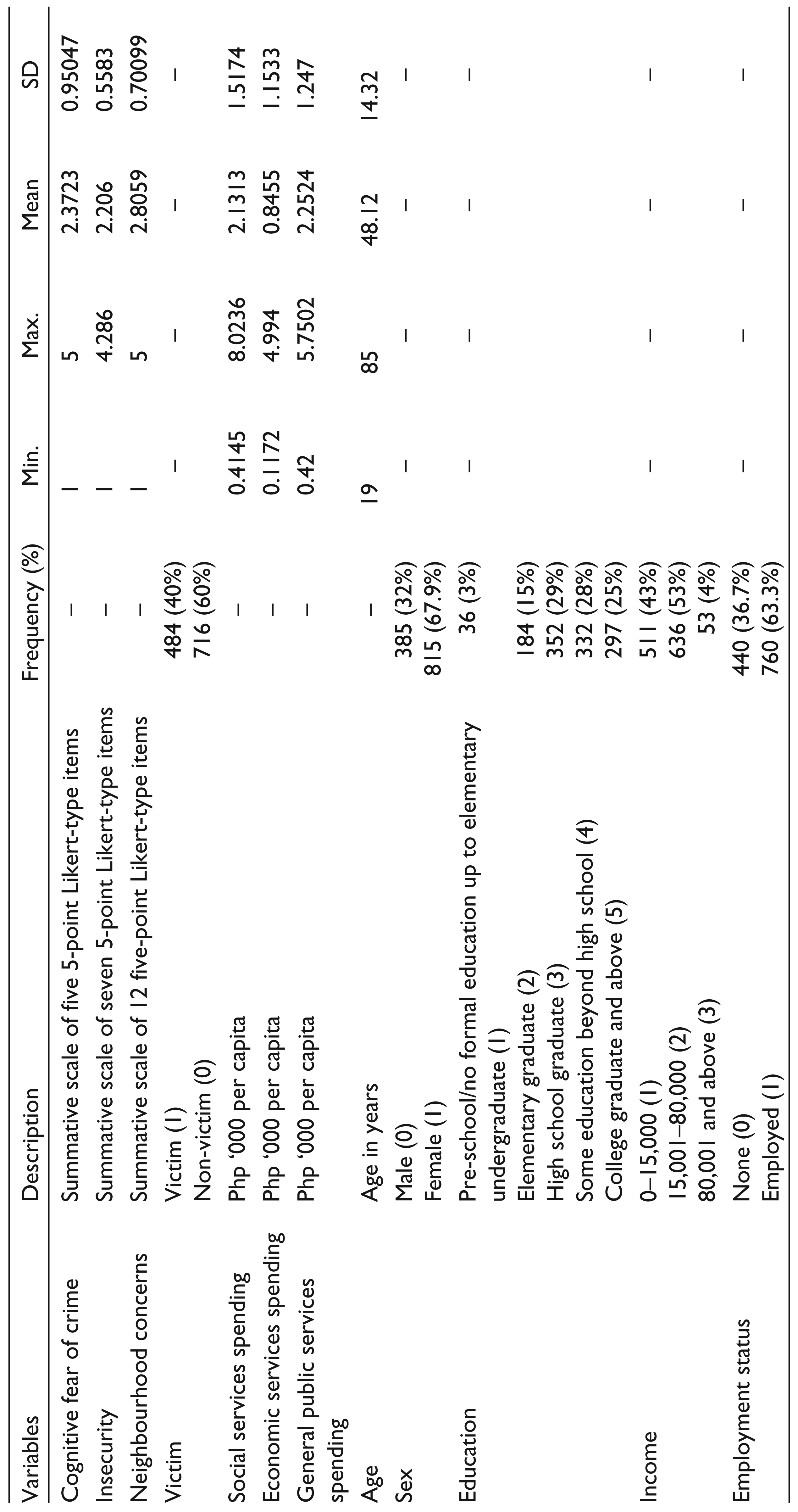
The lowest and highest recorded levels of perceived risk in the sample were 1 and 5, respectively. The mean level of perceived risk was 2.37 with a standard deviation of 0.95.
Independent Variables
Respondents were asked how secure they and their families felt in terms of seven economic, social and political dimensions that comprise quality of life (Figure 2). The main independent variable was INSECURITYi, a summative rating scale that represents each respondent’s self-assessed overall level of insecurity in terms of employment, educational opportunities for children, health maintenance, sanitation and environment, personal economic stability, natural disaster preparedness and protection of human rights.
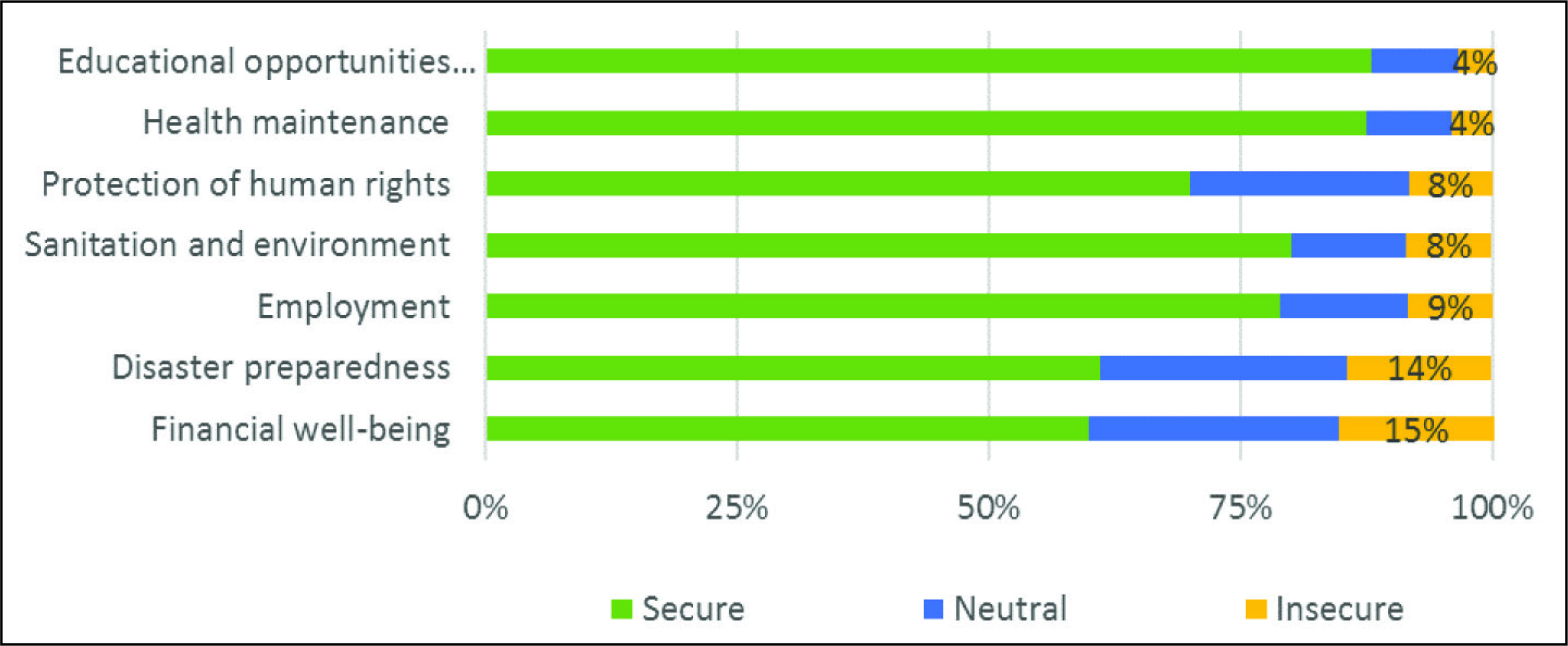
Respondents were asked, ‘As of now, how secure do you and your family feel in terms of (dimension of security)?’ and responses were given as ‘very secure’, ‘secure’, ‘neutral’, ‘insecure’ and ‘very insecure’. The dimensions were found to be highly correlated and are thus combined in a scale like the dependent variable. INSECURITY i adequately described a factor that motivated the individual dimensions included in the survey. This underlying factor is taken to be broad insecurity. The suitability of the insecurity scale for the analysis was supported by its Cronbach’s alpha of 0.85 and satisfactory factor analysis results.
INSECURITY i ranged from 1 to 5, 1 signifying the lowest level of insecurity and 5 signifying the highest level of insecurity. Recorded levels of insecurity in the sample ranged from 1 to 4.29. The mean level of insecurity was 2.21 with a standard deviation of 0.56.
Community concerns were measured using a summative rating scale for perceived incivilities: COMMUNITY i . Respondents were asked whether they agreed to the statement ‘In this neighbourhood, there is a problem with (specific community concern)’. Respondents were asked for their separate perceptions of community concerns in their own neighbourhoods and in Metro Manila in general, but only COMMUNITY i appeared to be consequential to perceived risk of victimization. The specific community concerns were: trash and litter lying around, graffiti on walls, unsupervised youth, too much noise, people loitering in the streets, people drunk in public, gambling in public, homelessness, prostitution, use of illegal drugs, dealing in illegal drugs (buying and selling) and gangs. Possible responses for each item were strongly agree (1), agree (2), neutral (3), disagree (4) and strongly disagree (5). Responses were reverse coded to get increasing levels of concern from 1 to 5. Cronbach’s alpha for COMMUNITY i is 0.90. Factor analysis confirmed the reliability of COMMUNITY i in measuring latent community concerns.
COMMUNITY i ranged from 1 to 5, 1 signifying the lowest level of perceived neighbourhood incivilities and 5 signifying the highest level of perceived neighbourhood incivilities. The mean level of perceived neighbourhood incivilities was 2.81 with a standard deviation of 0.70.
Prior victimization was indicated by VICTIM i , binary coded as non-victim (0) and victim (1). Respondents were asked if they or any member of their household had been victims of the any of the crimes that figured in the measure of perceived risk, that is: pickpocketing or robbery, burglary or break-in, vehicle theft, rape and physical violence. Any experience of victimization resulted in VICTIM i being coded as victim (1).
SOCIODEMOGRAPHICS i included age, sex, educational attainment, household income and employment status. Age was measured in years. Sex was binary coded as male (0) and female (1). Educational attainment was recorded using five indicator variables: no formal education up to grade school undergraduate, grade school graduate, high school graduate, some education beyond high school and college graduate or higher. The education indicator was coded 1 based on the respondent’s highest educational attainment; the rest were coded 0. A total of 3,000 income dummies were used: low income (0–15,000), middle income (15,001–80,000) and high income (80,001 and above). The income indicator was coded 1 based on declared household income; the rest were coded 0. Employment status as coded as employed (1) if an occupation was identified and unemployed (0) otherwise.
Three municipality-level variables, represented by CITY i in Equation (1) and pertaining to local government unit (LGU) spending on social, general public and economic services were included in the model to control for possible differences in provision and access to such services, depending on which Metro Manila municipality a respondent lived in. Social services spending covers education, culture and human capital development; health services; social security, welfare and employment; and housing and community development. General public services spending covers, among others, general administration and public order and safety, including law enforcement and political administration. Economic services spending includes communications and transportation facilities, water resources development and flood control, trade and industry and tourism. Municipality spending was reported in thousands of Philippine pesos per capita, based on LGU Fiscal Performance Indicators for Fiscal Year 2014 from the Bureau of Local Government Finance of the Department of Finance.
Table 1 summarizes the descriptive statistics for the dependent and independent variables tested in the empirical analysis.
Descriptive Statistics for Dependent and Independent Variables
Econometric Analysis and Discussion
In the analysis of perceived risk, RISK i (a summative scale based on ratings of perceived risk of five types of crime) is used as the dependent variable regressed on INSECURITY i , the main predictor of interest and other controls at the individual and city level. Table 2 shows the results of a set of ordinary least squares regressions. Post-estimation diagnostics for heteroskedasticity, multicollinearity and model specification affirmed the viability of the models. Models 1–3 successively introduced individual control predictors, while Model 4 included city-level controls. The significant constant in Model 4 implied that an unemployed man with low education, low household income and who had not been a victim of crime had a baseline RISK i rating of 0.692 out of 5.
Fear of Crime Regressions
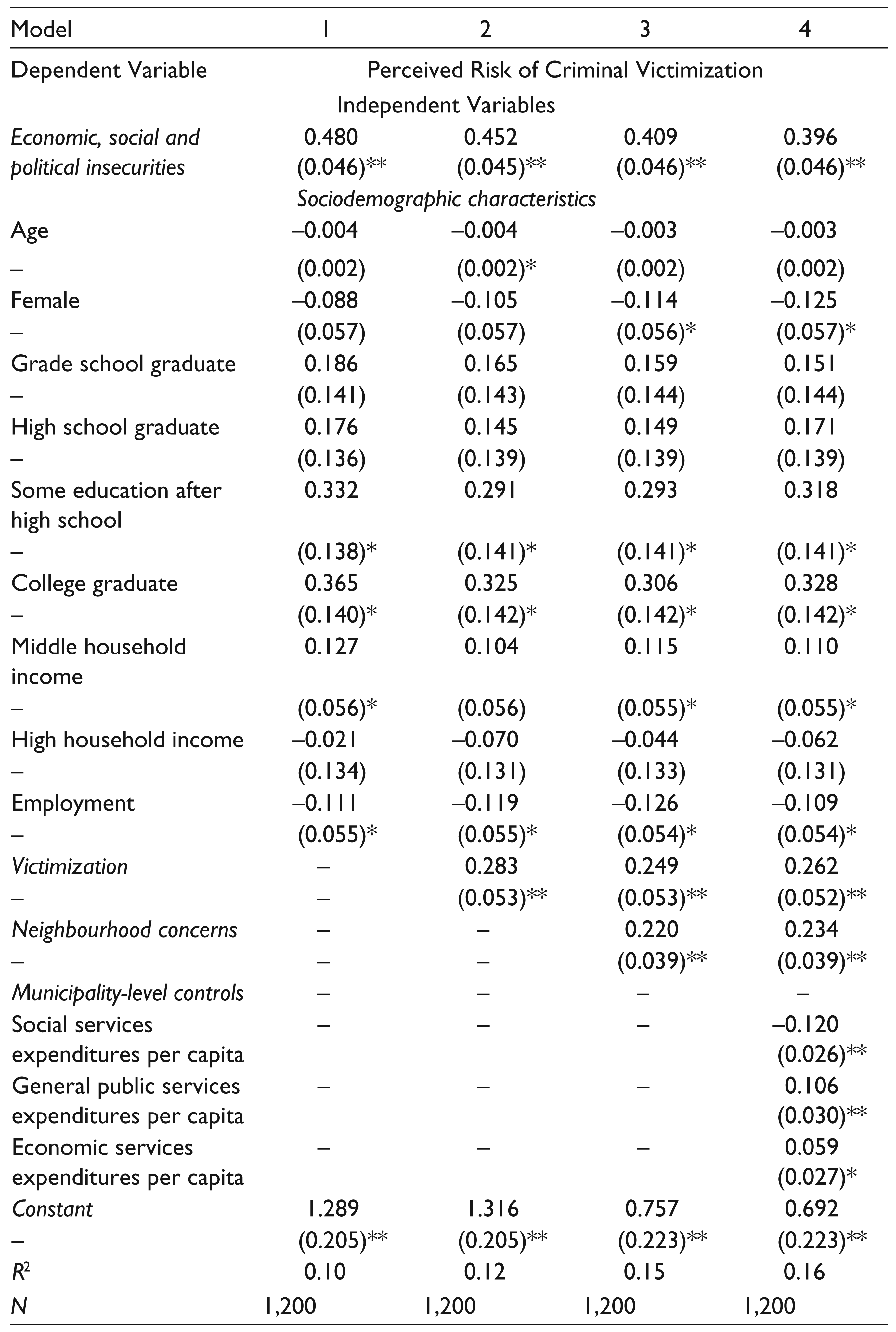
INSECURITY i was shown to be a strong and highly significant predictor of perceived risk across all four models, even after other significant predictors were added. Perceived risk increased by 0.295 unit along the RISK i scale for every unit increase in INSECURITY i . Since insecurity was a rating scale ranging from 1 to 5, the coefficient implied that respondents who reported the highest level of broad insecurity had a fear rating that is 1.584 units or 40 per cent higher than those who reported the lowest level of insecurity (0.396 × 4 = 1.584).
Of the sociodemographic controls, age appeared to be insignificant in three out of four models, including the final model. Sex, particularly being female, was significant in two out of four models, including the final specification. Being female decreased RISK i . As for education, the baseline was low educational attainment pertaining to no formal education up to only some years of elementary school. Completion of basic education, that is, finishing high school, did not seem to affect perceived risk relative to the base. However, additional education beyond high school, that is, vocational training, some college, finishing college or postgraduate studies, appeared to substantially increase perceived risk.
Medium- and high-income households were independently compared to low-income households, the baseline. Middle-income households were more perceptive to the risk of victimization than low- and high-income households. With household income accounted for, employment decreased perceived risk across all four models.
Models 2–4 controlled for prior victimization, which was highly significant in all iterations. Respondents who had been victims of any of the five crimes had higher levels of cognitive fear or perceived risk, particularly 0.282 unit higher on the RISK i scale.
Neighbourhood concerns or perceived social and physical incivilities (COMMUNITY i ) significantly increased perceived victimization risk in Models 3 and 4. COMMUNITY i ranged from 1 to 5, and RISK i increased by 0.234 unit for every unit increase in COMMUNITY i . That is, respondents who reported the highest level of concern over perceived neighbourhood problems were 0.936 units more fearful on the RISK i scale than those who reported the lowest level of neighbourhood concerns (0.234 × 4 = 0.936).
In Model 4, municipality-level variables are controlled for. Local government spending on social services was a highly significant predictor that decreased perceived risk by 0.120 unit along the RISK i scale for every 1,000 pesos additional spending per capita (PHP 1000 ≈ USD 20). Social services expenditures covered education and manpower development; health, nutrition and population control; labour and employment; housing and community development; and social welfare.
Our results showed that perceived risk of criminal victimization among residents of Metro Manila were ultimately rooted in broad insecurity. The strength and significance of broad insecurities as a predictor of perceived victimization risk suggested that perceived risk may have served as a repository and expression of anxiety, fear and anger about a number of other concerns in daily life that people worry about. The salience of crime and the convenience of attributing fear to crime and to a criminal other led to the distortion of perceived victimization risk. These findings corroborated previous claims about the predictive power of broad insecurities or diffused anxiety on affective fear of crime (Britto, 2013; Dammert & Malone, 2003, 2006; Hummelsheim et al., 2010). These results implied that the effect held true as well for cognitive fear of crime measured as the perceived risk of victimization.
Contrasting the effects of the controls in the model with findings in prior research, age is found to be generally insignificant, but one specification that considered victimization but did not control for neighbourhood and city-level variables showed an inverse relationship between age and perceived victimization risk. Evidence in other developing economies corroborated the result that older people are less fearful of crime and perceptive of risk (Khruakham & Lee, 2014; Liu et al., 2009, Villarreal & Silva, 2006). However, age, as a predictor of fear and perceived risk, has been found to be sensitive to model specification (Collins, 2016; McCoy, 1996), and controls for perceptions of social disorganization, later added to the model may have mediated differences initially attributed to age.
Our results showed that being female decreases perceived risk of victimization. This contradicted prior findings that showed females were more afraid of crime (Chiricos et al., 1997; Collins, 2016; Hummelsheim et al., 2010; Jackson, 2009; Rountree & Land, 1996). However, most of these studies used affective measures of fear, which demanded an admission of emotional distress or aversion towards the pain or loss crime entails. Disclosure of self-perceived vulnerability could have been shameful for male respondents, which led them to give false but socially desirable responses (Sutton & Farrall, 2005). In this study, a cognitive measure of fear, perceived risk of victimization, requiring an objective assessment of one’s risk of being a victim, was used. This may have circumvented the shadow of sexual assault effect among women and reversed the social desirability bias among male respondents.
As for education, results show that those who pursue schooling beyond high school were more fearful than those who only finished high school or less. This result was similar to the findings of Liu et al. (2009) in urban China, where the young and better educated were more fearful of crime, because of rapidly changing sociodemographic dynamics and migration patterns, which are similarly experienced by the youth in Metro Manila.
This study’s results provided strong evidence for the argument that economic insecurity was a major contributor to perceived risk of victimization. Consistent with the findings of Britto (2013) and Smolej and Kivivuori (2016), the unemployed were more fearful than the employed. Being able to identify a primary occupation increases respondents’ sense of personal efficacy, thus alleviating economic anxiety as reflected in lower levels of perceived victimization risk.
As for income, respondents from middle-income households were more perceptive of risk than those who belonged to low- and high-income households. Previous studies found that higher income reduced fear of crime (Dammert & Malone, 2002; Meško et al., 2008; Rader et al., 2012; Rountree & Land, 1996). The rich are easily able to steer clear activities that put them at risk of victimization. They are also likely able to afford means of protection from and measures for coping with the consequences of victimization. At the other end of the income spectrum, poorer households may have perceived themselves to be less attractive targets of crime and were thus more comfortable than the middle class in crime-prone areas and in their power relations with potential attackers. That is, the higher levels of perceived victimization risk detected among the middle class may have been the result of their self-perceived attractiveness as targets of crime, relative to the poor, but their limited means of protecting themselves or coping with victimization, compared to the rich.
Past victimization was shown to have a significant positive effect on perceived risk of future victimization, and this is heavily supported by the literature. The measure of past victimization captured both direct victimization and indirect victimization through the experiences of immediate family members.
Neighbourhood concerns were also a significant predictor of perceived victimization risk. This supported the role of symbolic sociological ad psychological factors in the perception of victimization risk, suggesting that beyond self-rated vulnerability and actual experiences of crime, the environment played a role in engendering feelings of safety and security. However, since social support systems, membership in community organizations and police perceptions did not appear to be significant when considered, the results are inconclusive on the effects of formal and informal control networks on perceived risk.
The last set of controls served to capture differences in the provision of services by each municipal government in Metro Manila. Perceived risk declined as per capita local government spending on social services increased. Social services in this analysis included human capital development, health, employment, community development and welfare. These services directly built upon human capacity and a sense of personal control, strengthening the case for the importance of overall wellbeing in feelings of safety.
Contrary to initial expectations, spending on general public services and, to a lesser extent, economic services were shown to increase perceived risk of criminal victimization. General public services included spending on the local government bureaucracy, as well as public order and safety. These results raised questions about the efficacy of pouring resources towards stronger policing and rigid anti-crime programmes to address widespread fear of crime and perceived risk of victimization. This explanation was supported by studies that emphasized how fear of crime and perceived risk were problems separate from criminality itself and suggested community-based strategies that go beyond heightened policing to reduce fear (Bennett, 1991; Dammert & Malone, 2006; Moore & Trojanowicz, 1988; Taylor, 1999).
Conclusion and Recommendations
This study was motivated by a desire to understand the nature of growing perceptions of victimization risk among Filipinos and the rise of ‘peace and order’ concerns in the public consciousness encouraging the national government to focus on fighting crime. Building on abundant literature from the field of sociology, a framework was developed, in which vulnerability, concerns over social disorder and broad insecurities about overall wellbeing led to perceived risk of victimization. In the empirical analysis, controls were sociodemographic attributes, prior victimization, neighbourhood incivilities and city-level social welfare information. Results showed that broad insecurities were an important predictor of perceived victimization risk or cognitive fear of crime. These broad insecurities covered employment, educational opportunities for children, health, sanitation and environment, financial stability, disaster preparedness and protection of human rights.
Those who felt unsafe and at risk of being a victim of crime also tended to be insecure about their financial wellbeing, their employment status, their preparedness for disasters, their health, their environment and the protection of their rights. They also tended to be concerned about neighbourhood incivilities and community problems such as garbage, juvenile delinquency and illegal drugs. The broad middle class in terms of household income appeared to be more perceptive of victimization risk, but being employed generally reduced perceived risk. Other reliable predictors included past victimization, local government spending and social identifiers such as age and gender, but none was as strong as broad insecurity.
There is no doubt that fighting crime is an important function of local government. But security is multifaceted. Government must address the less tangible but equally critical sources of insecurity among its citizens alongside tough policing and anti-crime action. The prevailing unease among Filipinos may be symptoms of problems that require a holistic policy approach that creates more economic opportunities, develops human capital and builds physical and social infrastructure. Sustained security and social progress arise from steady economic growth and development within a stable environment in which individual incentives and societal goals align and prompt cooperation across sectors towards mutual benefit and protection.
Declaration of Conflicting Interests
The authors declared no potential conflicts of interest with respect to the research, authorship and/or publication of this article.
Funding
This work was supported by the Konrad-Adenauer-Stiftung under Grant IB-AIM-16-001.