






Abstract
MISpheroID
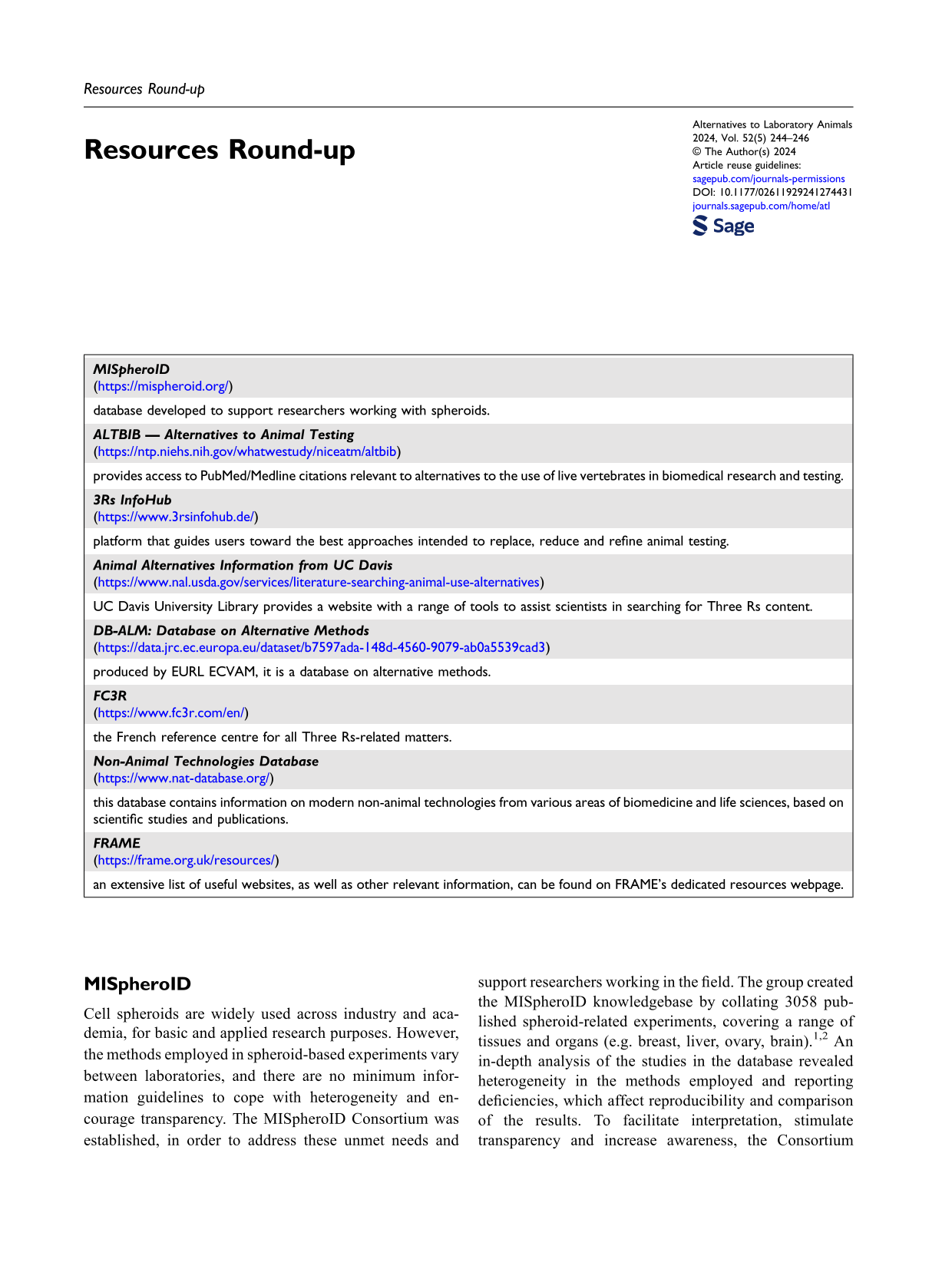
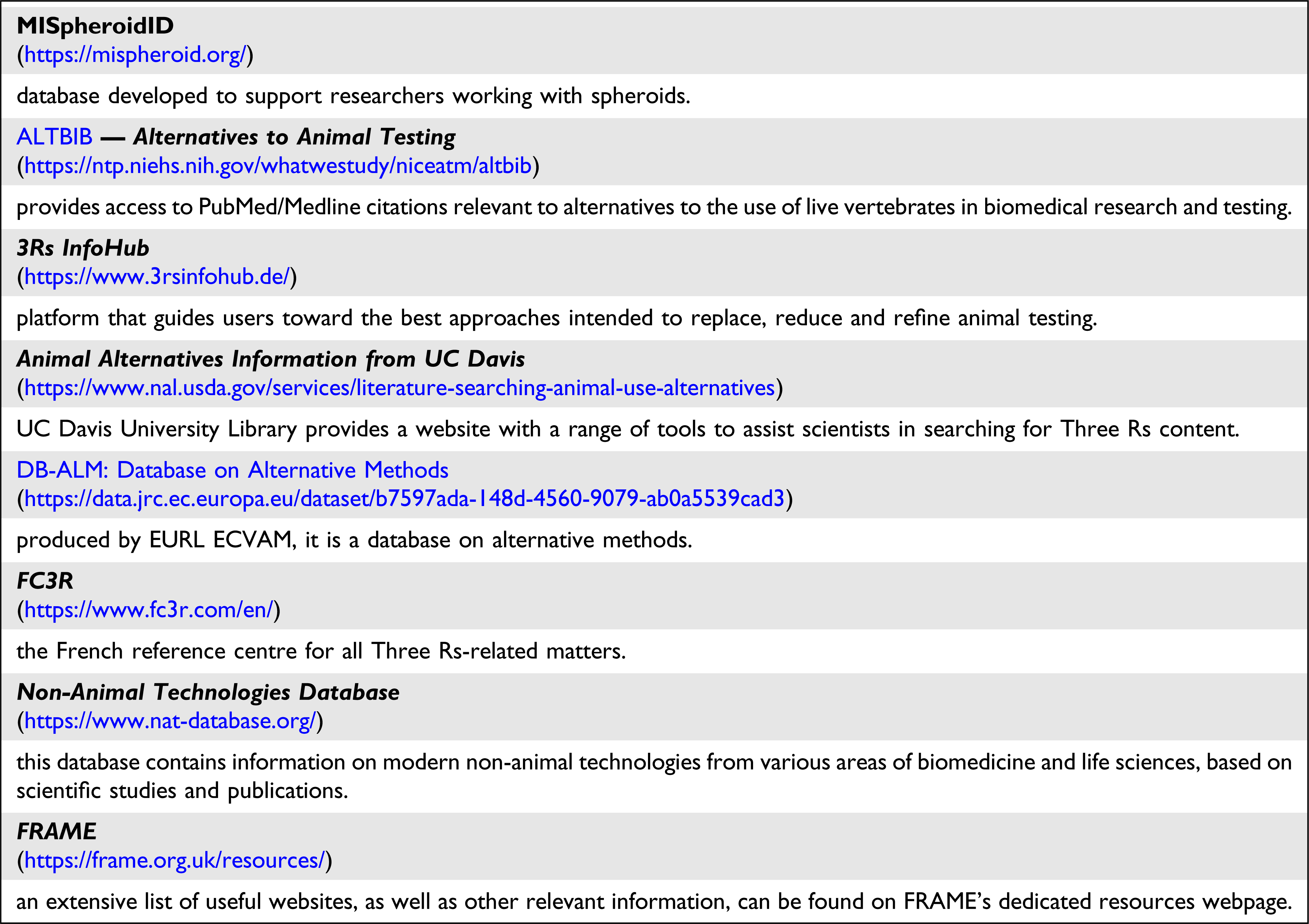
Cell spheroids are widely used across industry and academia, for basic and applied research purposes. However, the methods employed in spheroid-based experiments vary between laboratories, and there are no minimum information guidelines to cope with heterogeneity and encourage transparency. The MISpheroID Consortium was established, in order to address these unmet needs and support researchers working in the field. The group created the MISpheroID knowledgebase by collating 3058 published spheroid-related experiments, covering a range of tissues and organs (e.g. breast, liver, ovary, brain).1,2 An in-depth analysis of the studies in the database revealed heterogeneity in the methods employed and reporting deficiencies, which affect reproducibility and comparison of the results. To facilitate interpretation, stimulate transparency and increase awareness, the Consortium recommends the introduction of the MISpheroID tool, which generates a spheroid ID string consisting of a minimum set of experimental parameters required to report spheroid research. The parameters that make up the ID string are: cell type (one or multiple cell types, i.e. coculture, included in one spheroid); culture medium (the environment in which spheroids are formed and cultured); spheroid formation method (i.e. liquid overlay, e.g. ULA plates, hanging drop, spinner flask, microfluids, etc.); and size (the diameter ± standard deviation at the moment of application). The MISpheroID string does not reflect the quality of the experiments, or impose a specific methodology, but it improves spheroid research transparency and experimental design.
Thus, MISpheroID is a unique open-access resource that facilitates systematic reporting on essential spheroid methodology with the aim to increase consistency and awareness in both academic and industrial research environments. Researchers can freely consult this database and contribute by sharing experimental data of their own spheroid experiments, hereby increasing transparency in the spheroid research field.1
References
1. Peirsman A, Blondeel E, Ahmed T, et al. MISpheroID: A knowledgebase and transparency tool for minimum information in spheroid identity. Nat Methods 2021; 18: 1294–1303.
2. MISpheroidID Consortium. MISpheroidID, https://mispheroid.org/ (accessed 30 May 2024).
ALTBIB — alternatives to animal testing
ALTBIB — the Bibliography on Alternatives to the Use of Live Vertebrates in Biomedical Research and Testing — was developed by the National Library of Medicine (NLM) to provide access to PubMed citations for users seeking information on alternatives to animal testing.1 The development of alternative methods is an active area of research, and the ALTBIB search tool provides users with access, via PubMed, to the latest research on in vitro and computational methods to predict toxicity, as well as approaches to refining animal use for studies that still require animals. ALTBIB also provides links to additional resources on alternative methods research and acceptance.
Reference
1. National Library of Medicine. ALTBIB — Alternatives to animal testing, https://ntp.niehs.nih.gov/whatwestudy/niceatm/altbib (accessed 29 May 2024).
3Rs InfoHub
The 3Rs InfoHub aims to make the best Three Rs methods readily available to students and scientists.1 It guides users toward approaches intended to replace, reduce or refine animal use in a variety of areas, including studies on the kidney, liver, lung, nervous system, skin, heart and thyroid gland, as well as in reproductive toxicity and the study of endocrine disruptors. Within each topic, the content is organised according to three levels of knowledge, i.e. elementary, intermediate and advanced. In addition, it includes lessons on a variety of relevant subjects, a podcast on ending animal experiments and a quiz on the Three Rs.
Reference
1. Freie Universität Berlin. 3Rs InfoHub, https://www.3rsinfohub.de/ (accessed 29 May 2024).
Animal alternatives information from UC Davis
The National Agricultural Library’s Animal Welfare Information Center (AWIC)1 provides guidance on building and conducting a literature search for alternative methods. This tool includes instructions for finding alternatives, along with other resources that relate to study planning and reporting guidelines, to assist individuals working with animals in research, testing and teaching. The topics on how to plan and conduct an alternative literature search include: guidance on creating targeted questions; selecting databases and other resources; finding keywords; understanding search syntax tools and when to use them; and how to combine keywords and search syntax to create a productive search string. A checklist that provides an overview of the steps for conducting an alternative literature search can be used to stay on track during the process.
Reference
1. AWIC. Animal alternatives information from UC Davis, https://www.nal.usda.gov/services/literature-searching-animal-use-alternatives (accessed 28 May 2024).
DB-ALM: Database on alternative methods
The DB-ALM1 dataset is a publicly accessible collection of alternative method summaries and protocols. It focuses primarily on methods submitted to EURL ECVAM for validation, as well as others identified in ad hoc reviews of the literature, or as used in specific applications between 2000 and 2019. All method summaries and protocols can be searched in an intuitive web interface, and then retrieved individually. Alternatively, they can also be downloaded completely for flexible perusal on a local PC. Search criteria include topic areas, biological endpoints, experimental systems, etc.
Reference
1. JRC. EURL ECVAM dataset on alternative methods to animal experimentation (DB-ALM), https://data.jrc.ec.europa.eu/dataset/b7597ada-148d-4560-9079-ab0a5539cad3#dataaccess (accessed 23 March 2024).
FC3R
The FC3R, the French centre for the Three Rs, aims to support responsible use of animals for scientific research and to promote alternative and innovative methods.1 It was founded in 2021 by a group of major public research operators at the request of the Ministry of Higher Education and Research, and it aims to become the reference centre and contact point in France and Europe for all issues relating to the Three Rs in public and private research. Its activities include national funding schemes and awards, a ‘short notes’ platform for disseminating unpublished positive or negative results, and free webinars. In addition, the FC3R website lists training opportunities from French and European research organisations, universities and training centres.
Reference
1. FC3R. Homepage, https://www.fc3r.com/en/ (accessed 25 June 2024).