







Abstract
Risk decision-making has evolved from a vernacular focused on risk assessment and management to fully integrated approaches designed to inform risk acumen. Consequently, there has been a renewed interest, particularly in areas with significant paradigm shifts, to understand the complex nature of the underlying intersections between data, ethics and risk. For example, building more awareness of the risk and ethical implications for applying artificial intelligence for generative (content creation) and agentic (decision-making) purposes or relying on next generation risk assessments grounded in models reflective of the Three Rs principles (i.e. the replacement, reduction and refinement of animal studies). Global thinkers in risk science and analysis have also developed frameworks and models, such as the Projector Model, to show the complex nature of these intersections relevant to public health and regulatory risk decision-making. This Comment article builds on this work by sharing real-life examples from an expert panel discussion, which occurred during the Chief Data & Analytics Officer (CDAO) Canada Public Sector 2025 meeting. These panel members relied on the Projector Model to navigate the discussion in a session titled ‘Data-driven science — Transforming risk assessment and regulation in the public sector’. The examples showed how institutional values and norms serve as foundational elements for risk decision-making, and highlighted that data-driven science, especially that based on novel approaches and technologies, needs careful consideration from an ethical and risk perspective.
Introduction
Risk, by design, is about addressing exposure to health or environmental hazards while dealing with uncertainty (data gaps), and at times requires highly refined, probabilistic assessments.1,2 Risk decision-making has transitioned from frameworks describing the link between risk assessment and management to fully integrated and complex approaches to risk decision-making. 3 With advances in science and technology, recent approaches to risk decision-making now include next generation risk assessments that integrate risk management, population health and non-animal solutions, including new approach methodologies (NAMs).4–6 More recently, there has been a recognition that certain risk assessments require a One Health approach thereby accounting for the risks to human and animal health, and the environment.7–10
Risk decision-making principles.
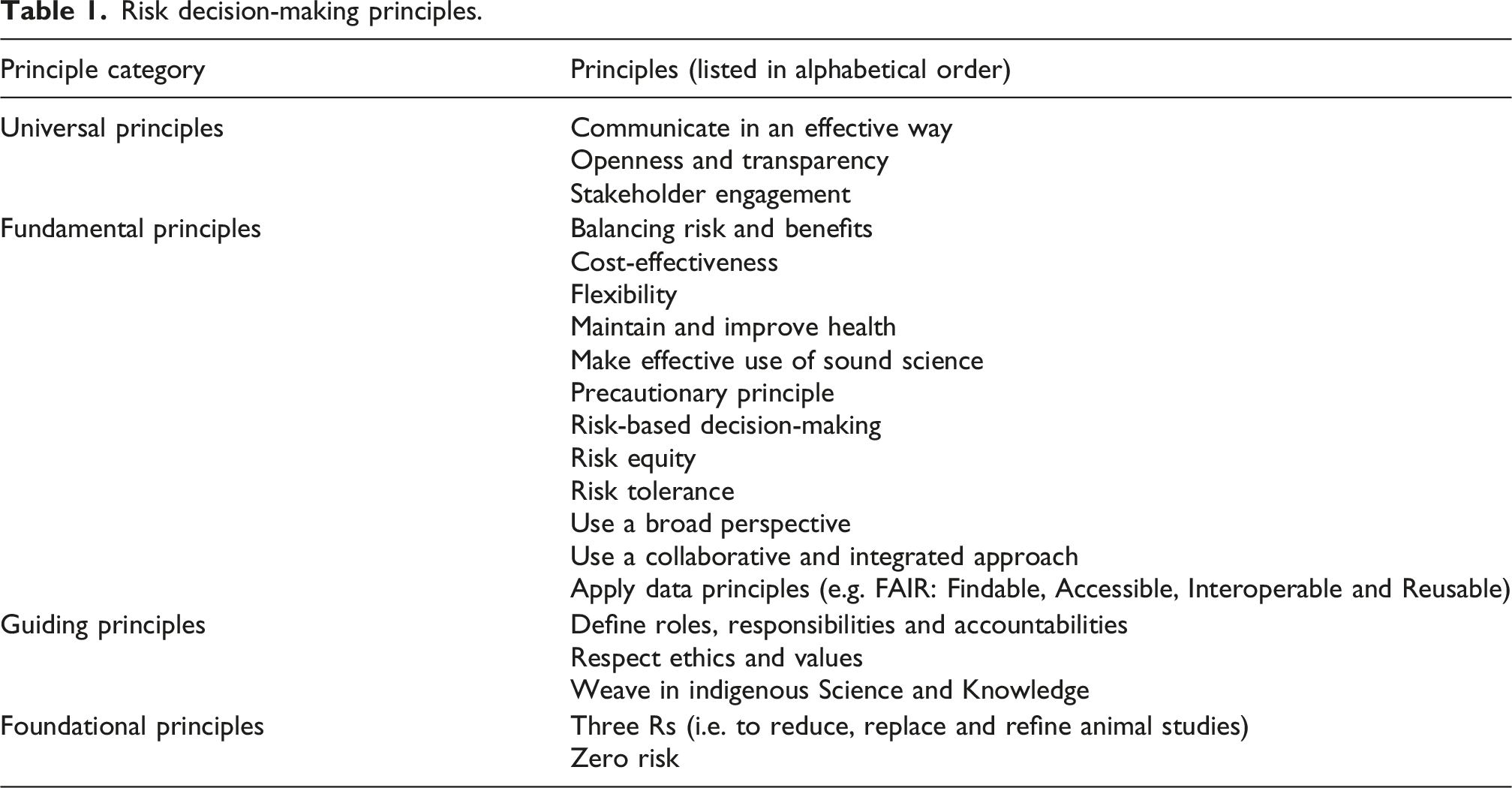
The intersection between risk and ethical principles also presented an interesting dilemma: risk decision-making is identifying the best, evidence-based option, at that time; however, ethics requires the decision-maker to consider what’s right, thereby also incorporating factors such as values (institutional, individual, social and political) and moral norms. An added layer of complexity is knowing what principles — risk, ethical or both — apply to data, especially from novel approaches (e.g. artificial intelligence (AI)-based solutions), needed for regulatory/public health risk decision-making for the broader public sector.
To address this dilemma, leaders from diverse sectors responsible for risk-based decisions, development of science-based policies and technical guidelines and other knowledge transfer tools, further explored the categorisation of risk principles, but from a regulatory risk science, ethical and public health perspective.
The objective of this paper is to describe the Projector Model that was developed and then share examples from a panel discussion that relied on this model to demonstrate the intersectionality between risk and ethical principles. In our current risk decision-making context, these intersections extend to how authorities are relying on data-driven science, where evidence is synthesised from big datasets, novel approaches and technologies, which needs careful consideration from an ethical and risk perspective.
The Projector Model
Decision-making principles for regulatory and public health.
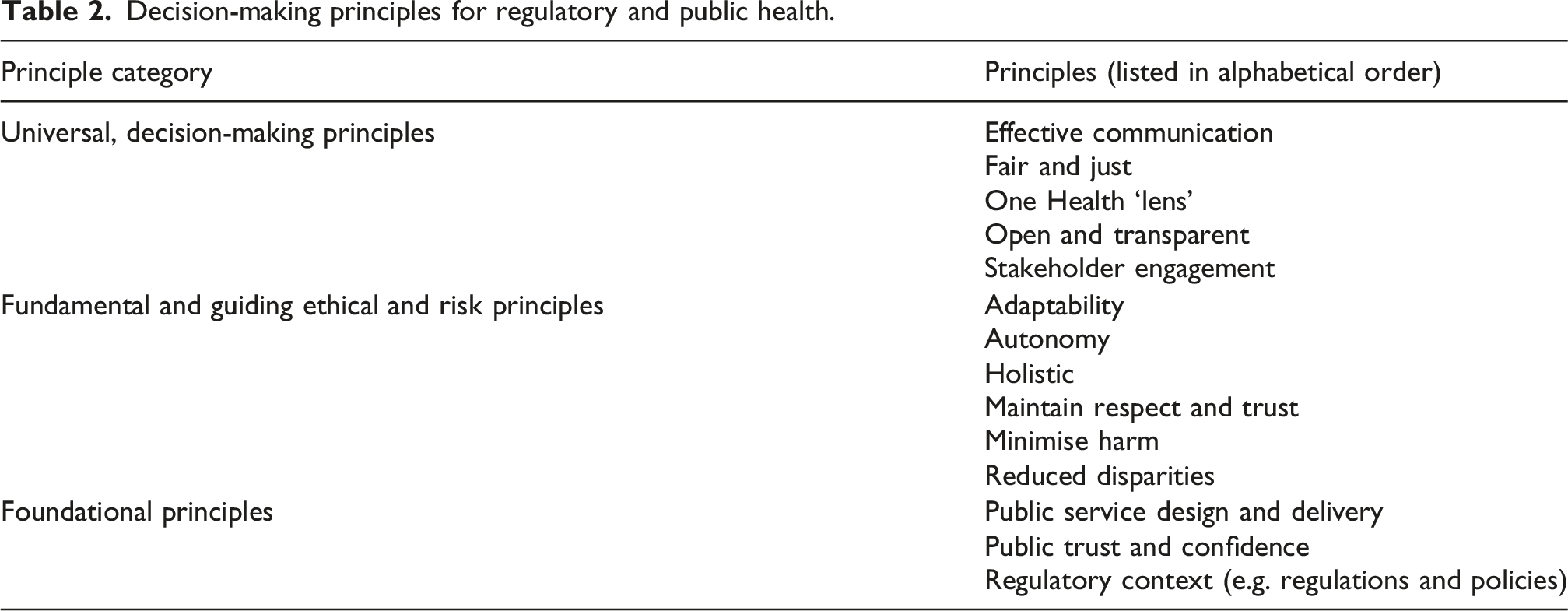
As shown in Figure 1, the Projector Model uses a visual (and metaphorical) projector to illustrate how data (shown as a The Projector Model. The Projector Model helps us to visualise how data and information are subject to ethical, risk and decision-making principles, prior to being transformed into evidence and knowledge for the broader public. The decision-making process also depends on deeply rooted foundational principles, as depicted by the three-legs of the tripod and the corresponding principles. Reprinted from Bhuller et al.
13
Copyright (2025), with permission from Elsevier.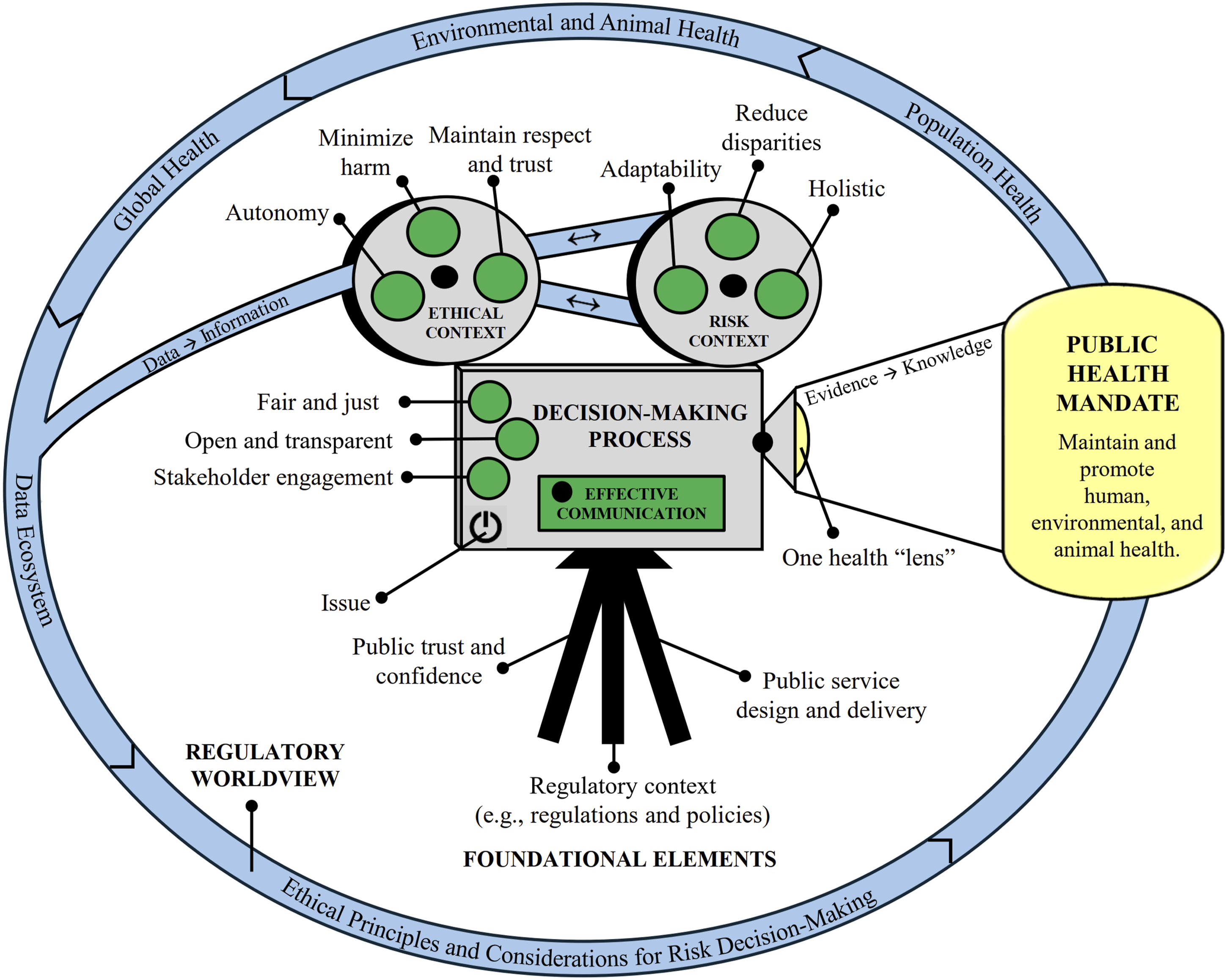
The significance of initially viewing data-information in an ethical context includes the application of underlying data principles such as: FAIR (Findable, Accessible, Interoperable, and Reusable
14
); CARE (Collective benefit, Authority to control, Responsibility, and Ethics
14
); and OCAP® (Ownership, Control, Access, and Possession15,16). The Projector Model’s One Health lens also recognises how important the underlying mandates of public health and regulatory organisations are in promoting and protecting public health, animal wellbeing and the environment. A ‘
The application of the Projector Model and the underlying principles, using real-life examples, formed the basis of a panel discussion at the Chief Data & Analytics Officer (CDAO) Canada Public Sector 2025 meeting. The examples included an emphasis on data-driven science, and how regulatory practitioners are adapting to vast, open and big datasets by using machine learning, advanced computation and other AI-approaches. This Comment article captures the key points from this CDAO panel discussion so that these insights are made available for consideration by the broader scientific community.
The CDAO Canada Public Sector 2025 meeting
CDAO Canada Public Sector meetings bring together Government of Canada and public sector entities engaged in data/AI-related initiatives. Key themes for these meetings include data governance and ethics, AI and innovation, data-driven culture and collaboration. 17
As public sector organisations face growing complexity in health, environmental and regulatory challenges, the use of data is becoming the backbone of smarter, faster and more ethical decision-making. In October 2025, the authors responsible for this Comment article engaged in a panel discussion entitled: Data-driven science — Transforming risk assessment and regulation in the public sector. This expert panel brought together leaders from across government science, policy and data functions, to explore how advanced methodologies are reshaping the future of risk assessment.
The primary author (YB) facilitated the panel discussion comprised of the other co-authors. Each panelist shared their insights, lived experiences and recommendations as it related to the key discussion topics and one or more constructs of the Projector Model. This included real-world applications, the infrastructure needed to support innovation, and how collaboration between scientists, data professionals and policymakers is unlocking a new era of public sector impact. The panel members also addressed questions from the audience. Key discussion topics included: — Real-world use cases of data in regulatory science and risk assessment; — Infrastructure and governance for cross-disciplinary collaboration; — Lessons learned in integrating advanced modelling and analytics; and — The role of public sector leadership in adopting data-driven innovation.
Key messages from the expert panel discussion
This section captures the key remarks from the panel discussion at the 2025 meeting, and highlights questions raised following the discourse. Each of the four sub-sections includes a clear link to the constructs of the Projector Model — data-driven science (
Ethics is not an algorithm
The Canadian Council on Animal Care (CCAC) has a long history of collecting national animal use data for internal use and public dissemination. CCAC’s mission is to ensure that animal-based science in Canada takes place only when necessary, and that the animals in the studies receive the best care according to high quality and research-informed standards. 18
Ethics is a foundational element for CCAC-related initiatives, including the development of appropriate standards and the acceleration of evidence-based reviews through searching, screening, quality-appraisal and synthesis. For evidence-informed standards, the practical application of ethics also plays a significant role in developing high priority guidelines. This correlates well with the Projector Model, as ethics–risk principles are interrelated, and ethical considerations occur throughout the decision-making process.
Fundamentally, ethics will always require human judgement and consensus. Even when an issue starts with considering risk, the overall decision-making process includes ethical considerations. For example, problem formulation will need to consider the types of data and tools, including AI, that are available for decision-making; however, formulating the problem goes beyond the data ecosystem. It involves an intent to better understand the underlying issue by constructing the problem statement through critical analysis and collaboration.19,20 Furthermore, collaborative efforts offer another mechanism by which to consider the different perspectives, as they relate to all the components and principles of the Projector Model. These collaborative efforts typically strengthen decision-making and, by design, are also interconnected. This is visualised in the Projector Model through its circular composition and the use of bidirectional arrows between the ethical context ‘reel’ and risk context ‘reel’. “Ethics is not an algorithm. Data and evidence can inform ethics, but on their own cannot determine what is ethical.” (Panelist 1, 9 October 2025)
This means that data creators, stewards, managers and decision-makers have an accountability and responsibility to take care when applying risk and ethical principles through all phases of data creation, collection, analysis and application. Failure to respect these principles could result in unintentionally misinforming critical decisions and programmes.
Strengthening foundational principles
Both prior to the first enactment and as part of any subsequent amendments of legislative statutes, the Canadian regulatory process requires extensive science, policy and risk analysis, along with careful consideration of the regulatory (historical and contemporary) context. There is also a requirement for extensive public consultation and approvals, using established parliamentary processes. 21 These three principles form the three foundational elements (the ‘tripod’): building and keeping public trust; regulatory context; and confidence and excellence in programme service design and delivery.
Panelist 4 used Vanessa’s Law as an example to show how the three pillars of the tripod intersect when there are political, regulatory and public concerns demanding specific changes to strengthen existing regulatory processes. Enacted in November 2014, the Honorable Member of Parliament, Terence Young, whose daughter Vanessa died from an adverse drug reaction, championed legislative changes to strengthen the Canadian Food and Drugs Act. 22 Today, the Protecting Canadians from Unsafe Drugs Act (Vanessa’s Law) has mandated rules that strengthen the regulation of therapeutic products, which includes natural health products. One of the provisions of the Act is to improve the reporting of adverse reactions by healthcare institutions. 23 Collectively, the additional changes and updated legal requirements also addressed previous vulnerabilities in Health Canada’s ability to collect post-market safety information and take appropriate action when a serious health risk was identified.
Limitations or gaps in foundational principles, such as ossified legislative statutes, 24 also create significant barriers to advancing novel approaches to data-driven science. This can extend to reduced trust in entities responsible for decisions. The public demand for political and regulatory transition toward non-animal solutions, reflective of the Three Rs principles (replacement, reduction and refinement of animal studies), is a good example of where data requirements enshrined in laws and regulations are a key obstacle to the adaption of these approaches.25–30 Another example is reconciliation and building a future that weaves Indigenous Science and Knowledge into the decision-making process, thereby accounting for the structural determinants and the impact of colonisation. 31 Legislative frameworks supporting SMART regulations 32 enable authorities to use a full complement of regulatory tools available for decision-making. 33 Consequently, incorporating data-principles, such as OCAP and others relevant to the regulatory context, can occur through policy or guidance. This provides greater flexibility, as the processes for setting up or updating policies and guidelines are more adaptable than the processes required for enacting or amending statutes.
Data innovation and collaboration
Strengthening foundational principles extends to mechanisms that link the legislative design (vision) with practicable and tangible outputs, including modernised regulatory frameworks, processes, policies and guidance documents. “Using the Projector Model, the decision-making in the therapeutic area is driven through collaboration and engagement with stakeholders, including trialists, such as me, who look at ways to be nimble and flexible, while ensuring safety and improving efficiency. My current role as Health Canada’s Science Advisor provides an additional opportunity to create a bridge between research and regulatory science.” (Panelist 3, 9 October 2025)
Fl data innovation in regulatory processes responsible for the approval and oversight of human clinical trials includes further modernisation efforts to account for the current regulatory context and worldview. Changes to the Canadian clinical trials framework, allowing further inclusion of sex and gender-based analysis plus demographics for clinical trial applications submitted to Health Canada, is one example. 34 Trialists who wear multiple hats can also go beyond the regulatory worldview, by relying on other elements of the Projector Model, such as taking a view through the One Health ‘lens’. For example, in clinical practice, healthcare practitioners can consider ‘green’ oncology, whereby treatment options not only consider human safety and efficacy, but also draw on knowledge of the product’s development — particularly with regard to the effective consideration of animal welfare through the use of non-animal solutions, as well as the implementation of measures designed to reduce the environmental footprint. 35
Modernisation efforts designed to strengthen existing regulatory processes by using data innovation, will need to account for principles such as equity and being fair and just. For example, processes supporting Open Science and Data Platforms (OSDPs) enable knowledge mobilisation, sharing and transfer, to support a better understanding of how data are used to inform risk decision-making. The Natural Resources Canada (NRCan) and Environment Climate Change Canada’s Open Science and Data Platform is an interdisciplinary and collaborative space which is designed to support a better understanding of cumulative effects. This domain hosts research papers, datasets and curated content collections (e.g. species of risk) for interested parties,
36
and is similar to the Projector Model in that it integrates ethical principles into regulatory risk decision-making in a ‘holistic’ way. “The OSDP supports evidence-based decision-making on (major) development projects through aggregating authoritative data that is based on interdisciplinary research and cross-disciplinary collaboration among Federal, Provincial and Territorial content providers — spanning values for economy, health, climate environment, society and culture. This provides a regional or ‘holistic’ view of each proposed project’s context. The platform’s geospatial tools allow users to layer data — such as project locations, species at risk and Indigenous communities — to provide a regional picture of the complex interconnectivity of cumulative effects. In reference to the Projector Model, this OSDP aims to maintain an open source of information that supports a fair and transparent regulatory regime in Canada.” (Panelist 5, 9 October 2025)
The importance of creating such processes and platforms will continue to require strong engagement with all interested and affected parties and stakeholders, and through open and transparent strategies. Measuring performance of any changes made to existing processes (or the creation of new approaches) will also be important. Collectively, use of the underlying principles can help navigate such environments toward successful data innovation, incorporation, communication and modernisation of regulatory processes.
Data-driven science and gold standards
In the paper describing the Project Model, these authors include a section on the “ethics regarding the best available science”.
13
For decades, animal biology has been required to serve as the ‘gold standard’ for human biology; however, advances in science and technology, such as 21st century animal-free NAMs — e.g. organs-on-chips, engineered human tissue, computational models and AI — now allow the study of human biology in exquisite detail.37,38 “A single cell can yield thousands of data points, and that means tens of millions across the biological hierarchy from genes to organism level; however, what happens when science evolves faster than the ability for systems to respond?” (Panelist 2, 9 October 2025)
Nowhere is this more visible than in the continued reliance on animal models to predict human health outcomes. On one hand, subjecting sentient animals to highly invasive, unbearably painful experiments is unethical — especially when the predictive value of non-animal solutions is demonstrated to be more human-relevant.
25
On the other hand, using emerging technologies that have not yet been fully validated for a particular context of use carries regulatory risk. However, the data-information space of the Projector Model, in our current context, is ‘data rich’ for several chemistries. This supports the development of regulatory pathways and approaches focused on how to better integrate all available information, which includes new science and technologies aligned with the Three Rs principles (i.e. the replacement, reduction and refinement of animal studies) and the incorporation of AI.39–41 In some cases, such as in the Rethinking Chronic toxicity and carcinogenicity Assessment for Agrochemicals Project (ReCAAP), there is a movement toward the specific principle of replacing animal studies. The ReCAAP reporting framework uses a weight-of-evidence (WoE) approach to support chronic toxicity and carcinogenicity study waiver rationales. The WoE approach relies on relevant and existing information on use-pattern(s), exposure scenario(s), pesticidal mode-of-action, physicochemical properties, metabolism, toxicokinetics, toxicological data (including mechanistic data), and chemical read-across from similar registered pesticides, thereby not requiring any additional animal studies.
42
“Not using technologies, when they could better predict human outcomes, is unethical. The availability of non-animal solutions and now AI demonstrates the complex interplay and intersection of science, ethics, risk and decision-making. And this is precisely why the Projector Model resonates today. It reflects exactly the balance between science, ethics and public accountability. It reminds us that we must move from a purely technical exercise to a value-conscious process.” (Panelist 3, 9 October 2025)
It has been over 60 years since the publication of The Principles of Humane Experimental Technique, by William Russell and Rex Burch, and there are now reports on the lessons learned and the path forward on the Three Rs.41,43 Regulatory experience now shows how it could take decades to evaluate risks by using legacy animal tests and non-AI approaches. Consequently, there continues to be an urgency for addressing potential risk concerns for several chemistries, including those that are already in commerce, most with little or no toxicology data. Furthermore, with advancing science and technology, there is a paradigm shift toward solutions based on the best available science that are also more humane and human relevant. By design, this requires the application of risk and ethical principles and considerations, which must be embedded into data pipelines from the start — if we want to minimise harm on all accounts.
Concluding remarks: Human intelligence (HI) before AI
The expert panel discussion at the CDAO Canada Public Sector 2025 meeting provided additional, real-world cases of data-use in regulatory science and risk assessment, that further supplemented the previous examples noted by the authors responsible for developing the Projector Model. The panel discussions also highlighted the importance of infrastructure and governance for cross-disciplinary collaboration, lessons learned in integrating advanced modelling and analytics (e.g. the impact on existing gold standards), and the role of public sector leadership in adopting data-driven innovation.
A recent publication on the Human Exposome Project also refers to the Projector Model and the underlying principles. These authors further note that “…justice in AI-enabled exposomics requires inclusive governance over both data collection as well as model development and interpretation, ensuring that affected communities and diverse stakeholders have a meaningful role”. 44 These ‘safeguards’ are well-aligned with the key messages identified in the October 2025 CDAO panel discussion.
In terms of the application of risk and ethical principles to AI, Panelist 5 noted how values and ethics considerations must continue to be foundational elements for risk decision-making, supporting all procedural elements sitting atop the Projector Model’s tripod as part of the decision-making process. Furthermore, core concepts of values and ethics for public servants should be used to balance opportunities and challenges by weighing AI’s potential against risks like bias, privacy and unintended consequences. Emphasising the need for accountability must also continue throughout the creation, adoption and implementation of new tools and approaches into decision-making, which includes weaving in Indigenous Science and Knowledge and underlying data principles (e.g. OCAP).
In our current context, transformatory changes require — more so than ever — the application of ethical and risk principles. As public servants, there is an additional layer of responsibility, namely: To continue to strengthen the collective human intelligence (HI) and our understanding of how values and ethics shape transparency, accountability and our responsibilities, when relying upon alternative, non-animal solutions and, more recently, AI. This responsibility extends to the next generation of young aspiring scientists and leaders, who are amidst this fourth industrial revolution. So, this conversation on the importance of risk and ethical principles must continue through a One Health lens, as it is important for all of us, our animals and our environment. We trust that the publication of this paper and further discourse, through collaborative and inclusive dialogue, 45 will continue to provide opportunities for further engagement with the broader scientific community.
Summary
The key take-home points from this Comment article can be summarised as follows: 1. Advances in science and technology are creating transformational changes in data-driven science. 2. This has prompted a need to better understand the role of principles in decision-making. 3. The Projector Model shows the intersections between risk and ethical principles. 4. Strengthening foundational elements and collaboration are key to data innovation. 5. Navigating non-animal and AI solutions will rely on ethical and risk principles.
Footnotes
Acknowledgements
Kathleen Vitug, for creating the space for this discussion and in formulating the topic items.
Funding
There was no funding or financial support for the panel discussion, authorship, and/or publication of this article.
Declaration of conflicting interests
The authors declared no potential conflicts of interest with respect to the panel discussion, authorship, and/or publication of this article.
Disclaimer
This article reflects the views of the authors and does not necessarily reflect those of their respective organisations.