







Abstract
Previous studies on Indian education have urged educators to address serious concerns about inequality and inequity in gifted education, and about the assessments for students educated in extremely diverse social and cultural landscapes in India. Although it is believed that appropriate test accommodations ensure valid and meaningful test results, accommodation practices for gifted students are rarely examined worldwide. To narrow this research gap, the present study examined a large-scale provincial literacy assessment in Ontario, Canada, as a test case, to investigate the accommodations used by gifted students and teachers. In particular, we analyzed 3-year assessment data sets to track the patterns of accommodation practices over time. Furthermore, we discussed potential implications for future research and the development of assessments for assessing gifted Indian students while being mindful of diverse cultural and educational landscapes in the context of India.
Introduction
It is imperative to promote equality and equity in education for all learners (Florian, 2008). In particular, equity in education means that all students should be offered equivalent opportunities to learn regardless of their learning characteristics and backgrounds (American Educational Research Association et al., 2014). To provide such support, we argue that a variety of accommodations should be employed for classroom and large-scale assessments for students with diverse backgrounds, ranging from extended time to assistive technology. It is thus critical to conduct the present study on test accommodations for gifted students in order to promote equity and equality in education.
Test accommodations such as extended time and scribe have been used to support students with special needs over the last several decades. Such supports help students bypass the difficulties resulting from their disabilities, without compromising the integrity of a test (Fuchs and Fuchs, 1999). Ultimately, test accommodations are designed and used in order to offer fair and effective assessment adaptations for all students needing accommodations. Test accommodations, if appropriate, can help students demonstrate to their full potential what they know, understand, and can do. They should meet each student’s individual learning needs, regardless of whether they are students with giftedness or disabilities. In other words, accommodations are not exclusive only for students with disabilities, but also for gifted students. Because test accommodations are permitted for gifted students and students with disabilities in Ontario, Canada, the accommodations we studied in this article were also provided to Ontario gifted students.
Studies on the use of test accommodations for gifted students are still sparse worldwide. A variety of test accommodations (e.g. setting, extended time, and scribe) ought to be offered to these students who participate in large-scale assessments, instead of one single type of accommodation (e.g. scribe). For instance, we found that 82.75% of Ontario grade 10 accommodated gifted students in Canada received more than one accommodation while participating in a provincial literacy testing program in 2015 (Ontario Secondary School Literacy Test (OSSLT)). Given the importance of knowing what accommodations were offered by teachers and used by gifted students, far too little attention has been paid to finding out which accommodation practices have been implemented in the general classroom over the years. Consequently, this lack of understanding of current practices has existed as a concern for gifted education. To address this concern, the present study investigated teachers’ and gifted students’ use of test accommodations for literacy over a 3-year period. Tracking the patterns of accommodation practices over time allows us to compare the practices across different years and strengthen our interpretations of the data, thereby solidifying our knowledge and understanding of gifted students’ learning needs in term of accommodations.
Methods
The participants of the current study were gifted students who wrote the English version of the provincial literacy testing program (OSSLT during the academic years of 2013, 2014, and 2015. The literacy test is a mandatory examination for grade 10 Ontario students in Canada in order for them to meet the high school graduation requirement. The provincial testing program in Ontario is developed and administered annually by the Educational Quality and Accountability Office (EQAO). Students included in this study were formally identified by the Identification, Placement, and Review Committee in Ontario (Ontario Ministry of Education, 2009). The students possess “[a]n unusually advanced degree of general intellectual ability that requires differentiated learning experiences of a depth and breadth beyond those normally provided in the regular school program to satisfy the level of educational potential indicated” (Ontario Ministry of Education, 2017, A16). In particular, 1.6% of the students (n = 3419) who took part in the English version of the test in 2013 were officially identified as gifted (N = 208,286). Of all test takers enrolled in the 2014 program (N = 208,369), 1.6% of the students were formally identified as gifted (n = 3278). Similarly, 1.6% of the students were identified as gifted (n = 3285) among all examinees included in this program in 2015 (N = 199,816).
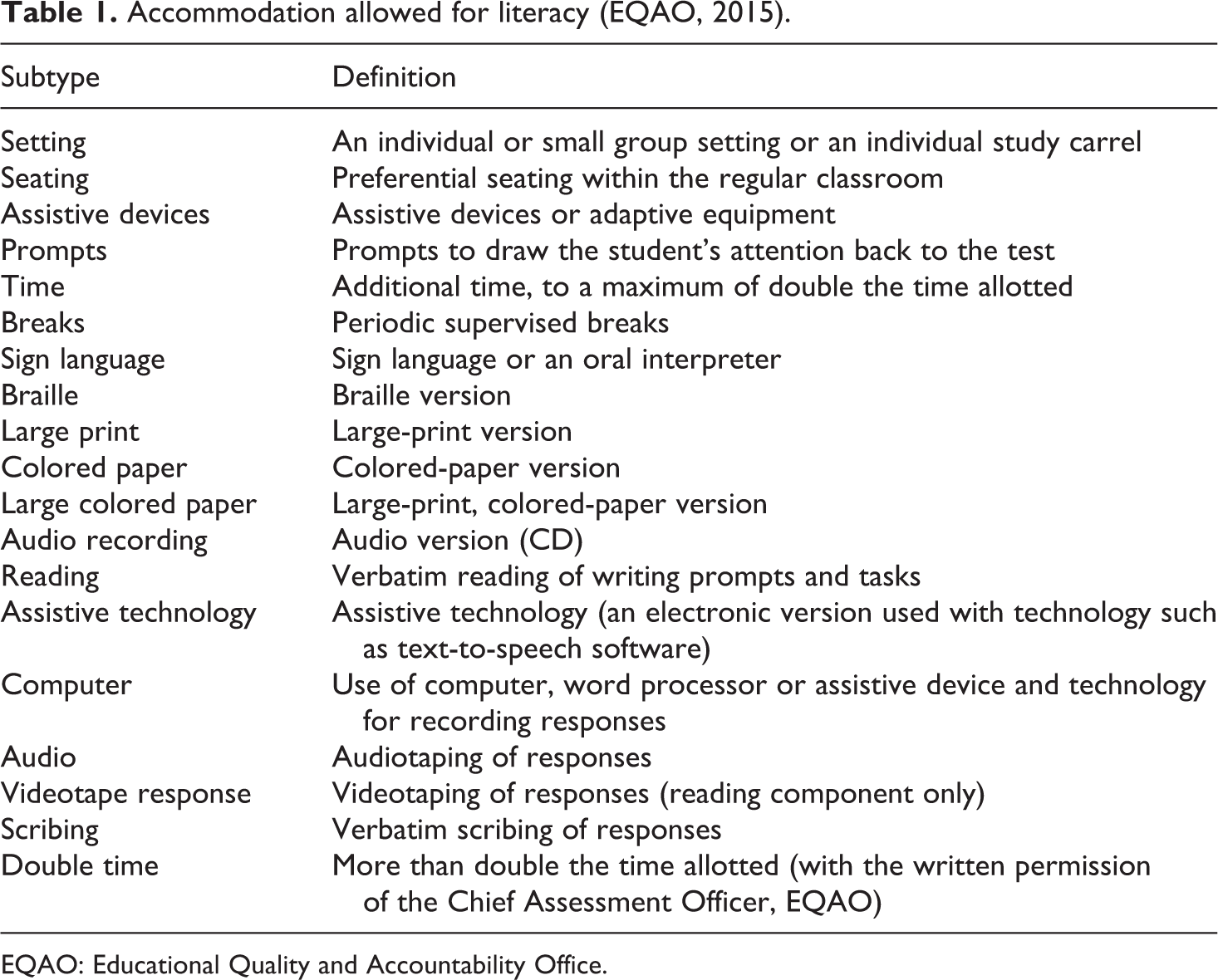
A complete list of allowed accommodations are listed in Table 1. The types of accommodations are identical across the 3 years. For each year, every single type of accommodation was coded based on the list. The combinations of accommodations were then coded separately for each examinee. Each accommodated test taker received only one package that consisted of a single type of accommodation (e.g. extended time) or a specific combination of accommodations (e.g. extended time, setting, and scribe). The entire data coding was conducted using the SPSS software (IBM Corp., 2013). All analyses were also reviewed and checked by the second author to ensure all codes were accurate. A variety of packages used by gifted test takers are found in our data sets: 73 packages for 2013, 78 packages for 2014, and 71 packages for 2015.
Accommodation allowed for literacy (EQAO, 2015).
EQAO: Educational Quality and Accountability Office.
Furthermore, we applied a statistical method, polyserial correlation, to analyze the relationship between the number of subtypes in each accommodation package and students’ literacy outcomes within the three literacy data sets. This method is appropriate for examining the association between an ordinal variable (number of subtypes) and a continuous variable (literacy scores) (Fernandez and Moldogaziev, 2013).
Results
Our results show that a majority of accommodated gifted students in grade 10 received more than one accommodation for the provincial literacy test. More specifically, 79.23%, 84.22%, and 82.75% of gifted students used multiple accommodations for the years 2013, 2014, and 2015, respectively. We also found that teachers mostly offered packages that contain multiple accommodations instead of a single accommodation package for their gifted students. In particular, approximately 94.8% of the packages offered by teachers consisted of more than one accommodation in 2014; similar statistics were also found in 2013 and 2015 (91.78% and 91.55%, respectively).
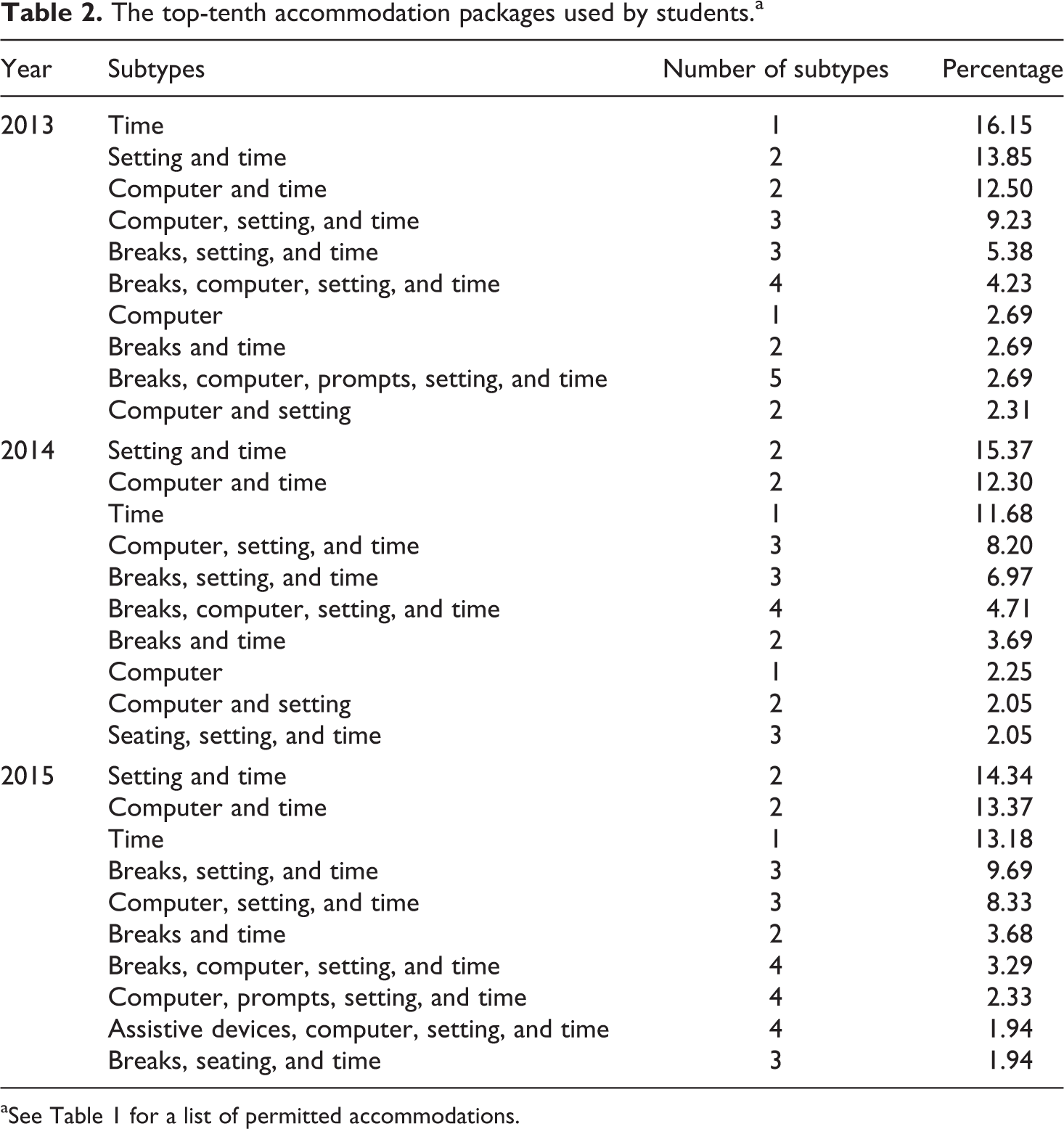
We also observed a consistent pattern across three consecutive years: approximately half of the accommodation packages were used by only one gifted student (47.95%, 51.28%, and 52.11%, respectively). In addition, a majority of packages were offered to fewer than 10 gifted students (84.93%, 89.74%, and 88.73%, respectively). This result suggests that teachers provided individualized accommodations for their gifted students. In spite of such individualized support, some packages are more popular and were used by a larger number of gifted students. To investigate the most frequently used packages for gifted students, we created a list that includes the packages in the top-tenth of the frequency distribution for three consecutive years (see Table 2). Interestingly, we found that the following packages were on the top 10 list: (a) extended time; (b) setting and extended time; (c) computer and extended time; (d) computer, setting, and extended time; (e) breaks and extended time; (f) breaks, setting, and extended time; and (g) breaks, computer, setting, and extended time. Further to our analysis, we also found that extended time, setting, computer, and periodic breaks were the subtypes of accommodations frequently offered to gifted students.
The top-tenth accommodation packages used by students.a
aSee Table 1 for a list of permitted accommodations.
To further investigate the use of accommodations across the years, the number of subtypes in each package used by students and offered by teachers was compared (Figures 1 to 3). Surprisingly, students used up to nine subtypes of accommodations for the provincial literacy test. A 2014 package included assistive devices, breaks, a computer, prompts, verbatim reading of writing prompts and tasks, scribe, preferential seating, setting, and extended time. Overall, a high degree of consistency was found among students’ use of accommodations over the 3 years. More students received two subtypes of accommodations (e.g., setting and extended time; computer and extended time) than used other combinations (34.42%, 36.68%, and 33.33%, respectively). With respect to teachers’ assessment practices, we also found a rather consistent pattern showing that teachers were more in favor of three to four subtypes of accommodations for their gifted students (42.47%, 47.44%, and 43.66%, respectively). In general, these results suggest that teachers tended to provide more subtypes of accommodations for gifted students over the years.
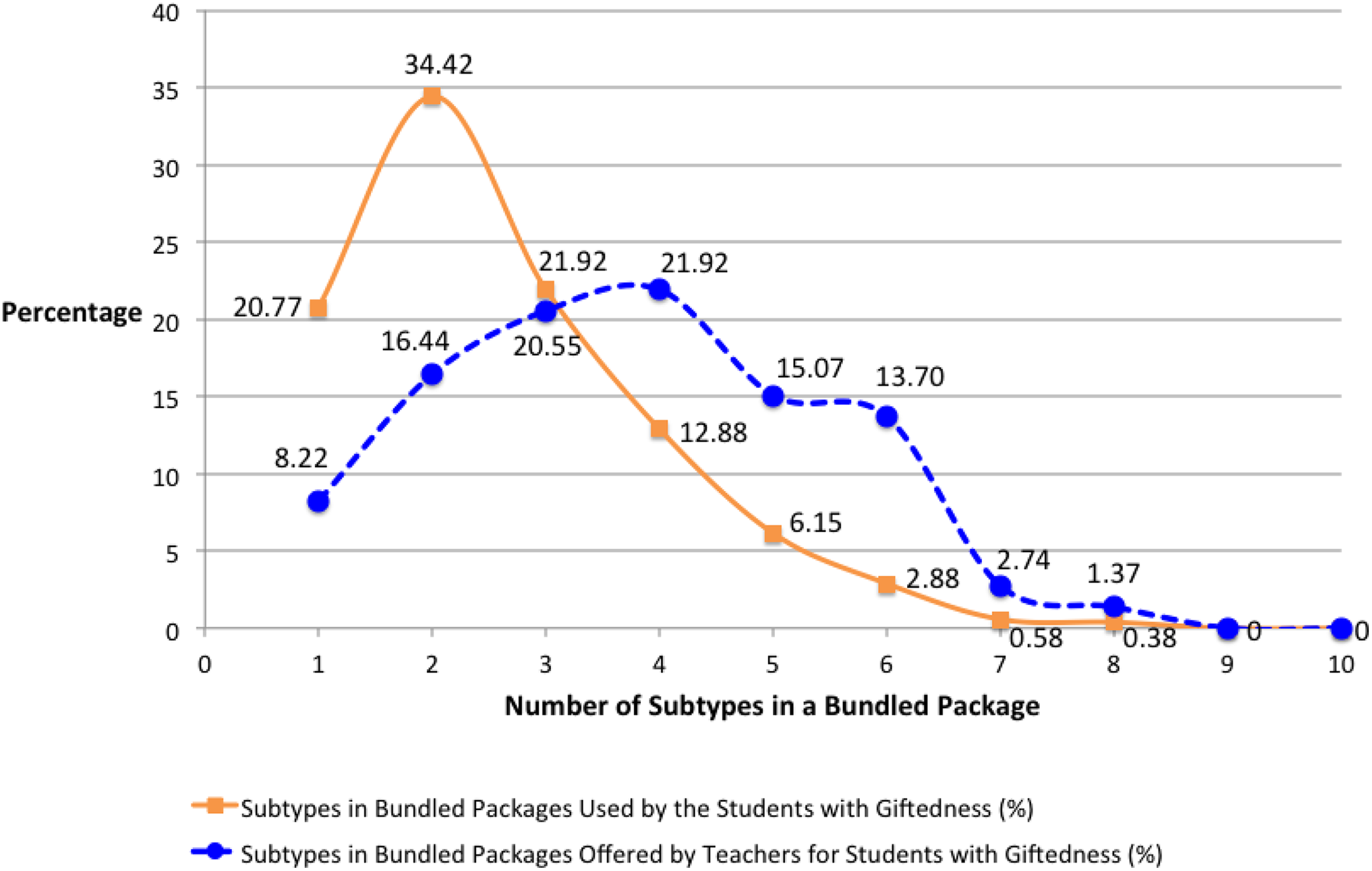
Number of accommodation subtypes used by students and teachers in 2013.
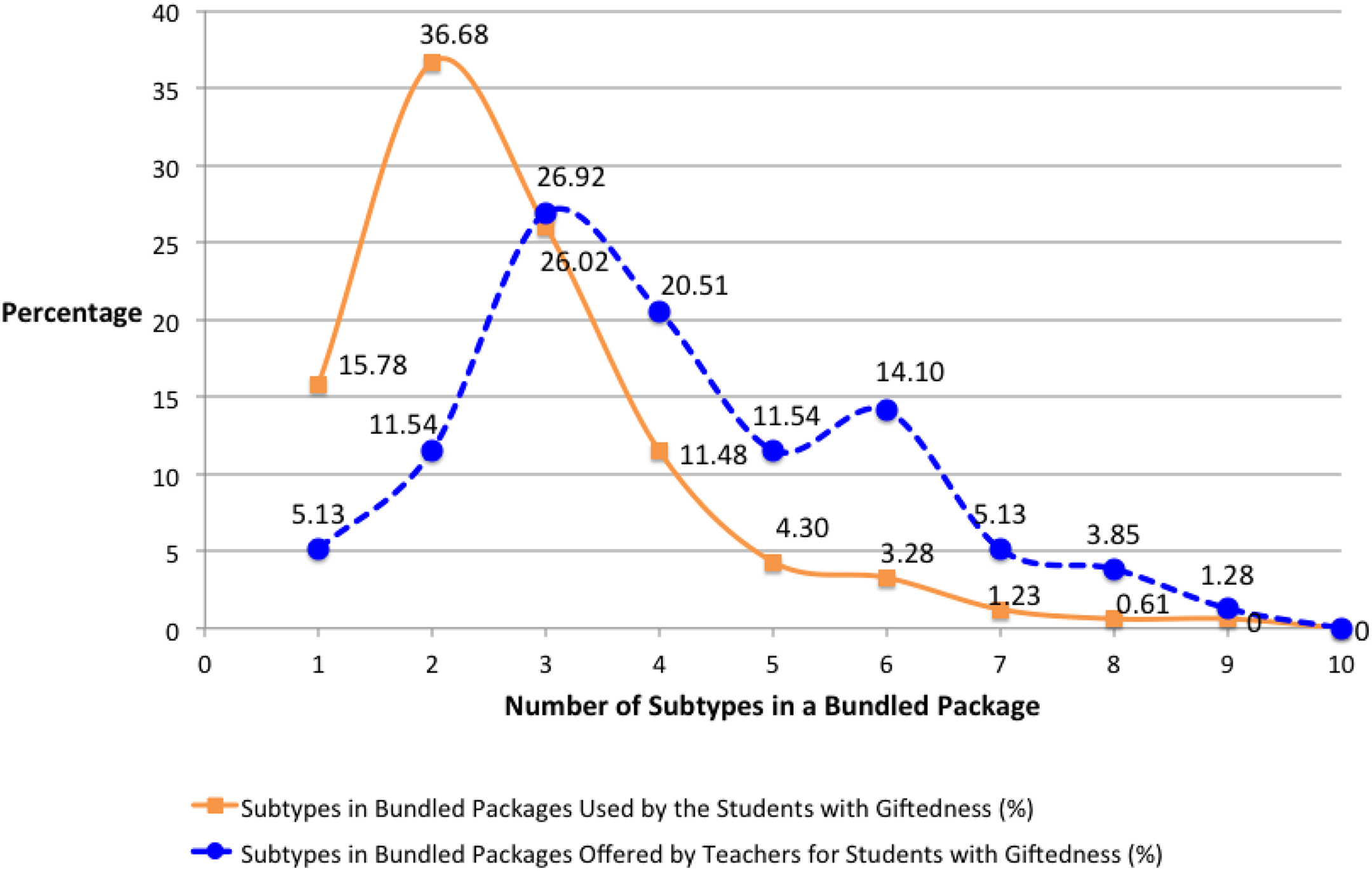
Number of accommodation subtypes used by students and teachers in 2014.
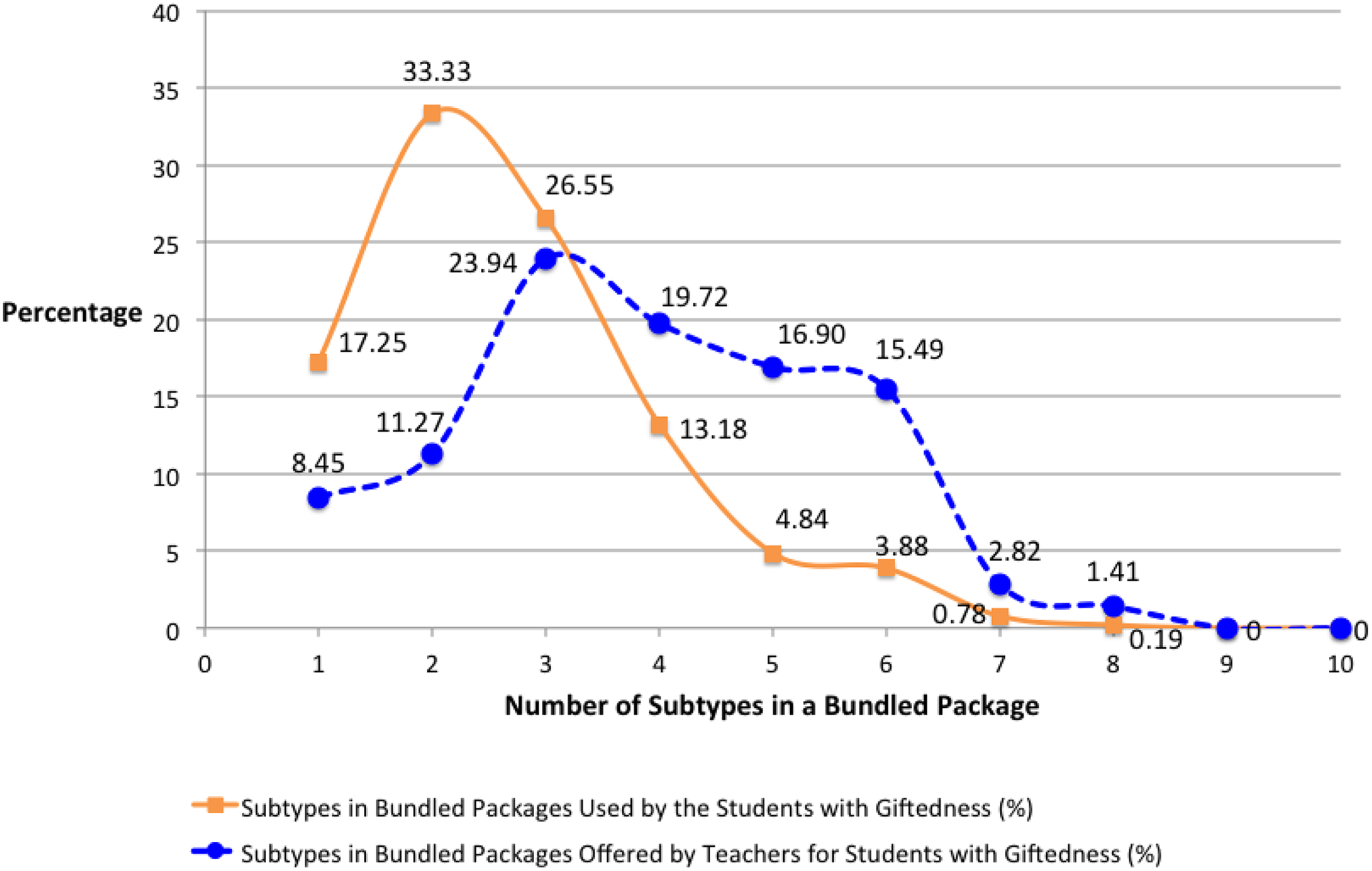
Number of accommodation subtypes used by students and teachers in 2015.
Furthermore, we found significant negative correlations between the number of subtypes in each package and literacy performance in the 3-year data sets. It is worth noting that the magnitudes of relationships were small (r = −0.14, p < 0.01 for 2013; r = −0.18, p < 0.001 for 2014; r = −0.14, p < 0.01 for 2015).
Discussion and conclusion
It has been suggested that accommodations that are documented in a student’s individual education plan (IEP) should be compatible with those provided for instruction, classroom, and large-scale assessments (Cook et al., 2010). Thus, understanding and employing current accommodation practices is an important characteristic of successful student learning and quality teaching in inclusive education. To gain a better understanding of how accommodations were used by students and teachers, the present study investigated the accommodation packages offered to gifted students who participated in an annual provincial literacy test over three consecutive years from 2013 to 2015. Our data are representative of gifted student populations because our 3-year data sets consist of three large cohorts of Ontario gifted students who wrote the mandatory literacy assessment (OSSLT). As mentioned above, accommodations for large-scale assessments ideally should be aligned with those for teaching, learning, and classroom assessments; our findings in this study can inform educators, school administrators, policy makers, and assessment developers about what has been enacted in gifted education and assessments.
We found that a majority of accommodated gifted students used at least two accommodations for literacy; a high percentage of packages provided by teachers included more than one accommodation. These results corroborate the idea of Elliott, Kratochwill and McKevitt (2001), who argued the need for studying combinations of accommodations, rather than overemphasizing one specific type of accommodation. Over the decades, it has been common for studies to examine a major type of accommodation such as extended time and read aloud (Sireci et al., 2005). The findings of the present study better reflect the reality of current assessment practices in gifted education.
Our findings suggest that a considerable number of accommodation packages were used by only one gifted student. The data should be interpreted with caution because it doesn’t imply that these accommodations were not really needed. Instead, it suggests that teachers offered them based on the individual special needs of a student. This assessment practice is consistent with the best principle for providing accommodations to students with special needs (National Research Council, 2004).
Interestingly, our results produced from the 3-year data show that the number of accommodations in each package was negatively correlated with literacy performance at a statistical significance level given that the magnitudes of relationship were small. As we found that teachers offered up to nine different accommodations to gifted students, this finding has important implications for gifted education and assessment. Our results suggest that accommodated students’ literacy performance decreased as more accommodations were offered to gifted students. This finding supports previous research indicating that unnecessary accommodations may distract or confuse the students and their performances may be subsequently compromised by superfluous accommodations (Ketterlin-Geller et al., 2007).
We acknowledge that there is a possibility that some students’ dual exceptionality may remain unrecognized (e.g. giftedness and learning disabilities); however, none of the gifted students with dual or multiple exceptionalities were included in the study. In other words, the participants were officially identified as gifted only. As the provincial literacy assessment examined in the present study is a mandatory test for Ontario grade 10 students to meet the graduation requirements of high school, the current study includes representative populations of gifted students in Ontario, instead of small samples. Generally speaking, the purposes of using the accommodations identified on our top 10 list vary from one to another (National Research Council, 2004). Timing accommodations such as extended time and periodic supervised breaks are one of the major categories that allow students to have more time to complete an assessment. Setting accommodations, including an alternate testing location, preferential seating, individual or small group administration, assistive devices or adaptive equipment (e.g. special lighting), and prompting an off-task student, are provided to students so that they can complete a test in a less distracting environment. Moreover, the use of a computer or word processor aids a student who has significant difficulties with mechanics of handwriting to respond to questions. It is worth noting that teachers of students with special needs or the school-based teams developing individual students’ IEPs often made decisions on accommodations (Fuchs and Fuchs, 1999). That is, accommodation decisions are made at the local school level. Due to the nature of a large-scale assessment, it is not possible to identify specific reasons why accommodations were needed and offered for each student. None of the existing reports offers answers to why a gifted student received certain accommodations. Given that it is outside the scope of the present study, further investigation into schools’ decisions on accommodations is recommended for future research.
More research on this area is needed to clearly understand the association between accommodations and literacy outcomes. In particular, we suggest that research is needed in the area of assessing the effectiveness of accommodations for gifted students. This is a neglected area of research. Future work is required to explore how effective the accommodations are for this student population. Evaluations should be undertaken to measure the magnitude of the effectiveness of both specific and multiple accommodations. The findings of these evaluations will enhance our understanding of how effective and equitable the current assessment policies and practices are. Further analyses that examine the interactive effects among learning characteristics of giftedness, multiple accommodations, and academic outcomes are recommended. These are the aspects of gifted education that require further attention if a fuller understanding is to occur.
Implications for diverse contexts in India
Achieving equivalency has been a long-standing issue for countries such as India. A number of factors have been identified by previous studies conducted in the context of India, such as limited or no access to schooling, lack of qualified teachers, adequate teacher education for multigrade schooling, substantial differences in curricula, medium of instruction (e.g. English and Hindi medium), infrastructure facilities, instruction time, and student attendance—especially for schools in rural areas (Deo and Pawar, 2011; Kurup and Maithreyi, 2012). Moreover, access to educational systems has been highly selective in nature as the caste system is deeply rooted in the entire social and educational structure that comprises distinct social classes. Though students are entitled to receive formal education up to the age of 14 in India, students of lower castes are generally underprivileged due to various pressing constraints such as limited learning opportunities offered by schools, parental beliefs and attitudes toward children’s education, and socioeconomic status (Deo and Pawar, 2011). For instance, more than half of the students affiliated with marginalized groups such as those in the Scheduled Castes withdrew before class 5 in India (Reddy and Reddy, 2009). Due to the diversity and wide variation in educational systems within the Indian context, 95% of Indian youth do not have fair opportunities for national tests such as National Talent Search, or Olympiads for math and science (Deo and Pawar, 2011; Kurup and Maithreyi, 2012).
Canada, a well-known multicultural country, has attracted numerous immigrants from around the world. According to the National Household Survey of 2011, approximately 121,400 Canadian immigrants (10.4%) came from India, a country which is one of the top three sources of immigrants. One of the largest school boards in the province of Ontario, the Toronto District School Board (TDSB), reported that about a quarter of immigrant students came from over 190 countries, and India is one of the top source countries (Toronto District School Board, 2017). Though the findings of the present study may not be completely generalizable to the diverse contexts of India, our study on the mandatory provincial literacy test for all gifted students in Ontario does provide some innovative insights into this new research territory of gifted education in India and worldwide. Moreover, Indian researchers such as Kurup and Maithreyi (2012) have conceded that most of the assessment instruments for identifying potential gifted students in India are outdated and should be revisited and revised. We’d point out that students’ test performances may be compromised if appropriate accommodations are not provided (American Educational Research Association et al., 2014; Helwig and Tindal, 2003; National Research Council, 2004). Assessment policies on accommodations clearly need to be developed so that they can be applied when the assessment instruments in India are updated.
It is important to acknowledge that social structure and educational landscapes are extremely diverse in the context of India; thus, the accommodation practices and policies should be adapted to meet the learning needs of students in local schools and communities. With this in mind, the findings of the current study will serve as a base for future studies and the further development of gifted education and assessments. Since the use of accommodations by gifted students and teachers has only rarely been studied in previous research, the empirical findings from our 3-year data in this study should provide a new understanding of these students’ learning and assessment needs. Understanding and identifying these unique learning needs is essential for promoting equity and equality in education as well as nurturing young talented minds.
Footnotes
Acknowledgment
We are very grateful to the Education Quality and Accountability Office in Ontario, Canada, for giving us permission to use the data.
Declaration of Conflicting Interests
The author(s) declared no potential conflicts of interest with respect to the research, authorship, and/or publication of this article.
Funding
The author(s) disclosed receipt of the following financial support for the research, authorship, and/or publication of this article: This research was supported by the Social Sciences and Humanities Research Council of Canada.