







Abstract
COVID-19 began to spread all over the world in the Spring of 2020. All schools, including the institutions serving students with special needs, were closed to decrease the spread of the virus. The schools had to shift to online education, which was a new experience for most students. In addition to the negative effects of the pandemic itself, the new learning format required extra effort from students. Gifted and talented students as a special group with special educational and socio-emotional needs may have experienced the pandemic differently. In the present study, we aimed to explore gifted and talented students’ subjective well-being, feelings of hope, and stress coping strategies with a quantitative method. In addition, we used a qualitative method and asked a few open-ended questions to dig deeper into these students’ experiences during the pandemic. We found a statistically significant correlation among subjective well-being, hope, and stress coping strategies. Effective stress coping strategies are used more frequently than negative ones. We revealed that although there are some positive sides to the process, the students described some difficulties with social interaction, access and use of technology, motivation, and physical health. Based on the findings, we suggested some important implications and recommendations for parents, educators, and policymakers.
Experiences of gifted students during the COVID-19 pandemic
The COVID-19 pandemic broke out in late 2019, causing many changes in various aspects of people’s lives all over the world. In the last 2 years with the COVID-19, most countries have put various preventive regulations into action. While some countries have strict regulations like total lockdown, most countries have adopted at least some type of so-called social distancing (Hale et al., 2020). People’s lives have changed drastically in a short period. Such unexpected and drastic changes also have consequences for physical and mental well-being (for a review, see Schippers, 2020).
COVID-19 has also caused changes in teaching and learning practices at all educational levels and systems. In an attempt to maintain social distancing and decrease the spread of the virus, the majority of the schools around the world were temporarily closed and face-to-face education was suspended. Many schools adopted online modes of teaching and learning to minimize the loss of students’ learning (Burgess & Sievertsen, 2020; Rose, 2020). Despite all the precautions taken, this sudden change disrupted the teaching and learning opportunities of 90% of the learners from preschool to higher education (UNESCO, 2020). Incredibly, more than half a billion children (Kupferschmidt & Cohen, 2020) have been forced to become virtual-school learners. Online education has generally been implemented with the use of several existing tools such as Zoom, Google Meeting, and Whatsapp. Most institutions were not ready for online education. Many teachers had no previous training and experience with online teaching. Similarly, most students were not mentally ready for online learning. Besides, the lack of technological devices such as computers, tablets, and internet connection posed major difficulties for schools, teachers, and students to maintain online education.
It should be taken into account that distance and online learning are different terms. Online learning is any access to learning through the use of some form of technology. Online learning as a version of distance learning improves access to educational opportunities for students who cannot attend the traditional face-to-face classroom (Mahama, 2016; Watson, 2008). During the pandemic, most classes held online without adopting any other method of attaining access to course content; therefore, it would be more appropriate to call the education during the pandemic as online education rather than distance education.
People have been forced to isolate themselves to prevent the spread of the virus, with detrimental consequences in their lives. Previous studies have indicated that such isolation during disease outbreaks can lead to negative outcomes in children such as anger, posttraumatic stress symptoms, and confusion. Among the most common stressors for children are inadequate information, duration of quarantine, fear of infection, frustration, boredom, and inadequate supplies (Brooks et al., 2020). Children are supposed to adapt to new life characterized by isolation; an uncertain situation; restricted rules; less physical activity; not seeing classmates, friends and teachers; and unanswered questions (Brazendale et al., 2017). Thus, the children might have suffered from anxiety, depression, anger, fears, irregular sleeping patterns, lack of personal space, boredom, and other health issues (Amend, 2020; Demaria & Vicari, 2021). Social relationships and physical activities are among the most important factors for a child’s healthy development. Therefore, limited social interactions and physical activities create difficulties for children, particularly for those who have special needs like gifted and talented students.
Gifted and talented students have different developmental patterns, described as “asynchronous development” by the Columbus Group (1991). This creates different cognitive, social, emotional, and academic experiences as compared to their peers. Such differences also create unique social, emotional, and educational needs (Silverman, 1993). Gifted and talented students usually need educational and environmental accommodations that respond to their varying needs, including curriculum compacting, self-instructional programs, learning packets or learning contracts, and advanced materials. Otherwise, they may experience difficulties in both learning environment and social relationships (Rogers, 2002; Ruf, 2005).
While all children are vulnerable to the detrimental effects of the pandemic, gifted and talented children may experience it differently due to certain characteristics such as intense emotions, advanced knowledge or understanding, heightened sensitivity to feelings, reactivity, and perfectionism (Coleman, 1996; Roeper, 1982; Silverman, 1983). As asserted by Hollingworth (1942) and Whitmore (1980), gifted children may have difficulty dealing with their greater sensitivity and coping with discrepancies in intellectual, emotional, and social development. On the other hand, it is also possible that gifted students can cope with the pandemic situation thanks to some of their strong characteristics such as advanced cognitive abilities, problem-solving skills, and creativity.
Gifted and talented students are more oriented toward a type of learning associated with the physical environment. For example, they have a preference to learn using their kinesthetic and tactile senses and a lower preference for auditive means of learning (Yong & McIntyre, 1992). This suggests that an online learning environment might not be the most ideal educational platforms for such learners. Potts (2019) investigated gifted students’ perceptions of virtual classrooms with qualitative data and reported three distinctive codes: (1) experiences with other users, (2) experience with course content, and (3) experience with technology. It was concluded that gifted students have concerns related to a lack of social interaction and prefer frequent interactions with course instructors and classmates. He felt that the quality of the content takes precedence over the environment or modality in which the course is being delivered. Some gifted students may opt entirely for online courses mainly because they are interested in the subjects to be addressed that they desire and need for enrichment (Olszewski-Kubilius & Lee, 2004). Online learning environments, however, may not be challenging and attractive to gifted and talented students.
In order to investigate gifted students’ experiences during COVID-19, subjective well-being may be the most prominent variable. It is a multidimensional concept that refers to an individual’s level of well-being, subjectively evaluated by general satisfaction with their lives and important life domains, as well as their associated emotional states (Diener et al., 1999; Diener & Ryan, 2009). This means that “an individual has more positive experiences in his life, few negative experiences, and a high degree of satisfaction with his life” (Deci & Ryan, 2008).
Plenty of research has been conducted on the subjective well-being of gifted and talented students but it is still not possible to reach a definitive conclusion. Do gifted children have lower or higher subjective well-being than their peers? Is giftedness a risk factor or does it act as a protective factor? The research has generally concluded two opposing views. The first view asserts that gifted children can adapt better than their peers, have fewer problems, and can cope with problems more effectively. That is to say, advanced abilities are protective factors against the psycho-social adaptation problems these children may experience (Baker, 1995; Scholwinski & Reynolds, 1985). The second view, on the other hand, argues that gifted children are more sensitive and vulnerable due to some of their characteristics; and as a result, their subjective well-being is lower (Neihart, 1999). Gifted individuals are more likely to experience adjustment problems than their peers and are at greater risk of experiencing emotional and social problems, especially during adolescence and adulthood.
Such inconclusive results encourage researchers to focus on other variables that may have a role in children’s subjective well-being. Thus, we wanted to focus on hope as a positive psychological construct. Hope represents several future-oriented constructs (e.g., future orientation, perceived life chances, optimism, and time attitudes) that have also been associated with academic achievement and general well-being in recent decades (e.g., see Andretta et al., 2014; Mello & Worrell, 2015).
Snyder (2002) defines hope as “the perceived capability to derive pathways to desired goals, and motivate oneself via agency thinking to use those pathways. It is goal-directed and it is the link between goals dreamed today and goals attained in the future. Snyder et al. (1991) define hope as “a positive motivational state that is based on an interactively derived sense of successful (a) agency (goal-directed energy), and (b) pathways (planning to meet goals)” (p. 287). Agency is defined as the perceived capacity to use one’s pathways to reach desired goals. It is the motivational component in hope theory and similar to self-efficacy (Dixson et al., 2016). Pathways are defined as the perception of the individual to create functional ways to achieve targeted goals (Snyder 2002; Snyder et al., 2002). So, people with high hopes believe they can use various strategies to reach their desired goals (Snyder et al., 1991). This belief has positive effects on the actions of individuals. Especially when faced with obstacles, individuals with high hope become more effective and skillful in taking action and using strategies (Snyder et al., 2000).
Hope has been found to predict academic achievement at all levels of schooling, even when previous achievement and intelligence are controlled (Snyder et al., 1991; Snyder, McDermott et al., 1997). Hope has also been found to be a predictive factor for problem-solving ability, coping ability, (Chang, 1998), self-esteem (Gibb, 1990), psychological adjustment (Kwon, 2002), and perceived ability (Dixson et al., 2016). Some studies have examined hope in gifted and talented students by focusing on factors that separate the gifted from the nongifted (e.g., see Vialle et al., 2007) or on the meaning of hope in students’ lives (e.g., see Holleran, 2008). Researchers have found that gifted students with high hopes demonstrate higher success on school-related outcomes and set higher global academic goals and expectancies of success. Students with low hope have a higher occurrence of anxiety and self-doubt.
Another determining variable for subjective well-being is stress coping strategies. Stress can be defined as the human body’s and brain’s reactions to a demand that usually activate a series of protective responses against a threat. In general, when an individual encounters any threat or demand, they either “fight or take flight” (Baltaş & Baltaş, 2012). People are constantly trying to adapt to their environment. When conditions get complicated, they begin to exert effort beyond their physical and psychological limits, which causes them to be physically and psychologically tired and stressed (Cüceloğlu, 2003). Every human being experiences stress more or less. The important thing is that they have and use effective stress coping strategies. Coping strategies are cognitive and behavioral efforts to control conflicts arising from oneself and the environment. Effective use of stress coping strategies reduces or eliminates the negative effects of stress (Yurtsever, 2009).
According to Lazarus and Folkman (1984), there are two types of coping responses: emotion-focused and problem-focused. Emotion-focused coping attempts to reduce the negative emotional responses associated with stress. People use various methods of coping to reduce or remove negative emotions such as embarrassment, fear, anxiety, depression, excitement, and frustration. It might be the only realistic option when the source of stress is outside the person’s control. Problem-focused coping targets the causes of stress in practical ways. It needs an individual plan and actively aims to eliminate stressors, and it consequently reduces stress. Which strategies to use is usually up to variables including a source of stress, a context, and personal characteristics. For example, optimistic people with high hope are more likely to use problem-focused strategies, whereas pessimistic individuals are more inclined to use emotion-focused strategies (Nes & Segerstrom, 2006).
COVID-19 created tough times and affected children and adults in various ways. Isolation, online education, limited interpersonal interaction, health problems, unanswered questions, and increasing anxiety characterized this volatile time. Studies have reactively begun to explore the effects of COVID-19 on students. To our knowledge, however, no study has comprehensively investigated the effects of COVID-19 on gifted and talented students. Thus, we aimed to investigate gifted and talented students’ experiences during these volatile times. We explored subjective well-being, hope, and stress coping strategies during the COVID-19 pandemic. We also aimed to understand their thoughts and feelings about online education and personal experiences by addressing a group of open- and closed-ended questions. It is important to examine gifted children’s subjective well-being, hope, and stress coping strategies and to reveal how they experienced and coped with the COVID-19 process. The results of the current study should guide future studies, aiming to support gifted and talented students and provide intervention in their social, emotional, and academic development.
Method
Design
In the current exploratory study, both quantitative and qualitative data were collected simultaneously. For the quantitative part, three scales aiming to assess subjective well-being, hope, and stress coping strategies along with some demographic questions were addressed. As for the qualitative part, open-ended questions were addressed to collect information about the participants’ pandemic experiences.
Participants
The sample in the current study consisted of 93 middle school students, who were previously identified as gifted and talented and placed in Science and Art Centers, the after-school educational institutions of Turkey for gifted and talented students. The data were collected from the students of a Science and Art Center located in Istanbul. The students were attending different physical schools with traditional learning environments before school closures due to the pandemic. There are 45 male and 48 female students in the sample. In the sample, 80 5th graders, 7 6th graders, 1 7th graders, and 4 8th graders were included. The students were previously identified in at least one of three ability areas: 92 students were identified in general intelligence, one student in art, and six students were identified in another talent area in addition to general intelligence.
Instruments
We used three scales to collect data: Adolescents’ Subjective Well-Being Scale, Hope Scale, and Stress Coping Strategies Scale. We used a structured form including open- and closed-ended questions.
Adolescent Subjective Well-Being Scale
This scale was developed by Eryilmaz (2009) to assess adolescents’ subjective well-being. It includes items to assess adolescents’ life satisfaction and positive emotions in adolescents’ lives. It has 15 items and four dimensions: satisfaction with family relationships, life satisfaction, positive emotions, and satisfaction with the relationships with significant others. The scale was developed in Turkish and has been used in many Turkish studies. In the previous studies, the internal consistency coefficient has been reported above .80. Its correlation with life satisfaction was reported as .63 (Erbil et al., 2006).
Children’s Hope Scale
This scale was developed by Snyder, Hoza, et al. (1997) to assess hope in children. The scale measures children’s hope through their perceptions of their ability to reach their goals. The scale is suitable for children ages 8 to 16. It has six items on a 6-point Likert scale (never through always). It has two dimensions: goal motivation and ways of reaching the goal. “Children are goal-directed and . . . their goal-related thoughts can be understood according to two components: agency and pathways” (Snyder, Hoza et al., 1997, p. 400). The scale was adapted into Turkish by Atik and Kemer (2009). The Turkish form has the same structure as the original one and produces a valid and reliable assessment. The scale has concurrent validity with the Rosenberg Self-Esteem Scale. The reported reliability values are .74 for internal consistency and .57 for test-retest application.
Stress Coping Strategies Scale
This scale was developed by (Folkman and Lazarus (1980)) to explore how people cope with stress. It includes 30 items on a 4-point Likert scale (not at all through completely). It has five dimensions: Self-confident (7 items), helpless (8 items), submissive (6 items), optimistic (5 items), and social support seeking (4 items). The scale was adapted into Turkish by Şahin and Durak (1995) with the same structure. The Cronbach alpha internal consistency coefficients of the scale were reported as between .49–.68 for the optimistic, .62–.80 for the self-confident, .64–.73 for helpless, and .47–.72 for submissive, and .45–.47 for the social support seeking. The high score obtained from any subtest indicates that the corresponding approach is used more in coping with stress. While the scores obtained from the self-confident, optimistic, and social support-seeking dimensions represent effective stress coping strategies, the scores on the helpless and submissive dimensions indicate ineffective stress coping strategies (Karahan & Koç, 2005; Şahin & Durak, 1995).
A structure form
This form was created by the researchers to collect information about the participants’ COVID-19 and online learning experiences. It includes 14 questions; nine closed-ended and five open-ended. We asked closed-ended questions about gender, grade level, ability area, school type, the number of siblings, and the availability of internet connection and technological tools at home. We also asked open-ended questions to explore the students’ experiences about the pandemic and online learning processes.
Procedures
The data collection was performed via both an online survey tool and in a paper and pencil format. We administered printed versions of the scales to gifted and talented students in the Science and Art center. This data collection was performed when students were allowed to attend after-school programs for a short period. Besides, all scales were transferred into an online tool and the link was shared with the students. They were encouraged to complete the online survey at their convenience. The completion of the whole survey took about 15 min. Before the administration, ethic board approval, institutional approval, parents’ consents, and students’ consents were provided.
Data analysis
We used a correlation and regression analysis to examine the relationship between the scores of students on subjective well-being, hope, and stress coping strategies scales. In addition, we used independent groups t-test to examine if the scores differed across demographic variables. Such quantitative analysis was carried out with the Statistical Package for the Social Sciences. In the qualitative part, we used content analysis to examine the students’ answers given to the open-ended questions. We used content analysis because it provides systematic and objective means to make valid inferences from written data to describe and quantify specific phenomena (Downe-Wambolt, 1992).
Results
Quantitative results
A normality test was conducted to determine if the continuous variables were normally distributed. The kurtosis and skewness values were found between +1 and −1, so we ensured the normal distribution of the data.
Descriptive statistics for subjective well-being, hope, and stress coping strategies.
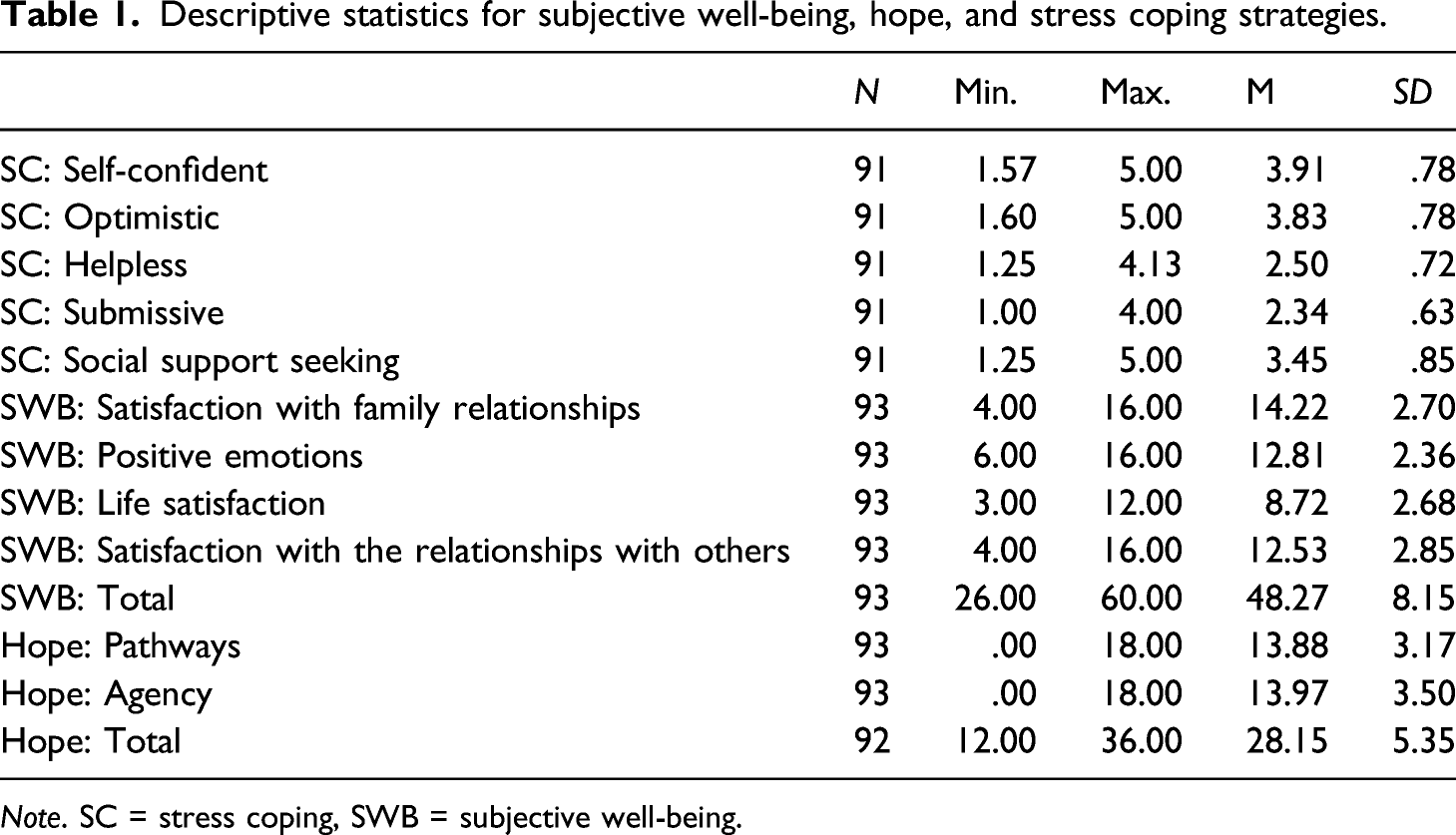
Note. SC = stress coping, SWB = subjective well-being.
We conducted group comparisons to examine if subjective well-being, hope, and stress coping strategies differ across gender, school type, number of siblings, number of siblings attending school, and the amount of time allocated to schoolwork during online education. We found no statistically significant differences between genders (male and female), school type (public and private), the number of siblings, and the number of siblings attending school on all variables. However, on the hope total and subtest scores, there was a statistically significant difference between the groups that allocated more, less, or same time to schoolwork during online education than face-to-face education. The students who allocated more time to schoolwork during online education relative to face-to-face education (M = 31.35, SD = 3.77) had higher hope scores than those who allocated less time (M = 26.07, SD = 5.15, p = .003). Regarding the agency subtest of hope, there are statistically significant differences between the students who allocate more time (M = 16.00, SD = 1.80) and less time (M = 12.35, SD = 3.72) as well as same time (M = 14.13, SD = 2.64) and less time (M = 12.35, SD = 3.72).
The similar results were also found for optimistic stress coping strategy. The group who allocating more time (M = 4.04, SD = 0.77) had higher optimistic stress coping strategy scores than those allocating less time (M = 3.38, SD = 0.66, p = .000). Similarly, the same time group (M = 4.05, SD = 0.74) had higher scores than the less time group (M = 3.38, SD = 0.66, p = .011). Finally, the students allocated same time (M = 49.62, SD = 7.32) had higher subjective well-being scores than those allocating less time (M = 45.00, SD = 7.84, p = .020).
Correlations between subjective well-being, hope, and stress coping strategies.
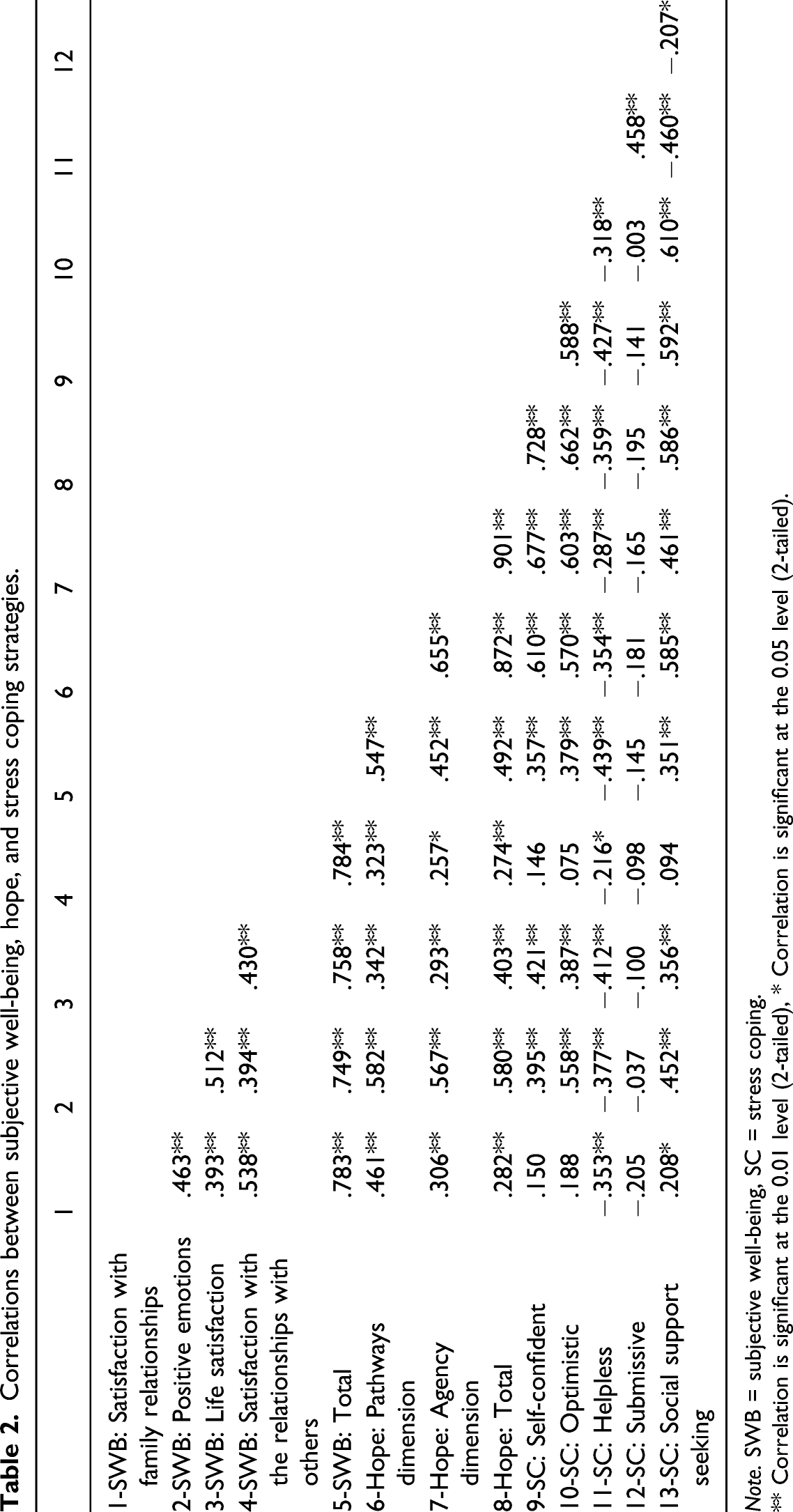
Note. SWB = subjective well-being, SC = stress coping.
** Correlation is significant at the 0.01 level (2-tailed), * Correlation is significant at the 0.05 level (2-tailed).
We found that subjective well-being has a positive correlation with hope (r = .492) as well as effective stress coping strategies (r = .357, .379, and .351, respectively). The correlation between subjective well-being and ineffective stress coping strategies are negative (r = −.439 and −.145). We also found that hope has a positive correlation with effective stress coping strategies (r = .728, .662, and .586) and negative correlation with ineffective stress coping strategies (r = −.359 and −.195).
Predictors of subjective well-being.
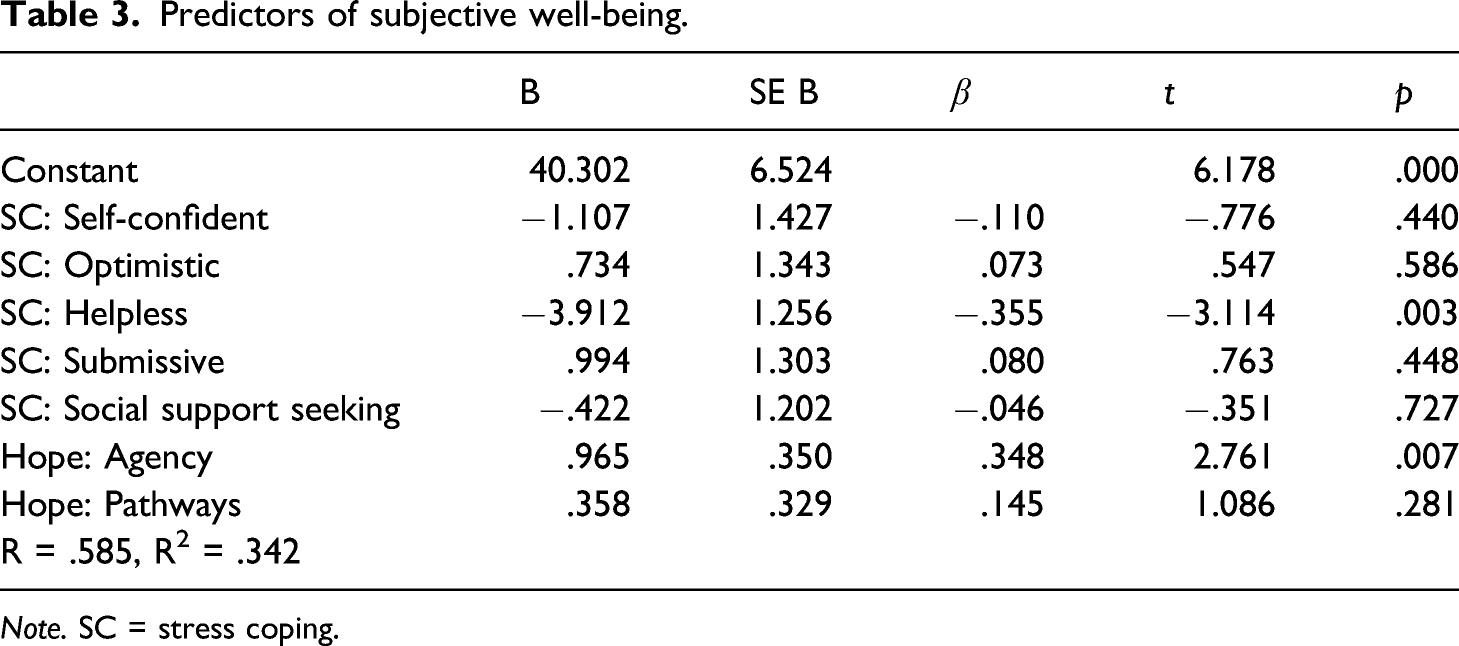
Note. SC = stress coping.
Predictors of hope.
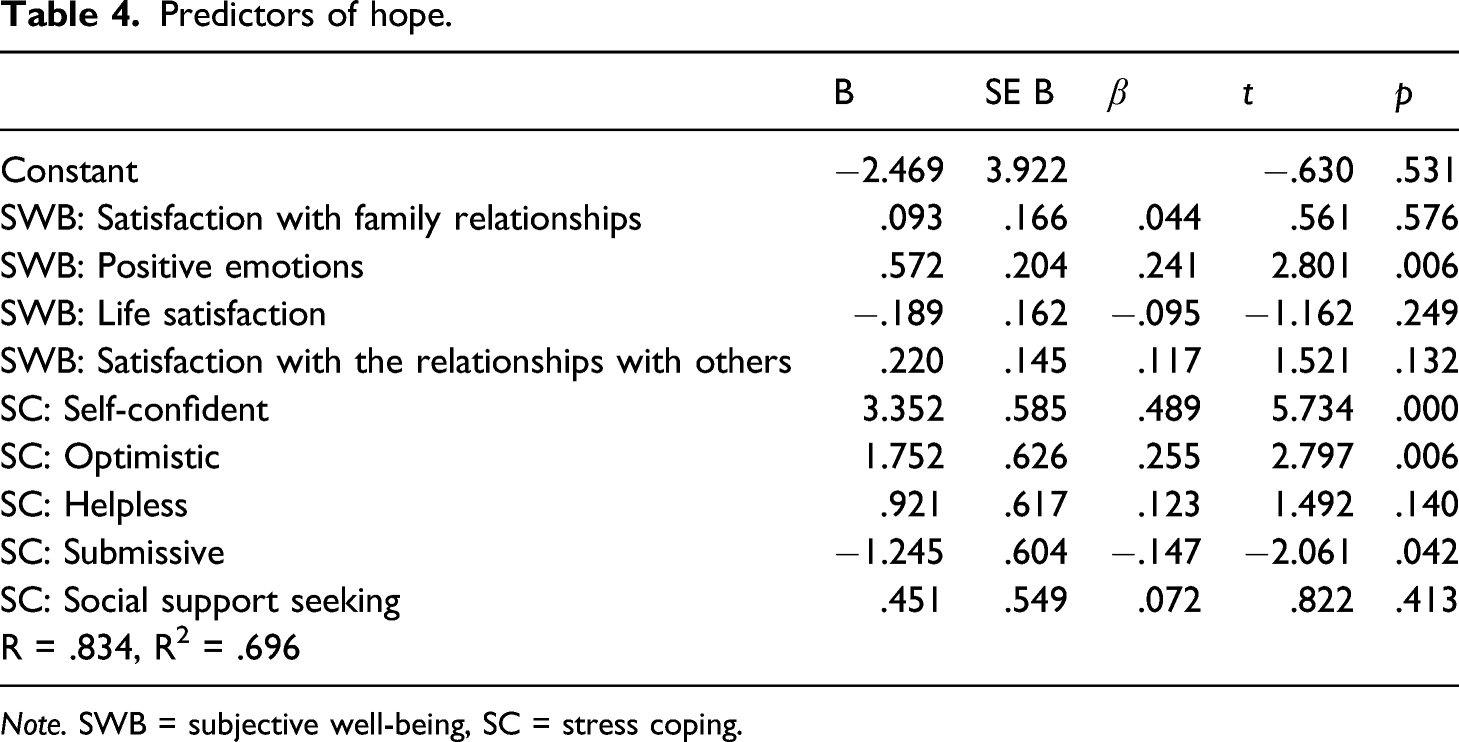
Note. SWB = subjective well-being, SC = stress coping.
Qualitative results
We asked students the following question: Which of the following options best describes you in the online education process? Among the options, 90 out of 93 students specified, “I have a computer, tablet, or smartphone where I can attend online classes regularly.” Other three students specified that “I cannot attend classes regularly because there are not enough devices at home, I attend whenever I can.” No students selected other options which describe worse scenarios like not attending classes at all or attending classes from a place other than their homes. Few students explained their situation as follows: S40: Yes, we have a computer and smartphone. My older sister and I can follow our classes with these devices. S75: Yes, we have; however, when my and my sister’s classes overlap in time, I cannot attend the classes.
Another question was about internet access. While only one student specified that there is no internet access at home, all other students had an internet connection at home. We also provided places where students could explain something further about their internet connection. Six students shared complaints about slow internet connection and interruption. A student complained about teachers’ internet speed and quota problem.
We asked some open-ended questions about the closure of schools and online education during the pandemic. We analyzed the responses using thematic analysis methodologies and unearthed some themes. For each question, the themes from the students’ responses along with sample quotations are as follows:
What do you think/feel about the closure of schools and distance education during the COVID-19 pandemic?
Students expressed their feelings and thoughts about the pandemic process. Most of the students shared their thoughts, but some specified their feelings. The most frequently stated feelings were unhappiness, anxiety, worry, and anger. Even including those who have negative feelings, students usually mentioned some positive sides of the process. For example; S33: Closing schools has both good and bad sides, I think. It was good because the corona didn’t affect us. It was bad because I was not able to see my friends and buddies. S28: Actually, I’m sad because I can’t go to school, but we shouldn’t go to school for our health. S51: I adjusted to this type of schooling, remote education, I’m now happy, online classes are fun. S43: I am very sad and very upset. They open and close schools like dollhouses.
Students felt unhappy generally from being away from their friends and schools and problems incurred during the online courses like internet connection issues and uncertainty about when schools would reopen. A few students expressed their emphatic thoughts as in the following sample: S2: I think closing schools is a difficult situation for all students. But it may be necessary for our health. I am okay. However, some students are complaining that there is no internet, no device, etc. Because of this, they will have hard a time in exams this semester.
According to some respondents, this process was difficult and caused unexpected health problems. For example, they could not focus on classes because their houses were crowded and included more distractors. A couple of students mentioned vision problems (eyes hurting) and headaches because of excessive exposure to a screen. The number of students who longed for their friends and schools were not few. This group specified their good memories at school and with their friends. They had expectations to get back to such days as soon as possible. For example, a student wrote his longing as follows: S16: We miss schools. The thing I miss most at school is wiping the blackboard.
Though some students seem to be adjusted to remote education and online courses, several had problems with it. They think that online courses are boring, hard to follow and understand, and inefficient. They also think that online classes can prevent them from getting left behind in regard to the curriculum despite all the mentioned disadvantages. For example, a student responded as follows: S75: So, even if it is not as good as face-to-face classes, it is still better than doing nothing and missing all classes.
Do you observe any change in your motivation during the distance education process? How?
All students responded to this open-ended question either decreased or unchanged, or increased. Some responses are short like “no change,” “same,” “decrease a little,” and “lost my motivation.” Regarding the number of students, we realized that 62 students stated that their motivation has decreased, 29 students stated as unchanged, and only two students stated as increased. Many students also provided reasons why their motivation change in a way they stated. Selected responses along with reasons affecting motivation negatively are as follows: S9: Classes are more boring because I can’t see everyone on the screen and I can’t talk to my friends during break. S67: Yes, my motivation has decreased because the home environment is not disciplined as much as the school. S91: I was more participant in the lessons at school, but I cannot be active as much in distance education. S94: Yes, I see, we stare at the screen for hours, normally lessons would be fun, but we can’t have much fun in online education (but there is nothing else to do). That’s why I think my motivation has decreased. S47: My motivation decreased a lot during the remote education process because of being alone. Since we are alone in the COVID-19 pandemic, we only play virtual games and this makes us addicted, naturally, I have no motivation to study, I always want to play games. S48: I have a fear of failure because I cannot attend some classes. Since I am always at home, I do not want to study.
On the other hand, some students mentioned the unchanged level of motivation along with their reasons. It is striking that some students seem accepting, normalized, or were able overcame decreases in their motivation. Some selected responses are as follows: S20: I don’t think there is a change in my motivation, but if there is, it’s not obvious. It is very difficult to work at home, but you have to be patient, because it is challenging, even if there is a change in my motivation, everyone has it. S61: At first, I thought that I could not do anything because there was no face-to-face education, but then I saw that distance education was also beneficial for me. And remote education increased my motivation in general, and I had more time to study. S35: Yes. It feels bad a bit, but I got over it with my family.
Do you think there are positive aspects of the distance education process? If so, what are they?
We asked the students what the positive aspects of the distance education process are. While 38 students stated that there are no positive aspects of distance education, 10 students stated that they could not say anything positive or negative. Positive aspects of distance education were underlined by 45 students by providing various reasons. The reasons can be categorized into three themes. The first is the development of abilities in technology. Students stated that the online education process during the pandemic provided opportunities to use technology more efficiently. Before the pandemic, the use of technology in education was limited. Of note, there was more focus on negative aspects of technology such as technology addiction; however, people came to realize the different aspects and benefits of technology during online education. Sample statements from the students’ answers are as follows: Q53: I had an opportunity to know technology better. Q73: The process has enabled us to use technological products more efficiently. Q77: In online education, our teachers can teach us more effectively by using slides, and we learned to use web2 tools thanks to the homework that online education brings. Also, online education is more comfortable, but of course I need to keep the discipline of face-to-face education. S89: We are using a positive side of technology and we are involved with technology.
The second theme is “saving time and no physical fatigue.” The students underlined that commuting to school is a big waste of time and causes physical fatigue. Staying at home allowed gifted and talented students to allocate more time to their interests and other personal affairs. In addition, having more time fosters their motivation and comprehension. Some examples from their expressions are as follows. Q75: First of all, the remaining time from the lessons is ours. Although we take the same courses as in face-to-face education, we can have more time for extra study and reading books because there is no need to commute to school. Moreover, we are at home and we are comfortable, so I think comfort is one of the most important things in understanding or enjoying a lesson. Q88: I think we are at home; we can read any book we want, and there is no need to commute to school. Q51: Now, it is very easy to go to class, going to school every day was tiring for me. Q60: Now, I do not need to get up very early to go to school. I also do not need to walk to school. Q68: My school is on a hill and I used to walk to school because it is not far to take the school bus. There was no problem in the mornings, but it was difficult to climb the hill with a heavy bag on my back. Now, I am at home, I do not have to do it anymore. Ramadan fasting is another issue. Since I do not go to school, it is easier to fast at home.
The third theme was “no health concerns.” The students who emphasized the positive sides of distance education stated that they can attend the classes in a healthier environment, thereby, prevent the spread of the virus. Some statements are as follows: Q67: I think there is. It is both healthier and at least the children are with their families and under their supervision. Q84: I think there is a positive aspect of online education: It should be to reduce the number of positive cases. Q77: It is better for our health.
Do you think there are negative aspects of the distance education process? If so, what are they?
When the students were asked about the negative aspects of distance education, seven stated no negative aspects, while one said that it would not be correct to indicate only the negative aspects because there were also positive aspects. Of note, 85 students listed some negative aspects of distance education. Among the negative aspects, emerging themes are health issues, technical problems, lack of socialization, and lack of concentration.
The most frequently mentioned negative aspect was the health problems caused by staying at home. Students often complained that their eyes and backs hurt while being inactive for a long time, and irregular sleep patterns. For example, some students express their thoughts as follows: Q3: My eyes hurt when I’m in front of the screen for a long time and I need more sleep, but I can’t go to bed before 23:00. Also, my bones and back hurt when I sit in the chair a lot. I also realized that my attention problems have appeared. Q17: If a person stays in front of the screen for a long time, it may cause various disease. Q37: There is. My eyes are getting red due to looking at the screen. I usually have headache. Q57: I think it is harmful to spend a long time in front of the screen.
Another theme addressed in the answers concerns technical problems. Students underlined the internet connection problems as well as microphone and screen problems. Some expressions are as follows: Q4: The teacher’s voice is usually lost. The internet connection is dropped or slowed downs and then no connection to the class. Q69: We can’t talk when our microphones are broken or we do not have one at all. And we can’t see each other’s faces. Also, we can’t attend classes when the internet connection is dropped. Q72: It has many problems. The internet frequently drops during classes or the EBA (Turkish online education platform) freezes. Then, we could be absent from the class and we miss some parts of the class.
The third theme is socialization problems. The students stated that they were unhappy and feel isolated because they could not see their friends and go out. Some of their striking feelings are as follows: Q33: I think there is because I can’t see my friends. Q46: Yes, there is. Honestly, I feel a little antisocial. I am more inactive and unhappy. When the school was open, it was a reason for us to go out, walk, and run. Even if we didn’t go outside during school hours, we were still active at school. Now, when I’m completely stuck at home, I feel physically regressed. I also feel a little reluctant in online classes. Q59: I cannot socialize, socialization is weak.
Finally, the students emphasized concentration problems as a negative result of online education. They stated that they could not concentrate on classes due to staying at home all the time and the problems they had experienced. Some of their thoughts are as follows: Q22: Yes, online classes are very boring, I get distracted every time. Q54: I can’t concentrate, the lessons are boring Q79: It is very difficult to concentrate in this way. Q80: The classes are more inefficient than face-to-face education.
Additionally, some students responded, including a few of the themes together while stating the negative aspects of distance education. For example, Q25: There is low motivation, decreased interest in lessons, being unable to ask my questions to teachers, not having a good time with my friends. Q43: It has a negative side. The distraction of attention in online classes is much. The lessons can be better understood when they are face-to-face. I can understand in online classes but face-to-face is better. And most importantly, you can’t really see your friends and teacher live. Q48: I have internet connection problems, which causes fear of failure. I cannot communicate comfortably with teachers. I cannot learn as well as in face-to-face education. I can’t chat with my friends during break time. Q86: Of course, there is, you can’t see your teachers, your friends, you can’t hug. It can be distracting. Some friends cannot use a computer or phone, it can be very difficult for them. When the internet is bad, you miss the class.
What are the biggest challenges or limitations you have experienced as a student in the distance education process?
A more general question was asked about the challenges and limitations experienced by the students during the online education process. Their responses were grouped into four themes: Technical problems, motivation problems, lack of socialization, and academic difficulties.
The first theme and the most widespread issue is technical difficulties: It was stated by 31 students along with various explanations. It includes the internet connection problems and those related to online platforms (e.g., EBA and Zoom), and online education tools. Such technical problems prevent students from following online classes regularly and learning effectively. For example: Q13: Sometimes, I can’t hear what my teacher is saying because I drop from an online class. Q69: The biggest difficulty I have experienced is that the system constantly have problems and I drop from the class. I cannot attend classes. Q71: The teacher’s voice is often muted and I cannot understand what he is saying. Sometimes, my device runs out of battery. In such cases, it is difficult.
Another challenge that was mentioned as much as technical problems is motivation problems. Students stated that they had motivation problems because classes were not enjoyable. They were bored and might have made more mistakes answering the questions solved on the screen. They might have had the prejudiced view that they would not be able to understand subjects during their online education. Such problems made the students feel being overwhelmed and limited. Sample expressions are as follows: Q47: I got too lazy. That’s why I never want to study. So, my grades dropped a lot. Q92: It is not very enjoyable and my motivation decreases. Q91: I often have headaches. For me, the classes are not effective. I can make more mistakes while solving the exams on the screen because it is distracting. Q83: The biggest challenge is to be bored, that is all. Q59: My only problem was that I conditioned myself like I would not understand at first, but as time passes, I realized that I could.
Another difficulty experienced in the online education process is social isolation. Students complained that isolation or not having much of an opportunity to meet friends and others made them feel bad. It affected their mood and learning. Some excerpts from the students’ expressions are as follows: Q35: We are unable to play with friends. Q43: Unable to meet with my teacher and my friends Q79: Difficulty making friends and socializing. Q48: Not meeting with my friends affects my learning negatively. We would learn the subjects better by chatting and playing games during break times.
Academic difficulties were another challenge. It seems related to or the consequence of other challenges. Students often complained about the difficulties in following lessons, understanding the subjects, and comprehending the topics. Two students summarized such challenges as follows: Q39: Understanding lectures is difficult. I am not able to listen well. Q57: Sometimes, it is difficult to understand the subjects. Q49: We will take the LGS (transition to high school exam) in the online education system. This is ridiculous, unnecessary, and difficult. Students' abilities and goals are not taken into account. My social relationships are getting deteriorated. I can’t have time for myself and I have to limit myself. I try to improve myself in different areas, but this is not possible at home.
Discussion
This study is an effort to explore the experiences of gifted and talented students during the COVID-19 pandemic. Like many countries, the Turkish Government closed all schools until further notice to slow down the spread of the virus. Thus, the students had to stay at home and attend their classes online for over a year. The present study was conducted during the school year just before the online education process had ended and the students had returned to school. So, the survey was administered to the students after a year of experience with online education. It revealed significant findings on gifted and talented students’ subjective well-being, hope, and stress coping strategies as well as other experiences with this tough process.
During the pandemic, most students had been separated from their schools and friends. Gifted and talented students had been separated not only from their schools but also the Science and Art Centers (known as BILSEM), the after-school enrichment program for gifted and talented students. Like the schools, BILSEMs had to offer classes online during the pandemic. As a result, gifted and talented students were deprived of both their schools and enrichment programs. In such tough times, it is critical to explore gifted and talented students’ inner worlds to understand what they need currently and will need after returning to their schools.
First of all, stress coping strategies are important in difficult times. We found that gifted and talented students used positive stress coping strategies (self-confident, optimistic, and social support seeking) more than negative ones to overcome stress. During the pandemic, since there were many stressors for these students, it was critical to manage stress. Students should be equipped with stress coping strategies, and these strategies should be effective. We found that gifted and talented students used effective strategies that were good and helpful to overcome their stress during the pandemic. When effective coping strategies are used, they help reduce or eliminate the negative effects of stress (Yurtsever, 2009).
Group comparisons with all variables resulted in no significant difference between gender and school type; however, we found a significant difference among the groups in terms of the time devoted to schoolwork during the pandemic. Relative to traditional school time, some students spent more time on schoolwork during their online classes while others spent the same or less time. We found that the students who spent more time on schoolwork were more hopeful, more motivated to pursue their goals, and more confident with their capacity to achieve desired goals than those spending less time on schoolwork. Besides, they used optimistic stress coping strategies more frequently, and their subjective well-being scores were higher.
We can conclude that the amount of time devoted to online learning is positively correlated with hope, motivation, and optimism. Expectations for the future could bring higher motivation and, accordingly, enable students to study more. This finding is in line with Snyder et al.’s (2000) statement that hopeful people become more effective and skillful in taking action and using strategies when faced with obstacles.
The correlation analyses resulted in the conclusion that gifted and talented students’ hope, subjective well-being, and stress coping strategies have a statistically significant relationship. We also observed such significant correlations among the dimensions of hope, subjective well-being, and effective and ineffective strategies of stress coping. Based on these findings, we created two regression models.
In the first model, the dependent variable was subjective well-being and was predicted significantly by stress coping strategies and hope. All predictors together can explain 34.2% of the variation in subjective well-being. The most powerful predictors were helpless stress coping strategies and agency dimension of hope. According to Snyder et al. (1991), people with high hopes can try various ways and use strategies to reach their desired goals. Besides, hopeful people are more likely to take action (Snyder et al., 2000). Believing in one’s potential and taking actions can foster well-being. On the other hand, the feeling of helplessness causes an individual not to take any action against problems and lowers well-being.
In the second model, the dependent variable was hope. Two dimensions of subjective well-being and five stress coping strategies were found as significant predictors of hope. They explained 69.6% of the total variation in the hope. The most powerful predictors were positive emotions dimension of subjective well-being and self-confident, optimistic, and submissive stress coping strategies. This finding is in line with previous findings on the relationship of hope and problem-solving and coping ability, (Chang, 1998), self-esteem (Gibb, 1990), psychological adjustment (Kwon, 2002), and perceived ability (Dixson et al., 2016). We can conclude that the gifted and talented students displaying positive emotions, optimism, and self-confidence are more likely to be hopeful. On the other hand, students using submissive stress coping strategies are less likely to be hopeful. It is noteworthy that the majority of gifted and talented students are also high achieving students. Therefore, they can be expected to have success in school-related outcomes and higher academic goals if they manage their current stress effectively and have expectations about the future.
During the pandemic, all classes were online. So, having internet access and technological devices such as laptops, tablets, and smartphones was crucial to following online classes. Most of the gifted and talented students reported that they had the internet access and devices to attend online classes. Nevertheless, some students reported significant issues about internet speed, internet quota, and shared devices with siblings. Therefore, having a device and an internet connection may not be sufficient because a personal device and unlimited and high-speed internet connection are necessary for effective and uninterrupted online education.
When we analyzed the general thoughts and feelings of the gifted and talented students, it was not easy to conclude on the positive or negative side. The students usually expressed their negative and positive feelings and thoughts together. For example, while separation from teachers and friends were regarded as pathetic, it was also regarded as manageable. Almost all students supported the school closure policy because they thought it was for everyone’s good. The students’ priority was to survive, and then schoolwork and learning. This finding is parallel to what Garbe et al. (2020) found and Maslow (1943) claimed in his hierarchy of needs. In Turkey, there were few attempts to reopen schools at least for some grades and some weekdays; but after a while, the schools were reclosed. This made students more worried since they had complaints about not being able to predict what will happen next.
On the whole, negative feelings such as unhappiness, anxiety, worry, and anger were expressed by most of the students. The causes of such a negative mood were reported as isolation, technological problems, and uncertainty about the process.
While most students stated that their motivation to go to class and learn has decreased, a minority seemed to adjust well to online classes. When there was a sudden shift from traditional learning to online education, most students became worried about how to attend class and keep up their academic progress. Furthermore, there were uncertainties about what would happen next and when schools would reopen, all of which caused them anxiety. Similar findings were observed by previous researchers (Daniel, 2020; Garbe et al., 2020). As time with the pandemic passed, students’ motivation fell lower. Some students, on the other hand, welcomed the decrease in their motivation because they thought it was a tough time and attending classes online was better than not having any class at all, or having serious health problems. This view can be regarded as an effective stress coping strategy. Furthermore, some students coped with motivation issues with the support of their parents, which reflects the social support-seeking strategy of stress coping.
More specifically, we asked students to list the positive and negative aspects of the online education process. As for positive aspects, we unearthed these themes: development of technology skills, having more time, no physical fatigue, and protection from health problems. These positive aspects were not expressed by many students, so it may be regarded as the voice of a small group. On the other hand, many students expressed negative sides of online education. Technical problems, the lack of socialization, motivation problems, and health issues are themes obtained from the students' responses. Staying at home causes loneness and unmet socialization needs. The students felt a longing for their friends, schools, and even wiping the blackboard. Stuck at home and sitting in a chair in front of a screen for a long time also resulted in inactivity, causing specific health problems. Headaches, back pain, eye pain, and complaints related to the skeletal and muscular systems from a bad body posture were the most frequently reported problems. Regarding the critical developmental level of these students, it is important to follow the students’ medical records and provide intervention to avoid such health problems.
Technical problems are generally related to internet connections and devices for both students and teachers. Students stated that the lessons were frequently interrupted because of a slow internet connection or loss of connection. It might have been difficult to follow what the teacher was doing during class because the screen was small and the teachers’ voice was not clear. Students usually compared their home environment with traditional class and concluded that the home environment is more comfortable despite the many distractions. Therefore, it was more difficult to focus on schoolwork at home. It was easier to focus on teaching and cooperate with classmates at school because there were many other options of things to do at home, called distractors. There was more discipline and order in school, which is good for their motivation and learning. We can conclude that a well-organized home environment also includes a personal device and high-speed and unlimited internet connection that would allow a student to participate online learning more effectively.
It seems that the students, parents, schools, and some service providers were not ready for such an extraordinary situation. Before the COVID-19 pandemic, it was not a common occurrence to close schools for weeks or months (Wong et al., 2014). So, insufficient technological devices at home, internet connection problems, teachers’ lack of pedagogy about online teaching, and inadequate internet coverage and an online teaching infrastructure were among the biggest obstacles to continuing online education in an effective way.
For effective remote learning, the availability of computers or other technological devices, a high-speed internet connection as well as appropriate teacher pedagogy about online teaching, online course content, and the proper home environment is critical. For example, the internet coverage and speed may vary across geographical regions. Of note, some students had to share the available devices with their siblings. So, inequalities in internet access and availability through technological devices resulted in unequal access to online education among students, including gifted and talented students. This discrepancy is often observed among socio-economic classes as stated by Dolan (2016).
Teachers were not ready for an online teaching experience. So, during online teaching, these teachers had tried to build course content, give homework, and provide feedback. Because of the quick shift to online teaching, teachers had neither skillsets nor the time to provide real-time support in online classes. For example, they were not able to set online meetings with individuals or even small groups. Gifted and talented students’ preferences are usually to study individually or in small groups (Davis & Rimm, 2004; Ruf, 2003). They need different methods for the delivery of lectures. Thus, their individual needs may not be met in the process because of the time limit and lack of teacher pedagogy.
The students thought that their online classes were not enjoyable as much as face-to-face classes. They complained about not interacting with classmates during class and break time. It seems that there is only a one-way interaction between a teacher and a student during online classes. Bandura’s (1977) social learning theory emphasizes multiple interactions among teachers and students for better learning. Online lectures may limit such a multiple interaction among the member of a class or, at least, it requires extra teacher effort. Besides, the lack of personal contact with classmates prevents socio-emotional engagement with peers. Children need social interaction with their peers to develop socially and emotionally. Providing online lectures can decrease students’ learning loss and support them cognitively and academically. However, gifted and talented students’ socio-emotional development should be regarded as critical as their cognitive development. Small group activities and in-class sessions in which students can interact with their peers are needed to meet the socio-emotional needs of gifted and talented students.
Limitations
The survey was administered to volunteer students via either an online or paper-based format. We used a paper-based survey to ensure we reached students who struggle with technology. However, the sample may still not be representative of the gifted and talented students because the survey was administered to the students of a BILSEM located in Istanbul. There may be discrepancies in the students’ experiences with the pandemic and online classes—even in different regions of Istanbul. The students in the present study can be classified as children of middle- or upper-class families. Besides, the survey was administered after a year of experience with remote learning. So, it may reflect students’ contextual thoughts and feelings. It should be taken into account that students have different experiences at different times during the process.
Recommendations
Based on our findings and discussions, the following recommendations for students, parents, schools, and policymakers are provided: first of all, it is usually a priority for students and parents to attain academic progress. However, students’ socio-emotional development should be considered as important as their cognitive development. In this regard, appropriate social support should be provided to all students through social interaction (Holt-Lunstad & Uchino, 2015). Social support can be classified into four types: (1) emotional support that requires the provision of understanding, caring, love, and fosters reliance; (2) informational support that requires the provision of information, counsel, and guidance; (3) instrumental support that requires the provision of tangible help; and (4) appraisal support that provides evaluative help. So, all types of support are needed in such a difficult time.
For example, a psychological counselor at schools could provide individual and group counseling sessions as well as psycho-educational sessions to help students understand what is happening with COVID-19, how to cope with stress, how to attain socializing, how to be motivated, and how to be well. The agenda of the school counselors could include such strategies as broadening thinking, raising positivity-ratio, and disputing negative thinking and fear (Fredrickson, 2009).
Teachers should continue to develop online course content with the help and guidance of the Ministry of National Education. Workshops and in-service training are much needed on how to develop enjoyable and effective content and use web tools to deliver lectures effectively. Individualized education programs are important to meet the special needs of gifted and talented students. So, in addition to the general curriculum, individualized or small group teachings and meetings should be organized to maintain traditional face-to-face BILSEM teaching practices on virtual platforms. For example, gifted and talented students prefer independent study (Dunn & Griggs, 1985; Renzulli, 1977; Stewart, 1981). Therefore, teachers of gifted and talented students at BILSEM and other schools may use instructional strategies that emphasize independent or small group studies as well as discussion sessions on selected topics.
To overcome technological issues, the internet infrastructure should be rehabilitated especially in disadvantaged areas. The lack of internet speed and quota should not be a reason for students not to attend online classes. So, every student should have high-speed and unlimited internet access to attend online classes. This is a fundamental right protected by the Constitution.
Parents are mainly responsible for providing an appropriate environment for their children so they can attend classes without getting distracted. Moreover, parents’ emotional support is indispensable for their children to cope with difficulties and maintain daily academic and social affairs. Additionally, parents may need guidance and psychological support in helping their gifted and talented children. If so, parents should be provided financial, social, emotional, and informational support.
As a final recommendation, students’ experiences during the pandemic and its effect in the short- and long-term should be traced by adults around the children and more systemically by researchers so that proper preventive or rehabilitative interventions may be provided in a timely manner.
Footnotes
Declaration of conflicting interests
The author(s) declared no potential conflicts of interest with respect to the research, authorship, and/or publication of this article.
Funding
The author(s) received no financial support for the research, authorship, and/or publication of this article.
