







Abstract
Foreign language anxiety is an emotional reaction toward learning and using a foreign language, which may negatively influence individuals’ self-perceptions, beliefs, emotions, and behaviors. To explore how to mitigate the potential detrimental effect of foreign language anxiety, this meta-analysis and systematic review included 37 primary articles on interventions targeting relieving foreign language anxiety. The results revealed the overall efficacy of these interventions (ES = −0.61, p = .03) in reducing anxiety. Age was the only significant moderator despite seven moderators being included. The qualitative section of the systematic review examined intervention types, publication patterns, and research designs in the 37 analyzed articles. A notable increase in publications on this topic was observed over time, with approximately equal numbers of studies utilizing direct versus indirect interventions. This review offers implications for both future researchers and practical applications in addressing foreign language anxiety.
Keywords
Foreign language anxiety (FLA) is a psychological phenomenon that emerges within the context of acquiring or employing a foreign language, typically presenting as apprehension, concern, and distress (Horwitz et al., 1986). Foreign language anxiety constitutes an emotional reaction individuals experience in response to perceived or actual challenges (Çapan & Pektas, 2013). Horwitz and colleagues (1986) pioneered the quantification and conceptualization of FLA through the development of the Foreign Language Classroom Anxiety Scale (FLCAS). Their seminal work delineated FLA as a construct intertwined with second language acquisition, encompassing individuals’ self-perceptions of language learning, external evaluations, and anxious sentiments associated with learning tasks (Horwitz et al., 1986).
In immigrant communities, FLA may originate from concerns regarding language proficiency deficits and may further be influenced by societal expectations and assessments of individuals’ language skills (Sevinç & Backus, 2017). This anxiety propensity can induce language avoidance behaviors during periods of heightened distress, subsequently impeding language proficiency advancement and social assimilation (Sevinç & Backus, 2017). Furthermore, FLA exhibits variations in its manifestation and impact across distinct language skill domains, including listening, speaking, reading, and writing proficiencies (Aida, 1994).
Influence of FLA
Foreign language anxiety has been found to evoke a nervous feeling that impacts individuals’ self-perceptions, beliefs, emotions, and behaviors (Wang et al., 2022). The feeling of discomfort that arises from language anxiety can play a detrimental role in the classroom and academic settings, including communicative apprehension regarding anticipated communications, development of test anxiety as a result of incorrect evaluation of one's performance, and fear of negative evaluation or judgment from others (Han et al., 2022). Consequently, those with high levels of FLA were reported to have poor performance, low achievement, and high anxiety as learners (Han et al., 2022). For example, studies have suggested that international students with FLA may withdraw from using that particular language to avoid feelings of being judged by others (Li et al., 2018). As such, students with FLA may report having a difficult time with activities in class such as group discussions and class presentations (Li et al., 2018). Moreover, research has suggested that individuals may engage in avoidant behaviors such as procrastination due to the hampering effect of FLA (Scida & Jones, 2017).
In particular, the negative self-talk that arises from FLA can impair the abilities of individuals to process information as stress and anxiety have adverse influences on memory, attention, concentration, and problem-solving (Scida & Jones, 2017). Furthermore, the concerns related to potential failures and how they may be perceived by others interfere with the task at hand as their attention becomes divided (Scida & Jones, 2017).
Foreign Language Anxiety Interventions
Given the adverse impacts of FLA on individuals, there has been a concerted effort to explore interventions aimed at reducing FLA. These studies predominantly occurred within postsecondary education institutions (Foroutan & Noordin, 2012; Jiang, 2016; Miller & Godfroid, 2020; Pribyl et al., 2001; Rassaei, 2015; Scida & Jones, 2017) in countries where English is learned as a foreign language, such as China, Turkey, Iran, and Japan. Recent investigations into FLA reduction strategies, predominantly centered on classroom-based instructions, have employed a range of interventions, including dynamic assessment and cooperative learning (Estaji & Farahanynia, 2019; Heydarnejad et al., 2022; Jiang, 2016; McClellan, 2020; Sohrabi & Ahmadi Safa, 2020), positive psychology approaches (Li & Xu, 2019; Morgan & Katz, 2021; Scida & Jones, 2017; Tasan et al., 2021), feedback mechanisms (Iksan & Halim, 2018; Motallebzadeh et al., 2020), and computer-mediated communication (Foroutan & Noordin, 2012; Kassem, 2017; Sánchez-Muñoz, 2021; Satar & Özdener, 2008).
However, between-group results within the same type of intervention are inconsistent. For example, in Satar and Özdener's study (2008), though participants in both web-based voice chat and text chat groups reported increased speaking proficiency, only those in the latter demonstrated reduced FLA. In Foroutan and Noordin's experiment (2012), no significant difference in writing anxiety was found between treatment and control groups after the intervention of dialogue journal writing via e-mail. Similarly, in terms of mindfulness practices, Tasan et al. (2021) reported a significant statistical difference in foreign language learning and testing anxiety scores between the experimental group that received contemplative practices and the control group. However, though a negative relationship was found between postintervention mindfulness and FLA in Morgan and Katz's study (2021), the experiment group demonstrated a decoupling of pre- and postintervention scores in FLA compared to the control group.
Moreover, in those studies, FLA was frequently examined alongside motivation in numerous studies (Heydarnejad et al., 2022; Huang, 2001; Namaziandost et al., 2022; Zhao et al., 2022). For instance, Namaziandost et al. (2022) investigated the impact of authentic materials on Iranian English as Foreign Language (EFL) learners’ reading comprehension, motivation, and anxiety, while Heydarnejad et al. (2022) studied the effects of performance-based assessments on EFL learners’ reading comprehension achievement, academic motivation, FLA, and self-efficacy.
Nevertheless, the studies lack explicit discussions on the generalizability of their findings concerning the relationship between intervention types and EFL learner characteristics. This omission complicates practitioners’ ability to select the most suitable strategies for their students (Toyama & Yamazaki, 2021).
Literature Review on Moderators
Previous studies have explored moderators such as gender and culture. The relationship between gender and FLA has garnered attention and has been investigated through questionnaire-based research, yielding mixed findings (Dewaele et al., 2016; Ezzi, 2012; Geçkin, 2020; Mahmoodzadeh, 2013). However, gender remains largely unexamined as a variable in intervention studies. Existing literature on FLA interventions indicates that gender typically does not significantly influence FLA reduction (Çapan & Pektas, 2013; Pribyl et al., 2001). For instance, Çapan and Pektas (2013) conducted a randomized controlled trial (RCT) assessing the impact of reading strategies on Foreign Language Reading Anxiety (FLRA) among Turkish university English as an EFL learners, finding no significant gender effect on FLRA scores. Similarly, Jin et al. (2020) found no discernible impact of gender on intervention outcomes, despite an all-female participant cohort. Pribyl et al. (2001) observed no relationship between gender and FLA following an intervention targeting presentation skills among Japanese university EFL learners. Notably, some studies feature gender-biased participant samples, such as Namaziandost et al. (2022), who investigated the effect of authentic materials on FLRA among 58 Iranian male EFL learners, albeit without rationale regarding participant gender selection.
Regarding culture as a moderator, previous intervention studies have predominantly examined the relationship between Confucian cultures and FLA among language learners from East Asia. For instance, Côté and Gaffney (2021) associated elevated FLA levels in beginner French learners with their Confucian heritage cultures, noting that 40 out of 61 participants hailed from China and Korea. Similarly, Jeon (2018) investigated the impact of a learner-centered instruction model on reducing writing anxiety among Korean university English as EFL learners. While participants in the experimental group experienced a decrease in FLA related to writing, they expressed stress regarding participation in group activities. Jeon (2018) cautioned against the efficacy of learner-centered instruction in alleviating FLA among students from Confucian heritage cultures, such as those from China, Korea, and Japan, who tend to experience higher FLA levels due to cultural emphasis on collectivism and power distance between teachers and students. In contrast, Jiang (2016) found that cooperative learning aligned well with collective Confucian culture. Freshmen at a Chinese polytechnic institute welcomed the risk-sharing principle of collaborative writing and exhibited a significant decrease in English writing anxiety following the intervention. Moreover, Diep et al. (2022) conducted a quasi-experimental study involving 83 Indonesian English as EFL learners, revealing that integrating target language culture into teaching content can effectively reduce FLA. The experimental group, exposed to English culture-based instruction, exhibited a statistically significant decrease in FLA compared to the control group.
Previous Meta-Analyses of FLA
Prior meta-analyses have underscored the adverse impacts of FLA on various academic domains, including performance (Botes et al., 2020; Dikmen, 2021), self-efficacy (Zhou et al., 2023), and listening strategies (Li, 2022a) (see Table 1). For example, Dikmen (2021) synthesized data from 69 studies across 14 countries (N = 23,150) to reveal a medium and negative effect size (r = −0.61) between FLA and EFL performance among elementary and high school students, indicating FLA's negative predictive value on EFL performance. Furthermore, FLA demonstrated a negative influence on achievement outcomes, with an effect size of −0.56 (p = .265) (Dikmen, 2021). Zhou et al. (2023) also found a consistent negative association between FLA and Foreign language self-efficacy across different educational levels.
Summary of Previous Meta-Analysis.
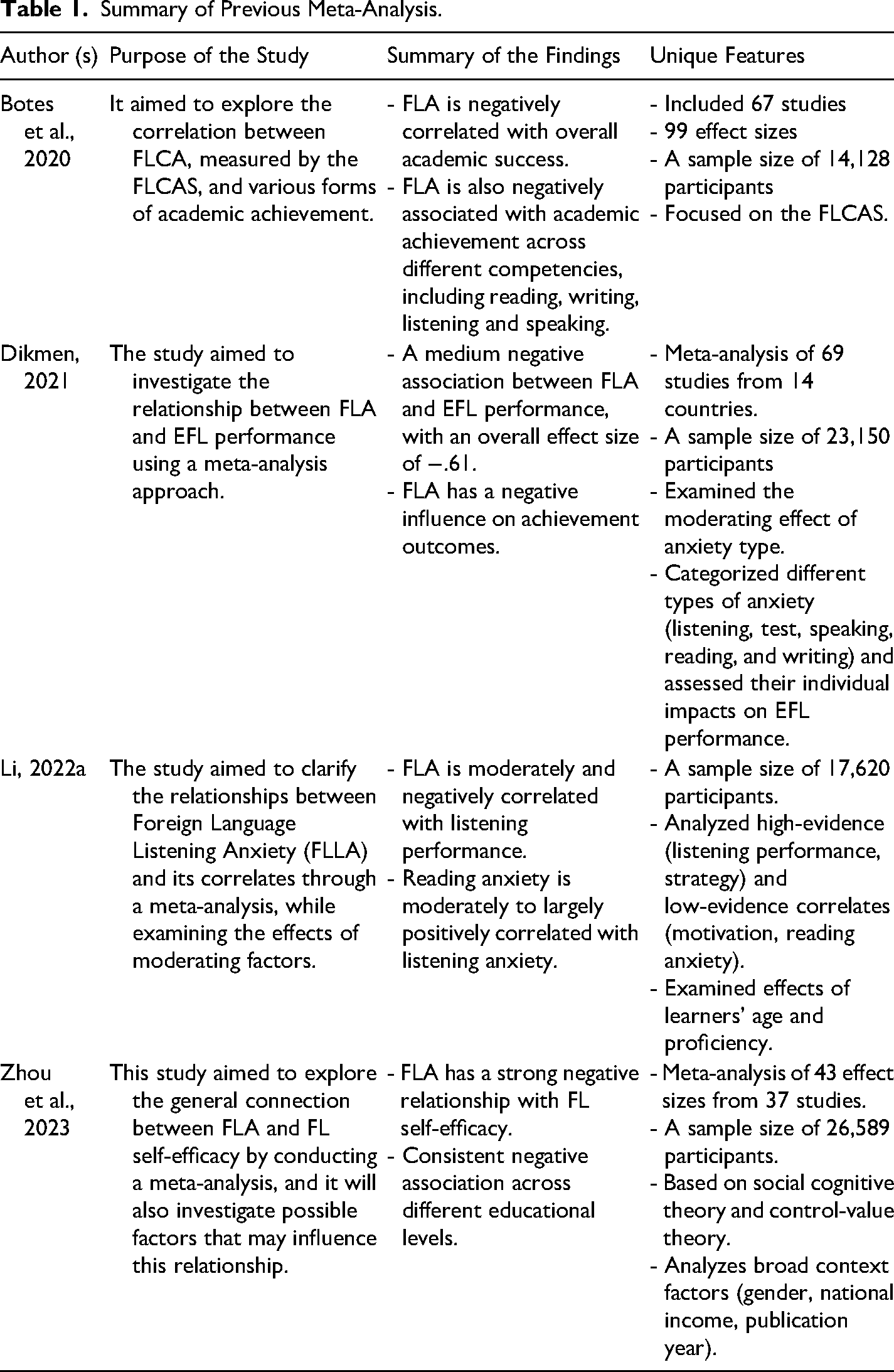
Several studies have delved into specific domains of FLA. Investigation into the relationship between FLCA, as gauged by the FLCAS, and various academic performance metrics revealed negative correlations across overall academic success (r = −0.39; k = 59; N = 12,585) and writing and listening achievement, with speaking displaying the weakest correlation (Botes et al., 2020). Li and Xu's (2022) meta-analysis, encompassing 21 studies and 17,620 participants, unveiled moderate to small negative correlations between identified listening performance and strategy, alongside small negative correlations with motivation, and moderate-to-large positive correlations with reading anxiety among low-evidence correlates.
In summary, previous meta-analyses have predominantly focused on the detrimental effects of FLA on academic performance, self-efficacy, and specific language domains. Studies by Dikmen (2021), Zhou et al. (2023), Botes et al. (2020), and Li and Xu (2022) present robust evidence of FLA's negative influence across diverse educational contexts and outcomes. However, a more nuanced understanding of FLA alleviation strategies is warranted. Moreover, with the increasing number of international students and immigrants across the world, FLA was reported to be one of their biggest challenges (Xiong & Zhou, 2018; Xiong et al., 2024a). Counselors and other mental health professionals need to be equipped with the awareness, knowledge, and skills to help their clients who suffer from FLA to better cope with this type of anxiety. Thus, this meta-analysis aims to complement existing research by conducting a meta-analysis and systematic review of FLA interventions. The study aims to provide insights to mitigate FLA's adverse effects on individuals. The following research questions guide the study:
What are the trends concerning demographics (e.g., publication years, countries), data sources (e.g., journal distributions), and research designs in published FLA intervention studies? What are the overall impacts of FLA interventions? To what extent do intervention outcomes vary based on demographic, methodological, and intervention moderators?
Methods
Literature Search
We conducted three types of literature-searching strategies to ensure thorough literature retrieval: database search, hand-searching, and backward citation chasing. The literature search was completed on March 5, 2023, with the following keywords: “foreign language anxiety” OR “L2 anxiety” OR “second language anxiety” OR “language anxiety” OR “reading anxiety” OR “writing anxiety” OR “listening anxiety” OR “classroom anxiety” OR “ESL anxiety” OR “EFL anxiety” OR “test anxiety.” We searched Web of Science, ScienceDirect, Proquest, and Eric, which returned 1500 studies. On February 23, 2023, we used Paperfetcher to conduct backward reference chasing on the following article (Hsiao & Tseng, 2022; Li, 2022a, 2022b; Zhang, 2019; Zhou et al., 2023), which returned 244 studies. In addition, we also conducted hand-searching with keywords within the following relevant journals: Applied Linguistics, Foreign Language Annals, Language Learning, Language Assessment Quarterly, Modern Language Journal, Studies in Second Language Acquisition, RELC Journal, and TESOL Quarterly.
In total, we uploaded 12,574 references into Covidence (Covidence systematic review software), a software to assist title and abstract screening as well as full-text review. We chose Covidence here because the authors’ affiliated institutions provide free software licenses for this tool (Zhang & Neitzel, 2023). Figure 1 presents the PRISMA flowchart for the literature screening process. During the identification phase, 2062 were removed because of duplicates. After it, each reference was reviewed independently by two reviewers. The screening phase involved screening 10,512 studies for relevance or title and abstract screening. Among 429 studies assessed for eligibility, the top five reasons for exclusion were inappropriate setting (n = 27), irrelevant outcomes (n = 13), unsuitable intervention (n = 53), noncompliant study design (n = 280), and incorrect participant population (n = 17). After applying the inclusion criteria, the review found a total of 37 qualified studies. The proportionate agreement in this full-text screening stage is 0.85. We held biweekly group discussions to resolve all conflicts, and 100% agreement was reached eventually.
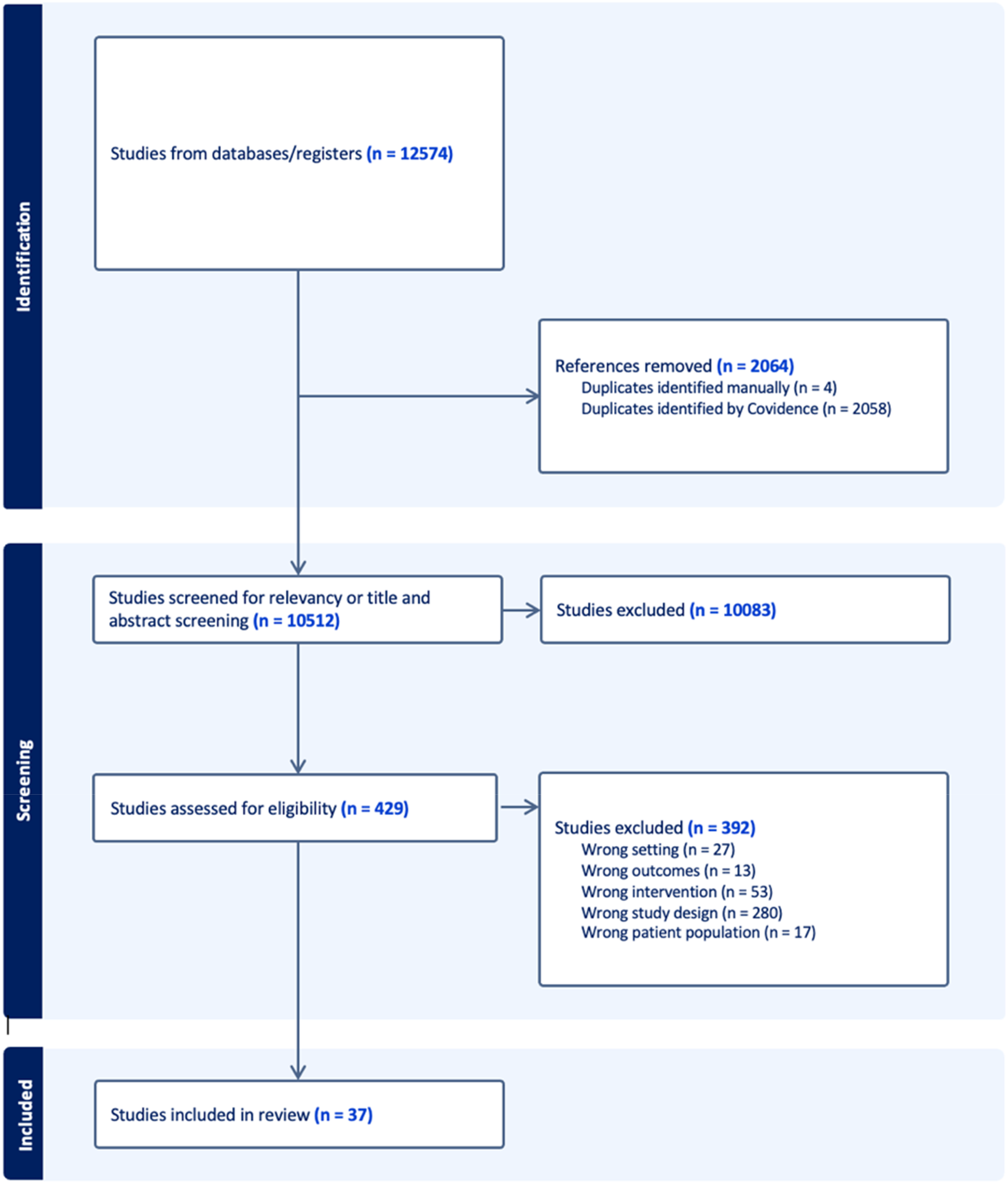
PRISMA diagram.
Eligibility Criteria
This article used the following inclusion criteria for full-text review to ensure consistency and high standards in study quality: The criteria included (1) the participants have to be student population; (2) the outcomes of interest must include FLA, including FLRA, foreign language writing anxiety, foreign language speaking anxiety, FLA in general; (3) outcomes have to include quantitative data and students’ outcome; (4) have to be intervention studies in which some or all participants were exposed to an intervention to determine the effect of the exposure (Aggarwal & Ranganathan, 2019); (5) the intervention has to target on reducing FLA; (6) full text must be available and accessible; (7) the text must be written in English; and (8) articles must be published in or after January 1, 1986, as it is the time when researchers initiated to define and quantify FLA (Horwitz et al., 1986).
Analytical Plan
The meta-analysis was conducted using R with the metafor package (Viechtbauer, 2010). We applied weights to each study based on inverse variance (Wilson & Lipsey, 2001). Utilizing a random-effects model in meta-regression, we accounted for a range of effect sizes influenced by various factors (Borenstein et al., 2010). To address cluster randomization, adjustments were made based on methods adapted from What Works Clearinghouse (2020). Seven pairs of moderators were analyzed, with further details provided in the subsequent section. Additional six variables were analyzed for qualitative synthesis. In adherence to the principles of open science, the complete dataset and code will be publicly accessible at https://github.com/qzhang74-yang/FLA.git.
Moderators
This study added seven moderators that may have the potential to influence the intervention targeting FLA in terms of gender, countries where the intervention took place, delivery personnel, student age, language family of students’ native language and learning language, the intervention program duration, and intervention types.
Gender: Percentage of Female Participants
The number of male and female students was coded first. The percentage of female students was calculated based on the number of female students and total students.
WIRED Countries: WIRED Countries vs. Non-WIRED Countries
To distinguish the countries where the intervention took place, the authors categorized them into two groups: Western, Educated, Industrialized, Rich and Democratic (WEIRD) countries and non-WEIRD countries. Following Beyebach et al. (2021), the United States (U.S.) was classified as a WIRED country, while all the other countries were classified as non-WEIRD countries, including Japan, Iran, Romania, South Korea, China, Taiwan, Turkey, Indonesia, Egypt, and Malaysia.
Delivery Personnel: Teachers vs. Nonteachers
Delivery personnel were coded as either teachers or nonteachers. If the intervention was delivered by EFL teachers and instructors, it was coded as teachers, while it was coded as nonteachers if it was led by researchers or other professionals such as the first author or the research team.
Participants’ Age
We coded the mean age of the participants in each included study as participants’ age. If the study failed to report the mean age, then we take the middle number in the age range as an estimate.
Language Family: Same Language Family vs. Different Language Family
Based on the definition of the Language Family listed by Glottolog (2024), in the present research, language family was coded as the same language family if students’ native language and their learning language are from the same language family, such as Persian and English. It was coded as a different language family if the native language (e.g., Chinese) and learning language (e.g., English) were from different language families.
Program Duration in Weeks
Program duration in weeks was coded as a continuous number based on the description program.
Intervention Types
To examine the different types of interventions, the authors categorized the interventions into two groups based on Oxford's (1990) taxonomy of language learning strategies, including direct and indirect strategies. Direct strategies involve the mental processing of language, such as memory, cognitive, and compensation strategies (Oxford, 1990). For example, Valizadeh (2021b) used reading comprehension strategies instruction as a direct strategy, applying various reading skills to improve participants’ language skills. Indirect strategies, on the other hand, provide indirect support for language learning, including metacognitive, social, and affective strategies (Oxford, 1990). Affective strategies help improve learners’ emotional attitudes, motivation, and values; metacognitive strategies enable learners to coordinate their learning process, and social strategies involve learners’ interactions with others to facilitate communication (Oxford, 1990).
Qualitative Synthesis Variables
To systematically review articles on FLA interventions (RQ1), the researchers coded a few variables for qualitative synthesis purposes. Those variables included journal types, impacting factors of the journals, research design, outcome variables, sample size, and participants’ educational levels.
Journal Types
To investigate what journals the articles were published in, we divided the publication types into dissertation or thesis, language-related journals, education-related journals, and psychology-related journals. Education-related journals are journals that aim at teaching and education. Language-related journals focused on language acquisition, testing, etc. Psychology journals’ scope aims at people's psychology, social science, and mental health.
Impacting Factors of Journals
To assess the impact of the published articles, the impact factor (IF) was identified. IF is a metric used to assess a journal's significance and influence within its field. It represents the average number of citations received by articles in the journal over a specific period, typically the previous two years. A higher IF generally indicates greater academic impact. For this study, all IF were retrieved from Resurchify or the respective journal websites, which provide detailed records of past IFs. We used the most recent IF from 2022, as the 2023/2024 data have not yet been released. However, there are missing data on IF because some journals and dissertations do not have IF.
Research Design
All the studies utilized experimental design. To explore the details of the research designs, the authors divided the design into the quasi-experimental design and RCT. Studies randomly assigning participants to control, and experimental groups were coded as RCT, while other intervention studies without random assignment were coded as quasi-experimental research. Moreover, the treatment of the waitlist groups was categorized as business as usual and no control group (There were no studies put the control group on the waitlist). The control groups that did not receive any treatment were coded as business as usual, while we coded the studies as no control groups if there were no control groups in the design. In addition, we coded a study as a cluster design if participants are divided based on groups (e.g., schools or classrooms).
Outcome Variables
Several studies included both FLA and language achievement as their outcome variables. The language achievement outcomes included writing achievement, reading comprehension, speaking performance, listening performance, language motivation, and language self-efficacy. We reverse-coded language achievement outcome variables, where higher values are favorable, to align with anxiety outcomes, where lower values are preferred, ensuring consistency across outcomes.
Sample Size
We coded the number of participants included in the study as sample size.
Educational Level
The students’ educational level was coded as university, middle, and high school. If the participants were college students, it was coded as university. If the students were from middle school or high school, such as 7th, 10th, and 11th graders, it was coded as middle and high school. Since 23 intervention studies (71.9%) targeted college students, we did not separate middle school and high school to test their moderation effects individually to balance the number of studies in different categories.
Results
Descriptive Results
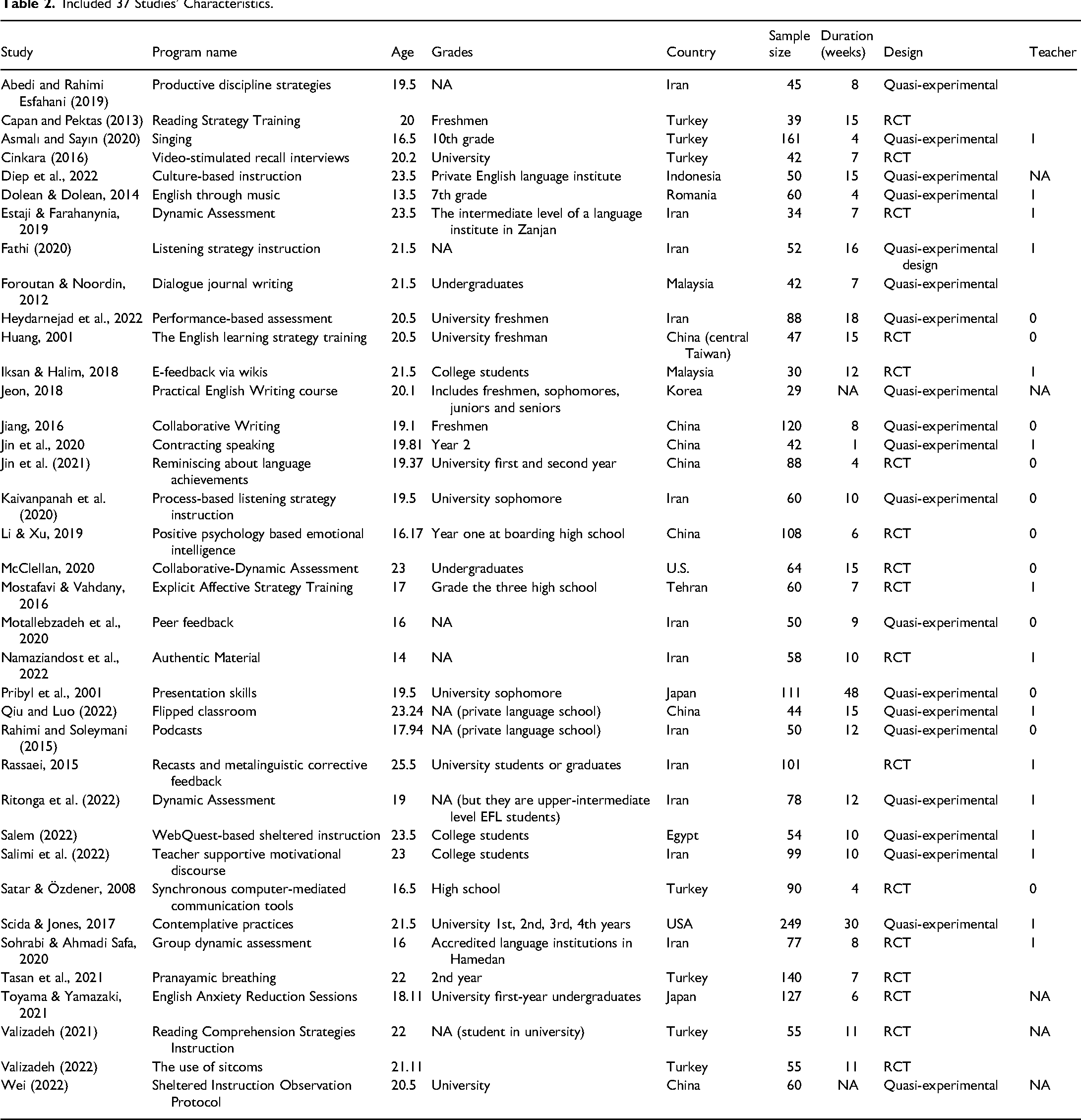
Table 2 includes detailed description of each included study, and Table 3 presents the descriptive statistics for the 37 included studies. Among the 37 studies analyzed, 34 studies (91.9%) involved students learning English as a second language, with only two studies involving learning Spanish as a second language (5.4%). The majority of students’ mother languages were not from the same language family as English (e.g., Turkish, Chinese, Indonesian), accounting for 51.4% (19 studies), while 14 studies (37.8%) shared the same family language with English (e.g., Persian, Romanian). Among all participants in the included studies, the mean age across studies is 20.42 (range: 13.50–25.50, sd = 3.38), and the mean female percentage is 62.11 (range: 0.00–100.00). Regarding the countries where the intervention took place, only two studies of participants (5.4%) came for the U.S. that is a WEIRD country, and all rest studies (94.6%) were from non-WEIRD countries. In specific, there were 13 studies (35.14%) conducted in Iran. Following Iran, China and Turkey each contributed seven studies, making up 18.92% of the total. Malaysia, the U.S., and Japan each accounted for 5.41% of the total with two studies from each country. Romania, Indonesia, South Korea, and Egypt each had only one study included.
Included 37 Studies’ Characteristics.
Descriptive Statistics of 37 Studies Included in the Analysis.
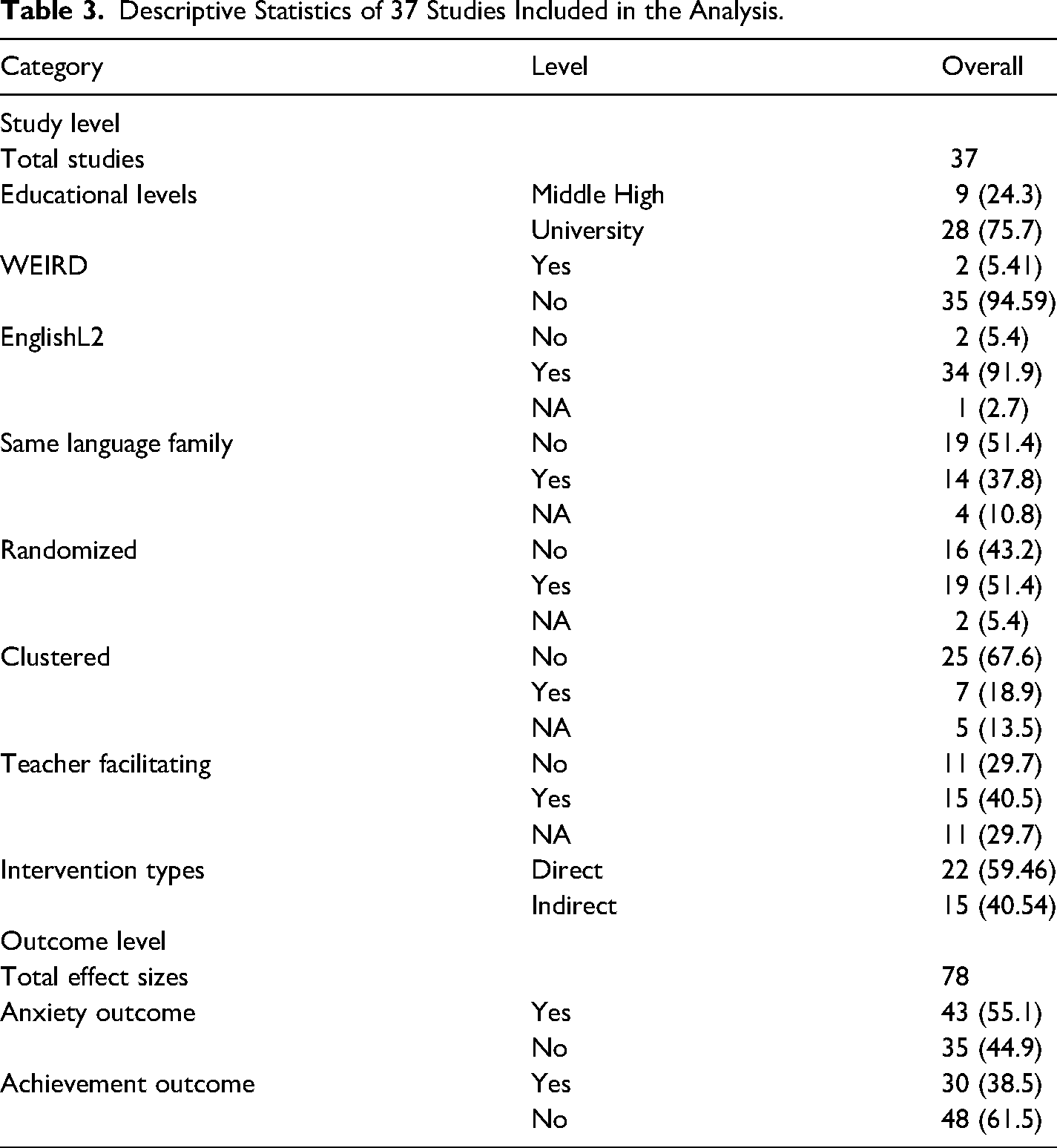
For participants’ educational level, nine studies (24.3%) focused on middle-high school populations and 28 studies (75.7%) targeted university populations. Regarding the facilitators of the interventions, 40.5% (15 studies) were delivered by teachers, whereas 29.7% (11 studies) were not and the rest did not report their facilitators. The sample size of 37 studies had a mean of 74.57 (sd = 43.72) with a range from 29 to 249. The duration of the interventions spanned from 1 week to 48 weeks, with a mean of 11.24 weeks and a standard deviation of 8.43 weeks. Among the outcomes, 43 effect sizes (55.1%) were related to FLA and 30 effect sizes (38.5%) to language achievement.
Qualitative Synthesis (RQ1)
Foreign Language Anxiety Measurement
The construct of FLA has been measured by several scales across different dimensions (see Table 4). Horwitz et al.'s (1986) FLCAS emerged as the predominant instrument, cited extensively across studies. Comprising 33 items on a 5-point Likert scale, the FLCAS comprehensively covers diverse dimensions of FLA. Notably, within Wei's (2022) investigation on College Students’ FLA, FLCAS served to gauge communication anxiety, test Anxiety, and negative evaluation anxiety. Translation and revision of FLCAS survey questions were noted in several studies to ensure precise communication with participants. For example, in Satar's study (2008), a scale that was a combination of FLCAS by Horwitz et al. (1986) and Aydın (2001) was employed. Moreover, both Yashima et al. (2009) and Zhao et al. (2022) consistently developed their own FLA measurements based on FLCAS, which was adopted in research to assess FLA. Namely, Na's (2007) Foreign Language Anxiety Scale, Foreign Language Learning Motivation Questionnaire, and Foreign Language Anxiety Scale enriched the understanding of FLA across various dimensions.
Foreign Language Anxiety Foreign Language Anxiety Measurements.
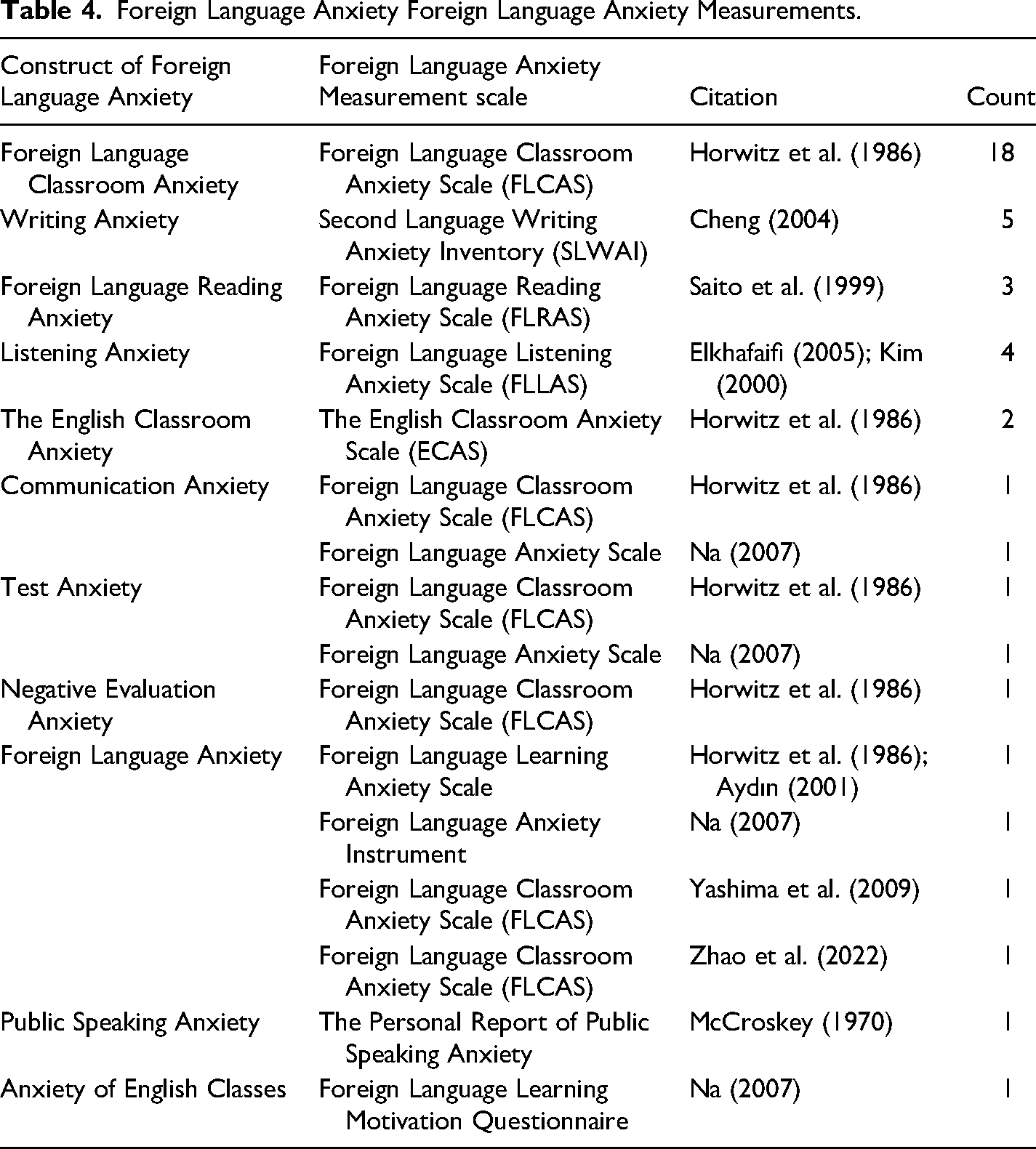
The English Classroom Anxiety Scale, along with Horwitz et al.'s (1986) seminal work, also contributed significantly to understanding anxiety in the English classroom context. In the realm of writing anxiety, Cheng's (2004) Second Language Writing Anxiety Inventory was a prominent measure, while Saito et al.'s (1999) FLRA Scale was used in studies focusing on reading anxiety. Listening Anxiety, an integral facet of FLA, was examined through Elkhafaifi's (2005) and Kim's (2000) Foreign Language Listening Anxiety Scale.
Publication Trends
Regarding the publication trends, the first two publications on FLA intervention were found in 2001. There were notable gaps from 2001 to 2008 and from 2008 to 2012 where there were no relevant publications during these two periods. However, since 2019, there has been an increase in publications annually until 2022, which marked a peak with a total of nine publications on FLA intervention that year. The second peak was in 2020, with seven publications on FLA intervention. Overall, while the publication trends regarding interventions in FLA among students have not consistently increased over the years, there is a discernible upward trend (see Figure 2).
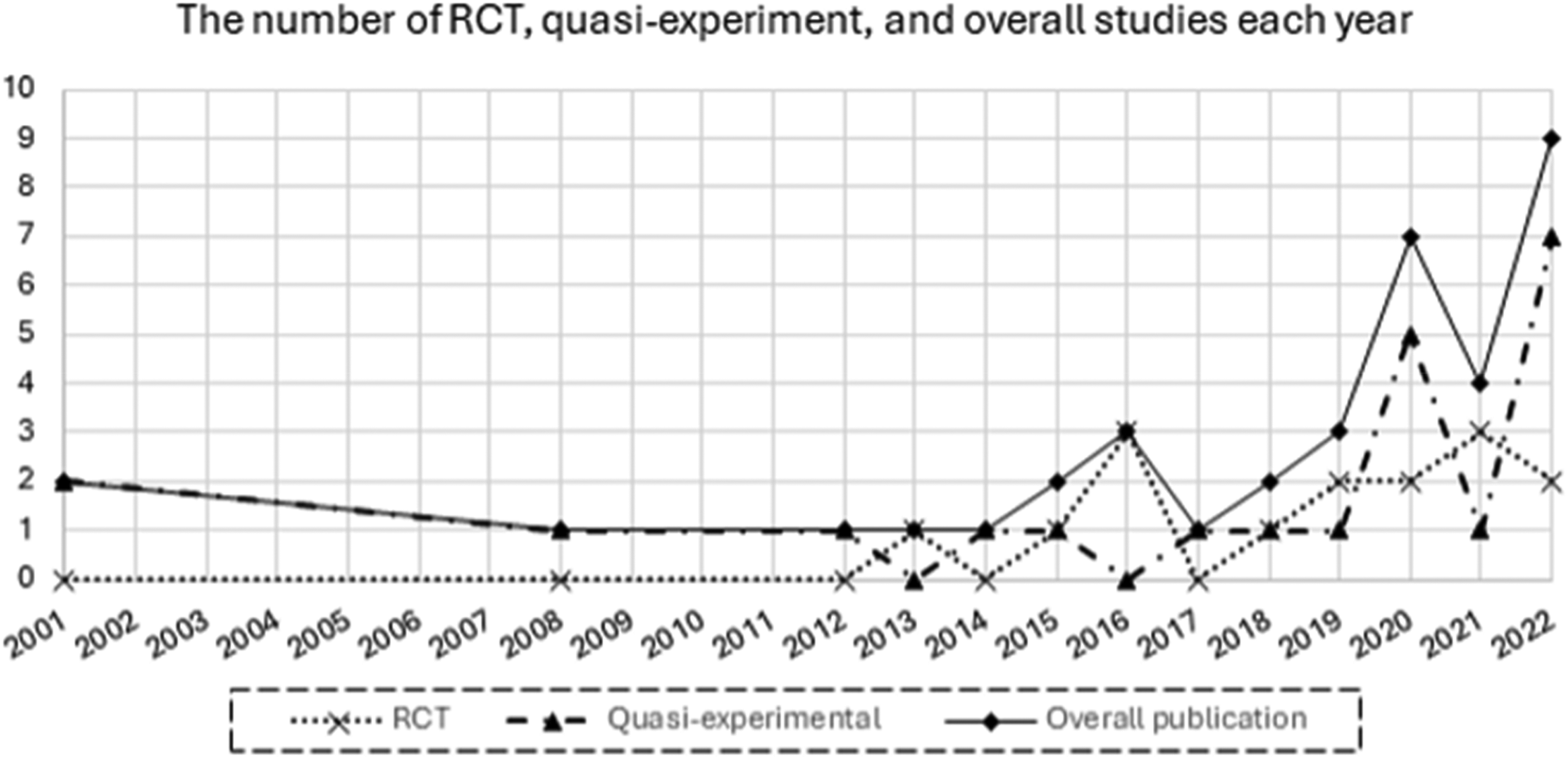
The number of RCT and quasi-experiment studies each year.
Regarding the journals or publishers that published those articles, two were thesis or dissertations (5.4%). Education-related and Language-related journals comprised the majority, each with 14 and 12 articles, representing 37.84% and 32.43% of the total. Lastly, the journals of psychology and counseling were represented by nine studies, accounting for 24.32% of the total. Regarding the IFs of the journals, 15 journals had no IFs, and 21 journals with IFs ranged from .83 to 4.90 (M = 3.05, SD = 1.18).
Intervention Types
Among the studies, 17 (45.94%) utilized direct strategies, predominantly focusing on reading, writing, speaking, and presentation skills in a foreign language. Twenty (54.05%) adopted indirect strategies, such as using contemplative practices (Scida & Jones, 2017), Pranayama breathing (Tasan et al., 2021), positive psychology (Li & Xu, 2019), and culture-based instruction (Diep et al., 2022). Among these, nine (45.00%) employed affective strategies, eight (21.62%) used social strategies, and three (15.00%) incorporated metacognitive strategies.
Research Design
In general, there were more quasi-experimental designs than RCT studies, as 22 quasi-experimental designs accounted for 59% of the studies, while 15 RCTs accounted for 41%. Figure 2 displays the number of two types of intervention studies, RCT and quasi-experiment design, along with the total number of studies per year. The overall number of RCT and quasi-experiment design publications per year remained constant between 2001 and 2019, ranging from one to three. The number of RCT studies rose from one in 2019 to nine in 2022.
Regarding the control groups and cluster design, the majority of intervention studies kept the control group under traditional instruction, as evident that 35 (95%) studies were coded as business as usual, and two studies (5%) did not have a control group. Moreover, seven studies (18.9%) employed cluster design, and 25 studies (67.6%) did not.
Meta-Regression Results (RQs 2 and 3)
Figure 3 is a forest plot of included studies’ effect sizes. Table 5 presents the model results of meta-regression that included the moderators. The null model demonstrated an intercept of −0.61 with a standard error of 0.28, resulting in a statistically significant t-value of −2.20 (p = .036). This means that the overall mean effect size for these 37 studies is −0.61 (p = .03) while holding all moderators fixed at their mean. In other words, FLA programs, on average, are statistically significant in reducing anxiety among students.
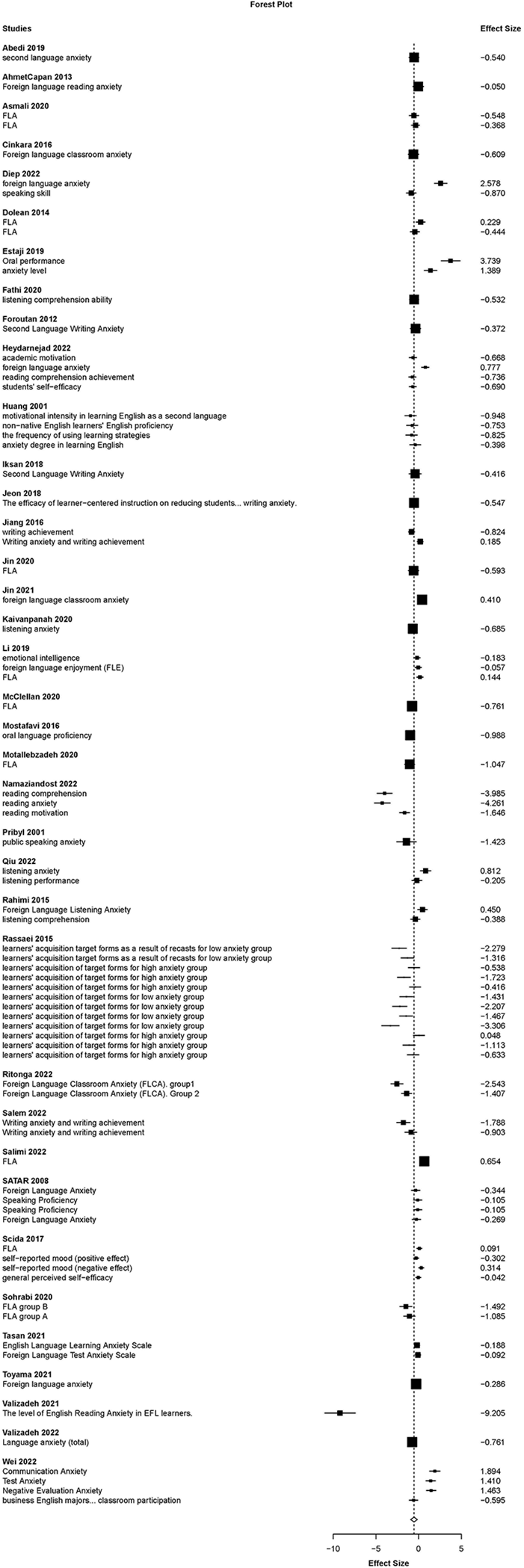
The forest.
Meta-Regression Results with Moderators.
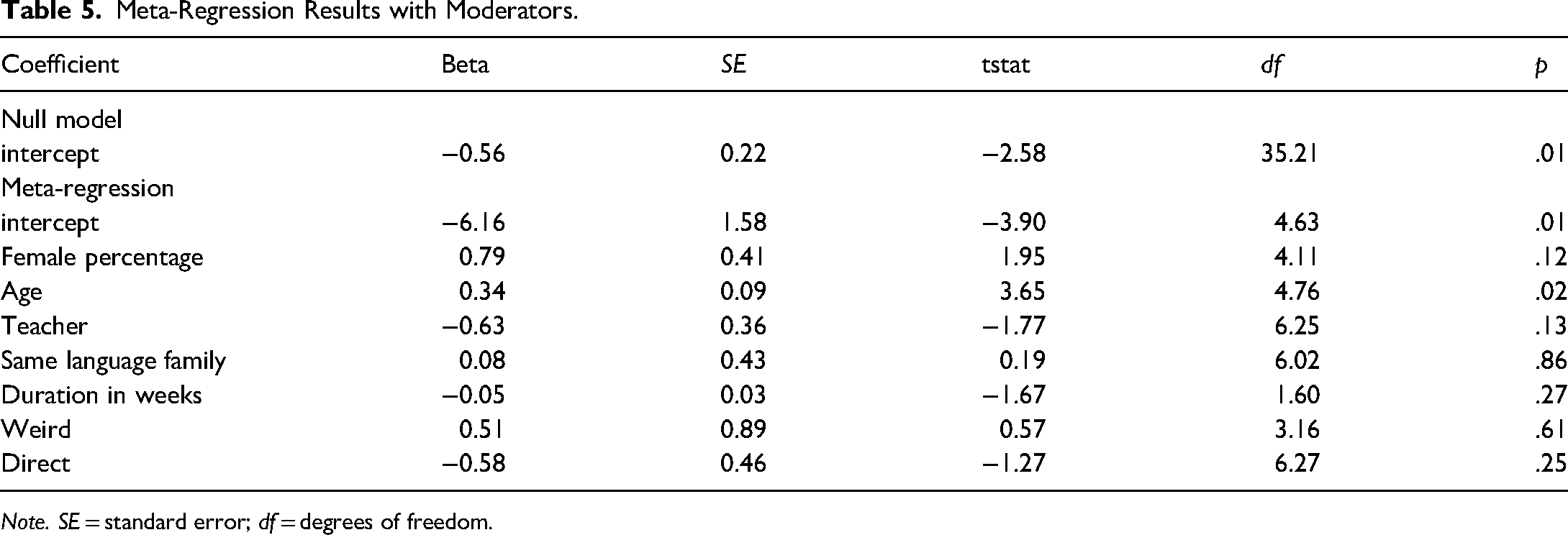
Note. SE = standard error; df = degrees of freedom.
Furthermore, it is important to identify key helpful features or unhelpful features associated with these FLA interventions. To understand what factors contribute to effective programs, we added seven moderators to the meta-regression model. However, except participants’ age (β = .34, p = .02), most of the moderators were nonsignificant, including gender (β = .79, p = .12), program delivery personnel (β = −.63, p = .13), WEIRD (i.e., the study's geographical locations) (β = .51, p = .61), same language family (β = .08, p = .86), durations of the intervention (β = −0.05, p = .27), and types of interventions (β = −.58, p = .25). Details of the moderator analyses can be found in Table 5.
Publication Bias
Applying Vevea and Woods’ weight-function model, this study found significant publication bias. In the adjusted model, the test for heterogeneity is significant (Q[df = 92] = 1485, p < .001). Likelihood ratio test for the model result is significant (x squared = 81.88, p < .001). This means that the estimated pooled effect of FLA interventions is potentially inflated by the exclusion of missing studies from the current meta-analysis. Nonsignificant and positive findings are 38.90 times as likely to be included as significant ones.
Applying Vevea and Woods’ (2005) weight-function model, this study found that the mean effect estimates were downwardly adjusted, implying that statistically nonsignificant effects were more likely to be reported than significant results (g = 3.29 when the cutoff point for p value is between 0.025 and 0.5).
Discussion
This systematic review and meta-analysis found 37 articles focused on FLA interventions. To the best of the researcher's knowledge, this paper represents one of the pioneering endeavors to systematically review and meta-analyze the efficacy of interventions designed to mitigate FLA. Our findings indicate a notable effectiveness of these interventions in ameliorating FLA among participants. Since anxiety may be seen as an individual difference, following Gignac and Szodorai's (2016) individual difference-specific effect size guidelines, our results (ES = −0.61, p = .03) suggest that FLA interventions have a relatively large effect size. Upon inclusion of moderator variables in the analytical models, age was the only significant moderator despite seven moderators were included.
The systematic examination of literature about FLA interventions revealed discernible patterns in publication trends. Analysis of temporal trends in publication frequency indicates a progressive rise in the dissemination of research on FLA interventions, which indicates the rising interest in FLA interventions in academia. Notably, very few interventions (two out of 37 studies) were conducted within the U. S. This observation is intriguing, particularly because of the U.S.’ status as a prominent destination for international students and immigrants (McAuliffe & Triandafyllidou, 2021). The prevalence of language barriers and FLA among these populations has been extensively documented (e.g., Xiong et al., 2021; Xiong et al., 2022; Xiong et al., 2024b), suggesting a pressing need for targeted interventions. The conspicuous lack of FLA intervention studies within the U.S. may reflect a relative oversight in addressing the needs of the immigrant and international student population.
The predominant utilization of the FLCAS (Horwitz et al., 1986) to measure FLA emerges as another noteworthy finding, which indicated a predominant focus on assessing anxiety specifically within classroom settings. This emphasis, while informative, may inadvertently overlook FLA manifestations in other contexts, such as professional environments and daily life interactions. Consequently, there is a great need for researchers to diversify measurement instruments for evaluating FLA across various settings to foster a more comprehensive understanding of FLA dynamics.
Upon scrutinizing the journals that have disseminated articles on FLA interventions, a predominant proportion of these publications originated from language-focused and education-focused journals, with only a minority featured in psychology journals. This trend is unsurprising, given the inherent connection between FLA and language acquisition, prompting educators’ concerted efforts toward alleviating FLA within educational contexts. However, the noticeable dearth of FLA publications within psychology journals may reveal a relative neglect of FLA within psychological and counseling disciplines. Considering the escalating global influx of immigrants and international students, it becomes imperative for mental health professionals to cultivate a deeper understanding of FLA and its implications (Xiong et al., 2024b). Immigrants and international students, often vulnerable to FLA-related challenges, have been found to benefit significantly from the expertise and interventions offered by mental health practitioners (McClellan, 2020). Therefore, there is an urgent call for counseling and psychology professionals to explore further FLA interventions to mitigate FLA and support individuals grappling with FLA. Moreover, since approximately half of the articles were published in journals without an IF, there is a risk that FLA interventions may not be widely adopted by educators or practitioners. We therefore advocate for journals in relevant fields with high IFs to consider publishing more research on FLA interventions.
Regarding the research design, most studies adopted an experimental and control group design, in which control groups received either no treatments for baseline comparison or alternative instruction. For instance, to examine the effectiveness of performance-based assessments, Heydarnejad et al. (2022) assigned participants to the control group to receive traditional assessments. A small number of studies adopt a single-group design. For example, Sağlamel and colleagues (2013) carried out a six-week creative drama intervention in speaking classes in Turkey. An encouraging observation about research design is the discernible increase in the utilization of RCTs. Despite the inherent challenges associated with the implementation of RCTs due to the rigorous methodological requisites, they remain widely regarded as the “golden standard” for evaluating intervention effectiveness (Hariton & Locascio, 2018). The increasing trends in RCTs adoption in FLA interventions may partially attributed to advancements in experimental design methodologies (Hariton & Locascio, 2018). Upon closer examination of the included studies, the sample sizes varied considerably, ranging from 29 to 249. While these divergent sample sizes reflect inherent variability across individual studies, it is worth noting that larger sample sizes hold the potential to yield more robust and generalizable findings (Dell et al., 2002).
Furthermore, the predominant focus of interventions on middle high school and university students underscores a notable gap in intervention programs for children below middle school age. This disparity may be attributed to the greater accessibility of middle, high school, and university students, coupled with potentially less stringent language learning requirements for younger children. Moreover, the overwhelming majority of interventions predominantly targeted English language learning, with only a minimal representation targeting other languages, such as Spanish (McClellan, 2020). Given English is the most spoken second language (Pribyl et al., 2024), many non-English-speaking countries mandate English language learning as a secondary language, thereby accentuating the emphasis on English language interventions.
Upon categorizing FLA intervention types, it becomes evident that researchers equally utilized direct and indirect strategies to reduce students’ FLA. When breaking down the indirect strategies, nine studies reported using affective strategies. This finding underscores a notable emphasis on improving participants’ language skills and abilities within FLA interventions, despite FLA being inherently an emotional response to foreign language learning or utilization (Çapan & Pektas, 2013). This inclination may stem from the initial conceptualization of FLA by Horwitz and colleagues (1986), wherein the focus primarily revolved around the learning process of FLA, encompassing self-perceptions of language acquisition, external evaluations, and anxiety about learning tasks. Consequently, FLA interventions historically gravitated toward enhancing participants’ language proficiency. However, as research on FLA has evolved, there has been a discernible shift toward elucidating the influence of social environments on individuals’ language-related anxieties (Sevinç & Backus, 2017). Accordingly, an increasing number of FLA interventions have begun addressing participants’ emotional experiences and incorporating elements such as social strategies. Nevertheless, a noteworthy observation is the paucity of interventions directly examining the impact of social environments on FLA, highlighting a potential avenue for further research and intervention development.
Last, within the meta-analysis model, we identified the overall significant effect of FLA interventions. This finding suggested the promising outcome of various FLA interventions. The participants’ age was a significant moderator, which indicated that FLA interventions are more effective among younger participants compared to older participants. One possible explanation may be related to the unique challenges that older learners face in language acquisition, such as reduced confidence, which may worsen anxiety levels (Ohly, 2008). However, the rest of the tested moderators were not significant, which may indicate the challenge in identifying the effective factors in those interventions. There were some possible explanations. One possibility is the limited statistical power due to small sample sizes or insufficient variability in the moderator variables. Additionally, some moderators may interact in complex ways that are not easily captured by the current model, making it difficult to isolate specific factors influencing the effectiveness of FLA interventions. These challenges underscore the need for further research to refine our understanding of which factors contribute to the success of FLA interventions.
Implications
Foreign language anxiety poses a significant challenge for individuals navigating linguistic and cultural diversity. In light of our research findings, several critical implications emerge for the FLA interventions, spanning both theoretical and practical domains.
Exploring Effective Intervention Components
Our study underscores the importance of delving deeper into the specific components of interventions designed to alleviate FLA. While existing interventions have shown promise in mitigating FLA symptoms, further research is warranted to elucidate the mechanisms underlying their effectiveness. Specifically, there is a pressing need to investigate emotion-targeted interventions that directly address the affective dimensions of FLA. In addition, limited research has investigated strategies for mitigating the adverse impact of social environments and evaluations of individuals’ language abilities FLA. Strength-based and ecological approaches are needed to cultivate emotional resilience and promote adaptive coping mechanisms among individuals affected by FLA.
Moreover, the expansion of research efforts outside of middle, high, and university settings is imperative to capture the diverse experiences of FLA across different age groups and cultural contexts. Studies encompassing children and adults in various learning environments, including language immersion programs and community-based settings, can provide valuable insights into the developmental trajectories of FLA and inform tailored intervention strategies. Additionally, investigations into FLA among individuals learning languages other than English, such as Chinese, offer a promising avenue for advancing our understanding of FLA's cross-linguistic dynamics and tailoring interventions to meet the unique needs of diverse language learners.
Enhancing Methodological Rigor
We also call for a more rigorous research design and diverse participant population in studying FLA interventions. The proliferation of RCTs represents a crucial step toward establishing the efficacy of FLA interventions. By employing rigorous experimental designs and adhering to best practices in research methodology, scholars can generate robust empirical evidence to support the effectiveness of intervention strategies. Furthermore, the inclusion of diverse participant populations in FLA studies is essential to ensure the generalizability and ecological validity of research findings. By actively recruiting participants from diverse linguistic backgrounds, cultural contexts, and proficiency levels, researchers can capture the nuances of FLA experiences and develop culturally sensitive interventions that resonate with the needs of diverse language learners.
Practical Implications for Intervention Implementation
Beyond the realm of research, our findings hold significant implications for practitioners and policymakers tasked with addressing FLA in real-world settings. This study recognized the effectiveness of FLA interventions; therefore, the researchers encourage more implementation of various FLA interventions in different settings to help individuals who are struggling with FLA. For example, countries hosting large populations of international students and immigrants (e.g., U.S.) are encouraged to implement comprehensive FLA interventions and rigorously evaluate their outcomes. By investing in evidence-based interventions and fostering collaboration between educational institutions, government agencies, and community organizations, these countries can create supportive environments that facilitate language learning and promote cultural integration.
Moreover, professionals in psychology and counseling fields play a pivotal role in addressing FLA among their clients and within their professional communities. Recognizing the prevalence and impact of FLA on mental health and well-being, psychologists and counselors are urged to integrate FLA assessment and intervention techniques into their clinical practice. This includes conducting thorough assessments of FLA symptoms, providing psychoeducation on FLA-related issues, and offering evidence-based interventions to help clients manage FLA-induced distress and improve their language learning outcomes. Furthermore, efforts to raise awareness of FLA among professionals whose first language is not English are essential for promoting linguistic inclusivity and fostering a supportive professional environment that values linguistic diversity.
Limitations
This systematic review and meta-analysis constitutes a seminal contribution to the understanding of interventions targeting FLA. As the first of its kind, this study evaluates the effectiveness of FLA interventions based on published literature available in English. However, it is crucial to acknowledge that this approach may inadvertently exclude relevant studies published in languages other than English. There exists a possibility of overlooking valuable insights and interventions documented in non-English literature, thereby potentially limiting the comprehensiveness and generalizability of our findings.
A key methodological consideration pertains to the selection criteria employed, which primarily utilized “FLA” as the primary search term. While this approach is consistent with established terminology within the FLA literature, it is essential to recognize its inherent limitations. By exclusively focusing on studies explicitly using the term “FLA,” there exists a risk of overlooking relevant research that may explore similar constructs under different terminology or conceptual frameworks. Consequently, the scope of our review may inadvertently omit valuable contributions from studies that employ alternative terminologies or conceptualizations of anxiety in the context of foreign language learning.
Lastly, we could not include all interested variables as moderators in the model either due to a high percentage of missing data or limited sample size. For example, we initially intended to include race as a moderator. However, nearly 95% of the included studies did not provide detailed information on the participants’ race. We therefore excluded race as a moderator from the final model. Meanwhile, we conducted qualitative synthesis with publication types, IFs, research design, sample size, outcome variables, and educational levels without adding them to the final model as moderators. This decision was based on lack of power of the meta-regression model given the limited sample size. Adding more moderators than the model could fit would have compromised the reliability and validity of our analysis.
Conclusion
This study represents one of the initial systematic reviews and meta-analyses of interventions targeting FLA. It provides valuable insights into the efficacy of such interventions; however, discerning the specific components contributing to their effectiveness remains challenging. The findings of this study serve as a foundational resource for guiding future research and practice aimed at helping FLA-affected students.
Footnotes
Acknowledgments
Thanks to Scarlett for helping with coding and literature review.
Declaration of Conflicting Interests
The authors declared no potential conflicts of interest with respect to the research, authorship, and/or publication of this article.
Funding
The authors received no financial support for the research, authorship, and/or publication of this article.
