







Abstract
Age-related macular degeneration (AMD) is the leading cause of visual impairment in older adults in the United Kingdom. This study sought to characterise AMD patients who seek the services of the Macular Society, and determine the level and source of their dietary knowledge. A questionnaire was designed, validated, and administered to 158 participants. The questions covered demographic data and knowledge of nutrition and supplementation. The mean age of participants was 79 years; 61% of them were female, and 27% were registered visually impaired. Only 55% of the participants thought diet was important for eye health, 63% felt that they had not received enough information about AMD. The participants reported that their information mainly came from non-professional support groups. Most participants identified healthy food, but could not say why, and were not able to identify carotenoid rich foods. The results of the study will inform design of education and dissemination methods regarding dietary information.
Introduction
Age-related macular degeneration (AMD) is the leading cause of visual impairment in older adults (>50 years) in the United Kingdom (Royal National Institute of Blind People [RNIB], 2010). Currently, there are several AMD classification schemes which have been developed to try to standardise research and clinical practice. Ferris et al. (2013) proposed a five-stage classification scale, which has achieved some consensus among AMD specialists: (1) no apparent ageing changes; (2) normal ageing changes, known as ‘drupelets’ (small drusen ≤ 63 µm); (3) early AMD – medium-sized drusen 125 ≤µm; (4) intermediate AMD – large drusen and pigmentary (hyper or hypo) anomalies; and (5) late AMD – geographic atrophy and/or neovascularisation. AMD can cause a gradual loss of central visual function occurring within months, or over many years, and late AMD can cause central visual loss and metamorphopsia within days or even hours. Many AMD patients have been given a simplified classification using the terms ‘dry’ to describe geographic atrophy and ‘wet’ to describe neovascularisation or exudation. Visual loss is strongly associated with a reduction in quality of life as it will limit the ability to perform daily activities. Subsequently, depression often occurs in these patients (Mathew et al., 2011). It has been predicted that the prevalence of AMD will increase significantly by 2020 due to the generalised ageing of the population (Owen et al., 2012; Shaw, 2006), and also due to socio-economic factors such as poor nutrition and increased smoking in some areas (Huffman et al., 2012; Wennergren et al., 2013). Therefore, it can be expected that there will be a growing need for support services for people with this condition.
Diagnosis for AMD in the United Kingdom occurs via an ophthalmologist (RNIB, 2010). Often, after the initial diagnosis, the patient will receive written material regarding the disease from the ophthalmology department. The decision then rests with the ophthalmologist as to whether the patient requires any treatment. This might take the form of anti-vascular endothelial growth factor medications (e.g., Lucentis®) or surgery/laser work to wet AMD conditions, low vision services, or placement upon a sight impairment register. If the AMD is of an early or intermediate stage, the patient will have very little contact with any hospital services for some years – if at all – unless the AMD changes to a late stage. Patients are advised to have a yearly eye examination with an optometrist, who will monitor the condition but is often unable to provide physical or psychological help without referral (Association of Optometrists [AOP], 2001).
While specialists agree that smoking has a big impact on AMD and that cessation will halt progression of the disease (Caban-Martinez et al., 2011), there are conflicting research findings and therefore conflicting information provided by eye-care practitioners regarding the impact of nutrition on AMD (Kent, 2007).
The Age-Related Eye Disease Study (AREDS) reported that nutritional supplementation in people with intermediate AMD can reduce their risk of progression to advanced AMD by 25% (Kassoff et al., 2001). While AREDS was in progress, evidence emerged to suggest that the dietary nutrients lutein and zeaxanthin may be more effective than other nutrients in reducing AMD risk or progression due to their antioxidant and photo-protective properties (Beatty, Koh, Phil, Henson, & Boulton, 2000). The plausibility for this hypothesis is due to the high concentration of lutein, zeaxanthin, and a related compound meso-zeaxanthin, in the macula, particularly in the fovea, which form the macular pigment (Khachik, Bernstein, & Garland, 1997). The protective properties of the macular pigment are now well established and include the ability to interact with free radicals, prevent lipid peroxidation, and filter out incoming high-energy blue light (Alves-Rodrigues & Shao, 2004; Ham, 1983; Junghans, Sies, & Stahl, 2001; RNIB, 2010). Some studies also show a link between increased intake of lutein and zeaxanthin, and higher macular pigment levels (Bhosale, Zhao, & Bernstein, 2007; Vishwanathan, Goodrow-Kotyla, Wooten, Wilson, & Nicolosi, 2009; Wenzel, Sheehan, Burke, Lefsrud, & Curran-Celentano, 2007). Supplementation studies report increases in macular pigment of between 21% and 57% following lutein and zeaxanthin supplementation in people with healthy eyes. Increases in macular pigment of between 24% and 36% have been reported in people with retinal disease. One randomised controlled trial reported an improvement in several measures of visual function in a group of veterans who supplemented with 10 mg of lutein for one year (Richer et al., 2004; Ziemssen, Warga, Bartz-Schmidt, & Wilhelm, 2005). A recent study by Loughman et al. (2012) suggests that supplementation with all three macular carotenoids may offer advantages both in terms of macular pigment optical density (MPOD) response and visual performance enhancement. The AREDS team recently released the results for their follow-up study (AREDS-2), which encompassed lutein and zeaxanthin to the original AREDS supplement formulation (Chew et al., 2013). The study found that adding lutein and zeaxanthin did not further reduce the risk of progression to advanced AMD. However, investigators report that lutein and zeaxanthin may be useful substitutes for beta carotene in the original formulation (Cangemi, 2007). Despite the conflicts, overall, the research evidence suggests that high macular pigment levels could reduce risk for onset or progression of AMD.
Because xanthophylls are not synthesised by the human body, they have to be acquired either in the diet or by supplementation. Research shows that the highest mole percentage of lutein and zeaxanthin are in egg yolk, maize (corn), spinach, collard greens (like cabbage), and kale (Hosseini, Mosallaei, & Kalameh, 2009; Sommerburg, Keunen, Bird, & van Kuijk, 1998). Maize has been identified as the vegetable with the highest quantity of lutein and orange pepper was the vegetable with the highest amount of zeaxanthin. Amounts of lutein and zeaxanthin are also reported to be present in kiwi fruit, grapes, orange juice, courgettes, and different kinds of squash. Predominantly, leafy green vegetables have a highest content of lutein and zeaxanthin.
Despite the body of evidence in support of a role for dietary modification or nutritional supplementation in reducing risk of progression of AMD, neither patients nor practitioners are clear about what kind of supplements to take or how foods should be prepared and consumed in order to maximise absorption of useful nutrients (Kent, 2007). To add to the confusion, there are many nutritional supplements aimed at those with AMD currently on the market, with varying degrees of dosage and some without any research basis at all (Arora, Musadiq, Mukherji, & Yang, 2004; Loughman, Nolan, Stack, & Beatty, 2011). Many do not contain the AREDS formulation. Research has shown that given more choices, patients are much more likely to be overwhelmed (Kent, 2007). Supplements are not regulated in the same manner as medication in the United Kingdom (EU Directive, 2002) and it is very difficult to identify which supplements are likely to be of any benefit.
Since many local authorities do not have standardised rehabilitation services in place (Gillespie-Gallery, Conway, & Subramanian, 2012), some patients have been turning to non-professional charities, such as the Macular Society, to acquire information and support. The Macular Society is the only national UK charity that is dedicated solely to helping those with diseases of the macula. They provide impartial information and practical support for visually impaired people, their families and carers. They also ‘provide information for health professionals, campaign for better services, sponsor research and raise awareness of macular degeneration and preventative measures’ (The Macular Society, 2013, http://www.macularsociety.org/how-we-help).
The objectives of this study were, first, to find out who pursues the help of a non-professional charity, and second, to determine the beliefs and understanding that these AMD patients have about the impact of nutrition on the condition, and where patients have obtained information about nutrition.
Methods
Participants
A total of 158 participants were recruited between January 2012 and March 2012. Recruitment was via the Macular Society helpline volunteer worker. Patients aged over 55 years of age who contacted the Macular Society helpline between January 2012 and March 2012 were asked if they would like to take part in a telephone survey (once they had received all the assistance they needed from the Macular Society). Pre-requisites for potential participants were that they should be aged over 55 years and have been diagnosed with a form of AMD; exclusion criteria were the inability to hear and reply to questions in English over the telephone. No attempt was made to define and categorise the amount of visual loss the participant had, as the objective was to assess typical patients seeking the Macular Society services.
Ethics
The procedures followed were in accordance with the ethical standards of the Aston University Ethics Committee on human experimentation that conform to the Declaration of Helsinki 1975, revised Hong Kong 1989.
Survey design
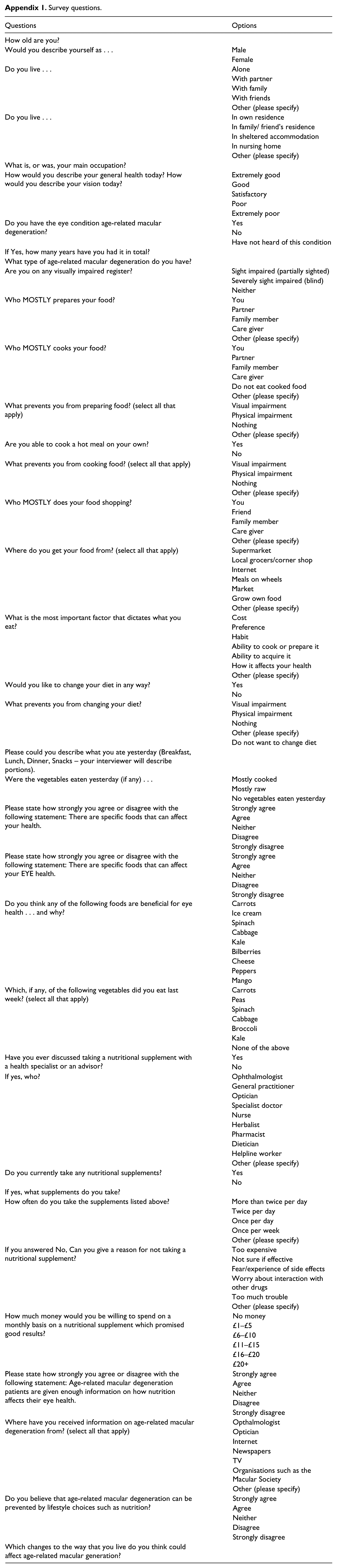
A systematic literature review of research on AMD patients’ perceptions of nutrition and AMD was conducted of the following databases: Web of Knowledge, The Cochrane Library, Optics Infobase, Ovid Journals, PsycArticles, National Center for Biotechnology Information (NCBI) databases, and Wiley Online Library. The following key terms were used: ‘Age-related macular degeneration’, ‘Nutrition’, ‘Survey’, ‘Attitudes’, ‘Behaviours’, and ‘Diet’. This review did not identify any existing measure of patients’ perceptions of nutrition, but found most surveys looked at nutritional behaviours (Montgomery et al., 2010). As a result, a 36-question cross-sectional survey was designed to explore nutritional habits, supplement usage, physical abilities in food preparation and cooking, and sources of knowledge in order to ascertain the beliefs AMD patients have, and compare their beliefs with their behaviours. Not all the results of the 36 questions are covered in this article. Because the survey was exploratory, it was designed mainly with open-ended questions in order to ensure responses reflected participants’ true beliefs. In addition, some closed-ended questions were included with response scales to grade participants’ feelings.
The survey was then piloted on eight AMD participants, from the Macular Society, to test the reliability, comprehensibility, and understanding among an informed population. This ‘face validity’ (i.e., does the questionnaire appear correct at face value) was the only means of validation that it was possible to perform, due to a lack of other instruments to compare the results with. Initially, the eight patients completed the survey via a telephone interview. Three weeks later, the patients attended a focus group that had two parts: first, the participants completed the survey once more. Next, the participants had a recorded, guided informal discussion structured by a moderator – the volunteers were asked to comment on how easy the questions were to understand and opinions on the topics covered. The results of this meeting were analysed to further refine the survey, which was altered accordingly (e.g., the terms ‘wet’ and ‘dry’ were employed to coincide with many patients’ understanding of AMD classification, extra options were added to some questions, some questions were removed or re-worded, and additional instructions were added). The final survey (see Appendix 1) was then administered to the cohort.
The initial questions covered demographic topics such as gender, age, employment, social history, type, and length of time with AMD and visual impairment registration. Opinions on diet and supplementation were obtained, with particular interest in whether participants could identify lutein- and zeaxanthin-rich foods (e.g., kale) among other vegetables. Participants were also asked where they had acquired any information about the condition from (for instance, an ophthalmologist, optician, Macular Society, etc.). The questions subsequently focused on perceived state of vision and health, and ability to perform preparation and cooking of food. Participants also provided a food diary for 24 hr, as studies have shown there is less measurement error in food recording than in food frequency questionnaires, and the ability to study associations between diet and chronic diseases is slightly easier with food diaries (Bartlett & Eperjesi, 2004; Block, Hartman, & Dresser, 1986). The results of the questions relating to cooking abilities, perceived health and vision states, and the food diary is beyond the scope of this article and will be discussed in a future article.
Procedure
If a patient agreed to take part, their name and contact details were taken by the helpline worker. The potential participants were read an information factsheet informing them what the survey would involve, how long it would take, and how the information would be stored. If the patient decided to participate, an oral informed consent was obtained over the telephone and they were advised that they could withdraw at any time. Usually, an appointment was scheduled for a future telephone interview or the interview began immediately if the patient wished.
They were then contacted at a convenient time by one of four Macular Society employees who would administer the telephone interview and fill in the survey online at the same time (Bristol Online Surveys). The telephone interview lasted approximately 25 min, and was not recorded. Each volunteer was trained (by R.S.) to ask the questions only, without bias, and if the participant had any questions regarding the survey, they were given the author’s contact details, although no participant made any contact.
Data analysis
The results were analysed to find the mean, median, and standard deviation using the software Microsoft Excel. Data from Excel was then used to create charts, and used in statistical software IBM SPSS (version 20) to draw comparisons between supplement cost and usage using chi-square statistics. Qualitative data was grouped into categories and general themes were extracted to then use in SPSS.
Results
Sample characteristics
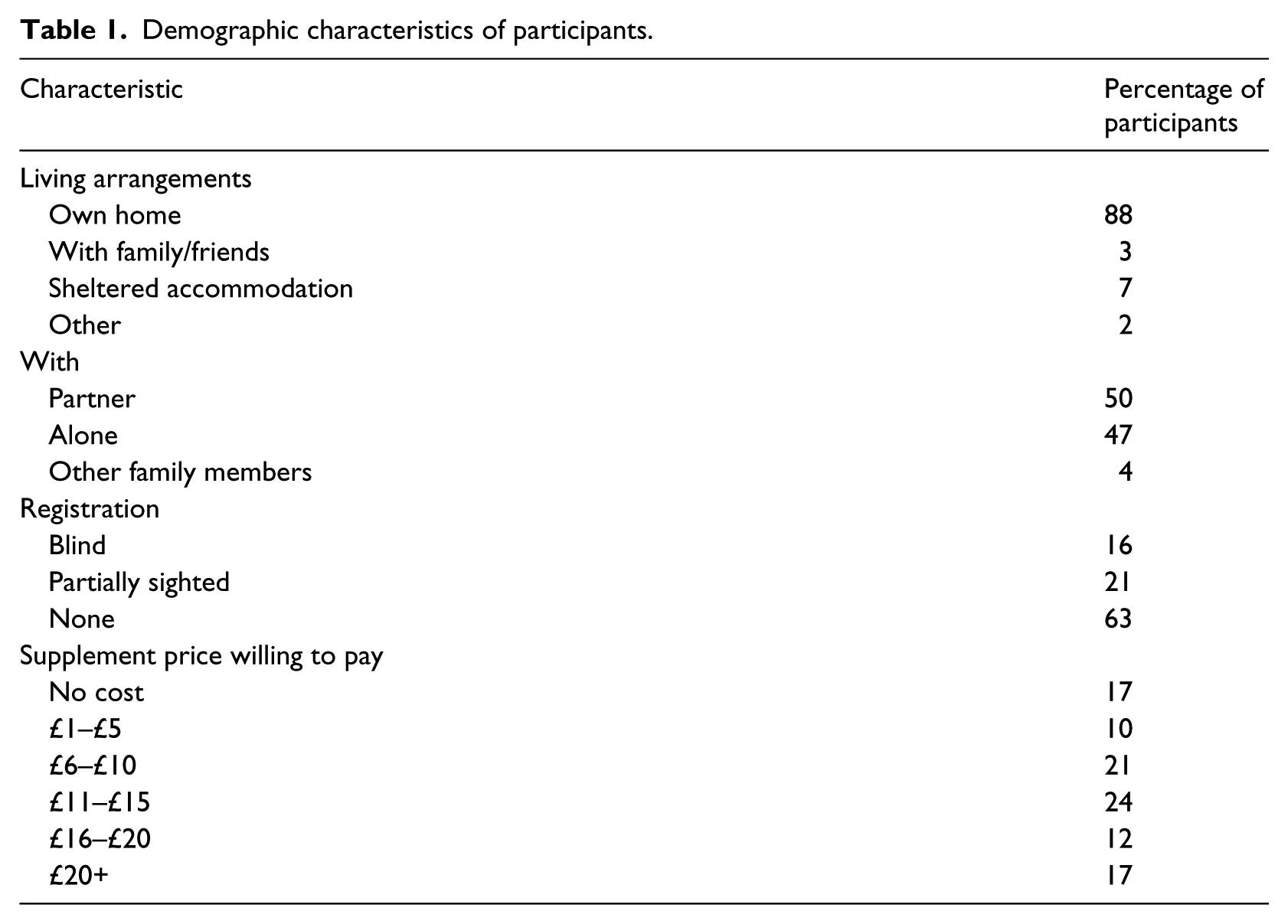
Table 1 shows the demographic characteristics of the sample. The gender distribution of the 158 participants showed that there were significantly more females (61%) in the sample than males (39%) (chi-square p = .05). The participants ranged in age from 56 to 95 years; the median age was 80 years. There was a nearly even split between ‘wet’ (47%) and ‘dry’ (49%) types of AMD, with a small percentage of participants who were unsure of their AMD classification. The median duration of having the condition was 5 years, ranging from 1 to 25 years. The majority of participants lived in their own home – either rented, mortgaged, or owned outright, and participants mainly lived either with their partner or alone. The majority of participants were not registered partially sighted or blind, although there was a trend for those participants that had the condition for longer to be on a register (Kruskal–Wallis H, p = .09).
Demographic characteristics of participants.
Patients’ perceptions of diet and eye health
When asked their overall opinions on diet and health, 87% of participants believe that diet affects general health, and 68% believe that diet affects eye health.
Figure 1 shows the beliefs that participants held about specific foods, such as leafy green vegetables, which are good sources of lutein and zeaxanthin, other fruits and vegetables, and dairy products. Participants were asked if they believed each food was beneficial for eye health, and if they answered Yes, they were asked why they thought so.
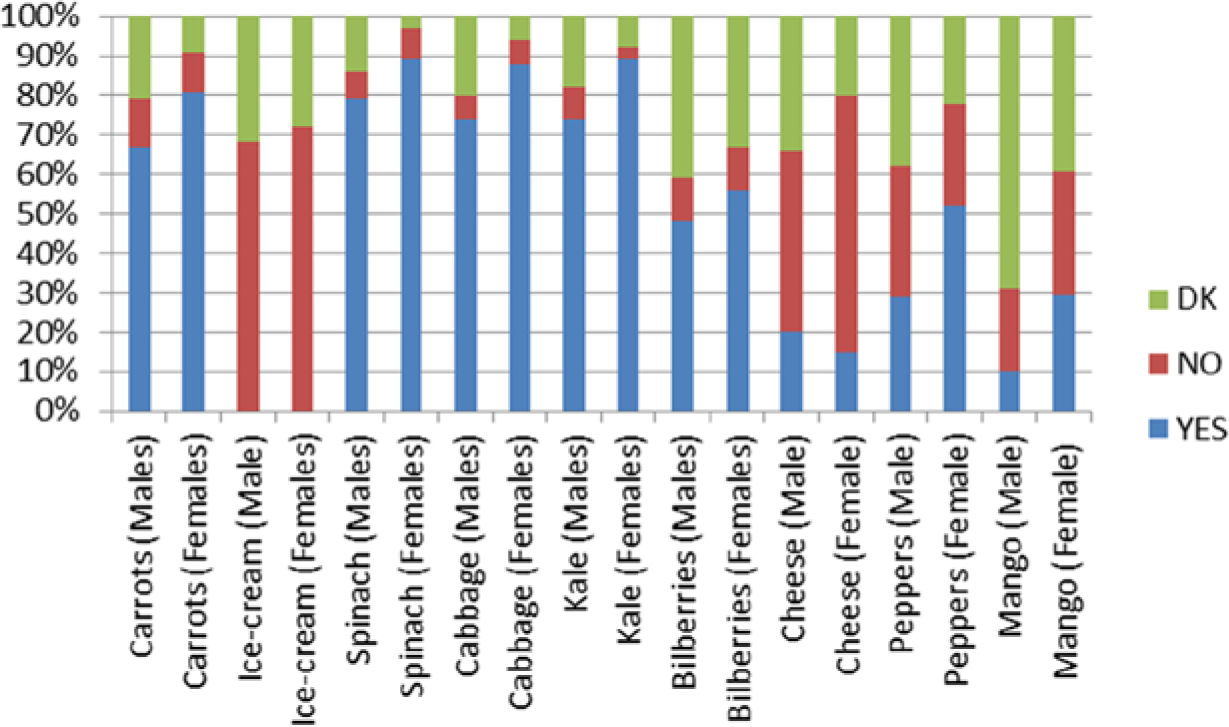
Participants’ beliefs about the eye health benefits of several foods. ‘Yes’ indicates the participant believed the food was beneficial, ‘No’ indicates the participant did not believe that the food was beneficial, and ‘DK’ indicates the participant didn’t know.
As shown, the majority of participants were accurate in their perceptions of the food which would be beneficial for eye health. Leafy green vegetables such as spinach, cabbage, and kale were identified as being beneficial by over 80% of participants. Ice cream was identified as not beneficial for eye health by 72% of the participants. For mango, bilberries, and peppers, 25% or more participants answered Don’t know, and responses were more mixed. Males responded with Don’t know on average 10% more than females.
When asked why they felt a particular food was valuable for eye health, the majority of participants (81%) struggled to verbalise why they held that belief. Of those that did express the reasoning behind their beliefs, the majority of the responses had nothing to do with nutrients. Only 2% of those that felt spinach and kale are beneficial for eye health knew that they contain lutein. Some participants responded that leafy green vegetables were known to be good for eyes (spinach 5%, kale 3%, and cabbage 6%), while others merely responded that coloured foods were good for eyes (carrots 2%, peppers 5%, and mango 1%). Some participants (1%) responded that spinach and kale contained iron, which was why they felt it would be beneficial for eye health.
However, 1% of participants felt that carrots were beneficial because they contained carotene, and that peppers were beneficial because they contained vitamin C. Participants also included the following reasons for carrots: ‘They help you see in the dark’ (6%), ‘war propaganda’ (6%), and ‘We were told to eat them by parents’ (6%). Of the total participants, 1% responded that their optician had told them that mango was good for eye health. Participants also responded that they had ‘read it was beneficial somewhere’ for some foods (peppers 1%, bilberries 5%).
As mentioned earlier, no participant felt that ice cream was beneficial for eye health. Of the participants that felt that cheese was beneficial for eye health (18%), none could give a reason why.
Nutritional supplementation
The participants were asked who they had discussed nutritional supplementation with: 30% of the participants had discussed it with their ophthalmologist, 15% with their optometrist, and 8% had consulted their general practitioner (GP).
Participants were asked if they currently took a nutritional supplement(s). Of those that responded Yes (79% of males and 79% of females), the majority (60%) took the supplement once per day. The most popular brand of ocular supplement used was I-caps (Alcon) (24%), followed by PreserVision (Bausch&Lomb) (19%), Ocuvite (Bausch&Lomb) (14%), Viteyes (Viteyes) (14%), Macushield (Macuvision) (11%), Retinex (Healthspan) (8%), Visionace (Vitabiotics) (5%), and Vitalux (Novartis) (3%). Some patients took more than one brand with a variety of dosing methods.
Those that responded that they did not take a nutritional supplement (33 participants – 21% male and 21% female) were asked to describe these reasons as shown in Figure 2. The majority felt that they were not sure of the effectiveness of supplementation, but many listed an other reason for not taking supplements (but did not provide an explanation for what that reason might be).
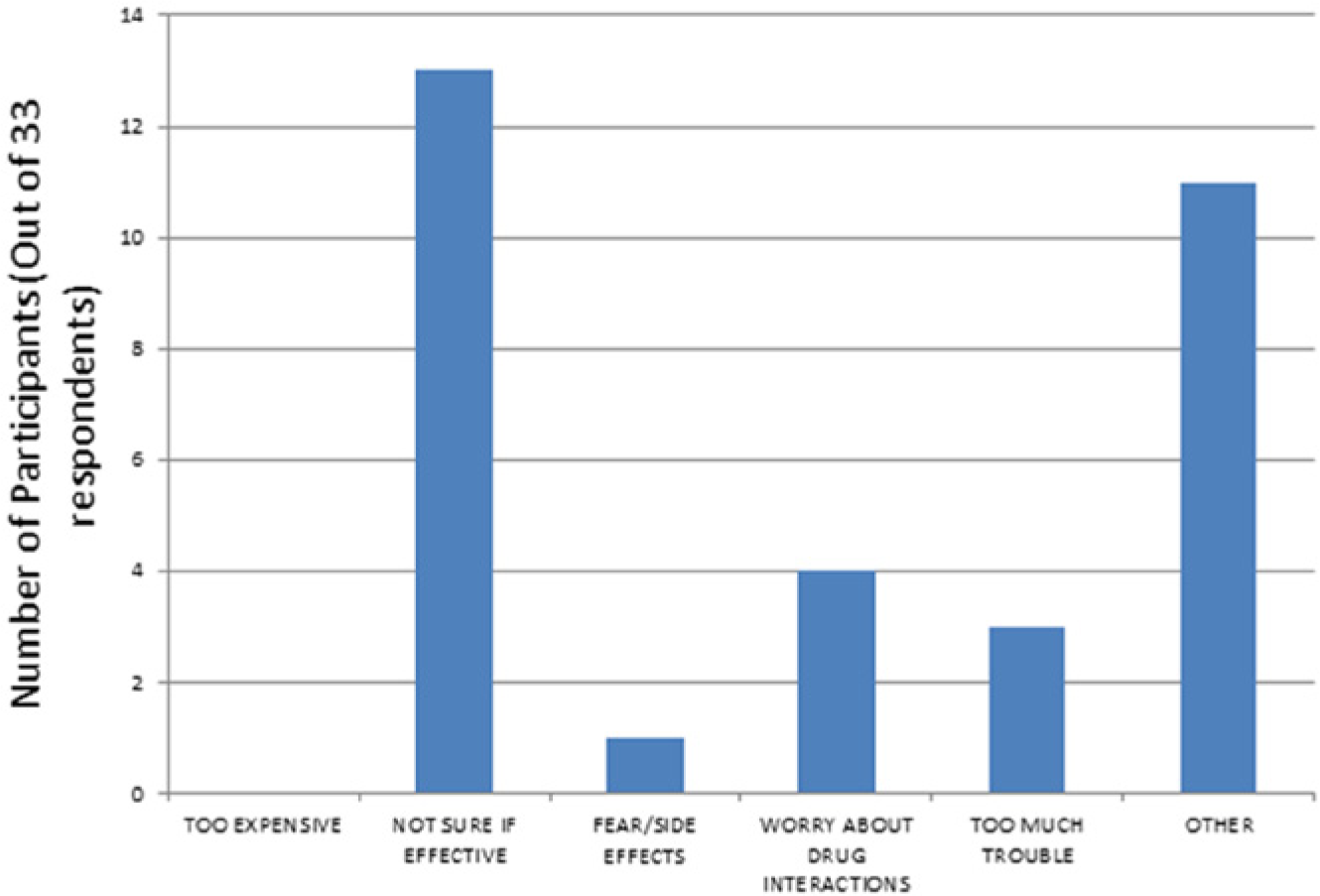
Reasons for not taking nutritional supplements.
The participants were asked how much money they would be willing to spend on a supplement (per month or 30 days’ supply) if they had proof of its worth. The results are shown in Table 1. The supplement usage data were cross-tabulated with the amount of money participants were willing to spend on a monthly supplement, using chi-square statistics. The results show a significant association between those who do take supplements being willing to spend more money on supplements and those who do not take supplements being willing to spend less money on supplementation (p ≤ .000). Of the participants that did not take supplements, 67% were not willing to spend any money on supplementation even if they had proof of its worth.
Patient information
Figure 3 displays the opinions that the participants held about AMD and living with the condition. Over half the participants (51%) believed that AMD patients do not receive enough information about nutrition and lifestyle choices; an additional 12% strongly believed this. The participants were asked where they had received information on AMD from (they were allowed to pick more than one option): 40% of participants had received information from their ophthalmologist. As expected, 92% had received information from organisations such as the Macular Society. Just over half of the cohort believed that AMD could be prevented by lifestyle choices such as nutrition.
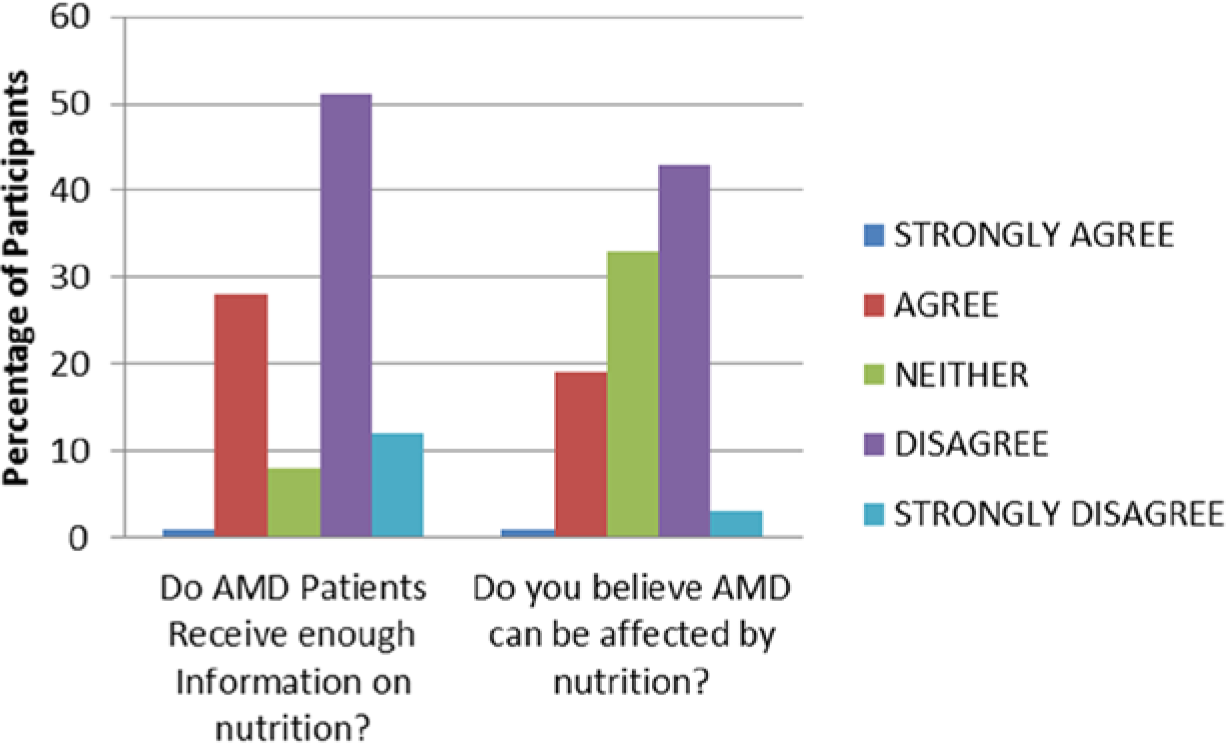
Knowledge of AMD.
Discussion
The demographic data have shown three interesting findings:
First, research has shown that females (especially in this age group) are more likely to ask for and utilise health-care services (Cameron, Jing, Manheim, & Dunlop, 2010; Vaidya, Partha, & Karmakar, 2012), so it could be speculated that more females than males seek out the services of the Macular Society.
Second, only 37% of the participants were registered on a visual impairment register, despite 47% of participants having ‘wet’ AMD (although this was self-reporting and the severity was not assessed). The RNIB’s (2010) survey into certification and registration in 2011 (Boyce, 2012) shows a steady decline in the number of registrations per year despite the fact that the prevalence of visual impairment is increasing (Owen et al., 2012). They attribute this decrease in registration not to a lack of interest in registration by the patient, but rather to the length of time it takes to complete the Certificate of Visual Impairment (CVI) by the professionals involved.
Finally, nearly half the participants lived alone – this can have a huge impact on their quality of life. One study (Vale, 2004) has shown that 63% of all blind and partially sighted people live alone – a higher figure than the ‘normal’ sighted elderly population. It would have been useful to find out if participants had a mobility issue, as this may have affected why the participants had chosen to seek the Macular Society’s services – a helpline is easier to access than physically going to see an ophthalmologist or optometrist for advice, and this could explain why patients did not report sourcing their information from an ophthalmologist or optometrist.
The cohort was a group of highly motivated individuals who had taken the initiative to contact the Macular Society but still felt that they needed more advice, particularly relating to nutrition. Although some of the participants needed to rely on others for support and felt they had considerable visual impairment, the desire to remain independent and improve their vision is evidenced through seeking the services of the Macular Society and using other health-care professionals such as dieticians and specialist doctors.
This sample may not represent all patients seeking services from organisations like the Macular Society. Access to other organisations would provide a more rounded view. It would be important to find out the opinions of those with AMD who have not sought support from non-professional organisations, and this will form the next step to the overall project.
Patients’ perceptions
This study provides a clear picture of the perceptions of diet and eye health among a sample of AMD patients. The majority of participants agreed that specific foods can affect general health, and participants also agreed that specific foods affect eye health. The results of the specific food questions show that the majority of participants felt that the vegetables and fruit were beneficial for eye health, and these perceptions were generally accurate. However, apart from a few individuals who mentioned specific nutrients in regard to specific foods (e.g., lutein in kale), most participants were not able to identify why these foods helped promote eye health or gave vague responses such as ‘I read it somewhere’. This suggests that participants, who would be expected to be well informed, were not clear about the links between diet and eye health.
Information
The majority of participants reported that they did not have enough information on nutrition and its relationship to AMD. As expected, all participants reported that they had received information from organisations such as the Macular Society. In contrast, not all the participants reported getting information from their ophthalmologist, which is consistent with previous studies (Dahlin-Ivanoff, Sjöstrand, & Klepp, 1998; RNIB, 2013). The data reported here show that there are clear gaps in the knowledge patients have of AMD risk factors (Kandela, Lamkin, Albanese, & Edward, 2010). A lack of information might also explain why 4% of the participants were not sure what type of AMD they were suffering from. Patients appear to be actively seeking advice but not all are getting it from sources such as ophthalmologists or optometrists. These findings are similar to results from the Royal College of Ophthalmologists audit of AMD services in March 2009 (Amoaku & Hubbard, 2009), which found that there was an insufficiency of resources to deliver adequate AMD services. Lawrenson and Evan’s (2013) survey of eye professionals showed that although over 60% of respondents reported that they frequently provide dietary and supplement advice to patients with established AMD and those at risk of AMD, the nutritional advice given only consisted of leafy green vegetables and oily fish recommendations, and the type of supplement recommended did not comply with current best research evidence, based on the findings of the AREDS. Only one in three optometrists regularly assessed smoking status and advised on smoking cessation (Lawrenson & Evans, 2013). The results reported in this study reinforce those of the survey and the Royal College of Ophthalmologists, and provide further evidence that greater support and information provision for AMD patients is needed.
Nutritional supplementation
Over 75% of participants reported taking a nutritional supplement (mainly on a once-per-day basis) – this is a larger number than other studies into supplement usage have found (Bartlett & Eperjesi, 2004; Block et al., 2007; Denison et al., 2012). The majority of patients that were taking ocular supplements were not taking an exact AREDS formulation and were taking an incorrect dosage or combining it with one or two other brands with the same formulation (maybe believing that more might be better). This pattern of supplementation could reflect a lack of information from health-care professionals, with only a third of patients having discussed nutritional supplementation with their ophthalmologist, while some participants had not discussed supplementation with anyone at all. Those participants in our study that reported not taking any supplements listed the primary reason as not believing they would be effective, and hence were unwilling to spend much money on an unproven supplement. The high number of nutritional supplements marketed towards people with AMD makes it difficult for both patients and health professionals to navigate this issue for the prevention or treatment of the condition (Kent, 2007). There are currently no clear supplement guidelines for health professionals to use; the College of Optometrists (2011) advises that patients should eat a healthy diet and stop smoking, adding that there ‘is no definitive scientific evidence of the effectiveness of nutritional supplements’, but patients should speak to their optometrist for supplement advice. Some institutions might have been waiting for the results of AREDS-2, but since the AREDS-2 results have been released, there is a need for unified guidelines for all health professionals. When asked how much participants would be willing to pay for an effective nutritional supplement, only one-quarter responded that they would pay more than £11 per month, and there was a significant correlation between those who did not take supplements and those that were not willing to spend any money on supplements.
Conclusion
The development of this survey has created a new measure that can be used again. The study has identified that AMD patients have a definite lack of information and understanding of the link between AMD and nutrition, and this needs to be corrected. The results of this study will inform the design of more effective education and dissemination methods and help outline guidelines for health professionals.
Footnotes
Appendix
Survey questions.
| Questions | Options |
|---|---|
| How old are you? | |
| Would you describe yourself as . . . | Male |
| Female | |
| Do you live . . . | Alone |
| With partner | |
| With family | |
| With friends | |
| Other (please specify) | |
| Do you live . . . | In own residence |
| In family/ friend’s residence | |
| In sheltered accommodation | |
| In nursing home | |
| Other (please specify) | |
| What is, or was, your main occupation? | |
| How would you describe your general health today? How would you describe your vision today? | Extremely good |
| Good | |
| Satisfactory | |
| Poor | |
| Extremely poor | |
| Do you have the eye condition age-related macular degeneration? | Yes |
| No | |
| Have not heard of this condition | |
| If Yes, how many years have you had it in total? | |
| What type of age-related macular degeneration do you have? | |
| Are you on any visually impaired register? | Sight impaired (partially sighted) |
| Severely sight impaired (blind) | |
| Neither | |
| Who MOSTLY prepares your food? | You |
| Partner | |
| Family member | |
| Care giver | |
| Other (please specify) | |
| Who MOSTLY cooks your food? | You |
| Partner | |
| Family member | |
| Care giver | |
| Do not eat cooked food | |
| Other (please specify) | |
| What prevents you from preparing food? (select all that apply) | Visual impairment |
| Physical impairment | |
| Nothing | |
| Other (please specify) | |
| Are you able to cook a hot meal on your own? | Yes |
| No | |
| What prevents you from cooking food? (select all that apply) | Visual impairment |
| Physical impairment | |
| Nothing | |
| Other (please specify) | |
| Who MOSTLY does your food shopping? | You |
| Friend | |
| Family member | |
| Care giver | |
| Other (please specify) | |
| Where do you get your food from? (select all that apply) | Supermarket |
| Local grocers/corner shop | |
| Internet | |
| Meals on wheels | |
| Market | |
| Grow own food | |
| Other (please specify) | |
| What is the most important factor that dictates what you eat? | Cost |
| Preference | |
| Habit | |
| Ability to cook or prepare it | |
| Ability to acquire it | |
| How it affects your health | |
| Other (please specify) | |
| Would you like to change your diet in any way? | Yes |
| No | |
| What prevents you from changing your diet? | Visual impairment |
| Physical impairment | |
| Nothing | |
| Other (please specify) | |
| Do not want to change diet | |
| Please could you describe what you ate yesterday (Breakfast, Lunch, Dinner, Snacks – your interviewer will describe portions). | |
| Were the vegetables eaten yesterday (if any) . . . | Mostly cooked |
| Mostly raw | |
| No vegetables eaten yesterday | |
| Please state how strongly you agree or disagree with the following statement: There are specific foods that can affect your health. | Strongly agree |
| Agree | |
| Neither | |
| Disagree | |
| Strongly disagree | |
| Please state how strongly you agree or disagree with the following statement: There are specific foods that can affect your EYE health. | Strongly agree |
| Agree | |
| Neither | |
| Disagree | |
| Strongly disagree | |
| Do you think any of the following foods are beneficial for eye health . . . and why? | Carrots |
| Ice cream | |
| Spinach | |
| Cabbage | |
| Kale | |
| Bilberries | |
| Cheese | |
| Peppers | |
| Mango | |
| Which, if any, of the following vegetables did you eat last week? (select all that apply) | Carrots |
| Peas | |
| Spinach | |
| Cabbage | |
| Broccoli | |
| Kale | |
| None of the above | |
| Have you ever discussed taking a nutritional supplement with a health specialist or an advisor? | Yes |
| No | |
| If yes, who? | Ophthalmologist |
| General practitioner | |
| Optician | |
| Specialist doctor | |
| Nurse | |
| Herbalist | |
| Pharmacist | |
| Dietician | |
| Helpline worker | |
| Other (please specify) | |
| Do you currently take any nutritional supplements? | Yes |
| No | |
| If yes, what supplements do you take? | |
| How often do you take the supplements listed above? | More than twice per day |
| Twice per day | |
| Once per day | |
| Once per week | |
| Other (please specify) | |
| If you answered No, Can you give a reason for not taking a nutritional supplement? | Too expensive |
| Not sure if effective | |
| Fear/experience of side effects | |
| Worry about interaction with other drugs | |
| Too much trouble | |
| Other (please specify) | |
| How much money would you be willing to spend on a monthly basis on a nutritional supplement which promised good results? | No money |
| £1–£5 | |
| £6–£10 | |
| £11–£15 | |
| £16–£20 | |
| £20+ | |
| Please state how strongly you agree or disagree with the following statement: Age-related macular degeneration patients are given enough information on how nutrition affects their eye health. | Strongly agree |
| Agree | |
| Neither | |
| Disagree | |
| Strongly disagree | |
| Where have you received information on age-related macular degeneration from? (select all that apply) | Opthalmologist |
| Optician | |
| Internet | |
| Newspapers | |
| TV | |
| Organisations such as the Macular Society | |
| Other (please specify) | |
| Do you believe that age-related macular degeneration can be prevented by lifestyle choices such as nutrition? | Strongly agree |
| Agree | |
| Neither | |
| Disagree | |
| Strongly disagree | |
| Which changes to the way that you live do you think could affect age-related macular generation? |
Declaration of conflicting interests
The author(s) declared no potential conflicts of interest with respect to the research, authorship, and/or publication of this article.
Funding
This study was conducted with support from the Macular Society, but not funded by the Macular Society.