







Abstract
Mate selection is one of the most crucial decisions an individual makes in their lifetime, which can bring social, economic, and emotional benefits to their life partner. Exposure to negative attitudes from family members and significant people can lead to the internalization of negative self-esteem in visually impaired people and restrict their social activities and mate selection. To this end, this study sought to investigate mate selection barriers, facilitators, and strategies from the perspective of visually impaired men (beneficiaries), specialists of the welfare department (experts), and managers (authorities). This study was conducted using a qualitative and grounded theory approach. The research sample was selected using purposive sampling in 2023 in Arak, Markazi Province, Iran. The data were collected through semi-structured interviews with the participants. The participants in this study were visually impaired men (beneficiaries) who were members of the Blind Association and were supported by the welfare department, the specialists of the welfare department (experts), and managers (authorities). Data saturation was achieved after interviewing 17 visually impaired men, 8 experts, and 8 authorities. The collected data were analyzed using the method by Corbin and Strauss. The data analysis revealed mate selection barriers, facilitators, and strategies through 10 axial codes: poor economic conditions (causal condition), unbalanced and disturbed relationships with others and feelings of isolation and social exclusion (intervening conditions), provision of supportive facilities and hesitation in choosing a partner (strategies), endless fear of the future marital life, lack of financial and support resources, lack of adaptability of the environment, individual and social empowerment (contextual conditions), and the tendency to develop independence (mate selection consequence). Finally, a paradigmatic model was developed. The economic and financial conditions play an important role in mate selection. In the Iranian community with high inflation and unemployment rates, healthy people who do not have any physical problems like disabilities do not dare to choose a partner. Thus, visually impaired people face substantial challenges when planning for marriage. Given the restrictions associated with visual impairment (VI) and the negative public attitudes about the marriage of visually impaired people, providing training to families and educating them on how to treat visually impaired individuals can play a vital role in enhancing the self-esteem of these individuals. Besides, raising public awareness about the marital issues faced by visually impaired individuals and planning to create employment opportunities can help these individuals in the mate selection process.
Introduction
Human attractiveness is a significant social variable, and individuals typically assess their future partners based on various sensory inputs, including visual (Fink and Penton-Voak, 2002), auditory (Feinberg et al., 2005), and olfactory (Sorokowska, 2013) signals. However, among all sensory inputs, visual signals are widely considered the most important source of information about the social world due to their accessibility and influence on the interpretation of information based on other inputs (Krupp, 2008). Sorokowska et al. (2018) examined the compensatory role that different methods may play in mate selection and social evaluations in the absence of vision. The findings suggested the significance of the sense of hearing in different types of social evaluations for both sexes and in mate selection for blind men. Studies have indicated that around the world there are about 36 million people who are completely blind, 217 million people with moderate to severe visual impairment (VI), and 253 million people with mild VI (Ezinne et al., 2022). According to the released statistics, about 600,000 to 700,000 people in Iran have been identified as having vision impairment, of whom 115,000 people were completely blind until 2016 (Khodabakhshi-Koolaee & Amoogholi, 2024). The onset of disability reduces the probability of marriage, especially among young people (Li & Singleton, 2016), and having a disability leads to negative public attitudes and makes it difficult for people with disabilities to marry (Chilwarwar & Sriram, 2019). People with VI as a sensory disability also face some problems, including psychological and social issues and restricted social activities, making it challenging for them to lead an independent life (Aslan et al., 2012). Vision loss affects all aspects of a person’s life, and depression is a significant problem for many people with VI. The severity of depression and anxiety among people with vision disorders increases over time, subsequently leading to mental health problems in them (Demmin & Silverstein, 2020). People with VIs show higher levels of depression and loneliness than their sighted peers (Pinquart & Pfeiffer, 2011a). Furthermore, some people are not willing to marry disabled people under any circumstances and believe only healthy people are entitled to this right. Moreover, some think that disabled individuals do not need to get married (Khodabakhshi-Koolaee et al., 2017). In different communities, many people do not consider marriage a psychological and physical need for persons with blindness, and moreover also view them as a burden on the community (Warner & Adams, 2016). Finding a suitable partner depends on the ability to see and assess the individual’s characteristics. Besides, initial communication depends on being able to communicate using the power of sight and decide about the appropriateness of the other party. Moreover, blind persons are deprived of the power of vision, which challenges their mate selection. Kapperman and Kelly (2019) suggested that blind and visually impaired men pay attention to facial features, hair condition, waist size, age, education, and financial conditions in mate selection. In another study, Kelly and Kapperman (2012) suggested that the sexual activity of visually impaired participants was similar to that of sighted peers, although the sample of visually impaired participants was slightly larger than that of sighted peers. However, visually impaired participants tended to have sexual relationships 2 to 3 years later than their sighted peers. Late involvement in sexual activity by young people with VI may be due to social isolation (Kelly & Kapperman, 2012). Research has also shown that having a lifelong and severe disability is associated with an increased likelihood of being single due to stigmatized beliefs and reduced opportunities to meet potential partners (Savage & McConnell, 2016). In particular, people with VI (blindness or low vision) may have difficulties finding potential romantic partners and being perceived as an attractive partner by others (Pinquart & Pfeiffer, 2012), mainly because the sense of vision plays a dominant role in choosing a romantic partner (Fugère et al., 2017). Blind persons face many challenges and barriers in their daily lives, and marriage and mate selection are among the basic social and psychological problems for blind and visually impaired men. Nevertheless, finding a partner and having a high-quality and appropriate married life can solve many emotional and psychological problems (Satvat et al., 2019). Pinquart and Pfeiffer (2011b) suggested that having romantic relationships is important for most people, including people with physical disabilities. Therefore, one way for disabled individuals, particularly the blind and visually impaired, to enhance their well-being and alleviate feelings of loneliness, social isolation, and depression is to establish a long-term intimate relationship with a life partner. Visually impaired people have the right to live a normal life and enjoy their life like others, but the cultural and social atmosphere of the community deprives them of this right. Accordingly, this study aims to examine the mate selection barriers, facilitators, and strategies among men with VI from the perspective of beneficiaries (all participants received subsidies from the government and the welfare organization), experts, and authorities working in welfare departments. The findings from this study can provide valuable implications for health managers and policymakers in addressing the needs of visually impaired individuals (Pinquart & Pfeiffer, 2011b).
Method
This study was conducted using a qualitative approach based on grounded theory. Grounded theory is a type of qualitative research method in which data are collected and analyzed inductively and systematically. Grounded theory is useful to gain insights into the behavioral patterns of a given group (Corbin & Strauss, 2008). The participants in this study were blind and visually impaired men who received support from the Welfare Department in Arak, Markazi Province, and were members of the Blind and Visually Impaired Charity Institute as beneficiaries and rehabilitation experts and managers working in welfare departments. This study was conducted over 9 months from March 2023 to November 2023 in Arak, Markazi Province. The participants were selected through purposive sampling and the sampling process continued until theoretical saturation was reached and no new information was obtained with additional interviews. Data saturation was achieved after interviewing 17 beneficiaries, 8 experts, and 8 authorities. The inclusion criteria for the blind and visually impaired men in this study were having medical records in the welfare department, having at least a high school diploma and the ability to understand the interview questions, and being at the age of marriage (20 to 35 years). The exclusion criterion was having other physical and mental disabilities in addition to VI. The inclusion criterion for experts and managers was to work in the offices of the welfare organization. The data were collected through in-depth semi-structured interviews with the participants. The interview questions focused on the marriage and mate selection experiences of blind and visually impaired men. Initially, the participants’ demographic data including age, education, occupation, field of study, parents’ marital status (consanguineous or non-consanguineous marriage), type of disability, medical class, cause of disability, and residency status were recorded. Subsequently, the main interview questions were asked. Following each interview, its content was transcribed for subsequent codification and analysis. All interviews were conducted face-to-face at predetermined locations and times. The duration of each interview ranged from 30 to 70 min. The interviews with the beneficiaries, experts, and authorities lasted 720, 250, and 240 min, respectively, with an average duration of 43 min per interview. Figure 1 shows the research protocol.
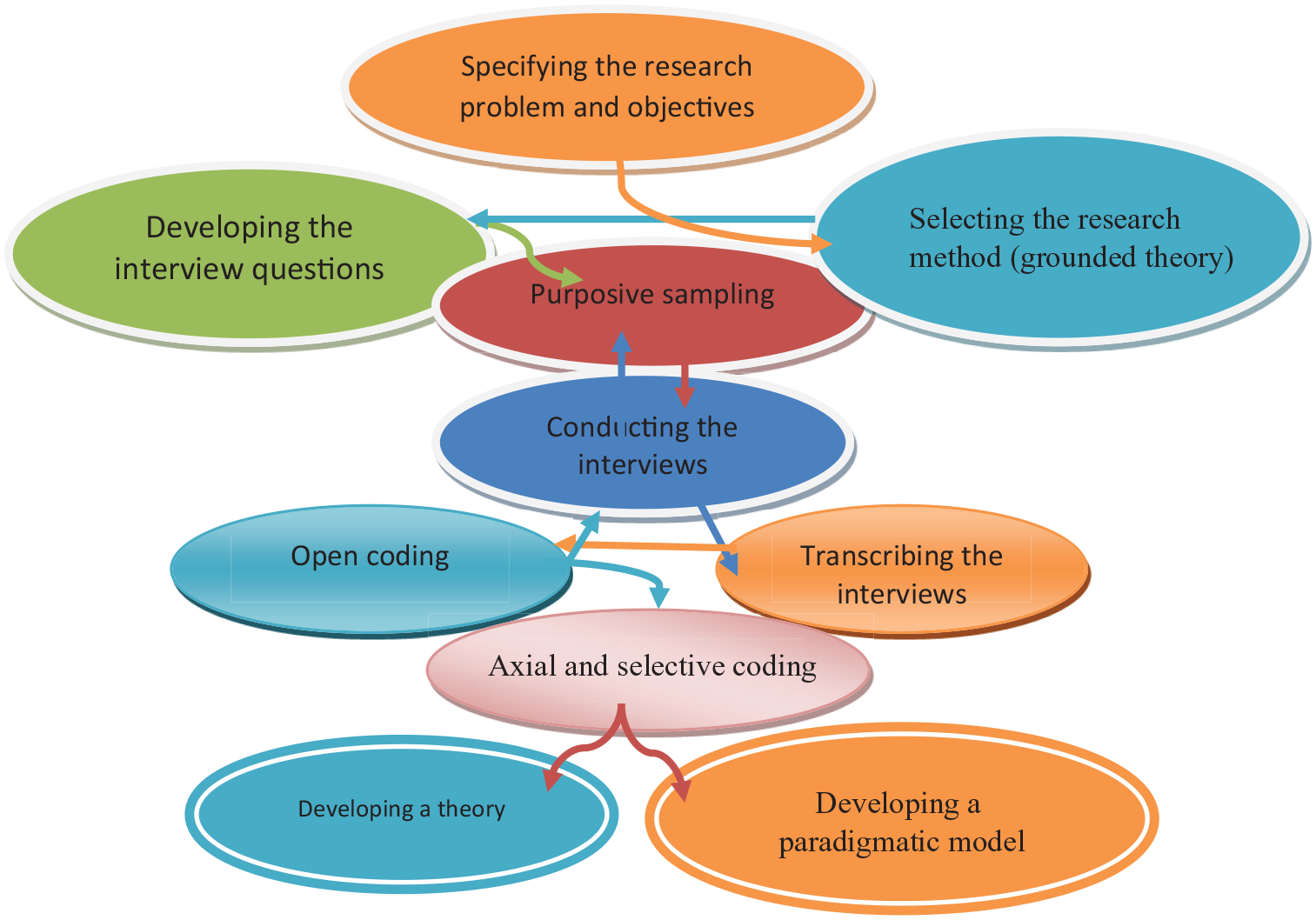
The research protocol.
The collected data were analyzed using the grounded theory approach by Corbin and Strauss (2008). Upon completion of each interview, the recorded audio file of the interview was meticulously reviewed and transcribed. The transcripts were then carefully read line by line, with significant statements being underlined and underlying themes (codes) extracted. Afterward, the repeated codes or the codes with similar content were clustered in the same category. Data collection and categorization continued until saturation was achieved. Finally, a paradigmatic model was developed to account for the core category, intervening conditions (challenges), contextual conditions, barriers, facilitators, strategies, and consequences.
To comply with ethical protocols, the researcher introduced herself and provided some instructions about the objectives of the interviews and the confidentiality of the participants’ statements in the interviews. Moreover, each interview was transcribed anonymously to protect the identities of the participants. The participants’ statements were recorded with their consent and they were assured that the recorded interviews would not be released publicly. They were also told that the recorded interviews would be stored in a safe place for up to 5 years after the completion of the study. To enhance the credibility of the data and findings, the researcher had prolonged engagement with the participants for over 12 months. Besides, sufficient time was allocated for data analysis and interpretations. The findings were also shared with some participants. In addition, the research procedure and findings were reviewed and confirmed by three subject-matter experts.
Results
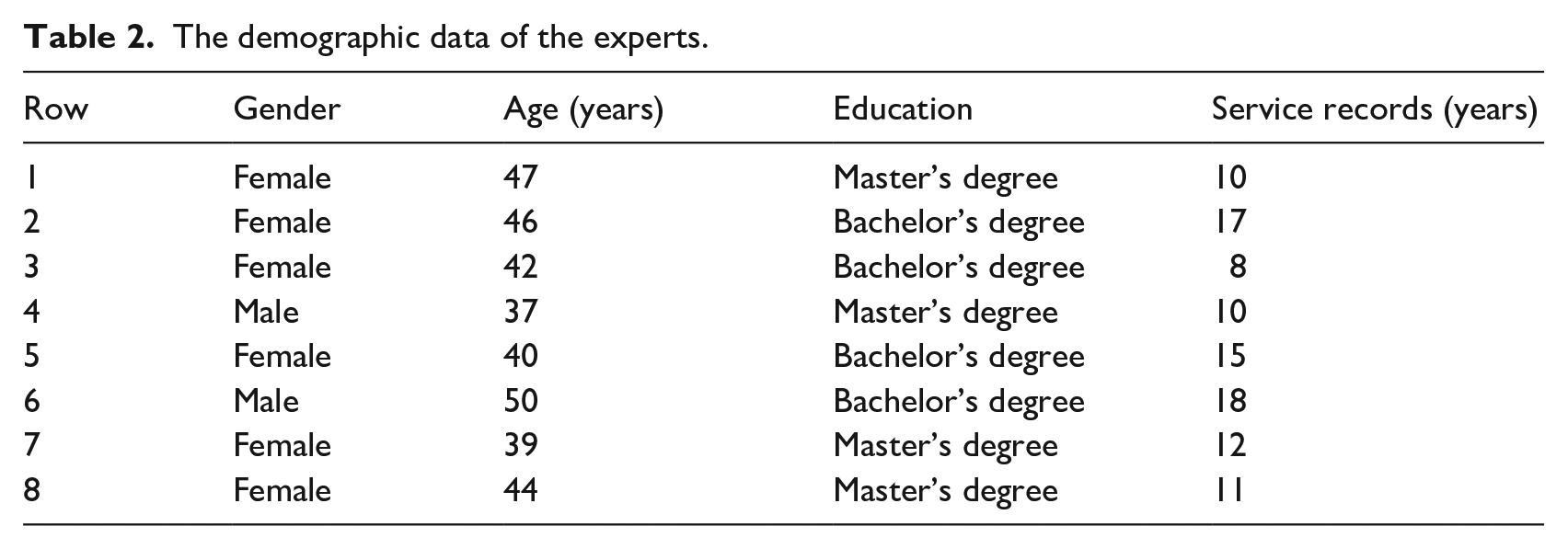
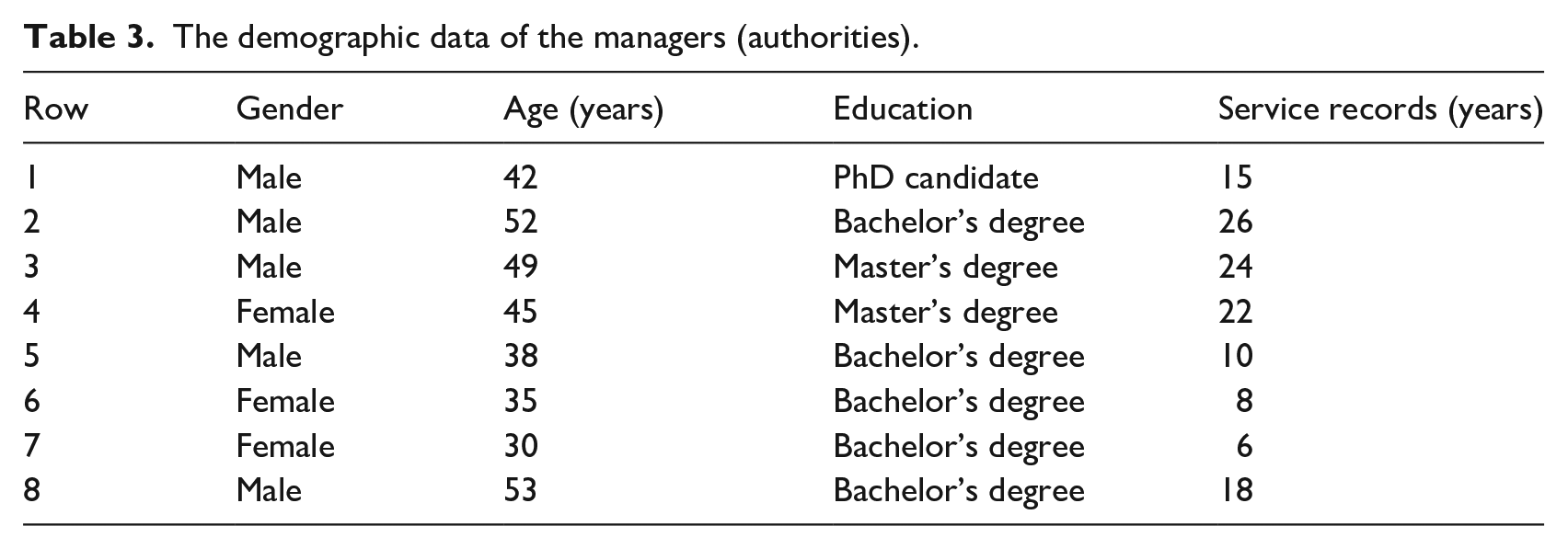
The participants in this study were 17 visually impaired men (beneficiaries), 8 specialists (experts), and 8 managers (authorities). Tables 1 to 3 present the participants’ demographic data.
The demographic data of the visually impaired men (beneficiaries).
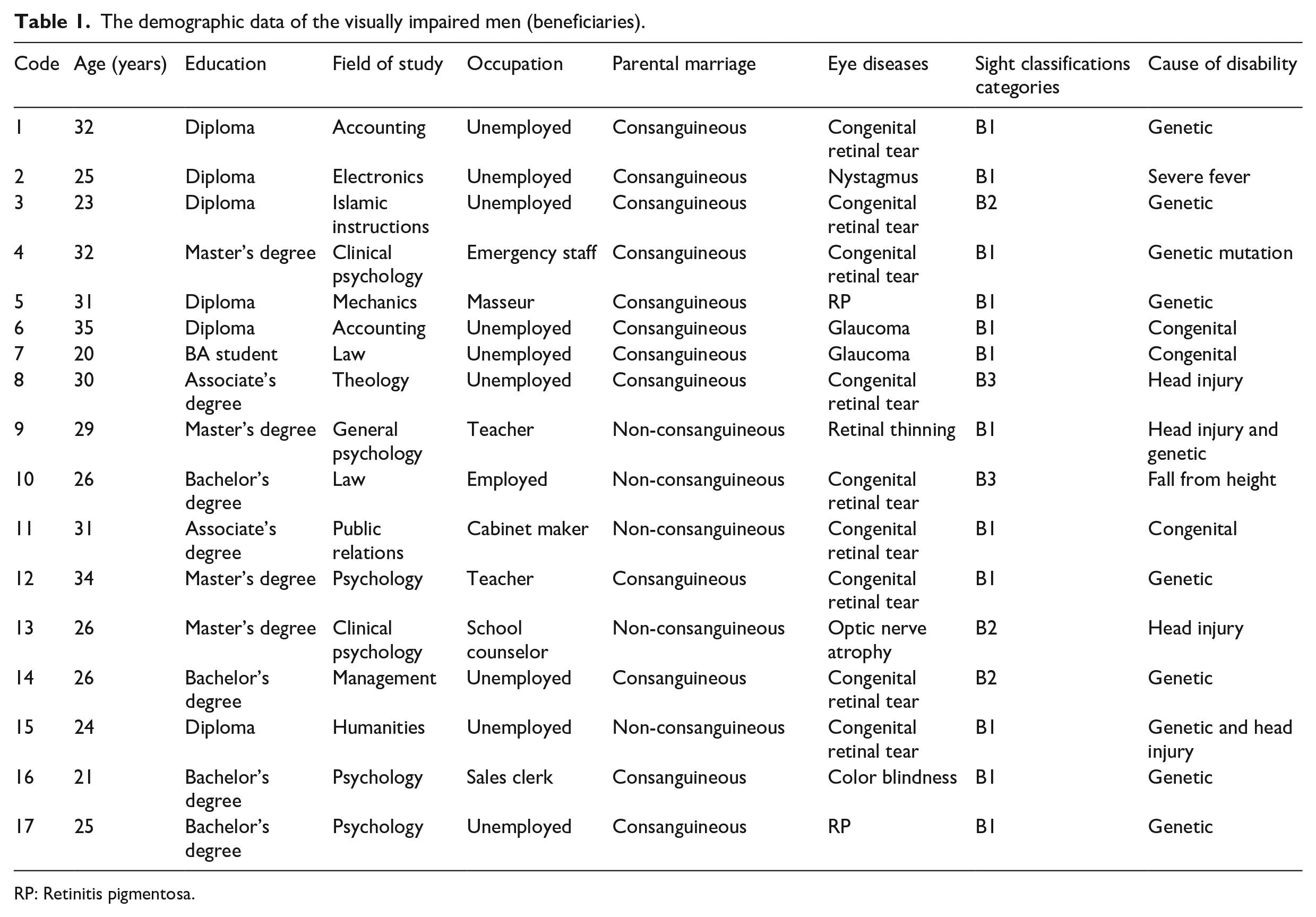
RP: Retinitis pigmentosa.
The demographic data of the experts.
The demographic data of the managers (authorities).
The analysis of the raw data collected from the interviews revealed 104 open codes, 38 axial codes, and 10 selective codes. Then, using the extracted codes, a model was developed to account for the causal conditions, intervening conditions, contextual conditions, strategies, and consequences. Table 4 presents the barriers, facilitators, and strategies of mate selection from the perspective of beneficiaries, experts, and authorities.
The open, axial, and selective codes extracted from the data according to beneficiaries, experts, and authorities.
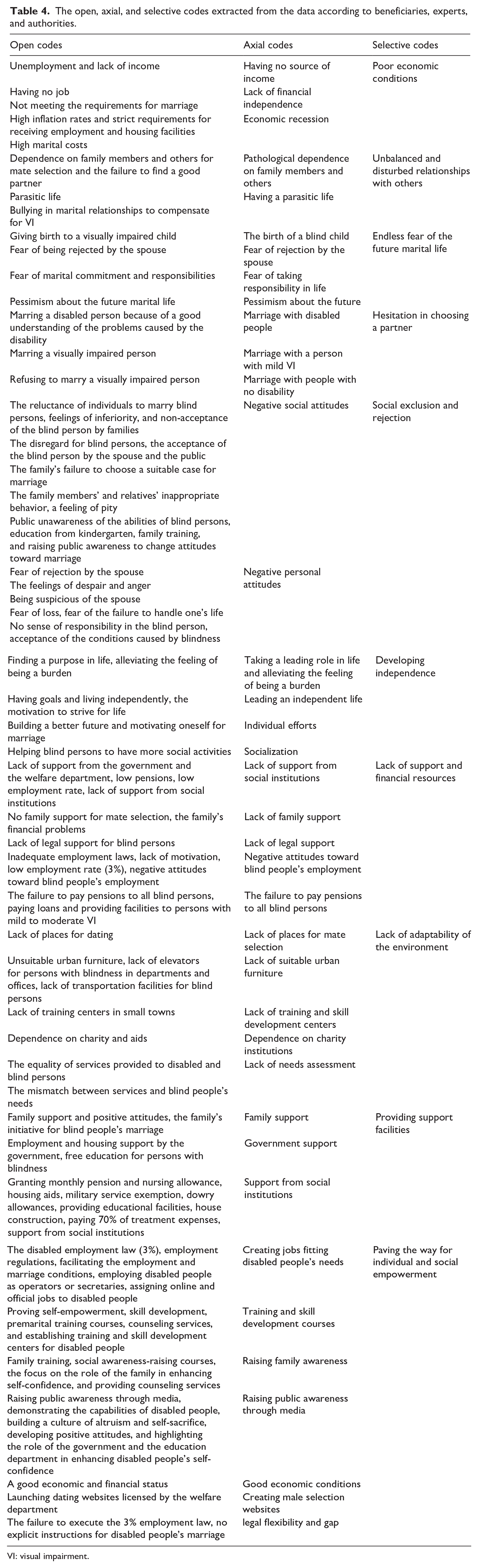
VI: visual impairment.
In the results section, selective codes, axial codes, and open codes were introduced first, and then, the quotes of the research participants were mentioned.
1. Poor economic conditions: The participants reported that the financial problems faced by visually impaired people were having no income, lack of financial independence, and economic recession.
(a) Having no source of income: To start martial life, at least a minimum income is required: “One of the problems faced by visually impaired people is that they have no source of income. If they could have some income, they could start an independent life and find a good case for marriage” (Participant #3; Expert). (b) Lack of financial independence: Financial independence means that a person does not need others financially and can pay his living expenses: “I still haven’t been able to find an independent source of income. If I tell any girl that I’m still unemployed, I don’t think she’ll accept to marry me. Not having an independent source of income is a problem that does not allow me to marry” (Participant #14; VI). (c) Economic recession: Economic problems affect practically all aspects of people’s lives and their personal, family, and social needs: “I don’t have a fixed job and, in this society, where inflation is increasing day by day, it is difficult to start a marital life” (Participant #12; VI).
2. Unbalanced and disturbed relationships with others: Such relationships involve pathological dependence on family members and other people and having a parasitic life.
(a) Pathological dependence on family members and others: Persons with blindness are unable to find a good case for marriage due to their limited vision and they have to wait for their family members or people around them to find a case for them: “One problem is that your family members and people around you must find a wife for you. Family is very important. It would be great if they didn’t forget us. I don’t know why they wait until our marriage age passes and we can’t find a good case and get married anymore” (Participant #10; VI). (b) Parasitic life: In a leech-like or parasitic marital relationship, one of the parties completely abuses the other party to satisfy his/her needs without asking him/her for help: “Another problem is that I don’t have a job or a house. I have to look for an employed partner to cover our living expenses” (Participant #12; VI).
3. Endless fear of the future marital life: Such fears include the birth of a blind child, rejection by the spouse, fear of taking responsibility in life, and pessimism about the future.
(a) The birth of a blind child: The outcome of any marriage is the birth of a child who may be healthy or with a disability. Having a disabled child is very difficult for healthy parents, but it is quite a disaster for parents who have disabilities: “I don’t want to have a child who looks like me and has my problem and suffers the same pain that I suffered” (Participant #3’ VI). (b) Spouse rejection: Being rejected by the spouse can adversely affect the marital life: “My vision is stable, but if my vision is gradually lost, I would give the right to my wife to leave me” (Participant #17; VI). (c) Fear of taking responsibility in life: People with VI show fear of accepting responsibility and commitment to work because they cannot do their personal and life affairs like healthy people: “I am afraid of not being able to help and accept any responsibility and commitment. This commitment is very challenging. I am afraid of commitment. I have no feelings towards marriage. I have no feelings now. When I start feeling fear, I have no feelings for marriage” (Participant #2; VI). (d) Pessimism about the future: Uncertainty about the future along with other problems faced by visually impaired persons can keep them from continuing to try for a better life: “When I think about my future, I get very depressed. I feel that all the roads are closed” (Participant #8; VI).
4. Hesitation in choosing a partner: A visually impaired person may choose to marry a disabled person, a person with mild disability, or a non-disabled person. Effective mate selection is considered one of the most important decisions in a person’s life. Visually impaired and blind people can have different choices. However, given the problems faced by these people, choosing someone who understands them and sees the world from their perspective is more important than anything else: “We have better to marry a disabled person because she has a high level of understanding but shouldn’t have vision impairment to handle the marital life. I talked to the counselor for a year after deciding to marry, and the counselor advised me it’s better to marry a disabled person” (Participant #5; VI)
5. The feeling of social exclusion and rejection: This feeling involves negative social and individual attitudes.
(a) Negative social attitudes: Some people believe that a blind person should not look for an ideal case for marriage and that the other party should marry a blind person only for God’s sake: “People’s words and behavior show that they think we shouldn’t get married. We can’t handle our problems” (Participant #6; VI). (b) Negative personal attitudes: People with VI do not feel-good interacting with their environment, which in turn can adversely affect their thoughts and behavior and make them feel doubtful about their abilities and make negative evaluations of themselves: “Nobody would agree to marry with me because of my disability and I have to tell them about my physical conditions” (Participant #1; VI).
6. Developing independence: To gain independence, one should take a leading role in life, alleviate the feeling of being a burden, and develop socialization skills.
(a) Alleviating the feeling of being a burden: The feeling of being a burden as a dynamic cognitive state makes a person consider himself as an extra being in the family and the community and feel depressed and hopeless in the long term. With mate selection, a person can alleviate such feelings: “Even now, I feel like being a burden. That’s why I tell my dad that sometimes I go out so that they don’t feel like I’m a burden. At home, I help my mother and father. I do my best not to let them say that Mehdi only sleeps, eats, and goes to the gym” (Participant #17; VI). (b) Independent life: Having independence in life gives a person self-confidence, motivation, and love for life. A purposeful person creates his goals in life with passion and excitement: “I want to get out of this limbo. I don’t have a goal and a plan for my life. If I get married, maybe I can come up with a plan for my life. I want to have a job and start a business and live like other people” (Participant #1; VI). (c) Individual effort: Helping visually impaired people requires support from all members of the community. However, individual effort plays the most important role: “If a person takes a step, others will help him. If they want to, they can create employment, but they don’t want to. These people are mainly the cause of their unemployment problems” (Participant #2; Expert). (d) Socialization: Some people believe that disabled people have no power and ability and cannot engage in social activities, but they do not know that the only person who can help oneself is the person himself/herself: “I think my social activities helped me to make a lot of progress. Now, I have a job and peace of mind” (Participant #4; VI).
7. Lack of financial and support resources: The participants reported that people with VI do not receive support from social institutions and family members. There is no legal support for these people. Besides, some people believe that visually impaired people should not be employed. The government also does not pay pensions to all blind persons. Material and spiritual support for a person can change his life and help him achieve his goals. However, the lack of support resources can also have adverse effects on the achievement of the goals pursued by a person, leading to psychological problems: “If the public does not support and accept them, they won’t be able to meet that part of their needs. They don’t receive any public support and adequate financial funds to handle the problems caused by their disability” (Participant #8; Expert).
Employment requirements are tough for disabled people, making their employment impossible most of the time. An undeniable fact is that many people with disabilities cannot find a job due to their physical or mental problems despite their talents and academic education. Thus, effective planning by authorities can increase employment opportunities for these people: “What’s wrong with dedicating a part of government jobs to blind people? How many people are blind in this city? If we look around the whole city, we may find three blind persons. What would be wrong with assigning three government positions to them?” (Participant #1; Expert).
8. Lack of adaptability of the environment: The participants reported some problems such as the lack of places for dating and mate selection, lack of urban furniture, the absence of training and skill development centers, the dependence of the welfare department on charity and aid, and lack of needs assessment.
(a) Lack of places for dating and mate selection: There is no place for mate selection to be used by people with VI. Thus, they have fewer opportunities for mate selection: “I want to get married, but I don’t know how to look for a case. There is no place where I can find a case” (Participant #6; VI). (b) Lack of urban furniture: The adaptability of the environment in workplaces, streets, and leisure spaces and the establishment of institutions providing educational, healthcare, and leisure services can improve the living conditions of people with disabilities: “The streets, sidewalks, and other places are not suitable for people with disabilities. Officials hold meetings, but there would be no practical outcomes” (Participant #1; Expert). (c) The absence of training and skill development centers: Training centers can contribute to providing employment opportunities for people with disabilities. However, such centers do not exist in small towns and even in the capital of the province: “The absence of training centers leads to some problems because associations are established in big cities, and it is difficult for disabled people to go there from remote areas” (Participant #4; Managers). (d) The dependence of the welfare department on charity: Too much dependence of the welfare department on charitable individuals can lead to some problems. If charitable individuals cannot fulfill their mission in helping the welfare department, it cannot provide support services to people with disabilities: “If there are some charitable persons helping the department, it will be ok. But the welfare department alone cannot cover marital costs for people with disabilities” (Participant #3; Expert). (e) Lack of needs assessment: Incorrect needs assessment or lack of needs assessment leads to ineffective distribution of existing facilities: “The services provided to blind persons are not much different from the services provided to those with other disabilities” (Participant #2; Expert).
9. Providing support facilities: Such facilities are offered by families, the government, and social institutions. Financial aid for the blind and visually impaired people from the government and social institutions can greatly help these people to lead a normal life: “If the government provides employment, financial and housing support for people with disabilities, they will have fewer concerns. If a blind person has the financial ability and can handle his/her personal affairs without dependence on family members, there will be more positive attitudes in the community” (Participant #1; Expert).
10. Individual and social empowerment: Visually impaired people can be empowered through creating jobs fitting their abilities and needs, skill development and training, raising the awareness of families and people through media, improving economic conditions, developing dating websites, creating legal flexibility, and filling legal gaps.
(a) Creating jobs fitting visually impaired people’s abilities and needs: Living with a physical or mental disability always affects all aspects of life. Employment for these people requires a match between their desired job and their limitations and disabilities: “Since visually impaired and blind people can speak well, officials can employ them as operators or secretaries. Being a secretary is a very good job for a person with disabilities” (Participant #17; VI) (b) Skill development and training: Empowerment and skill development are effective strategies to enhance the quality of life of disabled people, increase their independence, and decrease their dependence on others: “Skill training courses should be organized and held for blind people to empower them” (Participant #4; Expert). (c) Raising family awareness: Raising the awareness of families and members of the community about various issues faced by people with disabilities plays a vital role in improving the public knowledge about their abilities, needs, and how to deal with them: “The first thing we can do is to raise the public awareness. This will help people have more information about disabled people and their problems” (Participant #4; Expert). (d) Culture building through media: Media can play a vital role in culture building and demonstrating the community’s culture: “One thing that the media can do is to create a culture to change negative public attitudes toward disabled people” (Participant #10; VI). (e) Improving economic conditions: Having good economic conditions increases a disabled person’s self-confidence and courage in mate selection and thus people who want to marry people with disabilities are less worried about their physical problems: “Our biggest problem is that we have no job. A thing that can compensate for our physical problems by 50% is money. If you have money, you can hire a driver and order fruit, chicken, etc. from a supermarket. If you have money, you don’t need to wait for a bus and you can go anywhere with your car. Then, the person who is going to marry you is assured that despite your blindness you have a good financial status” (Participant #3; VI). (f) Creating dating websites: Mate selection through dating websites can be a good option for people with disabilities who have no place for dating and are exposed to public negative attitudes toward mate selection. Such websites can help visually impaired people find their favorite partners: “I think if the government agrees with launching a website where people can post their particulars and preferences, then they can choose their partners more easily” (Participant #12; VI). (g) Legal gaps and flexibility: The participants reported that legal flexibility and non-enforcement of laws related to people with disabilities are some challenges faced by these people. Thus, such laws should be amended to guarantee the rights of people with disabilities: “Some public departments and offices refuse to comply with the regulations related to people with disabilities. For instance, a disabled person passed the teacher employment exam but the officials in the education department refused to employ the candidate, arguing that employing the person would be a disdain” (Participant #2, Managers). The paradigmatic model of mate selection showed in Figure 2.
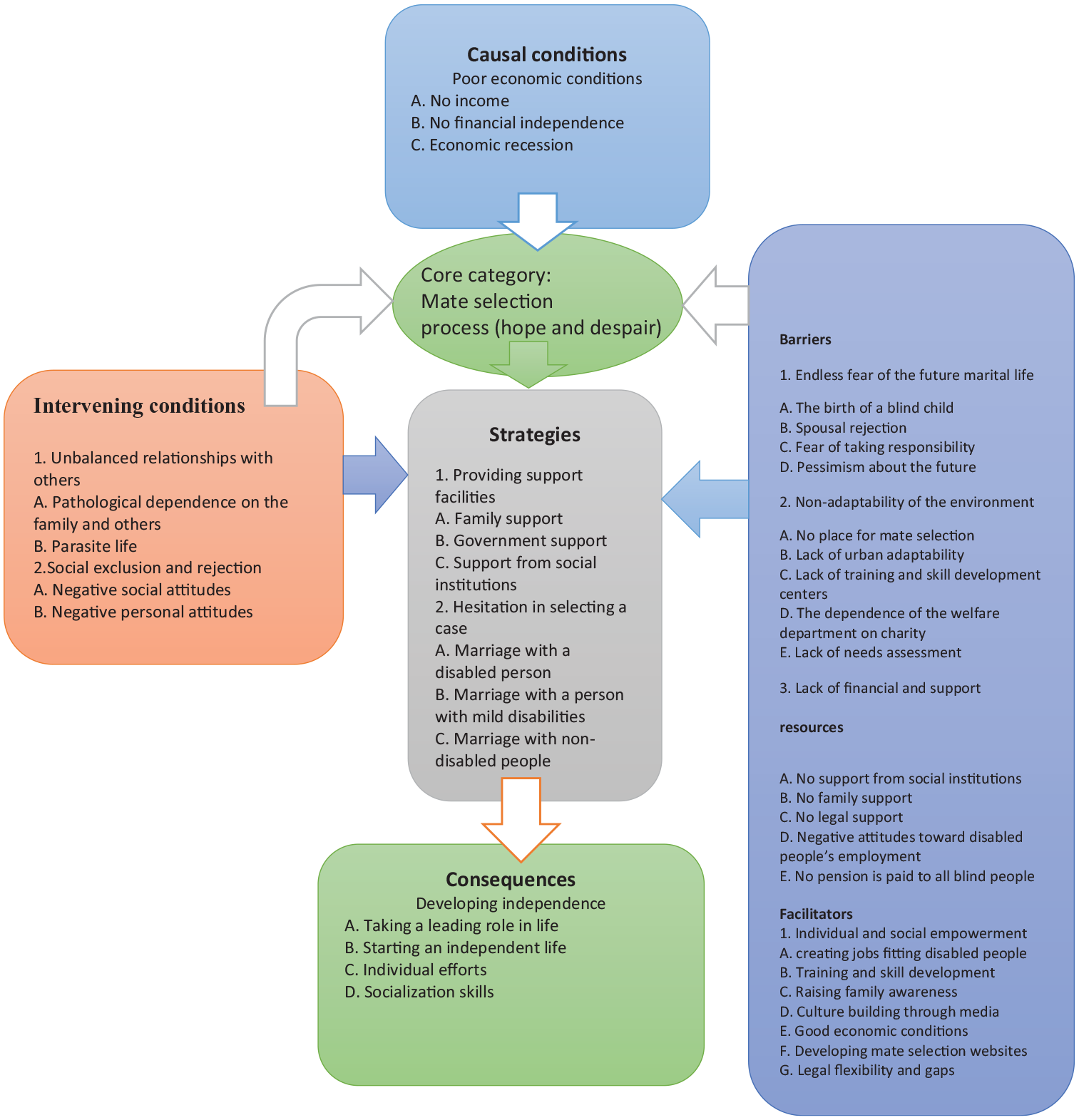
The paradigmatic model of mate selection barriers, facilitators, and strategies of multi-stakeholder perspective.
Discussion
The findings from this study showed that poor economic conditions (causal conditions), unbalanced and disturbed relationships with others, and the feeling of social exclusion and rejection (intervening conditions) affect the mate selection process among blind and visually impaired men. It should be argued that economic and financial conditions and the income level of a person are very important in deciding about marriage and mate selection. People with VI usually have no job that can meet their living needs. Furthermore, inflation, high prices, and poor economic conditions governing the Iranian community add to the problems faced by blind and visually impaired people and their marriage decisions. Visually impaired people are dependent on others in doing their personal affairs, restricting their self-reliance, creativity, and independence. These people have less frequent social activities and social relations. Besides, most of them are sick, illiterate, and have part-time jobs. People in the community often believe that visually impaired people do not have the necessary ability to manage their lives, and as a result, marrying these people is wrong. Moreover, negative public attitudes are one of the mate selection challenges faced by visually impaired men. A study by Monah (2018) in Kenya showed that rejection of disabled people causes them stress and isolation. In addition, disabled people’s failure to attend social activities and interact with peers causes isolation, which in turn leads to depression and reduced self-esteem. Negative public attitudes are the outcome of public awareness of the capabilities of visually impaired people. Furthermore, the lack of awareness-raising initiatives in the community and the families’ maltreatment of visually impaired people also intensify public negative attitudes. Enoch et al. (2018) showed that throughout history, the public has generally stigmatized and discriminated against people with disabilities, affecting their participation in social activities. Negative public attitudes may negatively affect disabled people’s lives by limiting their life and making it more difficult for them to engage in social activities. Scheller et al. (2021) suggested that disabled people internalize people’s negative reactions and attitudes toward themselves, which leads to a weaker body image.
The findings in this study indicated that endless fear of the future marital life, lack of urban adaptability, and the absence of financial and support resources were barriers to mate selection in visually impaired men, while individual and social empowerment were the contextual conditions facilitating the mate selection process. Visually impaired men’s concerns about having blind children prevent them from taking action for mate selection. Persons with blindness think that they may not be able to meet the needs of their spouse in their marital life, and as a result, they are disrespected and rejected by their spouses. In addition, the government’s failure to design suitable sidewalks and provide suitable urban furniture can cause many transportation problems for blind and visually impaired people and, thus, they depend on the people around them when visiting different places in the city, and in some cases, they refuse to attend social activities. The deprivation of any support resources is one of the challenges faced by visually impaired people, which can make life very difficult for them. The absence of public and family support and lack of independence in handling affairs make life very terrible for these people. Moreover, there is no place where they can meet other people and choose their partners. Blind and visually impaired people are not often accepted by the public and people tend to treat them with a feeling of pity. Fekler et al. (2020) reported that visually impaired participants stated low self-confidence and self-esteem hampered their efforts to find a suitable partner. Visually impaired participants complained of lack of suitable places to choose partners.
The data in this study indicated that the provision of psychological and counseling services can lead to mental growth and a sense of peace in visually impaired people, improve their self-confidence and self-esteem, and encourage them to start their normal lives and engage in social activities. Visually impaired people also have needs like normal people, and they are interested in having partners who can stay with them for the rest of their lives. The use of new technologies and mobile dating applications can help them find their desirable partners (Kapperman et al., 2017). Moreover, psychological interventions can help to improve hope and quality of life in people with VI (Khodabakhsi-Koolaee et al. 2017). Kapperman and Kelly (2013) showed that adolescents with VI gradually realize their physical, mental, and emotional differences with others and they need educational and therapy intervention to solve these problems.
Conclusion
This study examined the mate selection barriers, facilitators, and strategies of visually impaired men from the perspective of beneficiaries, experts, and authorities. Causal and intervening conditions such as unbalanced relationships with others and feelings of social exclusion and rejection had a direct effect on the mate selection process. Endless fear of the future marital life, the lack of adaptability of the environment, and the lack of financial and support resources are barriers to mate selection for people with VI. In addition, individual and social empowerment can contribute to facilitating the mate selection process. Providing support facilities and uncertainty about choosing a case for marriage were the mate selection strategies and the desire to develop independence was a consequence of mate selection among visually impaired men. Marriage and mate selection in visually impaired persons can be facilitated through employment opportunities, raising public awareness through the media, personal and social empowerment of persons with blindness, adapting urban environments, establishing new laws to support the employment of the disabled, allocating subsidies, and providing opportunities for dating through social clubs, websites, and dating apps. A combination of personal, social, legal, employment, family, and economic challenges is the main barrier to mate selection in visually impaired people. In Iran, due to economic problems, high unemployment and inflation rates, and international sanctions, visually impaired people face many problems in finding employment and finally achieving personal and social independence. It seems there are very limited solutions to facilitate mate selection for visually impaired people and it is even impossible in some cases. However, empowerment, education, and awareness, using technology and smartphones, and helping to improve individual independence can be bright spots in the absolute darkness of the problems faced by visually impaired people in Iran.
Footnotes
Author contributions
A.K.-K. was involved in the conceptualization, study design, and drafting of the initial version; data gathering; and analysis. A.M., M.R.F., and S.Y. were involved in conducting research, data gathering, and analysis. Final approval was done by all authors.
Declaration of conflicting interests
The author(s) declared no potential conflicts of interest with respect to the research, authorship, and/or publication of this article.
Funding
The author(s) received no financial support for the research, authorship, and/or publication of this article.
Ethical approval
The protocol for this study was approved by the Iran National Committee for Ethics in Biomedical Research.
Consent to participate
To comply with the ethical principles of voluntary participation, written informed consent was obtained from the participants for conducting and recording the interviews. The participants were also reassured of the confidentiality of their information.
Consent for publication
Not applicable.
