







Abstract
Despite the recent significant growth of Goalball, few studies investigate the anthropometric and performance variables of athletes. The aim of this study was to analyze associations between anthropometric parameters, upper and lower limb power, and ball throwing speed in Goalball athletes. Fourteen athletes from the sport had their height, body mass, and arm span measured; performed upper and lower limb muscle power tests; and had their ball throwing speed recorded. Associations between the variables were analyzed using linear regression. It was observed that lower limb power plays a significant role in ball speed during both frontal and spinning throws. Arm span also influenced throwing speed, but exclusively in frontal throws. Further studies on this subject are suggested, to enable physical trainers and coaches in the sport can plan their actions based on evidence.
Introduction
With the growing popularity of Paralympic sports, Goalball has become increasingly practiced by individuals with visual impairments seeking a physically active lifestyle (Gökşen et al., 2024). The sport is dynamic, involving both throws and defenses (Velasco et al., 2018), and its practice, in addition to providing numerous benefits to participants, requires strong physical abilities, such as strength (in both upper and lower limbs) and speed, whether during movements for a throw or in positioning during defense (Amorim et al., 2010).
Despite the sport’s growth, studies specifically focusing on Goalball are still scarce, meaning professionals working with the sport need to seek and adapt knowledge from various fields to apply to their teams (Picolo et al., 2021). When searching for data on the relationship between physical capacities, anthropometric measures, and performance during Goalball games, results are even scarcer (Alves et al., 2020; Ferreira et al., 2022).
The study by Alves et al. (2018) found evidence that athletes with higher VO2 max levels perform better during Goalball matches. On the other hand, Morato et al. (2018) demonstrated that the speed at which the ball is thrown during the game can influence a team’s ability to score goals (e.g., faster throws have a higher likelihood of scoring), although the authors did not consider the athletes’ anthropometric data. Souza (2014) studied the relationship between lower limb power (LLP) measured through a force platform and power produced during different types of Goalball throws and found no significant correlation between the variables.
Some studies have sought to analyze the relationship between the body composition of Goalball athletes and their probability of scoring goals or competition results; however, this variable alone was not significantly associated with performance (Aslan et al., 2018; Kimyon & Ince, 2020). Scherer et al. (2012) aimed to identify the morphological profile of Goalball athletes and found that shorter athletes were more agile. Nevertheless, high-performance teams increasingly seek taller athletes, as they cover more of the playing area, thus reducing the opponent’s chances of scoring (Romanov et al., 2017).
Silva (2017) emphasizes the importance of mapping the morphological and physical aspects of Goalball athletes, to better understand the team’s strengths and weaknesses, and, thereby, strategically assemble the team to achieve the expected result. Moreover, it is highlighted that knowledge of the possible relationships between physical abilities – specifically muscle power – and ball throwing speed in Goalball can provide insights for physical trainers to plan their training sessions, aimed at improving athletic performance.
Goalball has experienced substantial development in Brazil over recent decades, with the country currently recognized as an international reference in the sport, consistently achieving medals at World Championships and the Paralympic Games. This competitive success reflects a well-structured national system and a high standard of athlete development when compared with other countries (Goulart-Siqueira et al., 2018). Within this context, the team evaluated in this study stands out as a reference club at the national level, having achieved expressive results in official Brazilian competitions. Therefore, the athletes assessed can be considered representative of a high-performance environment, allowing more meaningful comparisons with findings from studies conducted in other competitive contexts.
However, based on the current data available in the literature on physical abilities, body composition, and athlete performance during Goalball matches, several gaps remain to be filled. Therefore, the objective of this study was to investigate the associations between anthropometric parameters, upper limb power (ULP) and LLP, and ball throwing speed in Goalball athletes.
Methods
Fourteen Goalball athletes from the city of Londrina, in southern Brazil, were evaluated, including 10 males and 4 females, aged 18 to 37 years. Contact with the athletes was mediated by the team’s technical coordinator, and the inclusion criterion for the study was that the athlete had been practicing the sport for at least 1 year.
The team evaluated in this study represents a high-performance Goalball squad, regularly competing in major national tournaments, including the Paraná State Championship and the Brazilian Goalball Championship. Several athletes from this team have also represented the country in high-level national competitions. The athletes follow a structured training routine, averaging three to four training sessions per week, distributed between morning and afternoon periods, with each session lasting approximately 2.5 hr. Regarding sport experience, male athletes presented a mean practice time of 10.40 ± 4.78 years, whereas female athletes showed a shorter practice history, with a mean of 2.75 ± 0.95 years, highlighting differences in accumulated training exposure within the sample.
This project was approved by the local Ethics Committee, with approval number 6.746.501. All participants signed the Informed Consent Form, which was read aloud in the presence of a witness chosen by the athlete.
Instruments and procedures
Initially, all participants answered a questionnaire with basic information to map their profiles: age, sex, practice time, visual classification, cause of visual impairment, and duration of the impairment.
Height was measured using a portable stadiometer with a 0.1 cm precision, and body mass was measured using a digital scale with a 0.1 kg precision. From the collected data, the body mass index (BMI) of the athletes was obtained, calculated by dividing body mass in kilograms by the square of height in meters. Although BMI is a standard and widely used index, its interpretative value in athletic populations is limited, as it does not distinguish between fat mass and lean mass. Arm span was also measured using a tape measure with a 0.1 cm precision, following the protocol of Martin et al. (1991).
ULP was measured using a 3-kg medicine ball throw test, following the protocol by Vossen et al. (2000). The power calculation was performed using the equation validated by Leite et al. in 2020: P (watts) = −17.897 + (182.055 * MBT) + (−134.563 * SEX), where MBT is the thrown distance in meters, and SEX is 1 for men and 2 for women.
LLP was measured using the vertical jump test, with a tape measure marked to 0.1 m precision, following the Aidar (2007) protocol. The jump height was converted to power using the formula: P = 2.221 × p × √D, where P is the jump power, p is the athlete’s body mass in kilograms, and D is the jump distance in meters (Adams, 1998).
Ball throwing speed was measured using video analysis. Throws were recorded with an Apple iPhone 11 smartphone so that the entire playing area was visible. Each athlete performed frontal and spinning throws individually. Throws were considered valid if no penalties were committed; otherwise, the throw was repeated until three valid throws were made in each format (frontal and spinning). Video analysis was conducted using the Kinovea app (v. 0.9.5), and speed was calculated based on the time the ball took to cover 9 m (neutral areas of the court plus the opponent’s launch area). The motion analysis procedures adopted in this study have been previously used in Goalball research. In particular, the Kinovea software has been employed for the analysis of throwing actions and ball velocity in Goalball athletes, as reported by Morato et al. (2018). Kinovea is a free and widely accessible motion analysis tool that has been frequently used in sports biomechanics research due to its acceptable accuracy and practicality for two-dimensional kinematic analyses. The use of a smartphone camera was intentionally chosen to ensure methodological accessibility, allowing data collection with low-cost and easily available resources, while maintaining measurement reliability when combined with appropriate analysis software and standardized procedures. The average speed was calculated using the formula: Vm = ΔS/Δt, where ΔS is the distance traveled and Δt is the time in seconds.
Statistical analysis
Data were initially treated descriptively, with mean values and variability for descriptive variables and response frequencies for categorical variables. Autocorrelation between variables was checked using the Durbin–Watson test, and outliers were detected using Cook’s distance. The relationships between variables were investigated through linear regression analysis, with significance set at p < .05. Data were tabulated and processed using the JASP statistical program, version 0.18.3.
Results
Fourteen individuals participated in the study, aged 18 to 39, with the majority (71.43%) being male athletes. Anthropometric data, functional classification, and the cause of impairment are presented in Table 1.
General characteristics of the participants (n = 14).
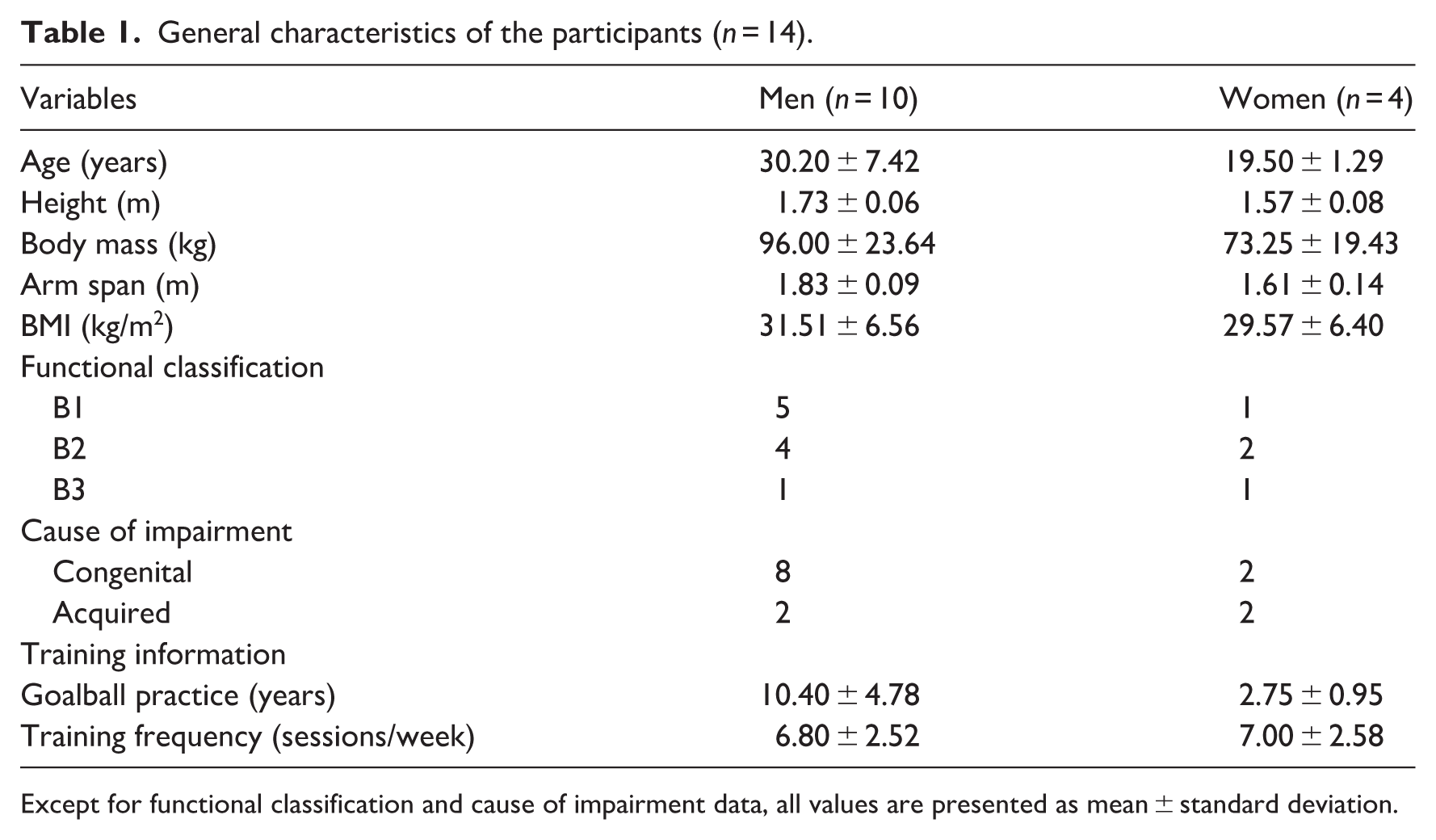
Except for functional classification and cause of impairment data, all values are presented as mean ± standard deviation.
Table 2 presents data from the tests performed. The average height achieved during the vertical jump test was 31.42 ± 10.83 cm, and the average distance thrown with the medicine ball was 4.60 ± 1.17 m. When calculating the power of lower and upper limbs, the averages were 111.70 ± 39.30 kW and 686.16 ± 214.10 kW, respectively. After video analysis, ball throwing speed was calculated, with the average speed of the frontal throw being 32.40 ± 9.70 km/h, and of the spinning throw 32.19 ± 11.77 km/h.
Total and sex-specific results of the tests performed.
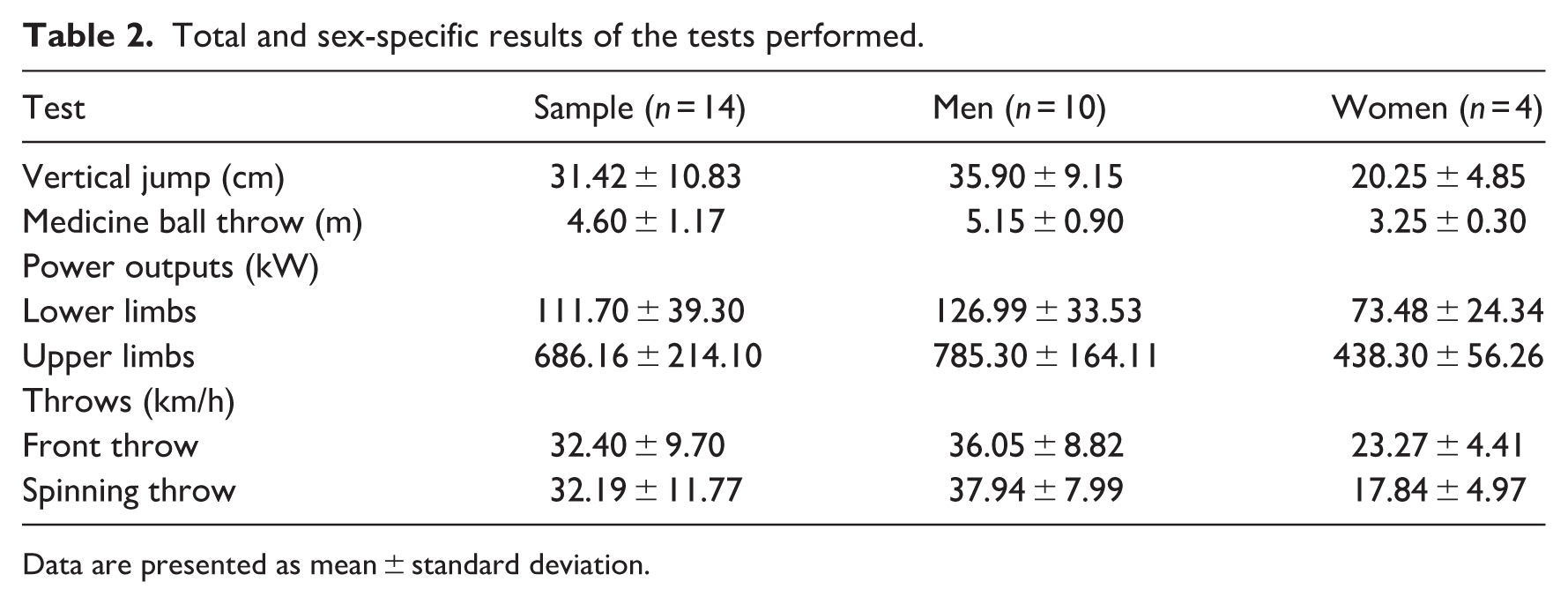
Data are presented as mean ± standard deviation.
Outliers were not detected in either model using Cook’s distance, and the Durbin–Watson test showed residual homoscedasticity (Figure 1). Normality of the distribution of results was observed using Q-Q plots (Figure 2).
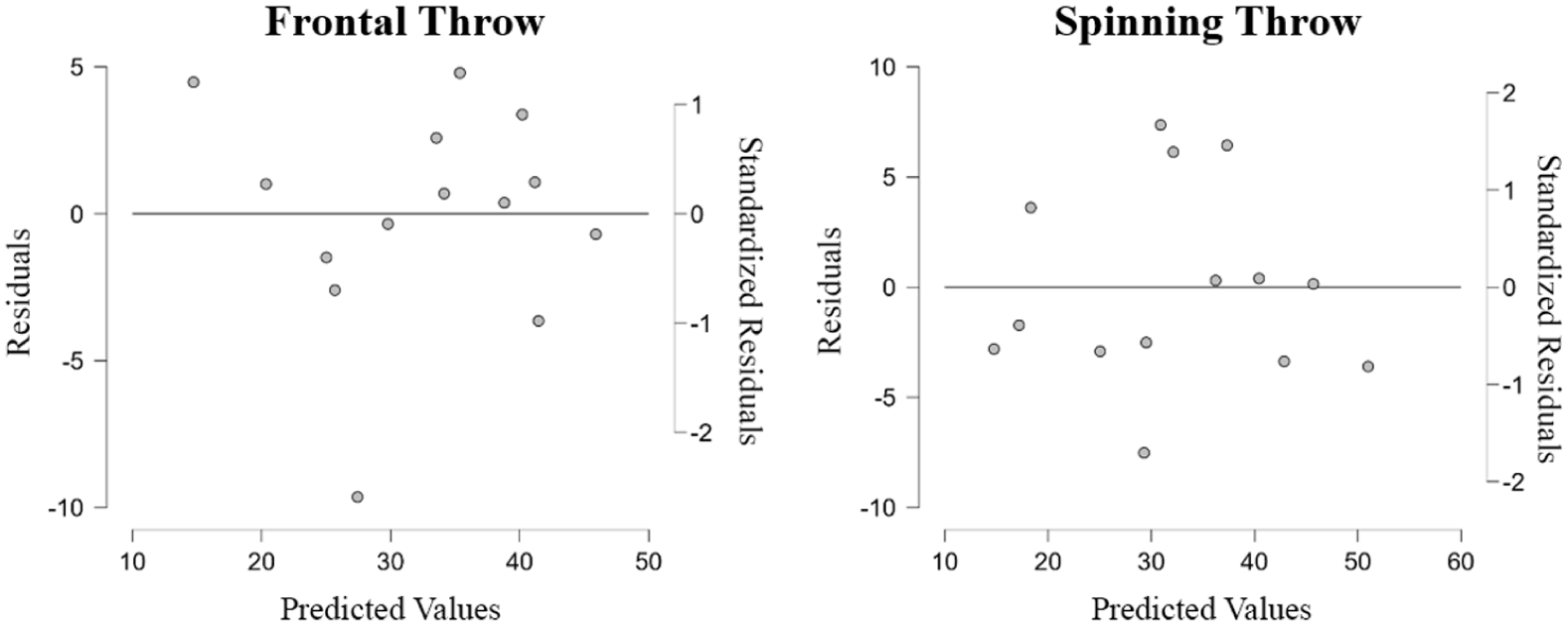
Residual distribution plots in relation to the predicted values for the models.
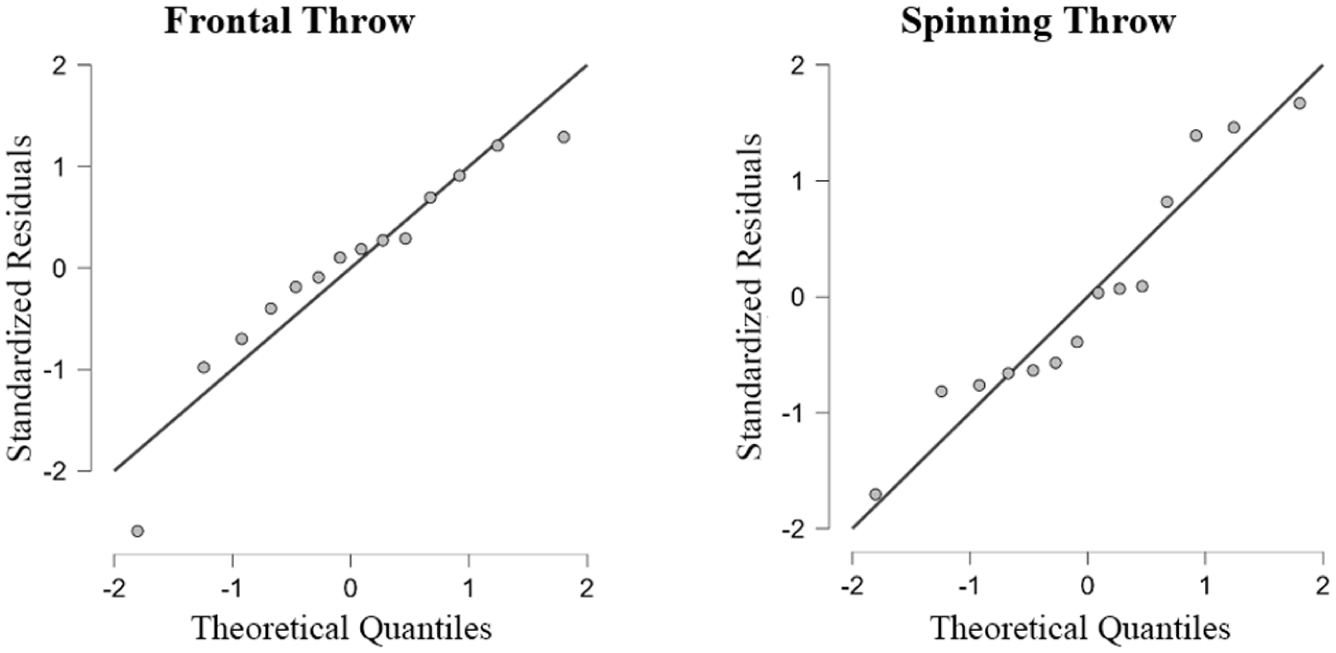
Q-Q plots of the standardized residuals from both models.
After this stage, models were created with arm span and LLP as predictors for frontal and spinning throws, with only LLP explaining the effect. In both cases, the throwing power variable showed high collinearity and low tolerance with other variables, so it was removed from the final model.
Table 3 presents the results of the linear regression analysis. For frontal throw data, arm span and LLP together explained 85.3% of the ball speed (adjusted R² = .82), with LLP being the better predictor for final ball speed compared to arm span (βP = 0.551; p < .01 vs. βP = 0.435; p < .05). For spinning throw data, LLP alone explained 86% of the final ball speed (adjusted R² = .84; βP = .927; p < .001), while arm span did not show statistical significance (p = .07).
Results of linear regression analyses for the effects of arm span and lower limb power on frontal and spinning throw speeds.
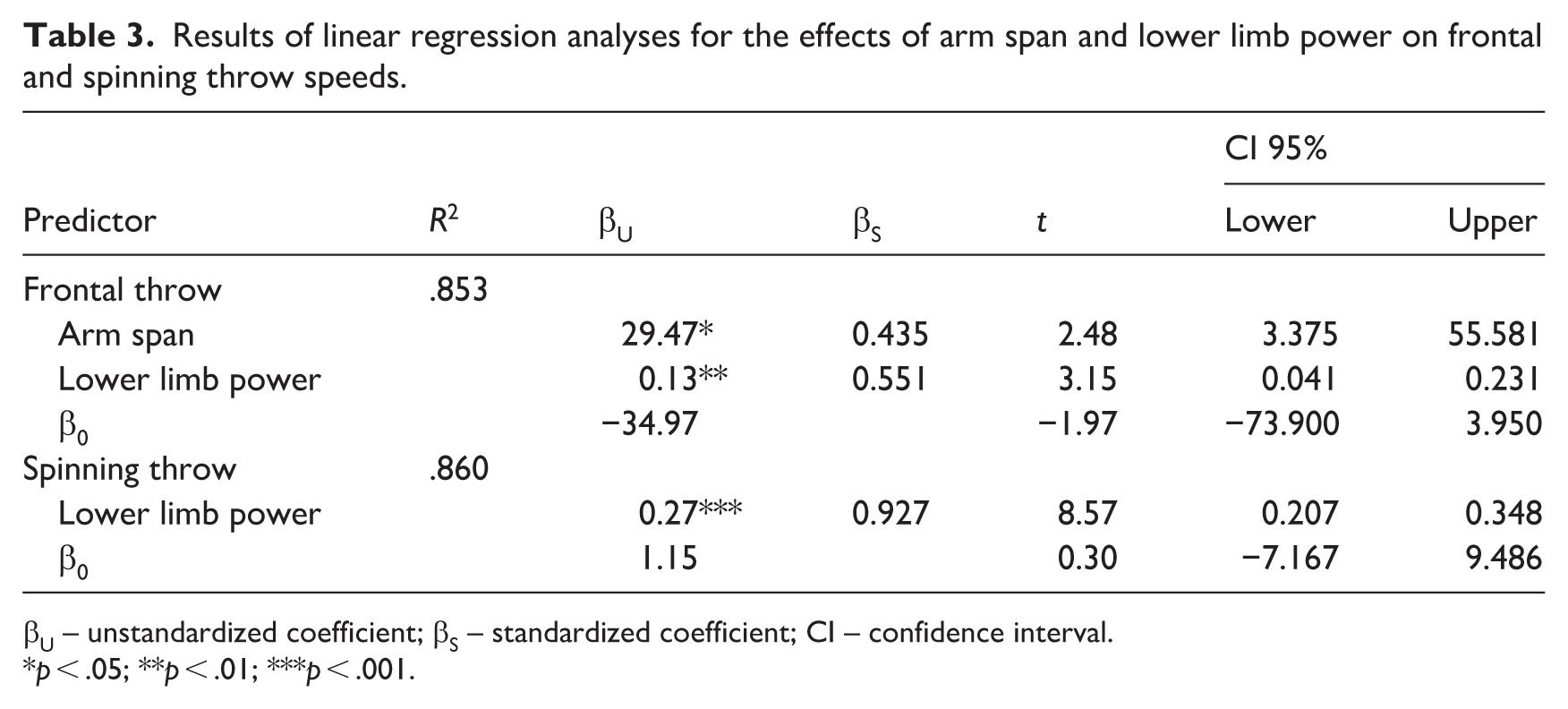
βU – unstandardized coefficient; βS – standardized coefficient; CI – confidence interval.
p < .05; **p < .01; ***p < .001.
Discussion
This study aimed to analyze the association between anthropometric parameters, ULP and LLP, and ball throwing speed in Goalball athletes. Key findings indicate that LLP is crucial for achieving higher ball speeds in both frontal and spinning throws, and that frontal throws presented higher mean ball speeds when the sample was analyzed as a whole, corroborating the findings of Picolo et al. (2021). Furthermore, it was observed that athletes with greater arm span are able to generate higher ball speeds in frontal throws.
However, differences in ball throwing speed between frontal and spinning throws should be interpreted considering sex-specific characteristics and training background. Although frontal throws showed higher mean ball speeds in the overall analysis, this result reflects the combined data of male and female athletes. When examined separately, male athletes achieved higher ball speeds during spinning throws, whereas female athletes demonstrated greater ball speeds during frontal throws. These differences may be explained by sex-related variations in strength levels, anthropometric characteristics, and coordination demands.
Rotational throws require greater involvement of the lower limbs and trunk rotation, relying on proximal-to-distal segmental sequencing to transfer momentum efficiently from the pelvis and trunk to the upper limb, thereby maximizing distal segment velocity (Fu et al., 2022; Serrien & Baeyens, 2018). Previous research in throwing sports indicates that male athletes generally achieve higher release velocities due to greater strength and power production, whereas female athletes may benefit from throwing techniques involving more linear movement patterns and reduced rotational complexity (Van den Tillaar & Cabri, 2012). In addition, differences in age and training experience between male and female athletes may have influenced the observed results, as longer practice time and greater exposure to sport-specific training are associated with improved coordination, power generation, and throwing mechanics (Campos et al., 2020; Morato et al., 2018).
Regarding arm span, the findings of this study support those of Arpini and Vicentini (2017), who showed that the relationship between arm span and greater throw power is justified by a larger action radius and, consequently, greater acceleration applied to the ball. Biomechanically, even though an anthropometric variable cannot be altered, the most distal point of the rotation axis has higher linear speed because it covers a greater distance in the same period of time compared to other parts of the arm, resulting in greater force and torque production (Blazevich & Blazevich, 2017; McGinnis, 2013). This effect is further explained by the proximal-to-distal segmental sequencing observed in overarm throwing movements, in which energy and angular momentum are progressively transferred from the trunk to the upper arm, forearm, and hand, maximizing distal segment velocity and throwing performance (van den Tillaar & Ettema, 2009; Wagner et al., 2014).
Studies by Molik et al. (2015) and Campos et al. (2020) suggest that arm span does not influence performance during the match. In these studies, match performance was primarily evaluated using competition-related outcomes, such as game results and scoring-related indicators obtained during official Goalball matches (Aslan et al., 2018; Kimyon & Ince, 2020). However, the study by Morato et al. (2018) suggests that faster throws increase the likelihood of scoring goals, reinforcing the importance of understanding the variables that affect this action. In addition, these authors highlight that greater arm span also offers a defensive advantage, as only three players are needed to cover the 9 m of the goal area.
LLP was found to be critical for ball speed in both types of throws analyzed. Nascimento and Rocha (2020) emphasize that LLP is a key factor in developing speed, and it can be measured through vertical jump tests. Campos et al. (2020) note that athletes who develop greater LLP are capable of executing faster throws.
From a practical perspective, Da Rocha (2007) suggests incorporating plyometric training into Goalball sessions to improve LLP. Beneli et al. (2017) highlight that in sports involving throws, power is related to the acceleration applied to the implement. Menezes (2020) discusses how factors such as motor coordination and movement technique can influence acceleration capacity, and these factors can be trained to improve performance. In Goalball, acceleration capacity may differ between throwing techniques, as frontal throws are characterized by a more linear movement pattern and shorter acceleration path, whereas spinning throws involve greater rotational momentum, a longer acceleration phase, and higher demands on intersegmental coordination (Campos et al., 2020; Morato et al., 2018). Thus, the findings of this study align with the insights presented by Campos et al. (2020), indicating that muscle power training should be consistent to promote more accurate and faster throws.
Several limitations of this study should be acknowledged. First, the small number of participants, especially female athletes, means that extrapolating the results should be performed with caution. In addition, indirect methods were used to measure speed and muscle power. Another important consideration is that ball speed was measured using video analysis with a relatively low frame rate (29.99 frames per second). It is suggested that future studies use radars or cameras with higher frame rates for greater accuracy. Furthermore, sample heterogeneity, including differences in competitive level and training background among athletes, should be considered when interpreting the results, as these factors may influence physical performance and throwing characteristics (Campos et al., 2020; Morato et al., 2018).
Despite these limitations, this study contributes valuable insights for Goalball practice and performance. It is also noteworthy that all athletes from the Londrina-PR team were evaluated. Considering practical applications, the results can be used by coaches and trainers in structuring training programs and selecting athletes, thereby improving the performance level in the sport and achieving better outcomes.
Conclusion
Based on the results obtained in this study, it can be concluded that LLP plays a significant role in final ball speed during both frontal and spinning throws in Goalball athletes. Arm span was also found to influence ball speed, although only during frontal throws.
These findings highlight the importance of developing LLP to optimize offensive actions during matches. Importantly, training progression should be individualized, considering athletes’ functional abilities, training experience, and specific needs related to visual impairment, to ensure safe, effective, and optimal performance development.
Overall, this study contributes to filling an important gap in scientific literature by clarifying the relationships between arm span, muscle power, and throwing performance in Goalball. The findings support evidence-based practice and may inform training design, athlete development, and future research by employing larger samples, longitudinal approaches, and sport-specific assessment tools to further advance the scientific understanding and professionalization of Goalball at national and international levels.
Footnotes
Author contributions
Danrlei Soares: Conceptualization, data analysis, writing – original draft, and final review.
Bruna Daniella de Vasconcelos Costa: data analysis, statistical analysis.
Geovana Silva de Lima: data collection.
Márcio Rafael da Silva: data collection.
Márcia Greguol: Writing – review and editing, supervision.
Funding
The authors disclosed receipt of the following financial support for the research, authorship, and/or publication of this article: This study was financed in part by the Coordenação de Aperfeiçoamento de Pessoal de Nível Superior – Brasil (CAPES) – Finance Code 001.
Ethical considerations
This project was approved by the local Ethics Committee, with approval number 6.746.501. All participants signed the Informed Consent Form, which was read aloud in the presence of a trusted witness of the athlete.
