






Abstract
This study examined the Corporate Social Responsibility (CSR) of the Redeemed Christian Church of God (RCCG) in Akufo, Aba Saliu, and Bakatari communities in Ibadan, Oyo State, Nigeria. The study investigated development initiatives and processes of transformation and was anchored in Social Capital and Transformational Development theories, using a mixed-methods research design. Quantitative data were analysed using descriptive statistics, and qualitative data were analysed thematically. Findings reveal that the CSR-RCCG interventions encompassed healthcare services, food support, educational assistance, agricultural empowerment, vocational training, and infrastructure development. The initiatives reduced poverty, diversified rural livelihoods and income, increased access to social amenities, and enhanced community well-being. However, there are social consequences, including a change in gender relations, household power dynamics, and patterns of social inclusion and exclusion. In conclusion, faith-based CSR initiatives are important mechanisms for sustainable rural development and social transformation, but require collaboration among stakeholders to ensure long-term development.
Keywords
Introduction
Development is a multifaceted concept and an important event in all areas of life. Development can be viewed from the perspective of growth, improvement, and the realisation of the physical, economic, social, and personal capabilities and potentials that enhance quality of life (Panth, 2021). In a general context, development can be explained in terms of the rural–urban dichotomy, where rural development entails intervention measures intended to improve the quality of life of people living in rural areas, while urban development reflects similar improvements in cities. Beyond this conventional understanding, development is viewed as a social event that transforms the way people interact, organisations function and the manner in which power relations emerge and operate. Consequently, development discourse entails more cooperation between local and global actors to resolve issues that contribute to rural poverty, thereby involving other stakeholders, including non-governmental organisations (NGOs), religious bodies, and faith-based organisations (FBOs) to promote welfare in deprived areas (Banks et al., 2015).
Globally, the concern of FBOs in assisting less privileged rural communities is not recent. Their involvement has increasingly been noticed, particularly in areas where state capacity and public infrastructure remain weak. Aside from their spiritual mission, FBOs take an active role in education, provision of health care services, poverty reduction, humanitarian aid, and community development (Horsfjord et al., 2022). They have emerged as essential partners due to their local networks, moral authority, grassroots links, and community infiltration (Clarke and Ware, 2015; Duff and Buckingham, 2015). Their importance is further compounded by their ability to leverage social assets, including schools, health care institutions, and social welfare systems, all of which make a significant contribution to local development initiatives (Haakenstad et al., 2015; Olivier et al., 2015).
Similarly, in Africa, the involvement of FBOs in rural development is observed in communities that suffer from poverty, inadequate infrastructure, and poor government action. As regards South Africa, Kenya, Tanzania, Sierra Leone, and Nigeria, FBOs, particularly churches, Islamic organisations, and interfaith groups, have contributed to rural transformation through various initiatives in areas like education, health care, agriculture, livelihood, humanitarian aid, and community well-being (Olivier et al., 2015; Olivier and Wodon, 2014). Through their deep cultural and social connections, FBOs have acquired respectability and credibility among the locals (Whyle and Olivier, 2017). However, most of the literature tends to examine the role of such FBOs in terms of service provision and poverty alleviation, but pays little attention to how these interventions reshape social relations, power structures, and patterns of inclusion and exclusion within rural communities
The case of Nigeria is not different from other developing countries as rural development continues to be a key area of concern because of the continued socio-economic disparities between the urban and rural populations (Todaro and Smith, 2020). There have been government efforts towards improving the living conditions of rural communities through the provision of social amenities under government agencies such as the Directorate of Food, Roads and Rural Infrastructure (DFRRI) and the National Poverty Eradication Programme (NAPEP). The provision of social amenities provided room for non-state actors such as churches to offer their support in tackling poverty and infrastructural issues in rural areas. One example is the Redeemed Christian Church of God (RCCG), which has funded the construction of boreholes, renovation of schools, skills training and health facilities in rural areas. These initiatives align with Sustainable Development Goals (SDGs) 1, 2, and 9 on poverty eradication, food security, and infrastructure.
Despite the growing visibility of FBOs in rural development, most studies only analyse the activities of faith-based organisations with respect to service delivery, with little analysis of the consequences these interventions may have within the communities, as some of the interventions sometimes deepen inequalities and create social tensions (Olivier and Wodon, 2014). Additionally, most studies employ a macro-analysis approach, failing to capture the impact and response by the beneficiaries of the interventions. Anecdotal information indicates that the CSR interventions by the RCCG in Akufo, Aba Saliu, and Bakatari communities of Ido LGA suit the needs of the communities; yet, limited research exists to evaluate the extent of the CSR initiatives, their relevance to the SDGs, and their impact on social relationships within the communities. The study moves beyond identifying CSR initiatives to examine how they influence gender roles, household relations, economic participation, and broader social interactions. It adopts a micro-level community approach to
Conceptual and theoretical frameworks
Corporate Social Responsibility (CSR) denotes the responsibility of organisations to act responsibly in improving the well-being of the society where they operate (Carroll, 1991). Beyond the private business organisation, which has been within the confines of CSR and how it addresses issues like inequality and exploitation, the development literature has extended the scope of social responsibility to include the activities and responsibilities of non-governmental and religious organisations. In this study, CSR refers to a socially responsive and developmental intervention that enables organisations to use their resources and networks to address local community challenges. Similarly, sustainable rural development is a long-term development intervention aimed at improving the conditions of life for those living in rural areas by increasing resources, opportunities, and social services, as well as involving community members. It encompasses qualitative improvements in areas like health, education, food security and infrastructure, among others, and how these influence gender roles, family dynamics and power structures. Thus, development, in this context, is both a material and social process of change in rural communities.
The research is underpinned by the Social Capital and Transformational Development theories, since both theories appreciate the roles played by the FBOs within the rural community context. The concept of social capital is espoused by sociologists such as Pierre Bourdieu, James Coleman, and Robert Putnam. Social capital entails the utilisation of social networks, reciprocity, trust, and shared values to facilitate cooperation. It enables the understanding of the role of social networks, values, trust, and relationships of RCCG in undertaking CSR initiatives.
According to Transformational Development Theory, proposed by the likes of Robert Chambers, David Korten, and faith-based development literature, development entails a process of change beyond economic development to include empowerment, participation, social justice and sustainability. Unlike traditional development practices, the theory stresses the need for transformative action in relation to both individuals and social systems, rather than material results. This theory applies significantly to faith-based interventions, which have their motivation rooted in compassion, service, and social justice.
Both theories help to understand CSR-RCCG interventions through the lenses of religion and development. The study shows that religious networks play an important role in promoting development. At the same time, faith-based interventions demonstrate that faith-based organisations function not only as providers of welfare and social capital but also as agents of social change, generating both empowerment and inclusion as well as exclusion and shifting power relations within rural communities.

Conceptual framework.
Figure 1 presents the conceptual framework underpinning this study. The framework shows the role played by faith-based values, social networks, and community participation in the development of CSR programs, while acknowledging that development processes create social consequences, such as inclusion, exclusion, changes in gender and household dynamics, and that development impacts continually influence community participation through a feedback loop.
Methodology
Research design and population
The study adopted a mixed-methods research design comprising both qualitative and quantitative approaches. The study population comprised residents, religious leaders, community leaders, beneficiaries in the communities, and local government officials, who were purposively selected in three rural communities in Ido Local Government Area: Akufo, Aba Saliu, and Bakatari.
Study areas
Three communities within the Ido Local Government Area of Oyo State – Akufo, Aba Saliu, and Bakatari were selected for the study (see Figure 2) due to their similar socioeconomic conditions, which include being largely agrarian, less developed, and characterised by highly communal lifestyles, and therefore represent an appropriate setting for exploring the impact of faith-based corporate social responsibility (CSR) programs in rural areas. They include strong kinship networks, traditional leadership structures, and vibrant youth, women, and religious organisations. The Akufo community comprises a peri-urban community whose economy is based on agriculture, livestock rearing, trading, and transportation. Aba Saliu represents a semi-rural area with its economic base built on smallholder farming and non-conventional business activities, while Bakatari is a large agrarian community with an advantageous location as it lies along the route for rural transport activities. Across the three communities, traditional and religious institutions play significant roles in promoting welfare, social cohesion, and development.

Map of the study areas: Akufo, Aba Saliu and Bakatari.
Sample and sampling techniques
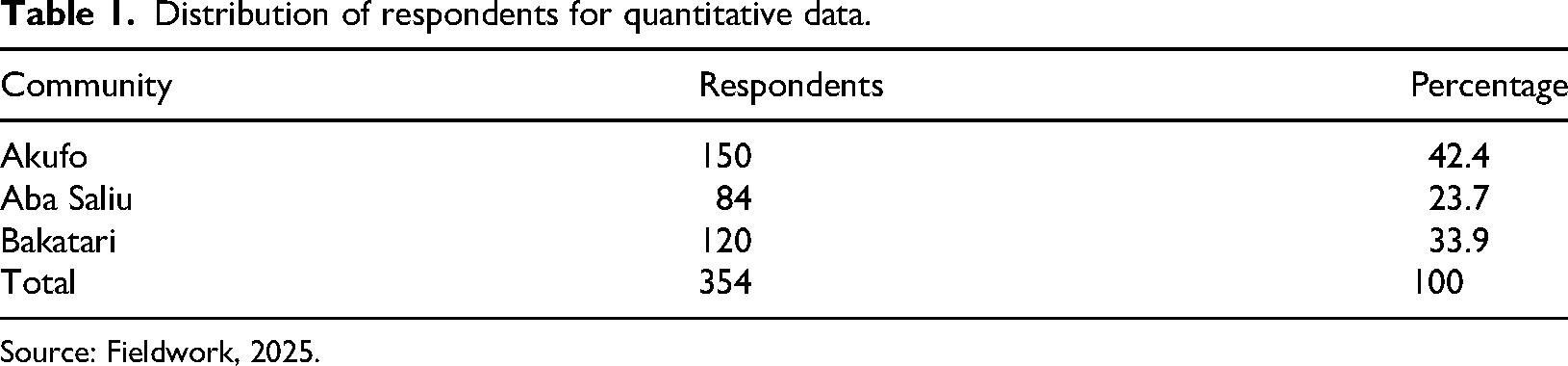
A multi-stage sampling technique, including purposive, stratified, and random sampling, was adopted. The data for the study were collected using structured questionnaires, key informant interviews, In-depth Interviews, and Focus Group Discussions. Quantitative data were analysed using descriptive statistics, while qualitative data were analysed using themes that captured specific areas of the research interest. A total of three hundred and fifty-four (354) respondents were randomly selected from an estimated population of 3080 generated from church, town hall meetings, and households, which cut across the three communities, using Taro Yamane formula as follows;




Distribution of respondents for quantitative data.
Source: Fieldwork, 2025.
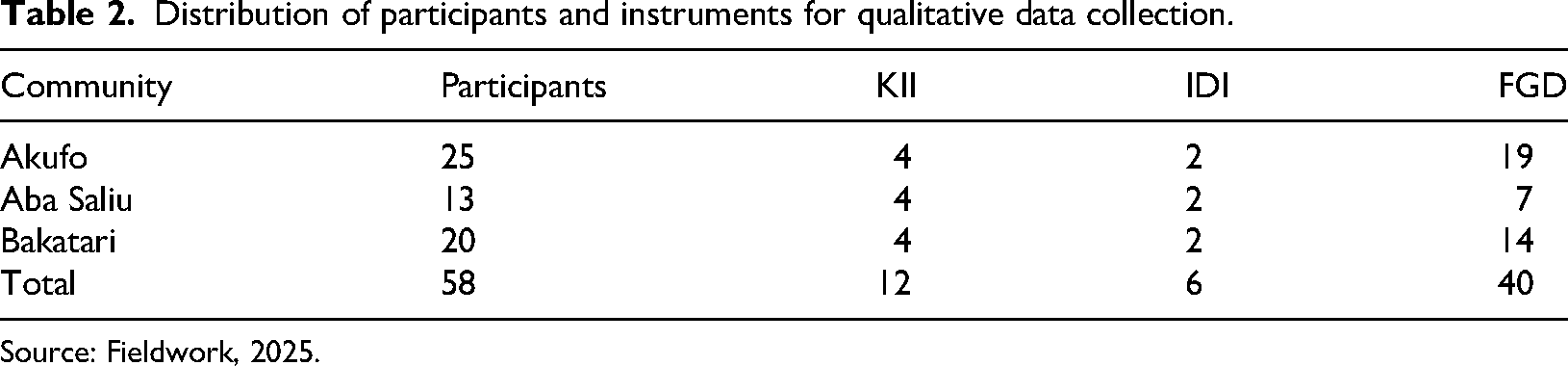
However, in Table 2, fifty-eight (58) participants were purposively selected across the three communities for qualitative responses, using Key Informant Interviews (KIIs) from church leaders, Church Ministers, CSR coordinators, and LGA officials. In-Depth Interviews (IDIs) were used for community leaders, while Focus Group Discussions (FGDs) were held with community residents who were categorised as beneficiaries and non-beneficiaries.
Distribution of participants and instruments for qualitative data collection.
Source: Fieldwork, 2025.
Ethical considerations
There were ethical considerations in place during the course of the study. All participants were well-informed regarding the nature of the research, its processes, and its importance before agreeing to participate. Informed consent was obtained verbally before participation. Participants were also made aware of their choice not to participate in the study or to withdraw at any point without facing any negative ramifications. They were treated with dignity, respect, and equity through the process of data collection. Anonymity and confidentiality were assured by avoiding the collection of personally identifiable information in the study, as well as ensuring that data were used solely for academic research purposes. The necessary permissions from various community and church officials were acquired, while data were also secured from potential unauthorised access. The study was conducted in a manner that minimised harm and promoted beneficial knowledge for community development.
Findings
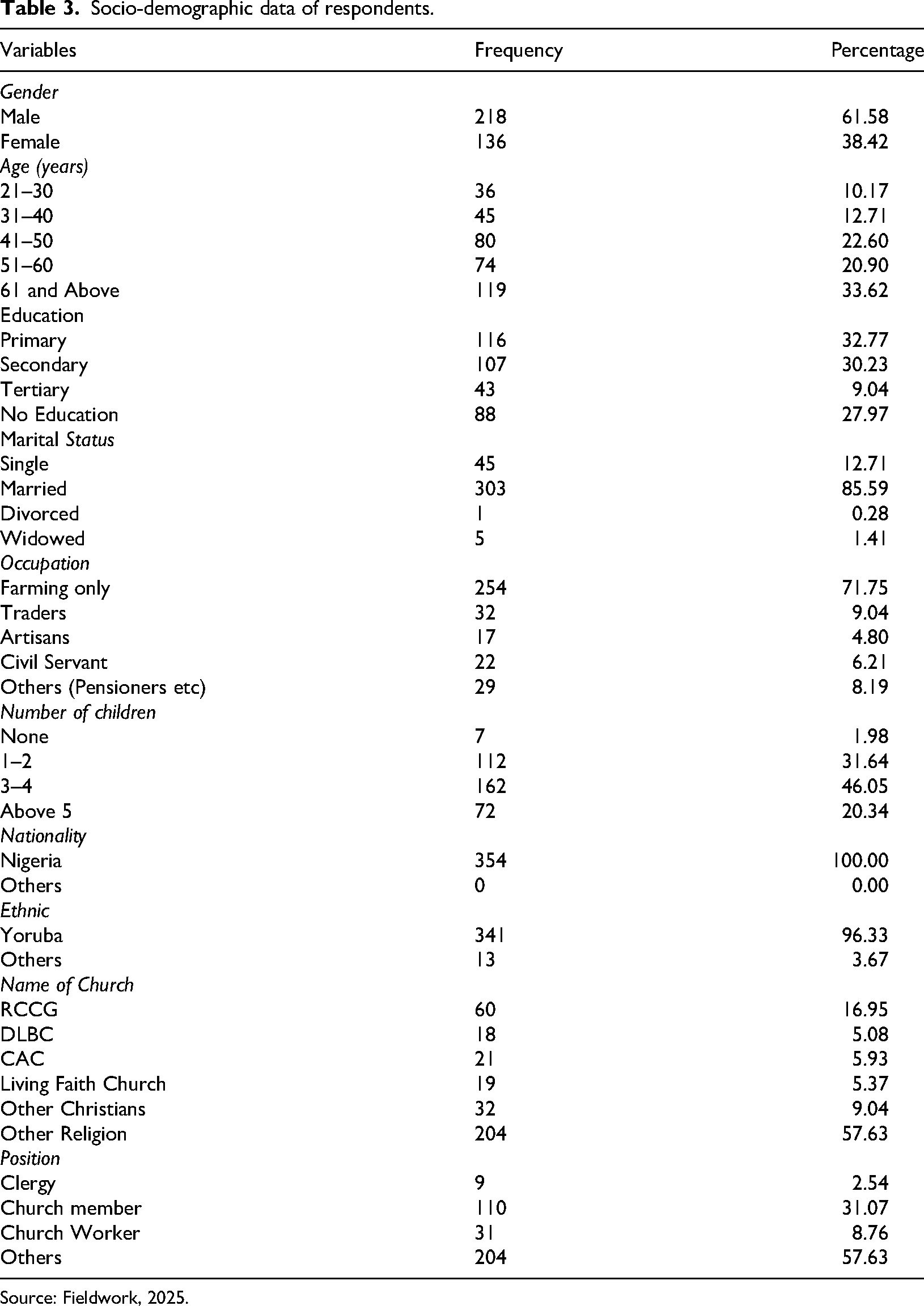
The socio-demographics of the respondents as shown in Table 3, give insight regarding the social structures and developmental situations prevailing within Akufo, Aba Saliu, and Bakatari villages. The predominance of male respondents (61.58%) reflects the patriarchal societies in rural areas, especially in Nigeria, where the male members play the role of head of the family, take major decisions, and also represent their respective families in the community.
Socio-demographic data of respondents.
Source: Fieldwork, 2025.
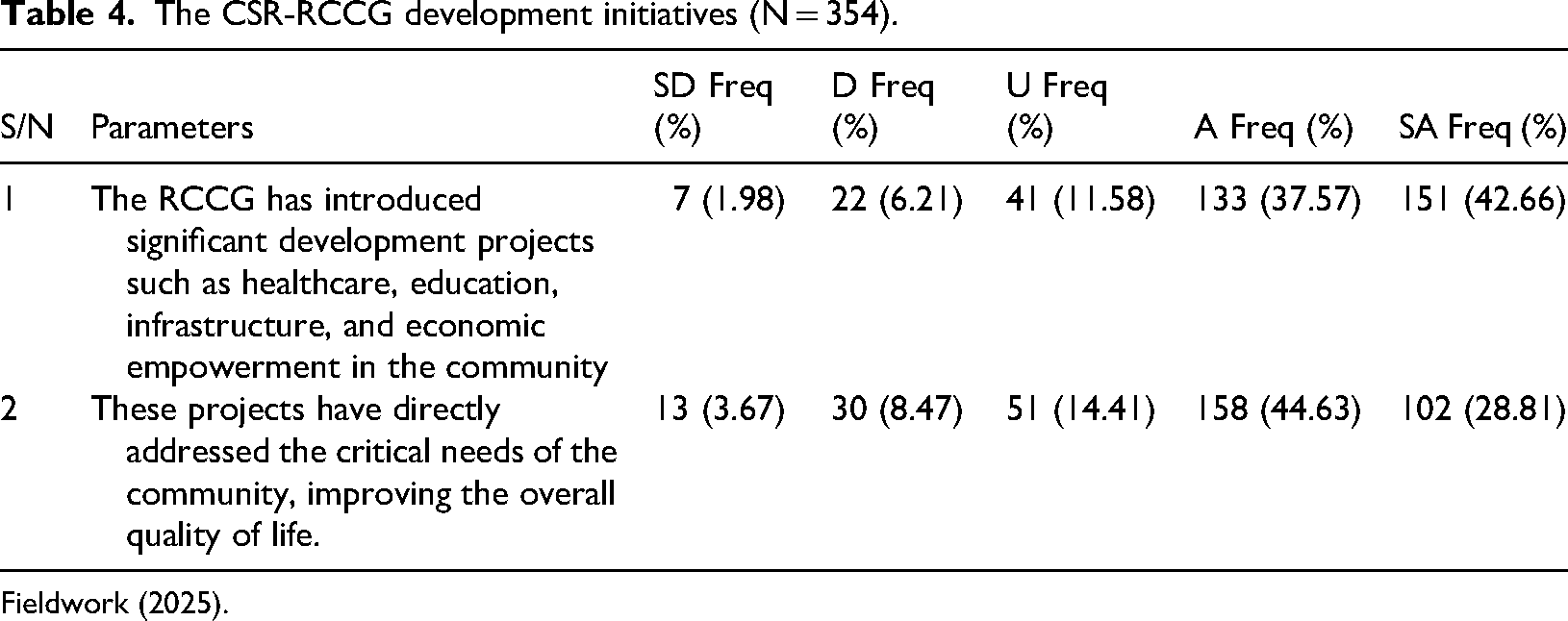
The CSR-RCCG development initiatives (N = 354).
Fieldwork (2025).
The higher number of people who are 61 years and above, coupled with an average age of 52.64 years, indicates the presence of relatively older members within rural societies. The high ages within rural areas are attributed to urbanisation, where many people migrate to urban centres in search of better opportunities like education and employment. Education level shows that most of the respondents were either uneducated or had only attained the primary education level. The lower educational levels may affect many aspects of the lives of these rural members, such as employment possibilities and participation in development programs. Low educational attainment is therefore both a consequence and a driver of rural poverty.
The predominance of married people (85.59%) demonstrates the key position of families and kinship among the features of the social structure of rural areas. The high proportion of families having three or more children demonstrates the significance of family members as a source of manpower and social security within the agrarian community; yet, the higher number of children in the family may create an additional economic burden.
Occupationally, the reliance on agriculture (71.75%) reveals the agrarian nature of the community and limited economic diversification. It means that households have no alternative way out in case of fluctuating agricultural conditions and economic situations. Finally, the high prevalence of Yoruba people and the co-existence of different faith bodies demonstrate the unity of society despite the diversity of religion.
Table 4 identifies the existence of developmental initiatives and the impact of CSR-RCCG on the community members’ quality of life. About 284 (80.23%) respondents, comprising 133 (37.57%) who agreed and 151 (42.66%) who strongly agreed, affirmed that the RCCG has introduced significant development projects such as healthcare, education, infrastructure, and economic empowerment in their communities, while only 7 (1.98%) strongly disagreed. The data speak to the emergence of RCCG as a development actor within the study communities that has filled critical welfare and infrastructural gaps often associated with weak state presence in most rural societies in Nigeria. It shows that the CSR-RCCG has become an institution within the social and developmental life of the communities.
The RCCG interventions were perceived as more than symbolic religious activities, with 158 (44.63%) respondents affirming that RCCG projects have addressed critical community needs and improved life quality. Faith-based interventions are increasingly assuming quasi-developmental roles traditionally expected from the state, particularly in contexts characterised by infrastructural deficits and socio-economic neglect. While the quantitative data reveal that there are highly positive perceptions of RCCG development programs among all community members, the qualitative findings demonstrate that the impacts of these initiatives are not uniform. Although the majority of participants acknowledged the developmental relevance of RCCG's CSR programmes, a few non-beneficiaries expressed feelings of exclusion. Therefore, the study's results bring to light the more complex nature of faith-based development intervention programs, as their effects tend to be inconsistent, even when their overall contribution to development cannot be denied. Consequently, the findings challenge the assumption in some development literature that faith-based interventions automatically yield entirely inclusive outcomes. Instead, the study shows that RCCG's CSR programs simultaneously enhance bonding social capital within church-based networks while partially developing bridging social capital to the wider community.
On health
Access to health and good healthcare services are paramount to rural dwellers. The RCCG initiatives extend their hospitality to this sector. A male beneficiary of the CSR scheme at Bakatari suggested that the outreach programmes should become more regular: When CSR-RCCG brought medical outreach, it felt like answered prayers. We appeal for this to become a quarterly event. It helps reduce deaths from preventable diseases. Our people now look up to the church as a voice for our development. (FGD 2/Male/47 years/Beneficiary/Bakatari/2025)
The response shows an improvement and represents a huge social benefit, such that healthcare has become a platform for peace and collaboration. From another beneficiary: Our people have suffered due to a lack of basic health services. The CSR programme brought doctors, drugs, and hope to our doorsteps. On different occasions, doctors and nurses came to our town to provide free medical check-ups, malaria tests, malaria treatment, and the distribution of mosquito nets. They didn’t discriminate; Muslims, Christians, children, and elders were all treated. It united the community and showed that the church is not only for preaching. They even gave health talks and taught us about hygiene. (FGD 5/Male Beneficiary/37 years/Aba Saliu/2025)
However, from a non-beneficiary, he submitted thus: They have helped some people with minor health issues, like giving out drugs and first aid, but nothing has reached me directly. I believe if they want to do more, they should make health campaigns open and accessible to everyone, not just church members. (FGD 10/Male/Non-Beneficiary/Bakatari/49 years/2025)
From this CSR coordinator, this was captured: From time to time, especially during special programmes, we embark on medical outreach. A recent example is the one we had during the women's convention. We invited resource persons, that is, medical personnel from outside the community, to give health talks and also run some tests. The turnout from the community was massive and impressive.” (IDI/Male/Coordinator/Bakatari/42 years/2025).
The intervention is seen as an alternative welfare institution in communities where the government has provided insufficient healthcare infrastructure. The interviews confirm that the participants considered the medical outreach as saving lives and termed it ‘development’; thus, there is a perception that the church acts as a legitimate institution in delivering public health services. Secondly, the findings shed light on the dual nature of social capital in terms of faith-based development intervention projects. This demonstrates that development interventions may simultaneously generate social cohesion and reinforce boundaries between insiders and outsiders.
On education
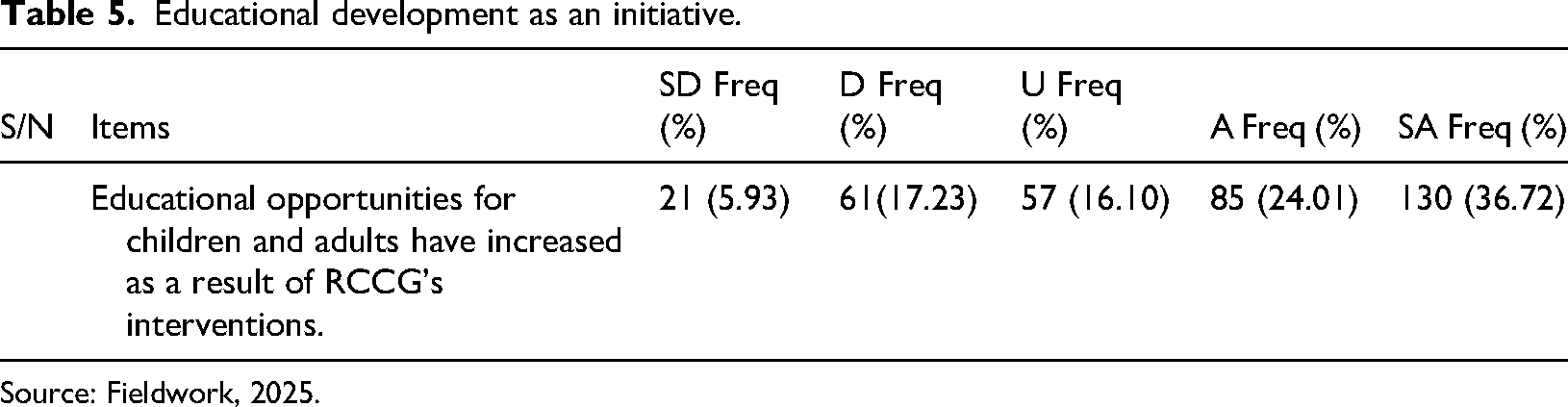
According to the quantitative data, approximately 36.72% (130) strongly agreed, and 24.01% (85) agreed that RCCG's interventions had increased educational opportunities for both children and adults. In contrast, 21 (5.93%) strongly disagreed, and 61 (17.23%), totalling 82 (23.16%), disagreed that RCCG had any impact on their educational opportunities (Table 5). Educational interventions by CSR-RCCG are seen as being transformative, especially for those who have very little access to education. But this inequality of access implies disparity and the selective nature of some interventions. A beneficiary said: I am a member of the church and a worker; they helped me personally by paying part of my HND school fees when I almost dropped out. The church intervened just in time. They do this for many others, too, especially the orphans and children from very poor homes. (FGD 5/Female/25 years/Beneficiary/Akufo/2025)
Another beneficiary narrated: RCCG's children's church is positively shaping our kids. They teach them to be respectful, truthful, and to avoid bad habits. I see a clear difference between my son and his peers who don’t attend. They are giving our children moral education, which is just as important as formal schooling. (FGD 3/Male/66 years/Beneficiary/Bakatari/2025)
Educational development as an initiative.
Source: Fieldwork, 2025.
RCCG's CSR educational interventions reveal that its social initiatives are taking a dual role of education and moral socialisation. While helping with the school financing of children in communities, the church is also involved in shaping behavioural norms and values within the communities. In this regard, RCCG functions as both a development institution and a moral regulatory institution within the rural social structure.
A CSR member agreed that education is outstanding because of its great impact: Having seen the willingness of some of our members to obtain formal education, the church management encourages them more by giving advice, stipend, foodstuffs and so on through the church CSR. I personally see education as one of the biggest drivers for the success of these communities. We have ministered to children, youths and even women in this regard. (KII/Male/Bakatari/CSR/2025).
Likewise, a participant in Akufo said: CSR is all about meeting the needs of the people. As such, it is the practice of the church to organise outreaches to bring the people together in order to raise awareness of contemporary issues in the areas of career development. Along this line, the youths are encouraged to go to school or acquire new entrepreneurial skills. (KII/Male Clergy/Akufo/2025).
Some of the participants linked their return to school for higher studies to the CSR. One of the female participants narrated: I would have probably been one underachieving person if I had not come into contact with this CSR-RCCG. I am interested in education, but my parents were too poor to send me to school. Thank God for the church CSR, our pastor helped me enrol in a school. (IDI/Female/43 years/CSR/Bakatari/2025).
The CSR-RCCG educational interventions exhibit a dedication to long-term social mobility and community transformation rather than short-term acts of charity. The use of education alongside vocational and entrepreneurship training ensures that human development, employability, and self-reliance become key areas of focus. This aligns with Transformational Development Theory, which emphasises empowerment and capacity-building as pathways to sustainable development and intergenerational poverty reduction.
Besides, the intervention served as a social support system that bridges the gap created by the deficiency of state welfare systems and poor socio-economic conditions within the households. This is an example of social capital, whereby religious networks help people from underprivileged backgrounds in acquiring education, with the church being a development entity.
Lastly, RCCG interventions manifest in gender transformation as a beneficiary explained: I owe the National Diploma in Technology to the combined efforts of the RCCG's CSR and my supportive husband. If he had not allowed me to join the church, I probably would not have met those who facilitated and encouraged me to obtain a certification. The two of them are my God-send. (IDI/Female/47 years/CSR/Akufo/2025).
As shown, there is an intersection among religion, family support, and women's educational advancement. It shows how CSR-RCCG helps alter traditional gender expectations by encouraging women's educational and professional development. This transformation extends beyond education to reshaping gender relations, household dynamics, and perceptions of women's social roles within the family and wider community, causing a change in existing social and economic structures.
Changes in the patterns of social relationships
Particular attention was given to observable changes in the social relations and structure of these communities before and after the intervention of the CSR development initiative. Social structure, in this context, refers to the patterns of social relationships, institutions, and norms that shape the behaviour and interactions in rural communities. While RCCG's CSR initiatives have enhanced women's economic participation, the findings reveal that such empowerment brings about considerable disruption in family relations. The growing economic independence of women poses a threat to the patriarchal tradition, which creates friction in marriages and causes renegotiation of authority and family instability. The findings, therefore, complicate dominant development assumptions that empowerment would automatically yield socially beneficial outcomes. In Bakatari, a participant shares his view on the role of CSR in transforming the pattern of social relations, thus: There was a time in this community when women had no access to resources and no economic compensation for all the ancillary services they provided in the community. They were not seen as partners in progress. Gone are those days now. Our women have become owners of farms and employers of labour. They have become assertive and contribute significantly to communal affairs. (KII/Male/68 years/Bakatari/2025)
Supportably, one of the female owners of farms in Saliu submitted that: The CSR intervention was a new beginning for us. Women beneficiaries in the community were made to understand that they are critically important in addressing food security problems and reducing poverty rates. (IDI/Female/58 years/Aba Saliu/2025)
Another woman submitted: Women have been significantly empowered… The knowledge provided at the behest of the CSR-RCCG has put us in good standing to challenge the hegemony of male dominance. (IDI/Female/63 years/Bakatari/2025)
The increase in women's ownership of landed resources was linked to CSR-induced training and mindset shifts, reflecting changing family perceptions and gender relations. There is a transformation in gendered economic relations within the communities. Women who were once limited only to unpaid domestic work have increasingly become productive. This is because of the gradual restructuring of patriarchal relations due to the CSR-RCCG interventions. However, empowerment still occurs within existing patriarchal structures, thereby generating negotiation, resistance, and household tensions.
In a male gender-segregated FGD, beneficiaries were asked how they reacted to women's newly found economic status. A male participant responded thus: The economic success of my wife has got into her head. She was the one who pushed me to get another wife. (FGD/Male/58 years/Akufo/CSR/2025)
Another family head expressed his views: I am happy for my wife's success. However, it is that new prosperity that has made her uncontrollable and arrogant. (IDI/Male/51 years/Akufo/CSR/2025)
This suggests that, although the CSR-RCCG movement was successful in creating an economically empowered situation for women, it had simultaneously brought into question gender-based hierarchical structures that previously existed in households. This is because of the male anxieties about authority, status, and conjugal roles, which may imply that a change in socio-economic relations could lead to tensions at the family level. Thus, social transformation is often conflictual and negotiated rather than smooth and orderly.
Yet, not all male participants perceived women's empowerment negatively: I used to be one of those that believe the role of women should be limited to the kitchen. That is the biggest transformation for me. (IDI/Male/58 years/Akufo/CSR/2025)
The ambivalence above indicates that the CSR-RCCG interventions are gradually leading to ideological shifts regarding the roles of gender in rural communities. While some men felt threatened by any attempt to change their roles within their families, others found women's empowerment necessary for the family's benefit. This indicates that social transformation within rural communities is not consistent but rather a negotiated process shaped by varying interpretations of religion, masculinity, and economic responsibility.
Impact of CSR in relation to SDGs 1, 2 and 9
The United Nations’ Sustainable Development Goals of 2015 are an improvement on the Millennium Development Goals (MDGs), established in the year 2000 to address global challenges like poverty, hunger and diseases. The UN General Assembly adopted the 2030 Agenda for Sustainable Development, which includes 17 SDGs as a blueprint to achieve a better and more sustainable future by 2030. This study focuses on SDG 1 (No Poverty), 2 (Zero Hunger), and 9 (Industry, Innovation, and Infrastructure) to provide a broader global context for assessing CSR-RCCG interventions, particularly in relation to the growing recognition of faith-based organisations as important non-state development actors in rural societies across Africa and other developing regions.
Before delving into assessing the selected SDGs, it is imperative to enquiry on the socio-economic situation of communities before the CSR-RCCG interventions.
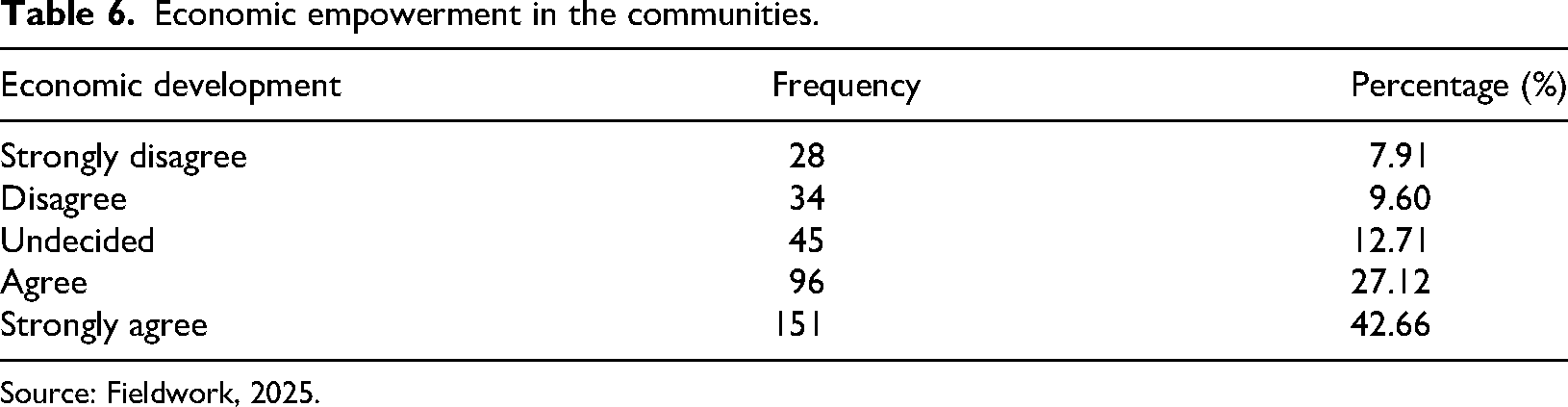
Economic empowerment in the communities.
Source: Fieldwork, 2025.
As shown in Table 6, 69.78% of respondents (agree and strongly agree) linked the development projects to local economic growth. This suggests that CSR-RCCG interventions are viewed as mechanisms capable of stimulating local economic participation and improving livelihoods, not mere welfare activities. This can only happen when interventions increase the standard of living and quality of life by putting more money into people's pockets. The economic arrangement of pre CSR-RCCG had improved after the introduction of the CSR-RCCG.
During an FGD session, a beneficiary reported on the positive impact of their economic well-being in the aftermath of a CSR-RCCG programme. Similarly, another beneficiary in Aba Saliu enthused that; The introduction of the initiative brought by the church has really helped us in many ways. For example, they have brought clothing materials, shoes, food, and drugs to us occasionally. They have also organised seminars where we have learnt some skills. Personally, I can say without any contradiction that my family and I have benefited from the RCCG welfare packages. (FGD/Female/59 years/Aba Saliu/2025).
The intervention entails provision of welfare alongside skills training for a gradual change from survival through subsistence to productivity and sustainability.
SDG 1–Poverty reduction
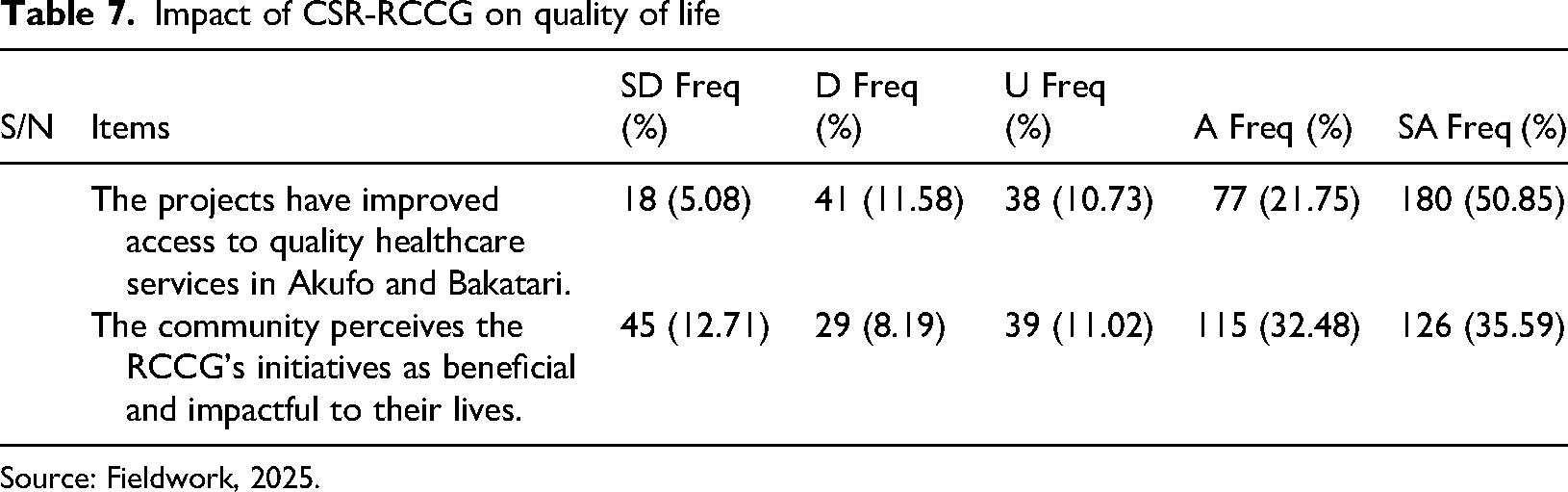
The implications of the CSR interventions on quality of life with respect to poverty reduction and wellness were addressed in Table 7.
Impact of CSR-RCCG on quality of life
Source: Fieldwork, 2025.
In the table, approximately 73.44% of the respondents linked the development projects to improved livelihoods. Also, more than 50% strongly agreed that CSR impacted their health positively. This indicates that CSR-RCCG interventions contribute significantly to welfare improvement, particularly in communities with weak social protection systems and limited government presence.
One of the IDI participants at Bakatari supported this: CSR-RCCG initiatives have come in to help in reducing poverty in the community through the distribution of food items – both raw and cooked- during their programmes, which they call “Let Us Go Fishing”, and at times on the first Sundays for those who could go to their programmes and church services, skills acquisition programmes, and at times their vocational training. (IDI/Male/35 years/2025).
Here, poverty reduction within communities is achieved through consumptive and productive efforts. The food distribution focuses on alleviating physical deprivation in the short run, while vocational skills development helps build economic strength for future prosperity.
Elaborating on the state of poverty before the CSR-RCCG, an informant said: People in the community usually go to the cities to do security work for companies; they work as gardeners and hired labourers on the farms of the rich to earn income to provide for their families. We do not have the money to buy inputs to enable us to engage in commercial production, which will bring us huge amounts of money. But now, with the advice, prayers and encouragement from the church, we are pushing through. (KII/Male/69 years/CSR/2025).
The reliance on low-paying informal labour and subsistence farming is a reflection of the rural poverty among rural communities in Africa. In this regard, the involvement of CSR-RCCG is significant not only for providing spiritual motivation but also as a form of alternative development framework that can encourage productivity. Data collected reveals a trend from a subsistence nuclear family to a commercial one: Our farms largely depended on family labour in the years before CSR-RCCG reached us. Not that family labour had disappeared completely, but I can tell you that this community has significantly moved away from family labour. (IDI/Male/68 years/Bakatari/2025).
In development terms, there is a structural transformation associated with rural modernisation and economic expansion. The improved well-being indicates that the CSR-RCCG programs are not just viewed as welfare initiatives, but as interventions that enhance the overall quality of life within the communities. In addition, the results have confirmed the global perceptions that faith-based organisations play important roles in providing social services, particularly within poor rural communities characterised by poverty and state neglect.
SDG 2–Zero hunger
Informants highlighted the impact of church-initiated food banks, agricultural programmes, and nutrition education programmes in improving food security in the community. Such interventions are particularly significant within the context of rising global food insecurity and rural vulnerability, where access to a stable food supply remains a major developmental challenge.
A participant attested: Our church actively provided food relief programmes during festive seasons, such as monthly first Sunday thanksgivings, where we share food, cut cakes and take drinks, also Easter and Christmas during Let's Go A-Fishing. Food materials are also shared out to indigent people from time to time. (FGD 1/Male Beneficiary/57 years/Akufo/2025).
Beyond the immediate material benefits, there is an aspect of communal solidarity that can be reinforced by these programs through collective sharing activities. However, while regular food assistance supports welfare provision, sustainable food security depends on the extent to which the programs enhance agricultural productivity and long-term economic resilience within the communities.
SDG 9–Infrastructural development
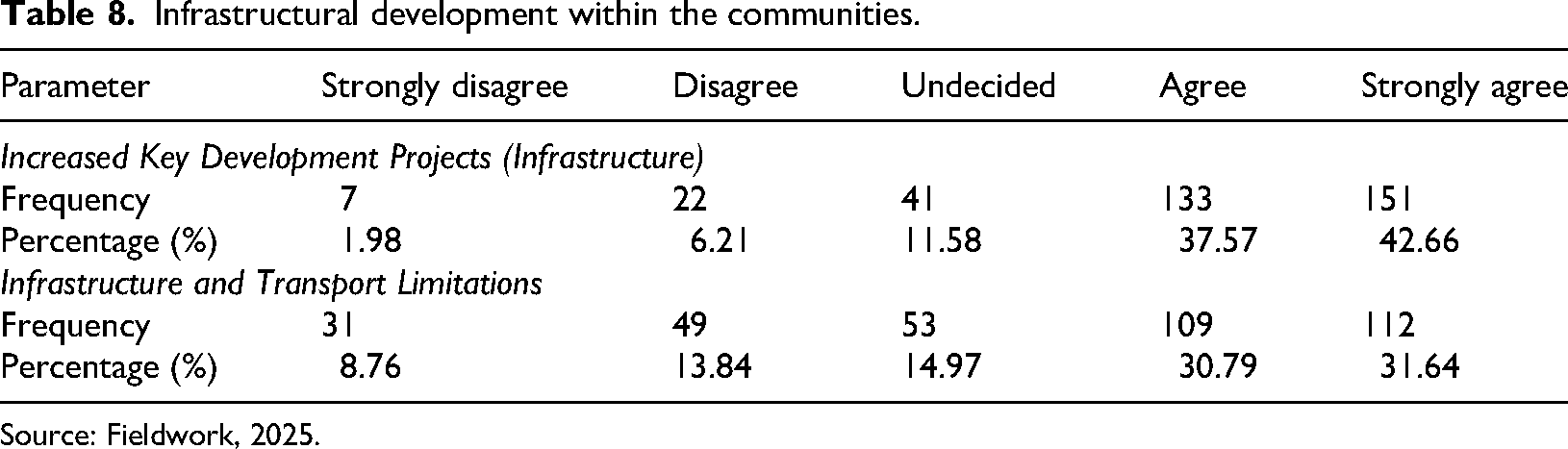
From Table 8, it is noteworthy that 80.23% of respondents agreed that key development projects such as healthcare, education, economic empowerment, and infrastructure have been implemented in their communities. The high degree of consensus emanates from the increased developmental role being played by faith-based organisations in supplying important infrastructural facilities in regions where government intervention is inadequate or lacking. The data further show that even though infrastructural interventions have been rated positively, there are challenges associated with transport and infrastructure provision among the rural communities sampled in the study. This is an indication that, although CSR-RCCG has made considerable contributions to the rural community, the extent of infrastructural needs is too extensive to be solved through faith-based interventions. The findings, therefore, call for stronger collaboration between faith-based organisations, local communities, and government institutions to achieve sustainable rural development.
Infrastructural development within the communities.
Source: Fieldwork, 2025.
A community leader, describing the grim realities of life in their locality before the CSR-RCCG intervention, provided a vivid account of the absence of modern infrastructure and the deep sense of abandonment felt by residents: There was zero evidence of the government's presence. No motorable roads. Electricity was non-existent. Health centres and schools were absent. We were completely shut out from the world. We were abandoned to the vagaries. Life was uninteresting. (Male/72 years/Community Leader/Aba Saliu/2025).
In collaboration with the above response, some of the FGD participants confirmed that: Before CSR came, our roads were in terrible shape, especially during the rainy season. We couldn’t transport our farm produce to the market. But after they patched and improved the road linking Akufo to Omi-Adio, our lives changed. Now, even commercial motorcycles reach our farms easily, and this has improved our income. It's not just a road; it's a lifeline for us. (FGD 1/Male/60 years/Beneficiary/Akufo/2025)
Another participant substantiated: The church dug a well, which is accessible to everyone. Before, we trekked long distances to fetch water. The well has not only made life easier but also enabled small businesses like iced sachet water and soft drinks to thrive. That's real improvement (FGD 4/Female/Church worker/36 years/Beneficiary/Bakatari/2025).
Also, an informant asserted that: Christian organisations have contributed to infrastructure development in the community through maintaining existing poor roads, providing of clean water, and collaborating with the community to repair the transformer to generate electricity (IDI/Male/63years/Bakatari/2025).
Evidently, structural neglect and marginalisation occurred before the implementation of CSR-RCCG initiatives. Lack of basic infrastructure indicates wider development inequalities experienced by many developing nations. The intervention helped to improve infrastructure through rehabilitation of roads and clean water supply, improving mobility, access to markets and businesses, showing how critical infrastructure is for economic development and improvements of rural areas.
From the foregoing, it is a seeming consensus of opinions that the worn-out state of infrastructure in the three communities before the introduction of CSR-RCCG called for urgent interventions. The findings conclude that CSR-RCCG has played an important role in reducing infrastructural deprivation and improving living conditions within the communities, yet, with significant developmental lapses. It must be emphasised that physical infrastructure is, by and large, a propelling force of modernisation and development.
Discussion of findings
The CSR activities of the RCCG have become critical instruments for rural transformation in the communities of Akufo, Aba Saliu, and Bakatari. The interventions, which focus on healthcare, education, food security, economic empowerment, and infrastructural development, point to the rising importance of faith-based organisations in rural development in poor and under-governed societies characterised by poverty, weak institutions and ineffective state presence. This finding aligns with broader global development literature, suggesting that faith-based organisations have emerged as alternative development agencies in many regions in Africa, Asia, and Latin America where governments have failed to offer social services (Carino, 2016; Haynes, 2007; Hunt, 2002; Thurston, 2009).
In addition, the recognition and development of the RCCG as an institution indicate that the religious organisation may have moved beyond its traditional religious role to playing a developmental institutional position in the socio-economic structure of the community. The results show that CSR-RCCG has taken a very deep-rooted position in the daily survival mechanisms of the people through welfare services, social services, health, education, and agriculture. Practically speaking, the church is performing quasi-governance functions that should have been undertaken by governmental institutions in situations where the latter are absent or inadequate. This supports arguments in African development discourse that religious institutions nowadays perform the role of “alternative welfare institutions,” which play a great developmental role where the government has been unable to do so (Bielefeld and Cleveland, 2013; Olarinmoye, 2012). More importantly, the results show that development in these communities is no longer seen as an obligation of governmental institutions alone, but rather as a social process undertaken by religious organisations.
Furthermore, beyond welfare benefits, it is clear that the interventions of RCCG are gradually moving away from dependency-based charity towards productivity-based empowerment and human capital building (Korten, 1990). Programmes related to vocational training, entrepreneurship, education, agriculture, and skill acquisition suggest that the interventions of the church organisation are increasingly moving away from occasional humanitarian activities towards more sustainable livelihood and empowerment systems (LeBlanc and Gosselin, 2016). More importantly, the interventions emphasise local capacity building, increased self-reliance, and sustainable livelihoods – a concept supported by Transformational Development Theory, which perceives development as an integrated process characterised by restoring dignity, participation, empowerment, and sustainable self-sufficiency (Myers, 2011). Therefore, this study shows that the concept of sustainable rural development is not limited to charitable acts but rather to the improvement of capacities for improving people's lives (Omobowale, 2006).
Similarly, one can see that the interventions implemented by RCCG are highly socially grounded and characterised by high levels of local involvement, social trust, and faith-based networks. In this context, development is perceived endogenously and defined from the societal viewpoints. Unlike foreign-imposed development programmes, which usually lack legitimacy due to low levels of community involvement (Chambers, 1997), interventions implemented through CSR-RCCG gained moral authority and social networks from the outset, which enabled them to be viewed as community-based initiatives rather than mere interventions from the outside. As such, the findings highlight a current trend in development practices, which increasingly emphasises community-based and participatory interventions over conventional top-down development models (Binswanger-Mkhize et al., 2010; Reddy and Barbalat, 2022). Hence, faith-based interventions have stronger legitimacy and recognition when socially embedded.
Nevertheless, this study brings into question common beliefs in development literature regarding the nature of faith-based interventions in generating inclusive and harmonious development outcomes. While most participants confirmed the positive impact of the RCCG's developmental role, some of the non-beneficiaries felt left out of specific welfare and healthcare interventions provided by the church. This is indicative of the two-sided process through which social capital operates in faith-based development mechanisms. According to Social Capital Theory, RCCG interventions increased bonding social capital among the congregation through trust, solidarity, and reciprocity, while bridging social capital remained partial among the larger community population (Putnam, 2000). Hence, the process of development intervention embedded in religion may result in both inclusion and exclusion processes depending on access to institutional affiliation and social relationships. Consequently, the study challenges assumptions that faith-based development interventions are universally accessible or socially neutral.
More specifically, the most relevant interventions in terms of highlighting how RCCG serves as an alternative welfare organisation in rural communities relate to healthcare. For example, medical outreaches, malaria treatment, provision of free drugs and mosquito nets, and health talks were all described as “development” and “answered prayers” by some participants. This not only reflects the inadequacy of government health institutions in providing basic healthcare services to many rural communities in Africa but also conceptually illustrates how rural communities interpret development within their own local contexts without relying on external definitions. Several studies conducted in different sub-Saharan African countries have revealed that churches and other religious groups are increasingly serving important roles in health service provision due to a lack of appropriate infrastructure in such areas (Olivier and Wodon, 2014). This means that healthcare interventions carried out by RCCG were important in more ways than just their medical benefits, since they contributed to decreasing vulnerability and boosting confidence in collective welfare service delivery.
Beyond these healthcare benefits, the interventions were also effective tools for social integration and community building. The people involved kept insisting that both Muslims and Christians, as well as other sub-groups such as children, women, and the elderly, enjoyed the programmes collectively. This means that faith-based welfare initiatives may serve to improve social solidarity across denominations. It must be pointed out, however, that the results obtained through this research show that there were individuals who felt excluded and discriminated against regarding access to the welfare programmes offered. The findings, therefore, reinforce broader sociological arguments that development interventions are embedded within power relations, institutional networks, and systems of access rather than existing as socially neutral processes (Escobar, 2011; Mosse, 2004).
In the same vein, it is also important to note that the educational interventions shed light on the dimensions of social transformation in the communities. The provision of educational support through school fees, financial assistance through scholarships, vocational training programmes, and career awareness programmes is indicative of an appreciation for social development based on human capital formation and intergenerational transformation. Unlike the typical welfare-oriented interventions, which are mainly concerned with short-term measures, the RCCG's interventions show efforts towards the sustainable development of people. The result resonates with developmental theories that emphasise education as critical for poverty alleviation, employment, and sustainable development (Myers, 2011).
Interestingly, the results also reveal that education within the RCCG context plays two significant roles: the educational role and the moralisation role. Through mentoring programmes, church children's programmes, and behavioural modification programmes, the church plays a significant role in shaping the morals and behaviour of people apart from their education. In this respect, RCCG acts as a dual institution of development and morality within the rural social structure. This is consistent with arguments that suggest religion continues to play a key role in moral formation among African people (Ellis and ter Haar, 2004). Consequently, development within rural communities cannot be separated from the cultural and religious processes that influence everyday social life.
Another significant contribution of this study is the transformation of gender relations and family structure in the communities. Women were assisted through the CSR-RCCG interventions in advancing their education, engaging in economic activities and accessing productive resources. Women who used to be involved in unpaid labour at home increasingly found themselves becoming owners of farms and businesses, contributing to the well-being of their households. This is a reflection of the restructuring of gender economic relations in rural communities through the efforts of development programmes. Under Transformational Development Theory, the study shows that there is more to development than material development. Through development initiatives such as those offered by the CSR-RCCG programmes, women have been empowered socially, economically, and in terms of power relations. These women have become more visible in communal and domestic matters. They now contribute to the household's well-being and are not passive dependents anymore. This reflects a transition from dependency to agency. Development is therefore not confined to material upliftment alone but is also extended to symbolic transformation, renewed aspirations, and enhanced life chances.
However, the research shows that empowerment is not always harmonious and socially neutral. On the contrary, empowerment can be marked by negotiation and conflict between individuals. Male participants had different feelings regarding women's economic empowerment, ranging from positive feelings to feelings of resentment and anxiety. The predominant feeling was that economic empowerment of women would threaten patriarchal authority and the existing hierarchy in the family. This demonstrates that development programmes can disrupt existing social dynamics and gender hierarchies in rural societies (Cornwall, 2007).
Consequently, the study contributes to the ongoing discourse on the relationship between gender and development in Africa and the Global South. Research carried out in sub-Saharan Africa and South Asia has shown that women's economic empowerment in patriarchal societies can create problems and lead to renegotiations of power relations within families (Kabeer, 1999). As such, the current study confirms that the process of empowerment within communities is often socially negotiated and shaped by adaptation and resistance. Development interventions, therefore, do not simply improve material conditions; they also alter social expectations, family relations, and systems of authority.
Beyond gender relations, the interventions concerning poverty reduction and food security resonate with Sustainable Development Goals (SDGs) 1 and 2, respectively. The welfare distributions, the food banks, agricultural training, and vocational interventions considered both the immediate alleviation of poverty and sustenance through the establishment of productive livelihoods. The interventions underscore the importance of balancing consumptive welfare with productive empowerment. Although welfare programs provide immediate relief from hardship, the agriculture and vocational programs emphasised the long-term need for resilience and greater productivity. Similarly, the infrastructural findings highlight the developmental role played by the church in rural settings. Road construction, water projects, electricity supply and transport improvements have been identified as transformative interventions that increase the ease of movement, access to markets, and economic activity. In a development context, infrastructure acts not only as a physical intervention but also as a vehicle for economic integration and diversification.
Furthermore, the study traces the extent of historical infrastructural neglect before the RCCG interventions. The narratives about the lack of roads, educational institutions, and medical services illustrate the broader pattern of socio-economic inequality and disadvantage that distinguishes urban and rural areas in many African nations (Ellis, 2000). Such a situation can be explained based on Dependency Theory and the concept of underdevelopment, which posits that rural areas of developing countries tend to be neglected within the framework of national development strategy (Amin, 2011). Hence, in this case, the intervention activities carried out by RCCG partly compensated for such neglect. Nonetheless, faith-based intervention programs cannot address all infrastructural issues in rural communities. Despite significant RCCG interventions, persistent problems in infrastructure and transportation remain, which calls for collaboration between the government and stakeholders for effective rural development.
Finally, this study shows that besides evaluating faith-based CSR through the implementation of physical projects or welfare programmes, one must also analyse how they affect social interactions, gender relations, power relations within the family, moral regulation, and daily life experiences of rural people. In essence, this research raises the question of whether development projects in rural areas are positive and socially desirable in all circumstances. Above all, the study contributes to the literature by demonstrating that faith-based CSR is not only a mechanism for welfare provision but also a dynamic process that reconfigures social relations in complex and sometimes contradictory ways. Consequently, development is shown as not necessarily a wholly positive, socially desirable process, but rather as an inclusive, contested, and transformative process.
Conclusion
The study concludes that the CSR activities of the RCCG have emerged as important agents of rural transformation in the communities of Akufo, Aba Saliu, and Bakatari. Not only did the activities of the RCCG contribute to welfare provision, but they also led to positive developments in healthcare delivery, education, food security, economic development, and infrastructure, which are key areas that needed development due to insufficient government service delivery in such remote areas. Hence, religious groups can serve as important development actors in society. This means that development not only involves physical accomplishments but also reshapes social relationships, broadens economic possibilities, and alters the dynamics of participation and empowerment within the communities. Overall, CSR helped in promoting community development, alleviating poverty, and sustainable development according to SDGs 1, 2, and 9. Nevertheless, the results also indicate that any development intervention is both empowering and politically contentious. Therefore, rural development programs based on religious organisations should be assessed considering not only their welfare impacts but also their effects on social solidarity, gender relationships, inclusiveness, and power relations within the rural communities.
Footnotes
Acknowledgements
The authors are immensely grateful for the valuable comments, suggestions, and scholarly insights from colleagues and professors during conference presentations, seminars and academic discussions, which helped improve this study. Specifically, the authors are grateful to the research assistant for support during the fieldwork and data collection process. The authors acknowledge all respondents, participants, community leaders, and church representatives whose cooperation and contributions made this study possible. Any errors or omissions remain the responsibility of the authors.

Ethical approval and informed consent statements
Informed consent was obtained verbally before participation. The consent was audio-recorded in the presence of an independent witness.
Funding
The authors received no financial support for the research, authorship, and/or publication of this article.
Declaration of conflicting interests
The authors declared no potential conflicts of interest with respect to the research, authorship, and/or publication of this article.
Data availability statement
Data will be provided on request.