







Abstract
Parental rearing styles are crucial for psychosocial adjustment both during childhood and adulthood. The current study examined whether (a) parental rearing styles predicted psychosocial adjustment in young adulthood, (b) this relationship was mediated by attachment styles, and (c) gender differences occur in these relationships. A total of 240 (103 male, 132 female, and 5 unknown) university students completed measures assessing parental rearing style, current attachment style, romantic relationship satisfaction, friendship quality, self-esteem, and social competence. Multigroup structural equation modelling, conducted separately by gender, revealed that parental rearing style predicted psychosocial adjustment during young adulthood. Furthermore, there was also evidence of gender differences and that self-models and other models of attachment mediated this relationship. Together, these findings reinforce the importance of perceived parental rearing style for subsequent psychosocial adjustment.
The importance of parental rearing style and early social interactions for later development is widely recognised (Cheng & Furnham, 2004; Collins & Reed, 1990; Liem, Cavell, & Lustig, 2010; Maccoby & Martin, 1983). Parental rearing styles can be either facilitative, promoting higher levels of psychosocial adjustment, or aversive, promoting lower levels of psychosocial adjustment in later life (MacKinnon-Lewis, Starnes, Volling, & Johnson, 1997; Whittaker & Cornthwaite, 2000). Positive parental rearing styles are associated with higher academic achievement (Leung, Lau, & Lam, 1998), adjustment to college (Schnuck & Handal, 2011), socially competent behaviour (Baumrind, 1991; Lamborn, Mounts, Steinberg, & Dornbusch, 1991), increased relationship satisfaction (Amitay, Mongrain, & Fazaa, 2008; Markman, Floyd, Stanley, & Storaasli, 1988), sibling support and closeness (Milevsky, Schlechter, & Machlev, 2011), and more frequent supportive behaviours directed towards romantic partners in adulthood (Conger, Cui, Byrant, & Elder, 2000).
Although the importance of early parental rearing styles for concurrent psychosocial adjustment during childhood and adolescence has been established in previous research, comparably few studies have sought to examine retrospectively the role of recalled parental rearing style for psychosocial adjustment during young adulthood. The present study examined this issue for two reasons. First, young adulthood marks a period of change in the nature of an individual’s attachment and social relationships (Fraley & Davies, 1997). Second, Buchanan and Brinke (1998) argue that parental rearing styles underscore changes to individuals’ attachment style and subsequent psychosocial adjustment. A broad conceptualisation of psychosocial adjustment was implemented in the present research to capture qualities of social relationships (assessed as romantic relationship satisfaction and friendship quality) and social skills (assessed as self-esteem and social competence).
Romantic relationship satisfaction pertains to cognitions about the overall quality of a romantic relationship (Wade & Coughlin, 2011). Positive paternal parental rearing styles predicted higher romantic relationship satisfaction in young adults (Dalton, Frick-Horbury, & Kitzmann, 2006). Dalton et al. drew on attachment theory and internal working models to argue that early parental rearing styles influence attachment styles that, in turn, influence romantic relationship satisfaction. However, there may also be a direct link between parental rearing style and romantic relationship satisfaction during young adulthood. In support of this argument, for late adolescent and early adult females, parental rearing styles characterised by acceptance, involvement, and supervision predicted mutuality in romantic relationships which, in turn, predicted greater romantic relationship satisfaction (Auslander, Short, Succop, & Rosenthal, 2009). H1: Early adults’ recalled parental rearing styles would predict their current romantic relationship satisfaction. H2: Young adults’ recalled parental rearing styles would predict their current friendship quality. H3: Early adults recalled parental rearing styles would predict their current levels of self-esteem. H4: Early adults recalled parental rearing styles would predict their current social competence.
Friendship quality has been conceptualised as the extent to which friendships are characterised as prosocial, intimate, and lacking in conflict (Berndt, 2002). High-quality friendships have greater prosocial behaviour and intimacy, whereas low-quality friendships have more frequent conflicts and rivalry (Berndt, 2002). Adolescent girls who reported experiencing warm and excepting parental rearing styles had friendships with higher levels of intimacy (Updergraff, Madden-Derdich, Ulloa Estrada, Sales, & Leonard, 2002). Similarly, adolescent boys who reported that their paternal parental rearing style was characterised by warmth and acceptance had friendships with higher levels of intimacy (Updergraff et al., 2002). Updergraff et al. argued that their findings occurred because of the social learning and socialisation processes being applied to other social relationships. In support of this argument, maternal parental rearing styles with high levels of positive communication predicted higher perceptions of friendship support in young adult females over 7 years (Baril, Julien, Chartrand, & Dubé, 2009).
Self-esteem is an indicator of psychosocial adjustment that is crucial for relationship satisfaction and well-being (Murray, Holmes, & Griffin, 2000). Murray et al. reported that adults with low self-esteem tended to underestimate their partner’s perceptions of them that, in turn, undermined the attachment processes and reduced relationship satisfaction. The relationship between parental rearing style and self-esteem has been established during young adulthood and adulthood (e.g., Cheng & Furnham, 2004; Lamborn et al., 1991; Parish & McCluskey, 1992) and during childhood (Brody & Schaefer, 1982). During childhood, experiencing parental rearing styles characterised by warmth and love predicts higher self-esteem (Brody & Schaefer, 1982), whilst experiencing authoritarian parental rearing styles predicts lower self-esteem (Loeb, Horst, & Horton, 1980).
Social competence is fundamental to successful interpersonal interactions and is conceptualised as the extent to which individuals are able to meet the demands of social situations and take responsibility for their own and others’ welfare (Gresham & Elliott, 1987). Parental rearing styles predict children’s propensity to engage in socially competent behaviour: children who experienced highly responsive and authoritative parental rearing styles had higher levels of social competence (Baumrind, 1991). Similarly, Lamborn et al. (1991) reported that children experiencing authoritative or indulgent parental rearing styles had higher social competence than children experiencing neglectful or authoritarian parental rearing styles. Although the majority of the research examining parental rearing styles and social competence has focused on children, Jackson (2007) reported that high levels of parental overprotection were negatively associated with social competence during adulthood.
During young adulthood, individuals are becoming increasingly integrated in to the social world, transferring their attachment-related functions to their peers, and relying less on their primary caregivers (Fraley & Davies, 1997; Markiewicz, Doyle, & Brendgen, 2001); however, parental rearing style and attachment style remain closely aligned (Nosko, Tieu, Lawford, & Pratt, 2011). Nosko et al. reported that positive parental rearing styles at 17 years of age predicted secure attachments at 26 years of age and negative parental rearing styles at 17 years of age predicted avoidant attachment. Similarly, negative parental rearing styles are associated with insecure attachment styles. Individuals with higher attachment anxiety report experiencing less parental care and more controlling parenting (Berry, Wearden, Barrowclough, & Liversidge, 2006).
Attachment styles are also associated with college adjustment during young adulthood (Lapsely, Varhsney, & Aalsma, 2000), and there is evidence that the attachment style is associated with psychosocial adjustment as operationalised in the present study. For example, young adults with insecure attachment styles hold more irrational beliefs about their romantic partners (Stackert & Bursik, 2003), report lower satisfaction with their partners (McCarthy & Maughan, 2010), and lower daily relationship satisfaction (Ruppel & Curran, 2012) than securely attached individuals. Securely attached young adults also have higher quality friendships with high levels of problem solving and low levels of conflict, whereas less securely attached young adults have lower quality friendships with low levels of companionship and high levels of conflict (Saferstein, Neimeyer, & Hagans, 2005). Secure attachment styles are also predictive of higher levels of self-esteem (Berry et al., 2006; Feeney & Noller, 1990; Laible, Carlo, & Roesch, 2004) and social competence (Fass & Tubman, 2002; Laible, 2007).
Together, these studies suggest that young adults’ current attachment styles are predicted by parental rearing styles and also predict psychosocial adjustment. Therefore, the current research examined the extent to which young adults’ self-model and other model of attachment mediated the relationship between parental rearing style and psychosocial adjustment. The distinction was made between the self-model and other model of attachment to reflect the potential differences in the variability of these internal working models (see Bartholomew & Horowitz, 1991). The self-model reflects the extent to which an individual has internalised self-worth and the expectation that others will behave positively towards them; whereas, the other model pertains to the extent to which others are believed to be available and supportive (Griffin & Bartholomew, 1994). H5: Self-model and other model would mediate the relationship between recalled parental rearing style and psychosocial adjustment during young adulthood. H6: Gender would moderate the relationship between recalled parental rearing style, attachment style, and psychosocial adjustment.
The role of gender as a moderator in the relationship between parental rearing style, current attachment style, and psychosocial adjustment was also examined. Research indicates that females tend to have friendships that are characterised by higher levels of disclosure (Pagano & Hirsch, 2007), higher levels of cohesion (Johnson, 2004), higher levels of symmetrical reciprocity, communion, and solidarity and lower levels of agency compared with males (Hall, 2011). In romantic relationships, males and females report similar levels of intimacy in romantic relationships compared with males (Salas & Ketzenberger, 2004). Although some studies have reported no gender differences in self-esteem (Gadbois & Bowker, 2007; Watkins & Yu, 1993), Zuckerman (1985) found that the importance of self-esteem as a predictor of college students’ life goals varied according to the participants’ gender. However, it is expected that the importance of the attachment styles as potential mediators will be similar for both males and females because previous research has reported no gender differences in attachment style and attachment frequency (Searle & Meara, 1999; West, Spreng, Casares-Knight, Rose, & Liper, 1998).
All of the hypotheses were tested using multi-group structural equation modelling (SEM; see Figure 1 for proposed model) because it allows complex relationships to be examined whilst controlling measurement error (Byrne, 2010; Ullman, 2006).
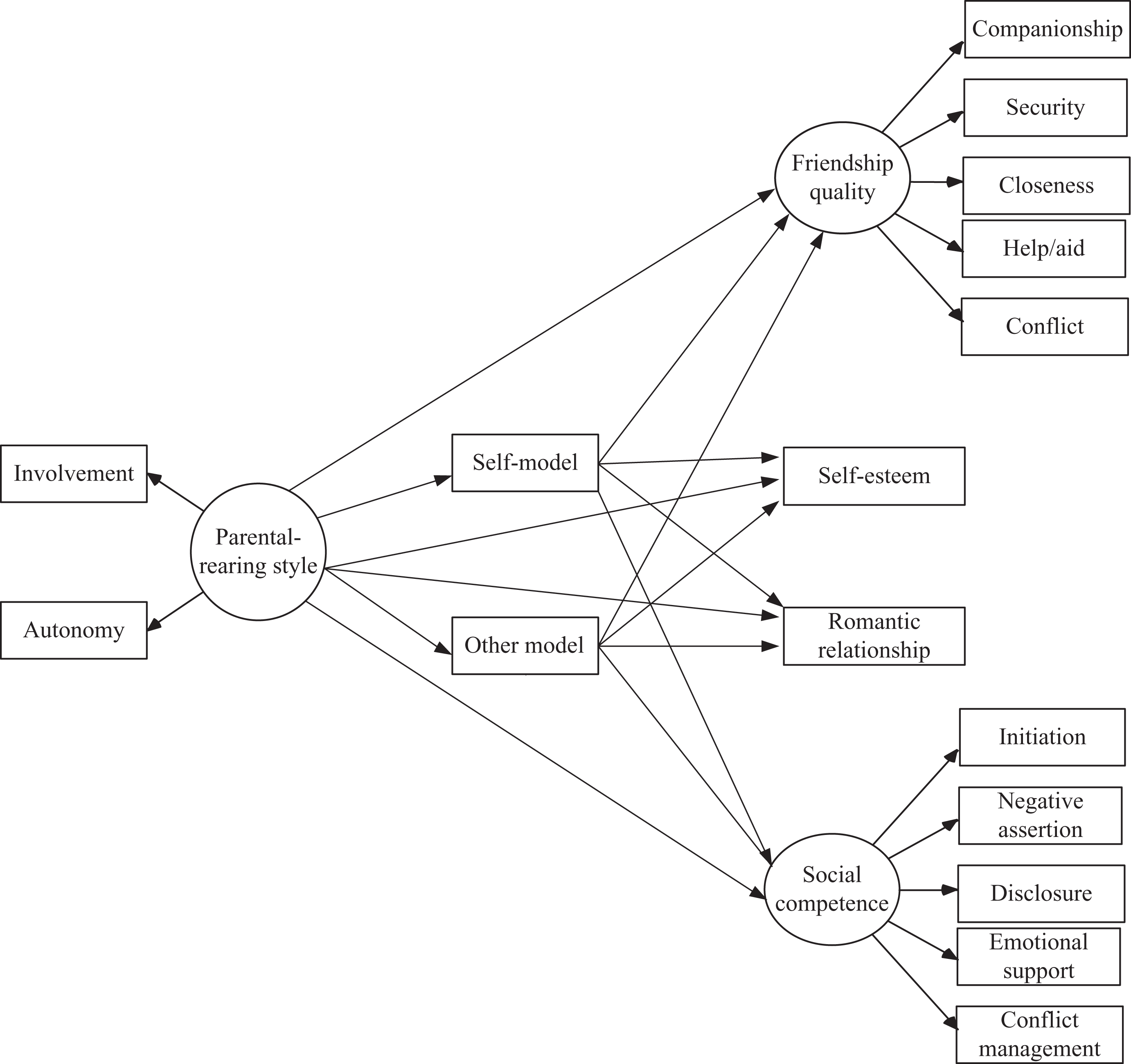
The hypothesised relationships between previous parental rearing style, attachment styles, romantic relationship satisfaction, quality of friendships, self-esteem, and social competence
Method
Participants
An opportunity sample of 240 undergraduates (103 male, 132 female, and 5 unknown) was recruited whilst the students were at leisure from a university campus in the United Kingdom. The mean age of the participants was 20.39 years (SD = 2.80 years).
Materials
Parental rearing styles
A modified version of the parenting style index (Steinberg, 2007) was used to assess the participants’ reports of parental rearing styles. As the parenting style index was originally designed to be administered to assess adolescents’ reports of current parenting experiences (Steinberg, Lamborn, Darling, Mounts, & Dornbusch, 1994; Steinberg, Lamborn, Dornbush, & Darling, 1992), the items were modified to assess retrospective accounts of parental rearing style prior to attending university. The revised 9-item involvement subscale (e.g., “My parents kept pushing me to do my best in whatever I did”) and the revised 9-item psychological autonomy-granting subscale (e.g., “When I got a poor grade in school, my parents made me feel guilty”) demonstrated acceptable internal consistency (α = .81 and α = .83, respectively). Participants responded to the items using a 4-point Likert scale ranging from 1 (strongly disagree) to 4 (strongly agree) and were instructed to respond to the items focusing on the parent/parents or guardian/guardians who influenced their daily life the most. Items for the psychological autonomy-granting subscale were recoded except: “My parents let me make my own plans for things I wanted to do”, such that high scores indicated higher psychological autonomy granting and higher involvement.
Attachment style
The relationship questionnaire (Bartholomew & Horowitz, 1991) was used to assess the participants’ adult attachment style. Participants were presented with a separate description that characterised secure, fearful, preoccupied, and dismissing attachment styles and asked to report on a 7-point scale, ranging from 1 (not at all like me) to 7 (very much like me), the extent to which each attachment style was the characteristic of their approach to relationships. High scores indicated stronger endorsement of the particular style. Following the procedure outlined in Griffin and Bartholomew (1994), the self-model and other model of attachment were calculated from the participants’ scores. The self-model score was calculated by summing the participants’ responses to secure and dismissing items and subtracting the participants’ responses for the preoccupied and fearful items. The other model score was calculated by summing the participants’ responses to the secure and preoccupied items and subtracting the participants’ responses for dismissing and fearful items.
Romantic relationship satisfaction
The 7-item relationship assessment scale (Hendrick, 1988) was used to assess participants’ satisfaction in their current romantic relationship or in their most recent romantic relationship (e.g., “How good is your relationship compared with most?”). Participants responded to the items using a 5-point Likert scale ranging from 1 (low satisfaction) to 5 (high satisfaction). Two negatively worded items were reverse coded such that high scores indicated higher satisfaction. The relationship assessment scale demonstrated acceptable internal consistency in the current study (α = .88). Participants were instructed to complete the items focusing on their current or most recent romantic relationship and were told to leave the items blank if they had not had a romantic relationship (n = 36).
Friendship quality
A modified version of the multidimensional friendship qualities scale (Bukowski, Hoza, & Boivin, 1994), with items changed to be age appropriate, was used to assess friendship quality. Similar modifications to the items have been made to assess friendship quality in college students (e.g., Neimeyer, Saferstein, & Hagans, 2005; Wiltz, 2003). The original scale comprised of five subscales assessing companionship (four items, e.g., “My friend and I spend all our free time together”, α = .70), conflict (four items, e.g., “I can get into fights with my friend”, α = .80), help/aid (five items, e.g., “My friend helps me when I’m having trouble with something”, α = .88), security (five items, e.g., “If I have a problem at university or at home, I can talk to my friend about it”, α = .83), and closeness (five items, e.g., “I feel happy when I am with my friend”, α = .87). Participants were asked to complete the items with respect to one close friend, other than their romantic partner, using a 5-point Likert scale ranging from 1 (not true) to 5 (really true). High scores indicated higher friendship quality.
Self-esteem
Rosenberg’s (1965) self-esteem scale, which has been used extensively with similar samples (e.g., Robins, Hendin, & Trzesniewski, 2001; Schmitt & Allik, 2005), was used to assess participants’ self-esteem (e.g., “I feel that I have a number of good qualities”). Participants responded to the 10 items using a 4-point Likert scale ranging from 3 (Strongly agree) to 0 (Strongly disagree), and items were reverse coded such that higher scores indicated higher self-esteem. The scale demonstrated modest internal consistency (α = .52).
Social competence
The interpersonal competence questionnaire (Buhrmester, Furman, Wittenberg, & Reis, 1988) was used to assess social competence. The scale comprises five 8-item subscales assessing different competences: initiation (e.g., “Asking or suggesting to someone new that you get together and do something, e.g., go out together”, α = .90), negative assertion (e.g., “Telling a companion you don’t like a certain way that he or she has been treating you”, α = .86), disclosure (e.g., “Revealing something intimate about yourself whilst talking with someone you’re just getting to know”, α = .83), emotional support (e.g., “Helping a close companion work through his or her thoughts and feelings about a major life decision, e.g., a career choice”, α = .85), and conflict management (e.g., “Being able to admit that you might be wrong when a disagreement with a close companion begins to build into a serious fight”, α = 76). Participants responded to the items using a 5-point Likert scale ranging from 1 (I’m poor at this) to 5 (I’m extremely good at this) with high scores indicating greater competence.
Procedure
Participants were randomly given one of six versions of the questionnaire. Six versions were created to counterbalance the order of presentation of the scales. Participants received standardised instructions and were asked to work through the questionnaires at their own pace. The British Psychological Society ethical guidelines were followed during the data collection.
Results
SEM analysis strategy
One of the requirements for SEM is that there is no missing data when the analysis is performed. As there was missing data, where less than two items within a scale were missing, the data were replaced with the series mean and if there were more than two missing items within a scale, the participant’s data were deleted from the analysis. Some of the data could not be replaced as 36 participants did not complete the romantic relationship satisfaction items because they felt that the items did not apply to them. Four participants did not report their gender and a further six did not complete any items for at least one of the scales and, as such, were excluded. This resulted in a sample of 194 participants (111 female and 83 male).
Latent variables were created to represent the variables of interest when the scale administered to participants contained previously validated subscales to remove the error associated with the measurement of these (Raykov & Marcoulides, 2006). Although a latent variable was created for parental rearing style and both the parental autonomy giving and parental involvement subscales loaded above the accepted level of .60 (Netemeyer, Bearden, & Sharma, 2003), examination of the residuals revealed that it was not appropriate to create a latent variable. Therefore, for the purpose of the analysis, the parental autonomy giving and parental involvement subscales were treated as separate variables. A latent variable of friendship quality was created; however, the help/aid and conflict subscales failed to load above the accepted level of .60 (Netemeyer et al., 2003). Following the recommendations of MacCallum, Browne, and Sugawara (1996), and in recognition of the sample size, the help/aid and conflict subscales were removed from the model. A latent variable was also constructed for social competence. However, the emotional support subscale and the conflict management subscale failed to load above the accepted level of .60 (Netemeyer et al., 2003) and, as such, were removed from the subsequent analysis.
Multi-group SEM
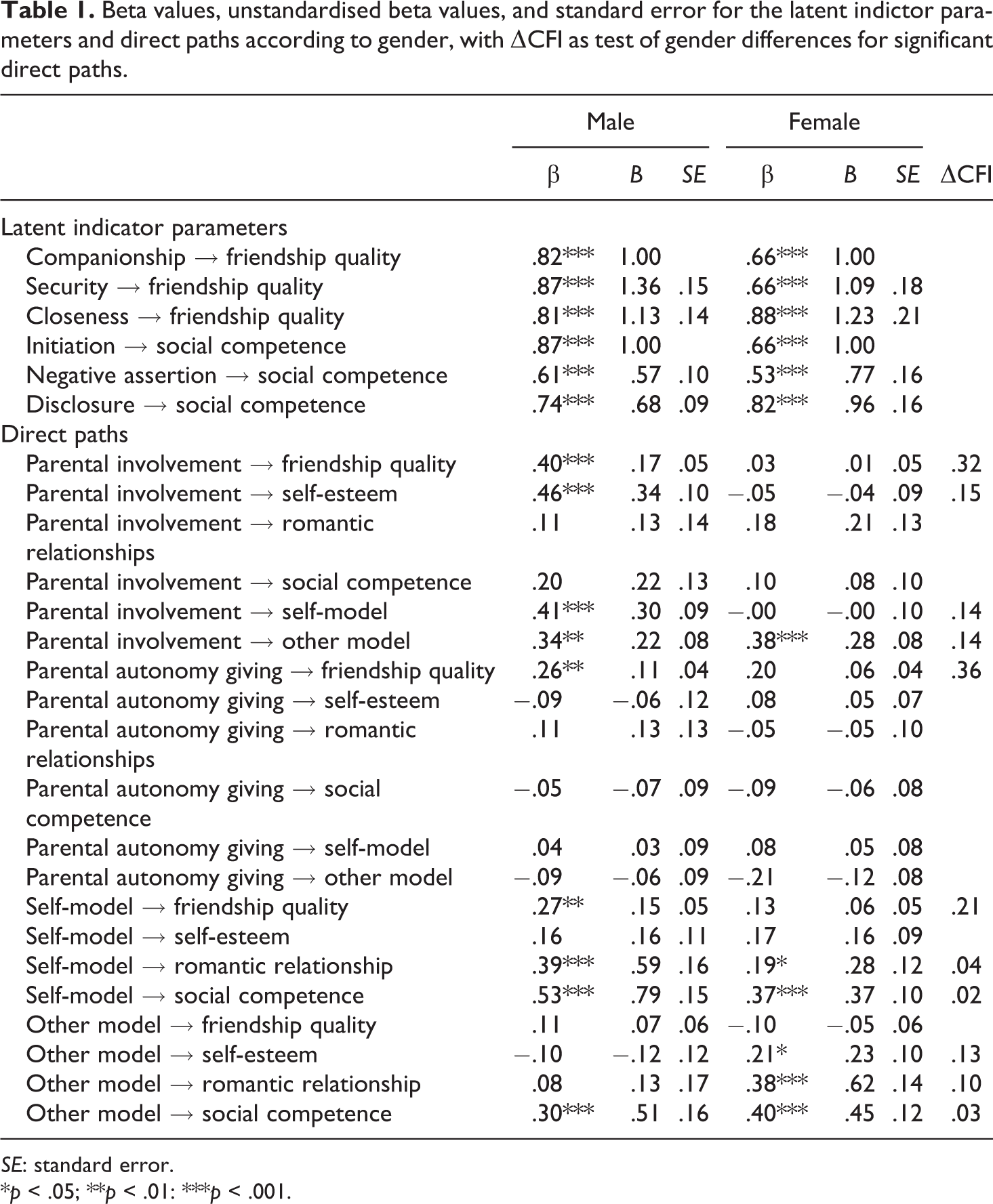
Multi-group SEM was used to examine the hypothesised model (Figure 1) and test the various hypotheses that (a) parental rearing style would predict romantic relationship satisfaction, friendship quality, self-esteem, and social competence (H1–H4); (b) the self-model and other model of attachment styles would mediate these relationships (H5); and (c) gender would moderate these relationships (H6) using Amos version 18 (Arbuckle, 2009). The analysis comprised separate groups according to the participants’ gender. The final model (Table 1) was a good fit of the data. The goodness of fit index = .90, comparative fit index (CFI) = .91, and root mean square error approximation = .074 (Browne & Cudeck, 1993; Bryant & Yarnold, 1995; Byrne, 2001). However, the χ2 was significant, indicating that the model was not a complete fit of the data, χ2 (68) = 140.13, p < .001, although this often occurs with sample sizes of less than 200 (Bentler, 1990). The procedure outlined by Byrne (2010) and Cheung and Rensvold (2002) was implemented to examine the potential gender differences and to test H6. Specifically, paths were constrained to be equal across groups and ▵CFI calculated.
Beta values, unstandardised beta values, and standard error for the latent indictor parameters and direct paths according to gender, with ▵CFI as test of gender differences for significant direct paths.
SE: standard error.
*p < .05; **p < .01: ***p < .001.
In males, parental involvement significantly predicted friendship quality and self-esteem, and parental autonomy granting predicted friendship quality: higher parental involvement and parental autonomy granting predicted higher levels of each of these outcome measures providing support for H2 and H3. Furthermore, the paths between parental involvement, friendship quality, and self-esteem and parental autonomy granting and friendship quality were stronger in males than in females and exceeded the .01 recommended by Cheung and Rensvold (2002) as an indicator of difference between groups. There were no such significant direct relationships in females between the indicators of parental rearing style, romantic relationship satisfaction, friendship quality, self-esteem, and social competence, self-esteem; therefore, H1–H4 were not supported in females.
For the requirements of mediation to be met, and to test H5, it is necessary that the mediator variable is predicted by the predictor variable and that the mediator variable predicted the outcome variable (Baron & Kenny, 1986). For males, parental involvement predicted the self-model and the other model of attachment: higher parental involvement rearing style predicted higher self-model and other model attachment scores. The path between parental involvement and self-model was stronger in males than in females. For females, parental involvement predicted the other model of attachment: higher parental involvement predicted higher other model attachment scores and the path was stronger in females than in males. Therefore, the first condition of mediation was met for parental involvement and the self-model and other model in males and for parental involvement and the other model in females and, as such, further analysis was conducted to test H5. However, females’ early parenting experiences did not predict the self-model and in both groups parental autonomy granting did not predict the self-model and other model; therefore, H5 did not support the self-model in females and the parental autonomy granting.
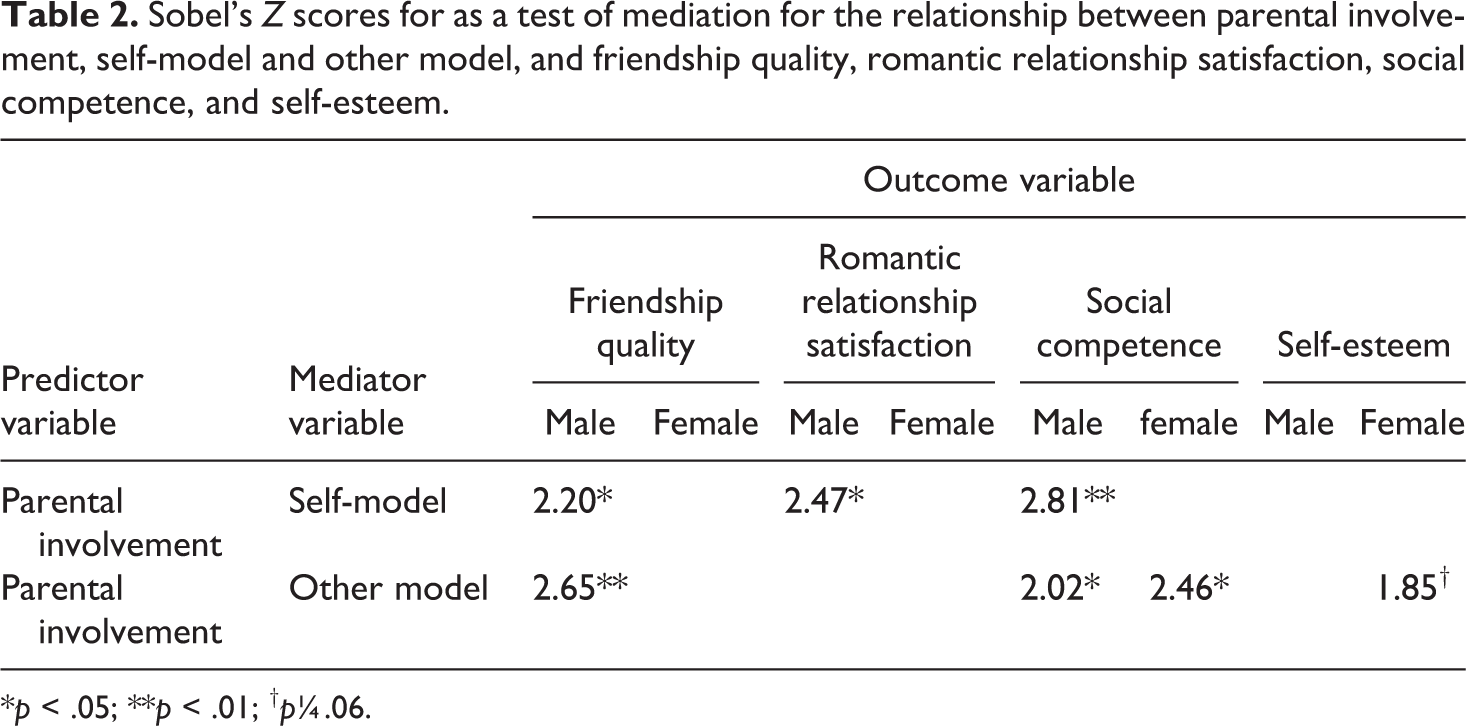
There was some evidence that the self-model and the other model mediated the relationship between previous parental involvement and psychosocial adjustment providing partial support for H5 (Table 2). In males, the self-model partially mediated the relationship between parental involvement and friendship quality, romantic relationship satisfaction, and social competence: higher parental involvement predicted higher self-model scores which in turn predicted higher friendship quality, romantic relationship satisfaction, and social competence. The paths between self-model and friendship quality, romantic relationship satisfaction, and social competence were stronger than in females. Also, in males the other model partially mediated the relationship between parental involvement and social competence: higher parental involvement predicted higher other model scores which in turn predicted higher social competence supporting H5.
Sobel’s Z scores for as a test of mediation for the relationship between parental involvement, self-model and other model, and friendship quality, romantic relationship satisfaction, social competence, and self-esteem.
*p < .05; **p < .01; † p¼.06.
In females, the other model fully mediated the relationship between parental involvement and romantic relationship satisfaction, self-esteem, and social competence: higher parental involvement predicted higher other model scores which, in turn, predicted higher romantic relationship satisfaction, self-esteem, and social competence supporting H5. The path between the other model and romantic relationship satisfaction, self-esteem, and social competence was stronger in females than in males.
Discussion
The aim of the study was to examine whether: (a) parental rearing style predicted psychosocial adjustment during young adulthood assessed as romantic relationship satisfaction, friendship quality, self-esteem, and social competence (H1, H2, H3, and H4, respectively); (b) these relationships were mediated by current self-model and other model attachment style (H5); and (c) there were gender differences in these relationships (H6).
In males, and in support of H2 and H3, parental involvement directly predicted friendship quality and self-esteem, and parental autonomy granting directly predicted friendship quality: positive parental rearing style predicted higher scores on all of these psychosocial adjustment measures. These findings suggest that creating a positive parental rearing style that fosters a sense of independence during childhood potentially leads to enhanced friendship quality and self-esteem during young adulthood in males. One potential explanation for this finding is that greater psychological autonomy afforded by positive-parenting experiences allows individuals to develop and refine their social skills (Shulman, Collins, & Dital, 1993) and that these social skills facilitate friendship quality (Lindsey, 2002; Rubin et al., 2004). Furthermore, the findings of the present research are consistent with previous research that suggests when parents invest in the parent–child relationship and foster a warm, supportive relationship this, in turn, boosts the individual’s self-worth (Grolnick, Price, Beiswenger, & Sauck, 2007). Additionally, creating a supportive parent–child relationship may also facilitate the development of social competencies that are important for the development and maintenance of satisfying relationships with peers (Rudolph, Hammen, & Burge, 1995). Therefore, the findings of the present research suggest that it is particularly important for males to have positive-parenting experiences during childhood for their subsequent psychosocial adjustment during young adulthood.
The self-model and other model partially mediated some of the relationships between parental rearing style and psychosocial adjustment in males, providing support for H5. Specifically, the self-model partially mediated the relationship between parental involvement and romantic relationship satisfaction and friendship quality in males. One potential explanation for this finding is that, as demonstrated in earlier research, positive parental rearing styles shape the propensity with which an individual develops a secure attachment including a sense of self-worth (Berry et al., 2006) and that this sense of self-worth and expectation of positive behaviour from others are crucial for the development of satisfying romantic relationships (Amitay et al., 2008; Markman et al., 1988). Similarly, the self-model and the other model partially mediated the relationship between parental rearing style and social competence in males. A potential explanation for this result resides in the fact that the self-model and the other model of attachment reflect the extent to which an individual believes that they have the skills to interact with others and that others are available and supportive, respectively. Specifically, if an individual believes that others are more available they may be more likely to initiate interactions with them and, as such, refine their social competence (Larson, Whitton, Hauser, & Allen, 2007).
In females, the other model fully mediated the relationship between previous parental involvement and romantic relationship satisfaction, self-esteem, and social competence providing support for H5. One potential explanation for these relationships is the importance of parental rearing style for the development of internal working models (Berry et al., 2006; Nosko et al., 2011). In particular, the availability of the other models internal working model may influence behaviour such that those females with more positive other models demonstrated higher levels of romance and assurance compared with those with less-positive other models (Guerrero & Bachman, 2006). Similarly, positive parental rearing style may have facilitated the development of social skills which could have been reflected in the females’ social competence (Rudolph et al., 1995). The other model may have also fully mediated the relationship between parental rearing style and self-esteem in females because of the importance of how individuals perceive others for the development and maintenance of their self-esteem (Murray et al., 2000). Specifically, having a positive other model of attachment would reinforce an individual’s belief that others are available for them and, as such, foster their self-esteem.
The present study did find some evidence to support H5 that states current attachment style mediated the relationship between parental rearing style and psychosocial adjustment during young adulthood. However, attachment style failed to fully mediate all of the relationships. Therefore, the lack of medication, especially for females, suggests that there are other potential explanations for the relationship between parental rearing style and current psychosocial adjustment. For example, it may be that core beliefs mediate the relationship between parental rearing style and psychosocial adjustment. Core beliefs are schematic representations that guide behaviour and judgements in social contexts and social interactions (Fossel & Wright, 1999) and develop from an individual’s interaction with their primary caregiver during early childhood (Young, 1990). Research has also suggested that core beliefs are resistant to change (Beck, 1995; Padesky, 1994) and, as such, it may be that these cognitive schemas are what that guide an individual’s social interactions and ultimately foster psychosocial adjustment. Therefore, future research should examine the role of core beliefs in the relationship between parental rearing style attachment styles and psychosocial adjustment during young adulthood.
An alternative explanation for the partial mediation resides in the respondents’ self-perceptions of their parental rearing style. Specifically, some of the participants may have been reporting an inconsistent account of their actual parental rearing style. For example, some of the participants may have reported overly positive experiences, whereas others may have reported overly negative experiences. Previous research has suggested that bias can emerge in both retrospective accounts (Hardt & Rutter, 2004) and current experiences (Fan et al., 2006). These potential biases could also be related to the individual’s level of self-knowledge and, in turn, their psychosocial adjustment. Specifically, some researchers have argued that having an overly positive self-knowledge of traits facilitates and enhances psychosocial adjustment (Bromgard, Tafimow, & Bromgard, 2006; Brookings & Serratelli, 2006; Taylor & Brown, 1988), whereas other researchers have argued that realistic self-knowledge is crucial for psychosocial adjustment (Colvin & Block, 1994; Joiner, Kistner, Stellrecht, & Merrill, 2006; Robins & Beer, 2001). Therefore, it may be that potential biases in recounting parental rearing style may also be linked to biases in self-reported psychosocial adjustment. Consequently, future researchers could further explore this issue through examining the consistency of individuals’ reports with other information sources, such as their parents, peers, or romantic partners for the same variable.
In support of H6, gender moderated the relationship between young adults’ parental rearing styles, attachment styles, and psychosocial adjustment. For young adult males, the direct paths between parental rearing styles and psychosocial adjustment, the paths between parental involvement and the attachment styles, and the paths between the self-model and social competence and romantic relationship satisfaction were stronger than the comparable paths in females. However, in females, the paths between the other model and romantic relationship satisfaction, self-esteem, and social competence were stronger than the comparable paths in males. Gender may have moderated the relationships between parental rearing style, attachment, and psychosocial adjustment because of potential differences experienced by males and females regarding appropriate conduct acquired during the social learning and socialisation processes that resulted from the parental rearing styles (see Updergraff et al., 2002). The differences in path strengths may also reflect gender differences that emerge in adults’ social relationships (Johnson, 2004; Pagano & Hirsch, 2007; Salas & Ketzenberger, 2004) and aspects of psychosocial adjustment such as self-esteem (Zuckerman, 1985).
There are some limitations with the present study that should be addressed in future research. For example, the present study used a cross-sectional design that relied on participants retrospective accounts of their previous parental rearing styles. Such a design is limited by the accuracy of the participants’ retrospective accounts that, although have been questioned by some, are regarded as a useful starting point for investigating a phenomena within the area of social development (see Hardt & Rutter, 2004). One potential way to overcome this limitation would be to adopt a research design similar to Simpson, Collins, Tran, and Haydon (2007) who initially examined children at 1 year old and then followed them to young adulthood. Although such an approach may be constrained by sample size and sample attrition, it would be useful to examine children’s parental rearing style during early childhood, using a range of techniques to overcome common method variance (Lindell & Whitney, 2001), and then follow the children to young adulthood. The research also examined global parental rearing style and did not distinguish between maternal and paternal parental rearing styles or compare psychosocial adjustment according to family type. Previous research has reported differences in adolescents’ psychosocial adjustment according to maternal parental rearing style and paternal parental rearing style (Milevsky, Schlechter, Netter, & Keehn, 2007). Additionally, it may be that because of the changing nature of the family unit, individuals experience a range of parental rearing style during childhood. For example, research with adolescents has reported the different patterns in the psychosocial profiles of individuals according to whether they experience shared parenting or nonshared parenting (Anderson, Hetherington, Reiss, & Howe, 1994). Therefore, future research should further examine the potential effects of shared and nonshared parenting for psychosocial adjustment during young adulthood.
The present study also relied on participants to acknowledge whether they considered themselves to be in a romantic relationship and there may have been some variation in how the participants defined such a relationship. Furthermore, the Cronbach’s alpha for the self-esteem measure was below the acceptable value of .70, and although the scale is reported to reliable and valid (Greenberger, Chen, Dmitrieva, & Farruggia, 2003; Strauss, 2005), the findings of the present study pertaining to self-esteem should be interpreted with caution. Consequently, future research should further examine the relationship between early parenting experiences and self-esteem. Also, the sample size was close to the minimum recommended of 200 for SEM (see Tabachnick & Fidell, 2007); the sample size is likely to have influenced power in the analysis. However, modelling by MacCallum et al. (1996) suggests that the sample size for the current study is appropriate for .80 power.
In summary, the findings suggest that parental rearing style continue to be important in to young adulthood. Specifically, we found evidence that memories of positive parental rearing style predicted a range of psychosocial adjustment measures during young adulthood. There was also evidence of differences in these relationships according to gender, and the results indicate that the early parenting experiences of males are particularly important for psychosocial adjustment. Together, these findings suggest that there is clear evidence of the importance of early experiences and that these early experiences may vary according to gender.
Footnotes
Funding
This research received no specific grant from any funding agency in the public, commercial, or not-for-profit sectors.