







Abstract
Although parental knowledge of youth behavior is associated with less adolescent engagement in problem behaviors, many adolescents keep their engagement in various activities secret from their parents. However, less research has examined why youth keep secrets about their engagement in problematic activities. The current study examined adolescents’ reasons for keeping secrets from their parents regarding their engagement in problematic and multifaceted behaviors (alcohol use, risky cyber behaviors, problematic peer associations, and romantic behaviors), as well as the role of parental rules and youth age and gender on adolescents’ secrecy reasons. Participants were 161 parent-adolescent dyads (Adolescent Mage = 14.42, SD = 1.73, range = 12–18, 82% white, 60% female). The current study utilized a sample of adolescents who reported both engaging in the specific behavior and reported keeping secrets from their parents regarding their engagement in the behavior. Results demonstrate that adolescents’ reasons for secrecy differed across various forms of problematic and multifaceted behaviors. Additionally, both individual characteristics (adolescent gender and age) and parental rules (parent and teen report) were associated with adolescents’ secrecy reasoning. However, the pattern of these associations varied depending on the type of behaviors adolescents were keeping secret from their parents.
Accurate knowledge of adolescents’ activities and whereabouts is a crucial means through which parents can protect their adolescents from engagement in problem behaviors (Laird et al., 2003). Building on the seminal work of Stattin and Kerr (2000), a large body of research suggests that the most effective way that parents gain knowledge is through adolescents’ willing disclosure of information (Keijsers et al., 2009; Kerr et al., 2010). However, for developmental (e.g., expanding autonomous decision making; Finkenauer et al., 2002) or practical reasons (e.g., parental interference or negative reactions; Smetana et al., 2009b), adolescents may choose to keep activities secret from their parents. This is potentially problematic, as adolescents’ active secrecy is predictive of increased engagement in delinquent and risk-taking behavior (Frijns et al., 2005). However, youth may vary in their reasons for keeping secrets, and the rationale for secret-keeping for different types of problem behaviors may differ for boys and girls, or may change as adolescents get older. Adolescents who experience different types of family environments may also differ in their reasons for keeping secrets. An examination of the various reasons adolescents have for keeping information from their parents will enhance understanding of the social-cognitive processes underlying youth secrecy behavior. The current study explored adolescents’ reasons for keeping secrets from parents regarding their engagement in four different problematic and multifaceted behaviors (alcohol use, risky cyber behaviors, problematic peer associations, romantic behaviors) and examined whether adolescents’ secrecy reasons differed as a function of youth gender, age, and parental rules.
As they get older, adolescents’ understanding of other people, relationships, and social institutions becomes more nuanced and sophisticated (Smetana & Villalobos, 2009). This improvement in adolescents’ social understanding is paralleled by an increased desire for autonomy, as adolescents aspire to make independent decisions over an ever-expanding array of behaviors that were viewed as legitimately controlled by parents during childhood (e.g., Collins & Steinberg, 2006). Adolescents’ push for more autonomy leads to shifts in the parent-adolescent relationship, as youth are given expanded control over a wider range of behaviors (Smetana et al., 2004). For most families, this gradual change from a hierarchical to more egalitarian parent-adolescent dynamic occurs in the context of a warm and supportive relationship. However, adolescence is also characterized by increased engagement in risk behavior such as alcohol consumption (Johnston et al., 2012), problematic eating behavior (Le Grange et al., 2014), and risky cyber behavior (Babskie & Metzger, 2016) as well as including shifts in peer relationships and increases in romantic activities such as dating (Collins et al., 2009). Adolescents may find it challenging to maintain a close relationship with their parents while simultaneously pushing for increased decision-making autonomy from parents and desiring to engage in risky or parent-prohibited social activities. Exploring adolescent reasons for keeping their engagement in risky activities secret from their parents and the correlates of such secret-keeping may provide insight into the ways in which adolescents strive to strike a balance between these potentially competing developmental demands.
Adolescents’ reasons for keeping secrets from parents for different types of behavior
There are many reasons adolescents may want to keep information about their engagement in certain behaviors secret from their parents. Parents, motivated by a desire to keep their children safe, want to gain information about adolescents’ problematic behaviors (Smetana & Rote, 2015). Adolescents recognize that parents disapprove of some problem activities, and parents may have rules in place that specifically address different types of misbehavior (Jackson, 2002). Thus, one intuitive reason adolescents may keep their activities secret from parents is fear over parental punishment (Smetana et al., 2009a). Alternatively, adolescents may be concerned that parents may attempt to actively obstruct adolescents’ behavior by increasing rules and monitoring behaviors (i.e., surveillance or solicitation; Agatston et al., 2007). Rather than fear of punishment or interference, some adolescents may worry that parents’ knowledge of their problem behavior may negatively affect the adolescent-parent relationship. For instance, adolescents may worry that parents may be disappointed in the adolescent or that parents’ emotional state may be affected (i.e. “hurt their feelings”). Alternatively, the choice to keep adolescents’ activities secret from parents may have less to do with anticipated parental reactions and instead depend on adolescents’ conceptualization of the boundaries of parental authority. According to social domain theory (Smetana, 2013), individuals view some issues and behaviors as matters of personal prerogative and choice that lie outside of moral concern and are not regulated by rules or authority. Although younger children view parents as having legitimate control over a wide array of behaviors, adolescents begin to seek more decision-making control over their activities (Smetana & Asquith, 1994). Thus, some adolescents may view even potentially problematic behaviors, as a matter of personal choice. For instance, youth may justify keeping secrets about issues that are “none of their parents’ business” because adolescents view these issues as matters of personal choice, or youth may believe “parents wouldn’t understand” adolescents’ own personal views of the issue.
Investigating differences in adolescents’ secrecy reasons across multiple problem behaviors could provide nuanced insights into adolescents’ information management motivations. Problem behaviors vary in their developmental appropriateness and legality, as well as the type and degree of risk they pose for youth, and these elements could affect how adolescents justify their secrecy. Alcohol consumption, risky cyber behaviors, problematic peer associations, and romantic activities vary on many dimensions including the degree to which adolescents view the behavior as problematic or interpret the behavior as a matter of personal prerogative. Adolescent alcohol consumption poses obvious legal and health risks. Many adolescents drink alcohol despite the fact that they are legally prohibited from buying or consuming alcohol. In addition, adolescents who consume alcohol are at heightened risk of physical injury, long-term negative health outcomes, or even death (Clark et al., 2001). Adolescents recognize these risks and also acknowledge that parents have legitimate control over alcohol behaviors (Jackson, 2002), so secrecy over alcohol-related activities may be motivated by concerns with parental punishment or interference. Adolescent cyber behaviors pose different types of risks. Parents may have concerns about the risks associated with communicating with strangers online, or problematic online peer communications such as cyberbullying or sexting (sending messages with sexual content via text message or email; Williams & Merten, 2011). However, online activities also include behaviors that adolescents view as matters of personal choice, such as choice of entertainment and peer interactions via online chat and social media platforms (Babskie & Metzger, 2016). Thus, while adolescents may want to avoid parental sanctions regarding their online behaviors, they may also be more likely to utilize personal reasons for keeping their online activities secret.
Peer and romantic relationships may also expose adolescents to risks or run counter to parental rules. Choice of peer associations is usually considered a matter of individual choice (Smetana, 2006), but parents sometimes put restrictions on adolescent friendships and peer contacts, especially when they view peers as “bad influences” on their own adolescent (Keijsers et al., 2012; Mounts, 2002). Thus, adolescents may be especially likely to keep their problem peer associations secret from parents to avoid parental interference. Adolescent romantic activities may also pose risks, from parents’ perspective, including concerns about unsafe sexual behavior (Lefkowitz et al., 2002). Many parents place restrictions on adolescent dating behavior and romantic interactions, and the present study focused on romantic behaviors over which parents may have more family rules (e.g., who the adolescent dates; Madsen, 2008). Adolescents may keep their dating activities secret from parents to avoid parental punishment or interference, but given that adolescent romantic behaviors also entail elements of personal choice, some adolescents may view their dating activities as outside of legitimate parental control, increasing their reliance on personal reasons for keeping secrets.
Demographic characteristics and family process predictors of youth secrecy reasoning
Adolescents’ reasons for keeping secrets from their parents may vary by adolescent gender and age. With age, adolescents claim autonomy over a wider array of behaviors, as the parent-adolescent relationship generally transforms from a hierarchical to a more egalitarian structure (Smetana et al., 2004; Zimmer-Gembeck & Collins, 2003). Thus, older adolescents may fear punishment less and instead rationalize their secrecy based on notions of personal choice. Parents also differ in the behavioral control they apply to their sons and daughters, with more rules applied to girls than boys, particularly over dating behaviors (Lefkowitz et al., 2002). Thus, girls may be more likely than boys to justify secrecy due to fears of parental punishment or interference with their behavior.
Adolescents’ reasoning for keeping behaviors secret may also be associated with dimensions of their family context as adolescents anticipate parents’ reactions (Tilton-Weaver et al., 2010). Parental behavioral control practices including family rules vary across different types of problem behaviors including alcohol use, risky cyber behavior, and unhealthy eating behaviors (Babskie & Metzger, 2016; Metzger et al., 2016). Adolescents living in homes with more restrictive rules concerning a behavior may want to keep their engagement in the behavior secret from parents out of fear of parental punishment or interference, while adolescents living under fewer rules may be more likely to keep secrets for other reasons (e.g., personal prerogative). Because parents and adolescents mutually influence each other through bi-directional processes, parents may also adjust their rules and restrictions based on adolescents’ behavior or perceived reasoning. Research has utilized both parent- and adolescent-report of parental monitoring behaviors (Lahey et al., 2008; Soenens et al., 2006). Interestingly, studies find a low correspondence between parent and adolescent reports of rules (De Los Reyes et al., 2010), potentially indicating that parents and adolescents perceive or interpret parenting behaviors differently (Harakeh et al., 2005; Metzger et al., 2016).
The current study
Since Stattin and Kerr’s (2000) pioneering work on adolescent disclosure, the majority of research on adolescent information management has utilized a community sample of adolescents (Hawk et al., 2008; Kakihara et al., 2010; Metzger et al., 2013). While increasing representativeness, this approach has several limitations when investigating adolescent secrecy concerning their engagement in risk behavior. The critical methodological confound arises from the fact that adolescents can only disclose or be secretive regarding activities in which they are actually engaged. For instance, an adolescent who does not drink alcohol would also report keeping zero secrets regarding their alcohol behavior because they have nothing to be secretive about. Moreover, measures that aggregate across different problematic and multifaceted behaviors assume that youth are relatively equally involved in all different forms of various behaviors. In order to circumvent these potential confounds, the current study borrowed a sampling strategy from pediatric and child clinical fields which often isolate youth for investigation based on specific characteristics (e.g., Armstrong et al., 2014). The current study focused exclusively on adolescents who a) reported engagement in the specific behavior, and b) reported keeping secrets from their parents regarding their engagement in the behavior. Such a sampling approach has been effectively utilized in previous investigations of adolescent disclosure and secrecy regarding specific problem behaviors such as cigarette smoking (Metzger et al., 2013).
The goals of the current study were to investigate individual and family process correlates of adolescents’ reasoning for keeping secrets from their parents concerning their engagement in alcohol-related behaviors, risky cyber behaviors, problematic peer associations, and romantic behaviors. It was anticipated that adolescents would be more concerned with avoiding parental punishment and interference when keeping secrets about their alcohol and problematic peer behaviors and would report more personal reasons (e.g., “it’s none of their business”) for keeping their risky cyber and romantic behaviors secret. It was also hypothesized that older adolescents and boys would utilize more personal reasons for secrecy compared to younger adolescents and girls. In terms of family rules, it was hypothesized that adolescents from homes with greater levels of behavior-specific parental rules would be more likely to keep secrets from parents in order to avoid punishment or parental interference in their behaviors.
Method
Participants and procedure
The current study was approved by the Institutional Review Board at West Virginia University and conforms to APA standards for the ethical treatment of human subjects. Participants included 161 parent-adolescent dyads (Adolescent ages 12–18, Mage = 14.42, SD = 1.73, 60% female) who were recruited from high schools and community organizations in and around a Mid-Atlantic university town. Each participating adolescent was required to recruit at least one adult primary caregiver, including any biological parent, step-parent, legal guardian, aunt, uncle, or grandparent. A majority of adolescents reported that they identified as White (82%). Two percent of adolescents’ parents completed at least the 8th grade, 21% completed high school, 46% completed a college or technical school degree, and 29% completed a graduate degree, and the educational level for 2% were unknown. This sample is comparable to the distribution of family education for the county from which the sample was recruited (U.S. Census Bureau, 2019).
Parents ranged in age from 29 to 66 years (M = 44.07, SD = 7.22), and were primarily White (92.3%) and currently married (75.3%). Of the 161 participants, 108 adolescents had only a mother-figure complete the study (67.08%), 16 adolescents had only a father-figure complete the study (9.94%), and 37 adolescents had both a mother- and a father-figure complete the study (22.98%). Correlations between father and mother report of family rules ranged from .32 to .87. Analyses indicated that mothers and fathers did not significantly differ in their reports of rules over any domain of behavior (t-tests = .87–.98, ns). For adolescents with more than one parent completing the study, parent report of family rules was assessed by averaging scores for mother- and father-report of rules. The majority of female caregivers in this sample identified themselves as the adolescent’s birth mother (95%), two caregivers identified themselves as an adoptive mother, two as a step-mother, one as a grandmother, one as an aunt, and one was an unspecified guardian. With regard to male caregivers, 42 identified themselves as the adolescent’s birth father (79.2%), seven caregivers identified themselves as a step-father, three as an adoptive father, and one as a grandparent. The majority of caregivers (79.19%) reported being employed outside of the home and having a family income of greater than $25,000 (90.10%).
Data were collected through visits to families’ homes (71.3%), at a university research lab, or at another public place (e.g., church). No study variables differed as a function of study location. Caregivers gave informed consent for themselves and permission for their adolescent, while adolescents gave informed assent. After giving informed consent and assent, all participants received payment for participating: $25 for each caregiver and $50 for each adolescent. Adolescents and their caregivers completed questionnaires in separate rooms with researchers present to answer questions.
Measures
Secrecy reasons
The secrecy reasons survey questionnaire measure was designed to be similar to a card-sorting task used in previous research (e.g., Smetana et al., 2009b). Adolescents’ reasons for keeping secrets from their parents were measured across four behavior categories: alcohol behaviors (3 items; “If you try drinking alcohol with friends.”), cyber behaviors (3 items; “Who you talk to online.”), problem peer associations (3 items; “Getting into an argument or fight with a friend.”), and romantic behaviors (2 items; “If or who you are dating.”). For each behavior, adolescents were presented with a series of questions to assess a). if they engaged in the behavior, b). if they engaged in the behavior, did they keep their activity secret from their parents, and c). if they did keep secrets about the behavior from their parents, what were their reasons for being secretive. First, adolescents indicated on the questionnaire whether they never engaged in the behavior by selecting “I don’t/never do this.” If they indicated they did engage in the activity, adolescents could first choose whether they never kept secrets about the activity: “I don’t keep secrets, I tell my parents everything.”
For any behavior category adolescents reported that they both engaged in the activity and did NOT tell their parents everything, they were asked to “indicate the reasons why you don’t tell them everything.” Adolescents were then presented with a series of reasons they might want to keep the information secret from their parents. Similar to previous research (Smetana et al., 2009b), four different secret-keeping reasons were assessed: avoid punishment (“I want to avoid punishment”), avoid parental interference (“Don’t want them to interfere or stop me”), preserve the parent-adolescent relationship (combined “Don’t want to disappoint them” and “Don’t want to hurt their feelings”), and personal reasons (“They would not understand” and “It is none of their business”).
Because adolescents were asked to indicate all of the reasons they keep their engagement in behaviors secret from parents, many adolescents reported more than one secrecy reason for each behavior. For avoid punishment and avoid parental interference reasons, adolescents were assigned a 1 for each behavior (alcohol, risky cyber, problematic friends, romantic) if a reason was chosen for any of the behaviors, and a 0 if the reason was not chosen. Adolescents were assigned a 1 if they chose either (or both) of the preserve relationship and personal reasons for any of the four behaviors. Thus, the resulting scores for the four reasons (avoid punishment, avoid interference, preserve relationship, and personal) represent whether the type of reasoning was present (1) or absent (0) for each of the four problem behaviors.
Family rules
Family rules were assessed using a measure adapted from previous research on family rules (Smetana & Asquith, 1994). Using a 5-point Likert-type scale ranging from 1 (No Rules) to 5 (Firm, Clear Rules), adolescents reported the extent to which their family has rules about each behavior category (“Please rate the extent to which your family has rules for each issue listed below”), including alcohol behaviors (“If I try drinking alcohol with my friends”; 3 items; α = .84), cyber behaviors (“Who I talk to online”; 5 items; α = .76), problematic peer associations (“Spending time with someone my parents don’t like”; 1 item), and romantic behaviors (“If or who I am dating”; 1 item). Similarly, parents reported on the extent to which their family has rules for alcohol behaviors (“Whether your child can drink alcohol”; 1 item), cyber behaviors (“How long your child is allowed to be online”; α = .76), problematic peer associations (“Who your child is allowed to hang out with”; 1 item), and romantic behaviors (“When your child can start dating”; 1 items). Mean scores were computed for each behavior category with higher scores indicating more family rules.
Data analyses
Data were analyzed using structural equation models (SEM) in Mplus 8.1 (Muthén & Muthén, 1998 –2012). Despite the smaller sub-samples used in the current study, SEM was chosen as our analytic approach because this approach increased parsimony and decreased the total number of necessary analyses given presence of multiple dependent variables (four secrecy reasons). Separate structural models were performed for each behavior category (i.e., alcohol, cyber, peer, romantic). Within each behavior-specific model, only participants who reported engaging in the behavior and keeping secrets from their parents regarding the behavior were included. Thus, each model was tested using a behavior-specific sub-sample. Structural equation models examined parent report of family rules, teen report of family rules, adolescent age, and adolescent gender as exogenous observed variables and adolescents’ reasons for keeping secrets (avoid punishment, interference, preserve relationship, and personal) as dichotomous endogenous variables. Standard model fit criteria are not provided for models with categorical outcomes, therefore, models were rerun specifying the dichotomous outcomes as continuous variables in order to report approximate estimates of fit. In addition, given the relatively small sample sizes of some models, a series of sensitivity analyses were run including post-hoc examination of bivariate correlations to ensure consistency with model patterns and step-by-step model building to ensure resulting coefficients were stable and associations did not result from suppression. This approach allowed us to robustly and succinctly test our a priori hypotheses while also taking steps to ensuring confidence in the resulting models.
Results
Preliminary analyses
Means, standard deviations, and frequencies for the four behavior-specific sub-samples are reported in Table 1. Eleven participants reported that they did not engage in or keep secrets about any of the four problem behaviors so these eleven youth were not included in any of the sub-samples for subsequent analyses. Independent samples t-tests and Pearson’s chi-square tests were performed to assess whether the sub-samples significantly differed in terms of adolescent age, gender, GPA, parent education level, and single-parent household status. On average, participants who kept secrets about their alcohol-related behaviors were slightly older (M = 15.39, SE = .26 vs, M = 14.05, SE = .15), t(151) = −4.63, p < .001), and were more likely to be female, (χ2 (1) = 6.67, p < .05) than those who did not report engaging in alcohol behavior. Participants who reported engaging in risky cyber behavior were less likely to live in a single-parent household, relative to participants who did not report engaging in risky cyber behavior, χ2 (1) = 4.16, p < .05. In addition, participants who reported engaging in romantic behavior were more likely to be female, χ2 (1) = 6.54, p < .05. The sub-samples were relatively homogenous in terms of adolescent GPA and parent education level.
Frequencies of variables of interest for youth reporting engagement in each behavior.
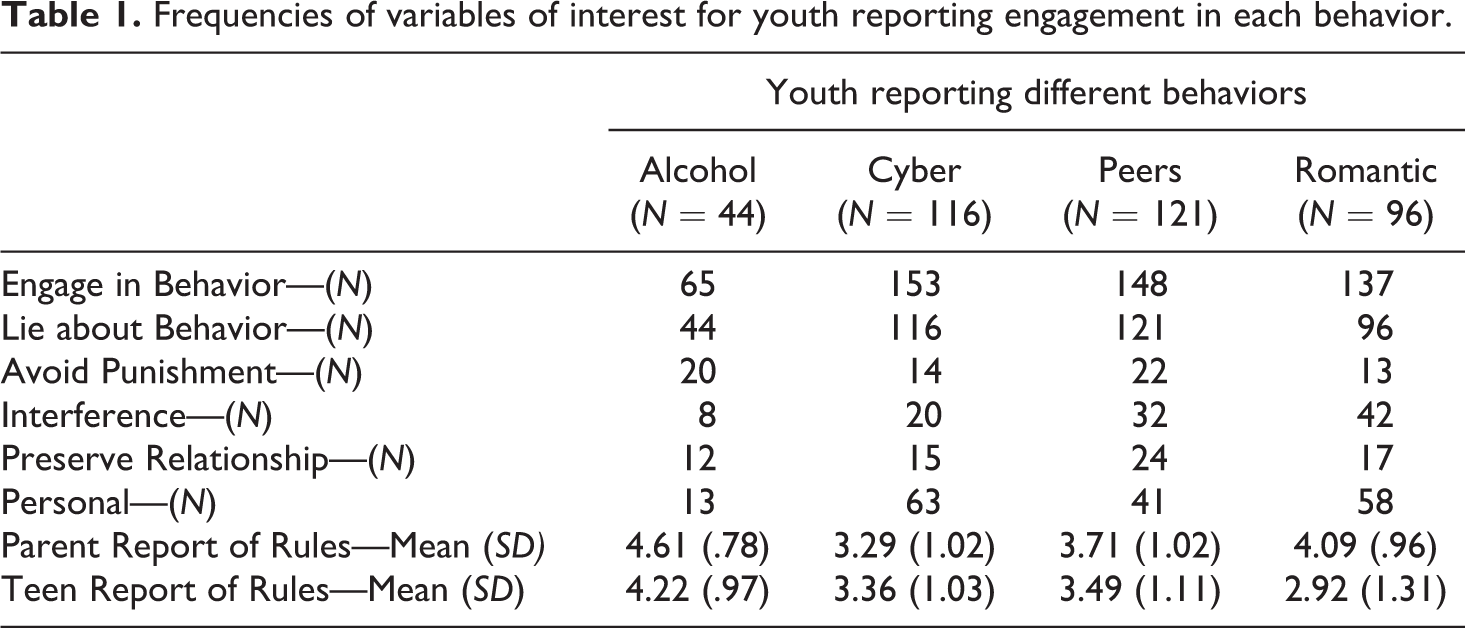
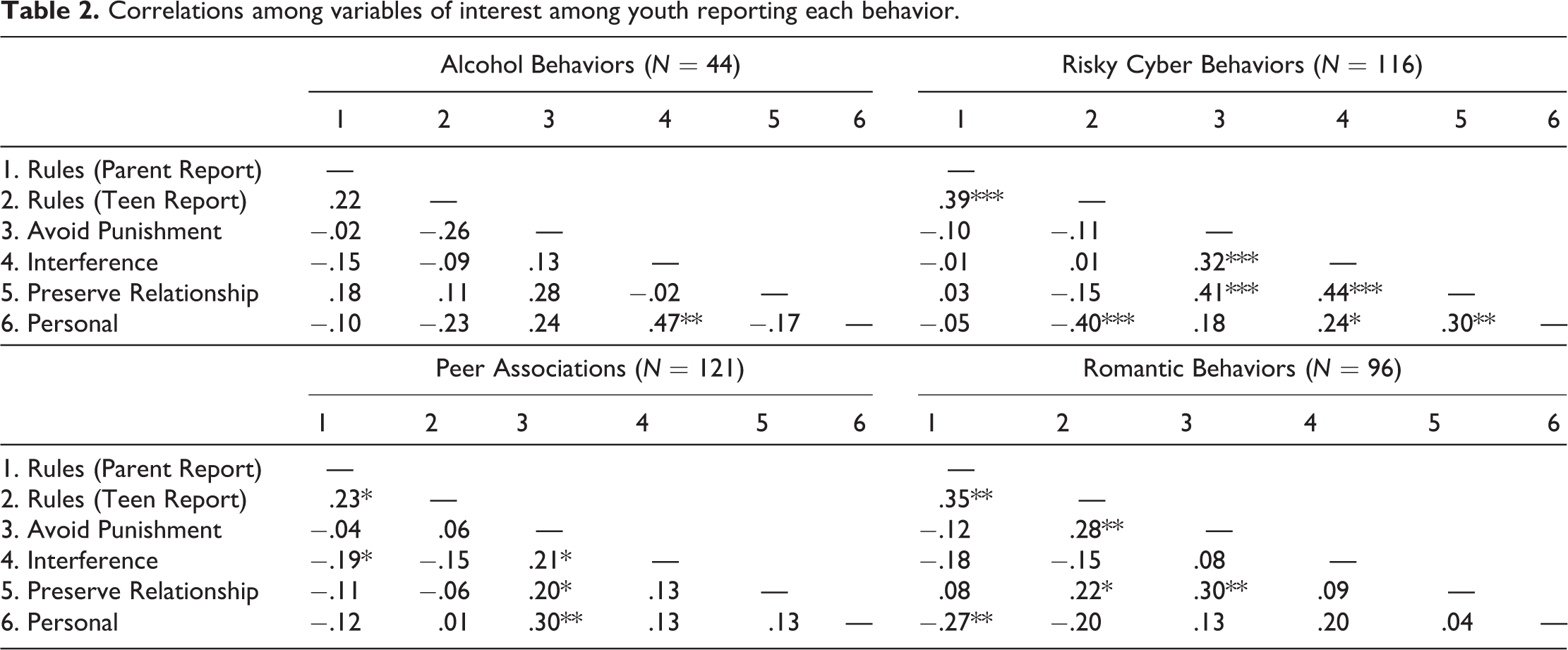
Correlations between parents’ report of family rules, adolescents’ report of family rules, and secrecy reasons are displayed for each of the sub-samples in Table 2. With regards to adolescents who kept secrets about their alcohol-related behaviors, the majority of participants used avoid punishment reasons (36.4%), with fewer participants using personal reasons (29.5%), preserve relationship reasons (27.3%), and interference reasons (18.2%). Adolescents who kept secrets about their risky cyber behaviors primarily used personal reasons (52.4%), with fewer adolescents using interference reasons (17.2%), preserve relationship reasons (12.9%), and avoid punishment reasons (12.1%). Secrecy reasoning about problematic peer associations and romantic behaviors followed a similar pattern with the majority of participants reporting the use of personal reasons (Peer = 33.9%; Romantic = 60.4%), followed by interference reasons (Peer = 26.4%; Romantic = 43.8%), preserve relationship reasons (Peer = 19.8%; Romantic = 17.7%), and avoid punishment reasons (Peer = 18.2%; Romantic = 13.25%). Chi-square analyses were conducted to examine the associations among adolescents’ avoid punishment reasons (χ2 = 1.31–16.69), interference reasons (χ2 = 1.99–25.28), preserve relationship reasons (χ2 = 6.36–21.86), and personal reasons (χ2 = 2.26–21.22) across behaviors. Specifically, adolescents who used avoid punishment reasons about problematic peer associations were also likely to use avoid punishment reasons about alcohol behaviors, risky cyber behaviors, and romantic behaviors. Additionally, adolescents who used interference reasons about problematic peer associations were also likely to use interference reasons about alcohol behaviors, risky cyber behaviors, and romantic behaviors, whereas adolescents who used interference reasons about risky cyber behaviors were also likely to use interference reasons about romantic behaviors. Finally, adolescents who used preserve relationship reasons for keeping secrets about their engagement in one behavior (e.g., risky cyber behaviors) were more likely to use preserve relationship reasons for keeping secrets about their engagement in the other problematic behaviors. Similarly, adolescents who used personal reasons for keeping secrets about their engagement in one behavior were more likely to also use personal reasons for keeping secrets about their engagement in the other problematic behaviors. Although adolescents’ secrecy reasons were often significantly associated across behaviors, adolescents’ secrecy reasons across behaviors were not redundant with one another.
Correlations among variables of interest among youth reporting each behavior.
Associations between parenting behaviors and adolescents’ secrecy reasons
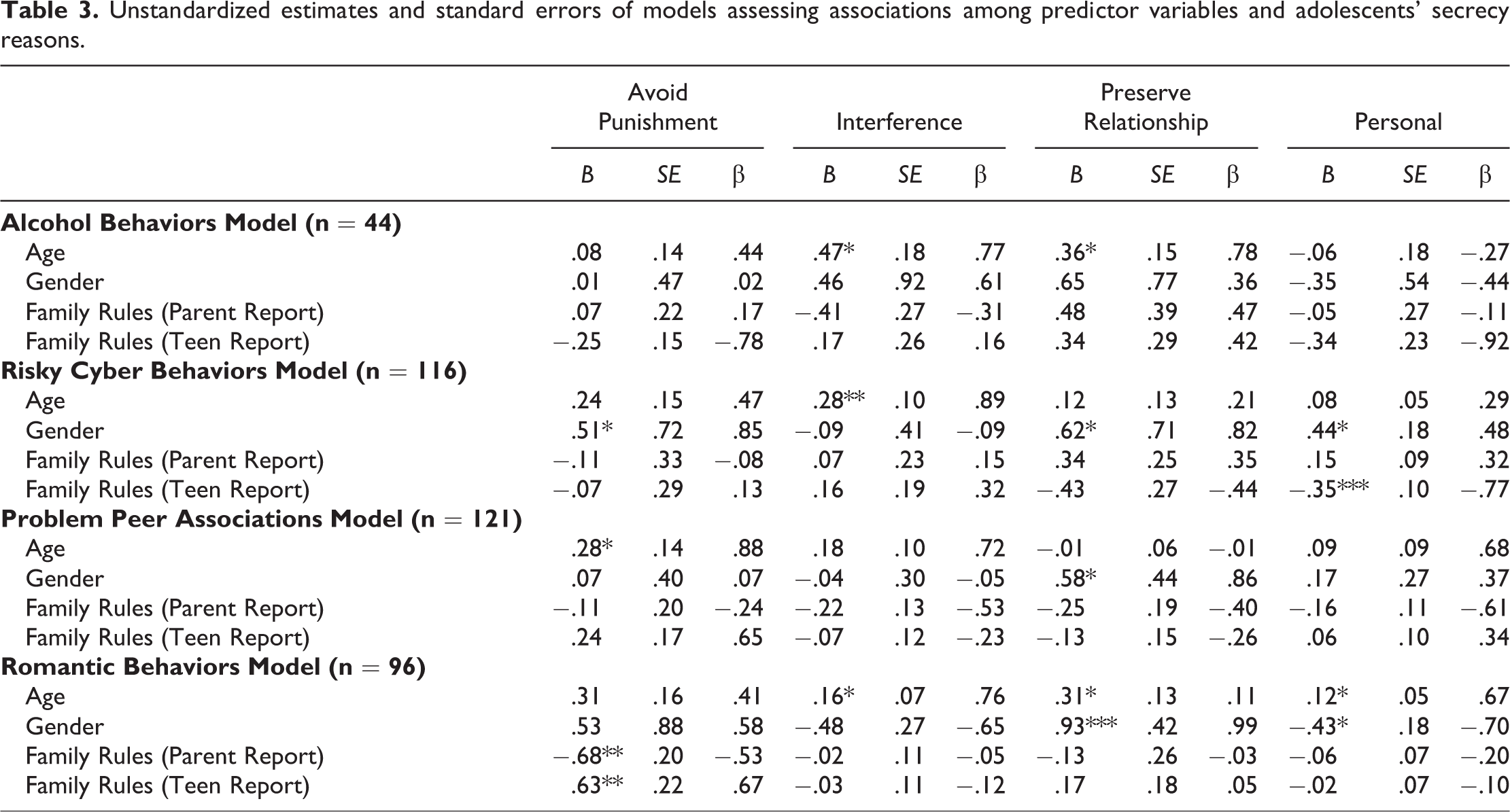
Separate structural equation models were run for each behavior (alcohol, cyber, peers, romantic) that included youth who reported engaging in the behavior and keeping that behavior secret from their parents. Each structural equation model provided an adequate fit to the data: Χ2/df = 1.06–2.39; Comparative Fit Index (CFI) = .93–.99; Root Mean Square Error of Approximation (RMSEA) = .02–.12 (Kline, 2005). Parameter estimates for all models are displayed in Table 3. Age was associated positively with adolescents’ interference and preserve relationship secrecy reasons for alcohol use. With regard to risky cyber behaviors, gender was associated positively with avoid punishment, preserve relationship, and personal secrecy reasons, such that female adolescents were more likely to use each of these secrecy reasons than male adolescents. Adolescent age was associated positively with interference secrecy reasons, whereas adolescents’ report of family rules was associated positively with personal secrecy reasons. For problematic peer associations, age was associated positively with avoid punishment secrecy reasons and girls were more likely than boys to use preserve relationship secrecy reasons. Finally, adolescent age was associated positively with interference, preserve relationship, and personal secrecy reasons for romantic behaviors. Gender was associated positively with preserve relationship and negatively with personal reasons, such that female adolescents were more likely to keep secrets about romantic behaviors to preserve their relationship with their parents, whereas males were more likely to keep secrets about romantic behaviors for personal reasons. Additionally, adolescents’ report of family rules for romantic behaviors was associated positively with avoid punishment, whereas parents’ report of family rules was associated negatively with avoid punishment secrecy reasons.
Unstandardized estimates and standard errors of models assessing associations among predictor variables and adolescents’ secrecy reasons.
Sensitivity analyses
Because tested models included smaller samples, a series of follow-up analyses were performed. First, bivariate associations among all independent variables and dependent variables were examined. Second, a series of step-wise structural models were run that included different combinations of independent variables (IV). Specifically, for each behavior-specific model, each IV was examined separately and with additional IVs added to the model one at a time. Findings across all of these additional tests were consistent, indicating significant effects were stable and not unduly influenced by the presence of other variables (i.e., suppression).
Discussion
The current study provided new insights into adolescents’ divergent reasons for keeping their activities secret from their parents. Adolescents’ reasons for secrecy differed across various forms of problematic and multifaceted behaviors. Both individual (adolescent gender and age) and family characteristics (parental rules) were associated with adolescents’ secrecy reasoning, but associations varied depending on the specific behavior adolescents were keeping secret. Although this study was not positioned to isolate causal associations, it does provide important information for the field concerning variability in adolescents’ secrecy reasoning and the ways in which such variability is related to adolescent characteristics and family process.
Consistent with previous research, the current study focused exclusively on adolescents who were engaged in different problematic activities and actively kept this behavior secret from their parents (Metzger et al., 2013; Rote & Smetana, 2015). Concentrating on groups of adolescents who reported engaging in the different behaviors helped to avoid potential confounds between adolescent behavior and their discussion of the behavior with their parents (i.e., youth cannot disclose or be secretive about activities in which they are not engaged). Descriptive statistics indicated that such an approach may provide important nuance for two reasons. First, although there was overlap in adolescents’ engagement and secrecy regarding problematic and multifaceted behaviors, our examination of patterns also points to substantial variability with many adolescents engaging in some but not all of the problem behaviors. Second, adolescents differed substantially in the types of reasons they used for different types of problematic behaviors. Although adolescents reported some secrecy reasons consistently across behaviors, correlations indicated that, overall, individual adolescents had distinct reasons for keeping their engagement in different problem behaviors secret from their parents.
Description of adolescents’ secrecy reasoning across different behaviors
The current research focused on four distinct types of reasons adolescents keep secrets from their parents: avoid punishment, parental interference, preserve relationship, and personal reasons. Research has shown that parents generally disapprove of adolescents’ engagement in alcohol behaviors, risky cyber activities, and associations with problem peers, and many parents place restrictions on adolescents’ romantic behaviors (Babskie & Metzger, 2016; Daddis & Randolph, 2010; Guilamo-Ramos et al., 2006; Keijsers et al., 2012; Madsen, 2008; Smetana et al., 2009b). Similarly, adolescents who anticipate negative parental reactions engage in more secrecy and less disclosure (Tilton-Weaver et al., 2010). Thus, it is not surprising that a large percentage of adolescents focused on avoiding punishment or reducing parental interference into their activities as primary reasons for keeping secrets. However, use of these two different types of reasoning varied across activities. Partially in line with hypotheses, a higher percentage of adolescents used avoid punishment and parental interference explanations for alcohol (54%) and romantic behaviors (57%) than for cyber behaviors (29%). For many adolescents actively engaged in alcohol use, keeping their behavior secret from parents represents a very practical decision, as they desire to circumvent parental obstruction of future drinking activities. Interestingly, more adolescents used avoid punishment (36.4%) compared to parental interference reasons (18.2%) for keeping alcohol behavior secret whereas a higher percentage of adolescents who kept their dating behavior secret focused on parental interference (43%) compared to avoiding punishment (13%). This pattern indicates important nuances in adolescents’ reasons for keeping different behaviors secret, as fear of punishment might drive secrecy for strongly prohibited prudential behaviors like alcohol use, while adolescents may concentrate more on parental intrusion of more multifaceted activities that include elements of personal choice such as dating. In fact, a high percentage of adolescents gave personal reasons for being secretive regarding their romantic behaviors and risky cyber behaviors. With age, adolescents begin to view a larger array of issues as outside of parental control matters of personal choice. The current study indicates that such a personal perspective may undergird many adolescents’ reasoning for keeping activities secret from parents (Rote & Smetana, 2015).
Finally, some adolescents indicated that they kept secrets in order to maintain a positive parent-adolescent relationship including how parents feel about the teen (disappointment) or potential effects on parents’ emotional state (hurt their feelings). Such reasons were more common for alcohol and problematic peer associations, indicating that adolescents may be concerned about effects on the parent-adolescent relationship for prohibited or riskier behaviors. Importantly, apprehension over adverse influences on the relationship with their parents was not sufficient motivation to avoid the behavior, as these adolescents reported actively engaging in those risky behaviors. Rather, these adolescents desire to engage in parentally prohibited behaviors while also maintaining their parents’ trust, esteem, and affection. This indicates that for some adolescents, keeping secrets from parents is not a sign of poor parent-adolescent relations, but could instead stem from adolescents trying to balance the competing goals of engaging in age-normed problem behavior and preserving a close, trusting relationship with their parents.
Differences in adolescent secrecy reasoning by adolescent gender
Consistent with hypotheses, adolescent girls were more likely to focus on avoidance of punishment or disruptions to the parent-adolescent relationship when reasoning about secrecy, but contrary to hypotheses, girls also used more personal justifications for some behaviors. Adolescent girls were more likely to utilize both personal and punishment avoidance reasons when justifying secrecy for risky cyber behaviors, which could stem from gender differences in family process and behavioral control. Relative to boys, adolescent girls experience greater levels of behavioral control and monitoring while boys are often granted greater decision-making autonomy (Zimmer-Gembeck & Collins, 2003). Experiencing increased restrictions may make girls more sensitive to parental negative reactions and punishment. This greater control and monitoring may make issues of personal jurisdiction particularly salient, which would lead girls to stress personal reasons for keeping information secret from parents. Interestingly, girls also gave more preserve relationship reasons for risky cyber behaviors and problematic peer associations. Parents have higher expectations for their daughters’ engagement in socially appropriate behavior including greater academic and reduced problem behavior (Raley & Bianchi, 2006). When explaining the importance of helping behavior, parents of boys tend to focus more on personal choice while parents of girls focus more on role responsibility (Smetana et al., 2009a), and adolescent girls score higher on measures of empathy and perspective-taking compared to boys (Van der Graff et al., 2014). Adolescent girls may also be especially aware of how their engagement in risky or prohibited behavior negatively affect the parent-adolescent relationship or parents’ emotional state. For secrecy regarding romantic relationships, girls also focused more on preserving their relationship with parents, whereas boys were more likely to keep secrets because they viewed dating as a personal issue. Parents engage in different strategies for managing the romantic activities of their adolescent daughters vs. sons with girls consistently experiencing greater restrictions compared to boys (Madsen, 2008). Thus, the potential risks associated with parents gaining knowledge of adolescents’ dating behaviors may be different for daughters who may fear negative effects on the parent-child relationship. In contrast, reduced restrictions may increase boys’ conceptualization of romantic behavior as outside of legitimate parental authority, increasing the likelihood that they would keep these behaviors secret for personal reasons.
Differences in adolescent secrecy reasoning by adolescent age
Consistent with hypotheses, adolescents’ age was associated with all four secrecy justifications, but these associations varied by problem behavior. For instance, older adolescents were more likely to cite avoid punishment as a reason for keeping secrets regarding interactions with problem peers. This pattern may reflect differences in parental motivations for regulating the friendships of their younger vs. older adolescents. While parents of younger adolescents may see peers as potentially influential over low-level problem behavior, parents of older adolescents may be more concerned about peer influence over more dangerous activities such as risky driving and illicit substance use (Goldstein et al., 2005). These increased fears may lead parents to enact harsher consequences when older adolescents break rules regarding problem peer associations; these sterner penalties may be a key motivator for older adolescent secret-keeping. In contrast, older adolescents were more likely to list parental interference as a reason for keeping their alcohol, cyber, and risky behaviors secret from parents. Older adolescents may simply view parents as an obstacle to their engagement in different types of prohibited behaviors, so keeping those activities secret allows adolescents to continue their engagement, unimpeded. However, older adolescents’ secrecy was not solely motivated by a desire to avoid parental oversight and punishment, as age was also positively associated with preserve relationship reasons for keeping secrets over alcohol and romantic behaviors. As noted above, many adolescents who engage in parent-prohibited behaviors can also maintain a positive relationship with their parents. With age, adolescents may have a more mature view of the parent-adolescent relationship, making them more aware of the ways in which parental knowledge of adolescents’ problematic activities may increase conflict, reduce parental trust, and negatively affect the parent-adolescent relationship. Consistent with hypotheses, older adolescents more frequently reported keeping secrets about romantic behaviors for personal reasons. With age, adolescents believe parents do not have the right to know about romantic relationships and view their dating behavior as outside parental jurisdiction (Rote & Smetana, 2015). However, as noted above, adolescents also gave interference and preserve relationship reasons for keeping their romantic activities secret, which supports findings concerning the multifaceted nature of adolescents’ romantic relationships. Previous research has found that older adolescents are more likely to view lying to parents about issues like dating as acceptable (Perkins & Turiel, 2007). Our research builds on this work by showing that adolescents have a variety of reasons for keeping their romantic activities secret.
Parental rules and adolescent secrecy reasoning
Although associations were not as consistent as hypothesized, parental rules were also associated with reasons for keeping secrets. Consistent with hypotheses, adolescents who reported greater family rules about romantic behaviors listed avoid punishment as a reason for keeping their romantic activities secret from parents. This pattern is consistent with previous research which found that increased family rules over illicit substance use was associated with increased lying (Metzger et al., 2013). For adolescents whose parents enact stricter rules regarding dating behavior, keeping romantic activities secret may be a fairly straightforward practical choice. Potentially, these youth understand that there may be increased consequences if parents know about those behaviors, and this knowledge is a strong motivator for them to keep their activities secret. Alternatively, parents may adjust their rules and restrictions based on adolescents’ previous behavior. Also, adolescents who reported greater levels of family rules about cyber behavior were less likely to use personal reasons for keeping their cyber activities secret from parents. Parents and adolescents recognize the potential harm associated with risky cyber behaviors (Williams & Merten, 2011), but parental authority over cyber activity may be stressed more overtly in families with more regulations. Thus, even though these adolescents were actively engaging in cyber behaviors, increased restrictions may have raised their awareness of parents’ desire for control over these activities, reducing their reliance on personal reasons for their secrecy.
Parents’ report of rules was only associated with avoid punishment for romantic behaviors. A great deal of previous research has found that parents and adolescents do not always see the world the same (De Los Reyes et al., 2010), and views of family processes including family rules demonstrate low to moderate correlations between parents and teens (Metzger et al., 2016). Previous work also indicates that adolescents’ own views of a family process may be more important for predicting adolescent behavior (Abar et al., 2014). However, it is unclear why the association between parents’ reports of romantic behavior rules and avoid punishment reasons would be in the opposite direction of the association for adolescents. Potentially, parent and adolescent disagreement regarding their views of family processes is more pronounced for romantic behaviors than for other behaviors.
Limitations and future directions
Although the current study provides a nuanced picture of adolescents’ secrecy reasoning, findings must be interpreted in light of a few limitations. Although findings provide important information for the field regarding variables that are associated with adolescents’ secrecy reasoning, data for the current study were cross sectional, which limits our ability to draw causal conclusions. The current models examined family variables as predictors of adolescent reasoning, but adolescents’ behavior-specific secrecy may cause fluctuations in parents’ rules. Longitudinal data are needed to investigate bidirectional associations among family rules and youths’ secrecy reasons. Future research should also examine whether constructs like adolescents’ behavioral autonomy potentially explains these associations over time. Although a number of conceptually relevant findings emerged, the sample sizes for the tested models were fairly small relative to the number of estimated parameters, and this may have limited our ability to detect significant effects. However, the pattern of significant associations in our models was consistent with the bivariate associations and additional sensitivity analyses, which suggests our findings were robust and not capitalizing on suppression. Although diverse in terms of parental income and education, the current sample was predominantly white, which could limit generalizability to more ethnically diverse populations. It is likely that additional aspects of the parent-adolescent relationship beyond family rules could affect adolescents’ reasons for keeping their behaviors secret such as parental reactions to adolescents’ disclosure (Tilton-Weaver et al., 2010). The current study employed a dichotomous measure of adolescent secrecy reasoning that assessed whether adolescents utilized different types of reasoning. Future research should investigate additional measurement strategies such as Likert-type scales or rank order measures to provide more nuanced assessments of the relative frequency or importance of different types of secrecy reasoning. Finally, our measure of adolescent secrecy reasoning did not ask adolescents to distinguish between caregivers, and potentially, adolescents might have different reasons for keeping their problem and multifaceted activiteis secret from mothers vs. fathers.
Previous research highlights the importance of adolescents sharing information with their parents about their activities and that adolescents choose to keep their engagement in certain behaviors secret (Smetana et al., 2009b). Additional research shows that adolescents’ active secrecy is linked to increased engagement in problematic and multifaceted behaviors (Frijns et al., 2005). The present study shows that adolescents’ reasons for keeping secrets vary, not only based on the type of potentially problematic behavior for which they are keeping secret but also based on family rules, as well as individual characteristics, including age and gender. These findings are important for understanding adolescents’ developing social cognitions and could be utilized to educate parents on how to facilitate parent-adolescent communication about problematic and multifaceted behaviors. Our findings add to the ever-growing literature that urges researchers to utilize domain-specific measures of adolescents’ information management as well as investigate the family processes surrounding adolescents’ social cognitions regarding information management.
Footnotes
Ethical approval
In conducting this research, the accepted principles of ethical and professional conduct have been followed. The current study was approved by the Institutional Review Board for West Virginia University.
Informed consent
Informed consent was obtained from all individual participants included in the study. All participating youth gave informed consent prior to their participation. In addition, parental permission and consent was obtained from the parents of all youth under 18 years of age.
Funding
The author(s) disclosed receipt of the following financial support for the research, authorship, and/or publication of this article: This research was supported via internal funding through West Virginia University.

Open research statement
As part of IARR’s encouragement of open research practices, the authors have provided the following information: This research was not pre-registered. The data used in the research cannot be publicly shared but are available upon request. The data can be obtained by emailing