







Abstract
This study explored the interplay of adolescents’ perceived maternal and paternal practices and their associations with traditional and cyberbullying victimization experiences among adolescents. Participants included 439 Grades 7–11 adolescents (242 girls) from five secondary schools in Hong Kong. Moderation analyses were conducted controlling for adolescents sex. No strengthening effects were found between maternal × paternal control and maternal × paternal autonomy-support in relation to bullying victimization experiences. No buffering effect of parental autonomy-support was evident in the association between parental control and traditional bullying victimization. However, high levels of paternal autonomy-support were associated with more frequent reports of cyberbullying victimization at high levels of maternal control but not low levels. A similar pattern emerged for maternal autonomy-support and paternal control. These findings imply that inconsistent parenting might increase adolescents’ likelihood for cyberbullying victimization.
Keywords
Bullying victimization is a pervasive problem that peaks around early adolescence, during which peer relationships become increasingly important (Raskauskas & Stoltz, 2007; Sentse et al., 2015). Bullying victimization has deleterious developmental implications. Adolescents who are bullied tend to display more externalizing behaviors, suffer from more internalizing problems (Casper & Card, 2017), have poorer physical health (Herge et al., 2015), and report more suicidal ideations (Kowalski & Limber, 2013). In addition, these adolescents tend to have poorer academic achievement (Wang et al., 2014), show lower school attendance (Feldman et al., 2014), and feel less connected to the school (Forbes et al., 2019). In light of these negative consequences, research efforts have focused on identifying factors that put adolescents at risk of being bullied. However, compared to the understanding on intrapersonal, peer, school, and community factors, the understanding on familial dynamics remains unclear (Nocentini et al., 2019). Specifically, although positive associations have been found between maladaptive parenting and bullying victimization experiences (Lereya et al., 2013; Nocentini et al., 2019), little is known about whether this association would be moderated by the practices of the other parent (Papadaki & Giovazolias, 2015). Determining the extent to which parenting is associated with bullying victimization experiences would offer insights to current understanding regarding the importance of considering familial factors in the context of bullying victimization.
Bullying and victimization is a universal problem. A cross-national study involving adolescents from 40 countries (N = 202,056) in North America, Europe, Middle East and Russia recorded a prevalence rate of 10.7% for bullying and 12.6% for bullying victimization (Craig et al., 2009). Another study involving secondary-school students in Hong Kong, Macao, and Taiwan documented prevalence rates of 5.1%, 9.3%, and 1.8% respectively for self-reported bullying, victimization, and combined bullying/victimization (Mok et al., 2014). Other studies indicated that the prevalence rates of self-reported bullying involvement and victimization were 20.83% and 18.99% respectively among adolescents in China (Wang et al., 2012), and 10.9% and 10.7% among adolescents in Taiwan (Chen & Cheng, 2013). Although the incidence rate of bullying victimization is comparable across the East-Asian, Western and European contexts, few studies have examined this issue within the former. Thus, the present study was situated in Hong Kong.
Bullying and victimization
Accumulating evidence points to the need to consider multiple forms of bullying victimization to gain a more thorough understanding on adolescent experiences (Kowalski & Limber, 2013; McCuddy & Esbensen, 2017; Modecki et al., 2014). Broadly speaking, bullying occurs when an individual of superior status intentionally inflicts harm or pain on an inferior other repeatedly over time (Olweus, 1993). Bullying victimization could be differentiated into traditional and cyberbullying, both of which are moderately correlated (Kowalski & Limber, 2013; Modecki et al., 2014). Traditional forms of bullying victimization include physical (e.g., hitting), verbal (e.g., name-calling) and social (e.g., social exclusion) bullying, whereas cyberbullying occurs through electronic venues, such as text messages, online games, and social media (Kowalski & Limber, 2013; Raskauskas & Stoltz, 2007). According to a meta-analysis on 80 studies, the approximate prevalence rates of traditional and cyberbullying among adolescents (12–18 years old) are respectively 35% and 15% (Modecki et al., 2014). Given that traditional bullying and cyberbullying victimizations are prevalent in adolescence, the present study examined both forms of experiences.
Examining different forms of bullying victimization is imperative because each form of experience has unique consequences on adolescent development (Finkelhor et al., 2007; McCuddy & Esbensen, 2017; Waasdorp & Bradshaw, 2015). For instance, Herge et al. (2015) found that cyberbullying victimization was associated directly to adolescents’ somatic complaints and sleep difficulties, whereas traditional forms of bullying victimization was associated indirectly through heightened depressive symptoms and social anxiety. Adolescents who have been cyberbullied tended to show more externalizing and internalizing symptoms compared to those who have been exposed to traditional bullying (Waasdorp & Bradshaw, 2015). The importance of accounting for the complexity of bullying victimization is further emphasized by studies illustrating that victims of traditional bullying were also likely to be victims of cyberbullying (Raskauskas & Stoltz, 2007; Waasdorp & Bradshaw, 2015). Furthermore, adolescents who have experienced traditional and cyberbullying tended to show greater psychological distress (e.g., more suicidal ideations) and demonstrate more behavioural problems (e.g., more delinquency) than those who experienced only one form because of cumulative effects associated with multiple victimizations (McCuddy & Esbensen, 2017; Peng et al., 2019).
Bullying victimization and parenting
Extant research has considered bullying victimization under the bioecological framework (Bronfenbrenner, 1979) maintaining that development is embedded within the micro-, meso-, exo-, macro-, and chronosystems (Swearer & Hymel, 2015). The microsystem includes the child’s biological characteristics and immediate environment (e.g., home). The mesosystem consists of interrelationships among different microsystems (e.g., home-school connection). The exosystem refers to environments that indirectly impact development (e.g., parents’ working hours). The macrosystem denotes overarching social and cultural ideologies and values whereas the chronosystem emphasizes the effect of time on all the systems. In recognition of the evolution of technology use, Johnson and Puplampu (2008) proposed a techno-subsystem that includes living (e.g., peers) and non-living elements of communication, information, and recreation technologies (e.g., Internet).
In line with these frameworks, previous research has identified individual and peer/school-related factors as important correlates of bullying or cyberbullying victimization, such as adolescent sex (Finkelhor et al., 2007), psychosocial adjustment (Hansen et al., 2012; Yu et al., 2018), self-efficacy (Kokkinos & Kipritsi, 2012), peer acceptance (Sentse et al., 2015), social-media use (Kircaburun et al., 2018), as well as perceived school climate (Wang et al., 2014). Diverging from the focus on intrapersonal and peer/school-level factors, an emerging line of research illustrates an importance to situate bullying victimization experiences within the family context (Baldry et al., 2019; Nocentini et al., 2019). For example, compared to children who have not been bullied, those who have been bullied often have parents who engaged in fewer facilitative parenting practices such as encouragement, coaching, and responsiveness (Healy et al., 2015). Moreover, findings from a meta-analysis (n = 70) suggest that bullies and victims often experience more negative parenting, as characterized by abuse/neglect, maladaptive parenting, and over-protection (Lereya et al., 2013). In corroboration, a longitudinal study indicated that higher levels of maternal and paternal rejection predicted more bullying victimization among adolescents 6 months later (Stavrinides et al., 2018). Other studies have associated cyberbullying victimization with negative parenting such as neglect (Hong et al., 2018), controlling practices, and inconsistent monitoring (Katz et al., 2019). Extant research thus suggests that parenting practices are associated with different forms of bullying victimization experiences.
Contrary to negative parenting, positive parenting practices such as responsiveness, communication, and support, is likely to protect children and adolescents against incidences of being bullied online and offline (Elsaesser et al., 2017; Lereya et al., 2013; Nocentini et al., 2019). Yet, few studies have considered whether adaptive practices of one parent would moderate the negative practices of the other in relation to bullying victimization (Papadaki & Giovazolias, 2015). A potential reason is that previous studies have mainly attended to the role of maternal parenting (Batanova & Loukas, 2014; Healy et al., 2015), or did not differentiate between maternal and paternal parenting (Hong et al., 2018; Katz et al., 2019). However, as accumulating evidence suggests that paternal parenting plays more than a secondary role in development by making unique contributions over and above maternal parenting (Li & Meier, 2017; Möller et al., 2016), examining the relative contribution of paternal parenting in bullying victimization is imperative (Stavrinides et al., 2018).
The potential interplay of maternal and paternal parenting and their associations with bullying victimization has been implied by the family systems theory. Given that family subsystems (e.g., mother-child) are interconnected (Cox & Paley, 2003), maternal and paternal parenting could jointly predict adolescent outcomes. These joint effects could be demonstrated in three patterns, including strengthening, interfering, and buffering (Wang et al., 2019). The strengthening pattern denotes an association when the practices of one parent is strengthened or intensified by the practices of the other parent. Conversely, the interfering pattern describes a situation when the practices of one parent is hindered by the practice of the other parent. The buffering pattern occurs when a parent engages in positive practices to protect the child from the negative practices of the other parent. Using bullying victimization experiences as an example, paternal support (control) might intensify the strength of maternal support (control) in relation to bullying victimization. Additionally, paternal support could counterintuitively strengthen the association between maternal control and bullying victimization. In an interfering situation, paternal support (control) might hinder the association between maternal support (control) and bullying victimization, or vice versa. Under the buffering pattern, paternal support might protect adolescents from being bullied in the presence of maternal control.
Empirical support concerning the joint effects of maternal and paternal parenting on bullying victimization comes from different strands of evidence. For example, within the context of academic outcomes, low maternal and paternal warmth were found to weaken the positive association between the involvement of either parent and academic achievement among adolescents (Chung et al., 2019). Wang et al. (2019) found that the positive association between parental warmth/ behavioural guidance and school adjustment was strengthened by similar parenting patterns of the other parent. Within the context of behavioural outcomes, a longitudinal study indicated that although parental control was associated positively with externalizing behaviors among children, this association was buffered if the other parent exerted low levels of control (Roskam et al., 2016). In corroboration, McKee et al. (2007) found that high levels of maternal warmth buffered the positive association between paternal harsh discipline and problem behaviors, wherein less problem behaviors were demonstrated when maternal warmth was high. Within the context of bullying victimization, Papadaki and Giovazolias (2015) found that the positive association between maternal rejection and depression was mitigated by high levels of paternal acceptance, which in turn, was associated with lower involvement in bullying incidents as either victims or bullies. Another study demonstrated that the inverse association between paternal involvement and bullying involvement was stronger in face of low maternal involvement (Flouri & Buchanan, 2003). Previous research thus suggests that maternal and paternal parenting could work jointly in their associations with bullying victimization experiences.
Parenting in collectivistic cultures
As adolescence represents a developmental period when sense of autonomy becomes increasingly important, positive and negative parenting were respectively operationalized as autonomy-supportive and controlling practices in this study. Under the self-determination theoretical (SDT) framework, parental autonomy-support is defined by practices that promote volitional functioning, such as by empathizing children’s perspectives and feelings, providing choices and encouraging decision making, as well as offering rationale and explanation for behavioral limits or requests (Soenens & Vansteenkiste, 2010). By constrast, parental control seeks to pressurize children to think, feel, or behave in a certain way through external (e.g., threats to punish) and/or internal (e.g., guilt inducing) means (Soenens & Vansteenkiste, 2010).
Research conducted in individualistic cultures has generally associated autonomy-support with positive outcomes (Costa et al., 2016; Marbell-Pierre et al., 2019) and control with negative outcomes (Fung & Lau, 2012; van der Kaap-Deeder et al., 2017). However, the extent to which these implications generalize to collectivistic cultures remains unclear. Specifically, autonomy-supportive practices might be less functional in collectivistic cultures where interdependence, family obligations, respect, and obedience are highly valued (Tamis-LeMonda et al., 2008). In such cultures, parental control might be more functional as it could covey interdependence values (Fung & Lau, 2012; Rothbaum & Trommsdorff, 2007), such as when a parent induces guilt in a child for disrupting social harmony. Furthermore, as parental control is generally seen as normative and perceived less negatively in collectivistic cultures (Fung et al., 2017; Rothbaum & Trommsdorff, 2007), it might not necessarily be associated with detrimental outcomes. For example, Fung and Lau (2012) found a significant and positive association between psychological control and behavioural problems among European American children but not their Hong Kong counterparts.
By contrast, other studies suggest that the positive implications of autonomy-support (Marbell-Pierre et al., 2019; Ngai et al., 2018) and negative implications of control (Shek, 2007) are likely to extend to collectivistic cultures. For example, positive associations have been found between autonomy-support and social-emotional outcomes such as emotional well-being (Lekes et al., 2010) and needs satisfaction (Soenens et al., 2018) among Chinese and South Korean adolescents respectively, although they were less pronounced compared with their Western counterparts. Studies examining parental control have also demonstrated its association with poorer psychosocial adjustment among Chinese adolescents (Camras et al., 2012; Luebbe et al., 2018; Shek, 2007). The divereging lines of evidence thus necessicates further exmaination on the extent to which autonomy-support and control are associated with developmental outcomes in collectivistic cultures. Situating this examination in Hong Kong would be particularly insightful as it is a city that is influenced by traditional Confucian philosophy that highlights family ties and Western ideologies (e.g., autonomy) as a result of former British colonization and globalization (Chuang et al., 2018). In corroboration, Hong Kong mothers reported using both autonomy-support and psychologically controlling practices (Fung et al., 2017).
The present study
Few studies have considered the interplay of maternal and paternal parenting within the context of bullying victimization, especially in non-Western and non-European contexts. Relatedly, previous research has demonstrated a need to account for different forms of bullying victimization. To address these concerns, the present study examined the extent to which Hong Kong adolescents’ perceived maternal and paternal parenting were jointly associated with their traditional and cyberbullying victimization experiences. As adolescents’ subjective views on parenting tend to be more strongly related to social-emotional outcomes than parents’ reports (Dimler et al., 2017; Fleming et al., 2016), examining the hypothesized model from their perspective would be useful.
Based on previous research concerning the joint effects between paternal and maternal parenting in relation to adolescent outcomes (e.g., Wang et al., 2019), the present study evaluated different moderation patterns, including maternal control × paternal control, maternal autonomy-support × paternal autonomy-support, maternal control × paternal autonomy-support, and paternal control × maternal autonomy-support. Using the latter pattern as an example, maternal autonomy-support could strengthen or interfere with the role of paternal control on bullying victimization. Conversely, maternal autonomy-support could buffer the positive association between paternal control and bullying victimization. Adolescent sex was considered as a covariate because previous research has indicated that boys tend to experience victimization more frequently than girls across European (Baldry et al., 2019; Sentse et al., 2015), Western (Finkelhor et al., 2017), and East-Asian contexts (Chan & Wong, 2019; Chen & Chen, 2020; Mok et al., 2014). Paternal control × maternal control was hypothesized to be associated with more bullying victimization experiences. By contrast, paternal autonomy-support × maternal autonomy-support was expected to be associated with fewer bullying victimization experiences. Parental autonomy-supportive practices were hypothesized to mitigate the positive association between parental control and victimization experiences. This pattern would be evident in both paternal and maternal practices.
Method
Participants
Participants were recruited from secondary schools located in different districts in Hong Kong. Hong Kong students are assigned to secondary schools based on their academic performance in Grades 5–6 by the Secondary School Places Allocation System (Education Bureau, n.d.). Each school is part of a specific band or category. Band 1 schools accept students from the top 33% tier while Band 3 schools accept students from the bottom 33% tier (Education Bureau, n.d.). In this study, secondary schools from Bands 1–3 located in different districts were invited. The final sample consisted of 439 Grades 7–11 adolescents (242 girls) from five secondary schools, 282 students were from Band 1, and 157 were from Band 2. The mean age was 13.85 years and the majority of these adolescents were born in Hong Kong (89.3%). Two participants did not respond to any items on the parenting measures and a small number of participants did not have a paternal figure (n = 17). As the missingness was not random, they were excluded from analysis. The final sample consisted of 422 adolescents (233 girls).
Measures
Bullying victimization experiences
Bullying victimization experiences were evaluated with the Vaillancourt and Hymel Bullying Involvement Questionnaire, which has demonstrated reliability and validity (Vaillancourt et al., 2008; Vaillancourt et al., 2010). This questionnaire included four questions assessing different forms of bullying victimization, including physical, verbal, social, and cyberbullying. These questions were rated on a 5-point Likert scale ranging from 1 = not at all, 2 = only a few times this year, 3 = every month, 4 = every week, 5 = many times a week. Guided by previous studies (McCuddy & Esbensen, 2017; Peng et al., 2019) and in recognizing that adolescents often do not differentiate between physical, verbal, and social bullying (Law et al., 2012), a composite of corresponding bullying victimization scores was created to represent traditional bullying (3 items, α = .72). Cyberbullying was assessed by a corresponding item.
Parenting practice
The Perceived Parental Autonomy Support Scale (P-PASS) (Mageau et al., 2015) was used to measure maternal and paternal practices. Approximately 98.8% of maternal figures were mothers; approximately 98.3% of paternal figures were fathers. Other maternal and paternal figures were either a grandparent or a relative (i.e., uncle or aunt). The P-PASS evaluated six types of parenting practices that could be distinguished into autonomy-supportive (12 items) and controlling practices (12 items). Autonomy-support included provision of rationales for rules and demands, acknowledgement of the child’s feelings, and provision of choice (e.g., “My mother gave me many opportunities to make my own decisions about what I was doing”). Controlling practices included performance pressures, use of threats, and guilt-inducing criticisms (e.g., “My mother made me feel guilty for anything and everything”). Each item was rated on a 7-point scale (1 = do not agree at all to 7 = very strongly agree). Items pertaining to each subscale were averaged to create an index for that dimension. Reliability scores for maternal and paternal autonomy-support were respectively αs = .93 and .95. Reliability scores for maternal and paternal control were respectively αs = .82 and .85.
P-PASS has been evaluated for its construct validity and reliability based on Canadian adolescents (Mageau et al., 2016). Confirmatory factor analysis also indicated good model fits based on recommended cut-offs for Comparative Fit Index (CFI) and Root Mean Square Error of Approximation (RMSEA), with a CFI >.95 and RMSEA <.06 indicating good model fit (Byrne, 2013). Model fit indices for maternal and paternal autonomy-support were respectively χ2(51) = 177.06, CFI = .96, RMSEA = .08 and χ2(51) = 192.90, CFI = .97, RMSEA = .08, ps < .000. Model fit indices for maternal and paternal control were respectively χ2(51) = 174.22, CFI = .94, RMSEA = .08 and χ2(51) = 184.51, CFI = .95, RMSEA = .08, ps < .000.
Procedure
The first author translated all questionnaires into Chinese, which were then back-translated by two graduate students with native Chinese proficiency. Parental consents and adolescents’ assents were sought prior to research. Participants completed the questionnaire either in the school hall or an empty classroom under the presence of the first author. Teachers or teaching assistants were present to monitor students but were otherwise uninvolved in the data collection process. Participants received a small gift (e.g., stationary) upon completion of the questionnaire.
Data analytical plan
Preliminary analyses were performed with SPSS 24. Given that all variables were measured from adolescents’ perspective, Harman’s single-factor test was conducted first to determine the possibility of shared method variance. Common method variance would be present if all variables loaded onto a single factor in exploratory factor analysis (Podsakoff et al., 2003). Results from eigenvalues and screen plot indicated three factors, suggesting that responses were not pervasively biased by common method variance.
Adolescent sex was controlled to account for potential sex differences. As the frequency of victimization experiences might vary between schools for reasons such as school discipline, multivariate analysis of variance (MANOVA) was conducted to determine if multilevel analyses was required. Results indicated significant differences between schools in terms of traditional victimization, F(4, 416) = 6.32, p < .001, based on a corrected Bonferroni significance level at p < .01 (p = .05/5). However, no significant differences were found between schools for cyberbullying victimization, F(4, 416) = .92, p = .45. Further analyses revealed that the intraclass correlation coefficient for traditional bullying victimization (ρ = .06) did not exceed the recommended cut-off of ρ > .50 for multilevel analyses (Koo & Li, 2016). Based on these results and in light of the small number of schools (n = 5), multilevel analysis was not conducted.
Moderation analyses were conducted with the statistical software R (R Core Team, 2016) using the package “pequod” (Mirisola & Seta, 2016). Missing data (3.3 %) was accounted by full information maximum likelihood (FIML). As slight violations of normality were evident, maximum likelihood with robustness (MLR) was specified as the estimator to correct for deviations by using robust standard errors (Byrne, 2013).
Separate moderation models were conducted to evaluate the interplay of perceived parenting practices and their associations with traditional and cyberbullying victimization. Significant interactions were probed with simple slopes analysis as described by Aiken and West (1991). All predictors were divided into low and high levels (i.e., one standard deviation below and above the mean respectively) to determine the pattern of moderation. In all moderation analyses, all parenting variables were centered prior to entering into regression equation.
Results
As presented in Table 1, maternal and paternal practices were significantly correlated. Maternal control was positively correlated with traditional bullying victimization (r = .25) and cyberbullying victimization (r = .23 ps < .001). Similarly, paternal control was positively correlated with traditional bullying victimization (r = .20) and cyberbullying victimization (r = .18 ps < .01). Neither maternal nor paternal autonomy-support were related to bullying victimization. Adolescent sex (0 = boys, 1 = girls) was negatively correlated with traditional bullying victimization (r = −.17, p < .01), but not cyberbullying victimization (r = −.09, p = .07).
Descriptive statistics and correlations for study variables.
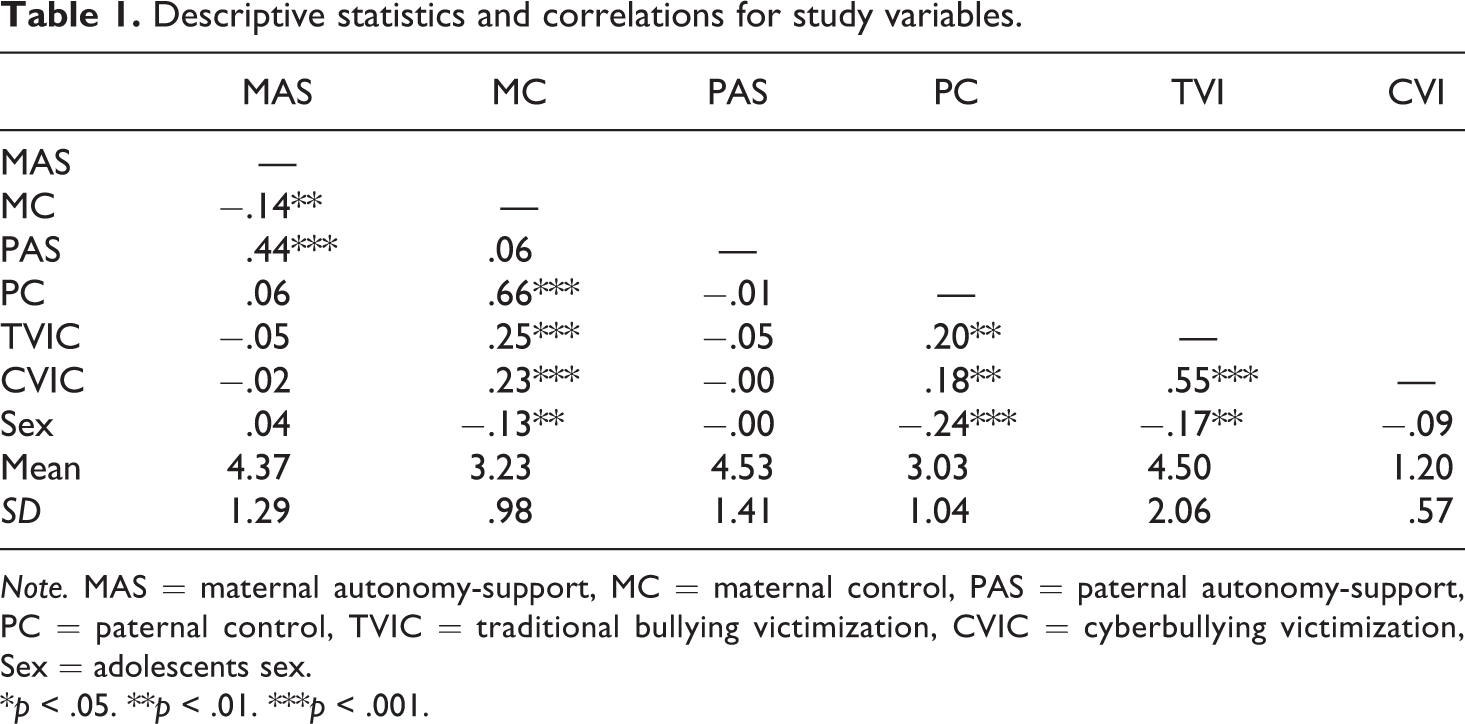
Note. MAS = maternal autonomy-support, MC = maternal control, PAS = paternal autonomy-support, PC = paternal control, TVIC = traditional bullying victimization, CVIC = cyberbullying victimization, Sex = adolescents sex.
*p < .05. **p < .01. ***p < .001.
As displayed in Table 2, the model with maternal control × paternal control was significant in predicting traditional bullying victimization (R2 = .09, p < .001). Results indicated a positive association between maternal control and traditional bullying victimization after controlling for other predictors (b = .51, p < .001). However, no significant moderation effects were found (b = −.04, p = .54). Similar patterns were found for cyberbullying victimization. Although the model was significant (R2 = .06, p < .001), no significant moderation effects were evident between maternal and paternal control (b = .02, p = .41). Nonetheless, maternal control was positively associated with cyberbullying victimization after accounting for other predictors (b = .12, p < .001).
Summary of analyses for different moderation models.
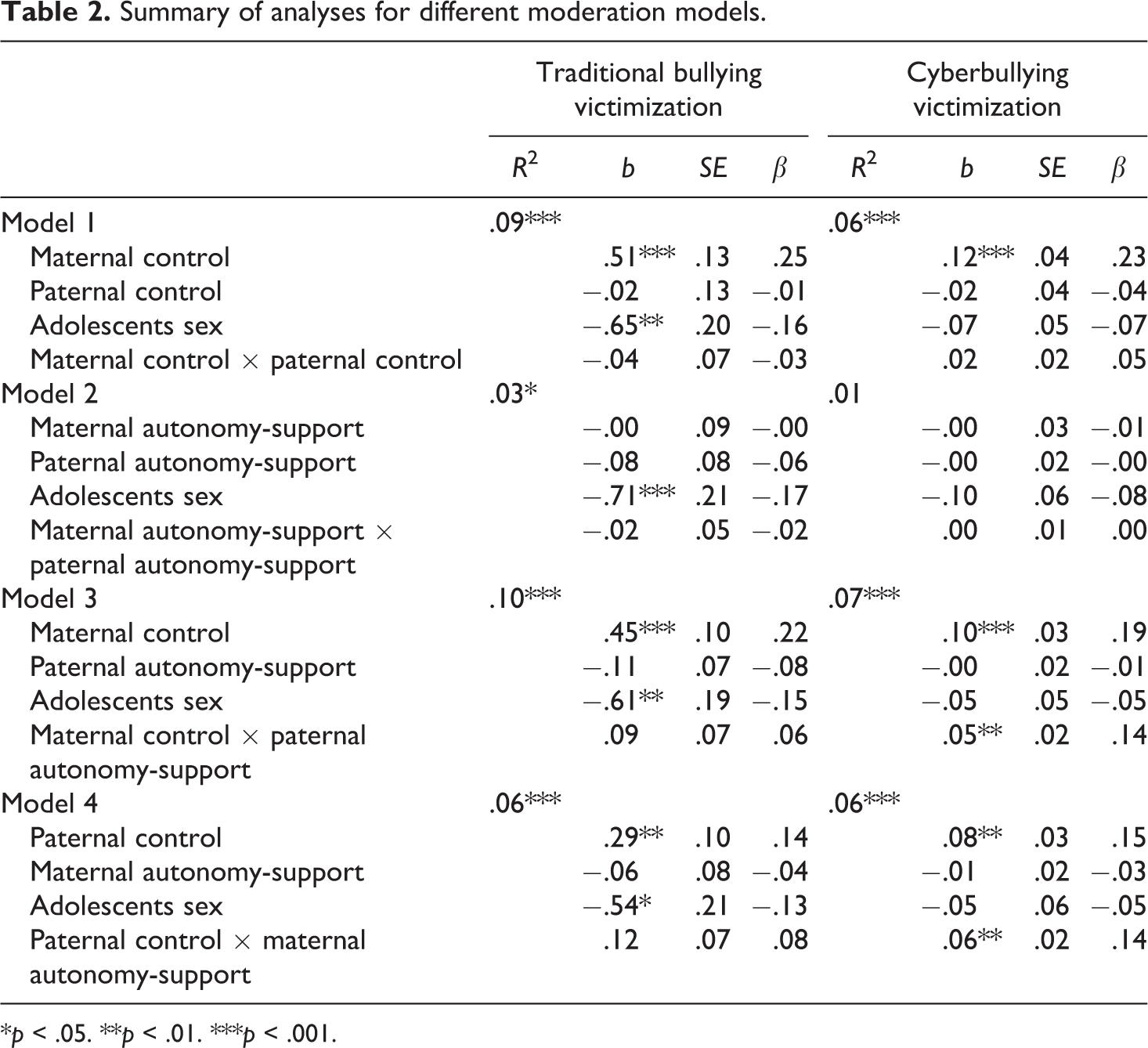
*p < .05. **p < .01. ***p < .001.
The model with maternal autonomy-support × paternal autonomy-support was significant for traditional bullying victimization (R2 = .03, p < .05), but not cyberbullying victimization (R2 = .01, p = .58). No significant moderation effects were found for both forms of bullying victimization, respectively b = −.02, p = .68 for traditional bullying and b = .00, p = .98 for cyberbullying. Neither maternal nor paternal autonomy-support were significant predictors of traditional and cyberbullying bullying victimization (see Table 2).
The model examining maternal control × paternal autonomy-support in relation to traditional bullying victimization was significant (R2 = .10, p < .001). Higher perceived maternal control was associated with more frequent reports of traditional bullying victimization (b = .45, p < .001). Conversely, higher perceived paternal autonomy-support was associated with less frequent reports of traditional victimization (b = −.11), but at a non-significant level (p = .11). The interaction between maternal control and paternal autonomy-support was also not significant (b = .09, p = .21). Similar patterns emerged for the model examining paternal control × maternal autonomy-support (R2 = .06, p < .001). Paternal control was positively associated with traditional bullying victimization (b = .29, p < .01). Maternal autonomy-support was negatively but non-significantly associated with traditional bullying victimization (b = −.06, p = .41). Paternal control did not interact with maternal autonomy-support to predict traditional bullying victimization (b = .12, p = .09).
The model with maternal control as a predictor and paternal autonomy-support as a moderator was significant in predicting cyberbullying victimization (R2 = .07, p < .001). Maternal control was positively associated with cyberbullying victimization (b = .10, p < .001). Paternal autonomy-support also emerged as a negative but non-significant predictor (b = −.00, p = .81). However, a significant interaction was found (b = .05, p < .01). Simple slope analyses indicated that the moderation effect (95% CI [−7.15, −.71]) was significant at high levels (+1 SD) of paternal autonomy-support (b = .18, p < .001), but not at low levels (−1 SD) (b = .03, p = .53). As depicted in Figure 1, adolescents reported more cyberbullying victimization at high levels of perceived paternal autonomy-support and maternal control. Conversely, fewer reports of cyberbullying victimization were evident with high perceived paternal autonomy-support but low maternal control.
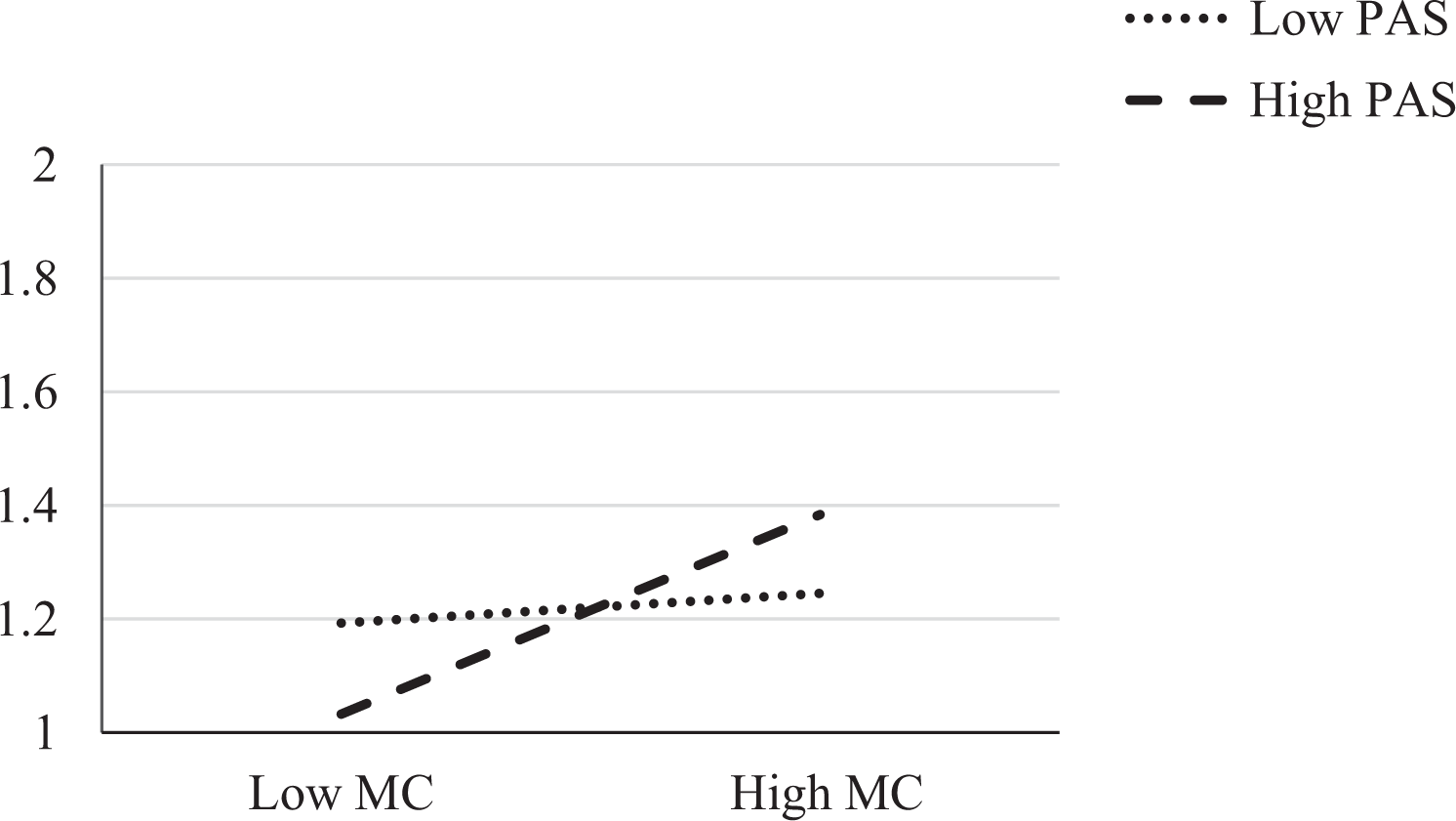
Simple slope analysis for cyberbullying victimization, with maternal control (MC) as the predictor and paternal autonomy-support (PAS) as the moderator. Low levels were calculated at −1 standard deviation (SD) below the mean; high levels were calculated at +1 SD above the mean.
The model with paternal control as the predictor and maternal autonomy-support as the moderator was significant (R2 = .06, p < .001). Higher levels of paternal control were associated with more frequent reports of cyberbullying victimization (b = .08, p < .01). Maternal autonomy-support was negatively but non-significantly associated with cyberbullying victimization (b = −.01, p = .58). Nonetheless, significant interaction effects were found (b = .06, p < .05). Simple slope analyses revealed that the moderation effect (95% CI [−5.51, −.40]) was significant when maternal autonomy-support was above +1 SD (b = .16, p < .001), but not below −1 SD (b = .01, p = .81). As presented in Figure 2, adolescents reported more frequent cyberbullying victimization at high levels of maternal autonomy-support and paternal control. Adolescents reported fewer cyberbullying victimization when maternal autonomy-support was high but paternal control was low.
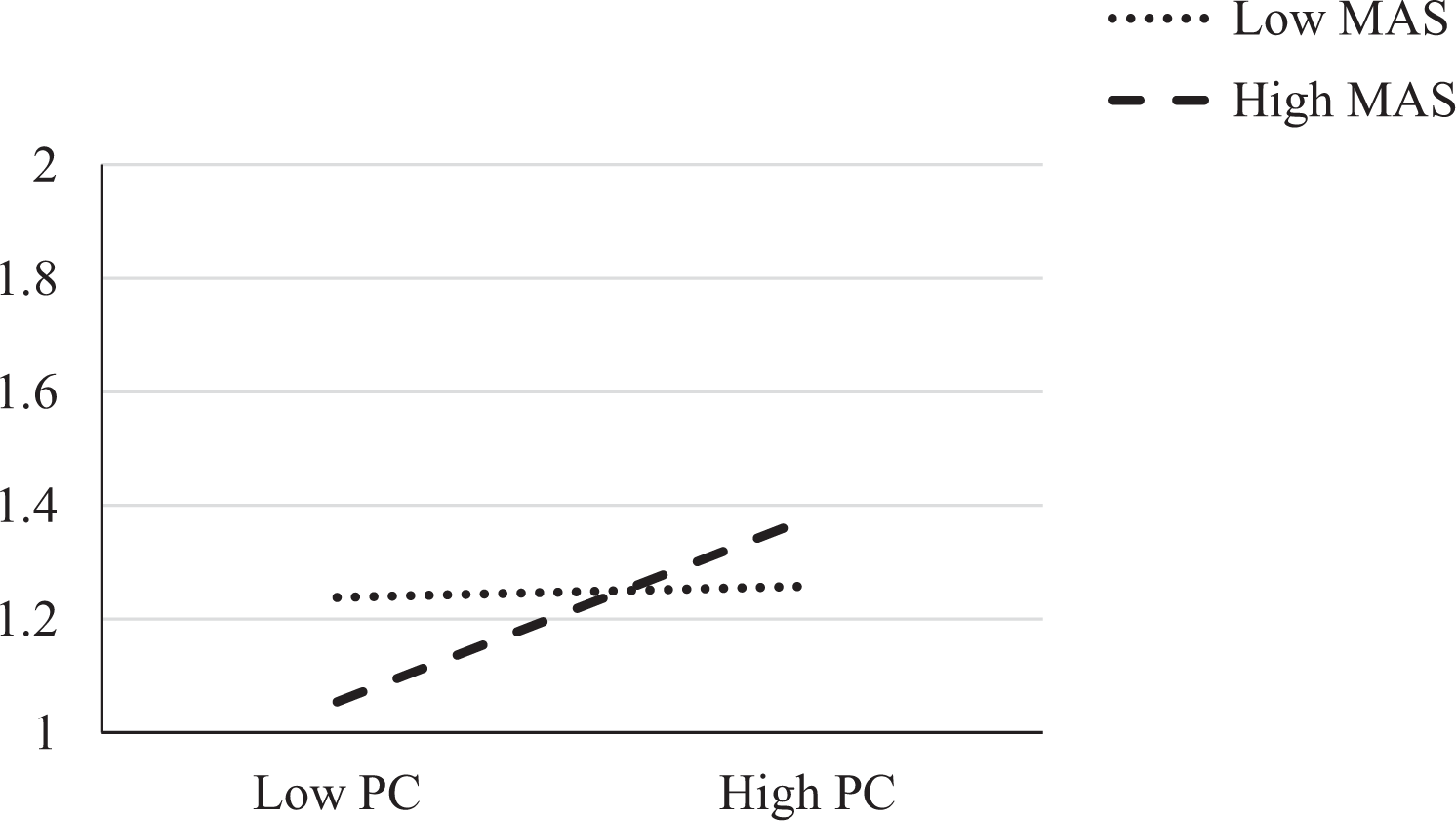
Simple slope analysis for cyberbullying victimization, with paternal control (PC) as the predictor and maternal autonomy-support (MAS) as the moderator. Low levels were calculated at −1 SD below the mean; high levels were calculated at +1 SD above the mean.
Discussion
This study addressed the lack of understanding on perceived maternal and paternal parenting in relation to adolescents’ bullying victimization experiences. Adolescent sex was controlled because previous research suggests that boys are more likely to be bullied; current findings also indicated that boys reported more traditional bullying victimization experiences. Overall results revealed significant interaction effects for cyberbullying but not traditional bullying victimization.
Although paternal and maternal control did not intensify the role of each other in their associations with both forms of bullying victimization experiences, maternal control was associated with more frequent reports of traditional and cyberbullying victimization experiences even after controlling for paternal control and adolescent sex. These findings corroborate previous research that has illustrated a positive association between parental control and negative outcomes (Katz et al., 2019). Nonetheless, maternal control might be more strongly related to adolescents’ bullying victimization experiences than paternal control. These implications seem to align with contemporary Chinese parenting where mothers are more controlling than fathers, who are relatively warmer and more supportive (Xu et al., 2018). As a growing body of research has indicated the unique and significant contribution of paternal practices on adolescents’ behavioural adjustment outcomes such as bullying involvement (Flouri & Buchanan, 2003) and bullying victimization experiences (Stavrinides et al., 2018), additional research that differentiates the relative role of maternal and paternal control on bullying victimization experiences is needed.
Similar to parental control, paternal and maternal autonomy-support did not strengthen nor interfere with the contribution of one another on bullying victimization. Moreover, results identified parental autonomy-support as a non-significant predictor of both traditional and cyberbullying victimization after controlling for adolescents sex. Although these findings do not lend support to previous studies that have depicted negative associations between adaptive parenting and different forms of bullying victimization (Elsaesser et al., 2017; Lereya et al., 2013), they reflect extant understanding that bullying victimization tends to be more strongly related to negative parenting compared to positive parenting (Luk et al., 2016; Papadaki & Giovazolias, 2015).
Significant interaction effects was evident for cyberbullying, but not traditional bullying victimization. Specifically, the association between parental control and cyberbullying victimization was moderated by parental autonomy-support.
Adolescents reported more cyberbullying victimization when maternal/paternal control and paternal/maternal autonomy-support were both high. These findings reflect a strengthening pattern that contradicts the assumption that adaptive practices of one parent would buffer negative practices of the other on adolescent outcomes (Chung et al., 2019; Roskam et al., 2016). Instead, current findings suggest that high levels of inconsistency between paternal and maternal parenting might promote a sense of confusion or ambivalence that has implications on adolescents’ social-emotional outcomes. In support of this assumption, adolescents tend to have poorer psychological adjustment in face of inter-parental inconsistency, such as when one parent is strict while the other is flexible (Berkien et al., 2012; Dwairy, 2010; Miranda et al., 2016). Another explanation for these findings pertains to the correlational nature of the study. In other words, parents might display more controlling while encouraging autonomy in response to high levels of cyberbullying victimization experiences. In corroboration, Baldry et al. (2019) documented a positive association between cyberbullying victimization and parental online supervision, implying that parents might enforce more supervision when the child has been bullied.
Despite these speculations, current findings remain surprising given the cultural context. Maternal and paternal figures often play different roles in the Chinese culture, such as the traditional pattern of “strict father kind mother” or the more contemporary pattern of “strict mother kind father” (Chuang et al., 2018; Xu et al., 2018). To the extent that these conflicting patterns are normative in Chinese societies such as Hong Kong because they are thought to promote healthy development, they are unlikely to be associated with more maladaptive outcomes (e.g., more cyberbullying victimization experiences). In this contention, high levels of maternal/paternal autonomy-support were associated with fewer reports of cyberbullying victimization experiences at low levels of paternal/maternal control. These findings thus suggest a potential threshold to which the control × autonomy-support pattern is associated with decreased likelihood of being bullied. Specifically, low maternal/paternal control and high paternal/maternal autonomy-support are likely to be associated with fewer cyberbullying experiences but the reverse is true when control and autonomy-support are both high. Theoretically, current findings support the assumption that low levels of control do not necessarily imply high levels of autonomy-support (Costa et al., 2016; van der Kaap-Deeder et al., 2017). To illustrate, a non-significant moderation effect would be evident if low control × high autonomy-support functions in similar ways as high autonomy-support × high autonomy-support, which was found to be non-significant.
In contrast to cyberbullying victimization, parental autonomy-support did not interact with parental control in their associations with traditional bullying victimization. These findings imply that traditional and cyberbullying victimization might be related to parenting practices in different ways, thus supporting previous research concerning the need to distinguish between different forms of victimization (Finkelhor et al., 2007; Waasdorp & Bradshaw, 2015). A potential reason for these findings pertains to inherent differences between traditional and cyberbullying victimization. Parenting might have stronger implications on cyberbullying victimization given that adolescents’ engagement in online activities largely occur within the home environment and that parents often set rules for internet use (Dehue et al., 2008; Meter & Bauman, 2018). Conversely, parenting might have weaker implications on traditional bullying victimization because this form might be more prevalent in school. Additional studies that consider how the interplay of maternal and paternal parenting might differ for traditional bullying and cyberbullying victimization are needed to extend current findings. In particular, future studies would benefit from using items that tap into practices relevant to traditional (e.g., encouraging adolescents to report to teachers) and cyberbullying victimization (e.g., limiting Internet use).
Limitations and future direction
A few limitations in the present study need to be noted. First, three items respectively assessing physical, verbal, and social bullying victimization were combined to form traditional bullying whereas a single item was used to assess cyberbullying. Although such approach is relatively common in previous research (Law et al., 2012; McCuddy & Esbensen, 2017; Peng et al., 2019), a more comprehensive measure is needed to evaluate the frequency of specific forms of traditional and cyberbullying. For instance, given that verbal and social bullying could occur online (e.g., via social media) and offline, measures that distinguish such differences would better inform adolescents’ bullying victimization experiences. Furthermore, this study only focused on victims of traditional and cyberbullying. As adolescents could be both victims and perpetuators of bullying (Kowalski & Limber, 2013), future studies would benefit from incorporating victims/bullies into the examined model. Second, although participants from different school bandings were recruited, only those from Band 1 and Band 2 participated (e.g., principals or parents of Band 3 students declined research invitations). As students from Band 3 tend to demonstrate more bullying behaviors and report higher levels of victimization (Lam et al., 2015), their non-participation suggests that current findings might be slightly biased. Involving students from different school bands would be important in future research. Third, the present study accounted for individual differences in bullying victimization in terms of adolescent sex only. As other important individual characteristics such as negative affectivity (Hansen et al., 2012), trait emotional intelligence, and self-efficacy are associated with bullying victimization (Kokkinos & Kipritsi, 2012), future research that consider how they interact with parenting practices would better inform intervention efforts. Fourth, parenting practices were assessed from adolescents’ perspective; a multi-informant approach might provide a clearer picture in terms of how maternal and paternal parenting are associated with bullying victimization experiences. For example, previous studies suggest that discrepancies between adolescent and parental reports of parenting are associated with more problematic outcomes, such as substance use (Fleming et al., 2016) and aggressive behaviors (Dimler et al., 2017). Lastly, the cross-sectional nature of this study precludes casual inferences, therefore necessitating longitudinal studies to examine the hypothesized models.
This study offers new avenues for future research. First, further examination on how high levels of control interacts with high levels of autonomy-support in their association with cyberbullying victimization experiences is necessary. For example, given that inter-parental inconsistency is associated with internalizing and externalizing behaviors (Berkien et al., 2012; Miranda et al., 2016), and that these behaviors are longitudinally predictive of bullying victimization (Reijntjes et al., 2011; Yu et al., 2018), adolescents’ psychosocial functioning might serve as a potential mediator in the hypothesized model. Second, a consideration of indigenous forms of parental control would inform the moderating role of cultural context. For instance, guan is a type of control that is indigenous to Chinese societies and is assumed to benefit development; it is characterized by teaching and training coupled with support, involvement and care (Chao, 1994). Previous studies suggest that guan is associated with greater social competence (Gao et al., 2015; Lan et al., 2019), suggesting that it could also be related to bullying victimization experiences.
Implications
This study offers insights to understanding how adolescents’ perceived maternal and paternal practices are associated with traditional and cyberbullying victimization. Theoretically, current findings corroborate previous research highlighting a need to consider maternal and paternal parenting simultaneously rather than focusing on one over the other (Li & Meier, 2017; Ruiz-Ortiz et al., 2017). Moreover, the implications associated with each pattern of interaction might differ depending on which form of bullying victimization is under examination. These findings support the importance of conceptualizing bullying victimization as a multi-faceted construct because different types of bullying victimization experiences might be associated with parenting practices in different ways (Kowalski & Limber, 2013; Raskauskas & Stoltz, 2007). In practice, this study suggests that both maternal and paternal figures need to be included in prevention and intervention programs because their practices might be associated jointly with adolescents’ bullying victimization experiences. In particular, the adaptive parenting of one parent might not necessarily buffer the maladaptive parenting of the other; rather, high parenting inconsistency between maternal and paternal figures might have negative implications on adolescents’ bullying victimization experiences. Further research that consider different patterns of interactions between maternal and paternal parenting is needed to support healthy adolescent development.
Footnotes
Authors’ note
A portion of this research has been accepted for presentation at the 26th Biennial Meeting of the International Society for the Study of Behavioural Development, Island of Rhodes, Greece, June 2020.
Funding
The author(s) disclosed receipt of the following financial support for the research, authorship, and/or publication of this article: This work was supported by the Social Sciences and Humanities Research Council Canada Graduate Scholarship (SSHRC-CGS) Joseph-Armand Bombardier Doctoral Scholarship and McGill University’s Graduate Student Travel Award in Education awarded to the first author.

Open research statement
As part of IARR’s encouragement of open research practices, the authors have provided the following information: This research was not pre-registered. The data used in the research are not available. The materials used in the research are not available.