







Abstract
Our aim was to adapt and validate a Brazilian Portuguese version of the Twin Relationship Questionnaire developed by Fortuna et al. (2010) and validated by H. Segal and Knafo-Noam (2019) in Israel. The respondents were 862 Brazilian mothers of twins (N = 1724 twins) with mean age of 35 years (SD = 6.1). The majority of the sample lived in the Southeast (61.8%) or in the South (24.5%) of Brazil. We conducted a Multilevel Confirmatory Factor Analysis with the pair of twins as second level variable, and the five-factor structure (closeness, dependence, conflict, dominance, and rivalry) proposed by the original validation study of H. Segal and Knafo-Noam (2019) was confirmed. The final model retained 15 items out of 22 proposed in the original version of the questionnaire. Although the TRQ-BR has fewer items, the accuracy compared to the original questionnaire was maintained. Mixed Model Analysis (LMM) of TRQ scores were used to investigate twins’ relationships as a function of zygosity, age groups, and sex in order to provide evidence of convergent validity of the instrument. As expected, mothers perceived monozygotic twins (MZ) as more depedent than dizygotic twins (DZ). Furthermore, male twin pairs were considered more conflictive when compared to female twins. The present study showed that TRQ-BR is an adequate instrument for research purposes in the Brazilian population. It can also be useful for applied areas such as clinical and educational fields.
Keywords
Twinship is a singular type of sibling relationship since children grow up in the steady presence of another individual of the same age with similar demands (Reis, 2015; H. Segal & Knafo-Noam, 2019). On the positive side, twins share a deep attachment and can rely on one another for comfort and support. Their deep bond may prevent the development of internalizing problems in early adolescence (Robbers et al., 2010). On the negative side, twins may suffer from intense separation anxiety, and their highly mutual dependence might inhibit independence (Pogrebin, 2010).
Both strengths and vulnerabilities of twin’s relationships are notable in the life stories of twins, such as shared through Vizinhos de Útero: Irmãos Gêmeos [Neighbors in the womb: Twin siblings], which inspired a book by Pompeu (2012). A better knowledge of twins’ needs by parents, teachers and counselors can contribute to promoting healthier emotional development (Noble et al., 2017; Noble & Bradley, 2019).
Sibling relationships have been relatively neglected by researchers studying child and adolescent development (Davidov et al., 2015; McHale et al., 2012), and twin relationships have been even less studied. Siblings’ extensive interactions as children and adolescents, increasingly outside parental control, gives them plentiful opportunities to bi-directionally influence each other’s behavior and socioemotional development (McHale et al., 2012). Noticing that most of what is known about sibling relationships is derived from families with nontwin children, Fortuna et al. (2010) compared DZ and non-twins. They found that DZ are closer and more dependent than non-twin, showing particularities of the twins' relationship.
Twin birth rates have been increasing all over the world (e.g., Martin et al., 2012; Polderman et al., 2015; Tandberg et al., 2007), including Brazil (Otta et al., 2016; Varella et al., 2018). They offer a privileged window into human nature explaining the interest of psychologists in their study (N. Segal, pers. comm.). Polderman et al. (2015) published a comprehensive meta-analysis based on 50 years of research with twins, aiming to analyze the genetic and environmental influences on several human characteristics. It is notable that the majority of the included studies in the meta-analysis were from the US (34%) whereas 0.5% were from South America and only five studies led by Brazilian researchers were included from the fields of medicine, biology, dentistry, and physical education, and none of these studies were from the field of psychology. We conducted a scoping review of the Brazilian twin studies that were left out of the meta-analysis (Fernandes et al., 2021). This scoping review revealed that there is interest in the study of twins among Brazilian psychologists, but also revealed methodological difficulties regarding the use of instruments to identify zygosity, availability of validated questionnaires, research design and mastery of data analysis techniques. Most of the studies were case studies, which did not meet the criteria for inclusion in the meta-analysis of Polderman et al. (2015). Brazil is a populous and extensive country, composed of diverse ethnicities and socio-economic and cultural realities. To encourage twin research from a psychological perspective in Brazil and throughout Latin America, with non-WEIRD twin samples (WEIRD = from Western, educated, industrialized, rich, and democratic nations), we created the Painel USP de Gêmeos (The University of São Paulo Twin Panel) in 2017 at the Institute of Psychology of the USP (Otta et al., 2019).
There is a lack of validated instruments to evaluate twin relationships and its several dimensions, especially in Brazil. The Twin Relationship Questionnaire (TRQ), a 22-item parent report instrument proposed by Fortuna et al. (2010) was validated in 2019 in Israel by H. Segal and Knafo-Noam. The questionnaire addresses the multifaceted nature of the twins' relationships. H. Segal and Knafo-Noam (2019) examined the psychometric characteristics of the TRQ and found five dimensions: conflict, closeness, dependence, dominance, and rivalry. This structure was found in both mothers' and fathers' reports and from the age of 3 years to the age of 8–9 years.
Certain aspects of the relationship between twins are well established in the literature (e.g. influence of zygosity, sex and age) and replicating these findings will reinforce the reliability and construct validity of the Brazilian version of TRQ. MZ (Monozygotic, sharing virtually 100% of their genes) are more altruistic toward one another (N. Segal et al., 1996), more cooperative, less competitive (N. Segal, 1984) and more likely to self-sacrifice for their co-twins (Tornero et al., 2018) than DZ (Dizygotic, sharing 50% of their genetic variation on average). MZ twins are also likely to experience more intense mourning after their twin sibling’s death than DZ. In fact, MZ feel the loss of their sibling more than the loss of any other relative (N. Segal et al., 1995; N. Segal & Ream, 1998). These behavioral differences may be related to the fact that MZ twins are more attached to their siblings than DZ and non-twins (Landenberger et al., 2021). From the perspective of ultimate causation (Hamilton, 1964), considering the likelihood of increasing the chance of transmitting shared genes, MZ twins, who are genetically identical, should be especially interested in supporting their co-twin. This perspective has been supported by several studies (e.g. Huml et al., 2019; N. Segal, 1993, N. Segal et al., 2018; Vázquez et al., 2017).
While it would be expected that MZ are closer and more dependent than DZ, considering that our questionnaire is answered by parents, our results could have a bias from their perception. It is known that parents' perception can be influenced by their knowledge of the twins’ zygosity even when they are mistaken. Parents who believe that their children are DZ tend to emphasize their differences, while parents who believe their children are MZ tend to see more similarities in physical and psychological characteristics, even treating them as a unity (Noble et al., 2017; Plomin et al., 1990; Saudino et al., 2000). Concerned about this issue, Fortuna et al. (2010) found that TRQ questionnaire is able to assess the dimensions of the twins’ relationship without much zygosity bias by analyzing the answers of parents who misclassified their children's zygosity.
Dyad sex-composition can also affect the quality of sibling relationships. Higher levels of negativity (physical aggression, arguing, and teasing) were reported by mothers of male twins when compared to female pairs and twins of opposite sex, but not by fathers (Mark et al., 2017). Previous findings showed that twin girls dyads were closer and less conflictual than boys dyads, but only among DZ twins (Fortuna et al., 2010). In opposite-sex pairs of twins, girls were more dominant than boys, taking on a more active role in social relationships (Bryan, 1992). Based on adolescent twins’ self-reports, Penninkilampi-Kerola et al. (2005) found that girls perceived themselves as more dependent on their co-twins than boys, regardless of the zygosity of the pair.
Age is another factor that may affect twin relationships, since several prosocial skills are developed during early childhood. One-year old children already demonstrate prosocial behaviors such as sharing, helping and comforting peers who are sad (Hay et al., 2004). In a previous study, one-year-old same-sex twins interacted similarly with both their co-twins and peers, but 2 years old were more likely to interact with each other, in comparison to their peers (Vandell et al., 1988).
Given the lack of instrument validation on relationships between twins, and the rising concern over the reproducibility of psychological science (Open Science Collaboration, 2015), new validations that support the adequacy of TRQ are important, especially because this instrument covers several aspects previously studied with different methodologies. In addition, validation of a questionnaire for twins in different countries may encourage an increase in cross-cultural studies. Beyond its importance for research, this instrument can assist parents, teachers, clinical psychologists and other professionals in helping twins benefit from their relationship.
Objectives
Our aim was to investigate the psychometric properties of the Twin Relationship Questionnaire (TRQ) in a Brazilian sample of twins. More specifically, we aimed to translate the instrument from English into Brazilian Portuguese and to pursue internal structure validity evidence in a Brazilian sample. We also aimed to validate the Brazilian version of the TRQ against previous findings regarding zygosity, sex and age.
Based on previous literature we hypothesized that: (a) the Twin Relationship Questionnaire would have five dimensions as found in the original validation study conducted by H. Segal and Knafo-Noam (2019). Regarding the validity of the TRQ we further hypothesized that: (b) monozygotic will covary more on all dimensions compared to DZ with the exception of dominance; (c) monozygotic twins would be closer and more dependent than dizygotic twins; (d) male twins would be more conflictive, less close and dependent than female twins; (e) girls would be more dominant in opposite sex pairs than their brothers; (f) older twins would be considered closer than younger siblings.
Method
Participants
Maternal sociodemographic characteristics.
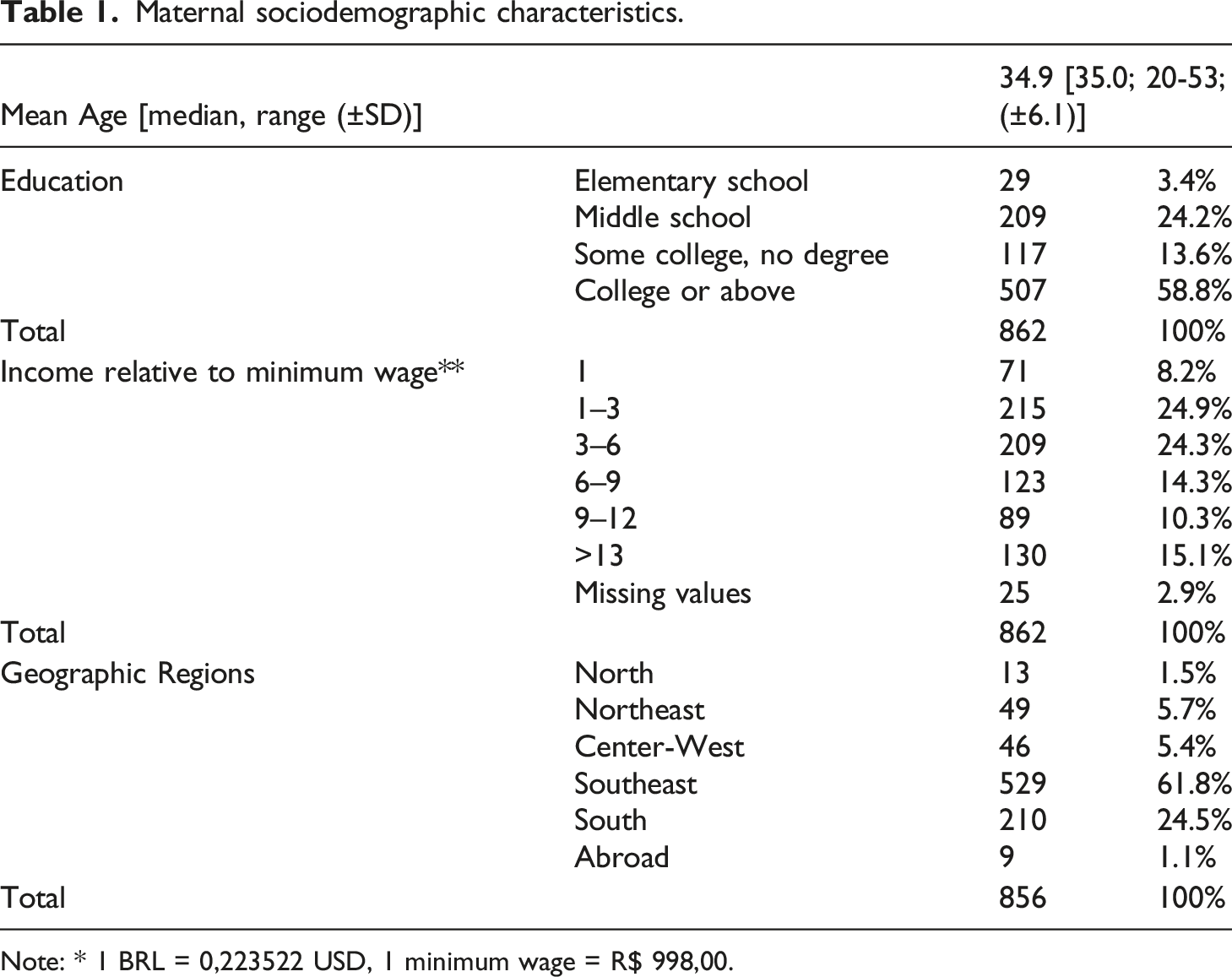
Note: * 1 BRL = 0,223522 USD, 1 minimum wage = R$ 998,00.
Twin’s pairs characteristics.
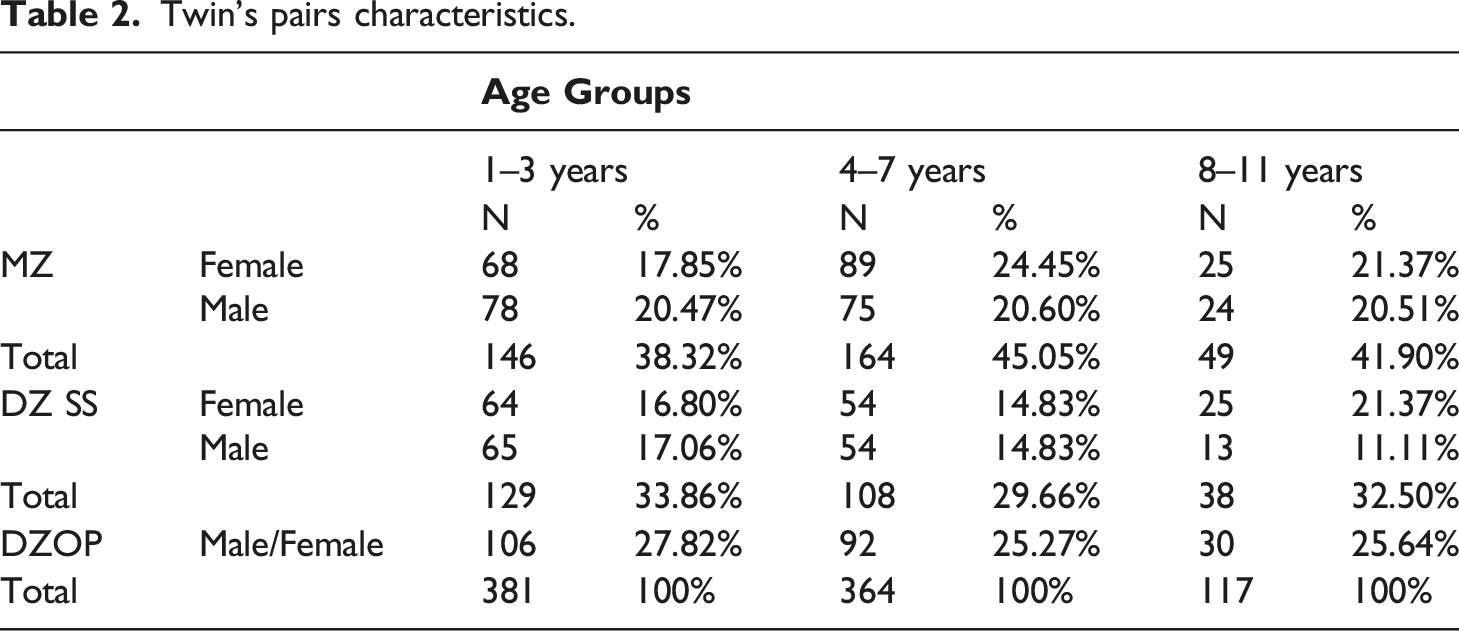
Measures
Zygosity questionnaire
To assess Twins’ zygosity we used Christiansen et al. (2003) questionnaire, which has been used in the zygosity assessment of the Danish Twin Registry for more than half a century with 96% accuracy. The questionnaire includes 4 items. The questionnaire was translated into Brazilian Portuguese and adapted to be answered by parents (Supplementary Appendix 1).
Twin relationship questionnaire
The original English version of the 22-item Twin Relationship Questionnaire (TRQ) developed by Fortuna et al. (2010) was translated into Brazilian Portuguese (see Supplementary Appendix 2) and back-translated into English by bilingual professionals. The back-translation was examined by the authors who developed the original scale. After their approval, mothers of twins were invited to answer the TRQ. Mothers rated the degree to which each item described each of their twins, using a 5-point Likert scale ranging from 1 = not characteristic at all to 5 = very characteristic. The original version showed validity evidence for a five-factor structure across a broad range of ages during childhood (H. Segal & Knafo-Noam, 2019):
Procedure
Respondents answered the Brazilian online version of the questionnaire available on the Painel USP de Gêmeos website 1 . This study had the approval of the Research Ethics Committee of the Institute of Psychology of the University of São Paulo (CAAE: 79708517.8.0000.5561).
Data analysis
We performed data cleaning procedures with Excel. Initially, the dataset contained 917 mothers who answered the questionnaire for both of their children, but 55 of them were dropped because their children were classified as unknown zygosity on Christiansen’s Questionnaire. The final sample consisted of 862 respondent mothers (1724 individual twins children).
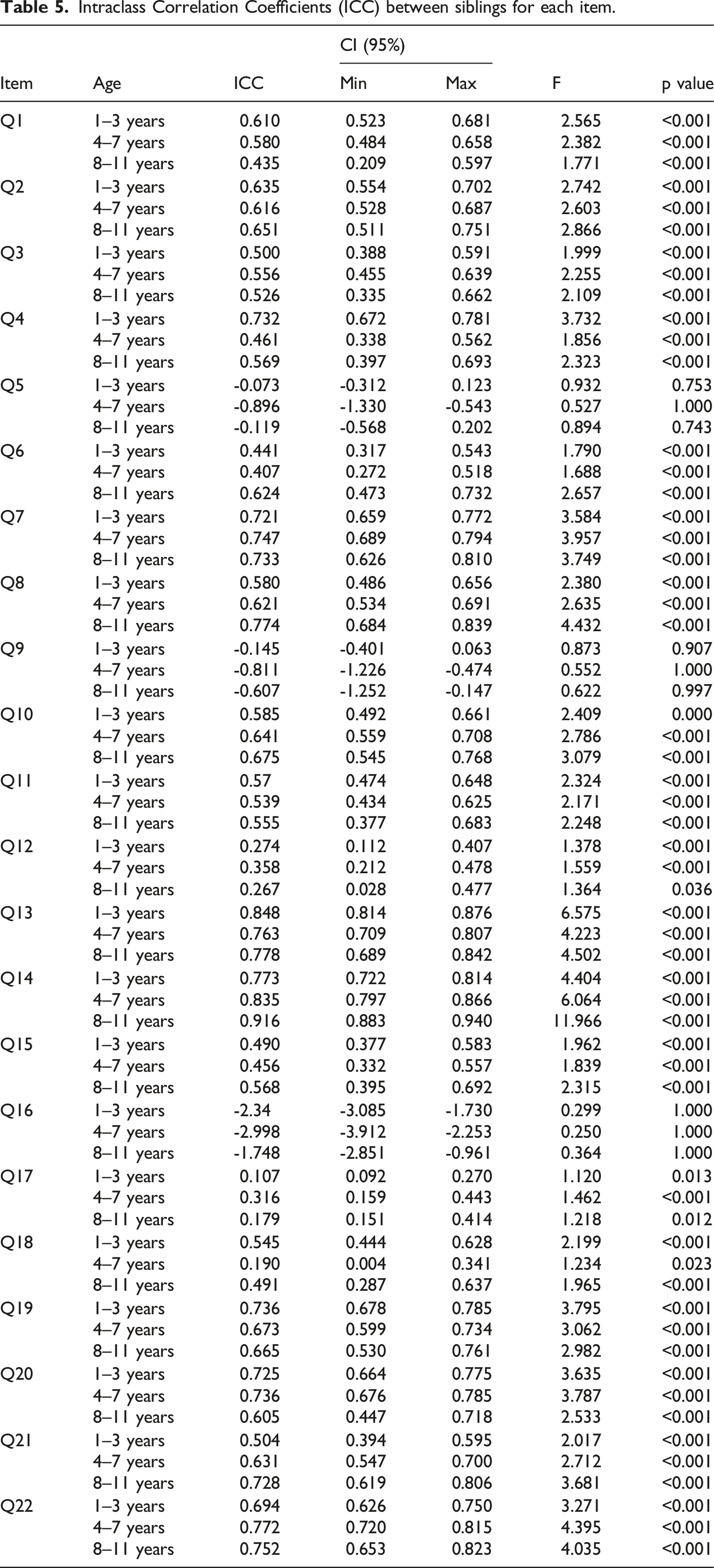
Considering that we could have some covariance in our sample due to the fact that the participants answered the questionnaire for both twins, we conducted Multilevel Confirmatory Factor Analyses (MCFA) as suggested by Kyriazos (2019) having the responding mothers as a second level variable. Initially we carried out separate models for each age group. Once we found the same structure for all of them, we conducted a final model using the whole sample. Models’ fit were evaluated with Tucker–Lewis Index (TLI), Comparative Fit Index (CFI), Standardized Root-Mean-Square Residual (SRMR), and Root-Mean-Square Error of Approximation (RMSEA). TLI and CFI values of ≥.95 indicate perfect fit (Marsh et al., 2006). SRMR and RMSEA values of ≤.08 indicate an acceptable model fit (Brown, 2006; Harrington, 2008). Intraclass correlation index (ICC) was used to access between-group variance. After fitting the final model, invariance tests were performed, comparing the fully constrained model to models with unconstrained intercepts and both intercepts and slopes for age groups and zygosity.
Intraclass Correlation Coefficients (ICC) between siblings.

**p<0.001
Reliability Analysis was carried out using Jamovi version 1.2.0. MCFA, LMM and RANOVA were conducted using Stata version 16 and invariance tests were performed using Mplus 8.1.
Results
Confirmatory factor analysis
Reliability Analyses.
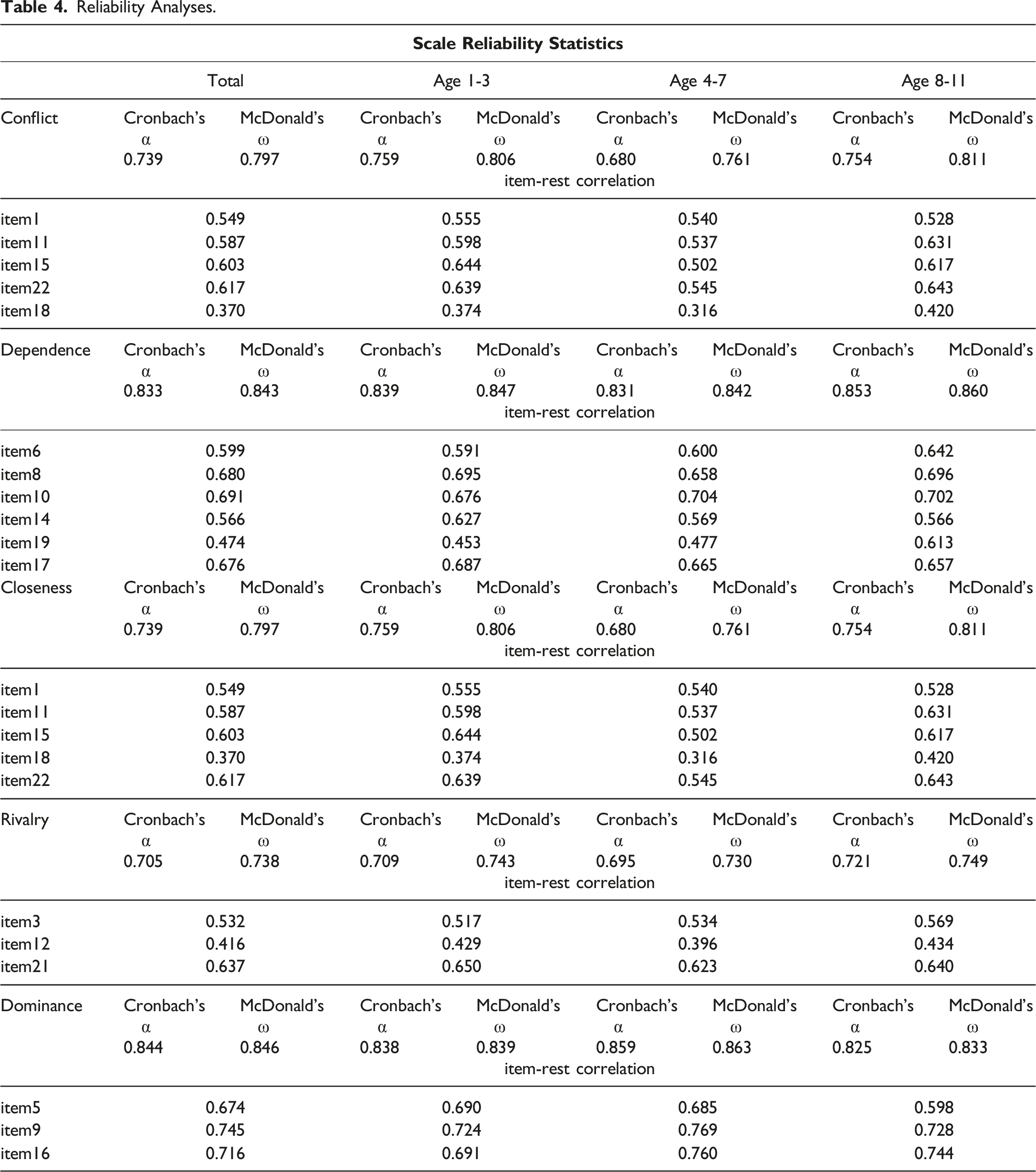
Intraclass Correlation Coefficients (ICC) between siblings for each item.
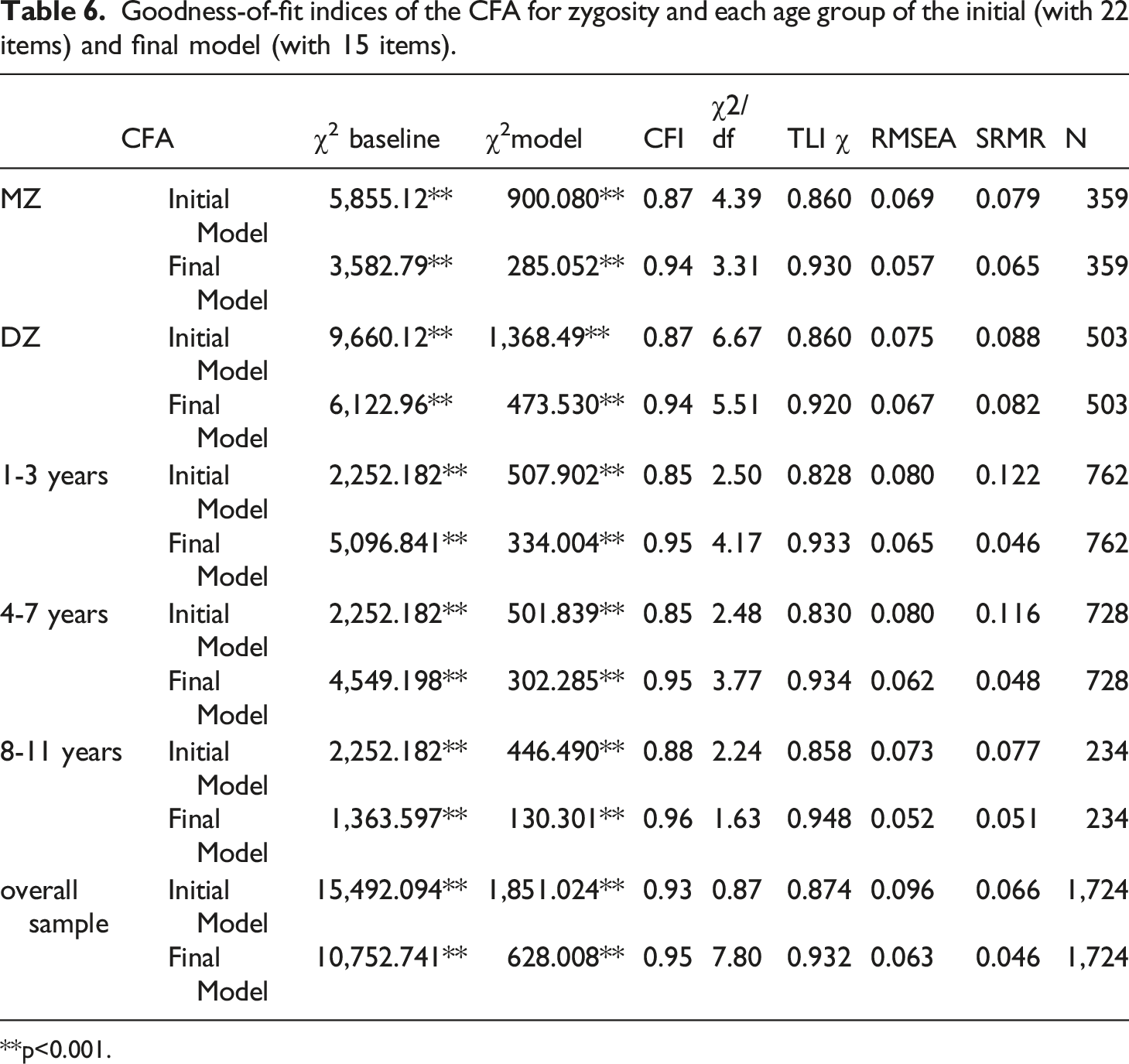
Goodness-of-fit indices of the CFA for zygosity and each age group of the initial (with 22 items) and final model (with 15 items).
**p<0.001.
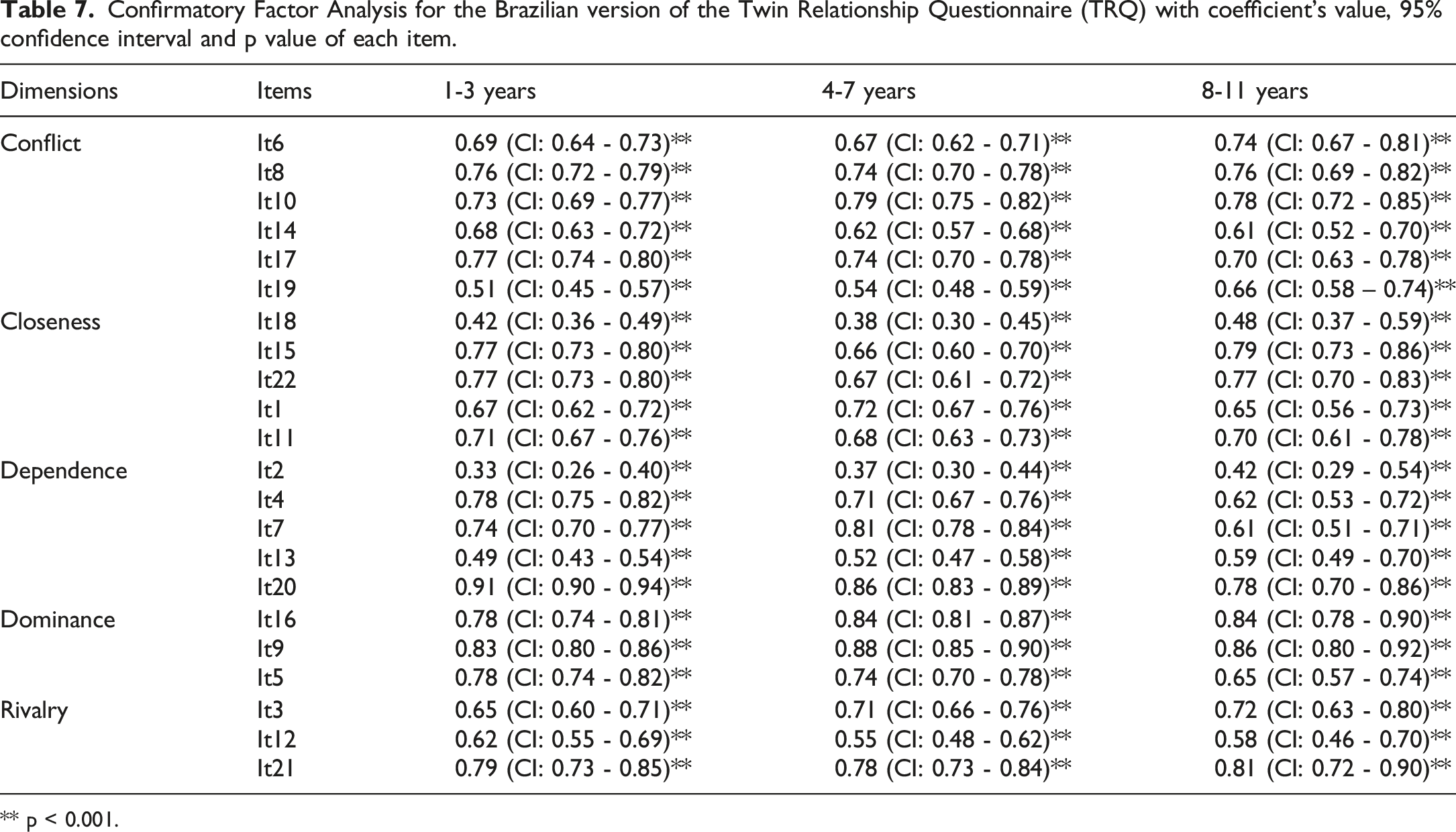
Confirmatory Factor Analysis for the Brazilian version of the Twin Relationship Questionnaire (TRQ) with coefficient’s value, 95% confidence interval and p value of each item.
** p < 0.001.
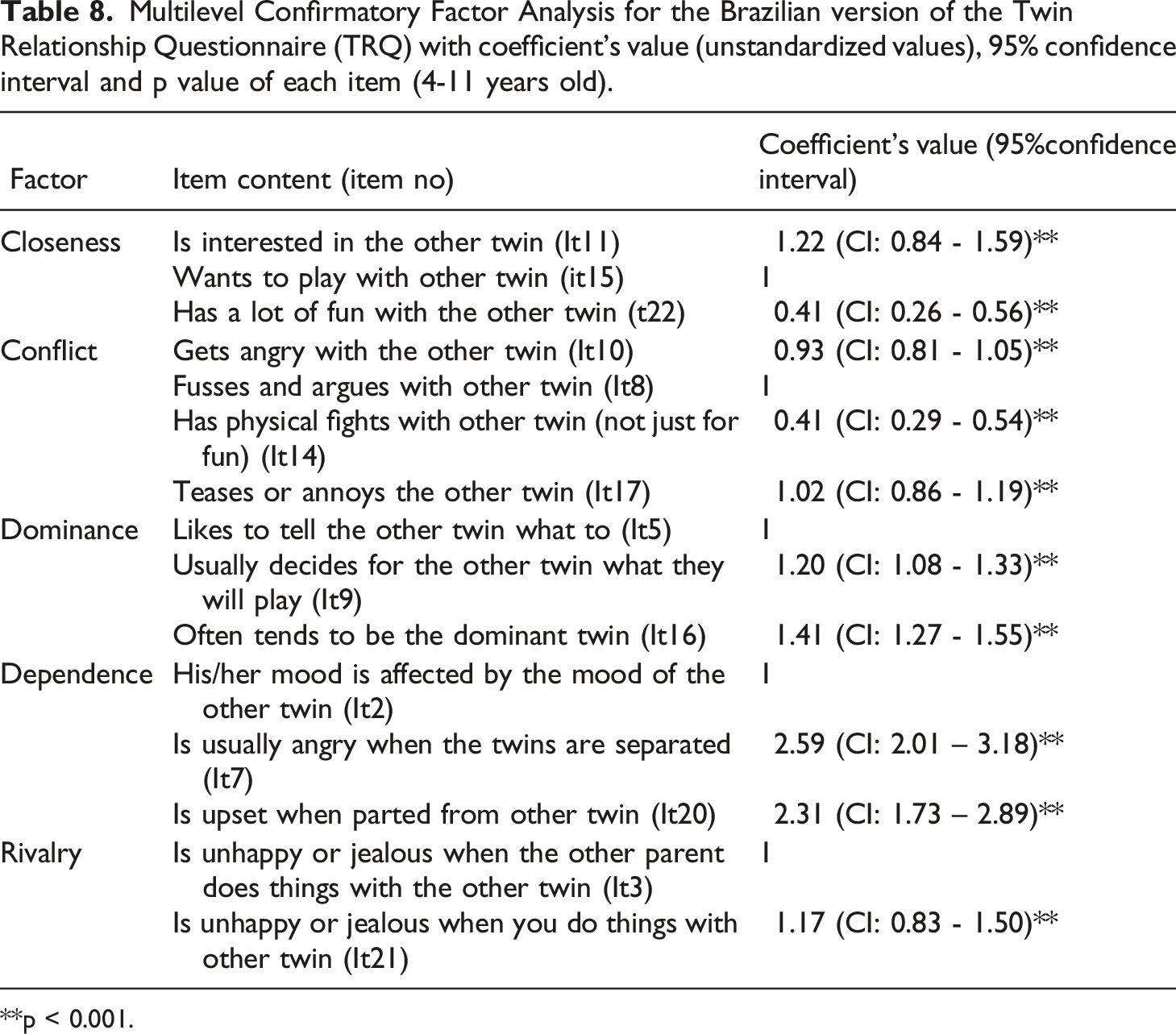
A final model with 15 items and five factors showed good fit for all age groups and zygosity (Table 6). Afterwards we tested the same model for the whole sample and found a chi-square ratio value of χ2/df = 7.8, p < 0.001, a Comparative Fit Index CFI = 0.95 and a Tucker–Lewis Index TLI = 0.93. Furthermore, both the Standardized Root Mean Square Residual (SRMR = 0.046) and the Root Mean Square Error of Approximation (RMSEA = 0.063) indicated satisfactory fit considering the criterion ≤0.08. Although the whole sample chi-square ratio value was slightly higher than suggested by the literature, we decided to keep the model, since it was acceptable for all age groups. The third step was to conduct a CFA model considering the covariation within respondents. Thus, we performed the MCFA including the whole sample as part of the questionnaire validation process.
Multilevel Confirmatory Factor Analysis for the Brazilian version of the Twin Relationship Questionnaire (TRQ) with coefficient’s value (unstandardized values), 95% confidence interval and p value of each item (4-11 years old).
**p < 0.001.
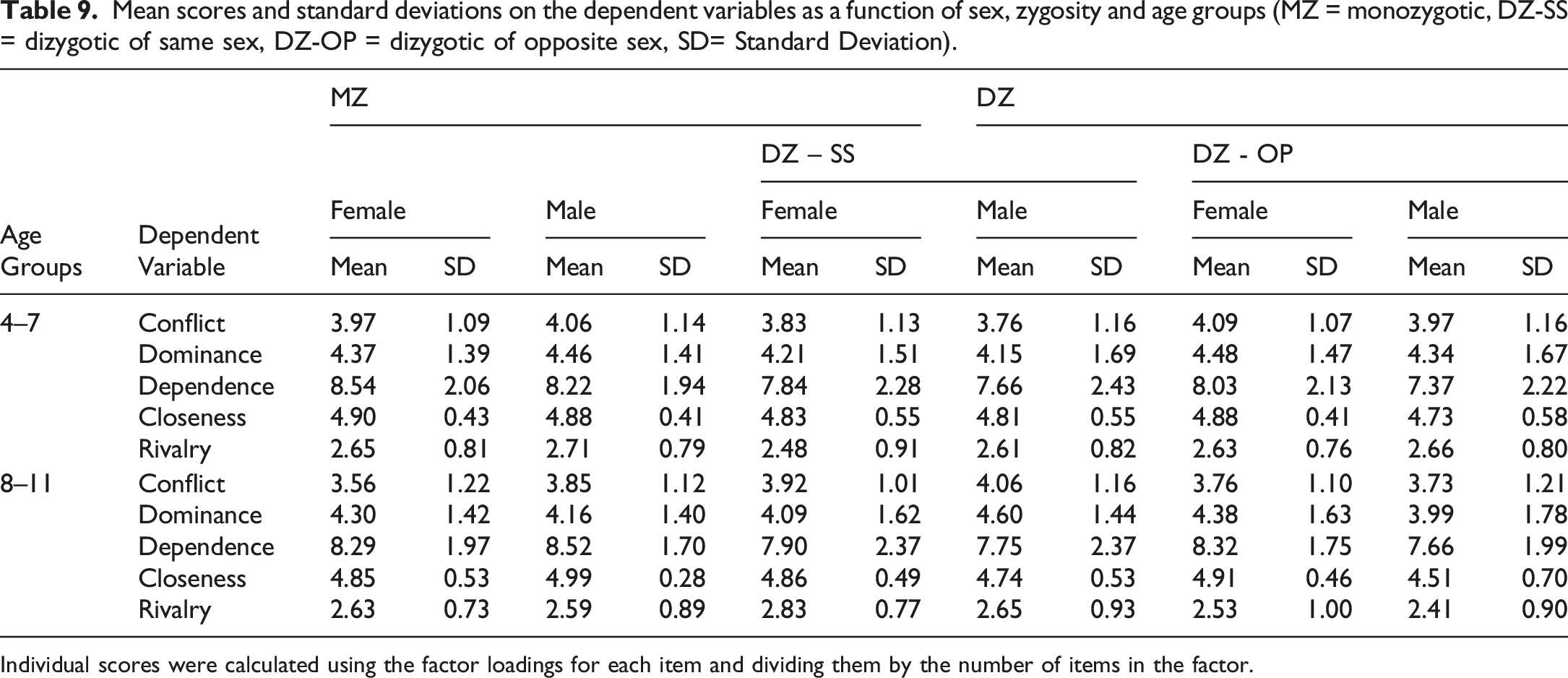
Mean scores and standard deviations on the dependent variables as a function of sex, zygosity and age groups (MZ = monozygotic, DZ-SS = dizygotic of same sex, DZ-OP = dizygotic of opposite sex, SD= Standard Deviation).
Individual scores were calculated using the factor loadings for each item and dividing them by the number of items in the factor.
Covariance between TRQ dimensions (4-11 years old).
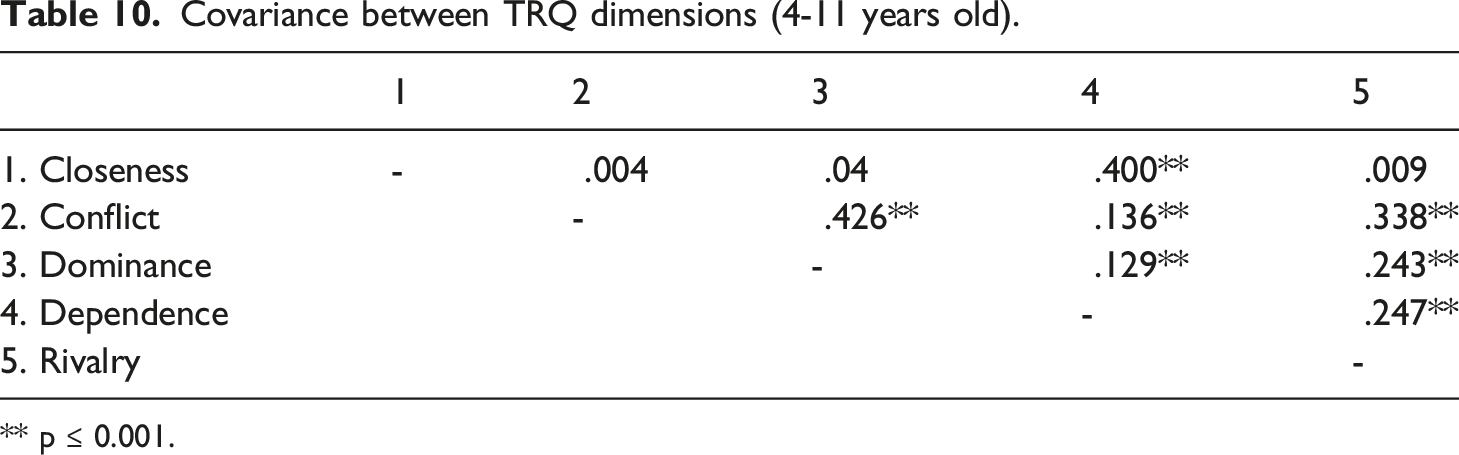
** p ≤ 0.001.
Convergent Validity - Differences of Mothers’ TRQ Responses as a function of twins Zygosity, Sex and Age
To assess convergent validity, we investigated the effect of zygosity, sex and age (4-7 and 8–11 years old) on the twins’ relationships. In the first analysis, in order not to confuse possible influences of sex-composition, we considered only MZ and DZSS for the dimensions Dependence, Closeness, Conflict and Rivalry. The LMM analysis of mothers’ TRQ-BR responses revealed main effect of zygosity on Dependence, t (1,713) = 2.02, p = 0.044, but not for Closeness t (1,713) = 1.53, p = 0.125, Rivalry t (1,713) = 1.10, p = 0.270 nor Conflict, t (1, 713) = 1.62, p = 0.106. According to mothers’ perception, MZ twins were more dependent on one another than DZSS, β = 0.27 (CI: 0.006–0.532).
A main effect of sex was found for conflict t (1, 713) = 2.60, p = 0.010. Male twins were considered by their mothers more conflictual than female twins, β = 0.36 (CI: 0.09 - 0.64). There was no main effect for age groups neither two or three-way interaction effects for any of the dimensions.
Although we have not analyzed dominance in terms of zygosity for the reasons previously explained, we decided to analyze only the DZOP to verify if girls were dominant in relation to their brothers using repeated measures ANOVA. As expected, our results revealed that girls were considered more dominant than boys by their mothers, F (1,120) = 63.845, p < 0.001, Cohen`s d = 0.768. No two-way interaction effect sex x age was found.
The scores from monozygotic twins exhibited greater covariance in all dimensions, with the exception of dominance, revealing that they were considered more similar in the evaluated characteristics by their mothers than dizygotic twins. The percentage of the variance explained by MZ covariances were 67.5% for closeness, 61% for dependence, 38.3% for conflict, and 50.8% for rivalry. For DZ, the percentages of variances were 37.1%, 42%, 26.4% and 49.3% respectively.
Discussion
The Brazilian Portuguese version of the Twin Relationship Questionnaire (TRQ-BR) is an easy-to-administer and psychometrically acceptable tool. In the present study, assumption checks revealed sampling adequacy, and the existence of patterned relationships between the items supporting the factorability of the correlation matrix. TRQ-BR had good reliability as assessed by Cronbach’s alpha, and McDonald’s omega coefficients, and item-rest correlations.
Confirmatory Factor Analysis revealed that TRQ-BR is a multidimensional instrument with a five-factor structure assessing different but related domains of twin relationships. The same structure originally found by H. Segal and Knafo-Noam (2019) was confirmed by our Confirmatory Factor Analysis: closeness, dependence, conflict, dominance, and rivalry. Considering the Goodness of fit indices, 15 items were chosen to represent these 5 factors in the Brazilian Portuguese version. Factors were easily interpretable and items showed a clear pattern of primary loadings on one factor, demonstrating face validity. This short version with 15 items, allows the identification of the relationship between twins being less time demanding for the mothers with similar accuracy in comparison with the original questionnaire.
Many factors may explain this difference in the number of items compared to the original instrument. Firstly, different analyses were performed. In this study, a Multilevel Confirmatory Factor Analysis was conducted, taking into account the dependency of the responses, since mothers answered the same questionnaire for both children, while in the original validation study they divided the sample by two and performed a one level PCA and CFA model (H.Segal & Knafo-Noam, 2019). In the current study, we decided to keep the best fit of the instrument's parameters, and exclude the items with low fit. Secondly, considering dropped items, four were similar to other items of the same factor (e.g. items 04 and 20). Furthermore, other issues may have interfered, such as cultural specificities and question comprehension. One example is item 18 - “usually understands the other twin in the best possible way”. Many mothers complained about it, reporting that the answer depended on the context. They also pointed out that it was a difficult question to answer because they couldn't understand what the 'best possible way' meant.
As in the study of H. Segal and Knafo-Noam (2019), our results revealed two aspects of the relationship between the twins: one based on positive dimensions (composed by closeness and dependence) and other based on negative characteristics (conflict, rivalry and dominance). We found that conflict-dominance, closeness-dependence and conflict-rivalry were the most intercorrelated factors. There were also some significant correlations between positive and negative dimensions, however they had low values and, given our large sample size, it may not have practical implications (Udovičić et al., 2007).
Despite showing good fitness and the same factors structure for all age groups, our study did not show invariance of the instrument including the youngest age group in the analysis. It is notable that the original instrument was validated with the age range of 3–9 years and we extended the age range by including younger (1–3 years) and older children (8–11 years). Our results indicate that this instrument can be used in all age groups studied, but we suggest caution if the aim is to compare children aged 1–3 years with older children, even though the factorial loadings were very similar when different models were used for each age group. Considering the developmental changes that occur during childhood and adolescence, it is expected that the relationship is also sensitive to the different developmental stages.
Differences across twins as a function of zygosity, sex, and age in mothers’ TRQ-BR responses were examined in the present study to provide evidence of convergent validity of the instrument. Our results were in the same general direction of what is well established in the scientific literature (e.g. N. Segal et al., 1995, 1996; Landenberger et al., 2021). As Fortuna et al. (2010) we found that monozygotic twins were perceived more co-twin dependent than dizygotic twins. These results can be explained by the Kin Selection Theory (Hamilton, 1964) and by the similarity of psychological traits that contribute to a more intense attachment bond between MZ twins (Landenberger et al., 2021; Tancredy & Fraley, 2006). Contrary to our initial hypothesis, there was no effect of zygosity on closeness. This could be explained by a ceiling effect, given that mothers of MZ and DZ evaluated their children as being very close: 68.3% of the MZs (69.5% females and 66.8% males) and 60.4% (67.3% females and 53.3% males) of the DZs were evaluated with a maximum score. The MZ twins dyads showed greater covariance for closeness, dependence, rivalry and conflict than the DZ twins dyads. This result was expected since MZ share virtually 100% of their genes and therefore tend to be more similar in most temperamental and behavioral characteristics (Buss et al., 1973; Scott et al., 2016).
Considering same sex dyads, we found that boys were considered more conflictual than girls, regardless of their zygosity. We expected that girls would also be more dependent than boys, but this did not occur. It might be that the greater dependency in girls’ dyads, that was found in previous study, is evident only at older ages as the twins reach adolescence (Penninkilampi-Kerola et al., 2005). Contrary to expectations, no effect of sex on closeness was found. Fortuna et al. (2010) found this effect only by analyzing a sample of DZ twins. It is notable that we had high scores for this dimension in the samples of both genders, perhaps again revealing a ceiling effect. Our results regarding dominance in DZOP corroborate the Ebeling et al. (2003) findings. The researchers found that girls were more dominant than boys in the psychological and verbal domains, before and during the school age.
Regarding age, our initial hypothesis was that children in the younger age group would be considered by their mothers to be less close compared to the older age groups. This hypothesis was not tested, because invariance could not be sustained if younger children were included.
Limitations and further research
In their study, H. Segal and Knafo-Noam (2019) had recommended building a new version of the questionnaire for adolescents and young adults who no longer live together. Our invariance test results revealed the importance of adapting the questionnaire for the younger age group as well. Besides that, further studies should be conducted to verify the influence of different developmental stages on the relationship between twins.
Our original intention was to invite both mothers and fathers of twins to answer TRQ-BR, as was done by H. Segal and Knafo-Noam (2019). In spite of the help we had from twin parents' associations in publicizing our research, twins’ fathers participation was much lower than that of mothers, and they had to be excluded from the final analysis. However, we had solid evidence for the psychometric parameters of the TRQ-BR and we also found convergent validity of the questionnaire even though we only got responses from mothers. In addition, it is notable that H. Segal and Knafo (2019) tested the TRQ with both mothers and fathers and found substantial inter-rater correlations between mothers’ and fathers’ reports. Further research could explore fathers’ perception, and also the perception of other people who are close to the twins such as grandparents and teachers. Additionally, a questionnaire specifically designed to be answered by the twins themselves could be useful to study the association between twins and parents' reports.
Our sample had high socio-economic status, therefore, some socio-demographic subpopulations, such as individuals with fundamental education, were underrepresented among respondents. It would also be interesting to include experimental tasks to study the external validity of the TRQ-BR. In that way, it would be possible to verify the correlation between the dimensions of the TRQ-BR and observed behaviors (concurrent validity).
We had no information on the respondents' ethnicity, gender identity, sexual orientation, disability, or whether or not the mothers planned their pregnancies. We consider this lack of information to be a limitation of our study and these issues should be an area for future research.
Conclusion
The Brazilian version of the Twin Relationship Questionnaire (TRQ-BR) is a psychometrically acceptable tool, with adequate internal consistencies and item-total correlations. Most of our hypotheses were corroborated, showing that our questionnaire is able to access twin relationship characteristics that are already well established in the literature, indicating the convergent validity of the TRQ-BR. Furthermore, a validated instrument for the Brazilian population allows intercultural comparison of the relationship between twins, encouraging the research on the subject in Brazil. This questionnaire promises to be a useful instrument for research purposes and applied practices like counseling and educational interventions. We hope that using the TRQ-BR in Brazil could help numerous families, researchers and other professionals to better understand twinship and the specificities of their relationship.
Supplemental material
Supplemental material - Brazilian portuguese version of twin relationship questionnaire (TRQ-BR): Evidence of validity evidence of validity
Supplementary material for Brazilian portuguese version of twin relationship questionnaire (TRQ-BR): Evidence of validity evidence of validity by Isabella F Ferreira, Tania K Lucci, Vinicius F David, Paula C Araújo Short, Ana C Crispim, Thais Reali, Elisa S Marty, Vanessa R Andréia Grinberg, Nancy L Segal, Hila Segal, Ariel Knafo-Noam, Emma Otta in Journal of Social and Personal Relationships
Supplemental material
Supplemental material - Brazilian portuguese version of twin relationship questionnaire (TRQ-BR): Evidence of validity evidence of validity
Supplementary material for Brazilian portuguese version of twin relationship questionnaire (TRQ-BR): Evidence of validity evidence of validity by Isabella F Ferreira, Tania K Lucci, Vinicius F David, Paula C Araújo Short, Ana C Crispim, Thais Reali, Elisa S Marty, Vanessa R Andréia Grinberg, Nancy L Segal, Hila Segal, Ariel Knafo-Noam, Emma Otta in Journal of Social and Personal Relationships
Footnotes
Declaration of conflicting interests
The author(s) declared no potential conflicts of interest with respect to the research, authorship, and/or publication of this article.
Funding
The author(s) disclosed receipt of the following financial support for the research, authorship, and/or publication of this article: This study is supported by #2014/50282-5 and #2018/01347-8 from the São Paulo Research Foundation (FAPESP) and Natura Cosméticos S.A.; and #304740/2017-9, #130698/2018-0 and #165748/2017-6 from the Brazilian National Research Council (CNPq). We are grateful to all respondents, including the Confraria de Mães de Gêmeos in Rio Grande do Sul (Brazil) for their collaboration, especially in the data collection stage of the research.
Open research statement
As part of IARR's encouragement of open research practices, the authors have provided the following information: This research was not pre-registered. The data used in the research are available. The data can be obtained by emailing: isabella.ferreira@usp.br The materials used in the research are not available.

Supplemental Material
Supplemental material for this article is available online.
Note
References
Supplementary Material
Please find the following supplemental material available below.
For Open Access articles published under a Creative Commons License, all supplemental material carries the same license as the article it is associated with.
For non-Open Access articles published, all supplemental material carries a non-exclusive license, and permission requests for re-use of supplemental material or any part of supplemental material shall be sent directly to the copyright owner as specified in the copyright notice associated with the article.
