







Abstract
The current study examined the associations between narrative coherence, the 5Cs of positive youth development, and cultural self-construals among 91 Turkish emerging adults (48 females, 42 males, and 1 other) aged between 18 and 29 (Mage = 23.01, SD = .52). Emerging adults partook in a life story interview to share three important narratives involving parental interactions that were assessed for causal and thematic coherence. Participants also self-reported on their positive development (competence, confidence, character, caring, and connection) and cultural self-construals (autonomy, relatedness, and autonomy relatedness). Results of path analysis revealed that high causal coherence in narratives was associated with lower levels of competence, confidence, and connection, whereas high thematic coherence was linked to higher levels of competence, confidence, and connection. Further, we examined the role of cultural self-construals in moderating the link between narrative coherence and the 5Cs. Thematic coherence was related to decreased caring when autonomy was high and relatedness was low. Thematic coherence was also related to increased connection only when autonomy was low and relatedness was high. Moreover, causal coherence was related to decreased caring and connection for emerging adults with highly autonomous self-construals. Similarly, causal coherence was associated with lower levels of confidence for emerging adults with high autonomous-related self-construals. Implications for research with Turkish emerging adults are discussed.
Keywords
Introduction
Previous research and theoretical frameworks have implicated emerging adulthood as a critical period for developing a coherent narrative identity (McAdams, 2001). Much work has indicated that having a coherent narrative identity is associated with overall well-being across emerging adulthood (Adler et al., 2016; Waters & Fivush, 2015). During this time emerging adults are also tasked with developing a set of core competencies central to positive development (the 5Cs; Lerner et al., 2013). Despite burgeoning evidence documenting the importance of both narrative coherence and positive youth development during the transition from adolescence to young adulthood, the association between narrative coherence and the 5Cs of positive youth development has yet to be investigated. The current study aims to extend previous literature on narrative identity by examining the link between causal and thematic coherence in family-oriented self-narratives and positive youth development among Turkish emerging adults.
Further, extensive work on narrative identity has stressed the profound role of person-culture fit in shaping both narrative identity and positive development (McAdams & Pals, 2006). Prior studies suggest, for example, that the interplay between narrative identity and cultural embeddedness better predicts positive development than each predictor alone (Wang, 2021). However, most research to date has focused on narrative identity through Western and bicultural samples (e.g., Chinese Americans) residing in Western countries, or examined cross-cultural similarities and differences in narrative identity. Few studies have considered variability in cultural self-construals on the development of narrative identity (Wang, 2021) and the importance of the self-culture fit for positive development within a single culture (McLean & Syed, 2016). Thus, the current study extends prior research by examining the moderating effects of three cultural self-construals—i.e., autonomous-self, related-self, and autonomous-related-self—on the link between narrative coherence and positive youth development in the Turkish cultural context, where cultural influences contain both collectivistic and individualistic components regarding family relations (Kağıtçıbaşı, 2017).
Narrative Identity in Emerging Adulthood
According to Erikson’s (1968) theory of psychosocial development, a coherent sense of self emerges in adolescence, with further exploration continuing into early adulthood. In many parts of the world, young adults make important life choices (e.g., choosing academic tracks, professional trajectories, and romantic partners) that have profound consequences for their future (Arnett, 2000; van Doeselaar et al., 2020). As individuals make choices and commit themselves to certain roles, they increasingly engage in defining and re-defining who they are vis-à-vis their past and future. The narrative identity framework helps to elucidate identity development during this timeframe, by positing that identities are constructed and re-defined in part through personal narratives and life stories (e.g., Habermas & Bluck, 2000; McAdams, 2001; Wang et al., 2017).
A narrative identity is constructed within a life story, consisting of a set of episodic personal narratives, which provide a coherent and meaningful perspective on one’s past, present, and imagined selves (McAdams & McLean, 2013). Adolescents begin to narrate an integrative and coherent self-defining story that answers the fundamental identity exploration questions “Who am I?” and “What do I want out of life?” (Pasupathi & Wainryb, 2010). With the development of autobiographical reasoning—the ability to draw logical connections between past- and current-selves—narrative identity continues to evolve in emerging adulthood as individuals organize self-defining memories in more complex ways with causal connections and thematic unity bounded in familial and cultural expectations (Grysman & Hudson, 2010; Habermas & Bluck, 2000).
Studies show that narrative coherence, which gives unity and meaning to one’s personal narrative, is an essential characteristic of a life story. Coherence involves temporal and logical connections between causes and consequences of personal life experiences and inferences about one’s own self across these events. Although narrative coherence has been studied in many ways (see Reese et al., 2011), researchers have identified three critical indices of coherence (Bluck & Habermas, 2001; Habermas & de Silveira, 2008). Temporal coherence refers to the ability to order the chronology of events, which is acquired at about age 10 (e.g., Bluck & Habermas, 2001; Grysman & Hudson, 2010). In contrast, both causal and thematic coherence arise with the maturation of autobiographical reasoning across late adolescence and emerging adulthood. Causal coherence refers to drawing logical connections between causes and consequences of an experience and how it impacts personality, attitude, or modes of behavior (i.e., “Things were never the same […] me, an outgoing and cheerful girl beforehand became withdrawn and so angry”) (Habermas & de Silveira, 2008). Thematic coherence also explains change in personality but with an emphasis on the impact of this change across different contexts and social interactions (i.e., “I was angry at my mum […] mad at my then-boyfriend […] and withdrew from everything, school, friends, and hobbies”). Starting in late adolescence, individuals use these indices to define a coherent perspective on life by making consequential and thematic connections between past and current selves in their narratives (Bluck & Habermas, 2001).
Narrative Coherence and Well-being
Higher levels of narrative coherence may index identity synthesis, which Erikson defined as the healthy resolution of identity crisis (McLean & Pasupathi, 2012). The extent of coherence in life narratives shows variation among individuals and is linked with psychological well-being in the form of social competence and connection to others (McLean & Lilgendahl, 2019; Padilla-Walker & Nelson, 2017). The narrative coherence produced in autobiographical reasoning reflects a cognitive skill involved in ongoing integration and synthesis of identity, while positive youth development indicators operationalize the social competencies that individuals develop as they interact with their environment. Despite these substantial conceptual similarities, the link between these two indicators of healthy identity development (i.e., identity synthesis and social competence) framed in two lines of research, has not yet been examined.
Previous research has shown a positive association between narrative coherence and both psychological well-being and overall life satisfaction across late adolescence and emerging adulthood. For example, Reese and colleagues (2017) found that high levels of causal connection in older adolescent narratives (18- to 21-year-olds) were linked to overall well-being measured by composite scores of self-esteem, life satisfaction, and lower depression. In a longitudinal study with emerging adults (17- to 22-years-olds), high coherence in narratives was related to greater emotional well-being 2 years later during the COVID-19 pandemic (Vanaken et al., 2022). In another study with US college students (18- to 28-year-olds), Waters and Fivush (2015) found that narrative coherence was associated with positive self-view, purpose and meaning in life, and positive social relationships.
Numerous empirical studies provide support for the idea that narrative coherence develops in the context of family relationships. For example, Dumas and colleagues (2009) documented a link between positive parenting in adolescence and greater narrative coherence in emerging adulthood. A recent longitudinal study found positive parental relationships together with a high parental presence in narratives predicted more coherent positive resolution in emerging adults’ life stories (Camia et al., 2021). Moreover, consistent with previous findings on gender differences in narrative identity (e.g., Grysman et al., 2016), females narrated more complex stories including multiple perspectives and elaborated emotional expressions compared to male stories (Camia et al., 2021). These studies support the notion that narrative coherence in particular may in part develop as a function of parenting and other aspects of the family environment. Thus, the current study examined emerging adults’ narratives in familial contexts (e.g., father- and mother-child relationships) and their association with the developmental indices defined by the positive youth development perspective (Lerner et al., 2013).
Five Cs Model of Positive Youth Development
The Positive Youth Development perspective (PYD) is an asset-based approach that identifies critical competencies for young people to become healthy, happy, and productive individuals who effectively function in their social environments (Benson et al., 2006; Lerner et al., 2013). PYD suggests bidirectional and dynamic associations between individual-level competencies of youth and broader level contexts (family, culture), whereby such interplay affects the well-being of youth (Lerner et al., 2013). Recent research adopting the PYD perspective has documented the importance of contexts (parental support and empowerment, open and flexible boundaries in the family system) in developing positive identity (Dost-Gözkan et al., 2021; Kaniušonytė & Žukauskienė, 2018), purpose in life and wellbeing (Abdul Kadir & Mohd, 2021; Kaur et al., 2019), and psychological adjustment such as lower levels of anxiety and depression (Holsen et al., 2017; Kozina et al., 2021).
Although there are several conceptualizations of positive youth development, Lerner and colleagues’ 5Cs Model of PYD (2013) has been the most studied and defines five critical competencies for young people to possess: competence, confidence, character, connection, and caring. Competence implies one’s positive view of their actions and decisions in specific domains, including academic success, interpersonal skills, and career choices, whereas confidence refers to one’s overall self-efficacy and positive sense of self. Character defines one’s morality and social and cultural belongingness. Connection entails positive emotional bonds with significant figures and social groups whereas caring describes a sense of empathy and sympathy for those significant figures or others in a proximal environment.
These individual competencies are particularly critical for emerging adults who need to make important decisions about their life during a period filled with possibilities, as well as deal with multiple uncertainties associated with young adulthood (Arnett, 2000; Padilla-Walker & Nelson, 2017). For example, Abdul Kadir and Mohd (2021) documented the mediating role of a) purpose in life and b) hope in the association between two of the Cs (confidence and connection) and well-being among Malaysian college students. In their longitudinal study with emerging adults, Kaniušonytė and Žukauskienė (2018) showed that autonomy-supportive mothering positively influenced informational identity processes that in turn predicted their higher contribution to self, family, and community. Moreover, girls showed higher levels of contribution to family compared to boys (Kaniušonytė & Žukauskienė, 2018). Collectively, these studies underscore a) the potential benefits of the 5Cs for subsequent well-being, and b) the importance of the family context for understanding identity development and overall well-being during emerging adulthood.
Moderating Role of Cultural Self Construals
Wang’s (2021) cultural dynamic model of memory and narrative self-making proposes that narrative identity is profoundly impacted by cultural elements. Children acquire cultural beliefs and expectations through everyday social interactions from an early age; these beliefs and expectations are then internalized and transmitted to both memory and narrative self (e.g., McAdams & Pals, 2006; Wang et al., 2017). Further, previous investigations have demonstrated the importance of culture/self fit in explaining overall positive development (McLean et al., 2018). For example, several cross-cultural studies have documented that people from individualistic cultures recalled their narratives from a more autonomous perspective that was focused predominantly on their own roles and self-preferences in the story. In contrast, people from collectivistic cultures recalled more group-oriented niches for themselves such as social roles and context-specific characteristics (e.g., Wang et al., 2018).
In a study investigating the moderating role of culture, Wang and colleagues (2018) reported that emerging adults showed maladaptive stress-related coping skills when they recalled fewer details of a personal event in the US (where recalled personal memories are valued) but no such association in China (where recalled personal memory details are less valued). In another study including adolescents from three cultural groups in New Zealand (Chinese, Māori, and European), Chen and colleagues (2021) showed the moderating role of culture in the association between father- and mother-related intergenerational narratives and adolescents’ self-esteem and depressive symptoms. Overall, those who had a coherent narrative identity that is aligned with cultural expectations demonstrated better psychological adjustment, well-being, and overall life satisfaction (Chen et al., 2021). Although these studies have documented interactions between culture and narrative identity in explaining positive development, it is not yet clear whether cultural variation within a single culture may moderate relations between narrative coherence and positive youth development. Thus, the current study considered the moderating role of three cultural self-construals (autonomous self, relatedness self, and autonomous-relatedness self) on the link between narrative identity and the 5Cs of positive youth development in Turkish culture.
Turkish Cultural Context
Theoretical perspectives on social development suggest the coexistence of autonomy and relatedness as universal and innate psychological needs (e.g., Self-Determination Theory; Ryan & Deci, 2017) that play a complementary role for positive development from an early age. Although either autonomy or relatedness is prioritized to a greater extent in different societies, all individuals manifest these two self-construals that impact identity and positive development (Kağıtçıbaşı, 2017). Thus, understanding the interplay between autonomy and relatedness is important for elucidating the ways in which young adults make meaning through significant life events.
The Turkish cultural context is particularly well-suited to examine this issue, given cultural influences that contain both collectivistic and individualistic components in family relations (Kağıtçıbaşı, 2017). With a global shift from interdependence to independence in traditionally collectivistic societies (of which Turkey is one) comes the coexistence of both autonomy and relatedness in these societies. Kağıtçıbaşı’s (2017) extensive work with the Turkish population has shown that families have undergone radical socio-cultural changes due to rapid urbanization and industrialization. Those changes have profoundly influenced caregiving attitudes in urban resident Turkish families, where parents have adopted more autonomy-fostering child-rearing practices compared to traditional parenting practices in Turkey that were historically more collectivistic. Kağıtçıbaşı and colleagues (2006) found that autonomy became highly valued in Turkish parenting practices as early as the 1970s to adapt to a changing urban society; at the same time, close emotional interdependence and high parental control in the family were still highly valued. That is, many Turkish parents encouraged their children to be autonomous and self-reliant as well as closely connected and loyal to the family (Dost-Gözkan, 2022; Kağıtçıbaşı, 2017; Sumer et al., 2021).
Similarly, other Turkish studies have found that educated, urban resident, Turkish emerging adults displayed both autonomy and connectedness in various contexts, whereas neither of these self-construals was strongly prioritized over the other (Ayçiçeği-Dinn & Sunar, 2017). Although most work on cultural self-construals has taken place in prototypically individualistic (i.e., United States) or collectivistic (i.e., China) countries, Turkey’s geographical placement at the intersection of Europe and Asia means that Turkish youth and families are particularly likely to be exposed to both individualistic and collectivistic ideals and values (Kağıtçıbaşı, 2017). Moreso than in other countries, elucidating the role of both autonomy and relatedness in narrative identity, positive youth development, and the connection between them is critical for understanding the positive development of Turkish emerging adults.
The Current Study
The current study examined associations among narrative identity, the 5Cs of positive youth development, and cultural self-construals among Turkish emerging adults. Although some previous research has shown the impact of culture both on narrative coherence and positive development (Wang et al., 2017), it is not yet clear whether these cultural elements may moderate the link between narrative coherence and positive youth development within the Turkish culture.
The current study extends the extant literature in several important ways. First, by moving beyond global assessments of well-being to consider associations between aspects of narrative coherence and the five dimensions of positive youth development. Second, by considering cultural self-construals as a factor that may moderate associations between coherence and youth outcomes. And finally, by examining these issues within a unique population of Turkish emerging adults. As such, this work is intended to contribute to research and theory-building in the field by more fully integrating cultural context into the study of the development of narrative identity and positive youth development. In particular, the present study set out to examine the following research questions: 1) What are the relationships between a) causal and b) thematic coherence in emerging adults' significant narratives about parent-child interactions and the 5Cs of positive youth development? We hypothesized that having higher levels of causal and thematic coherence in important familial narratives would predict higher levels of the 5Cs. 2) Is the association between narrative coherence and the 5Cs moderated by cultural self-construals––autonomy, relatedness, and autonomy-relatedness? We hypothesized that the combination of high narrative coherence and high autonomy would positively predict competence and confidence, which are agency-oriented indices of positive youth development. We also hypothesized that the combination of high narrative coherence and high relatedness would predict character, connection, and caring, which are relationship-oriented indices of positive youth development. Whether the autonomous-relatedness self-construal moderated the link between narrative coherence and the 5Cs was an exploratory question.
Method
Participants
Ninety-one Turkish emerging adults aged between 18 and 29 years of age (Mage = 23.01, SD = .52) from three metropolitan cities (Ankara, Istanbul, Izmir) and a mid-sized town (Fethiye) in the Southwestern part of Turkey participated in this study. Approximately 53% of participants identified as cisgender women (N = 48), 46% as cisgender men (N = 42), and 1% answered as “other” (N = 1). Most participants were university students (N = 77, 84.6%), and only one participant who was not a college student did not have a college degree. Four of the participants were married (4.4%) and three of them were engaged (3.3%), and only one reported having a child. There was variability in participants’ living accommodations, with the majority living with at least one parent (35.2%), alone (20.9%), or in university housing with a friend (19.8%), and only 5.5% living with a romantic partner. Family of origin demographics showed that most participants’ parents were married (82.4%) and working or retired from a full-time job (96.7% of fathers, 56.1% of mothers).
Procedure
Participants were recruited through universities using snowball sampling procedures. Selection criteria included being (i) 18–29 years old and (ii) fluent in Turkish. Participants received an email with a link to the online survey that included demographic questions and survey assessments of positive youth development and cultural self-construals. After participants completed the online surveys they scheduled a face-to-face life story interview with an adult male researcher in a quiet room. All interviews were audio-recorded and transcribed verbatim. All survey materials and interviews were administered in Turkish. This study was approved by the Institutional Review Board of Ozyegin University.
Measures
Narrative Identity
Narrative identity was assessed using an adapted version of the Autobiographical Reasoning Interview (ARI; Habermas, 2004). Emerging adults' significant narratives regarding causal coherence and thematic coherence were assessed in an event story. Participants were asked to describe three significant familial events to reflect how these events impacted the person they became, and changed their attitudes, beliefs, modes of behaviors, and their current perceptions of this experience on their lives. One event involved interactions with their father, one with their mother, and one that did not consist of interactions with their father or mother (a “neutral narrative”).
A narrative prompt specific to this study and the Turkish adaptation of the ARI questions were composed by the first and second authors, who are both fluent in English and Turkish. As a warmup question, interviews began by asking participants to briefly describe their relationship with their fathers and mothers. Significant life stories were then elicited using the narrative prompt “Please think back to your life for a moment and think of an experience you had with your [father/mother/neutral] that has influenced who you are today and changed your life” and then both factual (e.g., Did the event have any impact and consequences for you personally?) and counterfactual (e.g., If the event had not happened, what would have been different in your life?) follow-up questions about each narrative were asked, as suggested in the ARI protocol. The order of the three stories in each interview was counterbalanced.
Three Rating Scales for Global Temporal, Causal-Motivational, and Thematic Coherence in Life Narratives (Habermas & Diel, 2005) were adopted to code the level of causal and thematic coherence in the narratives. Causal and thematic coherence scales have seven rating points (1 = weak coherence, 7 = highly coherent). For causal coherence, the influence of the given events on participants’ personality, attitudes, beliefs, and modes of behavior was rated. In narratives coded highly for causal coherence, the participants explicitly elaborated the strong influence of this event on their personality, attitude, or modes of behavior (i.e., “I was never the same after I had that terrible incident of my mom insulting and making fun of my romantic feelings toward a classmate”). For thematic coherence, thematic similarity and connections between individual episodes in the given story were rated. A story high on thematic coherence would consist of heterogeneous episodes from a person’s life (home, work, or school settings) that are logically connected to one another by a common theme (i.e. “That incident with my mom even made me more reserved and withdrawn in my relationships with my romantic partners, friends, and colleagues”). Because the correlations among thematic coherence in the three event domains were high (i.e., father- and mother-related narratives, r(89) = .59 p < .01; father-related and neutral narratives, r(89) = .55 p < .01; and mother-related and neutral narratives, r(89) = .59 p < .01), we computed an aggregated score for thematic coherence across all three event domains. An aggregated score for causal coherence was also computed due to moderate to high correlations across causal coherence scores in three event domains (i.e., father- and mother-related narratives, r(89) = .31 p < .01; father-related and neutral narratives, r(89) = .34 p < .01; and mother-related and neutral narratives, r(89) = .44 p < .01). These aggregated thematic and causal coherence scores were used in all subsequent analyses.
All narratives were coded by the principal investigator using the Three Rating Scales for Global Temporal, Causal-Motivational, and Thematic Coherence in Life Narratives (Habermas & Diel, 2005). One independent researcher coded 21% of the sample (N = 19) for inter-rater reliability that was assessed using a two-way mixed, absolute agreement, average-measures intra-class correlation coefficient (ICC). Reliability analysis among the two raters demonstrated high ICC for causal coherence in father-related (.99), mother-related (.98), and neutral narratives (.98). Similarly, the two raters showed high ICC for thematic coherence in father-related (.99), mother-related (.98), and neutral narratives (.99).
Positive Youth Development
The Positive Youth Development Short Form-Older Adolescence scale (PYD-SF; Geldhof et al., 2014) was used to assess emerging adults’ positive youth development characteristics according to the 5Cs model. This form was adapted to Turkish by Dost-Gözkan (2016) and used in an empirical study with similar age groups (15- to 25-years-olds, M = 18.95) by Fernandes et al. (2021). The PYD-SF form consists of 34 items that assess emerging adults’ competence (6 items; e.g., “I have a lot of friends”), confidence (6 items; e.g., “On the whole, I like myself”), character (8 items; e.g., “Telling the truth, even when it is not easy”), caring (6 items; e.g., “It bothers me when the bad things happen to good people”), and connection (8 items; “I get along with my parents”). Emerging adults rated their positive development along these dimensions on a 5-point Likert scale (1 = never, 5 = always). The Cronbach’s alpha coefficients were acceptable for all: competence (.71), confidence (.85), character (.65), caring (.84), and connection (.77).
Cultural Self-Construals
The Autonomy-Relatedness Scale (Kağıtçıbaşı, 2017), which consists of 27 questions and three subscales was used to assess cultural self-construals. This scale measures the extent to which individuals view themselves as independent and/or reliant on social relationships. Sub-scales include autonomous-self (9 items; e.g., “I feel independent of the people who are close to me”), related-self (9 items; e.g., “I need the support of persons to whom I feel very close”), and autonomous-related-self (9 items; e.g., “I am a person who can feel both independent and connected to those who are close to him/her”). Participants answered each question by rating on a scale of 1 (strongly disagree) to 5 (strongly agree). The Cronbach’s alpha coefficients of the autonomous self was .85, relatedness was .80, and autonomous-relatedness was .72.
Analysis Plan
Bivariate correlations and mean level differences among study variables were examined using SPSS. The first research question, which examines the association between causal and thematic coherence and the 5Cs of positive youth development, was addressed using path analysis in Mplus 8 (Muthén & Muthén, 1998-2019). For the second research question, a series of path models including the interactions between narrative coherence and cultural self-construals in predicting the 5Cs were tested in Mplus 8.3. The Johnson-Neyman technique was used to interpret significant interaction effects. This technique identifies the range of moderator values (for autonomy, relatedness, and autonomy-relatedness) where the predictors (causal and thematic coherence) are significantly linked to the outcome variables (the 5Cs).
Results
Zero Order Correlations among Continuous Study Variables.
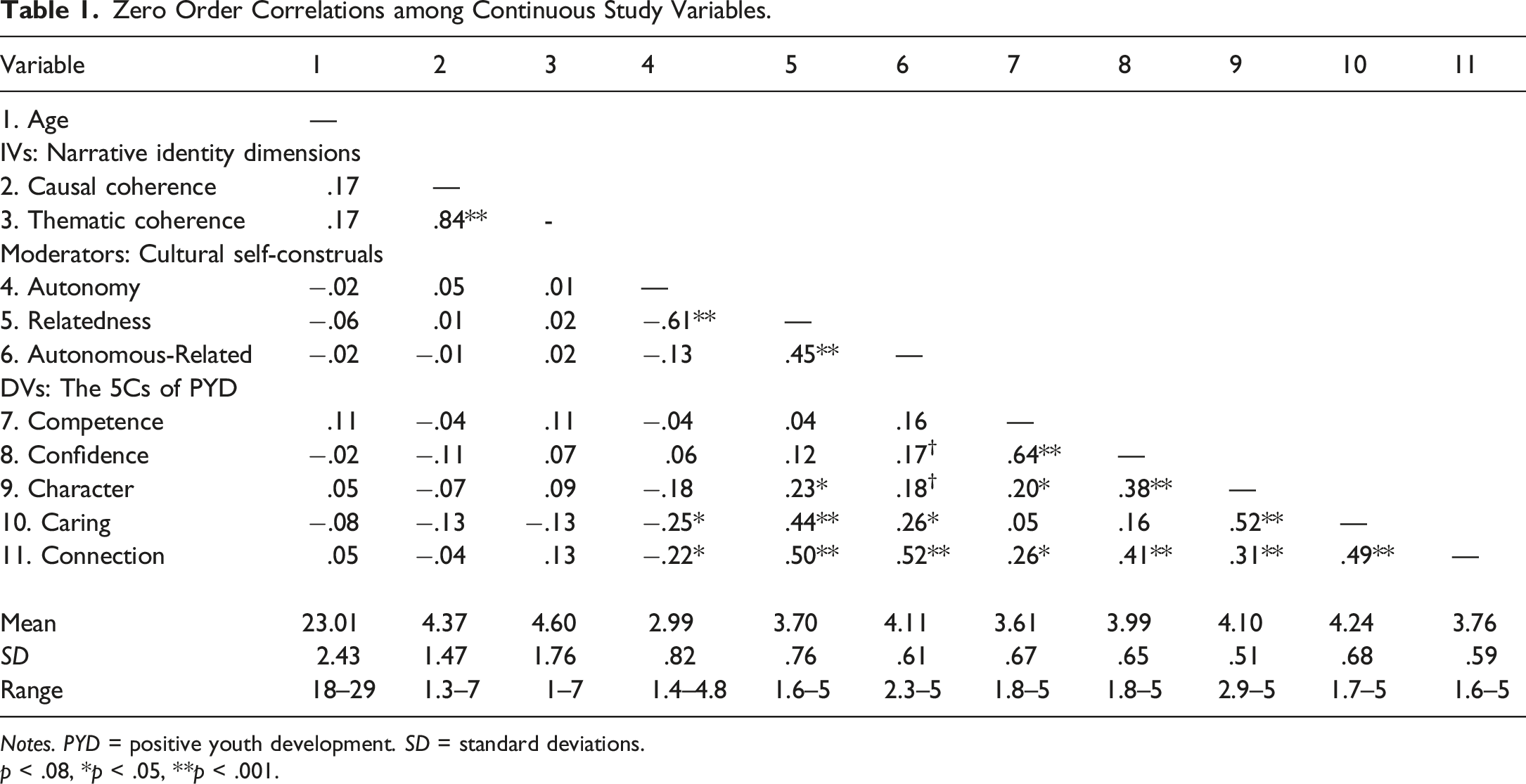
Notes. PYD = positive youth development. SD = standard deviations.
p < .08, *p < .05, **p < .001.
Emerging adults’ gender identity and age were controlled for by adding these variables into the path model from narrative coherence to the 5Cs as covariates. The final model’s fit indices yielded a good fit between the model and the data: χ2(30) = 177.59, p < .01, RMSEA = 0, CFI = 1, TLI = 1. Results are shown in Figure 1; thematic coherence predicted higher levels of competence, confidence, and connectedness, whereas causal coherence predicted lower levels of competence, confidence, and connectedness. Neither character nor caring was significantly associated with thematic or causal coherence. Also, female participants scored significantly higher on character, caring, and connection than male participants, whereas age did not significantly predict any of the 5Cs. Path analysis model of associations between narrative coherence and positive youth development. Note. Standardized coefficients are presented; *p ≤ .05; **p ≤ .01; ***p ≤ .001. Gender Identity (Male = 0; Female = 1) and Age were added to the model as covariates.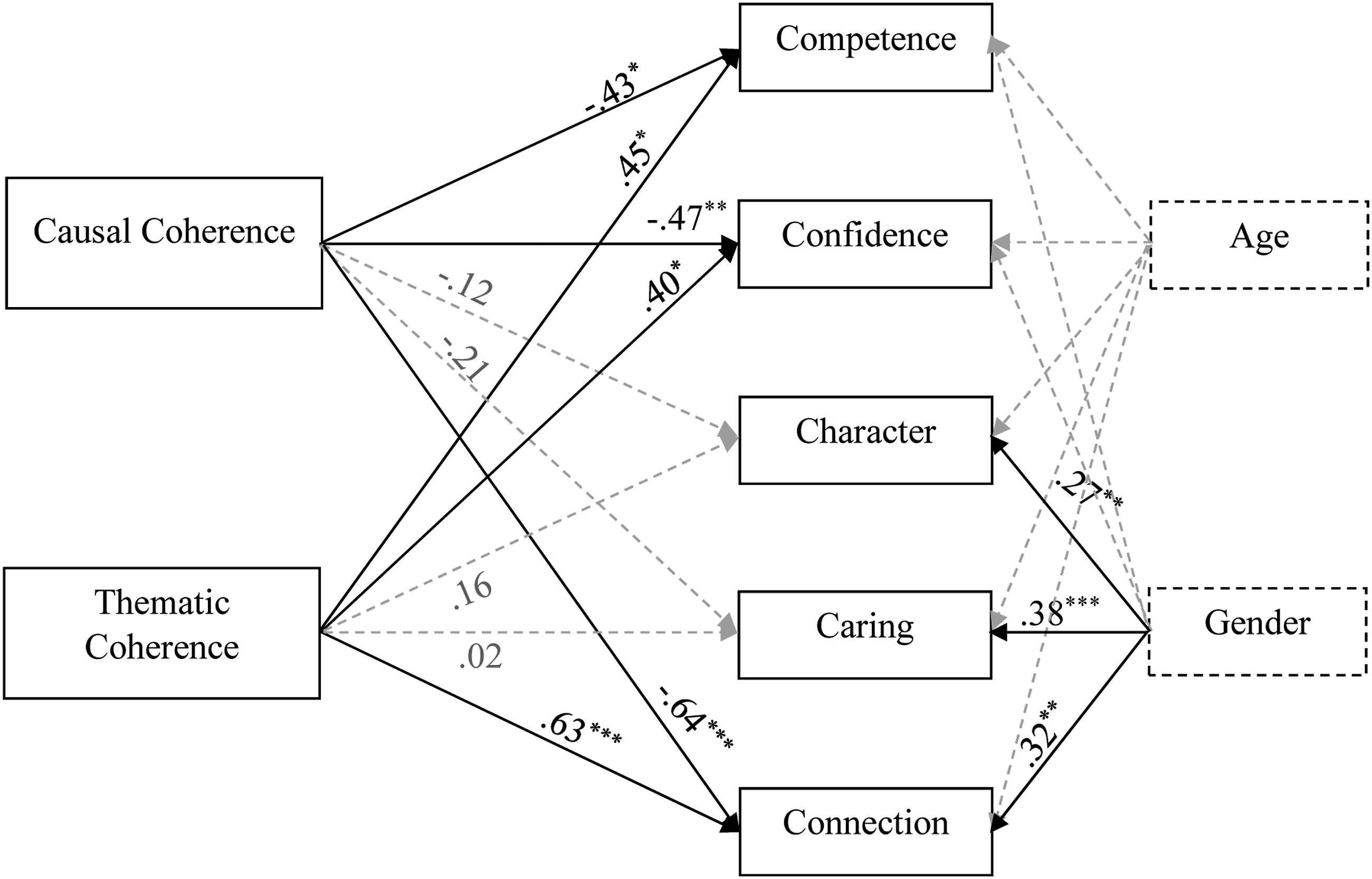
Moderation Analyses
Associations between Narrative Coherence and the 5Cs as a Function of Autonomy, Relatedness, and Autonomy-Relatedness.
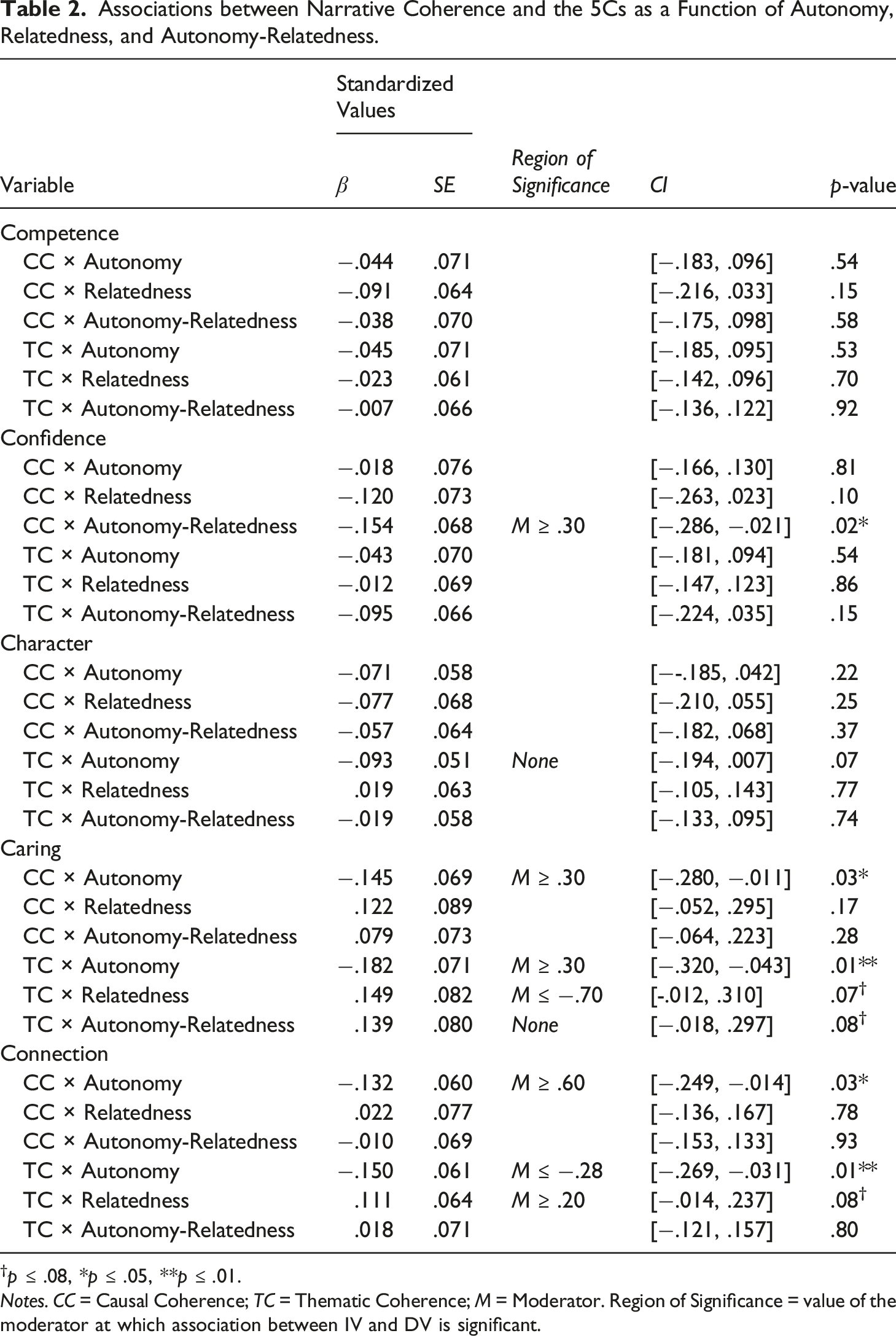
†p ≤ .08, *p ≤ .05, **p ≤ .01.
Notes. CC = Causal Coherence; TC = Thematic Coherence; M = Moderator. Region of Significance = value of the moderator at which association between IV and DV is significant.
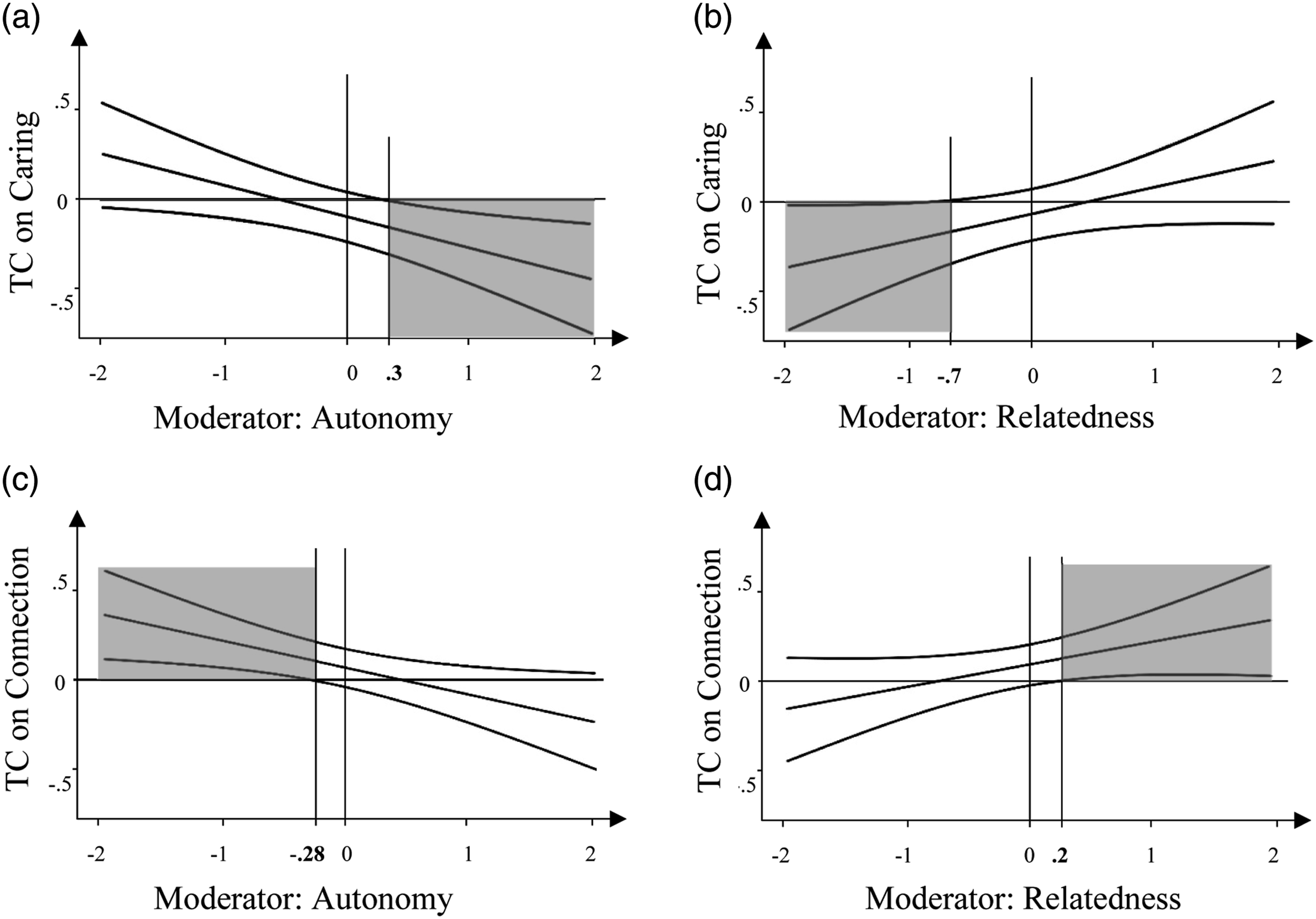
Moderating Effect of Self Construals on the Impact of Thematic Coherence on the 5Cs. Note: †p ≤ .08 *p ≤ .05 **p < .01. TC = Thematic Coherence. Johnson-Neyman plots showed the moderating effect of cultural self-contruals on the link between thematic coherence and both caring and connection. Shadowed areas indicate region of significance. Model Fit:
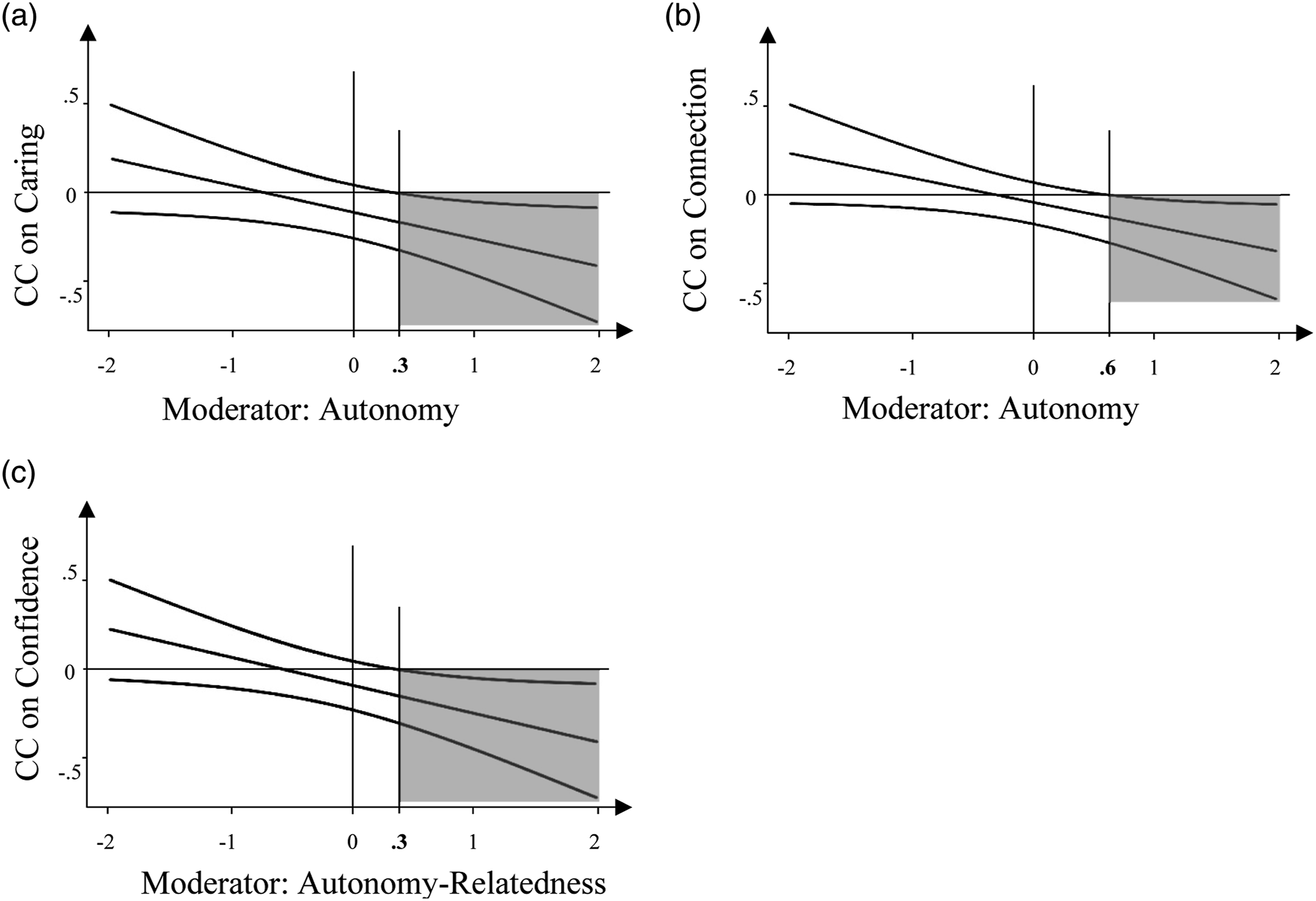
Moderating Effect of Self Construals on the Impact of Causal Coherence on the 5Cs. Note: *p ≤ .05 **p ≤ .01. CC = Causal Coherence. Johnson-Neyman plots showed the moderating effect of cultural self-construals on the link between causal coherence and caring, connection, and confidence. Shadowed areas indicate region of significance. Model Fit:
Thematic Coherence × Cultural Self-construals
Results indicated that the thematic coherence × autonomy interaction term was a significant predictor of caring (β = −.182, p = .01), whereas the thematic coherence × relatedness interaction term was marginally significant in predicting levels of caring (β = .149, p = .07). These interactions are plotted graphically in Figure 2. Post-hoc probing indicated that high levels of thematic coherence were related to lower levels of caring only when autonomy was high. In contrast, thematic coherence was related to lower levels of caring only when relatedness was low. Significant interactions were also observed in the model with connection as the dependent variable. The thematic coherence × autonomy interaction term was a significant predictor of connection (β = −.150, p = .01), whereas the thematic coherence x relatedness was marginally significant in predicting connection (β = .111, p = .08). Specifically, thematic coherence was related to more connection only when autonomy was low and relatedness was high (see Figure 2). Thematic coherence was not significantly related to connection under conditions of high autonomy or low relatedness.
Further, the thematic coherence x autonomy was a marginally significant predictor of character (β = −.093, p = .07). That is, thematic coherence was associated with higher levels of character only when autonomy was low, but thematic coherence was unrelated to character when autonomy was high (see Figure 2). Moreover, the thematic coherence x autonomy-relatedness interaction term was a marginally significant predictor of caring (β = .139, p = .08). However, this interaction did not demonstrate a region of significance in its Johnson-Neyman plot.
Causal Coherence × Cultural Self-construals
Path models involving causal coherence as a predictor also found significant interactions between causal coherence and autonomy predicting both caring (β = −.145, p = .03) and connection (β = −.132, p = .03). When autonomy was high, causal coherence was related to lower levels of caring and connection. These interactions are plotted in Figure 3. Finally, the causal coherence x autonomy-relatedness interaction term was significant in predicting confidence (β = −.154, p = .02). Specifically, low levels of causal coherence were related to low levels of confidence only when autonomy-relatedness was high (see Figure 3).
Discussion
Findings from the current study describe for the first time associations between narrative coherence in familial narratives and the 5Cs of positive youth development among emerging adults, and the extent to which these associations are attenuated by cultural self-construals. Higher levels of thematic coherence in the narratives were positively linked with Turkish emerging adults’ competence, confidence, and connection. In contrast, higher levels of causal coherence were negatively associated with their competence, confidence, and connection. In some cases cultural self-construals of autonomy, relatedness, and autonomy-relatedness moderated the relationship between both causal and thematic coherence and the positive youth development attributes of caring, connection, and confidence.
Narrative Coherence and the 5Cs of Positive Youth Development Perspective
Higher levels of thematic coherence in autobiographical narratives were positively linked with competence, confidence, and connection. Thus, when emerging adults narrated different episodes of their lives (e.g., school, family life, and romantic relationships) with an essential theme cutting across episodes they were more likely to demonstrate positive self-development in multiple domains. These findings supported our hypothesis and were consistent with previous studies. Specifically, thematic coherence has been documented to be a significant predictor of purpose and meaning in life (Bohanek & Fivush, 2010), gaining insight (McLean & Thorne, 2003), self-esteem (Liao et al., 2018), and overall psychological well-being (Reese et al., 2017). Individuals who discuss their experiences in a logically connected way with a central theme could develop insight into those experiences and the ability to freely and flexibly evaluate their experiences, thus better understanding the mechanisms and “lessons learned” of related situations across their lives (Bluck & Habermas, 2001).
On the other hand, contrary to our expectations, higher levels of causal coherence predicted lower levels of competence, confidence, and connection. When emerging adults provided a coherent picture of personality change, attitude change, or change in modes of behavior due to a significant incident in their narratives, they displayed lower competence in different life settings, less self-worth and emotional security in their proximal relationships, and lower levels of empathy and sympathy toward others. Despite these unexpected findings, some previous research has also documented the adverse impact of causal coherence on positive development, particularly when the given narrative was negatively-valenced or traumatic (e.g., Hallford et al., 2021; Thomsen et al., 2016). Indeed, adolescents who focus on negativity in their elaborative narratives were more likely to show lower levels of self-esteem and conscientiousness and higher levels of depression and anxiety (Reese et al., 2017).
In the current study, emerging adults mostly shared negatively-valenced experiences, such that 70% of the narratives had negative connotations whereas only 27% were composed of positively-valenced events. When a given story is elaborative on a negative experience, it may potentially lead to negative cognitions and emotions, and unresolved issues in experiences. Thus, causal coherence in this context may reflect emerging adults becoming preoccupied with negative life experiences. In fact, individuals who dwell on negative life events show less positive youth development (e.g., Hallford et al., 2021). Further, rumination, negative cognitive biases, and preoccupied narratives around attachment issues have all been linked to less adaptive development in emerging adulthood (Graci & Fivush, 2017).
The Moderating Role of Cultural Self-Construals
Examining the moderating role of cultural self-construals within a single culture (i.e., Turkey), in which cultural values of both autonomy acquisition and relatedness to others are both prominent, was another innovative step in the present study. Results indicated that majority of associations between narrative identity and both caring and connection were moderated by cultural self-construals. The positive association between thematic coherence and connection was observed only when autonomy was low or relatedness was high. Collectively, results suggest that the benefits of thematic coherence for connection were not realized when Turkish emerging adults reported self-construals that were largely focused on autonomy and downplayed the importance of social connectedness. Further, the negative association between thematic coherence and caring was only observed when autonomy was high or relatedness was low, suggesting that greater emphasis on social connectedness (i.e., low autonomy and high relatedness) buffered against this negative association. For causal coherence a similar pattern emerged, in which the negative association between causal coherence and both caring and connection was observed only when autonomy was high.
Taken as a whole, findings suggest that highly autonomous self-construals may serve as an amplifying risk factor in the association between narrative identity and caring and connection. Turkish emerging adults who are preoccupied with negative themes in those narratives may be at risk for particularly low levels of caring and connection when they hold self-construals that prioritize autonomy. In contrast, low levels of autonomy and in some cases greater emphasis on social relatedness may either protect against maladaptive patterns of narrative identity or provide additional benefits for those with narrative identities likely to promote caring and connection.
As noted previously, Turkey has recently undergone a significant sociodemographic and economic transformation, which is reflected in how individuals define themselves in relation to others. Traditional cultural values that overemphasize interdependence have recently been replaced with a blend of collectivistic values of connectedness and individualistic values of independence particularly among educated, middle to high SES Turkish emerging adults living in urban areas (Kağıtçıbaşı, 2017; Sumer et al., 2021). Although this recent societal change brings about an emphasis on certain individualistic values such as autonomy and assertiveness, the importance attached to maintaining psychological interdependence to family and close others still prevails (Kağıtçıbaşı, 2017). Thus, it is noteworthy that moderating effects were evident predominantly for the two most social-oriented aspects of positive youth development. Whereas some personal psychological resources (i.e., character, confidence, and competence) may directly reflect aspects of narrative identity, the development of attributes that encompass affective responses to others (e.g., caring) or necessitate cohesion in social relationships (e.g., connection) may depend on the combination of a) how one processes and narrates prior experiences and b) the extent to which one values relatedness over autonomy.
Given Turkey’s geographical and socio-historical location at the intersection of Eastern and Western cultural values, it is striking that overall low levels of autonomy and high relatedness were protective in this context. This raises the possibility that reliance on social relatedness and interdependence – values commonly associated with more collectivistic societies – may be especially important for positive development among Turkish youth. The extent to which this effect is unique to the Turkish population, however, remains to be seen. Similarly, autonomy-relatedness was not generally a consistent moderator in the current study, but the negative association between causal coherence and confidence was significant only when autonomy-relatedness was high. Conceptually, autonomy-relatedness may be a variable that is particularly salient among Turkish youth and emerging adults balancing cultural messages that emphasize both autonomy and social connectedness (Aycicegi-Dinn & Sunar, 2017; Sumer et al., 2021). Future work in this and other cultural contexts might be well-served by considering both direct and moderating effects of autonomy-relatedness.
Future Directions and Limitations
The current study has the potential to contribute to the literature by documenting links between familial narrative identities and the 5Cs of positive youth development outcome. Findings speak to the importance of considering the moderating role of cultural self-construals in these links within the Turkish cultural context.
Nonetheless, there are several limitations of this study that must be acknowledged. First, this study asked a precise question to elicit autobiographical narratives, which limited participants’ ability to choose a life story or stories to narrate freely. This relatively structured interview may limit content and coherence of narratives in a way that limits generalizability and ecological validity. Second, the current research focused mostly on the quality of narratives rather than their content. Future research should consider approaches that incorporate both quality and the content of autobiographical narratives to improve our understanding of the relationship between narrative identity and positive development. Third, this study did not examine the role of temporal coherence in narratives––an ability to retell the events in order of their occurrence–on positive development. Temporal coherence is an important aspect of narrative coherence (Bluck & Habermas, 2001) that may shed additional light on the link between these narratives and positive development. Further, the study sample included highly educated urban participants, which potentially differs from people residing in rural areas and is unique relative to the Turkish population as a whole. Future research should include a wider variety of Turkish emerging adults from different academic levels to enhance generalizability within the Turkish context, as well as cross-cultural comparisons that elucidate the extent to which study findings are specific to Turkish emerging adults. Finally, the cross-sectional nature of the data utilized in the current study makes interpretations of causality speculative. For instance, narrative coherence may be a determinant of positive youth development or a reflection of pre-existing aspects of positive development. Future work disentangling the direction of effects among study variables is critical.
Conclusion
The healthy development of Turkish emerging adults appears to depend upon both narrative coherence and their ability to prioritize close relationships over independence. Practitioners and clinicians focused on the health and well-being of young adults in Turkey could further emphasize the critical value of relatedness for personal growth and individuals’ views on the importance of close relationships. More specifically, professionals working with Turkish emerging adults and their families could (1) work to better understand individuals’ cognitive representations of their own selves and cultural values in the family context, and (2) incorporate this information into their practice while providing support and guidance in developing positive and coherent life narratives.
Given the importance of narrative identity for positive growth in this population, clinicians may wish to more fully consider approaches to clinical practice that emphasize storytelling and autobiographical narratives (McAdams & Janis, 2004) and to recognize the extent to which narratives are shaped by the vast array of both individualistic and collectivistic cultural messages to which Turkish youth are exposed. Social and community organizations could also devote more resources to promoting relationship-building among Turkish youth (see, Dost-Gözkan et al., 2021) and young adults as a means for maximizing the benefits of strong identities forged in the family context.
Footnotes
Funding
The author(s) received no financial support for the research, authorship, and/or publication of this article.
Author Note
Alp Aytuglu, M.A., is a Ph.D. student in the department of human development and family science at the University of Georgia. Ayfer Dost-Gözkan, Ph.D., is an Associate Professor in the department of psychology at Ozyegin University. Pınar Şengül-Tığ, M.A., is a masters’ student in the department of psychology at Istanbul Bilgi University. Burcu Buğan-Kısır, M.A., is a Ph.D. student in the department of psychology at Bogazici University. Geoffrey L. Brown, Ph.D., is an Associate Professor in the department of human development and family science at the University of Georgia. Preliminary findings of the current study were presented at the Biennial Meeting of the Society for the Study of Emerging Adulthood, Washington D.C., November 2017 and at the Annual Meeting of the National Council on Family Relations, Fort Worth, Texas, November 2019. Portions of this article are based on a master’s thesis submitted by Alp Aytuglu in partial fulfillment of the requirements for the degree of master of arts in the department of psychology at Ozyegin University.
Open Research Statement
Regarding our manuscript submission, entitled “Narrative Identity and Positive Youth Development in Turkish Emerging Adults: The Moderating Role of Cultural Self-Construals”, as part of IARR’s encouragement of open research practices, we have provided the following information: This research was not pre-registered.
Data Availability
The data used in the research are available upon request. The data can be obtained by emailing:
