







Abstract
Attachment working models are mental and emotional representations of the self and others. A central question within attachment theory is how best to conceptualize the relationship between different attachment working models, such as how one’s attachment to parents may influence partner-specific working models and impact romantic relationship satisfaction. Despite the robust evidence that attachment theory can be appropriately applied across developmental and cultural contexts and the functional similarity of attachment in women and men, little research has examined attachment working models among nonbinary people. The current study tested competing hypotheses replicating the work by Dugan and Fraley (2022), extended to a large sample of nonbinary adults (N = 2,811). Similar to previous findings, our results supported the mediation hypothesis, which suggests that parental (defined as mother and father) attachment working models indirectly relate to romantic relationship satisfaction through romantic partner attachment working models. We also report comparisons of attachment overall between nonbinary people, men, and women, which showed that there were smaller mean differences between nonbinary people and women, yet more similar correlations between nonbinary people and men. These findings highlight the generalizability of attachment theory to diverse, nonbinary gender identities.
Attachment working models are internal representations of the self and others (Bowlby, 1982). These working models are highly salient across the lifespan, not only in childhood with parent or caregiver bonds but also the relationships in adulthood with romantic partners (Ainsworth et al., 1978; Hazan & Shaver, 1987). Although researchers are often interested in the trait-like manifestations of attachment—how anxious or avoidant one is likely to act within a social situation— it is important to consider both global attachment as well as relationship-specific attachment working models (Collins & Read, 1994; Gillath et al., 2016). Despite the pervasive role of attachment in developmental theory, its application to nonbinary people has been largely ignored. We seek to apply the attachment working model framework to nonbinary adults’ relationships by conducting a replication and extension of previous work by Dugan and Fraley (2022) which examined three competing hypotheses for the structure of working models of parental and romantic partner attachment and their association with relationship satisfaction among men and women.
Alternative hypotheses for the structure of attachment working models
Evidence for both generalized and relationship-specific attachment working models has accumulated over years of research (see a review in Collins et al., 2004). For example, research has found that a significant portion of the variance in attachment security lies at the relationship-specific level and is only partly related to individual differences in global attachment models (Cook, 2000; La Guardia et al., 2000; Pierce & Lydon, 2001). Early caregiver experiences are understood to influence the formation of global attachment and the general working model which in turn influences one’s perceptions of the world (Collins & Read, 1994). Internal working models of attachment often create cyclical experiences of the world by creating a biased and self-confirming perception of social interactions with others, but these models can be modified through future significant relationships, therapeutic experiences, and major life transitions (Bartholomew & Horowitz, 1991).
Collins et al. (2004) hypothesized a hierarchical structure to the attachment behavioral system. They argue that global working models may operate independently of relationship-specific models to relate to different domains of outcomes, they may moderate the relationship between relationship-specific models and outcomes, or they may mediate the relationship between relationship-specific models and outcomes. This framing can be applied to outcomes of multiple specific relationships as well as to general and relationship-specific working models. It is not well understood how parent-specific attachment relates to partner-specific attachment and in turn influences romantic satisfaction.
In a direct test of Collins et al.’s (2004) alternative hypotheses in a sample of men and women, Dugan and Fraley (2022) found support for the mediation hypothesis, wherein partner-specific attachment working models mediated the association between parental attachment working models and romantic relationship satisfaction. There was limited evidence that the length of the romantic relationship with a partner changed how attachment working models related to relationship satisfaction. They also did not find that gender interacted with or moderated the relationships between parent or partner attachment working models and relationship satisfaction. The present study further explores the relationship between gender and attachment by directly comparing men, women, and nonbinary adults. A meta-analysis found that men on average have lower attachment anxiety (d = −0.04) and higher attachment avoidance than women (d = 0.02; Del Giudice, 2011). No other gender identities have been consistently reported in the existing attachment literature, so it is currently unknown whether and how attachment working models differ in nonbinary people.
Because of the scarce literature on nonbinary people’s attachment, we turn to the literature on gay/lesbian people. Like nonbinary people, gay/lesbian people on average have minoritized status, increased stigma, and/or higher rates of parental and peer rejection of identity development, which can help inform expectations for whether nonbinary people would be expected to differ in attachment working models.
Childhood development and attachment of nonbinary people
Nonbinary is a gender identity describing those who feel gender nonconforming to the social expectations of their sex assigned at birth (Diamond, 2020). They may feel aspects of being man or woman, a combination of both, or completely separate from both. The identity is meant to be unlimited; the experiences may shift or change over time in how one feels. In terms of gender cognition, attitudes, and personality, transgender and nonbinary children and adults show notable psychological similarities to boys/men and girls/women (Junkins et al., 2024b; Olson et al., 2015). However, gender nonconformity has been linked to higher rates of negative experiences early in life that may affect attachment (Landolt et al., 2004; Roberts et al., 2012; Spivey et al., 2018). Gender nonconforming children (who may or may not later identify as nonbinary) and transgender adults report more abuse and lower parental support from childhood, which in turn is related to a higher risk of self-harm, suicide attempts, drug use, risky sex, and post-traumatic stress disorder (Johnson et al., 2020; Thoma et al., 2021; Tobin & Delaney, 2019; Valentine & Shipherd, 2018; Worthen, 2021). Similar to nonbinary people, sexual minority people are also more likely than heterosexual people to exhibit gender nonconformity (Dunne et al., 2000; Kadel et al., 2024; Landolt et al., 2004; Rieger & Savin-Williams, 2012), as well as more likely to experience abuse, stigma, and lack of parental support (Doyle & Molix, 2015; Haas & Lannutti, 2021; Lick et al., 2013).
The literature on stigma, abuse, parental rejection, and their links to attachment in sexual minority adults and binary gender adults can help inform expected patterns of differences in nonbinary adults. A positive relationship between physical abuse in childhood and both attachment avoidance and anxiety was found previously in cisgender adults (Unger & De Luca, 2014). The fact that nonbinary people are more likely to experience abuse in childhood (Thoma et al., 2021) suggests the potential for higher attachment anxiety and avoidance on average compared to cisgender adults. Yet, it does not necessitate that the relationship between relationship-specific attachment working models and relationship satisfaction is different.
It is possible, however, that social support and positive relationship experiences can reduce these potential mean differences in attachment anxiety and avoidance. Though secure attachments do not prevent negative life outcomes, they do serve as a buffer against anxiety and negative outcomes (Weinfield et al., 2008). When comparing heterosexual and gay/lesbian people, social stigmatization based on sexual orientation alone may have little to no effect on attachment styles (Ridge & Feeney, 1998). Researchers have also found that social stigmatization was not associated with differences in attachment styles based on the proportion of people categorized in each attachment style (Landolt et al., 2004). Although negative experiences of peer or parental rejection appear related to increased attachment anxiety, positive experiences of social support may buffer these effects (Landolt et al., 2004; McConnell et al., 2015). Experiencing attachment security may also positively influence sexual identity development (D’Augelli et al., 2010; Rothman et al., 2012). Minority stresses, like discrimination, had additive effects on relationship functioning with no evidence of moderation by global attachment anxiety or avoidance (Mohr et al., 2013). If these findings generalize to nonbinary adults, we expect that even though stressors could be higher, attachment operates mostly independently of these factors to relate to relationship functioning. In addition, previous work has shown similarities among gender groups in the associations between personality, social support, and relationship satisfaction (Junkins et al., 2024a). Given these limited past findings, our expectations are that the associations between relationship-specific attachment working models and relationship satisfaction will be similar between nonbinary and binary adults; however, there may be mean differences in attachment working models.
The current study
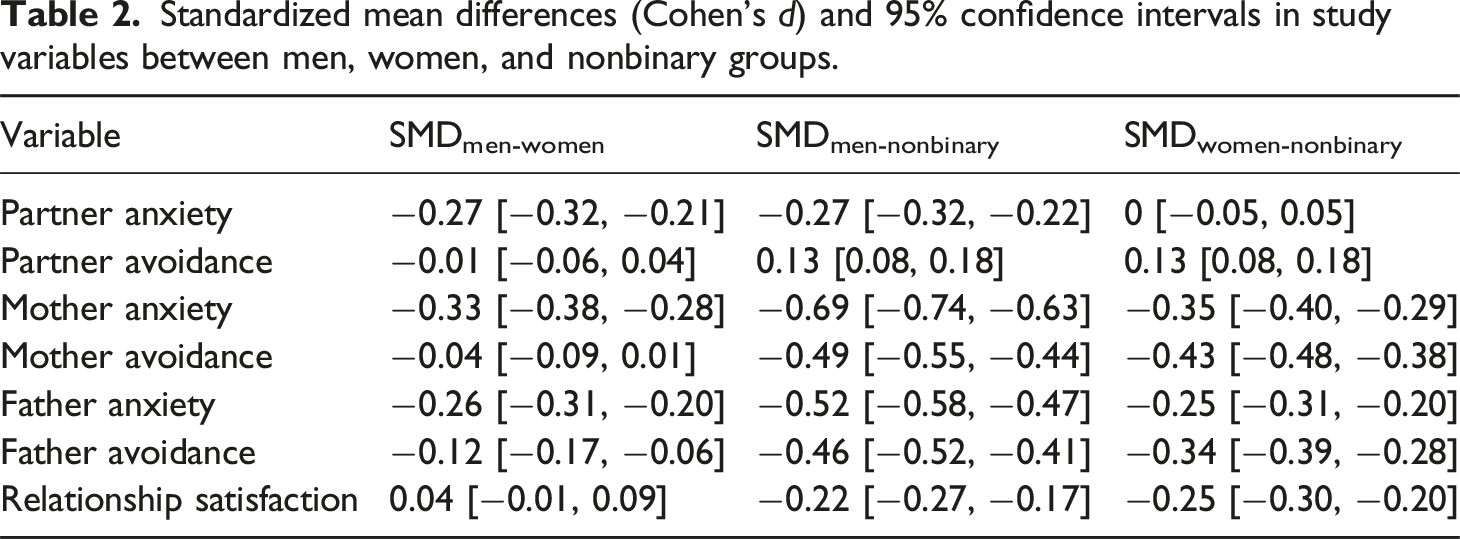
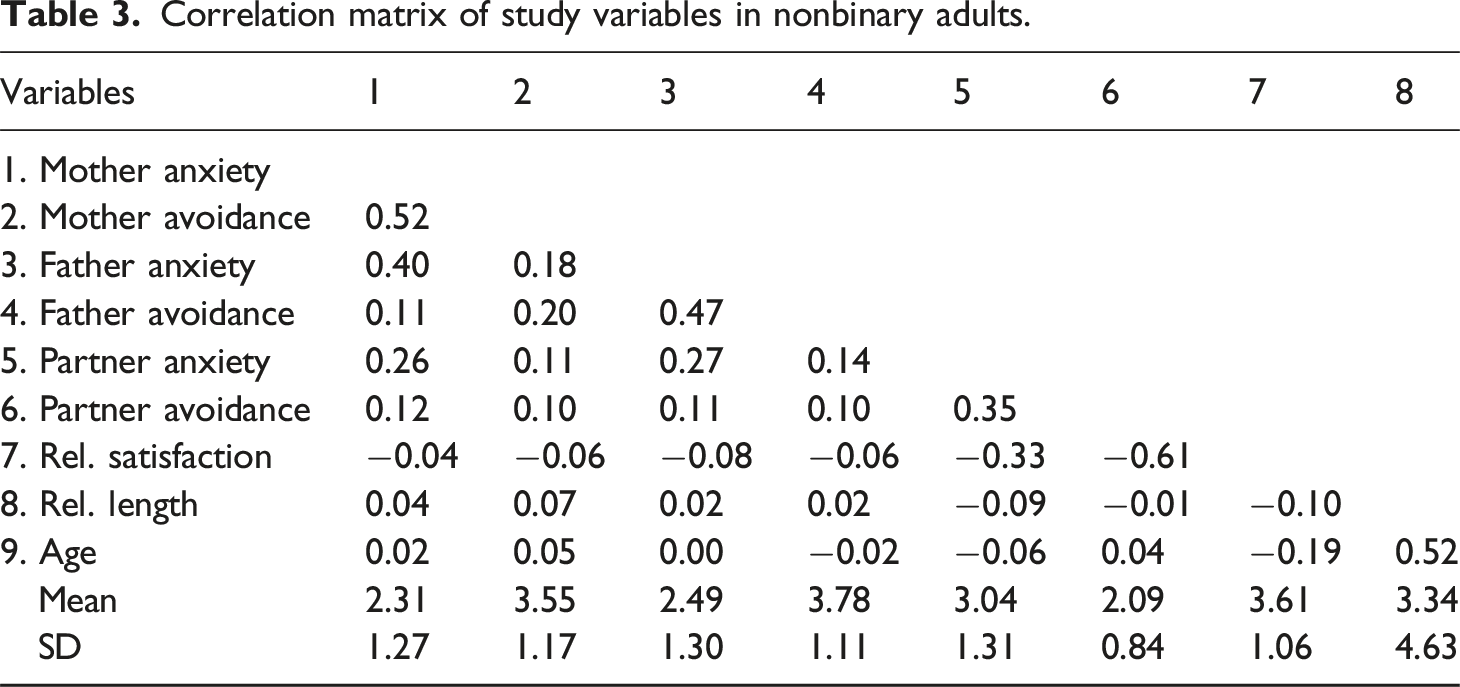
Due to the limited literature on nonbinary attachment, it is important to first examine the descriptive statistics. So, we report mean differences and correlations among relationship-specific attachment working models and relationship satisfaction. We examine the descriptives to describe the base rates of attachment anxiety and avoidance to different figures in nonbinary adults compared to men and women.
Then, we replicate and extend previous demonstrations of how different attachment working models (mother, father, partner) combine to predict relationship satisfaction (Dugan & Fraley, 2022) in nonbinary adults. We evaluate three possibilities, adapted from Collins et al. (2004) and examined in Dugan and Fraley (2022) for men and women: the independence, moderation, and mediation hypotheses. Dugan and Fraley (2022) proposed to examine the interplay of parent-specific attachment and partner-specific attachment working models on romantic relationship satisfaction following the theorizing by Collins et al. (2004; see Figure 1). In short, we expect to find that attachment working models are robust across gender identities, such that (a) there are limited mean differences in attachment between nonbinary people and men and women and (b), in a replication of Dugan and Fraley’s (2022) finding in a sample of men and women, that among nonbinary participants the mediation hypothesis is most supported, and the independence and moderation hypotheses are not. We preregistered the replication on OSF: https://osf.io/c3e4m/. Parental and partner attachment relating to relationship satisfaction showing independence effects (c and b paths) and mediation effects (a times b paths; adapted from Dugan & Fraley, 2022).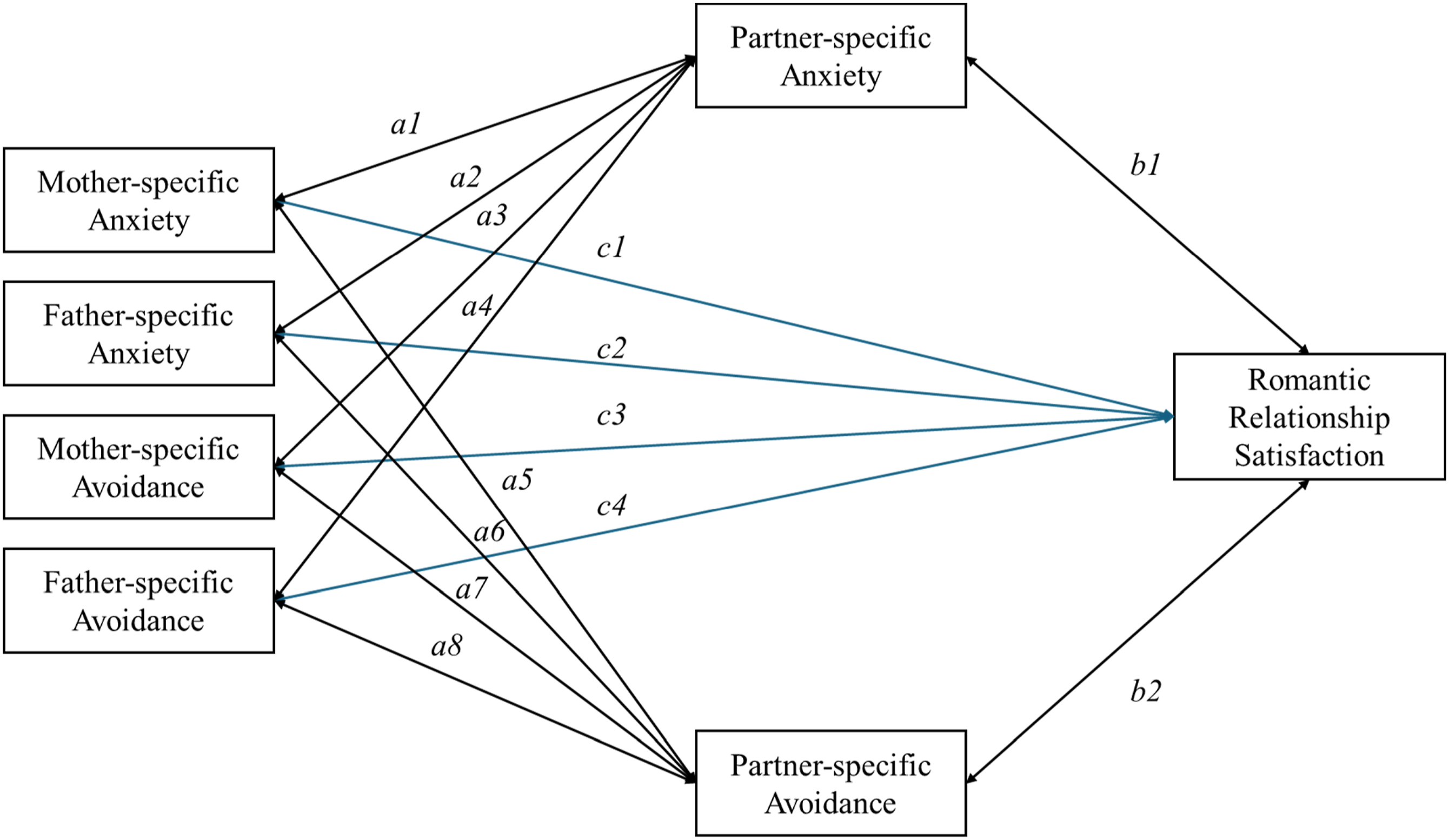
Method
Participants
Demographic information for the main sample.
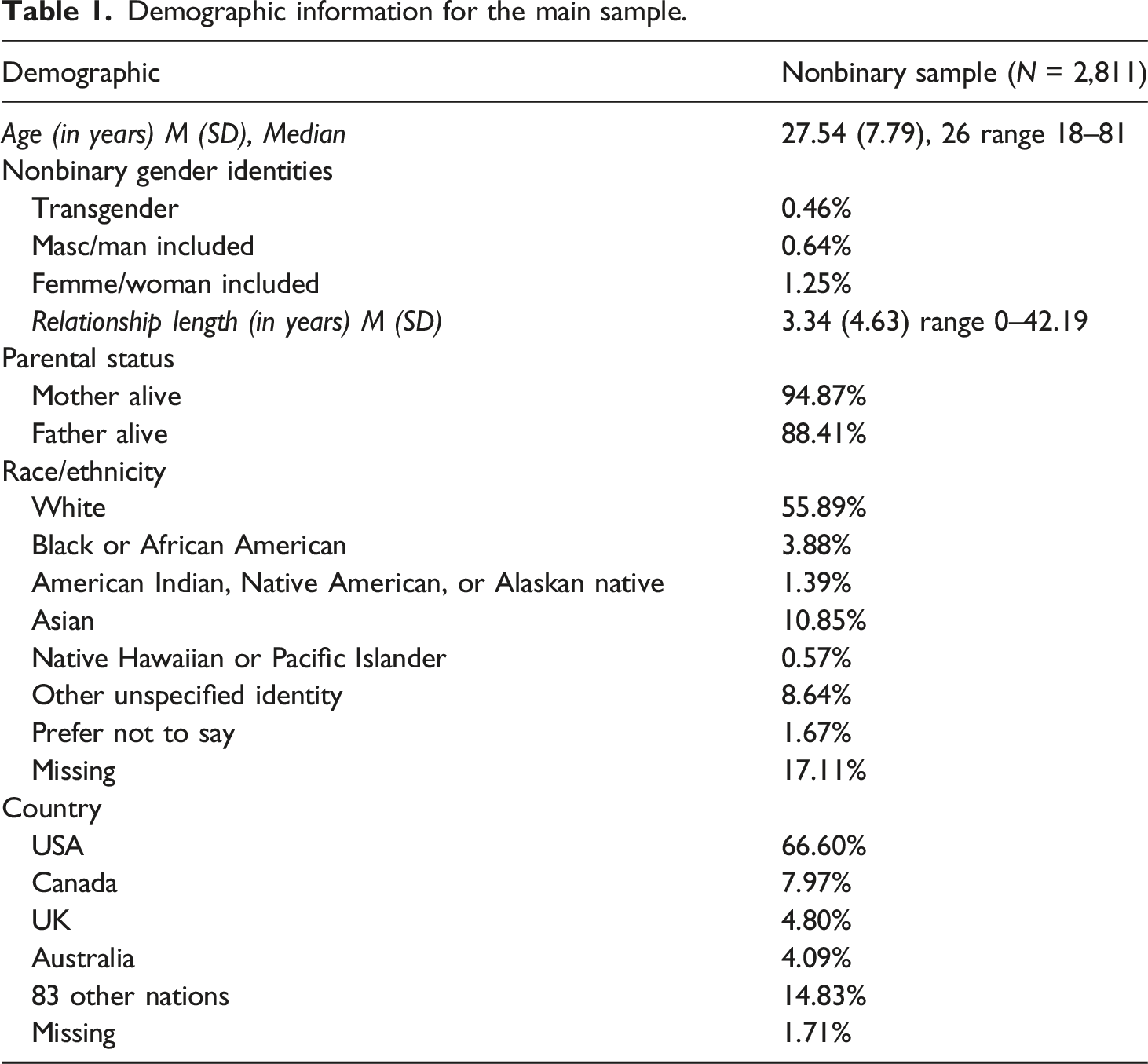
Participants were sourced from yourpersonality.net from August 2022 to December 2023. In August 2022, the item asking, “What is your gender?” was updated to allow the options: ‘male’ (we label as man), ‘female’ (we label as woman), ‘nonbinary’, ‘other please specify,’ and ‘prefer not to respond.’ We included only people who were between 18 and 100 years old, were in a relationship, and collected from August 1, 2022, to November 29, 2023. Any ages or relationship dates that were impossible were removed (e.g., relationship length should not be greater than age and relationship start date should not be after the survey date). We checked the open text responses for gender to remove responders that put in inappropriate responses (e.g., inanimate objects). We removed respondents without relationship satisfaction and partner attachment scores as these are needed in all main analyses. We used pairwise deletion for those whose mother or father had passed, because if their parent passed then they would not be given the parent-specific attachment items.
Yourpersonality project had about 300,000 respondents in the time frame we have stated, so we randomly sampled 3,000 men and 3,000 women for the additional analyses to have comparable sizes to the nonbinary participants and to avoid huge variation in confidence intervals between our main respondents, nonbinary adults, and our comparison respondents (men and women). Binary transgender identities from the gender open text responses were included with men and women, as appropriate, and were part of the pool of participants we randomly sampled. Nine transgender men were included in the 3,000 random men, and one transgender woman was included in the 3,000 random women. We compared whether the men and women randomly sampled differed in age, attachment avoidance, attachment anxiety, and relationship satisfaction from the rest of the men and women sample, respectively. There were no significant differences in these variables 1 (see Supplement). Demographics for men and women are reported in the Supplement Table S1. After all the cleaning steps, there were 2,811 nonbinary participants used in the main analyses. In the additional comparison models, there were 3,000 men and 3,000 women. IRB approval was granted at the University of Illinois Urbana-Champaign under expedited review for no more than minimal risk (IRB#23603).
Measures
Adult attachment was measured using the Experiences in Close Relationships—Relationship Structures questionnaire (Fraley et al., 2011). The scale measures attachment anxiety with 3 items and attachment avoidance with 6 items. Each item was rated from 1 strongly disagree to 5 strongly agree. The same items are asked about people in general (global attachment) and with respect to the respondent’s mother, father, romantic partner, and best friend. We included the mother, father, and romantic partner domains in our analyses. Relationship satisfaction was measured using an abbreviated version of the Investment Model Scale (Rusbult et al., 1998). We use only the three items measuring relationship satisfaction. Items were rated 1 strongly disagree to 5 strongly agree. Cronbach’s alpha for attachment anxiety (mother: 0.85, father: 0.86, partner: 0.85) and avoidance (mother: 0.91, father: 0.90, partner: 0.84) were high.
Statistical analysis
To address our question, we conducted multiple linear regression in structural equation modeling with FIML in which relationship satisfaction was regressed onto dimensions of adult attachment (avoidance and anxiety) across relational contexts, age, and two-way or three-way interactions as relevant to the competing hypotheses. The structural equation models tested the independence hypothesis, mediation hypothesis, and moderation hypothesis for how attachment working models from different figures relates to relationship satisfaction. We ran separate models per gender group in order to freely estimate the parameters per group as preregistered. We deviated from Dugan and Fraley (2022) by not examining relationship length moderation or gender covariation. The findings in Dugan and Fraley (2022) suggest that relationship length did not moderate attachment figure-specific relationships with relationship satisfaction, but age was a meaningful covariate. Thus, age was included as a covariate (Dugan & Fraley, 2022). In order to test the indirect effects, we generated bias-corrected bootstrap confidence intervals (CIs) for the effects based on 10,000 resampling runs. According to post-hoc statistical power analysis, we have approximately 95% power to detect a direct effect of 0.16 for partner attachment on relationship satisfaction. We corrected the alpha thresholds for multiple testing using Bonferroni correction, so the alpha threshold for each model is .002.
Attachment variables, relationship satisfaction, and age were z-scored. All analyses were conducted in R using packages lavaan and psych (Revelle, 2020; Rosseel, 2012). Materials and analysis scripts were posted at https://osf.io/c3e4m/.
Results
Comparison of gender groups
Standardized mean differences (Cohen’s d) and 95% confidence intervals in study variables between men, women, and nonbinary groups.
Correlation matrix of study variables in nonbinary adults.
Independence hypothesis
Model testing independence and mediation hypotheses in nonbinary adults.
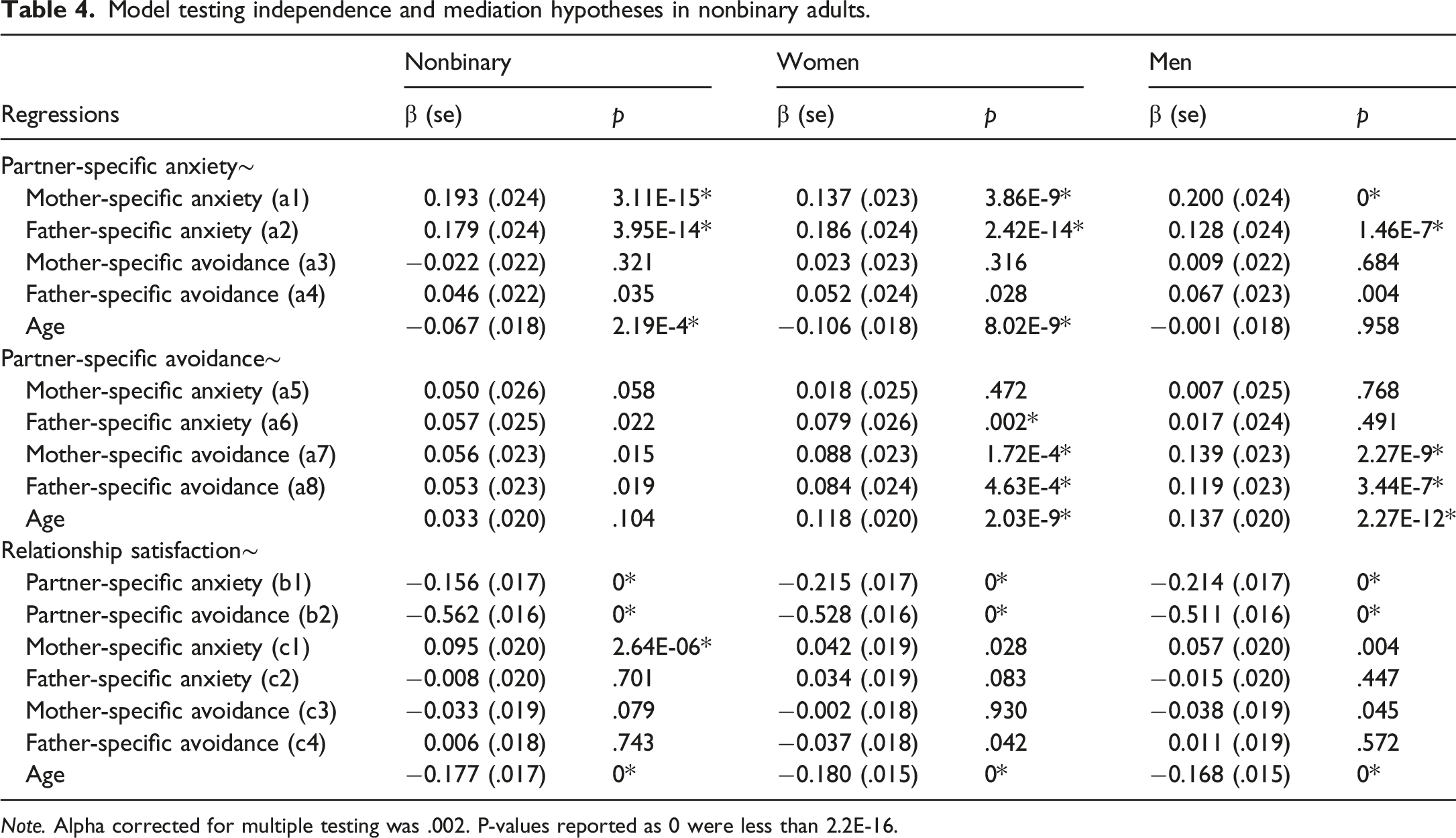
Note. Alpha corrected for multiple testing was .002. P-values reported as 0 were less than 2.2E-16.
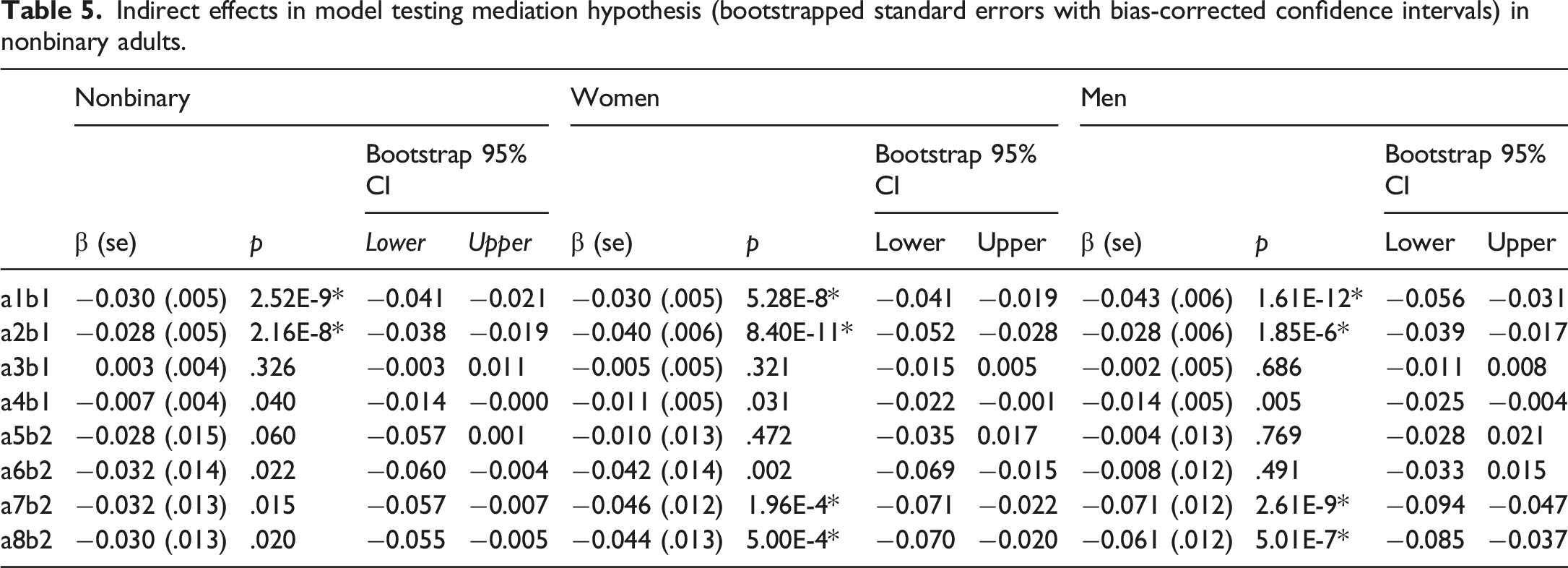
Mediation hypothesis
Indirect effects in model testing mediation hypothesis (bootstrapped standard errors with bias-corrected confidence intervals) in nonbinary adults.
Moderation hypothesis
Model testing moderation hypothesis (relationship satisfaction as outcome) in nonbinary adults.
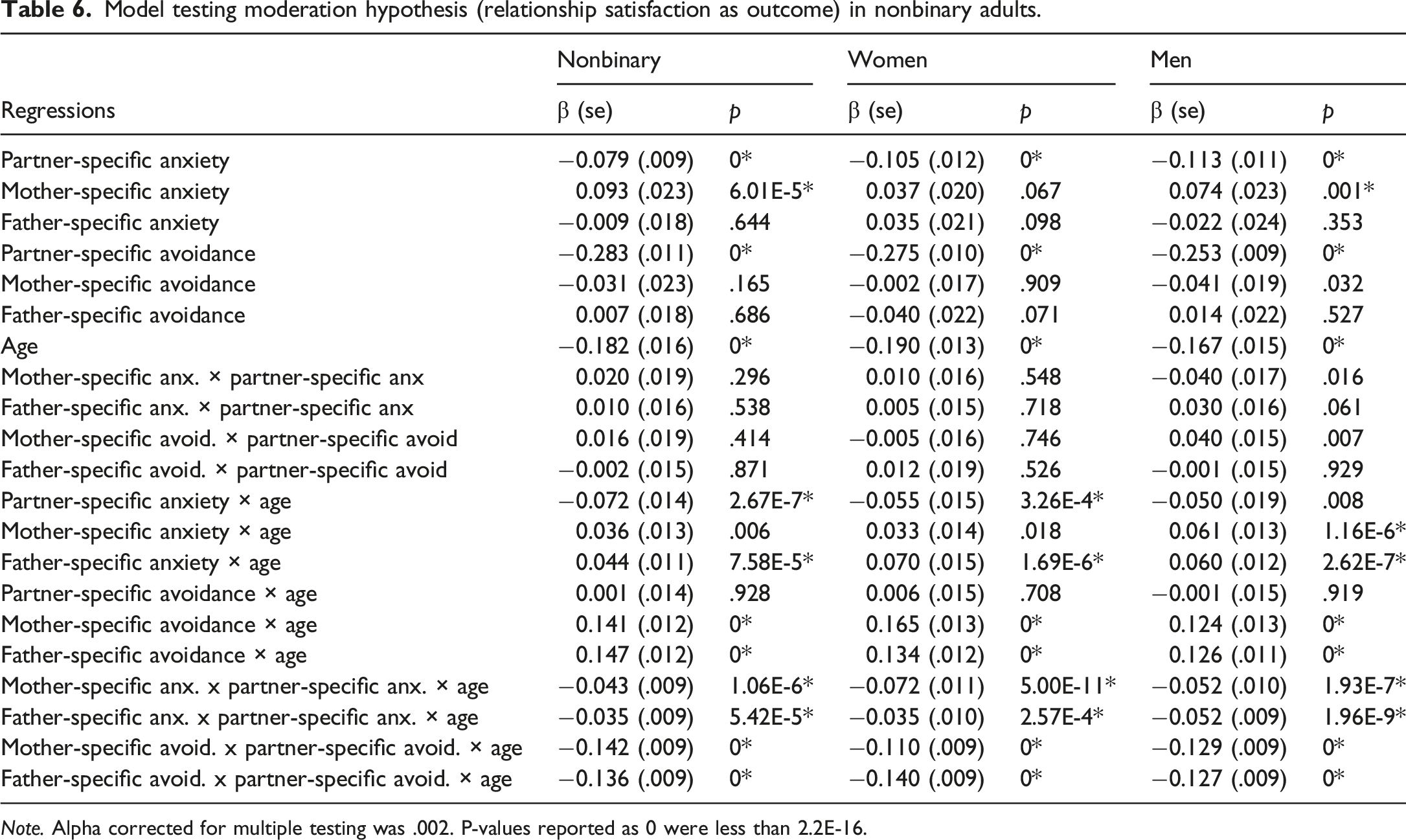
Note. Alpha corrected for multiple testing was .002. P-values reported as 0 were less than 2.2E-16.
The three-way interaction between partner attachment and parent attachment with age were all significant in each group and negatively associated with relationship satisfaction. While significant, the effects were quite small and do not show a meaningfully different trend (see Figure S1).
Mother-specific anxiety was positively associated with romantic relationship satisfaction (β = 0.093, SE = 0.023, p < .001), while partner-specific anxiety (β = −0.079, SE = 0.009, p < .001), partner-specific avoidance (β = −0.283, SE = 0.011, p < .001) and age (β = −0.182, SE = 0.016, p < .001) were all significantly negatively associated with romantic relationship satisfaction. The pattern of results was also seen in men and women, except mother-specific anxiety was not significantly related to relationship satisfaction for women. All in all, the moderation hypothesis does not explain well the results we found because parent and partner attachment working models did not interact to relate to relationship satisfaction.
Based on the model comparisons, the mediation hypothesis from Dugan and Fraley (2022) explained best the pattern of results we found in nonbinary people. In addition, these results were generalizable to men and women based on finding similar patterns of associations in each group. Importantly, our conclusion matches the prior study by Dugan and Fraley (2022) with minor differences in which indirect effects were significantly different from zero. Our internal replications among men and women imply that in fact there may be less indirect effects of partner-specific attachment through mother-specific attachment to predict relationship satisfaction.
Discussion
In summary, we tested alternative hypotheses for the ways that different relationship-specific attachment working models influence romantic relationship outcomes that were previously examined only in men and women (Dugan & Fraley, 2022). Attachment theory proposes that different important figures in people’s lives are represented by separate attachment working models, but the ways in which important figures affect relationship outcomes had not been well tested. We focused on parental attachment working models and partner attachment working models to examine how they combine to impact romantic relationship satisfaction for nonbinary adults. In our replication and extension of prior work (Dugan & Fraley, 2022), we similarly found the most support for the mediation hypothesis, suggesting that parent-specific anxiety and avoidance operate through partner-specific anxiety and avoidance to relate to relationship satisfaction. The evidence points to the distinctiveness of attachment working models to different figures and the domains in which we expect different figures to be more or less relevant. Each romantic relationship forms specific expectations about the partner and the self that is informed by global models (e.g., Collins & Read, 1994; Pierce & Lydon, 2001) and, as we show here, other relationship-specific models. Our results demonstrate that one’s attachment working model of a romantic partner is much more important than parental attachment working models for romantic outcomes, like relationship satisfaction.
Furthermore, there were similar direct effects of partner-specific anxiety and partner-specific avoidance on relationship satisfaction in nonbinary people as well as men and women. We found mother-specific anxiety also to have direct effects in nonbinary people. Dugan and Fraley (2022) mainly found partner effects in a sample that was primarily women with very few men. Taken together, we find that the mediation hypothesis of attachment working models can be used to understand the experiences of nonbinary adults similarly to men and women. Specifically, the age-related effects match with the lifespan perspectives in attachment (Hazan & Shaver, 1987; Levitt, 2013). The different-gender parental effects in men and women also match foundational romantic attachment literature (Hazan & Shaver, 1987), whereas nonbinary people may be treated more equally by both parents or be more equally critical of both parents. Alternatively, lack of support during young adulthood may lead nonbinary people more quickly to reevaluate their parental relationships and their importance may more quickly be replaced with other important close relationships. Further research to understand the lifespan perspective of attachment working models for nonbinary people is needed to inform the patterns we observed.
We found very little evidence for the independence hypothesis or moderation hypothesis of attachment working models. The independence hypothesis tested by Dugan and Fraley (2022) assumes that attachment working models to parents and partners each contribute to romantic relationship satisfaction. This implies that having a poor attachment to at least one parent would always relate to lower relationship satisfaction in adulthood than those with secure parental attachment. There are many reasons to find this explanation least likely. One reason is the rates of adversity and parental rejection for nonbinary youth which does not relate to unsatisfying adult relationships. While we did not analyze data to speak to whether the present sample of nonbinary adults experienced early childhood adversity or parental rejection, past research suggests that there would be a difference between nonbinary and cisgender children (Thoma et al., 2021). Past research conducted with people who experienced childhood abuse shows no moderation between abuse severity and attachment styles on relationship satisfaction (Nelson, 2015). This means that there is a direct effect of abuse on later life outcomes, but attachment may not interact with abuse to relate to relationship satisfaction. Future research should consider this with respect to gender diverse youth including whether parents respect and support a child’s gender identity.
The moderation hypothesis was not supported as parent-specific attachment did not interact with partner-specific attachment in our findings. Similar to the independence hypothesis, this hypothesis places more significance on the role that parent attachment plays in adult relationship satisfaction. The three-way interactions with age were likely significant given the sample size, but there was no visible interpretable trend.
Mediation, on the other hand, suggests that attachment working models of one’s parents operate through attachment working models of romantic partners to predict relationship satisfaction. The cyclical experience of interpreting input through our working models suggests that perceptions of social interactions from other attachment figures may still inform relevant figure-specific attachment working models. Mediation also implies that relationships with parents may have less of an insurmountable effect on adult romantic relationships. Nonbinary people may compensate for negative childhood experiences by creating strong bonds to friends and romantic partners as they age and by updating the relationship-specific or global working models they hold (Frost et al., 2016; McConnell et al., 2015). For those with accepting and supportive parents, nonbinary adults may form strong bonds with parents and still find close relationships with friends and others who share a common language, either through a common experience of being nonbinary or a shared understanding of what it is to be outside of what others presume is the norm (Calder, 2020; Schreuder, 2021). For example, the ways in which people describe their selves, the way they experience gender or gender roles, and the ease by which inclusive language is used all refer to the common language that nonbinary people, queer people, and some allies can converse.
One strength of our study was the accompanying samples of men and women to draw stronger conclusions about which hypothesis best explains attachment working models for all gender groups. We also show how the working models of parental and partner attachment bonds operate similarly in nonbinary people. Future work should continue to use gender-diverse samples to further understand the ways in which nonbinary people’s attachment develops, functions, and relates to important outcomes. Overall attachment anxiety and attachment avoidance to parents and partners are within the bounds of what previous research has shown between men and women, albeit perhaps a little higher anxiety and avoidance towards parents. Relationship satisfaction also was slightly higher in nonbinary people. This evidence continues to show the role that non-parental relationships play in gender diverse people’s lives.
While we captured average effects for those that align with the label nonbinary, we may be missing out on the unique experiences of different identities within nonbinary or those with different types of childhood experiences (Conlin et al., 2019). Sexual orientation, romantic orientation, disability, specific nonbinary identities, employment or occupational status, income, socioeconomic status, and educational status were not measured in the current study and should be considered in further research. Importantly, we are missing out on romantic orientation to understand how often the people in our sample were interested in dating different gender, same gender people, both, or other gender preferences. Past research shows similar attachment functioning between heterosexual and gay or lesbian relationships (Ridge & Feeney, 1998); nevertheless, people who mainly date men, date women, or date other nonbinary people may differ in whether attachment anxiety or attachment avoidance is greater and the extent to which attachment working models differ in content between different types of relationships. Additionally, the experiences of people are expected to differ by the intersections of their identities and background and there may be meaningful differences among nonbinary people of different racial, ethnic, or cultural backgrounds that we did not address in the current research (Conlin et al., 2019; Diamond, 2020; Hammack et al., 2022).
Another drawback to the study was the sampling strategy. While yourpersonality.net continuously experiences high traffic, this also means people may take the survey multiple times. Since IP addresses or other identifiable information is not logged, there is no way to remove duplicate entries with any confidence that it is the same person. However, the high traffic on the site also compensates for this drawback, especially as we chose a random sample lowering the chance that duplicates were analyzed for men or women. People in psychology courses and people in counseling or therapy are likely to be asked to complete the survey for academic or therapeutic discussions, in addition to anyone online looking for personality assessments. Although potentially a drawback, this sampling approach is more expansive than sampling from a few psychology courses within one university. Next, the percentage of White participants was 56% which is closer to U.S. population estimates; however, no other identity was present in a large quantity except Asian people at 11%. A large portion (17%) did not report racial identity or ethnicity. The extent to which these results are mainly representative of monocultural North American people is more likely than the effects representing the global population. Future work should continue to address working models considerate of the influence of multiple aspects of identity simultaneously as sociopolitical time, identity, and culture all may influence the results.
Attachment working models were important to test in nonbinary adults in order to begin to incorporate gender diverse people’s experiences into the attachment framework. The associations and differences between gender groups had not yet been examined. While there are a plethora of attachment questions that are unexamined in nonbinary people, we picked one theoretical question as the starting place in order to examine whether more dynamic processes (moderation and mediation) show similar effects across gender groups. Furthermore, more than two gender groups also allow for a more nuanced understanding of the quantitative effects of gender within attachment research. In such a robust sample, we determined the interaction between relationship-specific attachment working models to be novel and theoretically informative, because there has been limited investigation in large samples with advanced quantitative methods. Overall, relationship researchers have many avenues by which they may incorporate the contextual experiences of nonbinary people within the attachment framework which will serve to move the theory forward rather than simply recapitulate the work that has been done.
In conclusion, attachment theory, and specifically the mediation hypothesis of attachment working models, can be extended to explain the interplay of parent and partner attachment working models on romantic relationship outcomes for nonbinary adults. Partner-specific attachment working models showed direct effects on relationship satisfaction and parent-specific attachment working models operated through the current partner’s attachment to in turn relate to relationship satisfaction. The model comparisons and correlations show strong similarities between nonbinary people and men, while mean differences in attachment show similarities between nonbinary people and women. These results are encouraging for the future of attachment theory to be able to relatively seamlessly explain the relationships formed throughout life in people who are nonbinary.
Supplemental Material
Supplemental Material - Parental and partner attachment working models in romantic relationships of nonbinary adults
Supplemental Material for Parental and partner attachment working models in romantic relationships of nonbinary adults by Eleanor J. Junkins, Brooke E. Kadel and Jaime Derringer in Journal of Social and Personal Relationships
Footnotes
Acknowledgements
We would like to thank R. Chris Fraley for access to the dataset and give even greater thanks for changing the way the survey collects gender identity to allow for our study to test the generalizability of ongoing theoretical questions surrounding adult attachment. We also thank Karl Conroy for data access and Karl Conroy and Keely Dugan for their feedback on earlier stages.
Author contributions
Idea, conceptualization: EJJ: Design planning: EJJ: Data management (storage, curation, processing, etc.): EJJ: Visualization (data presentation, figures, etc.): EJJ, BEK: Data analysis: EJJ, BEK: Validation, reproduction, checking: EJJ, BEK: Writing: EJJ: Feedback, revisions: EJJ, BEK, JD.
Declaration of conflicting interests
The author(s) declared no potential conflicts of interest with respect to the research, authorship, and/or publication of this article.
Funding
The author(s) received no financial support for the research, authorship, and/or publication of this article.
Open research statement
As part of IARR’s encouragement of open research practices, the authors have provided the following information: This research was pre-registered. The aspects of the research that were pre-registered were all analyses, however, the example script provided was not all in lavaan syntax but we conducted all analyses in SEM. The registration was submitted to:  . The data used in the research cannot be publicly shared but are available upon request because these authors are not the main owners of the dataset. The data can be obtained by emailing:
Supplemental Material
Supplemental material for this article is available online.
Note
References
Supplementary Material
Please find the following supplemental material available below.
For Open Access articles published under a Creative Commons License, all supplemental material carries the same license as the article it is associated with.
For non-Open Access articles published, all supplemental material carries a non-exclusive license, and permission requests for re-use of supplemental material or any part of supplemental material shall be sent directly to the copyright owner as specified in the copyright notice associated with the article.
