







Abstract
Over the past decades, singlehood has become prevalent globally. In India, the same trend has been observed in recent years. Many singles are delaying marriage or choosing never to get married even though marriage is considered important in Indian society. This article explores how singlehood is experienced among Indian singles aged 30 years and older (N = 153) and their quality of life. Using a mixed-method approach, it was found that a difference exists in the quality of life of the participants based on their gender and living arrangements. Thematic analysis revealed that our participants opt to remain unmarried due to a range of personal and cultural factors. The advantages of staying single include a sense of freedom to explore one’s interests and reduced emotional and financial responsibilities. However, there are notable disadvantages of remaining single for our participants, such as a Lack of intimacy, Apprehension related to health and financial security, Safety issues, and Perceived discrimination in the workplace. We suggest that the findings of this study can be used as a foundation for designing psychological interventions that address the needs of single adults in traditional social contexts.
Introduction
Marriage, one of human civilisation’s most universal and dynamic institutions, significantly affects people’s lives and well-being (Stutzer & Frey, 2006). The literature suggests that marriage indicates a secure and prosperous life as married individuals enjoy consistent access to social, emotional, economic, and institutional support (Chakraborty, 2022; Cherlin, 2004; Edin et al., 2004; Lauer & Yodanis, 2010; Ta et al., 2017; Yodanis, 2020). They often experience a higher quality of life, including greater happiness, satisfaction with sexual life, better health, proliferation of interpersonal relationships, higher earnings in the labour market and institutional financial benefits (Glenn, 1975; Stutzer & Frey, 2006; Ta et al., 2017; Waite & Joyner, 2001).
Despite many documented benefits and recent transformation of marital institutions, marriage rates are declining globally. Now, Western countries are seeing a disconnection between reproduction and marriage, along with a rise in cohabitation without formal marriage (Lesthaeghe, 2010; Mortelmans et al., 2023; Ochnik & Slonim, 2020). According to Cherlin (2004), weakening social norms that define spousal behaviour has led to the deinstitutionalisation of marriage in the U.S., a trend reflected globally, though with varying pace and narratives between Western and East Asian countries (EUROSTAT, 2023; Srinivasan & James, 2015; Wang et al., 2022). Even in heavily family-centric East Asia, the proportion of never-married individuals has risen, though divorce remains low, and reproduction outside marriage is rare. Remaining single has become a norm, while live-in relationships are scarce (Chakraborty, 2022; Kanth et al., 2024; Srinivasan & James, 2015).
Literature suggests that unmarried individuals are considered less likeable, more physically unattractive, and lonely and they often encounter various social stigmas (Byrne & Carr, 2005; Greitemeyer, 2009; Krueger et al., 1995; Ta et al., 2017). Several studies have concluded that singlehood is also related to lower satisfaction with life due to loneliness, lack of romantic partners and social support from friends and family, and exclusion from society (Adamczyk, 2016; Adamczyk & Segrin, 2015; Albay, 2022; Girme et al., 2022, 2023). The incongruity of rising non–marriage in this context raises important questions, a few of which we attempt to answer through our study. Further, it has been observed that most of the literature on why people opt out of marriage and how singlehood affects their quality of life has been largely derived from the Western world, even for non-Western populations.
Another literature observation revealed that most studies compared unmarried or never-married participants with married or divorced populations (Apostolou, 2017; Ho, 2015; Hsu & Barrett, 2020; Kislev, 2018). There are few studies, to the authors’ knowledge, that focus exclusively on unmarried, single individuals. Additionally, research on unpartnered individuals primarily focused on young adults, and most did not include singles from diverse gender groups (Band-Winterstein & Manchik-Rimon, 2014; Beckmeyer & Jamison, 2024; Forsyth & Johnson, 1995; Keith, 2003; Watkins & Beckmeyer, 2023). Furthermore, these studies have utilized either a quantitative or qualitative approach, indicating the separate investigation of the well-being and lived experiences of unmarried, single individuals. By employing a triangulation of quantitative and qualitative research strategies, the current study aims to provide a nuanced understanding and through investigation of singlehood experiences in the Indian context. It has been underlined that the integration of both research methods yields the most comprehensive analysis of the issue at hand (Arias Valencia, 2022; Creswell & Plano Clark, 2011).
In this context, the present study aims to explore (a) Quality of Life (QoL) of single people, (b) what factors motivated them not to marry, and (c) what are the perceived advantages and disadvantages of singlehood for individuals who have passed the acceptable marriageable age i.e., 30 years. It is important to note that the “marriageable age” may differ significantly across various regions, communities and cultures (Dixon, 1971; Saardchom & Lemaire, 2005). Many cultural and societal factors in India influence the norms regarding when people should marry. Families often worry or may feel pressured to marry off their children when they reach their thirties, particularly for women, as they are expected to have children by that age (Bhagat, 2016; Goswami, 2012; Kaur & Singh, 2013; Times of India, 2021).
Reasons of singlehood
Many researchers have concluded that there are various causes for the decline in preference for getting married and having children (Vespa, 2017). Prioritising happiness and career achievement is regarded as the most crucial objective for young adults, making marriage hardly necessary (Albay, 2022; Amato, 2004). Technological advancement (household technology in particular) and gender parity in education and labour force participation have made people overlook marriage’s gains. Over the past few decades, there has been a significant change in the primary role of women. Transitioning from being primarily homemakers, many women have become the breadwinners of their families. In the United States, the percentage of women aged 25 to 34 who identify as homemakers has declined from 43% to just 14% (Vespa, 2017). Various studies have asserted that women’s higher level of economic freedom (Çelik, 2018), rising level of education and, their participation in labour force (Smock, 2004) have led to a decrease in marriage rate. Even in many Asian countries, the expansion of female education, higher female labour force participation, control over their fertility, and having sex outside marriage without the fear of pregnancy has reduced the cost of delaying marriage or singlehood (Adhikari et al., 2023; Chakraborty, 2022; Himawan et al., 2018; Ho & Wang, 2024; Jones, 2005; Kanth et al., 2024; Lamb, 2018, 2022; Srinivasan & James, 2015). Moreover, earning money and securing prestigious jobs to achieve endowed social status has led to less favourable attitudes toward marriage and childbearing, even in many traditional East Asian countries (Iwasawa, 2004; Yong et al., 2019).
Moreover, for many adults, the benefits of risk pooling, household division of labour, and joint consumption do not exceed the gains from staying single (Stevenson & Wolfers, 2007). As percentage of marriage is declining, the trend of cohabitation has increased in recent years (Manning et al., 2019). Also, easy availability of contraception has changed the idea of legal marriage, as an increasing number of adults are staying in a live-in-relationship and having relationship out-of-wedlock (Hemalatha & Banu, 2018; Kh & Veena, 2020; Narayan et al., 2021). In a study on unmarried heterosexual cohabitors, researcher found economic instability, divorce concern and lack of incentives to marry were some of the reasons for remaining single (Hatch, 2017).
Inability to find a good match is also a potential reason of remaining single (Apostolou, 2015). In a cross-cultural study, Apostolou, Sullman, et al. (2023) reported of all the singles, 13% participants were involuntarily single in comparison to 15% voluntarily singles. In one of the classical studies, Frazier et al. (1996), based on 217 American heterosexuals, identified various reasons of remaining singles. Some of these reasons were not meeting the right person; marriage was not a priority, importance of other things, and choice of being single. More recently, based on two studies Apostolou (2017) presented an evolutionary aspect of singlehood and proposed that there are 76 different reason of remaining single. It was further postulated that these causes are different for different people based on their age, sex and personality.
Current scenario in India
India is experiencing not only economic changes but also significant social, cultural, and demographic shifts. While singlehood is often regarded as an upper-class privilege in India (Lamb, 2018, 2022), recent years have seen a rise in the number of never-married individuals (National Statistical Office, 2022). The number of never married young men has increased from 20.8% in 2011 to 26.1% in 2019. Whereas, the number of single-unmarried women has also seen an increase from 13.5% to 19.9% (The Economic Times, 2022). Interestingly, it has been reported that approximately 23% of India’s young population is not willing to get married, compared to 17.2% in the year 2005-06 (National Statistical Office, 2022). Also, a rise in the median age at first marriage and subsequent decrease in fertility rate among Indians has been reported (National Statistical Office, 2022; Singh et al., 2023).
Despite numerous socio-cultural and economic transformations in India, the institution of marriage is still deeply traditional, and behavior within marriage has hardly changed (Dua, 2012; Heitzman & Worden, 1995). It has been pointed out that there is a normative division of labor in households, and women continue to bear the burden of domestic and reproductive labor after marriage (Baxter, 2005; Grunow et al., 2012; Sharma et al., 2013). Further, majority of people still prefer arranged marriage in India. It is believed that arranged marriages help in maintaining family lineage and uphold caste endogamy (Sengupta, 2013; Taylor, 2024). Many Hindu families believe in Vedic clan system, also known as ‘Gotra’, where marrying within ones Gotra is strictly prohibited (Brough, 1953; Jatav, 2020; Samajdar et al., 2023). Reports indicate that young couples face honor killings from their families when they try to marry someone outside their caste or within their Gotra (Dhamodharan, 2000). Also, many families still follow ‘Kundli’ (horoscope/ astrological birth chart) matching to choose a compatible spouse for their children (Dhawan, 2020). Another enduring characteristic of Indian marriages is the practice of the dowry system. Although there has been significant progress in women’s education and participation in the workforce over the past two decades, many married women still experience violence from their families or face divorce due to dowry demands (Bag, 2024; Jeyaseelan et al., 2015). Furthermore, fears surrounding dowry have led some parents to resort to female infanticide (Srinivasan & Bedi, 2007). It is noteworthy here that both caste-based marriages and the dowry system are prevalent across approximately all religious groups (Alfano, 2017; Chiplunkar & Weaver, 2023).
A persistent characteristic of traditional societies, such as India, is the rejection of same-sex unions. Individuals within the LGBTQ+ community often experience marginalization and isolation (Agarwal et al., 2024; Vanita, 2009). In contrast to many Western countries that are more accepting of sexual diversity, same-sex marriage remains a taboo in Indian society (Kuttappan & Tiwana, 2025; Sharma, 2023). Even though LGBTQ+ relationships were decriminalized by the Supreme Court of Inida in 2018, same sex marriage has not been recognized yet legally (Sharma, 2021). As per Kuttappan and Tiwana (2025), in India, same-sex marriage is prohibited for multiple reasons, including legal issues, cultural norms, and religious beliefs that uphold the traditional standards of heterosexual marriage.
Considering this complex fabric of the Indian marriage system, the declining marriage rate and the increasing age at first marriage, despite having a 50% young population prompts an examination of India’s shifting demographics, it would be interesting to investigate how these individuals navigate and rationalize their decision to diverge from traditional marriage systems and choose to remain single. Moreover, the topic of singlehood has not been extensively studied. It is particularly underexplored in the Indian context. Therefore, the rising number of unmarried individuals in India is intriguing and a topic that deserves further study.
Method
Participants and procedure
In this cross-sectional mixed method study, purposive and snowball sampling techniques were followed to recruit Indian adults who are 30 years old or above, have never been married, currently single and are not in a courtship/ romantic relationship. Participants were recruited first through personal contacts, and later, a Google form-based questionnaire was posted on social media platforms. This study followed all ethical codes and obtained ethical clearance from the Research and Ethics Review Board (RERB) of the O. P. Jindal Global University (RERB/2023/084).
Socio-demographic characteristics of study participants (N = 153).
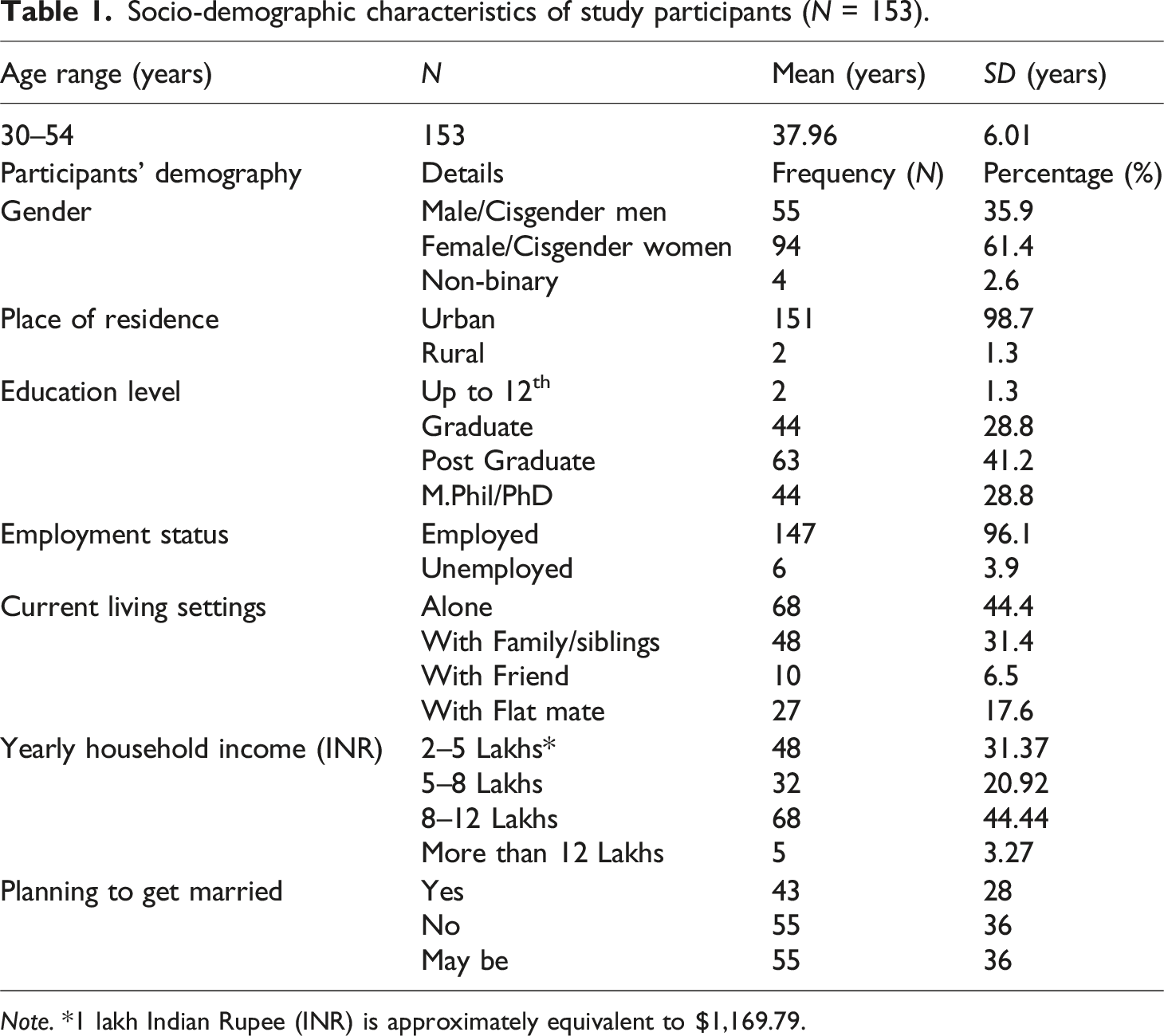
Note. *1 lakh Indian Rupee (INR) is approximately equivalent to $1,169.79.
Quantitative component
Outcome variable
Quality of life
Descriptive statistics and Test of Normality values of Brunnsviken Brief Quality of Life Scale (BBQ) and its subscales.
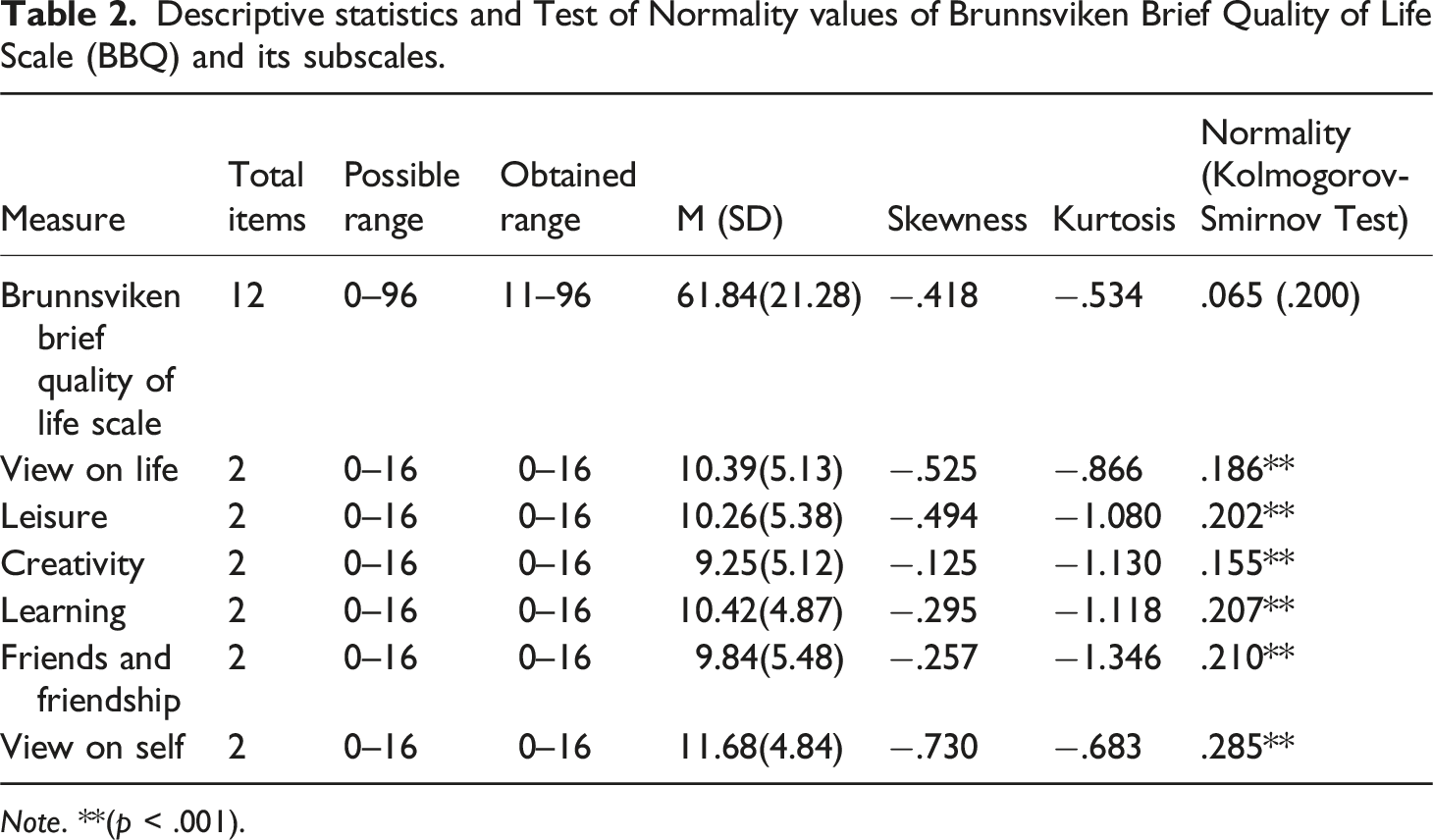
Note. **(p < .001).
Predictor variable
Demographic factors
We considered gender (male/female/other), age (in years), place of residence (urban/rural), educational qualification (upto 12th/graduate/post-graduate/M.Phil or PhD), and status of employment (employed/unemployed), current living setting (alone/with family or siblings/with friend/with flatmate), and planning to get married in future (yes/no/may be).
(b) Qualitative component
A
Data analysis
This exploratory study elicited many comments from the participants on various factors that contributed to their decision to remain single and a range of responses on standard quantitative scales. For quantitative responses, descriptive and comparative analysis was applied using SPSS 21 version. The qualitative responses were analysed using thematic analysis given by Braun and Clarke (2006). Since this analysis follows an inductive approach, we independently coded responses for the themes. Each author developed their own codes and identified themes from the data independently. After the initial coding, we convened to discuss our findings, comparing the themes each of us identified. Through this collaborative process, we aimed to negotiate and reach a consensus on the final themes. We carefully considered differing perspectives and prioritized transparency in our discussions to ensure that the final themes accurately represented the data.
Results
The findings are organized into two sections: quantitative and qualitative. The quantitative findings, derived from the analysis of survey scores, are presented in tables. Notably, there were no missing values in the data. The qualitative results highlight emergent themes identified from the semi-structured questionnaire, and verbatim quotes are included as examples of specific themes where relevant.
Quantitative findings
Difference in subjective quality of life (BBQ) scores based on Gender (N = 153).
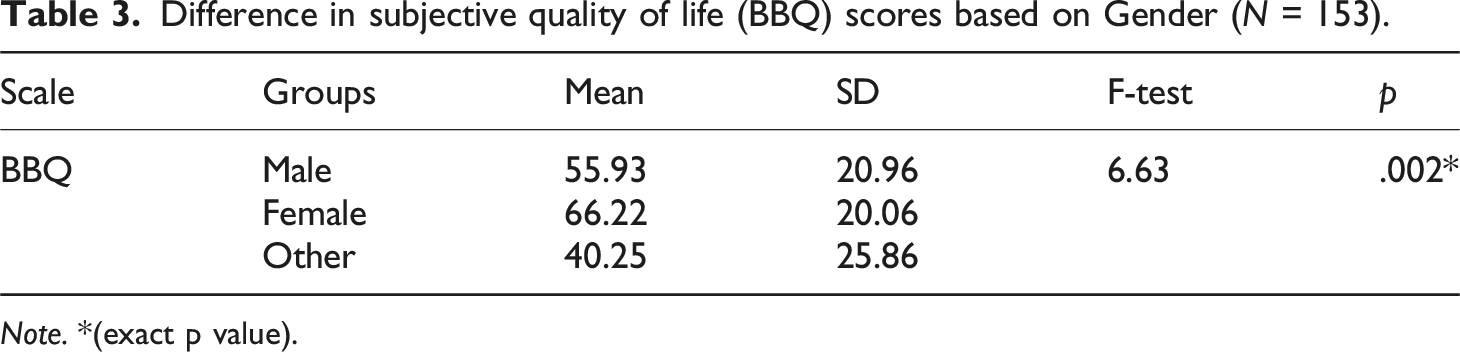
Note. *(exact p value).
To examine whether there were statistically significant differences among various demographic groups, we performed an ANOVA. The results highlighted a significant difference in QoL based on gender and living arrangements. Our results suggest that in comparison to males, our female participants significantly scored higher on the measure of quality of life [F (2, 150) = 6.63, p < .002]. This suggests that female participants generally experience a more positive outlook on life and greater satisfaction with various aspects compared to males. For more details see Table 3.
Difference in subjective quality of life (BBQ) scores based on Living arrangements (N = 153).
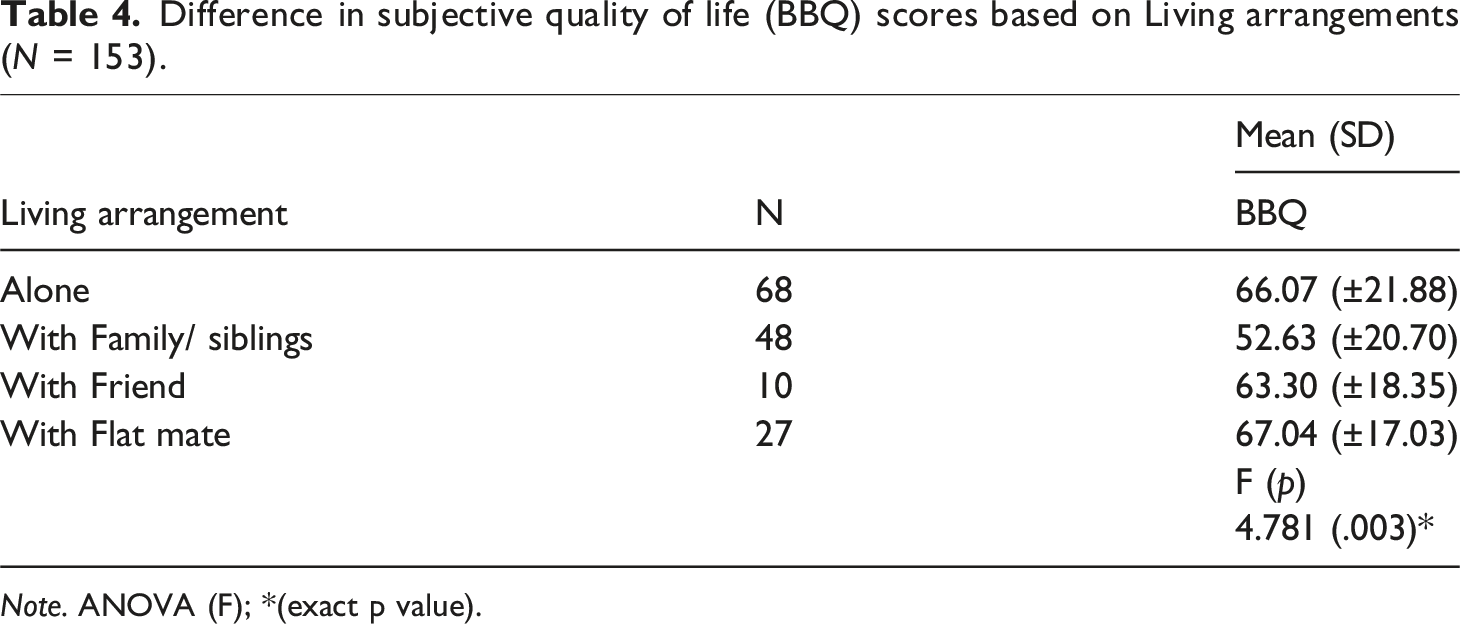
Note. ANOVA (F); *(exact p value).
Post hoc analysis for Living arrangements results using Bonferroni test.
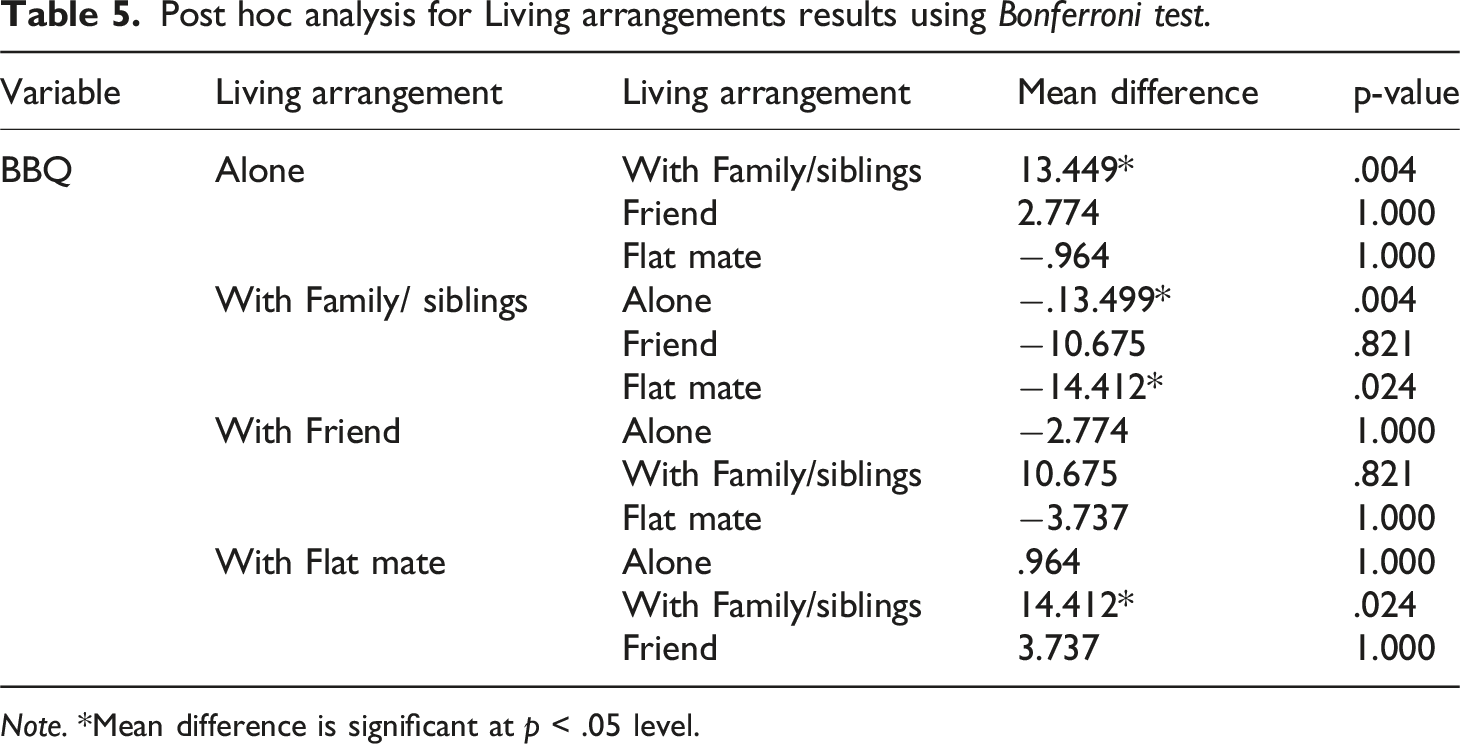
Note. *Mean difference is significant at p < .05 level.
Qualitative results
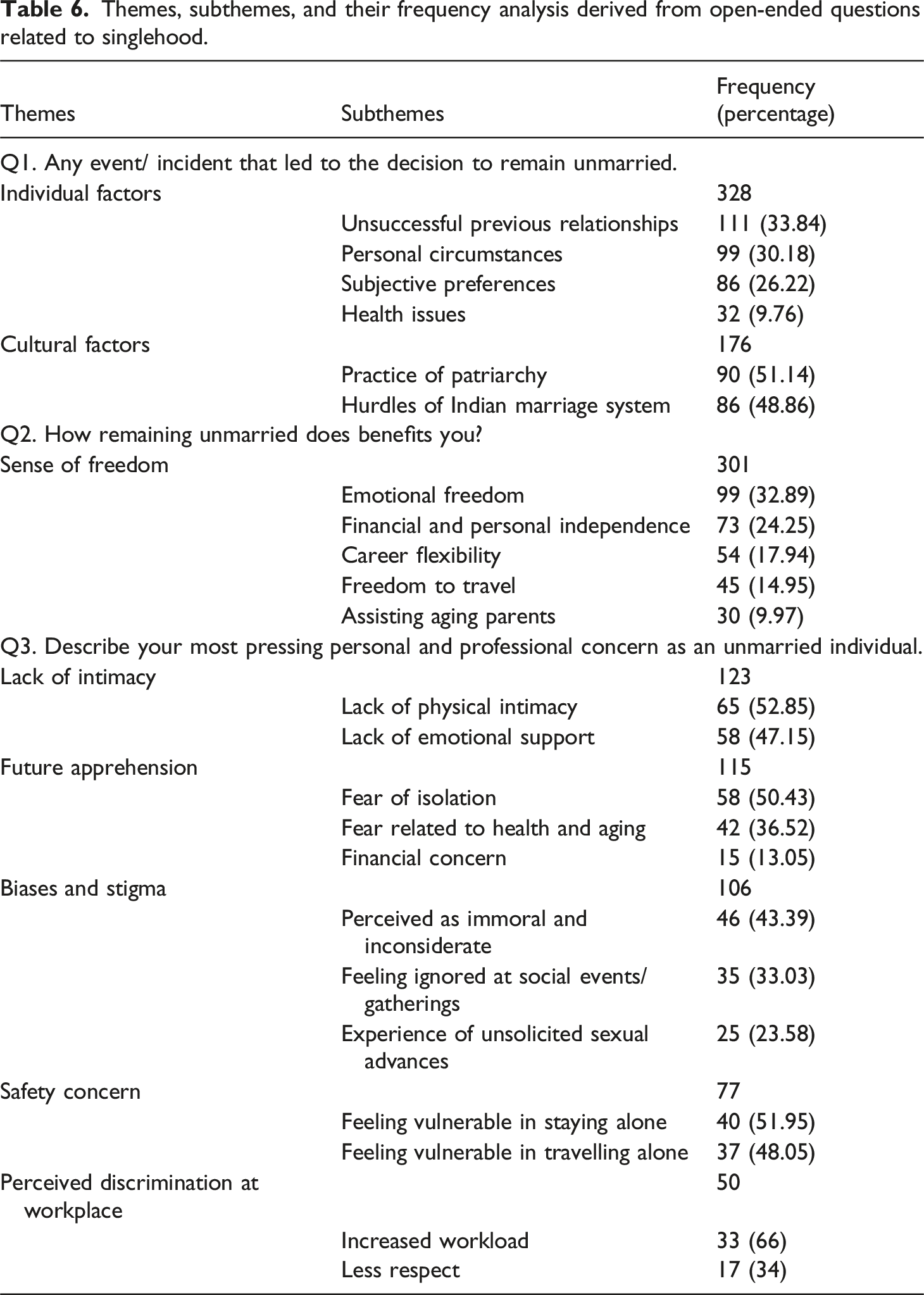
Following are the broad thematic categories covering the qualitative data: Individual factors, Cultural factors, Sense of freedom, Lack of intimacy, Future apprehensions, Biases and stigma, Safety concerns, and Perceived discrimination in workplace, each with several subthemes. Table 6 presents the broad thematic categories and subthemes derived from the open-ended questions. The total frequency of broad thematic categories is used to calculate the percentages of subthemes since several respondents displayed multiple themes in their responses. A detailed examination of all themes is presented as well.
Themes, subthemes, and their frequency analysis derived from open-ended questions related to singlehood.
The participants in our study expressed a range of factors contributing to their decision to remain unmarried at the time of data collection. While many provided responses to this inquiry, some indicated that they could not identify a specific reason for their choice. Two themes emerged as underlying reasons for remaining unmarried for our participants: (a) Individual factors and (b) Cultural factors. 1. Individual factors
Majority of our participants cited various individual or personal factors for remaining single. We found three types of such factors cited by our participants; (a) Unsuccessful pervious relationship, (b) Personal circumstances, (c) Subjective preferences, and (d) Health issues. (a) Unsuccessful pervious relationship: As Table 6 suggests that it was one of the most cited reasons for choosing long-term singlehood (111, 33.84%). Many participants reported they were previously involved in a romantic relationship, and many had come out from a long committed relationship. They viewed the failure of their previous romantic relationship as a significant cause for their decision to remain unmarried. As one participant mentioned: “I was in an on-off relationship with a girl for eight years, but she got married to someone else due to socio-economic differences. Then, I had two unsuccessful relationships later. So, after going through so much, I don't want to settle with anyone. I am just not able to trust any girl anymore.” (Male, 39 years) (b) Personal circumstances: While describing the incident, many participants pointed out family circumstances and related responsibilities as one of the reasons for their singlehood (99, 30.18%), as one participant commented: “When I was at a marriageable age, my mother was struggling with many health issues, and I lost her after some months. Due to this reason, I never had any time to think of myself.” (Female, 39 years)
Some of the participants further reported that interpersonal conflicts between parents and/or partners of their siblings have made them apprehensive about marriage, as one participant responded: “My parents divorced when I was a kid, and my sister divorced when I was in my 20s. These two incidents made me realize that marriage is unimportant.” (Female, 41 years) (c) Subjective preferences: Some responses in our sample indicated voluntary singlehood (86, 26.22%). Many accepted that they are not actively seeking a spouse as they enjoy being alone. In this regard, one participant mentioned: “I think my personality is a little different. Unlike others, I enjoy being alone and on my own. I am very independent since my childhood. That is why I am not interested in marrying someone.” (Female, 42 years)
While some participants do not believe in the institution of marriage, others reported that their high standards for potential partners and their expectations for marriage make it challenging to find a life partner, resulting in prolonged singlehood. As one participant responded: “I never wanted to marry just about anyone simply because societal factors dictate so or elders suggest so. For a long time, I did not find anyone with whom I shared a kindred spirit strong enough to convince me to marry them. I did not wish to get married in a sheer act of desperation. I am happy that my decision stands vindicated today.” (Male, 36 years) (d) Health issues: Some of our respondents have cited either health or mental health issues as a cause of their singlehood (32, 9.76%). One such participant remarked that, “I have chron’s, it’s an auto immune disorder. The guys I liked and wanted to pursue further for marriage they were not interested to marry a girl with disease.” (Female, 37 years) 2. Cultural Factors
India is a traditional country where cultural expectations significantly influence behavior. This influence was evident among our participants, many of whom attributed their singlehood to the cultural norms and traditional beliefs prevalent in their communities (Table 6). Understanding India’s customs and traditions can be quite complex, as there are numerous cultural practices. However, certain practices have specifically affected our participants’ decisions to remain single. These practices can be broadly categorize into two sub themes: (a) Practice of patriarchy, and (b) Hurdles of Indian marriage system, which included caste endogamy, the practice of Kundli matching, the dowry system, and the non-acceptance of same-sex marriage. (a) Practice of patriarchy: The system of patriarchy can be defined as, “a system of social structures and practices in which men dominate, oppress and exploit women” (Walby, 1989, p. 214). Patriarchal norms lead to gender inequality by prioritizing men’s access to resources within families, markets, governments, and society as a whole (Walby, 1989). It was a prevalent thematic category (90, 51.14%), especially among female participants. Some of our female participants reported that prevailing patriarchy in Indian society have adversely influenced their views on marriage. These individuals perceive marriage as an institution that reinforces patriarchal structures. One such participant wrote, “Never believed in the institution of marriage. It's a waste of time, money and effort. And just benefits patriarchy”. (Female, 39 years) (b) Hurdles of Indian marriage system: Marriage is a form of kinship system (Read, 2018) and this system, especially among Hindus in the North India, is closely connected to arranged marriage. The practice of arranged marriage helps to maintain both the patrilineal and patrilocal family structures, as well as the caste system (Karve, 1965). Some of our participants (86, 48.86%) attributed their singlehood to certain practices of Indian marriage including caste-based marriage, Kundli matching, dowry system and emphasis on heterosexual marriage. One such participant mentioned how caste endogamy discouraged her to get married: “In my caste, education is not that emphasized, and I don’t want to marry a person who is less educated. But my parents are conservative. So, I know they will never allow me to marry a person outside of my caste.” (Female, 43 years)
A minority of participants mentioned that their sexual orientation causes them to avoid marriage. One participant commented: “I am lesbian, and I have not disclosed this to my parents. Only God knows how they will react... also for people like us to get married is nearly impossible. That is why I am still unmarried.” (Others, 35 years)
Our participants highlighted several benefits of remaining unmarried, all of which revolve around the theme of freedom. These benefits can be grouped into subthemes, including emotional freedom, financial and personal independence, career flexibility, freedom to travel, and assisting aging parents.
While highlighting the benefits of singlehood, most of the participants reported that being single has provided them emotional freedom (99, 32.89%), allowing them to plan their lives according to their preferences and make choices without to justify their decisions to anyone. According to one participant:
“I can live a fairly hedonistic, bohemian existence, answerable to none but myself. I rarely have to do anything with which I disagree.” (Male, 36 years)
Many participants reported having fewer responsibilities and emotional entanglements, which usually come with married life. Some other participants believed that singlehood has brought self-confidence and financial freedom (73, 24.25%). Being single makes them independent, self-sufficient, and more confident about leading their lives. They also explained that singlehood helps them save money as they do not have other financial responsibilities, such as taking care of a household or educating the child. Additionally, it gives them freedom to travel anywhere whenever they want (45, 14.95%). For example, one participant said:
“I think it gives you much time to invest in yourself, and you reach a point where you can even imagine how it would be to live alone and yet be comfortable with the idea. It gives you the strength to be emotionally self-reliant. Moreover, you can save money and travel anywhere without anyone’s emotional baggage.” (Male, 38 years)
Some participants emphasized that singlehood has given them freedom to chose their career paths and work arrangements (54, 17.94%). They can prioritize their career without any distractions and compromises. For example, one participant commented: “The most important thing is I have more time for myself. I have certain career goals in my life. I can work towards them without any other significant responsibilities. I have all the time and energy to upskill myself and keep working towards my goals.” (Female, 37 years)
For some participants, it is freedom to spend time with their aging parents and helping them (30, 9.97%), which is not possible with married life. In this regard, one participant mentioned: “In Indian society, once you are married, you have to ignore your parents and take responsibility for your husband's parents and family. I am happy that being single gives me all the freedom to care for my parents and family.” (Female, 36 years)
In response to most pressing personal concern, we identified four themes from our participants’ response namely, (a) Lack of intimacy, and (b) Future apprehensions, (c) Biases and stigma, (d) Safety concern, and (e) Perceived discrimination in workplace. (a) Lack of intimacy: As per our study participants, one of the substantial disadvantages of singlehood is the lack of intimate relationships at physical (65, 52.85%) and emotional level (58, 47.15%). They believed such feelings would have been disappeared if they had a partner. For them, the cost of not having a partner feels heavier under challenging times since there is no one to support them emotionally. One such participant mentioned: “Often it feels lonely, without having someone to share the sorrows and happiness, small little achievements in life! Sometimes it makes it feel like you are not good enough to be a partner.” (Male, 30 years)
Some of them mentioned that in the absence of a long-term partner, they lack reliable sexual outlets, hence, their sexual needs remain unmet (65, 52.85%). For example, one participant mentioned:
“I am 40 and still unmarried, so sexual need is the thing that I miss most. Seeing other couples, I miss having my life partner.” (Male, 40 years)
Another participant commented: “I am happy to be single. Sometimes, some sexual needs arise. However, I do not believe in getting engaged in casual sex. I am not that desperate to risk my health.” (Male, 41 years) (b) Future apprehensions: This theme revealed participants’ future apprehensions related to isolation, health and financial crisis. Many participants reported having friends and relatives who are either married or have partners. Therefore, they were afraid they will be left alone (58, 50.43%) and no one would be there to assist them when they are old and vulnerable, have physical health issues (42, 36.52%) or in case of any financial emergencies (15, 13.05%). For example, one participant mentioned:
“In future, I might need assistance, either emotionally or physically, which might be driven by age or illness. At that time, I will not have a companion to care for me.” (Male, 36 years)
While another participant mentioned: “I am also worried that if I do fall sick and become disabled , and loose my ability to have a job, which is a startling reality because of my mental health conditions, I would not have a partner to help me, both emotionally and financially.” (Others, 34 years) (c) Biases and stigma: Participants expressed concerns that indicate many single people encounter various biases and stigma in their daily interactions. Many female participants noted that others perceive them as either ‘immoral’ or ‘selfish’ individuals (46, 43.39%) who want to flirt and avoid commitment, or as someone who is simply available for sexual advances (25, 23.58%). In this regards, one participant said: “The people judge me as insensitive or self-centric due to my status of being single. Whenever I speak to my male colleagues or neighbours, others think I am hitting on them or that they are.” (Female, 50 years)
Some participants reported that others often do not invite them, or they choose to avoid social gatherings due to their single status (35, 33.03%). Also, their married friends and family members are usually reluctant to share and discuss their issues. One participant commented: “My married friends and colleagues feel uncomfortable inviting me to their homes, as if I am a terrible influence. They seem uncomfortable sharing their personal views and issues with me. I feel they always judge me. Maybe they think I will not understand them as I am reckless and cannot think beyond myself.” (Male, 41 years) (d) Safety concern: Some female participants expressed their concerns regarding safety as single women, particularly when travelling (37, 48.05%) or staying alone (40, 51.95%). They conveyed that having a male partner can provide an added sense of security during such times. One participant expressed her concerns in this context: “Personal concern is traveling alone and the threat of getting attacked in public spaces in daylight or night. It is not to say that married women are immune to anti-social elements but the presence of their partners along with them does keep unwanted stares or physical threats from strangers at bay.” (Female, 30 years)
Another female participant shared: “I enjoy living alone and feel safe in my society. But when something unfortunate happens in my society, I feel scared. Even though my home has adequate security measures, I invite my male friends and let my neighbours know that I have male visitors. And whenever they visit, I make sure that they answer the door, especially for delivery persons. It gives me an extra sense of safety.” (Female, 40 years) (e) Perceived discrimination in workplace: Most participants did not express any specific professional concerns. In contrast to personal concerns, most participants reported being happy and professionally content. However, some individuals mentioned being single and facing discrimination, particularly from their superiors. Often, they experience increased workload (33, 66%) and less respect (17 (34%) compared to their married colleagues in their workplace (Table 6). One such participant said:
“The worst thing I have experienced is that employers sometimes tend to assume that I can readily take on heavy duty time consuming assignments all the time since I am unmarried and therefore I do not have any family responsibilities to take care of. It’s akin to saying that the value of an unmarried person’s time is meaningless in comparison to that of a married person.” (Male, 34 years)
Another participant commented: “The colleagues, especially bosses, assume that since you are without children or a husband, you will be available for out-of-working-hours shindigs (dinners, staying late, etc.) And short-notice travel. I have also seen that my boss’s attitude towards younger men or women who got married changed - they are treated with more respect and deemed more mature to take on responsibilities, even if their work qualifications or style has not changed.” (Others, 34 years)
Discussion
We conducted a mixed-method study to investigate the quality of life among single adults and to comprehend their reasons, and the perceived advantages and disadvantages of remaining single.
Quantitative findings
(a) Quality of Life w.r.t. gender:
Existing literature on the experiences of singlehood suggest that single-never-married women have reported higher life satisfaction and adjustment than single-never-married men (Johnston & Eklund, 1984; Ochnik & Slonim, 2020). Our quantitative results also suggest that there is a significant difference in the overall well-being [F (2, 150) = 6.63, p < .002] among males, females, and people with other gender identities where females scored the highest on the quality of life measure.
A review of the existing studies suggests that the difference in well-being between single men and women may be attributed to several factors. For instance, single women often express satisfaction with their current relationship status and sexual lives, along with a lower desire for a romantic partner (Hoan & MacDonald, 2024; Træen & Kvalem, 2022). Never married-single women were also found to rate themselves more physically attractive and report higher self-acceptance than never-married single men (Keith, 2003; Ochnik & Mandal, 2016). Also, single women tend to perceive their life situations in more positive light and have capacity to take control of their life as compared to single men, hence mitigating their level of distress (de Jong-Giervield & Aalberts, 1980; Keith, 2003).
On the other hand, single men were found to have poor well-being and mental health issues like higher depression and anxiety (Davies, 1995; Mastekaasa, 1993). Further, men are more likely to depend upon their romantic partners for social support since they tend to have smaller social networks than women (Girme et al., 2023; Igarashi et al., 2005; Liao et al., 2018). As evolutionary perspective suggest that men have greater sexual interest than women (Baumeister et al., 2001; Frankenbach et al., 2022; Schmitt et al., 2003) therefore, unmet sexual desires could lead to lower QoL among men (Stephenson et al., 2021; Stephenson & Meston, 2013). (b) Quality of life w.r.t. living arrangement
In our sample, majority of the participants were living alone, and their quality of life was better than those participants who shared their accommodations with family, siblings or friends. This suggests that many individuals prefer single living and find it more fulfilling. One possible explanation is that living alone grants individuals greater control over their environment and lives. It allows for freedom of choice in actions and thoughts, helps maintain privacy, and ultimately contributes to increased self-confidence and overall well-being (Chadda & Deb, 2013; Long & Averill, 2003; Samanta, 2021). These results also reflect a growing acceptance of solo living in India, a country where cohabitation with family has traditionally been the norm.
It is worth noting that people living with their family/ siblings had the lowest QoL. Research on family pressure has highlighted that Asian families often devalue singlehood as a legitimate life choice and urge their single children to marry or seek partnership (Himawan et al., 2018). In interdependent societies such as India, being single can lead to tension due to familial and marital expectations. Thus, many times, single individuals find it challenging to maintain their single status without causing distress to their family members. Given that familial and cultural expectations significantly influence the quality of life (Diener et al., 2003; Oishi, 2010; Oman, 2021), single individuals may experience lower well-being in such scenarios.
Many singles often experience negative treatment and discrimination from their families and friends, such as being pressured to “settle down” or not being invited to social events, which can negatively impact their well-being (Girme et al., 2022, 2023; Himawan et al., 2018). Our study also supports this finding, revealing that individuals living with flatmates have a better quality of life than those living with friends. Interestingly, individuals reported better well-being when living either with flat mates or independently; however, those sharing their accommodation with flat mates reported slightly higher QoL scores. Possibly, people living in shared housing view it not only as a cost-effective solution but also as a means to foster social and emotional connections and reduce feelings of loneliness, which, in turn, enhances their overall well-being.
Qualitative findings
The qualitative part of this study aimed to explore factors contributing to the decision to remain unmarried among Indian adults. Along with this, the advantages and disadvantages of singlehood were also investigated to understand how this decision affected their lives for a more holistic understanding of singlehood. (a) Factors contributing to singlehood
Majority of our participants attributed various personal and circumstantial factors ranging from interpersonal and society related issues to personal characteristics to their singlehood. Many participants indicated that their choice to stay single stems from either the loss of a previous romantic relationship or having witnessed poor relationships among their parents or close ones. Findings from prior studies suggest that termination of a long-term romantic relationship could be traumatic for people and moving on to another romantic relationship may be challenging (Gilbert & Sifers, 2011; Oliffe et al., 2022; Rhoades et al., 2011). Moreover, the decision to remain single can also be influenced by childhood experiences and the upbringing process (Nicolaisen & Thorsen, 2014; Utasi, 2003).
Our participants identified several cultural factors they believe are responsible for their decision to remain single including the opposition to inter-caste marriage, the requirement of dowry, and the overall patriarchal values present in Indian society. Since in the sample, most of our participants were employed and highly educated, they disapproved of such norms and preferred remaining single rather than marrying and reinforcing patriarchal and discriminatory structure of society (Bag, 2024; Baxter, 2005; Jones, 2005; Prabhakar, 2011; Çelik, 2018).
It is important to note that many participants did not actively choose to remain single. This is evident from our sample, where four non-binary respondents attributed their single status to the non-acceptance of their sexual orientation by their families and society. Despite the recent decriminalization of LGBTQ+ relationships, people from these communities are often discriminated against and face a lack of acceptance and support from society. Moreover, same-sex marriage is not recognized by the existing legal system in India (Kuttappan & Tiwana, 2025; Sharma, 2021, 2023; Sharma et al., 2013; Vanita, 2009). (b) Advantages and limitations of singlehood:
Some evidence has revealed that single people with sufficient resources to support themselves are less likely to end their singlehood as they wish to enjoy the benefits of singlehood, like freedom and personal space for an extended time (Kislev, 2019; Tan et al., 2021). They believed that singlehood protects them against the various social, emotional, and financial costs and offers them various opportunities for personal and career growth.
It was argued that marriage cannot ensure loyalty and sincerity from the spouse and support from the in-laws. Also, after marriage, individuals are required to take up certain roles and responsibilities, especially concerning in-laws, and make many adjustments in life, such as changing personal or financial goals. Participants of our study reported that being unpartnered allowed them to provide emotional and instrumental assistance to their elder parents and friends when needed (Sarkisian & Gerstel, 2016).
In our sample, participants recognized that being single, like any other relationship status has its own set of disadvantages. In a study conducted by Apostolou and colleagues (2023), various drawbacks of remaining single were identified. Some of the most frequently mentioned disadvantages include a “lack of regular and safe sex” and a “lack of emotional support”. We also identified “lack of intimacy”—both sexual and emotional—as a significant concern for the participants in our study. A desire for partner with whom they could share their concerns, apprehensions, and joys, was expressed. While some participants indicated that they do not prefer casual sexual relationships, it would be an interesting area for future research to explore how single individuals engage in sexual relationships in a traditional country like India.
Some of our participants also expressed concerns about their future, particularly the fear of remaining isolated forever. This sentiment was reflected in their willingness to marry in the future if they find a suitable partner. Some participants also worried about who would care for them during periods of declining health or in old age. Their concerns likely stem from the fact that India does not have well-developed old-age housing schemes, and most elderly individuals live with their families. Without a partner, they feel they may lack family support, leading to a diminished possibility of receiving care in their later years.
In Eastern societies, where marriage is regarded as one of the significant cultural practices, singlehood may be seen as a violation of relationship norms (Kaiser & Kashy, 2005). This perception can result in experiences of stigma and discrimination. Research has indicated that single adults report a lack of support and respect from others compared to their married counterparts, as they are viewed as more self-centered and less responsible (Byrne & Carr, 2005; Forsyth & Johnson, 1995; Himawan et al., 2018). Further, single people are often seen as immature, socially inept, lonely, unattractive, unexciting and a burden to the family (Hertel et al., 2007; Magardechian, 2017; Sharp & Ganong, 2011). Participants in the present study also reported experiencing biases and stigma due to their unmarried status. Many participants expressed that they felt viewed as “immoral” and “inconsiderate” by others, particularly by married individuals. Interestingly, some female participants mentioned facing unsolicited sexual advances from men, while others felt ignored at social events by married people and their friends. Their coupled friends usually emphasize the importance of couple hood and feel reluctant to invite them to their home.
The literature suggests that single individuals are not only stereotyped and stigmatized but also face discrimination in various forms, such as housing discrimination and discrimination within the healthcare system, lack of legal and social security, and sometimes job opportunities. When working, singles encounter heavier workloads, extended hours, lesser organizational benefits, lower chances of promotion and, in some cases, lower financial compensation (De Paulo & Morris, 2006; Jordan & Zitek, 2012; Kislev, 2023; Morris et al., 2007). Participants in our study expressed similar concerns. They felt that, because of their single status, they were often not taken seriously and received additional work assignments, as others perceived them to have fewer personal commitments or family obligations.
Previous research has suggested that women’s concerns for safety, along with their fear of physical and sexual assaults play a significant role in shaping their environmental choices (Gardner, 1988; 1990). Furthermore, when these fears become internalized, they can significantly limit the environments women perceive as “suitable” as they base all their necessary environmental decisions about housing, transportation, and leisure activities on these fears (Chasteen, 1994). Our findings were in line with the literature since a theme that emerged specifically among our female participants was “safety concerns”. Some expressed that they feel uncomfortable travelling or living alone, and a few mentioned a desire to have a male partner probably due to these concerns.
Despite significant advancements and modernization, women in India continue to face violence and discrimination. Various efforts and initiatives have been implemented, yet crimes against women are on the rise. According to a recent report from the National Crime Report Bureau (2023), crimes against women in India increased by 4% in 2022. In a heteronormative and patriarchal society like India, single women are particularly disadvantaged. It has been established that single women face biases and discrimination across various domains, including their homes, communities, and even within government policies. Single women have historically been marginalized by lawmakers and those responsible for implementing public policy, as marriage is perceived as the primary marker of social respect. Hence, a single woman is seen either her family’s responsibility or her own liability (Dubler, 2003; Kalia, 2021; Shaji, 2022).
In India, marriage and motherhood are often seen as essential for women to earn societal respect. As a result, without the ‘protection’ of a male figure, single women are perceived sexually available, making them more vulnerable to sexual violence and social oppression (Gandhi, 2016). Probably, this could explain our sample’s not complete rejection of the idea of getting married in future, where most of the participants are women.
A closer examination of Table 6 reveals that themes such as the sense of freedom, individual factors, and cultural factors emerged more frequently in our participants’ responses. These findings indicate that many individuals consider being single as an opportunity to embrace their personal autonomy and independence within an interconnected Indian society. Additionally, they view certain cultural practices, such as patriarchy, endogamy, and heteronormativity as obstacles to their chances of marrying. The prominence of these themes also indicates a shift in attitudes towards independence and individuality within an interdependent and collectivistic society like India, particularly in urban settings (Gupta & Agrawal, 2021). On the other hand, themes like safety, bias in workplaces, and stigma appeared less frequently, which might indicate that while these issues are present, they may not be as central to the lived experiences of our participants. Perhaps they were navigating or perceiving these challenges differently through resilience or avoidance strategies.
Overall, our study has established that contextual factors can influence the singlehood experiences and quality of life. As highlighted both quantitatively and qualitatively, single individuals value their autonomy and independence, which are also positively related to their well-being. The use of a mixed-method approach is one of the highlights of this study, as most of the studies conducted on never-married were either qualitative or quantitative. A mixed-method approach led to a broader and more in-depth understanding of the concept of singlehood. By comparing the quality of life based on gender and living arrangements and by exploring the lived experiences of educated Indian single adults who are employed, financially independent, we uncovered the unique challenges singles encounter and the distinctive life journeys they undertake while navigating their lives within the Indian society. It has not only provided a deeper understanding of their world and the factors that shape their life experiences but also gave us insights on how cultural settings affect singlehood experiences.
Limitations and future research
Our study also has some limitations. The quantitative findings were corroborated with qualitative explorations, 153 responses may not seem adequate for the statistical analysis, although most of our results are significant. Therefore, in future, another study can be conducted using mixed-method research approach with a larger sample size. Importantly, our study had only four participants who identified as non-binary individuals, so the ANOVA findings should be interpreted cautiously. Additionally, we did not gather any information on disability. A future study focusing solely on singlehood experiences of people with disability and non-binary individuals may provide a deeper understanding of singlehood. Another limitation of our study is that we did not obtain any information on the religious identities of our participants. Given India’s diverse religious landscape, a study exploring the role of religion in the lives of single individuals would be insightful. The current study explored many external and personal causes for singlehood; however, due to the cross-sectional nature of this study, the causal relationships cannot be established among the reported causes and associated outcomes of singlehood. The future studies may benefit from the longitudinal assessment of these study variables.
Conclusion and implications
With the changing demography and dwindling birth and fertility rates across many countries, it is important to understand why people are not getting married. The present study explores the phenomenon of singlehood among Indian adults using a mixed methodology. Using the quantitative method, we explored how remaining single influences the quality of life of unmarried single adults. Our results suggest that (a) gender has a significant influence on the QoL of unmarried individuals, with female participants having better QoL, and (b) the living arrangements of single individuals also significantly affect QoL, with singles living alone or flat mates experiencing better QoL than their counterparts. The qualitative part of this study was conducted to explore the reasons, advantages, and disadvantages of remaining unmarried. For our participants, the reasons to remain unmarried include a range of personal and cultural factors. The advantages of staying single include a sense of freedom to explore one’s interests and reduced emotional and financial responsibilities. Whereas, the disadvantages of remaining single include lack of intimacy, apprehension related to health and financial security, safety issues, and perceived discrimination in the workplace.
With the rising number of singles globally, particularly in conservative societies like India, where singlehood is often seen as taboo, understanding their needs and concerns is crucial. By investigating the experiences of singlehood and the impact of demographic variables on the quality of life among single adults, this study helps in the contextualization of singlehood. We suggest that the findings of this study can be used as a foundation for designing psychological interventions that address the needs of single adults in traditional social contexts.
Footnotes
Declaration of conflicting interests
The author(s) declared no potential conflicts of interest with respect to the research, authorship, and/or publication of this article.
Funding
The author(s) received no financial support for the research, authorship, and/or publication of this article.
Open research statement
As part of IARR’s encouragement of open research practices, the author(s) have provided the following information: This research was not pre-registered. The data used in the research are available on request, however, due to confidentiality concerns entire qualitative dataset cannot be provided. The data can be obtained by emailing:
